Porto Rico

5%

Pacific Press Publishing Company · Mountain View, California · May 20, 1908

FromSigns of the Times, Vol. 34, No. 21.

Read the full edition

Porto Rico.

Its People.

ONE thing can be said of the Porto Ricans,—whether it is to their credit or discredit the reader can judge,—that of Spain's large number of colonial possessions, Porto Rico was one of the very few that never revolted from the mother country.
Soon after the discovery of the island by Columbus, the Spanish colonists came to make settlements under the leadership of Ponce de Leon. At first they gave no attention to the cultivation of the fertile soil, but went in search of gold,—gold for the king, and gold for the church,—and with this object in view they put the Indians to work excavating in the mountains and washing the shining sands of its numerous streams. This vigorous work was too much for the poor, indolent Indians who had never known anything but idleness, and many died from the exertions, some committed suicide, and others escaped to the adjacent islands.
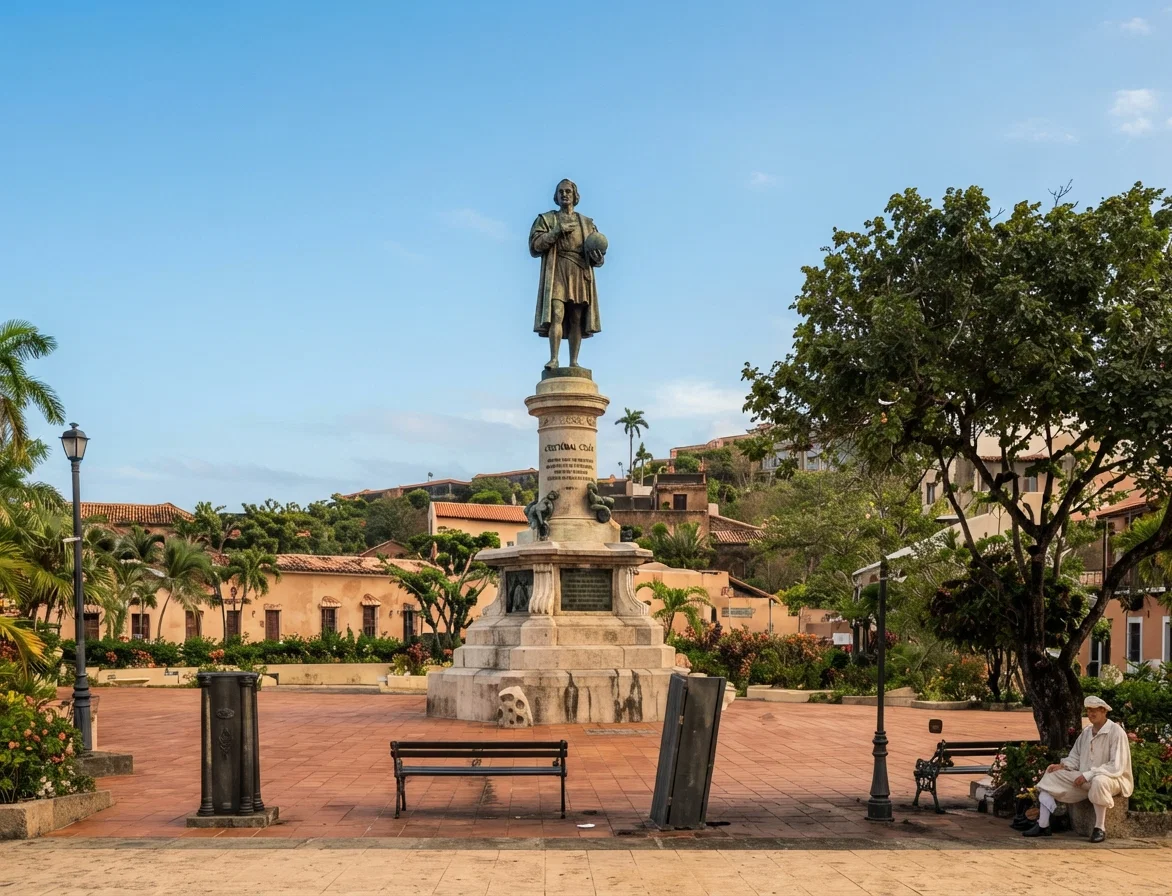
The Plaza and Statue of Columbus, San Juan, Porto Rico.
"In twenty years the struggle for gold ceased, its limitations were soon known, and the culture of sugar-cane was started. Sections of land were distributed among the Spaniards, and allotments of Indians assigned to every proprietor to work his land. To the king's vast estate 500 Indians were allotted and from 40 to 200 given to others in proportion to their prominence in the island. In this way the sovereignty of Spain was extended to Porto Rico. From the very beginning it was based on human wrongs, and human rights cut no figure. The king and the church approved the course. Ponce de Leon had 200 Indians for his share, and Bishop Munse 100. Thus the Indian, the free, gentle, hospitable owner of the soil, was robbed of his home and reduced to servitude so wretched and cruel that in fifty years it blotted from existence the aboriginal race of Porto Rico."
As the mining seemed to fail, it became evident that Porto Rico was to become an agricultural country, so negroes were procured in place of the vanquished Indians to work the estates, and the people gradually settled themselves down to existing conditions. Farming was carried on, and that until very recently, by the most primitive methods, the farmer using a forked stick for a plow, his only other implements being the hoe and machete.
There were no roads, hence but little communication; each estate had its own slaves, and the owner was master of all. The products for exportation were carried to the ports on mules, thence in Spanish ships to Spain, and exchanged for Spanish goods. A trip to the capital required as much time and almost as much money as a trip to Spain would now.
Thus two hundred and fifty years passed with but little change. The peace was guaranteed by the insular police force and one thousand Spanish soldiers.
In 1815 Porto Rico was invited by Simon Bolivar to unite with New Granada and Venezuela in a revolt against the mother country, but the Porto Ricans preferred to remain loyal.
In 1870 the slaves were freed, but they were afterward employed by the owners of the estates at so low a wage that the difference was very slight.
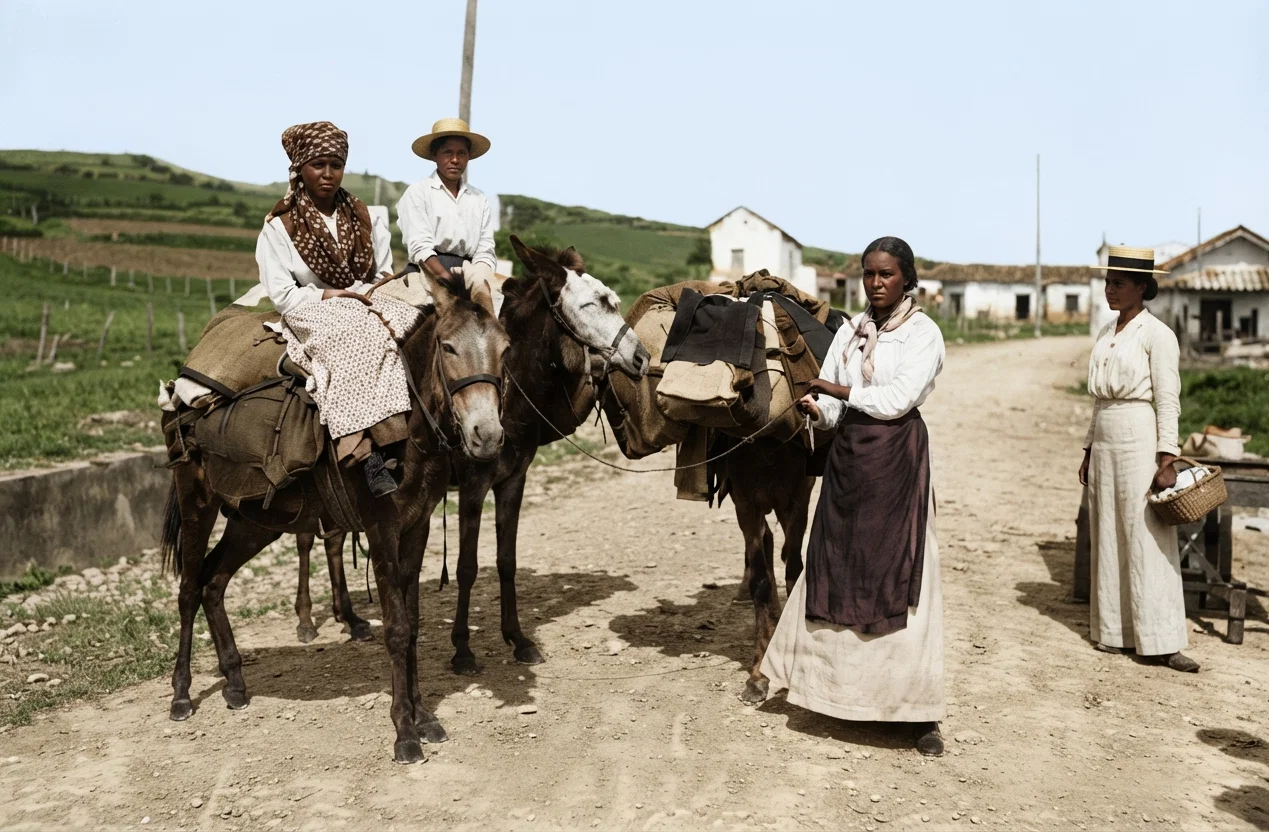
Porto Rico Women on the Way to Market.
In 1830 the population is given at 319,000, about sixty per cent of which were white and the remainder black. I think the proportion stands about the same now. About that time there was a large emigration of South Americans to Porto Rico and this gave impetus to her industries which continued until the change of government.
To-day Porto Rico has a population of a million, and the government is administered by a governor, and an executive council of eleven appointed by the President of the United States, and the House of Delegates of thirty-five members elected by the people. The government expenses are met by the custom-house and internal revenue collections.
The mail service is good, at present there are eighty-six post-offices, and the insular police force numbers 700 men.
There are 250 miles of railroad on the island, and the company is doing a good business and each year extending its lines. There are also 600 miles of macadam road with an increase of mileage each year. These roads are a wonderful blessing to the people as mediums of communication from the interior towns to the coast, and immense freight traffic from these towns is transported in large wagons, instead of on pack-mules.
Our foreign communications are carried on by three American steamship lines between the island and New York; one to New Orleans, and one to South America. There are also German, Spanish, French, and Italian lines that make regular visits from other points.
The people of Porto Rico as a rule are quite well satisfied, wages are more than double what they were five years ago, and there is work for all who desire it. As yet the people do not enjoy the privilege of self-government, but the majority appreciate what the American government has done for the island.
From moral, intellectual, and sanitary standpoints there has been great improvement. Houses and streets are much cleaner, and the dread disease anemia, which at one time threatened to depopulate the island, is practically eradicated.
There are 75,000 children in the government schools and 25,000 more in parochial and private schools.
In our next article we will notice the progress made in religious lines.