Aroused Protestantism in Washington Reaffirms Its Principles—It Has No Occasion to Apologize to Rome—Papal Aggressions Demand that Protestants Be Aroused—Many Noted Protestant Ministers Take Part
By W. A. COLCORD
THE hold which Romanism appears to be getting upon the national government has aroused the friends of the great principles upon which this government was founded, at the national capital, to action.
When the enemies of these principles become so bold in their American publications as to characterize the fundamental law of the land as a "lying Constitution," and say that when the application of its provisions conflicts with their views, "to hell with the Constitution"; when, in this land of the free, men begin to attack free speech with mob violence, and in national conventions pass resolutions calling for national legislation prohibiting the freedom of the press; when the national hymn "America" is denounced as something "unfit to be sung" by American Roman Catholics, and the national Thanksgiving day has been seized as an occasion for exploiting Roman Catholicism, and inveigling the highest officials of the nation to bow at the shrine of the mass, and pay homage to a church whose history for over a thousand years has been written in the blood of the saints, it seems that the time has arrived when the friends of freedom and the lovers of liberty should sound a note of warning, raise the danger-signal, and enter a vigorous and earnest protest.
AN ENTHUSIASTIC MEETING
Expression was given to these awakened sentiments in Washington, in the form of a great mass-meeting held Sunday afternoon, December 14, in the New National Theater, not far from the White House. The theater was crowded, and hundreds of people, unable to obtain admittance, were invited to an overflow meeting in a church near.
PROTESTANTISM AROUSED IN WASHINGTON
For once the Protestantism of Washington seemed to have been thoroughly aroused. A large share of the Protestant ministers of the city sat upon the platform, and an enthusiastic, appreciative, and responsive audience greeted the speakers of the hour.
The Rev. Dr. Wallace Radcliffe, pastor of the Second Presbyterian Church, presided. In his introductory remarks, he took occasion to speak of the character and value of the work of the great Reformation, of the place and need for the word "Protestant," and of the high regard which Protestants still have for the name of Martin Luther. Every sentence was greeted with applause.
THE PRINCIPAL ADDRESS
The principal address was delivered by the Rev. Dr. Randolph McKim, pastor of the Church of the Epiphany, one of the largest Episcopal churches of the city. The subject of the address was, "Why We Are Protestants." While indulging in no extravagant language, and endeavoring to avoid all unnecessarily offensive utterances, the speaker enunciated and reaffirmed in very plain and unequivocal terms the great principles of Protestantism, called attention to many flagrant inconsistencies in the teachings and doctrines of the Roman Catholic Church, and pointed out the dangers which now threaten the rights and liberties of the people of this country, both civil and religious, from the machinations and aggressive policies now pursued by the Roman Catholic hierarchy in this land. Throughout, the address was well fortified with historical facts, logical arguments, Scriptural citations, and documentary evidence. We here reproduce a considerable portion of the address, omitting, for want of space, some of the more lengthy arguments and historical quotations.
ADDRESS BY DR. McKIM
"Mr. Chairman and Brethren:
"I hail the presence of so many Protestant ministers on this platform as an evidence that the pressure of the conflict with Rome is drawing us closer together. It is an omen that we are beginning to realize that the things in which we agree are more important than the things in which we differ.130
"No apology is necessary at any time for a public exposition of the grounds of our faith, and the reason of our hope. But such an exposition is opportune in Washington at the present time because of the fact that one of the Paulist fathers has recently held in St. Patrick's Church a 'mission,' covering a period of two weeks, for the purpose of proselyting 'non-Catholics,' as they presume to call us. In this 'mission' the doctrines of Protestantism have been assailed, as usual, and every argument known to those skilful controversialists has been put forth to seduce Protestants from their allegiance. In their notices and in the public press Protestants have been denominated 'non-Catholics.' This we resent as a highly offensive term. We, all of us, believe in the Apostles' Creed, in which we declare our faith in the Holy Catholic Church, but by this term we are rudely told that we are not Catholics at all. We refuse to yield them the name 'Catholics.' It is the greatest arrogance for that church to appropriate that great and venerable term. No branch of the Christian church is less worthy of it.
"Under the circumstances, it has been felt by the ministers at whose invitation I am to speak this afternoon, that this is a fitting time to address to the Washington public a definition and a defense of the Protestant faith.
NOT AN ATTACK ON CATHOLICS
"Let me say at the outset that I am not here to attack the Roman Catholic Church or its doctrines, but to defend the faith of Protestants. But if, in the performance of this duty, it shall become necessary to show up the unreasonableness of the faith of that church, and the contradictions and absurdities involved in some of its cardinal doctrines, the responsibility does not rest with me, but with those who have publicly arraigned the religion of Protestants before this community, and launched accusations against them, the truth or falsity of which can only be tested by an appeal to history.
MEANING OF PROTESTANTISM
"Now, first of all, Protestantism is not, as commonly represented, a mere series of negations, denying error rather than affirming truth, repudiating false doctrine rather than proclaiming the truth. No; we write the word 'Protestant' on our escutcheon in its full etymological significance. A Protestant is one who bears witness for any person or thing; and a Protestant church is one that 'bears witness for' Christ and His gospel in the world. It is a name not to be ashamed of, either in its origin or in its history.
"When our Lord Jesus Christ stood before Pilate, He said of Himself, 'To this end was I born, and for this cause came I into the world, that I should bear witness unto the truth.' Humbly treading in the footsteps of her divine Lord, the Protestant church goes forth into the world having this as her aim, that she may 'bear witness unto the truth.'
SOME NOTED PROTESTANTS OF OLD
"Noah was a Protestant when he proclaimed the coming Flood. Lot was a Protestant when he stood alone for God in the midst of wicked Sodom. The Jewish nation was Protestant, standing among the nations of the earth a witness for the unity of God, the supremacy of conscience, and the sanctity of the moral law. And, supreme instance, let it never be forgotten that Christ and His apostles were Protestants in their day. They were Protestants for the truth of God, against the traditions and corruptions of the Jewish hierarchy,—the established church of that day. And they not only bore witness for the revelation made in the incarnation of the Son of God, but they bore witness against the false doctrines of the scribes and Pharisees, the chief priests, and elders of the church. In like manner, and in fulfilment of the injunction of the great Head of the church, our Protestant churches bear witness among men to-day, not only positively, for 'the faith once delivered to the saints,' but negatively, against the manifold corruptions of that faith for which the Church of Rome is responsible. Therefore they bear on their escutcheon the glorious word 'Protestant,'—the witness bearers.
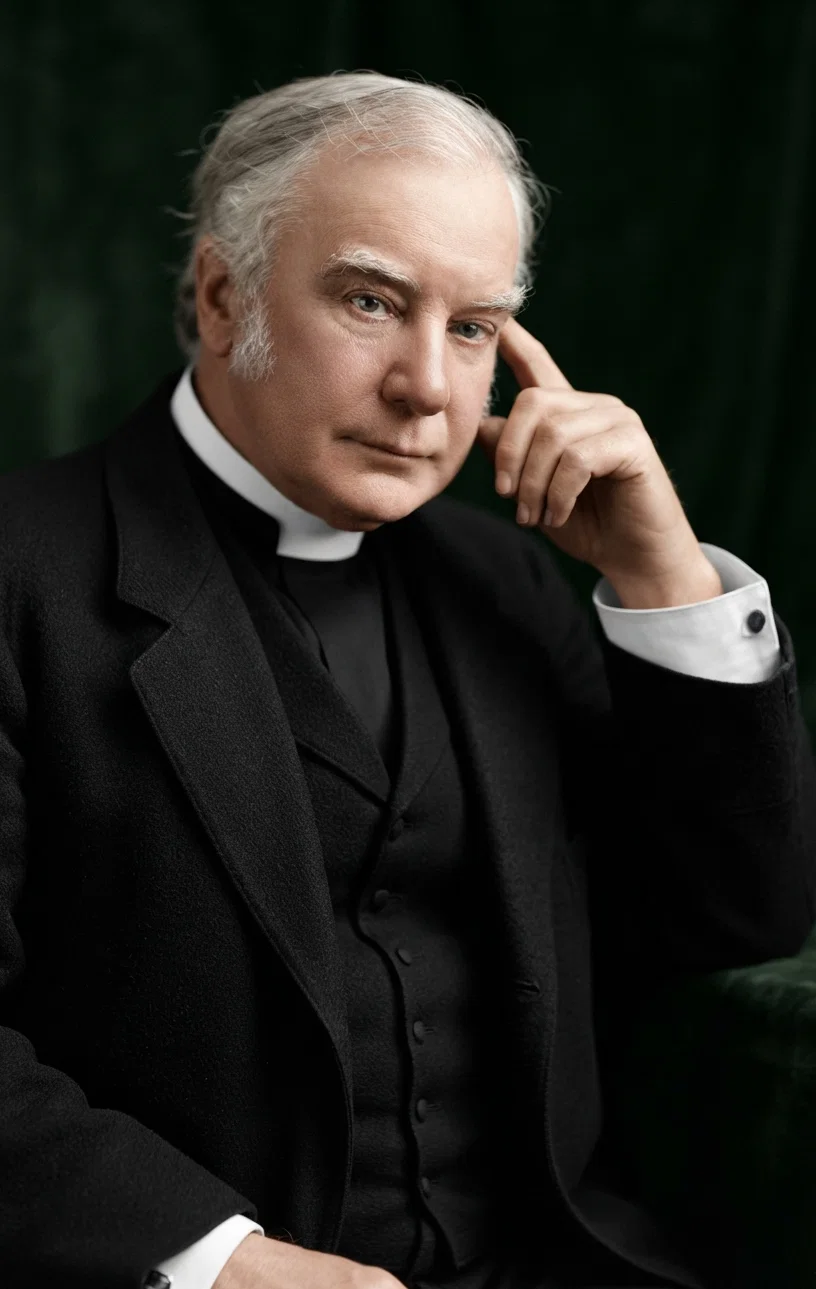
RANDOLPH MCKIM, D.D.
PROTESTANTS RETURNED TO THE TRUE CHURCH
"In 1868 the late Pope Pius IX addressed letters 'to Protestants and other non-Catholics,' inviting them to return to the bosom of 'Holy Mother Church.' Now we deny that we ever separated from the Catholic Church. The pope and his adherents are the innovators and heretics who have departed from 'the faith once delivered,' who have corrupted the Christian creed, and not the Protestants who have rejected their novelties, and returned to the creed and the practise of the primitive ages of Christianity. It is the Church of Rome, and not the Protestant churches, which by her errors and usurpations has separated herself from the Catholic Church of Christ. When she departed from the primitive faith, she became heretical; and when she made the acknowledgment of her erroneous and strange doctrines a condition of membership within her communion, she then forced upon men the alternative of separating from her, or abandoning the faith which they were bound to 'contend for.' Luther and Melanchthon, Calvin and Beza, Cranmer and Ridley and Latimer, all that noble band of Reformers of the sixteenth century, chose the former alternative. They decided to obey God rather than men. Were they therefore heretics? Was it heresy to obey Christ, and Christ's unchangeable truth, rather than to abandon these for the sake of union with a church which had apostatized from the faith, and required all her members to acquiesce in her apostasy? Nay, was not she the heretic who, abandoning the Holy Scriptures as her guide, taught for doctrines the commandments of men?
THE EARLY ENGLISH CHURCH NOT ROMAN
"Let it be remembered, also, that, so far as the Church of England was concerned, the Reformation was a rebellion against a foreign yoke, and the restoration of the original ecclesiastical authority. The British church had existed for centuries in entire independence of Rome. It had produced martyrs to the faith in the reign of Diocletian. It had sent bishops to the councils of Arles (A.D. 314), Sardica (A.D. 347), and Ariminum (A.D. 359). It had held numerous synods of its own. As to its orthodoxy, St. Jerome and St. Chrysostom had both borne testimony to it. It was not until the seventh century that the Church of Rome gained a footing on the island. Her pretensions to exercise authority over the British church were resisted. The bishops of the native church refused to yield their customs, or to receive Augustine as their archbishop. They resisted for more than a century the attempt of Rome to bring them into subjection. In short, the Church of England of that day only became Romanized after an ineffectual protest, and a prolonged resistance, on the part of the native episcopate. I proceed now to the question:
'WHY ARE WE PROTESTANTS?'
"I reply, first of all, we are Protestants because we build our faith and our hope on the impregnable rock of Holy Scripture, and not on the shifting sands of ecclesiastical tradition. The Bible, and the Bible alone, is the basis of the religion of Protestants; but tradition, interpreting the Bible, and often superseding or contradicting it, is the basis of the religion of Romanists. We follow the teaching of Jesus Christ and His apostles in building our faith solely on the revelation of truth contained in the Bible. 'Search the Scriptures,' was the precept of our Lord. 'The Scripture can not be broken,' was His divine assurance.
THE DOUBLE BASIS OF ROME
"The Church of Rome, on the contrary, builds her doctrines upon the double basis,—the Bible and tradition. But by making tradition the authoritative interpreter of the Bible, she really rests not upon the teaching of the Bible, but upon the teaching of tradition.
"The Sixth Article of the Church of England declares that 'Holy Scripture contained all things necessary to salvation; so that whatsoever is not read therein, nor may be proved thereby, is not to be required of any3man that it should be believed as an article of faith.' When this is denied, the very foundations of the faith are sapped. Our feet no longer stand on the rock of God's written word, but on the uncertain and shifting sands of tradition.
"In our Saviour's time the Pharisees appealed to tradition, but our Lord made His appeal to the Scriptures. He charged them with transgressing the commandments of God by their traditions. His words to them are most applicable to-day to the Church of Rome: 'Thus have ye made the commandment of God of none effect by your tradition.' Matt. 15:6. 'In vain they do worship Me, teaching for doctrines the commandments of men.' Verse 9. He said to the Jews, 'Search the Scriptures.' He never said, 'Search your traditions.'
"The authority of Christ is therefore against the principle of setting up tradition upon the same pedestal with the word of God.
BUT THEY DID NOT BURN IT
"Dr. Preston says, 'Protestantism has torn the Bible to pieces.' But even that is not so bad as burning it; for the leaves of the torn Bible, borne by the winds of heaven over the earth, may carry the message of life and immortality to mankind. The single verse, 'God so loved the world, that He gave His only-begotten Son,' once led a poor Hindu out of his heathen darkness into the light. But when it is burned, its power to bless is gone, for men can not read its message in its ashes, and the only voice it then has is anathema against the sacrilegious hand that committed it to the fire.
"Let me repeat, then, with emphasis, If any man asks why we are Protestants, I answer, Because the doctrines of the Church of Rome which we are called upon to accept as necessary to salvation can not be found in the Bible. That holy Book gives them no support whatever. Neither transubstantiation, nor auricular confession, nor purgatory, nor worshiping of images is found in the Bible. The same is true of all the peculiar doctrines of that church.
A VARYING CREED
"Is the Roman Catholic Church a household free from differences and divisions and conflicts? Are its interpretations of Scripture consistent and harmonious? There is no church in Christendom which has varied in its teachings as much as the Catholic Church. In 1854 she added a new article of faith—the immaculate conception of the blessed virgin; and in 1870 she imposed upon the church the awful and tremendous doctrine of the infallibility of the pope. Her creed is different to-day from what it was before Pius IX became pope.
"Keenan's catechism was published with the approval of the Scotch Roman Catholic bishop, and also recommended by the Irish bishop. This catechism contained the following question and answer:
"'Q. Must not a Catholic believe the pope himself to be infallible?
"'A. This is a Protestant invention. It is no article of Catholic faith.'
"This was before the year 1870. After the year 1870 the catechism was republished, and this question and answer had disappeared.
ROME A FOE TO LIBERTY
"It is true that when a decision is reached, the opposition generally submits; but such submission is no proof of real unity. The bishops who denounced the dogma of infallibility at the Vatican Council in 1870 with so much vehemence, submitted, because the Church of Rome is an absolute spiritual despotism. We Protestants prefer liberty of conscience and liberty of thought, even at the cost of external uniformity. But Rome has ever been a foe to liberty, whether civil or ecclesiastical. Friends of constitutional liberty should never forget that it was the pope of Rome who pronounced the Magna Charta upon which English liberty is based, null and void, excommunicated the barons who obtained it from the unwilling hands of King John, and drove into exile the noble Bishop Stephen Langdon, who was their real leader. This is the reason she is externally free from divisions; but surely such uniformity is dearly purchased at the price of liberty of thought and the supremacy of conscience.
"We are Protestants because we do not believe in bartering our spiritual liberty for the miserable bondage exacted by the Church of Rome. We are Protestants because we love our country, and can not contemplate with equanimity the possibility that this land of the 'free and the brave' should be brought under the dominion of the pope. Why not? — Because the popes have solemnly condemned free speech, free press, religious toleration, and liberty of conscience.
A CALL FOR UNITED ACTION
"I ask you then, my fellow citizens, is it not time for all Protestants to take counsel together for the security of our liberties, for the preservation of the heritage of personal liberty, liberty of conscience, liberty of speech, liberty of action, which we received from our forefathers? Colonial America was Protestant—overwhelmingly so. The ideas which gave birth to the Revolution were the offspring of the Protestant Reformation. The principles which lie at the root of the American Constitution were born of the Reformation; and it behooves us, whose ancestors pledged their lives, their fortunes, and their sacred honor, for American independence, to guard these principles of liberty from every open or secret assault.
POLITICIANS AND EDITORS BROUGHT TO THEIR KNEES
"Will any man say that I exaggerate the situation? Tell me then, I pray you, when politicians who are candidates for office tremble lest they should offend the Roman hierarchy, when merchants stand in awe of the boycott which the priests may proclaim against them, when the public press is ever on its guard lest it offend the Roman Church, when lecturers and Salvation Army preachers are in danger of mob violence in this land of free speech, when a great newspaper in our own city is beaten to its knees by the club, which the priests know so well how to use—I ask, when these things are true, is it not a fact that our liberties are abridged, that an ecclesiastical tyranny does already, in fact, exist in our midst?
"What then?—Why, this: Our great Protestant communions must realize the seriousness of the crisis, and make common cause against this insidious menace to our liberties. They must come out into the open and stand together in solid phalanx against all these invasions of personal liberty, not in anger, not in bitterness, not with violence of speech or action, but calmly, resolutely, with invincible determination that the principles of our Constitution shall be preserved inviolate, and that our citizens shall enjoy absolute liberty of speech and action, without any constraint or intimidation of any kind whatever.
WEAPONS OF TRUE PROTESTANTISM NOT CARNAL
"My friends and brethren, this Protestant unity of action is coming. I hear the sound of its advancing feet. I hear afar off the tramp of a mighty army marching to the battle hymn of the republic. It is an army of peace. Its weapons are not carnal, but spiritual. By the force of reason, by the power of an enlightened public opinion, it will win its victories. Its voice will be the voice of the many millions of Protestant citizens, the great majority of our people, and it will command respect, it will constrain to obedience. And this will be the tenor of its speech to our Roman Catholic fellow citizens: 'In the name of the great republic, remember that you, as well as we, owe obedience to our Constitution and laws, not in the letter only, but in spirit. Be content with the liberty to profess and practise and propagate your religion, without meddling in politics, without attempting to coerce or intimidate free American citizens, without using the boycott or the bludgeon to accomplish your ends; in short, to propagate your religion wholly by rational and spiritual means. In other words, be content to be a spiritual and not a political organization; and beware that you make no attempt, direct or indirect, to tamper with the sacred principles of our Constitution. Then there will be peace between us, and we can live and labor together for the honor and the glory of our common country.'"
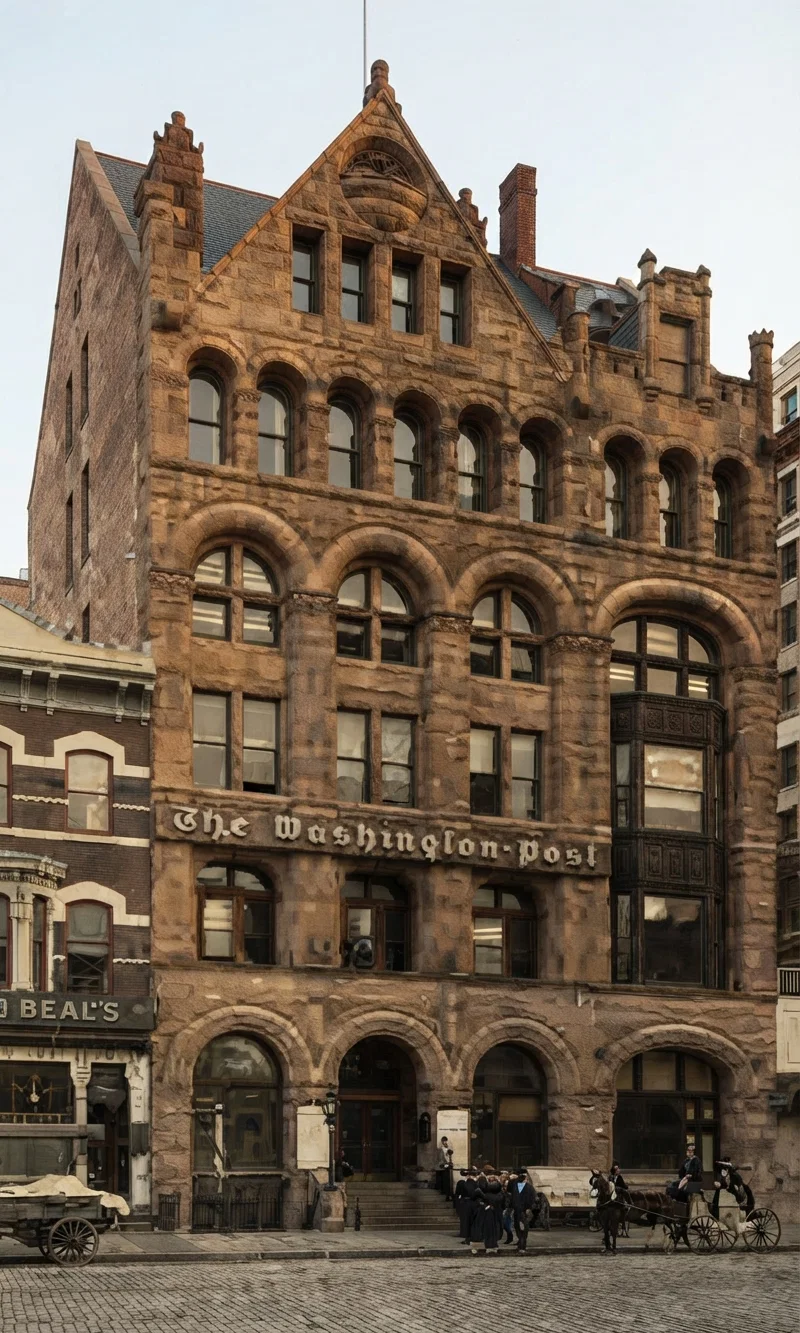
Office of the Washington "Post," the paper recently boycotted by the Roman Catholics of Washington, D. C., at the direction of the Roman Catholic clergy of the city, because in its issues of August 9, 10, and 11, 1913, it published an account of the death of Florence Cleland, a 17-year-old Protestant girl, who lost her life in an attempt to escape from the Home of the Good Shepherd, a Catholic institution, early Friday morning, August 8, and stated that there was a demand on the part of the citizens of Washington for an investigation into the treatment of the inmates of this institution.