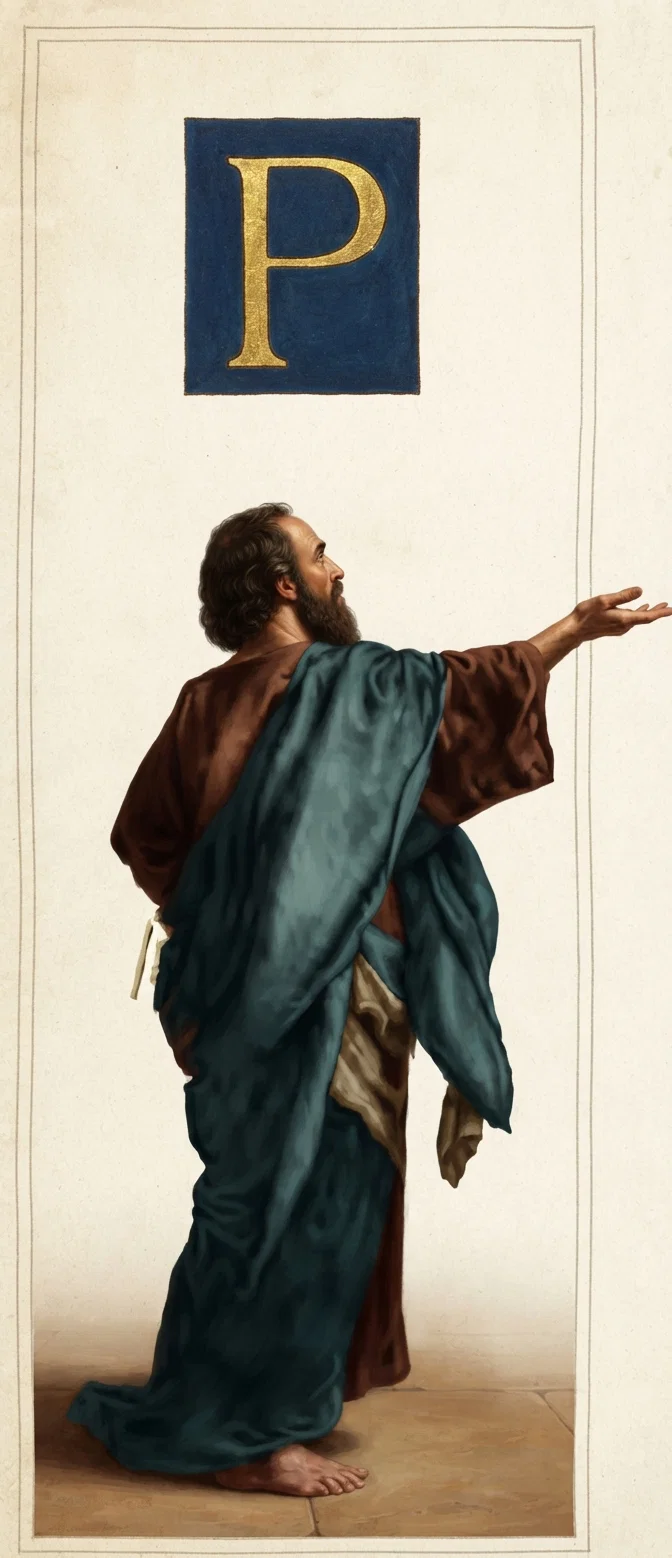
A Man of Distinguished Birth, Talented, and Bigoted—Clinging Tenaciously to His Prejudices—Battling Against His Firm Convictions—His Whole Course Changed, and He Becomes One of the Most Conspicuous Characters in History
3%
Page 3
Pacific Press Publishing Association · Mountain View, California · Mar 10, 1914
A Man of Distinguished Birth, Talented, and Bigoted—Clinging Tenaciously to His Prejudices—Battling Against His Firm Convictions—His Whole Course Changed, and He Becomes One of the Most Conspicuous Characters in History
By Mrs. E. G. White
FROM PERSECUTOR TO DISCIPLE
A Man of Distinguished Birth, Talented, and Bigoted—Clinging Tenaciously to His Prejudices—Battling Against His Firm Convictions—His Whole Course Changed, and He Becomes One of the Most Conspicuous Characters in History
By MRS. E. G. WHITE
PROMINENT among the Jewish leaders who became thoroughly aroused by the success attending the proclamation of the gospel, was Saul of Tarsus. A Roman citizen by birth, Saul was nevertheless a Jew by descent, and high hopes were cherished concerning him as an able and zealous defender of the ancient faith. His elevation to membership in the Sanhedrin council placed him in a position of power.
STIRRED BY STEPHEN'S TRIAL
Saul had taken a prominent part in the trial and conviction of Stephen, and the striking evidences of God's presence with the martyr had led Saul to doubt the righteousness of the cause he had espoused against the followers of Jesus. His mind was deeply stirred. In his perplexity he appealed to those in whose wisdom and judgment he had full confidence. The arguments of the priests and rulers finally convinced him that Stephen was a blasphemer, that the Christ whom the martyred disciple had preached was an impostor, and that those ministering in holy office must be right.
Not without severe trial did Saul come to this conclusion. But in the end, having fully decided that the priests and scribes were right, Saul became very bitter in his opposition to the doctrines taught by the disciples of Jesus. His activity in causing holy men and women to be dragged before tribunals, solely because of their faith in Jesus, brought sadness and gloom to the newly organized church, and caused many to seek safety in flight.
Those who were driven from Jerusalem by this persecution "went everywhere preaching the word." Among the cities to which they went was Damascus, where the new faith gained many converts.
TRY TO SUPPRESS IT BY PERSECUTION
The priests and rulers had hoped that by vigilant effort and stern persecution the heresy might be suppressed. Now they felt that they must carry forward in other places the decided measures taken in Jerusalem against the new teaching. For the special work that they desired to have done at Damascus, Saul offered his services.
"Breathing out threatenings and slaughter against the disciples of the Lord," Saul of Tarsus, in the strength and vigor of manhood, "with authority and commission from the chief priests," and fired with mistaken zeal, set out on that memorable journey, the strange occurrences of which were to change the whole current of his life.
THE LIGHT BRIGHTER THAN MIDDAY SUN
On the last day of the journey, "at midday," as the weary travelers neared Damascus, "suddenly," as Saul afterward declared, there shone "round about me and them which journeyed with me," "a light from heaven, above the brightness of the sun," too glorious for mortal eyes to bear. Blinded and bewildered, Saul fell prostrate to the ground.
While the light continued to shine round about them, Saul heard "a voice speaking . . . in the Hebrew tongue," "saying unto him, Saul, Saul, why persecutest thou Me? And he said, Who art Thou, Lord? And the Lord said, I am Jesus whom thou persecutest: it is hard for thee to kick against the pricks."
COMPANIONS HEARD THE VOICE BUT SAW NO MAN
Filled with fear, and almost blinded by the intensity of the light, the companions of Saul heard a voice, but saw no man. But Saul understood the words that were spoken; and to him was clearly revealed the One who spoke—even the Son of God. In the glorious Being who stood before him, he saw the Crucified One. Upon the soul of the stricken Jew the image of the Saviour's countenance was imprinted forever. The words spoken struck home to his heart with appalling force. Into the darkened chambers of his mind there poured a flood of light, revealing the ignorance and error of his former life, and his present need of the enlightenment of the Holy Spirit.
HAD BEEN DOING THE WORK OF SATAN
Saul now saw that in persecuting the followers of Jesus, he had in reality been doing the work of Satan. He saw that his convictions of right and of his own duty had been based largely on his implicit confidence in the priests and rulers. He had believed them when they told him that the story of the resurrection was an artful fabrication of the disciples. Now that Jesus Himself stood revealed, Saul was convinced of the truthfulness of the claims made by the disciples.
In that hour of heavenly illumination, Saul's mind acted with remarkable rapidity. The prophetic records of Holy Writ were opened to his understanding. He saw that the rejection of Jesus by the Jews, His crucifixion, resurrection, and ascension, had been foretold by the prophets, and proved Him to be the promised Messiah. Stephen's sermon at the time of his martyrdom was brought forcibly to Saul's mind, and he realized that the martyr had indeed beheld "the glory of God," when he said, "Behold, I see the heavens opened, and the Son of man standing on the right hand of God." The priests had pronounced these words blasphemy, but Saul now knew them to be truth.
What a revelation was all this to the persecutor! No doubt entered the mind of Saul that the One who spoke to him was Jesus of Nazareth, the long-looked-for Messiah, the Consolation and Redeemer of Israel. "Trembling and astonished," he inquired, "Lord, what wilt Thou have me to do? And the Lord said unto him, Arise, and go into the city, and it shall be told thee what thou must do."
MEDITATED THROUGH DAYS IN DARKNESS
When the glory was withdrawn, and Saul arose from the ground, the blackness of night settled upon his vision. His companions, in fear and amazement, "led him by the hand, and brought him into Damascus."132For three days Saul was "without sight, and neither did eat nor drink." These days of soul agony were to him as years. Again and again he recalled, with anguish of spirit, the part he had taken in the martyrdom of Stephen. With horror he thought of his guilt in allowing himself to be controlled by the malice and prejudice of the priests and rulers, even when the face of Stephen had been lighted up with the radiance of heaven. In sadness and brokenness of spirit he recounted the many times he had closed his eyes and ears against the most striking evidences, and had relentlessly urged on the persecution of the believers in Jesus of Nazareth.
IN HIS BLINDNESS HE REMEMBERED PROPHECIES
During the long hours when Saul was shut in with God alone, he recalled many of the passages of Scripture referring to the first advent of Christ. Carefully he traced down the prophecies, with a memory sharpened by the conviction that had taken possession of his mind. As he reflected on the meaning of these prophecies, he was astonished at his former blindness of understanding, and at the blindness of the Jews in general, which had led to the rejection of Jesus as the promised Messiah. To his enlightened vision, all now seemed plain. He knew that his former prejudice and unbelief had clouded his spiritual perception, and had prevented him from discerning in Jesus of Nazareth the Messiah of prophecy.
HIS HOPE IN THE MERITS OF THE RISEN SAVIOUR
As Saul yielded himself fully to the convicting power of the Holy Spirit, he saw the mistakes of his life, and recognized the far-reaching claims of the law of God. He who had been a proud Pharisee, confident that he was justified by his good works, now bowed before God with the humility and simplicity of a little child, confessing his own unworthiness, and pleading the merits of a crucified and risen Saviour. Saul longed to come into full harmony and communion with the Father and the Son; and in the intensity of his desire for pardon and acceptance, he offered up fervent supplications to the throne of grace.
The prayers of the penitent Pharisee were not in vain. The inmost thoughts and emotions of his heart were transformed by divine grace; and his nobler faculties were brought into harmony with the eternal purposes of God. Christ and His righteousness became to Saul more than the whole world.
THE HOLY SPIRIT A CONVICTING POWER
The conversion of Saul is a striking evidence of the miraculous power of the Holy Spirit to convict men of sin. He had verily believed that Jesus of Nazareth had disregarded the law of God, and had taught His disciples that it was of no effect. But after his conversion, Saul recognized Jesus as the one who had come into the world for the express purpose of vindicating His Father's law. He was convinced that Jesus was the originator of the entire Jewish system of sacrifices. He saw that at the crucifixion type had met antitype; that Jesus had fulfilled the Old Testament prophecies concerning the Redeemer of Israel.
ANANIAS SUMMONED TO HELP HIM
While Saul in solitude, at the house of Judas, continued in prayer and supplication, the Lord appeared in vision to "a certain disciple at Damascus, named Ananias," telling him that Saul of Tarsus was praying, and in need of help. Ananias could scarcely credit the words of the angel, for the reports of Saul's bitter persecution of the saints at Jerusalem had spread far and wide. He presumed to expostulate; but the command was imperative: "Go thy way: for he is a chosen vessel unto Me, to bear My name before the Gentiles, and kings, and the children of Israel."
Obedient to the direction of the angel, Ananias sought out the man who had but recently breathed out threatenings against all who believed on the name of Jesus; and putting his hands on the head of the penitent sufferer, he said, "Brother Saul, the Lord, even Jesus, that appeared unto thee in the way as thou camest, hath sent me, that thou mightest receive thy sight, and be filled with the Holy Ghost. And immediately there fell from his eyes as it had been scales: and he received sight forthwith, and arose, and was baptized."
STRAIGHTWAY AND BOLDLY HE PREACHED CHRIST
Paul remained "certain days with the disciples which were at Damascus. And straightway he preached Christ in the synagogues, that He is the Son of God." Boldly he declared Jesus of Nazareth to be the long-looked-for Messiah, who "died for our sins according to the Scriptures; . . . was buried, and . . . rose again the third day," after which He was seen by the twelve, and by others. "And last of all," Paul added, "He was seen of me also, as of one born out of due time." His arguments from prophecy were so conclusive, and his efforts were so manifestly attended by the power of God, that the Jews were confounded and unable to answer him.
JEWISH LEADERS ASTONISHED AT THE NEWS
The news of Paul's conversion had come to the Jews as a great surprise. He who had journeyed to Damascus to apprehend and prosecute the believers, was now preaching the gospel of a crucified and risen Saviour, strengthening the hands of those who were already its disciples, and continually bringing in new converts to the faith he had once so bitterly opposed.
As Paul continued to appeal to his astonished hearers to "repent and turn to God, and do works meet for repentance," he "increased the more in strength, and confounded the Jews which dwelt at Damascus, proving that this is very Christ."
Paul declared that his change of faith had not been prompted by impulse or fanaticism, but had been brought about by overwhelming evidence. In his presentation of the gospel, he sought to make plain the prophecies relating to the first advent of Christ. He showed conclusively that these prophecies had been literally fulfilled in Jesus of Nazareth. The foundation of his faith was the sure word of prophecy.