History of the Tea, Coffee, and Cocoa Habit
4%

Pacific Press Publishing Association · Mountain View, California · Mar 31, 1914

FromSigns of the Times, Vol. 41, No. 12.

Read the full edition

History of the Tea, Coffee, and Cocoa Habit

THEIR GENERAL USE OF QUITE MODERN ORIGIN—HABITUES OF "COFFEE HOUSES" WERE ONCE REGARDED AS COMMON TIPPLERS — HARMFUL EFFECTS OF THESE BEVERAGES TO BE EXPOSED
By Daniel H. Kress, M. D.
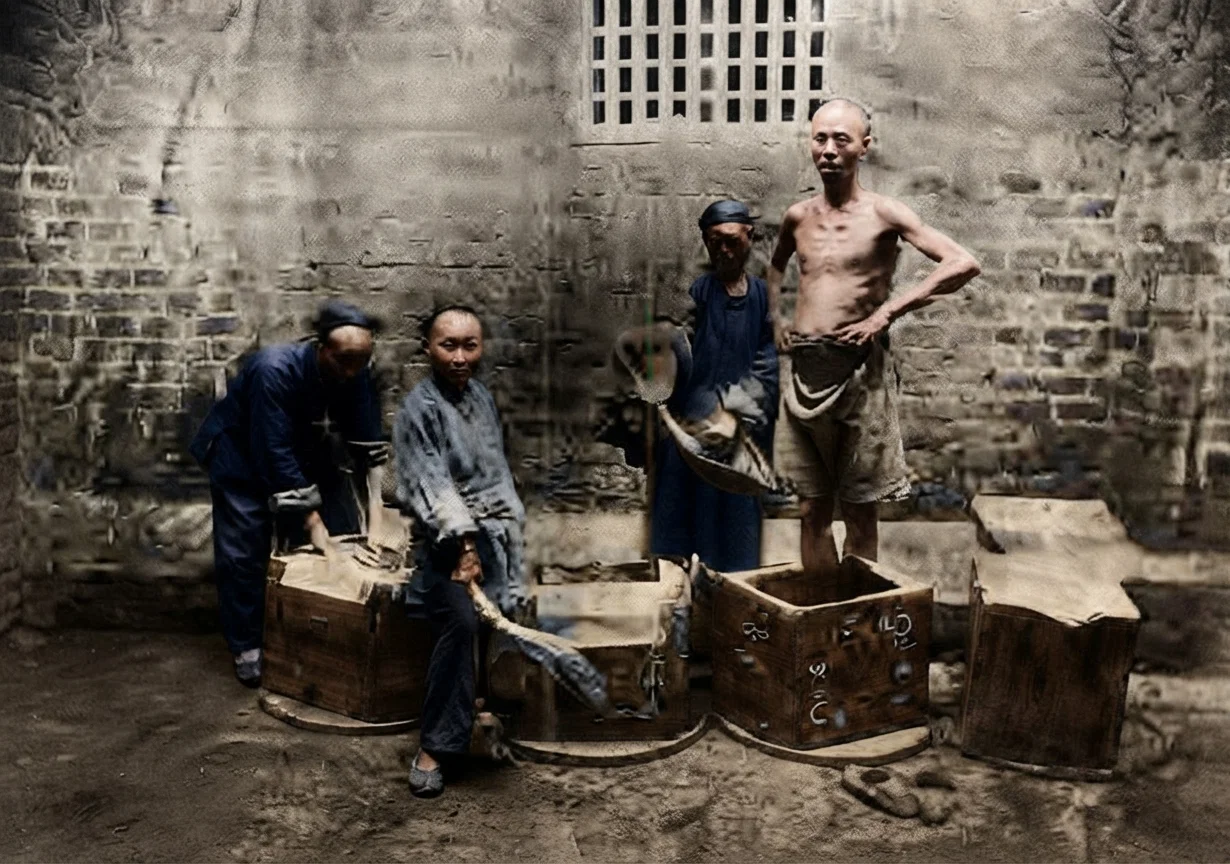
PACKING TEA FOR SHIPMENT, HANKOW, CHINA
No less than one third of the world's inhabitants are tea-drinkers. Yet tea-drinking is of modern origin; our forefathers knew nothing of this habit.
Tea is said to have been introduced into China from Korea about the fourth century. It had found its way into Japan by the ninth century, and became known to European countries in the sixteenth.

ORIGINALLY FOR MEDICINAL PURPOSES

It was originally imported into Europe for medicinal rather than dietetic purposes.
In 1664 a present of two pounds two ounces of tea was made by the East India Company to Charles II. The price was then about fifteen dollars a pound. The first mention we find of tea in England is in an act of Parliament passed about that time, by which it charged with a duty of one shilling sixpence a gallon when drunk in public houses.

BECAME FASHIONABLE AT COURT

About the year 1666 it became a fashionable beverage at court, owing to the example of Catherine, the queen of Charles II, who had been addicted to its use in Portugal. In the year 1678, Bontekoe, a Dutch physician, published a treatise in favor of tea as a drug in certain diseases; and to his authority its general use in so many parts of Europe is to be attributed.
Up to the present century, tea was still so uncommon on the continent of Europe that it could only be obtained of chemists, the same as other drugs. In 1728 the use of tea had so much grown that the price was reduced to five dollars a pound, and in 1836 it stood at fifty cents a pound.

AUSTRALIA THE GREATEST CONSUMER

In Great Britain the consumption of tea is to-day six pounds for each person, as against half an ounce in 1771. The price was then about five dollars a pound, as against the popular thirty cents a pound of to-day.
The West Australian consumes ten pounds of tea per annum, and the New Zealander imbibes annually seven pounds of it. Australia consumes a greater quantity per annum a head than does any other country in the world.
In 1830, in evidence given before the House of Commons, it was stated that the consumption of tea by the whole civilized world exclusive of England was computed at 22,000,000 pounds. For an article of consumption to assume such proportions, can not be without its influence on national life.

COFFEE AS A BEVERAGE

As a beverage, coffee was introduced into Europe about three centuries ago. Gradually its use became popular, and coffee-houses arose everywhere. The first one was established in Constantinople in 1573. One was opened in London in 1652. Others sprang up in other parts.
That the coffee-house was regarded as an evil and a nuisance will be seen from the following, which appeared in the "New Views of London" in 1708. It is mentioned that "one James Farr, a barber, who kept a coffee-house, which was afterward The Rainbow by the Inner Temple Gate, was in the year 1657 prosecuted by the inquest of St. Dunstan's-in-the-West for making and selling a sort of liquor called coffee, as a great nuisance and prejudice of the neighborhood."
Many were addicted to the use of this new beverage, and the intoxication produced made these places a common resort.
The following poem, describing the coffee-house, was published in 1665, entitled "The Character of a Coffee-House":
"Of some and all conditions, Even vintners, surgeons, and physicians, The blind, the deaf, and aged cripple Do here resort, and coffee tipple."
Germany and the United States are the greatest coffee-drinking countries in the world, both consuming about fourteen pounds annually a head. America takes half of the coffee crop of the world. The importation of coffee into the United States amounted in 1904 to 1,116,922,651 pounds, worth nearly $100,000,000 at wholesale rates.

COCOA, AND THE WAY IT IS MADE

Cocoa as a beverage is of more modern origin. The amount consumed is considerably less than that of tea or coffee, but its use is increasing. Doubtless cocoa will become eventually as popular a stimulant as tea or coffee. Consumers may be interested to know something of its origin and preparation.
The commercial cocoas are prepared from the seed of the plant named theobroma cacao. The seeds are concealed in a large pod or fruit, which in shape resembles the cucumber. They are arranged in rows, imbedded in a pulp or spongy substance. In their natural state the seeds are bitter and extremely unpleasant to the taste. After they are removed from the pods, they are placed in pits in the ground, and covered up for four or five days, or until they have undergone fermentation. Then they are dried in the sun, roasted the same as coffee, and ground. By the process of fermentation and roasting, they lose much of their harsh flavor. Many of the preparations have from twenty-three to sixty-one per cent of cane-sugar added to conceal still further the disagreeable principles.

THEIR TRUE NATURE WILL BE EXPOSED

These three articles, coffee, tea, and cocoa, seem destined to become three of the most widely advertised commodities the world has ever seen. But the true nature of these beverages will also become known, and anti-tea, coffee, and cocoa crusades will be organized and carried forward.