World's Fairs

7%

Pacific Press Publishing Association · Mountain View, California · Jun 2, 1914

FromSigns of the Times, Vol. 41, No. 21.

Read the full edition

World's Fairs

One of the Greatest Held 520 Years Before Christ
By ROBERT S. FRIES
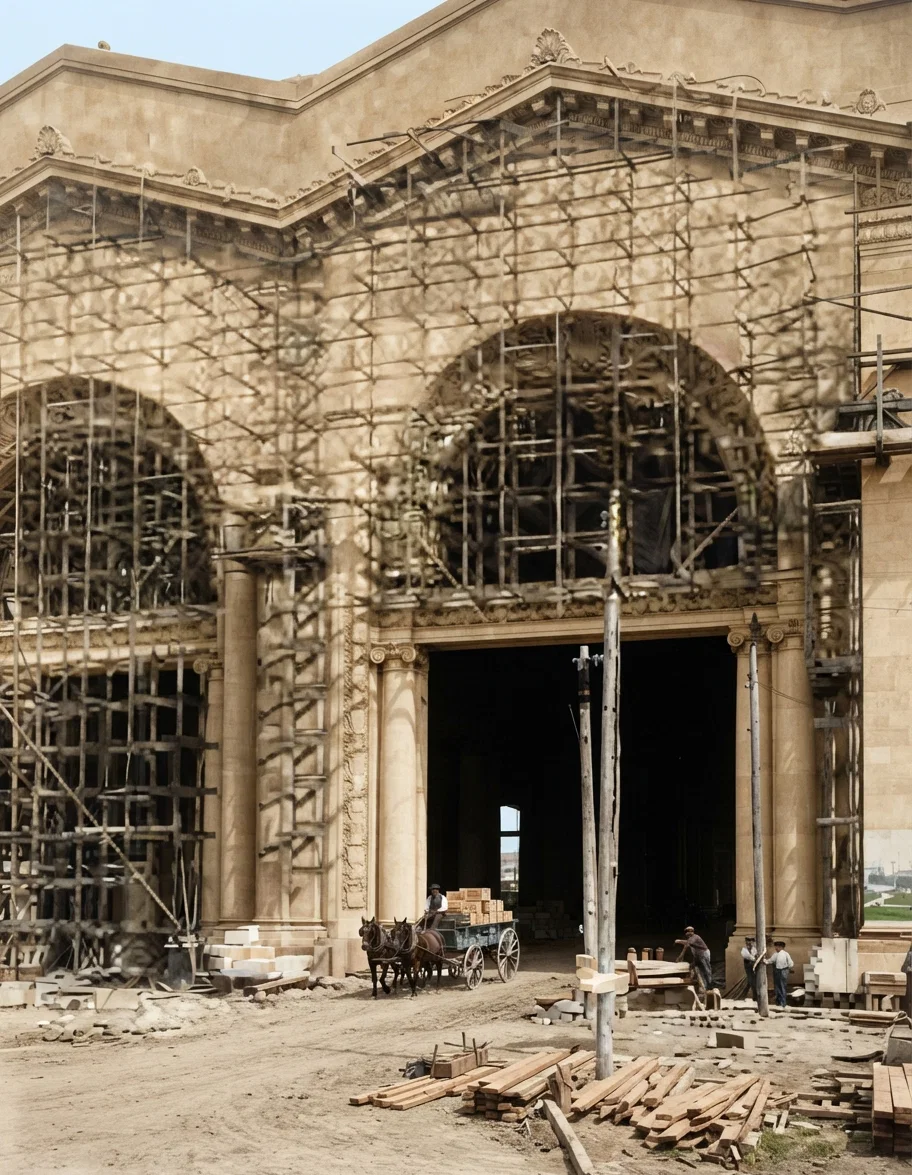
THE opening of the Panama-Pacific International Exposition is set for February, 1915, and the accompanying photograph shows the front of one of the buildings that are nearing completion.
ENTRANCE TO MACHINERY HALL, PANAMA-PACIFIC EXPOSITION — THE WORK IN PROGRESS
The view includes part of the main entrance to the Machinery Hall, which is nearly finished. Some idea of its size may be had by comparing the wagon driving through the door, with the height of the columns flanking the entrance.
We may think that international expositions are products of our modern civilization; but as Solomon says, "There is no new thing under the sun."
The prophet Daniel, speaking of the four kings that should reign on the Persian throne, says, "The fourth shall be far richer than they all." Dan. 11: 2. This was Xerxes the Great, spoken of in the Bible as Ahasuerus, whose kingdom extended "from India even unto Ethiopia." Esther 1: 1.
The book of Esther tells how Xerxes decided to show "the riches of his glorious kingdom and the honor of his excellent majesty" by holding the first world's fair in the history of man.
With the wealth of the world at his command, the king held an international exposition that compares more than favorably with the ones of the present day. The glory of that world's fair has not been surpassed by its modern prototypes.
This first international exposition was held at Shushan, the capital of Medo-Persia, in the year 521 B. C. That it was not a small affair is shown by the statement that it took six months for the people to see all the exhibits from the different parts of the kingdom.
The climax in the display of the riches of the king was the great feast given in the palace of Xerxes. Thousands of sightseers from different parts of the world were invited. No one was barred. The banquet was given "both unto great and small."
Even the couches on which the guests reclined as they ate and drank, were "of gold and silver"; and notwithstanding the multitude who accepted the king's invitation, the account states that the cups from which wine was drunk were all of gold of different patterns.
"And the drinking was according to the law; none did compel." This shows that there must have been some "white ribboners," who refused wine, even in those days.
After reading the account of this first world's fair, we can appreciate the wisdom of Solomon, who said, "Is there anything whereof it may be said, See, this is new? it hath been already of old time, which was before us." Eccl. 1: 10.