The Jewish Theory in Conflict with the Written Word — The Master Brushes Aside Their Speculative Theories
The Common People Can Understand Him — The Conflict with Tradition in Our Own Day
By WILLIAM A. SPICER
THE Jewish teachers in the days of Christ had set tradition above the written Word. The scribes and the Pharisees came once to Jesus with the question, "Why do Thy disciples transgress the tradition of the elders?" He answered by another question, "Why do ye also transgress the commandment of God by your tradition?"
CHARGED WITH SEEKING NOVELTIES
They thought that Christ was encouraging His disciples to seek after novelties in doctrine and practise, and to depart from the old, established customs of the church. As a matter of fact, Jesus was but sweeping aside the novelties introduced by the authority of tradition. He was calling the people back to the written Word and the truth which was from the beginning.
IT IS SAID IN THE NEW TESTAMENT THAT THE COMMON PEOPLE HEARD CHRIST GLADLY
To justify their departure from the Scriptures, and to give a semblance of divine authority to ecclesiastical traditions, the Jewish elders had developed the theory of oral tradition, and it is worth while noting the parallel between the Jewish theory and the modern theory of tradition.
THE JEWISH THEORY OF TRADITION
It was the teaching of the Jews that when Moses went up into the mount to receive from God the Ten Commandments, and the instruction that was written in "the book of the law," for preservation and future study, much instruction was given him which was not written. This, according to the theory, he transmitted orally to Joshua, Joshua in turn taught it to the elders, and they passed on this unwritten wisdom, these traditions of the elders, to the men of the Great Synagogue, the doctors of the law.
Thus was laid down a theory which sought to give divine sanction to the traditions that had accumulated through the centuries. By the days of Christ, these traditions had been exalted as of equal authority with the word of God; and inevitably, whenever the human places itself theoretically on a level with the divine, it exalts itself even above that which is divine. So in actual practise, there was given to these traditions of the church an authority above the word of God.
NONE BUT LEARNED DOCTORS HAD IT
In fact, it was the theory that only the learned doctors of the church, who had possession of this fund of traditional learning, could understand and interpret the word of God. Thus the divine Word was explained by human tradition, instead of human tradition being tested by the divine Word.
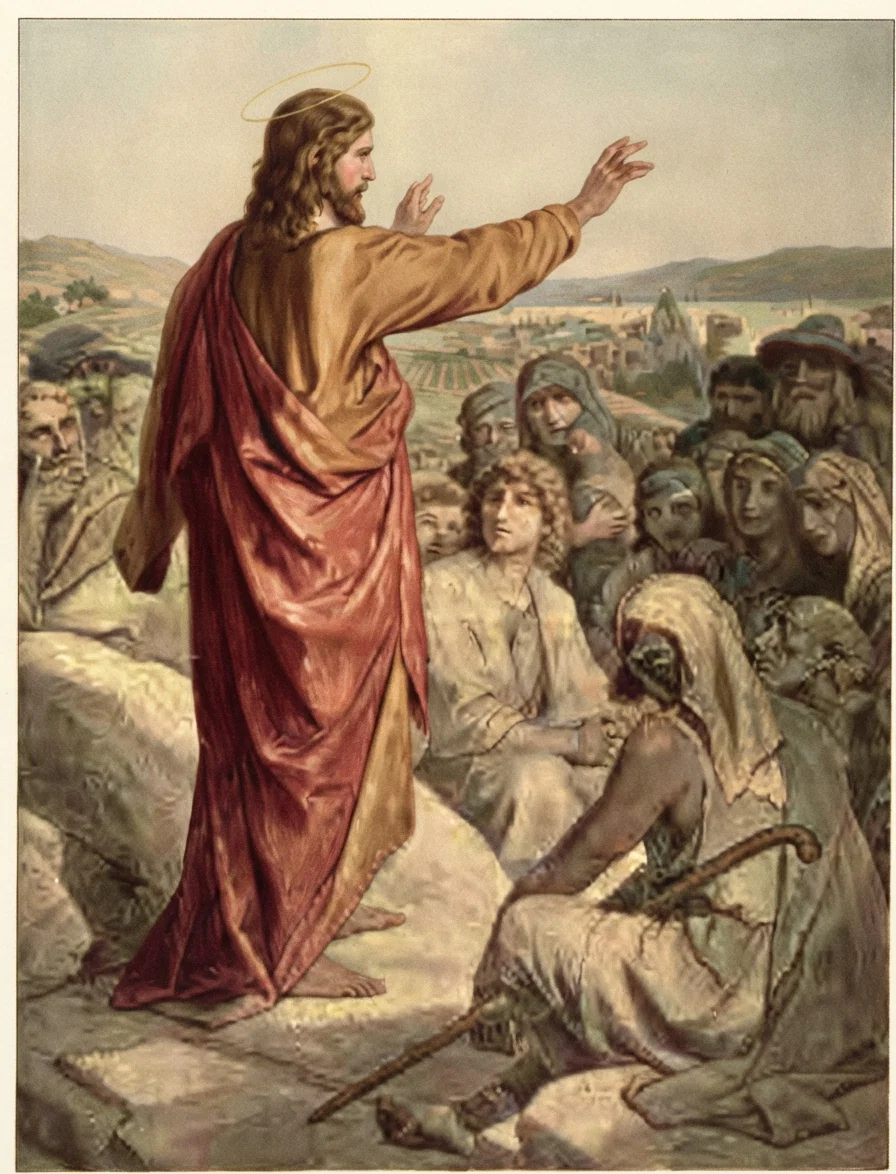
It is said in the New Testament that the common people heard Christ gladly. They could understand what He said; and under His teaching, they could understand the blessed truths of the word of God. The Pharisees, however, said, "This people who knoweth not the law are cursed."
HE SWEPT THE TANGLE AWAY
Christ swept all this tangle of human tradition aside, and laid bare the word of God, the written Word which God Himself had committed to the Jewish people as living oracles to give to all the world. "Full well," He told the Pharisees, "ye reject the commandment of God, that ye may keep your own tradition." "In vain they do worship Me, teaching for doctrines the commandments of men."
THE MODERN THEORY OF TRADITION
In almost exact parallel to the ancient Jewish theory of church tradition has come about the modern theory. In order to account for doctrines and practises not found in the word of God, the Catholic Church has developed the theory of church tradition.
The apostles are supposed to have received instruction and teaching not contained in the written Gospels and epistles. They are said to have passed these on to their successors. So there has developed a great body of teaching in the hands of the church which has been exalted not only to a level with the Scriptures, but really, as Catholic authorities declare, it is held that ecclesiastical tradition is the safer rule of faith. The Scriptures are to be understood in the light of Catholic tradition.
MAY THE COMMON PEOPLE KNOW?
Hence again, just as in the olden time among the Jews, the common people are not supposed to be able to understand the Scriptures. These must be expounded by the doctors of the law386in the light of the great mass of ecclesiastical tradition. Thus as of old tradition makes void the word of God.
It is ever the way, and the only safety now is in following Christ's example of sweeping aside human tradition and laying hold of the word of God itself as the divinely appointed standard of faith and doctrine.
This is the Protestant platform. And the message of Christ's soon coming is a call to Protestants and Catholics alike to turn from doctrines and practises not founded in the living Word.