Editorial

5%

Review and Herald Publishing Association · Takoma Park, Washington, D. C. · Jun 27, 1912

FromReview and Herald, Vol. 89, No. 26.

Read the full edition

Editorial

In the United States of Brazil
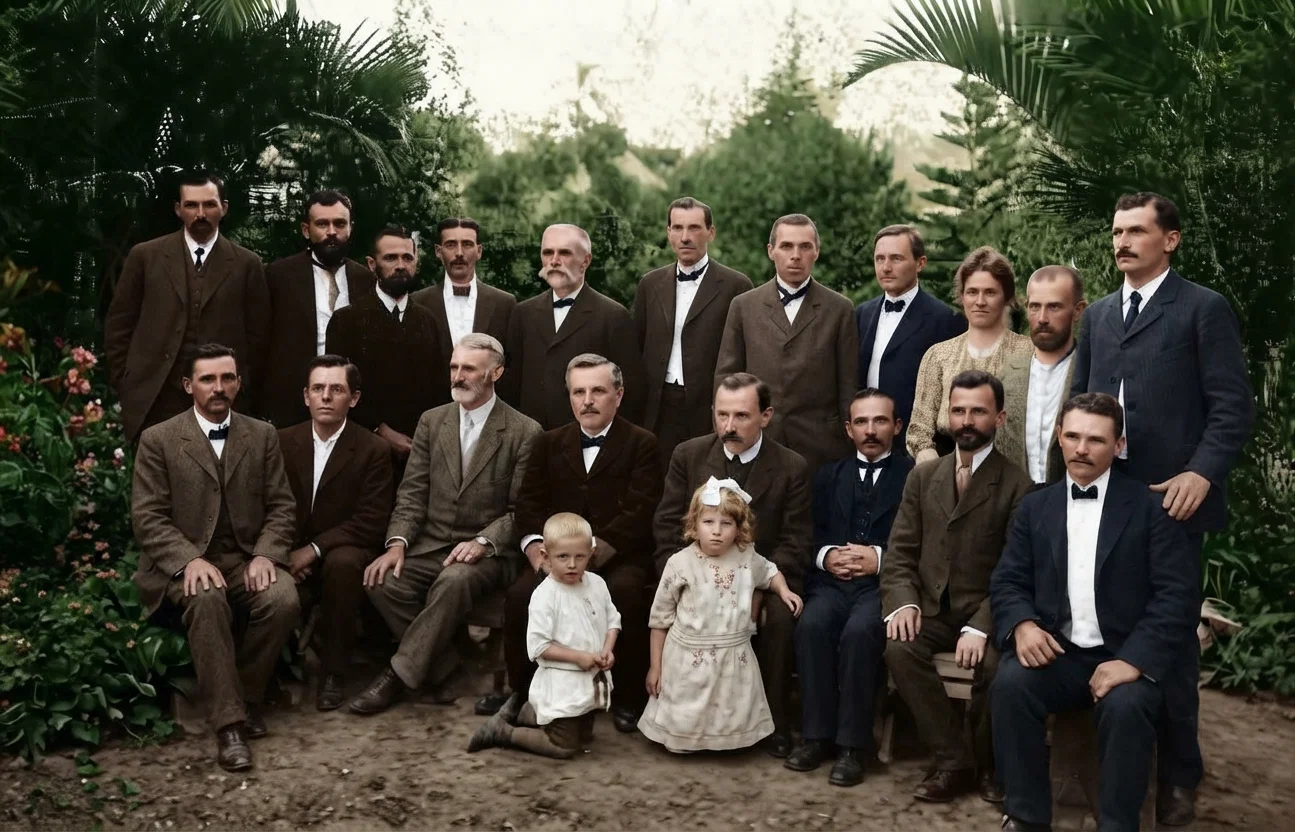
ON our way from the Argentine headquarters to Brazil, Elder J. W. Westphal and I went to Posadas, just across the river from Paraguay, for the annual meeting of the Upper Parana Mission. Thirty-six hours took us there. Notwithstanding the red dust flying and the cramped wood benches of the second-class car, we were thankful for a train across the plains of Missiones. The last time that Elder Westphal had visited the field, he must needs ride two days by horse to cover a gap in the railway construction.
Our brethren in South America rejoice that every year the railways are making it easier to reach their fields.
Coming up through Brazil with Elder F. W. Spies, he pointed out to me a region that we crossed in a few hours by train, over which he and Sister Spies once traveled by mules for five days. The providence of God is opening the way for a faster work. And wherever a region is opened by a railway, and commerce enters, there is more or less breaking down of fanatical anti-Protestant intolerance. So our brethren see the hand of God in the development of railway enterprise in this Catholic continent.
Our three conference sessions in Brazil were held in the three southernmost states—Rio Grande, Santa Catharina, and Parana. These states lie side by side like Ohio, Indiana, and Illinois; yet to get from one meeting-place to the next took as much time as going from America to Europe.
The Lord blessed the believers in these gatherings. They love the truth, and the “blessed hope” is dear to their hearts. There was growth reported, though not what they mean by the grace of God to see in future years. These conferences have had but one ordained minister each, the president; and two of the fields have not had even that all the year. Yet the Rio Grande Conference reported sixty-seven added to the churches during the year. And the conference gave one thousand dollars tithe to the union, while another thousand came to the union treasury from the offerings of the brethren. There is not the prosperity among the colonists of Brazil that seems to obtain in Argentina.
SOUTH AMERICAN WORKERS
They grub their living out of rather rocky soil in these south Brazilian states, where our work had its beginning, for the most part. Yet the fifteen hundred believers in Brazil are raising fifteen thousand dollars for the work of God every year, and this is sure to increase with increasing faithfulness and prosperity.
One thing that encouraged me was to find a larger proportion of Brazilian believers than I saw six years ago. The providence of God sent many German colonists into Brazil years ago, and it was among these people of an open Bible that our work found a foothold. Most of our membership is German. But now the work is reaching out to the people of the land, and henceforth the great work will be in the Portuguese tongue.
Elder Westphal accompanied us to the second conference meeting, in Santa Catharina, which was also the union conference session. He then returned to Buenos Aires, his counsels being a blessing to the brethren of the Brazilian Union. Elder J. Lipke, of the East Brazil Mission, brought a cheering report to the union conference from the new work in Bahia and Pernambuco, away to the northward. The message is winning hearts in those most Catholic regions. In less than two years over one hundred new believers have been gathered out, and some are getting a good experience in the colporteur work.
Our brethren feel that they are now getting where they can soon hope to have their field fairly manned—for Brazil—so far as this southeastern coast is concerned. Yet they have no one for the great state of Minas Geraes, the Colorado of Brazil. It was decided that Elder F. W. Spies, president of the union, should move to San Paulo, to be nearer the printing-office and headquarters. Elder H. Meyer, who recently came down from Philadelphia, is appointed to the oversight of the evangelistic work in Rio de Janeiro and the surrounding districts. Half the population of Brazil is in those central states of San Paulo, Minas, Rio, and the city of Rio de Janeiro. And little has as yet been done here. Railways open all this country fairly well, and now our brethren want to work the populous portions, where the most prosperous portion of Brazil is found.
Elder W. Ehlers, of Germany, is in charge in the state of Rio Grande; Elder F. R. Kuempel, recently from Germany, is president of the Santa Catharina Conference; while Elder J. G. Kroeker, of Nebraska, has the Parana Conference.
Brother H. Tonjes, formerly of New York City, is leading the canvassing work in Rio Grande, and training some promising workers for other parts. All our workers are pressed to the utmost, and all speak the word of courage. I was glad to find that Brother E. Ehlers, who came to Brazil from Missouri about four years ago, had made so good progress with the language that he could render unusually good service as a translator. In most of my own work in these South American meetings, I have had two translators — a brother on one side putting the sentences into Spanish or Portuguese, while on the other side stood the German translator. No matter how it is done, the word of God works, and it is that word that is the channel of blessing to the people.
After the Parana meeting I visited the union headquarters and publishing house near the city of San Paulo. Our brethren have a good office for the publishing work, Brother A. Pages being in charge. They are planning for larger and better books; for the canvassers are able to sell books at a good price. The reading public is small, however, in these Catholic lands. Catholicism stands for darkness and ignorance among the common people in these lands where Rome has had its own way so long.
Our brethren in Brazil have city problems, as well as we in the United States. We hope for a good work in this city of Rio de Janeiro, with over one million in city and suburban towns. We must help the brethren in Brazil to develop their work; and they will need a few more laborers to give even one experienced man to each state. The crying need is education for the young people growing up here. There are some church-schools, but no union training-school. It is a hard problem in a land so broken up, where it may take eight or ten or more days to get from one state to the next. But our brethren are praying and planning for training-school work one of these days. It is a dire need in Brazil.
Here in Rio I have just held the last meeting with the brethren. Now I take steamer for England, thankful to God for all his blessings that I have shared with our believers in these lands during the last four months. I have found them seeking God for a deeper experience, and longing for more of his Holy Spirit, and to see the message going with greater power. The brethren and sisters everywhere have sent greetings to the believers in North America. The workers love the truth and the people for whom they labor. I have enjoyed my association with them all. The message is bearing its fruit in South America. But this is indeed a dark and needy field. Pray for it still, brethren in North America, and stand by it in missionary offerings and effort.
W. A. S.
Rio de Janeiro.