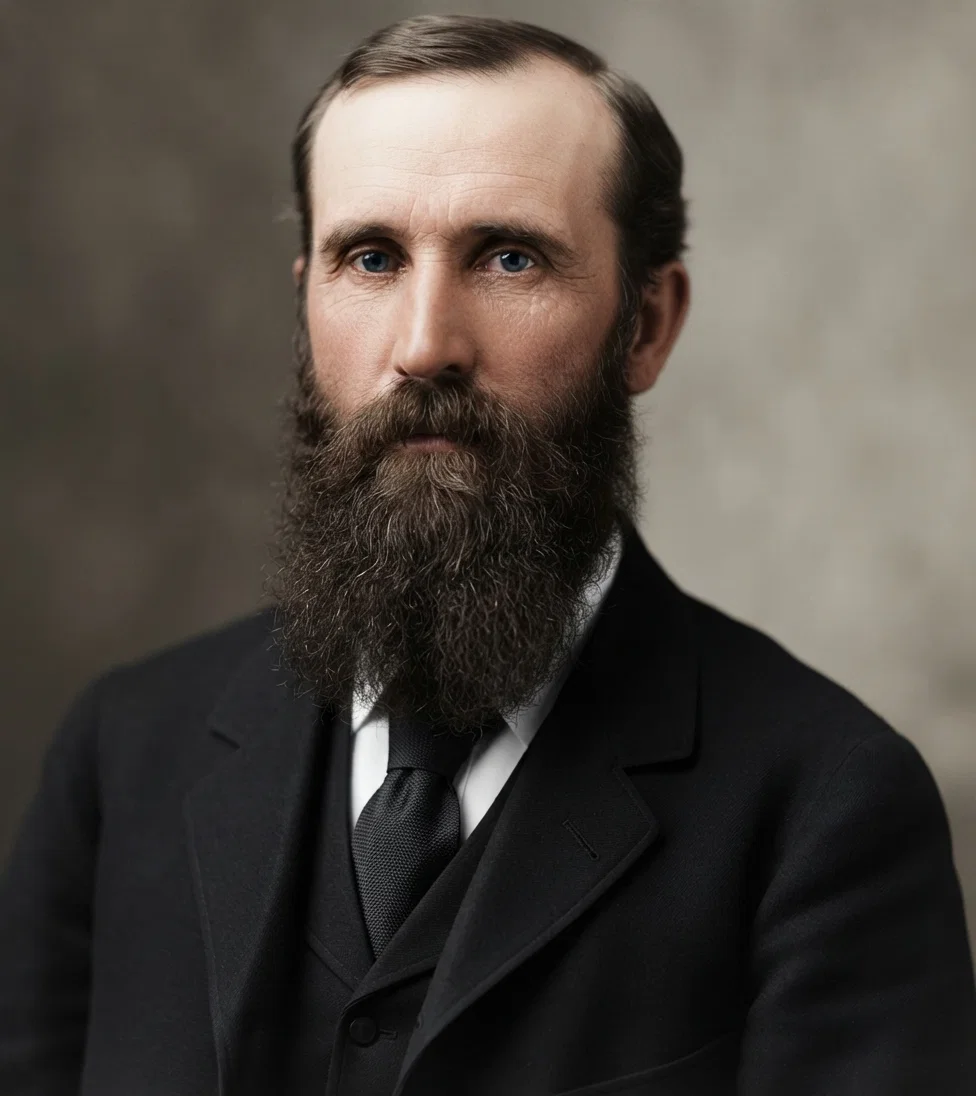
ELDER ROBERT MEAD KILGORE died June 28, 1912, at the home of his son Charles, in South Lancaster, Mass., at the age of 73 years, 3 months, and 7 days. He leaves a wife and two children, three grandchildren, two brothers, and two sisters to mourn their loss.
Brother Kilgore was born in Tuscarawas County, Ohio, March 21, 1839. When he was six years of age, his parents moved to Washington, Iowa; and at the age of twenty-two he enlisted in the United States army, where he served three years, and was honorably discharged in January, 1864. In March of the same year he reenlisted, and at the close of the war was again honorably discharged, having been promoted, step by step, until he held the position of captain. Col. W. B. Bell speaks of him as follows: "He enlisted as a private, was promoted to corporal, then sergeant, and finally to the rank of captain. He was a young man of high Christian character when he enlisted, and he maintained that character during the entire war."
ELDER R. M. KILGORE
Elder Kilgore was married on Oct. 9, 1867, to Asenath M. Smith, the daughter of Cyrennes Smith, who was among the early Sabbath-keepers in the State of Michigan, the fruit of Elder Joseph Bates's labors in the State. Brother Kilgore was a kind, affectionate father and a loving husband, ever true to his principles as a Christian, a citizen, and a soldier.
He returned to his home from the army in 1865, and found his parents observing the Sabbath of the Lord their God. At their request, he drove thirty miles to listen to the first Seventh-day Adventist sermon he ever heard. After investigating the subject, he embraced the Seventh-day Adventist views, of which he was a firm believer till his death. In 1868 he attended his first course of lectures, given by Elder Geo.
1. Butler in connection with Elder M. E. Cornell, during which time he acted as tent master. It was about this time that he felt a burden for souls and a desire to proclaim the truth to others. He wrote his conviction to Elder James White, stating that he wanted some books, but had no money to pay for them. The following was the reply: "I send you sixty dollars' worth of books; pay your vows to the Most High." It was soon after this that Elder White ordained him to the gospel ministry, he having given abundant evidence of his calling. He continued in the ministry, holding fast the doctrines he had learned from the early pioneers. Wherever he pitched his tent or held a course of meetings, he had the pleasure of seeing souls take their stand to keep the commandments of God and the faith of Jesus.
Elder Kilgore labored for a short season in the Eastern States. In 1876 he was recommended by the General Conference to go as a missionary to Texas. He sold his home in Washington, Iowa, and with the aid of voluntary contributions, he was able to support himself and family for a number of years, until the Texas Conference was organized, he being the first president. At the beginning of the work in Texas, Elder A. G. Daniells acted as his tent master. Elder Kilgore remained in Texas for eight years, and left a conference of eight hundred members. During the first two years he labored in Texas, two hundred embraced the Sabbath. The crowning work of his life, the highest ambition of his heart, was the salvation of souls for whom Christ died.
While opening up the work in Texas, he passed through many hardships, and several times his life was threatened. On one occasion while holding a tent-meeting, he received an anonymous letter, giving him till the next day at noon to leave the State with his workers. That evening he preached his sermon as usual, and at the close read the letter and asked the congregation what he should do. The tent was full of people, and immediately a man arose and took a vote of the audience requesting him to continue the meetings. They announced that they would stand by him and defend his tent. On another occasion a woman embraced the Sabbath and wished baptism. Her husband told Elder Kilgore that if he baptized her, it would be at the expense of his life. She was baptized, and her husband was also converted and baptized. He who was fearless in the United States army was also fearless in fighting the battles of the Lord.
Elder Kilgore has held many important positions in the cause of present truth. For five years he was president of the Illinois Conference; for five years superintendent of General Conference District No. 2 in the South; for five years superintendent of District No. 5;14for one year president of the Southern Union Conference; for four years vice-president of the Southern Union Conference, while Elder G. I. Butler was president; for two years of his vice-presidency he was the active president of the Georgia Conference. During his official positions he also carried on evangelistic work in tents, meeting-houses, and halls. A short time before his death, he stated that he did not remember of ever holding a course of meetings when there was not some one who embraced the truth and began the observance of the Sabbath of the Lord. He labored not for the remuneration. One year when he was not feeling so well as usual, he made no report of his time. The General Conference, however, afterward paid him his wages, for he was ever at work, even if he could not do his full amount of labor. When stricken down by the illness from which he did not recover, he was acting as pastor of the Memorial Church in Nashville, Tenn.
In 1901 Elder Kilgore thought of leaving the Southern field; but owing to the dearth of laborers, there was a special call for workers in that field; and when Sister White, in open conference, asked, "Elder Kilgore, will you go and work in the South?" he immediately replied, "Yes, Sister White, I will go." He went, and remained there until a few months ago, when, stricken with disease, he came to the quiet home of his son Charles, where the tired warrior fell asleep in Jesus, from which none ever woke to weep. During his last illness his interest was unabated in the progress of the third angel's message. His only desire to live was that he might spread the knowledge of the truth that was more to him than all else on earth.
The funeral service was held in the church at South Lancaster, Mass., Elders G. B. Starr, F. C. Gilbert, H. C. Hartwell, and P. F. Bicknell taking part in the service. The writer spoke from the following texts: Ps. 116:15; Rev. 14:13, 14. We then laid him to rest in the Eastwood Cemetery of Lancaster, a devoted, self-sacrificing pioneer, who had spent over forty years in active service for the Master. S. N. HASKELL.