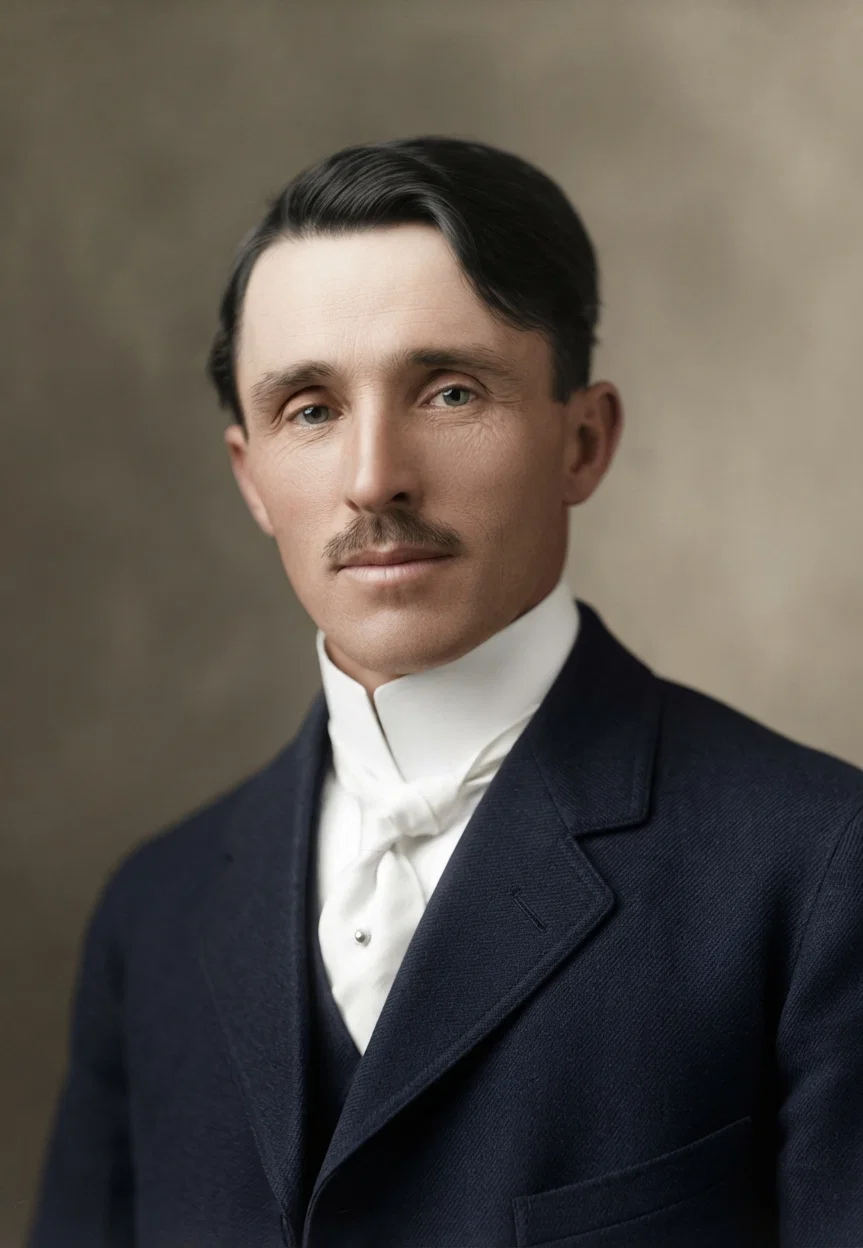
C. LYNN BOWEN was born in Randolph, Cattaraugus Co., N. Y., Feb. 14, 1881, and died at the Tsungwesi Mission, in Rhodesia, South Africa, June 2, 1913, at the age of 32 years, 2 months, and 19 days. Lynn was a faithful, energetic boy, carefully doing his share of the work while assisting his parents on the farm in western New York. He attended school at Mount Vernon and South Lancaster.
Two or three years after his marriage to Miss Ida Nelson, he felt a call from the Lord to connect with the newly opened intermediate school at Tunesassa, New York, where they labored about four years, Lynn as business manager, his wife as teacher.
Feeling the need of further training, they went to South Lancaster Academy, in 1909, where they received their provisional appointment for foreign field service, coming to the Foreign Mission Seminary in Washington before the school year was over. Here they remained about two years, and then answered an urgent call for Tsungwesi Mission.
The first year of mission work was successfully passed, and they had enjoyed excellent health, when what appeared to them as chicken-pox broke out at the mission. Their two children and some native children had it and were recovering, when Lynn came down. It was then discovered to be smallpox.
During General Conference a brief cable announcing his death was received. Because of the strict quarantine regulations, no word or particulars of any kind were received until nearly two months had elapsed. Then came the following from Elder W. S. Hyatt, assistant superintendent of South Africa:—
“Right in the midst of Brother Bowen's illness, Brother Chris. Sparrow went to the mission to visit his son Laurie, who is assisting in the work at that place. When he arrived, he discovered that they had the smallpox. Up to that time they thought they were having a hard run of the chicken-pox. One of Brother Bowen's children had had the disease and was getting better. Several of the natives had had it. They then reported themselves to the authorities and were put in quarantine, and have not been released so far as I know.
C. LYNN BOWEN
“June 3 I received a telegram stating that Brother Bowen was dead. As it had been about ten days since I had last heard from them, I had thought that he was better and getting along nicely. I had sent them word to keep me informed as to the condition, but doubtless the quarantine hindered them from doing so. I heard nothing further except a wire saying that all were well at the station, till June 19, and then I received a letter from Sister Bowen, written by a policeman who stood thirty yards away and received her dictation. The letter was written on June 3, and is as follows:—
“‘My husband died yesterday at 1 P. M. We did everything we could for him, but he had complications which made it very difficult and painful for him to breathe and swallow. Laurie Sparrow's father came here the first week of his illness, and took care of him. He also conducted the funeral service today. I am glad to say I have not taken the disease.’
“A letter written June 20 by Brother Sparrow stated that all were well at the station, and no new cases had developed since about the time of Brother Bowen's death. He also wrote that Brother Bowen had not been vaccinated, but as soon as he arrived at the mission he vaccinated Sister Bowen, his son, and himself, and they hoped from this to escape. Brother Sparrow has been vaccinated five times, and his son was vaccinated about a year ago. It seems that if Brother Bowen had been vaccinated, he would have had the disease lightly or possibly escaped altogether. Of course we do not know this to be so, and we can only bow our heads in the deepest sorrow, and say, ‘Thy will be done.’
“As soon as I learned that Brother Bowen was dead, I wired Brother Walston to visit Tsungwesi and report the condition of things as he found them. When he arrived near the mission, he found the red flag up, denoting the quarantine. He then followed around the marked trees and flags till he came near the mission building. Here he expected to find the police. I quote now from his letter: ‘I knew unless I found him, I would be obliged to return that night to the siding unless I made myself liable to be devoured by lions. I found all along where fires had been made to keep out such creatures, so concluded they were not far off. I turned back, and on my way discovered an enclosure made of fresh brush, just inside the boundary. I thought it might be the policeman's camp, which I had missed going down, so I hallooed, but received no response. I drew a little nearer and discovered a fresh mound of earth, and you can guess the rest. Poor Brother Bowen! it will take a louder voice than mine to awake him.’ By calling he was able to make himself heard by those at the house, and had a short visit with them. We have done all that we could to help them. They had a doctor to see Brother Bowen.”
While to his loved ones this comes as a severe blow, yet we feel the assurance that in that morning when Jesus shall call for his children Lynn, in his lonely grave in Africa, will hear his voice and come forth to everlasting life. The “blessed hope” is truly a comfort in this hour of trial.