THE LEGS OF IRON

4%

Publishing Committee · Battle Creek, Mich. · Dec 10, 1857

FromReview and Herald, Vol. 11, No. 5.

Read the full edition

THE LEGS OF IRON

SYNOPSIS OF THE PRESENT TRUTH, No. 5.
THE LEGS OF IRON
THE LEGS OF IRON

THE LEGS OF IRON.

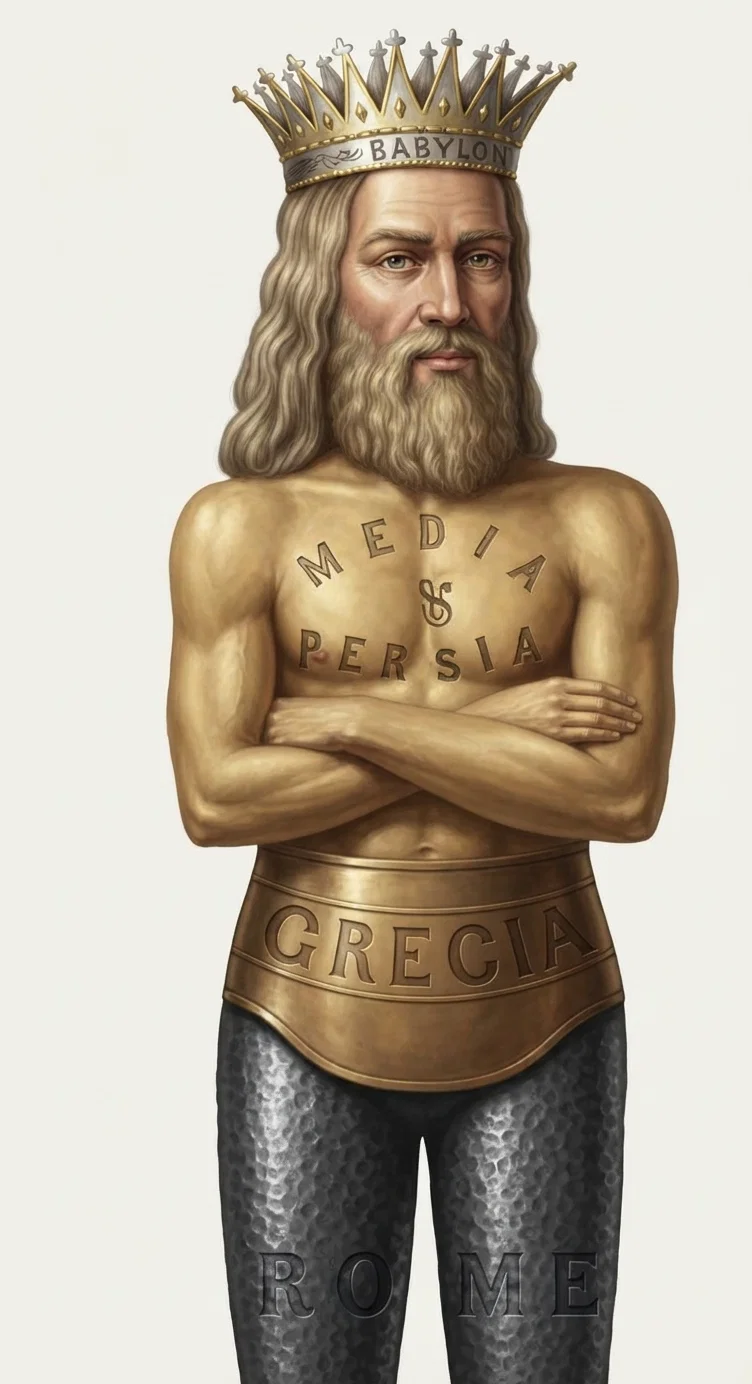
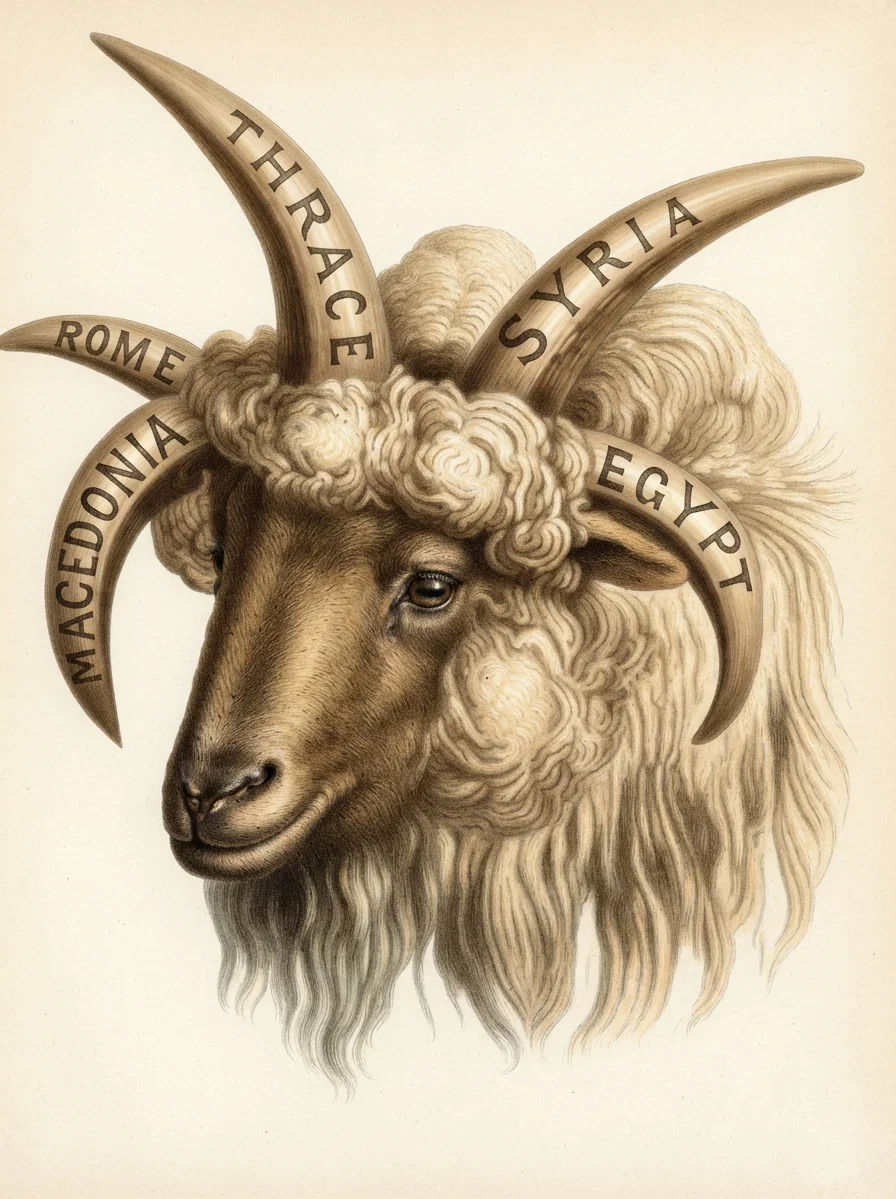
The brass of the great image was followed by the legs of iron; and out of one of the four horns which sprung up when the great horn of the goat was broken, the Prophet saw come forth a little horn which waxed exceeding great. Dan. ii, 40; viii, 9. What power is designated by these symbols? Answer: The next great power that succeeded the empire of Grecia as existing in its divided form under Alexander's successors; and that power was Rome.
Passing over, as already proposed, these division of the Grecian empire, the narrative of events is interrupted till we reach the year B. C. 161. Previous to this point it does not become necessary in the light of prophecy to notice particularly the power under consideration; for be it remembered that a power is not introduced into prophecy till it becomes in some way connected with the people of God; and here the Romans first assumed this relation. The Jews being grievously oppressed on account of their religion by the heathen, Syrian kings, Judas Maccabæus sent an embassy to the Romans, to solicit their aid, whereby a league was entered into between them of mutual friendship and defense. This was the commencement of the Roman ascendancy over the Jews; and here we may place the termination of the third kingdom of brass after it had borne rule from the battle of Arbela 331, one hundred and seventy years.
THE FOUR HORNS.
THE FOUR HORNS.
Before proceeding to trace the progress of this power, we must notice an objection which is urged against the position here taken. Papists, to avoid the application of the prophecy concerning the little horn to the Roman power, Pagan and Papal, have applied it to Antiochus Epiphanes a king of Syria. And as it is no unusual thing for the Pilates and Herods of the land to make friends against the cause of truth, they have been followed in this application by the mass of those who oppose the Advent faith.
But who was this Antiochus Epiphanes? Let us look at facts. The succession of kings that constituted the Syrian horn of the empire after the death of Alexander, was as follows: 1. Seleucus Nicator. 2. Antiochus Soter. 3. Antiochus Theus. 4. Seleucus Callinicus. 5. Seleucus Ceraunus. 6. Antiochus the Great. 7. Seleucus Philopator. 8. Antiochus Epiphanes. 9. Antiochus Eupator. 10. Demetrius Soter. 11. Alexander Bala. 12. Demetrius Nicator. 13. Antiochus Theos. 14. Antiochus Sidetes. 15. Zebina. 16. Seleucus, son of Nicator. 17. Antiochus Grypus. 18. Antiochus, the Cyzicenian. 19. Seleucus, son of Grypus. 20. Antiochus Eusebes. 21. Antiochus, second son of Grypus. 22. Philip, third son of Grypus. 23. Demetrius Eucheres. 24. Antiochus Dionysius. 25. Tigranes. 26. Antiochus Asiaticus, who was the last of the Seleucidæ, or Syrian kings, and who after an insignificant reign of four years was driven from his dominions by Pompey.
1. By this it appears that Antiochus Epiphanes was only one, the eighth in order, of a series of twenty-six kings that constituted the Syrian horn of the Grecian empire. How then could he, at the same time, be another remarkable horn?
2. If it were proper to apply the little horn to any one of these kings, it would be reasonable to suppose it would be to the most illustrious; but Antiochus Epiphanes did not by any means sustain this character. Although he took the name of Epiphanes, that is, The Illustrious, nothing, says Prideaux, on the authority of Polybius, Livy, and Diodorus Siculus, could be more alien to his true character. For on account of his vile and extravagant folly, some thinking him a fool and others a madman, they changed the name of Epiphanes, The Illustrious, into Epimanes, The Madman.
3. Antiochus the Great, the father of Epiphanes, being terribly defeated in a war with the Romans was enabled to procure a peace only by the payment of a prodigious sum of money, and the surrender of a portion of his territory; and as a pledge that he would faithfully adhere to the terms of the treaty, he was obliged to give hostages, among whom was this very Epiphanes, his son, who was carried to Rome. This ascendancy the Romans ever after maintained. Which therefore was the most notable power, the Romans who exacted tribute, or the Syrian kings who were compelled to pay it?
4. The little horn waxed exceeding great; but this Antiochus did not enlarge his dominion except by some temporary conquests in Egypt; which he immediately relinquished when the Romans took the part of Ptolemy, and commanded him to desist from his designs in that quarter. The rage of his disappointed ambition, he vented upon the unoffending Jews.
5. The little horn, in comparison with the powers that preceded it, was exceeding great. Persia is simply called great, though it reigned over “an hundred seven and twenty provinces.” Esth. i, 1. Grecia, being more extensive still, is called very great; but how ludicrous and absurd, in view of the above facts, to apply the next power which waxed exceeding great to Antiochus, who abandoned Egypt at the dictation of the Romans!
6. This power was to stand up against the Prince of princes. The Prince of princes is, without controversy, Jesus Christ. Dan. ix, 25; Acts iii, 15; Rev. i, 5. But Antiochus died 164 years before our Lord was born.
The following reasons may also be urged to show that Rome is the power in question:
1. It was to come forth from one of the four kingdoms of Alexander's empire. We have said that nations are not brought into prophecy, till connected with the people of God. The Roman power had been in existence many years before the league with the Jews above mentioned; and seven years previous to that event, in the year B. C. 168, it made Macedonia, one of the horns of the Grecian goat, a part of itself. Speaking of the peremptory manner in which Popillius, the Roman ambassador commanded Antiochus to quit Egypt, the historian says: “That which made him so bold as to act with him after this peremptory manner, and the other so tame as to yield thus patiently to it, was the news which they had a little before received of the great victory of the Romans, which they had gotten over Perseus, king of Macedonia. For Paulus Æmilius having now vanquished that king, and thereby added Macedonia to the Roman empire, the name of the Romans after this carried that weight with it, as created a terror in all the neighboring nations; so that none of them after this cared to dispute their commands, but were glad on any terms to maintain peace, and cultivate a friendship with them.” Being introduced into prophecy after this event, it is represented as coming forth from one of the horns of the goat.
2. The following specifications of the little horn, are also fulfilled in the Roman power to the very letter: 1st. It waxed exceeding great towards the south, and towards the east, and towards the pleasant land, [Palestine, Ps. cvi, 24; Zech. vii, 14.] Rome being almost directly north-west from Jerusalem, its conquests in Africa, Asia and Palestine, were of course in those directions, and furnish an exact fulfillment of the prophecy. 2d. It was to cast down of the host and of the stars, the same as predicted of the dragon, [Rev. xii, 3, 4.] which all admit to be Rome. Who can fail to see their identity? 3d. It was a king of fierce countenance. See Moses' description of the same power. Deut. xxviii, 49, 50. 4th. It did “destroy wonderfully” from fifty to one hundred millions of the “mighty and the holy people” being put to death by it. 5th. It did stand up against the Prince of princes. Pagan Rome nailed Jesus to the cross. 6th. It is to be “broken without hand.” How clear the reference to the stone “cut out without hand,” that smote the image. Dan. ii, 34. Further proof is unnecessary; and probably ere this, the reader has agreed with us that Rome is the subject of the prophecy.
From small beginnings, with a steady ascent, Rome rose to unparalleled greatness. How Macedonia became a Roman province B. C. 168 has been already stated. The empire of Syria shared a like fate B. C. 65, when Pompey reduced all those parts to the Romans as far as the river Tigris. The only remaining portion of the goat's dominions, not yet engrossed by the little horn, was Egypt; but this also fell before the Romans, when Augustus Cæsar, on the death of Cleopatra, made it a Roman Province B. C. 30. Twenty-five years after this, when the whole world was settled in thorough subjection to this same Augustus, and the temple of Janus, at Rome, which was kept open only in times of war, was for the fifth time shut since the building of the city, and peace reigned over the nations, there was born “in the city of David, a Saviour which is Christ the Lord.” Luke ii. 1-11.
In this glorious, peaceful reign of Augustus Cæsar, says Butler, the fifth kingdom commenced, [Dan. ii, 44, 45.] in the Advent of the Messiah. This is the opinion of not a few; and hence it demands a moment's attention. Or rather the opinion that prevails is, that the fifth universal kingdom, in fulfillment of the promise, that in the days of these kings the God of heaven should set up a kingdom, is the kingdom of grace in the hearts of believers, and was established at the cross of Christ. 'At this very time,' says Prideaux, 'Christ's kingdom commenced in the erection of his church.' 'The kingdom of Christ,' says Scott, 'was evidently intended; from small beginnings it hath already made vast progress,' &c. 'A stone cut out; the fifth monarchy; the spiritual kingdom of the Lord Jesus,' says Clarke, 'which is to last forever, . . . the extensive and extending empire of Christ,' &c.
In reference to this position, we have brought the image down to the cross of Christ, where it is said this kingdom was set up, in order to avail ourselves of the advantages to be derived from illustration, in impressing the truth upon our minds on this subject. To meet the question fairly we must here anticipate a little. The image had two feet and ten toes; and the fourth and terrible beast of Dan. vii, had ten horns; which both represent the ten kingdoms which arose out of the Roman empire, as will be more particularly noticed hereafter. Until this division of the empire took place, the image was not complete: the feet were not fully developed. But where did the Stone smite the image? Upon the feet, and the feet only. Now look at the illustration. There is the cross, but where are the feet? We have not reached them. Can it then be said that the Stone that was to smite the image upon the feet, did its work away back there upon the thighs at the cross of Christ? Impossible. But do you say that we have erected the cross too soon? that the image should have been completed, and the cross erected at the feet? We answer, That cannot be; for the feet were not developed till 483 years after the crucifixion. No; the image cannot be smitten upon the feet, till we reach the feet; therefore it could not have been smitten at the cross. The prophecy promised that in the days of these kings (those that rose from the Roman empire) the God of heaven should set up a kingdom, and not 483 years before the division took place, or the kings existed.
Again, it does not read that the Stone gradually wore away the image, or that by some chemical process, it dissolved its metallic substances, and appropriated them to itself, till they were all used up. Far from it: the Stone smote the image; and the iron, brass, silver and gold, were ground to powder, and blown away. The nations have not yet been dashed in pieces with a rod of iron, [Ps. ii, 9.] they have not yet been shivered like a potter's vessel; therefore that fifth universal kingdom which is to be set up by the God of heaven and stand forever, which is to be ushered in with events like these, is yet before us.
The conclusion is therefore obvious, that the position handed us by Butler, Prideaux, Scott and Clarke,—a position which has been seized upon by hosts of more modern origin as an objection to the faith we cherish of the soon coming of the Son of man to establish upon the demolition of all earthly governments, an enduring empire—it is obvious, we say, that their position is erroneous and untenable. We declare unhesitatingly and without fear of contradiction, that they have misapplied that portion of prophecy. Nor can any one say otherwise, unless he will wrest the phraseology of the Scripture, and have the image smitten, not upon his feet, but upon his thighs!
That the work of grace upon the heart, the freedom of the gospel, the growth of Christianity, and events in the church's history, are sometimes set forth by the phrase, kingdom of heaven, is not to be doubted; but it does not come within the province, of this article, to show the application of all these expressions wherever they occur. The prophecy of Daniel is our subject, and to show the application of the kingdom there brought to view, is all that the scope of the theme demands at our hands. We have endeavored to show that that kingdom was not set up at the crucifixion, but is still future. It was future at our Lord's last passover. Matt. xxvi, 29. He did not set it up before his ascension. Acts i, 6. Flesh and blood cannot inherit it. 1 Cor. xv, 50. It was a
matter of promise to the apostles, and is so to those that love God. Jas. ii, 5. It is promised in the future to the little flock. Luke xii, 32. It is to be set up when Christ shall judge the living and the dead. 2 Tim. iv, 1. It is to be set up when the Son of man shall come in his glory and all the holy angels with him. Matt. xxv, 31-34.
This is the kingdom prepared for the faithful from the foundation of the world, upon which they will enter, when those who will not have Jesus to reign over them, are brought forth and slain in his presence. Luke xix, 12-27. This is the kingdom which the saints shall take under the whole heaven, and possess forever and ever. Dan. vii, 27. The prayer which our Saviour taught his first disciples, still fervently ascends from the lips of his patient waiting flock in these last days. 'Our Father who art in heaven, thy kingdom come!'
(To be Continued)