ABOUT one hundred and fifty miles north of Tokio, or about five hours' ride on the slow Japanese trains, out in the country and surrounded by the small, carefully kept, and intensely cultivated fields, stands the little Kuji church. Numbering only about thirty members, all farmers with slender incomes and taxed to the very limit of endurance, they have been worshiping in the home of one of the members, in one of those tiny Japanese houses with the floors of straw mats—each person must sit upon the floor—and with the sliding paper partitions which throw the whole house into one room, which is the rule in Japan.
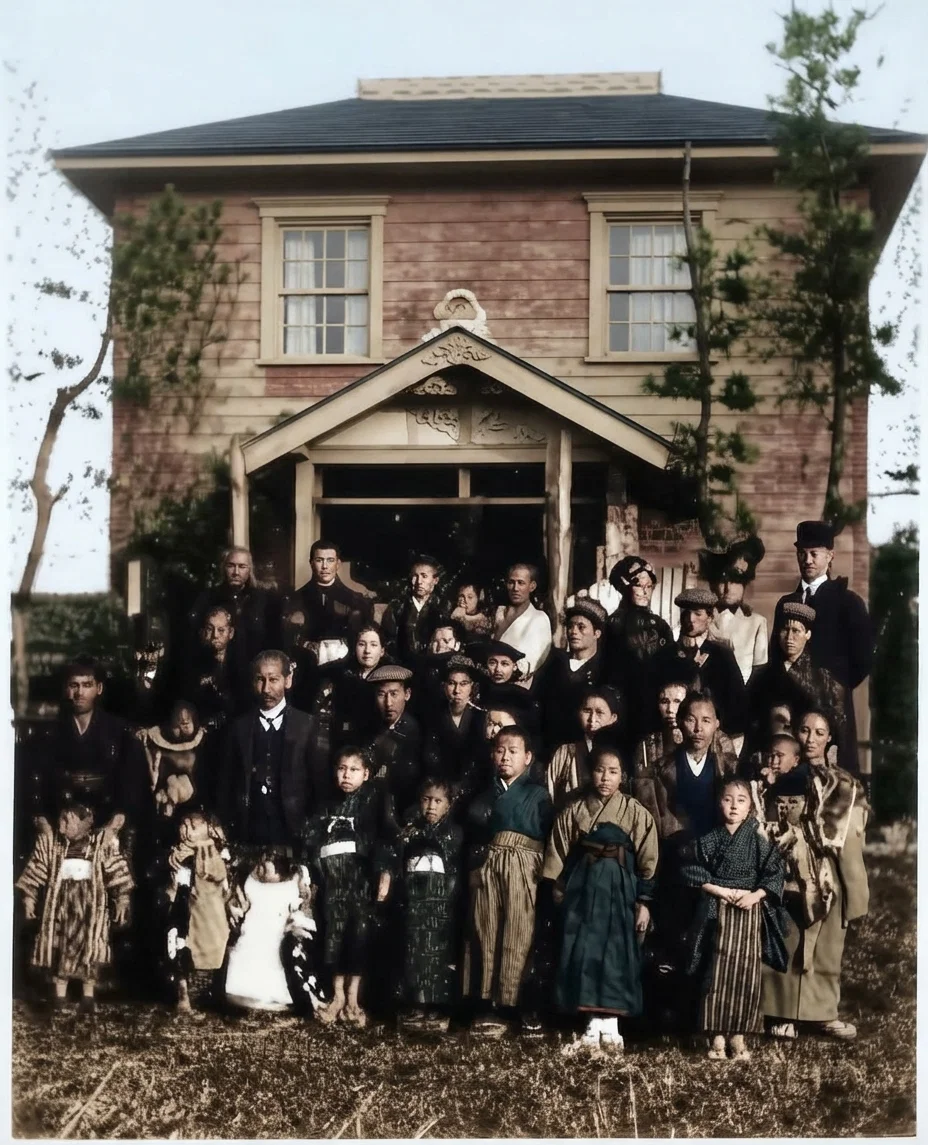
Last winter the members began to plan for a real church building, and all with a will began to give, and to solicit from their friends, the necessary funds. One gave the land from the corner of his field, and in the early summer they began to build as the money came in, and by the beginning of December they had erected a modest little twenty-by-thirty-foot foreign-style house, painted, and furnished with seats, desk, stove, and lights, all ready for services. On the sixth of December a party of our foreign and Japanese workers left Tokio in the morning to assist in the dedication of this church. When we reached the station where we must leave the train, we found a party of our brethren awaiting us with negurimas, or little carts, for our baggage. After a walk of nearly three miles on the narrow, winding roads through the rice fields, we reached the little church by the road and the home of our Japanese evangelist, who lives close by.
When in the homeland last summer, while speaking on missions at the West Michigan camp meeting I mentioned the determined efforts which this church was making to get a church building. After the meeting closed, a number of the brethren and sisters came to me and said that they wished to have a part in the building of the Kuji church, and gave me from twelve cents to one dollar each. The amount received there, with a five-dollar bill given by a brother in New York for the same purpose, enabled me to call for all outstanding bills, and pay every cent then owing, so that we might dedicate the building and present it to the Lord free from debt. This was a cause of great rejoicing to the church, and will be an example for others to follow.
From sundown Friday evening an almost continuous service was held until bedtime, and then upon futones, or heavy quilts, thrown upon the floor in the guest room of the church, we slept soundly until morning. The Japanese houses being small, and the families usually large, it is embarrassing to them to entertain, especially a foreigner, who by habit and training is very different from them; so in planning the church building they provided a guest room on the second floor, which can also be used for the children in Sabbath school.
Photo by F. H. De Vinney. THE KUJI CHURCH AT THE TIME OF DEDICATION
The dedicatory services were held on Sabbath morning, after the regular Sabbath school, all the workers present taking part. The building was well filled, many not of our faith being present and showing interest in the exercises. In the evening following, we gave a stereopticon lecture on our visit to the Holy Land when on our way from Japan to attend the General Conference last spring. Only those who know how many of these little folk can crowd into a place by sitting on their feet on the floor, can imagine how many were present. Every spot and place was filled with deeply interested and attentive listeners, many of whom had walked several miles. Some were women with babies on their backs, and all through the meeting their little bright black eyes eagerly peering over their mothers' shoulders marked them not the least interested of any present. A phonograph had been taken from Tokio, with sacred music both in English and in the Japanese, and added greatly to their pleasure, as many who were present had never heard a phonograph nor seen stereopticon pictures. Even after the meeting closed, some who had walked miles after work and failed to get there on time, came and begged to hear just a little; and so we kept up the music until late.
In all, we held four services with the church, besides the Sabbath school. This is one of the very few Christian churches in Japan organized among the farmers. As a class the farmers are very slow to change,—very conservative in taking up any new idea or in adopting any custom contrary to the old order; but they are about the most stable class in the country when they once embrace Christianity. This church has been organized for several years, at first very small, but active and growing, and all well established in the faith. The success of the building enterprise has been a great encouragement to them as they see what determined effort can accomplish under the blessing of God. There is still a good interest among their neighbors, and meetings are being held several times a week by the local worker, besides carrying on his Bible work; and we are confident that what has been accomplished is only a beginning of what will be done here.
We left the little company on Sunday morning to return to Tokio, several of the brethren walking to the railroad with us. On our way we passed through a fishing village on the open ocean, and watched the fishermen taking the fish from their nets after the night's work. Though it was a calm, bright day, there was a very rough surf rolling, making sailing dangerous.
While we were standing by, a boat with three men attempted to put to sea through the surf, and was overturned. Two of the men succeeded in getting to shore by swimming, but the third clung to the boat. It was nearly train time, and we had yet a considerable distance11to go to reach the station; and as we could do nothing to help, we were obliged to leave. The last we saw of the poor fellow he was being taken out to sea, and was making frantic signals for help to the many on the shore who were watching, and who to us seemed quite indifferent.
A note from our worker the next day, written by request, said that the man was finally rescued by a boat coming in from the sea, and added: "How we ought to work for the salvation of these poor souls all around us who are drifting out into a hopeless eternity." We must not be indifferent to their peril and signals of distress, but must redouble our efforts to reach them before they drift too far from the haven of rest.
We are of good courage, and see brighter days ahead for the work in this great field.