Library
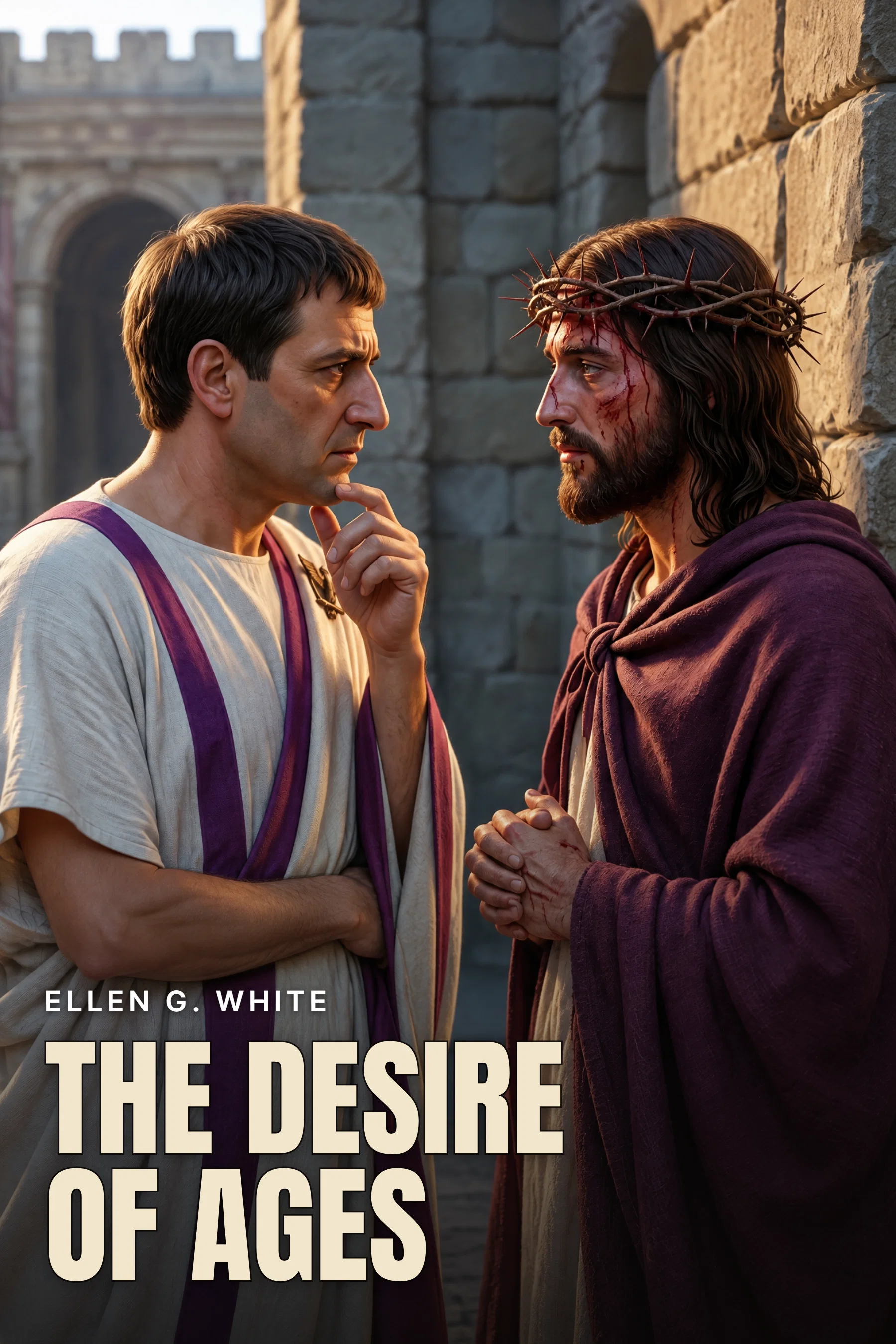
The Desire of Ages
Review and Herald Publishing Co. · Chicago, Ill.; Atlanta, Battle Creek, Toronto · 1898
- Pages
- 792
- Illustrations
- 320
Contents
- PUBLISHERS’ PREFACE.9
- AN OUTLOOK.13
- CHAPTER ONE.17
- CHAPTER TWO.27
- CHAPTER THREE.31
- EARLY YEARS.39
- Bethlehem and Nazareth.39
- CHAPTER FOUR.43
- CHAPTER FIVE.50
- CHAPTER SIX.59
- CHAPTER SEVEN.68
- THE PASSOVER VISIT75
- CHAPTER EIGHT.75
- CHAPTER NINE.84
- THE ANOINTED ONE.93
- From His Announcement by John the Baptist to the Baptist’s Imprisonment.93
- CHAPTER TEN.97
- CHAPTER ELEVEN.109
- CHAPTER TWELVE.114
- CHAPTER THIRTEEN.124
- CHAPTER FOURTEEN.132
- CHAPTER FIFTEEN.144
- CHAPTER SIXTEEN.154
- CHAPTER TWENTY.196
- CHAPTER TWENTY-ONE.201
- CHAPTER TWENTY-TWO.214
- DAYS OF PROMISE.227
- Early Ministry in Galilee.227
- CHAPTER TWENTY-THREE.231
- CHAPTER TWENTY-FOUR.236
- THE CALL BY THE SEA244
- CHAPTER TWENTY-FIVE.244
- CHAPTER TWENTY-SIX.252
- CHAPTER TWENTY-SEVEN.262
- CHAPTER TWENTY-EIGHT.272
- CHAPTER TWENTY-NINE.281
- CHAPTER THIRTY-ONE.298
- CHAPTER THIRTY-TWO.315
- CHAPTER THIRTY-THREE.321
- CHAPTER THIRTY-FOUR.328
- CHAPTER THIRTY-FIVE.333
- CHAPTER THIRTY-SEVEN.349
- CHAPTER THIRTY-EIGHT.359
- CHAPTER THIRTY-NINE.364
- FALLING SHADOWS.373
- From the Discourse on the Bread of Life to the Departure from Galilee for the Feast of Tabernacles.373
- CHAPTER FORTY.377
- CHAPTER FORTY-ONE.383
- CHAPTER FORTY-TWO.395
- CHAPTER FORTY-THREE.399
- CHAPTER FORTY-FOUR.404
- CHAPTER FORTY-FIVE.410
- CHAPTER FORTY-SIX.419
- CHAPTER FORTY-SEVEN.426
- CHAPTER FORTY-EIGHT.432
- THE REJECTED ONE.443
- From the Feast of Tabernacles to the Retreat to Ephraim after the Resurrection of Lazarus.443
- CHAPTER FORTY-NINE.447
- CHAPTER FIFTY.455
- CHAPTER FIFTY-ONE.463
- CHAPTER FIFTY-TWO.476
- CHAPTER FIFTY-THREE.485
- CHAPTER FIFTY-FOUR.497
- CHAPTER FIFTY-FIVE.506
- BLESSING THE CHILDREN511
- CHAPTER FIFTY-SIX.511
- CHAPTER FIFTY-SEVEN.518
- CHAPTER FIFTY-EIGHT.524
- CHAPTER FIFTY-NINE.537
- NEARING THE END.543
- From the Visit to Zaccheus at Jericho, to the Teaching on the Way to Gethsemane.543
- CHAPTER SIXTY.547
- CHAPTER SIXTY-ONE.552
- CHAPTER SIXTY-TWO.557
- CHAPTER SIXTY-THREE.569
- CHAPTER SIXTY-FOUR.580
- CHAPTER SIXTY-FIVE.589
- CHAPTER SIXTY-SIX.601
- CHAPTER SIXTY-SEVEN.610
- CHAPTER SIXTY-EIGHT.621
- CHAPTER SIXTY-NINE.627
- CHAPTER SEVENTY-ONE.642
- CHAPTER. SEVENTY-TWO.652
- THE LAST SUFFER.657
- CHAPTER SEVENTY-THREE.662
- THE CRUCIFIED.681
- From Gethsemane to Calvary.681
- CHAPTER SEVENTY-FOUR.685
- CHAPTER SEVENTY-FIVE.698
- CHAPTER SEVENTY-SIX.716
- CHAPTER SEVENTY-SEVEN.723
- CHAPTER SEVENTY-EIGHT.741
- CHAPTER SEVENTY-NINE.758
- TO THE FATHER’S THRONE.765
- From the Burial to the Ascension.765
- CHAPTER EIGHTY.769
- CHAPTER EIGHTY-ONE.779
- CHAPTER EIGHTY-TWO.788
- CHAPTER EIGHTY-THREE.795
- CHAPTER EIGHTY-FOUR.802
- CHAPTER EIGHTY-FIVE.809
- CHAPTER EIGHTY-SIX.818
- CHAPTER EIGHTY-SEVEN.829
- APPENDIX.837
Illustrations
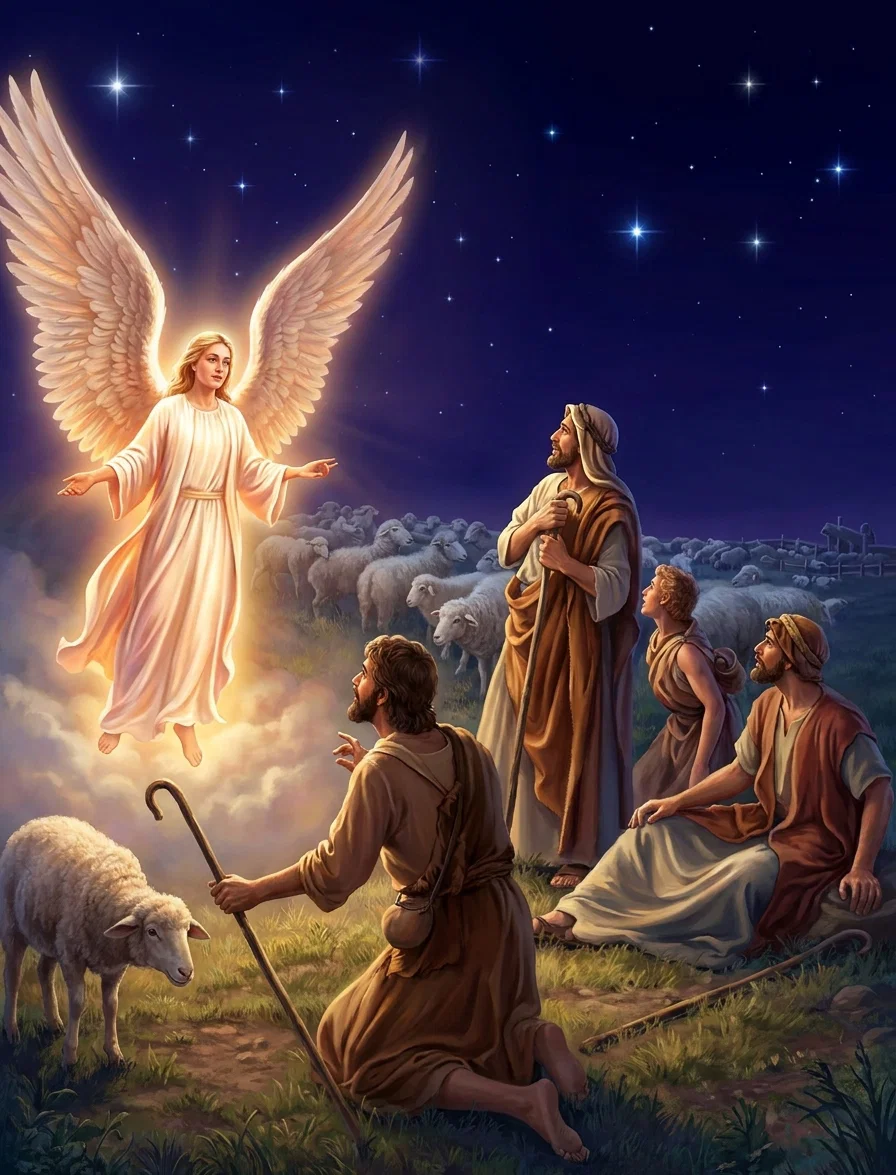 THE ANNOUNCEMENT TO THE SHEPHERDS.
“Behold, I bring you good tidings of great joy, which shall be to all people.”
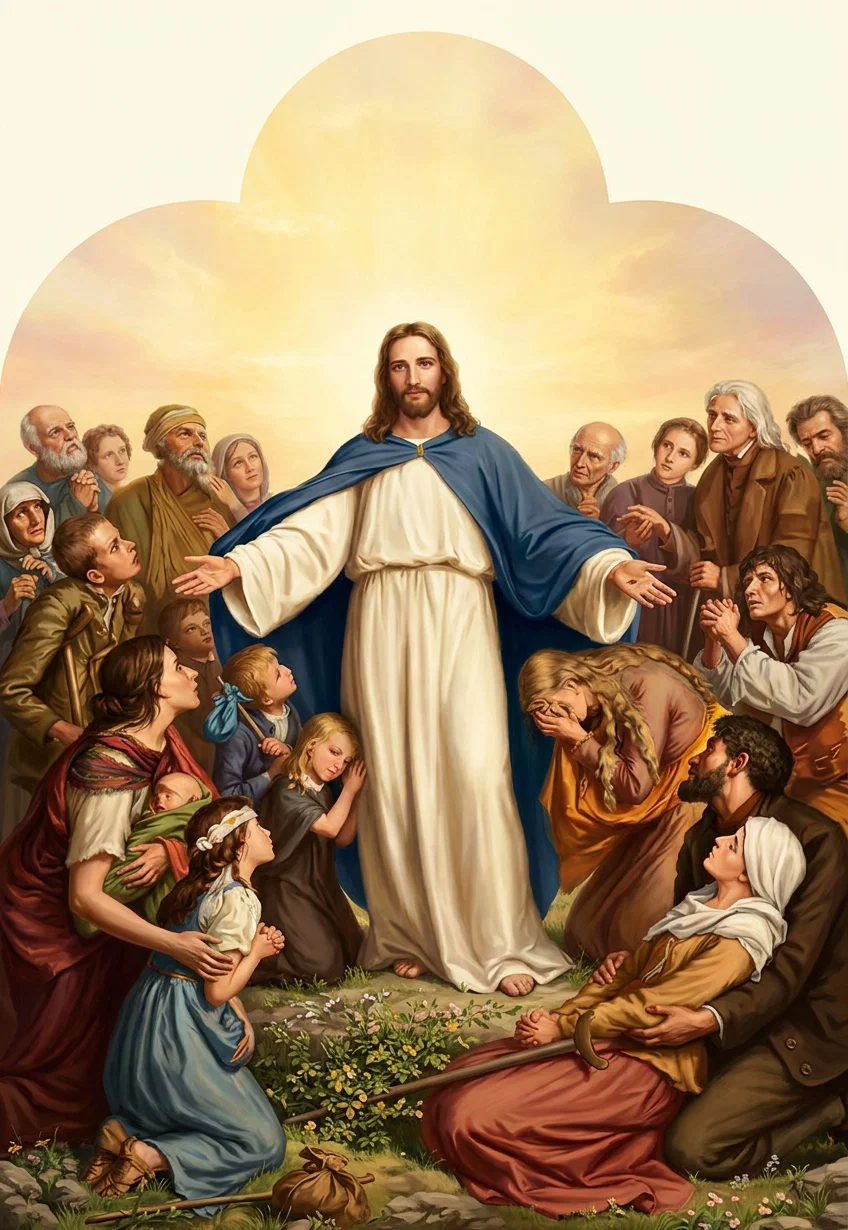 “COME UNTO ME.”
“He passed through them, and healed all their sick.”
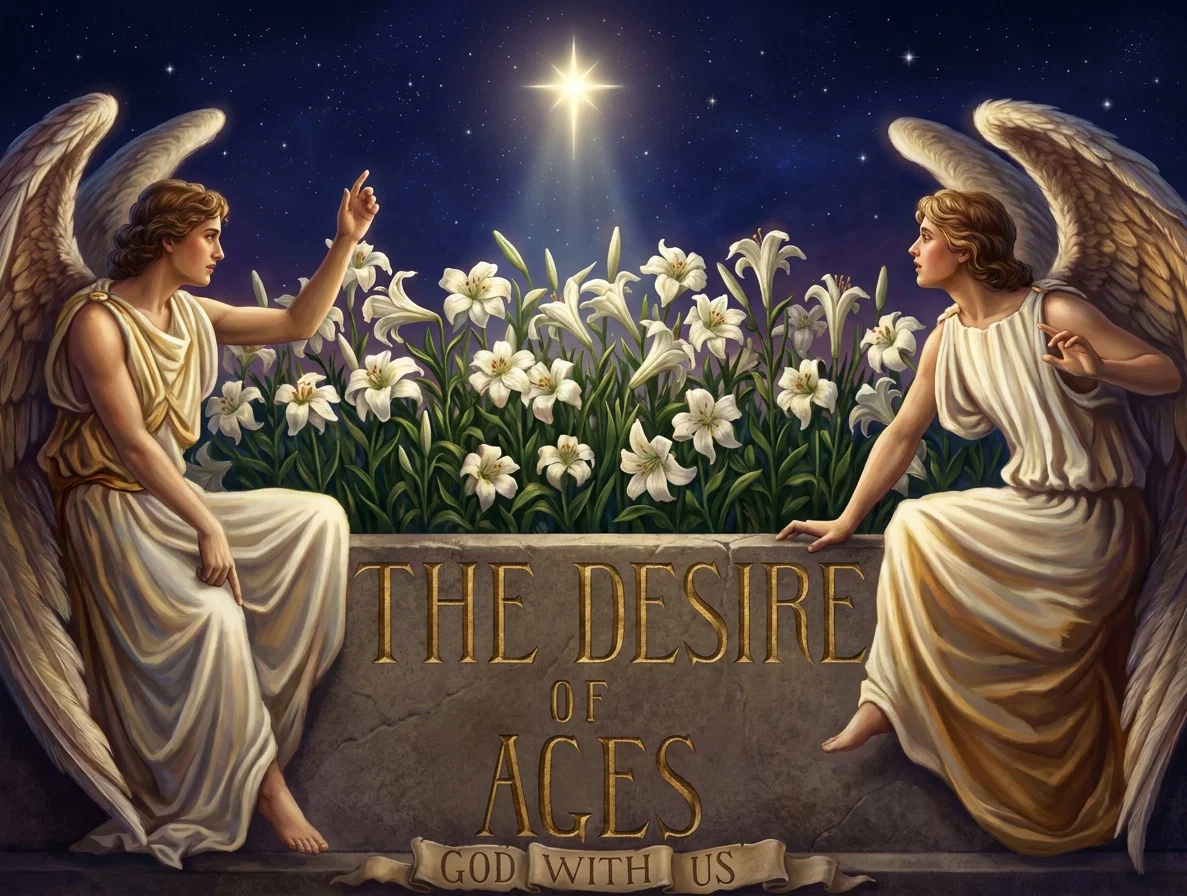 THE DESIRE OF AGES
GOD WITH US
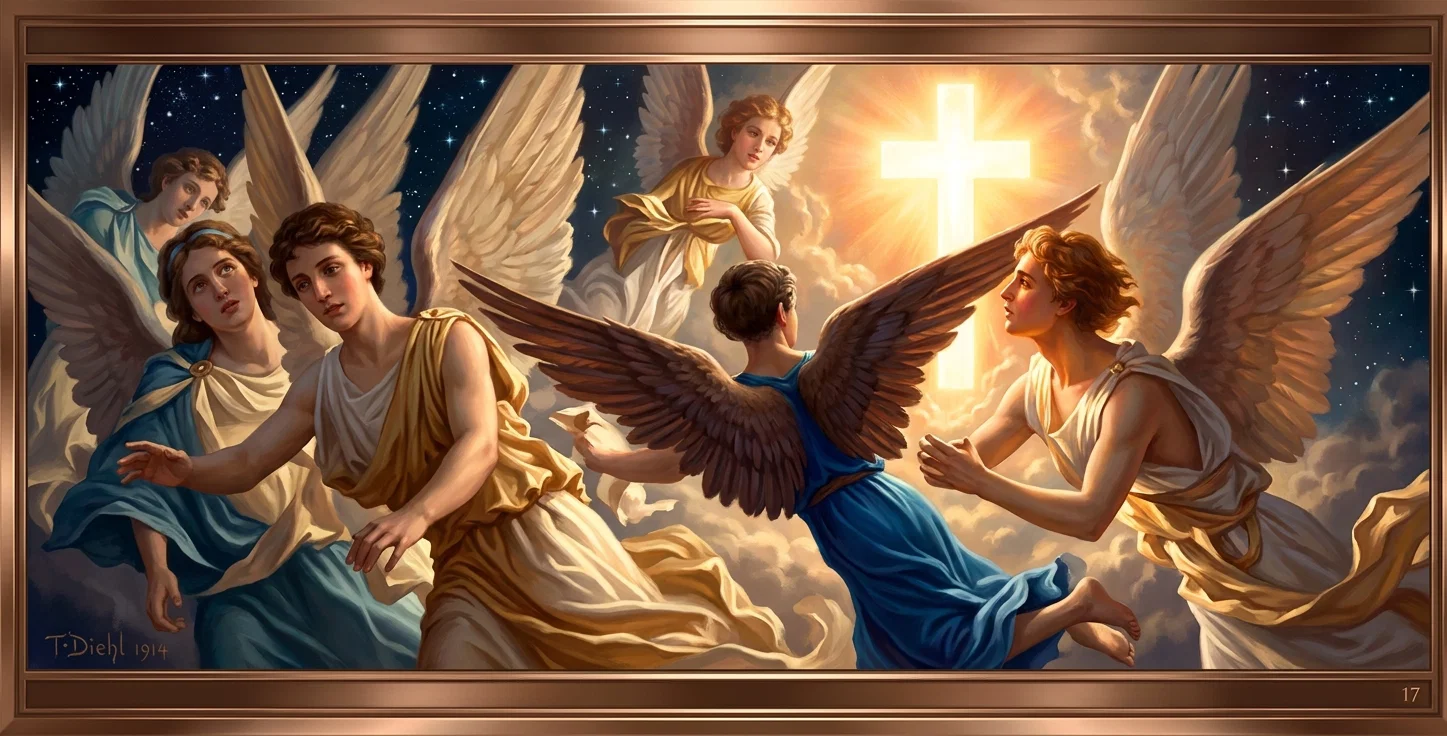 Angels “find in the cross of Christ their science and their song.”
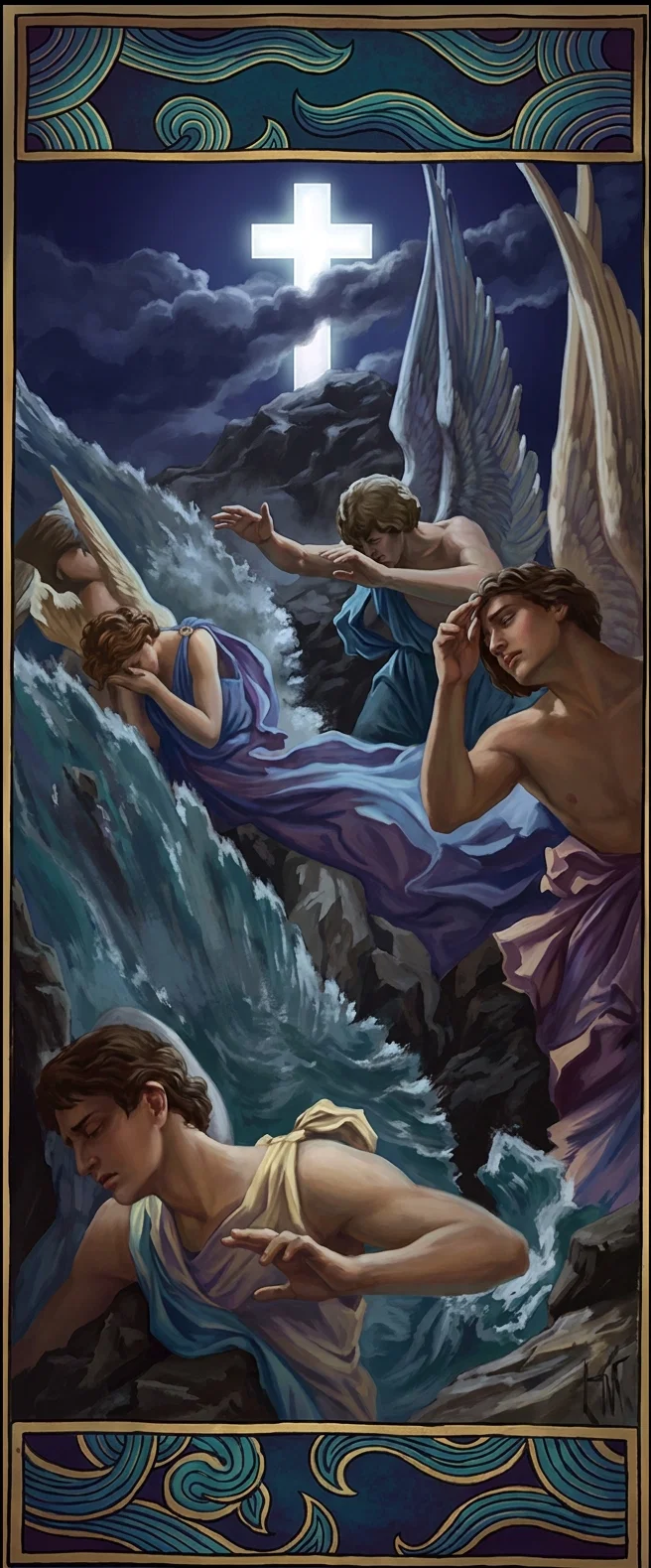 “He deceived angels, . . . and the night of woe settled down upon the world.” Page 20.
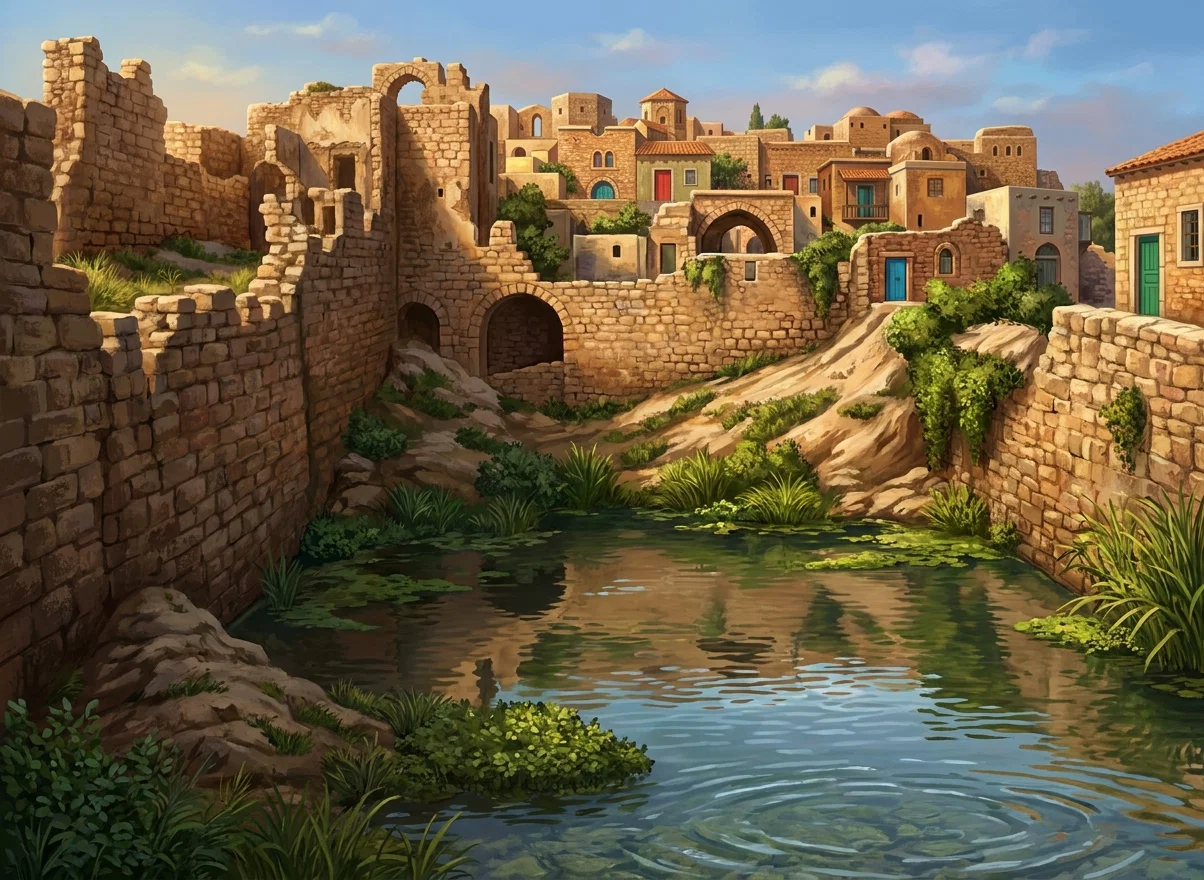
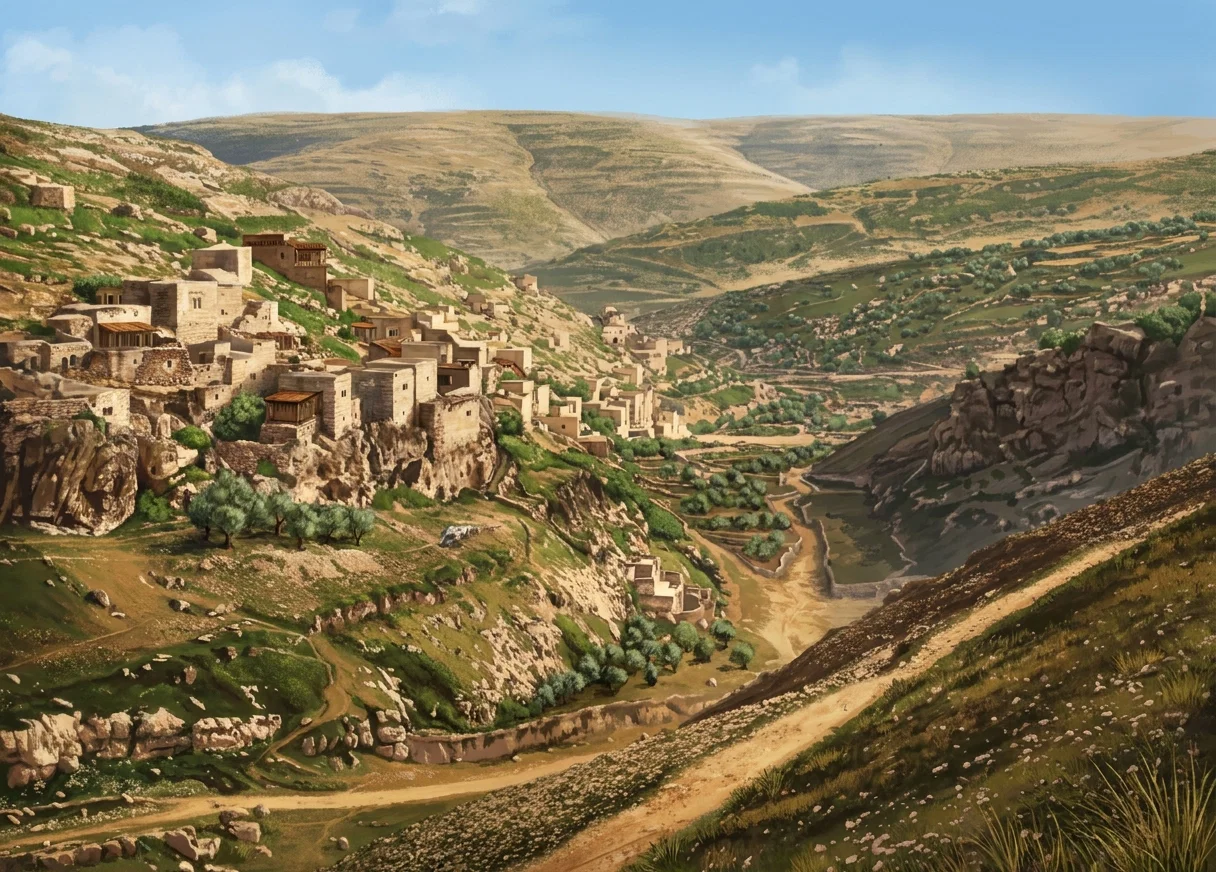 SILOAM.
 THE CHOSEN PEOPLE
“I WILL MULTIPLY THY SEED AS THE STARS OF HEAVEN”
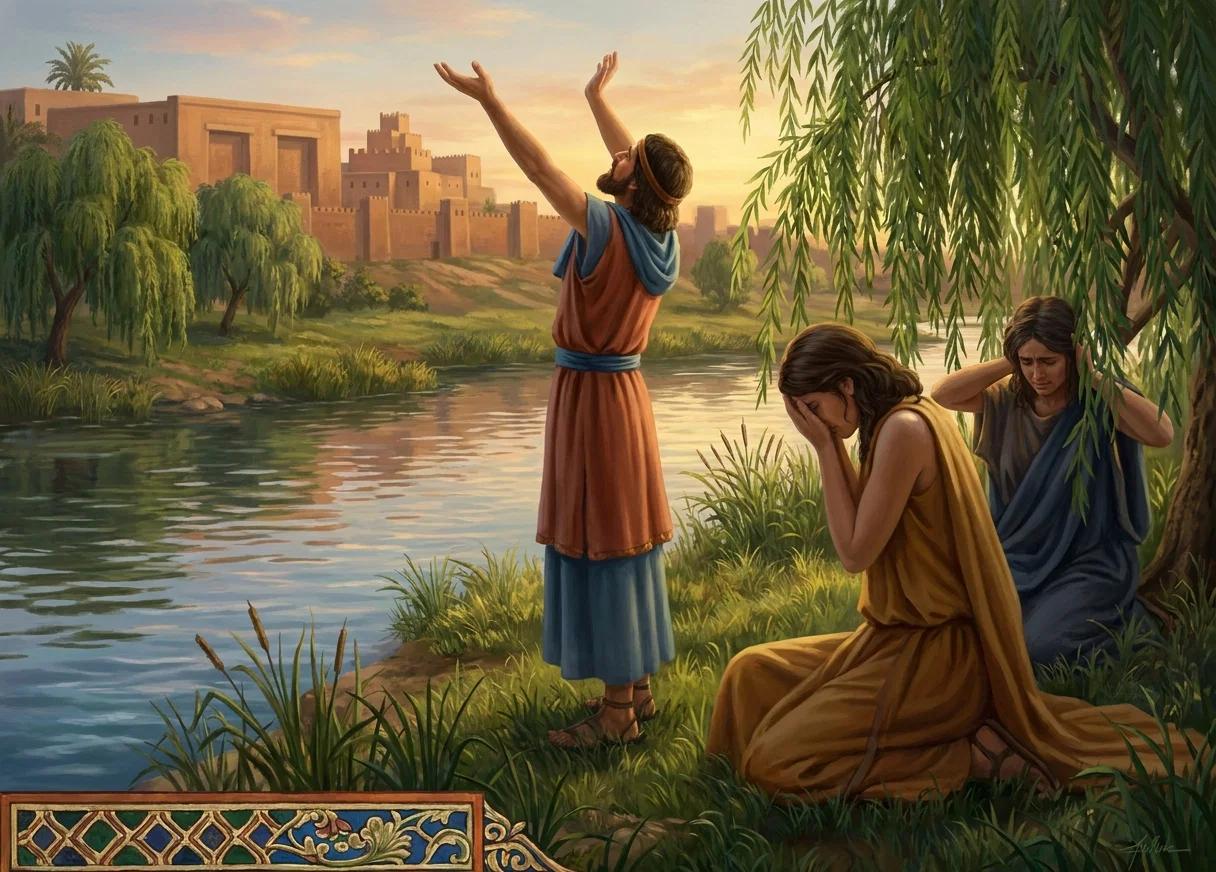 “They hung their harps on the willows, and mourned for the holy temple that was laid waste.”
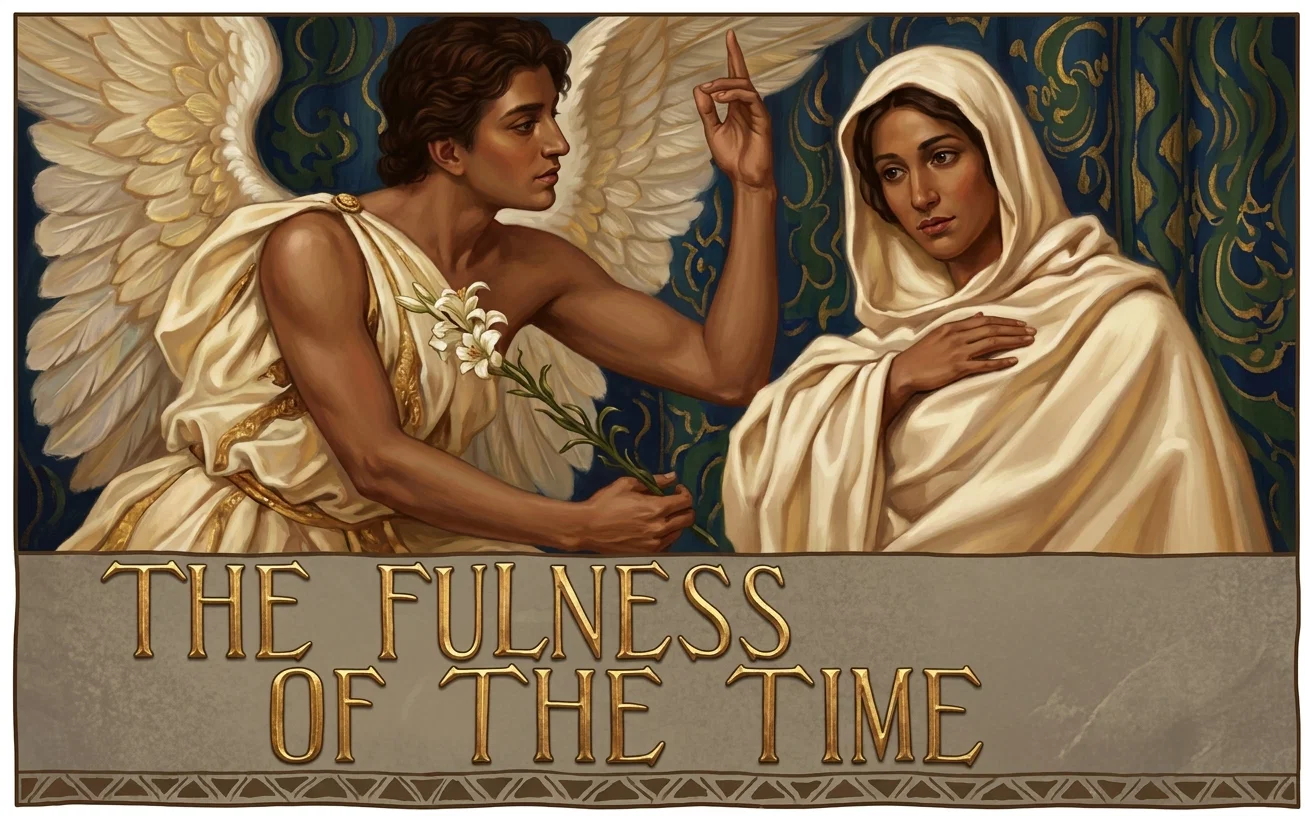 THE FULNESS
OF THE TIME
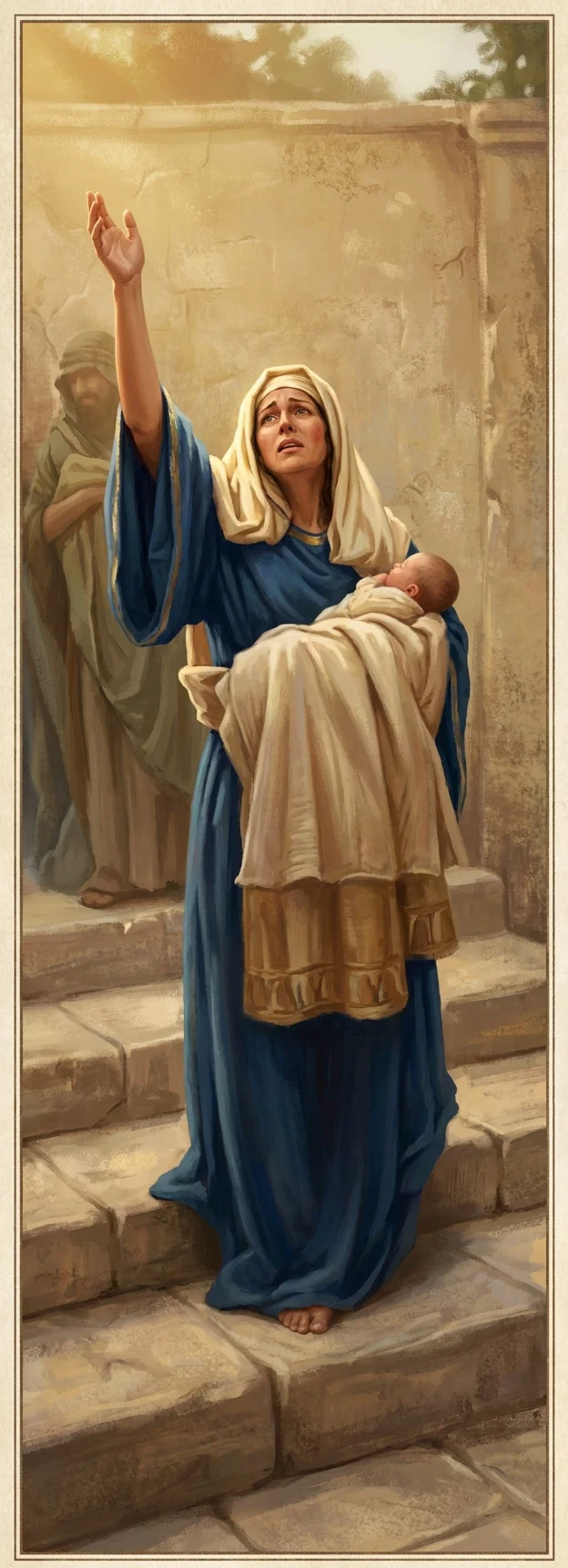 “It was not alone the wailing of the mothers of Bethlehem.”
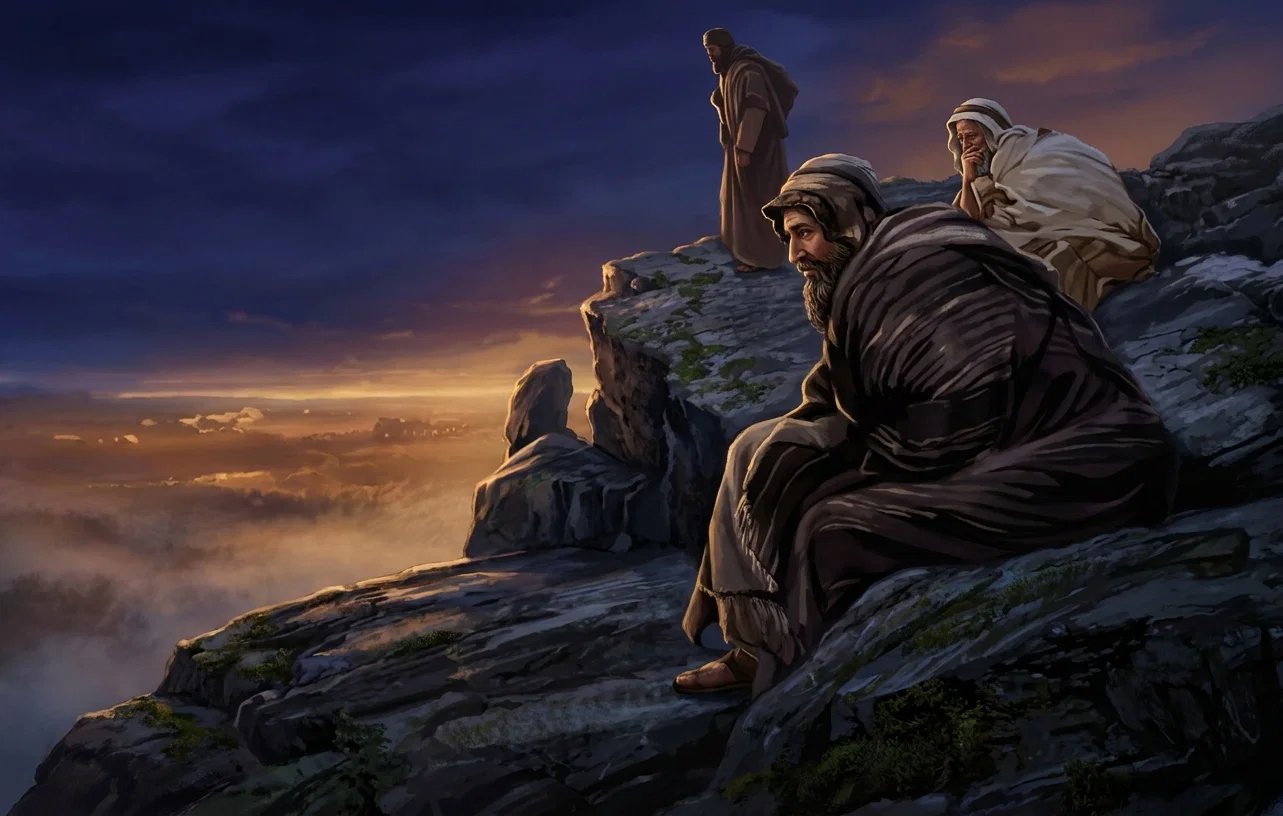 “Men sat unsolaced, and with longing eyes looked for the coming of the Deliverer.”
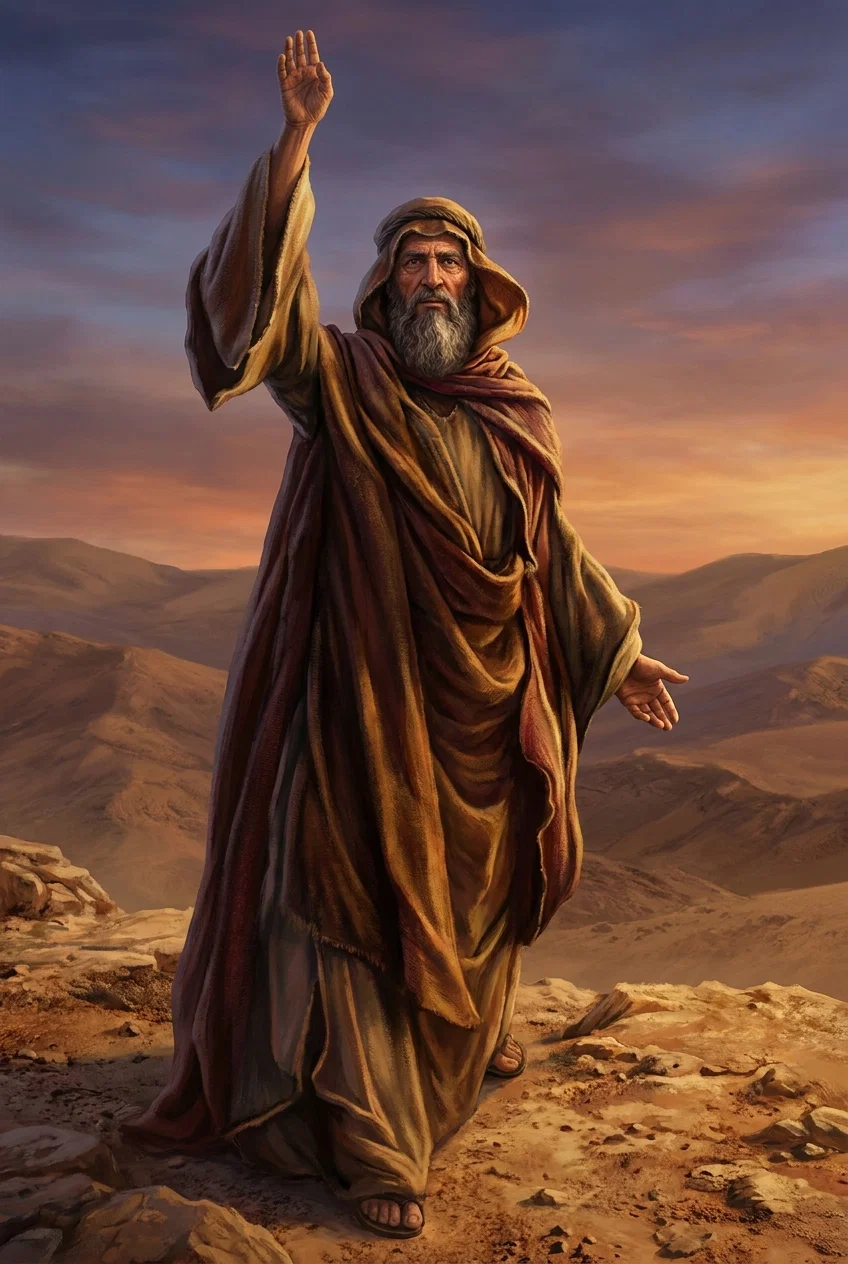 “One after another, like stars in the darkened heavens, such teachers had arisen.” Page 33.
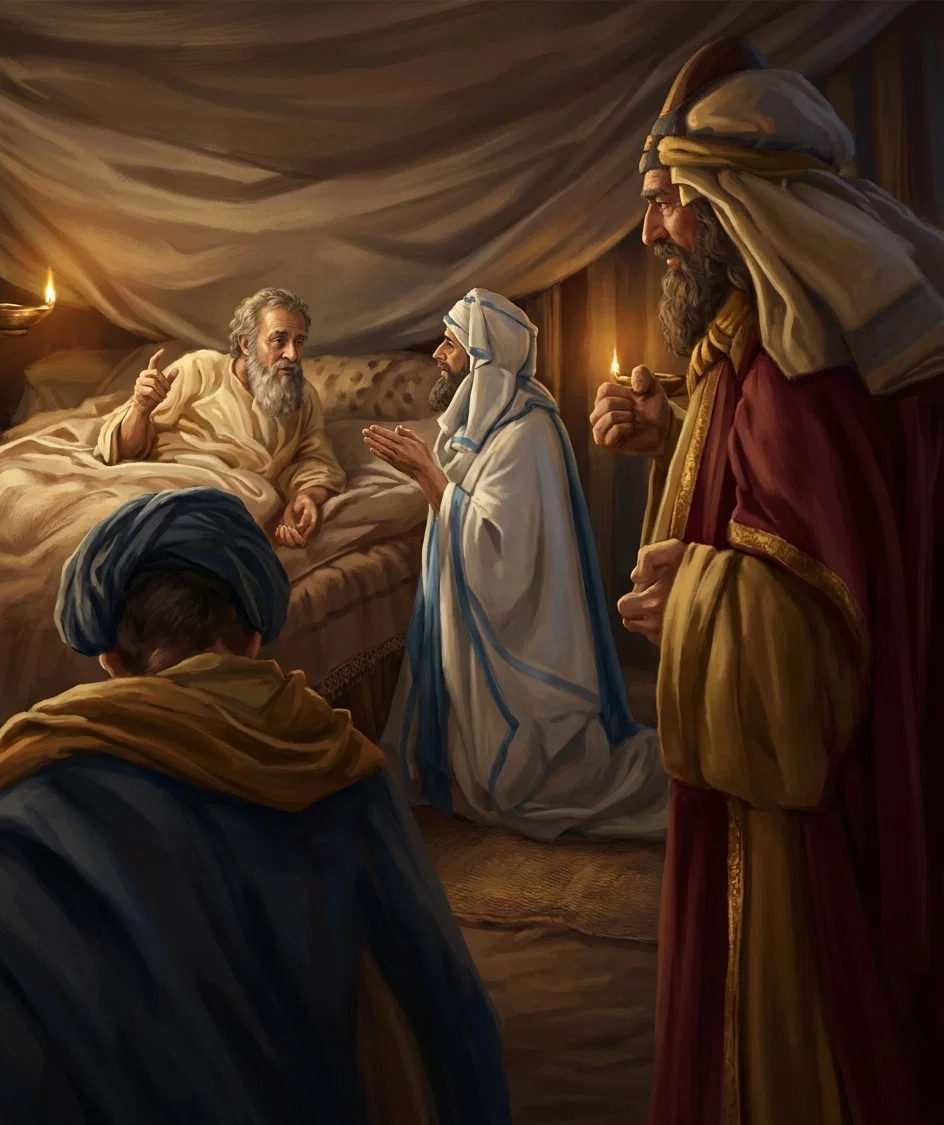 “The dying words of Jacob filled them with hope.”
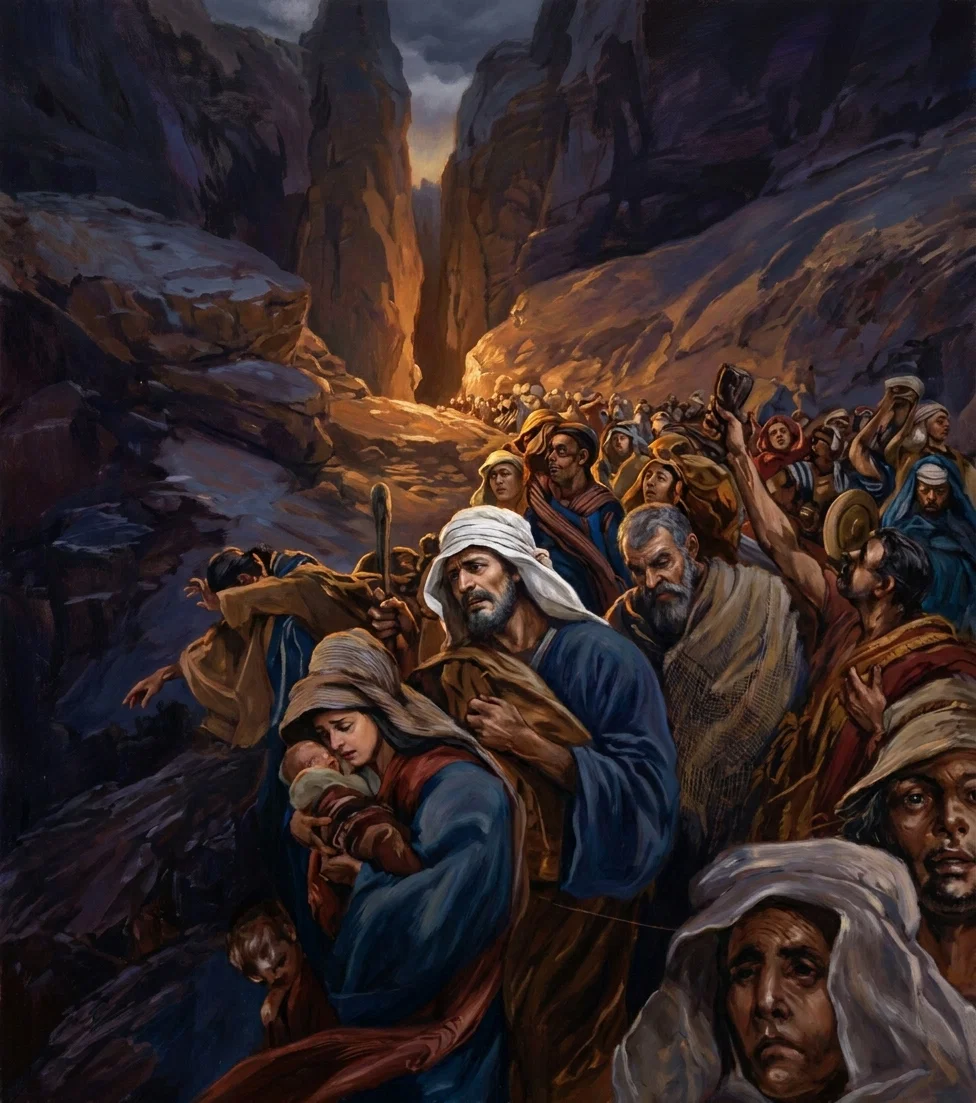 “Bewildered and deceived, they were moving on in gloomy procession toward eternal ruin.”
 A detailed black-and-white drawing depicts a large, ancient, gnarled tree standing on a small grassy rise. Several thick trunks twist upward and divide into numerous rugged branches, while broad, windswept clusters of fine foliage spread irregularly to both sides and crown the top. The heavily textured bark and contorted limbs suggest age and exposure to strong weather. Sparse grasses and low vegetation surround the base, with open, unmarked space behind the tree. No people, animals, signs, or lettering appear in the artwork.
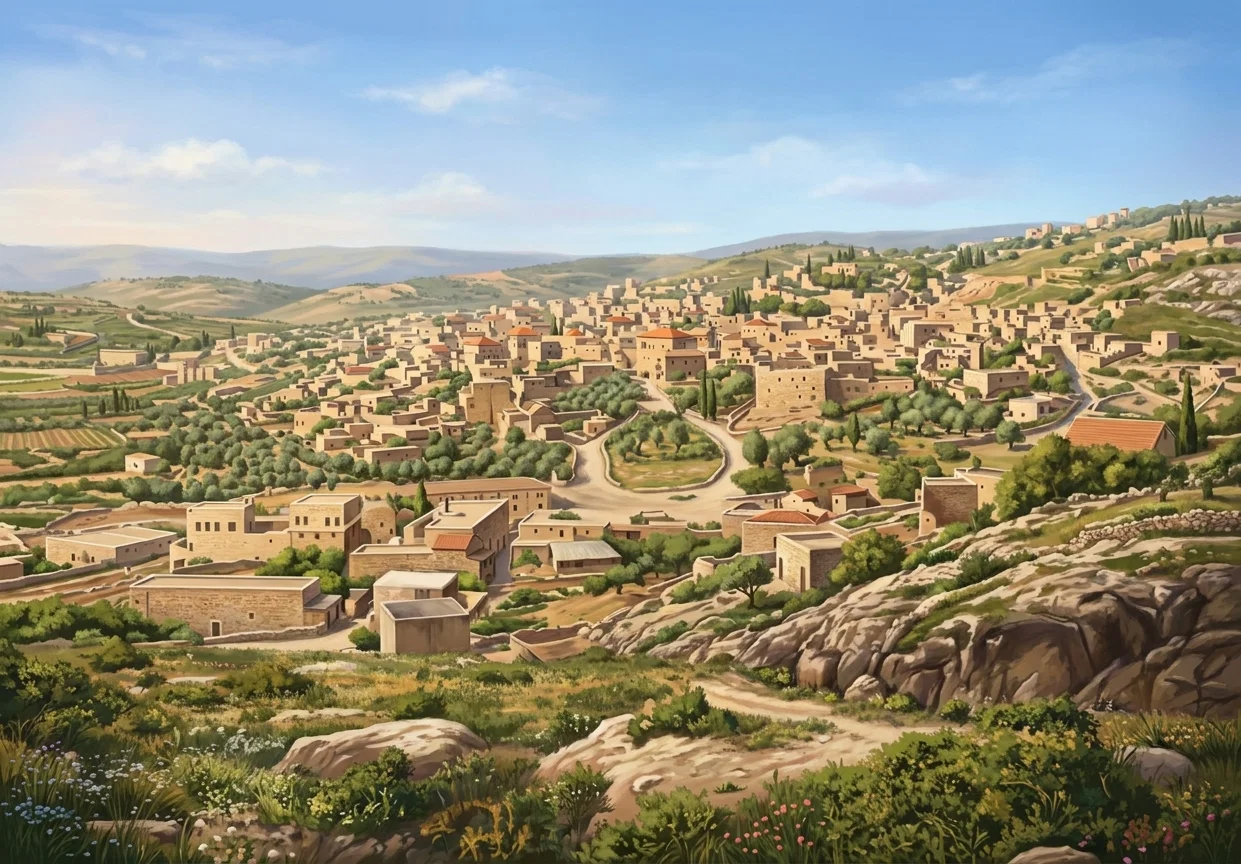 NAZARETH.
“He passed by the homes of wealth, the courts of royalty, and the renowned seats of learning, to make His home in obscure and despised Nazareth.”
 Unto You a Saviour
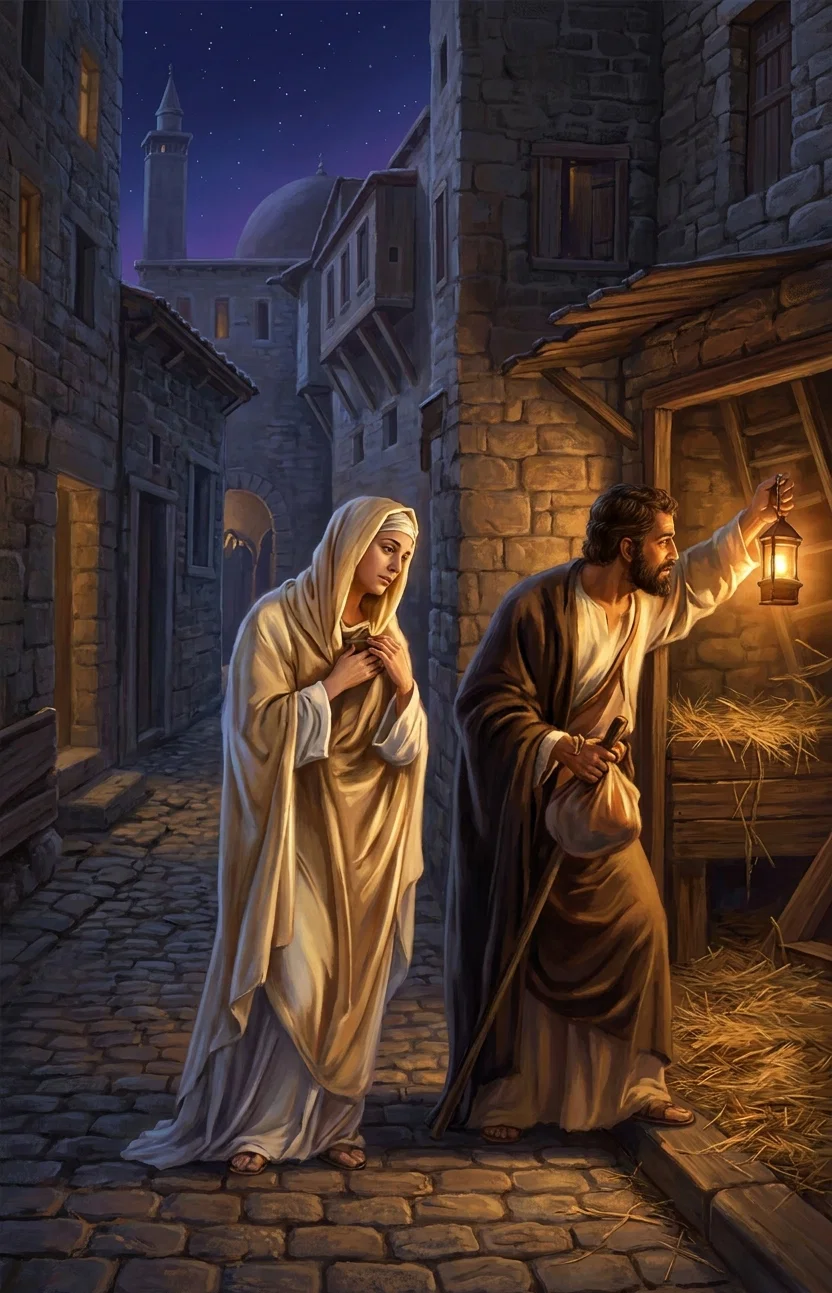 JOSEPH AND MARY SEARCHING FOR A RESTING-PLACE.
“Weary and homeless, they traverse the entire length of the narrow street.”
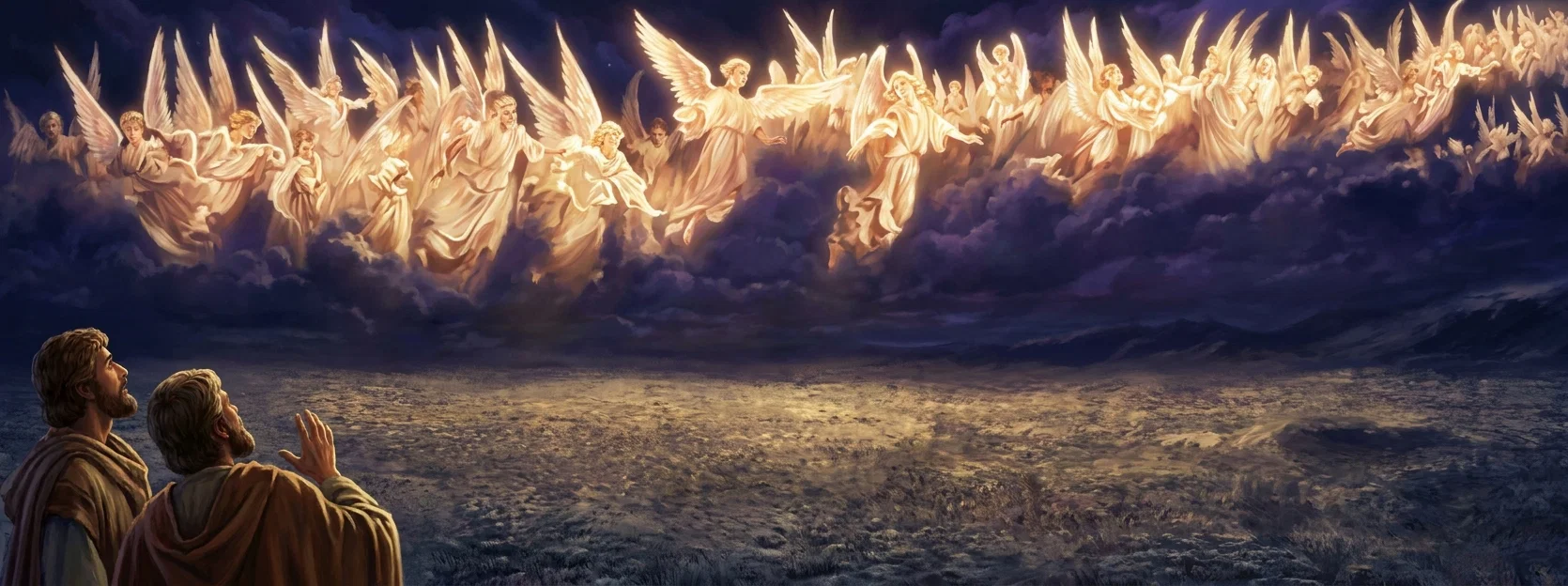 “The whole plain was lighted up with the bright shining of the hosts of God.”
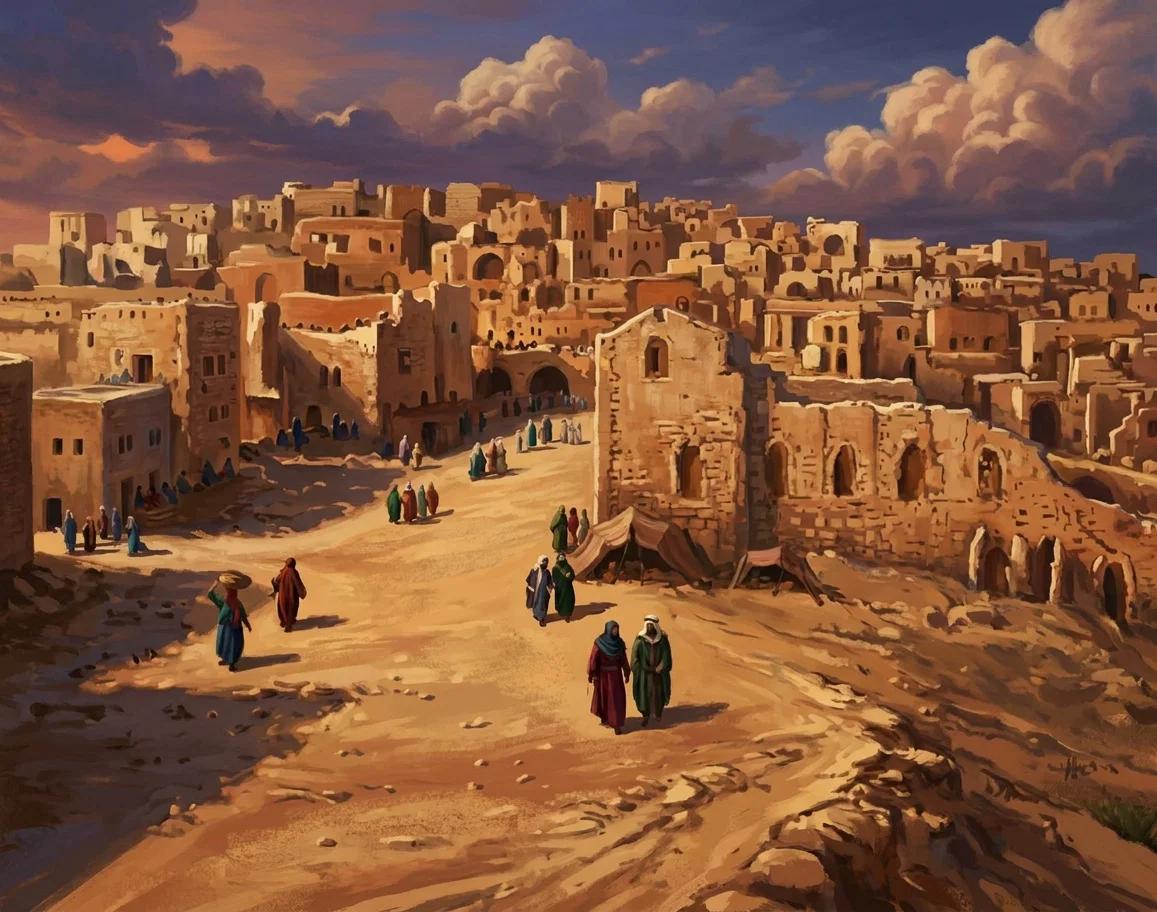 A broad, elevated view shows a sprawling ancient stone city built across a rugged hillside beneath a dark, cloud-filled sky. The densely packed buildings include flat-roofed structures, towers, walls, and numerous arches. In the middle distance, a large open courtyard or street is occupied by small groups of robed figures, while several people walk across the dusty foreground. A prominent, weathered multi-story stone building with arched openings stands near the center-right, beside lower ruins and a long arcade. The scene is rendered in a dramatic, somber architectural landscape.
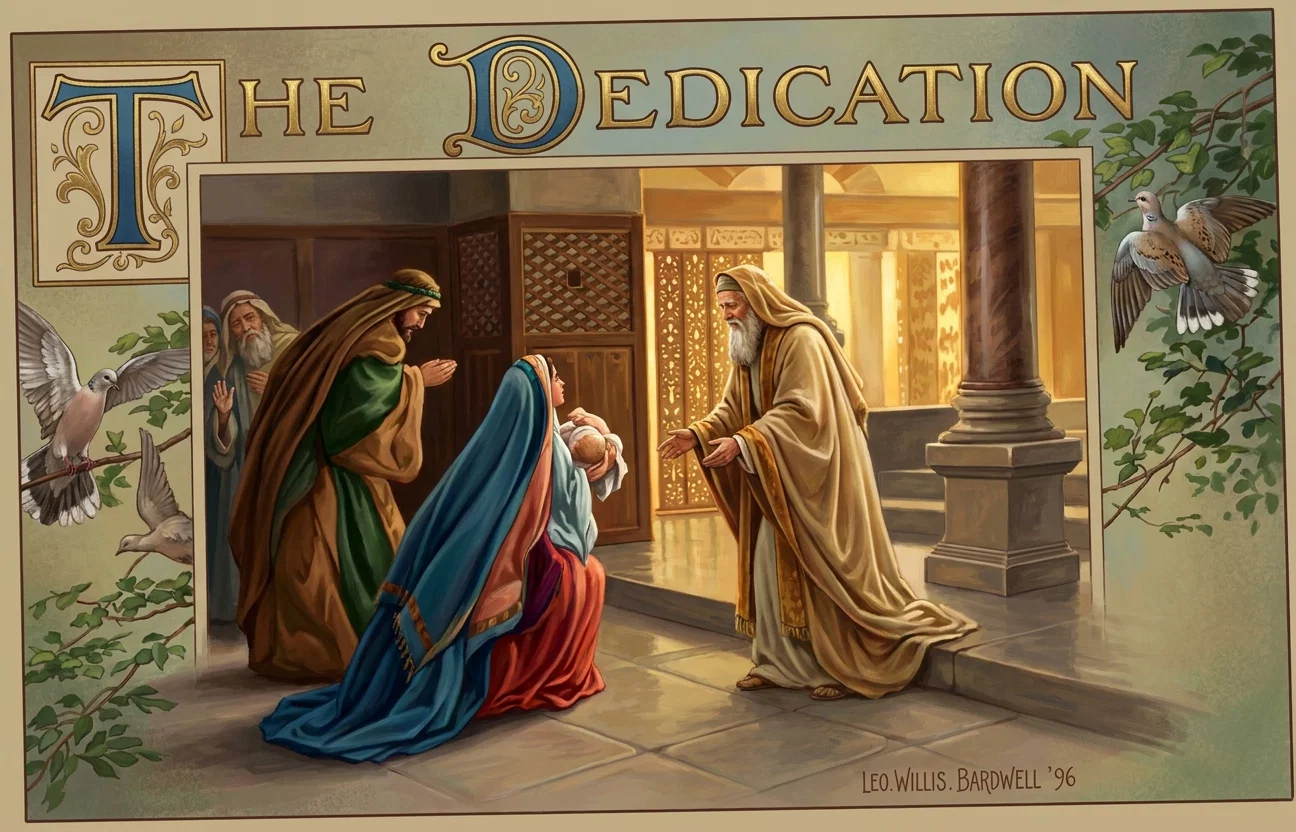 The Dedication
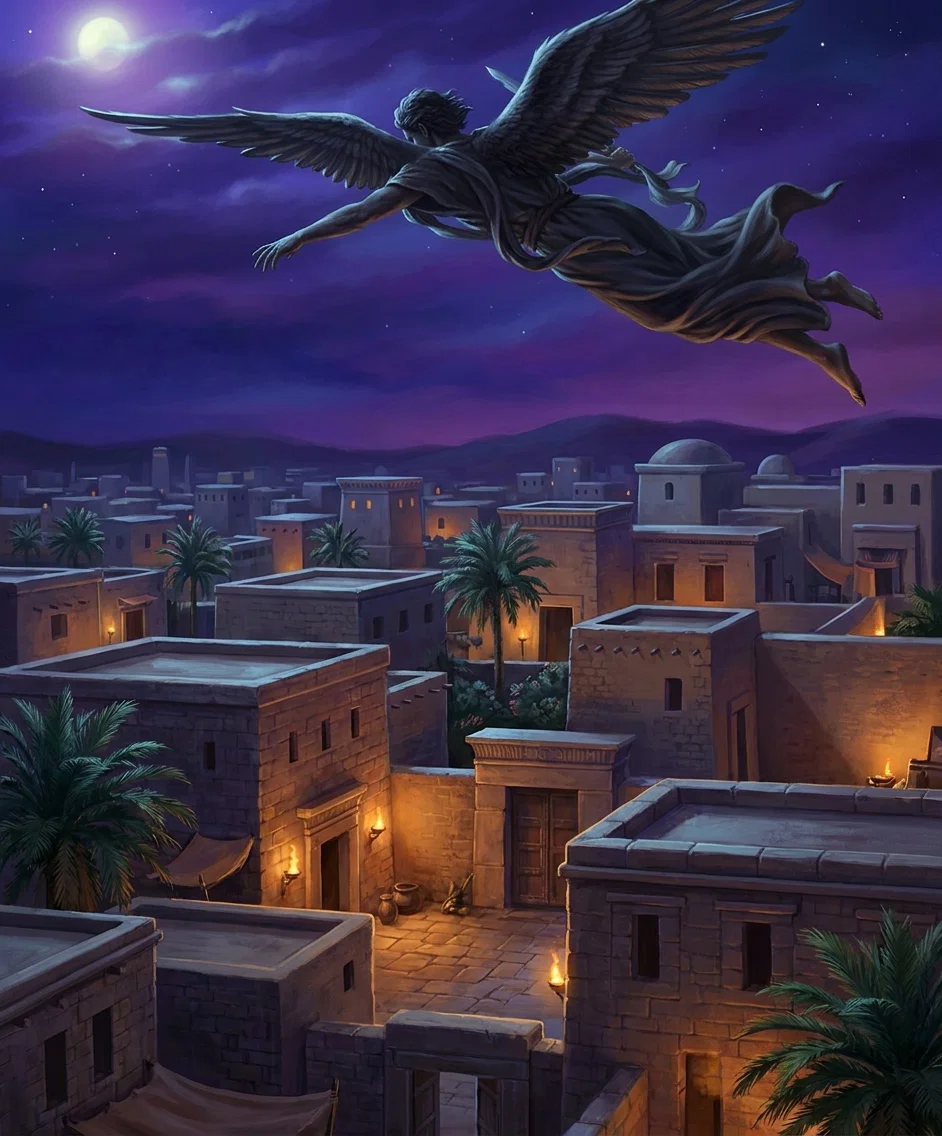 “The destroying angel was bidden to slay the first-born of man and beast among the Egyptians.”
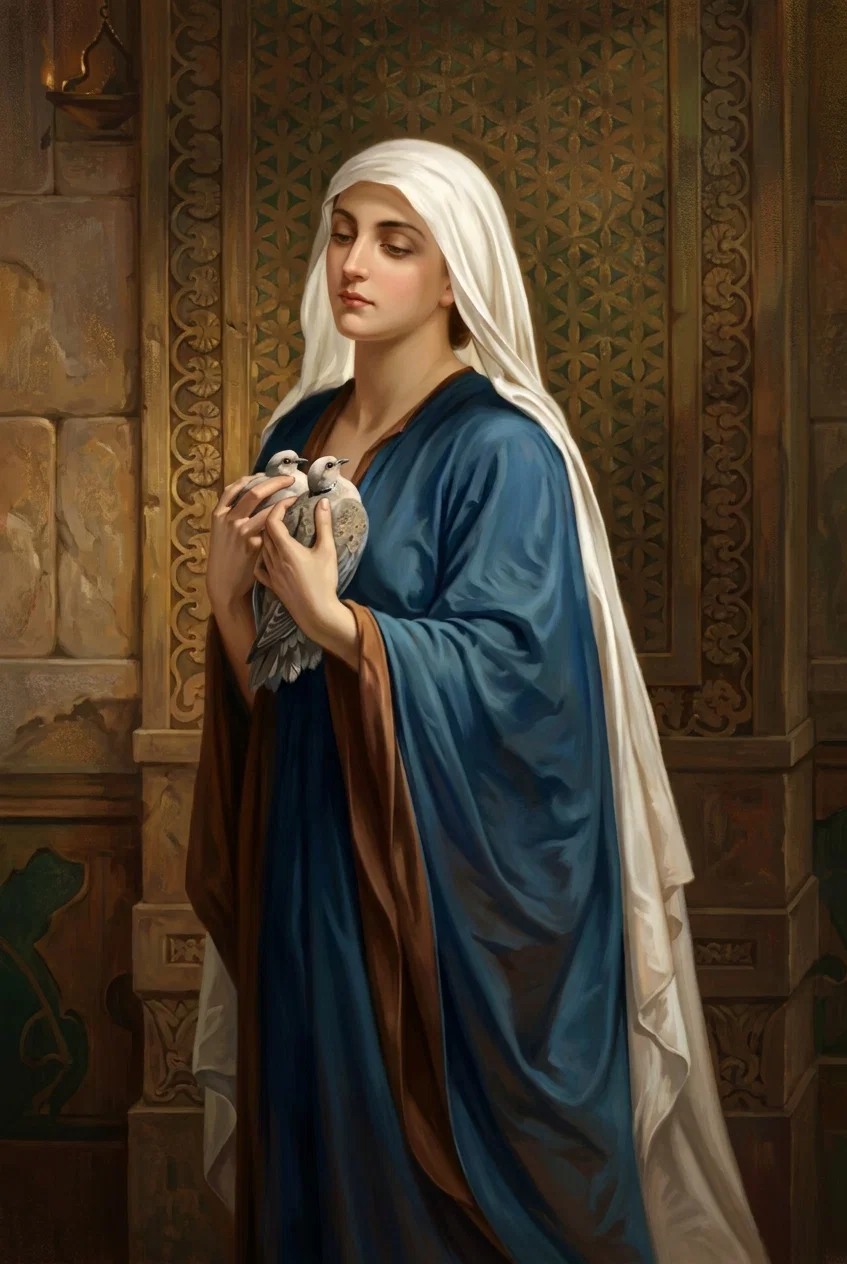 MARY AND THE TURTLE DOVES.
“If the parents were too poor to bring a lamb, a pair of turtle doves or two young pigeons . . . might be accepted.” Page 50.
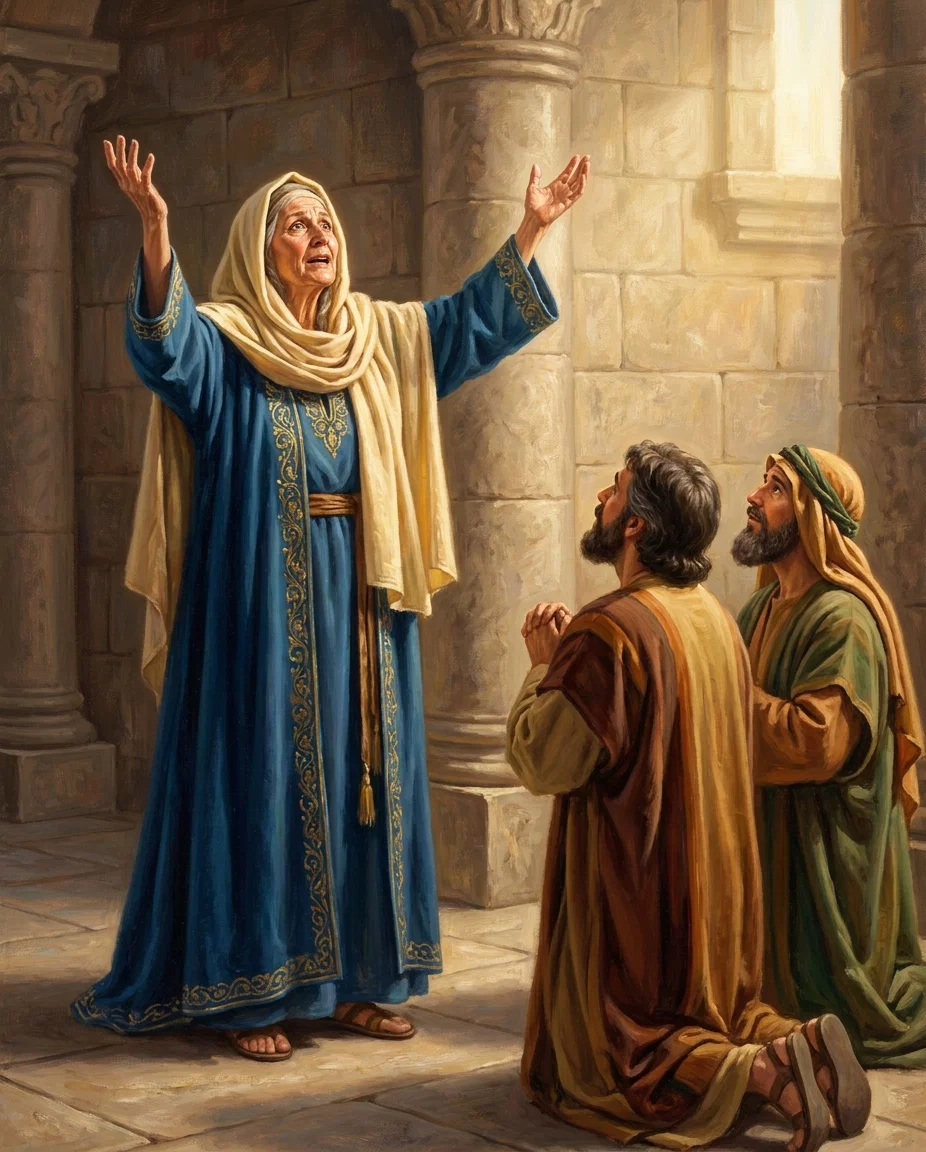 “Anna, a prophetess, poured out heartfelt thanks.”
 A rustic countryside scene shows a low, rounded-stone wall running across the middle of the image, interrupted by a row of tall, rectangular pale stone or concrete posts. Behind the wall is a densely wooded or orchard-like area with leafy trees and shrubs, while the foreground is filled with tall, roughly sketched grass and weeds. Near the right side, two small dark-and-white livestock animals, likely cows, stand beside the wall and posts. The composition is rendered in black ink with dense hatching and loose naturalistic lines; no lettering or signs are visible.
 WE HAVE SEEN HIS STAR
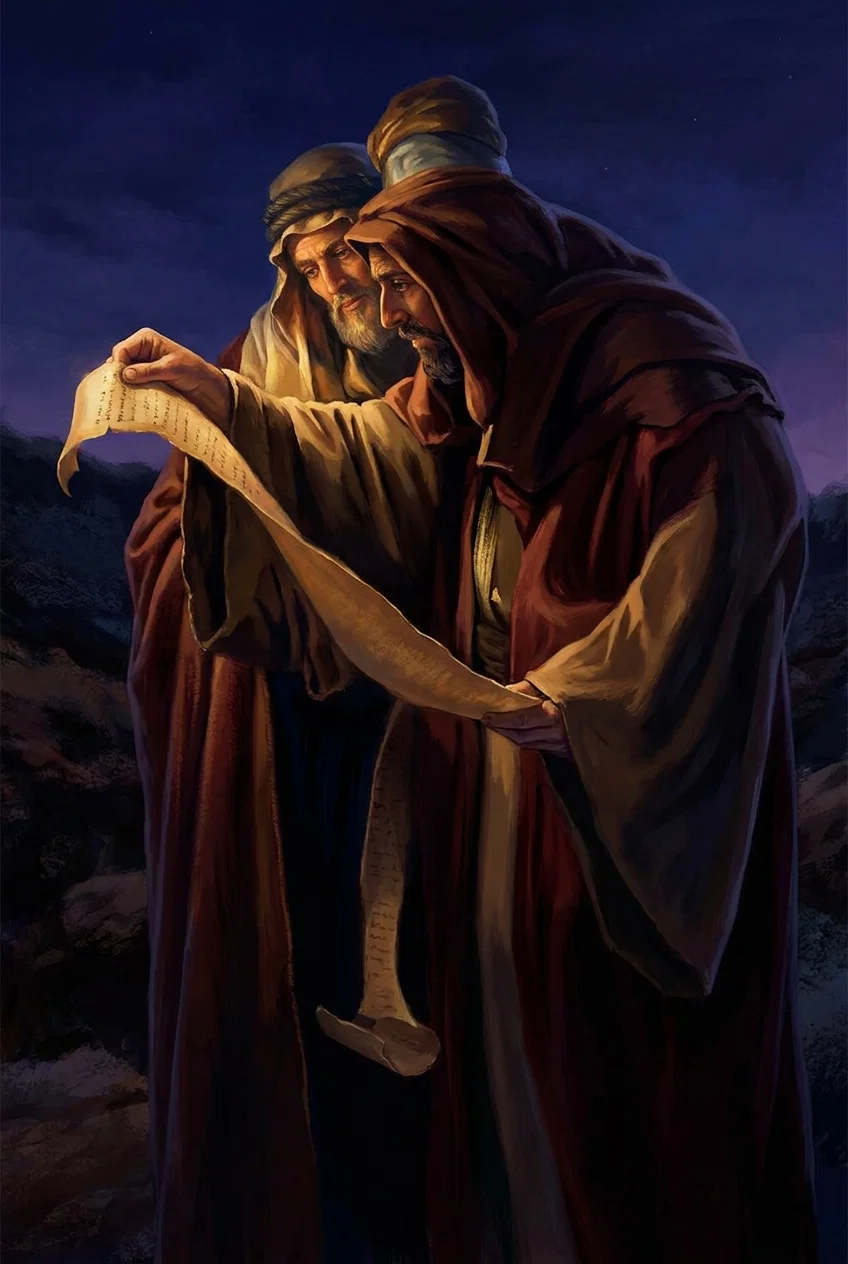 “At every pause for rest they searched the prophecies.”
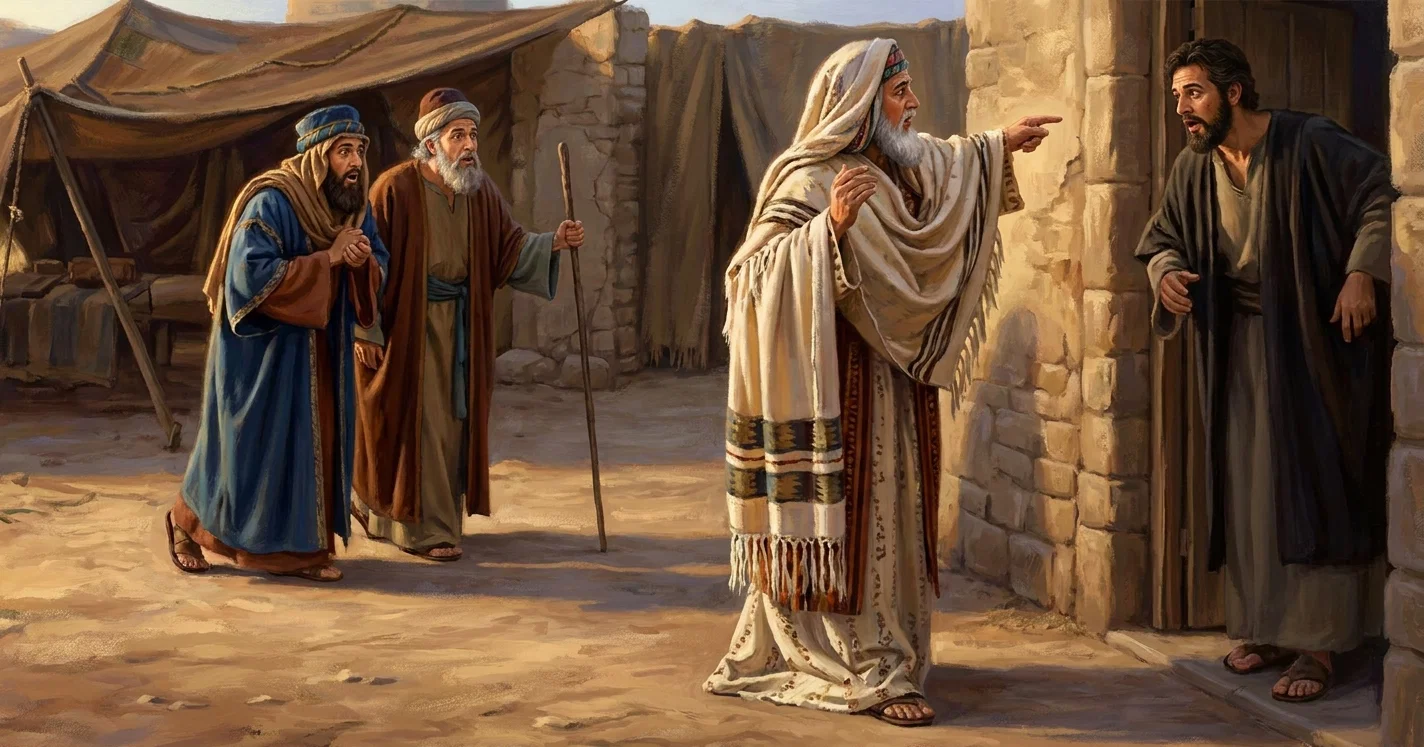 “To their amazement they find none who seem to have a knowledge of the new-born King.”
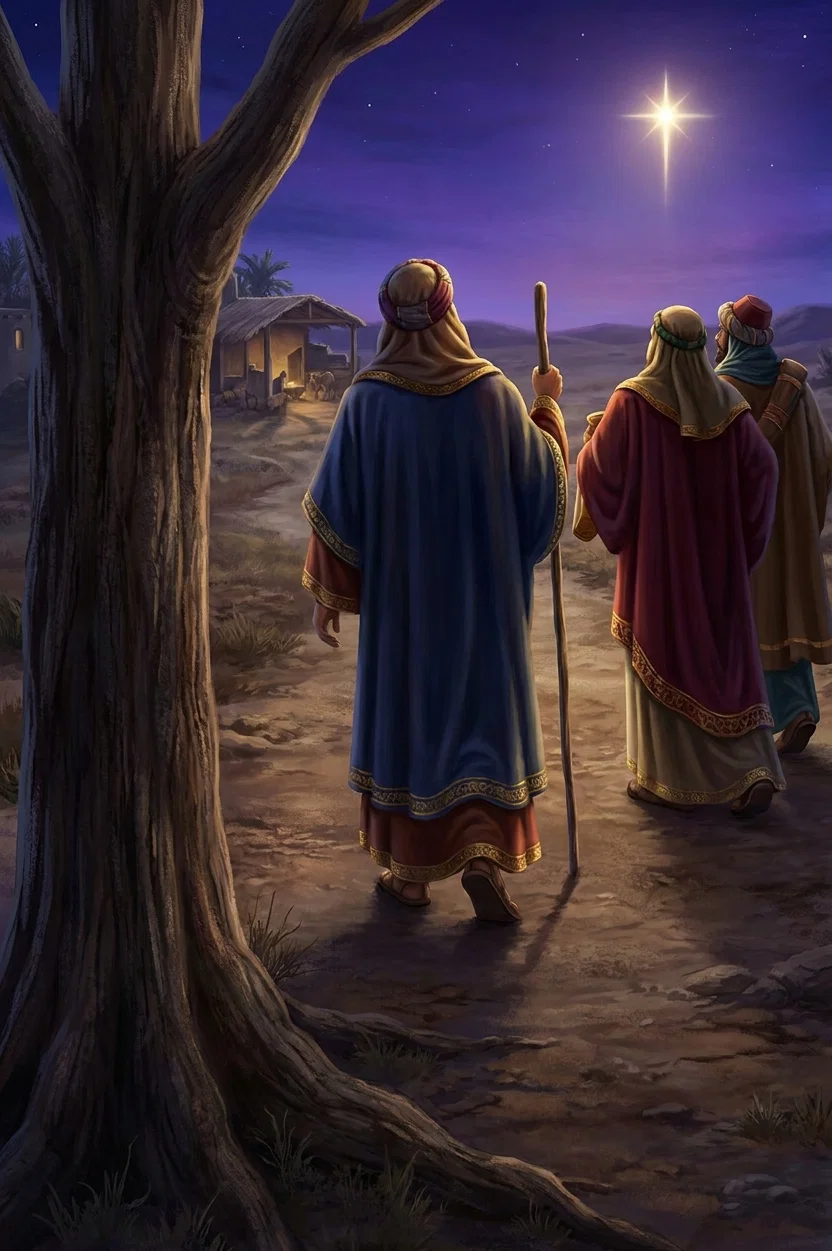 “The shadows of night were falling.”
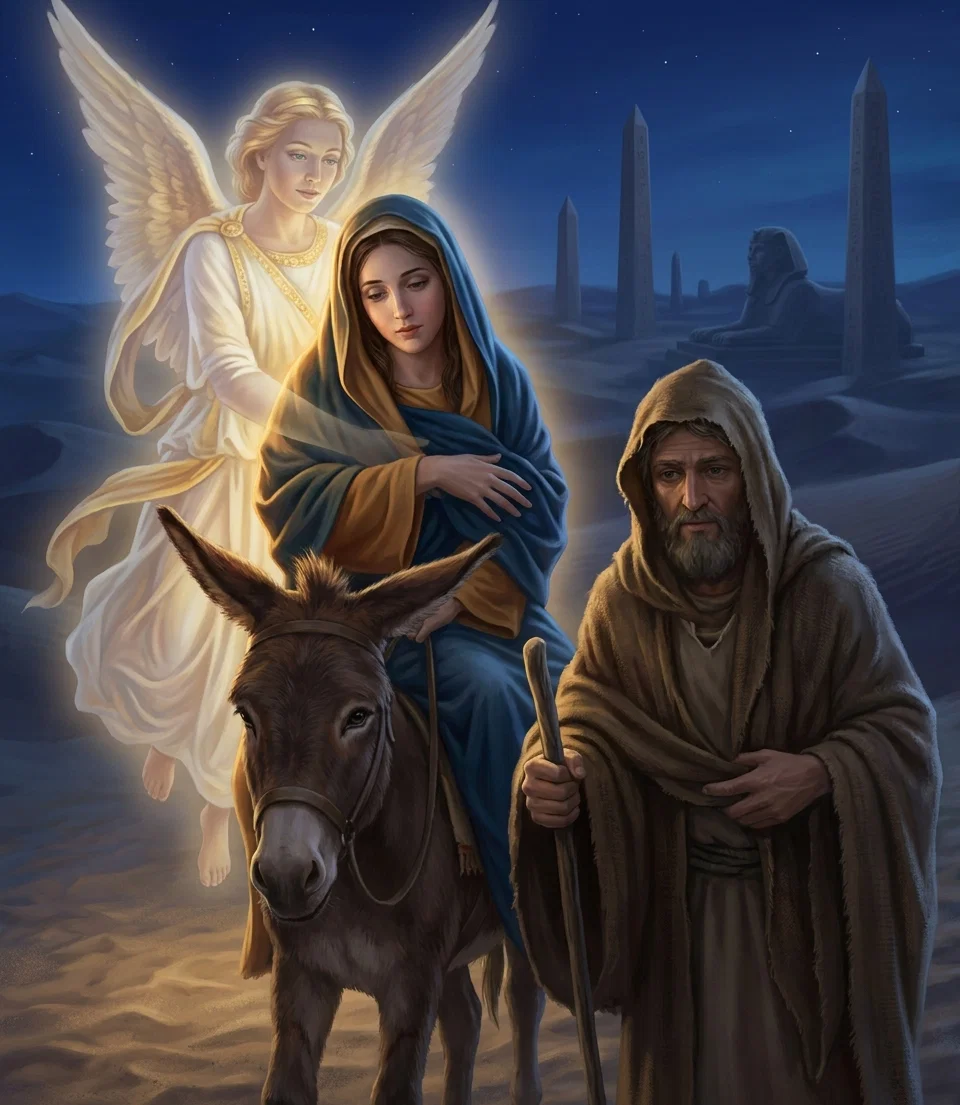 “Setting out on the journey by night for greater security.”
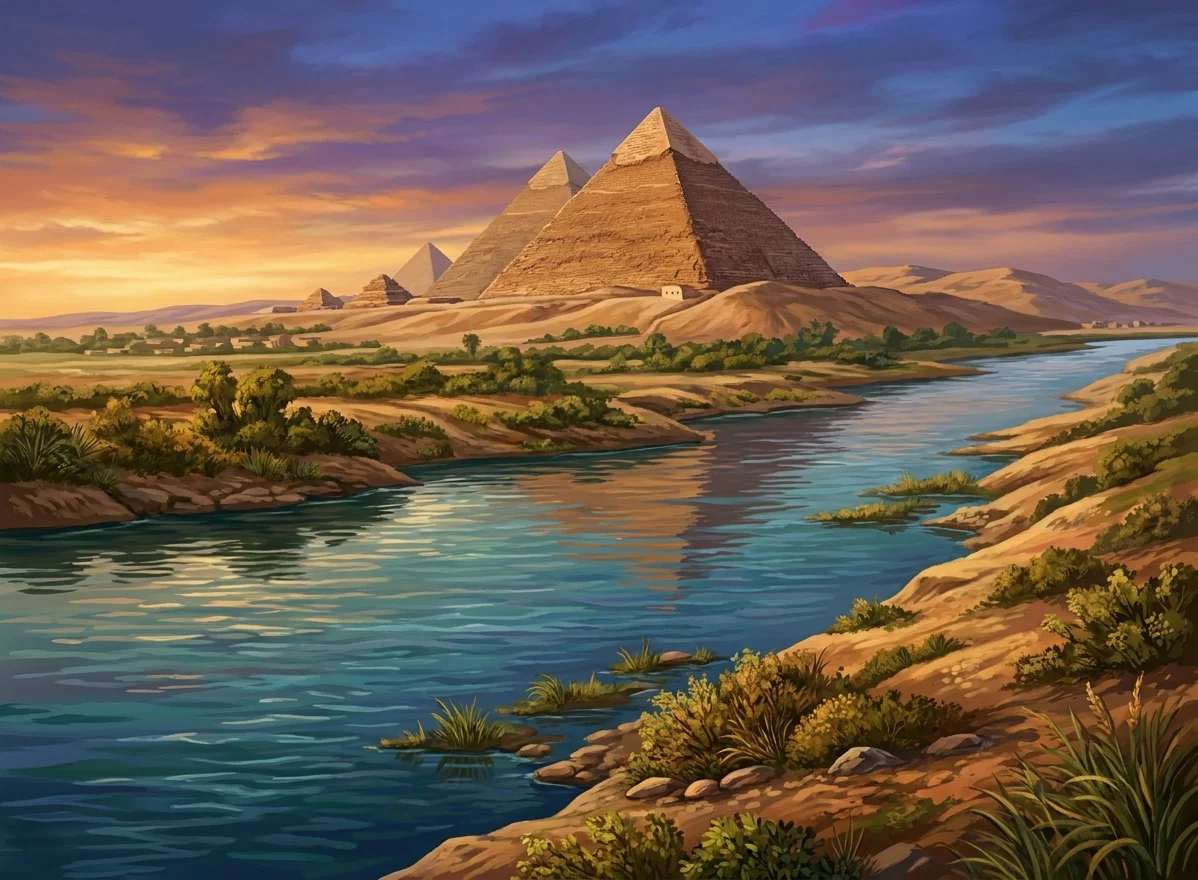 On the Nile.
 A tranquil rural landscape shows a stream or pool in the foreground winding beneath a grassy, uneven bank. At the center, a broad, dark waterfall pours over the edge of the elevated ground into the water below, its surface rendered with dense vertical strokes to suggest rapid flow. Rough vegetation, shrubs, reeds, and overhanging grasses cover both banks, while a low, open horizon and lightly sketched clouds stretch across the background. No people, animals, or lettering are visible.
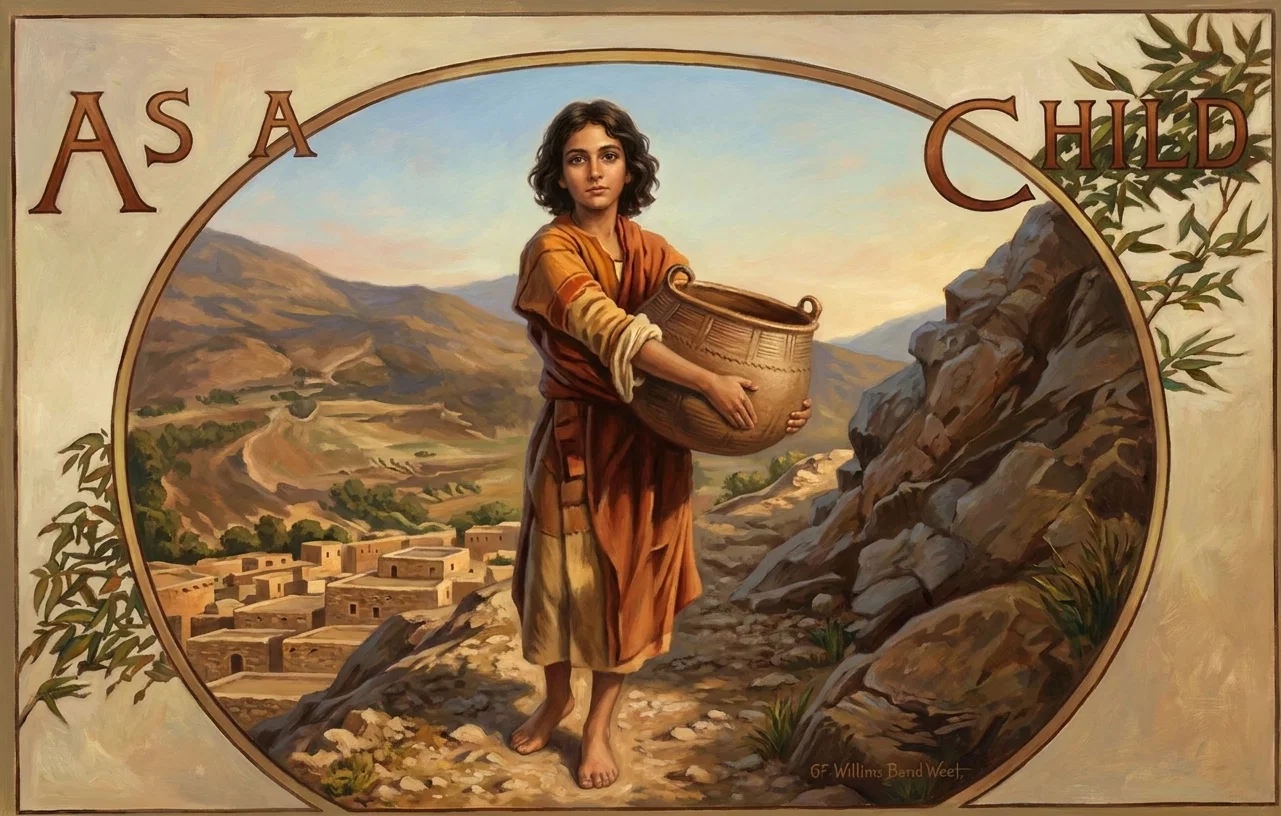 AS A CHILD
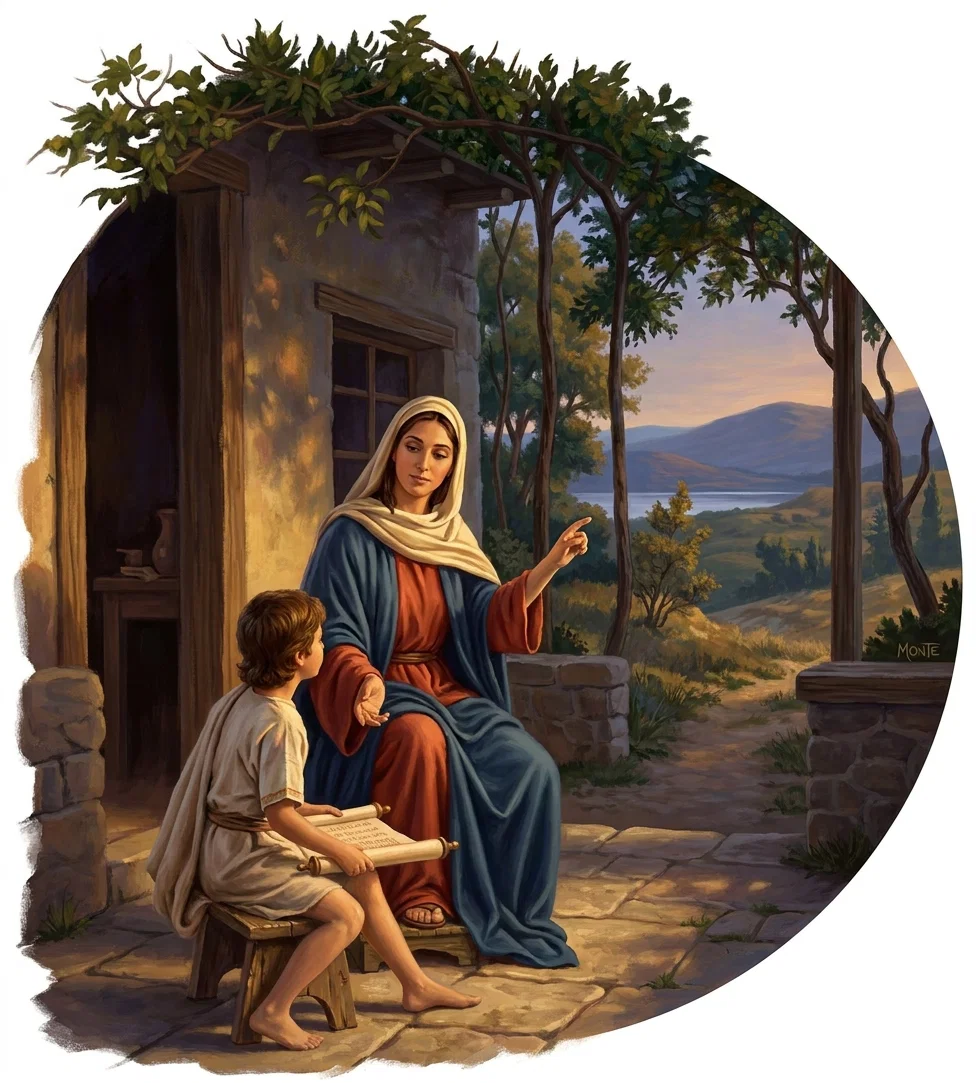 “His mother was His first human teacher.”
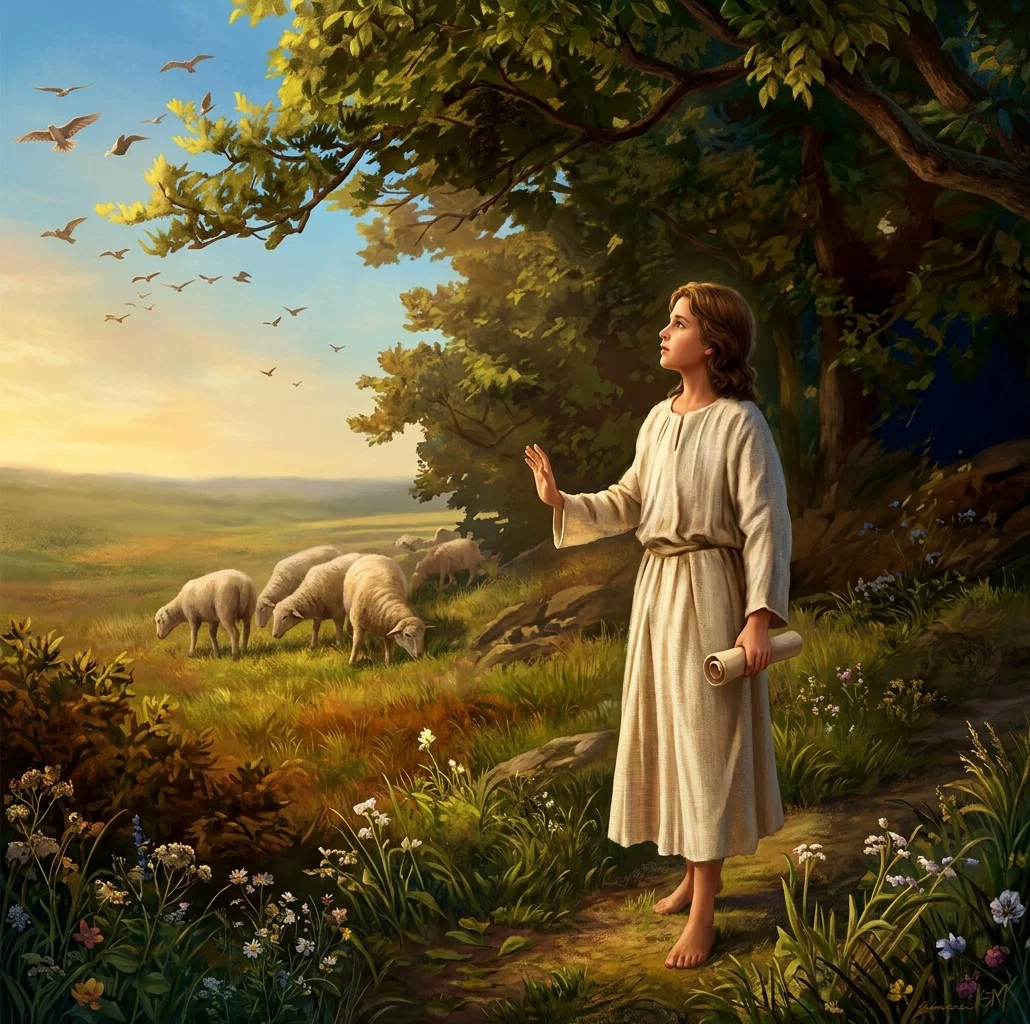 “Spread out before Him was the great library of God’s created works.”
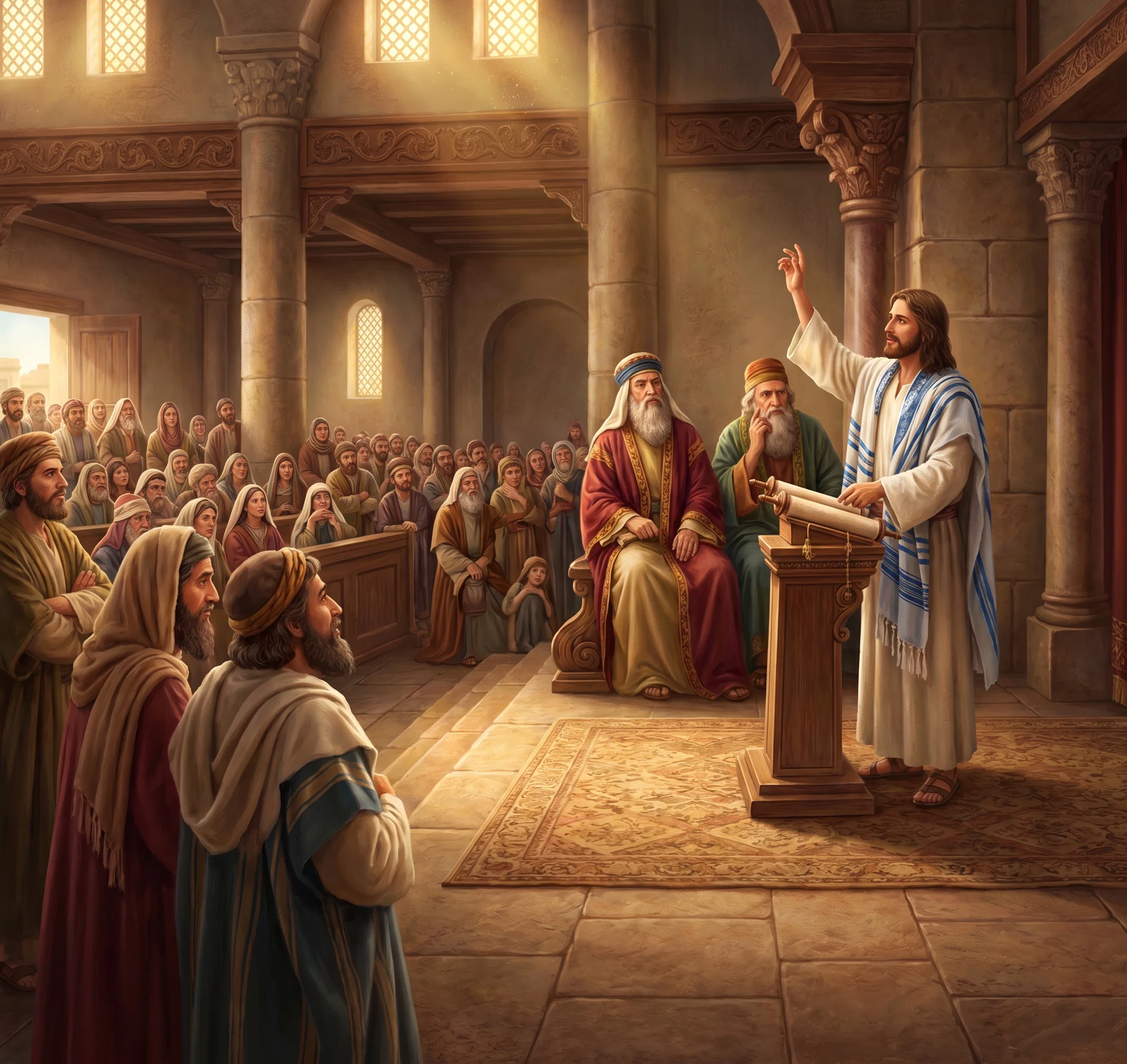 “Often in the synagogue on the Sabbath day He was called upon to read the lesson from the prophets.” Page 74.
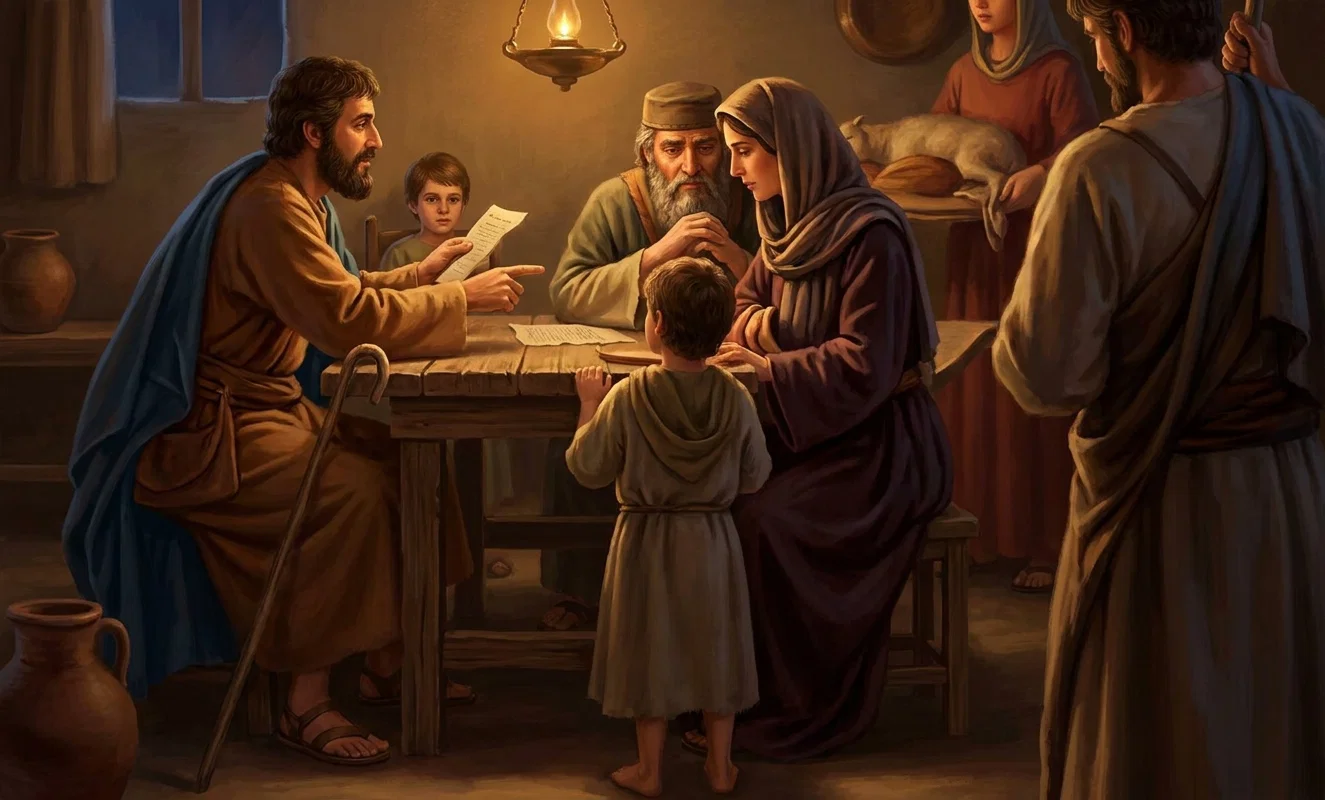 A crowded interior scene shows the boy Jesus among Jewish travelers during the Passover journey. At left, a bearded man in a dark cap sits at a table, gesturing toward an open scroll or document, while a child behind him looks on. Jesus, centrally placed in profile with long hair and a simple cap, leans toward an older bearded man seated beside him, who appears deep in conversation or contemplation. Several women and men gather in the background and at right, some seated at tables, creating the atmosphere of a busy lodging or communal meeting place.
 Going to the Passover:
“From every part of Palestine the worshipers came in great numbers.”
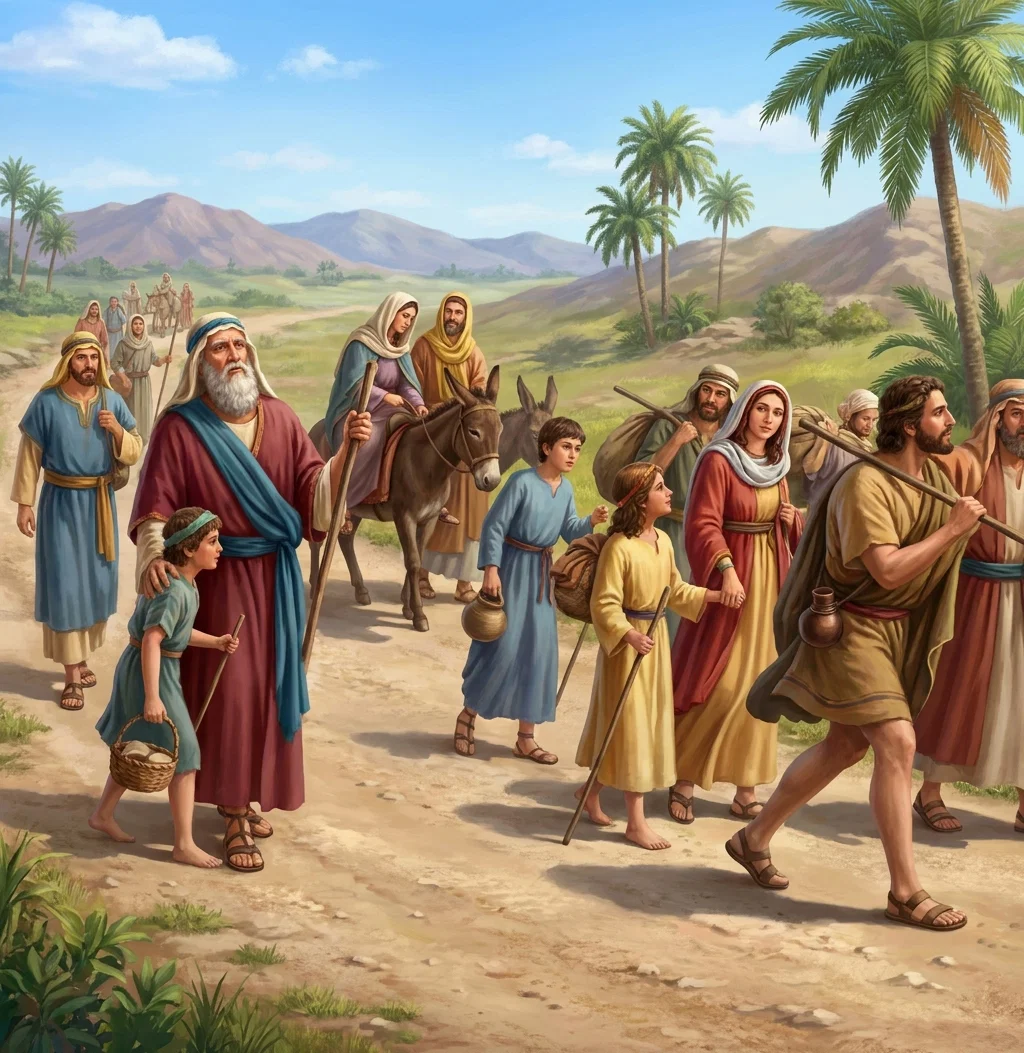 A large group of Hebrew worshipers travels toward Jerusalem for Passover along a sunlit dirt road through a lush valley. Men, women, and children wear ancient robes, head coverings, and sandals, carrying staffs, baskets, jars, and bundles. In the foreground, an older white-bearded man walks beside a boy, while a woman rides a donkey with a companion behind her. Other travelers, including a man with a laden pack animal, fill the path. Palm trees frame the scene, with green fields and rugged purple-brown mountains stretching beneath a bright blue sky.
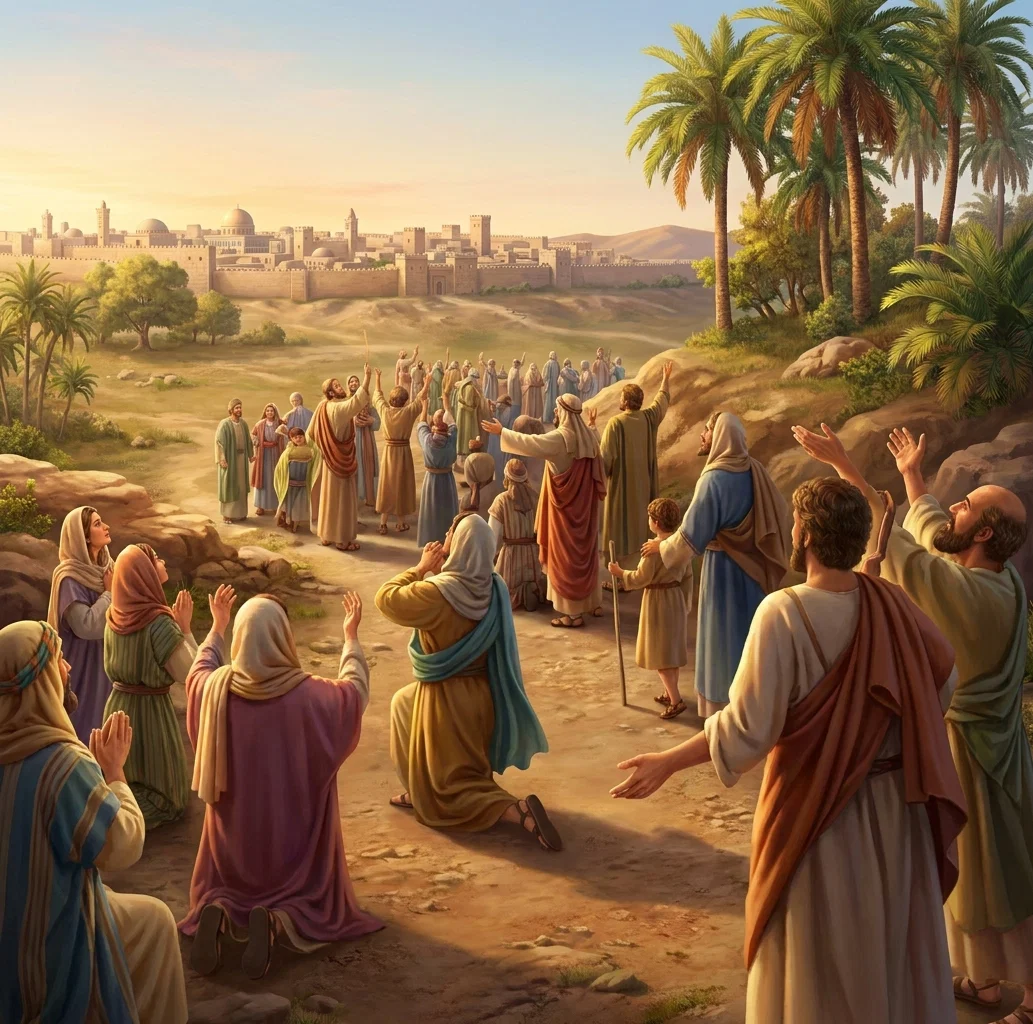 “When at last the towers of Jerusalem came into view, every voice joined in a triumphant strain.”
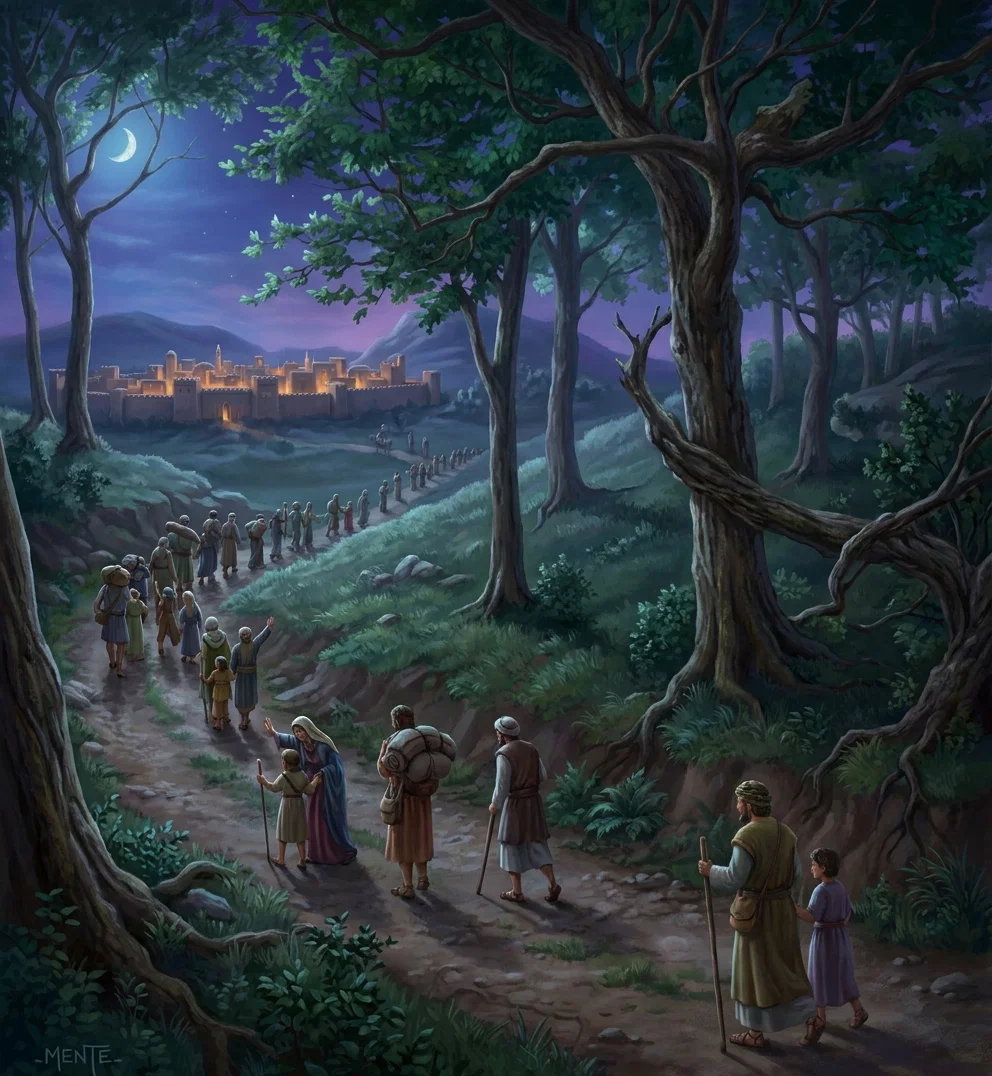 A small procession of travelers winds along a curving path through a wooded landscape toward a distant settlement on the horizon, whose pale towers or buildings are visible beyond rolling fields. Several figures walk in groups along the road, including people carrying bundles or staffs, while one foreground traveler stands with a long walking stick beside another figure. Tall, leafy trees frame the scene on both sides, with a shaded grove to the right and open countryside to the left. The lower-left corner bears the artist’s signature, appearing to read “C. MENTE.”
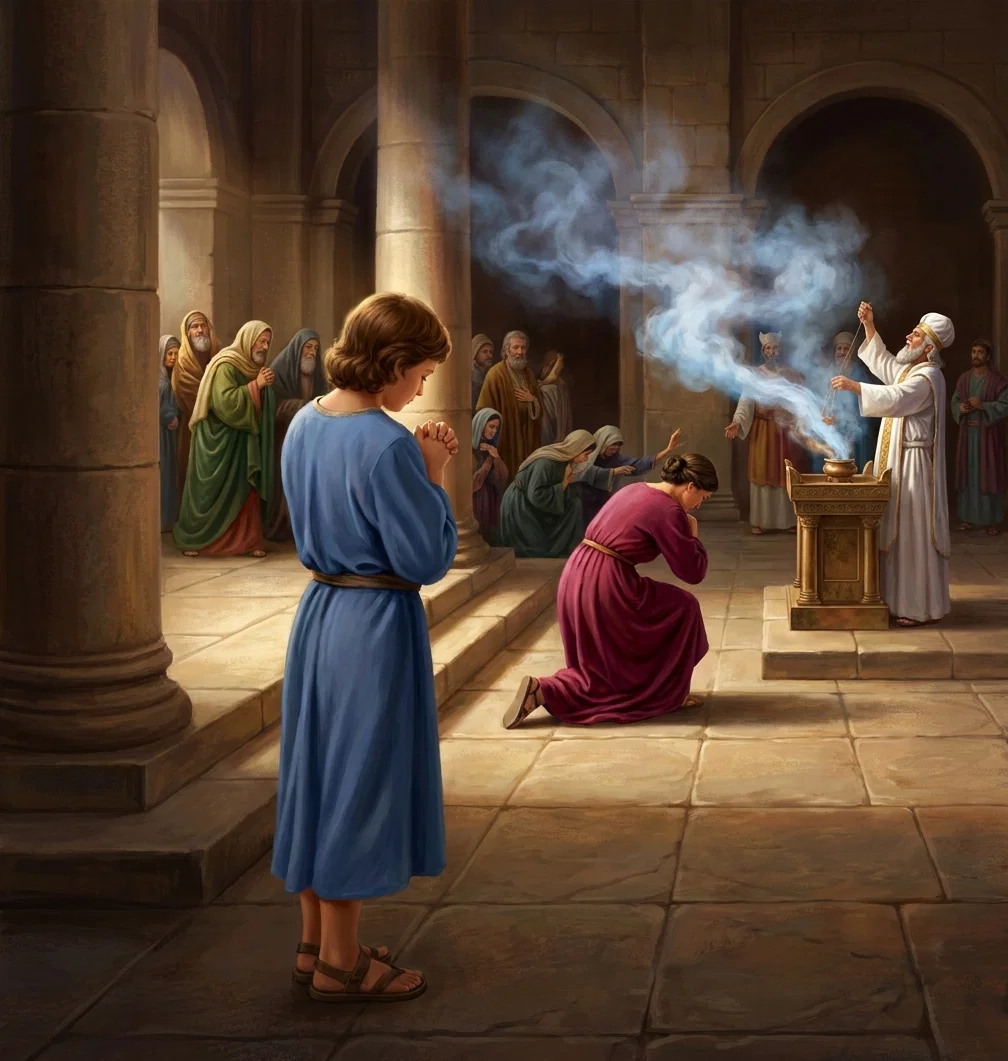 “He saw the white-robed priests performing their solemn ministry.”
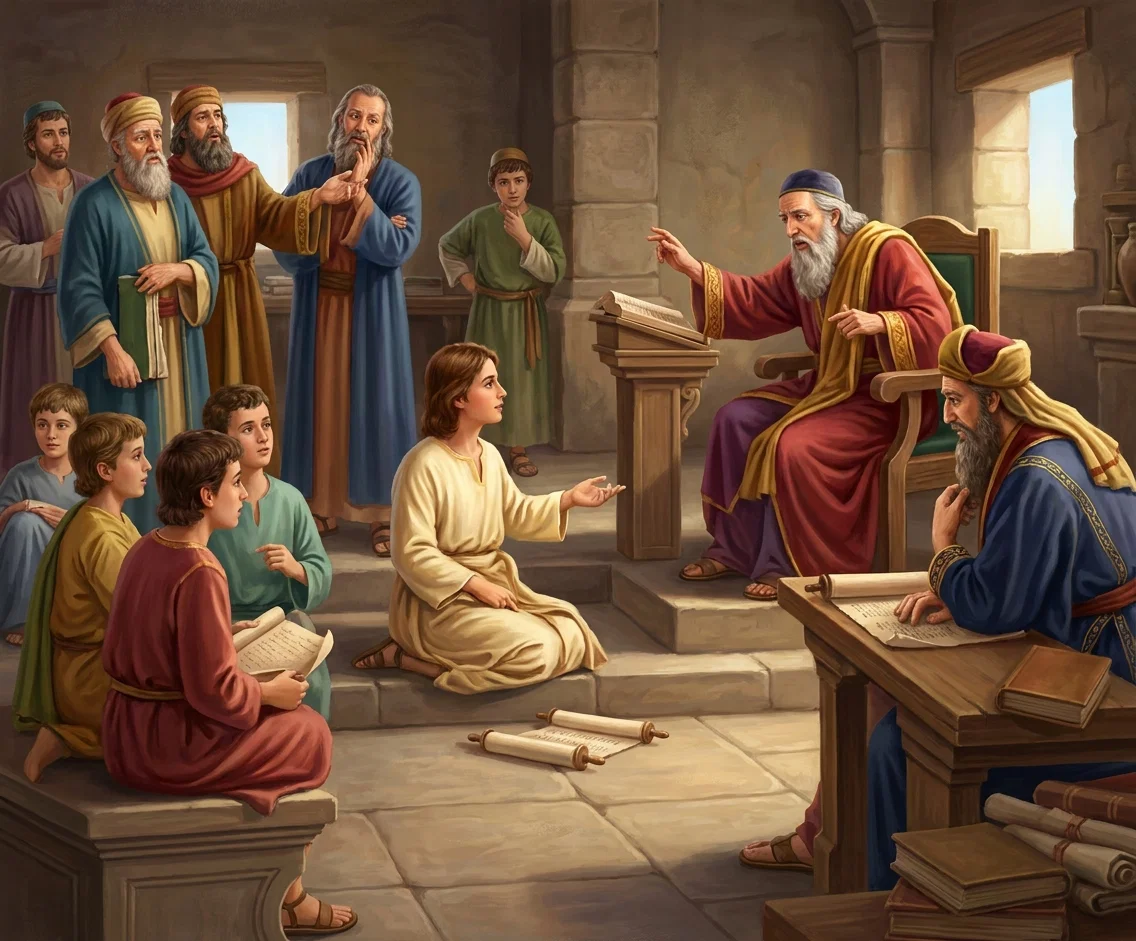 “Seating Himself at the feet of these grave, learned men.”
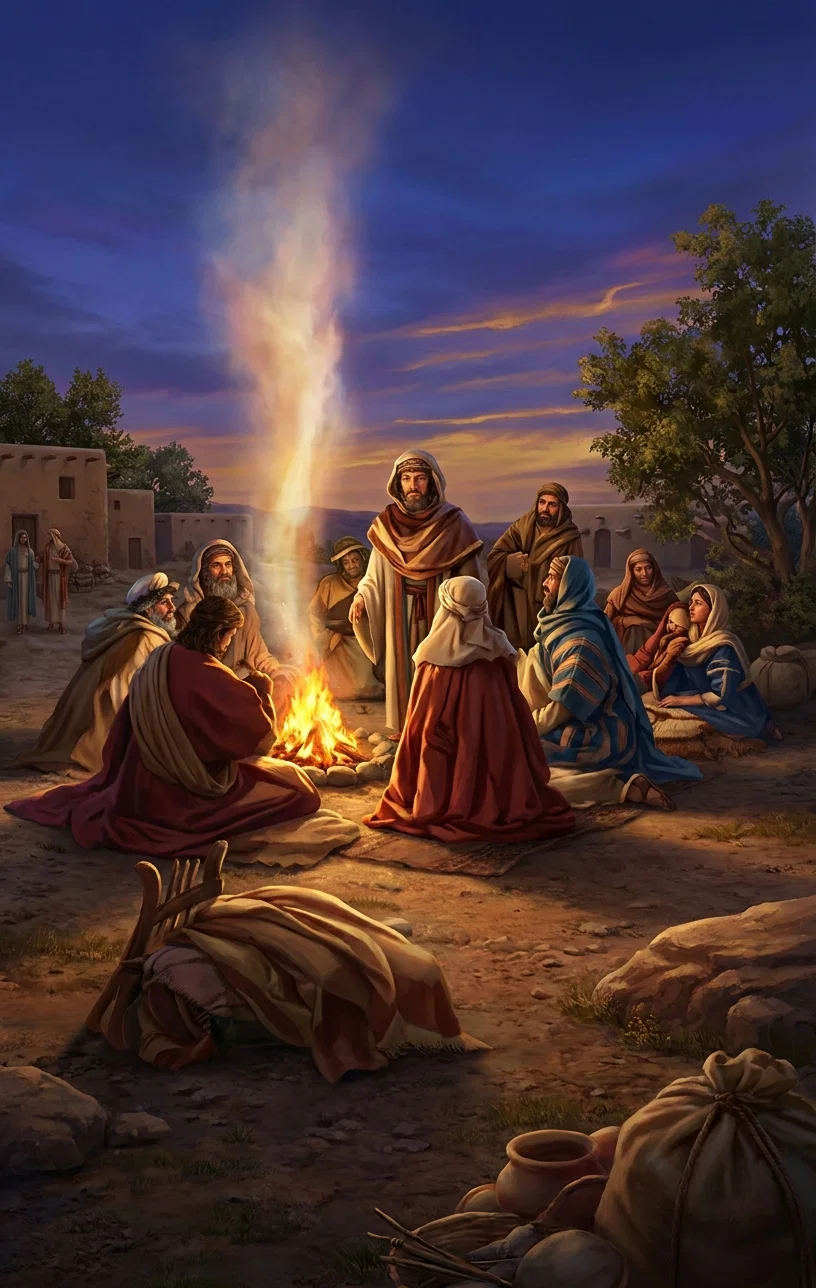 “As they halted for rest, they missed the helpful hand of their child.”
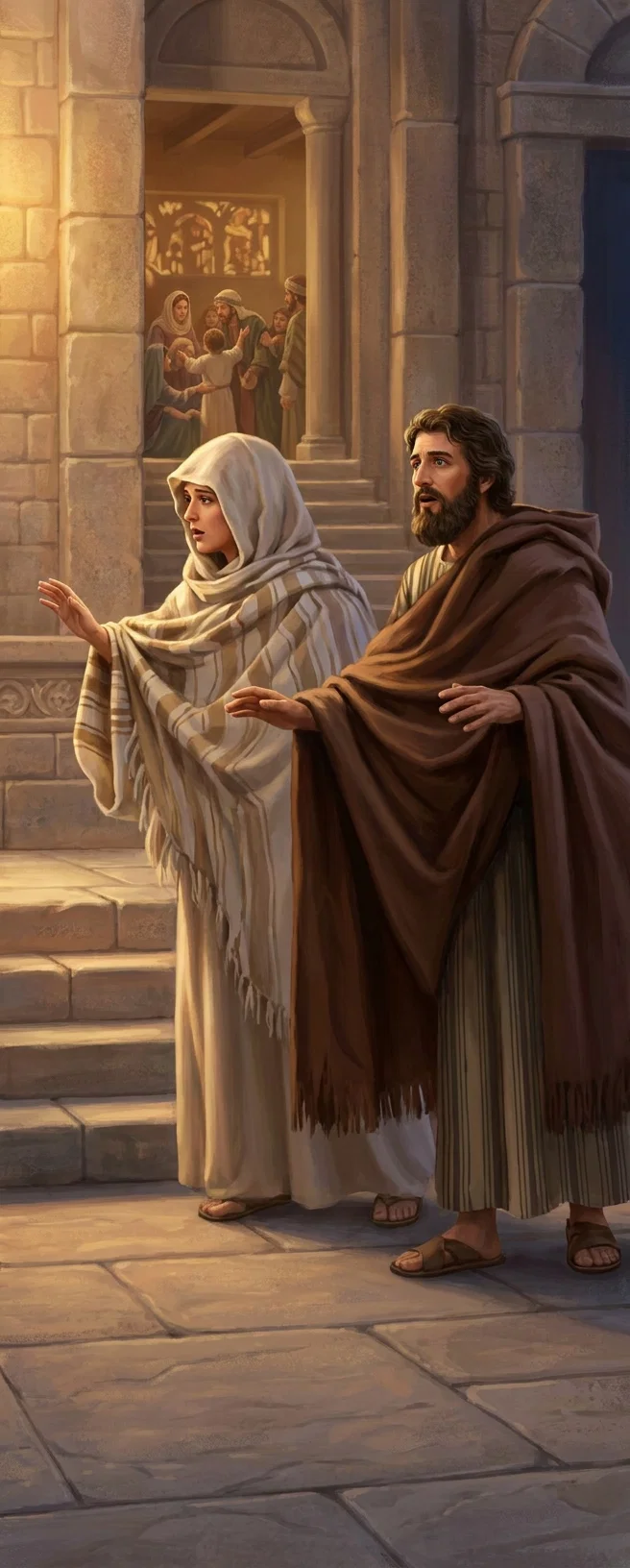 “Their attention was arrested by a familiar voice.”
 DAYS OF CONFLICT
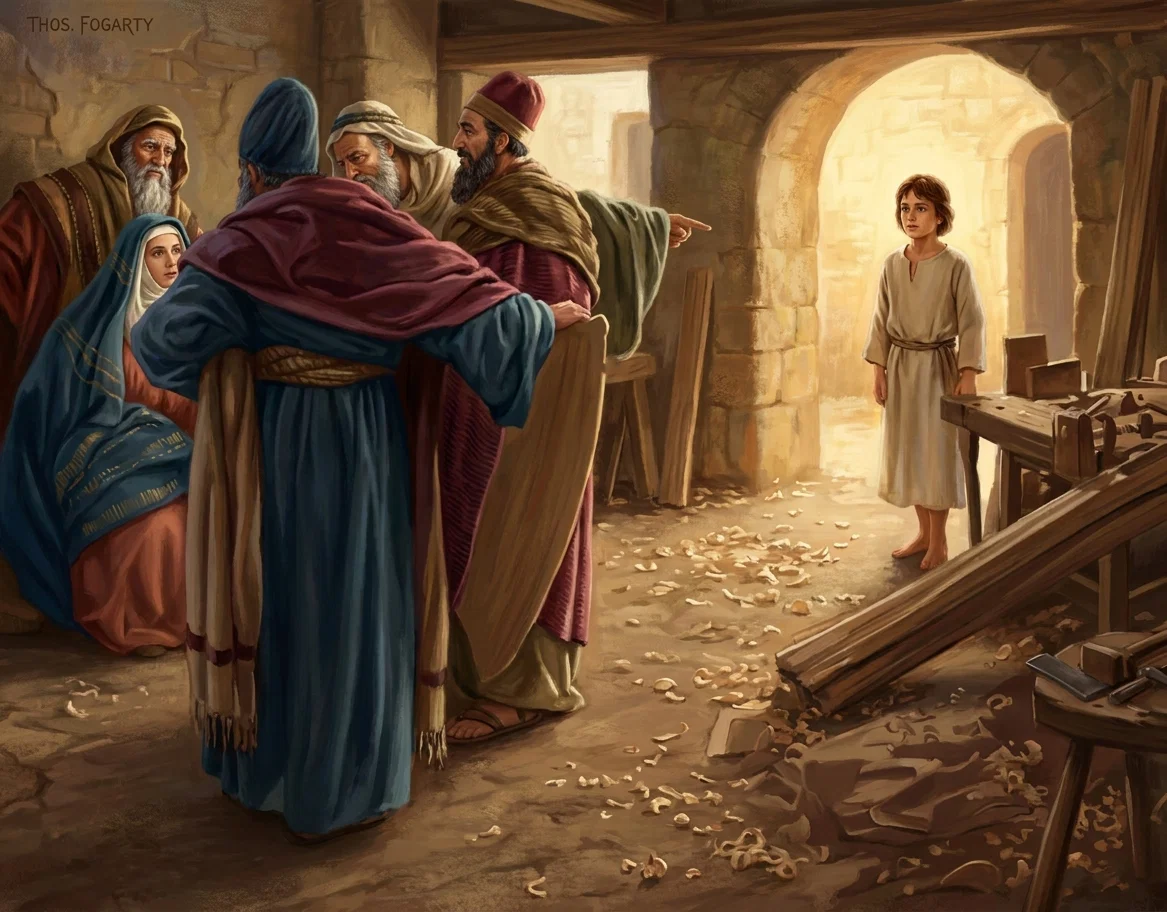 “Failing to convince Him, they sought Joseph and Mary.”
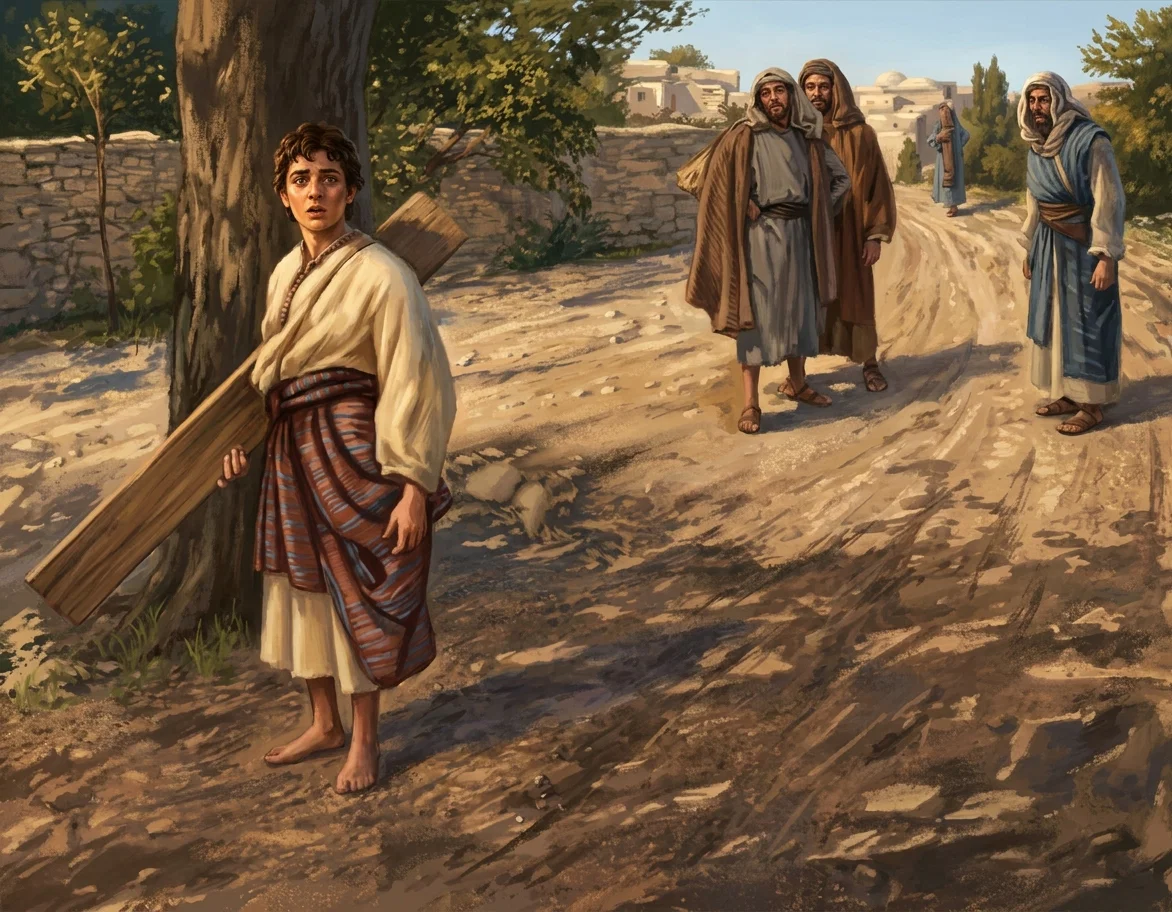 “They threatened and tried to intimidate Him.”
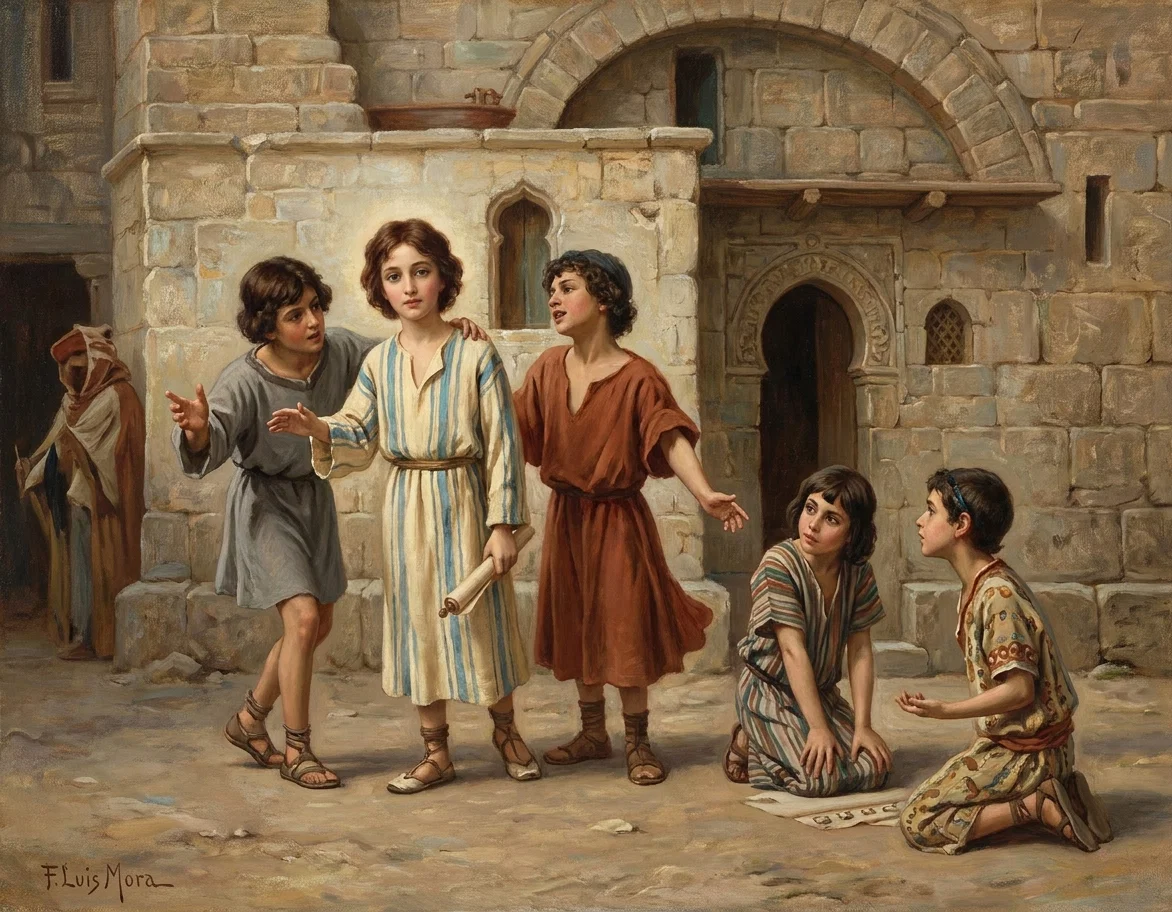 “Young companions urged Him to do as they did.” Page 89.
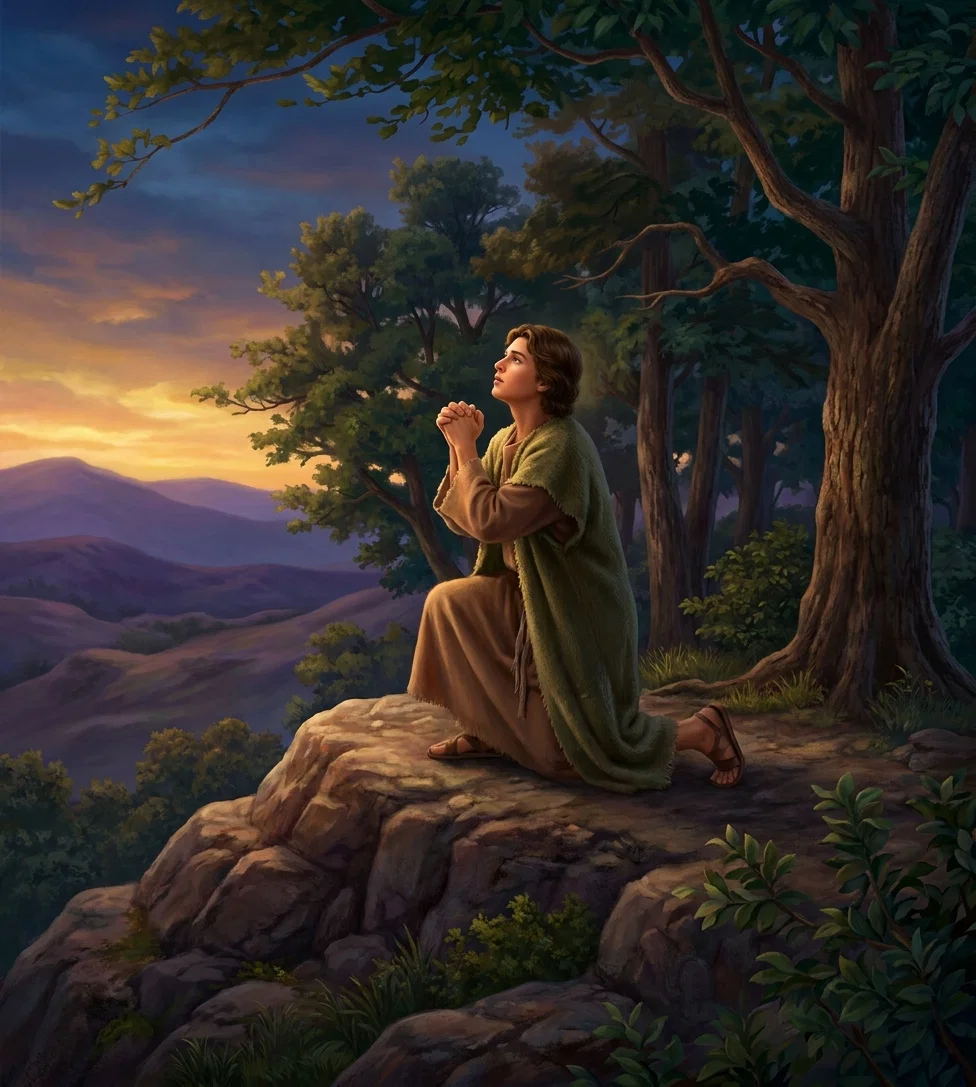 “Amid the trees of the forest.”
 A broad landscape view shows a weathered stone structure with several large rounded arches extending across the foreground, partly obscured by dense shrubs and trees. A small, pale rectangular section or wall stands beneath the central arches. Beyond it lies a rugged, sparsely vegetated valley or hillside, rising into a prominent mountain ridge in the background with lower rounded hills to either side. The scene contains no visible people, animals, signs, or lettering.
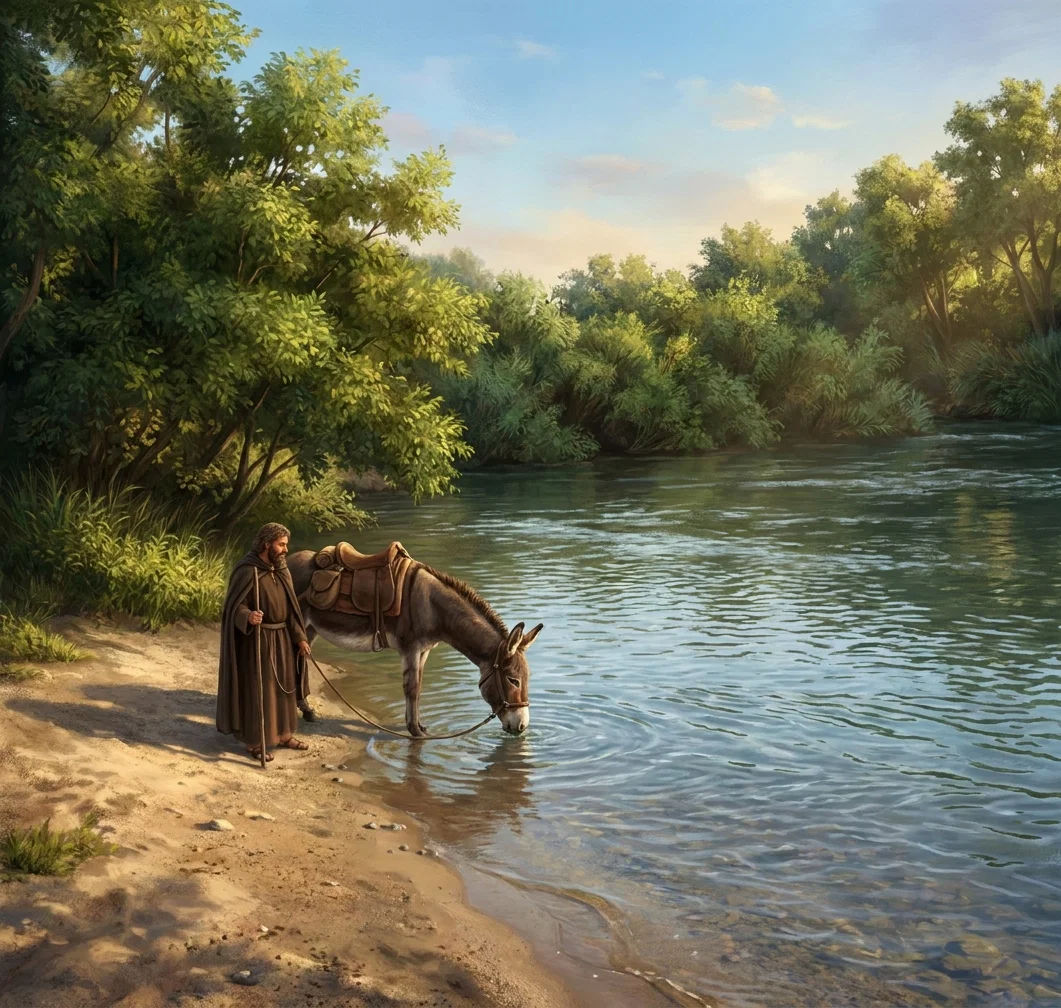
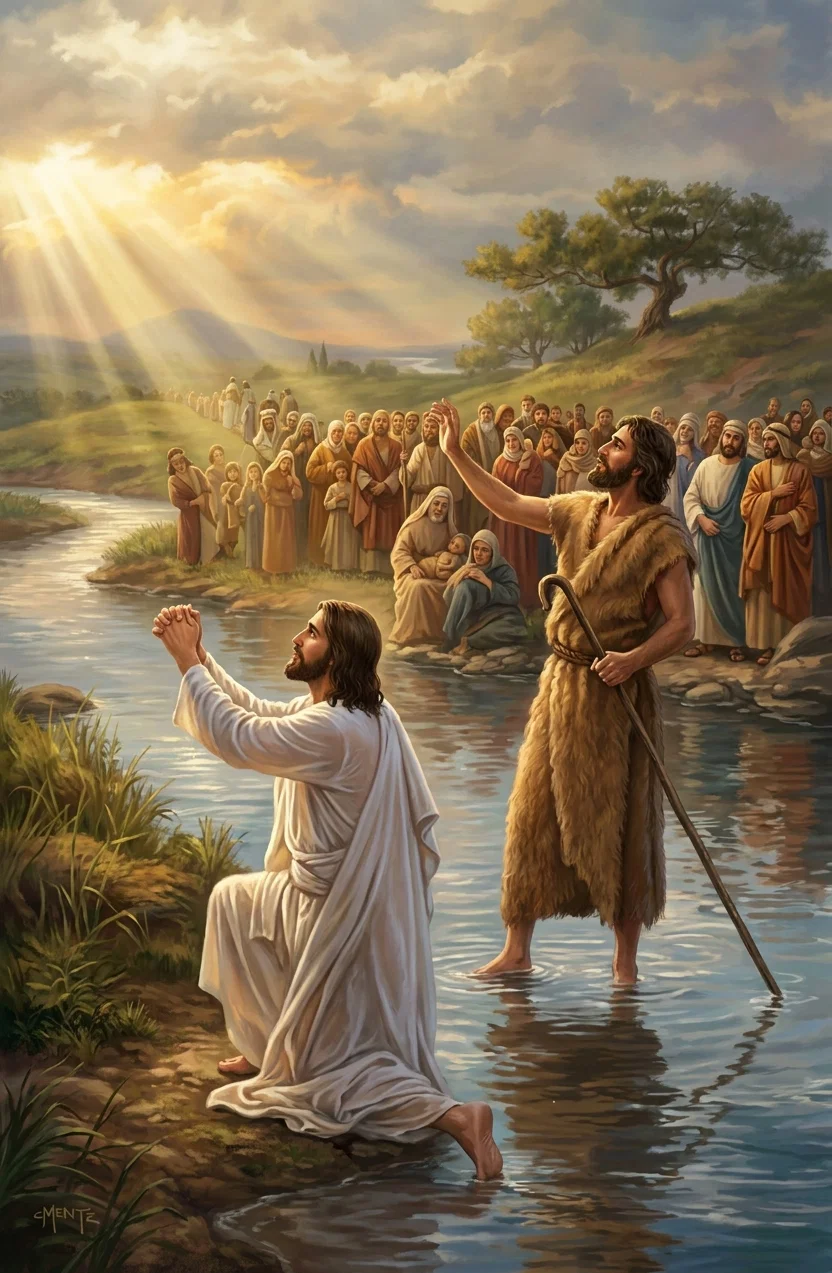 THE BAPTISM.
“Jesus bowed in prayer on the river bank.” Page III.
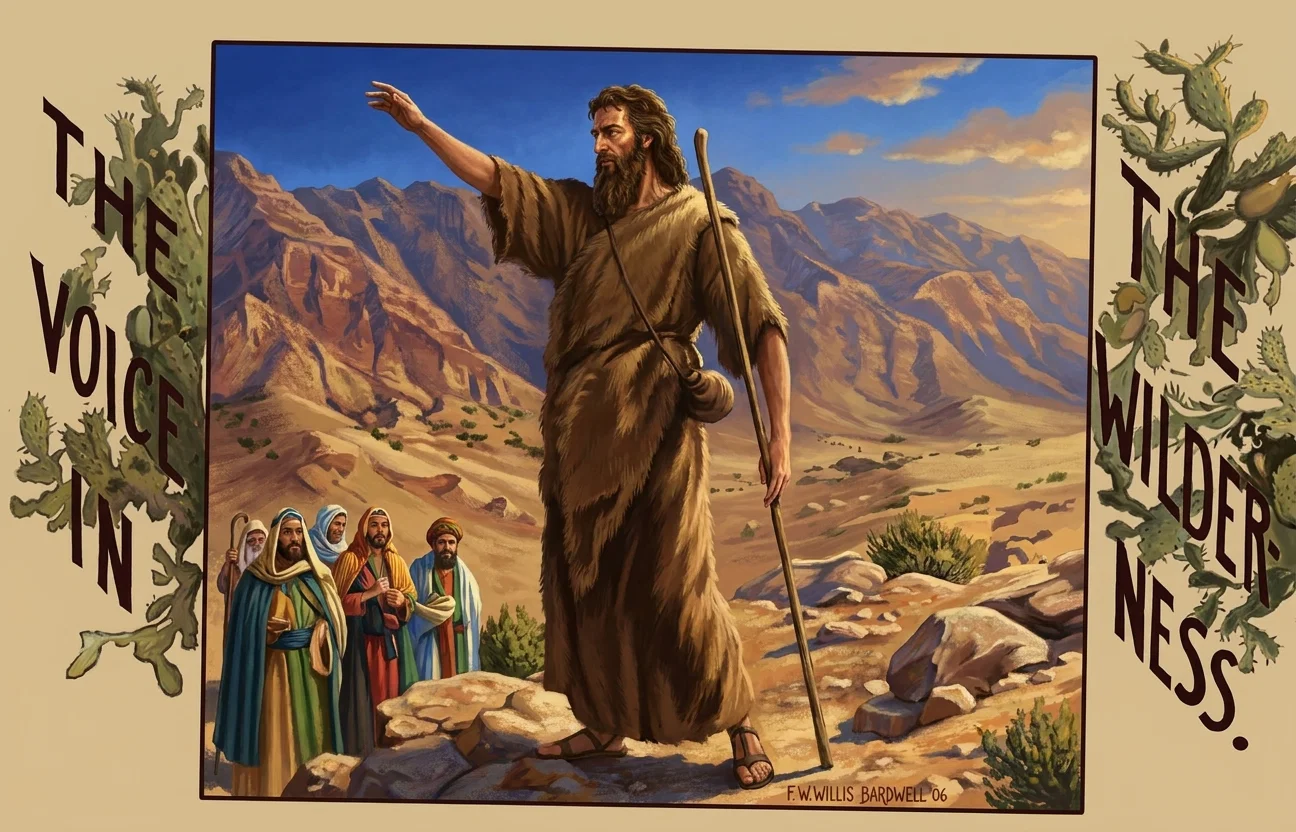 The Voice in the Wilderness.
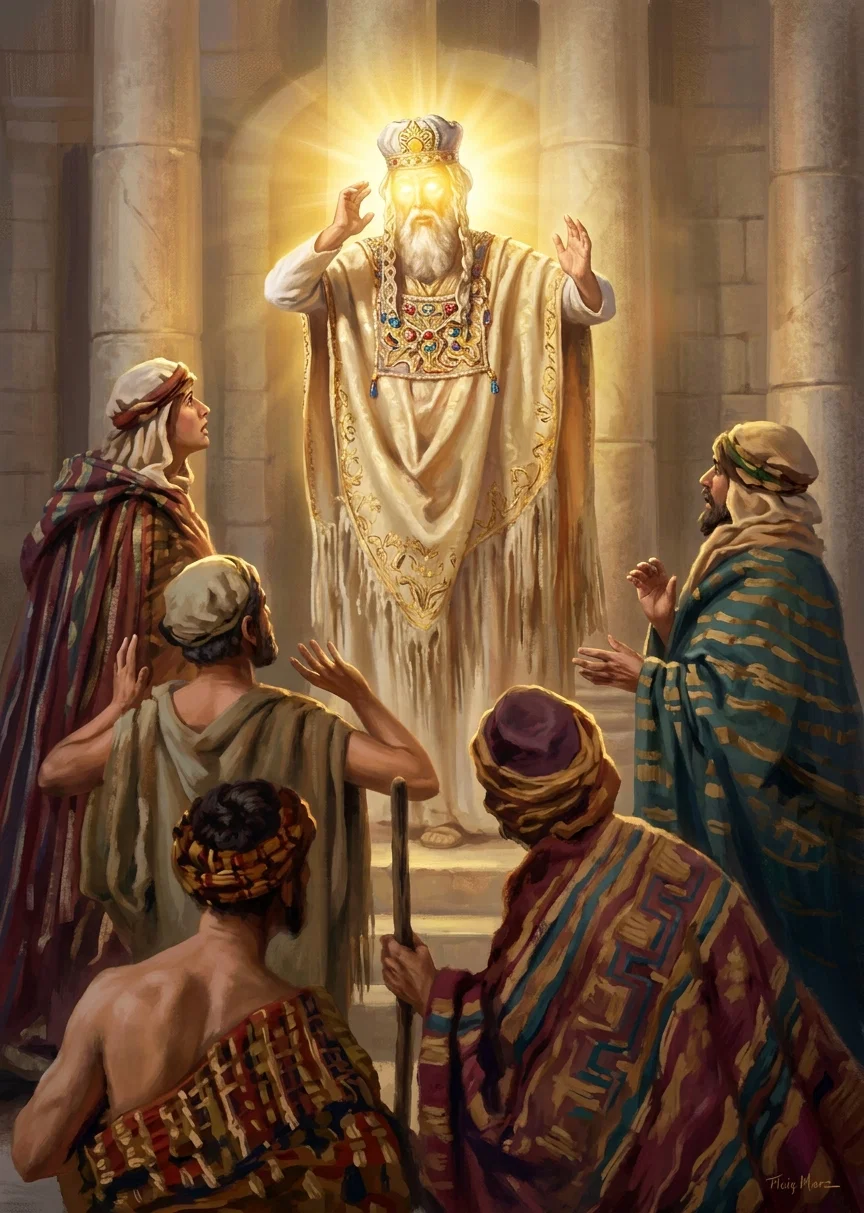 “His face was shining with the glory of God.”
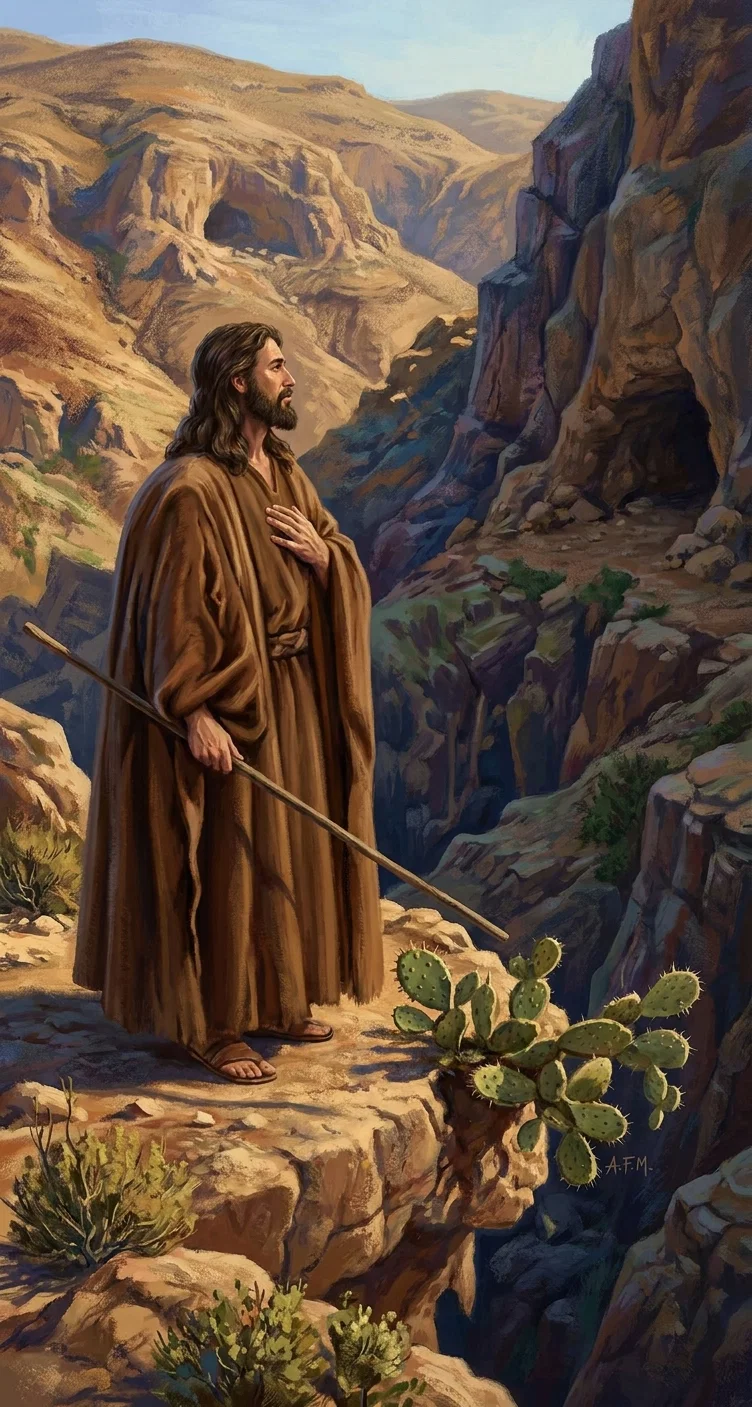 “In the midst of barren hills, wild ravines, and rocky caves.”
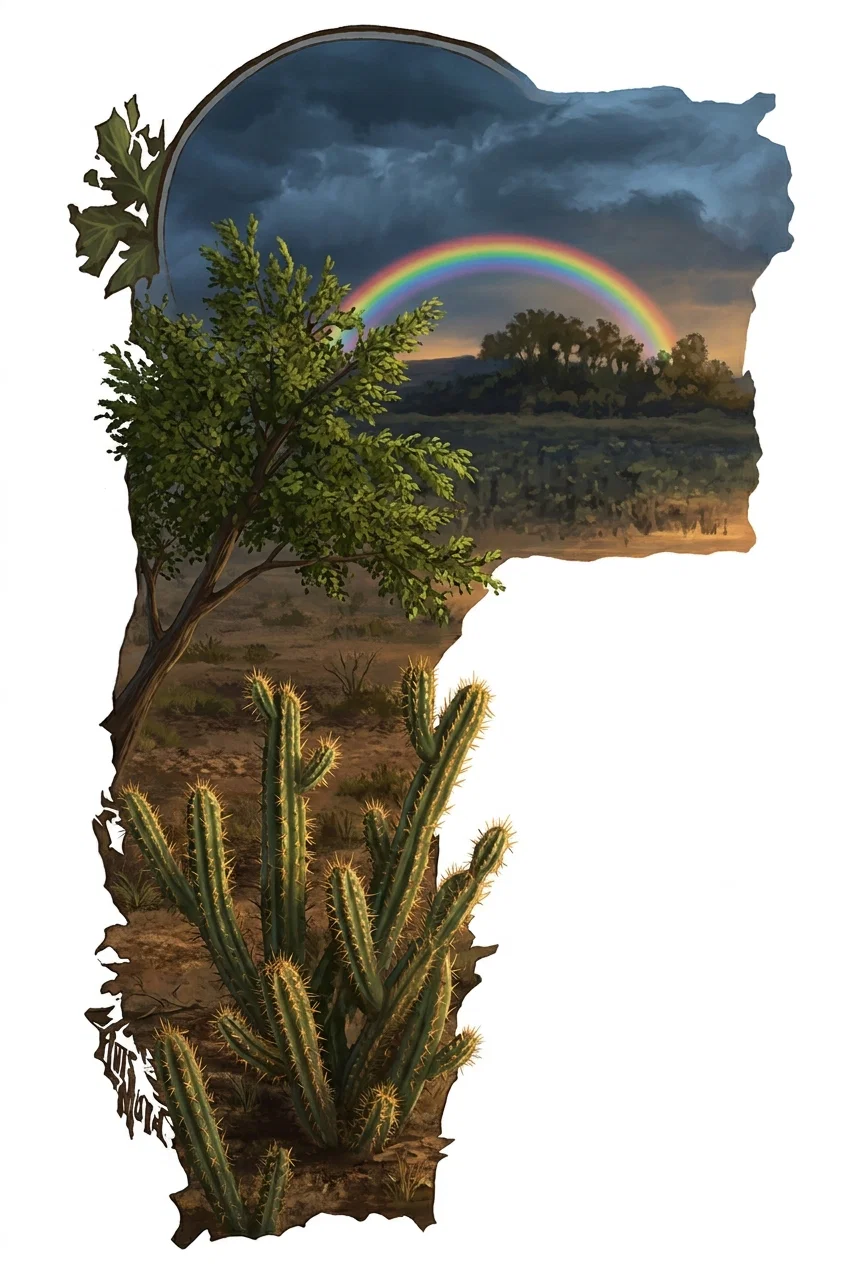 “The clouds that gathered, dark with tempest, were arched by the rainbow of promise.”
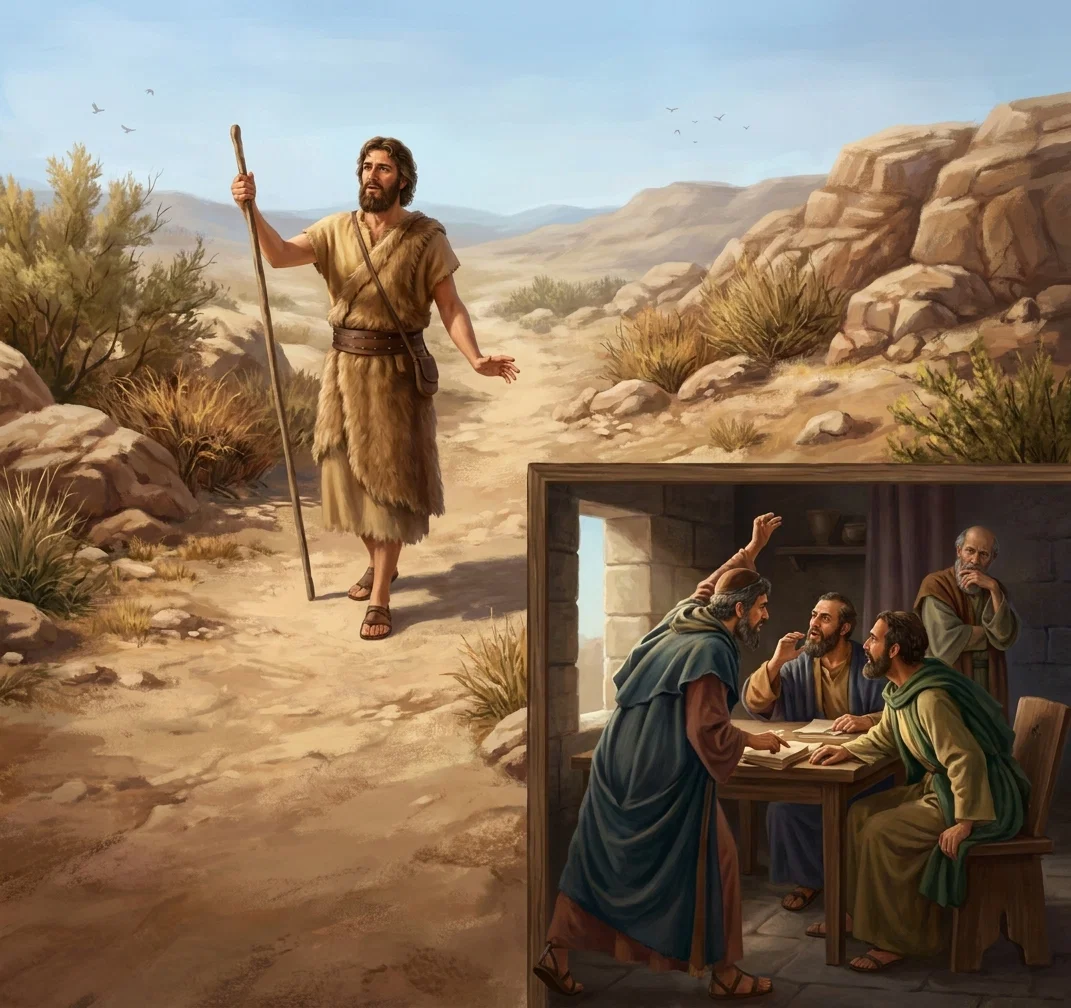 “Amid discord and strife, a voice was heard from the wilderness.”
 A solitary robed man stands knee-deep at the edge of a broad, gently rippling river or stream, beside a second figure who appears partially immersed in the water. The standing figure faces the other person and seems to be performing a baptism, with one arm extended toward them. Dense bushes and leafy trees line the opposite bank, while tall grasses frame the left foreground. The scene is rendered in detailed black-and-white linework, with the water occupying much of the lower and right portions of the composition; no visible lettering or signs appear.
 THE JORDAN. THE BAPTISM
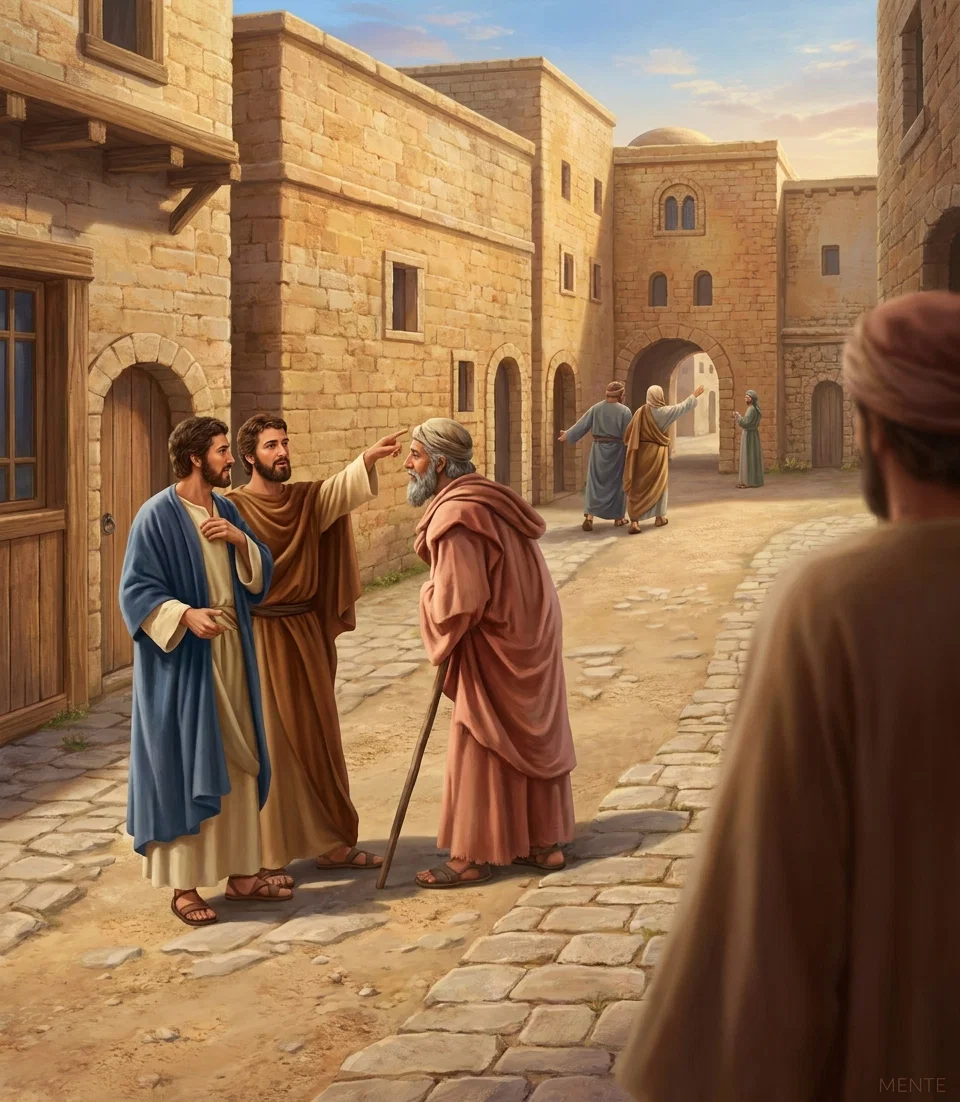 “In Nazareth it was told in the carpenter shop that had been Joseph’s, and One recognized the call.”
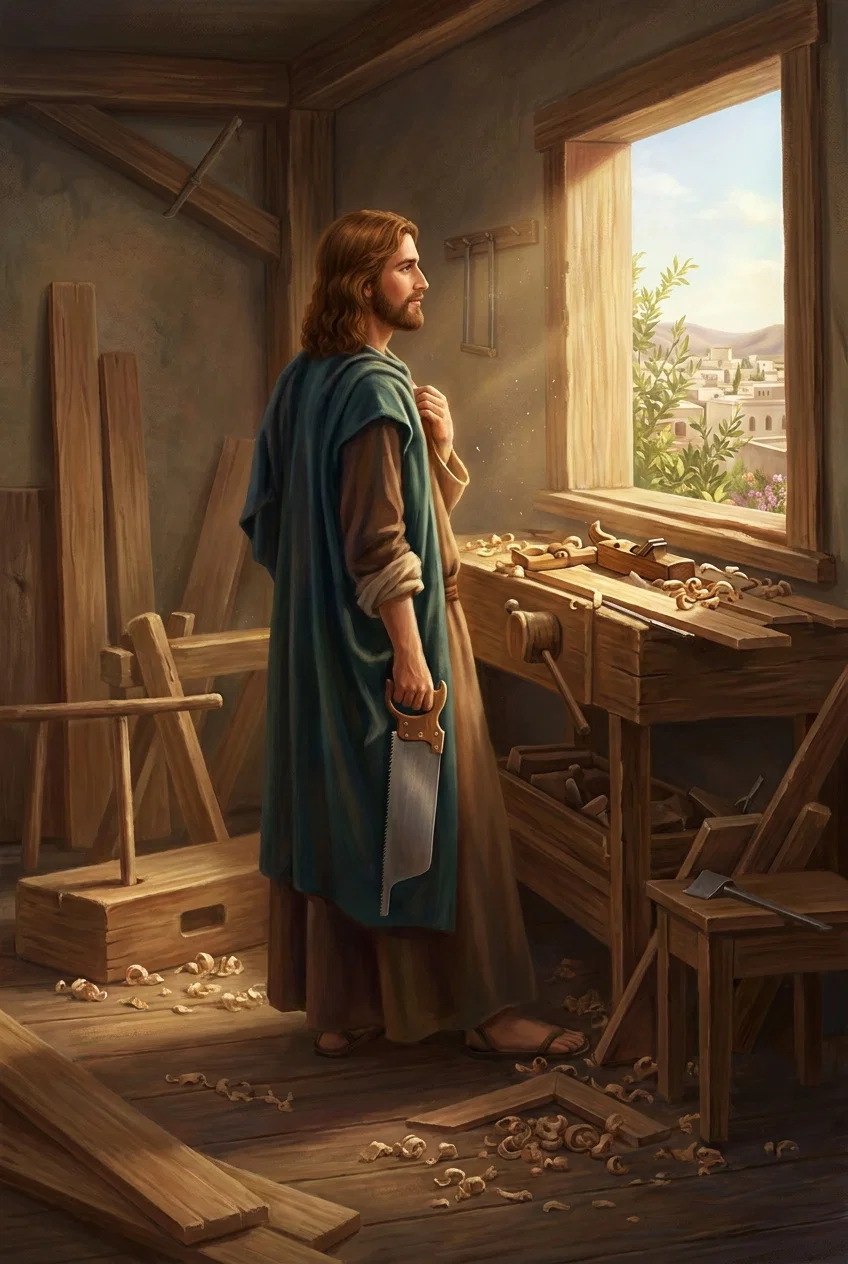 A long-haired, bearded man in a full-length robe stands in profile inside a dim carpenter’s workshop, gazing toward a large bright opening or window at the right. He holds a hand tool or implement at his side, while another tool rests near his shoulder. A rough workbench beneath the opening is scattered with shavings and equipment, with stools, boards, and additional carpentry tools arranged around the room. Strong light from outside outlines the figure and illuminates indistinct foliage or objects beyond the opening.
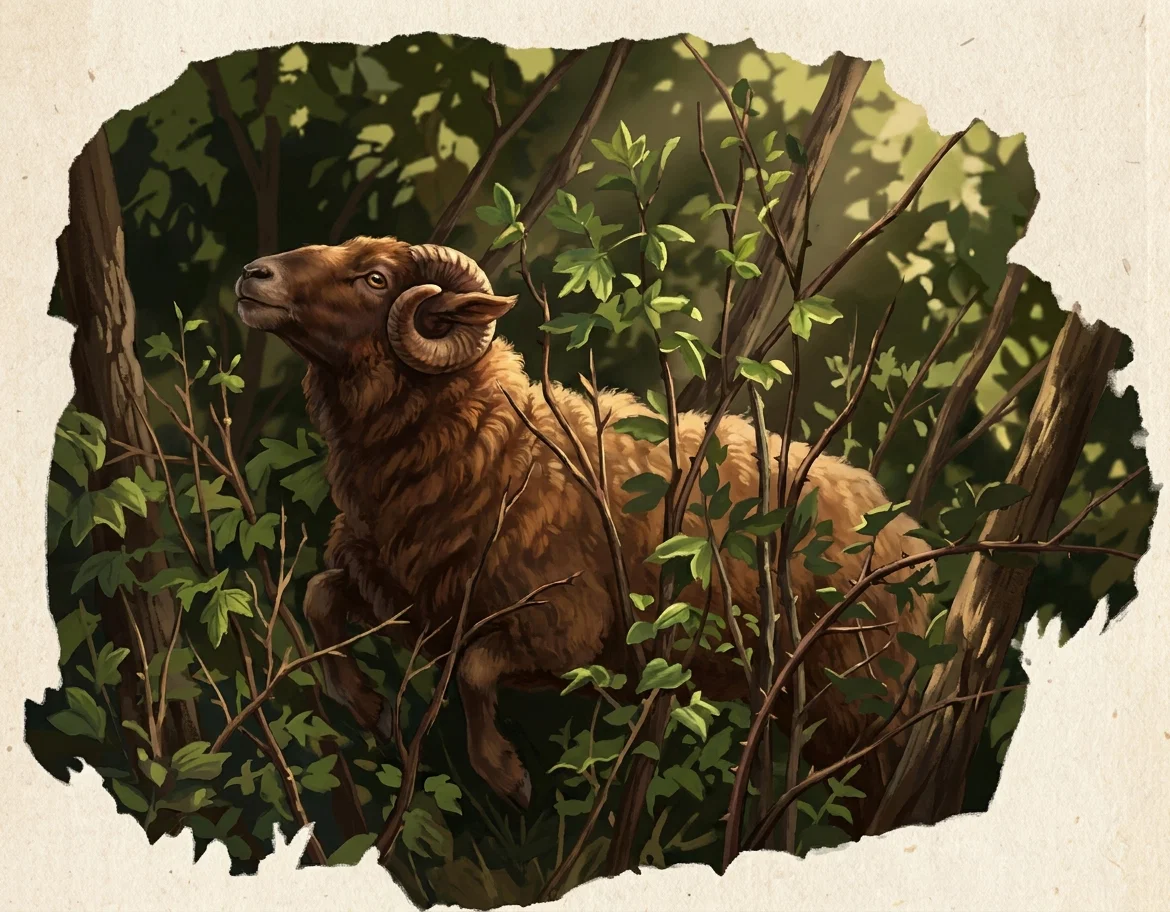 “God will provide Himself a lamb for a burnt-offering.”
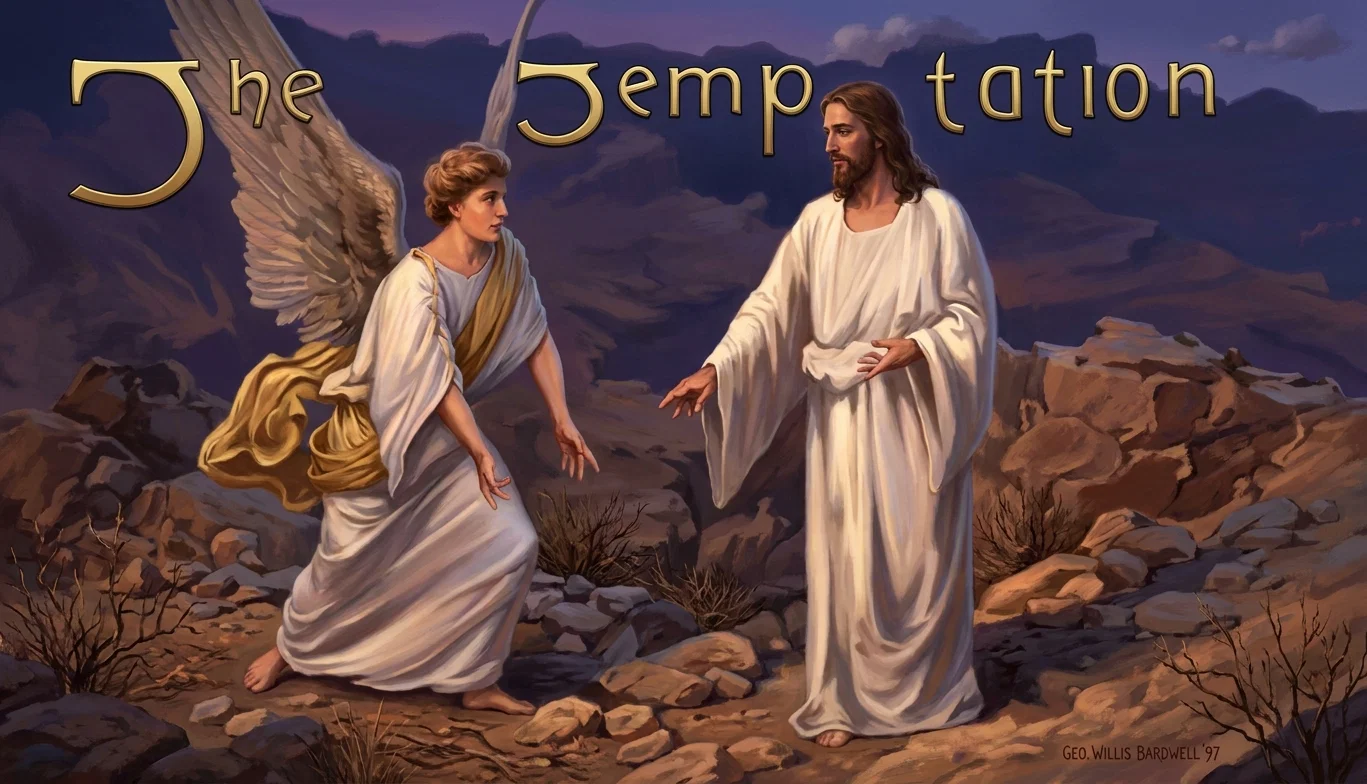 The Temptation
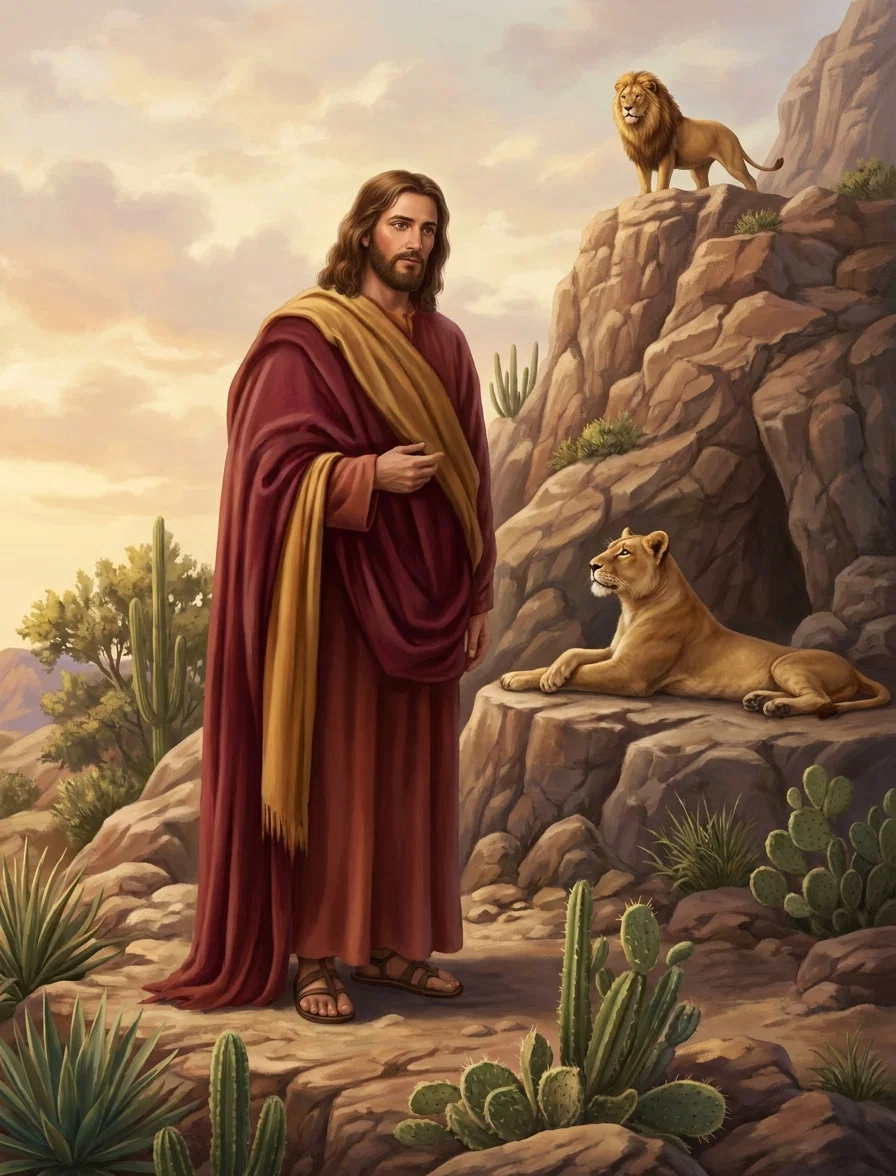 “And He was with the wild beasts.”
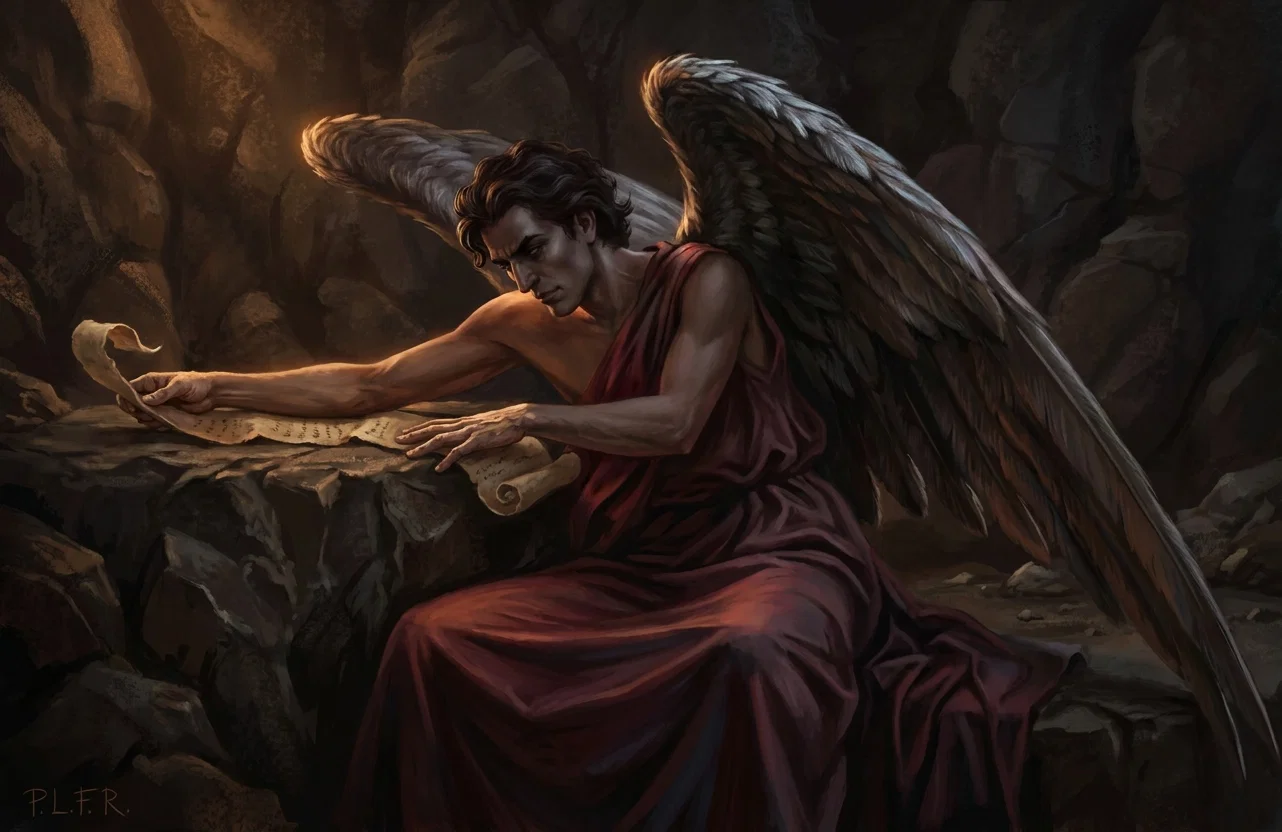 “Satan studied the prophecies of the Saviour’s advent.”
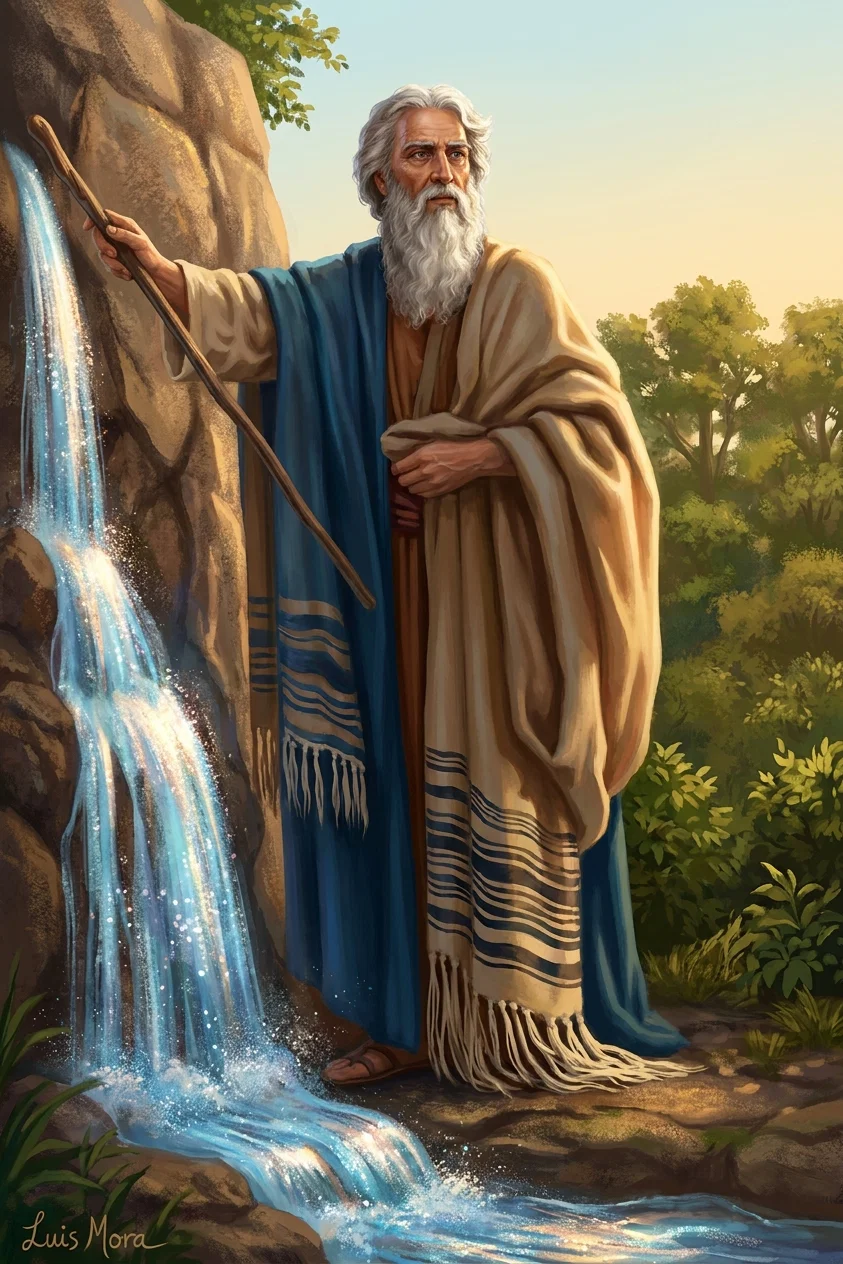 “He failed just upon the borders of the promised land.”
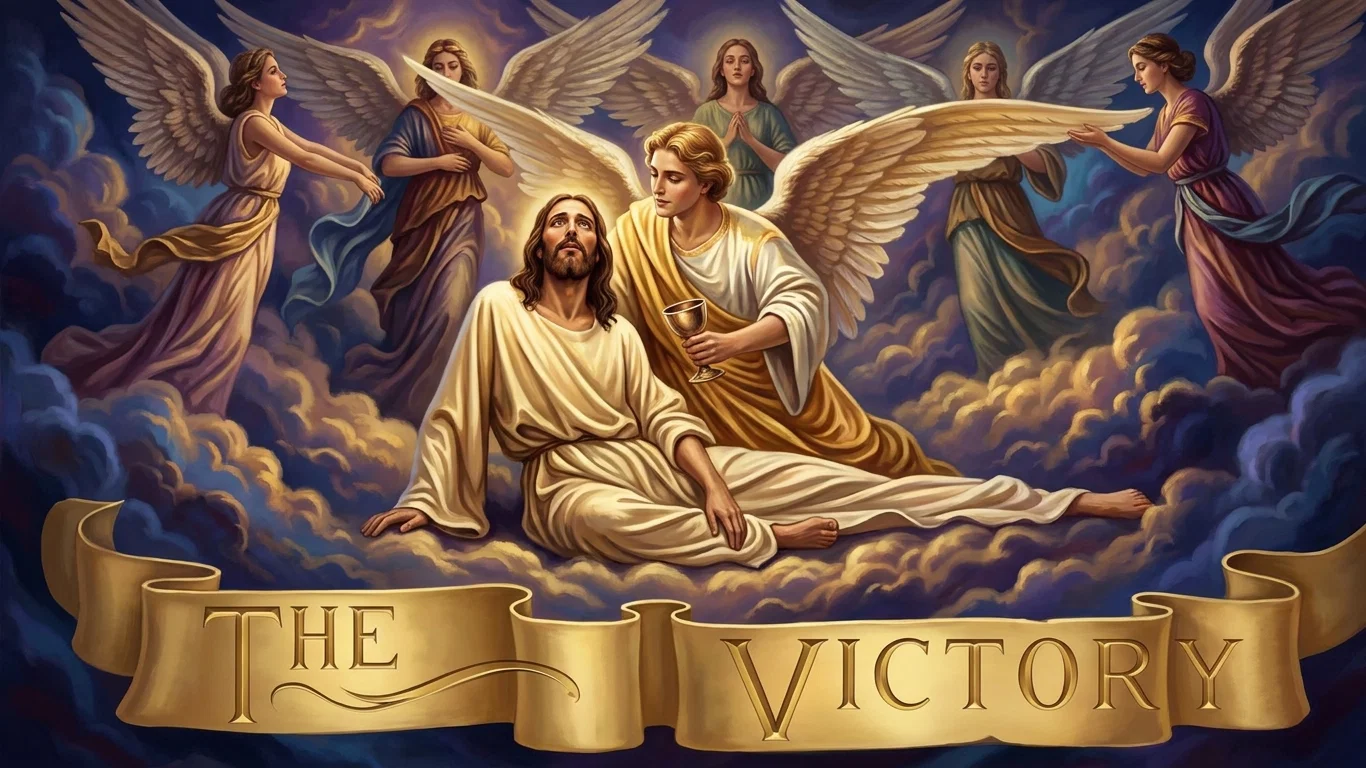 THE VICTORY
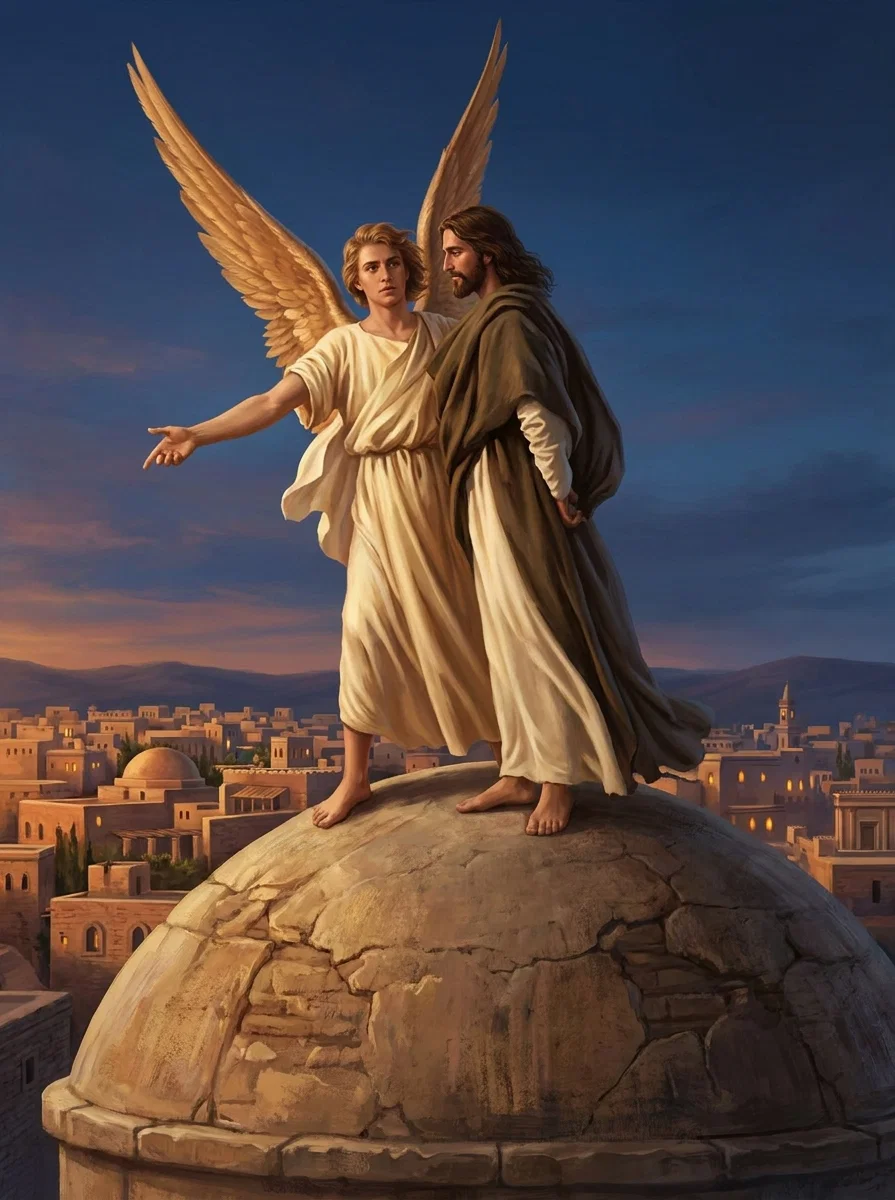 “If Thou be the Son of God, cast Thyself down.”
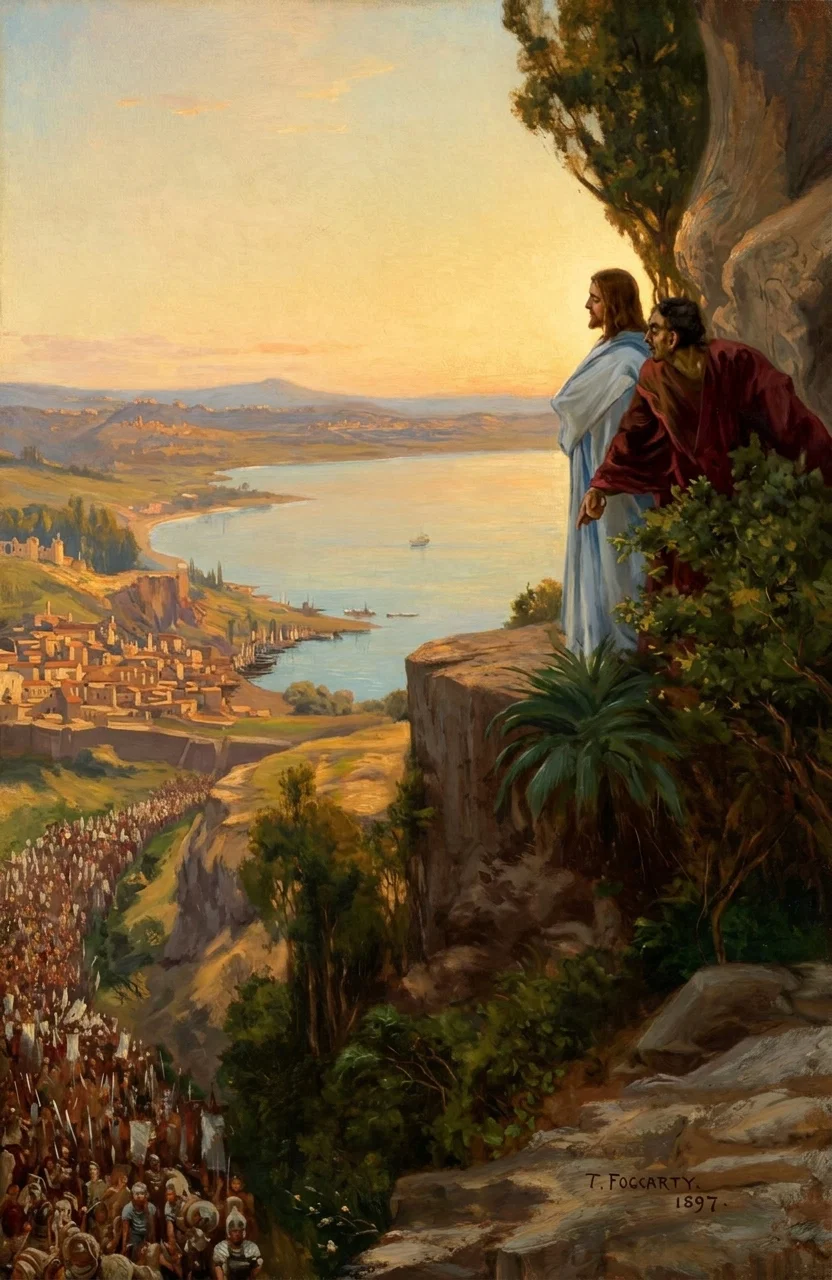 CHRIST AND SATAN ON THE MOUNTAIN.
“Satan caused the kingdoms of the world, in all their glory, to pass in panoramic view before Him.”
 A small circular engraved emblem shows a seated, draped human figure in profile, facing left. The figure sits on a low stool or block with one arm raised toward a tall, irregular vertical form at the edge of the medallion, while the other arm extends forward. Behind the figure are dark curved shapes and ornamental markings, including a large rounded or coiled form on the right. The scene is enclosed by a thick, stippled circular border, with no clearly legible lettering visible within the design.
 A small oval medallion depicts the profile bust of Jesus facing right. His head and upper shoulders are shown in sharp side view, with long, wavy hair falling around his neck and a calm, upward-tilted face. Fine engraved lines define his forehead, nose, lips, chin, and neck, while darker shading fills the background and outlines the oval border. No other figures, objects, scenery, or lettering are visible within the image.
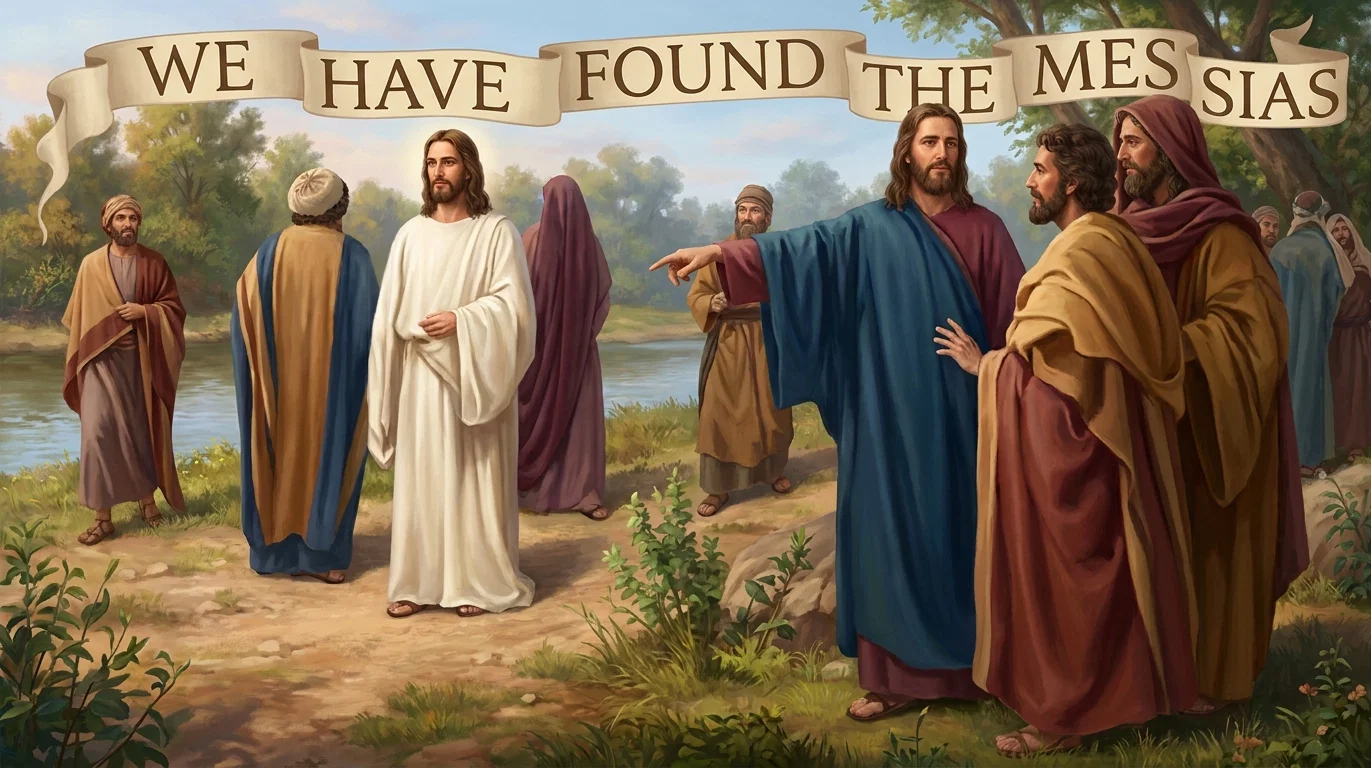 WE HAVE FOUND THE MESSIAS
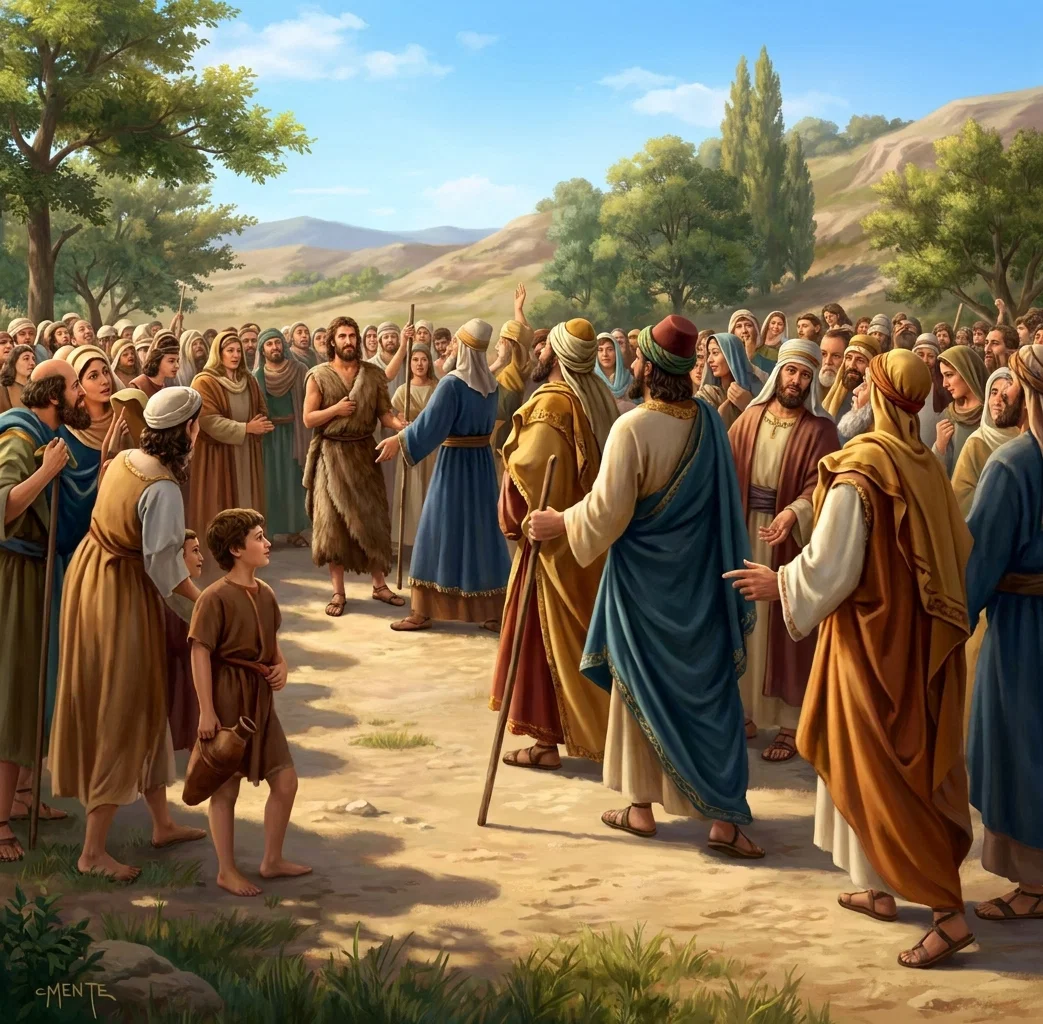 “With a movement of respect, almost of fear, the crowd opened to let them pass.” Page 133.
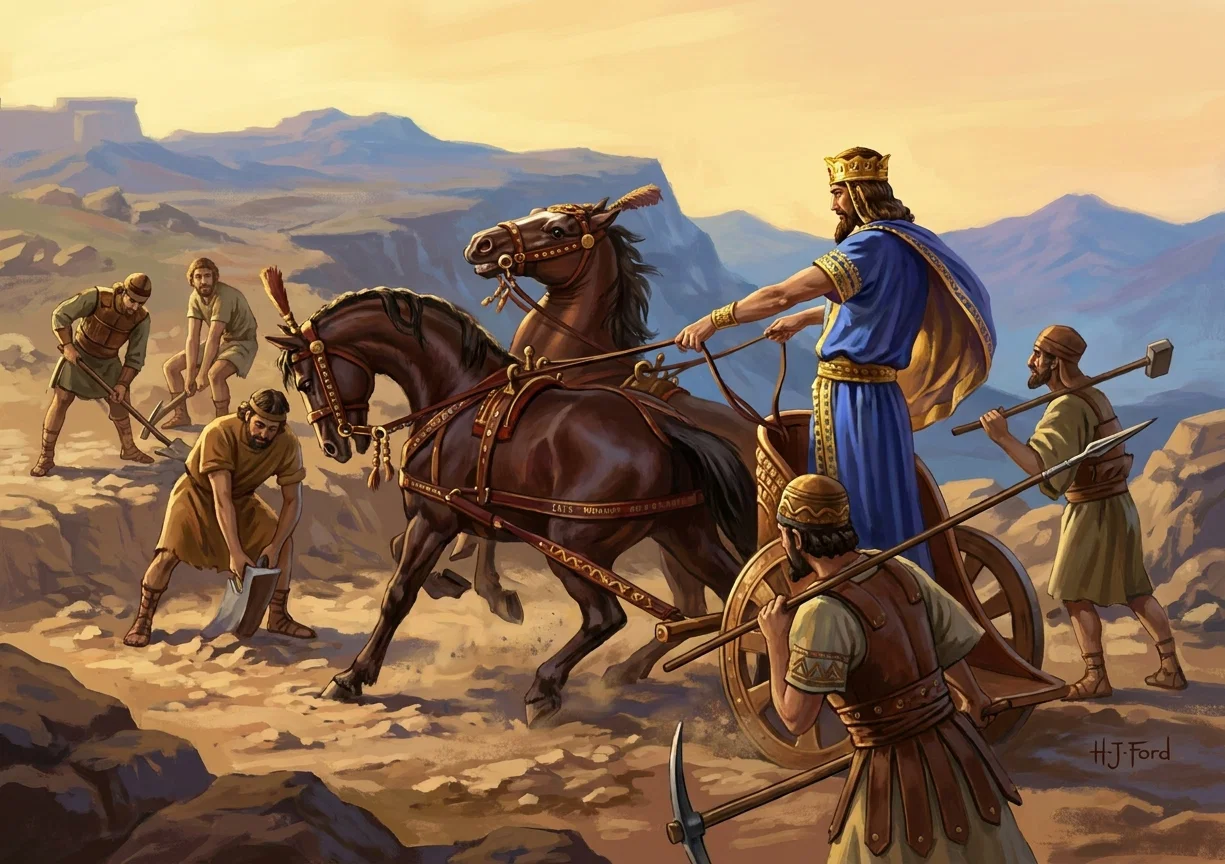 “To level the steep places and to fill up the hollows.” Page 135.
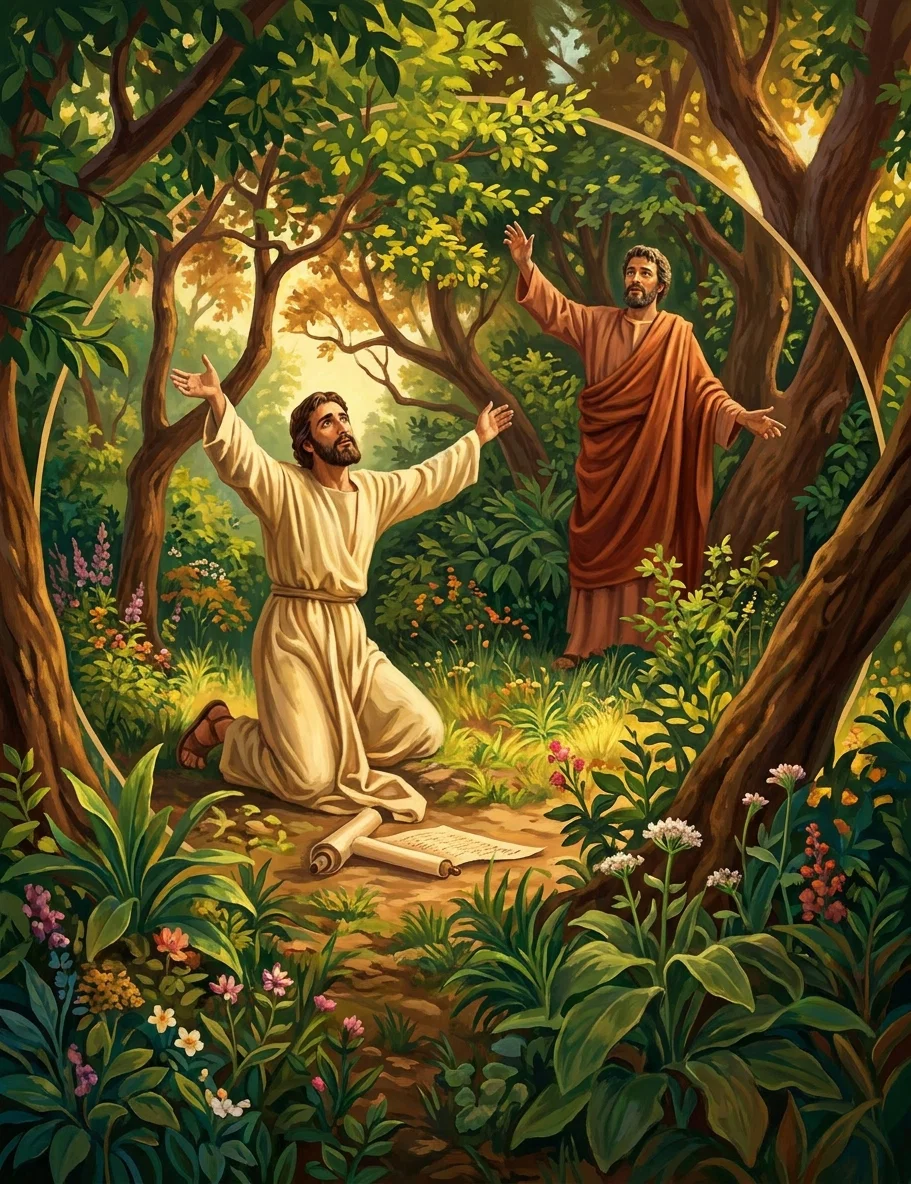 “They had often prayed togetner in this secluded spot, hidden by the foliage.”
 A narrow, cobblestoned lane winds between tall, weathered stone walls toward a dark arched gateway. Above and behind the arch rises an old square masonry tower with a rough, uneven top, while a taller crumbling wall stands along the left side and lower ruins extend to the right. Two small figures in long dark clothing walk together near the gateway, providing scale. Sparse shrubs grow from the stonework, and the road continues through the arch toward a bright opening in the distance.
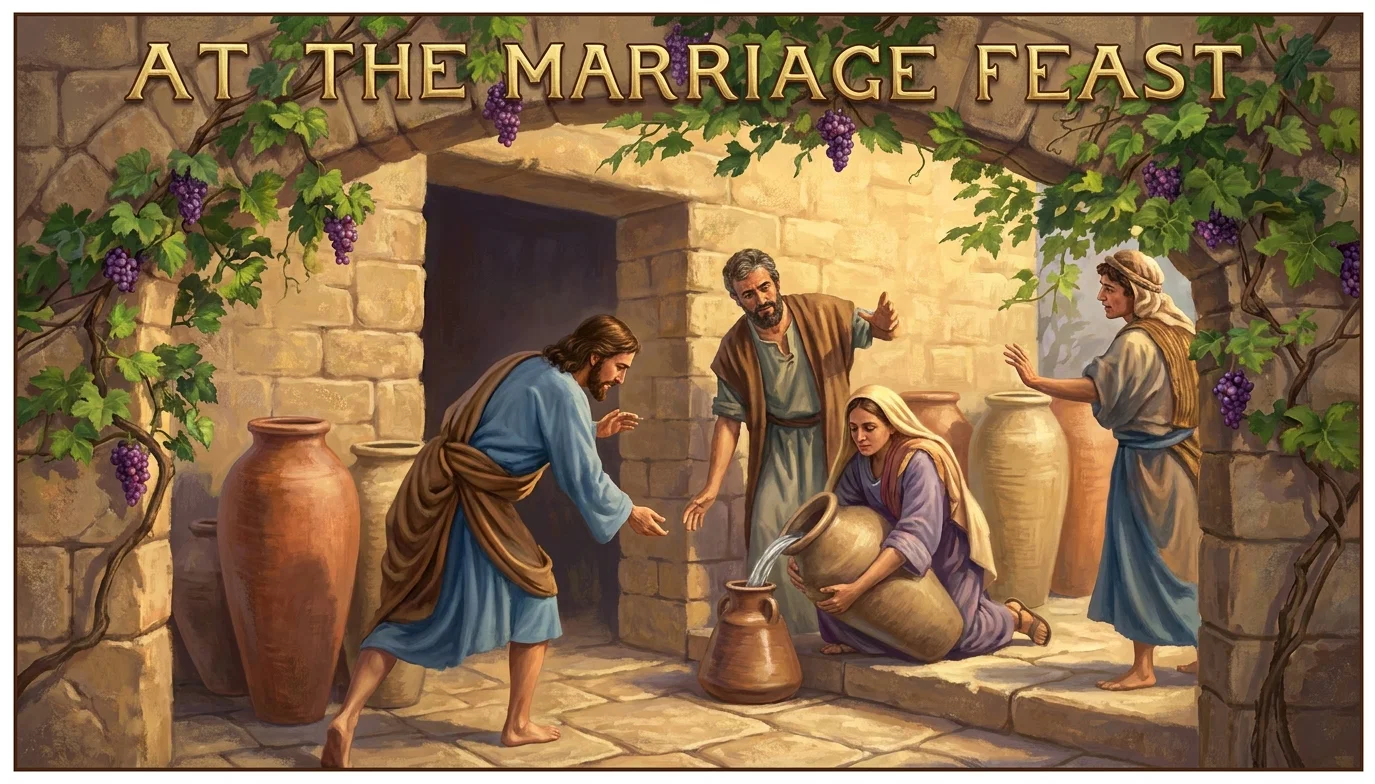 AT THE MARRIAGE FEAST
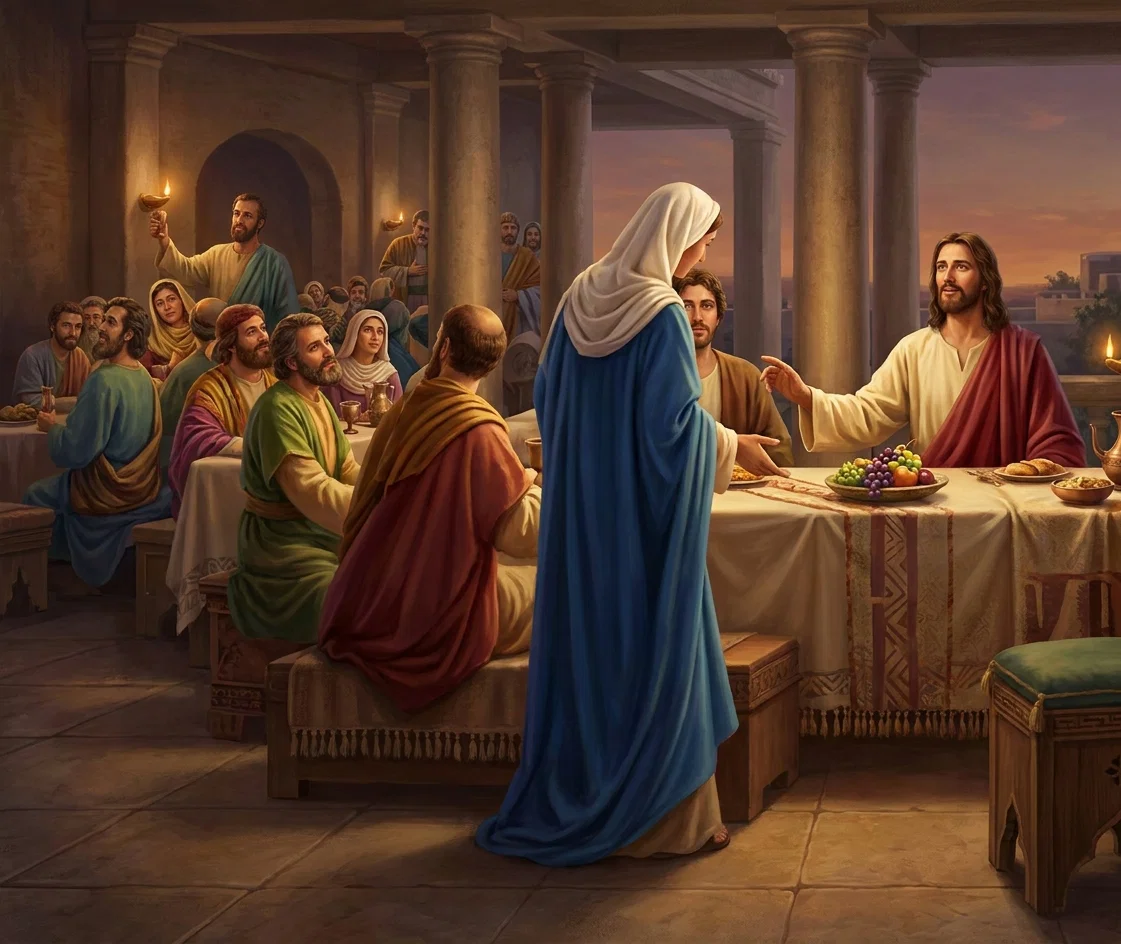 “They have no wine.”
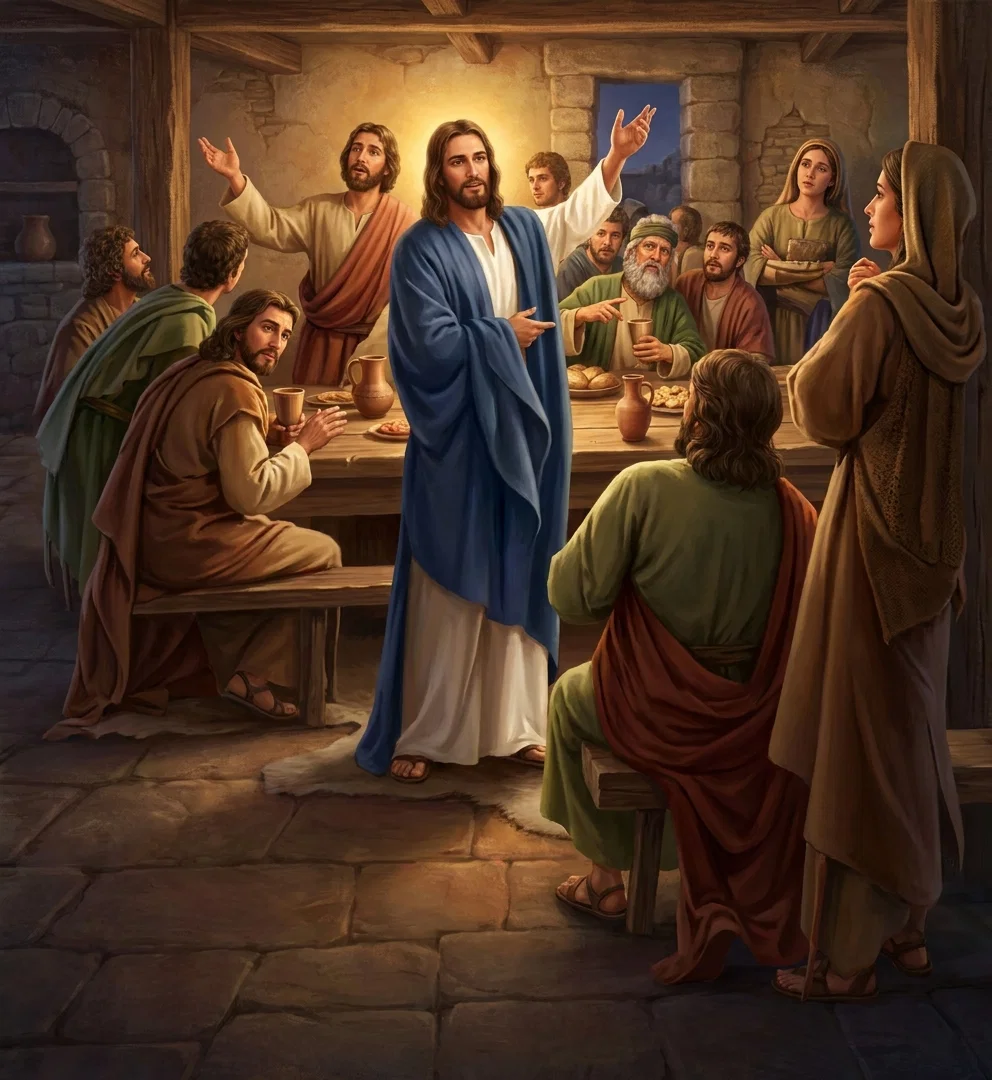 “For the first time they had the opportunity of acknowledging their faith in Jesus.”
 A small human figure stands outdoors beside a large, dark, roughly constructed shelter or mound of brush and thatch. The person wears a brimmed hat, loose shirt, trousers, and boots, and appears to be gripping or steadying a tall spear, staff, or pole planted in the ground. A pointed, tattered flag or elongated object rises from the top of the shelter behind them. The foreground contains a shallow bowl or basin at the base of the pole, scattered stones, logs, and dense grasses, while low vegetation and an open, lightly sketched landscape extend across the background.
 In His Temple
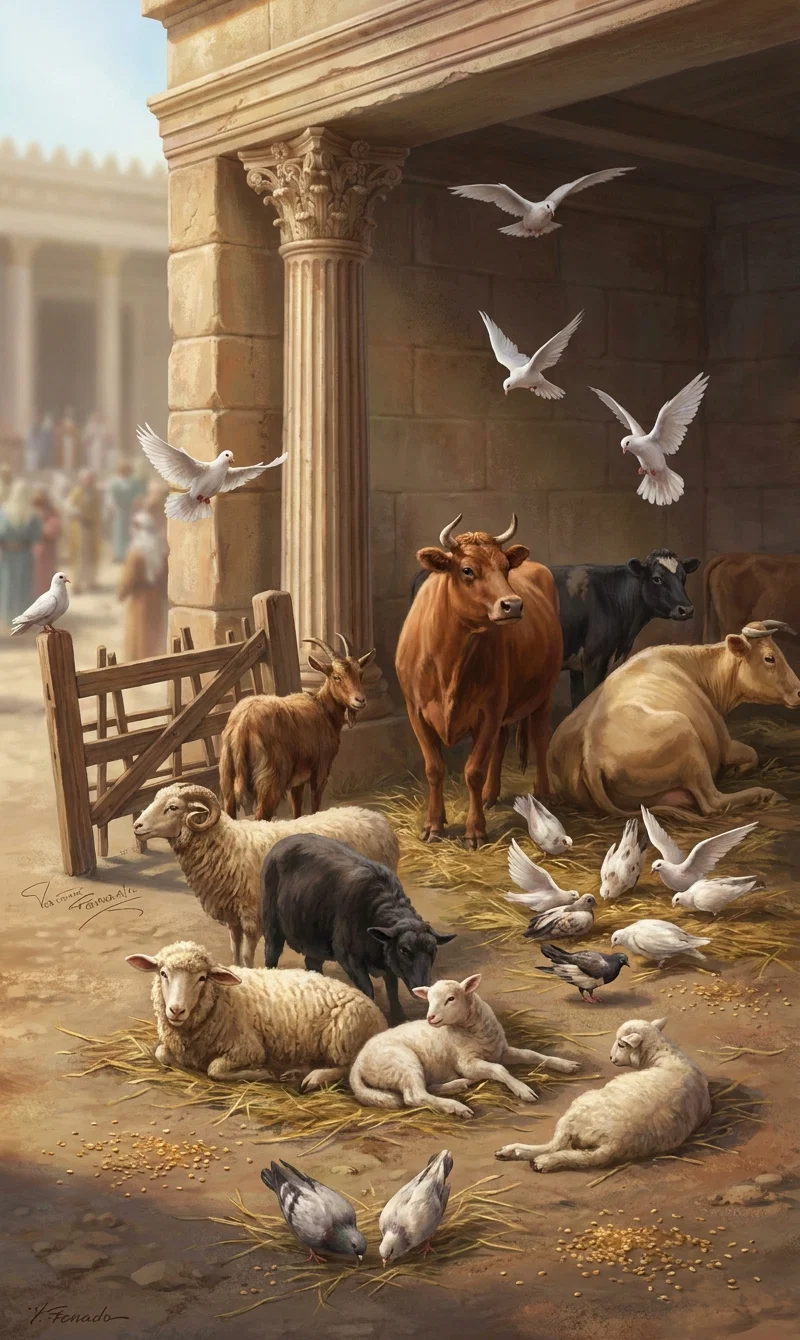 “Animals were bought and sold in the outer court of the temple.”
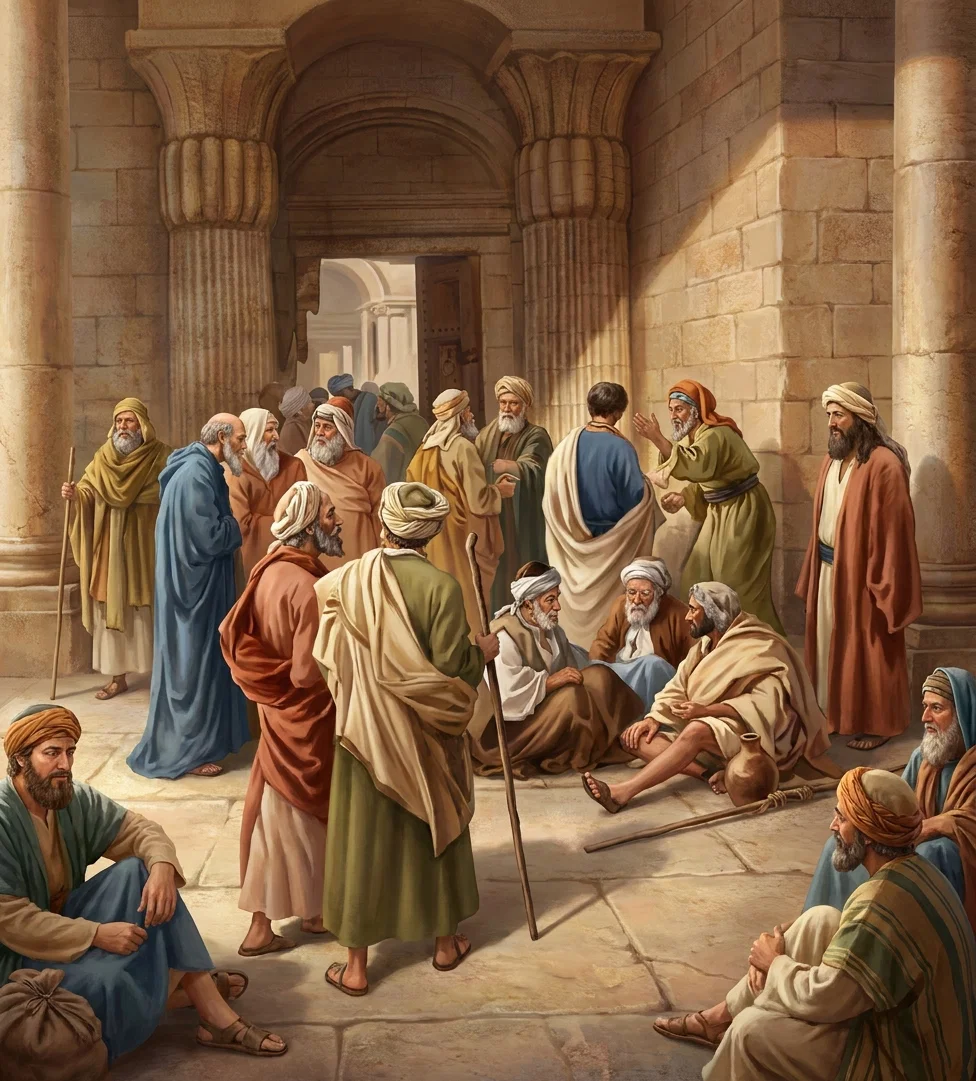 “The temple courts were filled with a promiscuous throng.”
Page 154.
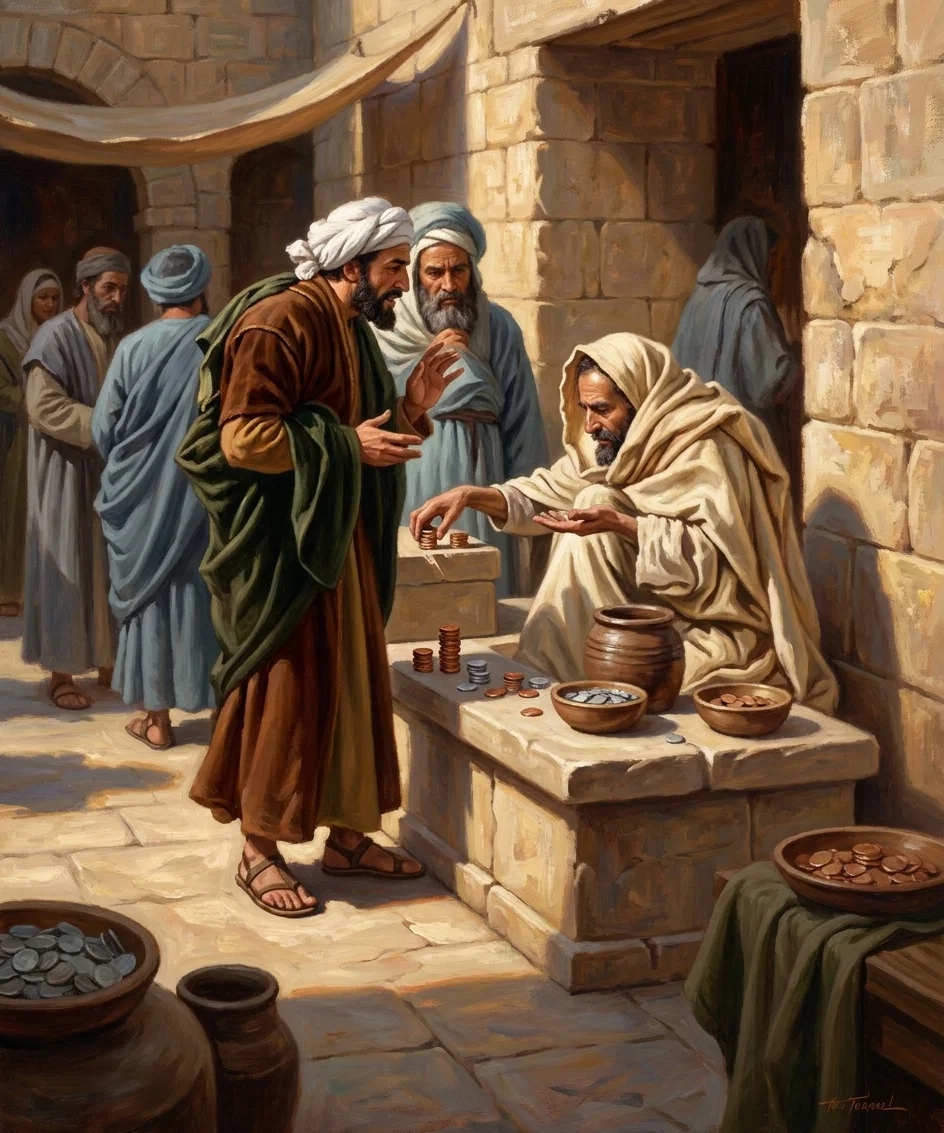 “The money-changing gave opportunity for fraud and extortion.”
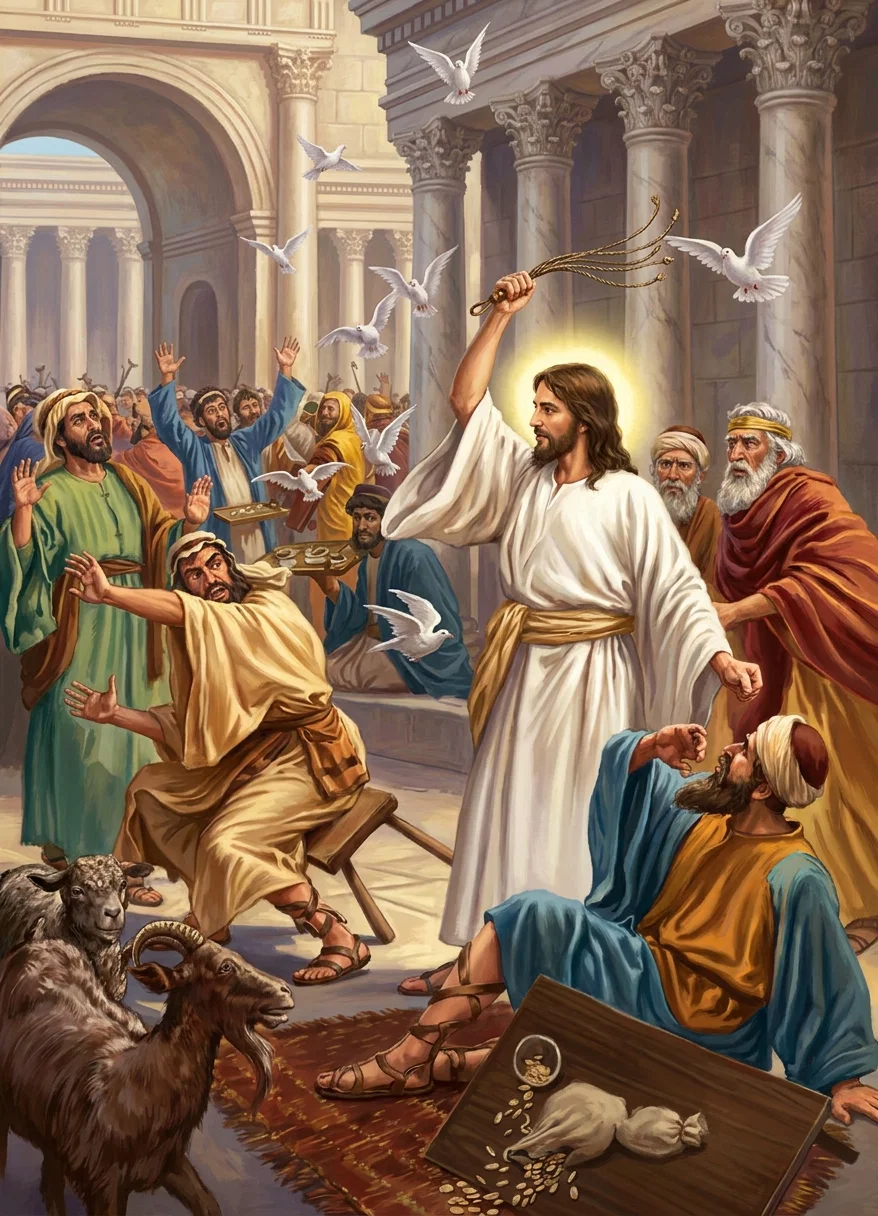 THE CLEANSING OF THE TEMPLE.
“Take these things hence: make not My Father’s house an house of merchandise.”
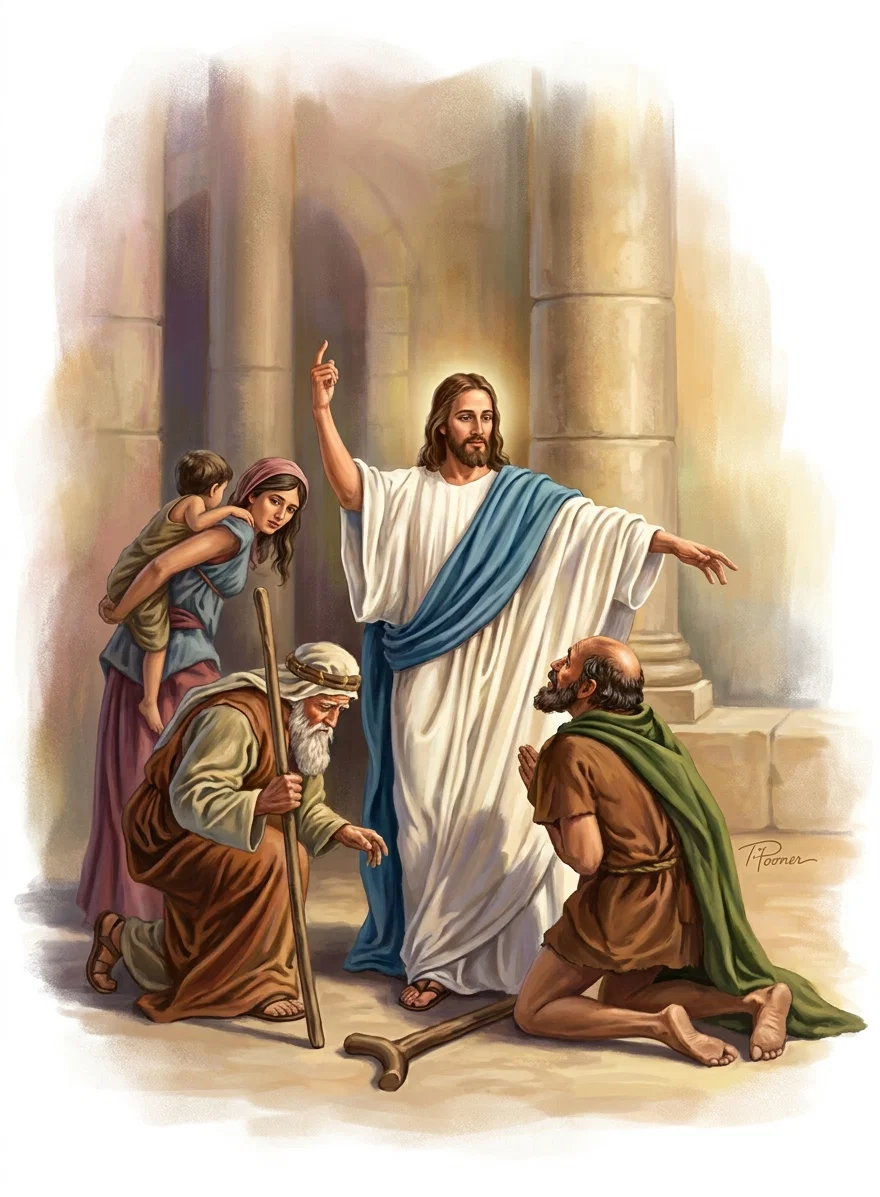 “His ear heard every cry.”
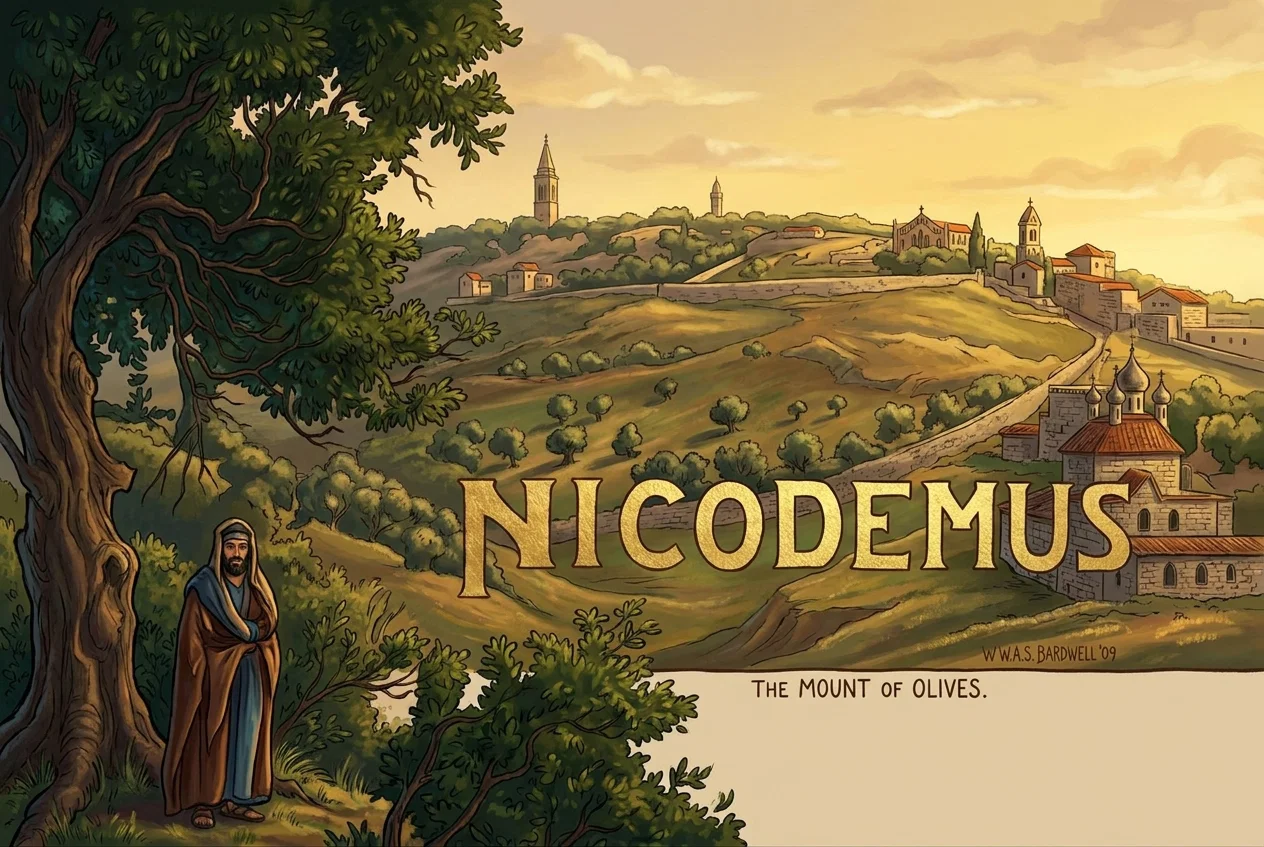 NICODEMUS — THE MOUNT OF OLIVES
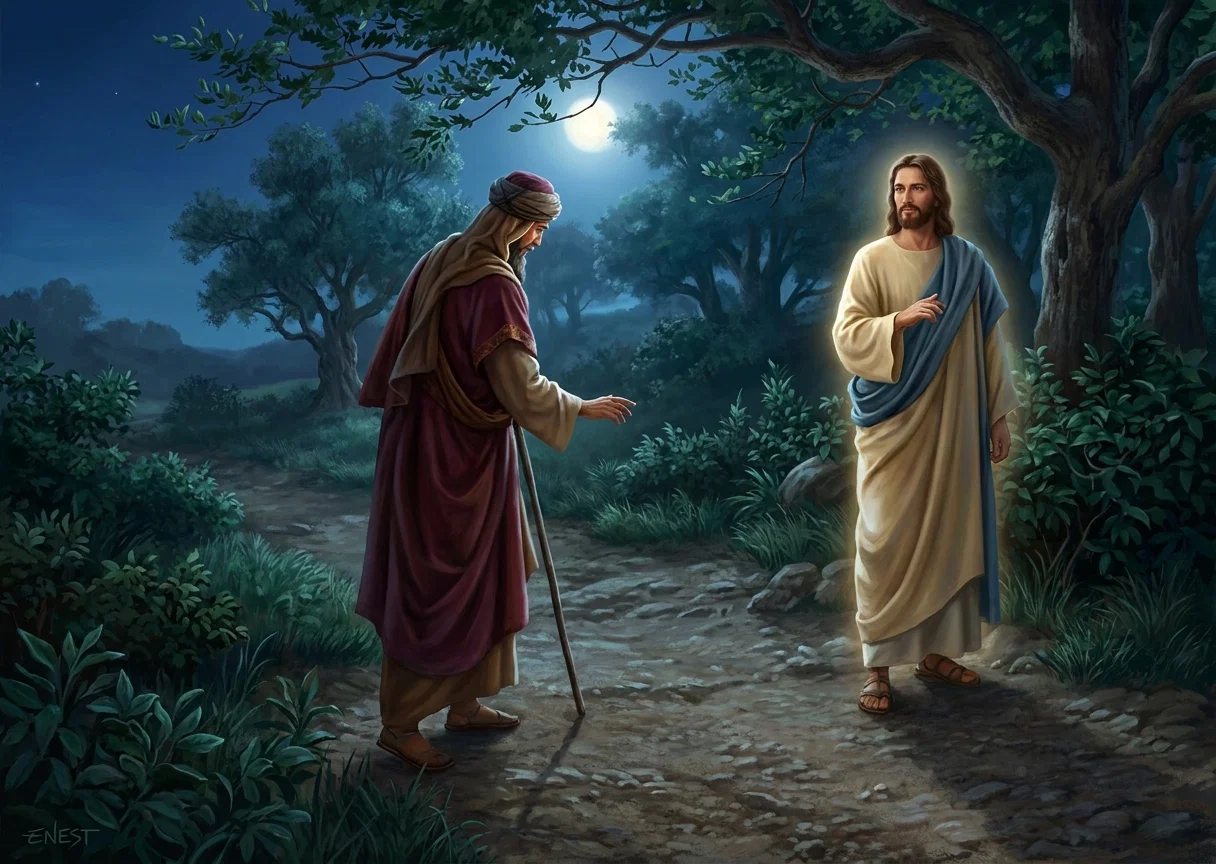 CHRIST AND NICODEMUS.
“Verily, verily, I say unto thee, Except a man be born again, he cannot see the Kingdom of God.”
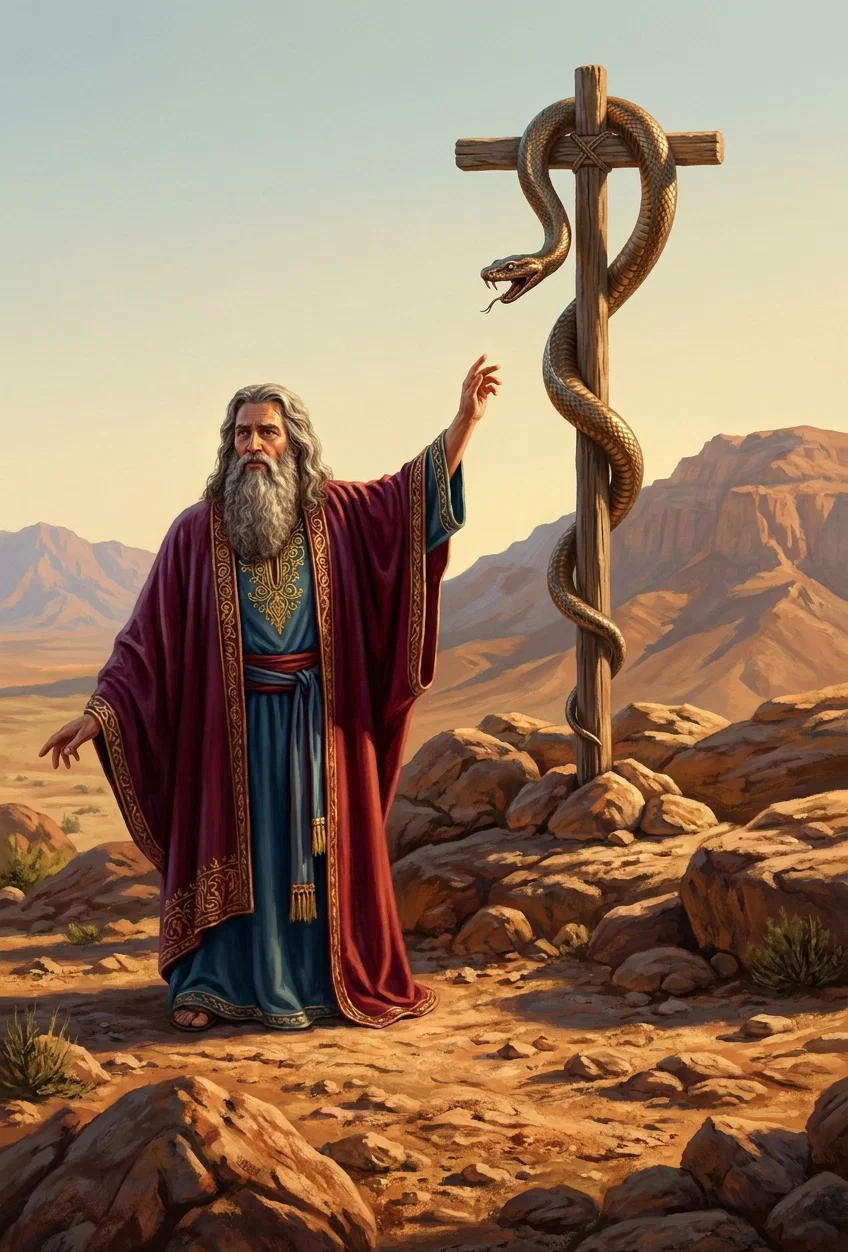 "As Moses lifted up the serpent in the wilderness, even so must the Son of man be lifted up."
 A stone-built hillside fortress or ancient town is shown in a rugged landscape. In the center, a tall cylindrical tower rises above the heavy masonry walls and is capped with a pointed, striped conical roof. To the left are lower battlements, a gate-like opening, and a small crenellated structure, while darkly shaded trees and shrubs cluster around the buildings. A sloping foreground road or terrace is supported by broad courses of rounded stonework, with a rocky streambank or outcrop at the lower left. No people, animals, or lettering are visible.
 THE MUST INCREASE
CHAPTER EIGHTEEN.
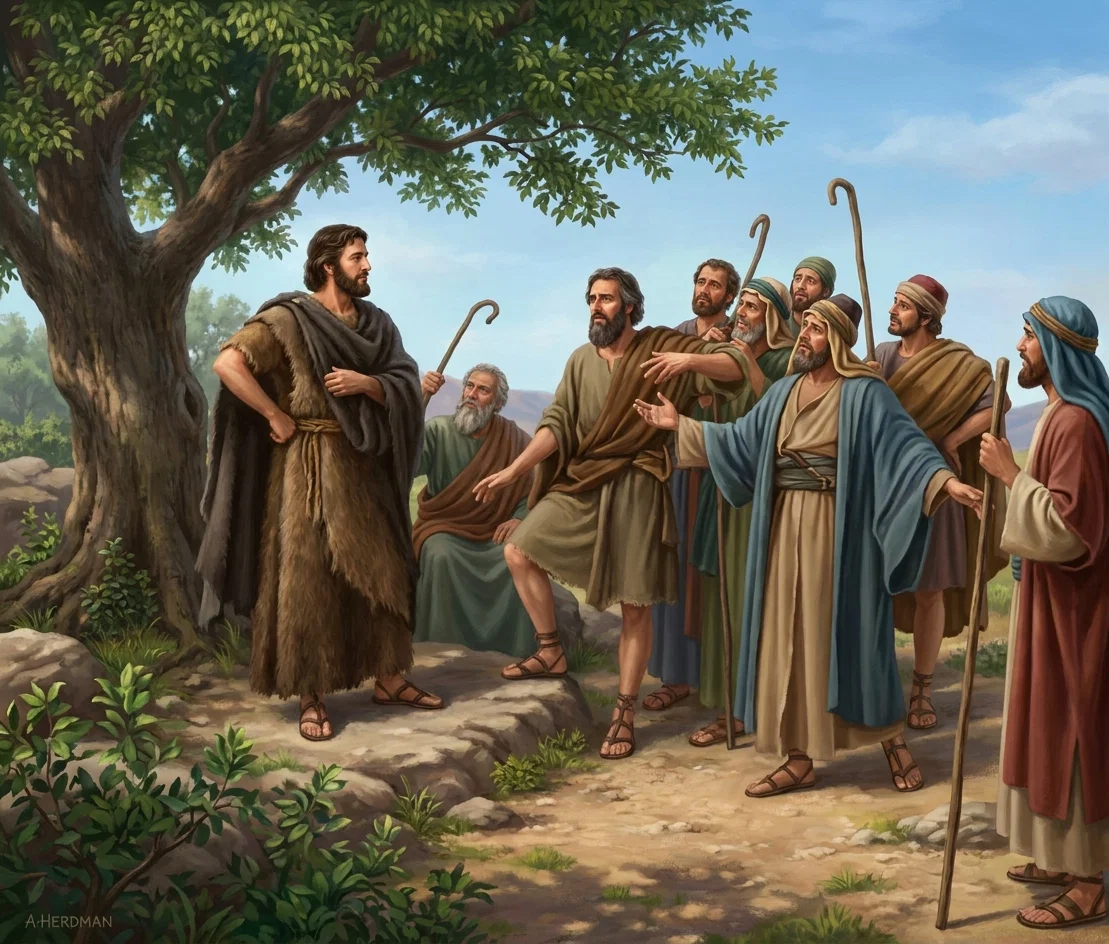 “The disciples of John came to him with their grievances.”
 A quiet, wooded ravine or narrow canyon is shown, with steep, heavily shaded rock or earth banks rising on both sides. Dense vegetation, including tall trees, shrubs, and trailing foliage, crowns the cliffs and fills the background. A shallow stream or wet path winds through the center foreground, marked by horizontal ripples or stones, while two tiny human figures stand in the distance along the passage. A large tree trunk and exposed roots anchor the lower left corner, contrasting with the lighter open space beyond.
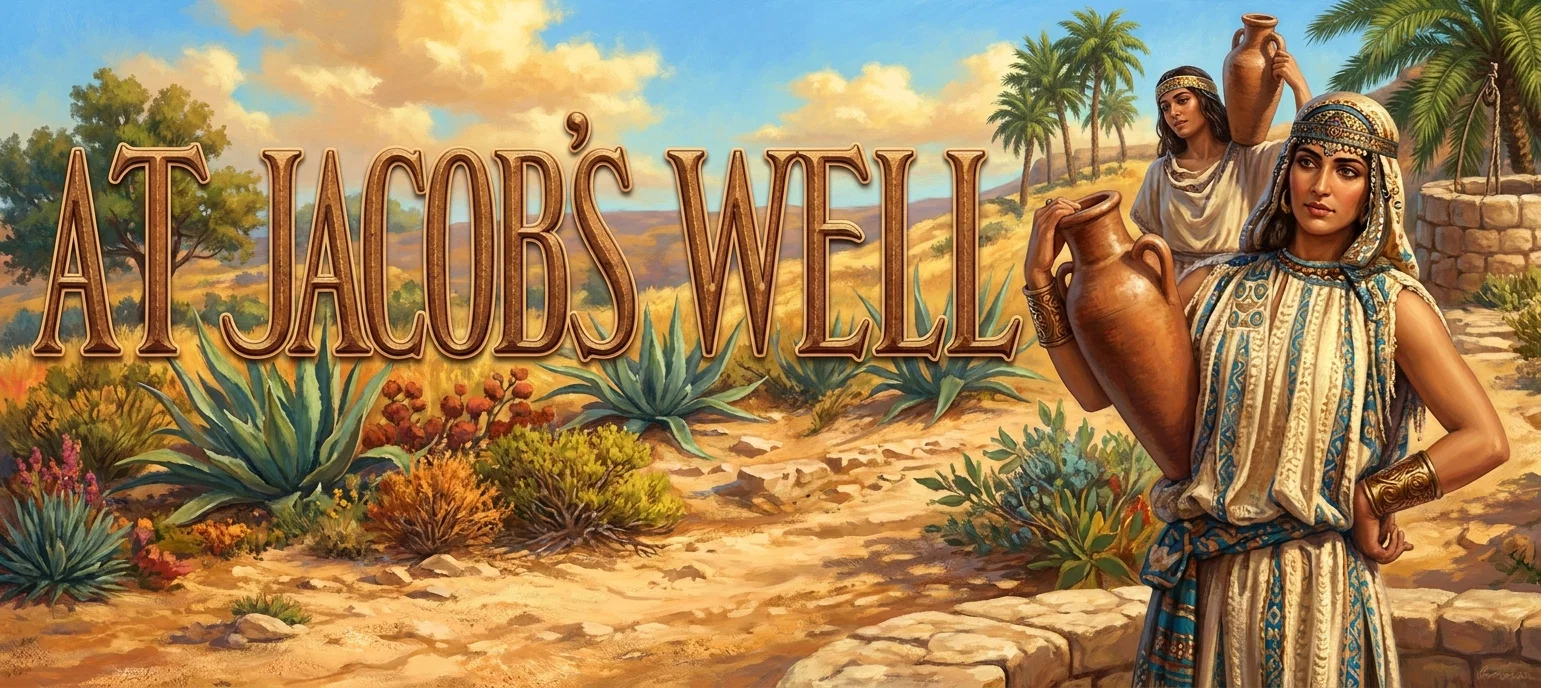 AT JACOB'S WELL
CHAPTER NINETEEN.
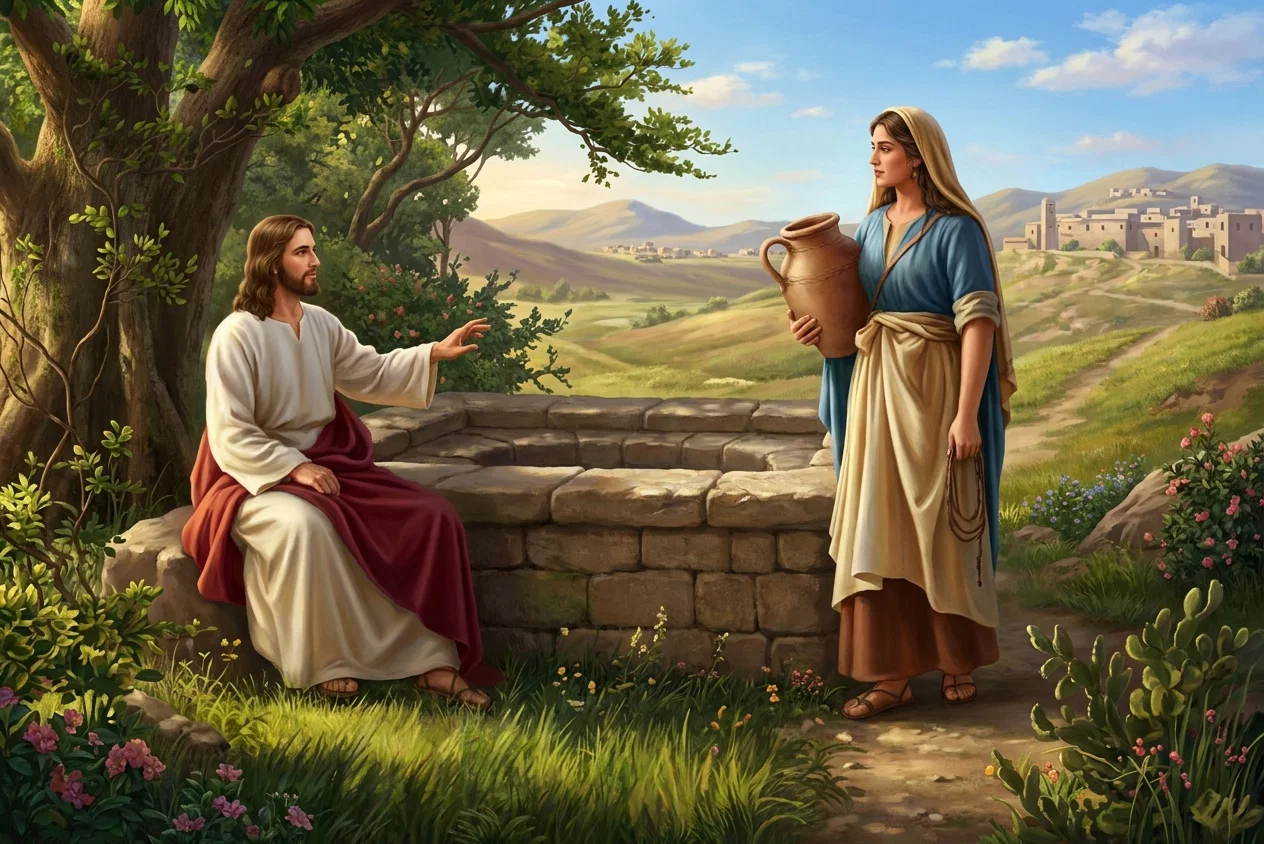 AT JACOB'S WELL.
“Had you asked of Me, I would have given you to drink of the water of everlasting life.”
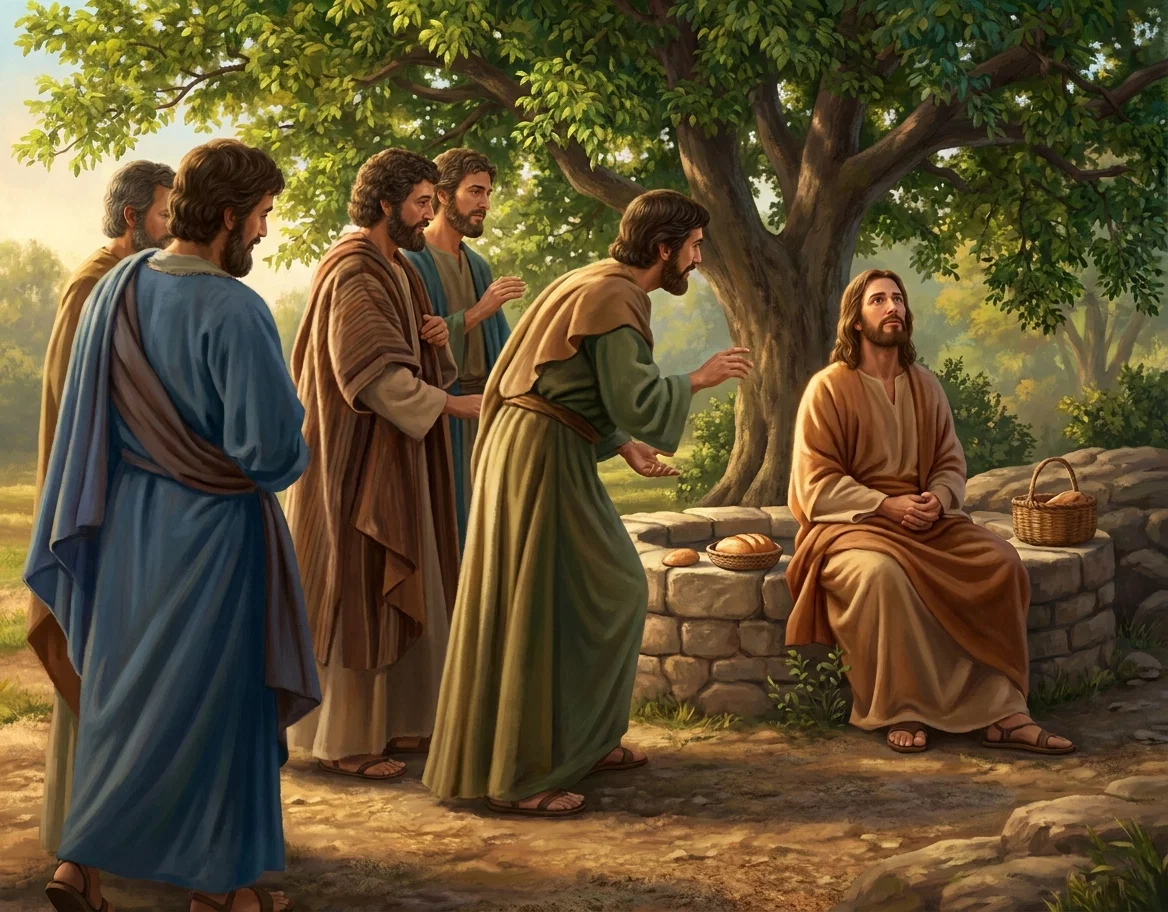 “They saw Him silent, absorbed, as in rapt meditation.”
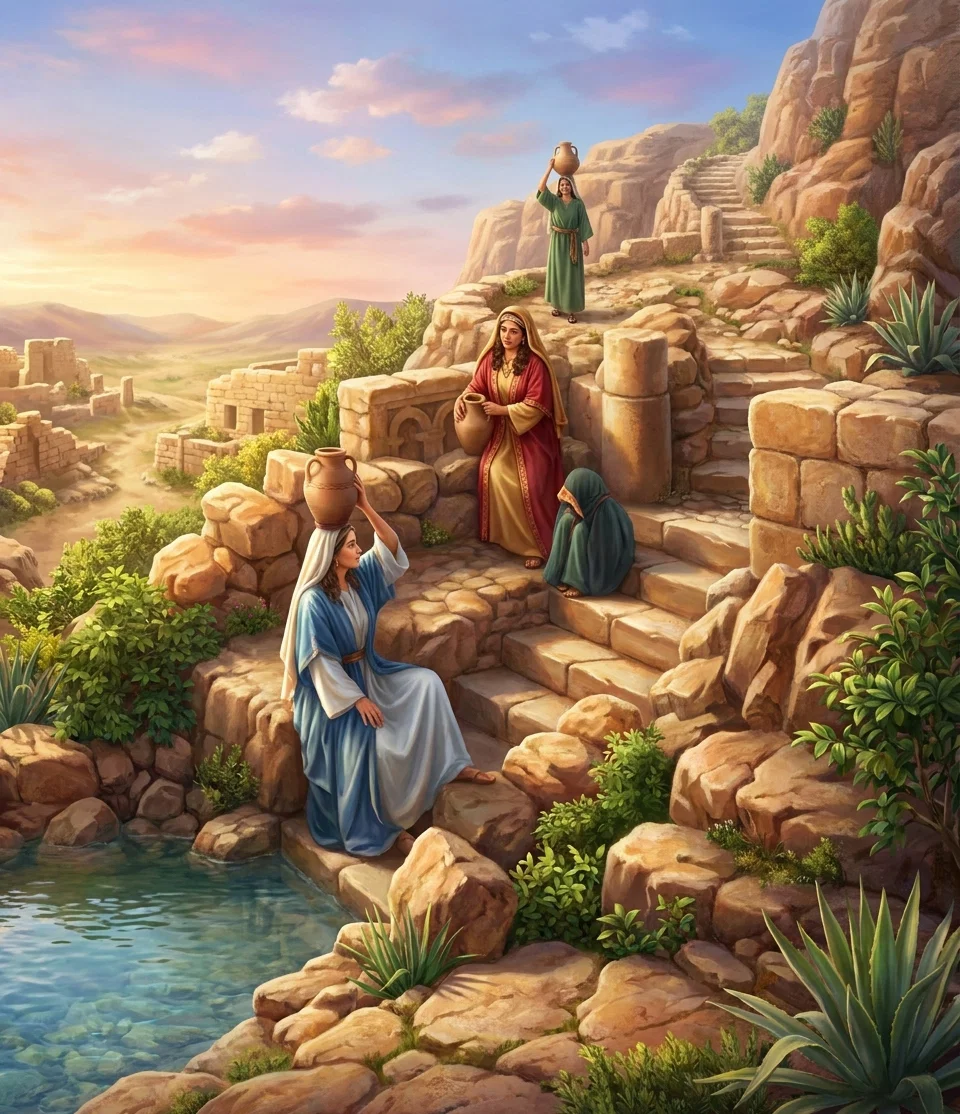 A rural, rocky landscape is shown with three robed women along a descending stone path or terrace. In the center, a veiled woman stands beside a large upright water jar, while another woman sits or kneels in the foreground with her back turned, and a third figure stands farther uphill among grasses. The terrain is uneven and sparsely vegetated, with rough stone walls, steps, shrubs, and broad hills or cloud-streaked slopes in the background. No lettering or other text appears within the image.
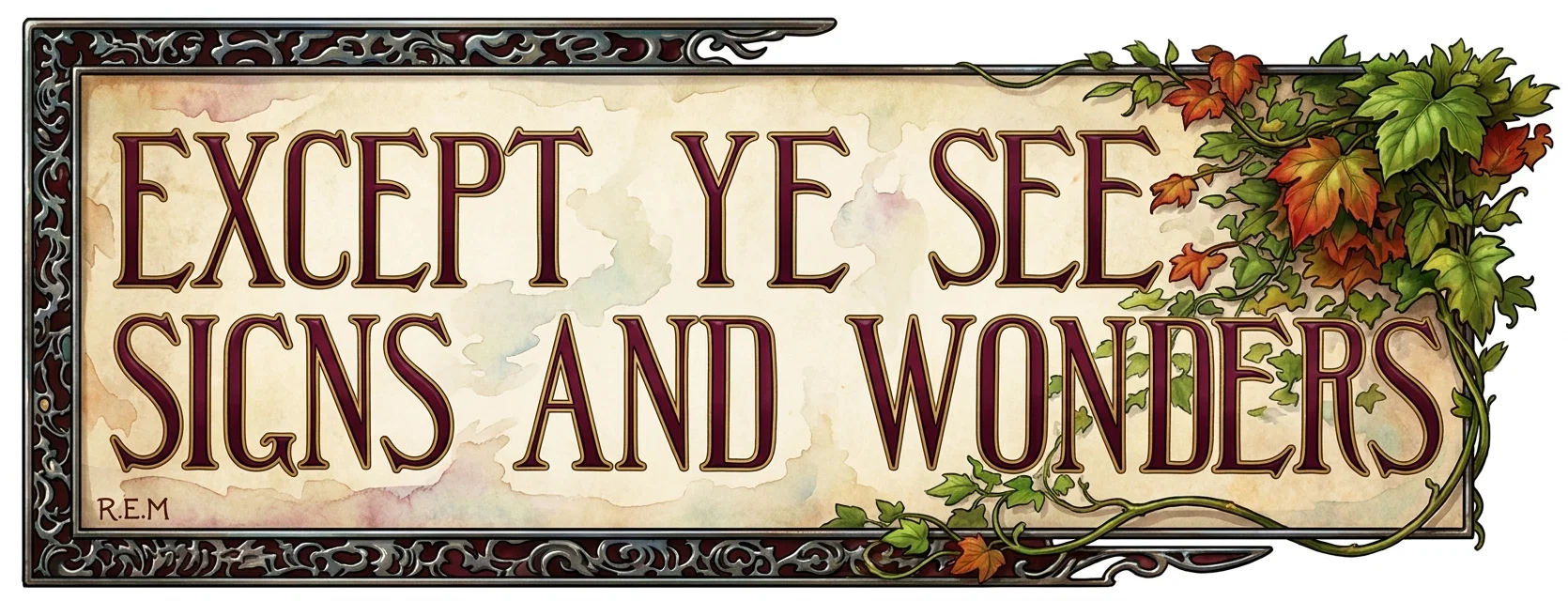 EXCEPT YE SEE SIGNS AND WONDERS
 A highly ornamented capital letter fills the center of the image, enclosed within a thin rectangular border. The letter has bold, curling strokes arranged symmetrically, with elaborate vine-like scrollwork, leaf shapes, loops, and small decorative flourishes woven through and around its form. Fine black outlines and patterned interior details give the initial a richly embellished, medieval-style appearance, while additional curls and floral motifs occupy the surrounding corners and margins.
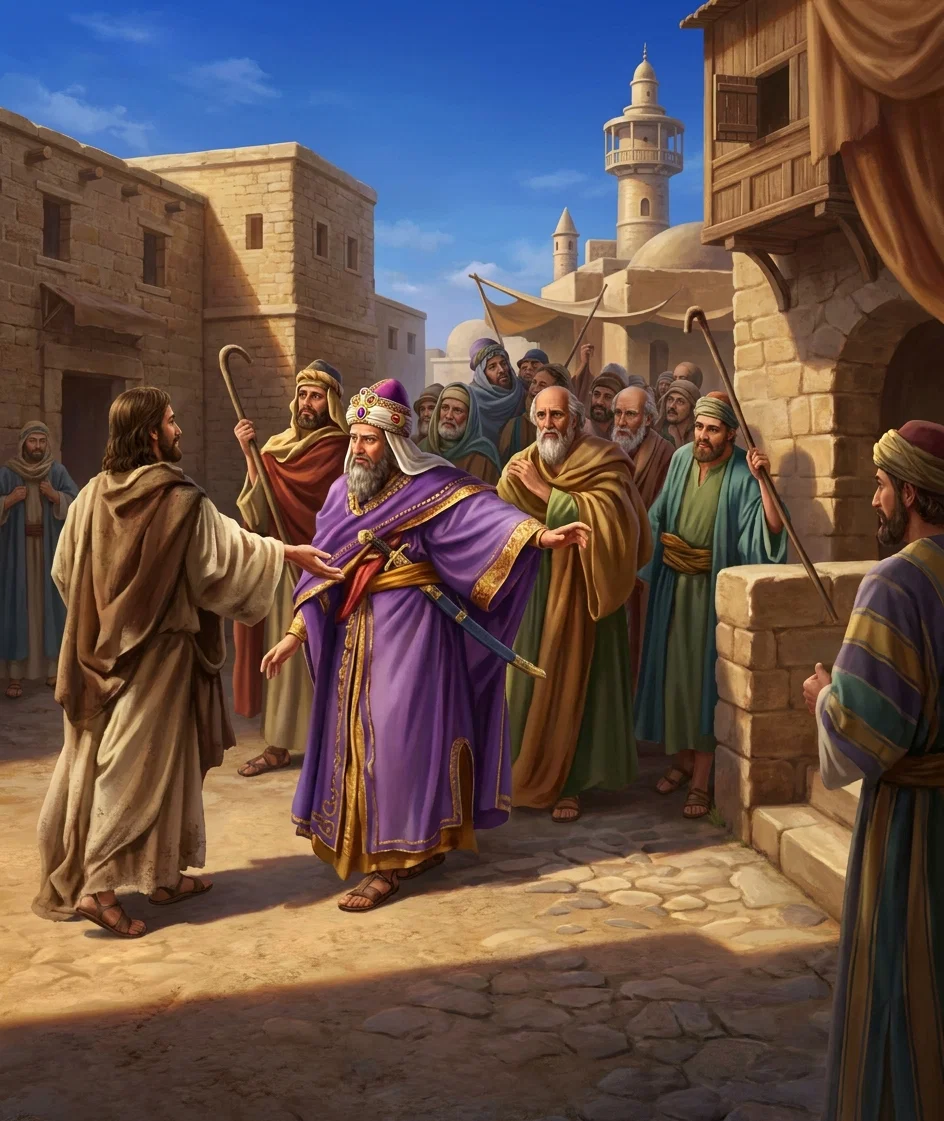 "His faith faltered when he saw only a plainly dressed man, dusty and worn with travel."
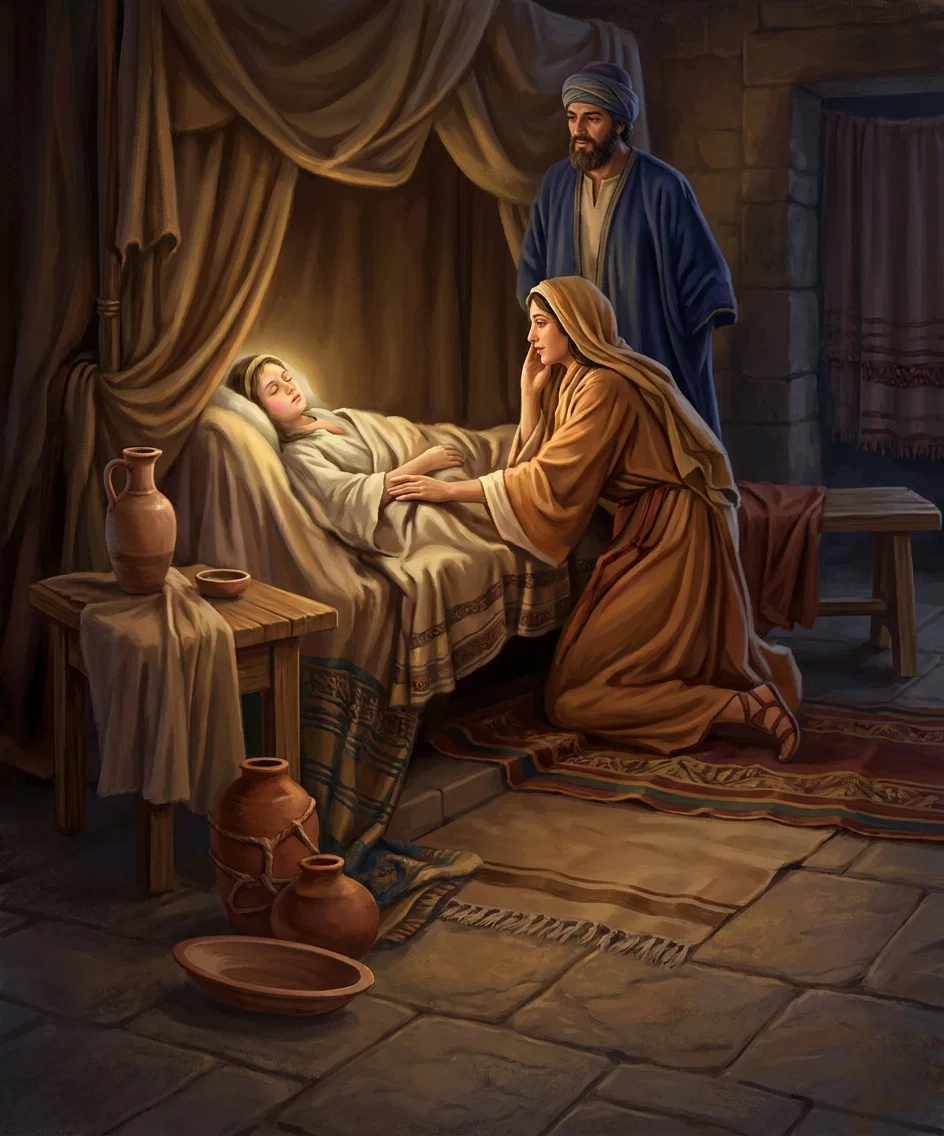 “At the same hour the watchers beside the dying child in the home at Capernaum beheld a sudden and mysterious change.”
 A black-and-white pen-and-ink landscape shows an ancient-looking fortified town or ruined settlement viewed from across a deep ravine. Massive rough stone walls and cliff-like rock formations frame the foreground, while a narrow stream or path winds through the valley below. In the middle distance, the settlement contains towers, arched gateways, small domed or flat-roofed buildings, and scattered masonry, with a taller slender structure rising near the skyline. The composition emphasizes the dramatic gorge and weathered stone architecture, with no people, animals, or visible lettering.
 BETHESDA AND THE SANHEDRIM
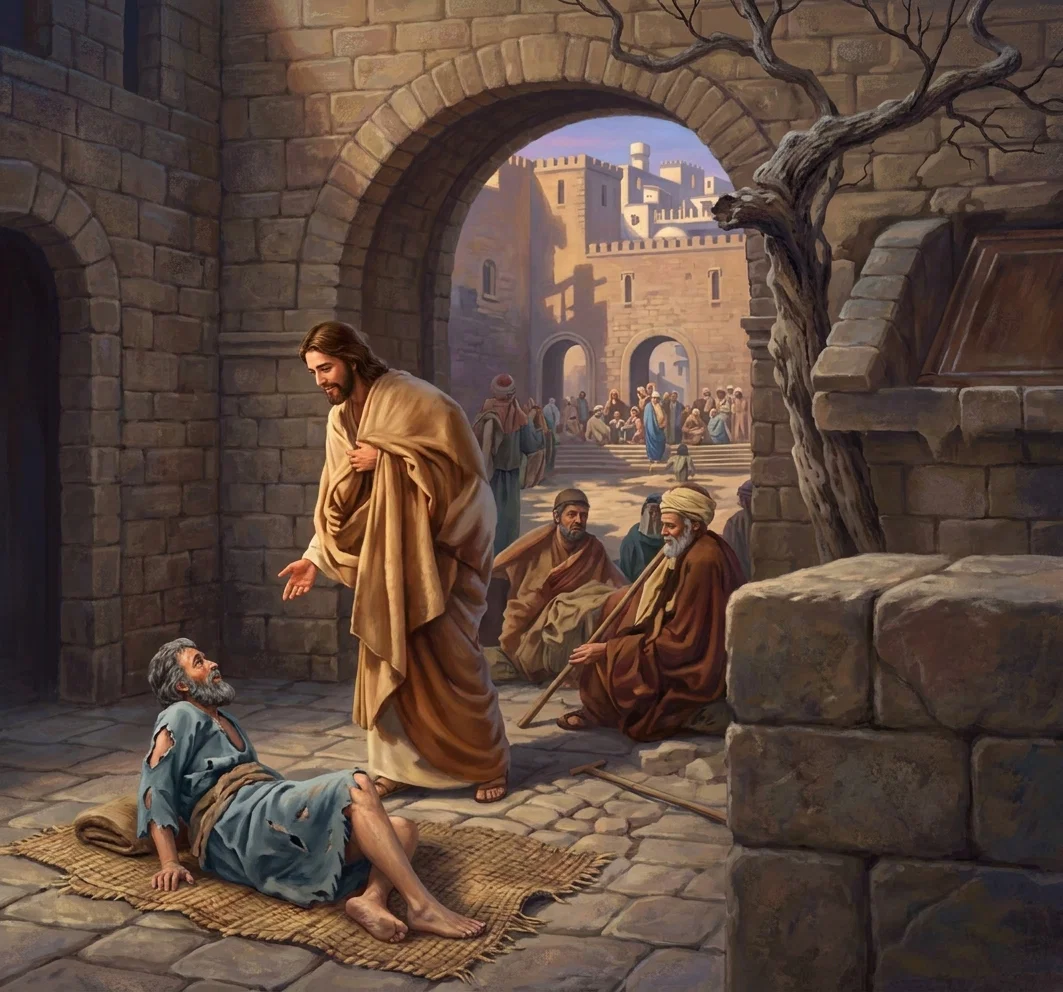 “A tender, compassionate face bent over him.”
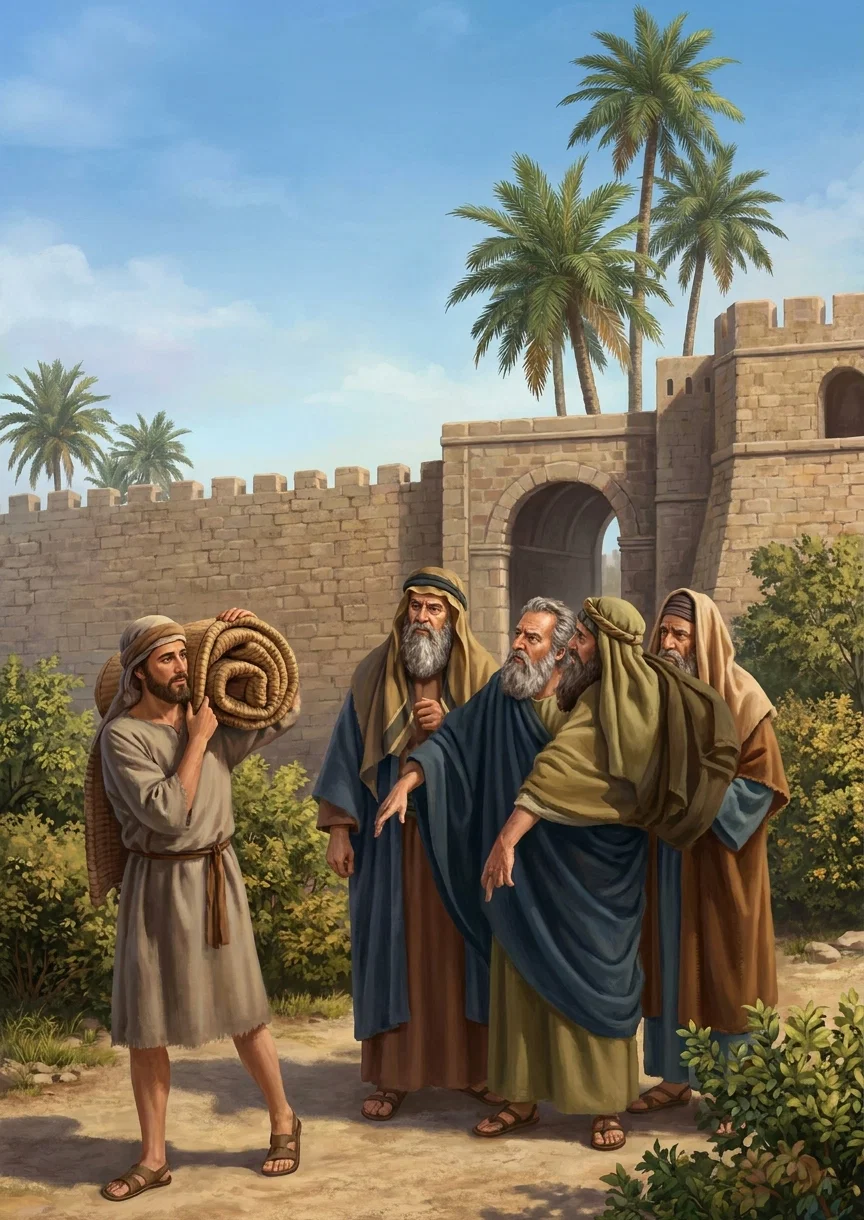 “With lowering brows they interrupted him, asking why he was carrying his bed on the Sabbath day.” Page 203.
 A panoramic black-and-white sketch shows a sunlit Middle Eastern settlement amid low, rugged hills and scrubby vegetation. In the foreground, a rough stone wall or embankment stretches across the scene, with dense grasses and bushes at its base. Several tall palm trees rise behind the wall, while a cluster of simple, flat-roofed pale buildings occupies the right half of the composition. At the far right stands a prominent dark, rounded or cylindrical stone structure beside the houses. No clearly legible lettering is visible in the drawing.
 IMPRISONMENT AND DEATH OF JOHN
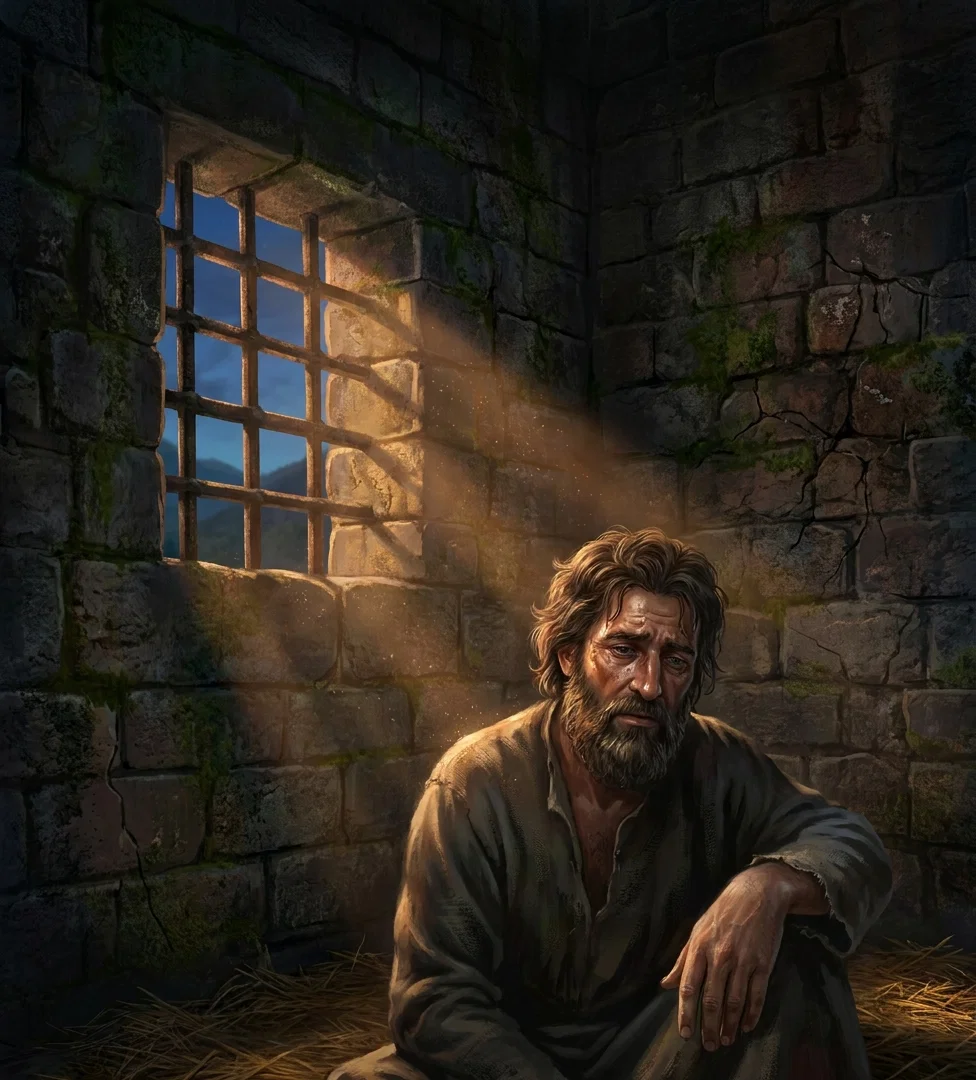 “As week after week passed, bringing no change, despondency and doubt crept over him.”
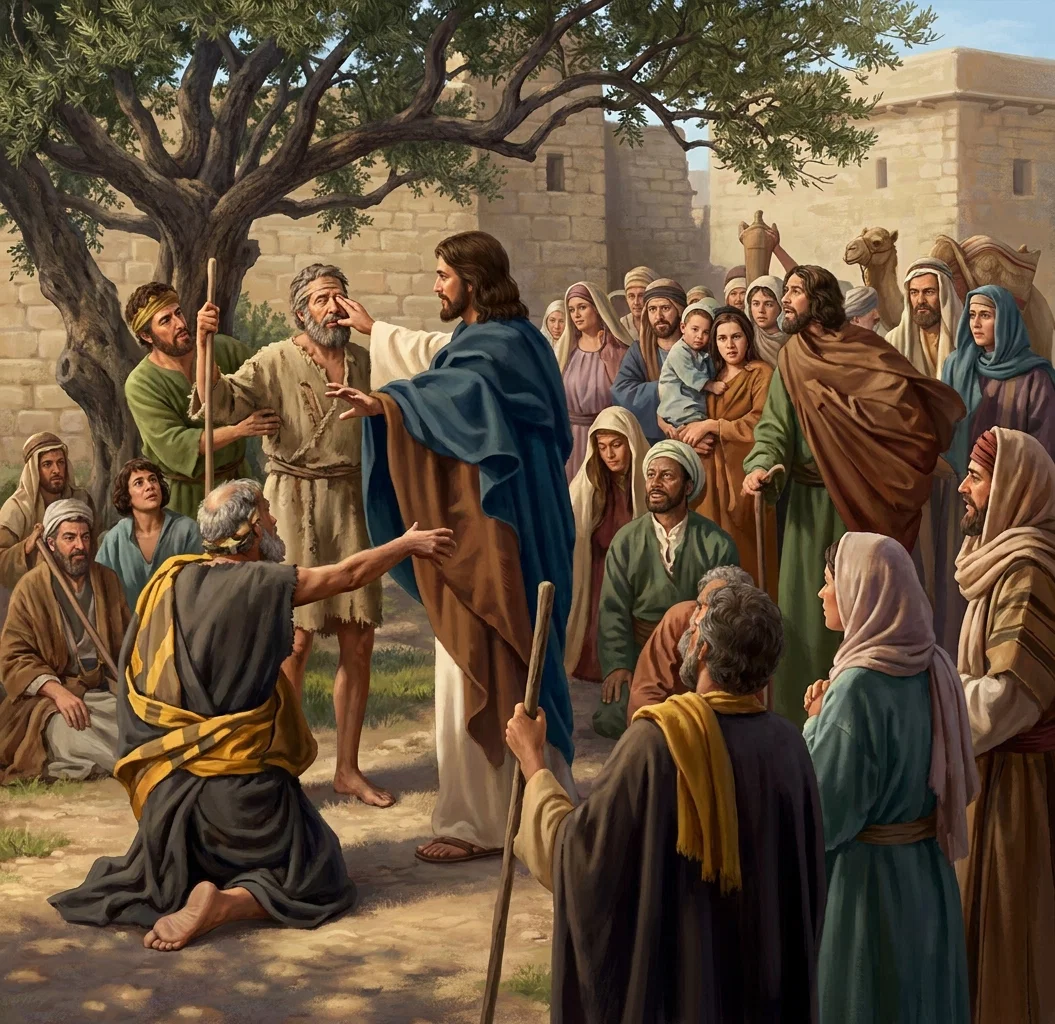 A word, a touch of His hand, opened the blind eyes to behold the light of day.”
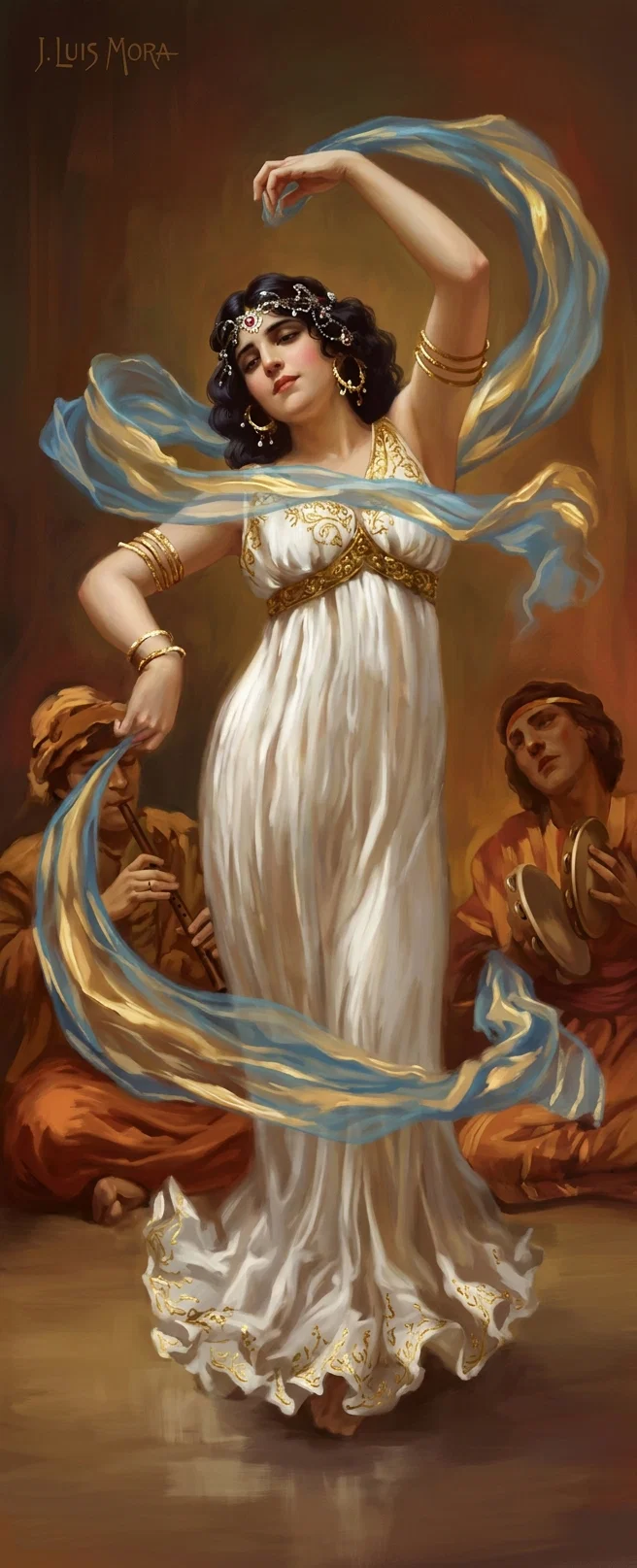 Salome.
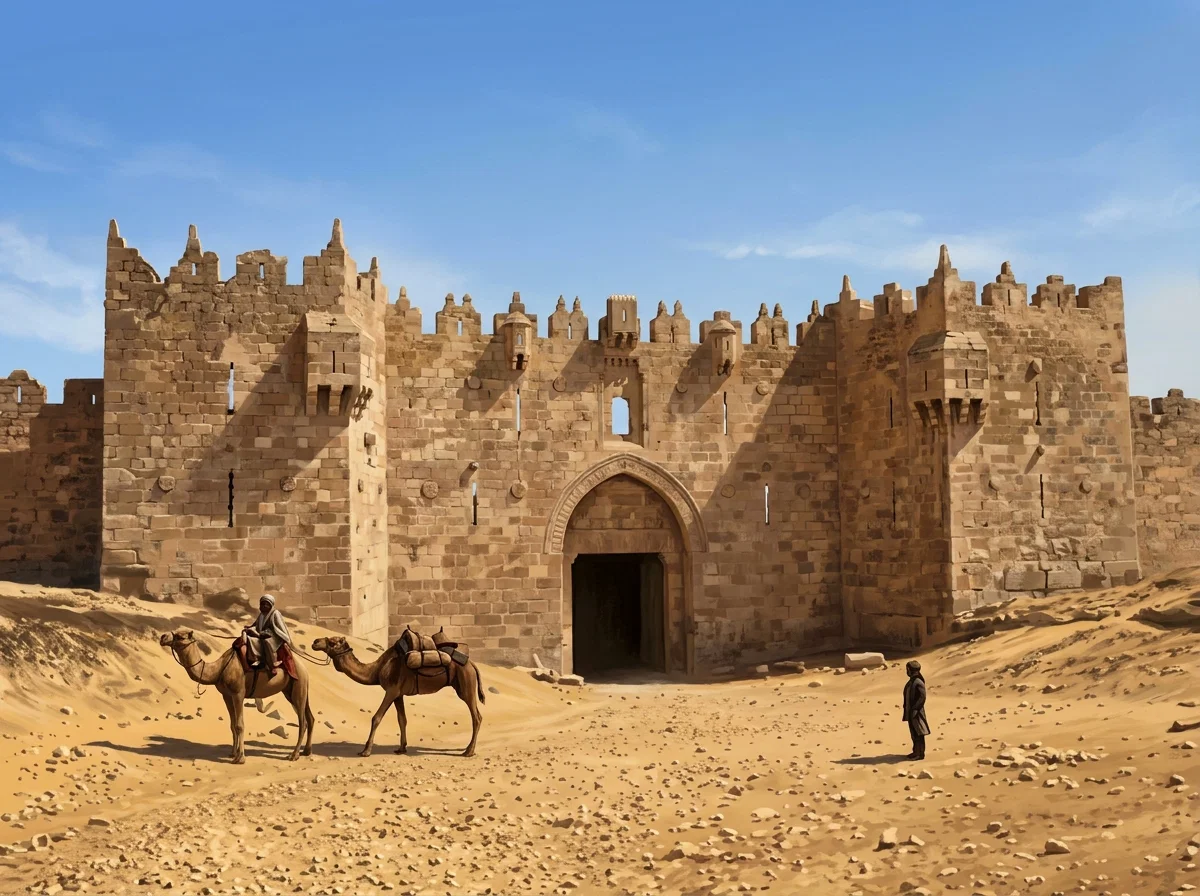 A broad, weathered stone fortress gateway stands across a barren, sandy foreground. The structure has high crenellated walls, projecting square towers, and an arched central entrance opening into darkness, with a smaller rectangular opening above it. Two loaded camels move across the left side of the scene, while a lone person stands near the gateway on the right. Low buildings or walls appear behind the fortification, and the composition is set beneath a largely empty sky.
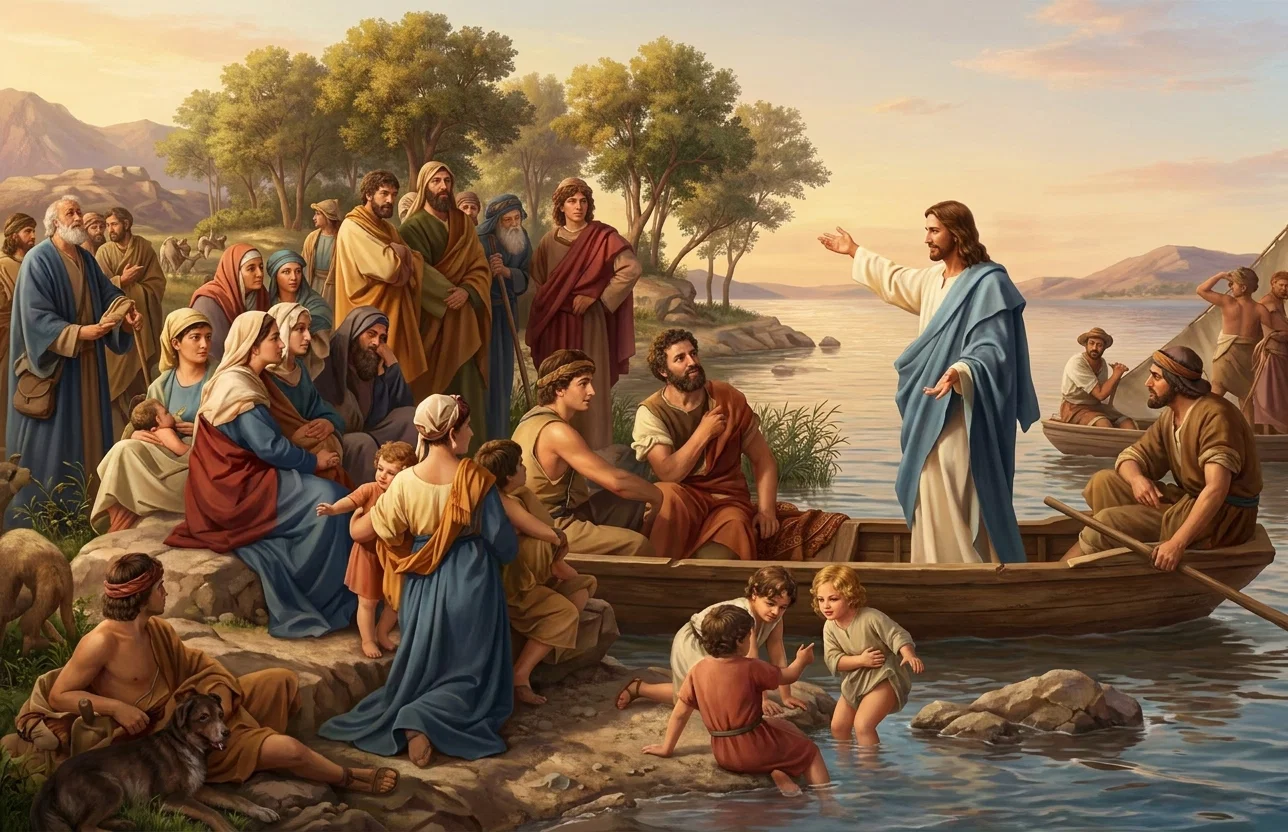 TEACHING FROM A BOAT. “The lake, the mountains, the spreading fields, surging light flooding earth, all furnish objects to illustrate His lessons.”
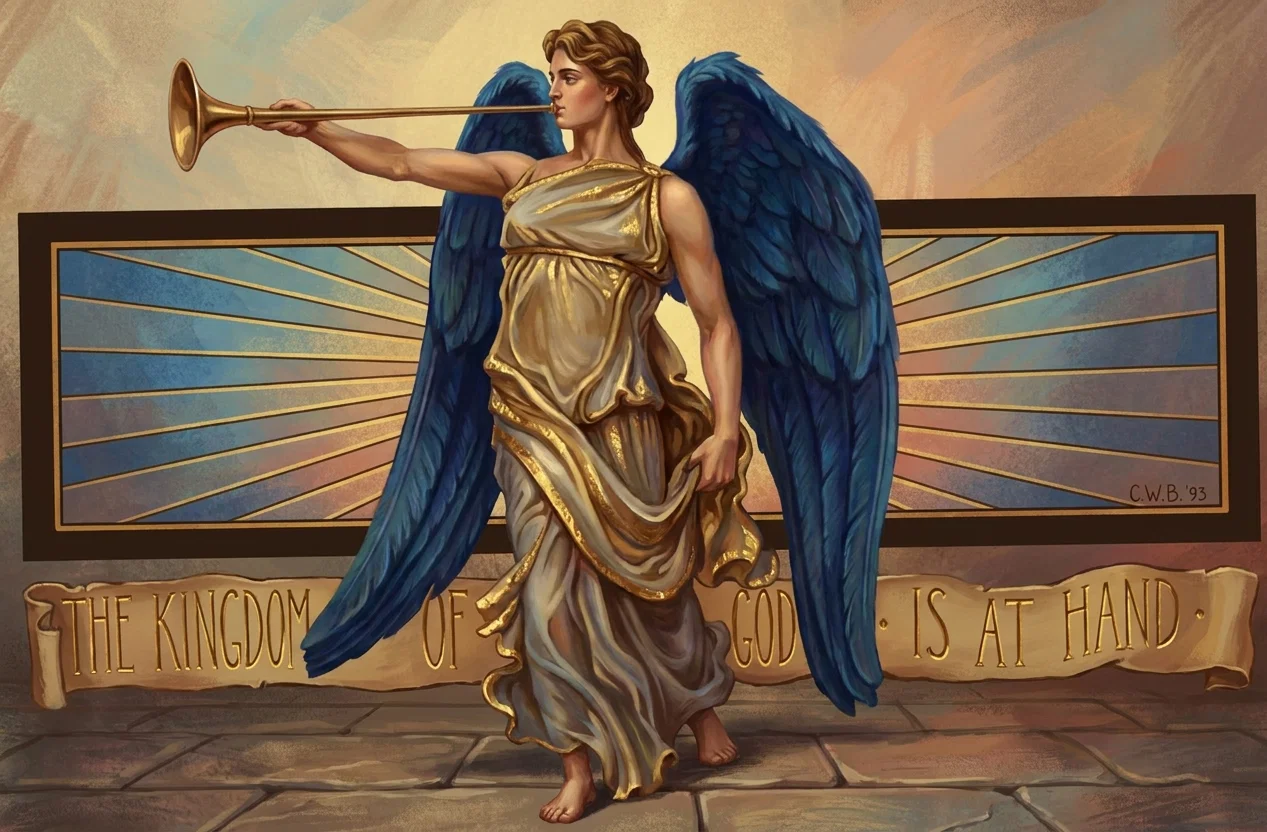 THE KINGDOM OF GOD IS AT HAND.
 A broad, barren landscape is shown with the remains of a low stone settlement or fortress spread across the middle ground. Rough, rounded stones form several thick walls and collapsed structures, with dark shaded openings or gaps between them and earthen embankments sloping toward the foreground. Sparse grasses and small shrubs grow around the ruins, while a gently rising, mostly empty hillside extends across the background. The monochrome drawing contains no visible people, animals, signs, or lettering.
 IS NOT THIS THE CARPENTER'S SON?
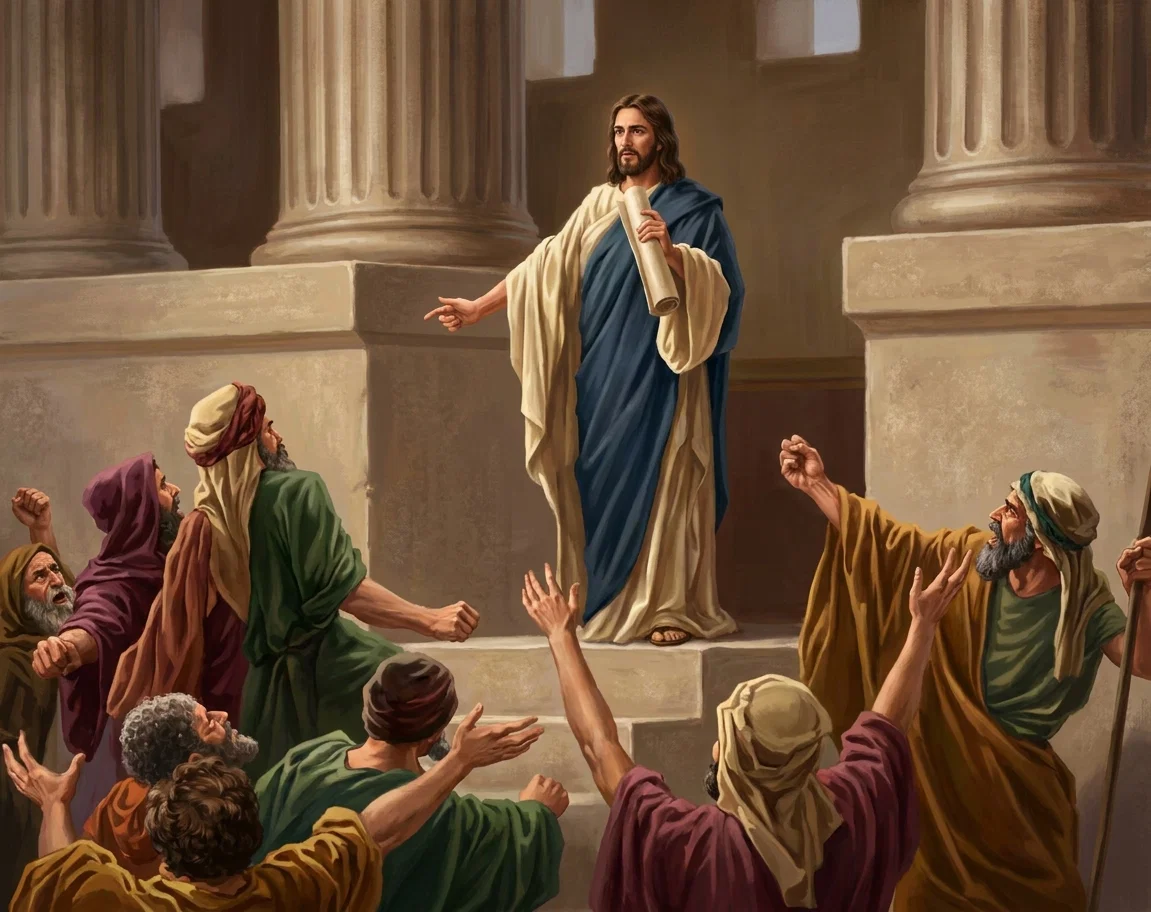 “His words were drowned in a tumult of voices.” Page 240.
 A small circular emblem or medallion is shown, enclosed by a thick dark outer ring. At the center is a stylized upright plant or tree with a narrow trunk and several spreading branches ending in lobed leaves. The surrounding field is densely filled with short radiating strokes and irregular zigzag or flame-like forms arranged around the central motif, creating a sunburst-like border. The artwork contains no clearly legible lettering, figures, animals, or other distinct objects.
 A small circular emblem or medallion is shown frontally, enclosed by a dark, irregularly textured outer rim. Its center contains a large, ornate symbol resembling a Hebrew letter or monogram, with a curved horizontal stroke above and a branching vertical form below. Additional decorative or Hebrew-style characters are arranged around the upper, side, and lower portions of the disk, creating a roughly radial composition. Fine marks and tiny lettering appear along the inner lower edge, while the surrounding field is plain.
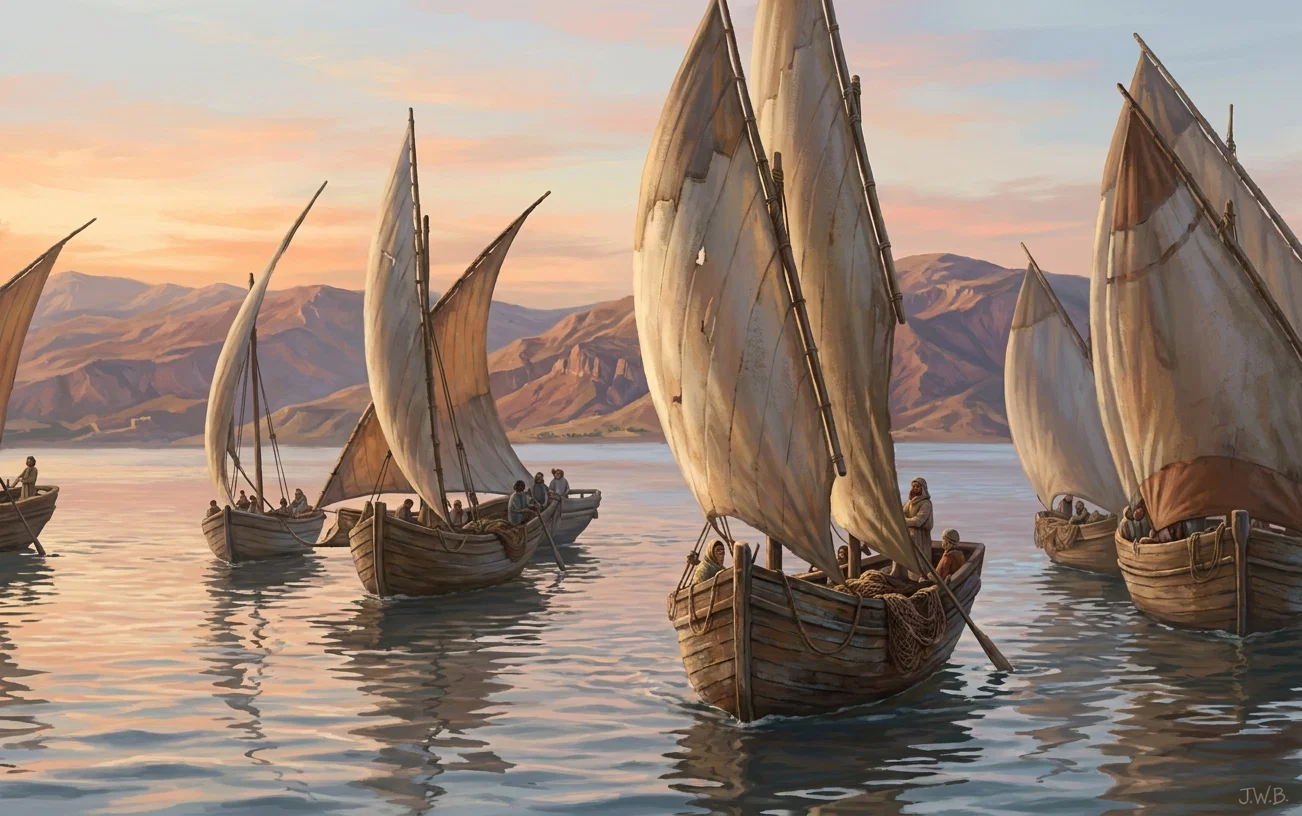 A tranquil lake scene shows several small fishing boats with tall, sharply angled sails moving or resting on the water. The largest boat dominates the foreground at right-center, its dark hull, rigging, and broad billowing sail clearly visible, while other sailboats recede across the lake. A few indistinct fishermen appear aboard the vessels. Low, rugged mountains and a gently textured shoreline stretch across the background beneath a hazy sky, and rippling water reflects the boats and sails.
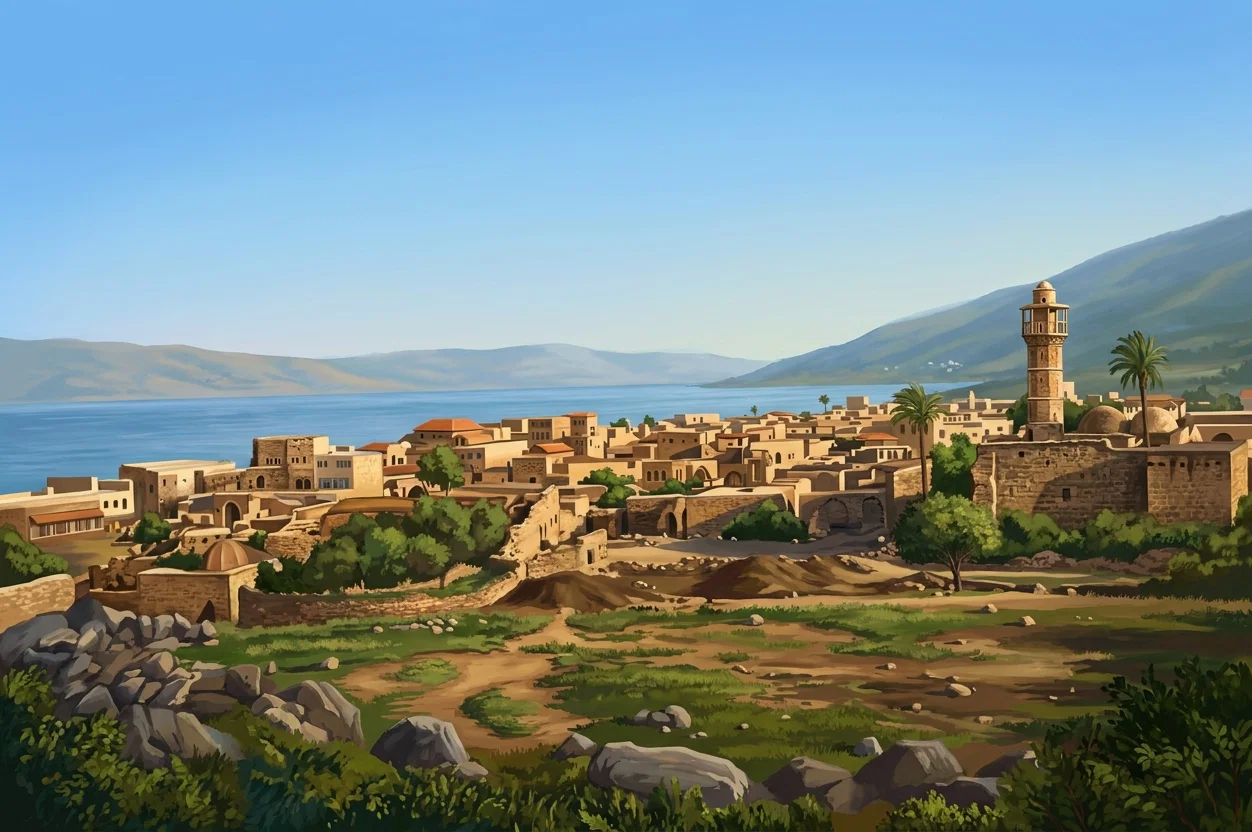 TIBERIAS AND THE SEA OF GALILEE.
 A black-and-white engraved scene shows a rugged, uneven landscape of rocks, earth, and sparse vegetation. Several large rectangular, layered blocks resembling books or masonry slabs lie in the foreground and at right, surrounded by smaller stones and tangled ground cover. A dark-clad human figure stands near the upper center on a raised ledge, while other indistinct figures or forms appear among the rocks. The composition rises toward a rough plateau or wall at the back, with a few tufts of vegetation silhouetted along the top; no lettering is visible.
 O Caperrcaum
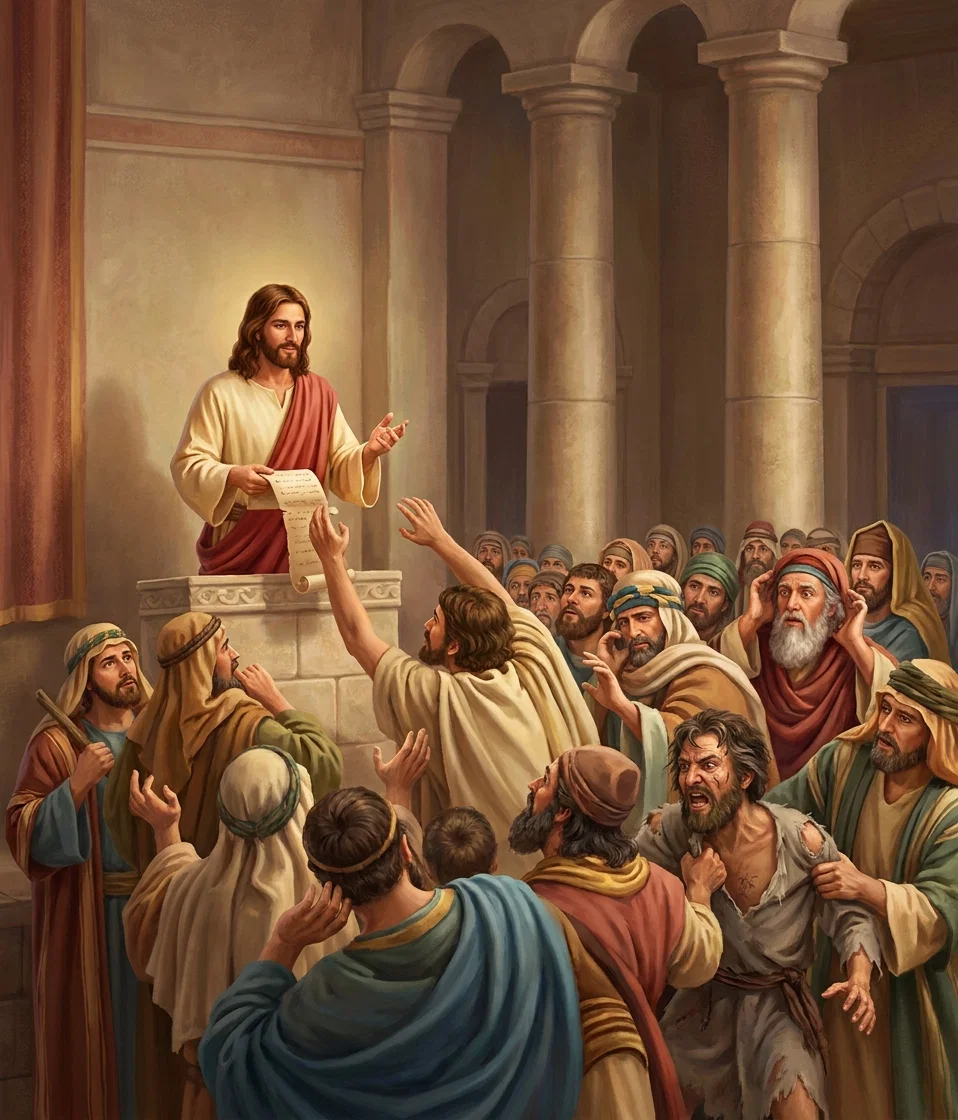 “A madman rushed forward from among the people.”
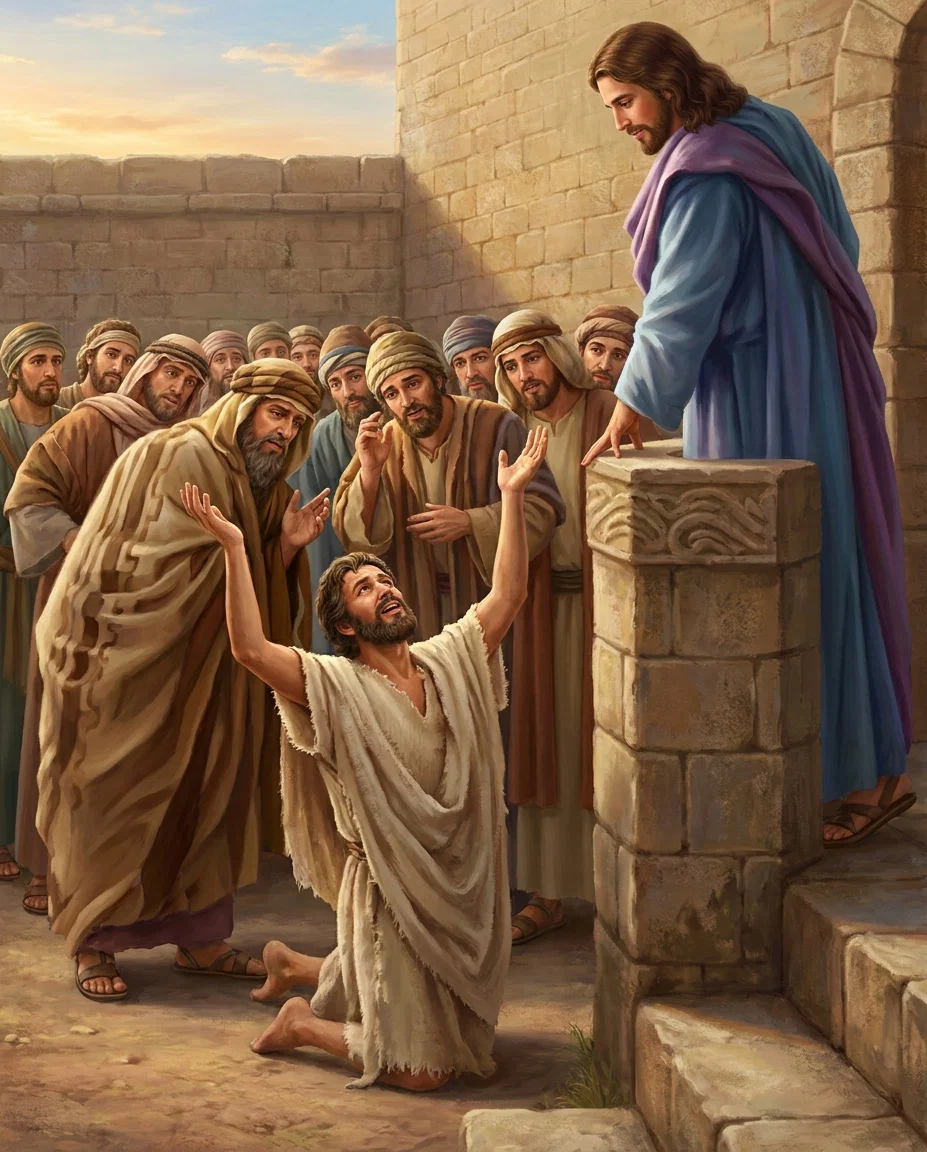 “The man praised God for his deliverance.”
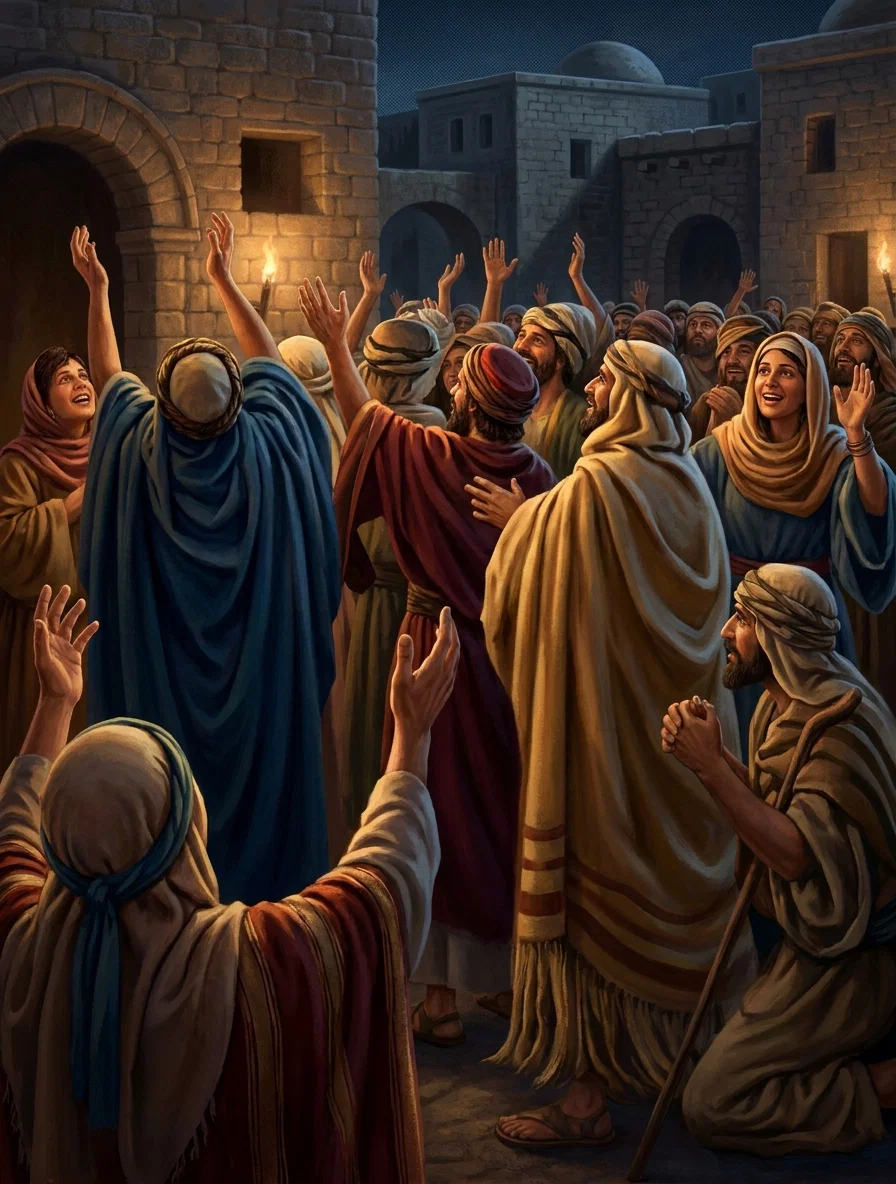 “The air was filled with the voice of triumph and shouts of deliverance.” Page 260.
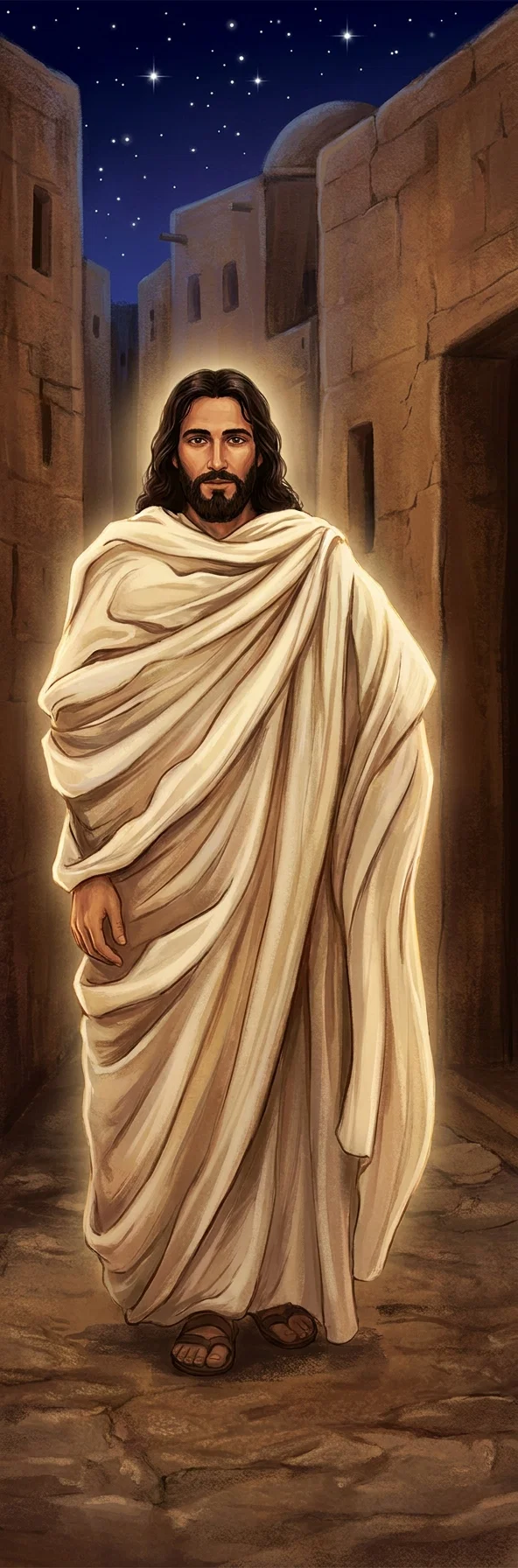 “But while the city was still wrapped in slumber.”
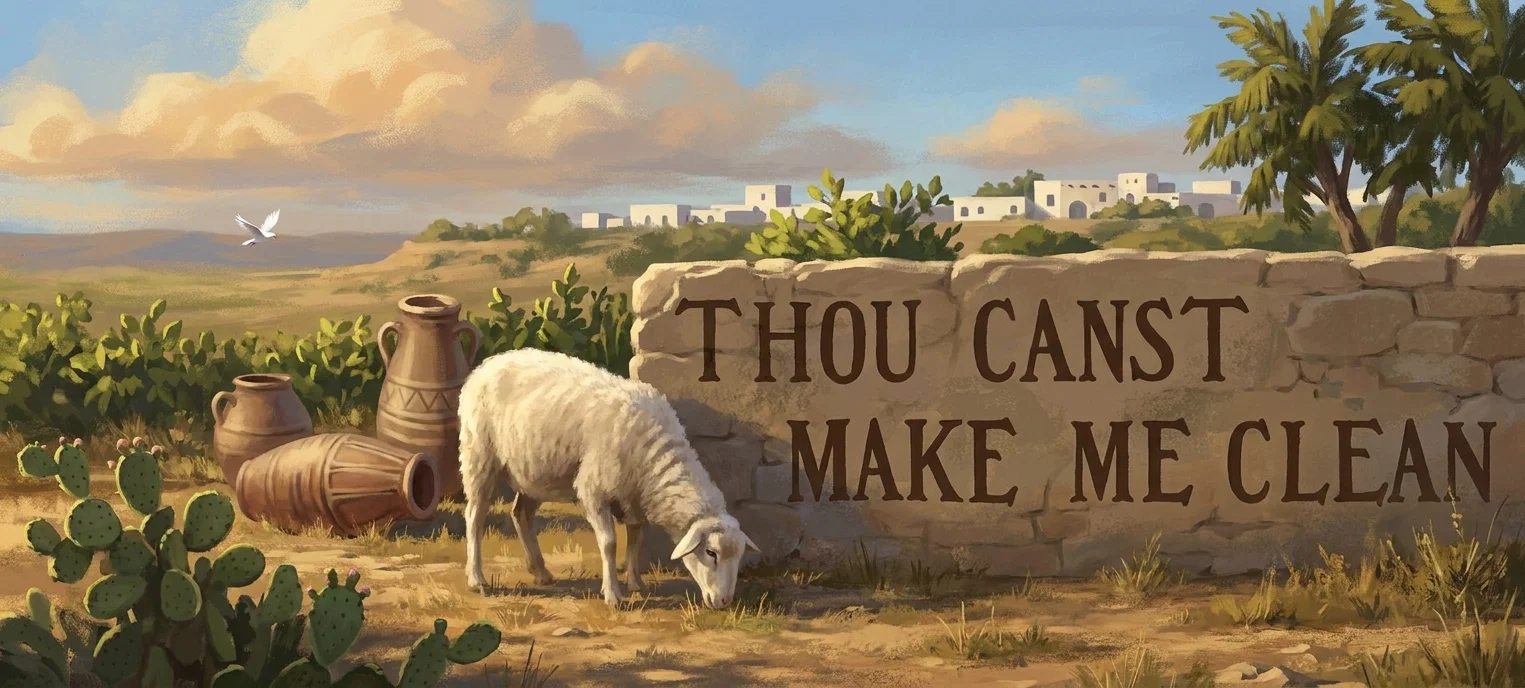 THOU CANST MAKE ME CLEAN
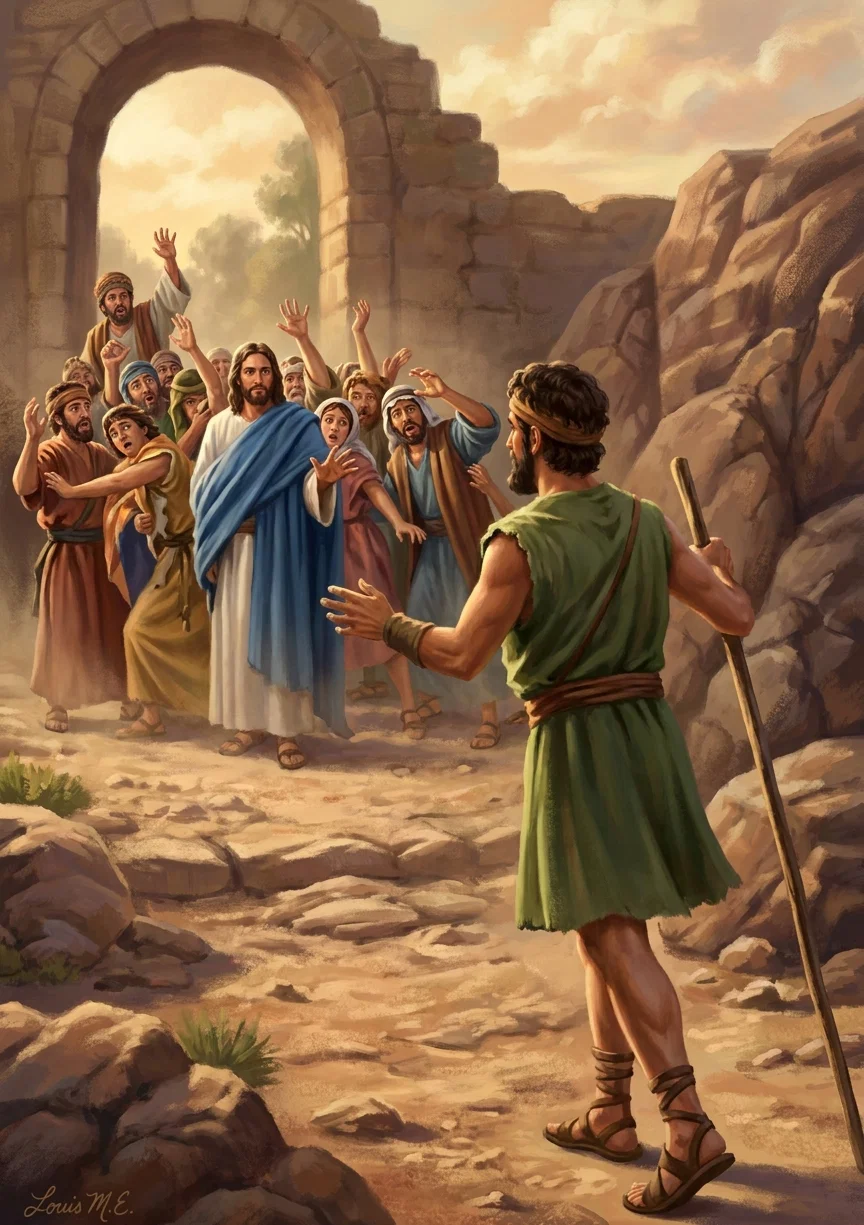 “At sight of him the people fall back in terror.” Page 263.
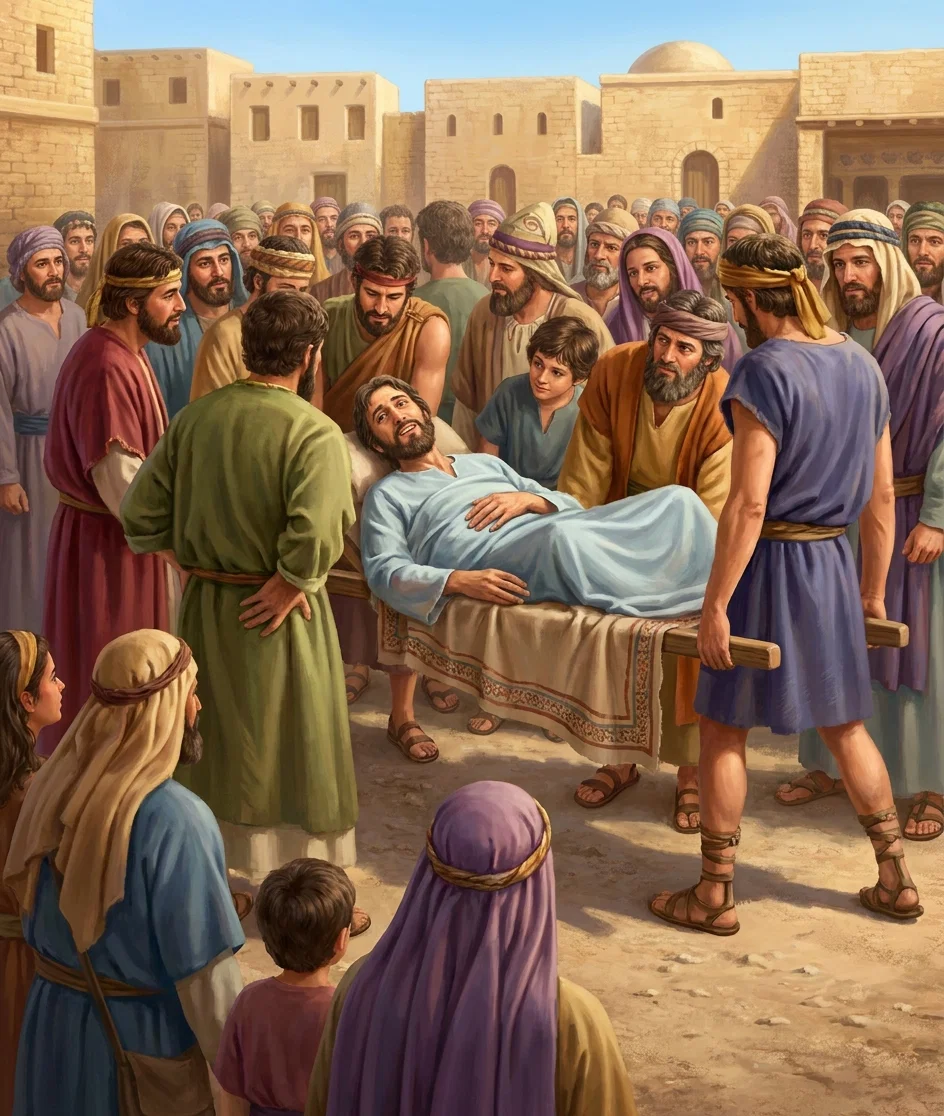 “The cry of the dying man was, O that I might come into His presence.”
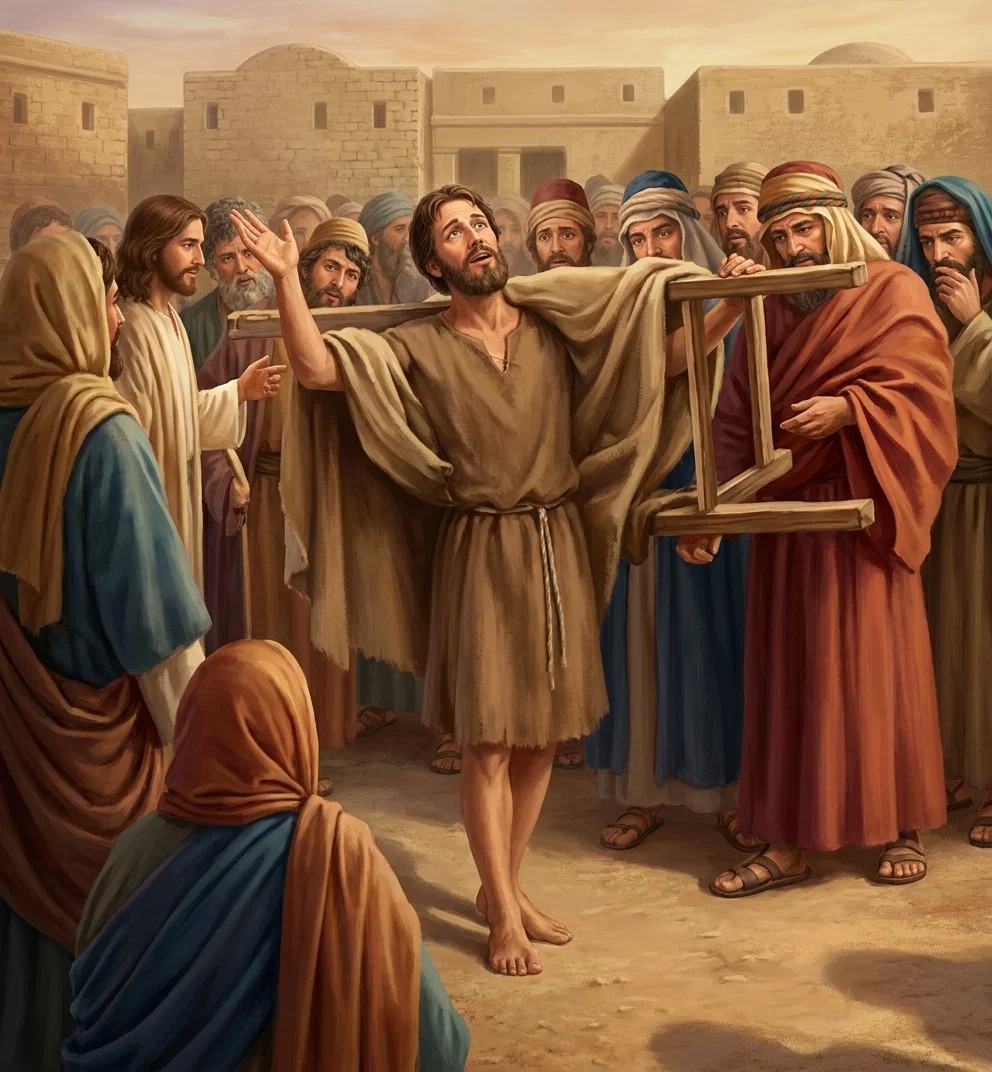 “And with awe-stricken faces gazed upon him, whispering softly, We have seen strange things to-day.” Page 270.
 A long, low stone structure stretches across a rural landscape, its side marked by a repeating row of tall, rounded arches and dark openings beneath them. At the right end, a broad flight of steps or sloping masonry rises to the top, beside a small exposed section of brickwork. Trees and shrubs grow around the structure, with larger wind-shaped trees clustered behind it, while faint mountain ridges run along the distant horizon. The foreground is uneven, sparsely vegetated ground, and no people, animals, or lettering are visible.
 LEVI-MATTHEW
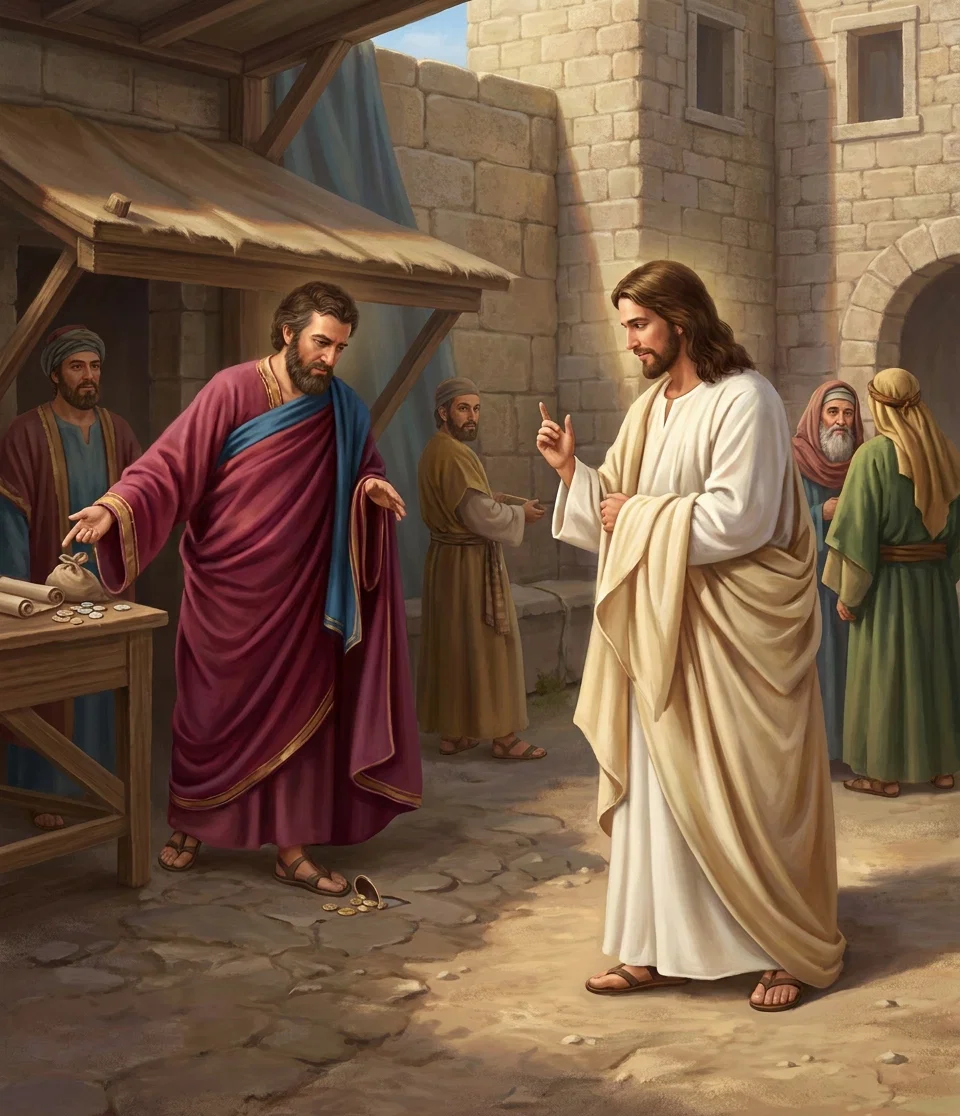 He heard “the words addressed to himself, ‘Follow Me.’” Page 273.
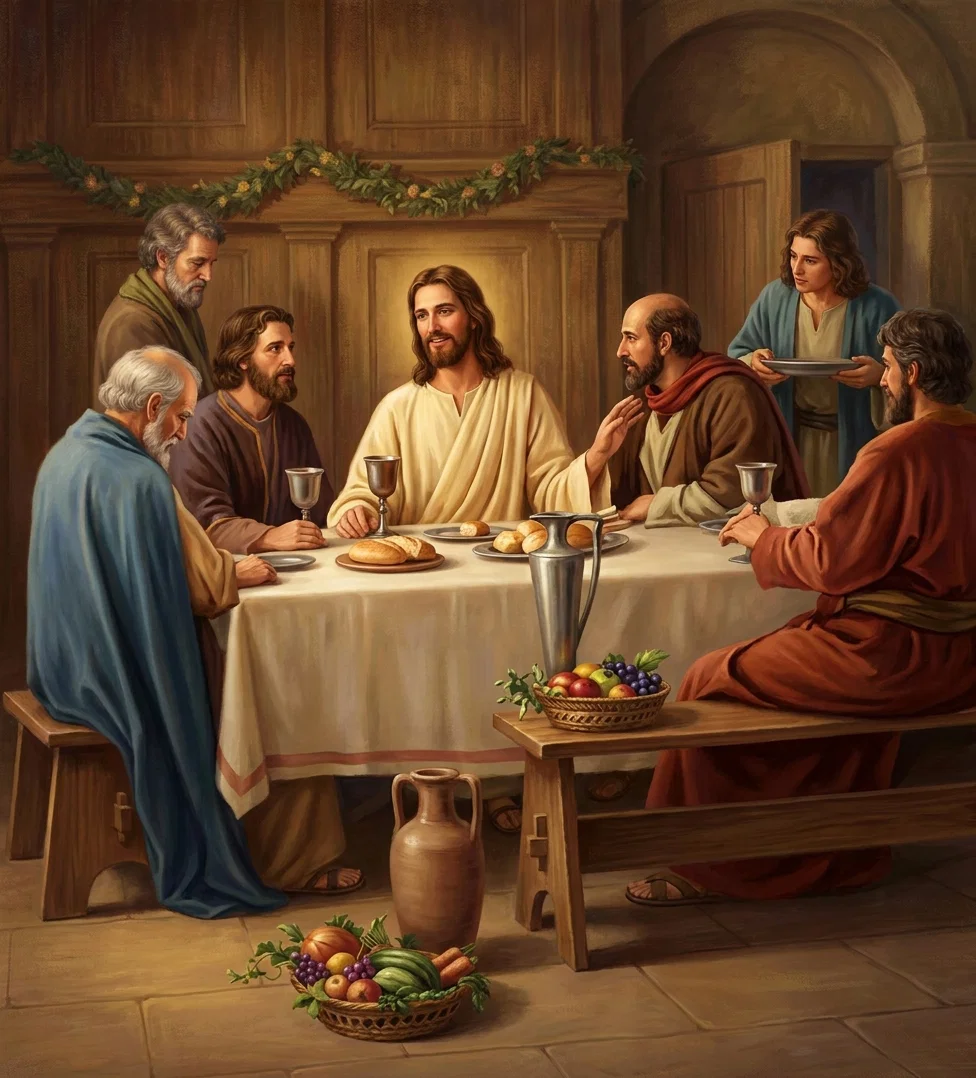 “Upon their thirsty hearts His words fell
with blessed, life-giving power.”
 THE SABBATH
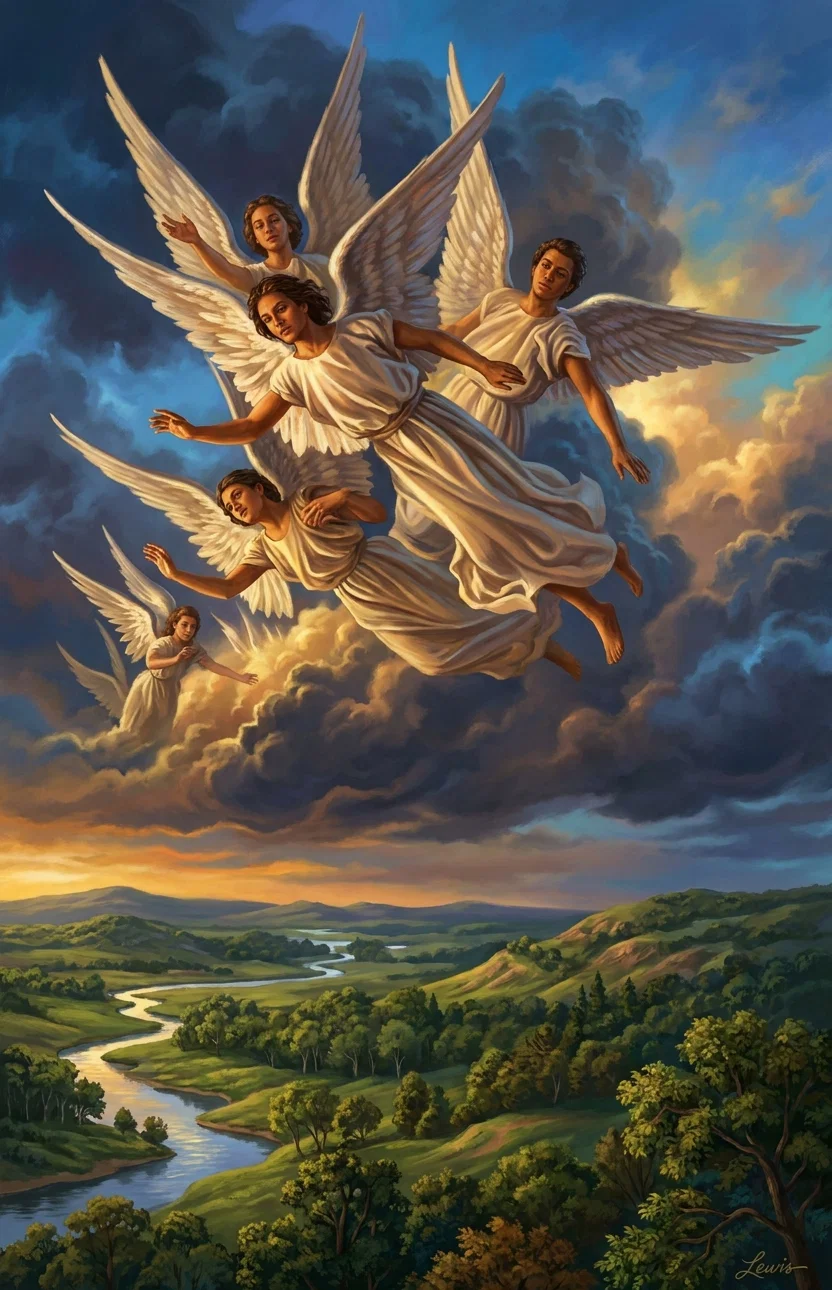 “Lift up your eyes on high, and behold who hath created these things.”
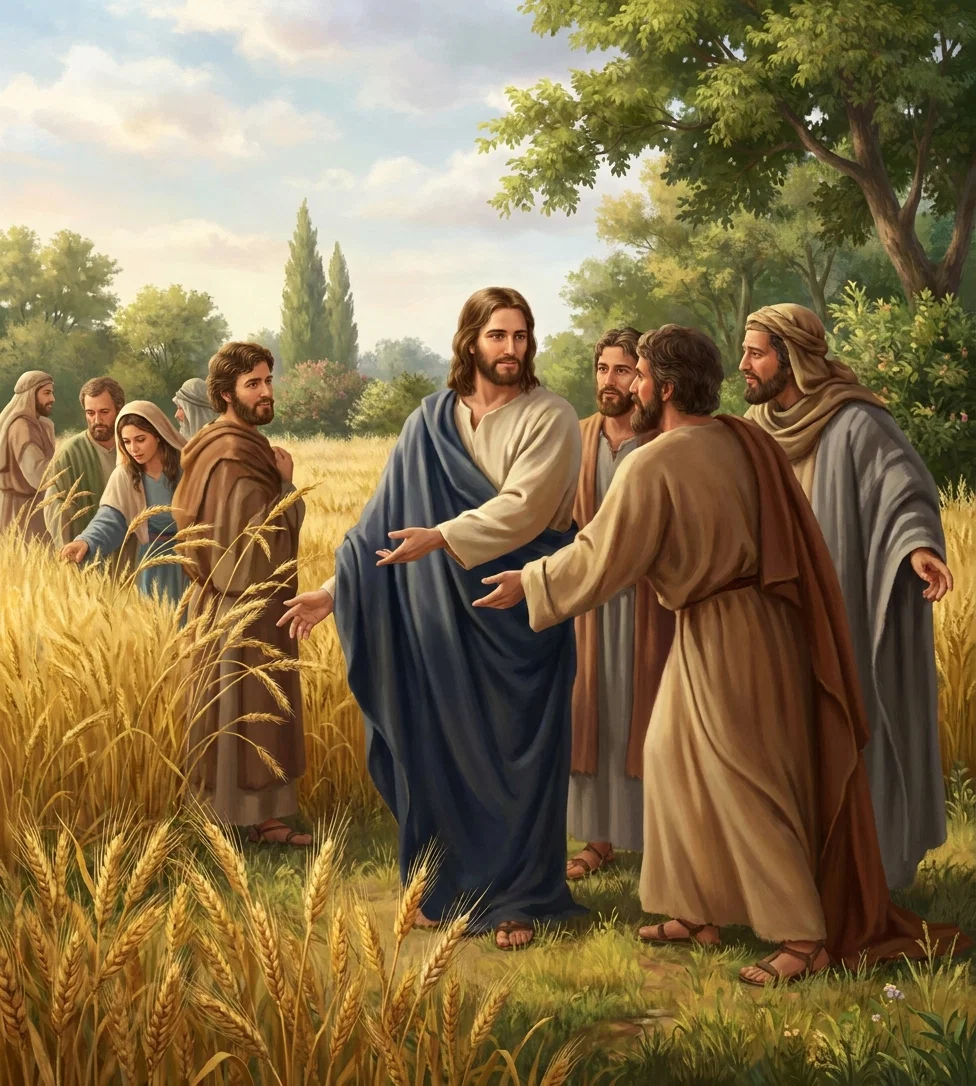 “Returning from the place of worship, they passed through a field of ripening grain.”
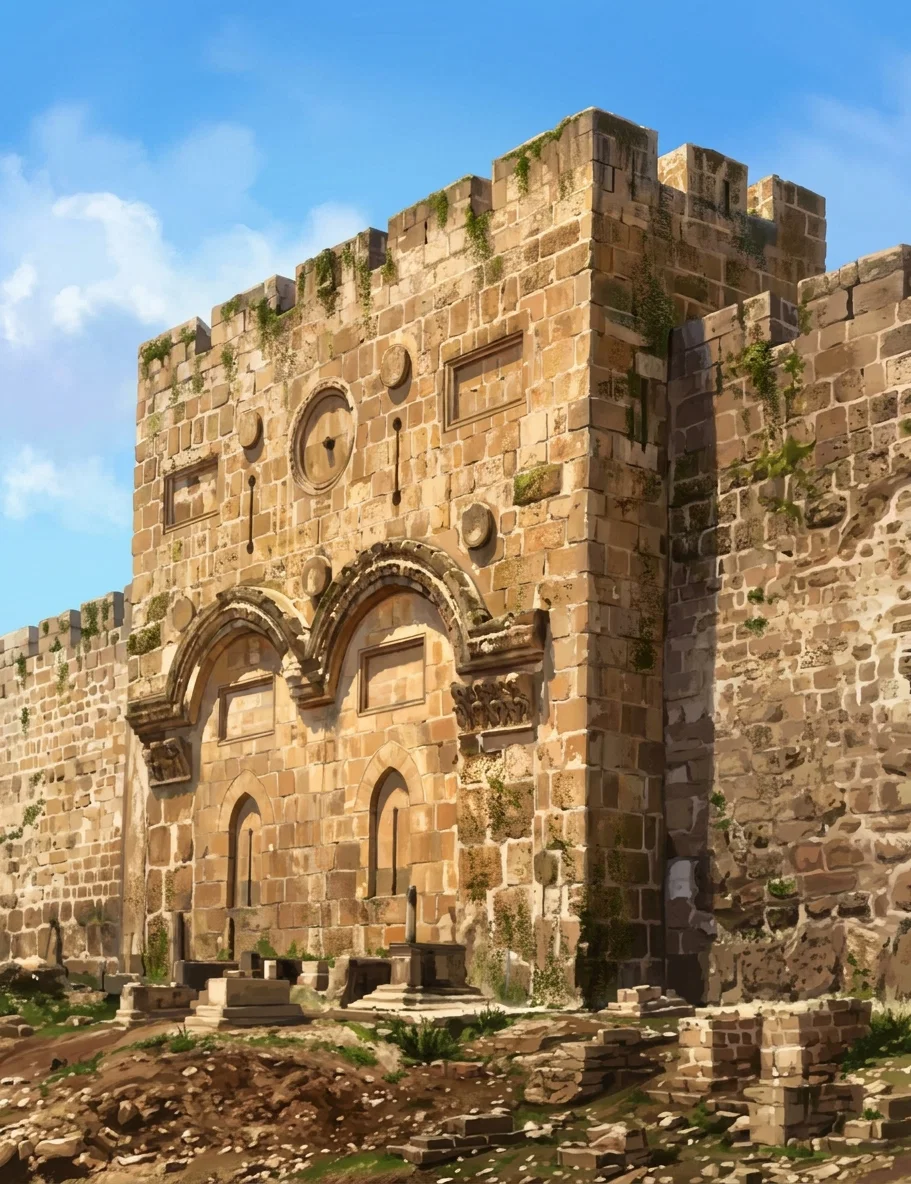 A monumental ancient stone fortress or city gate is shown from a low, slightly angled viewpoint. The broad masonry structure has tall crenellated battlements, thick projecting towers, and walls built from dark, uneven rectangular blocks. On the central facade are several tall, narrow arched openings, some recessed or blocked, beneath larger decorative arches and a circular or oval stone feature. Rubble and broken masonry cover the barren ground in front, with no people, animals, signs, or visible lettering.
 HE ORDAINED TWELVE.
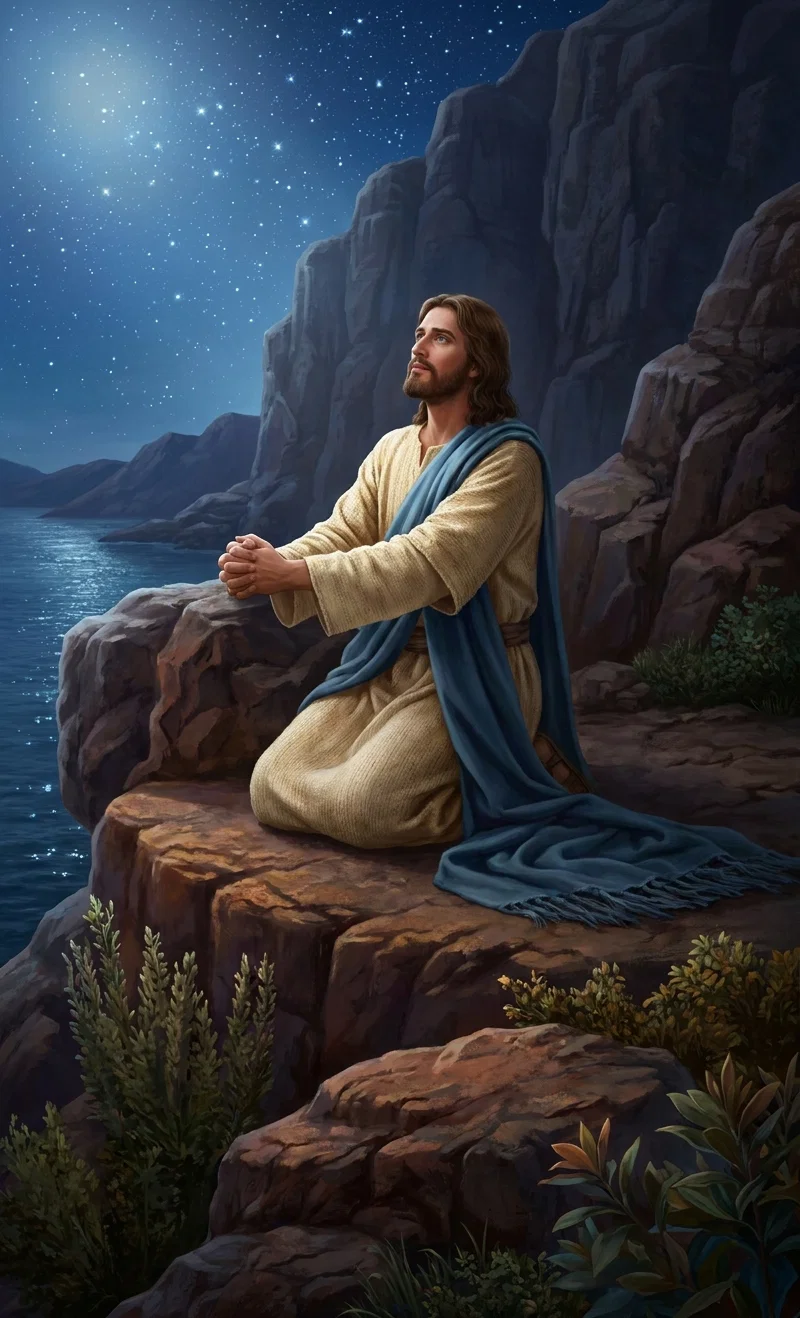 “Alone upon a mountain near the Sea of Galilee He spent the entire night in prayer for His disciples.”
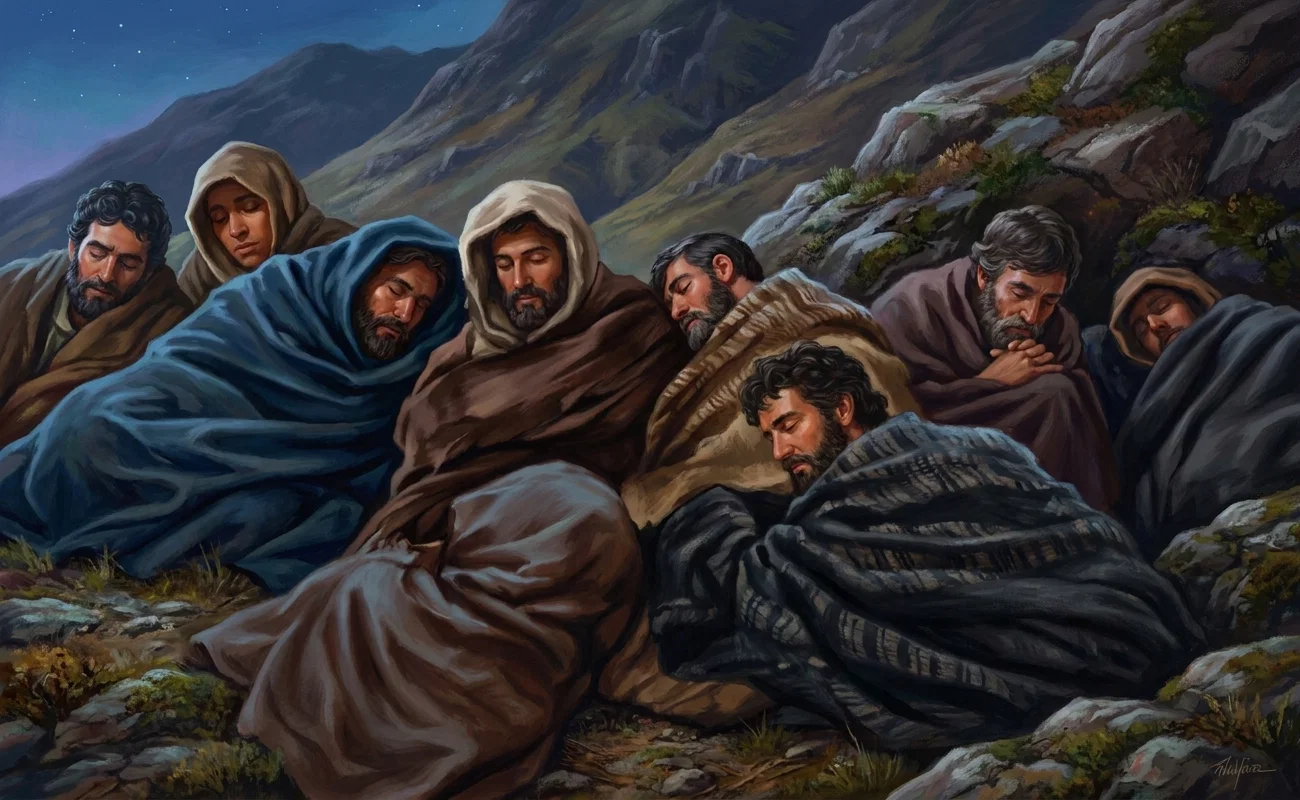 “While they were sleeping at the foot of the mountain.” Page 291.
 A small, rugged coastal or island landscape is shown in a horizontal pen-and-ink sketch. At the center stands a squat, weathered stone tower or ruined blockhouse, with a few dark openings and uneven masonry. Dense clumps of shrubs and grasses surround it, while low stone walls or rocky embankments extend across the middle ground. The foreground appears to be shallow water, shoreline, or exposed rocky terrain, rendered with scattered stones and rippling horizontal lines. Low hills or distant landforms rise faintly on the right, and no people or animals are visible.
 THE SERMON ON THE MOUNT
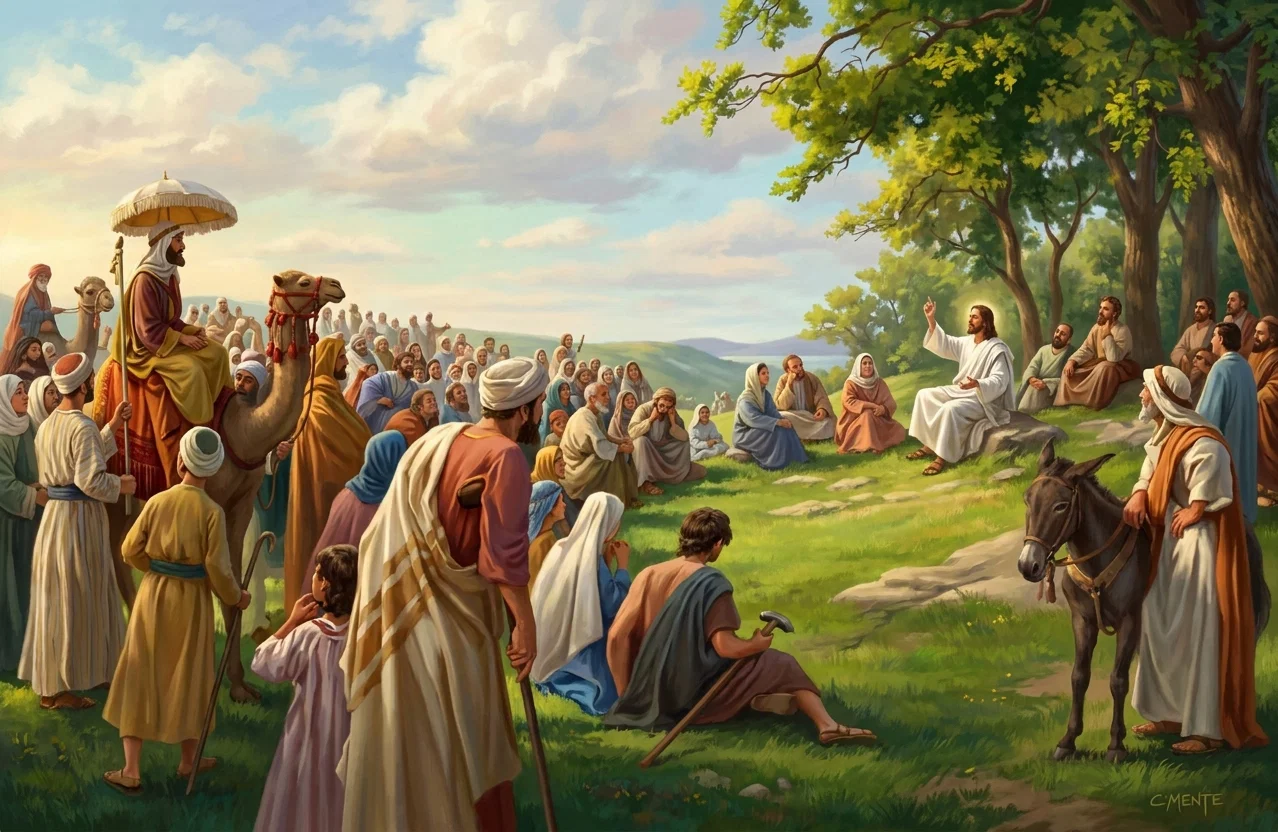 THE SERMON ON THE MOUNT.
The people sat on the green hillside, awaiting the words of the Divine Teacher.
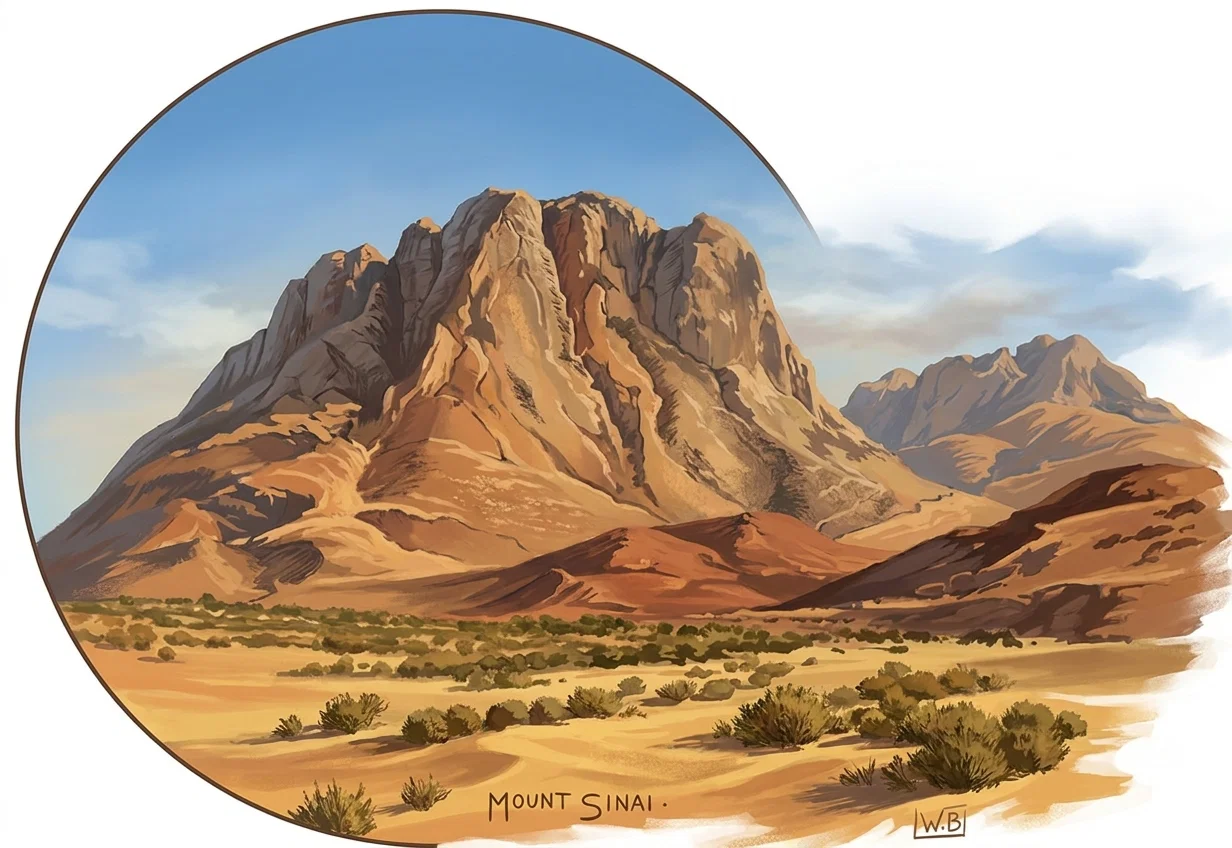 “The law was proclaimed from Sinai.”
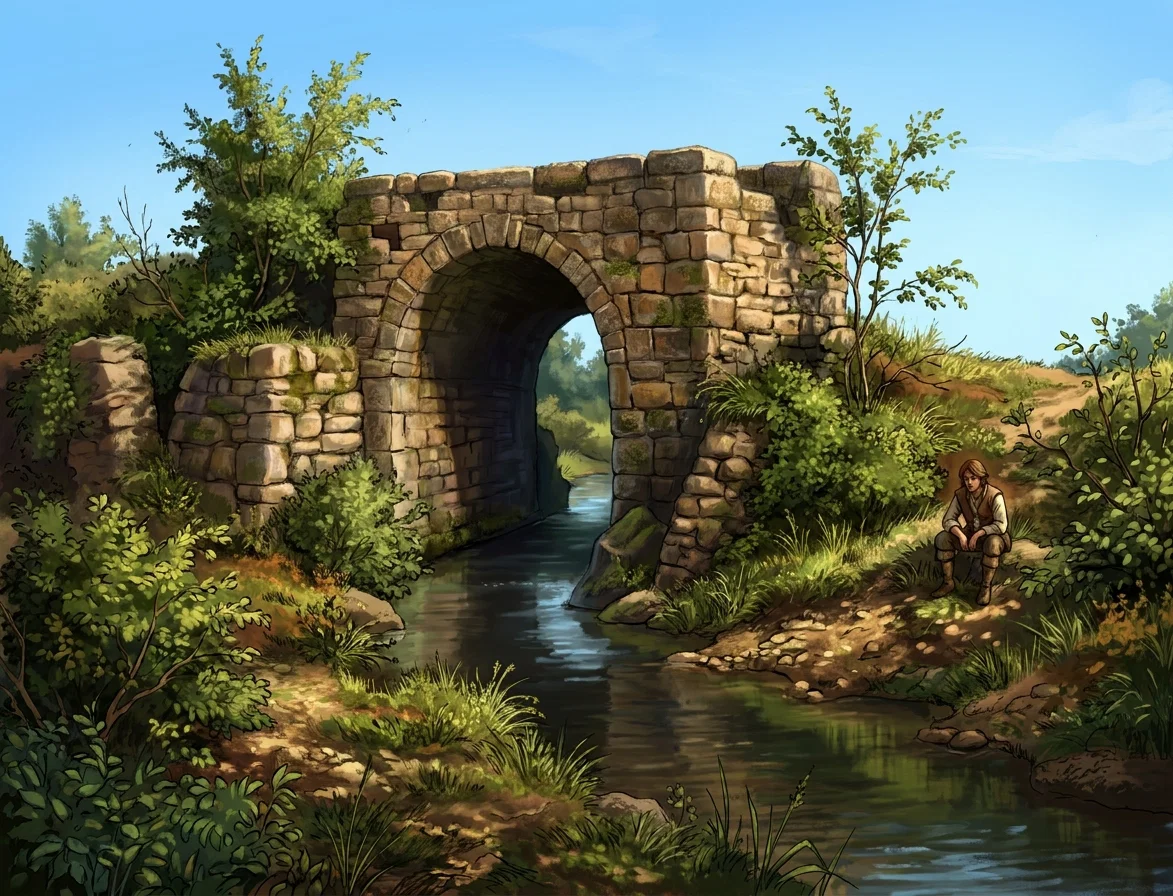 A rustic stone arch or culvert stands in a grassy, rural landscape, with a dark, rough wooden door or barrier filling its arched opening. The masonry structure is partly overgrown, and bushes and tall grasses surround it on both sides. In the foreground, a narrow stream or drainage channel winds across the ground, its rippling surface rendered with horizontal strokes and bordered by tufts of vegetation. The composition focuses on the shadowed archway, with an open field and scattered foliage extending behind it; no people, animals, signs, or lettering are visible.
 **THE CENTURION**
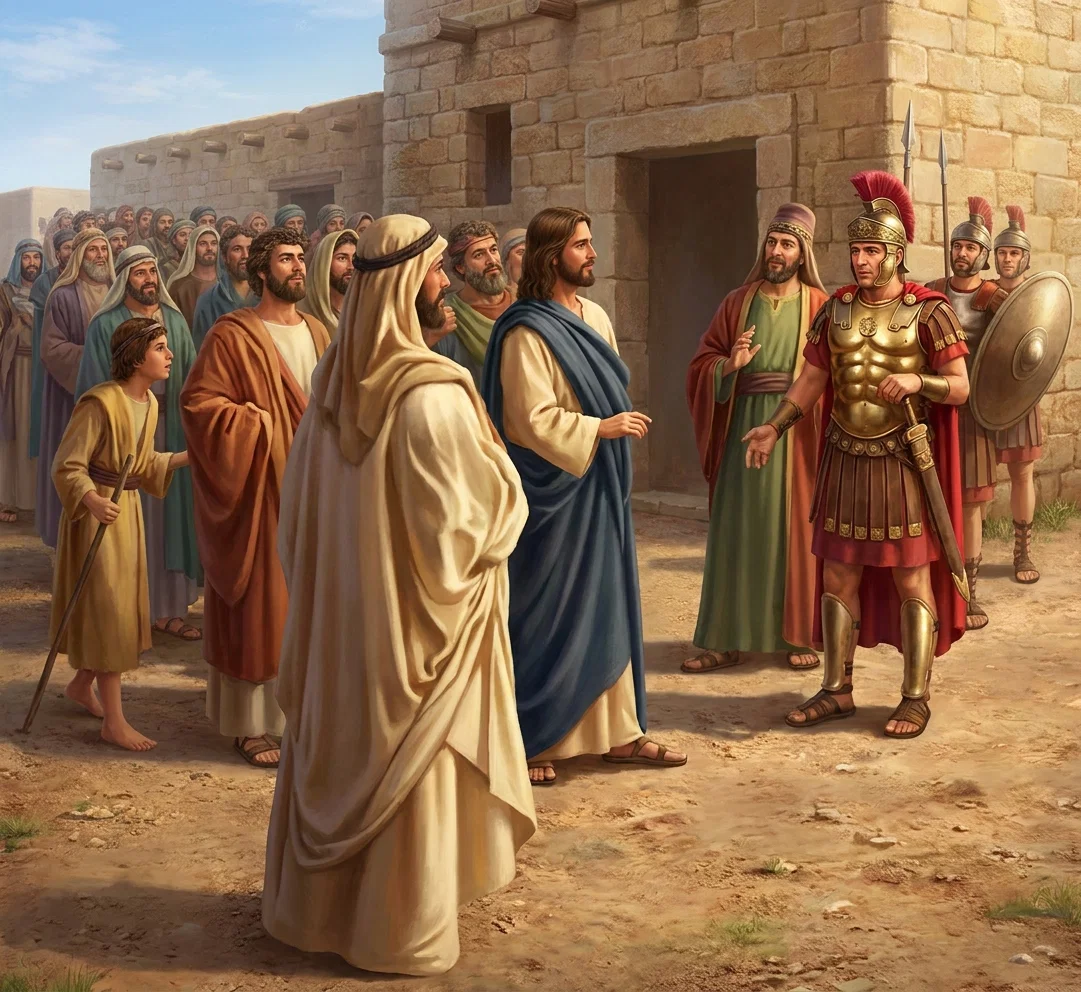 “Speak the word only,
and my servant shall
be healed.”
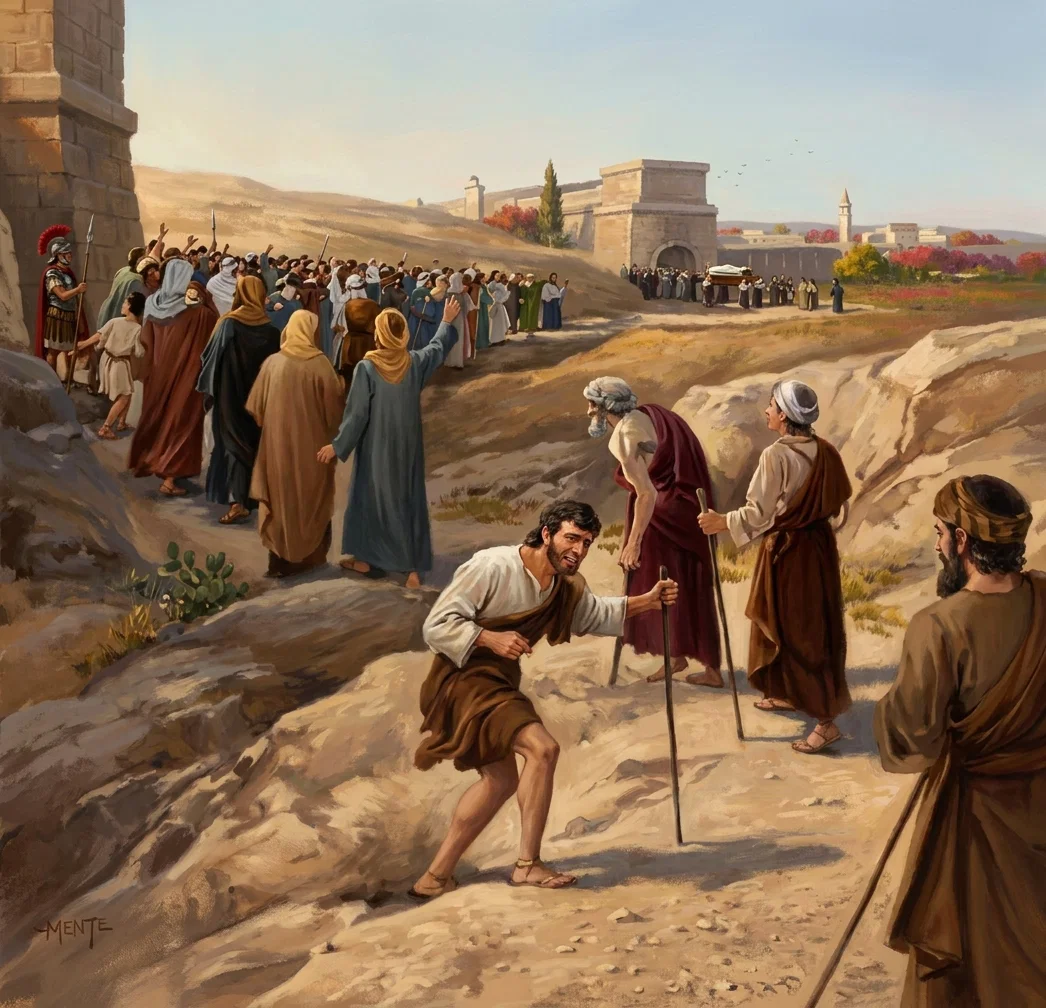 “As they draw near, a funeral train is seen coming from the gates.”
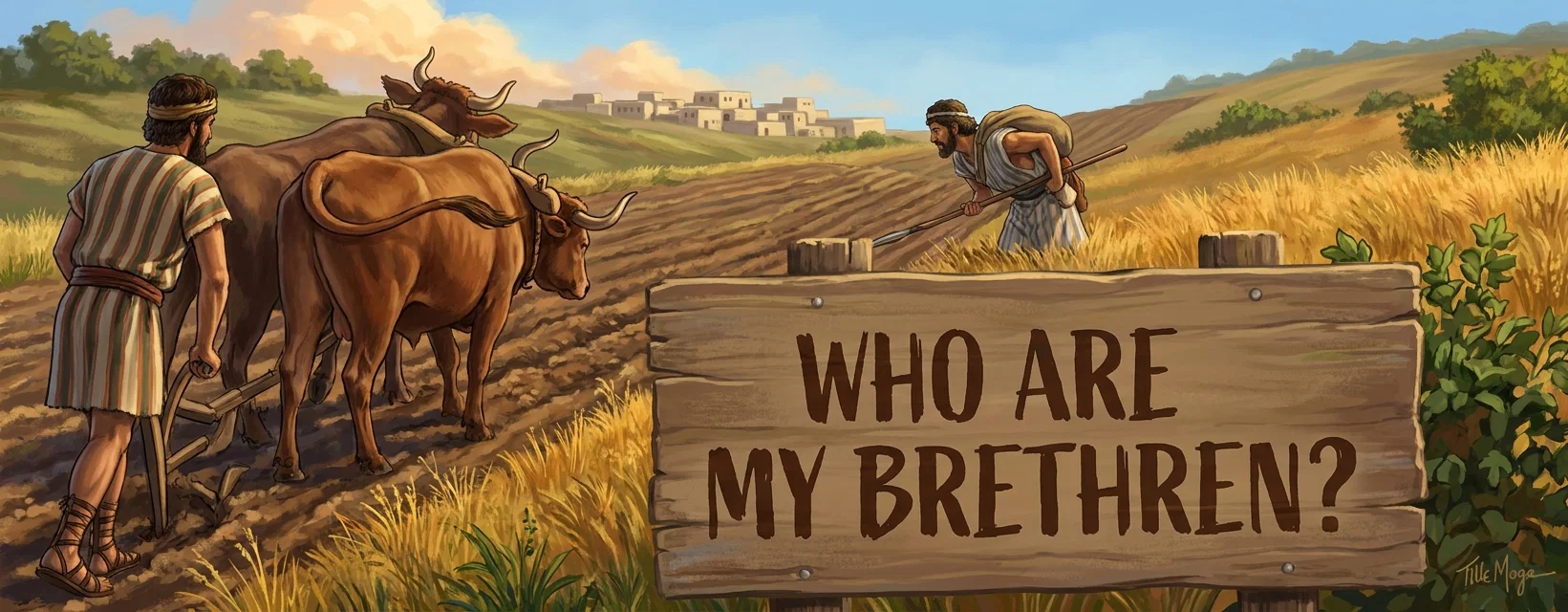 WHO ARE MY BRETHREN?
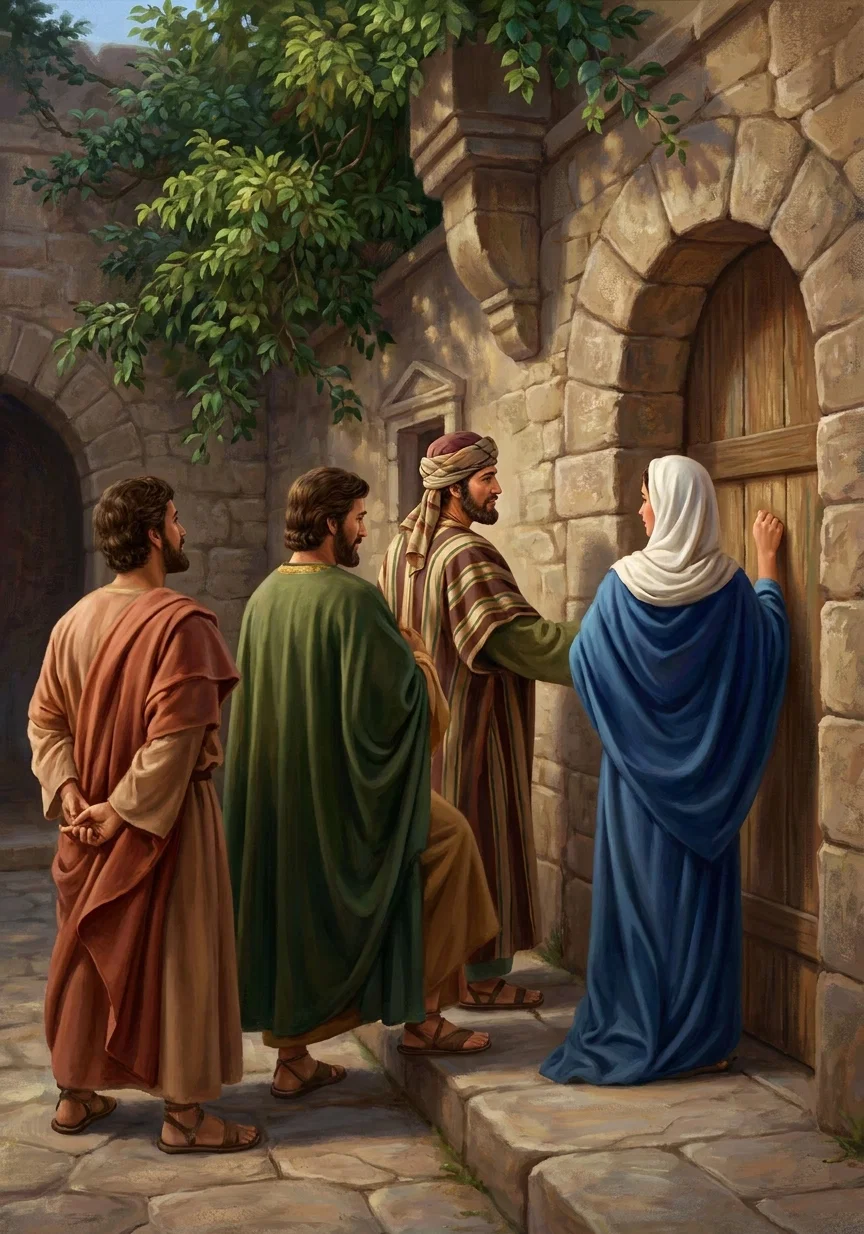 “His mother and His brothers were without, and desired to see Him.”
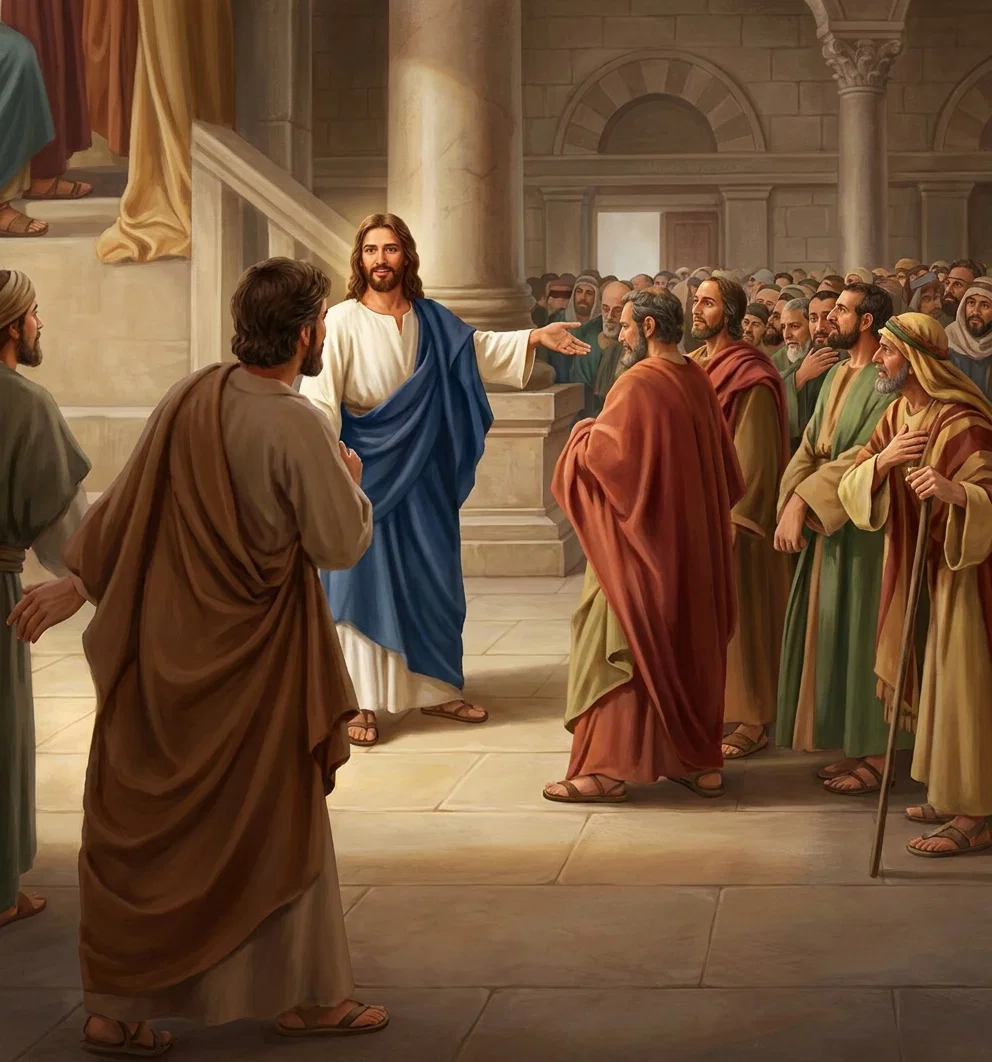 “Behold My mother and My brethren.”
 A narrow panoramic landscape shows a quiet riverside or wetland scene. In the distance, a low tree-lined shore stretches across the image, with a small cluster of buildings near the center, including a prominent rectangular house, smaller rooftops, a pointed churchlike spire, and a taller blocky structure farther right. The foreground is dominated by rough banks, grasses, and reeds, while several dark, curved strokes suggest rippling water or partially submerged vegetation. No people, animals, or lettering are visible.
 THE INVITATION
 A rural landscape is shown with a stone bridge spanning a gently flowing stream in the foreground, its dark semicircular arches reflected in the water. Beyond the bridge, a small stone church or chapel with a simple tower and pitched roof stands on a raised, wooded bank, accompanied by what appears to be a low wall or neighboring structure. Fields and scattered vegetation extend across the middle distance, while a broad, rounded mountain rises along the horizon beneath an open sky. No people, animals, or lettering are visible.
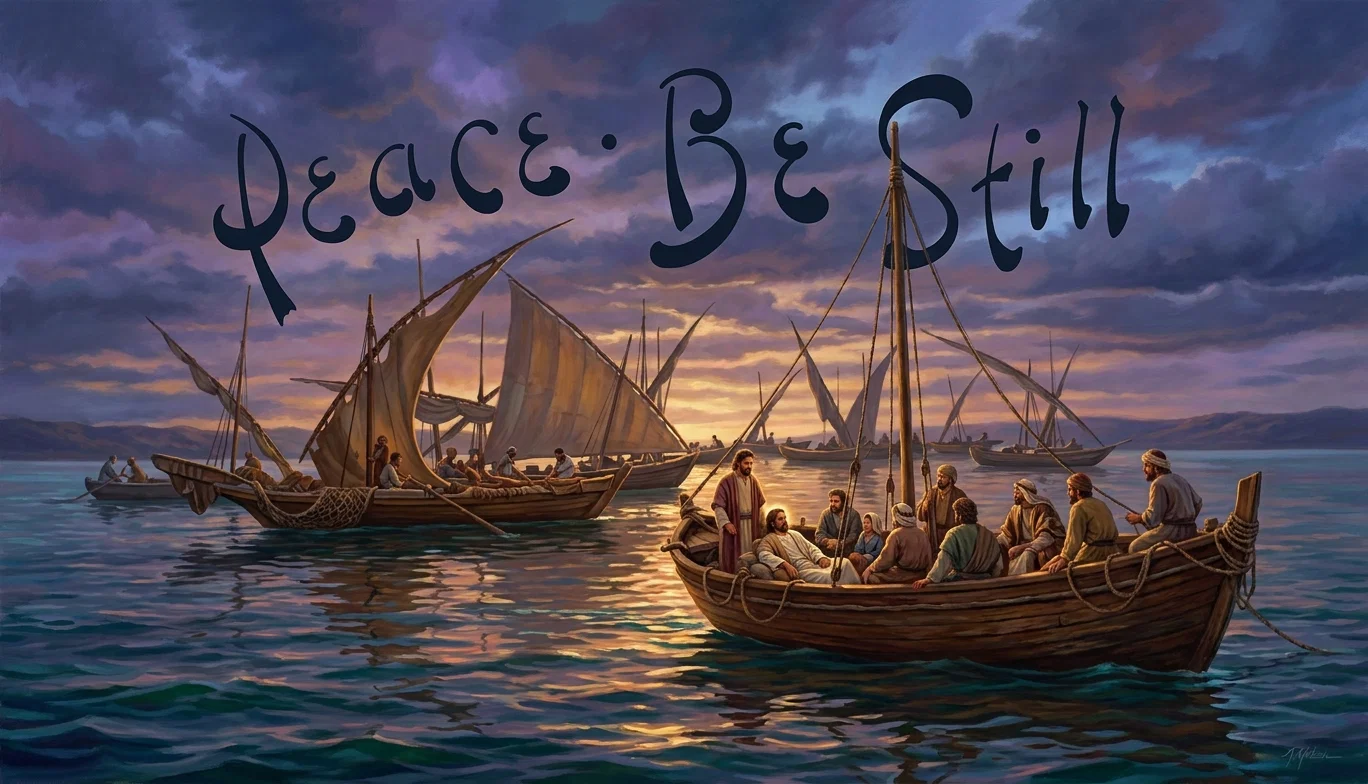 Peace · Be Still
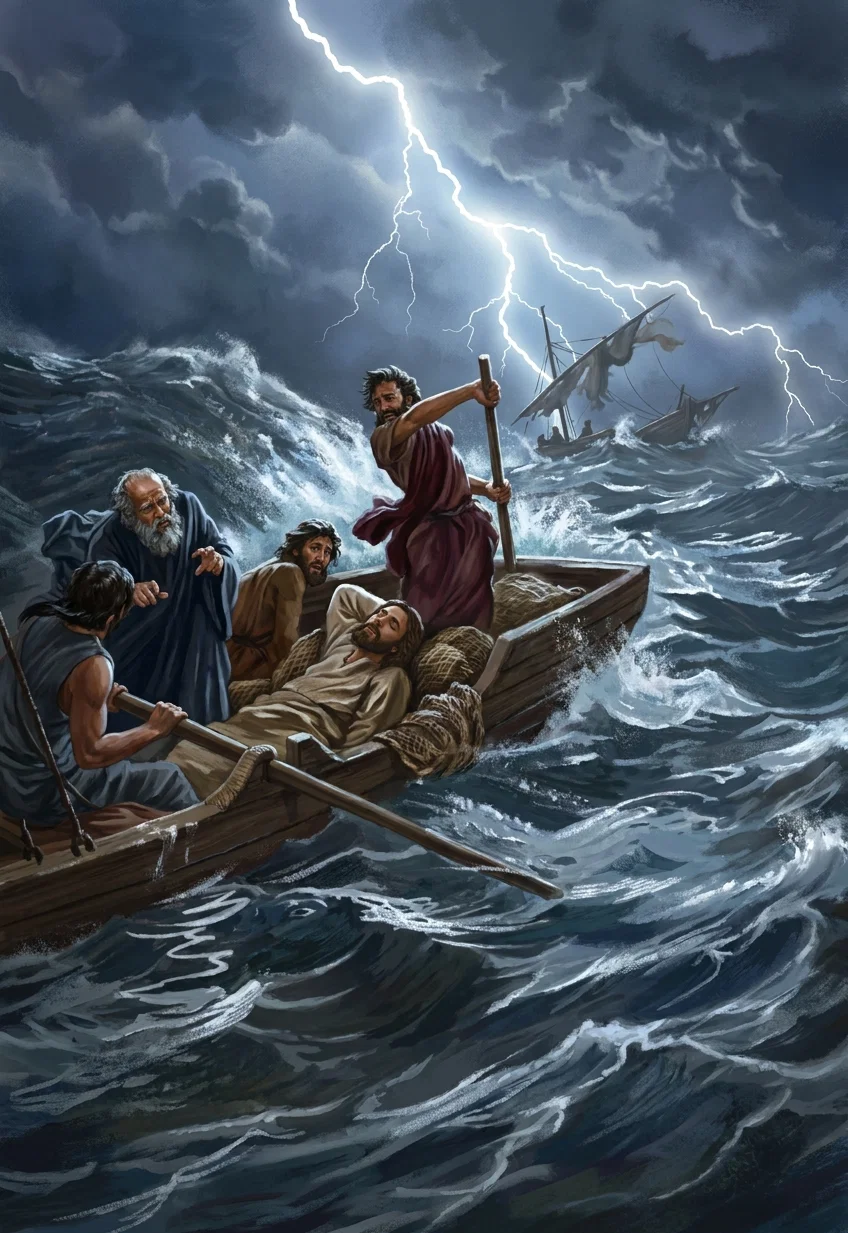 “A flash of lightning pierces the darkness, and they see Jesus lying asleep.”
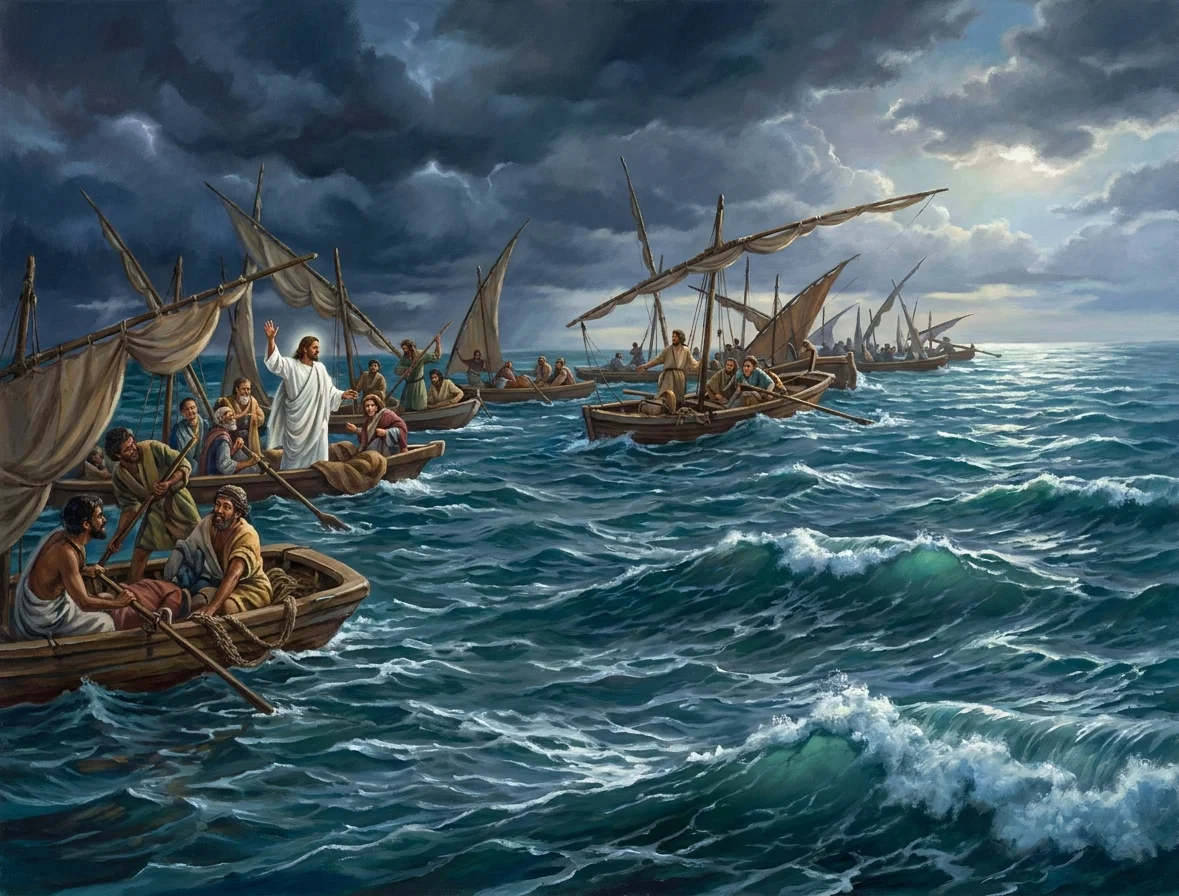 “The fury of the storm had driven the boats into close proximity, and all on board beheld the miracle.” Page 335.
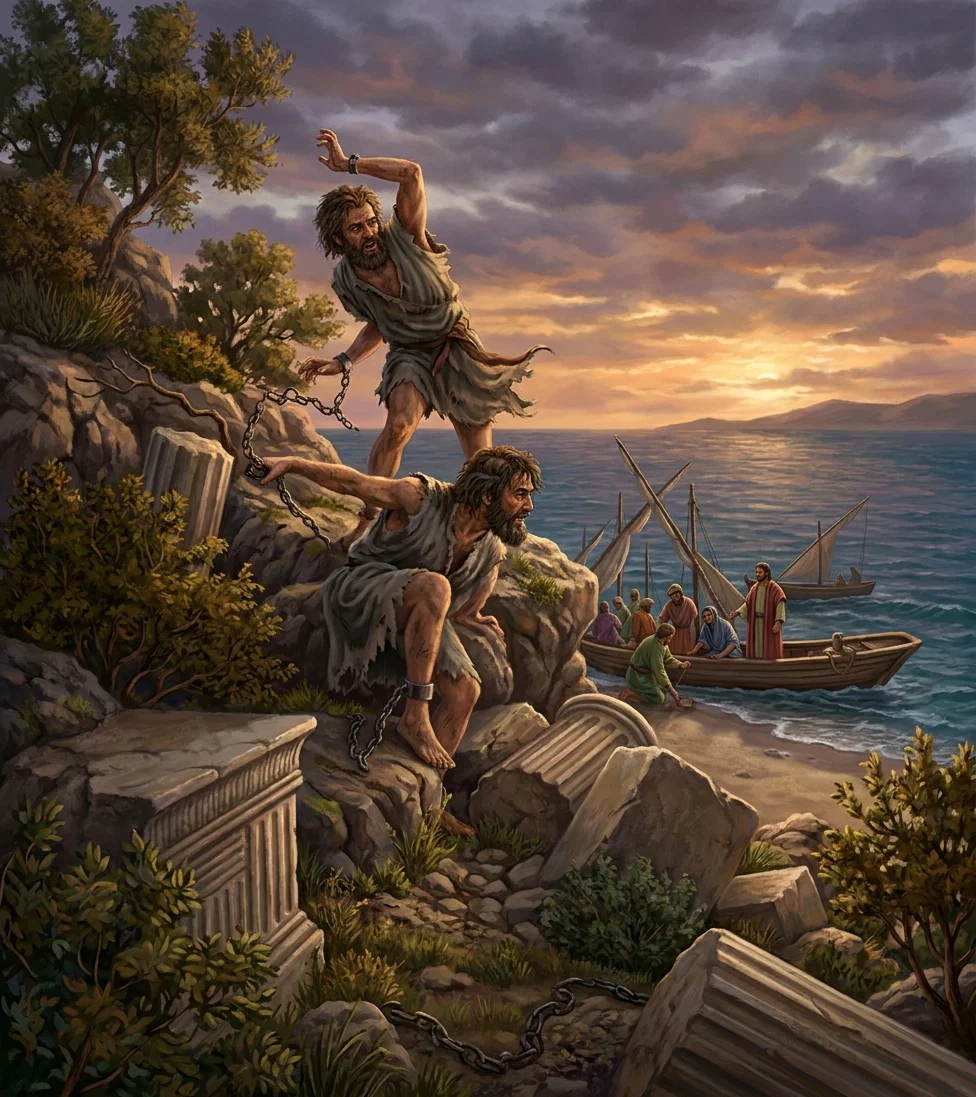 “Their eyes were greeted by a sight more terrible than the fury of the tempest.”
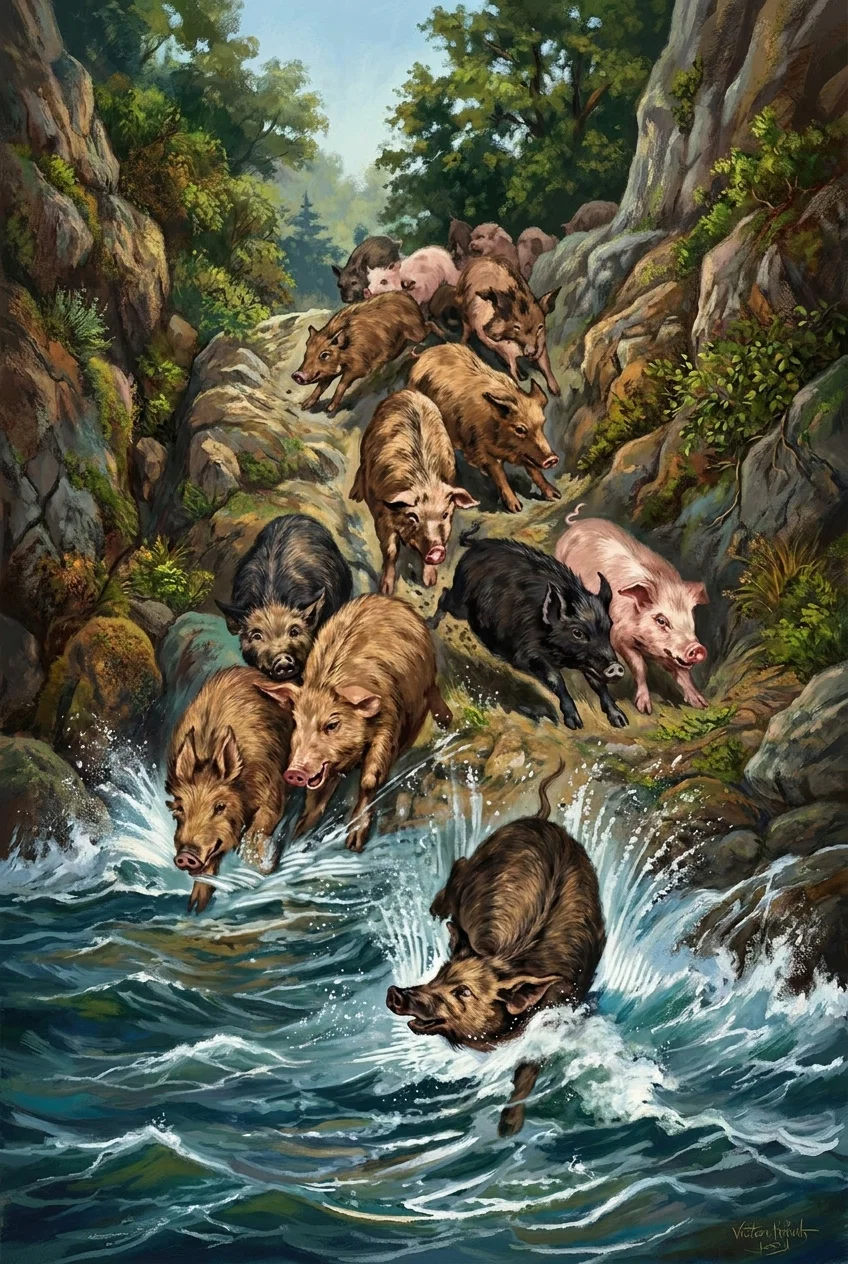 “They rushed madly down the cliff.”
 A quiet rural landscape is shown from a low viewpoint, with a rough stone wall or embankment crossing the foreground and dense shrubs and leafy vegetation on both sides. Beyond the greenery, a broad open path or shallow streambed leads toward several simple buildings on elevated ground, including long, barnlike structures and a smaller tower or roofed structure. The scene is rendered in fine black linework, with scattered stones and grasses in the foreground and large curling leaves framing the right edge. No people or animals are visible.
 THE TOUCH OF FAITH
CHAPTER THIRTY-SIX.
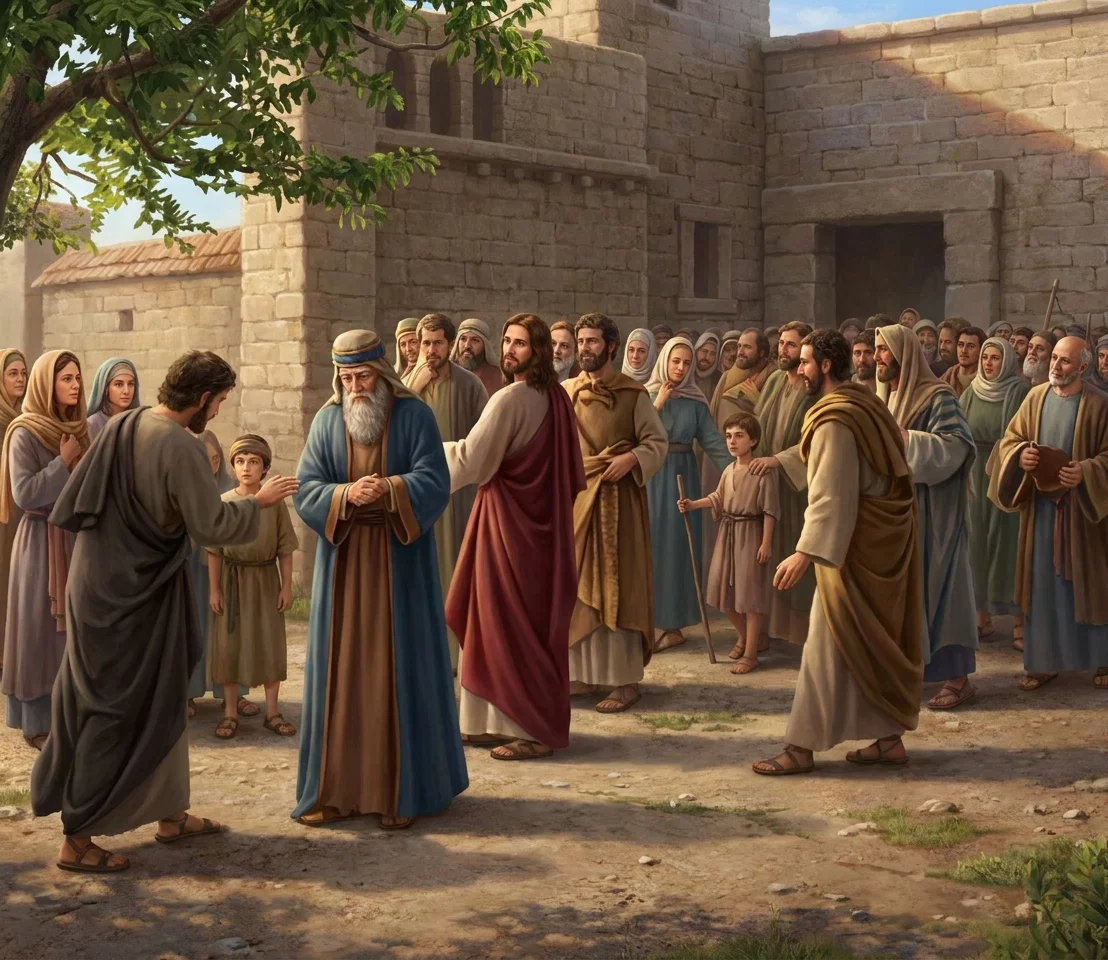 “A messenger pressed through the crowd, bearing to Jairus the news that his daughter was dead.”
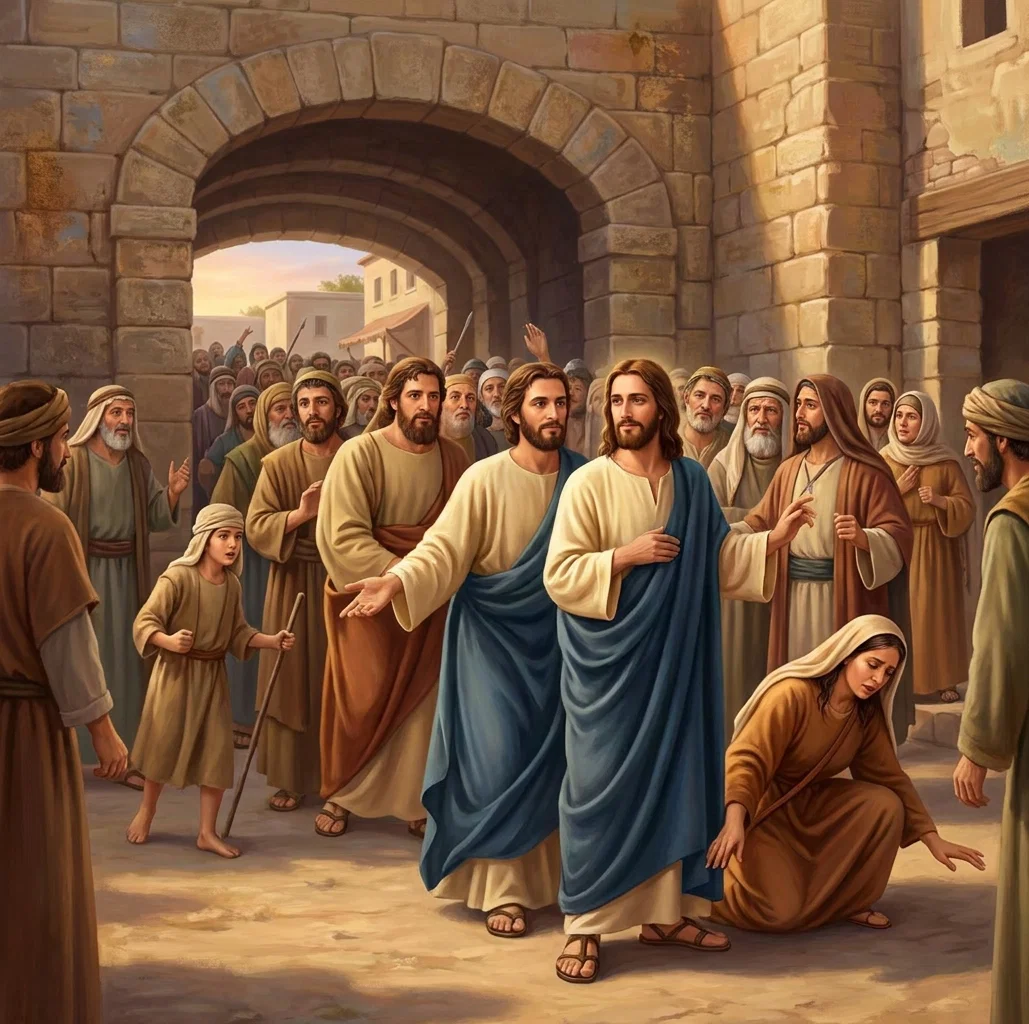 “If I may but touch His garment, I shall be whole.”
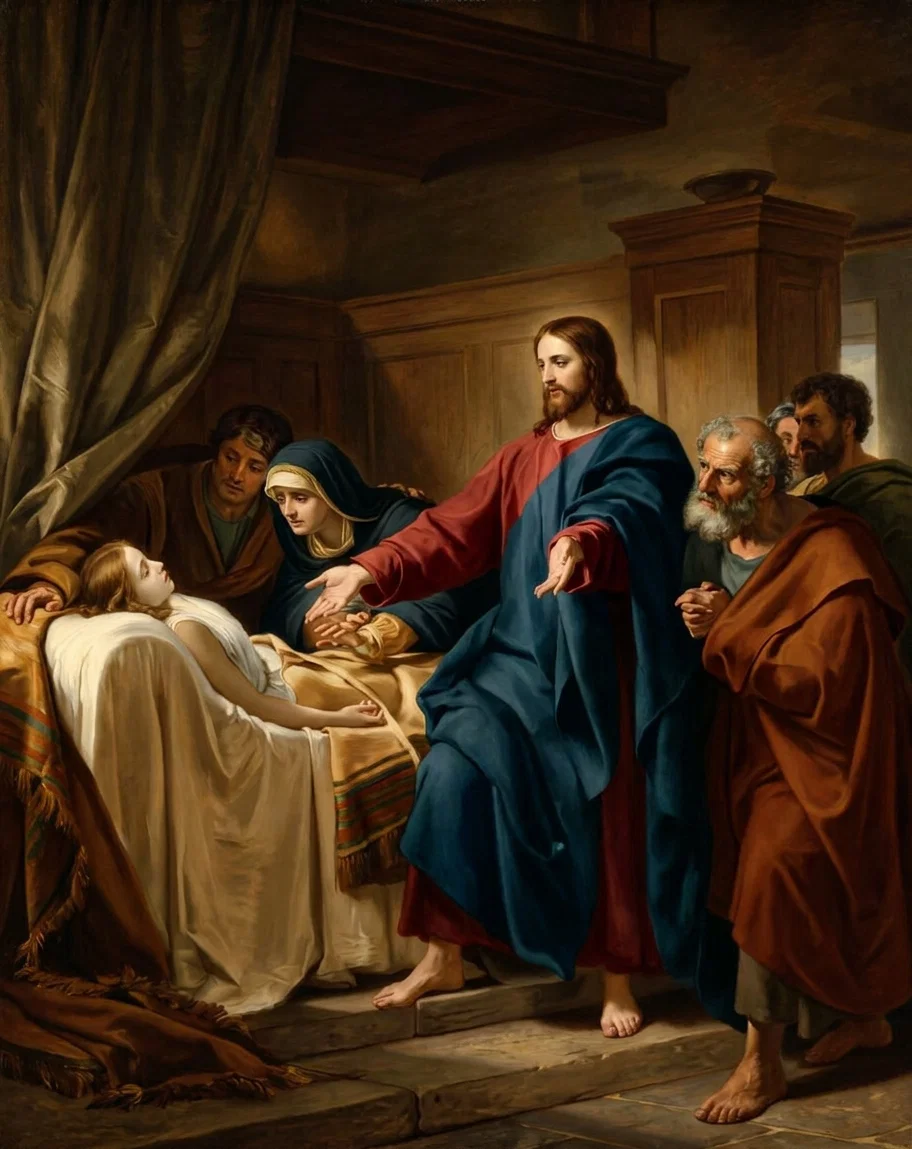 THE LIFE-GIVER.
“Damsel, I say unto thee, Arise.”
 A small fortified settlement is shown in a broad, lightly sketched landscape. Low stone buildings and enclosure walls occupy the center, with dark, textured roofs or tree-covered areas and several taller trees behind them. A more substantial square structure stands on the rise at the upper right. In the foreground, a long dense line of tiny figures appears to move or gather along a wall or roadway, while another cluster of people is visible near the buildings. Sparse vegetation and uneven ground extend around the compound, with no visible lettering.
 THE FIRST EVANGELISTS
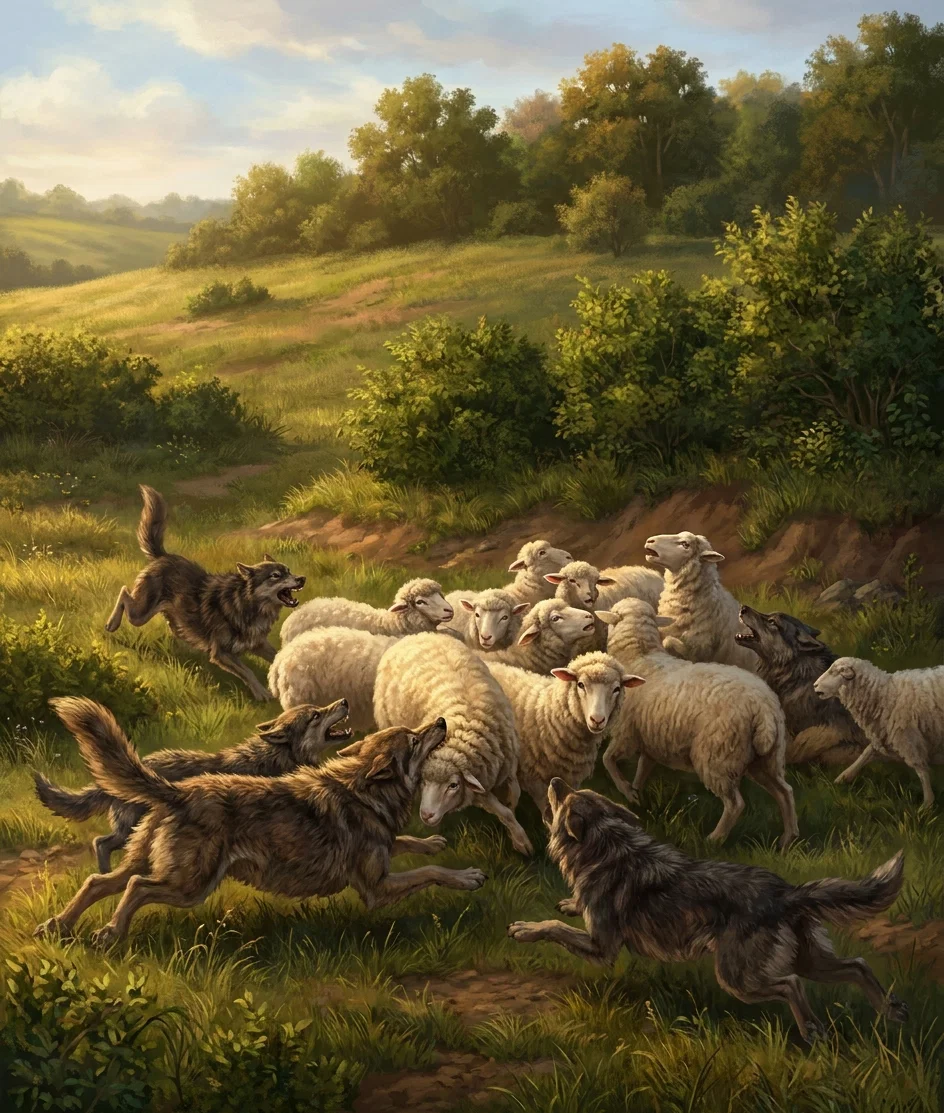 “I send you forth as sheep in the midst of wolves.”
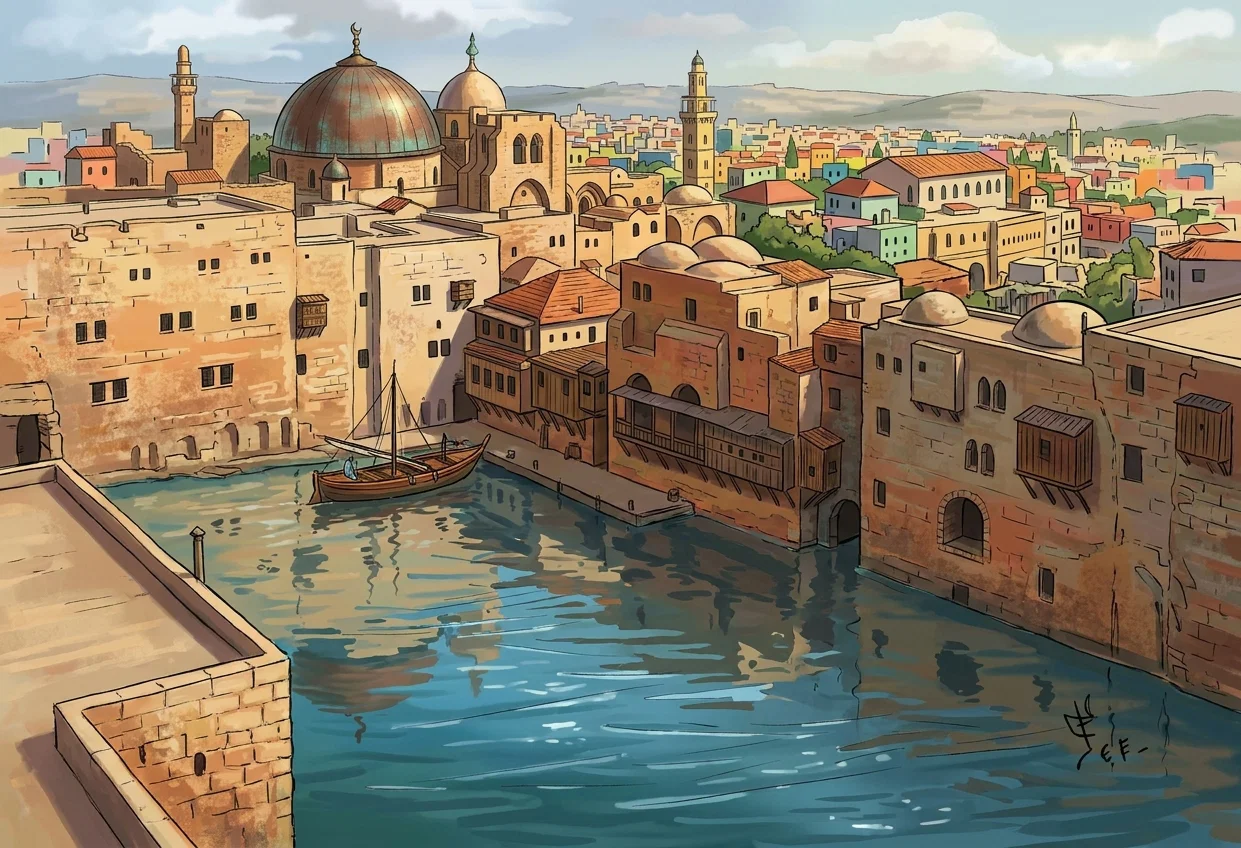 A broad panoramic view of a dense Middle Eastern city spreads across the image, with flat-roofed stone buildings, narrow streets, and several prominent religious structures. Near the upper left is a large dark ribbed dome, accompanied by smaller domes, arched façades, and tall slender minarets rising against a low, barren ridge. In the foreground, a high weathered stone wall and adjoining rooftops descend toward an open paved area, where a few tiny human figures are visible. Some faint Arabic-looking lettering appears along the lower-left wall or pavement.
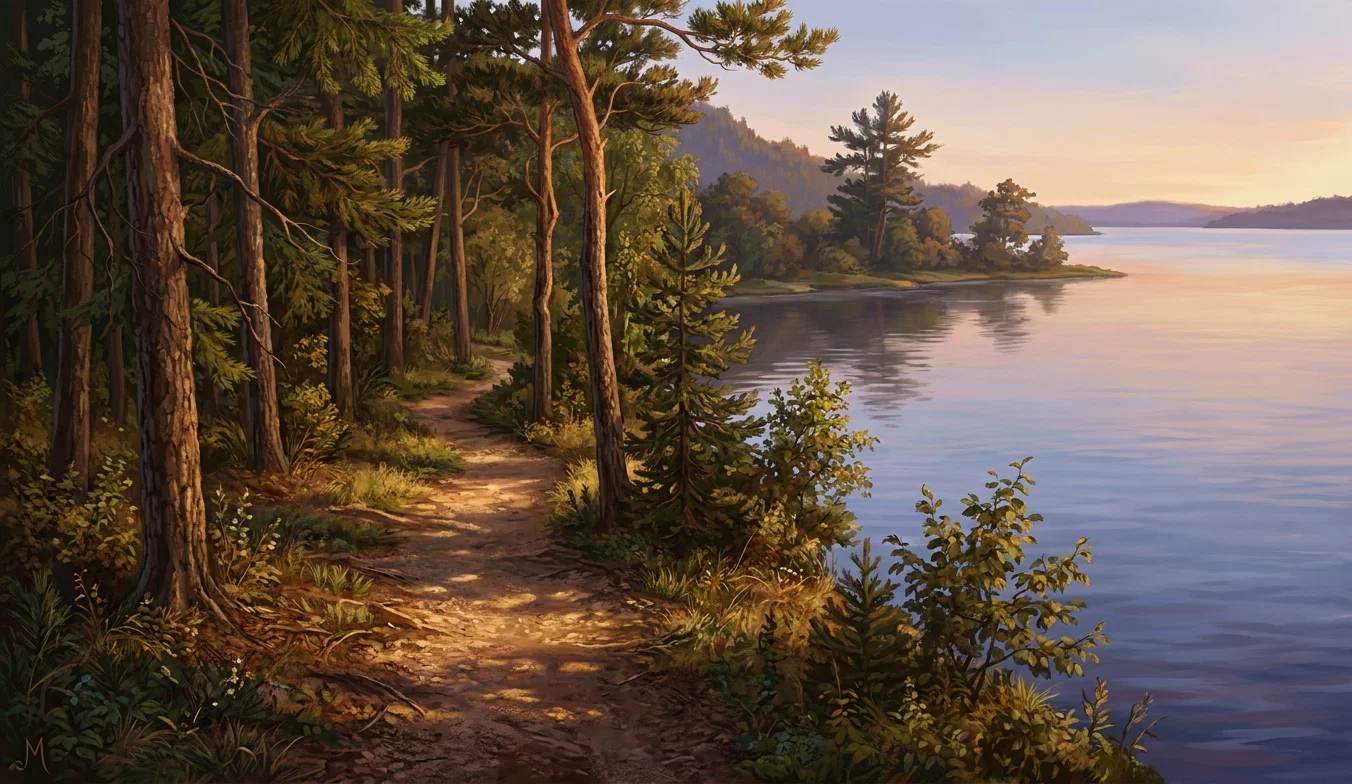 COME REST AWHILE.
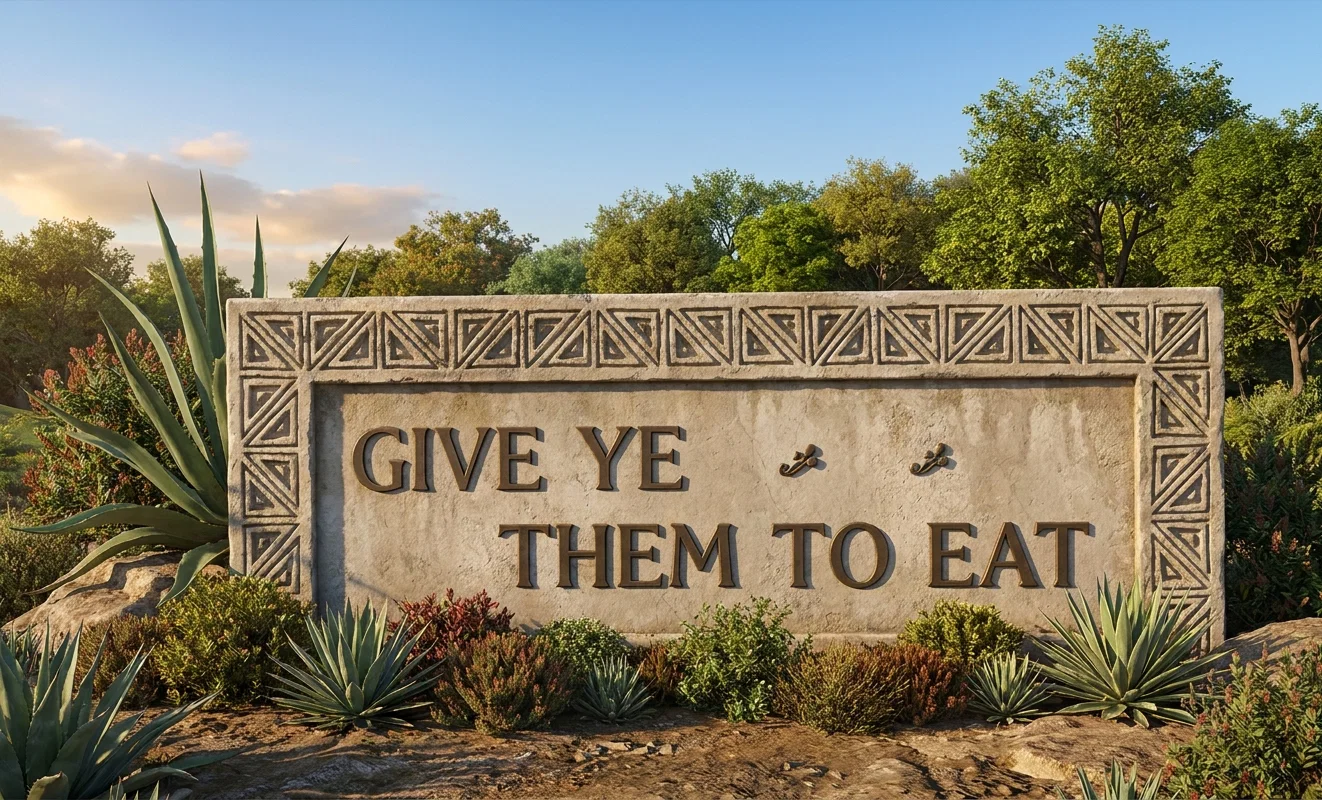 GIVE YE
THEM TO EAT
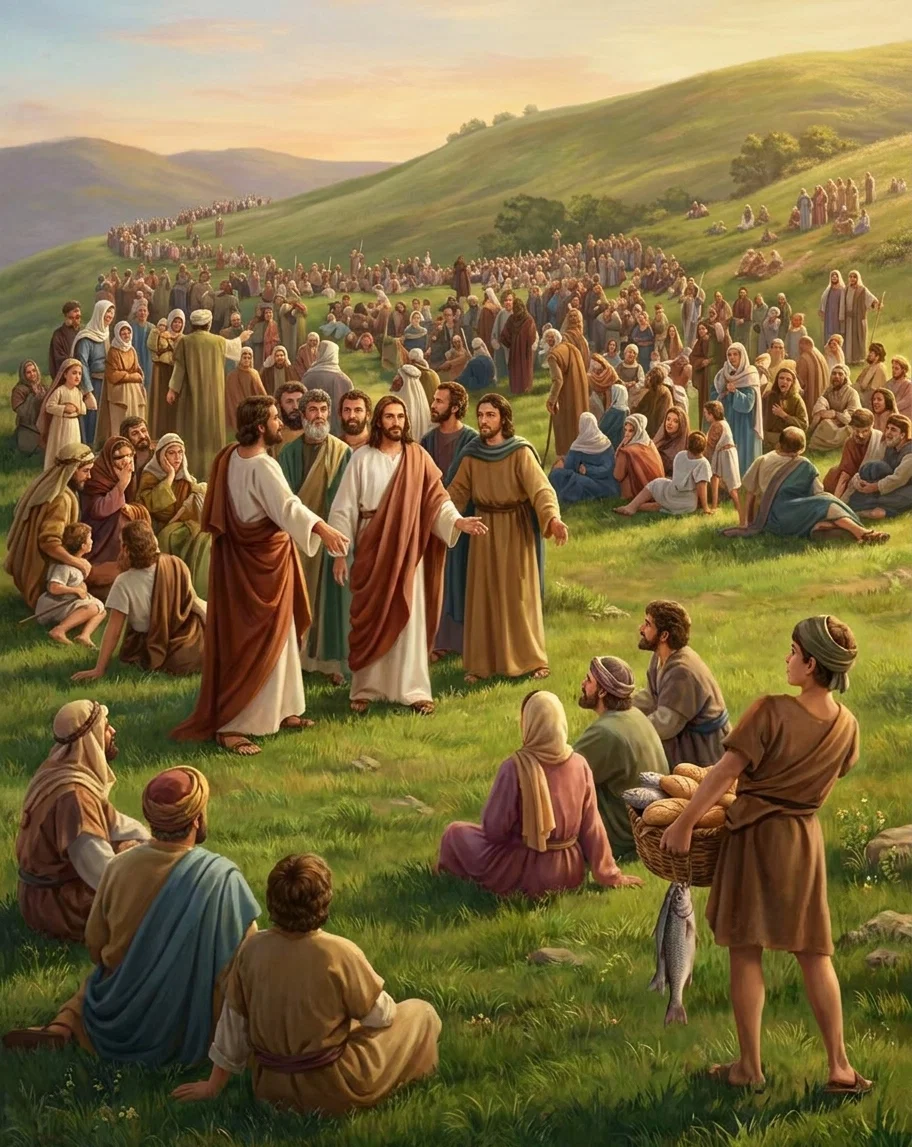 “There is a lad here, which hath five barley loaves and two small fishes.” Page 365.
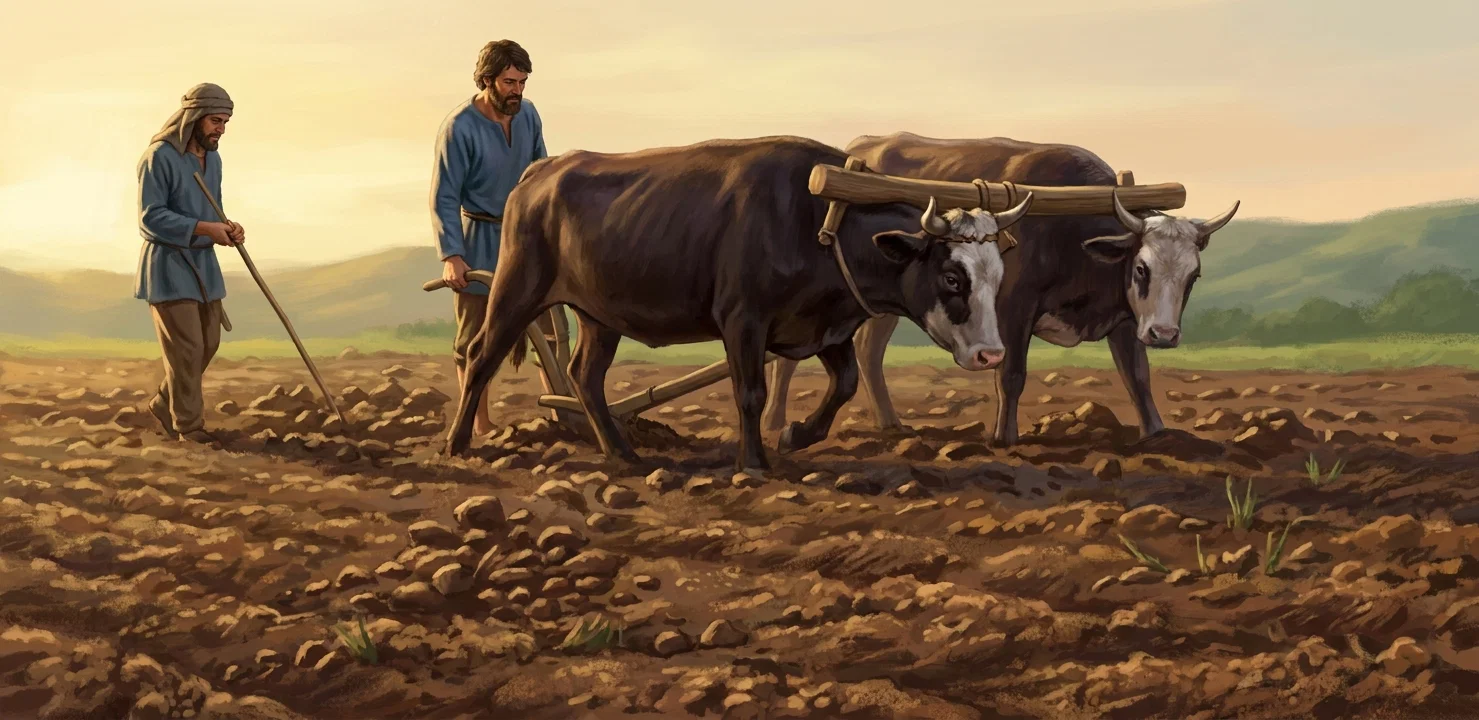 A rural scene shows several large oxen yoked together and moving from left to right across a rough, grassy field. Two agricultural workers accompany them: one stands at the left holding a long staff or plow handle, while another figure walks behind the animals near their backs. The oxen have prominent horns and heavy, textured bodies, with harnesses and a long horizontal yoke visible across their shoulders. Sparse vegetation, clumps of earth, and scattered plants cover the foreground and background.
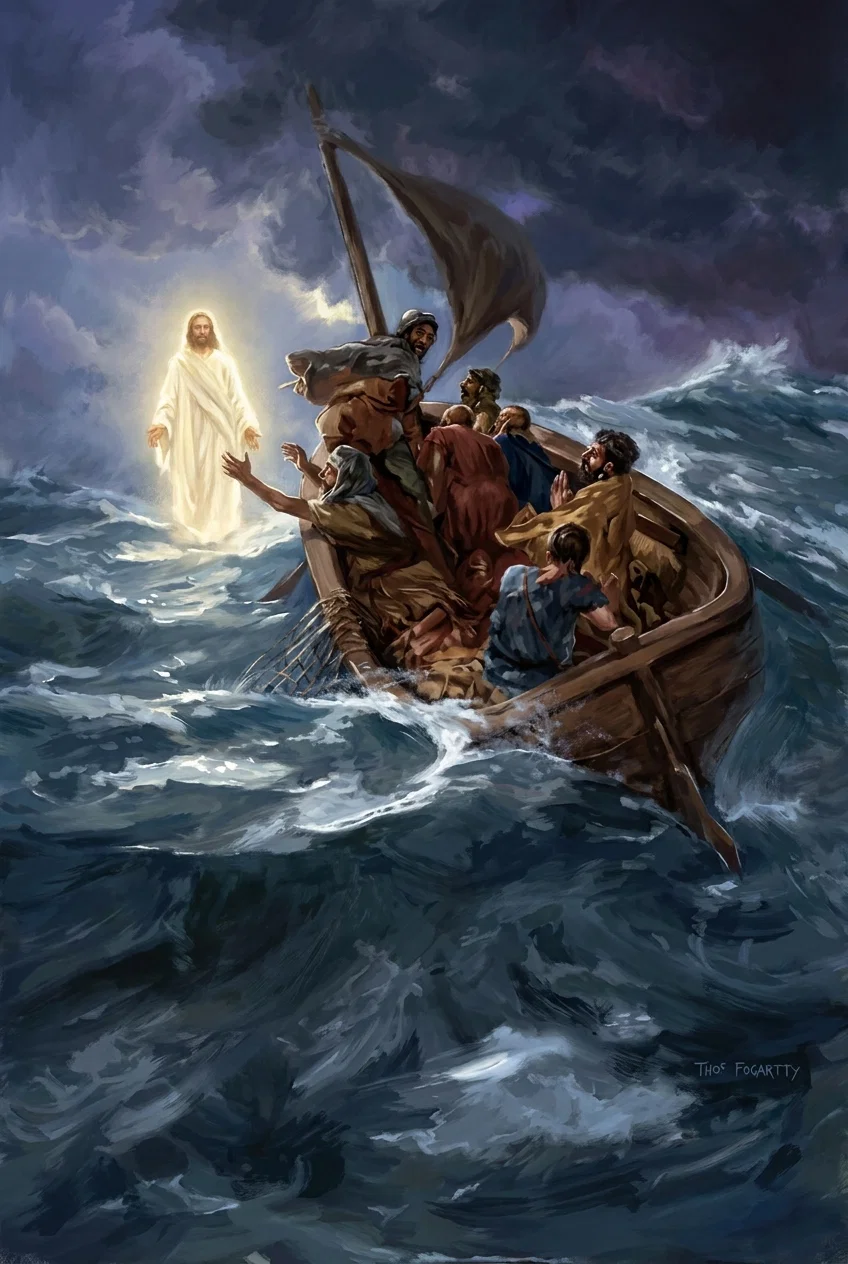 “IT IS I; BE NOT AFRAID.”
“All eyes are riveted on this vision of a man walking upon the white-capped billows.” Page 381.
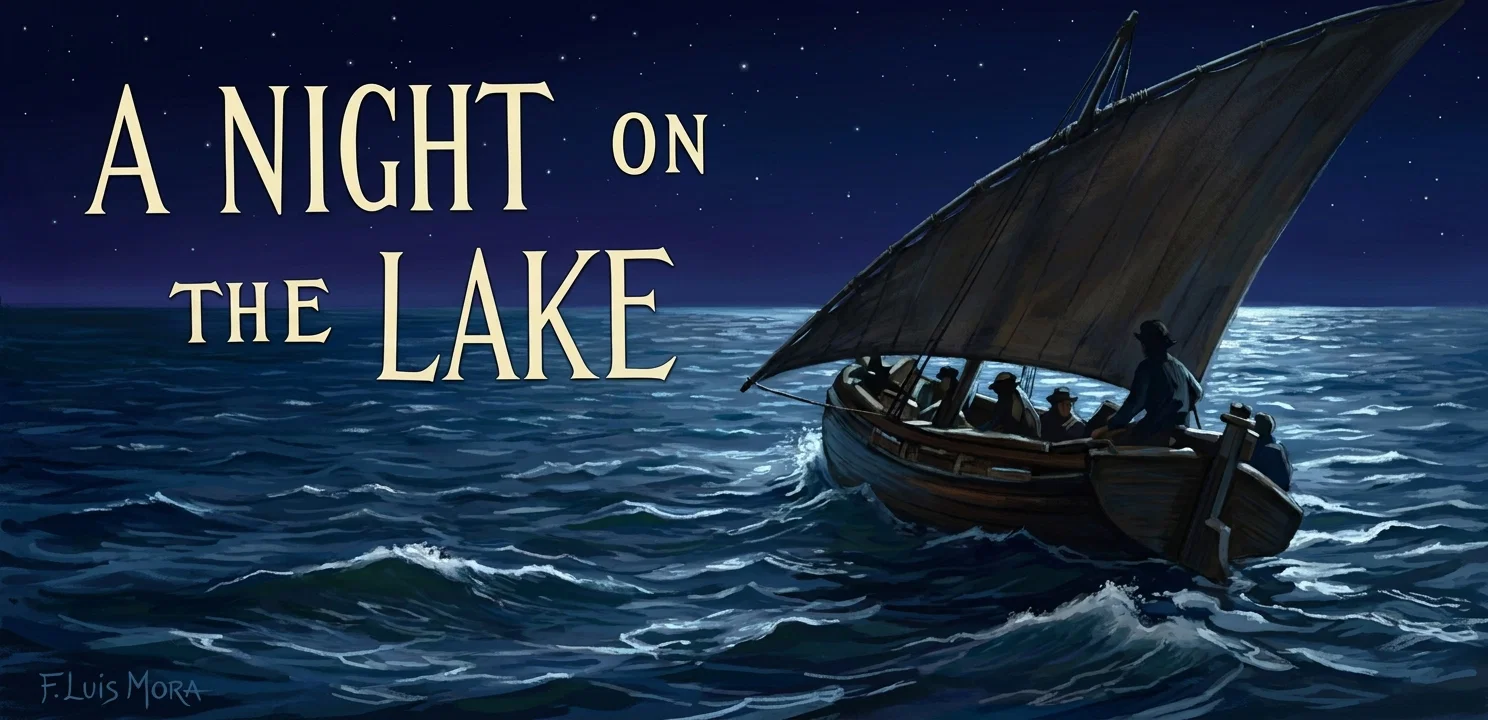 A NIGHT ON THE LAKE
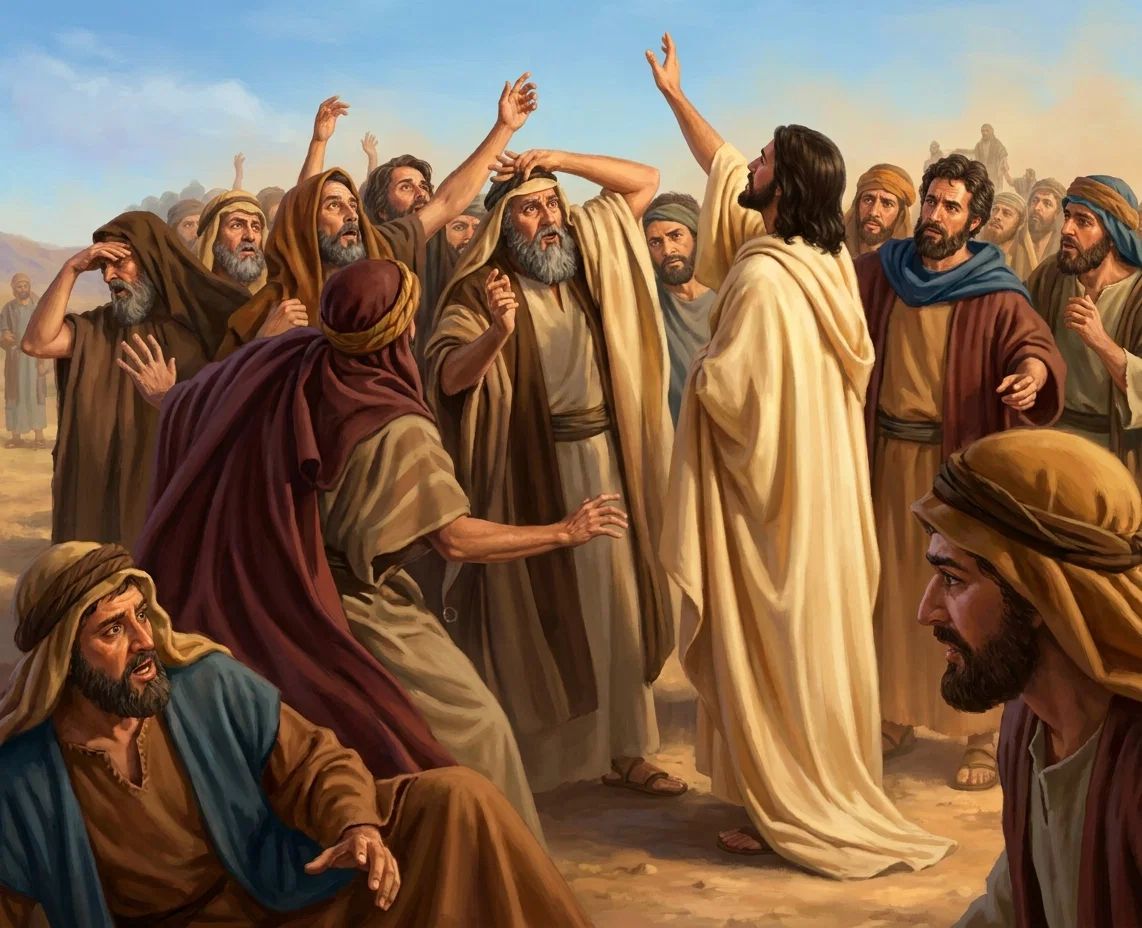 "The words of praise and exaltation die on their lips."
 THE CRISIS IN GALILEE
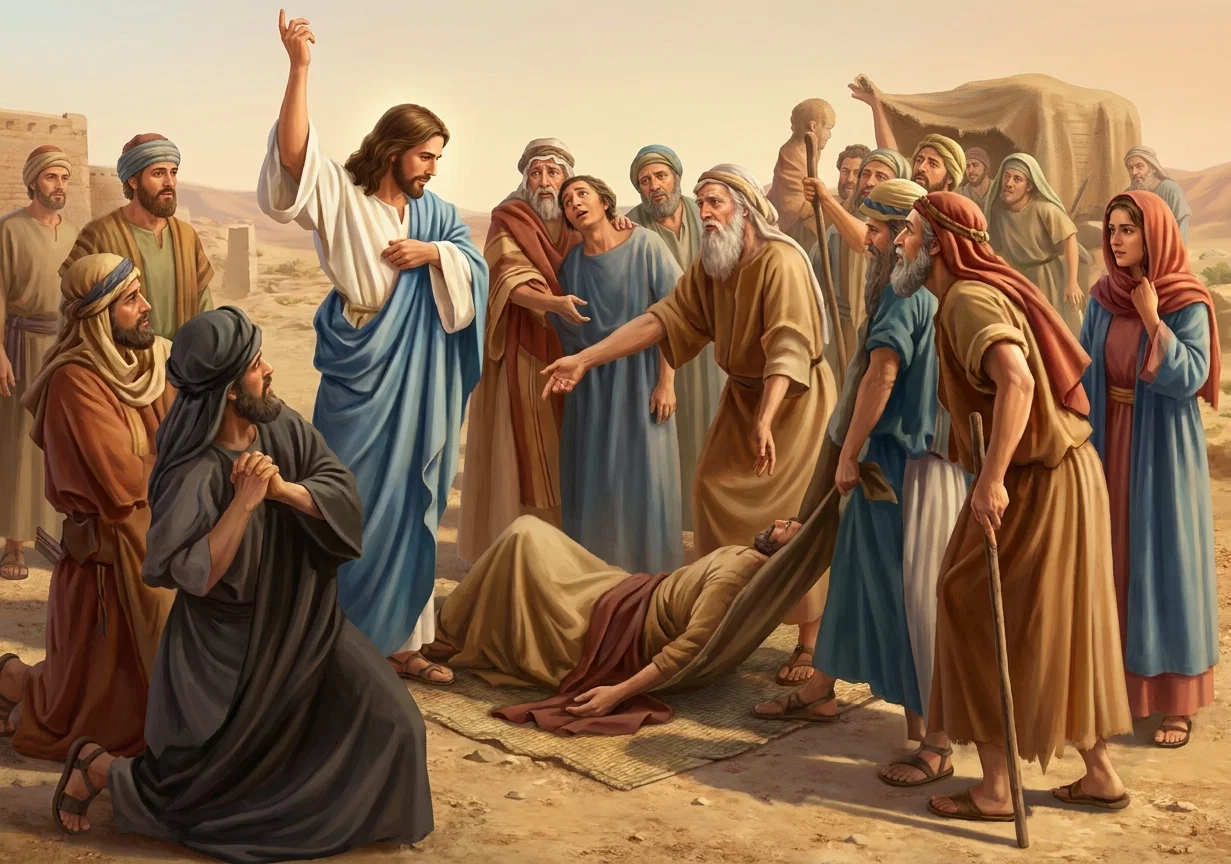 They "began to carry about in beds those that were sick, where they heard He was."
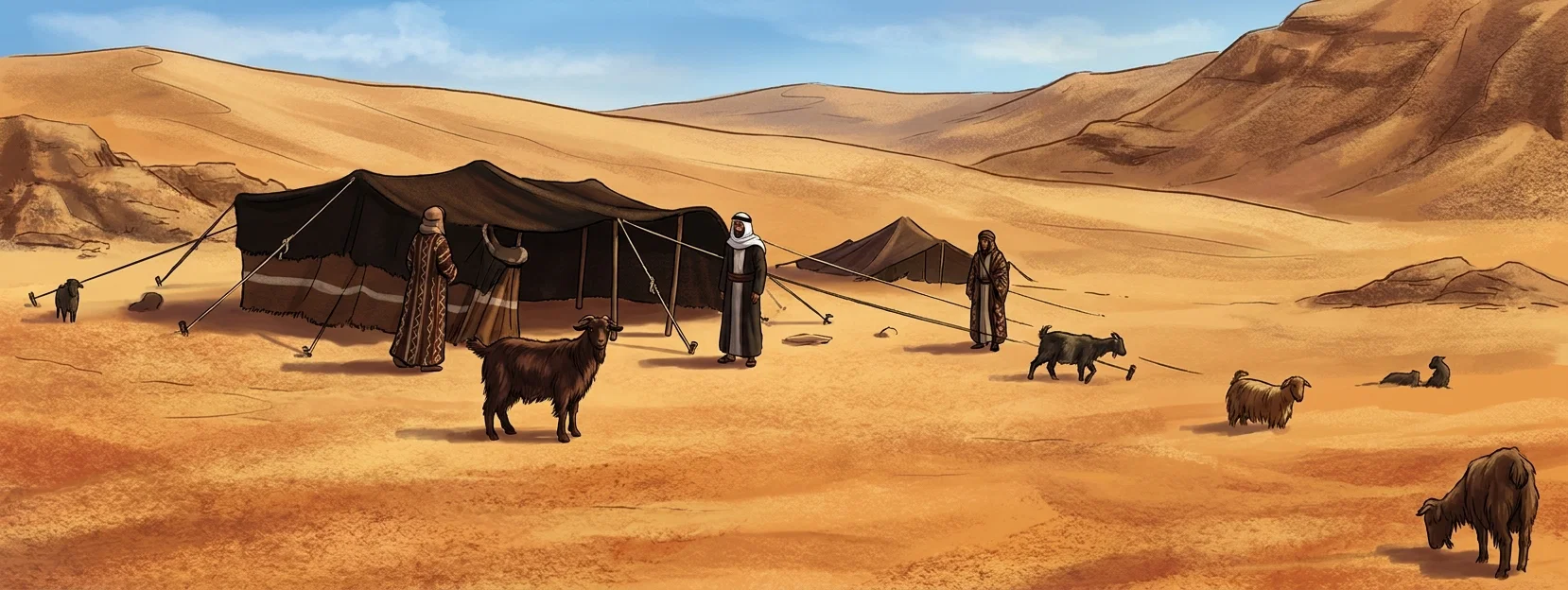 A sparse pastoral landscape stretches across the scene, with low, rugged mountains and rocky hills forming the background beneath several long, sweeping contour lines. In the middle distance, a few small human figures appear among scattered groups of grazing animals, while the foreground contains several larger, darkly shaded sheep or goats, including one prominent animal at the lower right. Additional flocks are dispersed across the open ground, and a standing figure near the central animals appears to be tending or guiding them. No lettering or other text is visible within the drawing.
 TRADITION
 BARRIERS BROKEN DOWN
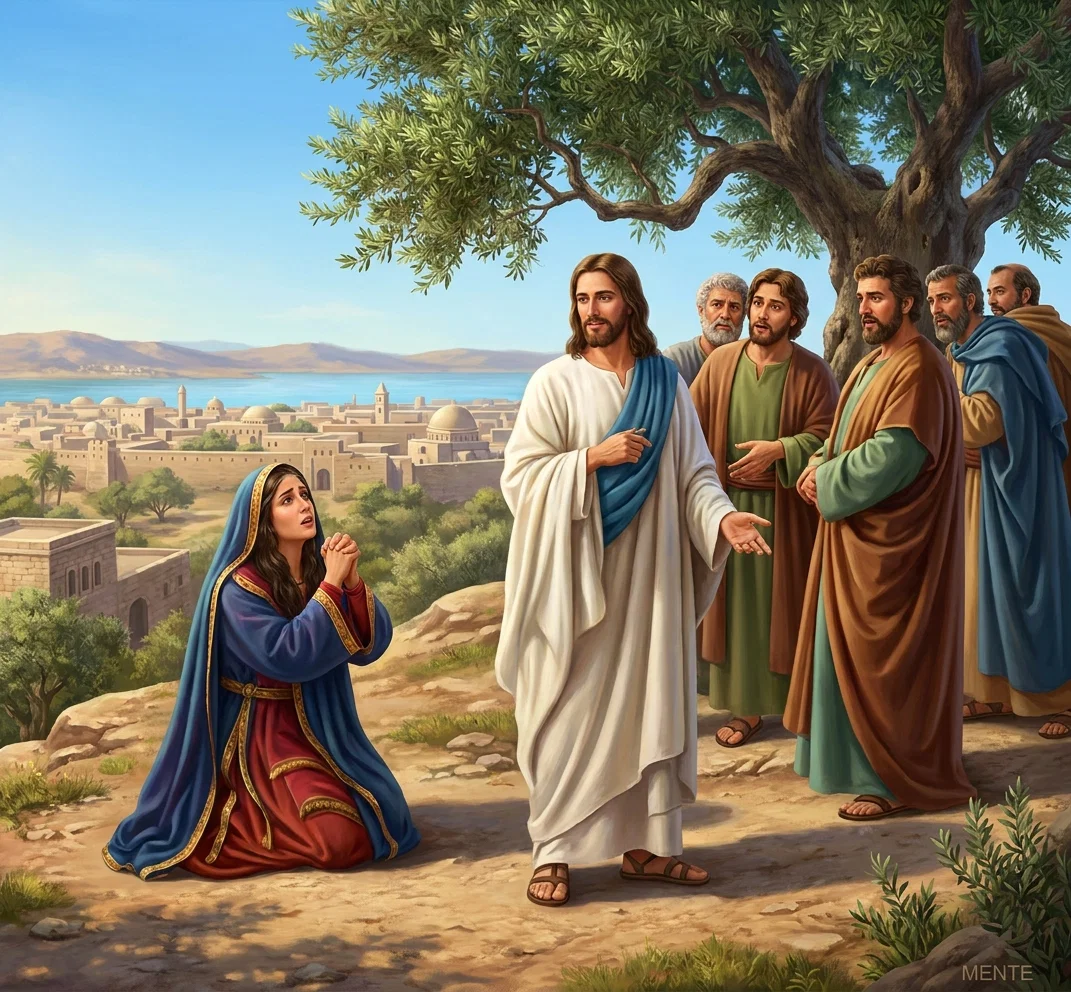 “Bowing at Christ’s feet, and crying, ‘Lord, help me.’”
 THE TRUE SIGN
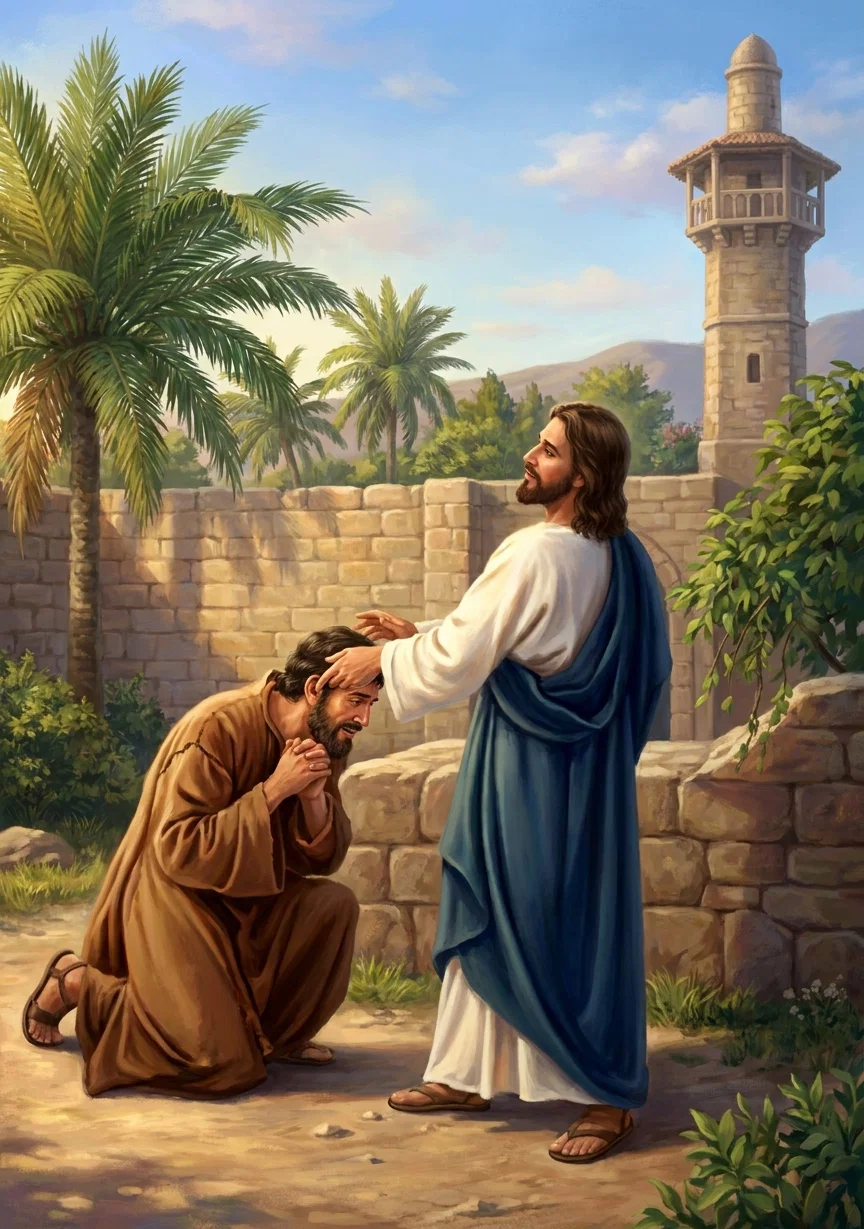 “Taking him apart from the multitude, He put His fingers in his ears, and touched his tongue.”
 THE FORESHADOWING OF THE CROSS
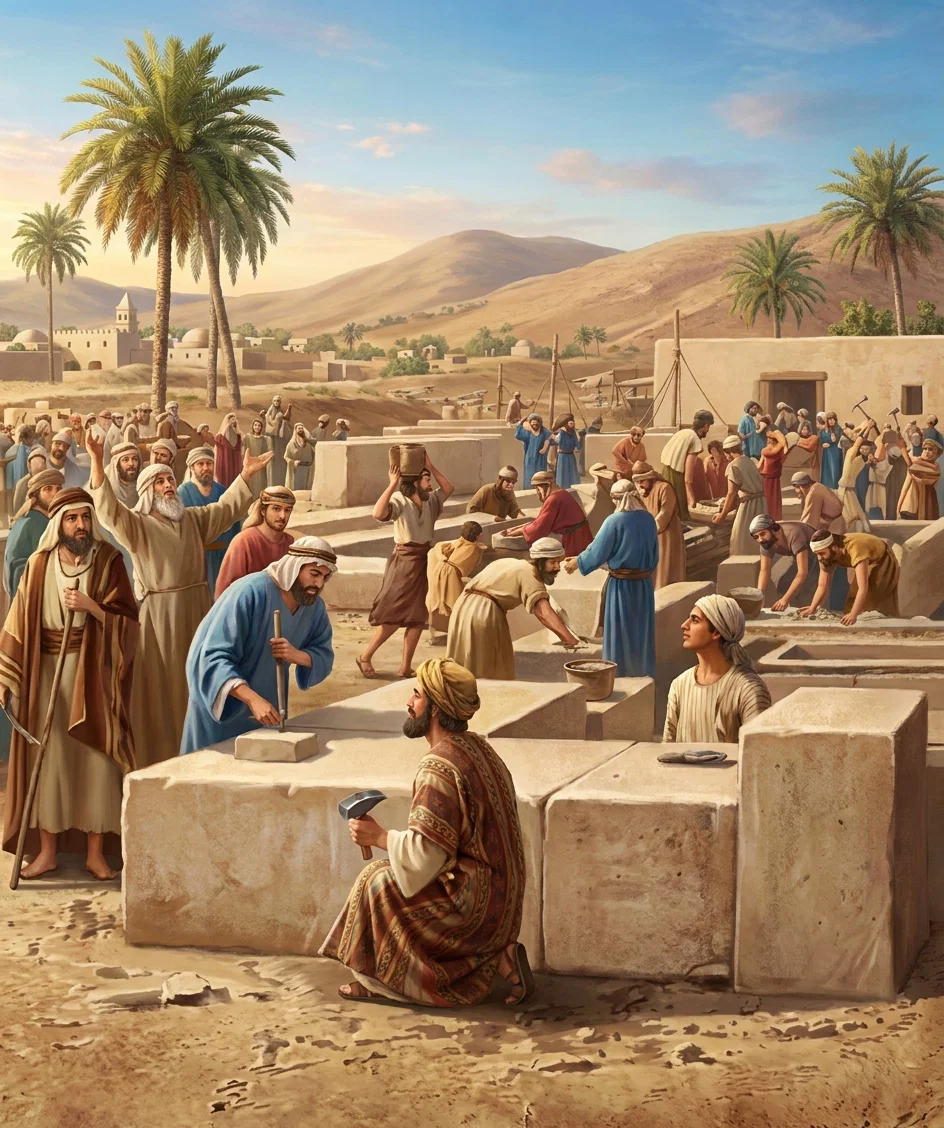 “I lay in Zion . . . a sure foundation.”
 A small, dark wooden boat rests along the shore of a calm body of water, viewed from the side with its bow pointing right and its stern or raised end at left. The hull is heavily shaded, while the open interior shows seats, ribs, and planking. Sparse reeds and grasses grow beside the boat on the sandy or rocky bank. Thin horizontal lines mark the distant water and far shoreline, with low, gently undulating hills or mountains along the horizon. A tiny indistinct object appears near the right side of the water, but no people, animals, or lettering are visible.
 HE WAS TRANSFIGURED
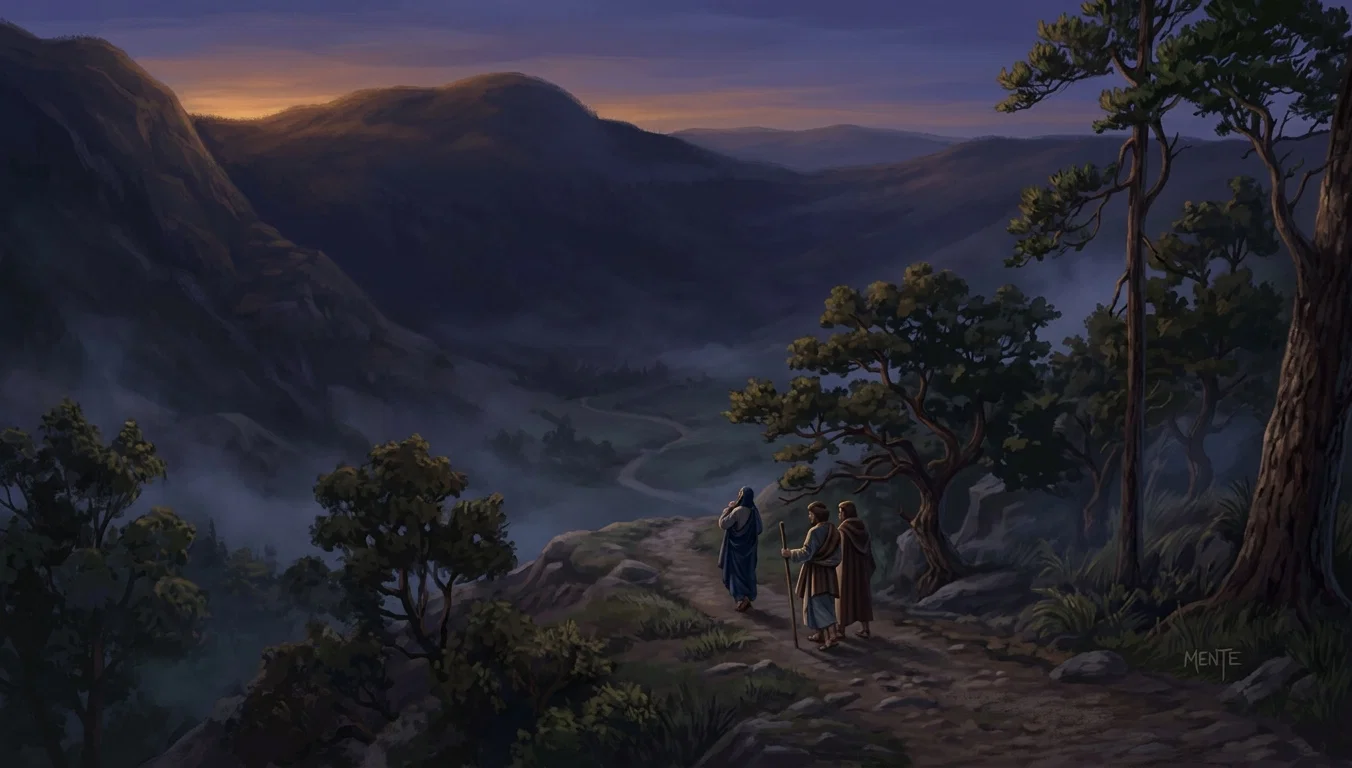 “Soon the light dies out from hill as well as valley, . . . and the solitary travelers are wrapped in the darkness of night.” Page 419.
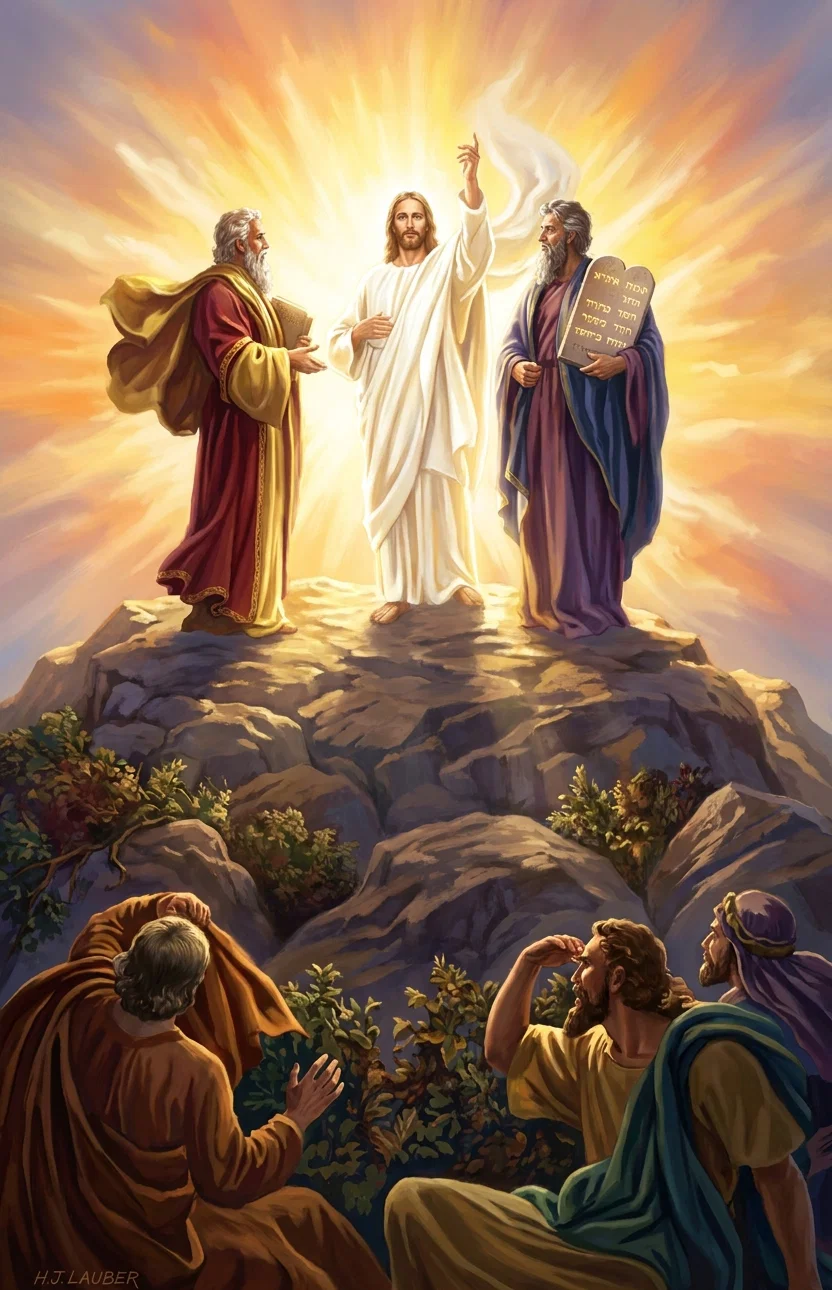 THE TRANSFIGURATION.
“Jesus was clothed with the light of heaven, as He will appear when He shall come the second time without sin unto salvation.”
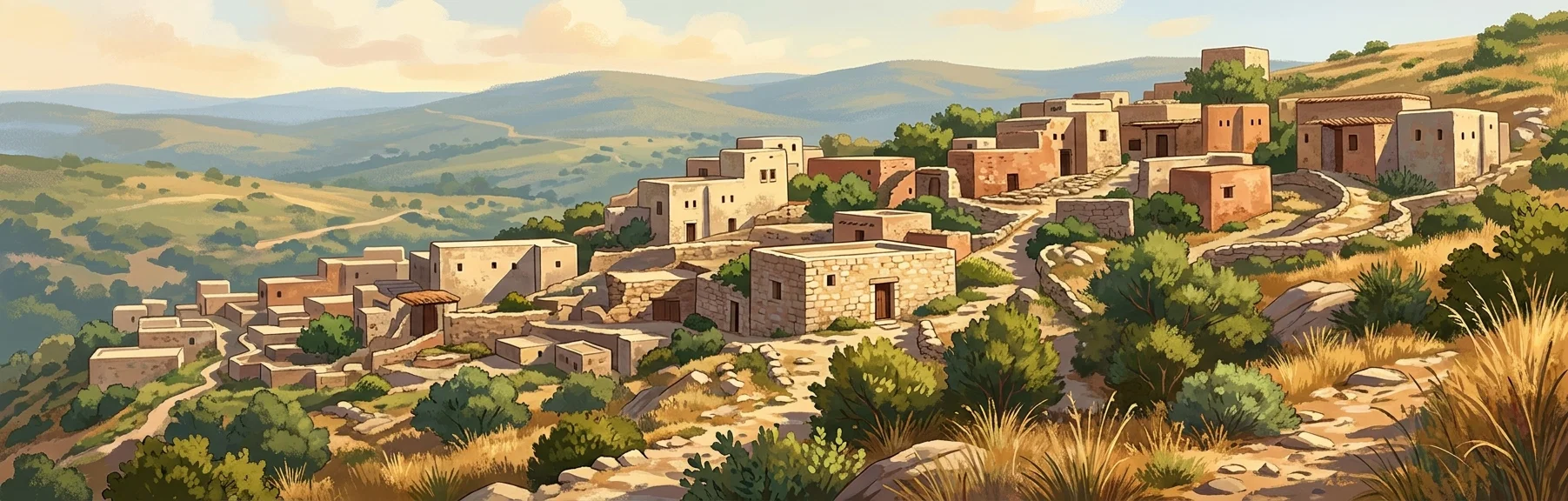 A monochrome line drawing shows a sprawling settlement of flat-roofed, blocklike stone buildings spread across a gently rising hillside. The clustered houses extend from the lower left toward the upper right, with narrow paths or terraces winding among them and a few darker openings suggesting doors or windows. Rough shrubs, grasses, and rocky ground fill the foreground, while a broad, sparsely marked horizon stretches behind the town. No people, animals, signs, or lettering are visible.
 MINISTRY
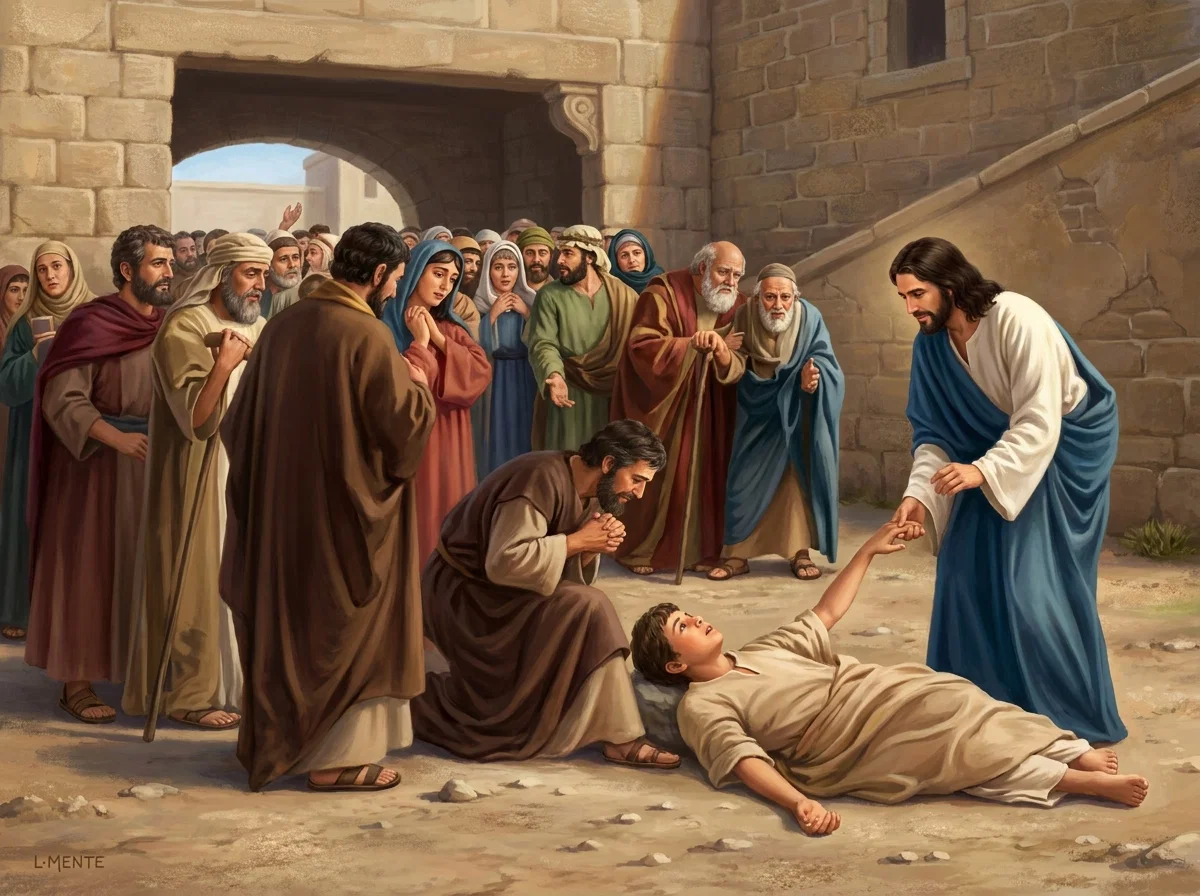 “Jesus takes him by the hand, and lifting him up, presents him in perfect soundness of mind and body, to his father.”
 A quiet waterside scene shows a small, densely vegetated islet or bank jutting into calm water. Tall grasses, reeds, shrubs, and several leafy trees form a thick natural clump, with dark, angled trunks or exposed roots at the shoreline. The low horizon extends behind it, while the foreground water is rendered with horizontal ripples and a clear, elongated reflection of the vegetation. No people, animals, buildings, or lettering are visible.
 WHO IS THE GREATEST
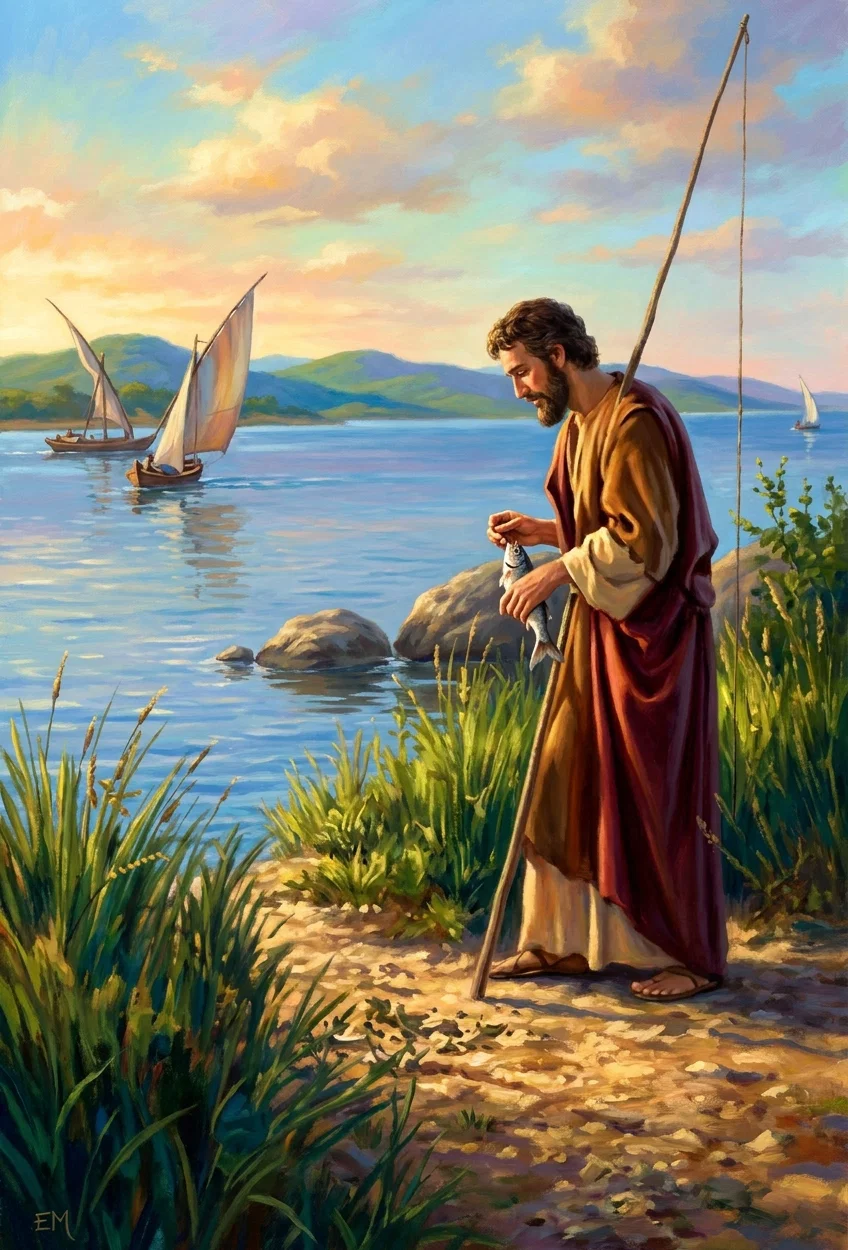 “When thou hast opened his mouth,
thou shalt find a piece of money.”
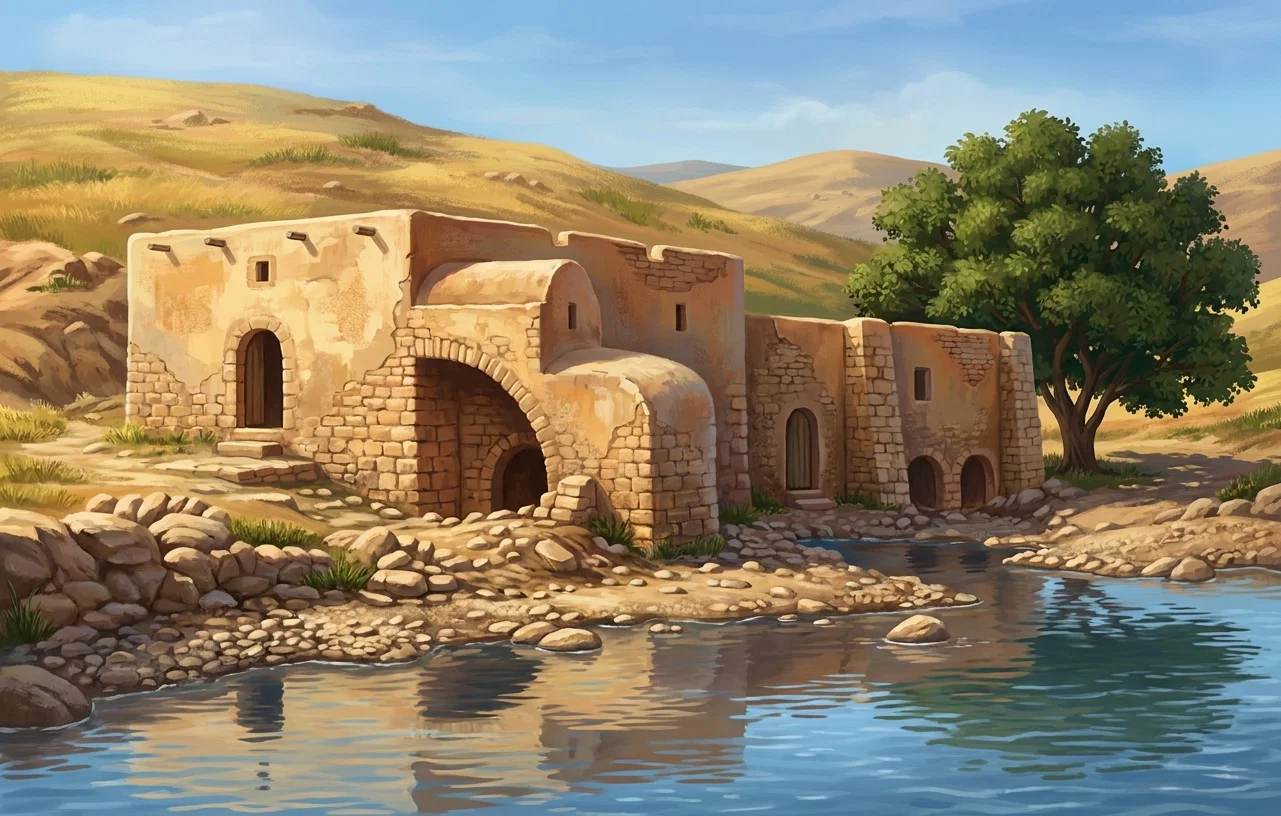 A black-and-white landscape drawing shows a cluster of low, rough, mud-plastered or stone buildings beside a shallow stream. The structures have rounded, arched doorways and heavily textured thatched or earthen roofs, with one larger pale wall at left and several darker adjoining shelters extending toward the right. A broad, leafy tree stands behind the buildings, while rocks, scrub, and uneven ground fill the foreground. The water reflects portions of the buildings and surrounding landscape, and a tiny indistinct figure appears near the far right edge.
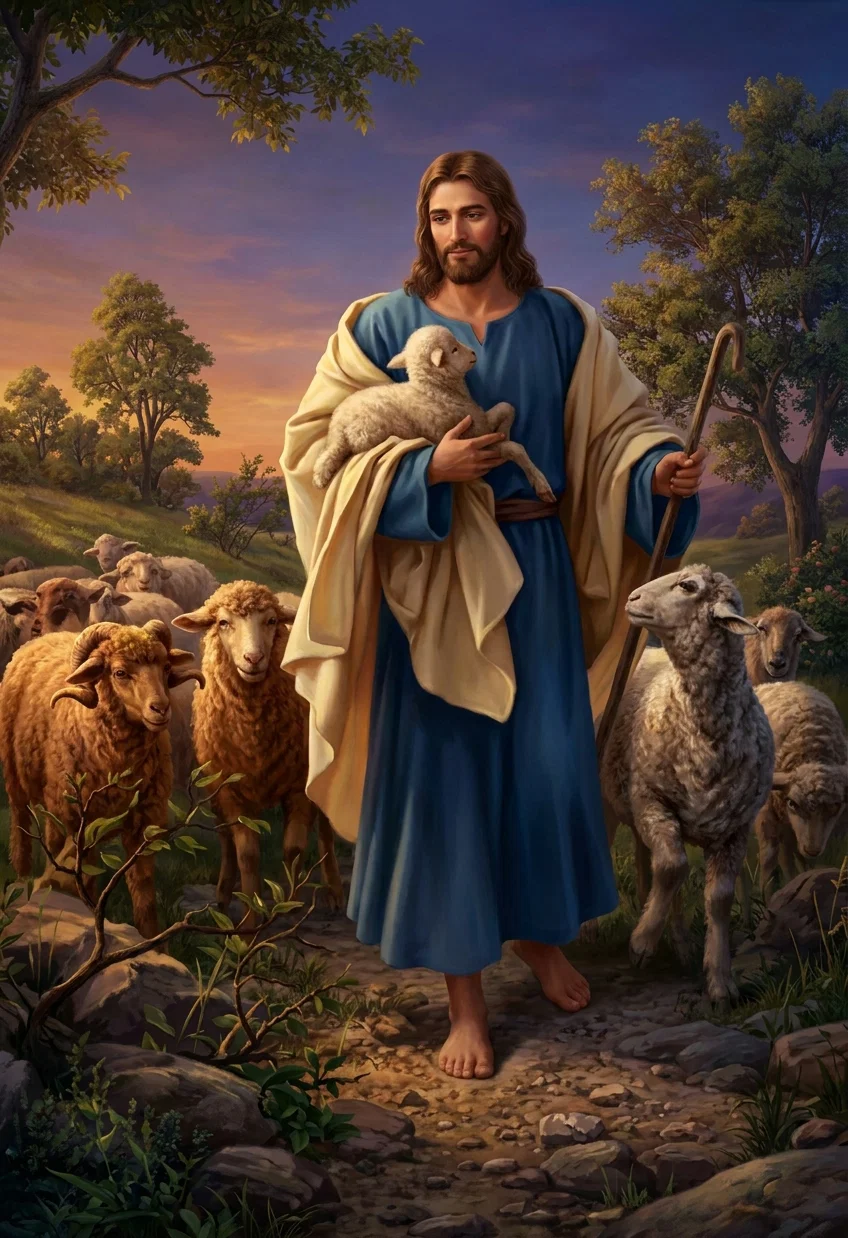 THE DIVINE SHEPHERD.
“I lay down My life for the sheep.”
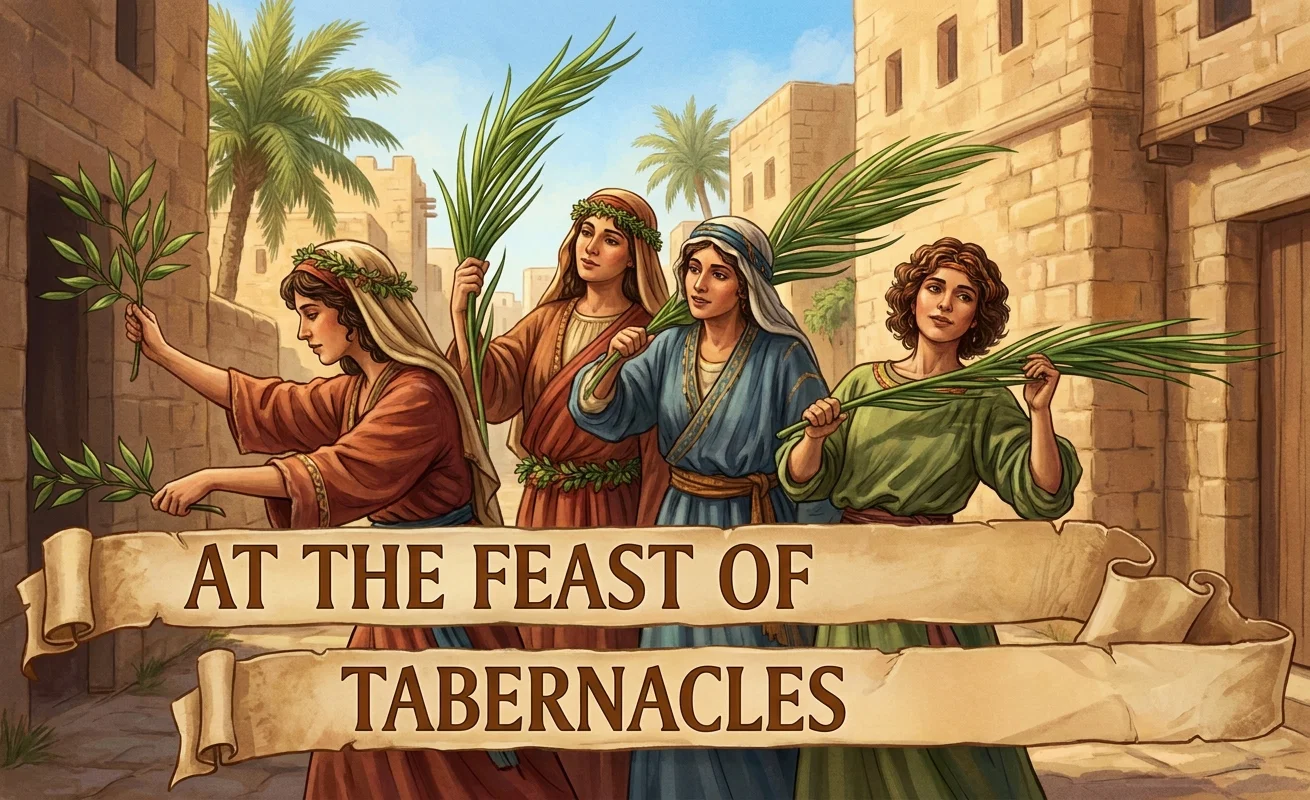 AT THE FEAST OF TABERNACLES
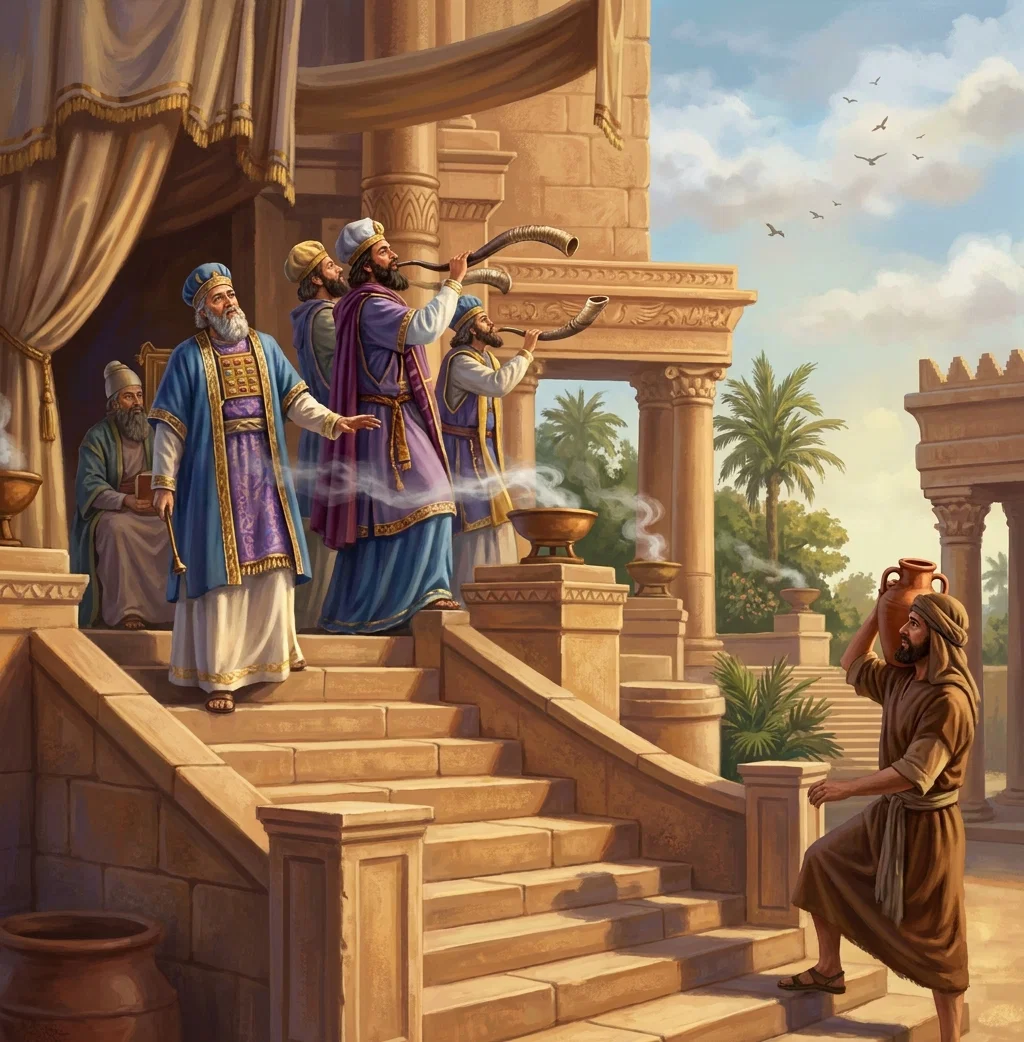 “He ascended the broad steps of the temple, keeping time with the music with slow and measured tread.”
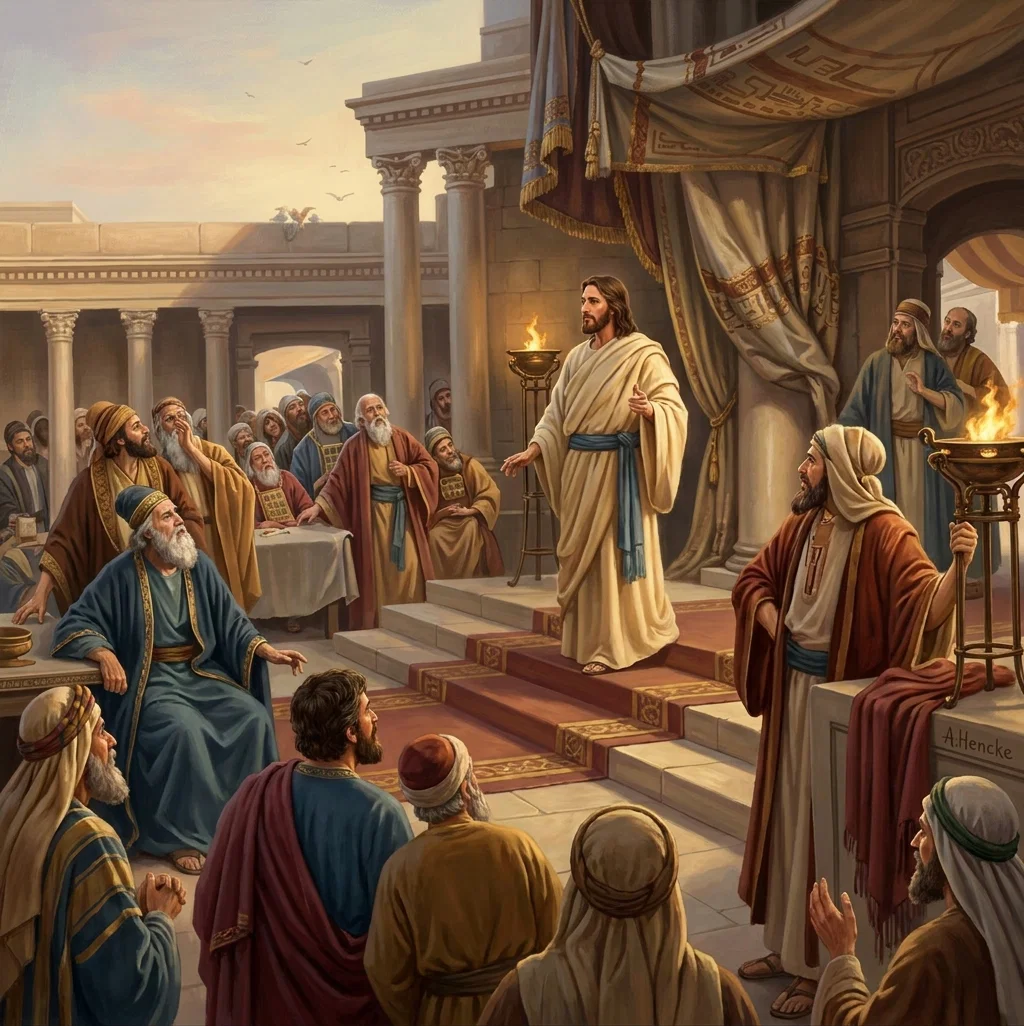 “Standing thus, the center of attraction to that vast throng, Jesus addressed them as no man had ever done.”
 AMONG SNARES
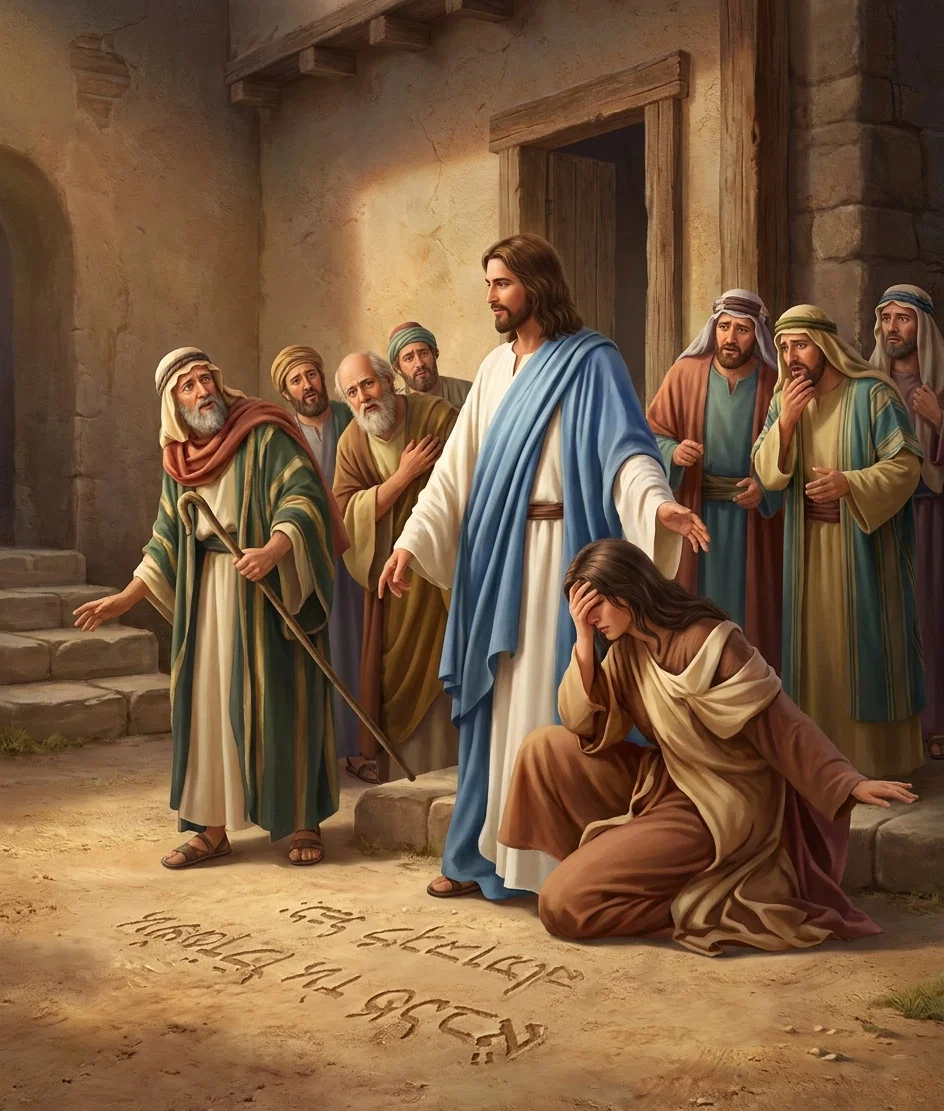 “There, traced before them, were the guilty secrets of their own lives.”
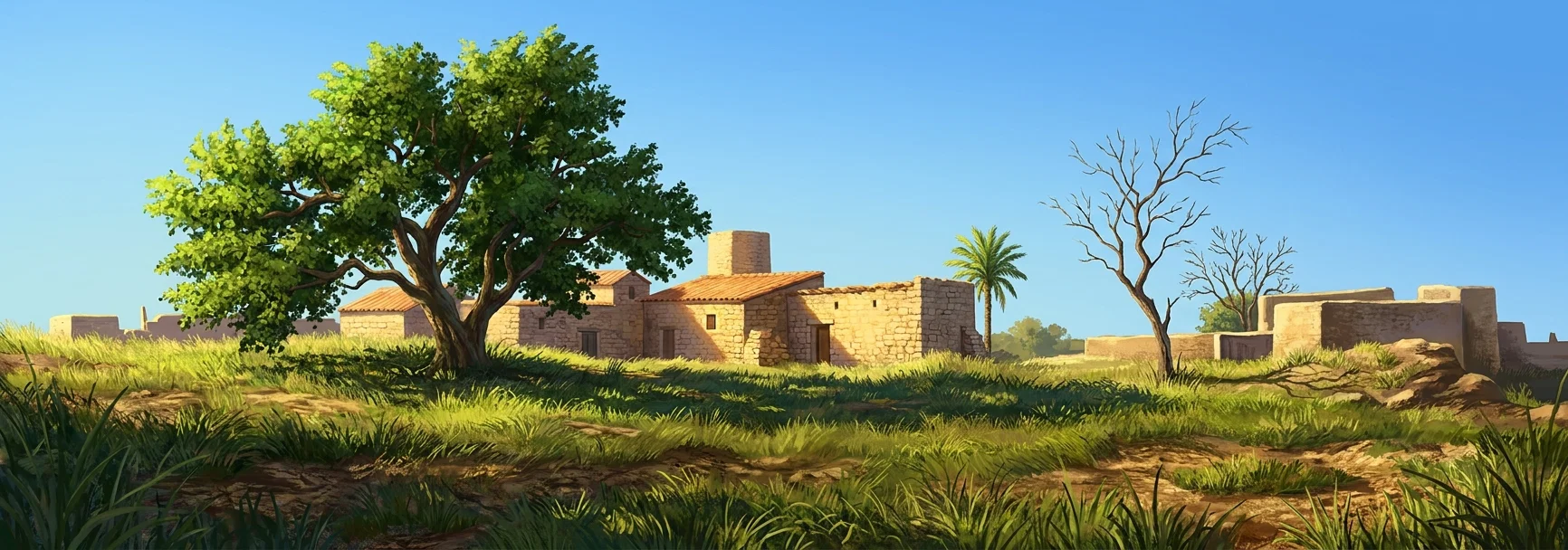 A tranquil rural settlement stretches across a gently undulating landscape. In the foreground, dense vertical grasses or crops form a dark band, with a low fence or irregular boundary at the left. Large spreading trees dominate the left side, while smaller trees and shrubs punctuate the middle distance, including a distinctive thin, leafless or sparsely leaved tree near the right. Several simple low-roofed buildings or huts sit among the fields, with a taller rectangular structure near the center and a small palm-like tree farther back. Tiny indistinct figures or animals appear near the settlement.
 THE LIGHT OF LIFE
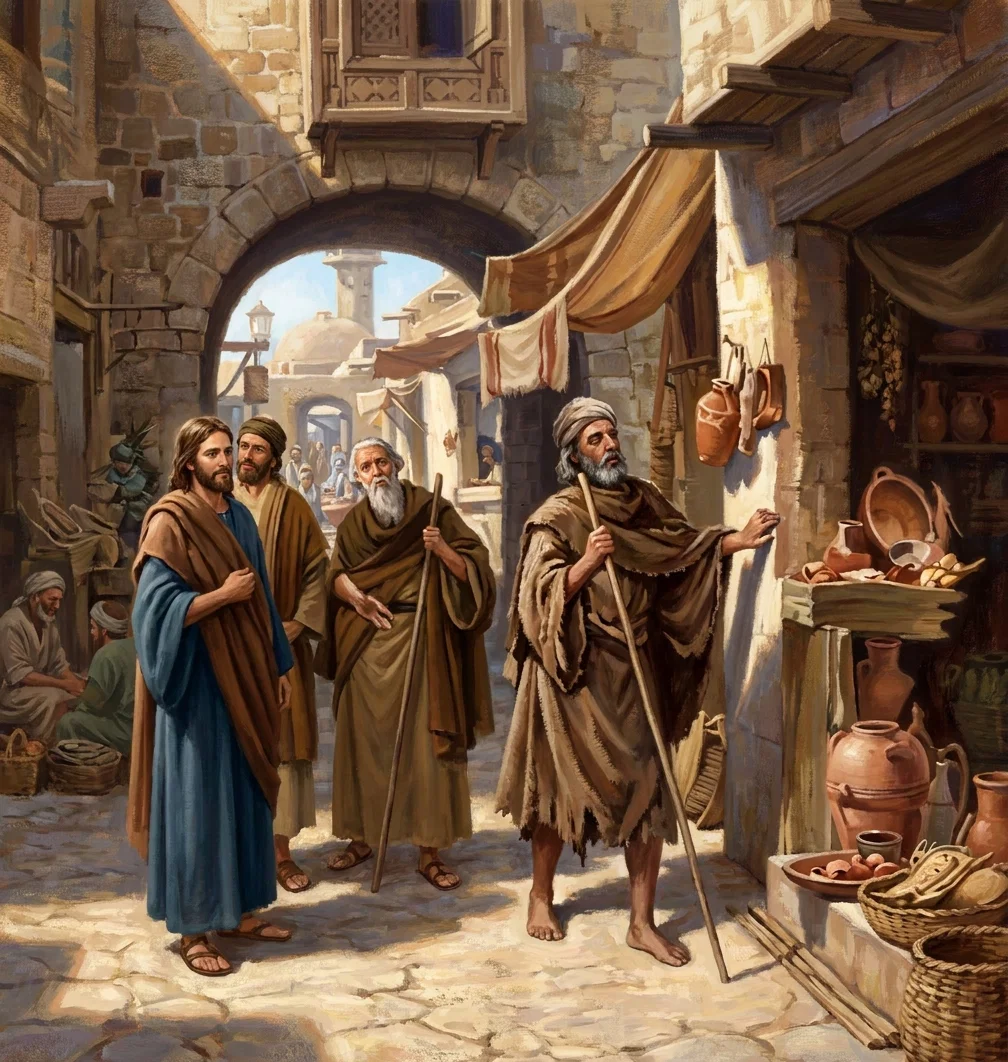 “Master, who did sin, this man, or his parents, that he was born blind?”
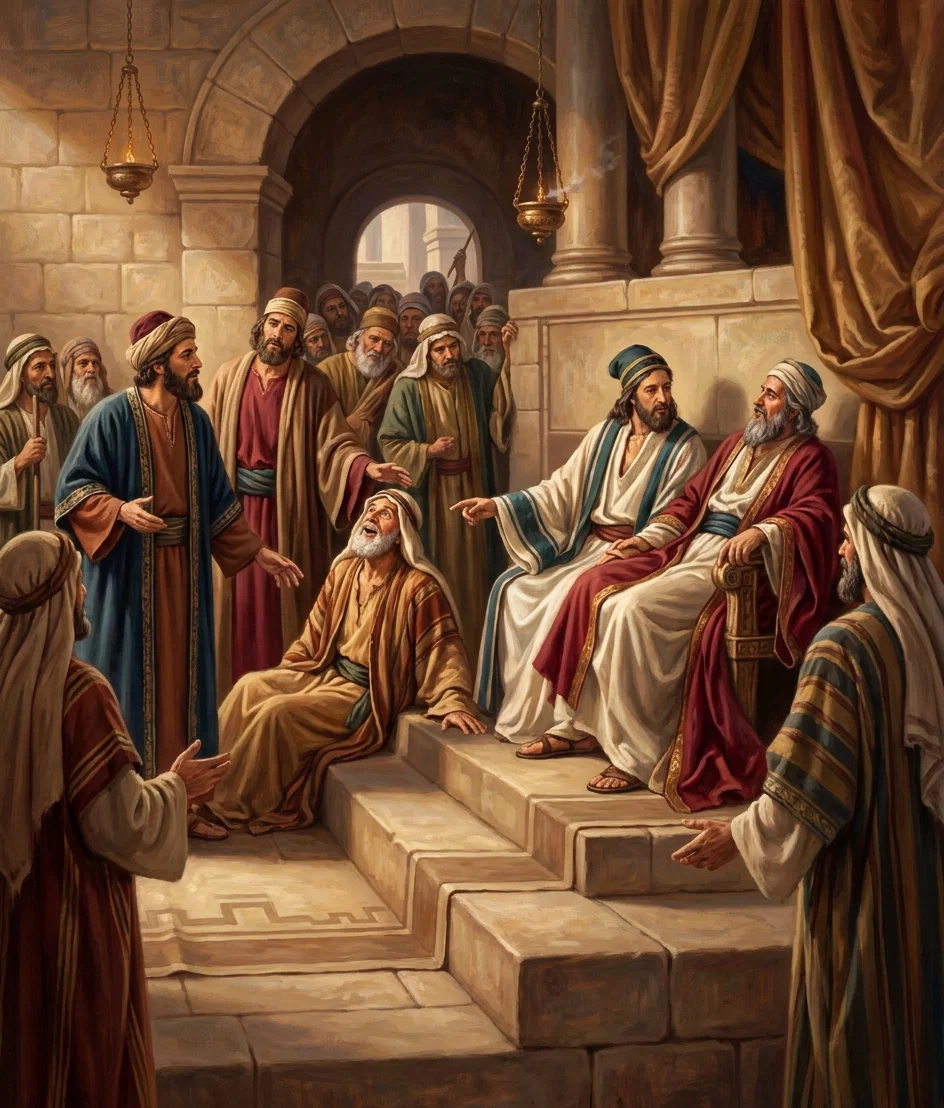 “One thing I know, that, whereas I was blind, now I see.”
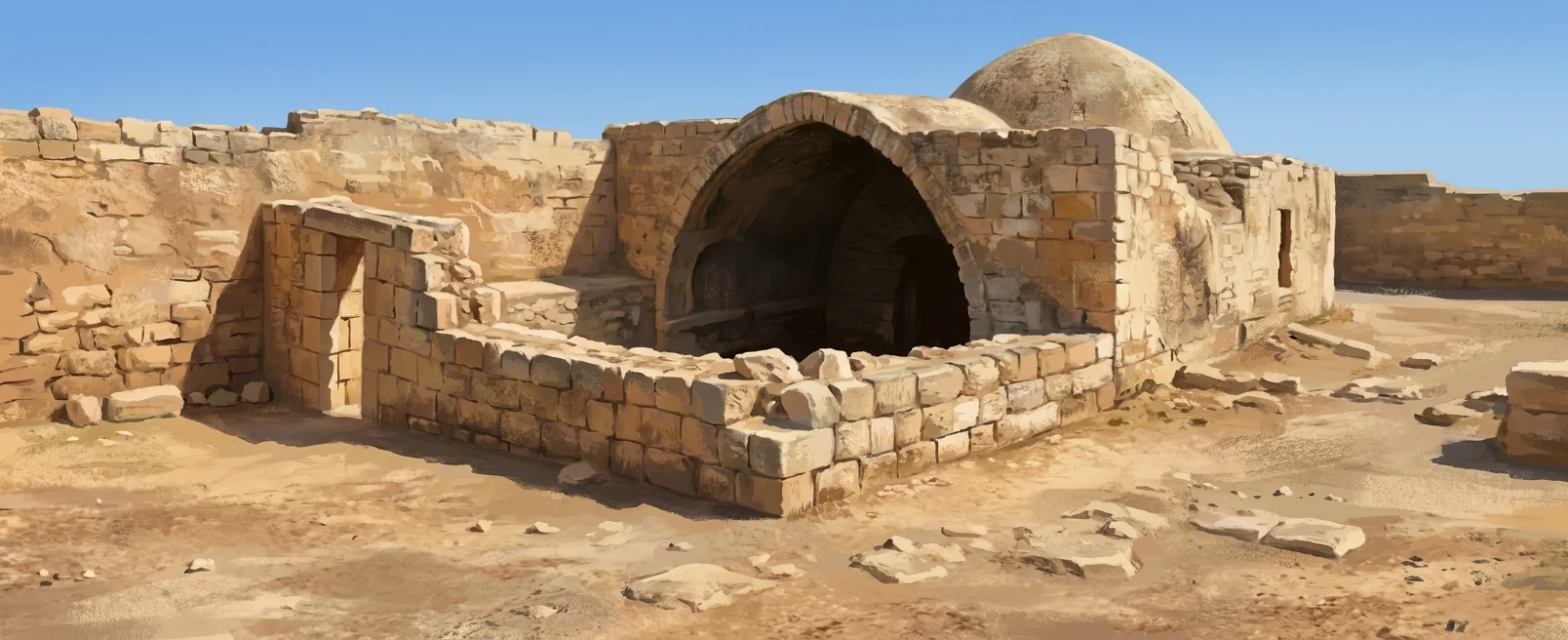 The image depicts a small stone structure or roadside shrine set in a rough, barren landscape. At the center is a dark, arched doorway or cave-like opening within a rectangular masonry façade, with an indistinct rounded mound or roof rising behind it. A low stone wall extends diagonally from the left foreground toward the entrance, ending near a taller upright stone or gatepost. Sparse, uneven ground surrounds the structure, and no people, animals, signs, or lettering are visible.
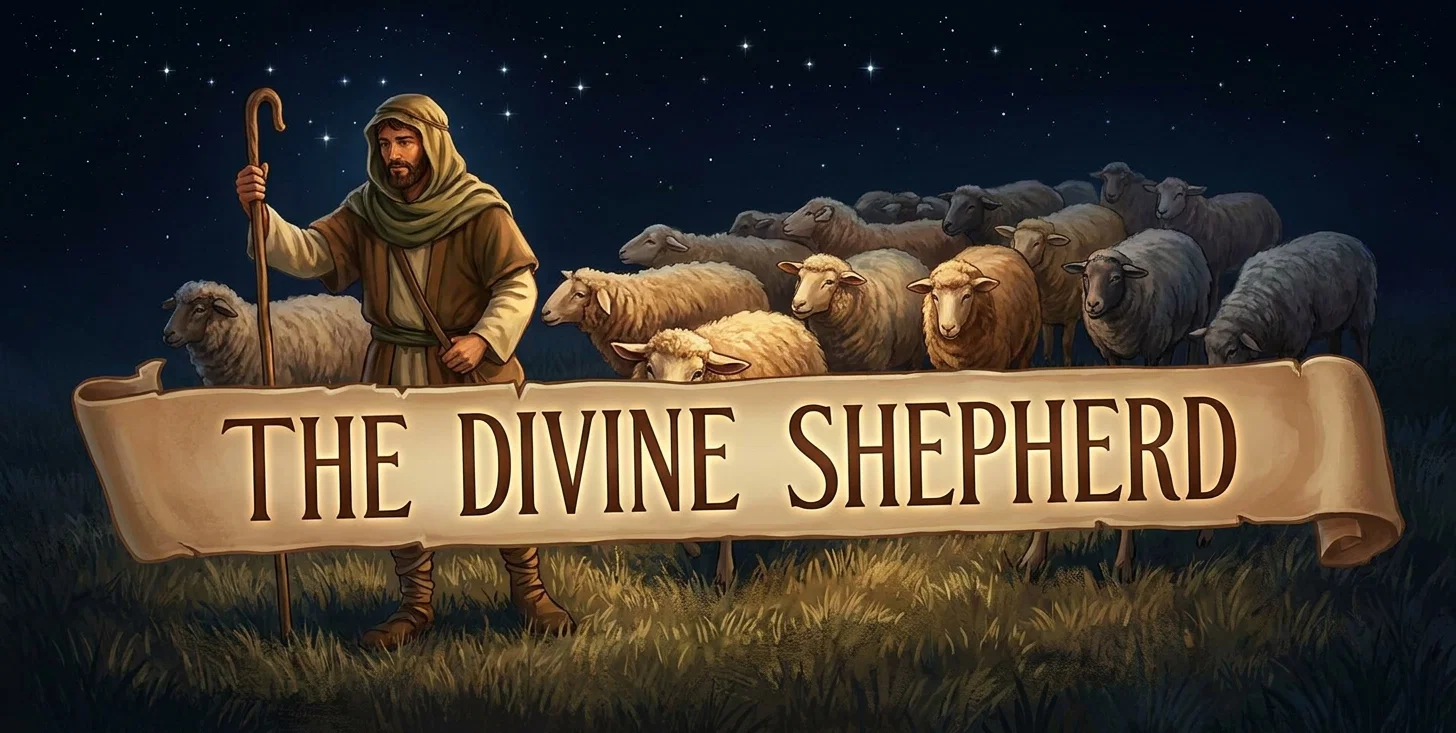 THE DIVINE SHEPHERD
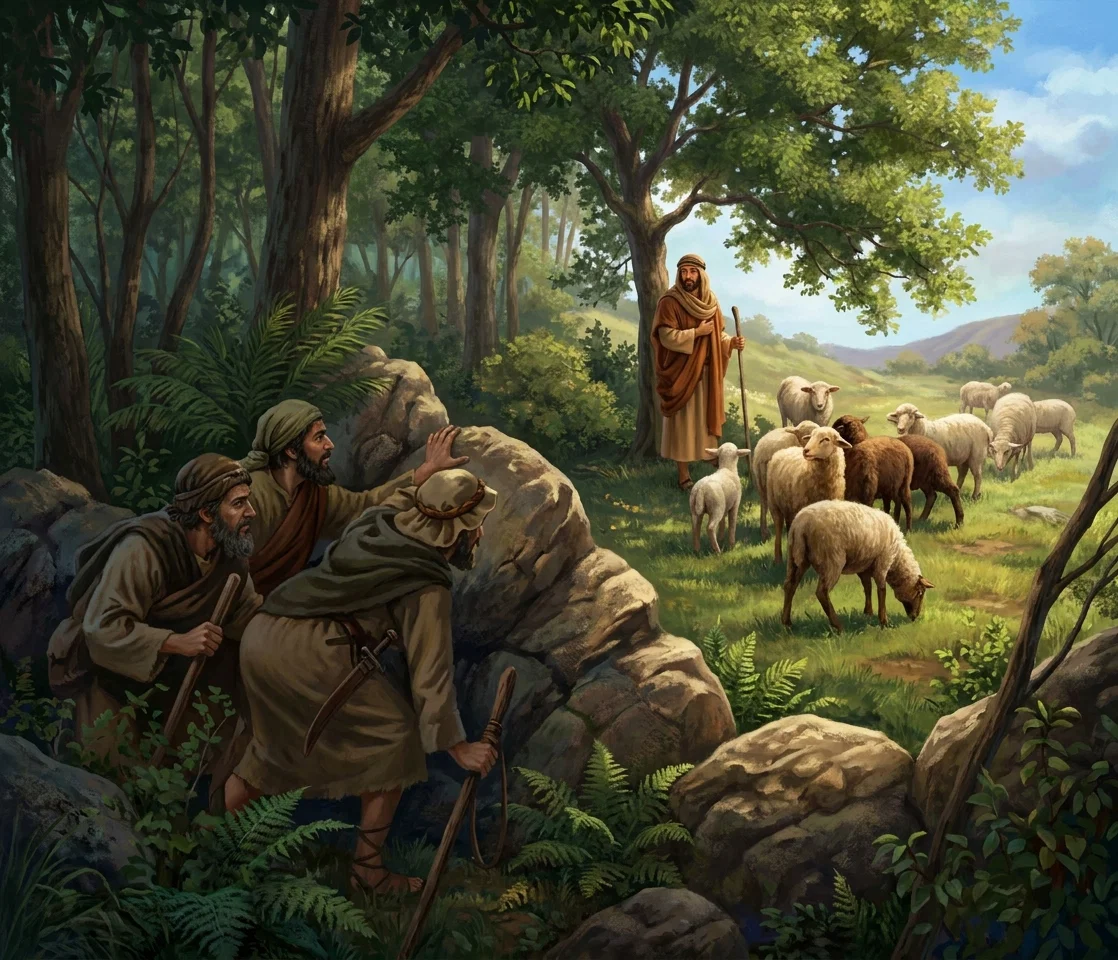 “Marauders from the roving border tribes . . . lay in wait to plunder the flocks.”
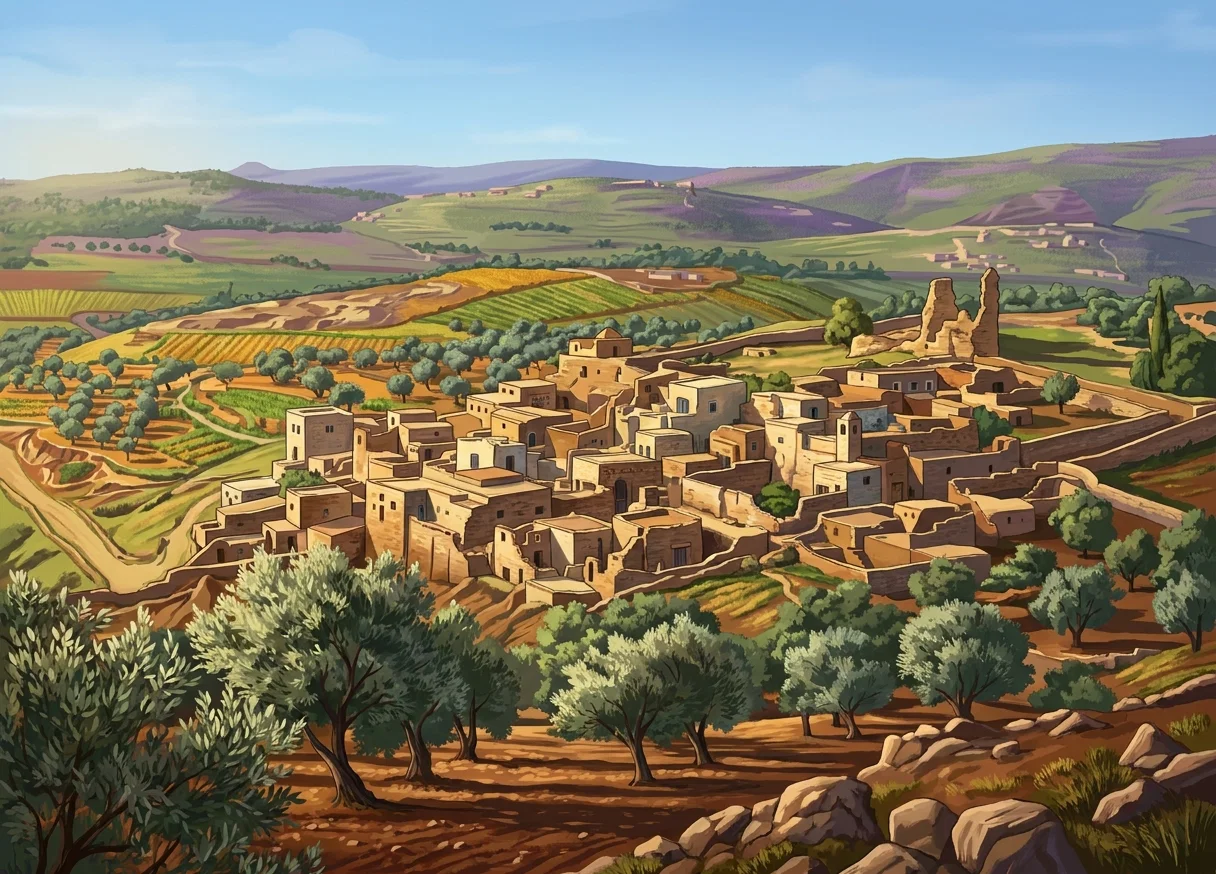 BETHANY.
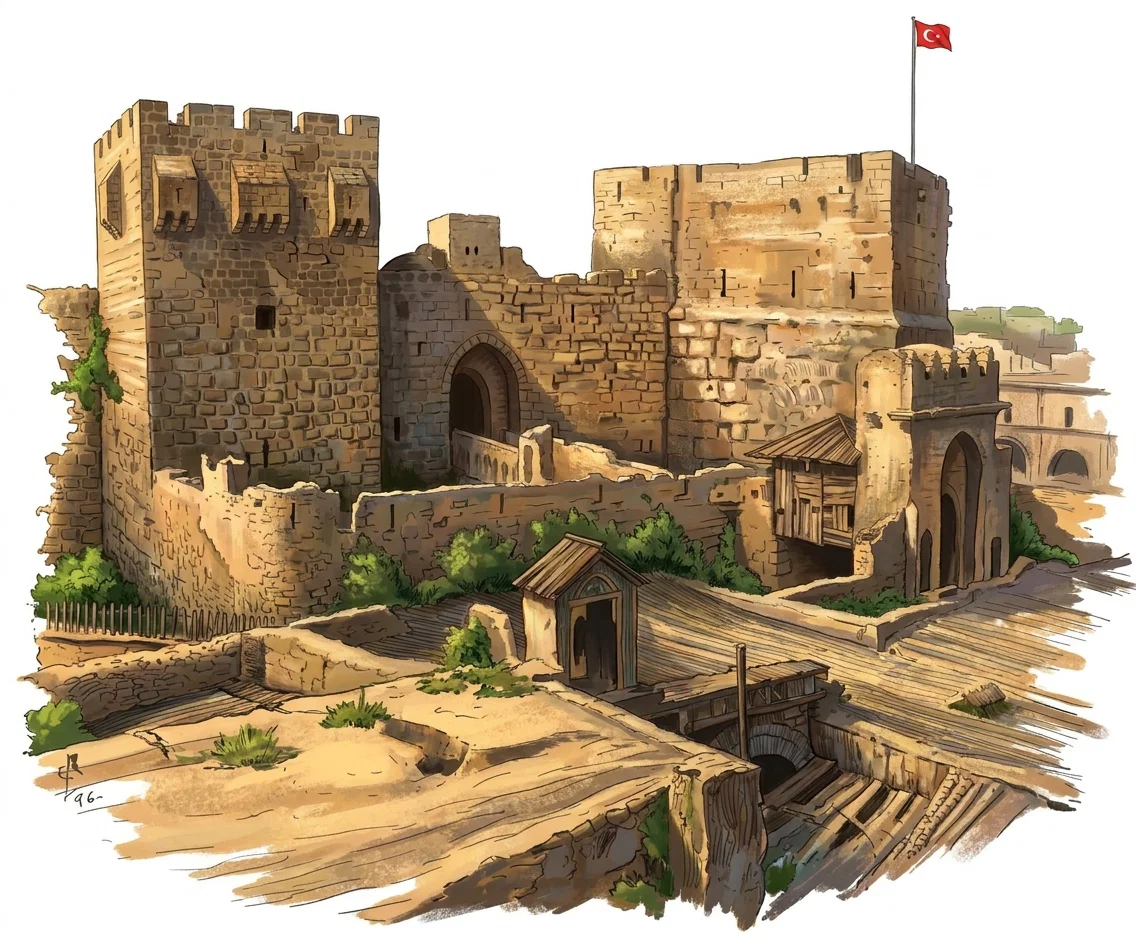 A detailed architectural scene shows a fortified stone gateway and massive masonry walls, likely part of an ancient or historic city. The central wall contains a tall, dark arched entrance, while a larger tower rises at right with a flag flying from its summit. Another arched gate or passage stands in the foreground beside sloping paved surfaces, steps, low walls, and a small roofed structure. Vegetation and rough ground appear along the lower edges, with distant rooftops and open terrain visible beyond the fortifications. No clearly legible lettering appears in the drawing.
 THE LAST JOURNEY FROM GALLIPOLI
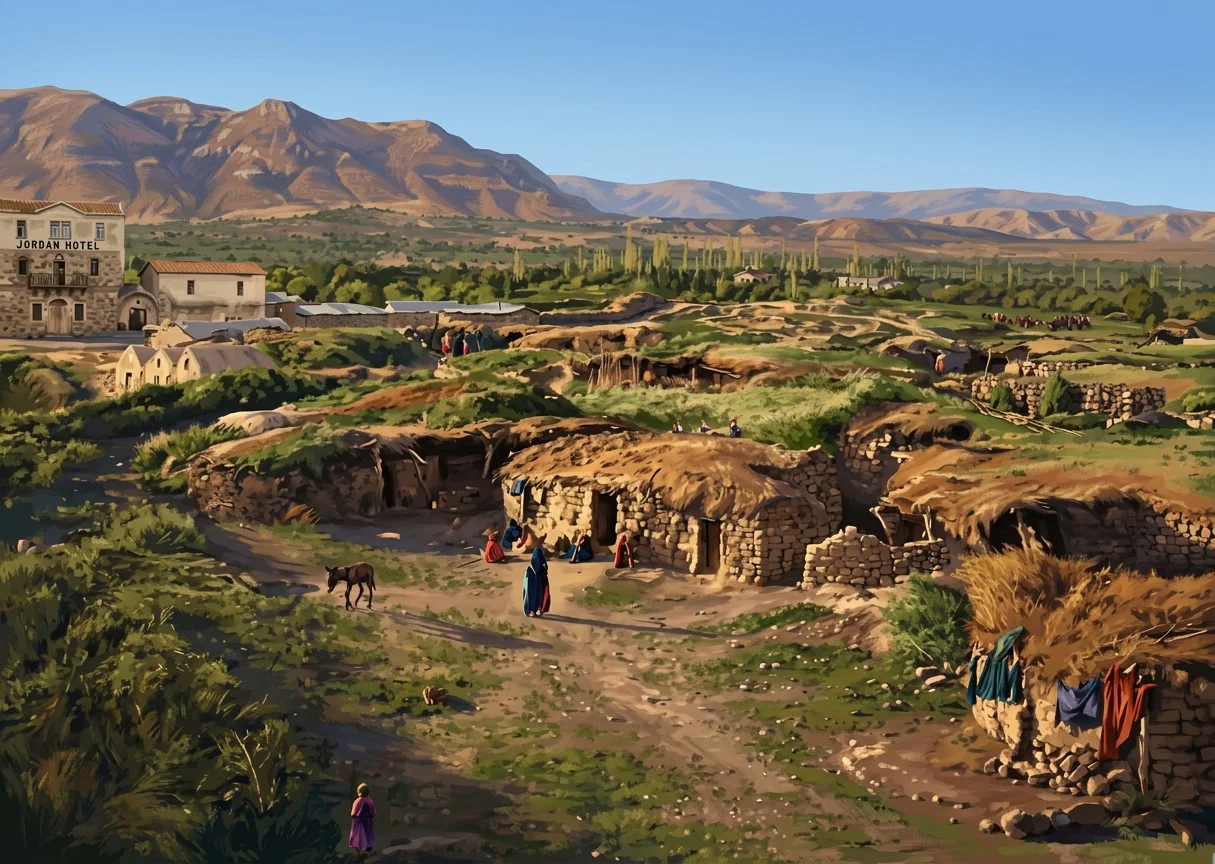 JERICHO.
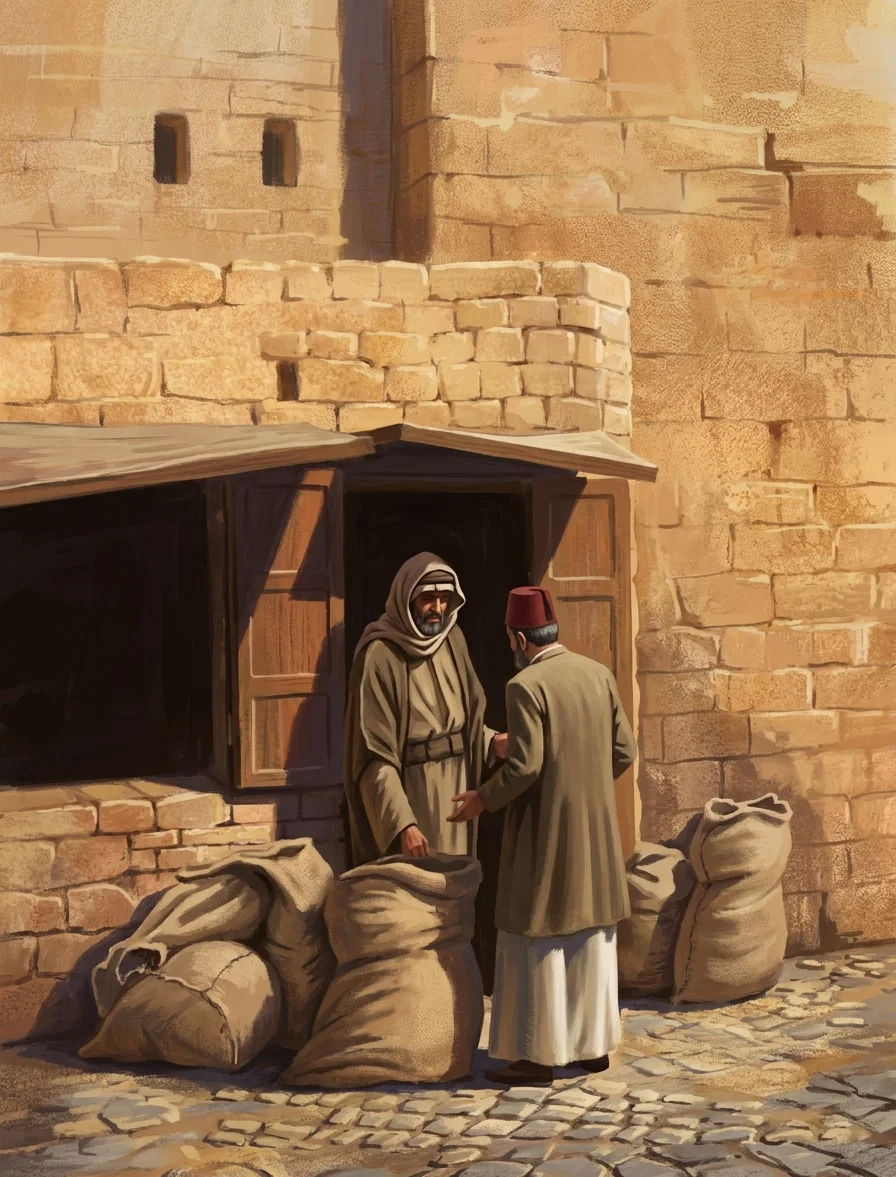 A street scene shows two impoverished figures gathered outside a rough brick or stone building. In the center, a weary, bearded man in a head covering and ragged clothing stands beside a taller person wrapped in a dark cloak, who appears to support or address him. The doorway behind them is shaded beneath a projecting wooden awning, with a small shuttered opening and uneven masonry above. Bundles or sacks lie scattered on the cobbled ground, including a large sack at right and piled belongings at left. Faint marks and partial lettering appear near the upper margin.
 THE GOOD SAMARITAN
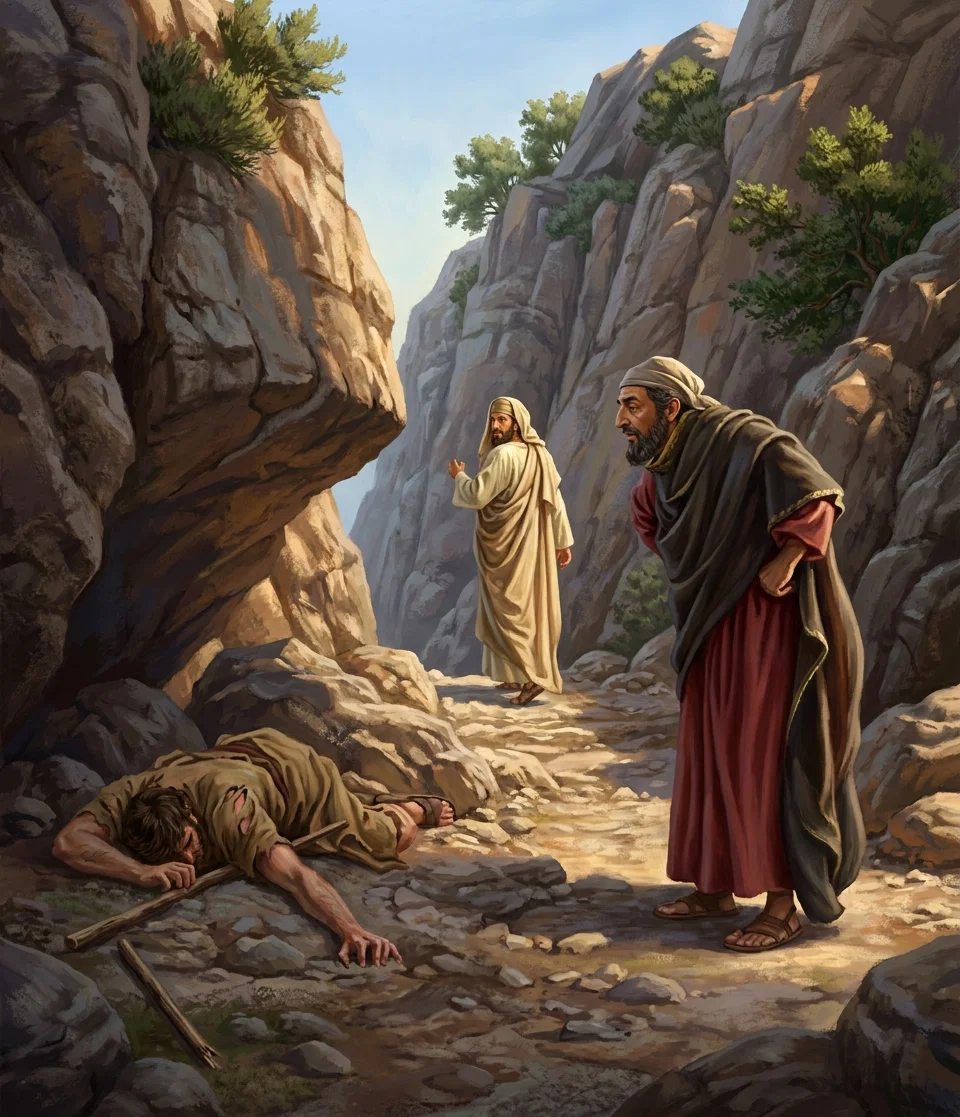 “Then the Levite appeared. Curious to know what had happened, he stopped and looked at the sufferer.”
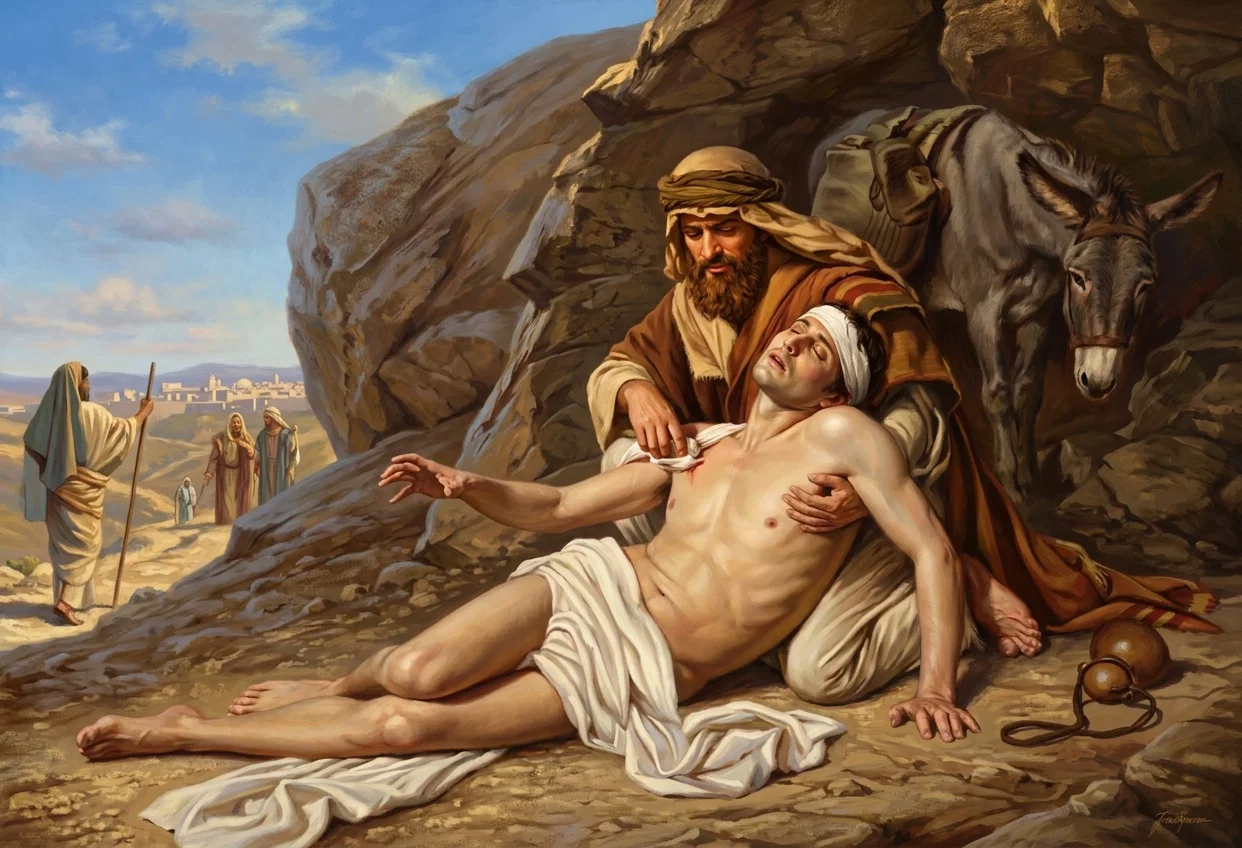 THE GOOD SAMARITAN.
“Which of these three thinkest thou proved neighbor to him that fell among the robbers.”
 A quiet rural footpath winds through tall grasses and low vegetation, bordered on the right by a rough stone wall and a row of upright, weathered stone slabs or fence posts receding into the distance. Dense bushes and a large leafy tree frame the left side of the path, while scattered rocks and uneven ground fill the foreground. The drawing contains no visible people, animals, signs, or lettering, and emphasizes the narrow trail, rustic masonry, and softly overgrown countryside setting.
 NOT WITH OUTWARD SHOW
 A low, weathered stone structure stands in a barren, rocky landscape, with a large rounded dome rising above its roof and a small finial at the top. The right side is an older, heavily textured masonry wall containing a dark arched doorway or niche, while the left section is more simply plastered and has a broad black semicircular arch opening. Rubble and uneven stones lie scattered around the base, with faint rolling hills or ridgelines stretching across the distant horizon. No people, animals, or readable lettering are visible.
 BLESSING THE CHILDREN
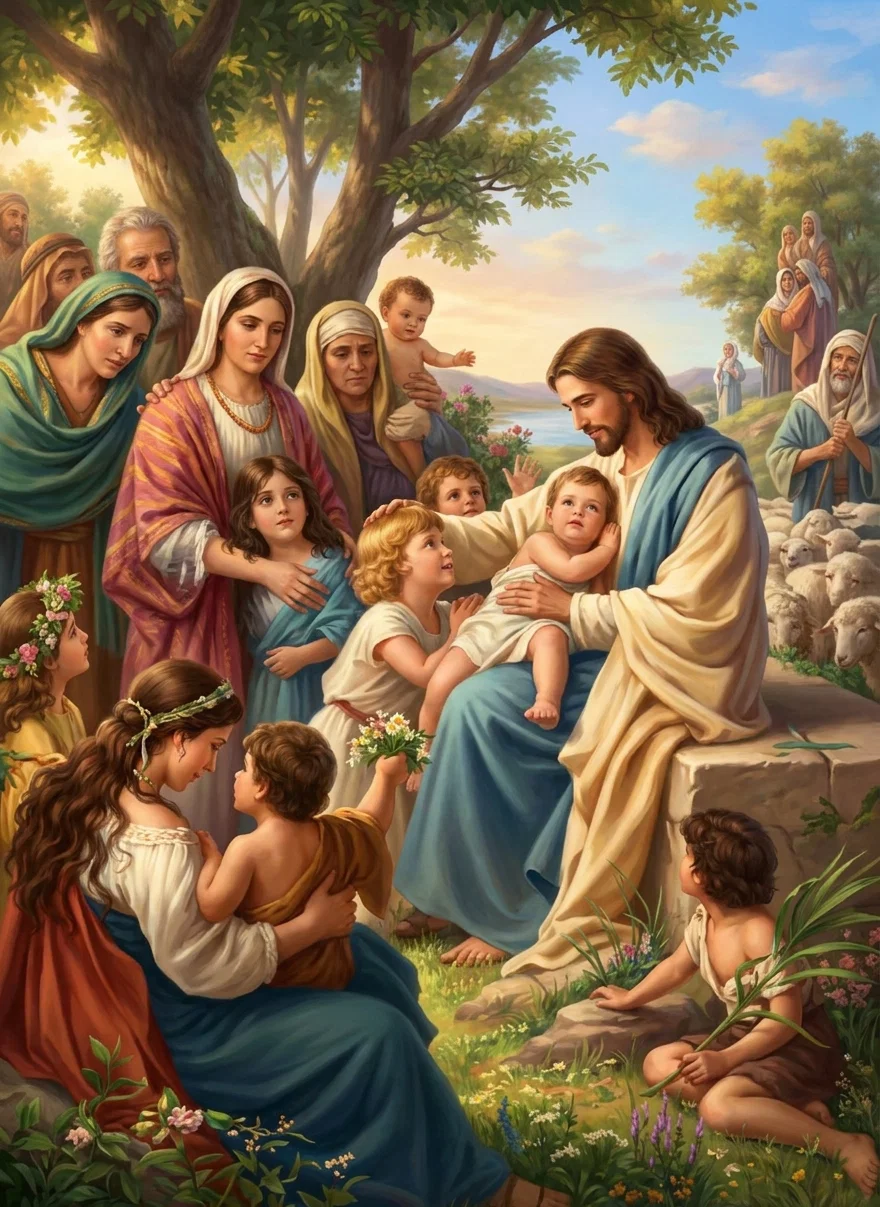 JESUS BLESSING THE CHILDREN.
“He took the children in His arms, He laid His hands upon them, and gave them the blessing for which they came.”
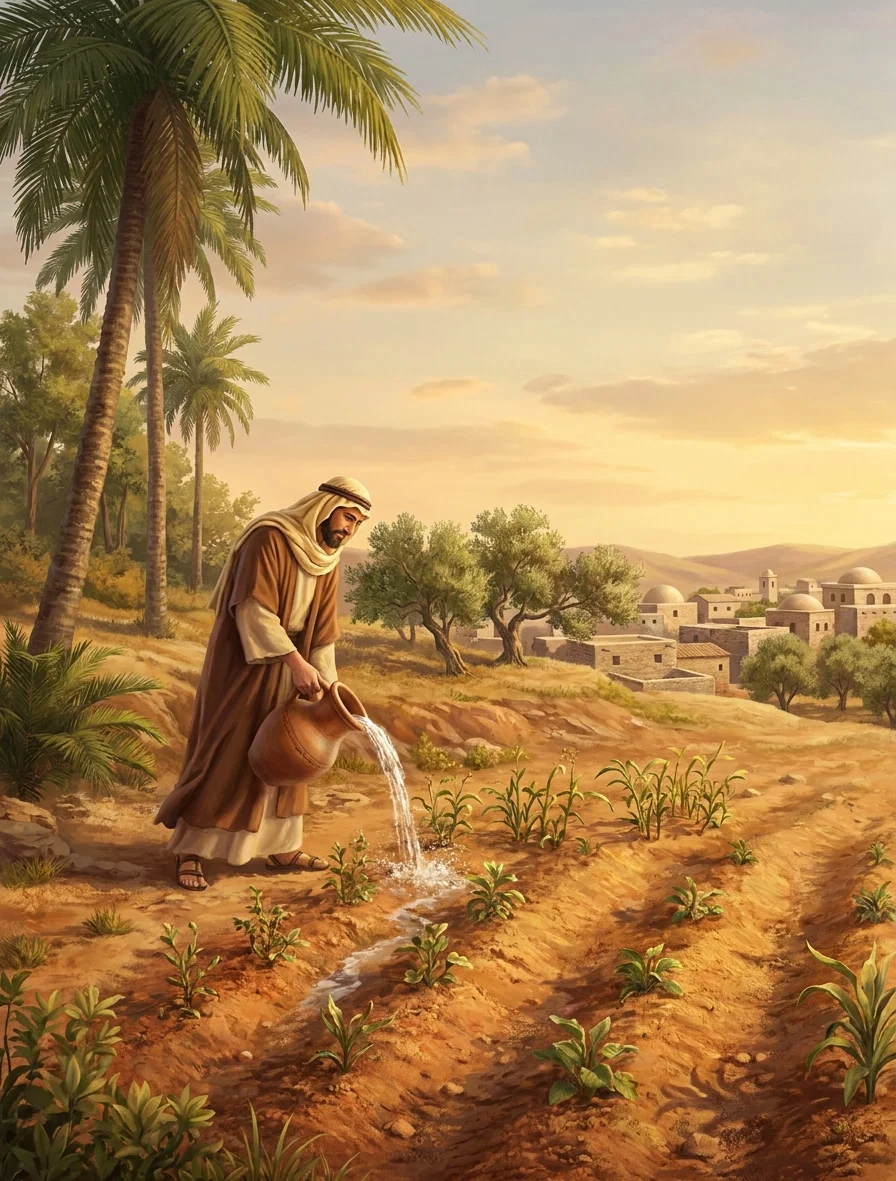 “He moistened the soil, and protected the growing plants from the fierce blasts and from the scorching sun.”
 ONE THING THOU LACKEST
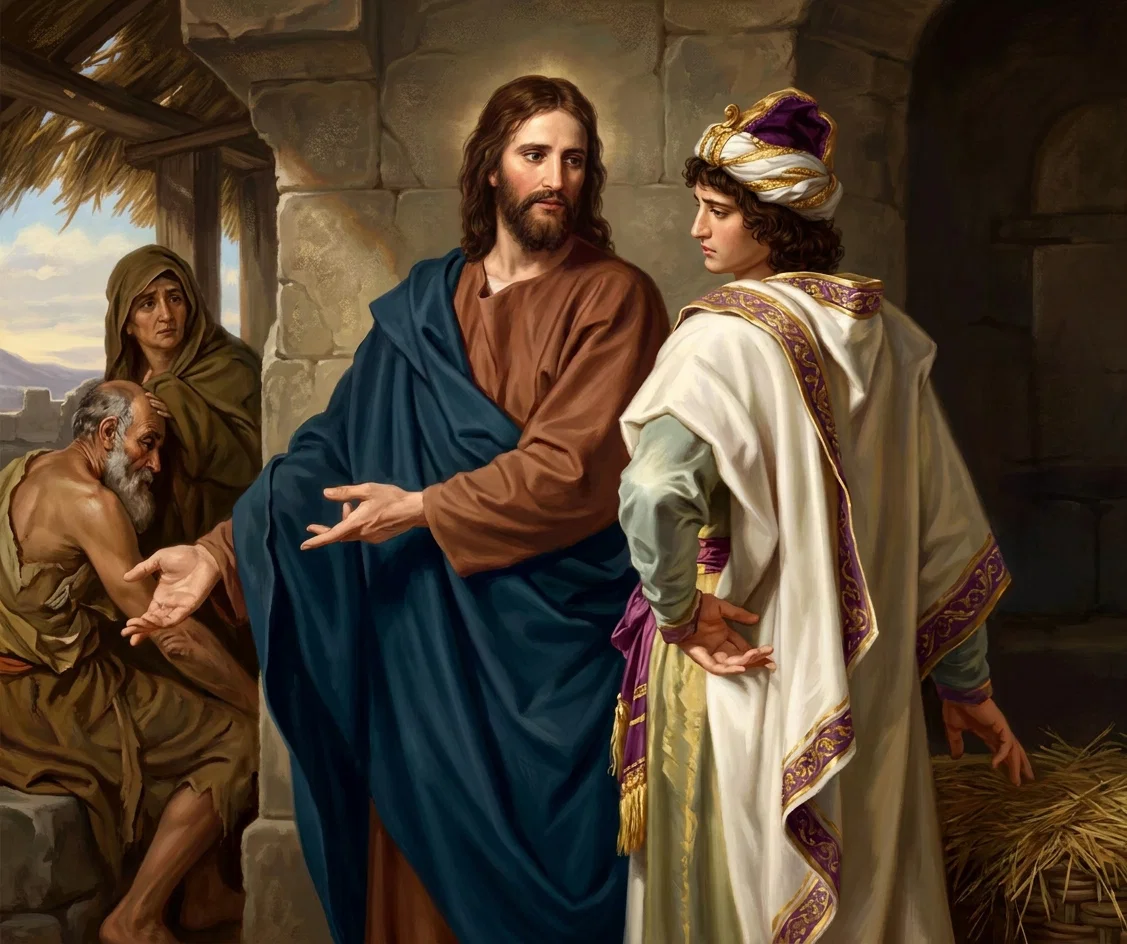 CHRIST AND THE RICH YOUNG MAN. "Go and sell that thou hast, and give to the poor, . . . and follow Me." Page 519.
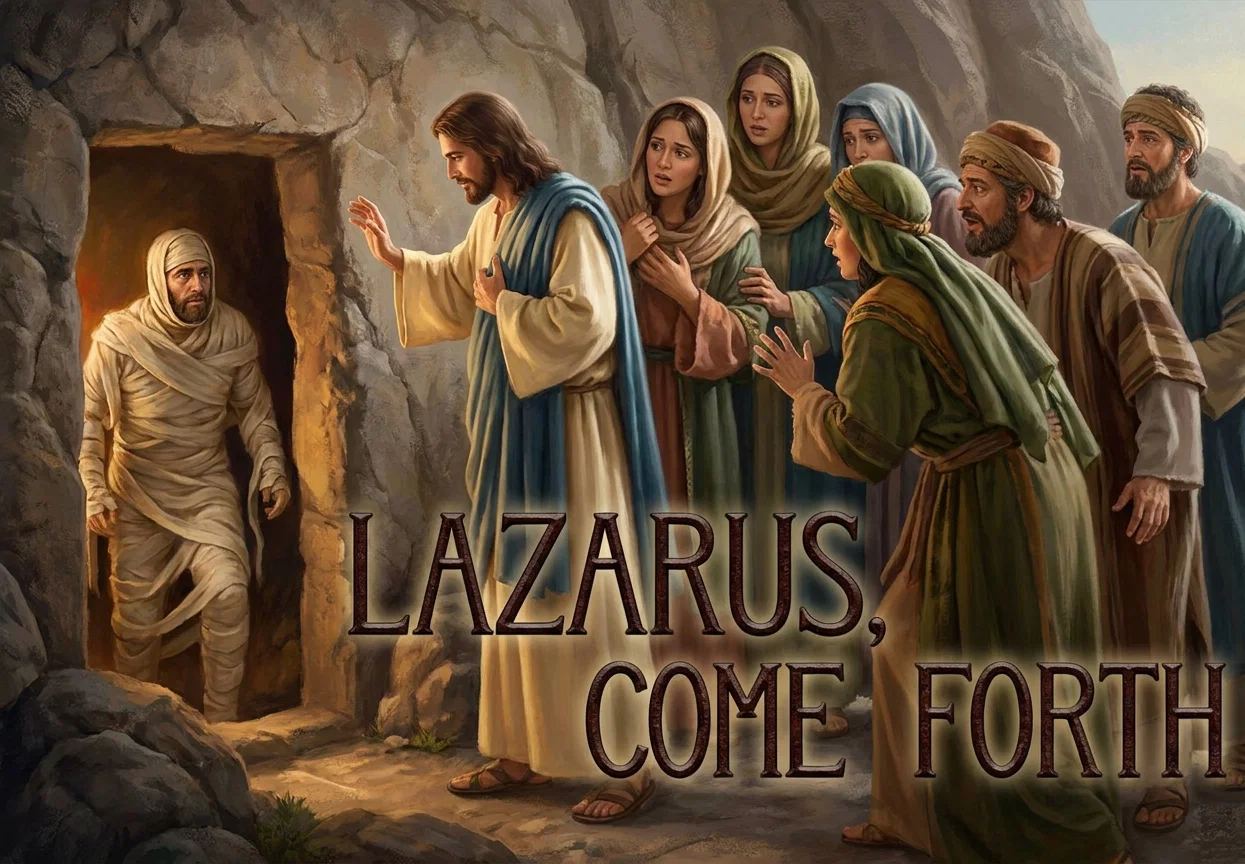 LAZARUS. COME FORTH
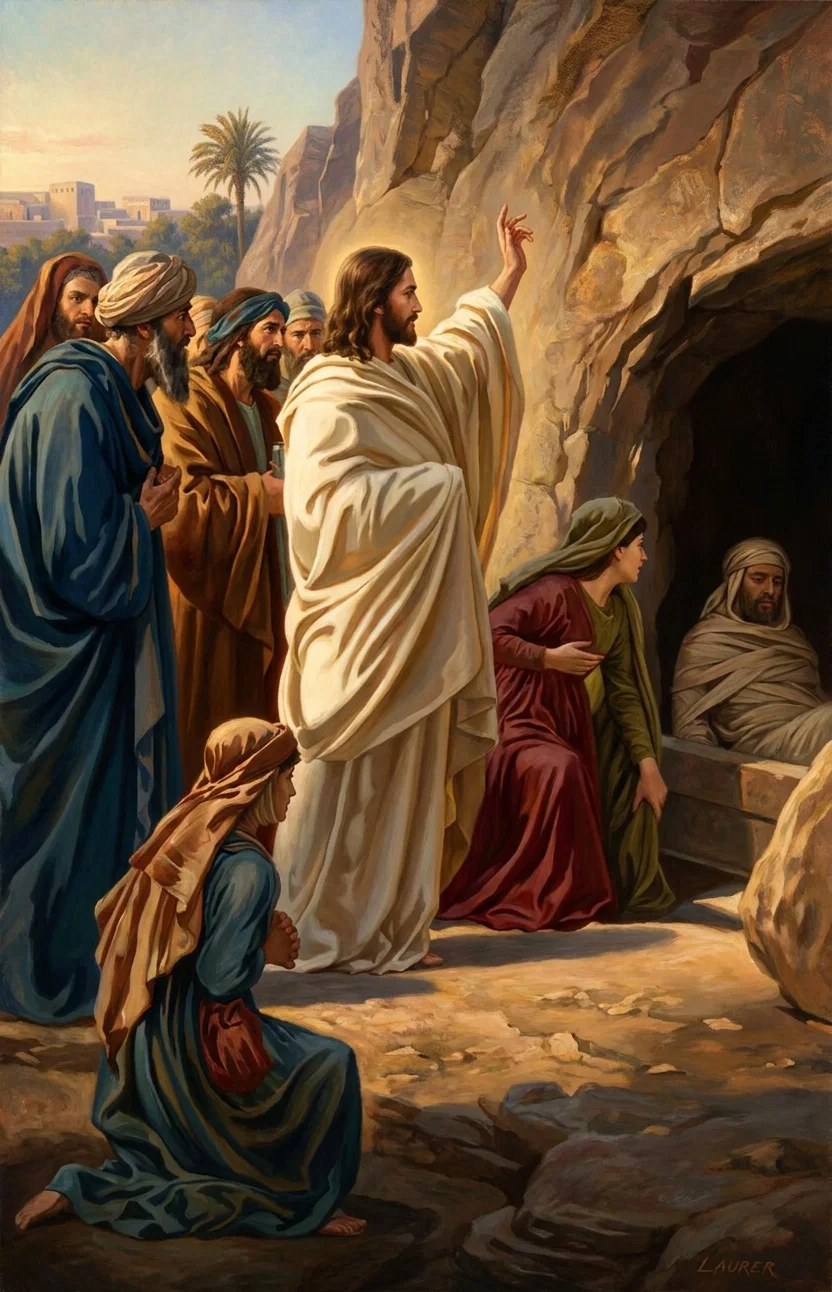 THE RESURRECTION OF LAZARUS.
 PRIESTLY PLOTTINGS
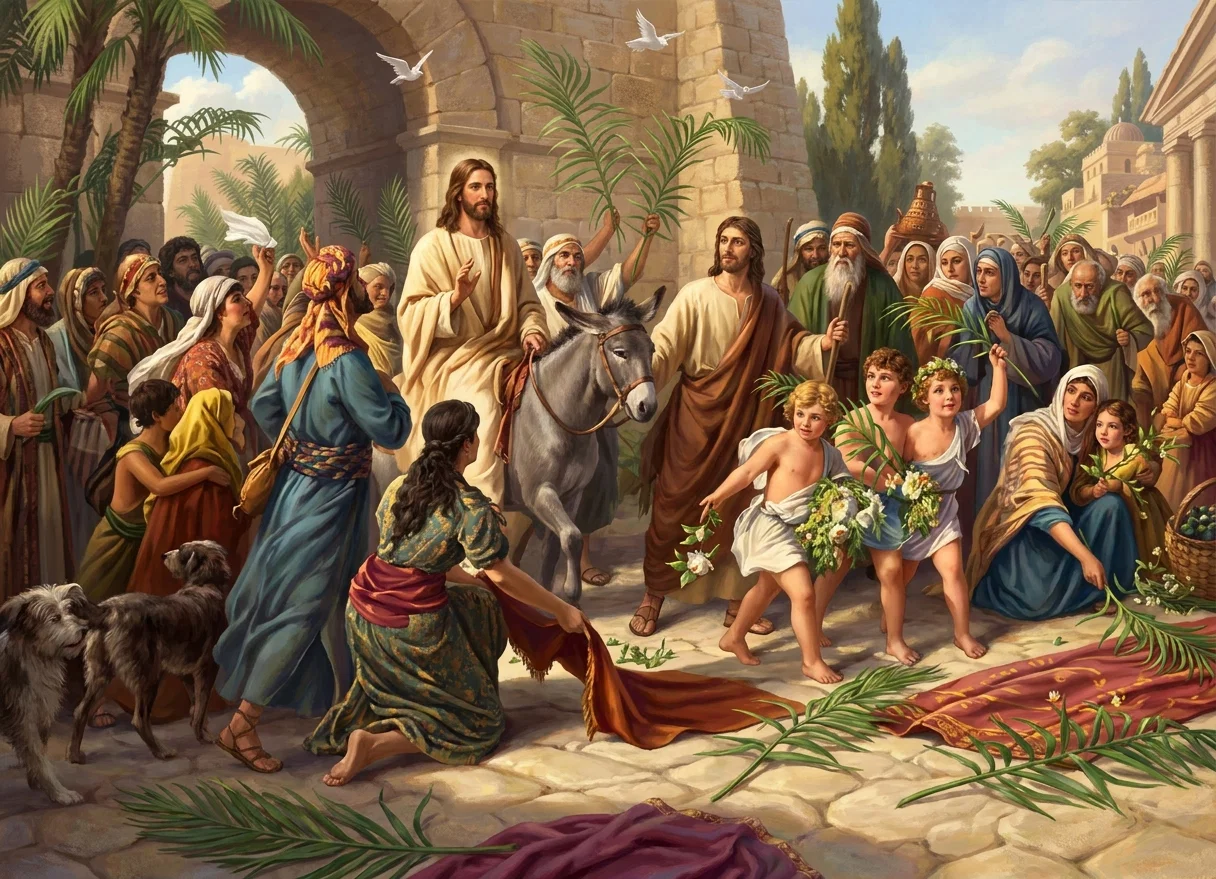 THE TRIUMPHAL ENTRY. "Thy King cometh unto thee." Page 569.
 THE LAW OF THE NEW KINGDOM
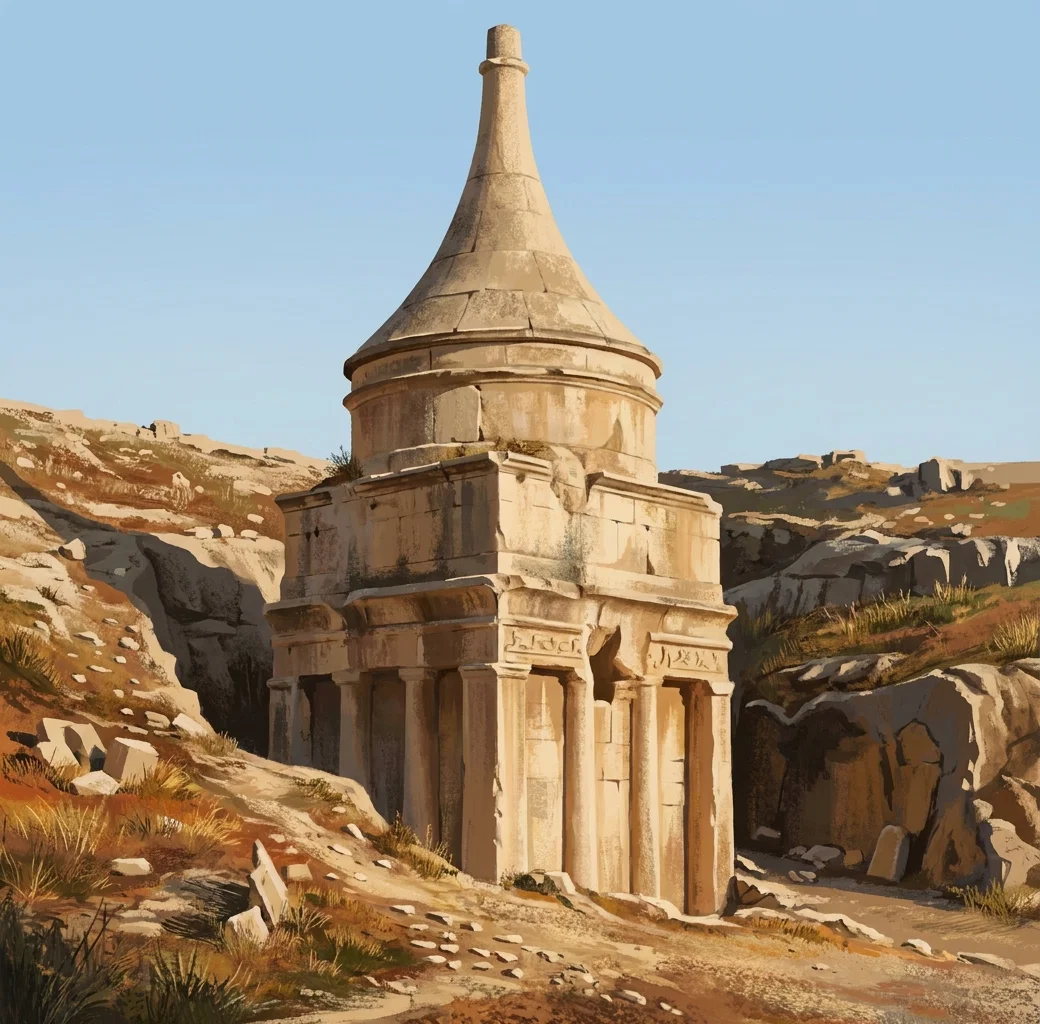 A detailed pen-and-ink architectural scene shows a small historic shrine or chapel built against a sloping hillside. The structure has a tall, tapering conical roof capped by a short cylindrical finial, a rounded upper section with projecting cornices, and a lower rectangular façade supported by columns or pilasters. Heavy cross-hatching defines shaded walls, roof edges, and surrounding vegetation. A rough path with scattered stones leads toward the building, while dense hedges or bushes flank it on the right and rise behind it on the left. Small indistinct figures or objects appear near the lower-left foreground; no lettering is visible.
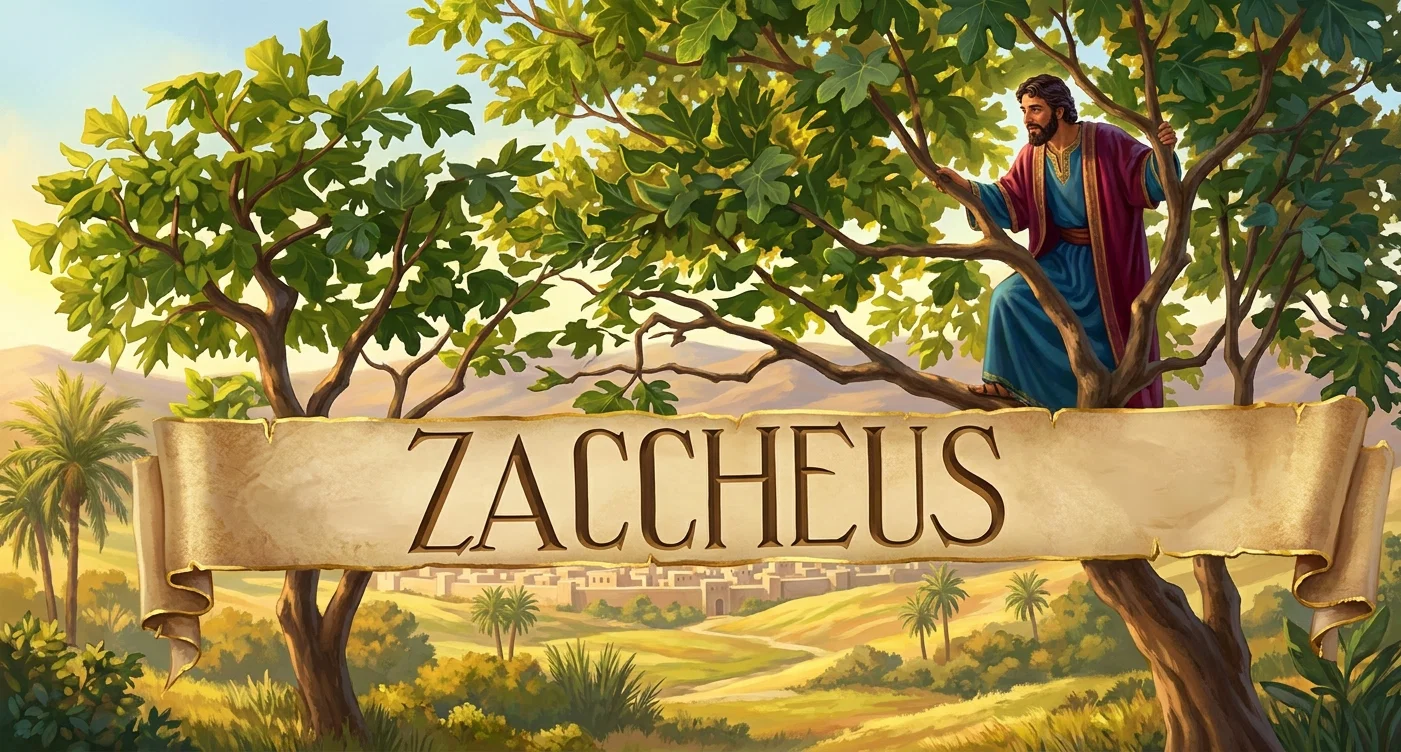 ZACCHEUS
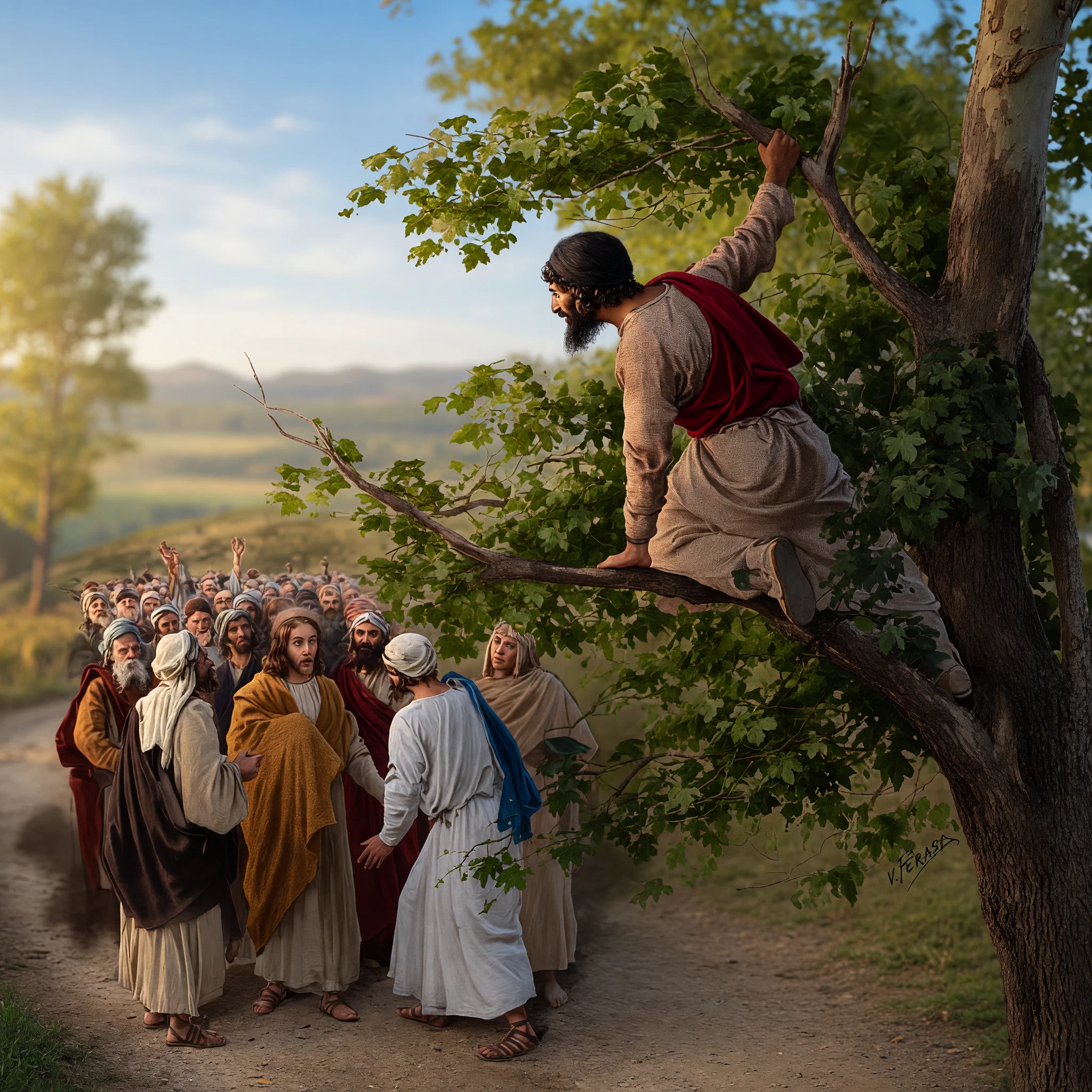 “Zaccheus scans with eager eyes to discern the one figure he longs to see,” Page 553.
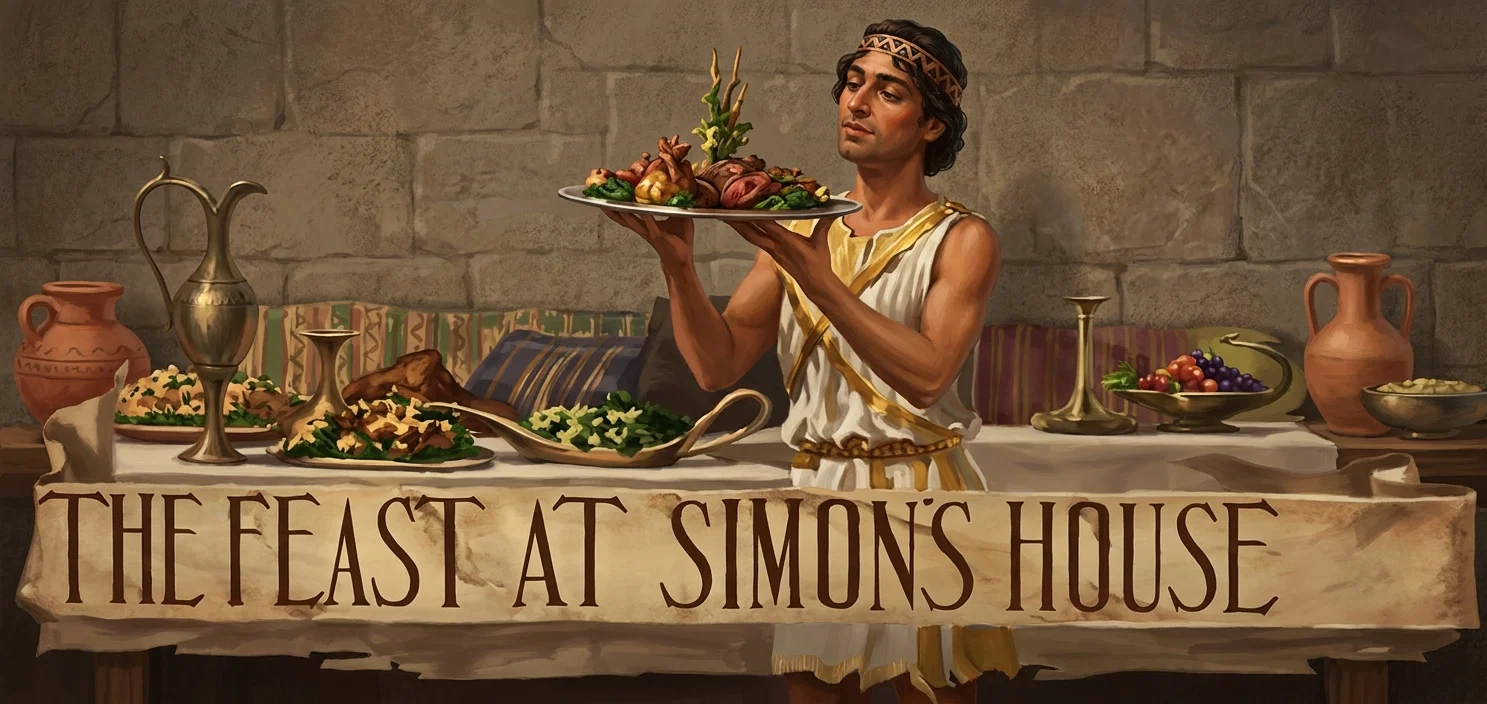 THE FEAST AT SIMON'S HOUSE
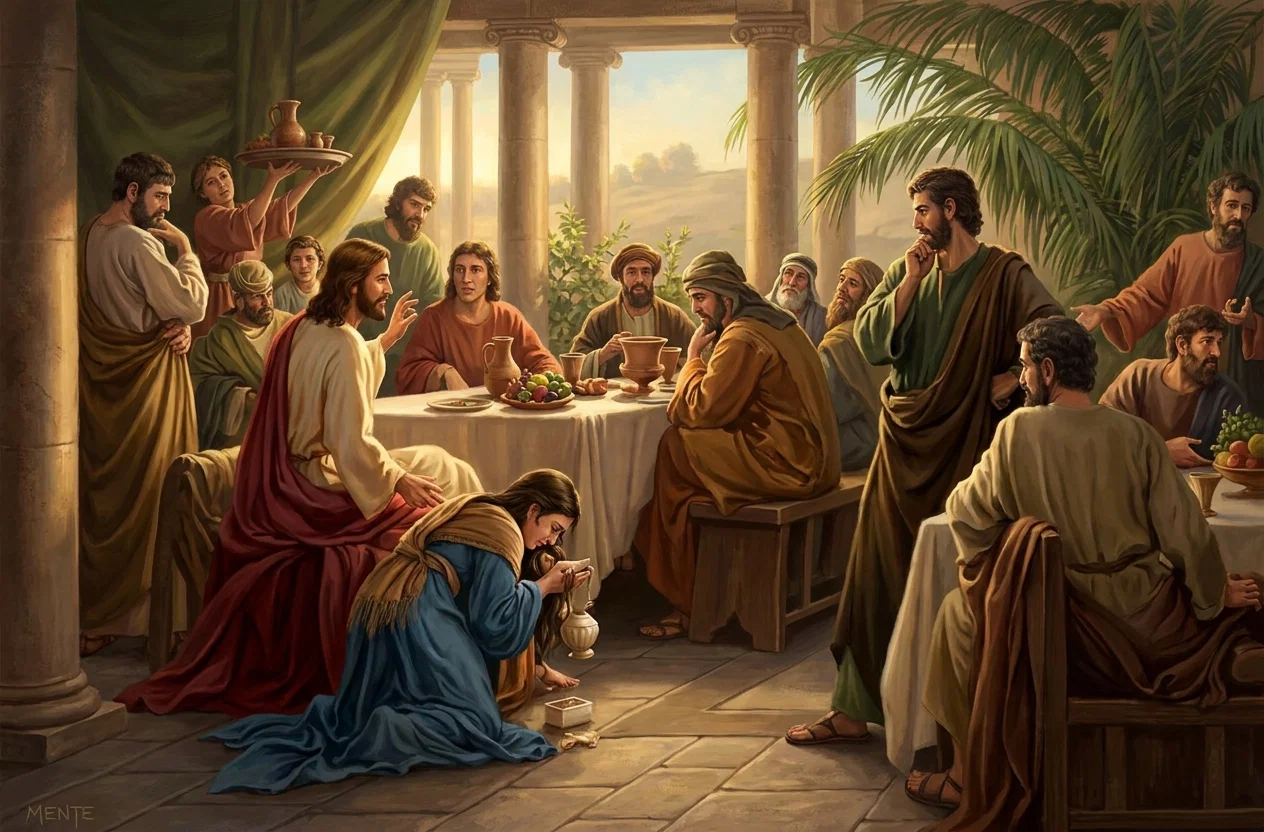 THE ANOINTING.
“She hath done what she could: she is come aforehand to anoint My body to the burying.”
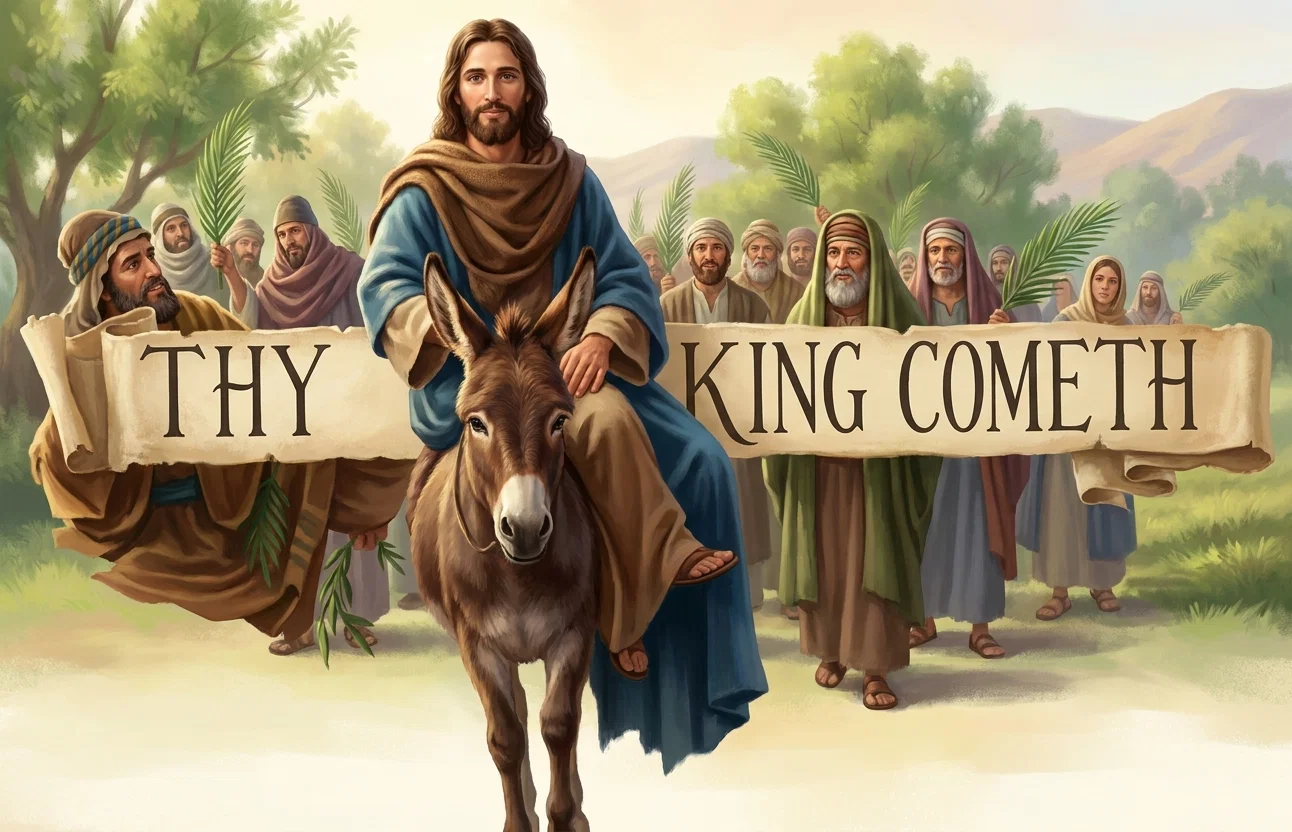 THY KING COMETH
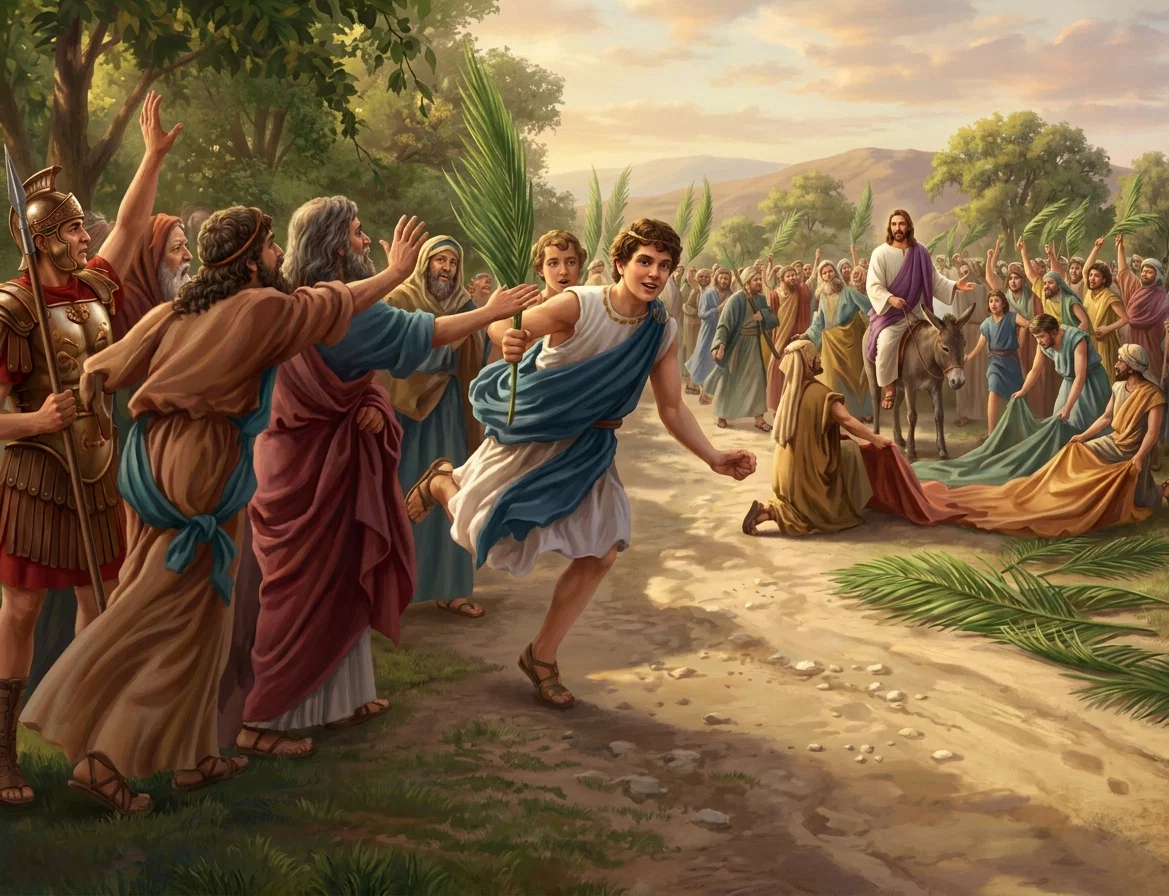 PRIESTS AND RULERS ARRESTING THE PROCESSION. “Master, rebuke Thy disciples.”
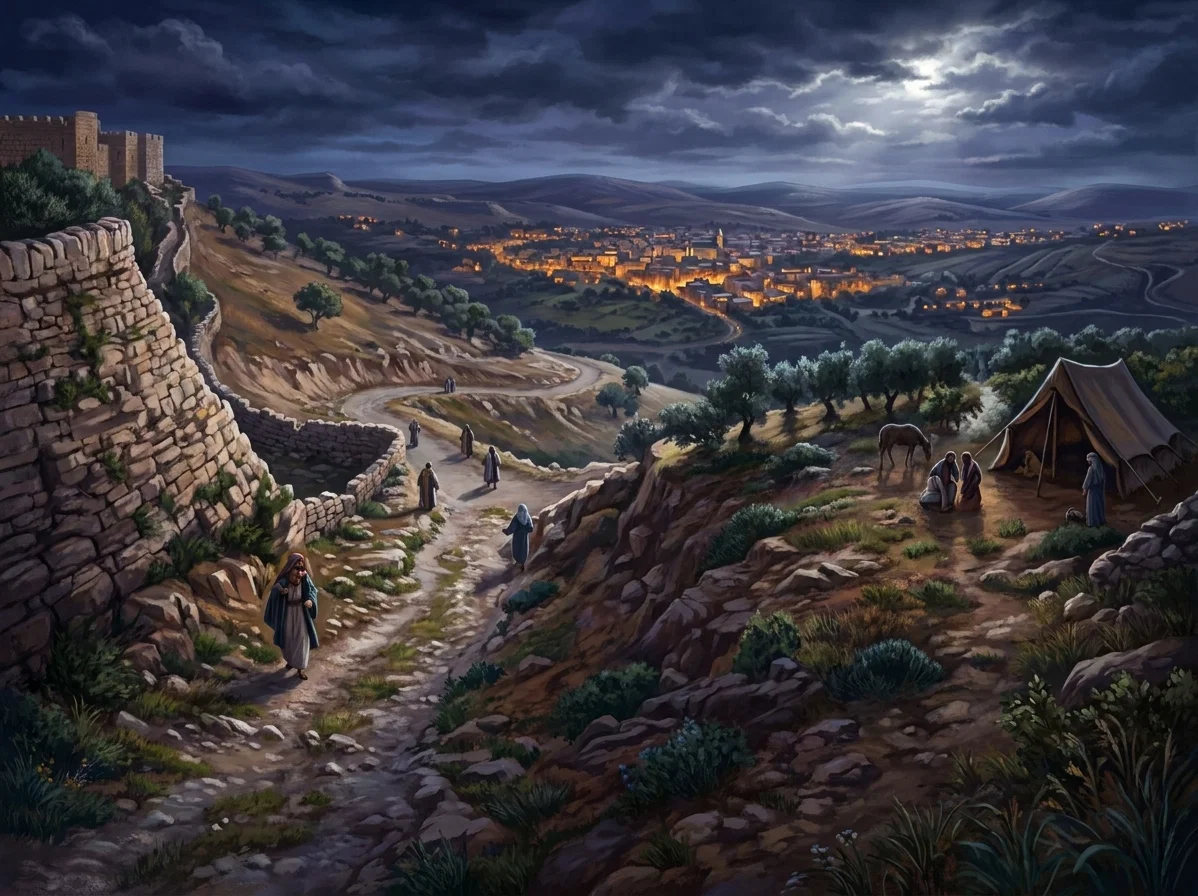 A broad, rugged landscape stretches from a steep rocky hillside on the left into a wide valley and distant rolling terrain. A rough path descends through the center, with several small human figures traveling along it, including a more distinct pair in the lower-left foreground. Dark trees or dense shrubbery occupy the right side, partly surrounding a small hut or low structure. Farther away, pale fields, scattered buildings, and winding terrain extend toward the horizon, while a prominent wall-like ruin or cliffside structure rises at the upper left.
 A DOOMED PEOPLE
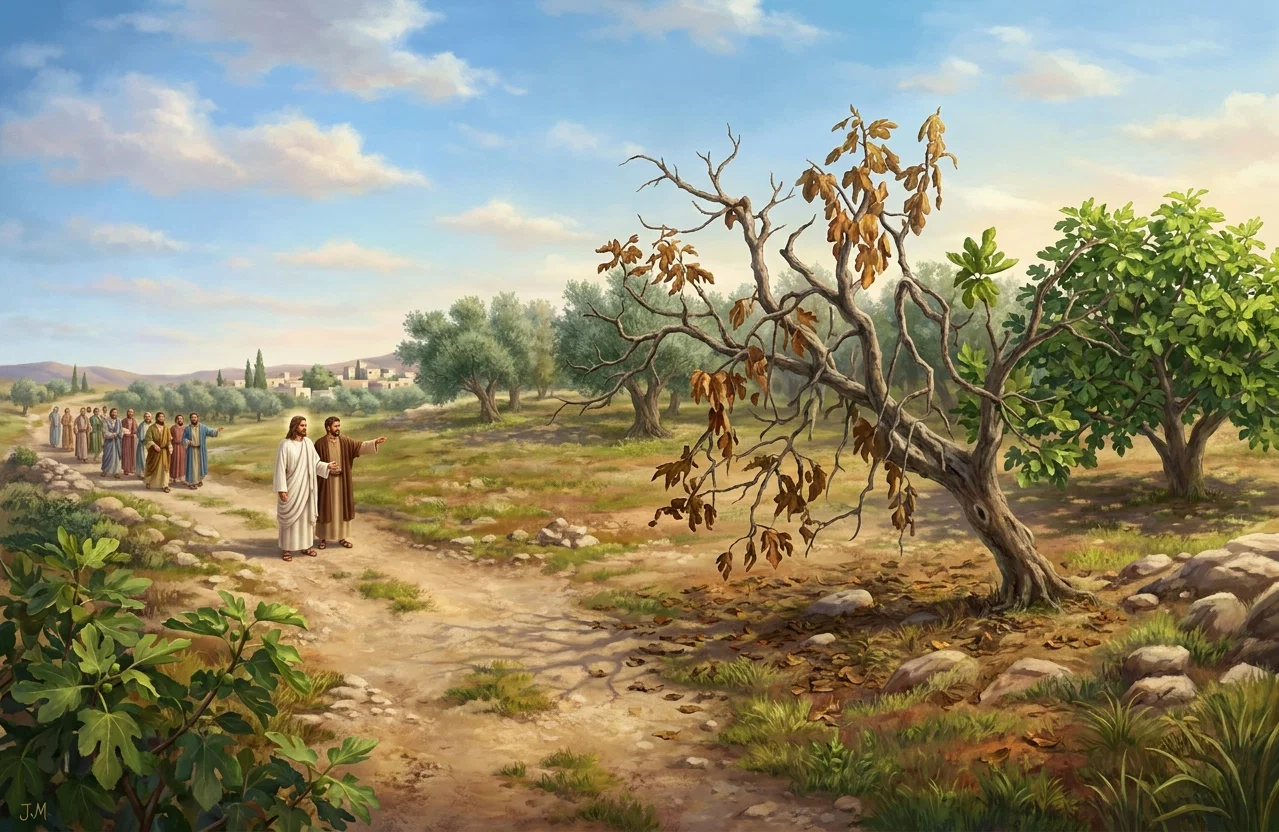 “Behold, the fig-tree
which Thou cursest is
withered away,”
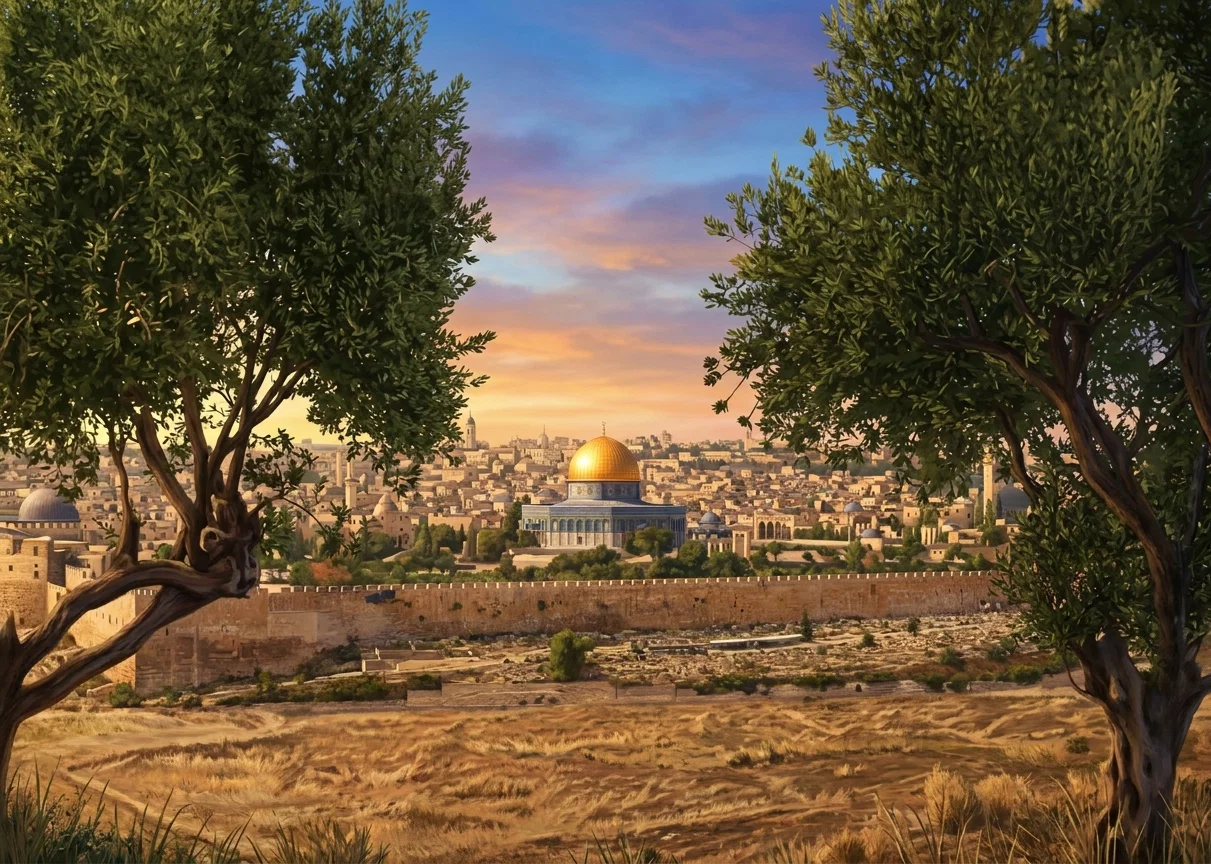 JERUSALEM.
 A black-and-white line drawing shows a hilly, fortified settlement viewed from a rough, vegetated foreground. Tall, irregular stone walls or closely packed masonry buildings form layered terraces across the middle and background, with narrow passages between them. Dense shrubs and grasses fill the lower ground, while a large leafy tree rises on the right and smaller bushes grow among the walls. The scene is quiet and unpopulated, with no visible lettering, signs, animals, or distinct human figures.
 THE TEMPLE
CLEANSED AGAIN
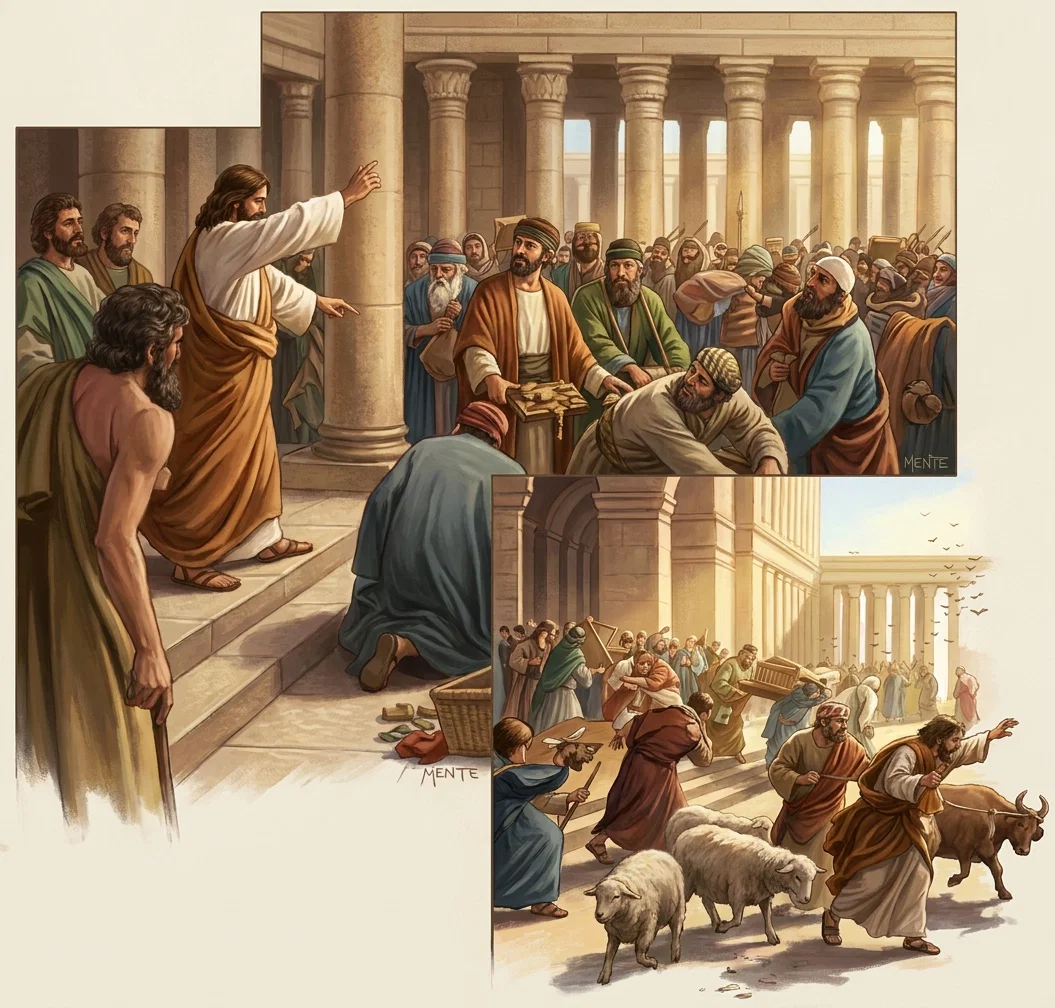 There were none who dared question His authority.”
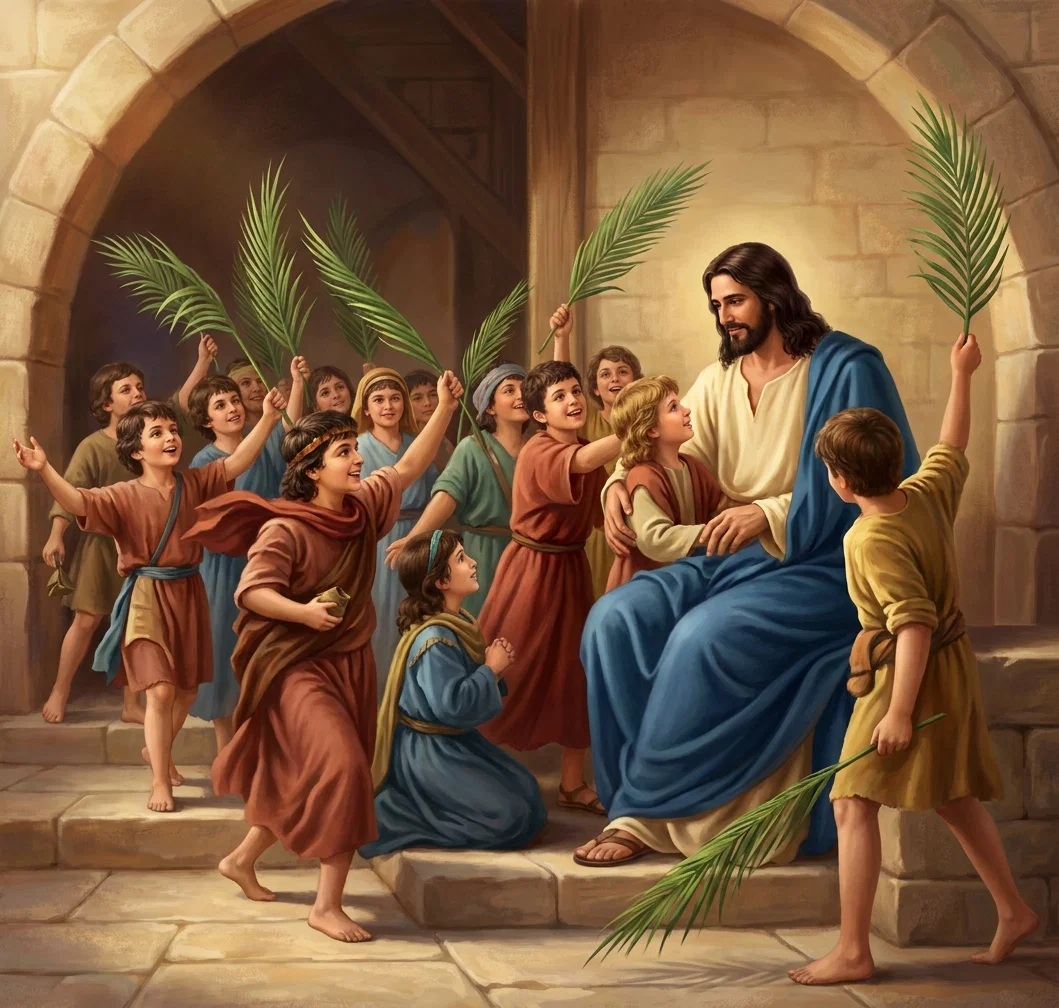 “Now with glad voices the children sounded His praise!”
 CONTROVERSY
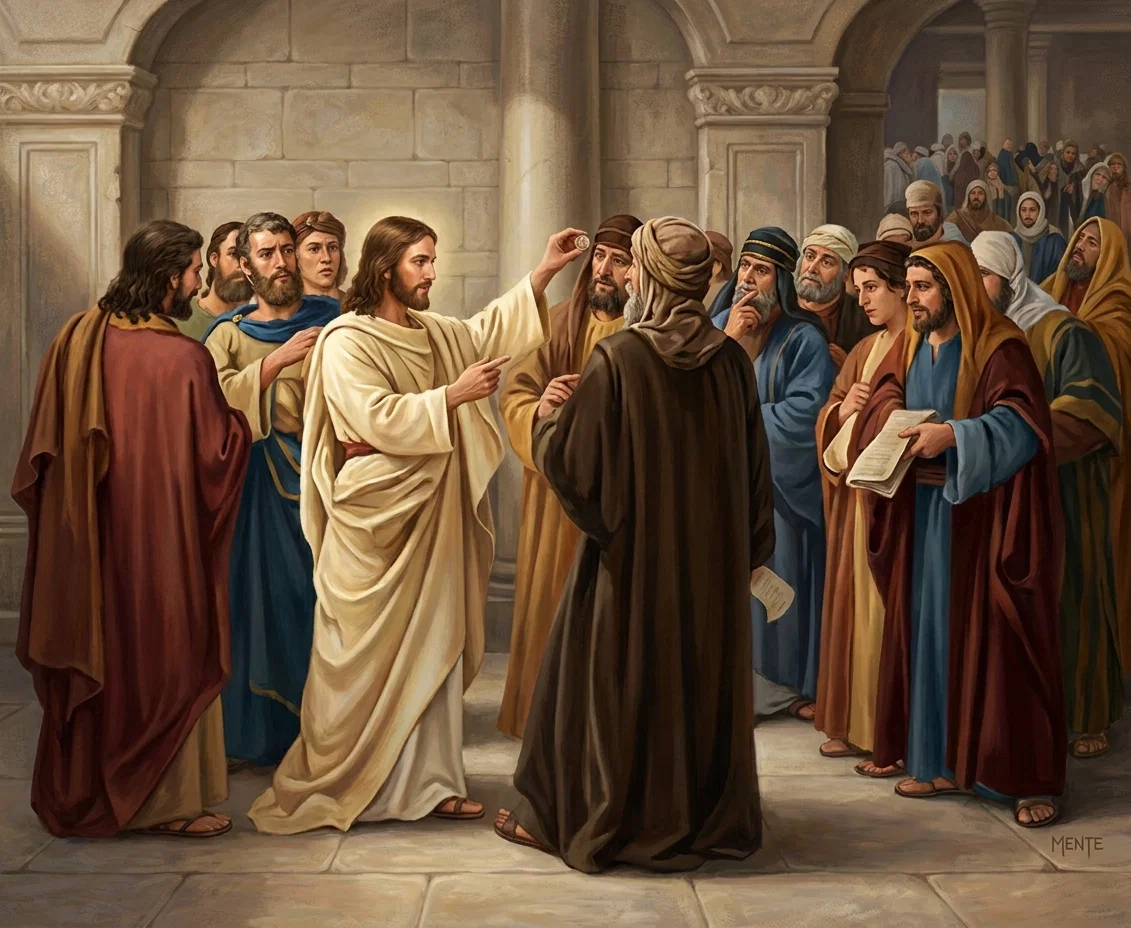 “They were still more confused when He added, ‘Show Me a penny.’”
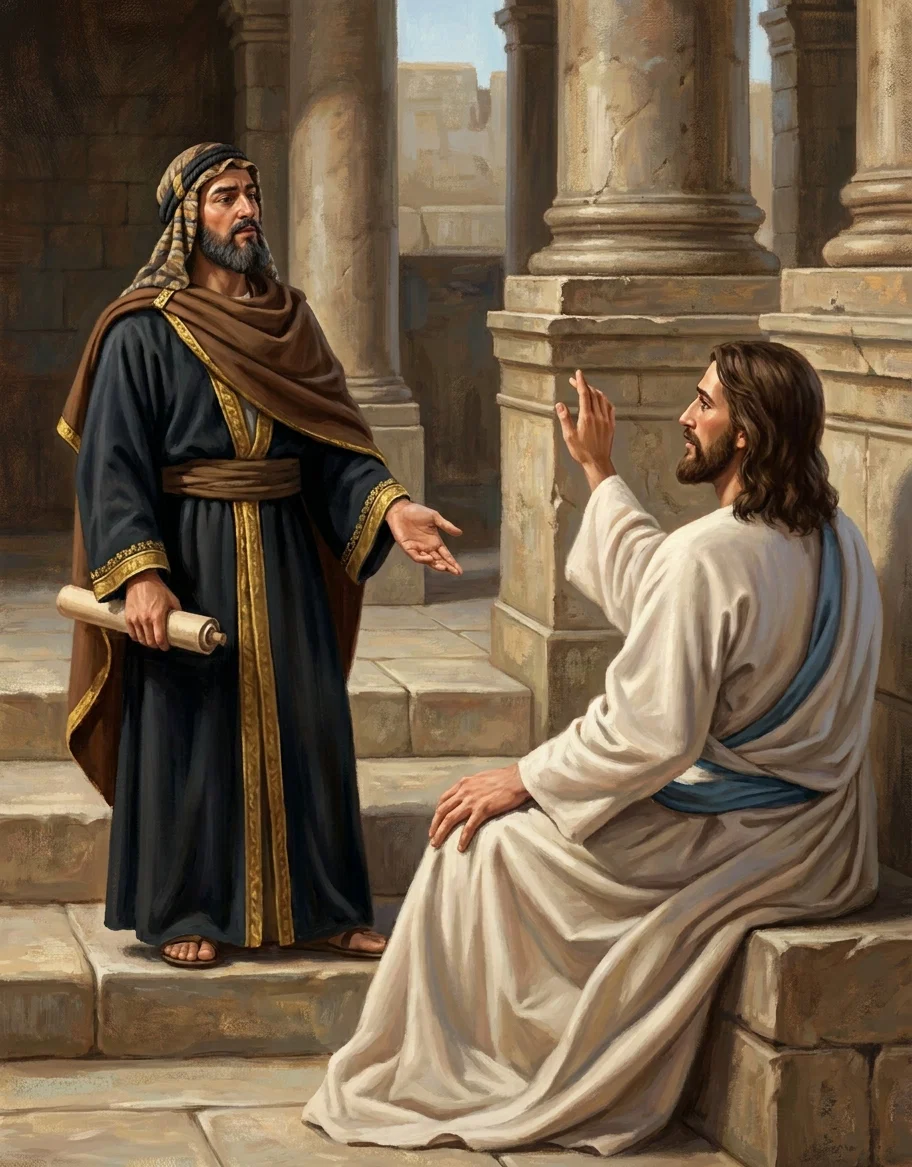 “The lawyer approached Jesus with a direct question, ‘Which is the first commandment of all?’”
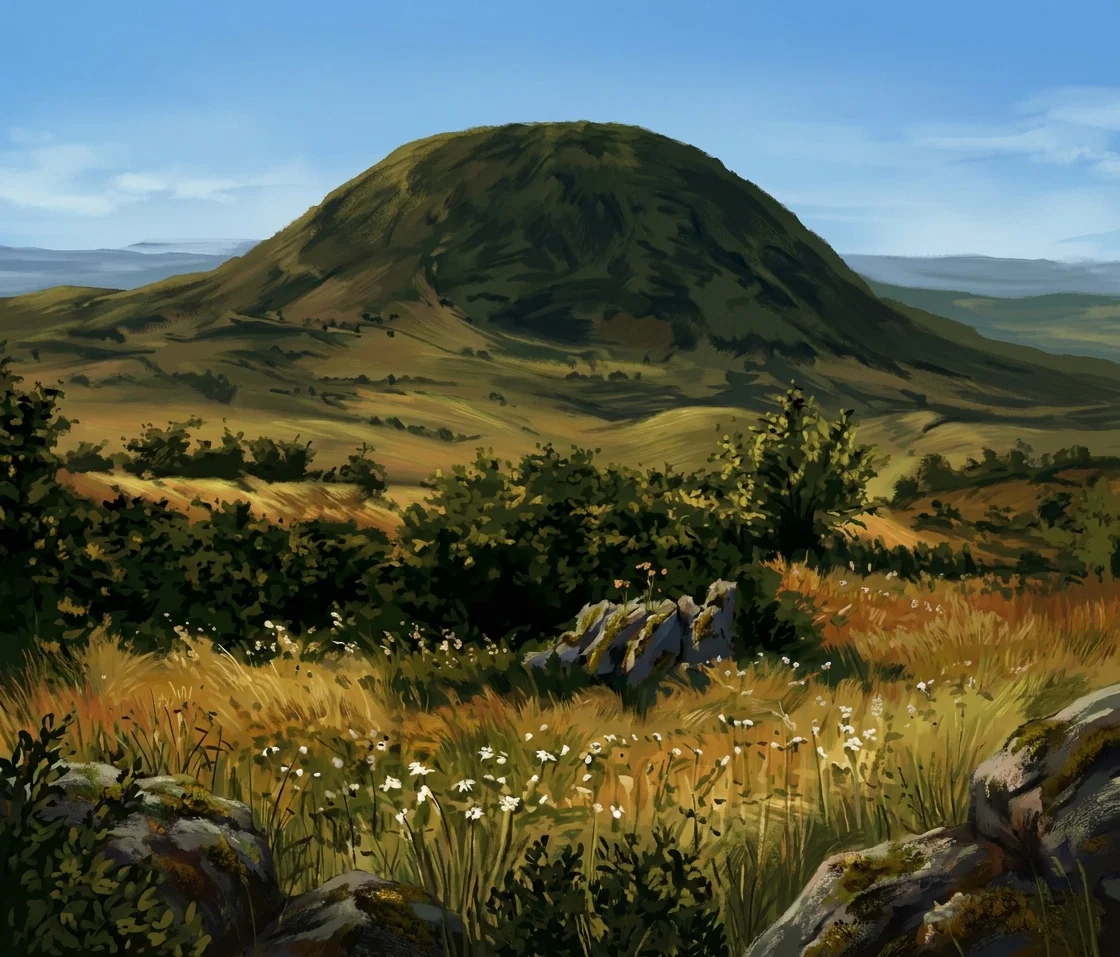 A broad, rounded, darkly shaded hill or mountain rises prominently in the center of a quiet, open landscape. Its gently sloping sides descend into a sparsely vegetated valley and low, hazy ridges stretching across the horizon. The foreground is filled with rough grasses, shrubs, and scattered small trees, including a denser cluster near the center and right, with a rocky or uneven patch along the bottom edge. No people, animals, buildings, or visible lettering appear within the scene.
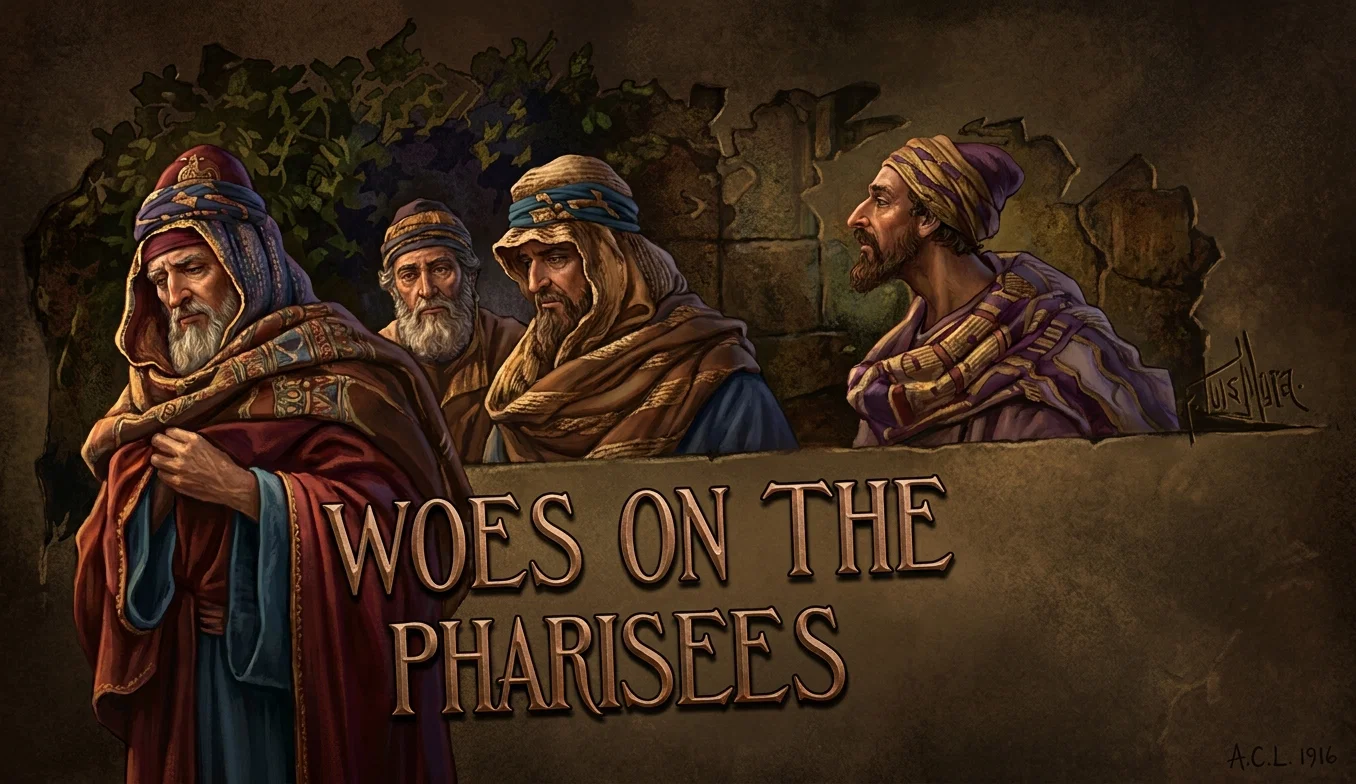 WOES ON THE PHARISEES
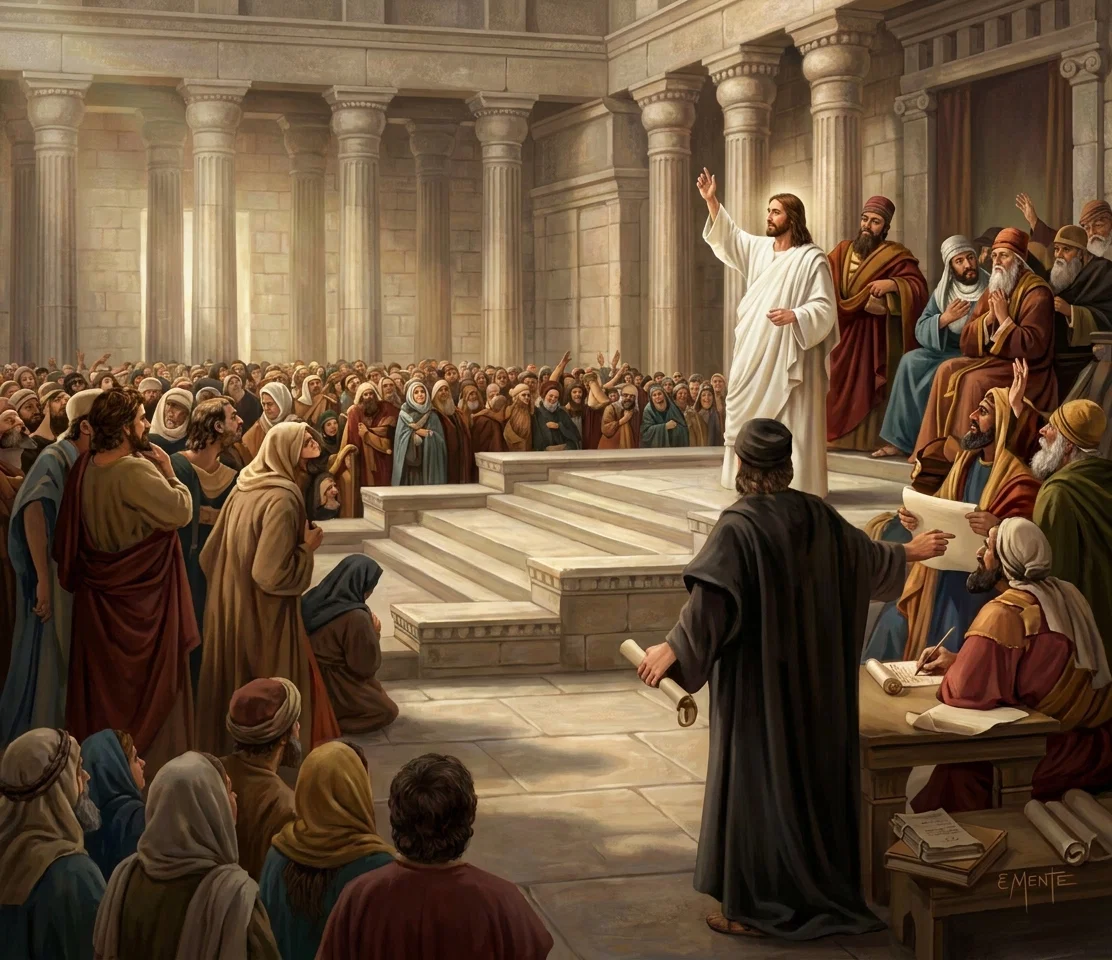 “Never before had such a scene been witnessed. There stood the young Galilean, bearing no earthly honor or royal badge.”
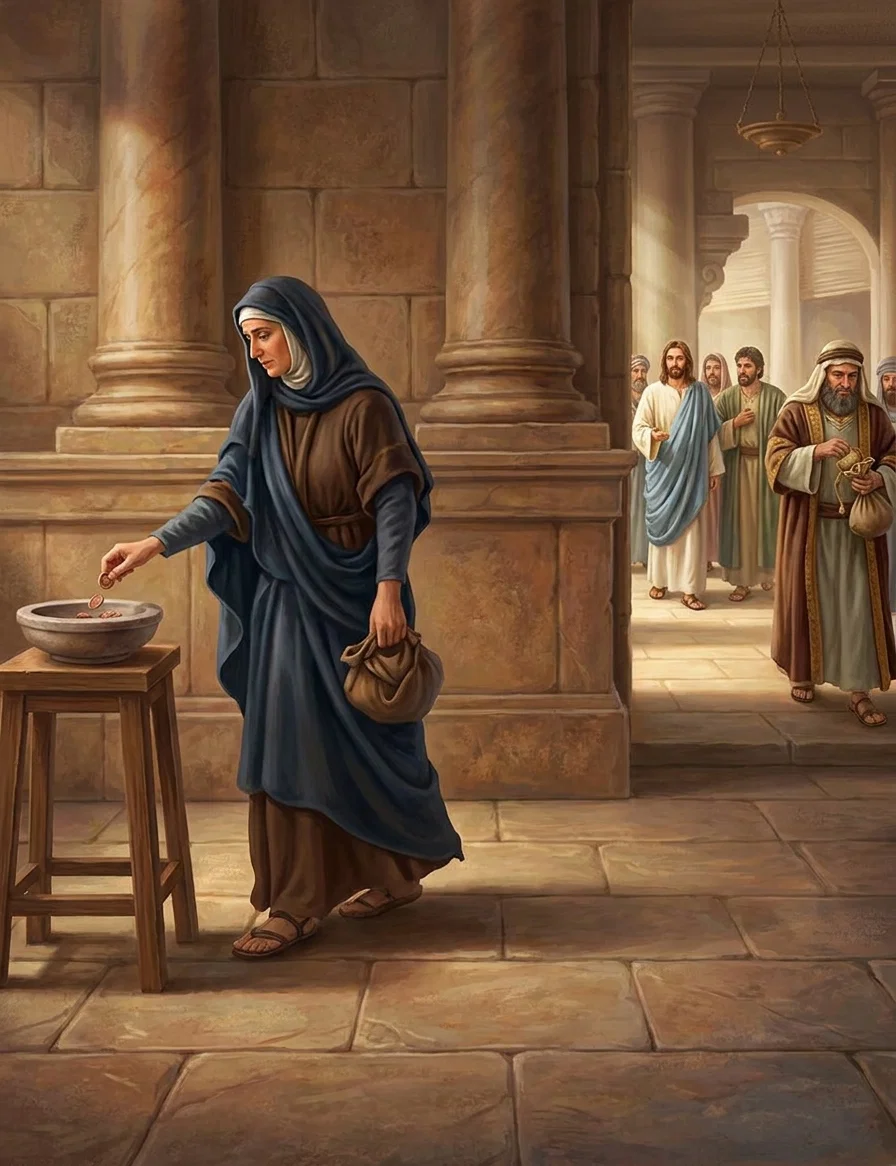 “Watching her opportunity, she hurriedly threw in her two mites.”
 IN THE OUTER COURT
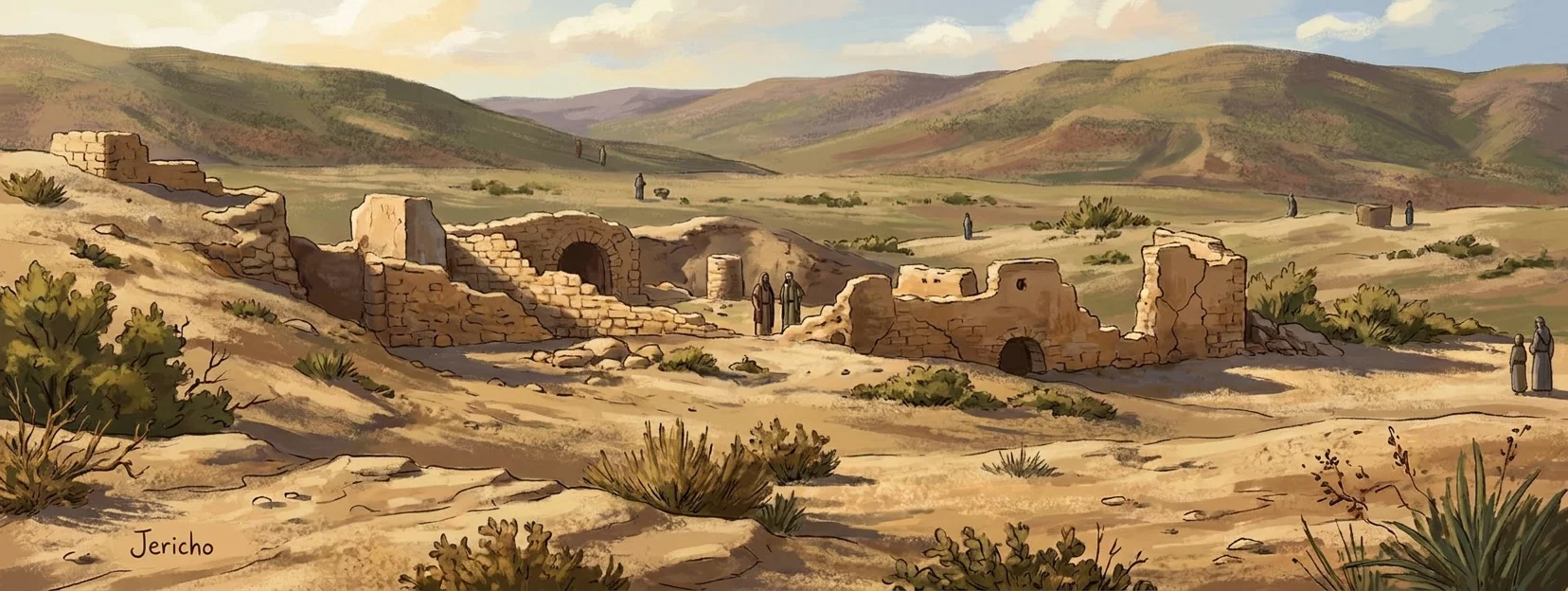 Jericho
 ON THE MOUNT OF OLIVES
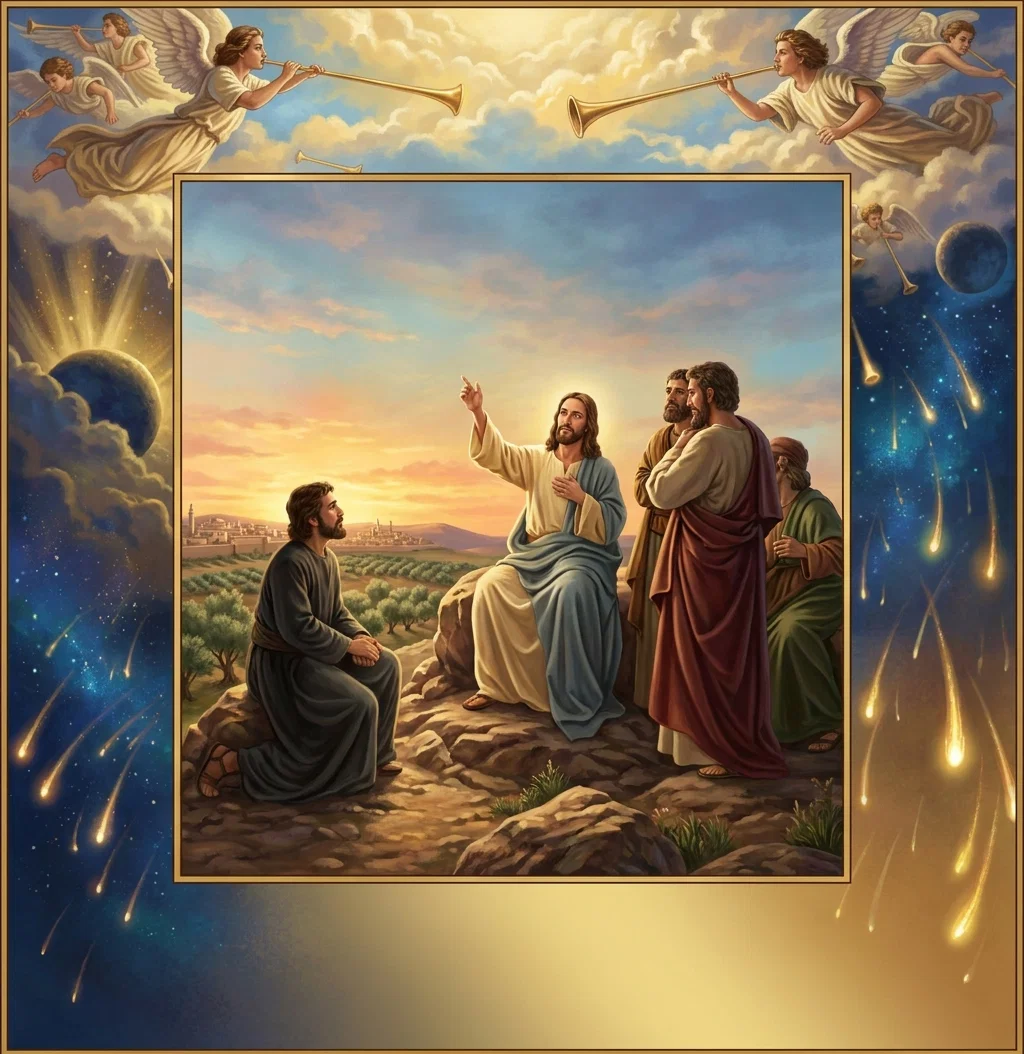 “When shall these things be? and what shall be the sign of Thy coming?”
 A black-and-white line drawing shows a rugged stone structure or fortified ruin beside a broad, shallow body of water. The main masonry wall stretches across the upper center, built from irregular blocks and topped with uneven rubble, while a smaller projecting stone barrier extends toward the right foreground. On the far left stands a simple rectangular block-like building or tower. The shoreline is scattered with rocks, broken slabs, and low mounds, and rippling water occupies the lower and right portions of the scene. No people, animals, or lettering are visible.
 THE LEAST OF THESE, MY BRETHREN
CHAPTER SEVENTY.
 A long elevated stone structure stretches diagonally across a broad, rugged valley, appearing like a bridge, viaduct, or dam with a continuous dark side wall and repeated vertical divisions beneath it. Steep rocky ground and scrub occupy the foreground, while winding paths or channels lead toward the structure. Beyond it, the landscape rises into layered hills and cultivated-looking terraces, with scattered trees and small indistinct objects or figures near the right side. A few faint handwritten-looking marks or labels appear in the upper-left area of the drawing.
 A SERVANT OF SERVANTS
 SHECHEM.
 IN REMEMBRANCE OF ME
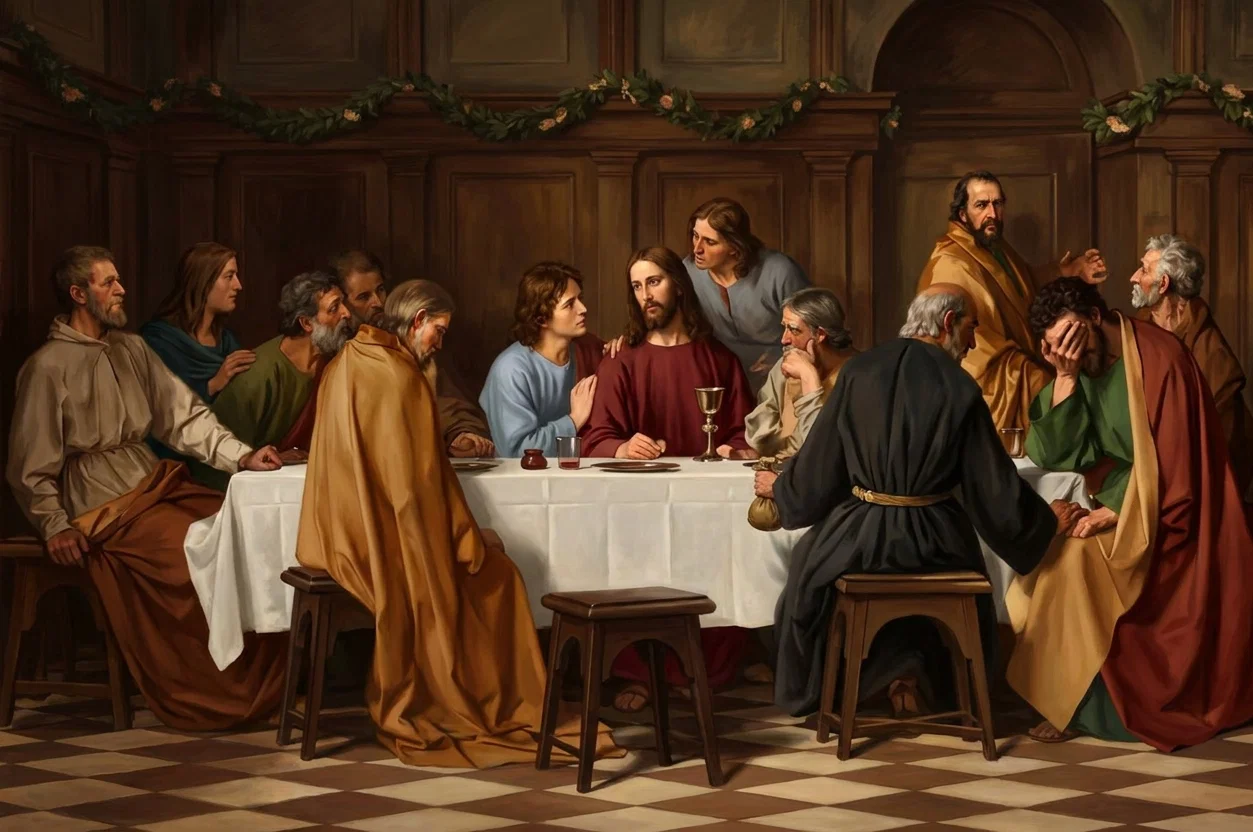 THE LAST SUPPER.
“In surprise and confusion at the exposure of his purpose, Judas rose hastily to leave the room.” Page 654.
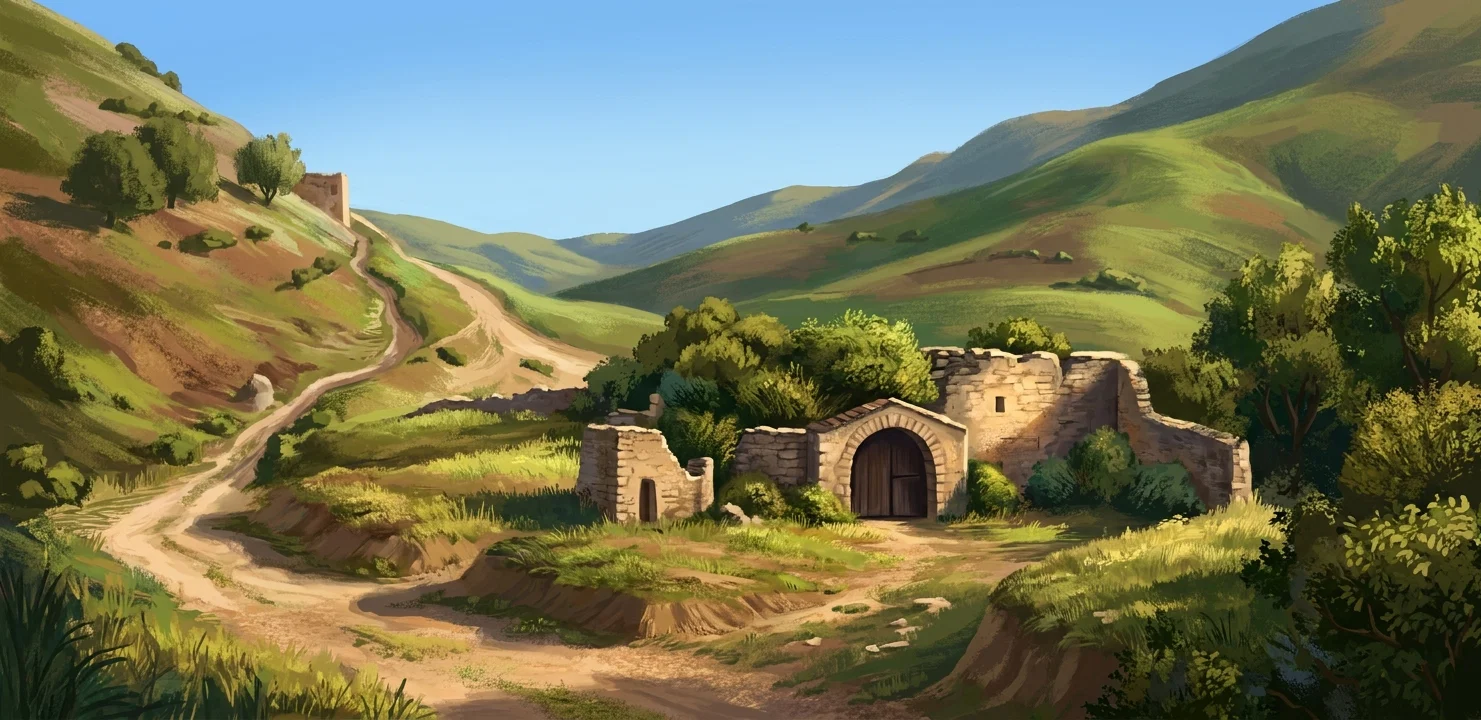 A sparse, hilly landscape surrounds a low stone tomb or rock-cut structure in the center of the scene. The building has a broad, dark arched entrance on the right and a smaller rectangular opening or doorway near the middle, with rough masonry and heavy shading suggesting stonework. Sloping ground and scattered vegetation extend around it, while a few trees or shrubs rise behind the structure and a bare ridge runs across the distant background. No people, animals, or lettering are visible.
 LET NOT YOUR HEART BE TROUBLED
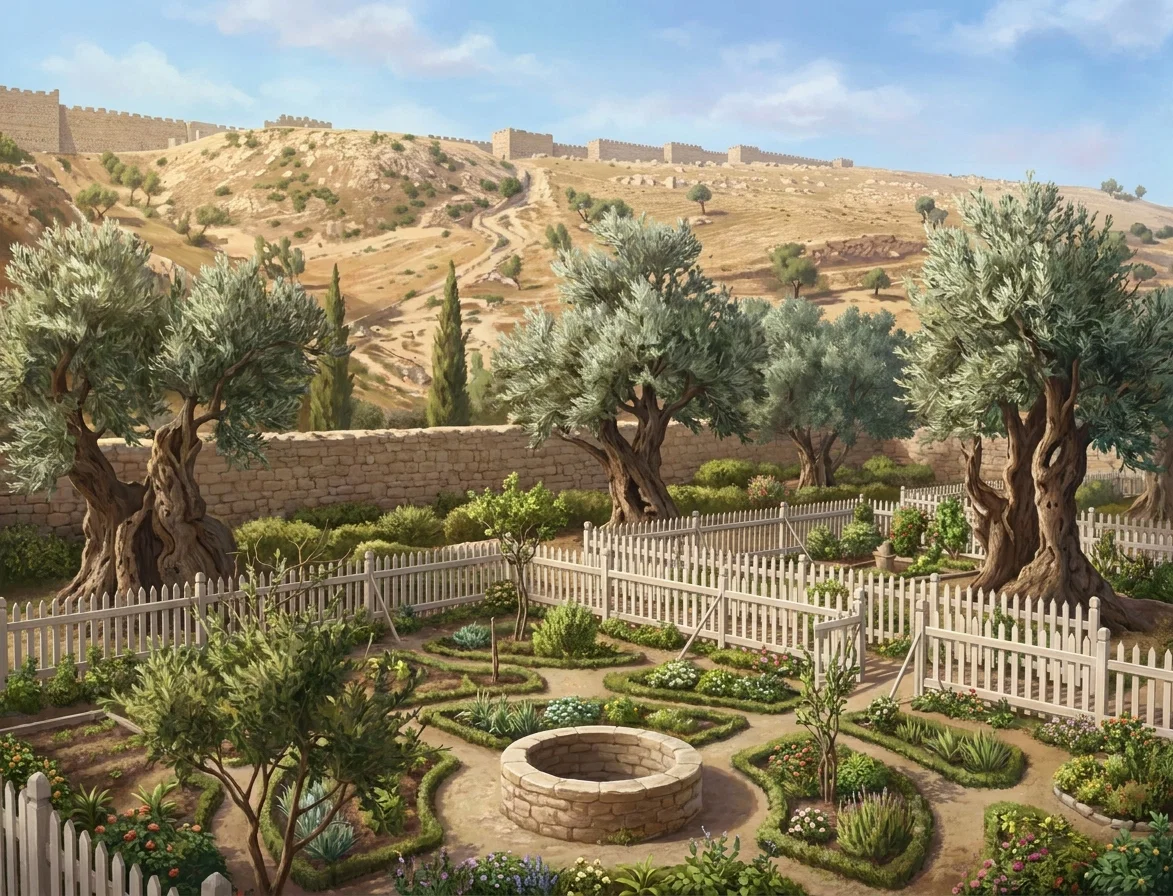 MODERN GETHSEMANE.
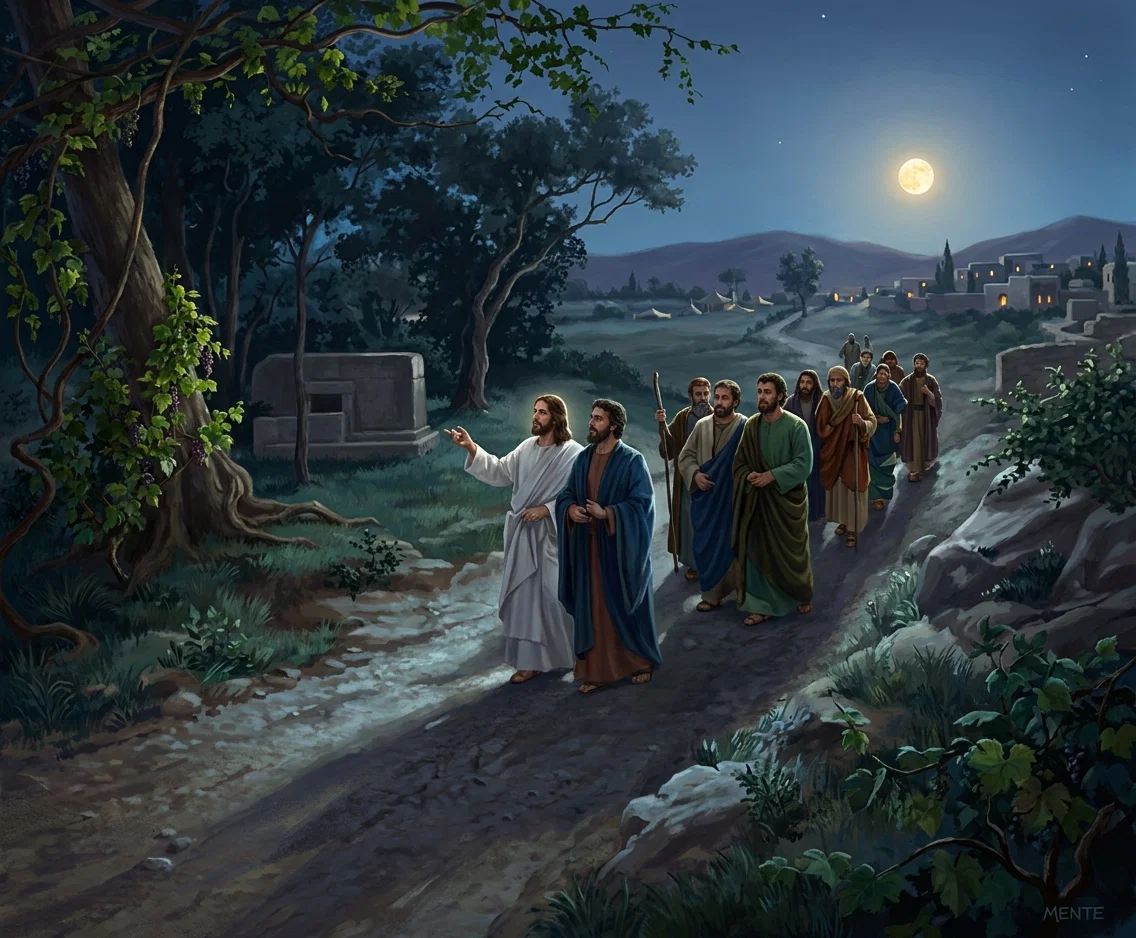 “The moon is shining bright, and reveals to Him a flourishing grape-vine.”
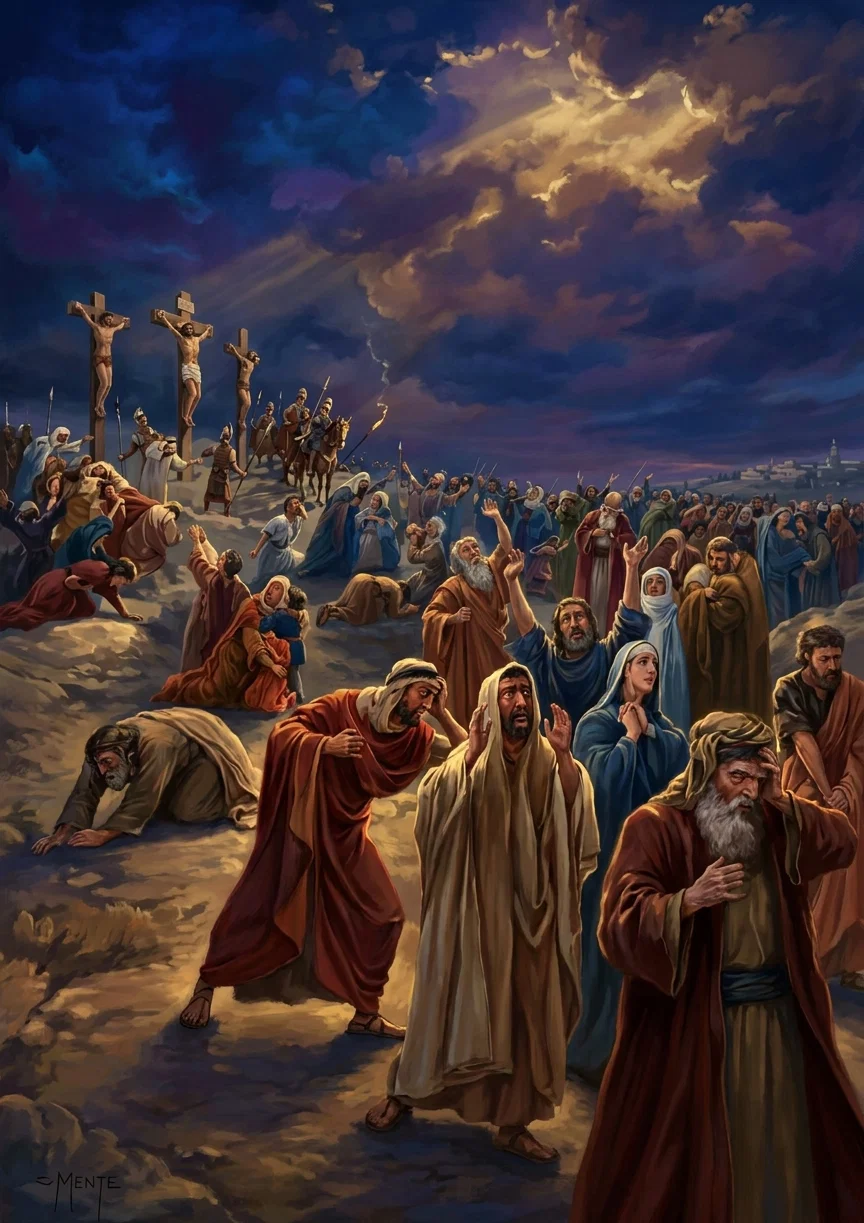 THE CRUCIFIXION.
“A nameless terror held the throng.” Page 754
 GETHSEMANE
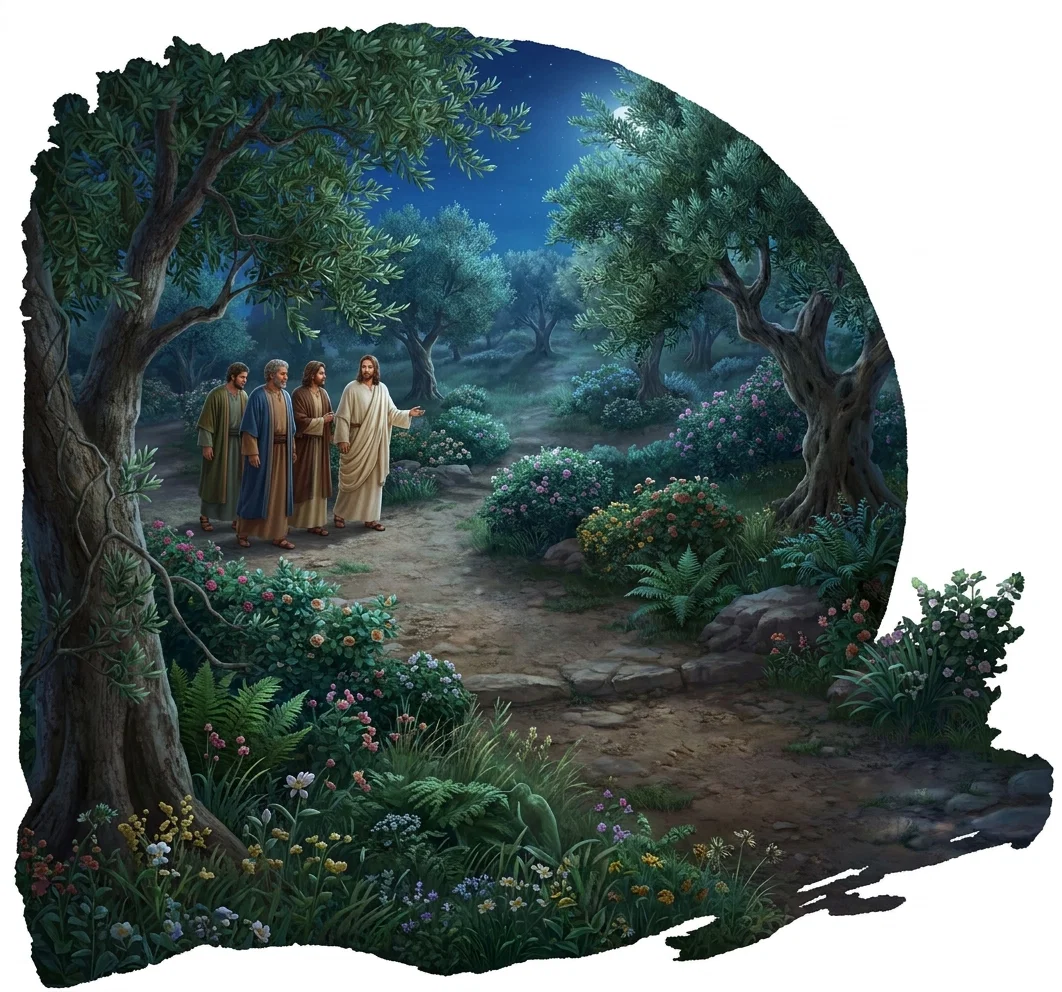 “With Peter, James, and John, He entered its secluded recesses.”
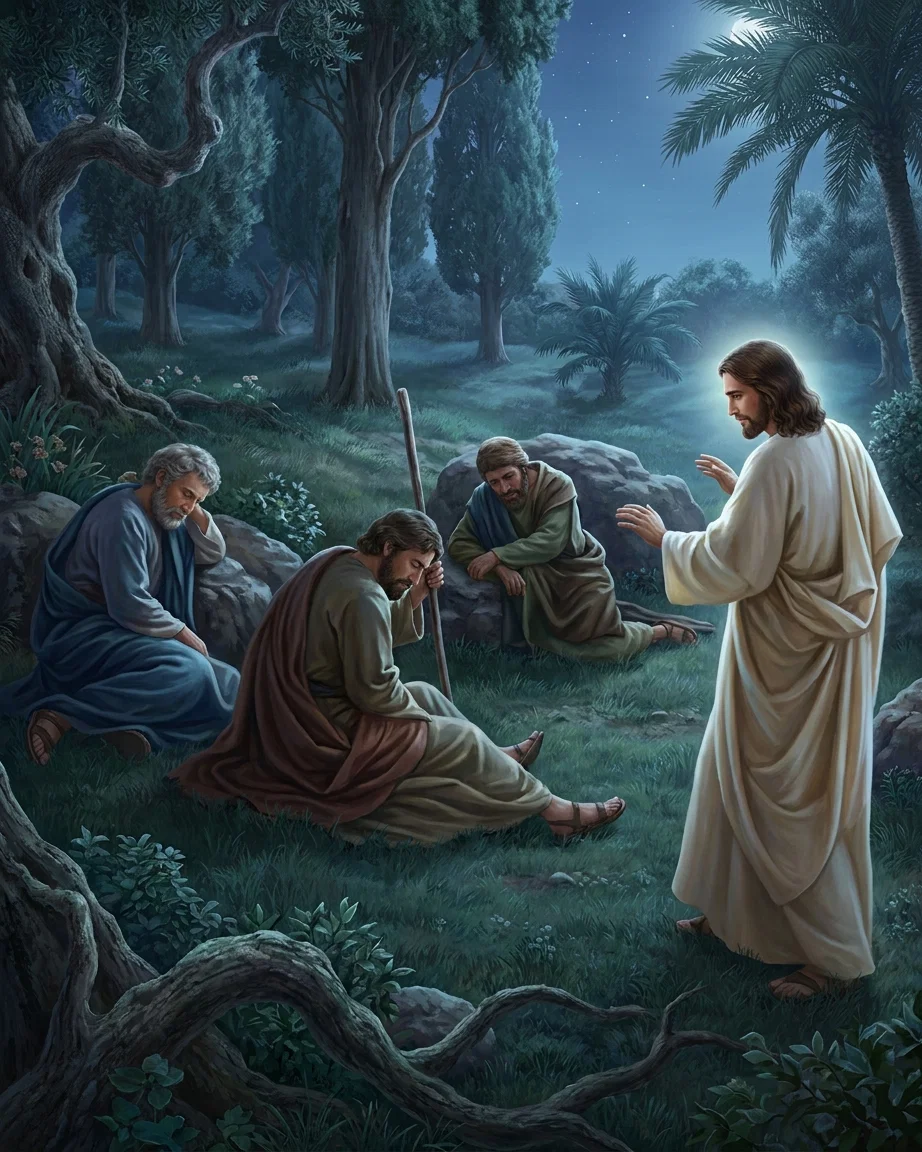 “He findeth them asleep.”
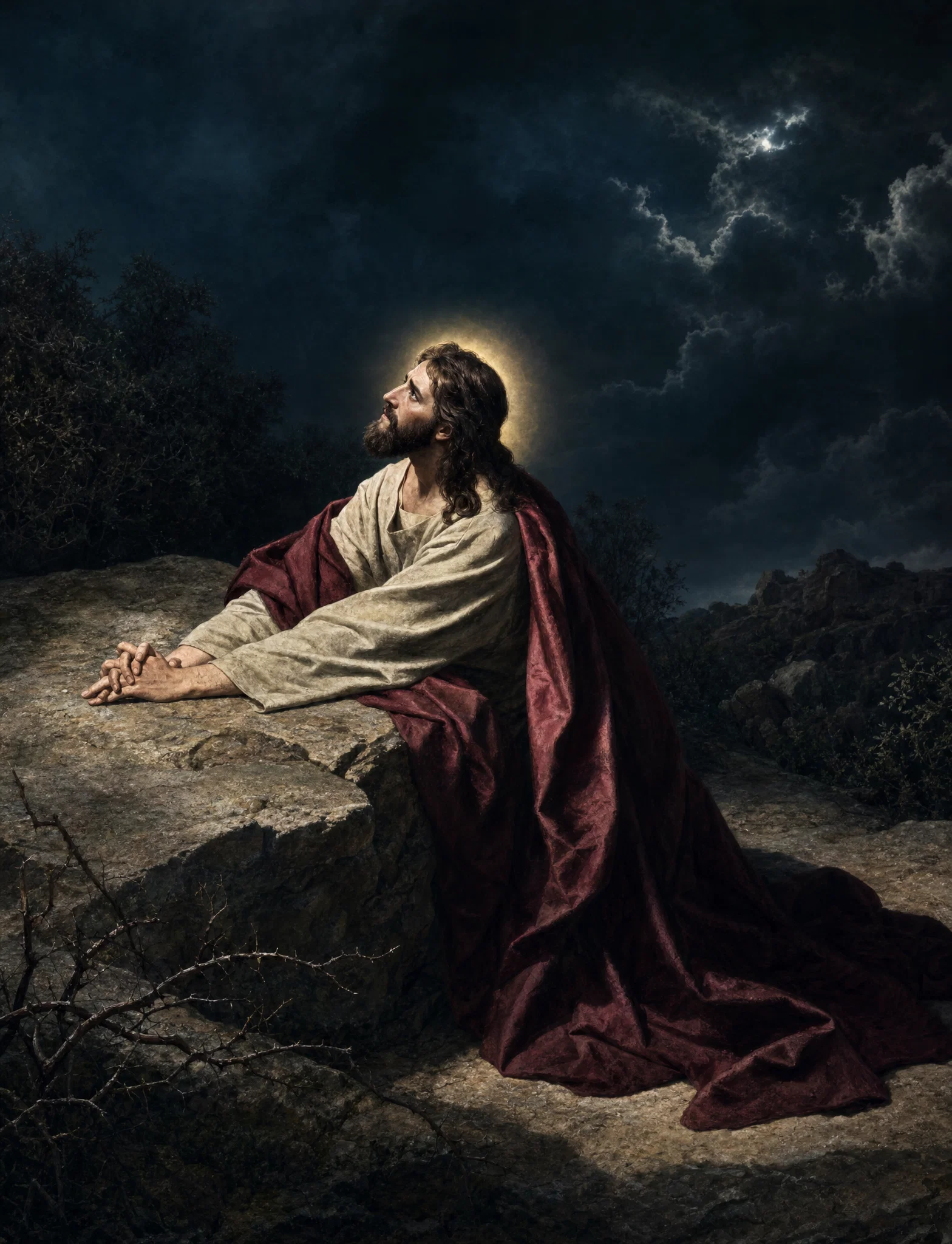 IN GETHSEMANE.
“If this cup may not pass away from Me, except I drink it Thy will be done.”
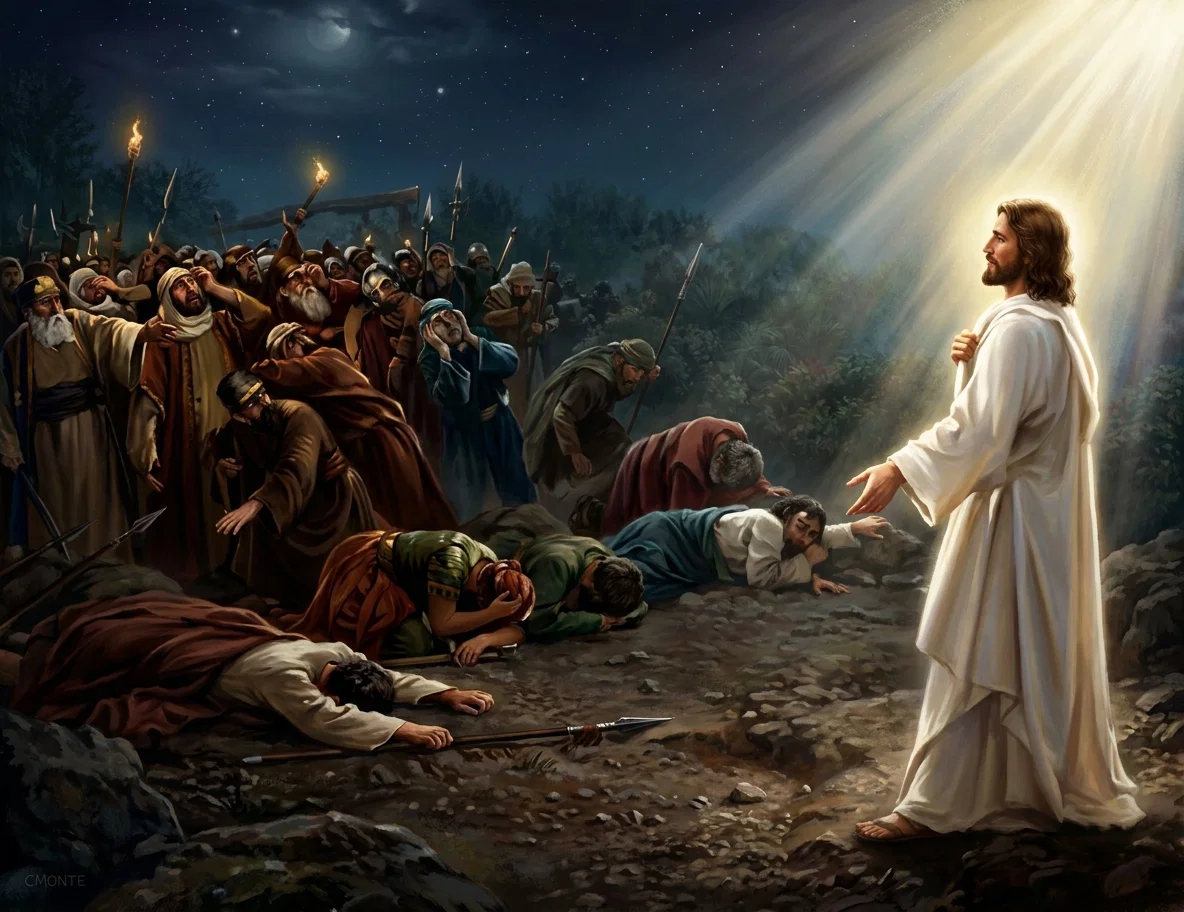 “In the presence of this divine glory, the murderous throng could not stand for a moment.”
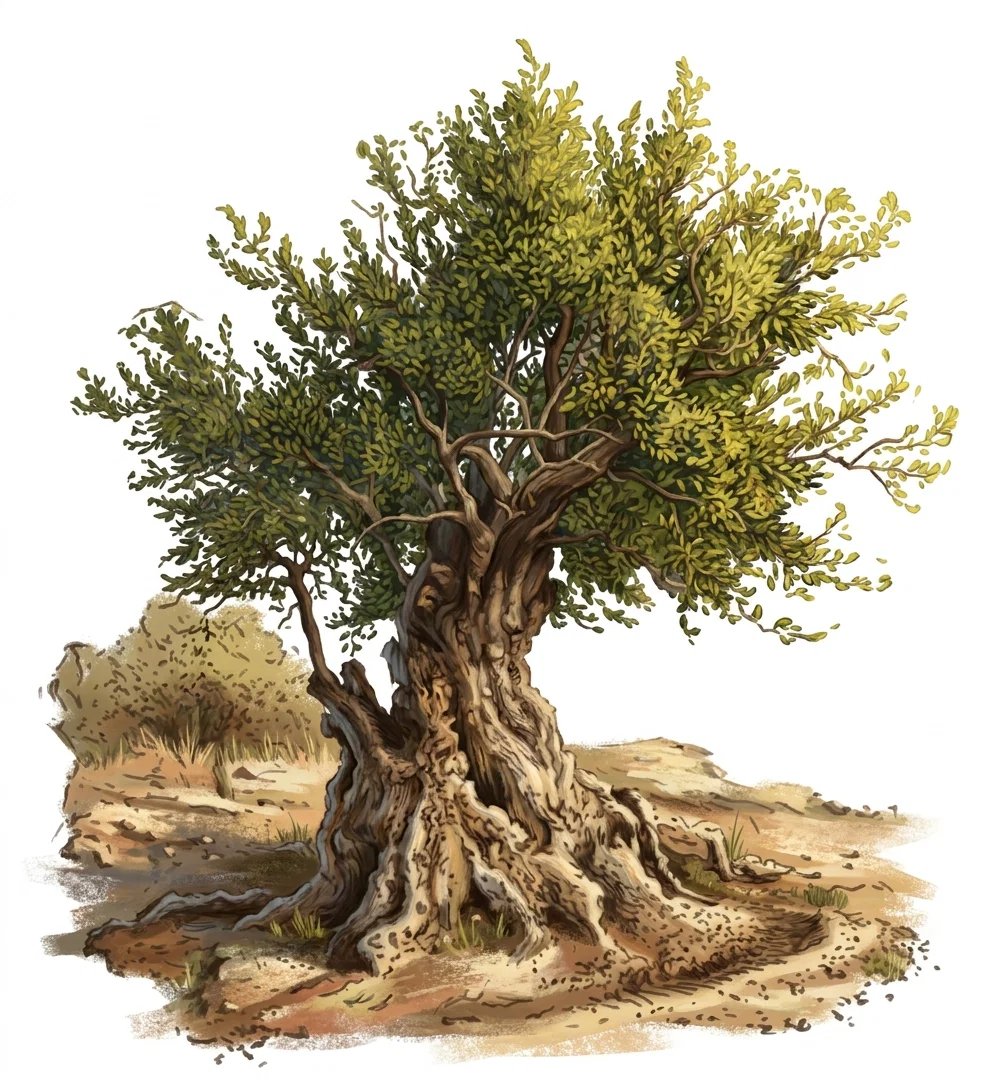 A large, ancient-looking gnarled tree stands alone in an open, uneven landscape. Its thick, twisted trunk divides into several sturdy limbs, with a broad, dense crown of small leaves spreading upward and outward. Exposed, knotted roots grip a low mound of earth, while scattered grasses and scrub appear around its base and along the lightly sketched horizon. The monochrome drawing emphasizes the rough bark, tangled branches, and irregular silhouette of the tree; no people, animals, buildings, or lettering are visible.
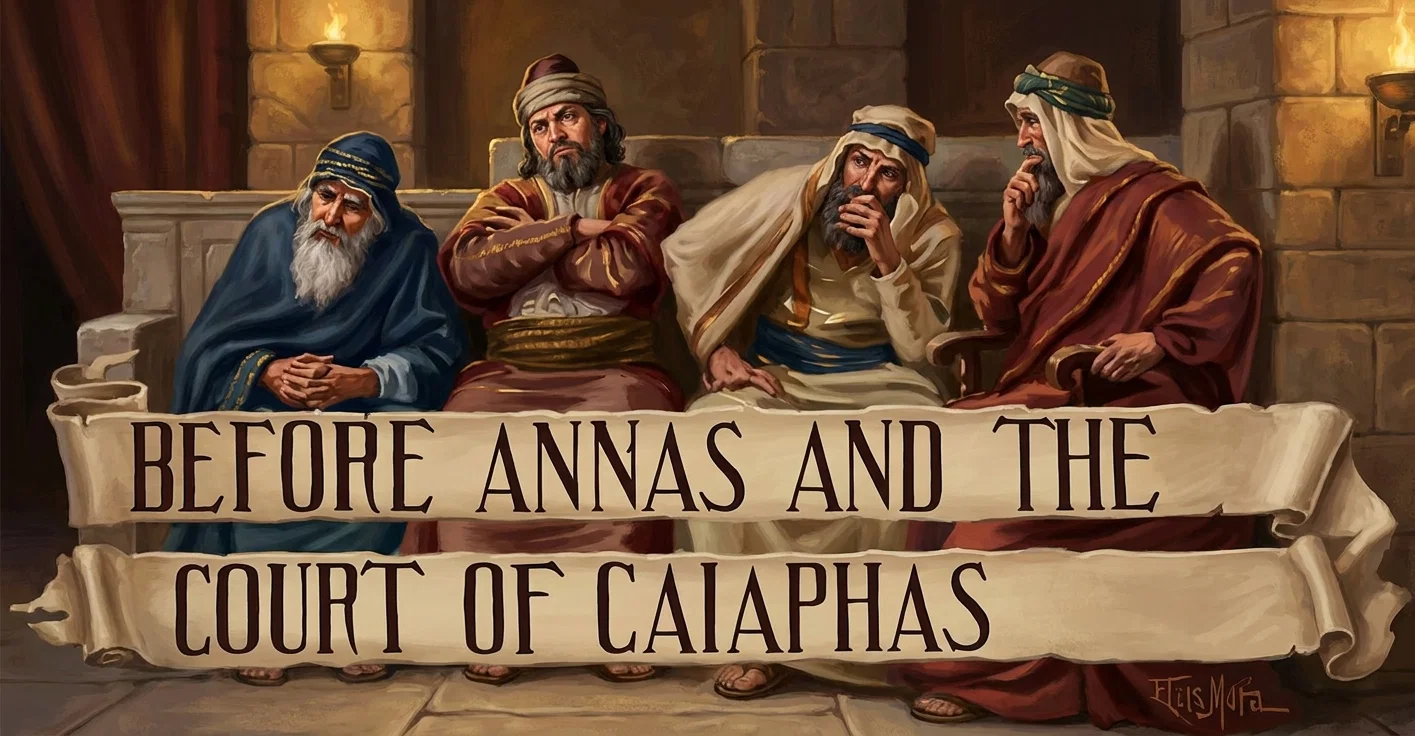 BEFORE ANNAS AND THE COURT OF CAIAPHAS
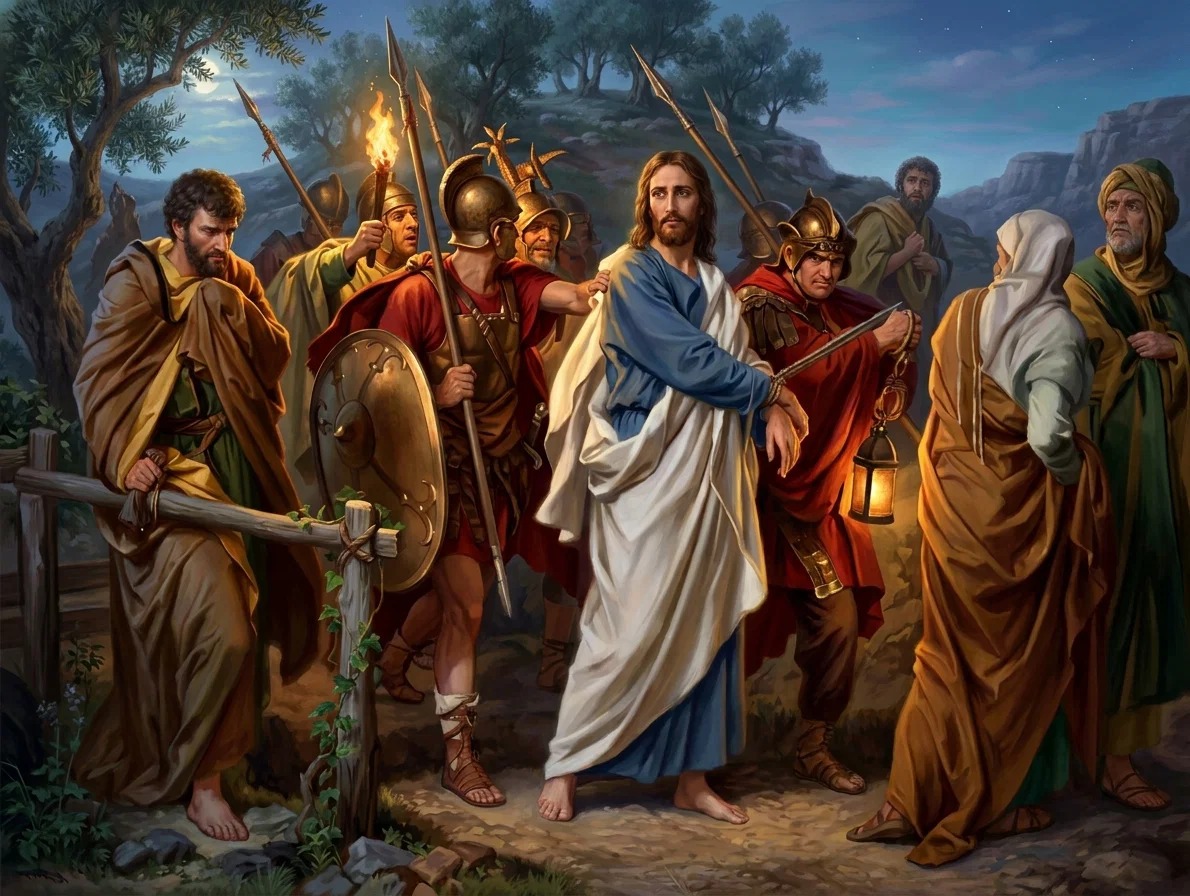 JESUS TAKEN BY THE SOLDIERS.
“Over the brook Kedron, past gardens and olive groves, and through the streets of the sleeping city, they hurried Jesus.”
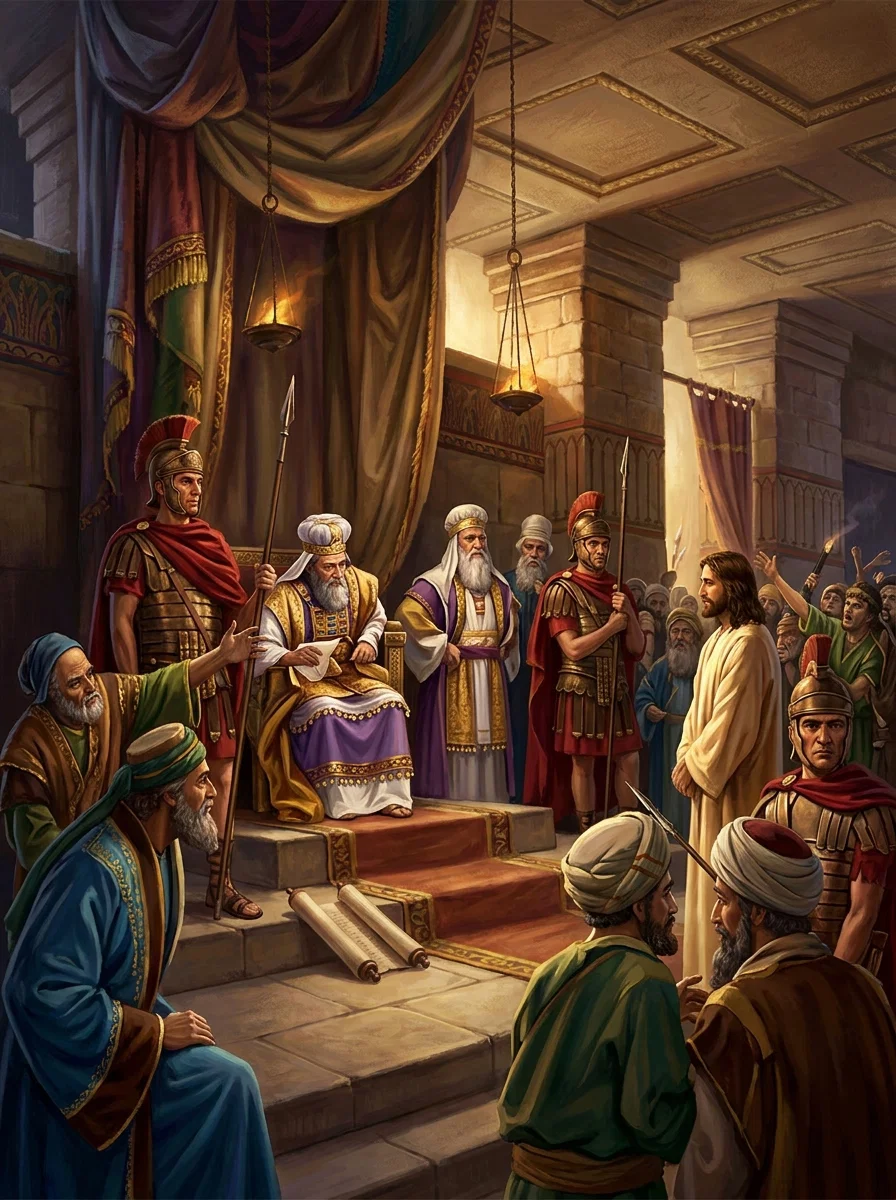 “Upon Him the gaze of the whole multitude was fixed.” Page 703.
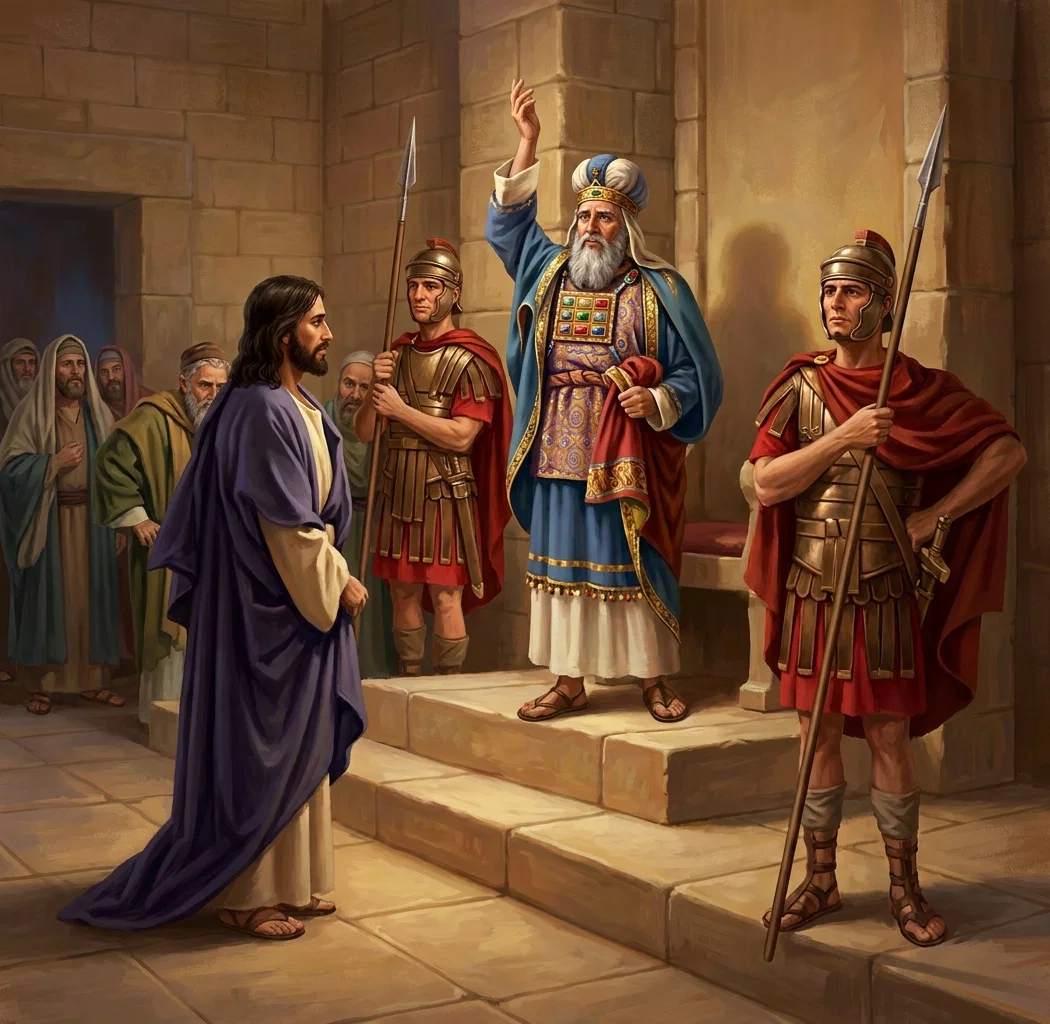 “At last, Caiaphas, raising his right hand toward heaven, addressed Jesus in the form of a solemn oath.”
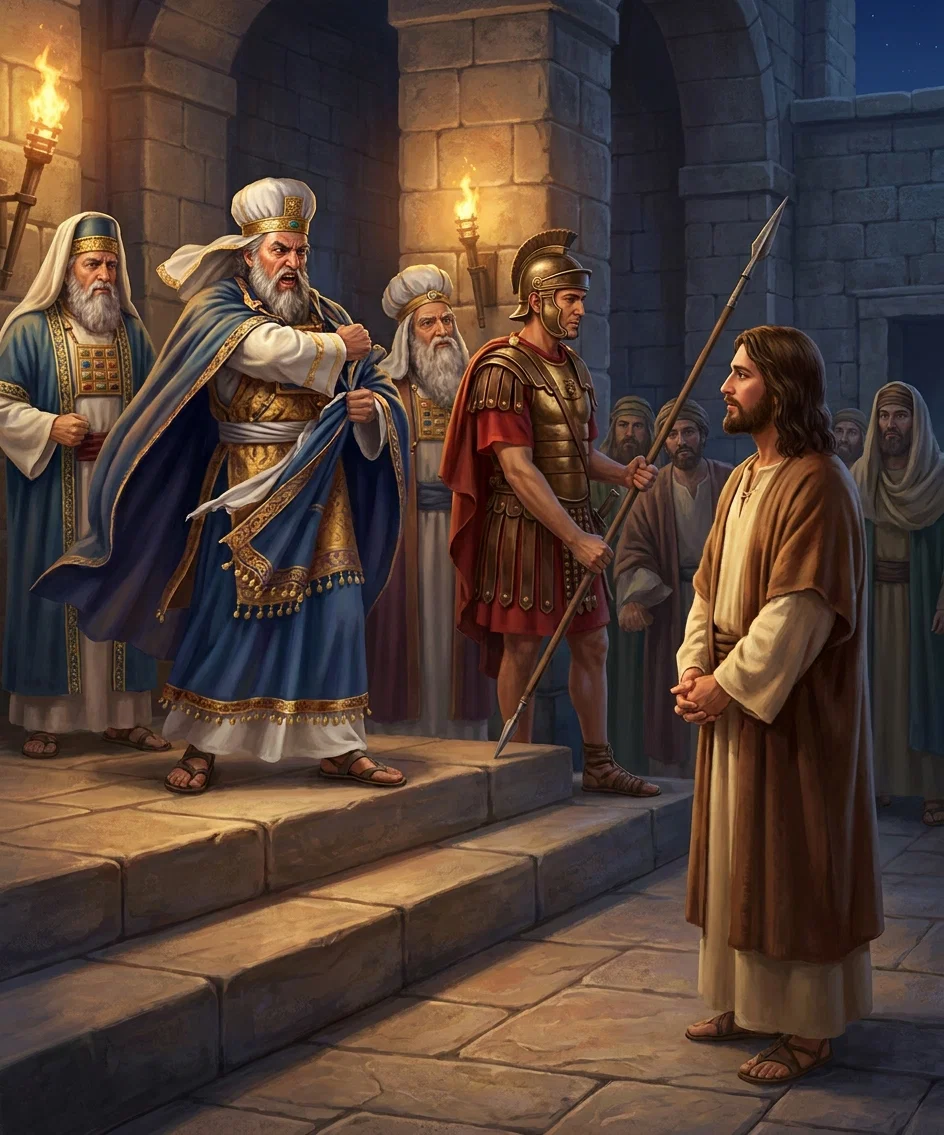 “Rending his robe, that the people might see his pretended horror, he demanded that … the prisoner be condemned for blasphemy.”
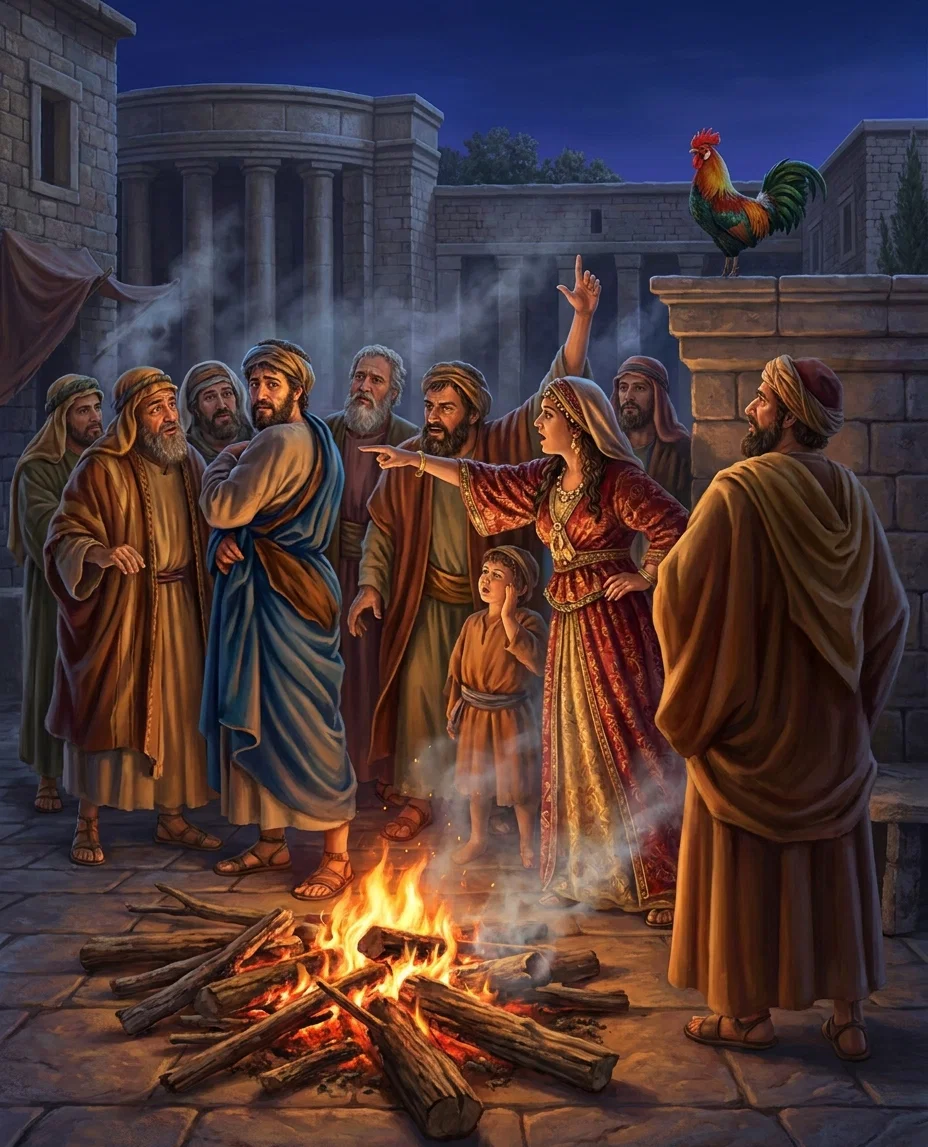 “Art not thou also one of this man’s disciples?”
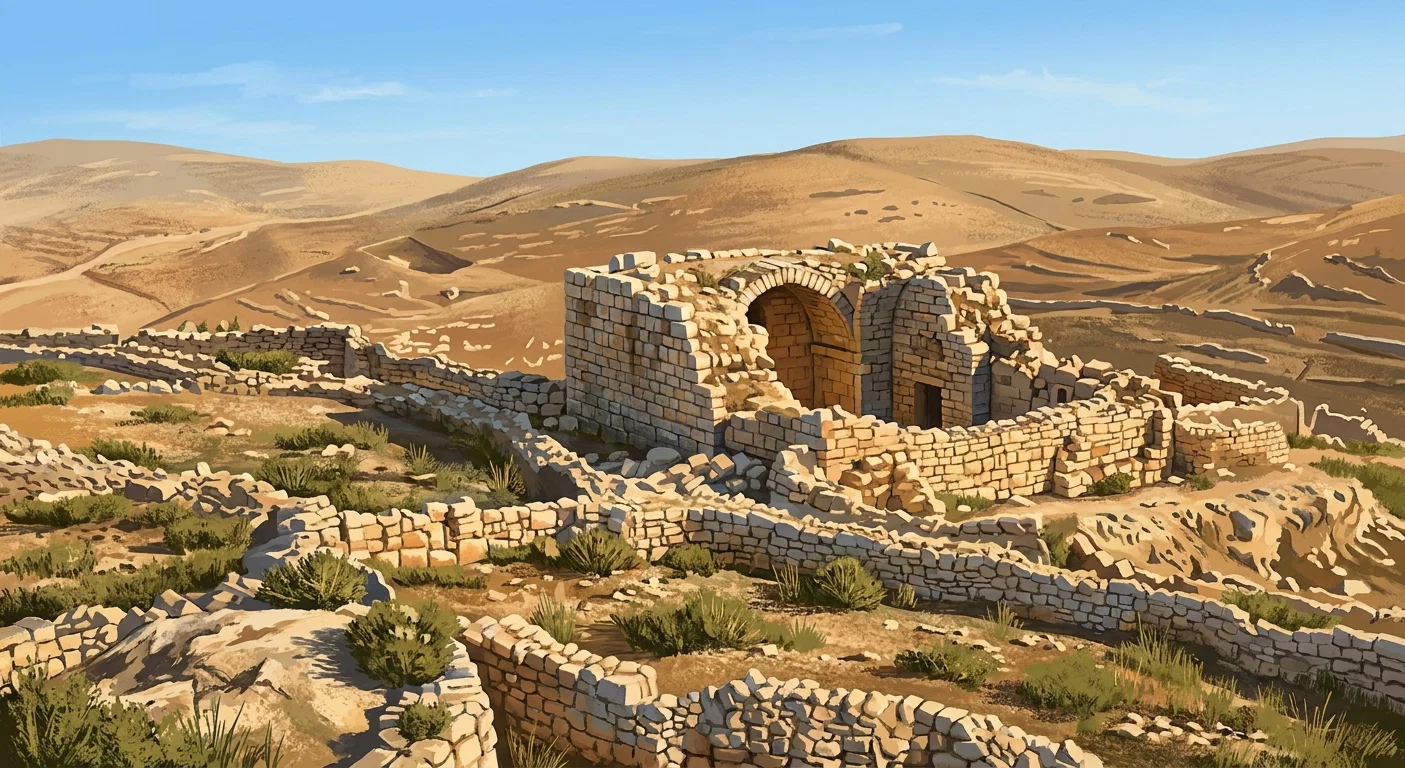 A broad, barren rural landscape is shown from an elevated viewpoint, with cultivated or terraced fields and low stone boundaries stretching across the foreground and distant hills. At the center stands a substantial circular or roughly oval stone ruin, composed of rough masonry walls surrounding a deep, dark central opening or chamber. Additional collapsed stones and fragmented wall lines extend around it, while scattered vegetation appears along the field edges. No people, animals, signs, or lettering are visible.
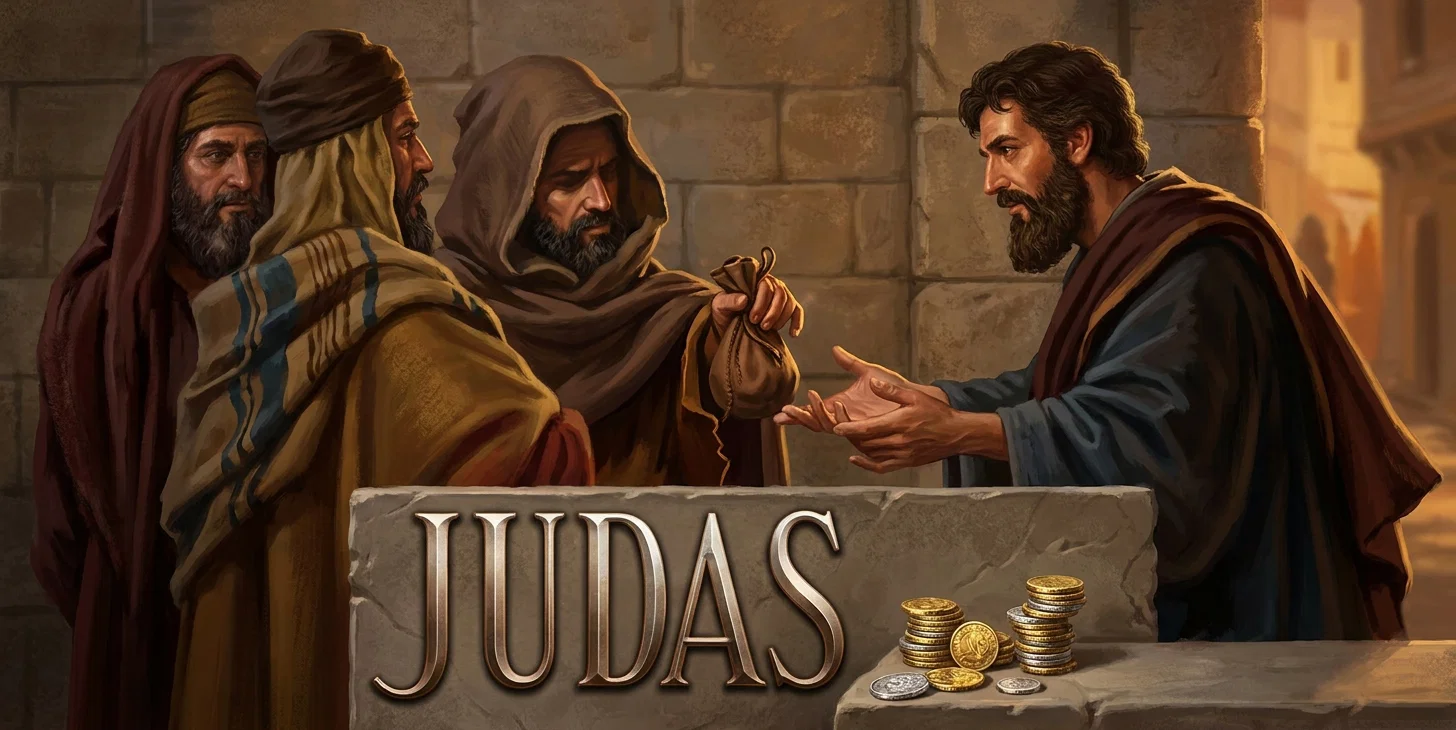 JUDAS
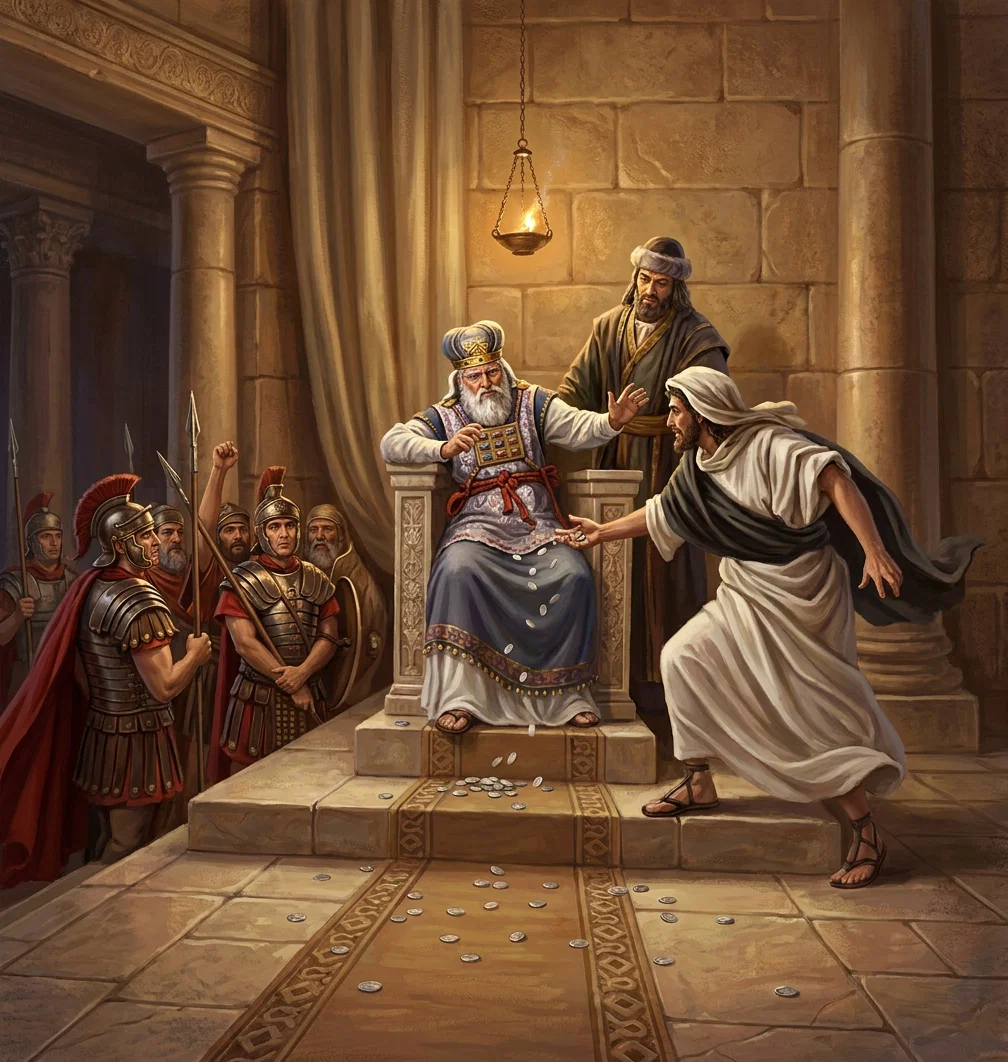 “He threw down before the high priest the pieces of silver that had been the price of his Lord’s betrayal.” Page 722.
 IN PILATE'S JUDGMENT HALL
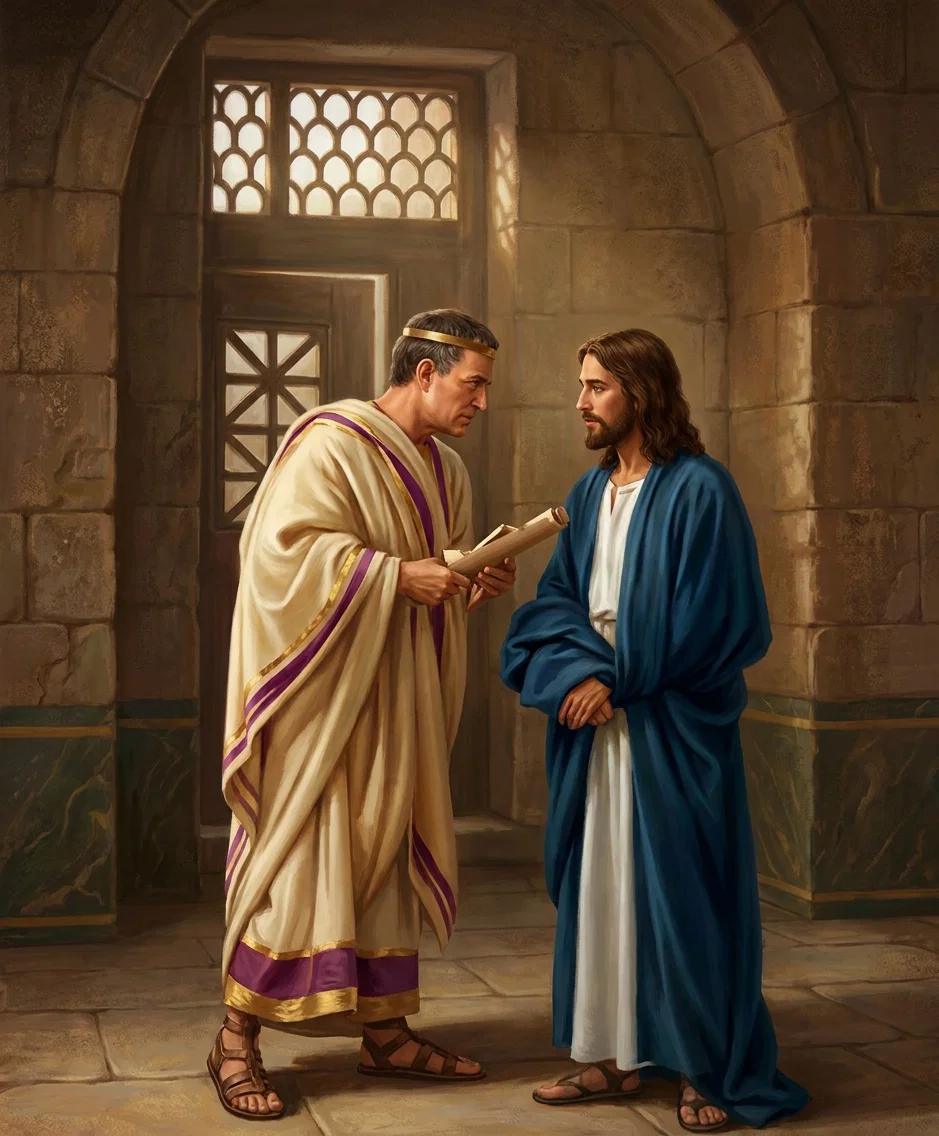 “Art Thou the King of the Jews?”
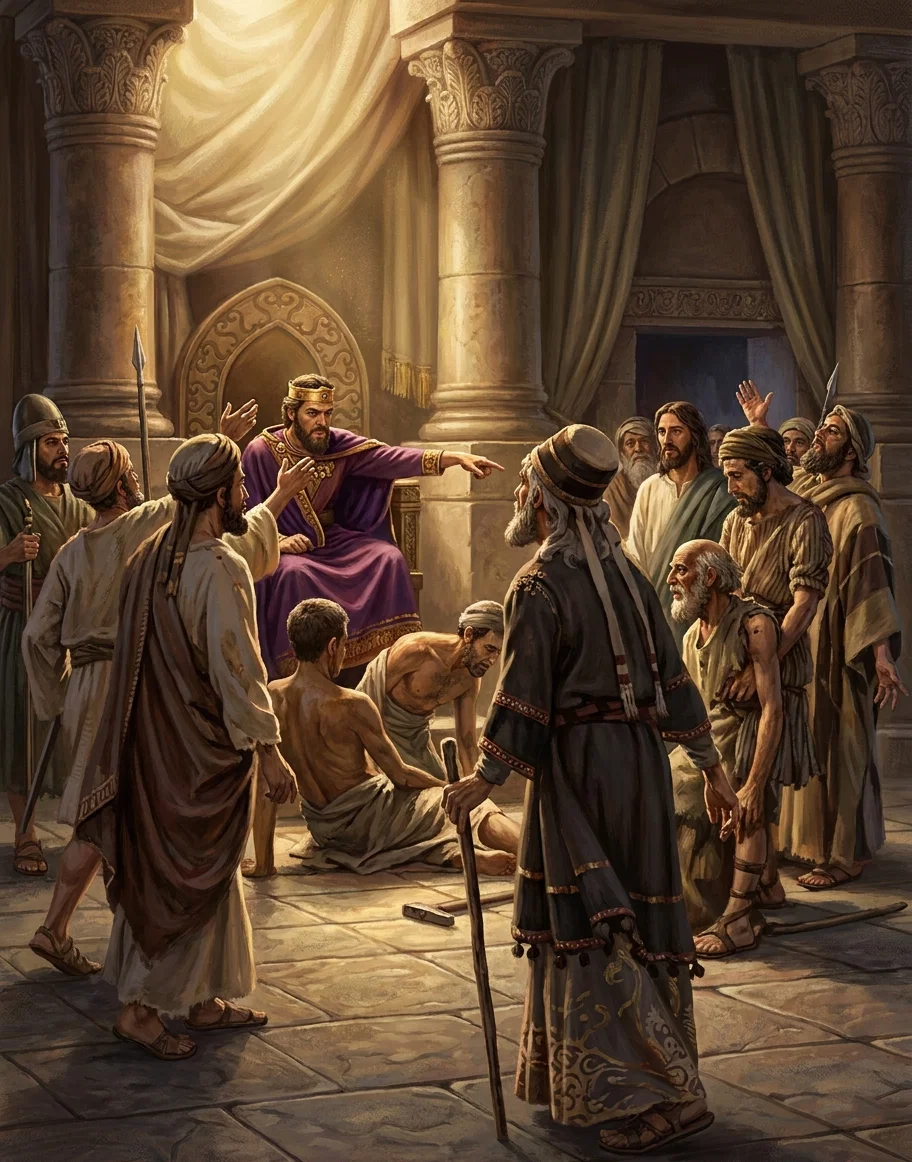 “At the command of the king, the decrepit and maimed were called in.”
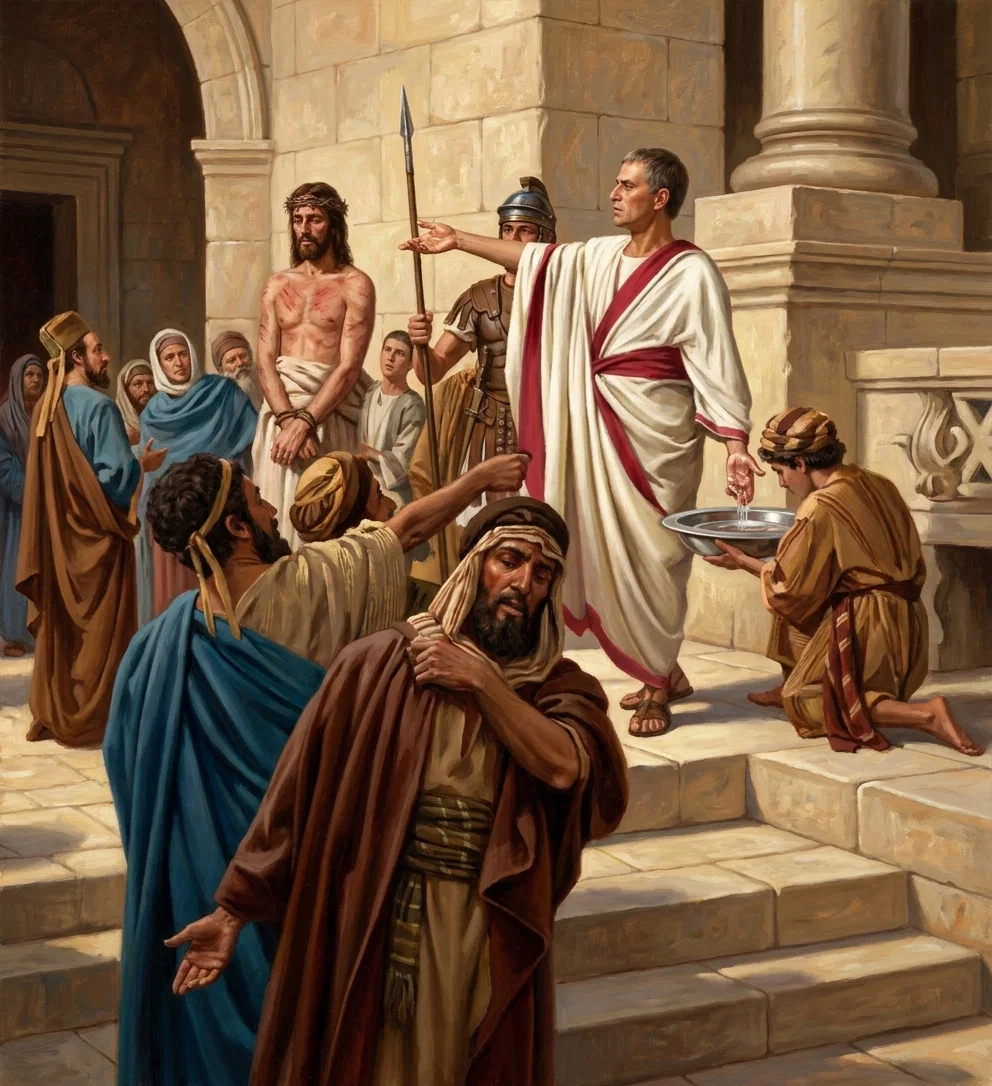 Pilate “took water, and washed his hands before the multitude.” Page 738.
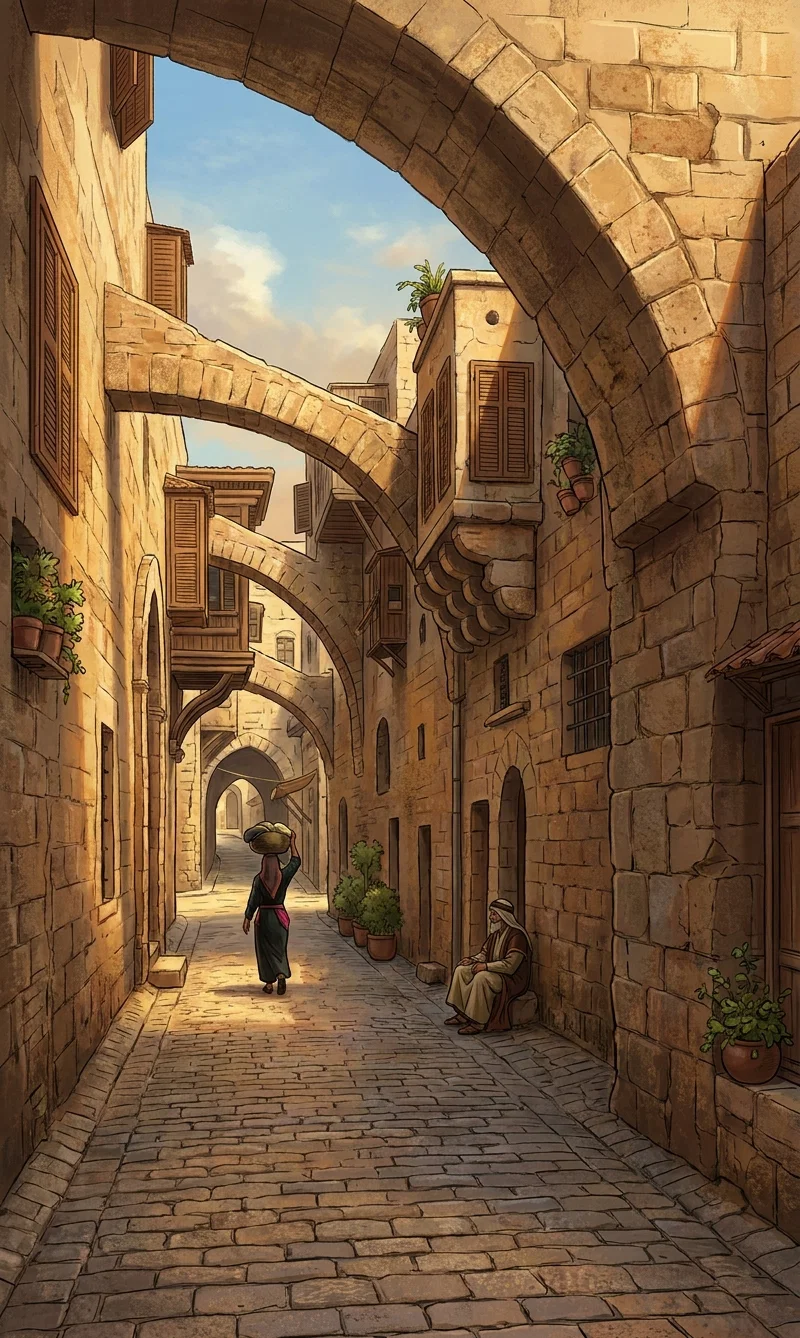 A narrow, winding cobblestone passage runs through an old stone-built village, framed by massive weathered archways and projecting upper stories. The tall walls on both sides are covered with rough masonry, vines, and irregular timber or stone details, while shuttered windows overlook the lane. Several successive arches create a strong sense of depth, leading toward a small distant opening. Two people in dark clothing walk along the passage, one nearer the center and another farther away. The scene is rendered in dense black-and-white linework, emphasizing the enclosed medieval atmosphere.
 CALVARY
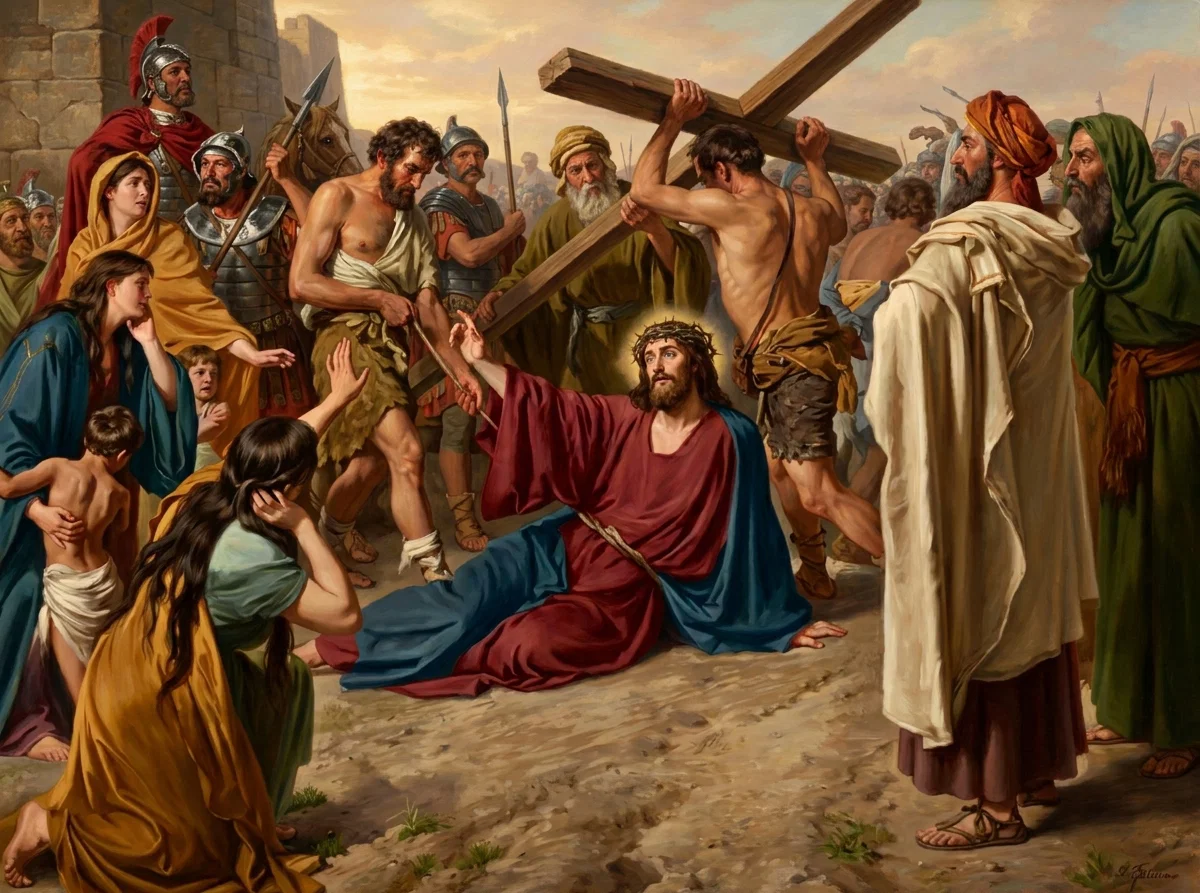 ON THE ROAD TO CALVARY.
“Daughters of Jerusalem, weep not for Me.”
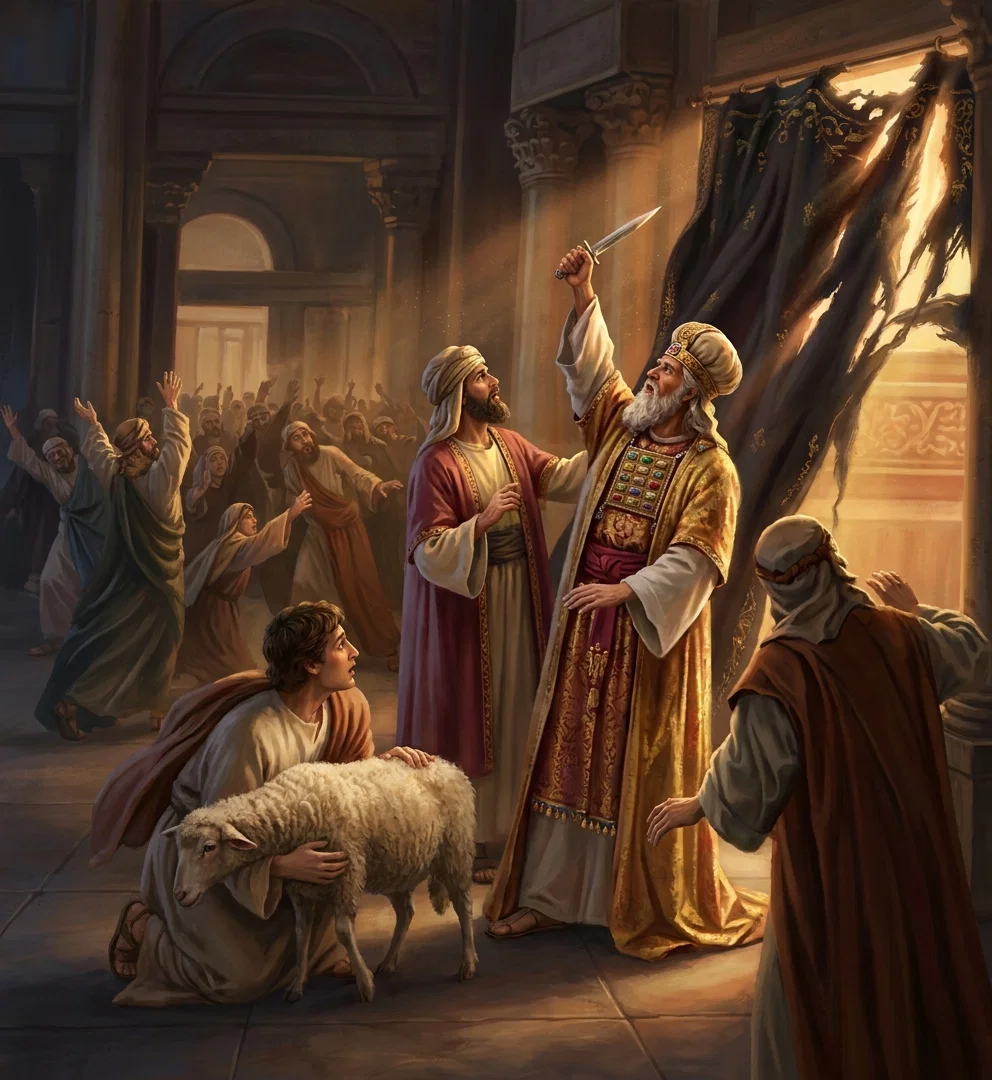 “With a rending noise the inner veil of the temple is torn from top to bottom by an unseen hand.” Page 756.
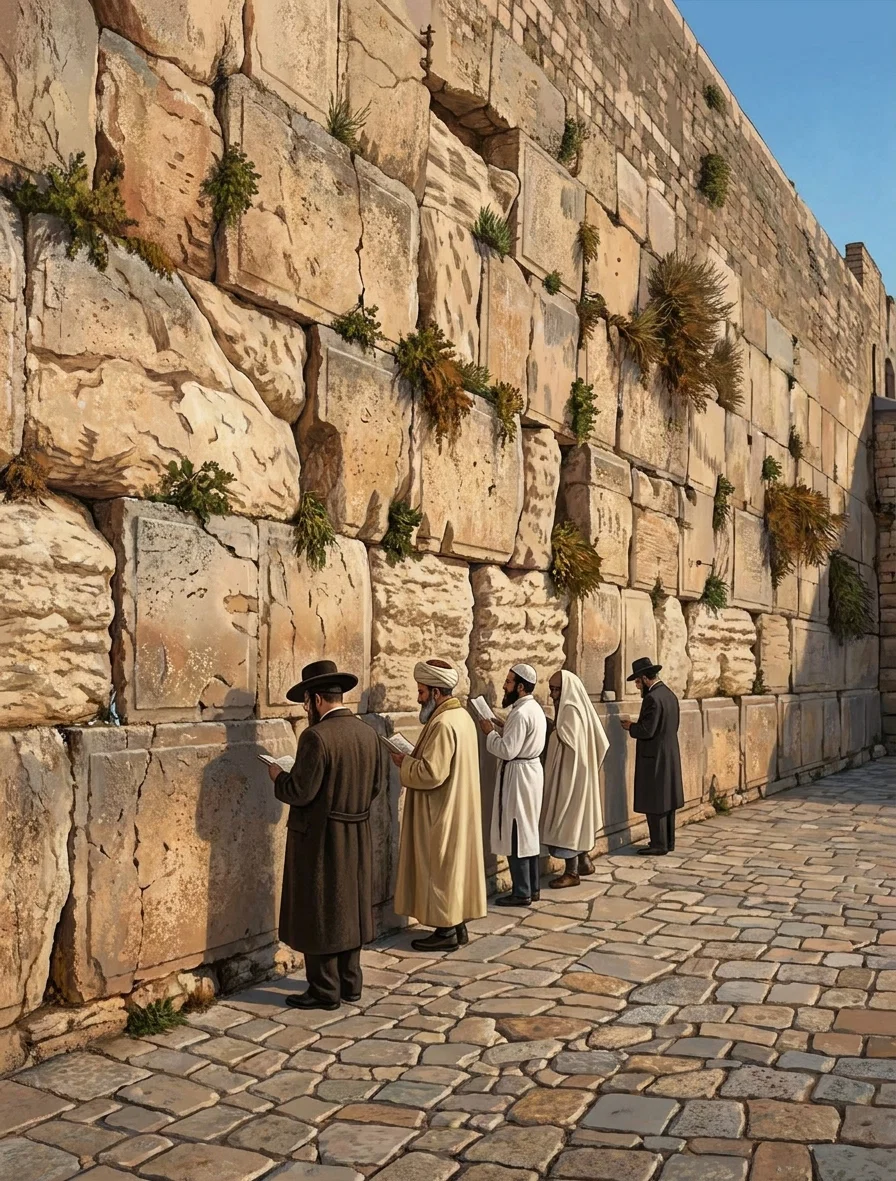 A group of four people stands on a narrow cobblestone street beside a massive, weathered stone structure. In the foreground, a cloaked figure in a dark hat faces the wall, while three others—two adults and a smaller child or young person—look toward the masonry and rubble. The wall includes large blocks, rough plastered surfaces, deep shadows, projecting ledges, and remnants of upper buildings or battlements, with tufts of vegetation growing from cracks. The scene is rendered in dense pen-and-ink hatching, emphasizing the worn, monumental architecture.
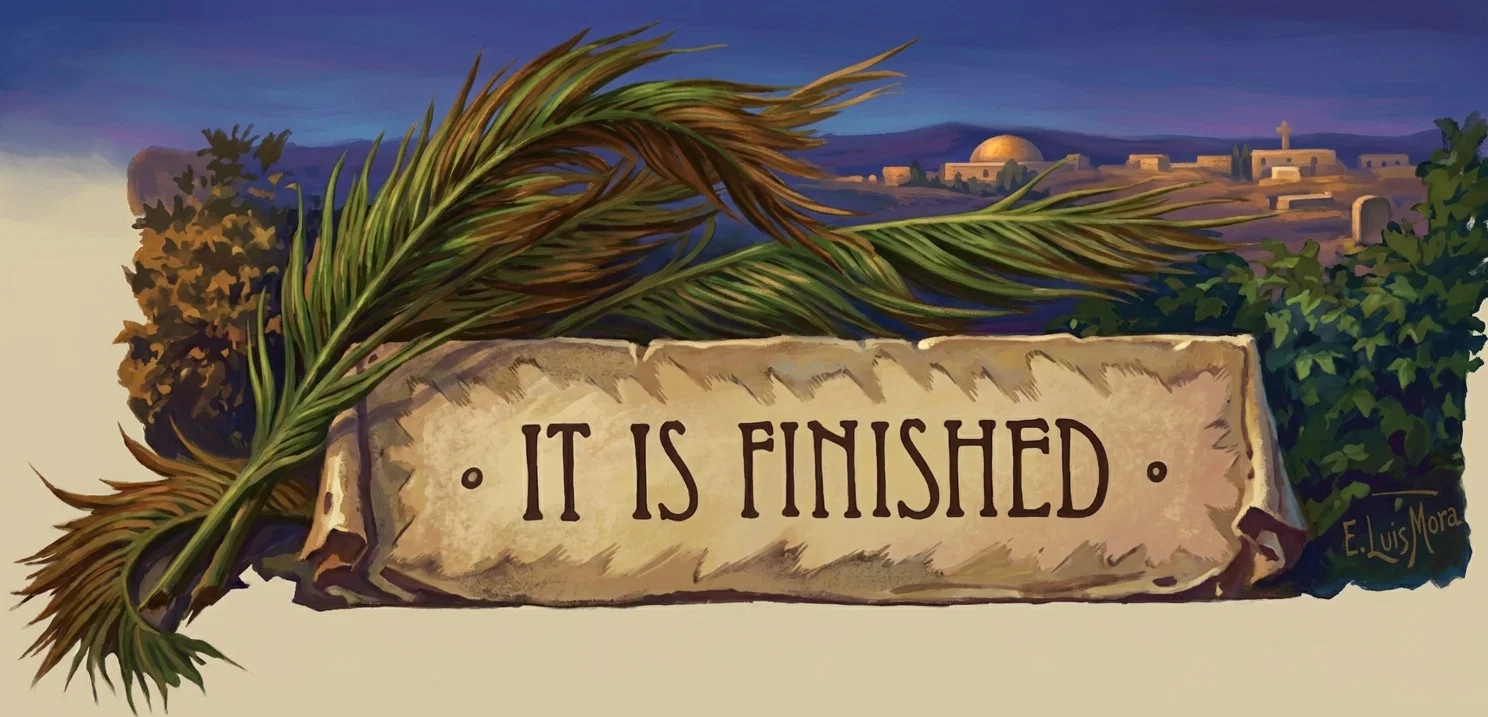 IT IS FINISHED
 A low, horizontal landscape drawing shows a rough stone embankment or rocky wall stretching across the scene. Large angular blocks and smaller rounded stones form an uneven ridge, with deep black shading beneath and between several rocks. At the far left, a prominent broad slab is heavily crosshatched, while a small cluster of leafy plants grows from the upper left portion of the stones. The background is largely blank, with a few sparse horizontal marks suggesting distant ground or terrain; no people, animals, or lettering are visible.
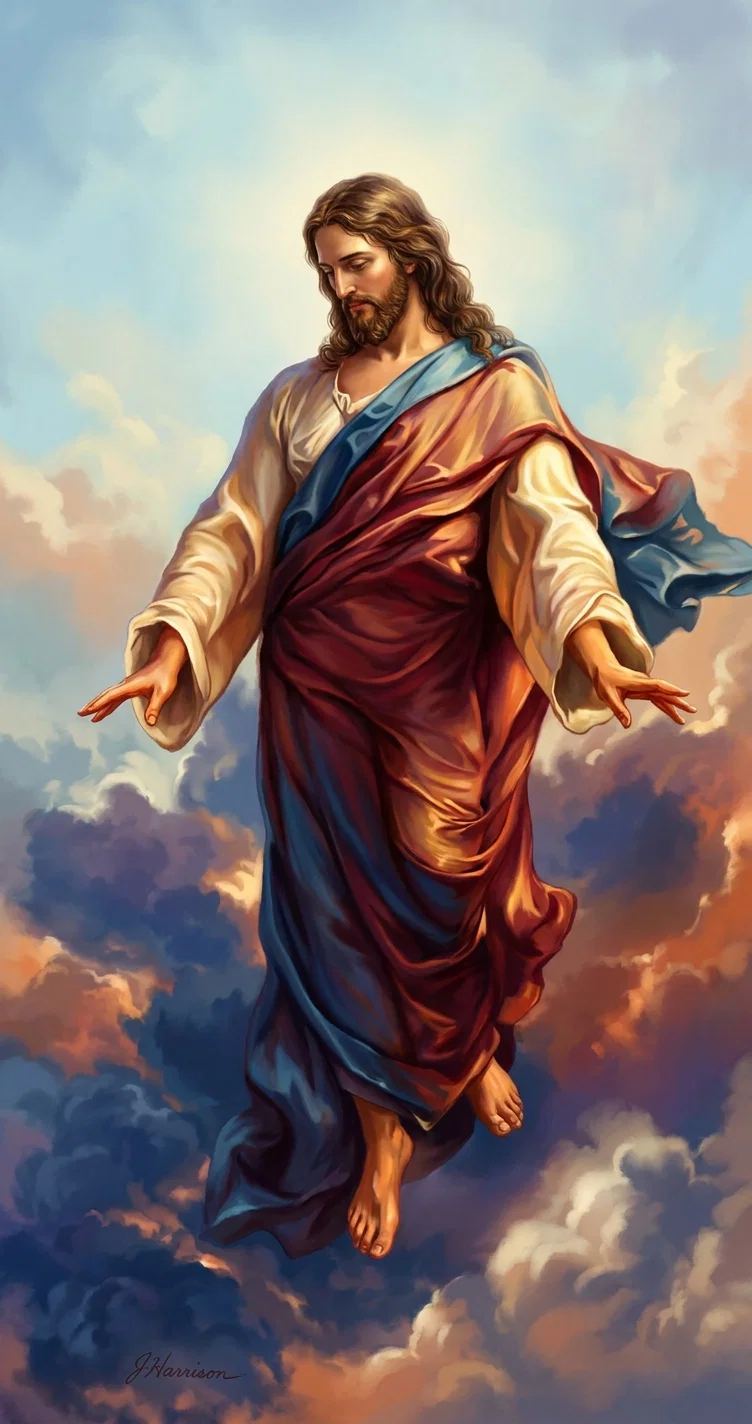 THE ASCENSION.
“With hands stretched in blessing, . . . He slowly ascended from among them.”
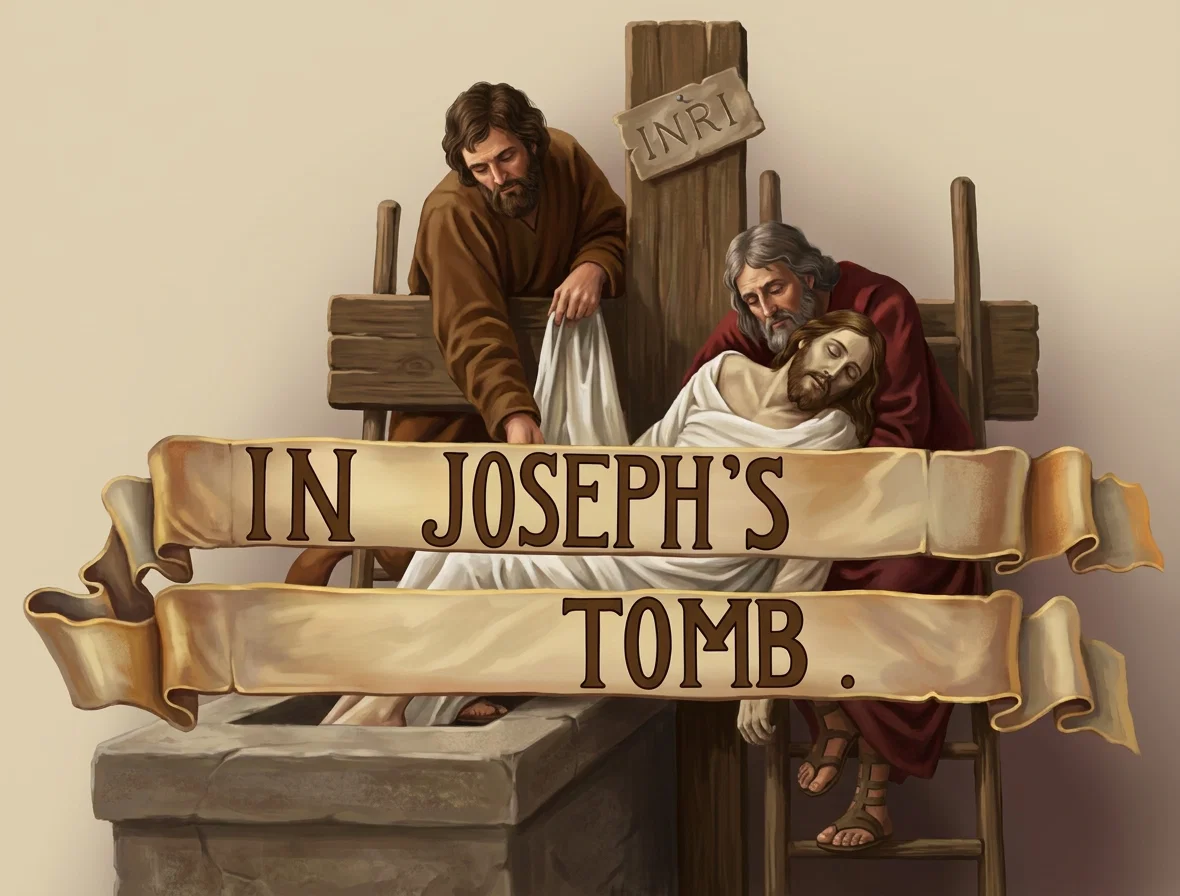 IN JOSEPH'S TOMB.
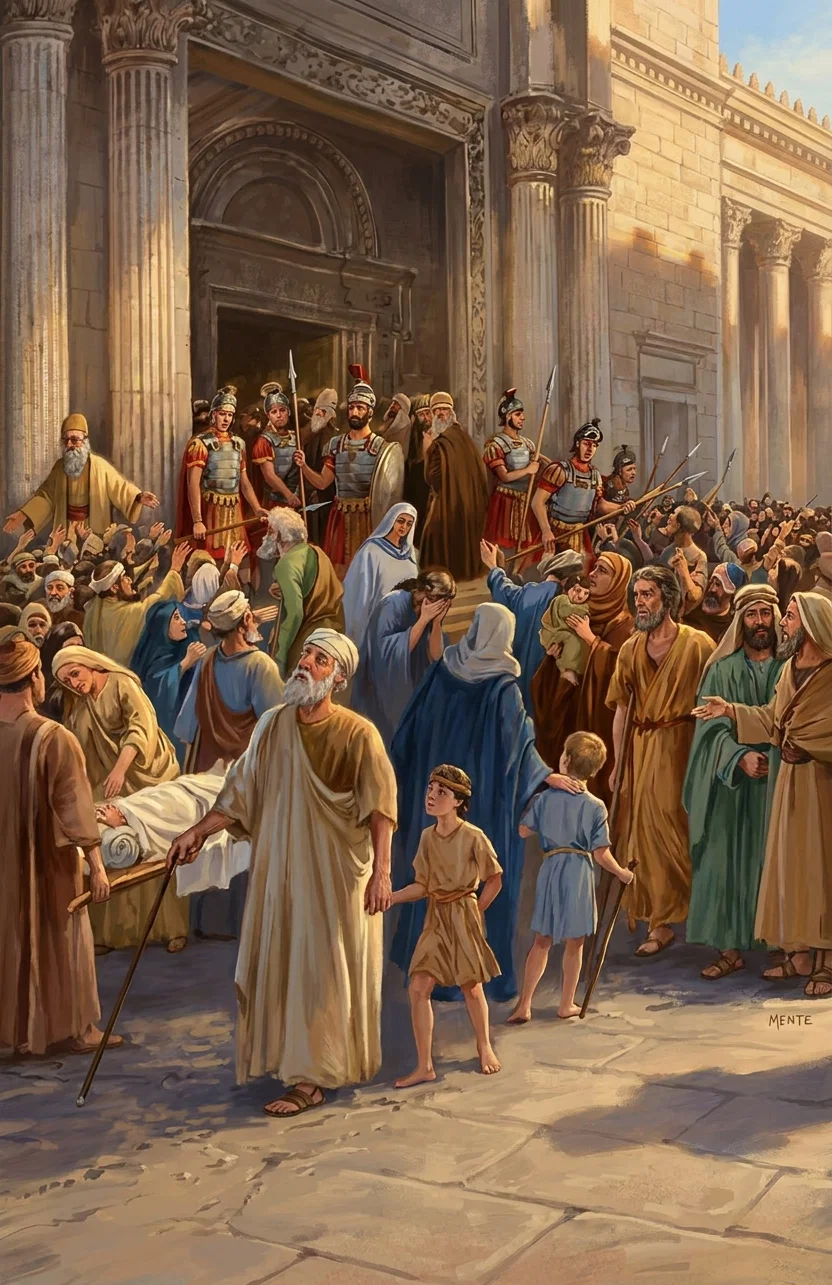 “Soldiers were stationed at the gates to keep back the multitude that came with their sick and dying, demanding entrance.”
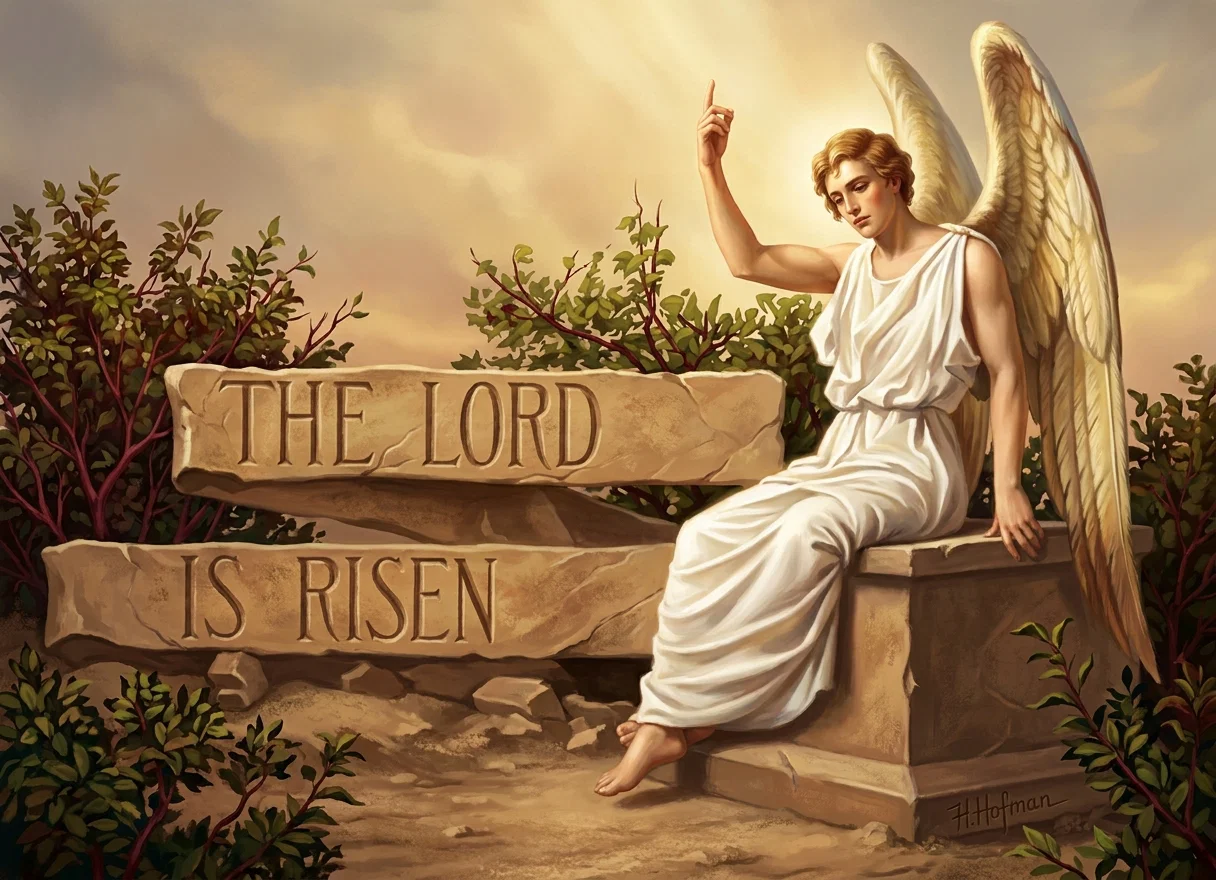 THE LORD
IS RISEN
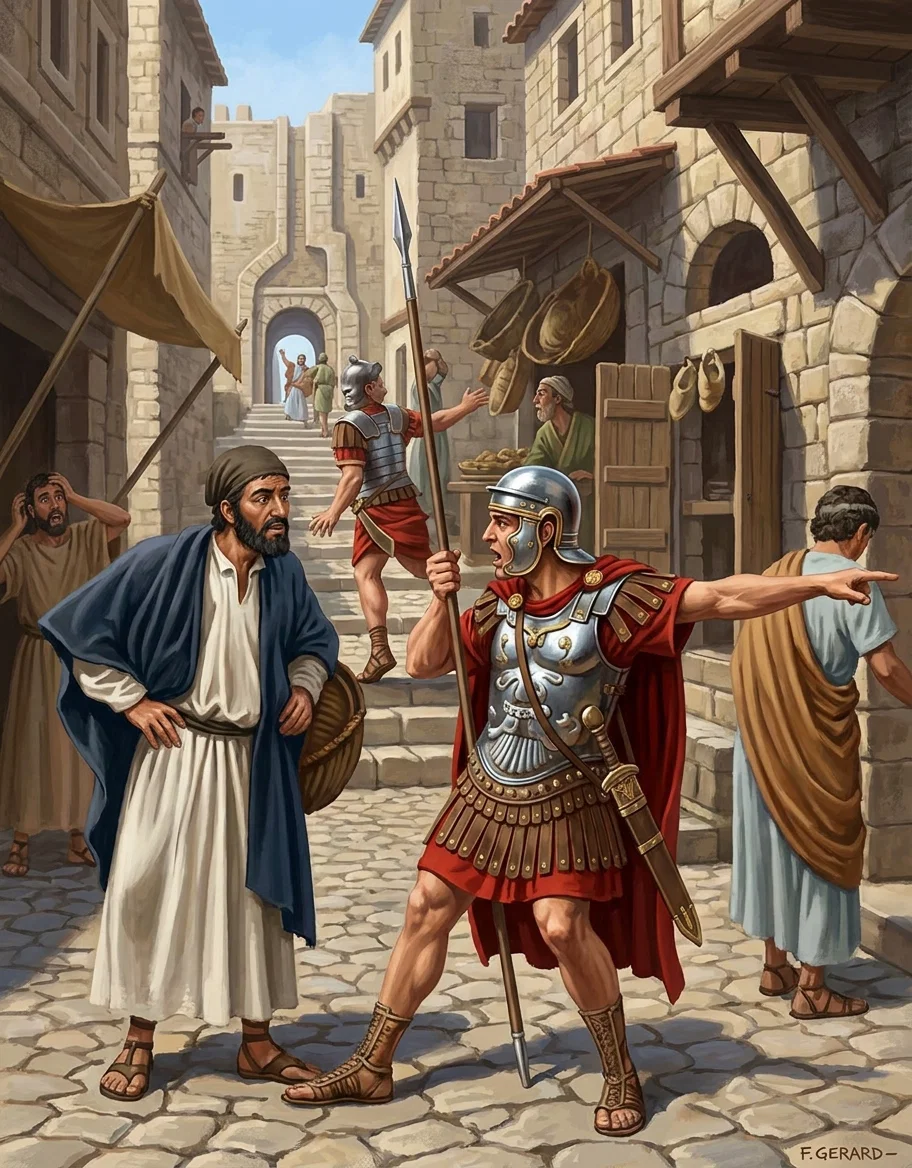 “They hurried on to the city, telling those whom they met the wonderful news.”
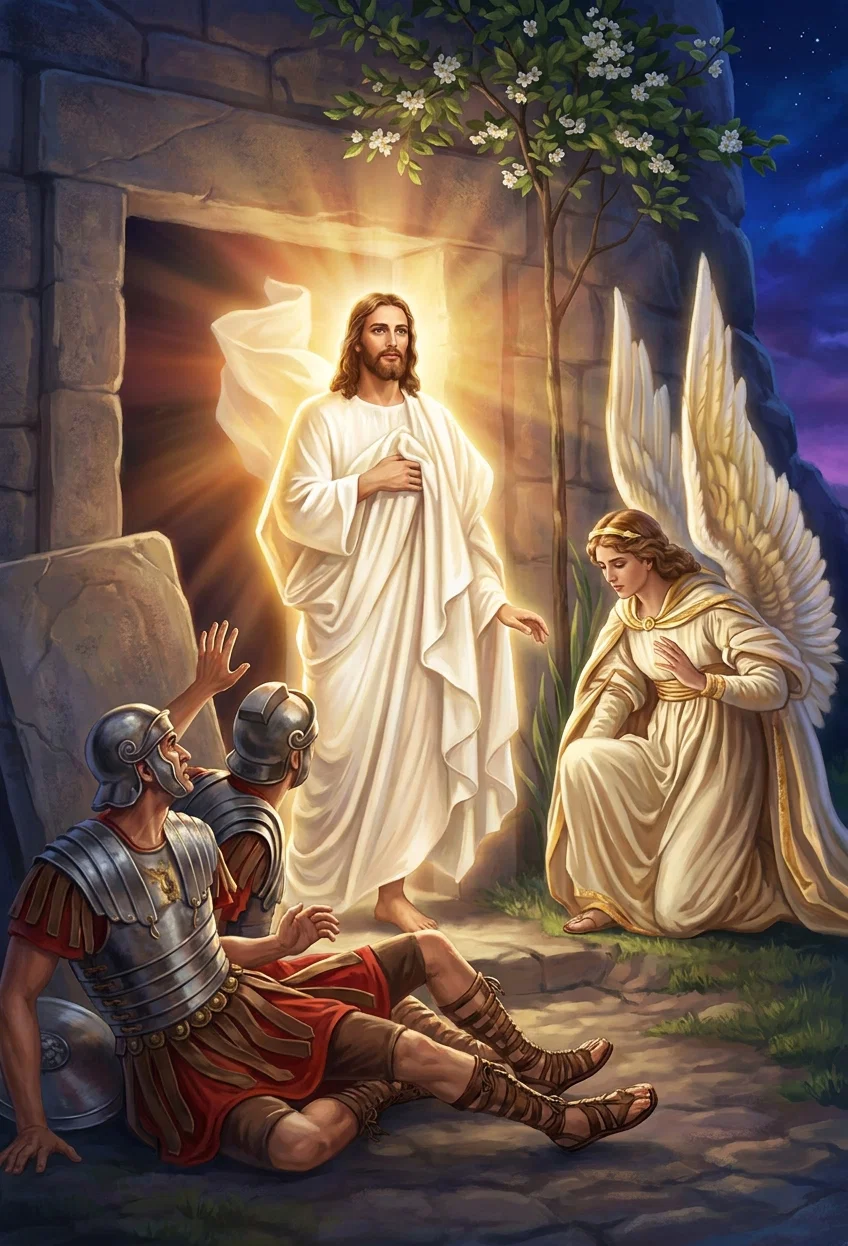 THE RESURRECTION.
“I am the Resurrection and the Life.”
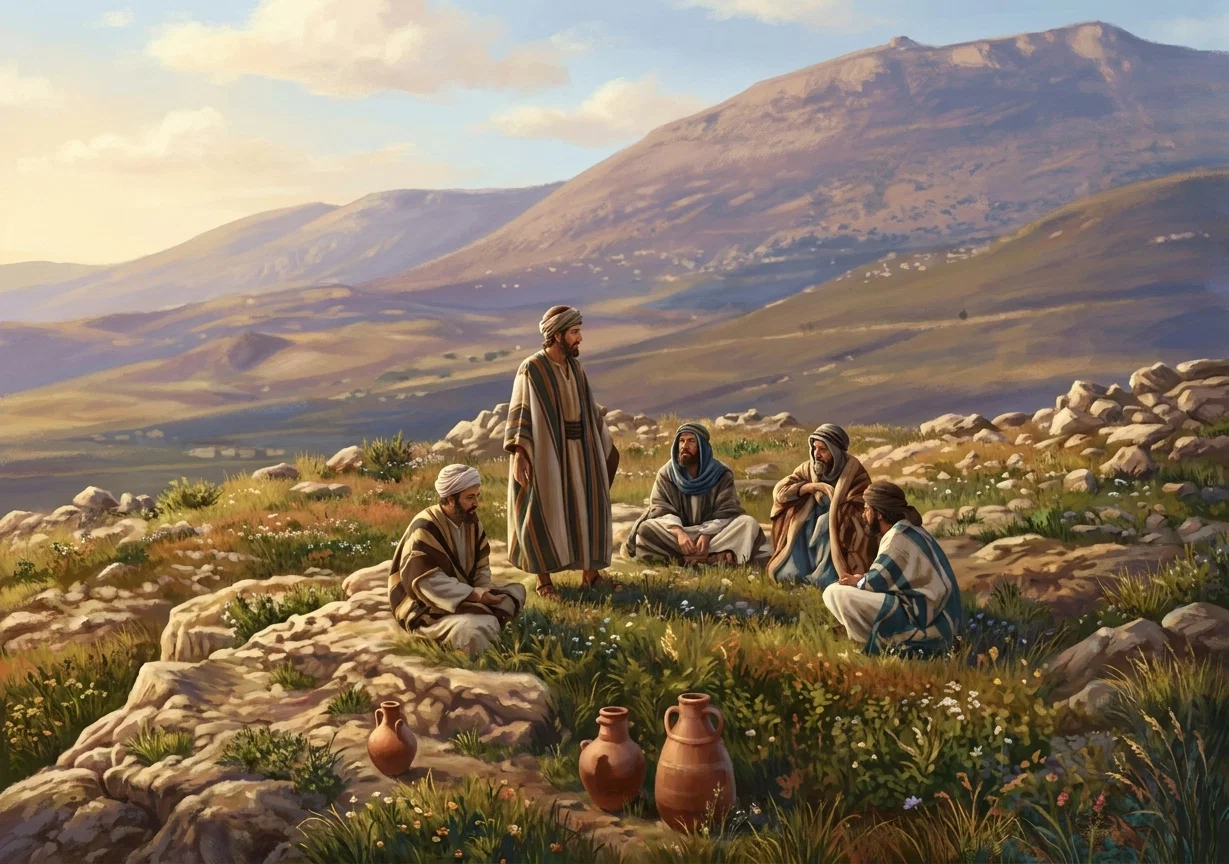 A small group of people gathers outdoors on a rough, rocky landscape beneath a broad, barren mountain or cliff. One central figure stands upright, draped in a long, light-colored robe with darker vertical folds, while several others sit or crouch around him, appearing to listen or converse. In the foreground are rounded pottery vessels and jars placed among low vegetation and stones. The scene has a simple, pastoral arrangement, with the figures clustered near the center and the massive layered rock formation rising across the background. No lettering or other text is visible within the image.
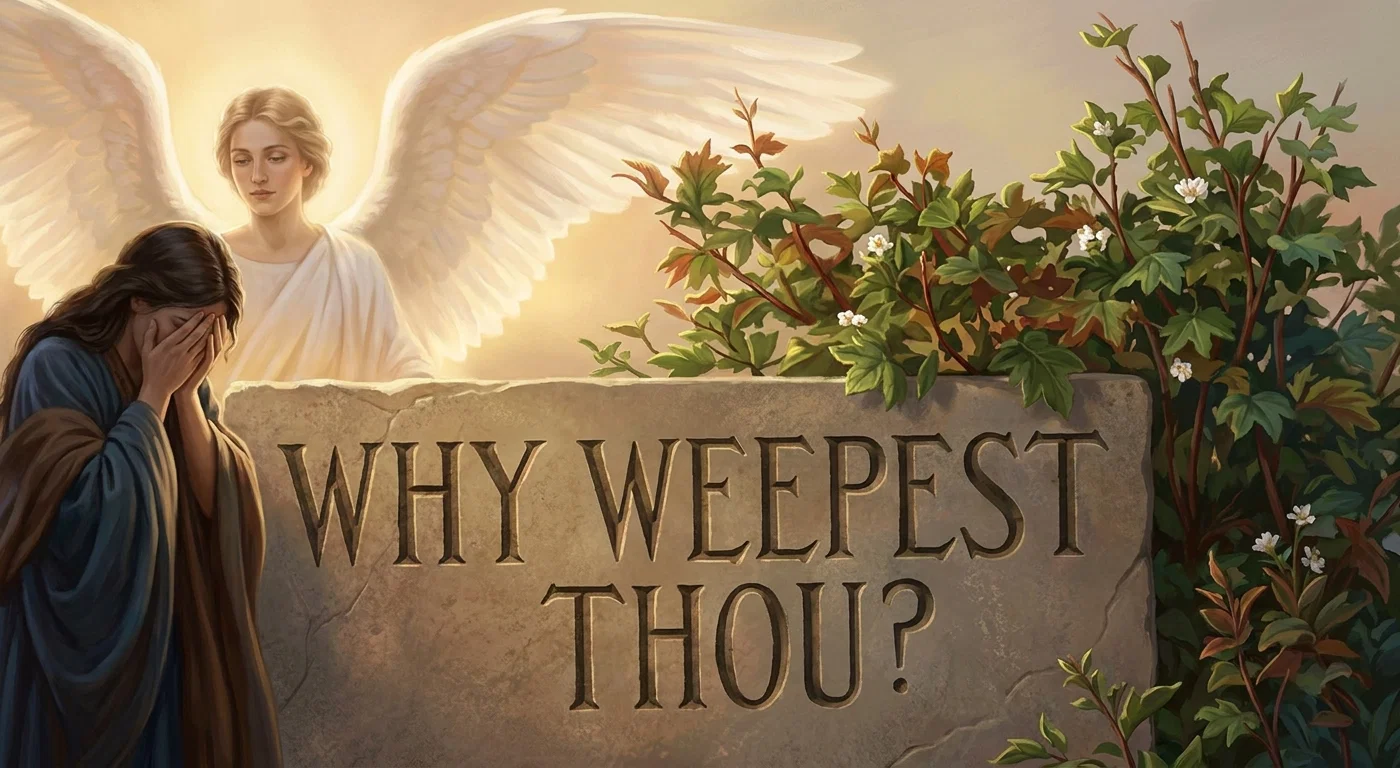 WHY WEEPEST THOU?
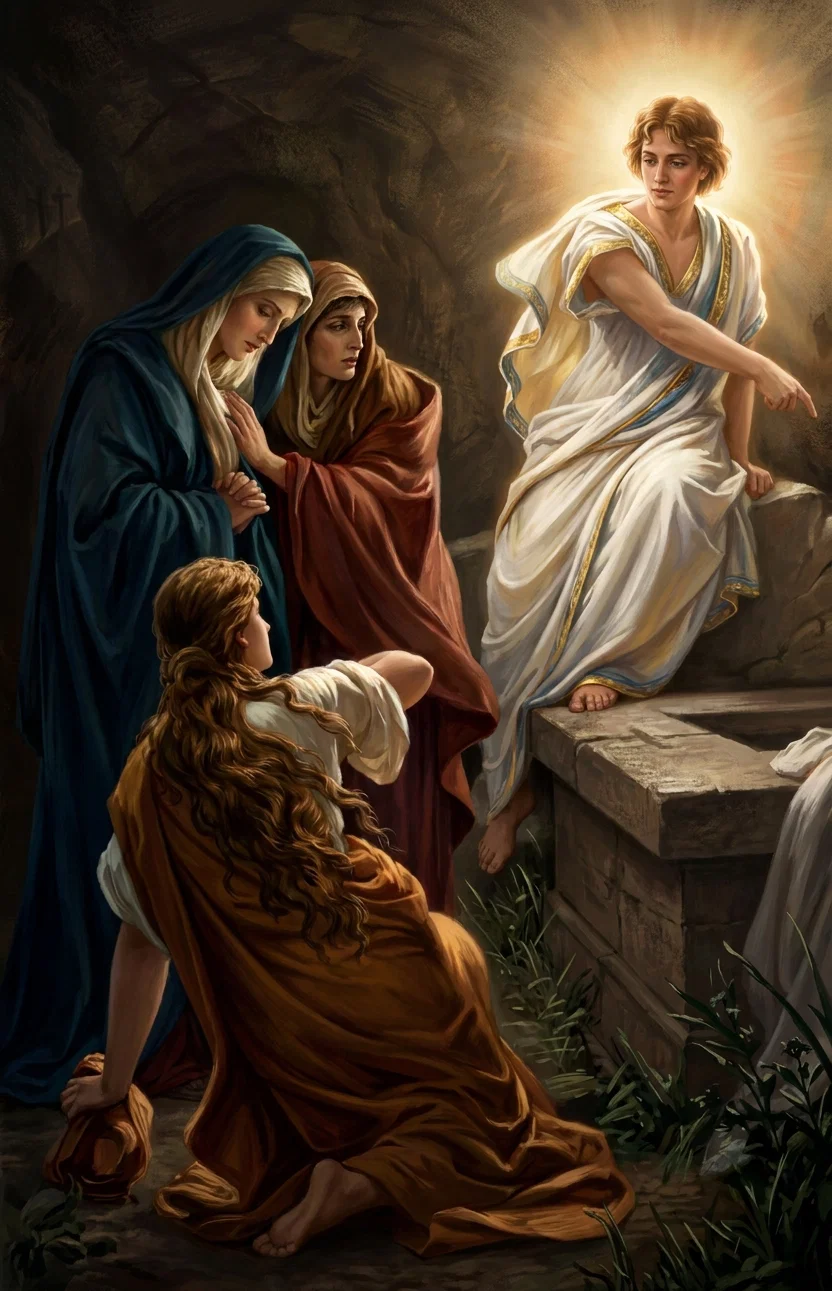 WOMEN AT THE TOMB.
“He is not here, but is risen.” Page 789.
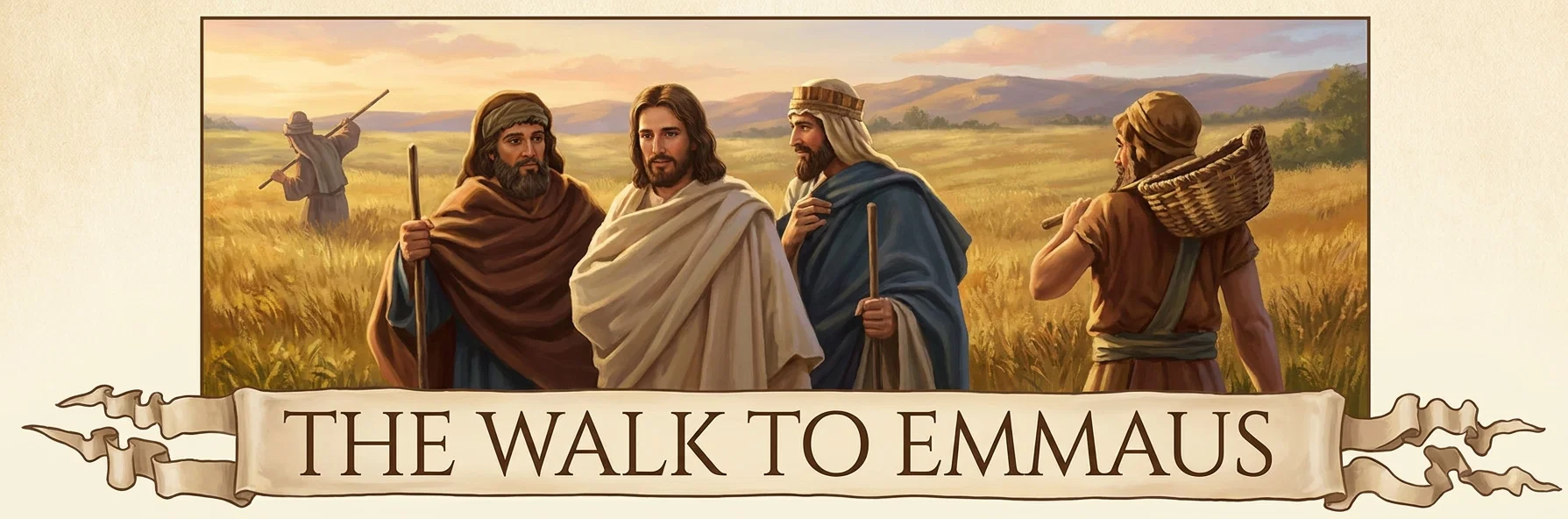 THE WALK TO EMMAUS
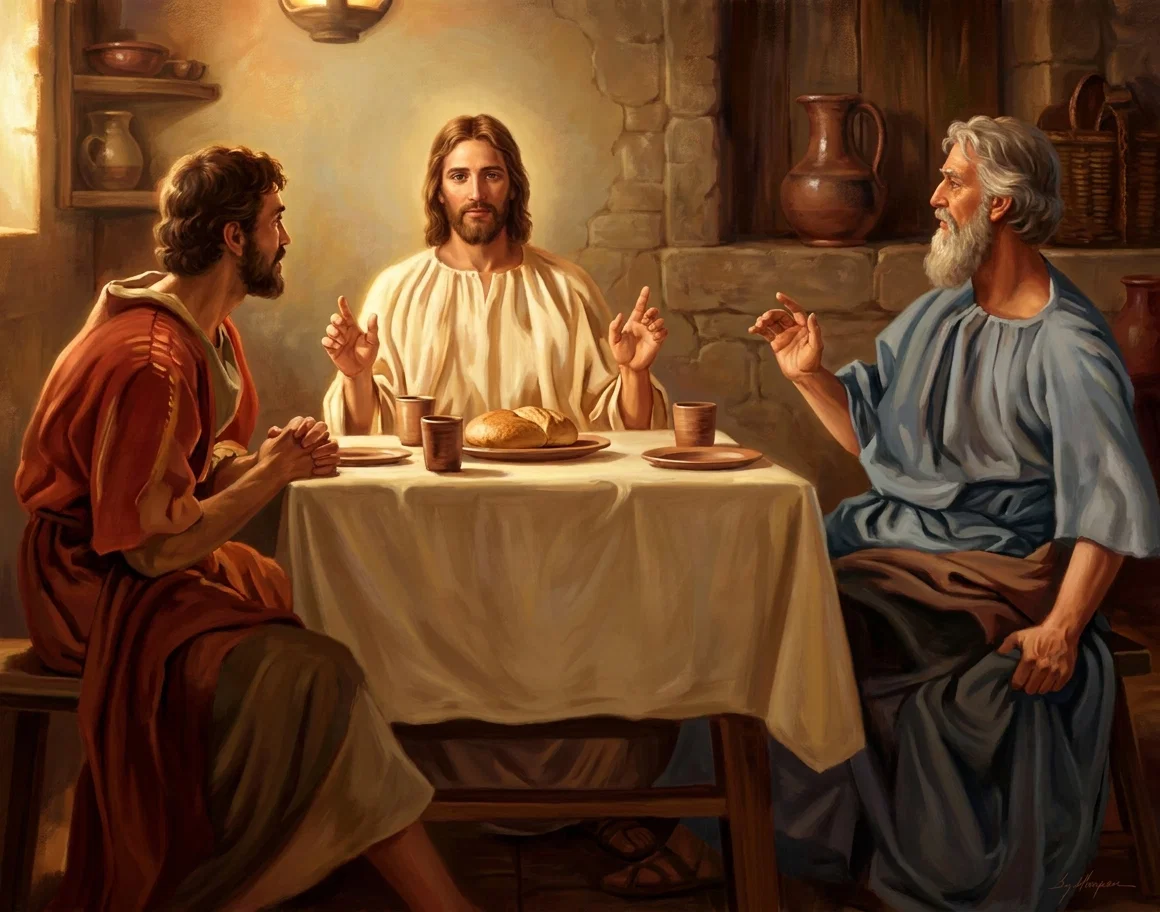 THE SUPPER AT EMMAUS.
“It is the Lord Jesus’. He has risen from the dead.”
 A broad, barren mountainous landscape stretches across the scene. In the foreground, rough pale rocks and low scrub frame an open expanse of dark, uneven ground, crossed by winding rocky channels or paths. The middle distance contains layered ridges and eroded formations, including a prominent pale, deeply grooved outcrop near the center. Behind them rises a large mountain with a rugged, lightly snow-streaked summit, while lower slopes extend toward the edges beneath a hazy, nearly featureless sky. No people, animals, buildings, or visible lettering appear.
 PEACE BE UNTO YOU
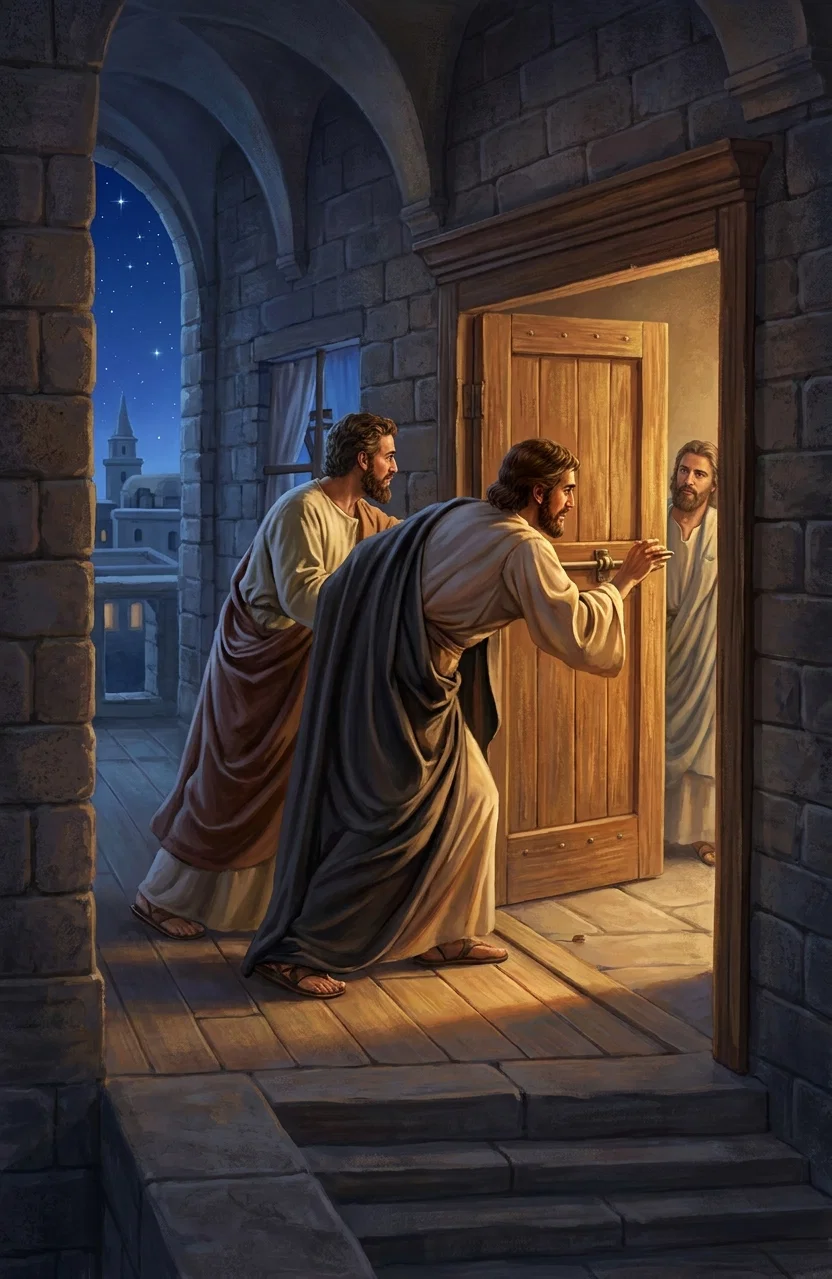 “The door is carefully unbarred.”
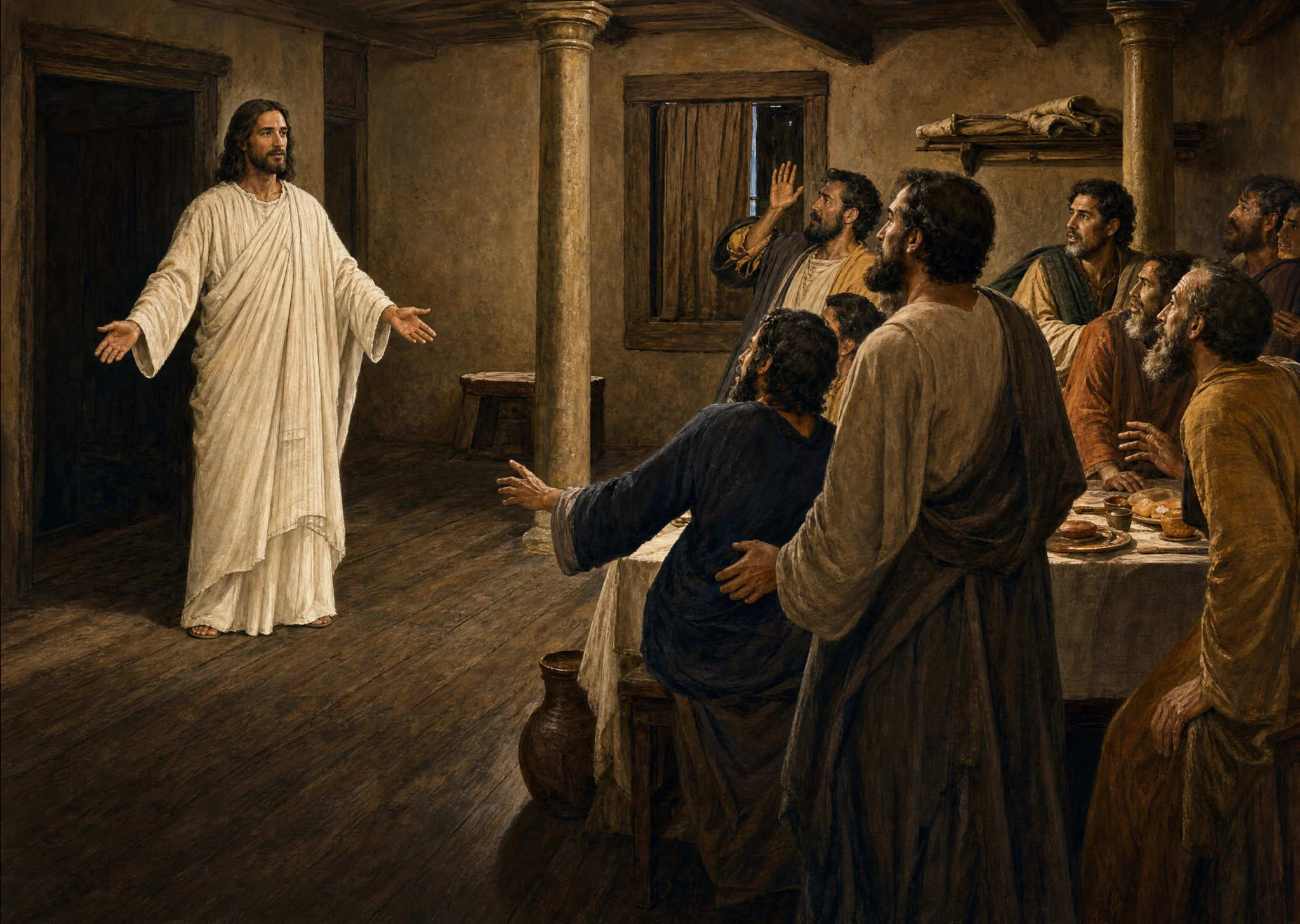 “Clear and distinct the words fall from His lips, ‘Peace be unto you.’” Page 803.
 A rustic stone ruin stands amid dense grasses and brush. On the left, a low, roughly built wall of irregular light-colored blocks leads toward a taller, broken structure at center, with a dark vertical opening or shadowed recess. Heavy vegetation rises above and around the masonry, while a large rounded stone arch or tunnel opening occupies the right side, revealing darker vertical textures within. Scattered stones and fragments lie at its base, and tall weeds fill the foreground. No people, animals, signs, or lettering are visible.
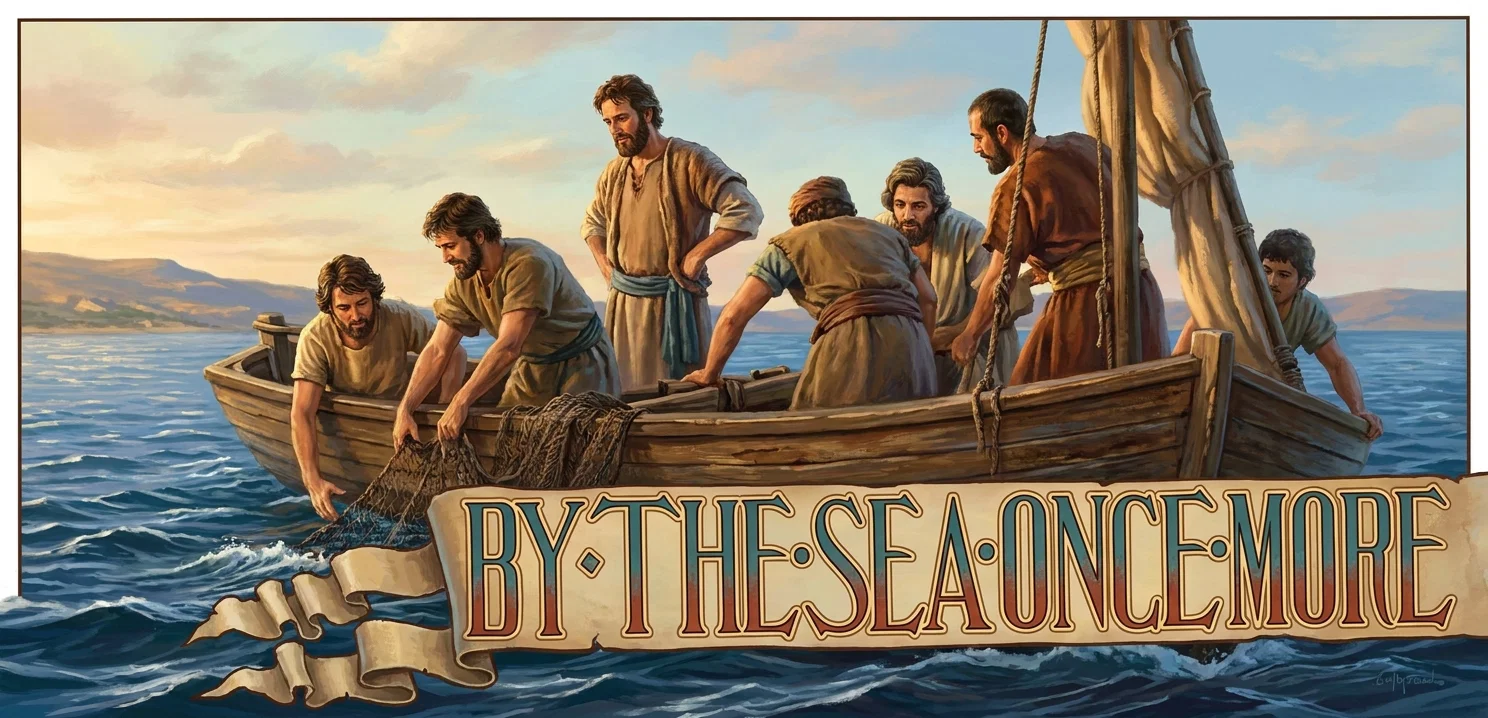 BY THE SEA ONCE MORE
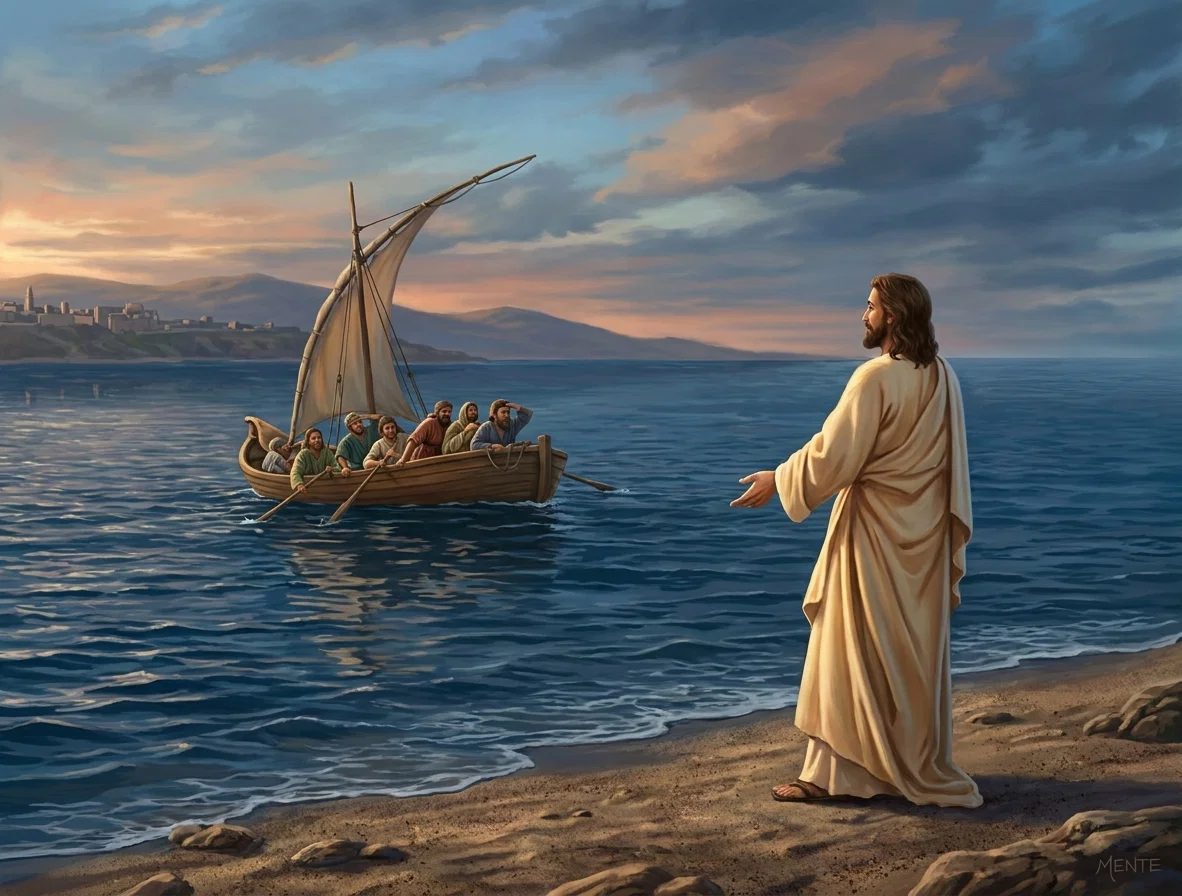 BY THE SEASIDE.
“A lone watcher upon the shore followed them with His eyes.”
 A broad coastal view shows a densely built Mediterranean or Middle Eastern town rising steeply from the water. Flat-roofed stone buildings and larger blocklike structures cluster across the hillside, with a long waterfront wall or quay at its base. Several small sailing boats and vessels lie along the shore, while scattered rocks and shallow water occupy the foreground. A prominent sloping ramp or stairway descends from the right side of the settlement toward the waterfront. The scene is rendered in monochrome, with no visible lettering or signs.
 “GO TEACH ALL NATIONS”
 A small stone-built spring or watercourse is set into a steep, grassy, rock-strewn hillside. At the upper right, a dark arched opening leads into the masonry, while water appears to emerge below and run through a narrow channel toward the foreground. Irregular rounded stones form the arch, retaining walls, and banks, with dense crosshatched vegetation covering the slope and clumps of grass around the stream. The composition focuses on the rustic stone passage and the trickling water, with no people, animals, or visible lettering.
 TO MY FATHER AND YOUR FATHER
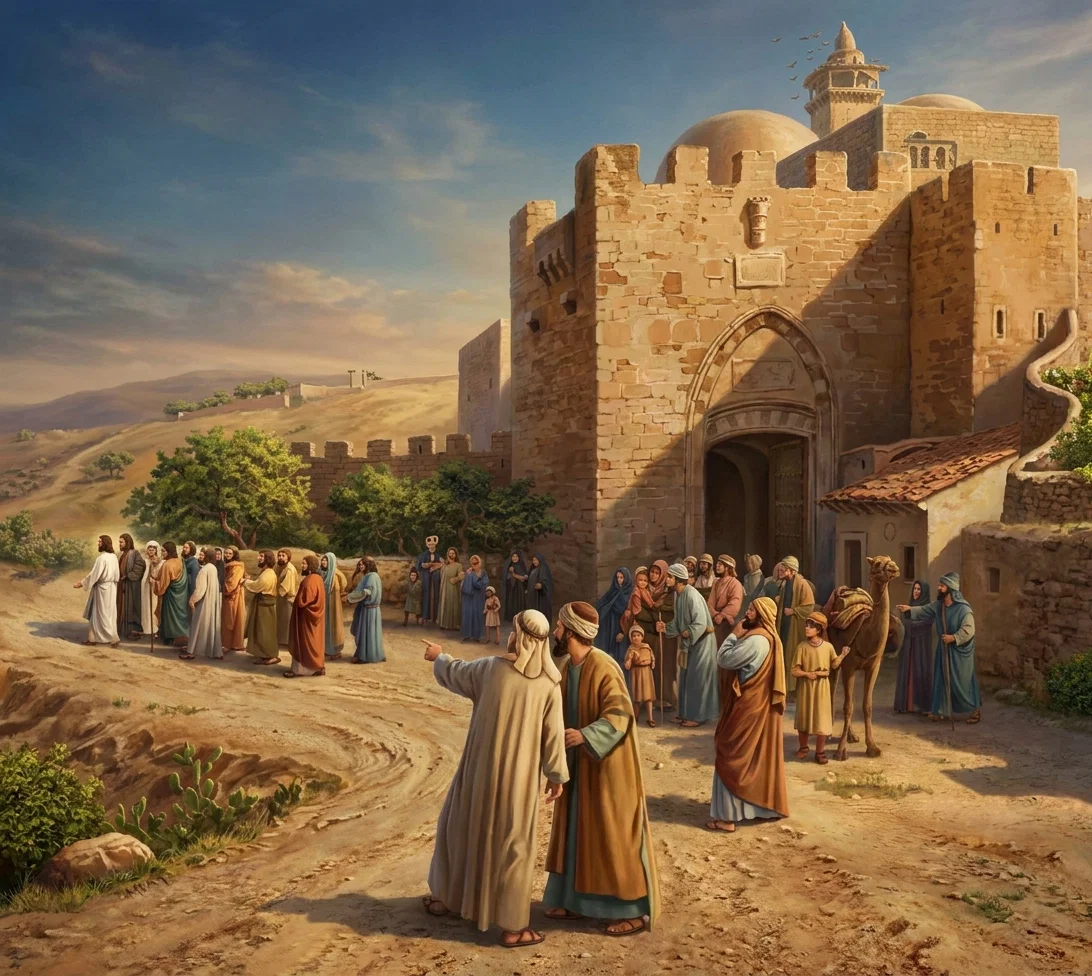 “Many wondering eyes looked upon the little company, led by One whom a few weeks before the rulers had condemned and crucified.”
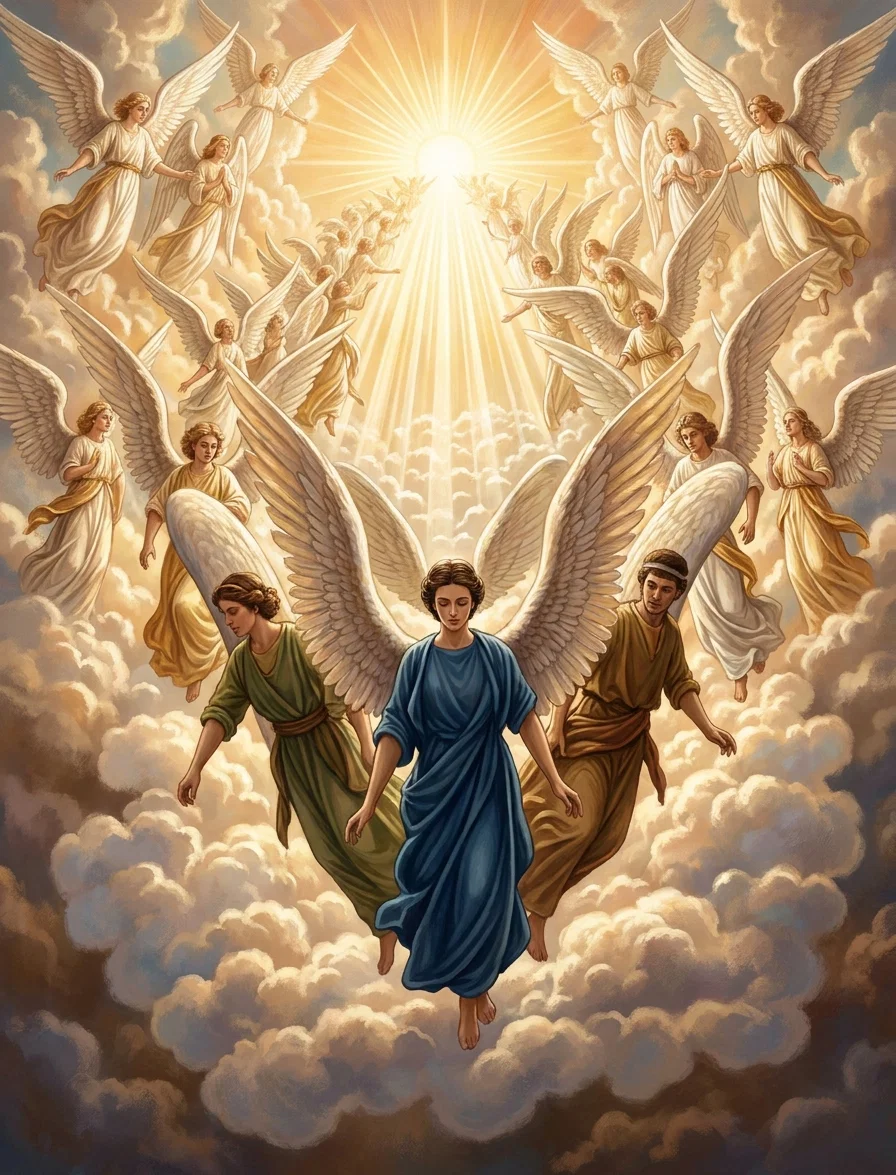 A religious vision of Christ’s ascension fills the scene. A central, dark-robed figure rises or floats above billowing clouds, arms extended slightly outward, with two lighter-robed, winged attendants hovering on either side. Behind them are large sweeping wings and clustered angelic or heavenly forms, while above, a radiant crowned figure or sacred presence emits numerous long rays of light downward. The composition is vertically arranged, moving from the cloud-filled lower foreground toward the luminous heavenly figure at the top; no lettering appears within the image.
 A. D.
Beginning
of Days
538
1,260 DAYS OR YEARS OF PERSECUTION
Shortening
of Tribulation
1776
End
of Days
1798
1780
Darkening of Sun
and Moon
1833
Falling of
Stars