Your ShelfYour Projects

Christ's Object Lessons

0%

Christ's Object Lessons

Ellen G. White

Pacific Press Publishing Company · Battle Creek, Mich.; Atlanta; Chicago; Toronto · 1900
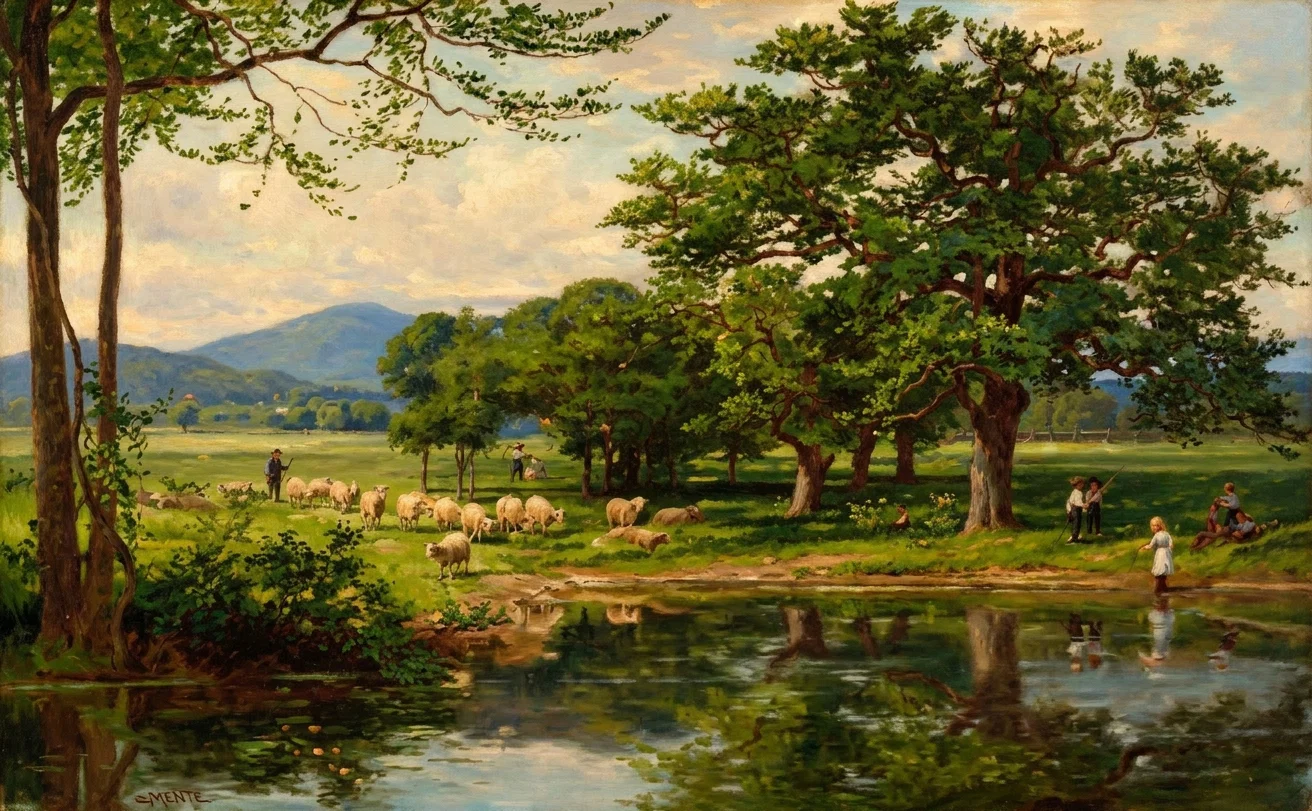
THE MIRROR OF DIVINITY.

*Rightly understood, nature speaks of the Creator.
THE MIRROR OF DIVINITY. *Rightly understood, nature speaks of the Creator.

Preface

Christ is the great Teacher; and as a teacher He loved nature. Much of His instruction was given as He walked with His disciples by lake or river, or among the hills and valleys of Palestine.
In His parable-teaching Christ linked divine truth with common things and incidents. Familiar objects were associated with thoughts true and beautiful,—thoughts of God’s loving interest in us, of the grateful homage that is His due, and of the care we should have one for another. Thus lessons of divine wisdom and practical truth were made forcible and impressive.
In the present work the parables are grouped according to their subjects, and their lessons developed and illustrated. The book is by an author widely and favorably known. Like all her works, it is full of gems of truth; and to many readers it will give a new meaning to the surroundings of every-day life.
The author designs that her share of the proceeds shall be devoted to educational institutions; and the publishers join heartily in this excellent work by donating the labor of manufacture. Thus the profit that usually accrues to author and publisher will be used in educational lines.Notwithstanding this the publishers have taken great pains to make the setting worthy of the gem, as to both the mechanical work and the illustrations. The latter are by talented New York artists, and have been designed expressly for this book.
We are sure that “Christ’s Object Lessons” will be appreciated by all lovers of the true and the beautiful, and that the book will make for itself a place in many hearts and homes. PUBLISHERSNature is the mirror of divinity.

From the Natural to the Spiritual

Teaching in Parables

IN Christ’s parable-teaching the same principle is seen as in His own mission to the world. That we might become acquainted with His divine character and life, Christ took our nature, and dwelt among us. Divinity was revealed in humanity; the invisible glory in the visible human form. Men could learn of the unknown through the known; heavenly things were revealed through the earthly; God was made manifest in the likeness of men. So it was in Christ’s teaching: the unknown was illustrated by the known; divine truths by earthly things with which the people were most familiar.
The Scripture says, “All these things spake Jesus unto the multitude in parables; . . . that it might be fulfilled which was spoken by the prophet, saying, I will open My mouth in parables; I will utter things which have been kept secret from the foundation of the world.” Natural things were the medium for the spiritual; the things of nature and the life-experience of His hearers were connected with the truths of the written word. Leading thus from the natural to the spiritual kingdom, Christ’s parables are links in the chainof truth that unites man with God, and earth with heaven.
In His teaching from nature, Christ was speaking of the things which His own hands had made, and which had qualities and powers that He Himself had imparted. In their original perfection, all created things were an expression of the thought of God. To Adam and Eve in their Eden home, nature was full of the knowledge of God, teeming with divine instruction. Wisdom spoke to the eye, and was received into the heart; for they communed with God in His created works. As soon as the holy pair transgressed the law of the Most High, the brightness from the face of God departed from the face of nature. The earth is now marred and defiled by sin. Yet even in its blighted state, much that is beautiful remains. God's object-lessons are not obliterated; rightly understood, nature speaks of her Creator.
“He desires us to read it in every lily.”
In the days of Christ these lessons had been lost sight of. Men had well-nigh ceased to discern God in His works. The sinfulness of humanity had cast a pall over the fair face of creation; and instead of manifesting God, His works became a barrier that concealed Him. Men “worshiped and served the creature more than the Creator.” Thus the heathen “became vain in their imaginations, and their foolish heart was darkened.” So in Israel, man’s teaching had been put in the place of God’s. Not only the things of nature, but the sacrificial service and the Scriptures themselves,—all given to reveal God,—were so perverted that they became the means of concealing Him.
Christ sought to remove that which obscured the truth: The veil that sin has cast over the face of nature, He cameto draw aside, bringing to view the spiritual glory that all things were created to reflect. His words placed the teachings of nature as well as of the Bible in a new aspect, and made them a new revelation.
Jesus plucked the beautiful lily, and placed it in the hands of children and youth; and as they looked into His own youthful face, fresh with the sunlight of His Father’s countenance, He gave the lesson, “Consider the lilies of the field, how they grow [in the simplicity of natural beauty]; they toil not, neither do they spin: and yet I say unto you, that even Solomon in all his glory was not arrayed like one of these.” Then followed the sweet assurance and the important lesson, “Wherefore, if God so clothe the grass of the field, which to-day is, and to-morrow is cast into the oven, shall He not much more clothe you, O ye of little faith?”
In the sermon on the mount these words were spoken to others besides children and youth. They were spoken to the multitude, among whom were men and women full of worries and perplexities, and sore with disappointment and sorrow. Jesus continued: “Therefore take no thought, saying, What shall we eat? or, What shall we drink? or, Wherewithal shall we be clothed? (for after all these things do the Gentiles seek:) for your Heavenly Father knoweth that ye have need of all these things.” Then spreading out His hands to the surrounding multitude, He said, “But seek ye first the kingdom of God, and His righteousness; and all these things shall be added unto you.”
Thus Christ interpreted the message which He Himself had given to the lilies and the grass of the field. He desires us to read it in every lily and every spire of grass. His words are full of assurance, and tend to confirm trust in God.
So wide was Christ’s view of truth, so extended His teaching, that every phase of nature was employed in illustrating truth. The scenes upon which the eye daily rests were all connected with some spiritual truth, so that nature is clothed with the parables of the Master.
“Christ taught His disciples by the lake, on the mountain-side.”
In the earlier part of His ministry, Christ had spoken to the people in words so plain that all His hearers might have grasped truths which would make them wise unto salvation. But in many hearts the truth had taken no root, and it had been quickly caught away. “Therefore speak I to them in parables,” He said; “because they seeing see not; and hearing they hear not, neither do they understand. . . . For this people’s heart is waxed gross, and their ears are dull of hearing, and their eyes they have closed.”
Jesus desired to awaken inquiry. He sought to arouse the careless,and impress truth upon the heart. Parable-teaching was popular, and commanded the respect and attention, not only of the Jews, but of the people of other nations. No more effective method of instruction could He have employed. If His hearers had desired a knowledge of divine things, they might have understood His words; for He was always willing to explain them to the honest inquirer.
Again, Christ had truths to present which the people were unprepared to accept, or even to understand. For this reason also He taught them in parables. By connecting His teaching with the scenes of life, experience, or nature, He secured their attention and impressed their hearts. Afterward, as they looked upon the objects that illustrated His lessons, they recalled the words of the divine Teacher. To minds that were open to the Holy Spirit, the significance of the Saviour’s teaching unfolded more and more. Mysteries grew clear, and that which had been hard to grasp became evident.
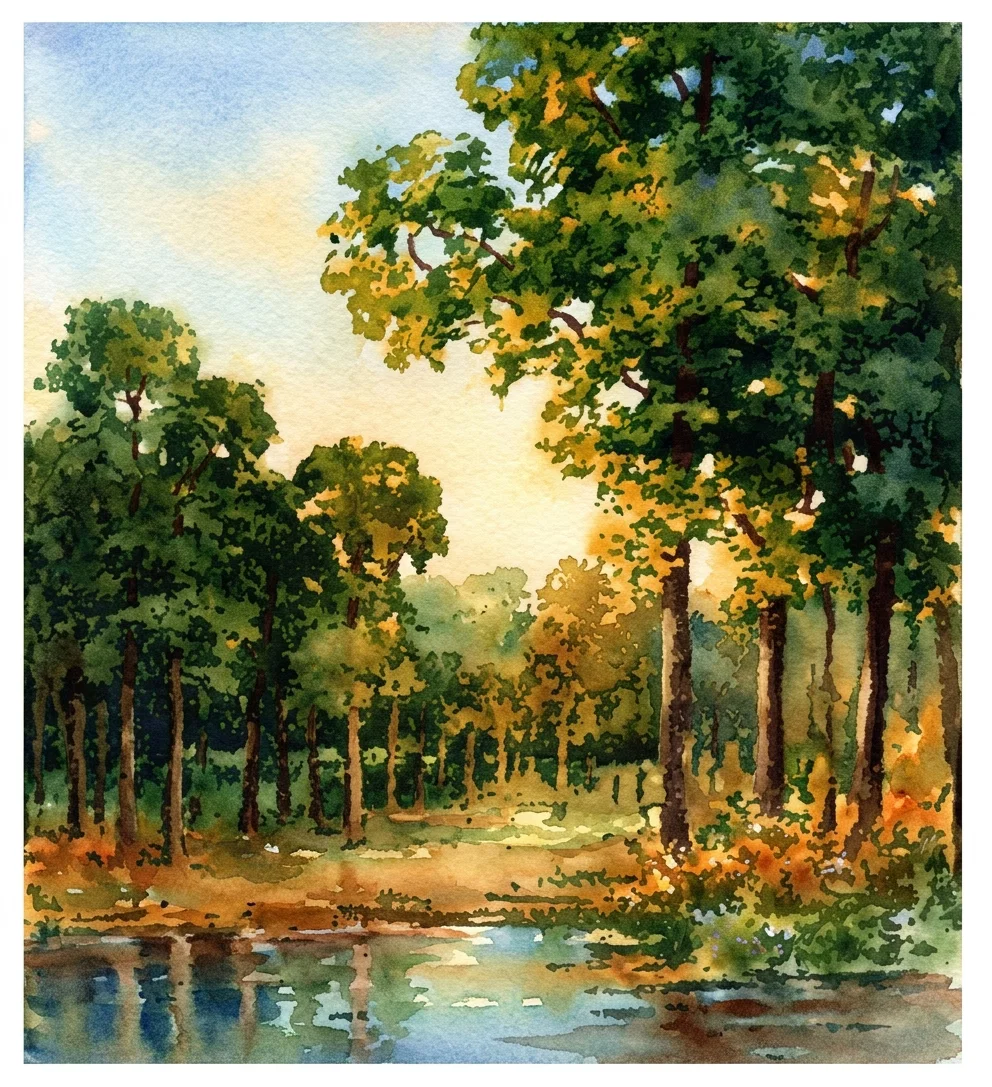
And “in the fields and groves.”
Jesus sought an avenue to every heart. By using a variety of illustrations, He not only presented truth in its different phases, but appealed to the different hearers. Their interest was aroused by figures drawn from the surroundings of their daily life. None who listened to the Saviourcould feel that they were neglected or forgotten. The humblest, the most sinful, heard in His teaching a voice that spoke to them in sympathy and tenderness.
And He had another reason for teaching in parables. Among the multitudes that gathered about Him, there were priests and rabbis, scribes and elders, Herodians and rulers, world-loving, bigoted, ambitious men, who desired above all things to find some accusation against Him. Their spies followed His steps day after day, to catch from His lips something that would cause His condemnation, and forever silence the One who seemed to draw the world after Him. The Saviour understood the character of these men, and He presented truth in such a way that they could find nothing by which to bring His case before the Sanhedrim. In parables He rebuked the hypocrisy and wicked works of those who occupied high positions, and in figurative language clothed truth of so cutting a character that had it been spoken in direct denunciation, they would not have listened to His words, and would speedily have put an end to His ministry. But while He evaded the spies, He made truth so clear that error was manifested, and the honest in heart were profited by His lessons. Divine wisdom, infinite grace, were made plain by the things of God’s creation. Through nature and the experiences of life, men were taught of God. “The invisible things of Him since the creation of the world,” were “perceived through the things that are made, even His everlasting power and divinity.”
In the Saviour’s parable-teaching is an indication of what constitutes the true “higher education.” Christ might have opened to men the deepest truths of science. He might have unlocked mysteries which have required many centuries of toil and study to penetrate. He might have made suggestions in scientific lines that would have afforded foodfor thought and stimulus for invention to the close of time. But He did not do this. He said nothing to gratify curiosity, or to satisfy man’s ambition by opening doors to worldly greatness. In all His teaching, Christ brought the mind of man in contact with the Infinite Mind. He did not direct the people to study men’s theories about God, His word, or His works. He taught them to behold Him as manifested in His works, in His word, and by His providences.
Christ did not deal in abstract theories, but in that which is essential to the development of character, that which will enlarge man’s capacity for knowing God, and increase his efficiency to do good. He spoke to men of those truths that relate to the conduct of life, and that take hold upon eternity.
It was Christ who directed the education of Israel. Concerning the commandments and ordinances of the Lord He said, “Thou shalt teach them diligently unto thy children, and shalt talk of them when thou sittest in thine house, and when thou walkest by the way, and when thou liestdown, and when thou risest up. And thou shalt bind them for a sign upon thine hand, and they shall be as frontlets between thine eyes. And thou shalt write them upon the posts of thy house, and on thy gates.” In His own teaching, Jesus showed how this command is to be fulfilled, — how the laws and principles of God’s kingdom can be so presented as to reveal their beauty and preciousness. When the Lord was training Israel to be the special representatives of Himself, He gave them homes among the hills and valleys. In their home life and their religious service they were brought in constant contact with nature and with the word of God. So Christ taught His disciples by the lake, on the mountain-side, in the fields and groves, where they could look upon the things of nature by which He illustrated His teachings. And as they learned of Christ, they put their knowledge to use by co-operating with Him in His work.
So through the creation we are to become acquainted with the Creator. The book of nature is a great lesson-book, which in connection with the Scriptures we are to use in teaching others of His character, and guiding lost sheep back to the fold of God. As the works of God are studied, the Holy Spirit flashes conviction into the mind. It is not the conviction that logical reasoning produces; but unless the mind has become too dark to know God, the eye too dim to see Him, the ear too dull to hear His voice, a deeper meaning is grasped, and the sublime, spiritual truths of the written word are impressed on the heart.
In these lessons direct from nature, there is a simplicity and purity that makes them of the highest value. All need the teaching to be derived from this source. In itself the beauty of nature leads the soul away from sin and worldly attractions, and toward purity, peace, and God.Too often the minds of students are occupied with men’s theories and speculations, falsely called science and philosophy. They need to be brought into close contact with nature. Let them learn that creation and Christianity have one God. Let them be taught to see the harmony of the natural with the spiritual. Let everything which their eyes see or their hands handle be made a lesson in character-building. Thus the mental powers will be strengthened, the character developed, the whole life ennobled.
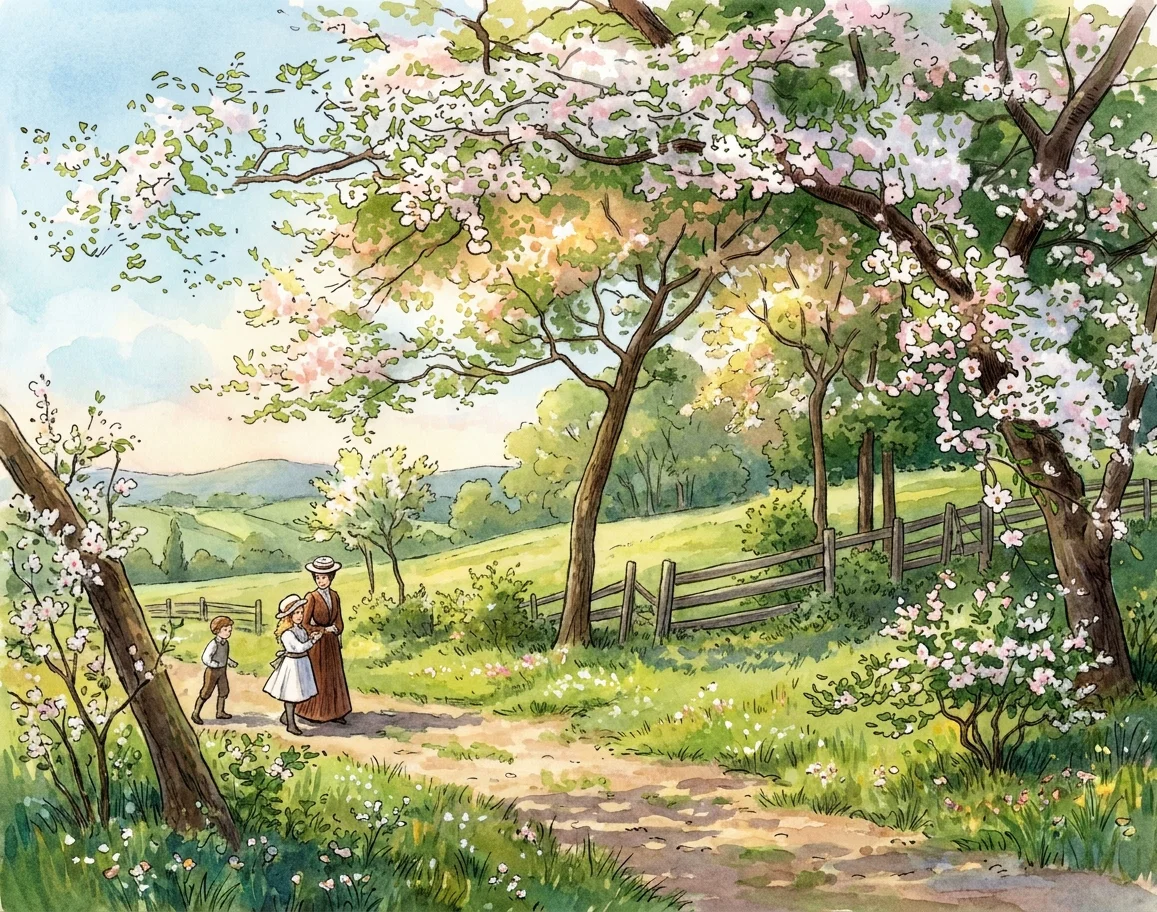
“We should study the Saviour’s parables where He spoke them, in the fields and groves, . . . among the grass and flowers.”
Christ’s purpose in parable-teaching was in direct line with the purpose of the Sabbath. God gave to men the memorial of His creative power, that they might discern Him in the works of His hand. The Sabbath bids us behold in His created works the glory of the Creator. Andit was because He desired us to do this that Jesus bound up His precious lessons with the beauty of natural things. On the holy rest-day, above all other days, we should study the messages that God has written for us in nature. We should study the Saviour’s parables where He spoke them, in the fields and groves, under the open sky, among the grass and flowers. As we come close to the heart of nature, Christ makes His presence real to us, and speaks to our hearts of His peace and love.
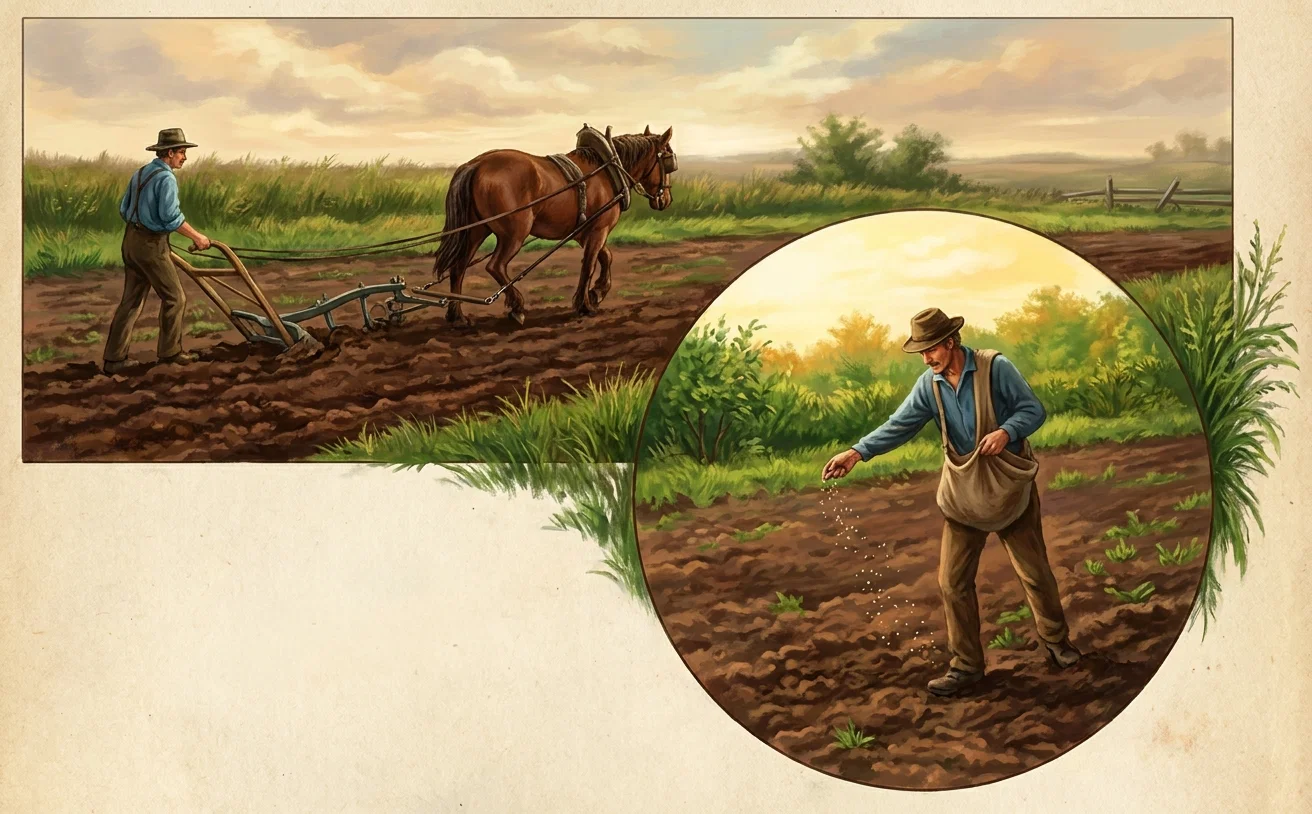
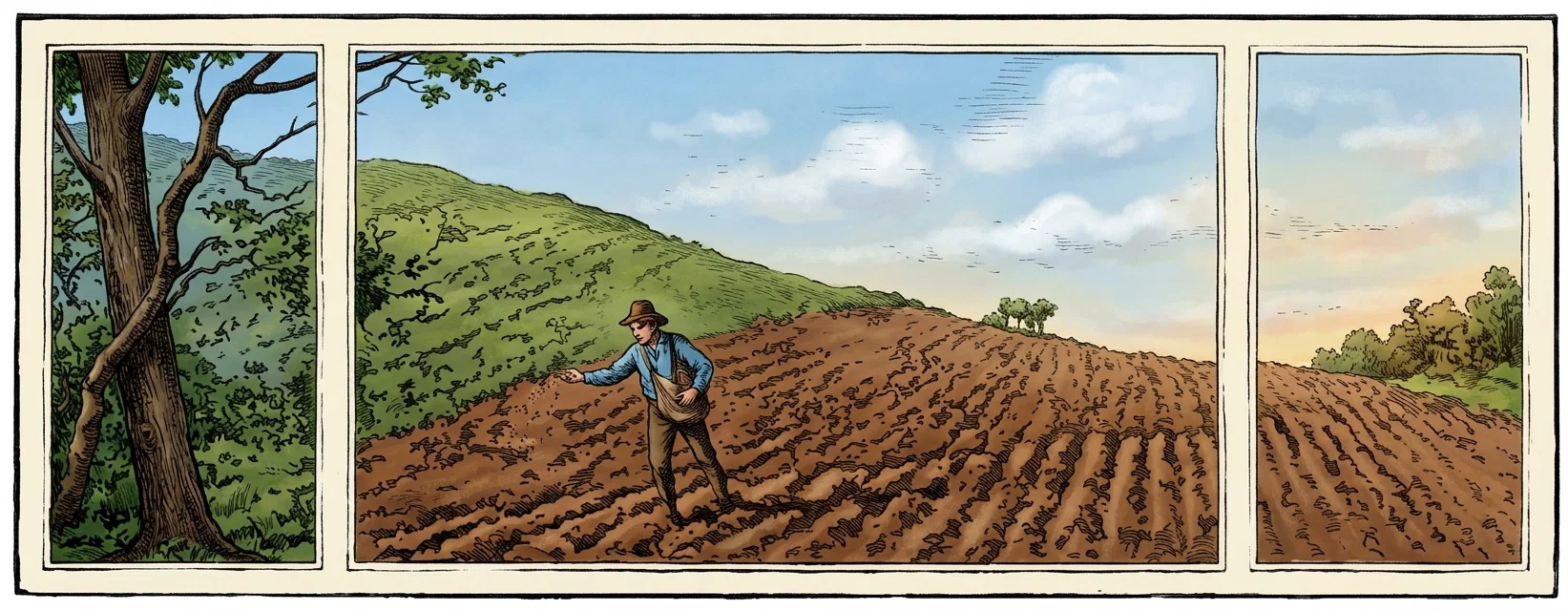
“He has wisdom for him who drives the plow and sows the seed.”
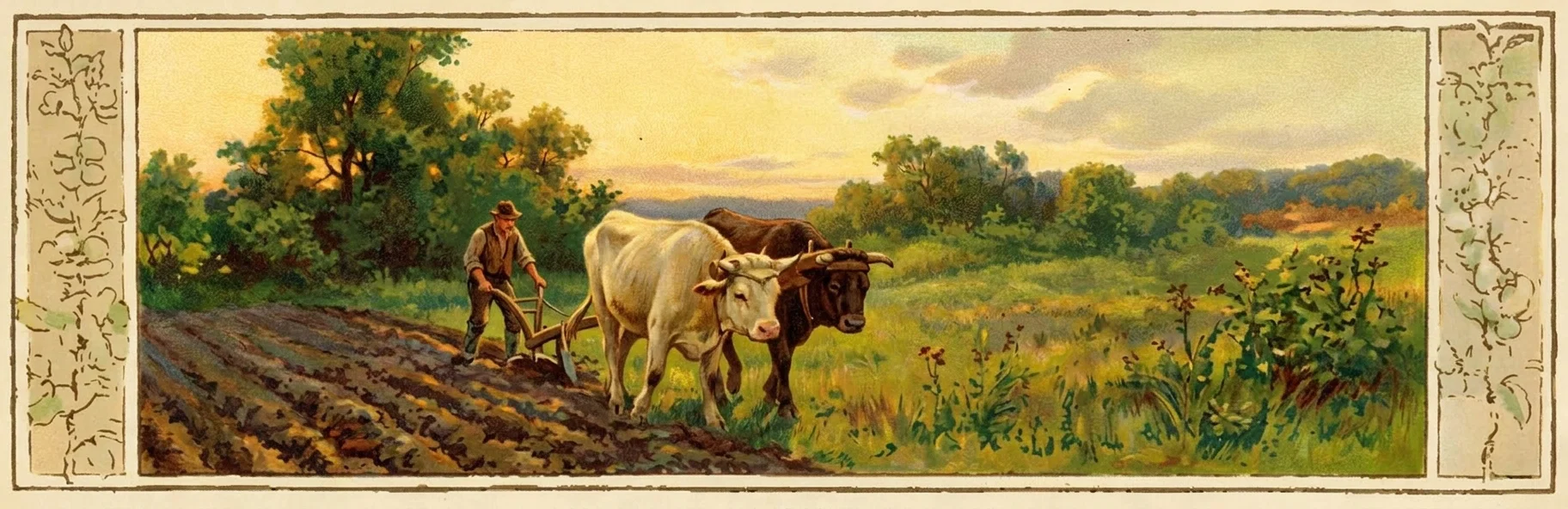
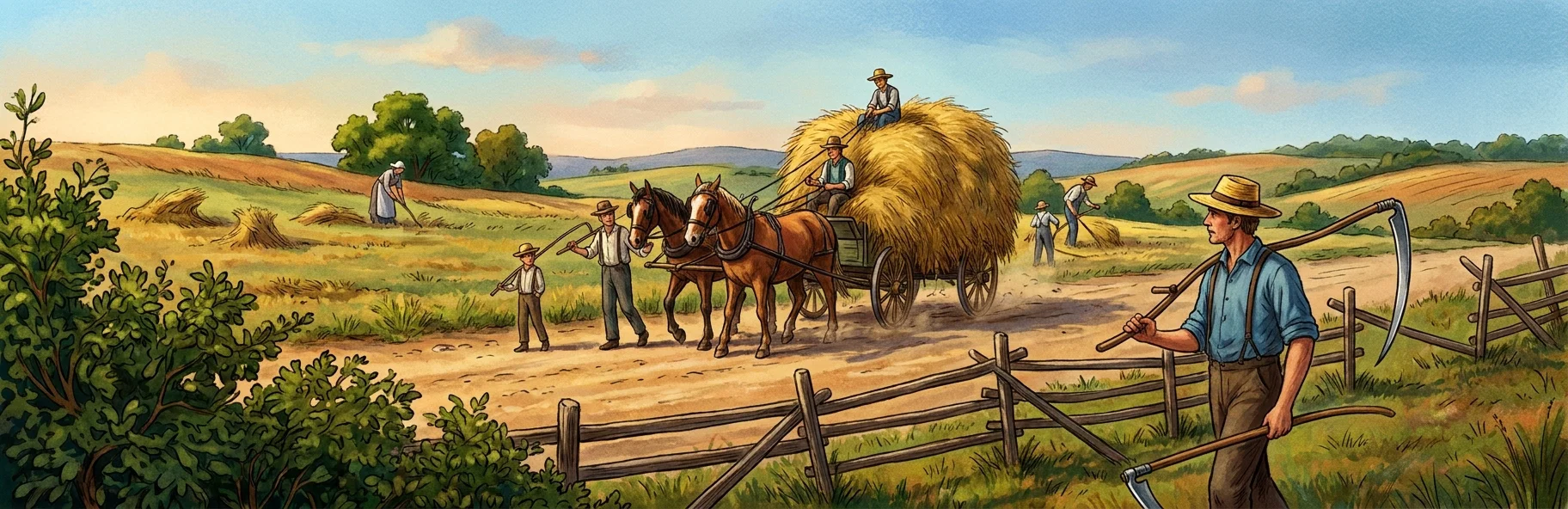
And Christ has linked His teaching, not only with the day of rest, but with the week of toil. He has wisdom for him who drives the plow and sows the seed. In the plowing and sowing, the tilling and reaping, He teaches us to see an illustration of His work of grace in the heart. So in every line of useful labor and every association of life, He desires us to find a lesson of divine truth. Then our daily toil will no longer absorb our attention and leadus to forget God; it will continually remind us of our Creator and Redeemer. The thought of God will run like a thread of gold through all our homely cares and occupations. For us the glory of His face will again rest upon the face of nature. We shall ever be learning new lessons of heavenly truth, and growing into the image of His purity. Thus shall we “be taught of the Lord;” and in the lot wherein we are called, we shall “abide with God.”
In “the tilling and reaping He teaches us.”

Seed-Sowing

“The seed is the word of God” Luke 8:11
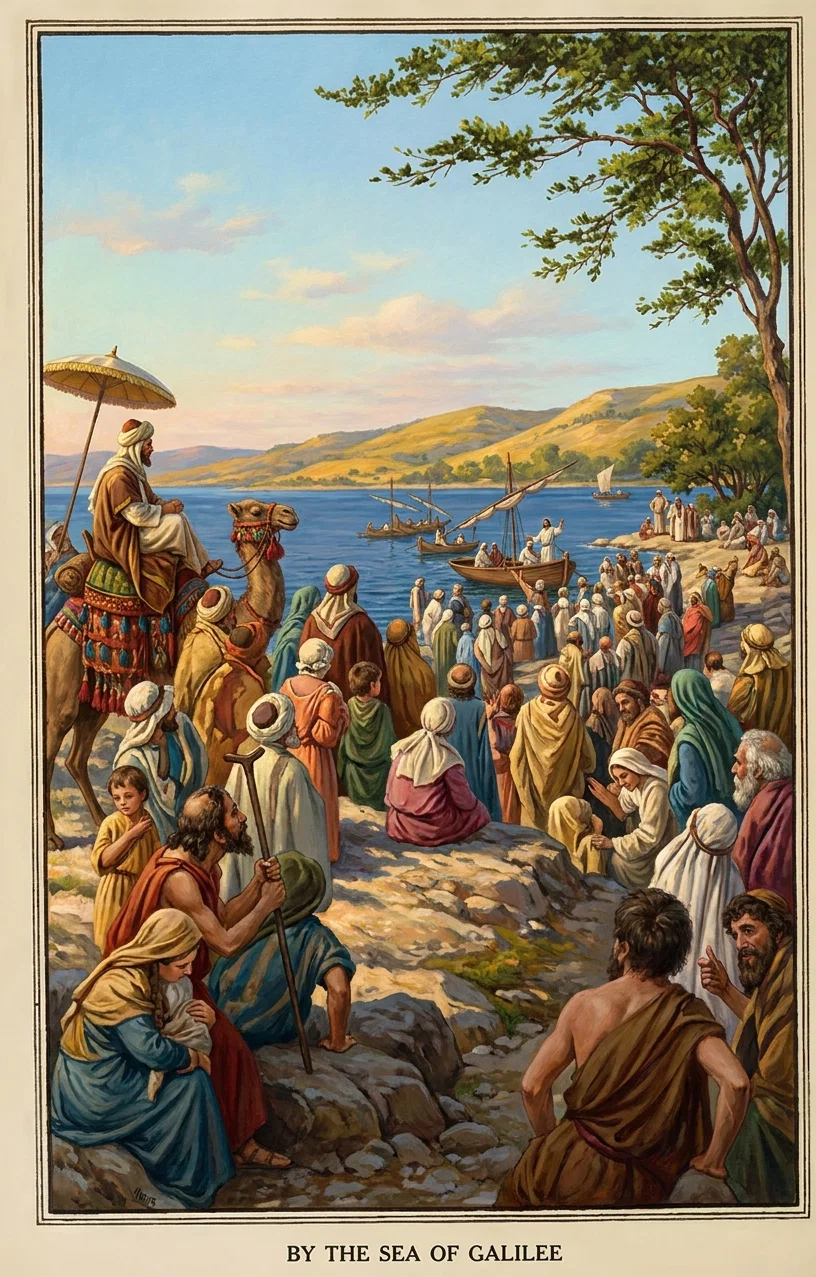
“A company had gathered to hear Jesus,—an eager,”

BY THE SEA OF GALILEE
“A company had gathered to hear Jesus,—an eager,” BY THE SEA OF GALILEE

“The Sower Went Forth to Sow”

Continue reading: *THE SOWER AND THE SEED*