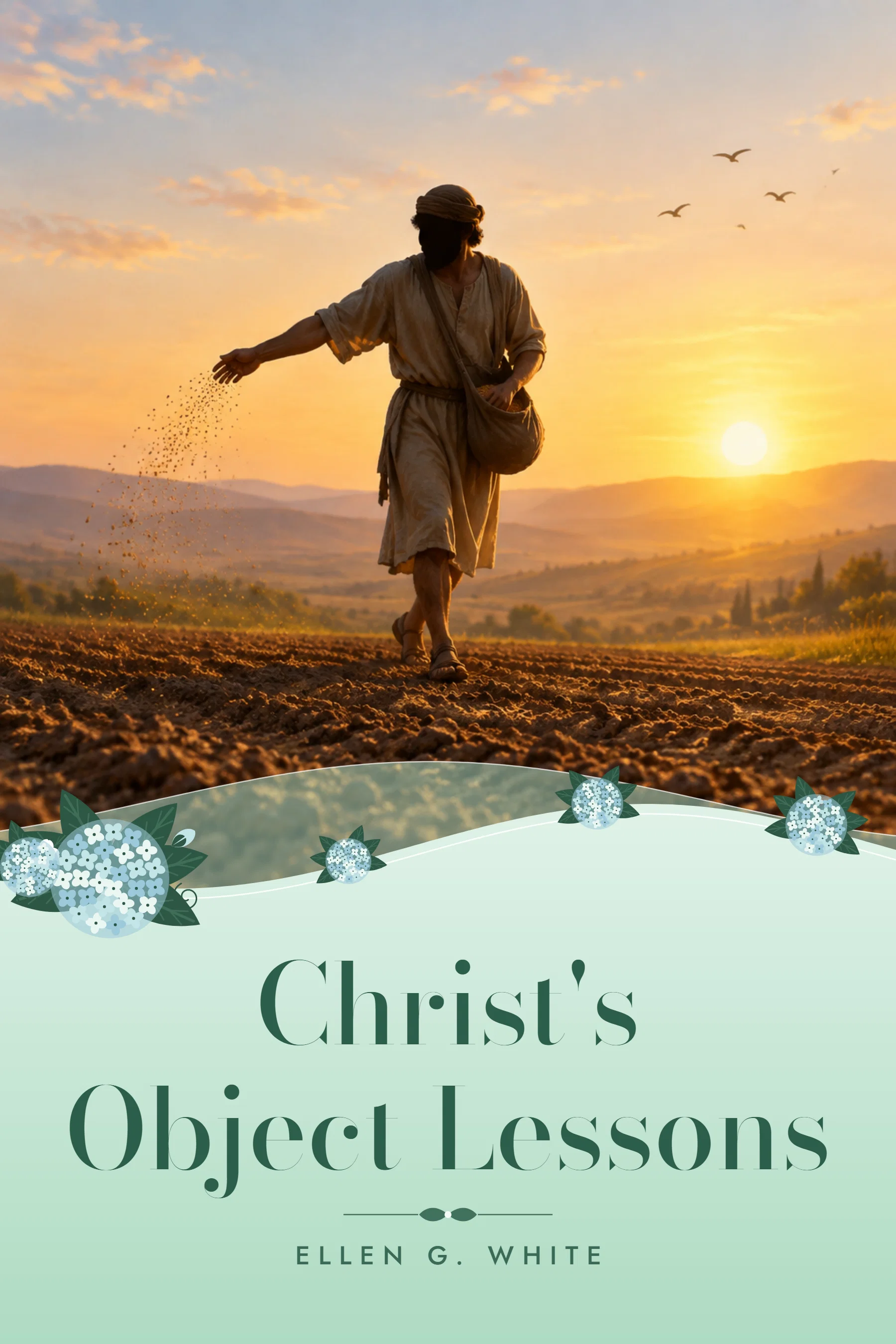
Library
Christ's Object Lessons
Pacific Press Publishing Company · Battle Creek, Mich.; Atlanta; Chicago; Toronto · 1900
- Pages
- 400
- Illustrations
- 104
Contents
- *Preface*7
- *From the Natural to the Spiritual*15
- *Teaching in Parables*17
- *Seed-Sowing*29
- “*The Sower Went Forth to Sow*”33
- *THE SOWER AND THE SEED*33
- *THE SOIL—BY THE WAYSIDE*43
- *IN STONY PLACES*46
- *AMONG THORNS*50
- *PREPARATION OF THE SOIL*56
- *IN GOOD GROUND*58
- “First the Blade, then the Ear”62
- *Tares*70
- “Like a Grain of Mustard Seed”76
- *Other Lessons from Seed-Sowing*80
- *In Common Paths*90
- “Like unto Leaven”95
- *Hidden Treasure*103
- *HOW HIDDEN*104
- *VALUE OF THE TREASURE*106
- *RESULTS OF NEGLECTING THE TREASURE*108
- *SEARCH FOR THE TREASURE*109
- *REWARD OF SEARCHING*113
- *The Pearl*115
- *The Net*122
- “*Things New and Old*”124
- *PRAYER*135
- *Asking to Give*139
- *Two Worshipers*150
- *“Shall Not God Avenge His Own?”*164
- *God’s Seeking Love*181
- “*This Man Receiveth Sinners*”185
- *THE LOST SHEEP*186
- *THE LOST PIECE OF SILVER*192
- “Lost, and Is Found”198
- “*Spare It This Year Also*”212
- “Go into the Highways and Hedges”219
- *Warning*239
- *The Measure of Forgiveness*243
- *Gain That Is Loss*252
- “*A Great Gulf Fixed*”260
- *APPLICATION TO THE JEWISH NATION*267
- *IN THE LAST DAYS*269
- *Saying and Doing*272
- *The Lord’s Vineyard*284
- *THE JEWISH NATION*284
- *THE CHURCH OF TO-DAY*296
- *Without a Wedding Garment*307
- *SERVICE*321
- *Talents*325
- *GIFTS OF THE HOLY SPIRIT*327
- *OTHER TALENTS*328
- *USE OF TALENTS*329
- *MENTAL FACULTIES*333
- *SPEECH*335
- *INFLUENCE*339
- *TIME*342
- *HEALTH*346
- *STRENGTH*348
- *MONEY*351
- *KINDLY IMPULSES AND AFFECTIONS*352
- *TALENTS MULTIPLIED BY USE*353
- *THE ONE TALENT*355
- *THE TALENTS RETURNED*360
- *THE TALENT REMOVED*364
- “Friends by the Mammon of Unrighteousness”366
- *“Who Is My Neighbor?”*376
- *The Reward of Grace*390
- “*To Meet the Bridegroom*”405
- *The Marriage Feast*423
Illustrations
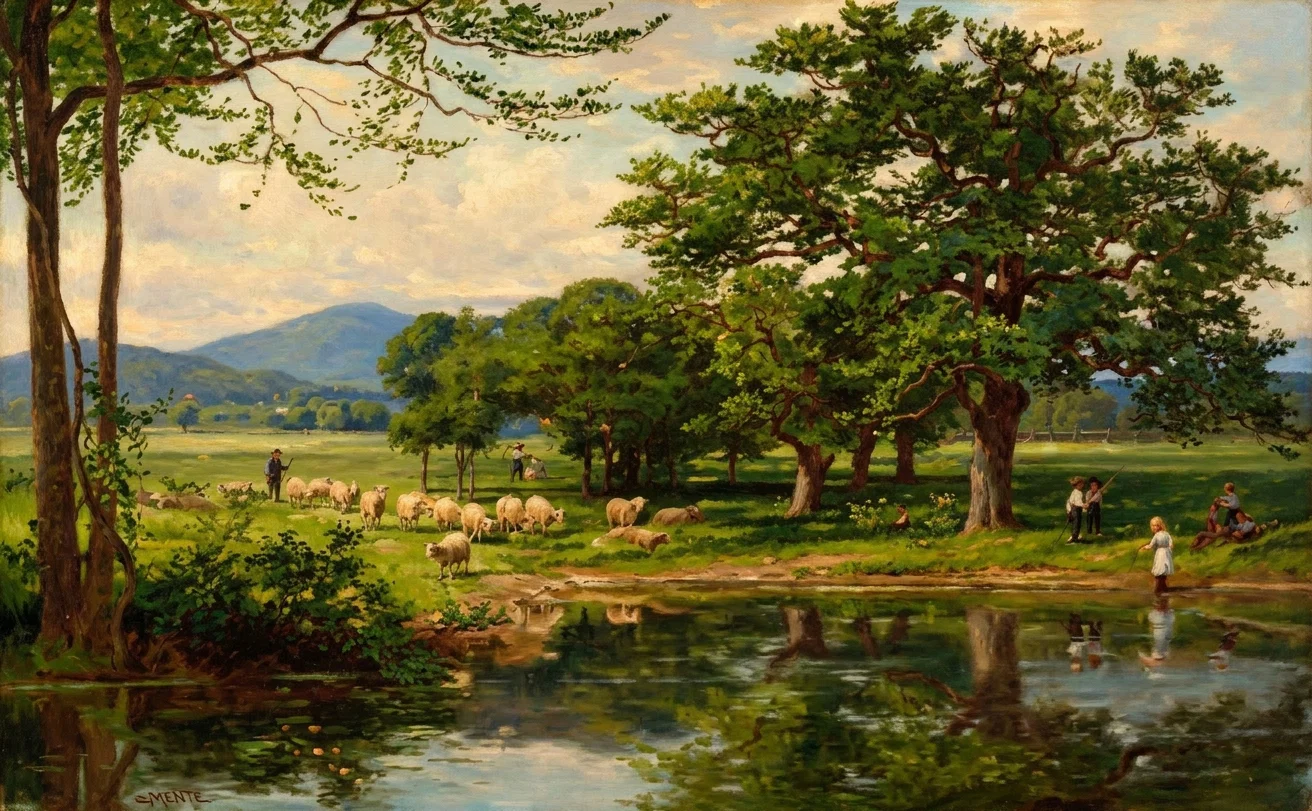 THE MIRROR OF DIVINITY.
*Rightly understood, nature speaks of the Creator.
THE MIRROR OF DIVINITY.
*Rightly understood, nature speaks of the Creator. A pastoral landscape shows a large horned cow standing in the foreground near the center, facing right, with its head lowered slightly as if grazing. Dense, shadowy trees and brush fill the left side, while an open meadow extends across the right toward a low, softly wooded horizon. The scene is rendered in muted, atmospheric tones, with grasses and small plants scattered throughout the field. Decorative vertical panels border both sides of the image, containing faint ornamental foliage and indistinct markings, but no clearly legible text appears within the scene.
 “He desires us to read it in every lily.”
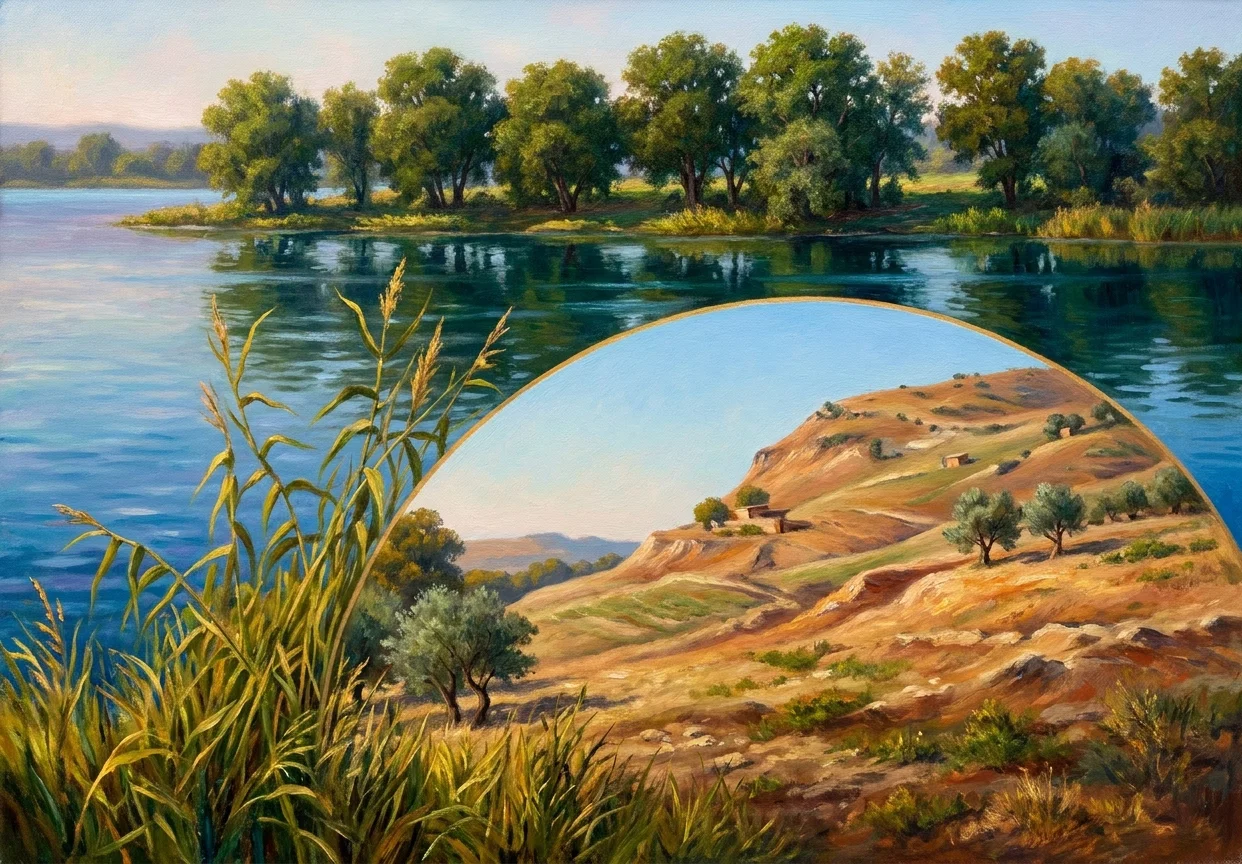 “Christ taught His disciples by the lake, on the mountain-side.”
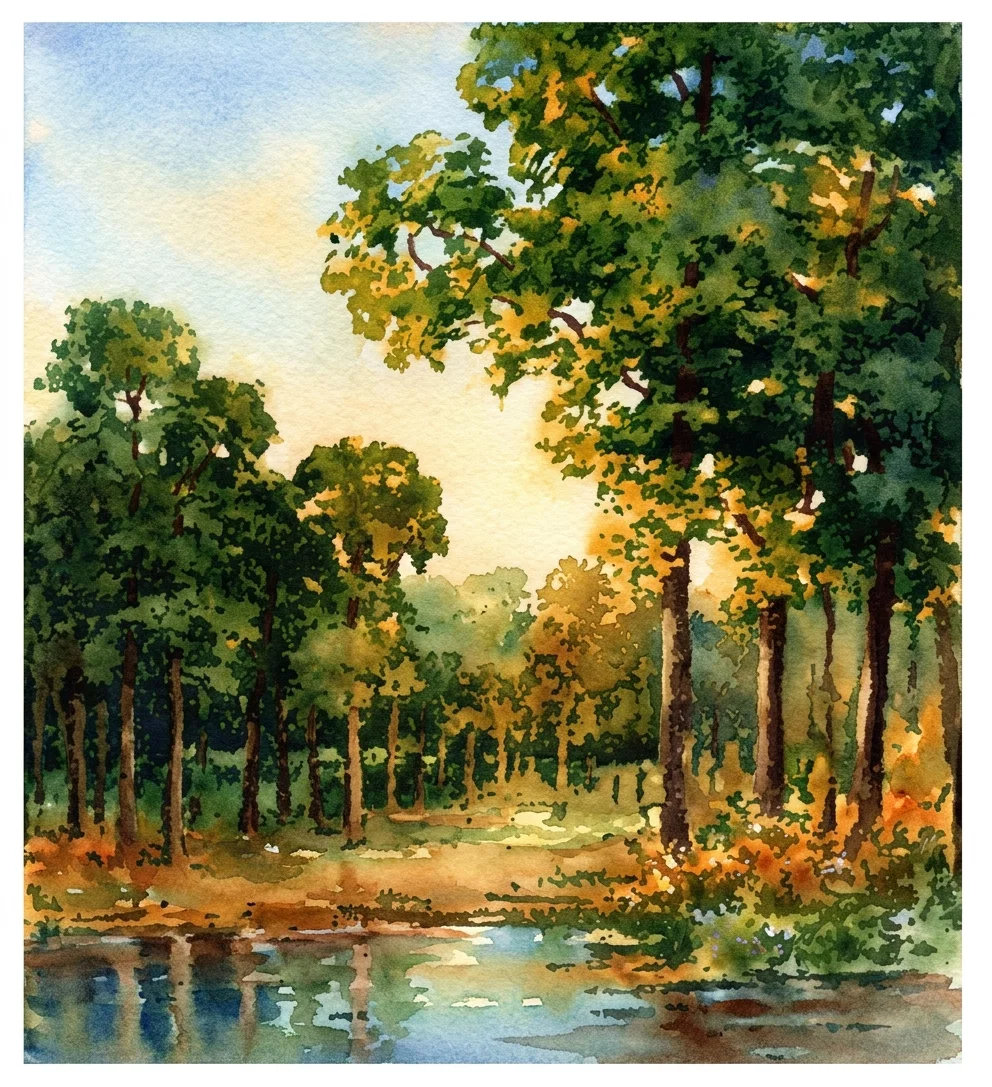 And “in the fields and groves.”
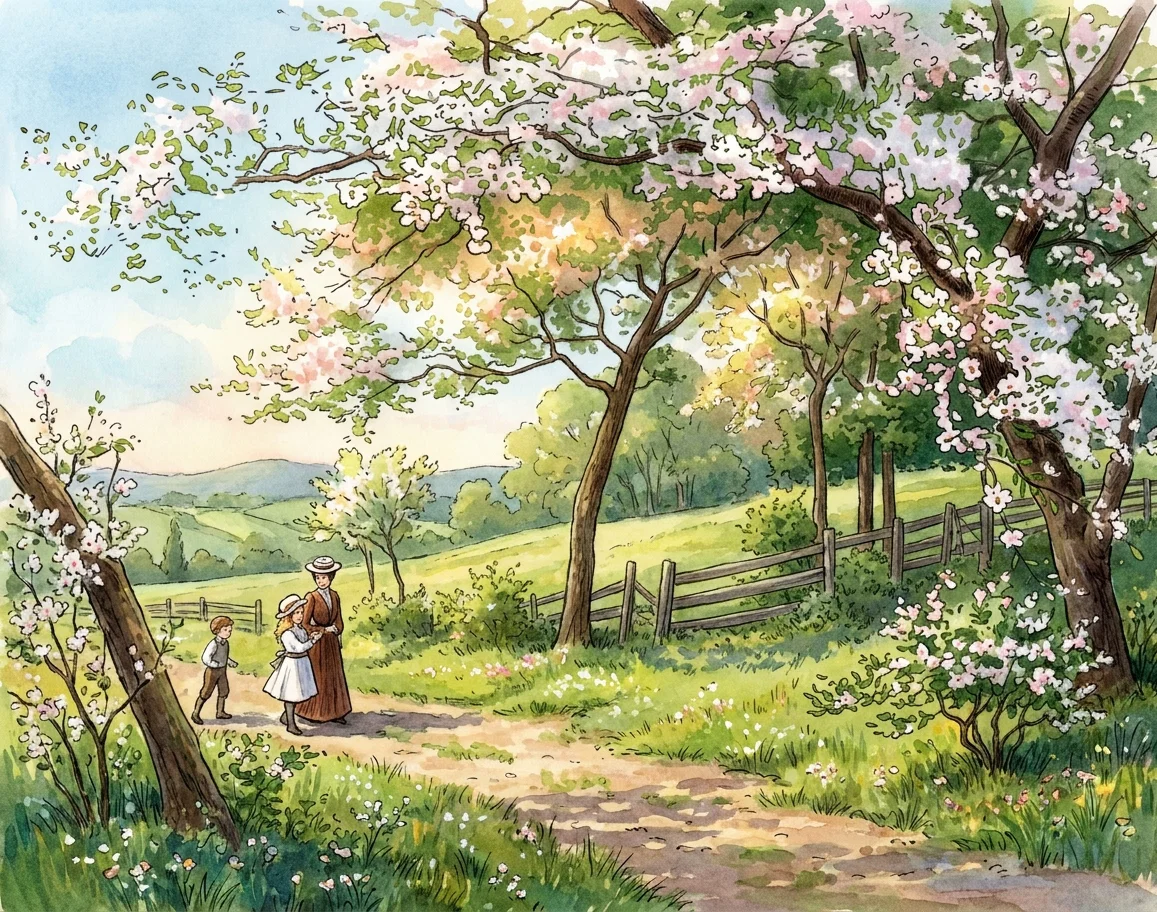 “We should study the Saviour’s parables where He spoke them, in the fields and groves, . . . among the grass and flowers.”
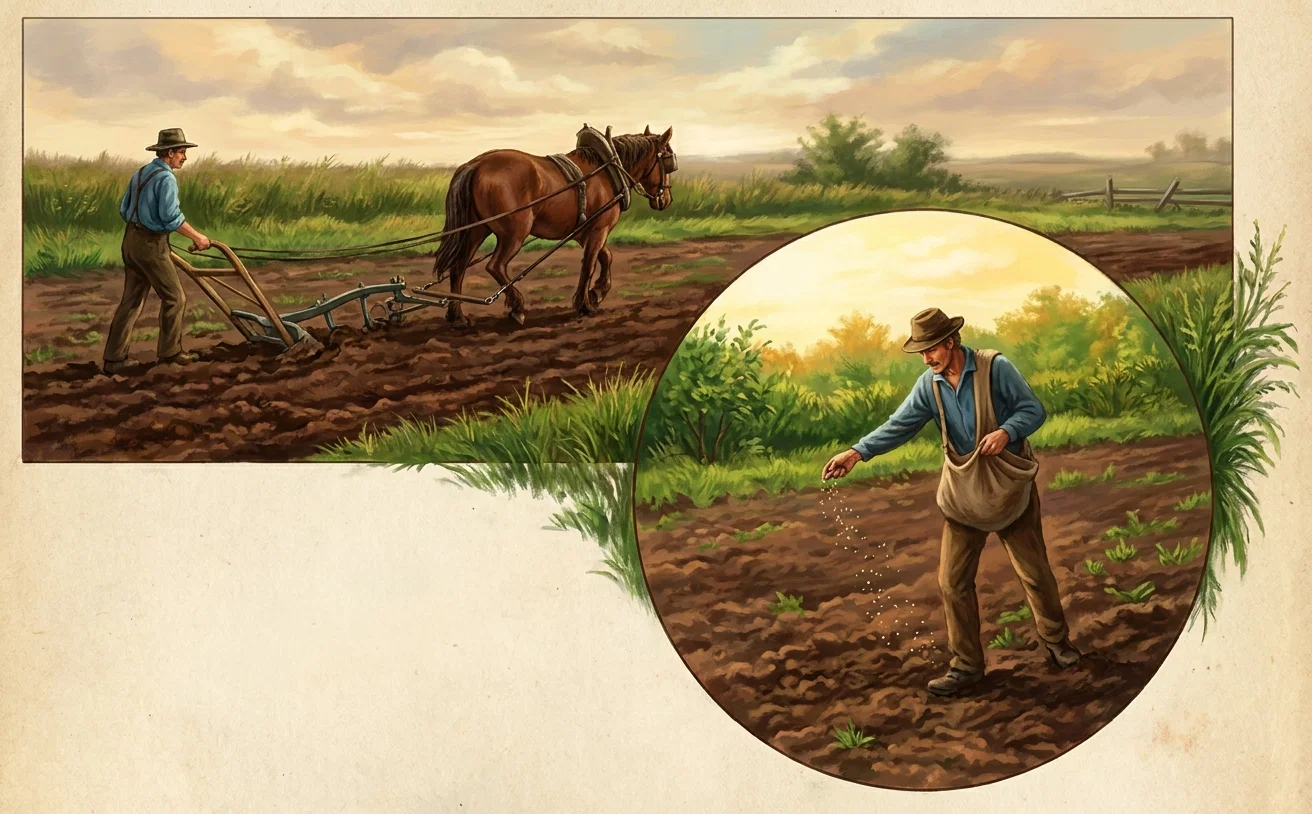 “He has wisdom for him who drives the plow and sows the seed.”
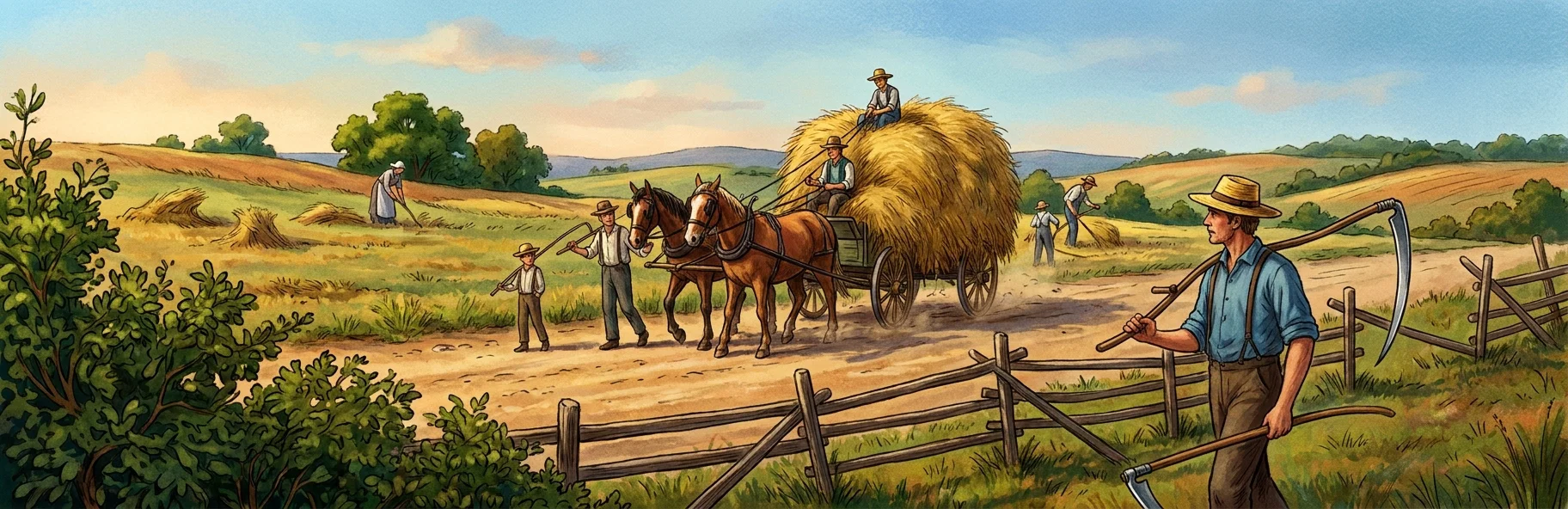 In “the tilling and reaping He teaches us.”
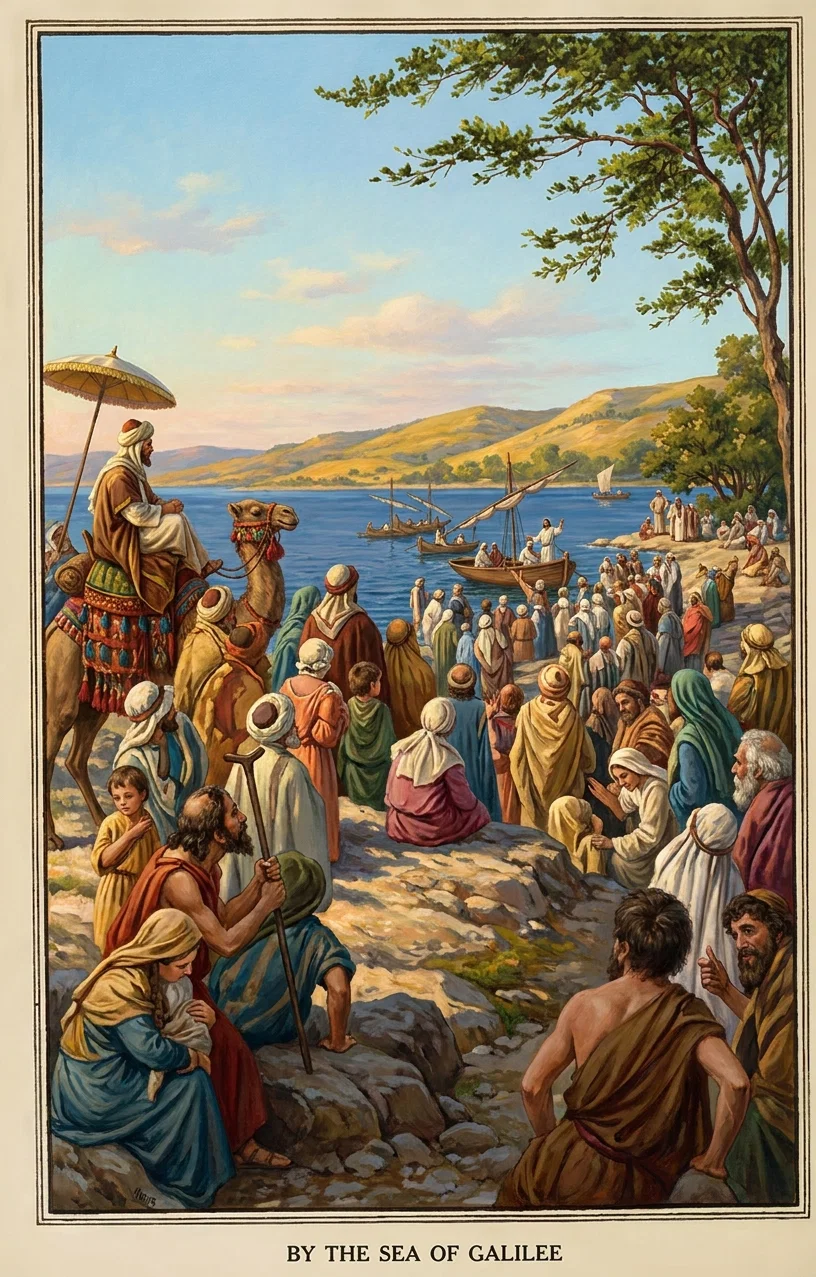 “A company had gathered to hear Jesus,—an eager,”
BY THE SEA OF GALILEE
“A company had gathered to hear Jesus,—an eager,”
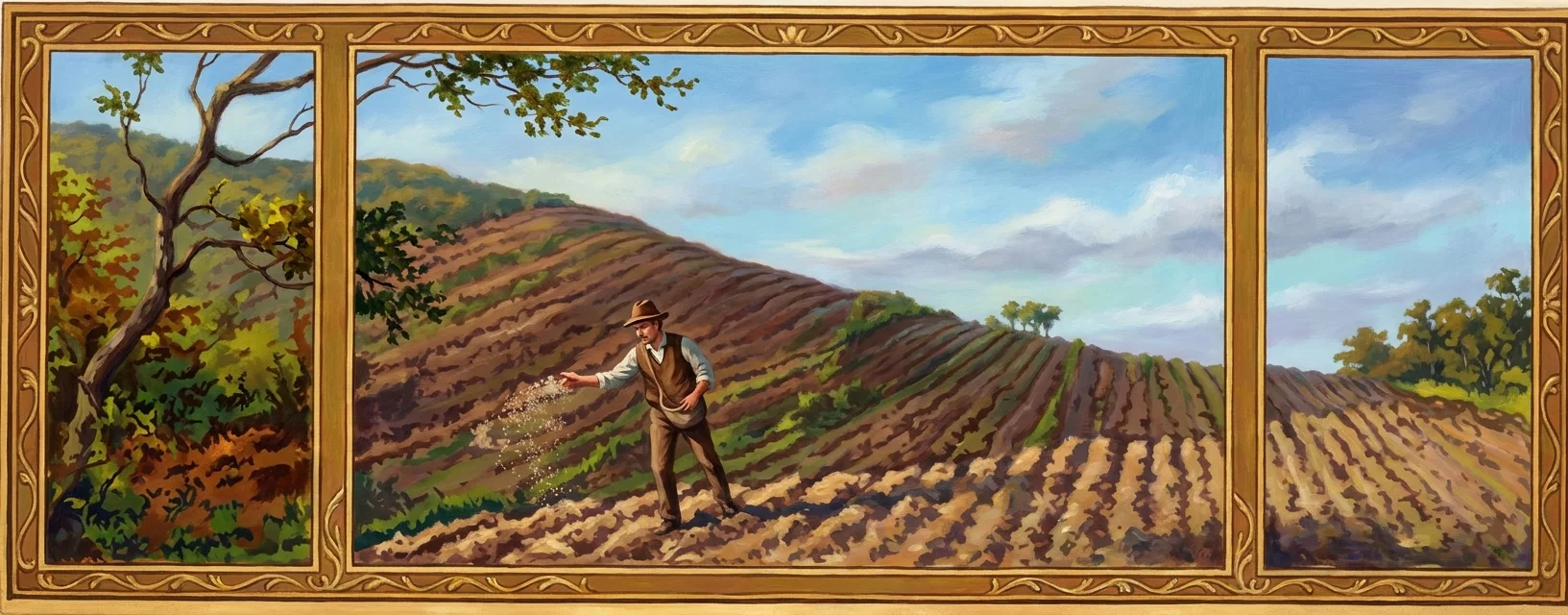
BY THE SEA OF GALILEE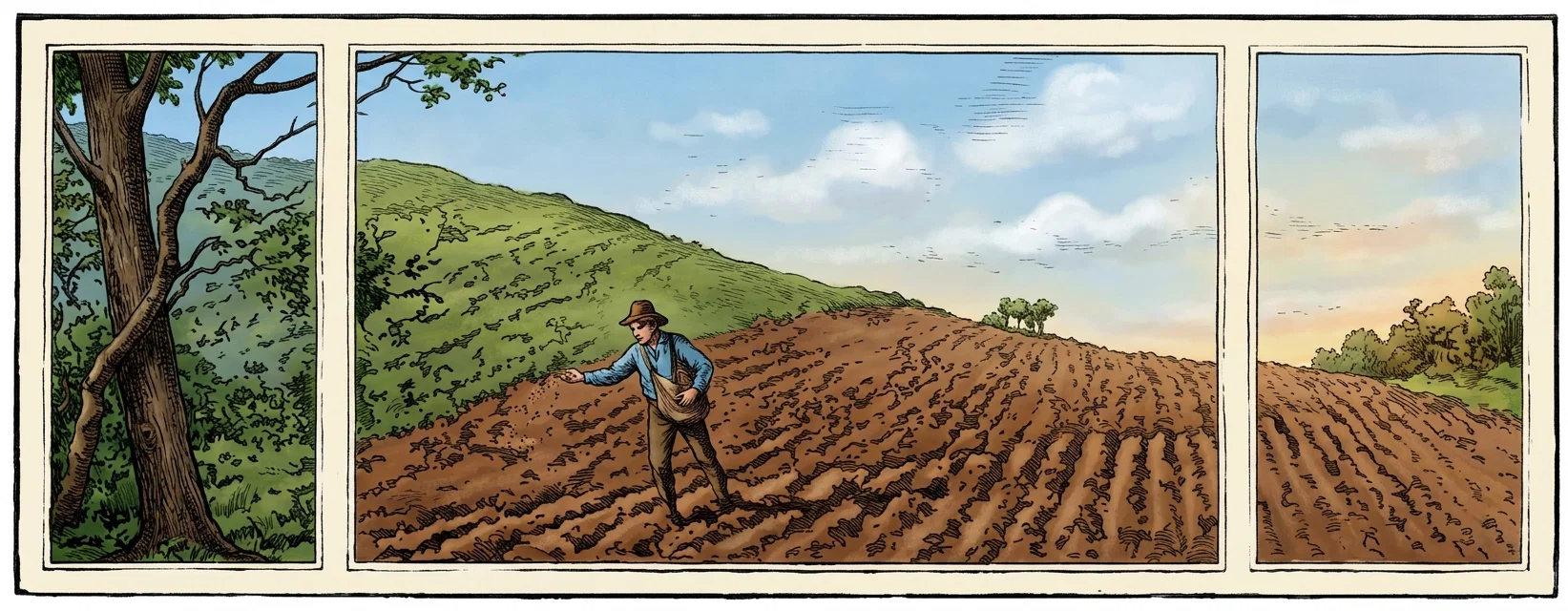 A three-panel pastoral scene illustrates the parable of the sower. The broad central panel shows a robed figure standing on a sloping cultivated hillside, apparently scattering seed across rows of furrows, with a wooded ridge rising behind him and a pale open sky above. The narrow left panel focuses on a rugged, leafless tree trunk and branches against the wooded hillside, while the right panel continues the view of the planted field and distant vegetation. No lettering or other text is visible within the image.
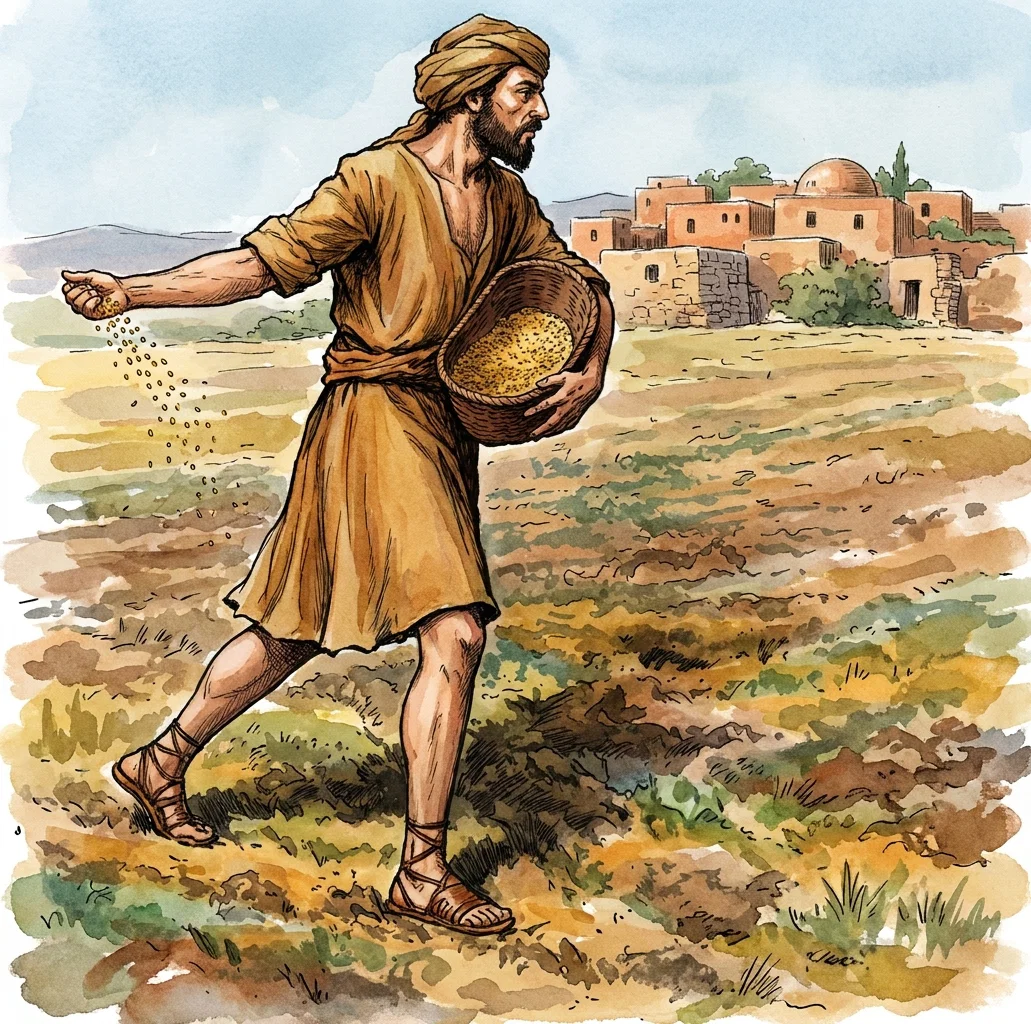 “The sower went forth to sow.”
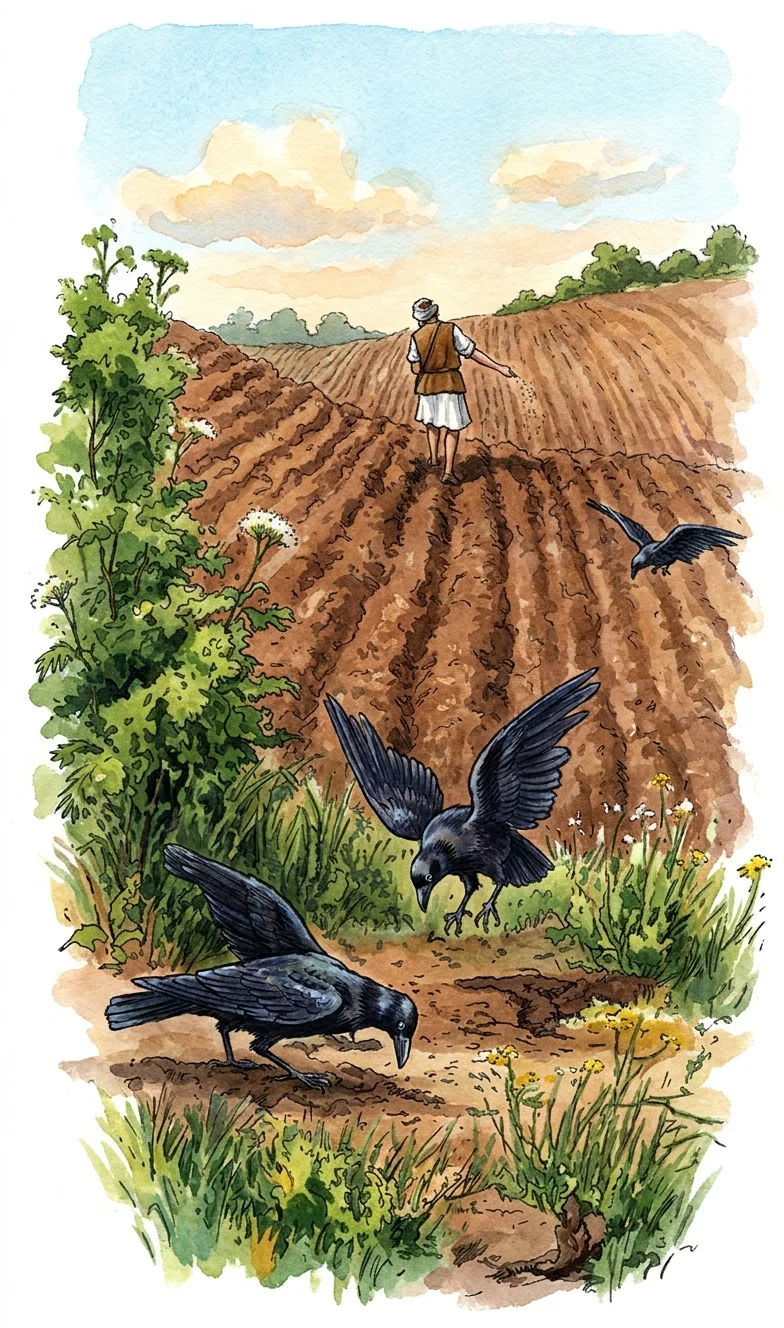 “Some fell by the wayside, and the birds came and devoured them.”
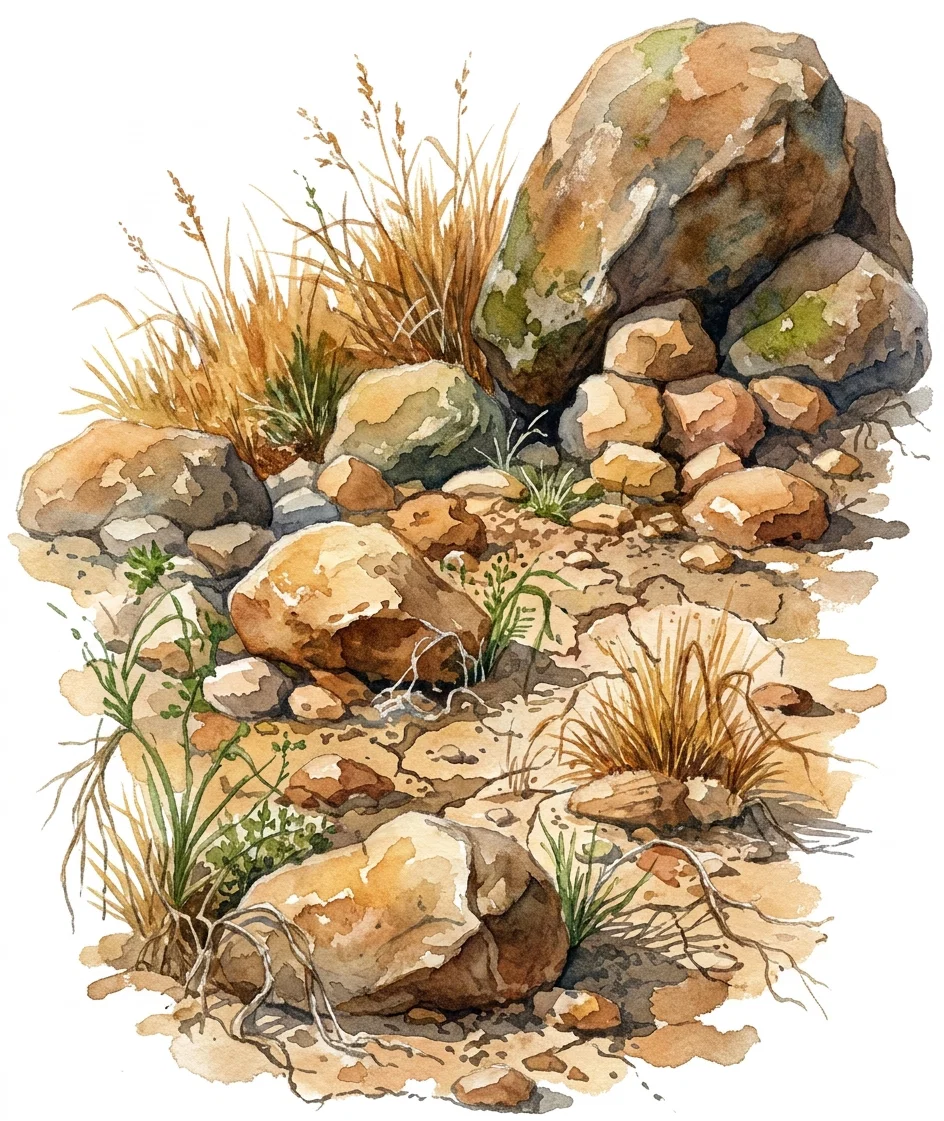 “Some fell upon stony places . . . they withered away.”
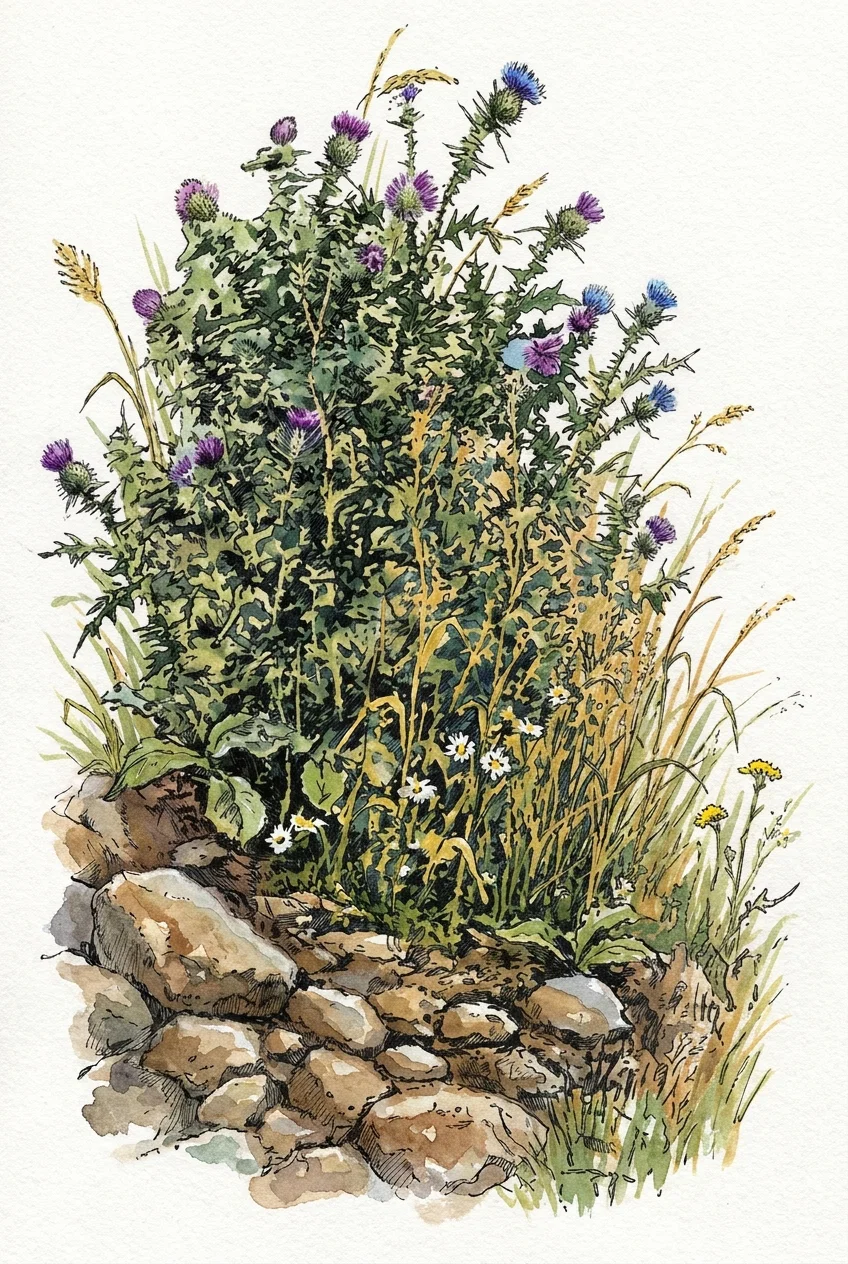 “Some fell amongst thorns.”
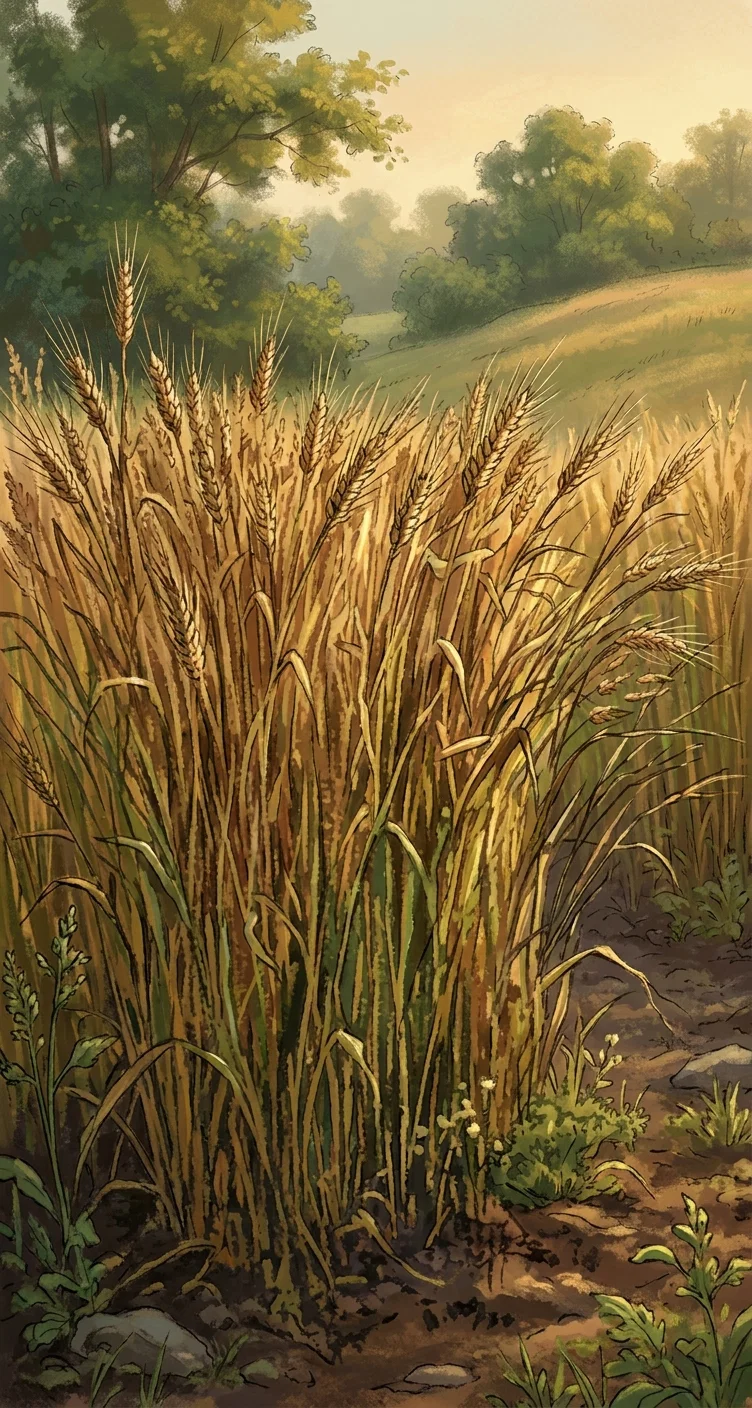 “But other fell into good ground.”
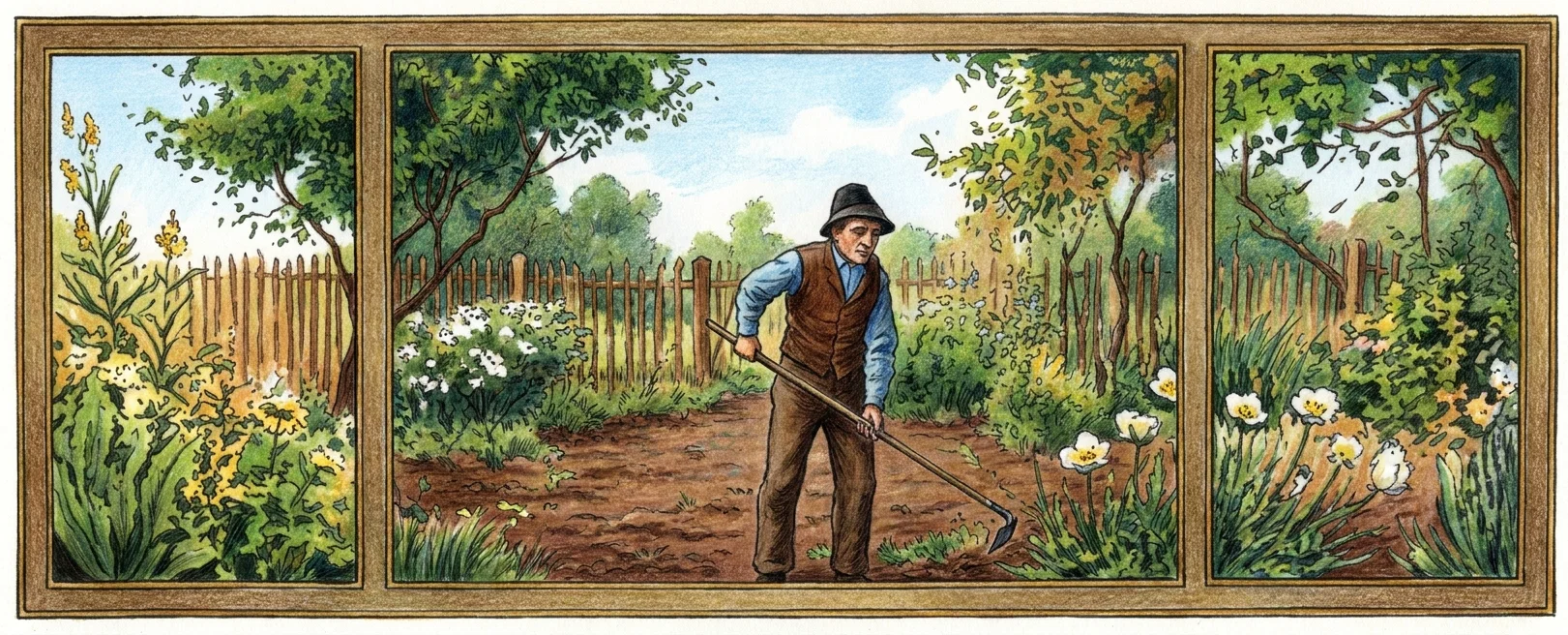 A triptych-like rural scene illustrates the growth of a crop. In the central panel, a farmer wearing a broad-brimmed hat and work clothes stands in a cultivated field, holding a long-handled hoe or similar tool and working the soil. Behind him is a rough wooden fence, with trees and foliage framing the landscape. The narrow side panels show close views of plants and dense vegetation, including tall stems, leaves, and flowering growth, suggesting the progression from sprouting blade to mature ear. No lettering or other text appears within the artwork.
 “As the earth bringeth forth her bud.”
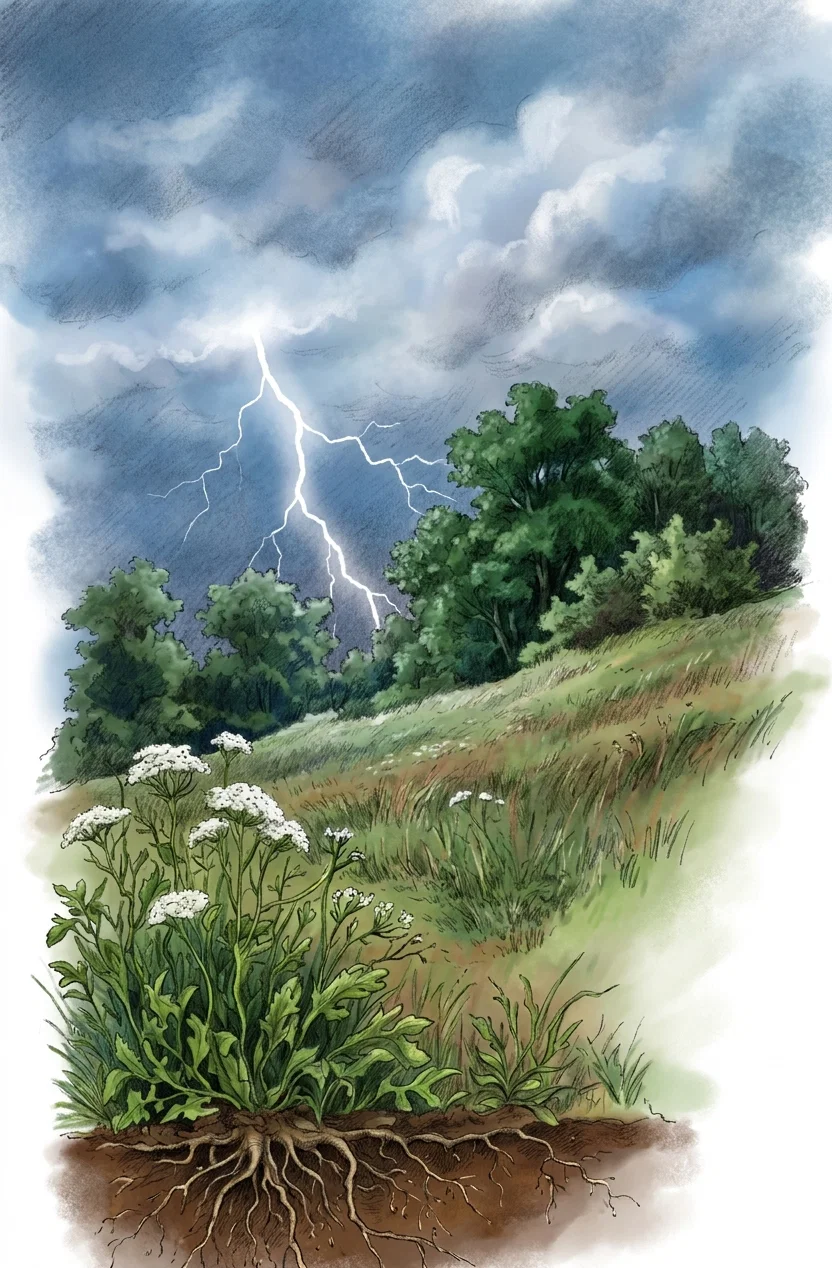 “It sends down its roots into the earth, it drinks in the sunshine, the dew, and the rain.”
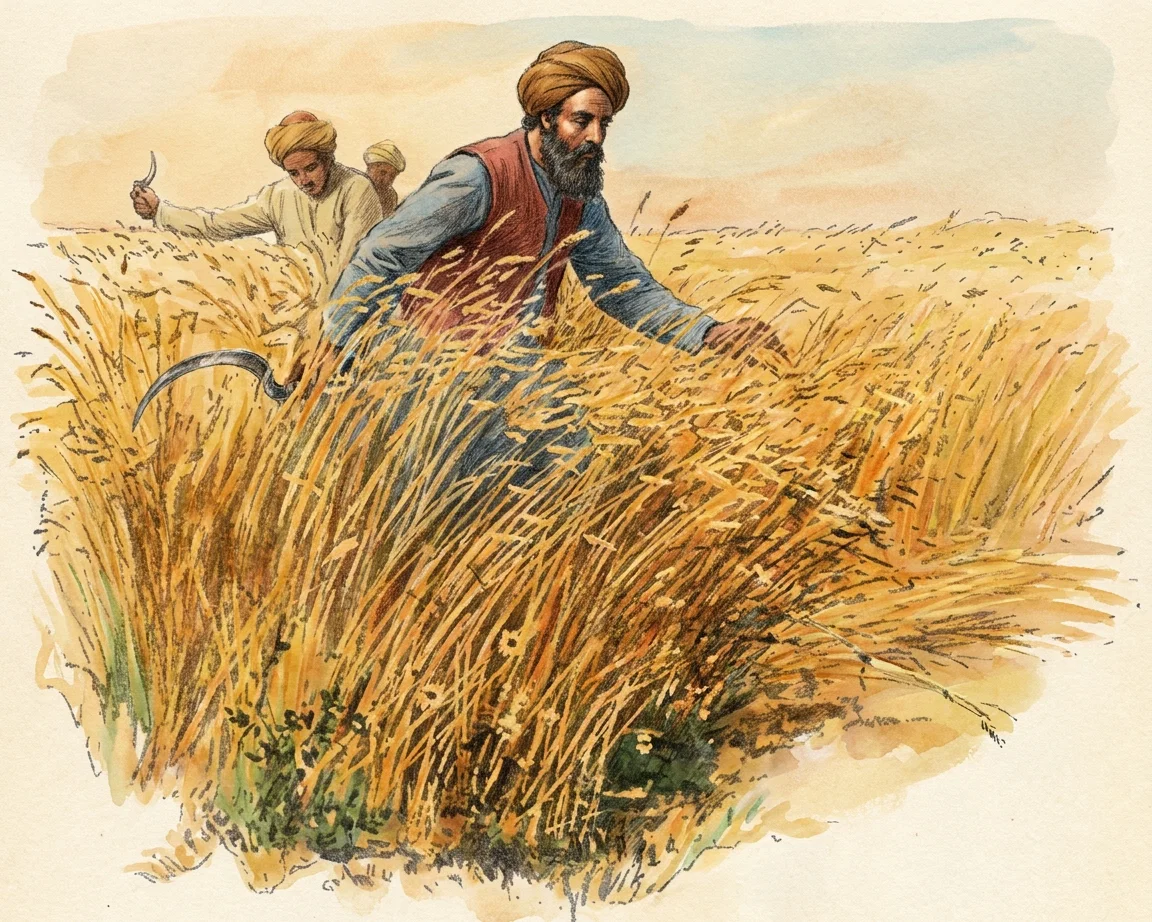 “When the fruit is brought forth, immediately he putteth in the sickle.”
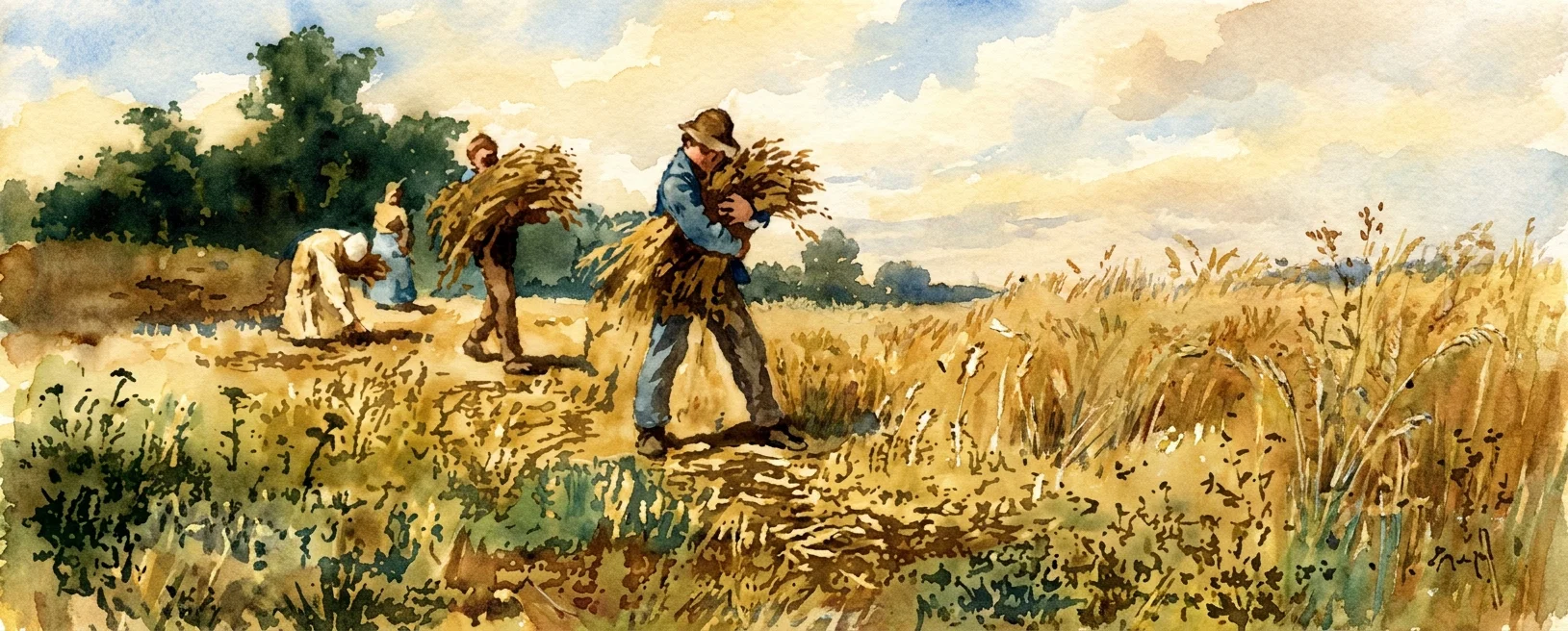 A rural field scene shows several agricultural workers harvesting or tending tall plants. In the foreground, a broad-hatted man strides along a rough path carrying a large bundle of cut stalks or weeds against his chest. Behind him, another bent figure gathers vegetation, while two more people kneel or work among the crops. The field is bordered by dense grasses and low plants, with dark trees and shrubbery forming a background at left and an open, pale sky stretching across the right. No lettering or other text appears within the scene.
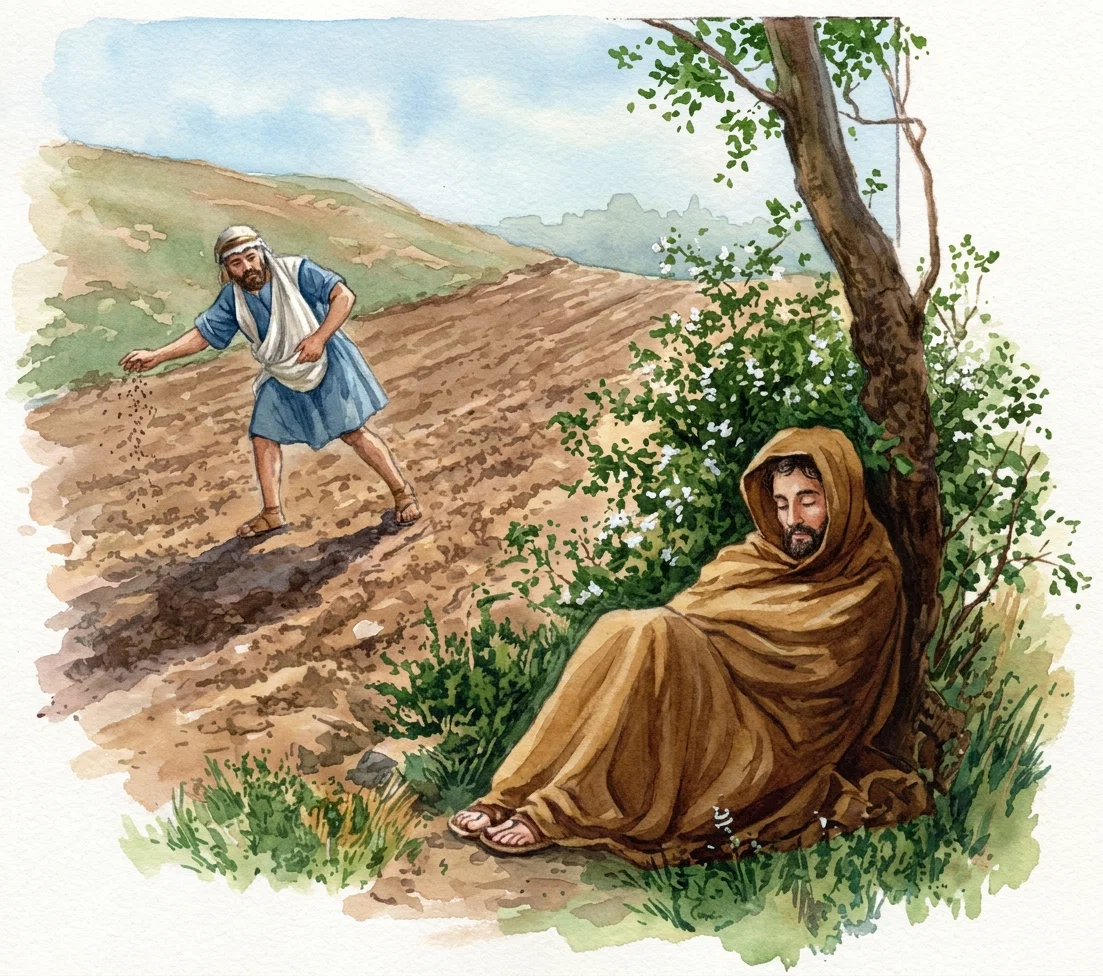 “But while men slept, his enemy came and sowed tares.”
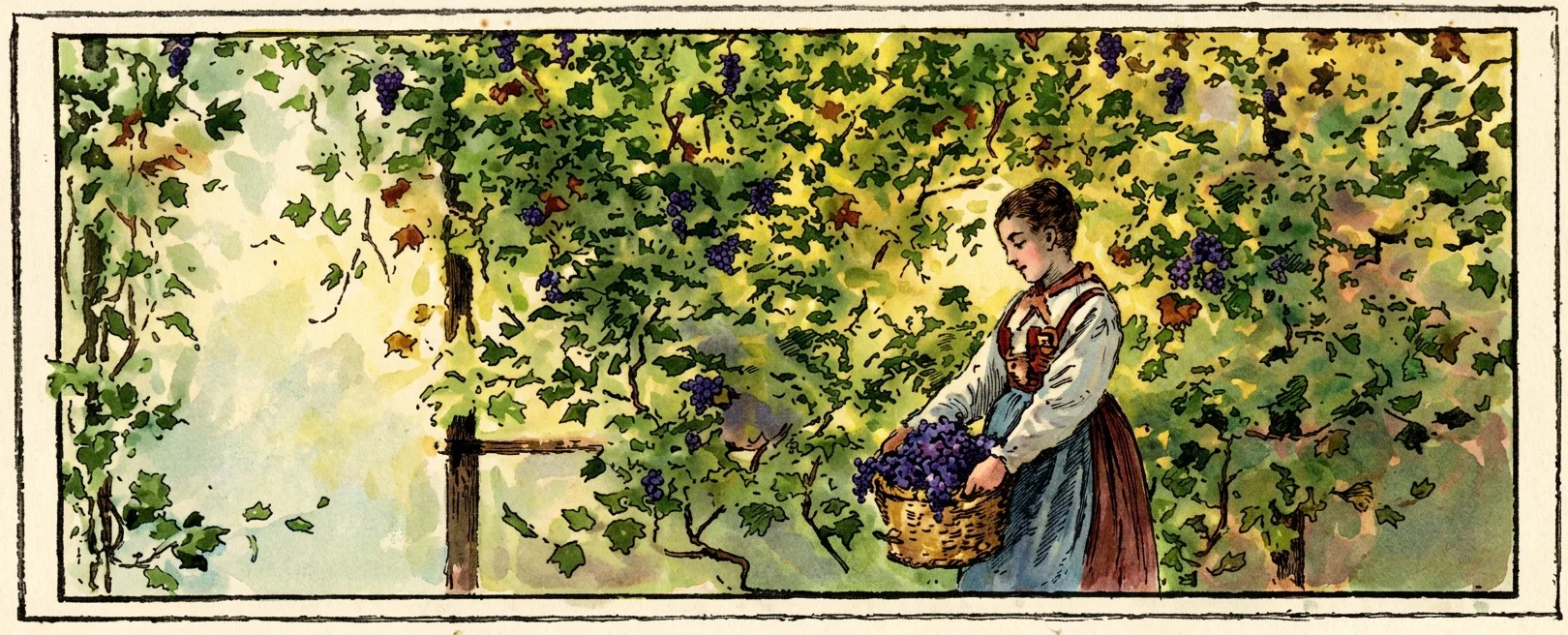 A young woman stands amid dense, flowering vegetation, bending slightly as she tends or scatters seeds from a large woven basket held before her. She wears a long dress with a lighter apron or shawl and looks downward toward the plants. The scene is enclosed by abundant foliage, vines, and branches, with a few indistinct birds or small forms among the leaves. A low rectangular garden structure or wall appears at the lower left, while the surrounding vegetation fills nearly the entire framed composition.
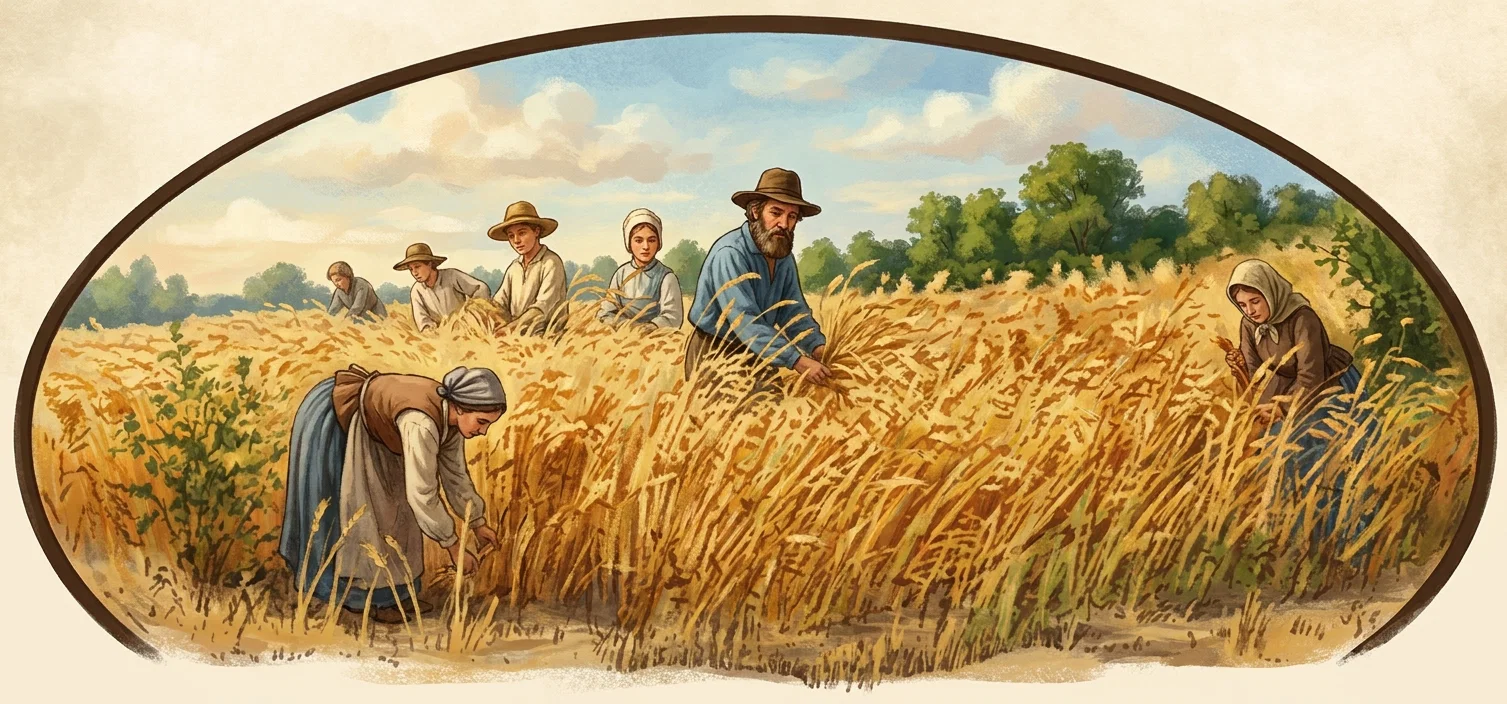 An oval-framed rural scene shows several people working amid a dense, tall field of grain or grass. In the center, a bearded man in a draped robe stands prominently among the crops, with groups of laborers or listeners scattered behind him and to either side. A kneeling or bent figure on the right appears to be gathering or tending the plants, while other figures in broad hats work across the middle distance. Trees and low hills form a soft background beneath an open sky, and no lettering or other text appears within the artwork.
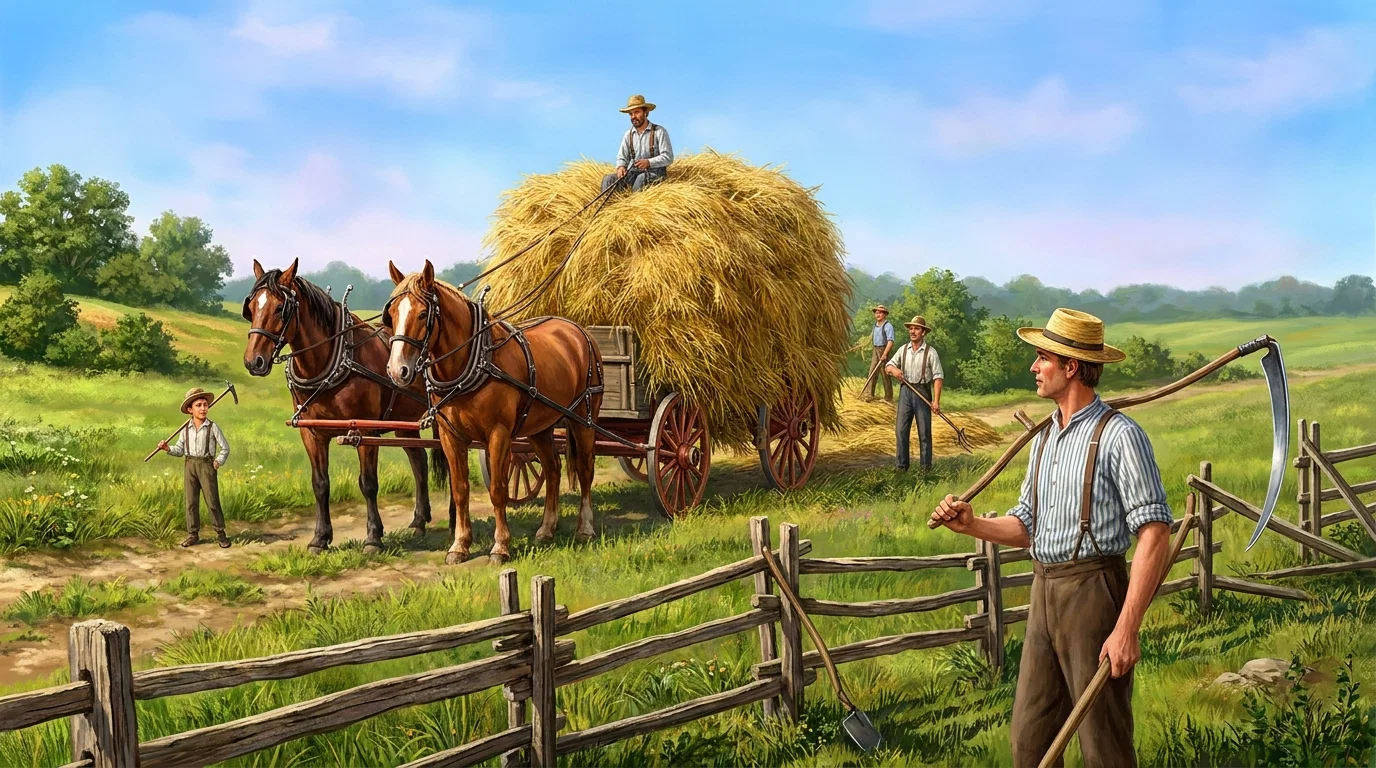 “The blessing of the Lord will rest upon those who thus work the land, learning spiritual lessons from nature.”
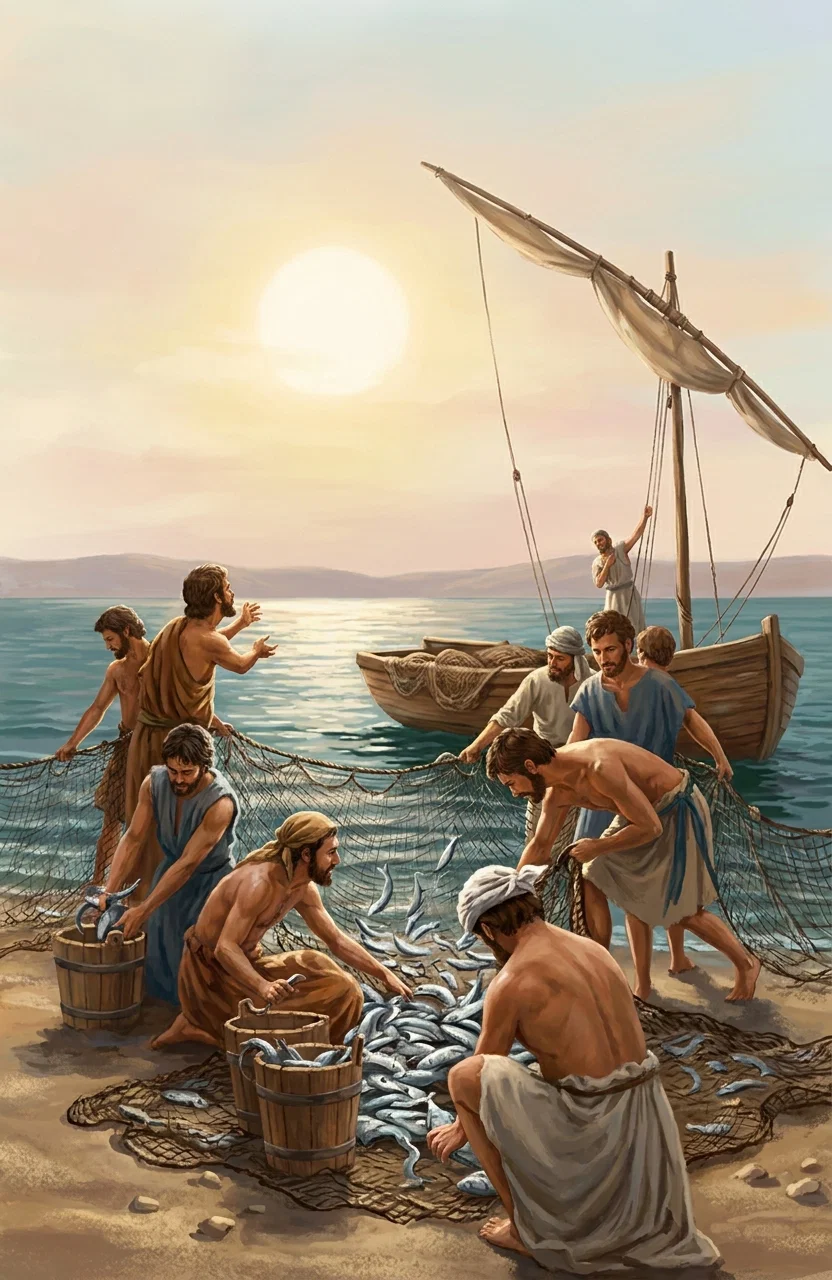 “The kingdom of heaven is like unto a net that was cast into the sea, and gathered of every kind.”
FISHING ON GALILEE
“The kingdom of heaven is like unto a net that was cast into the sea, and gathered of every kind.”
FISHING ON GALILEE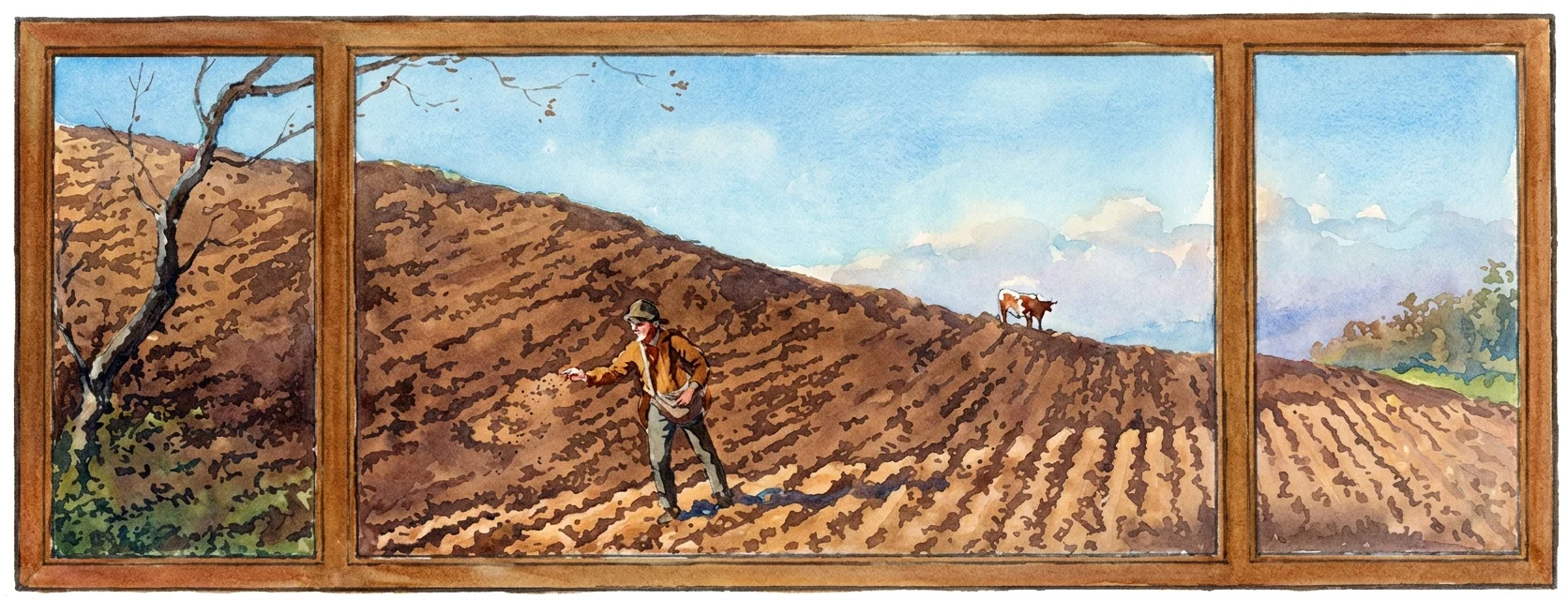 A panoramic rural landscape shows a cultivated hillside or field stretching across the scene, with long, curved rows of furrows or planted crops running down the foreground and right side. Near the center, a solitary laborer stands among the rows, bent slightly and holding a long-handled agricultural tool or staff. Sloping, textured hills rise behind him, while a bare, branching tree frames the left section and a few small trees or shrubs appear in the distance at right. No lettering or other visible text appears within the image.
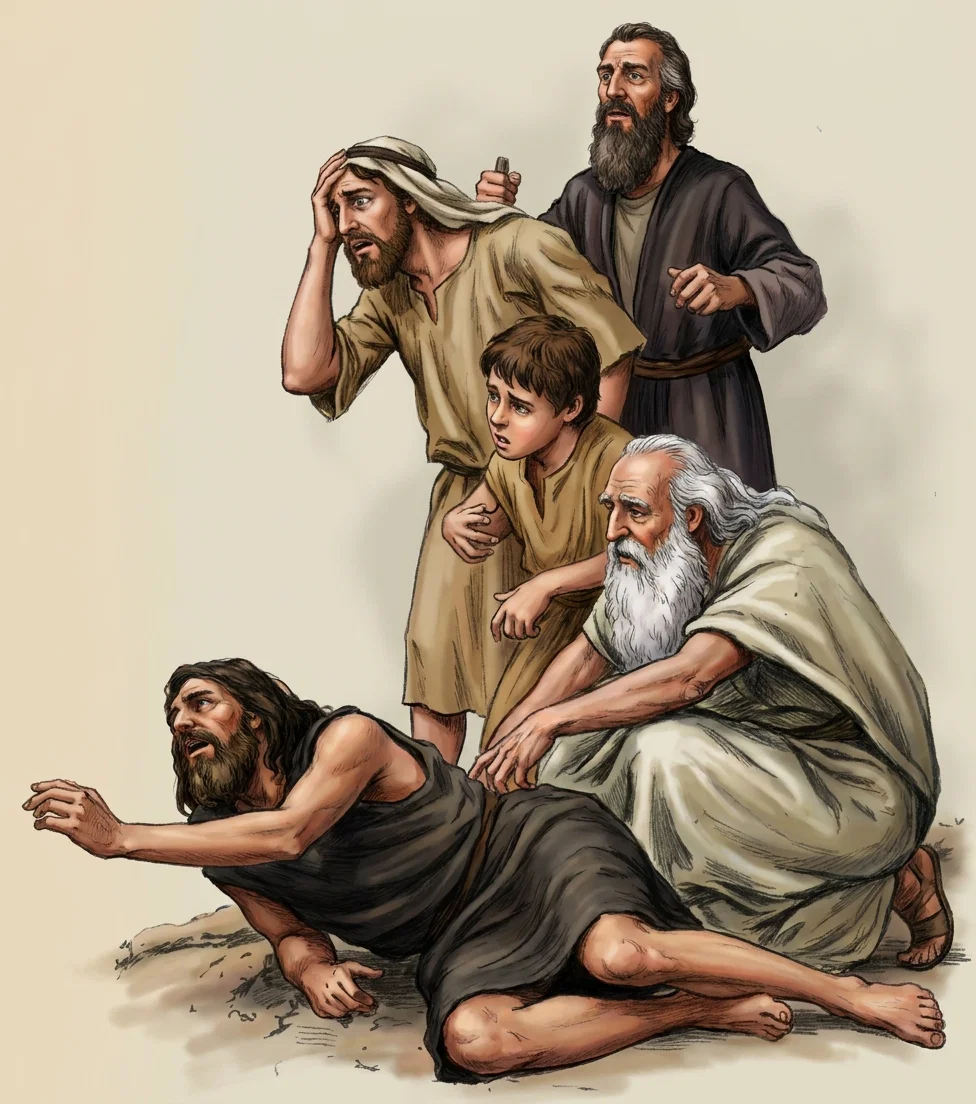 “All classes of society were represented. There were the poor.”
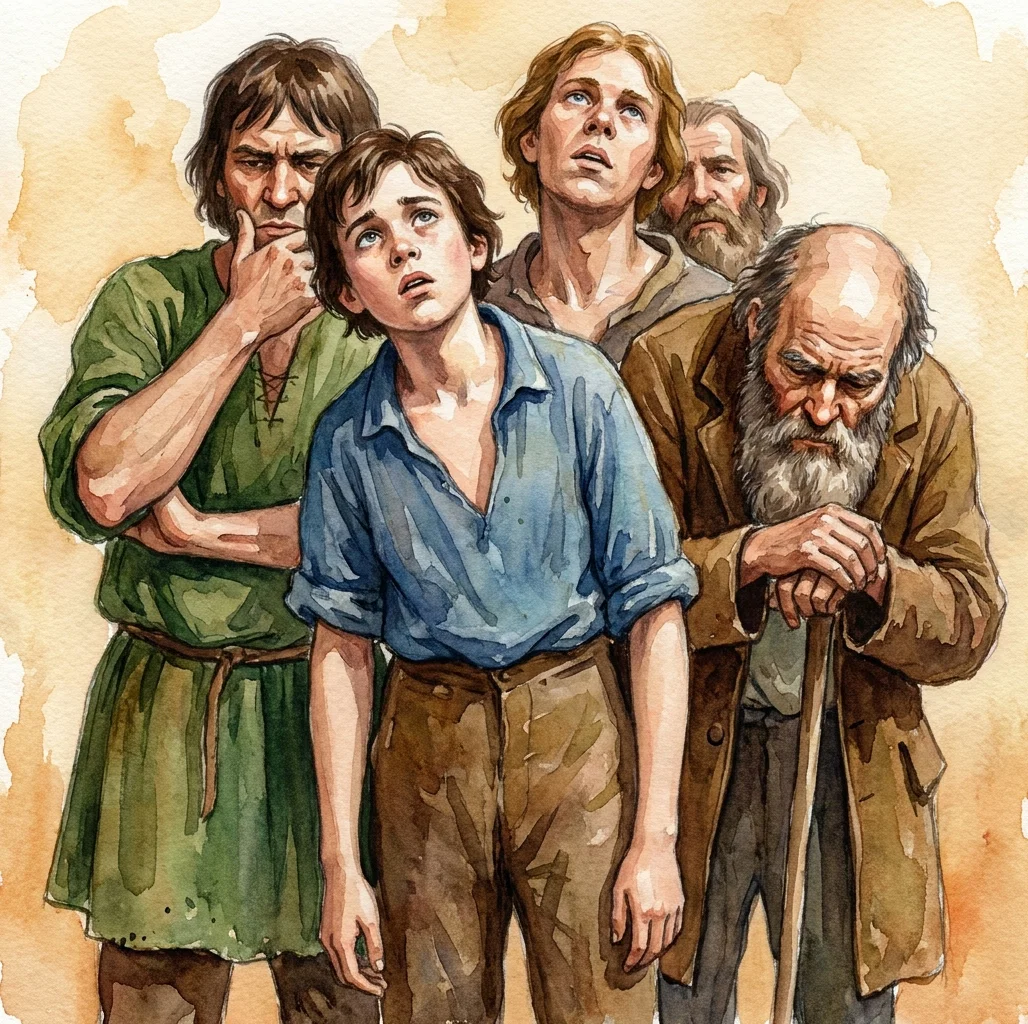 “The literal.”
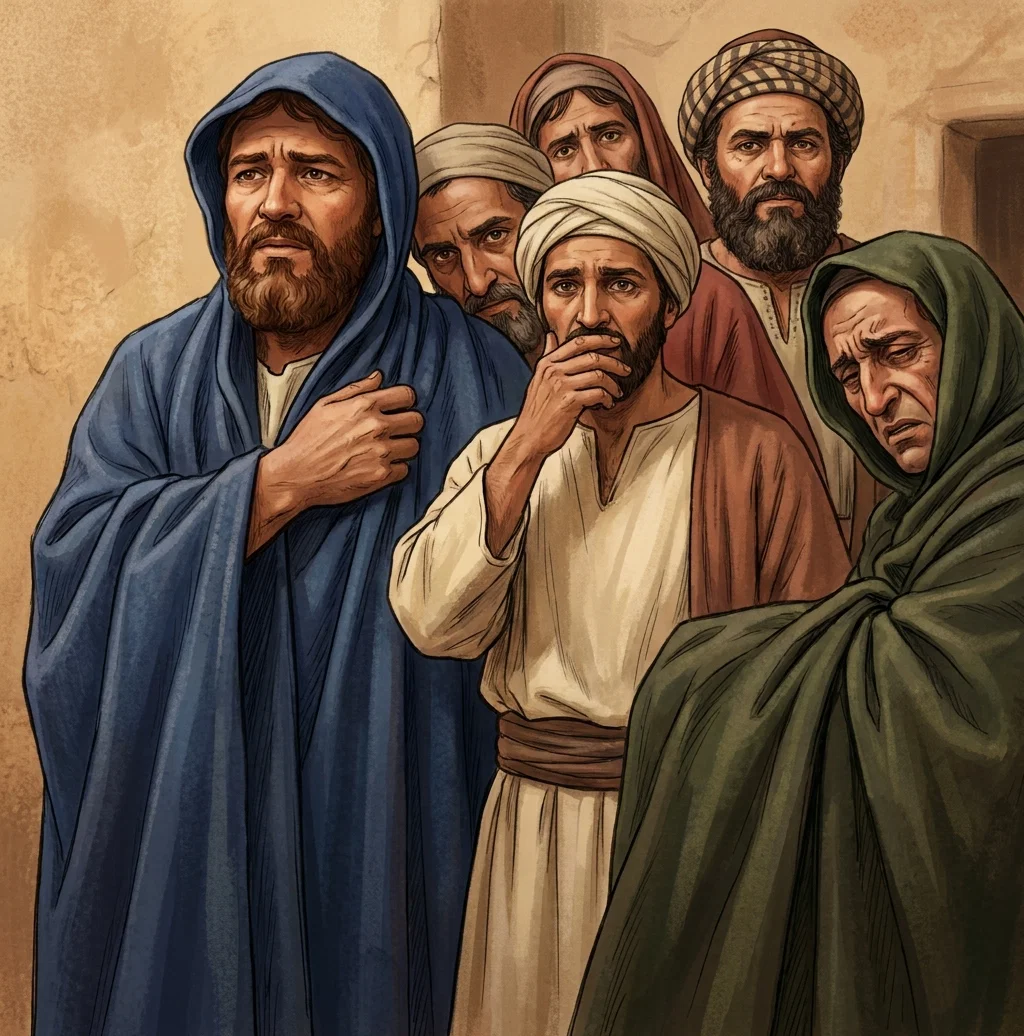 “The robber with the seal of guilt upon his face.”
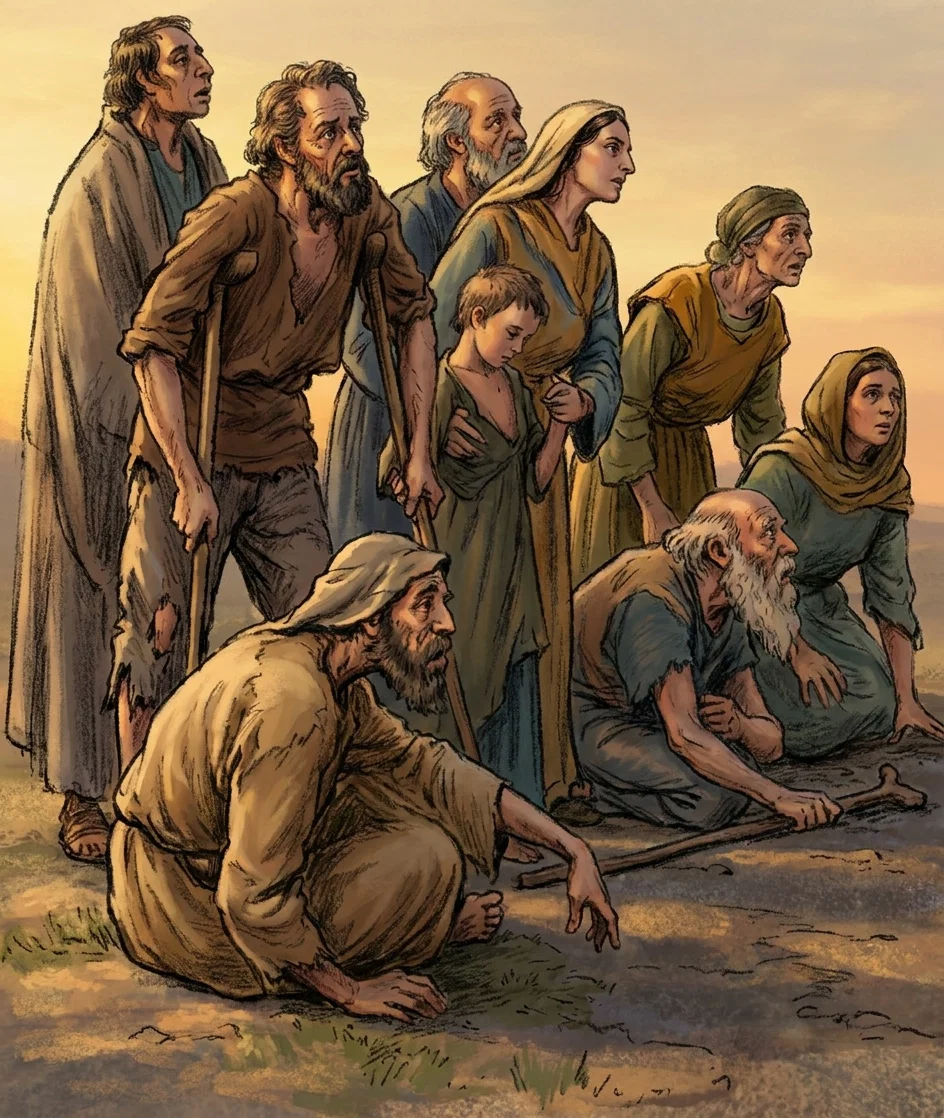 “The maimed.”
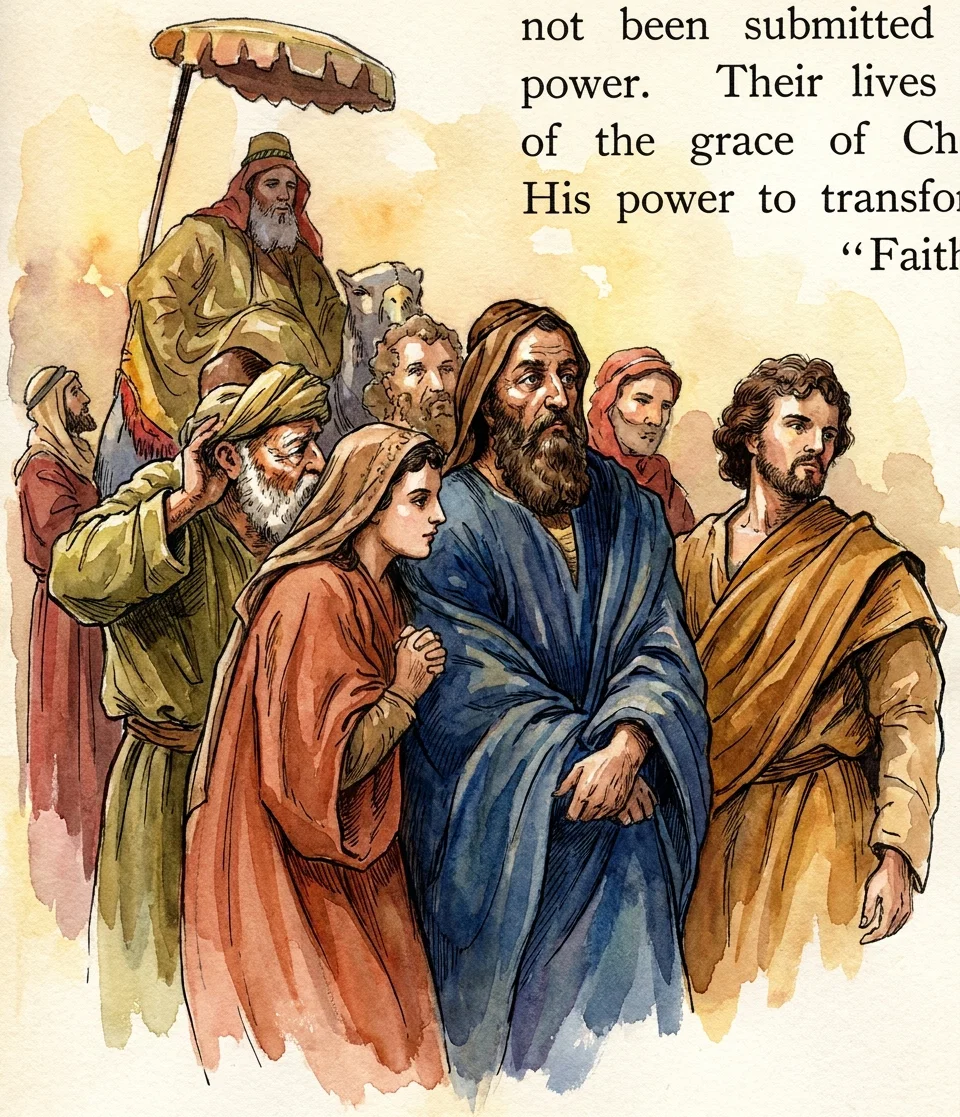 “The merchant and the man of leisure.”
 The rich.
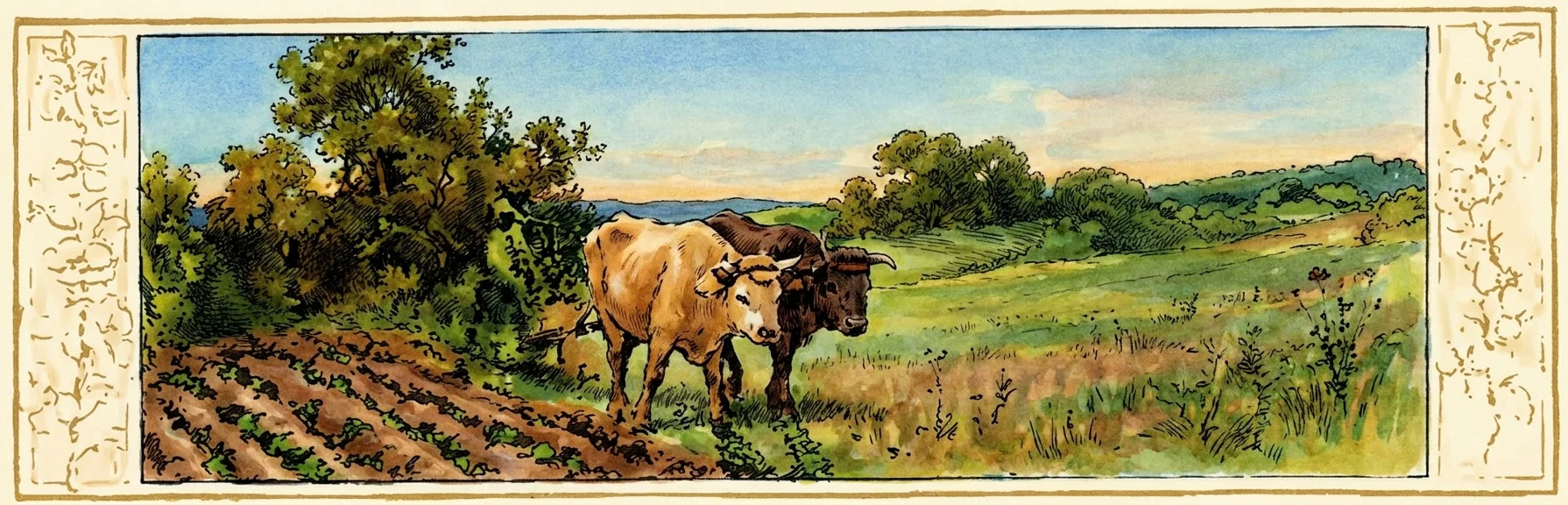
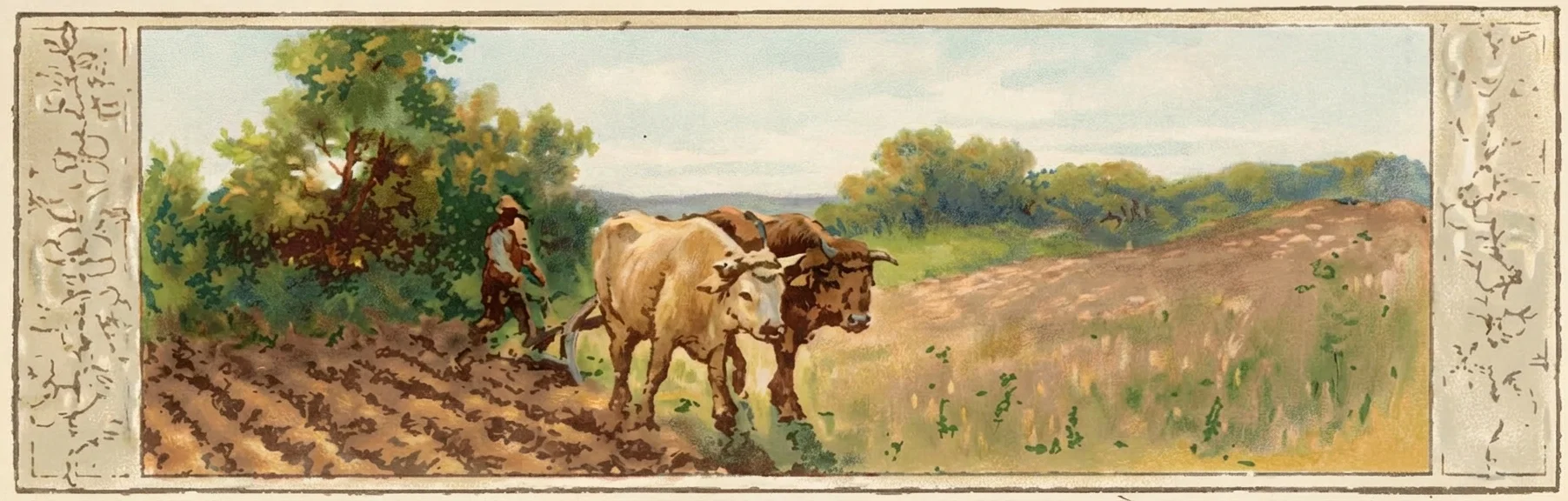 A rural field stretches across the scene, with two oxen in the foreground harnessed together and pulling a plow through the soil. A partially visible farmer walks behind them, guiding the plow as they cultivate the land. The left side is bordered by dense trees and brush, while the open field extends toward a low, hazy horizon beneath a broad sky. The composition emphasizes the animals and freshly turned furrows in the foreground, with no visible lettering or signs.
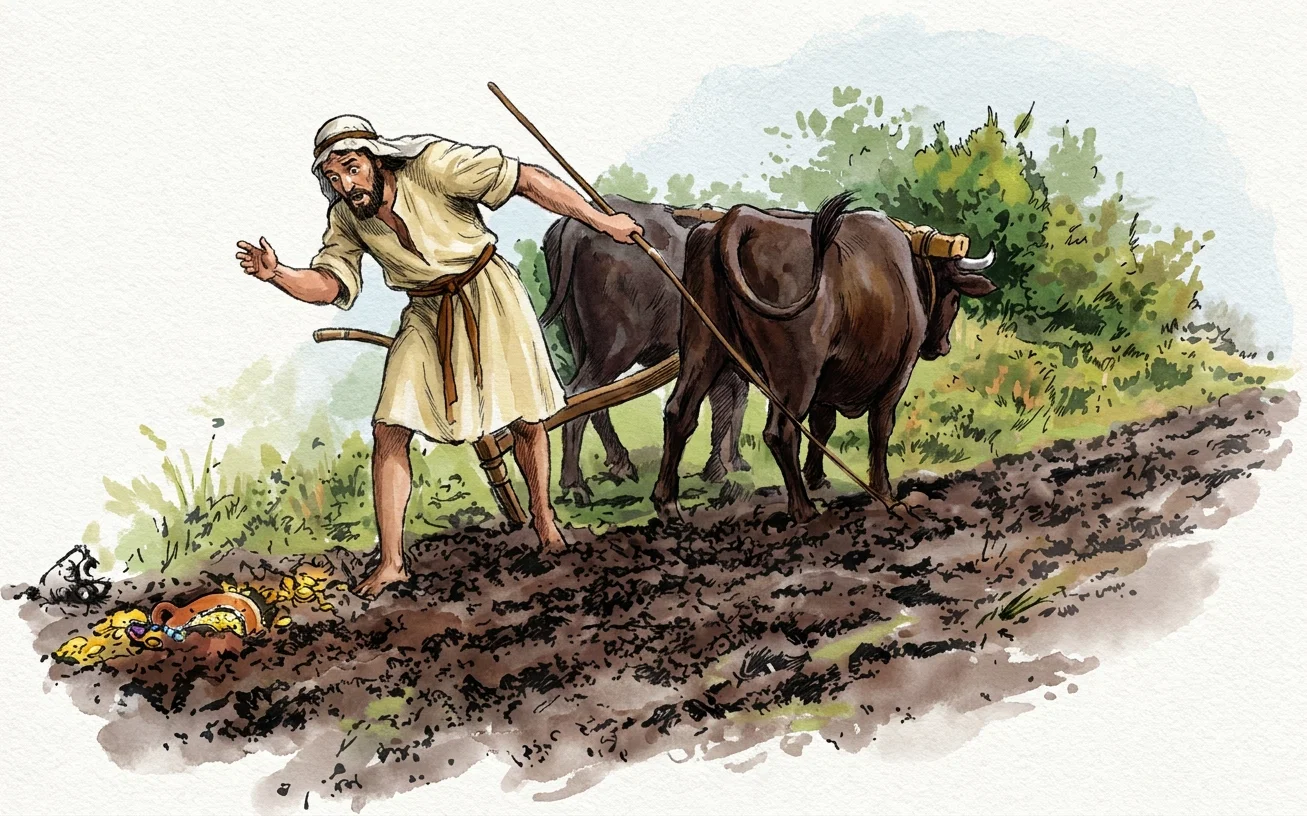 “Buried treasure is unearthed . . . A fortune is within his reach.”
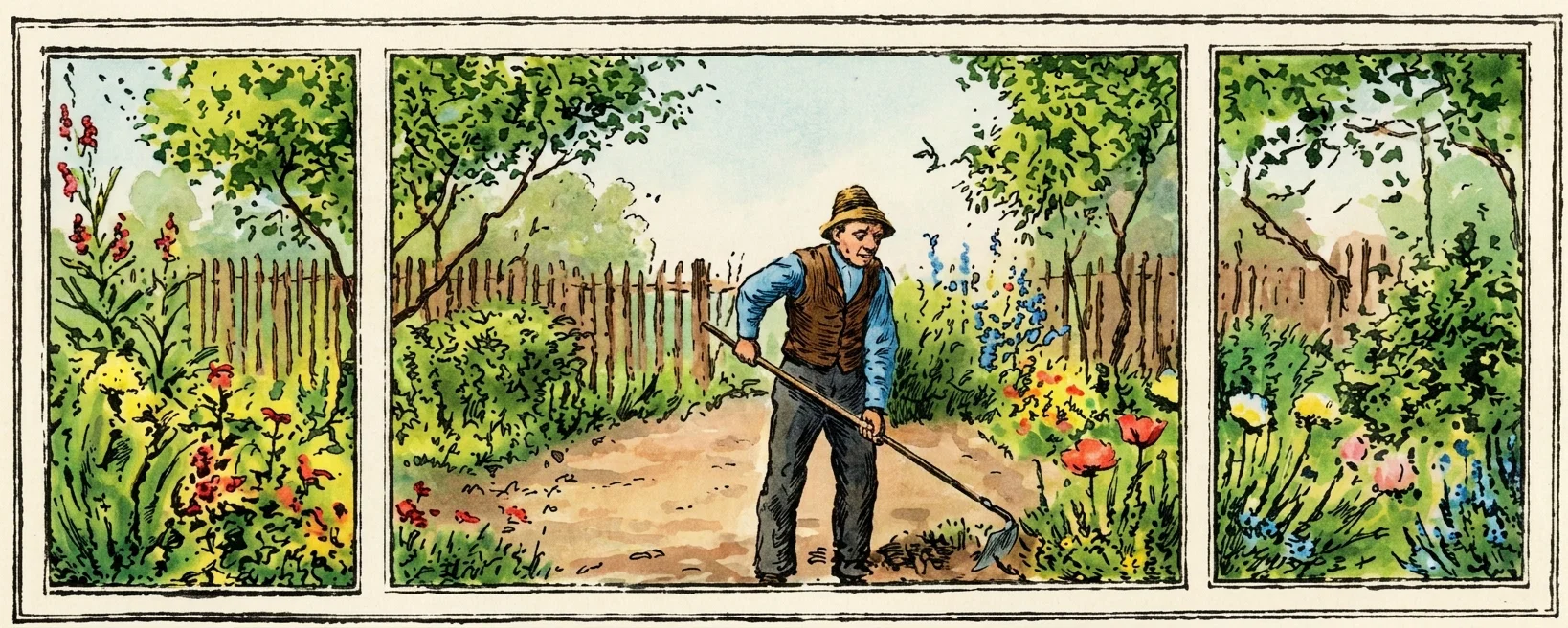 A triptych-like rural scene shows a solitary man in the central panel, standing in a wooded field or garden and using a long-handled tool to dig into the ground. He wears a brimmed hat, jacket, trousers, and sturdy shoes, with one hand gripping the handle near his waist and the tool angled down toward the earth. Trees, dense shrubs, grasses, and a rustic stake fence fill the background. The narrow side panels continue the surrounding vegetation, with no visible animals, signs, or lettering.
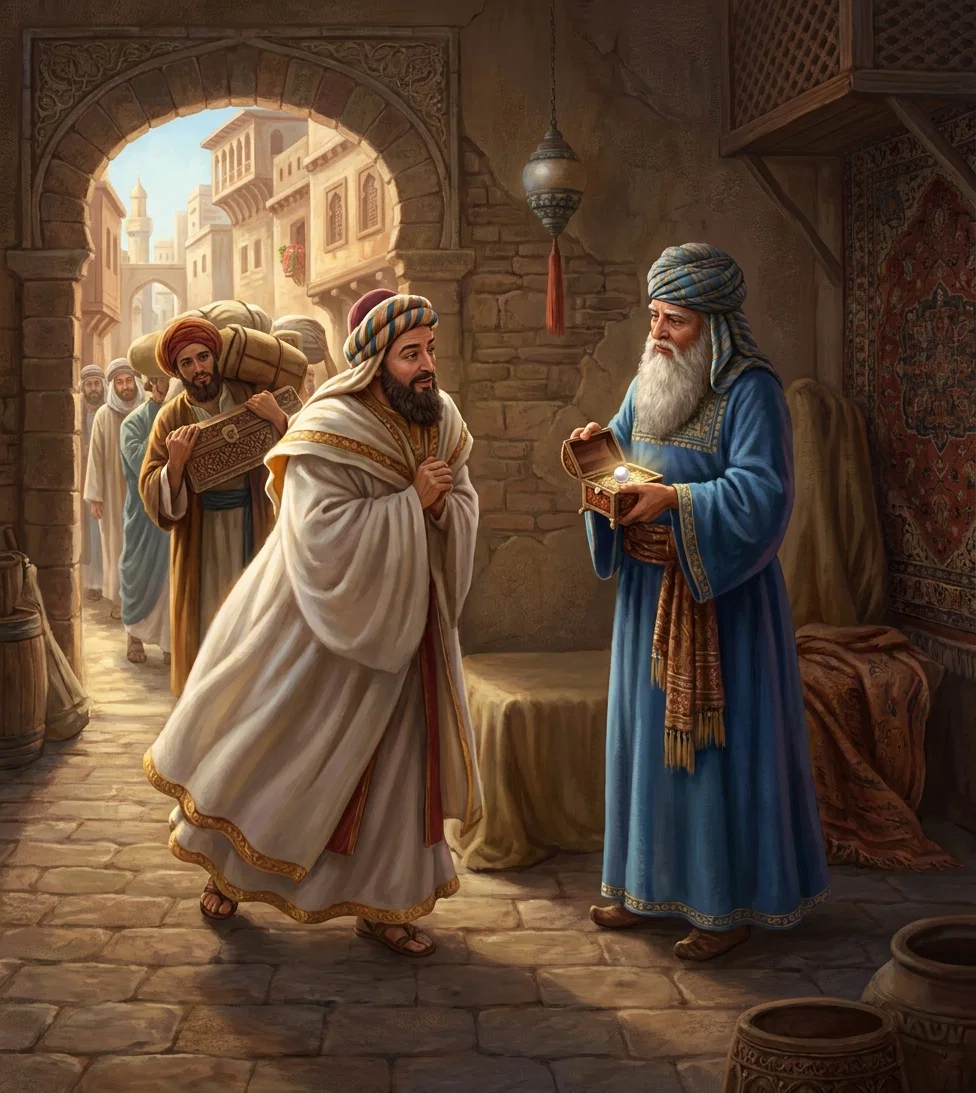 The merchantman, “when he had found one pearl of great price, went and sold all that he had, and bought it.”
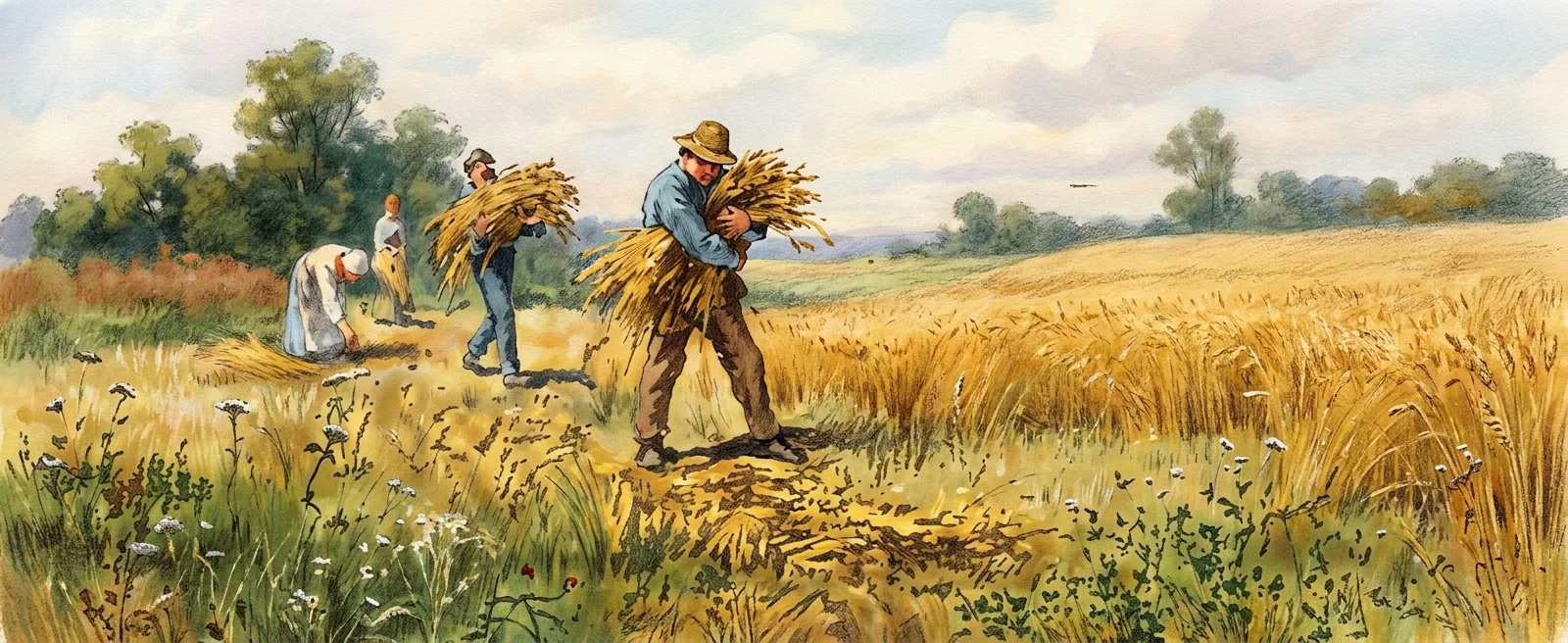 A pastoral shoreline scene shows several figures gathering a large fishing net. In the foreground, a person walks across the grassy bank carrying a heavy, bundled net or catch over one shoulder, while another figure behind them bends or pulls at the net. Farther left, two smaller figures stand near the water or reeds, one appearing to handle the net. Tall grasses and scattered plants fill the foreground, with a calm, open body of water extending across the right side and a dark, indistinct tree-lined shore in the background.
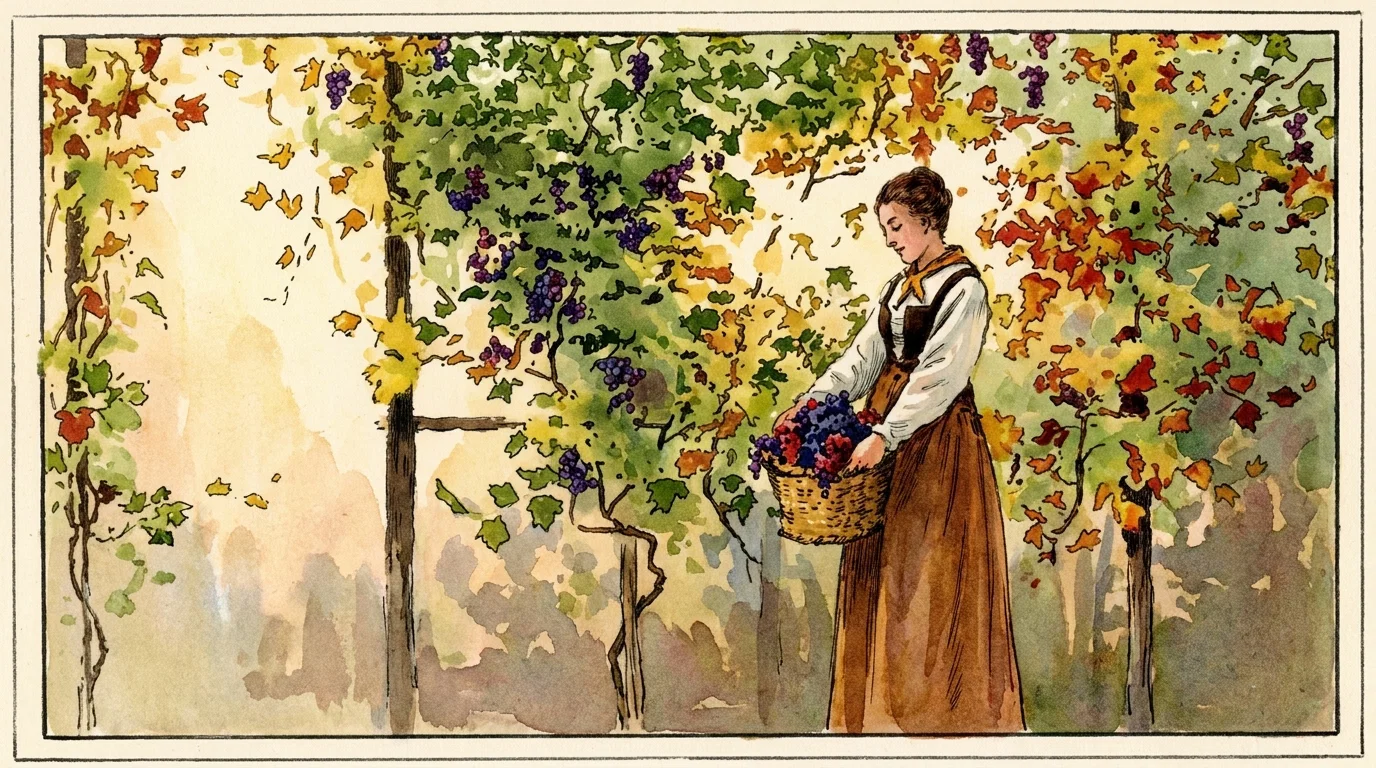 A woman stands in a leafy garden or wooded setting, bending slightly as she gathers or tends plants in a large woven basket held at her side. She wears a long skirt and a light blouse or dress with a dark collar and trim, and her head is turned downward toward the basket. Dense foliage and tree trunks fill the background, while a low horizontal wall, fence, or garden border runs behind her. The scene is framed by a simple rectangular border, with no visible lettering or other text within the artwork.
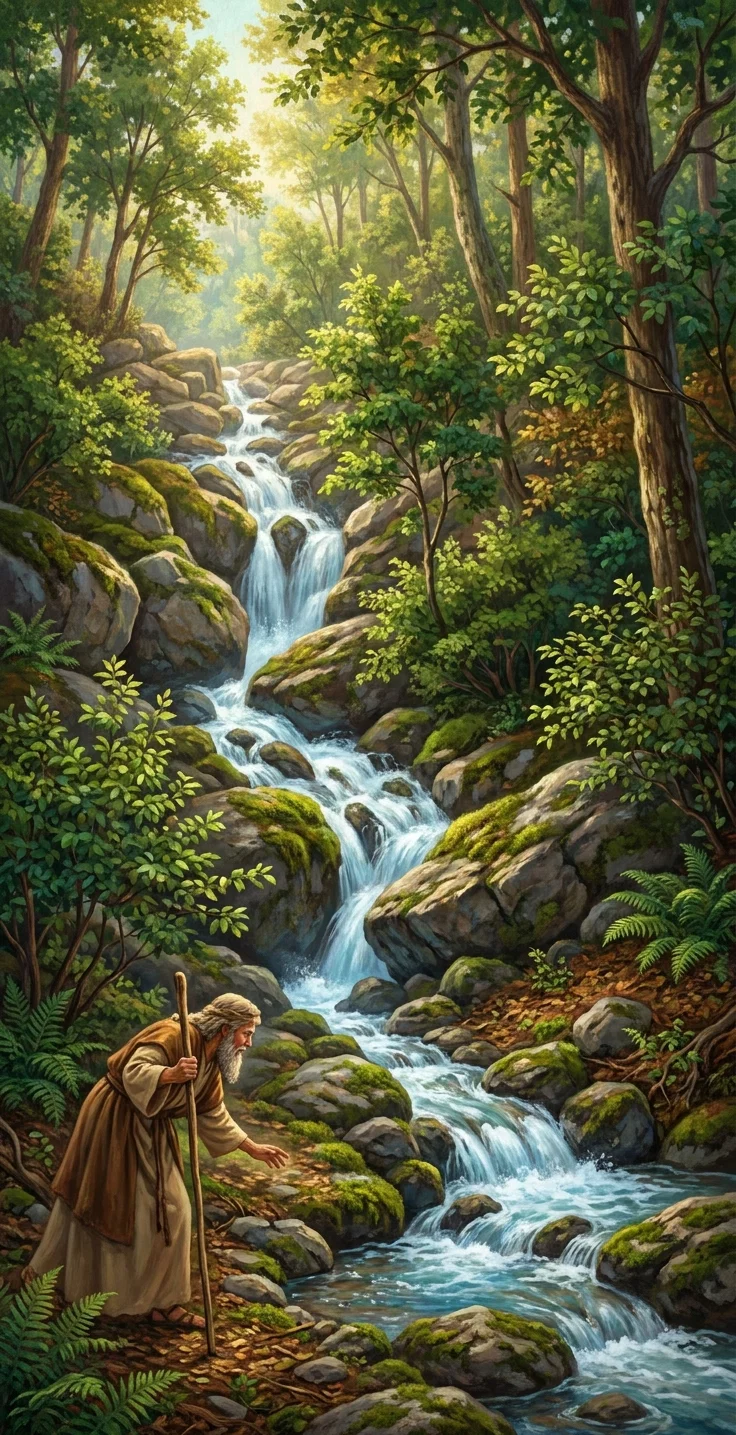 “It is like the mountain stream fed by unfailing springs, whose cool, sparkling waters leap from rock to rock, refreshing the weary, the thirsty, the heavy laden.”
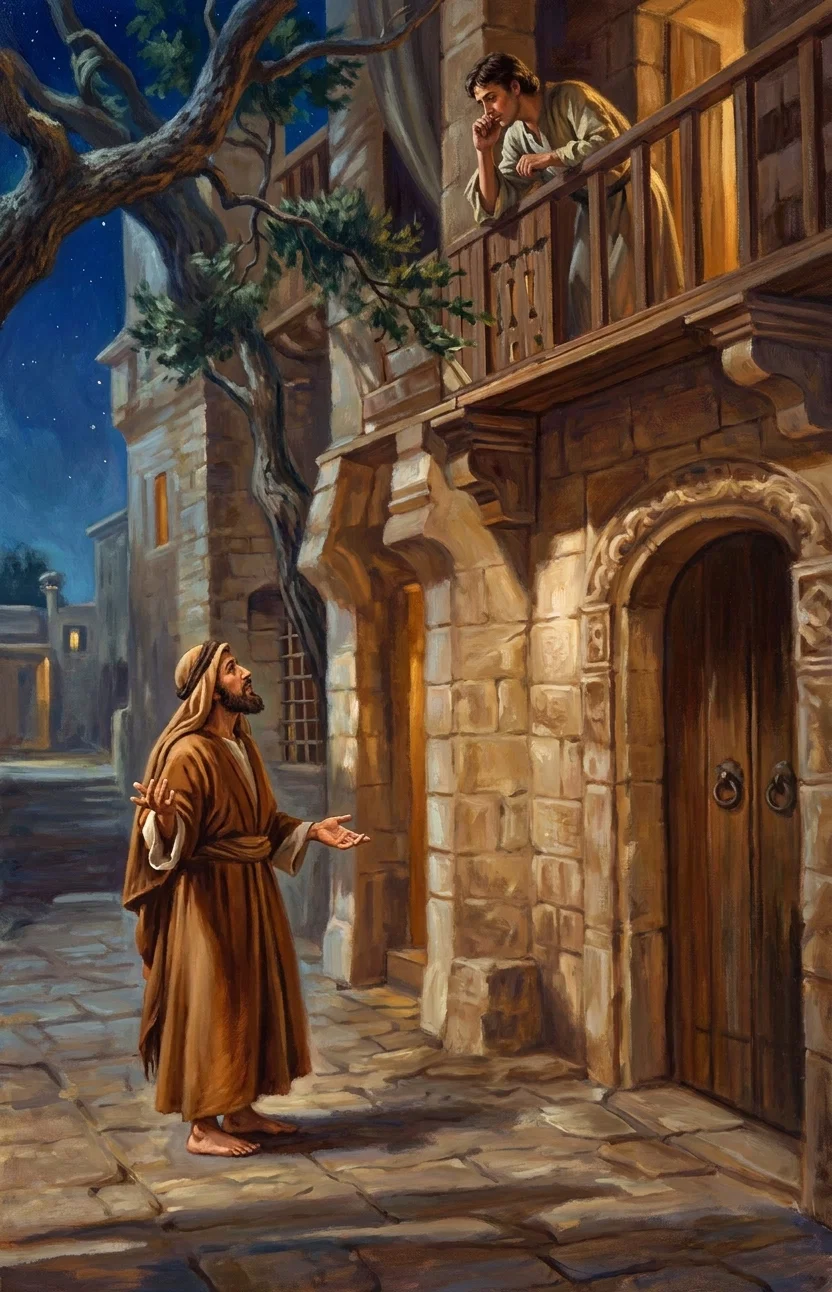 ASKING TO GIVE
“Lend me three loaves: for a friend of mine in his journey is come to me, and I have nothing to set before him,”
ASKING TO GIVE
“Lend me three loaves: for a friend of mine in his journey is come to me, and I have nothing to set before him,” A pastoral scene shows several people gathered and partially concealed in a tall, windswept field of grain or meadow grass. Near the center, a prominent bearded man in a light robe sits or kneels among the stalks, with other figures clustered to his left, including people wearing brimmed hats or head coverings. On the right, a darker-clad figure bends or kneels in the grass, while another small figure stands farther behind. Low shrubs and a line of trees stretch across the distant horizon beneath a pale sky, all enclosed by a broad oval decorative border. No lettering is visible within the artwork.
 A rural pastoral scene shows a farmer walking behind and guiding a large ox as it moves along a furrow through a field. The animal occupies the center of the composition, with its head lowered and harness or yoke visible, while the farmer follows closely behind, partly obscured by the ox. Bushes and trees fill the left side, open grasses and cultivated ground extend across the right, and low hills form a soft horizon in the background. No lettering or other text appears within the image.
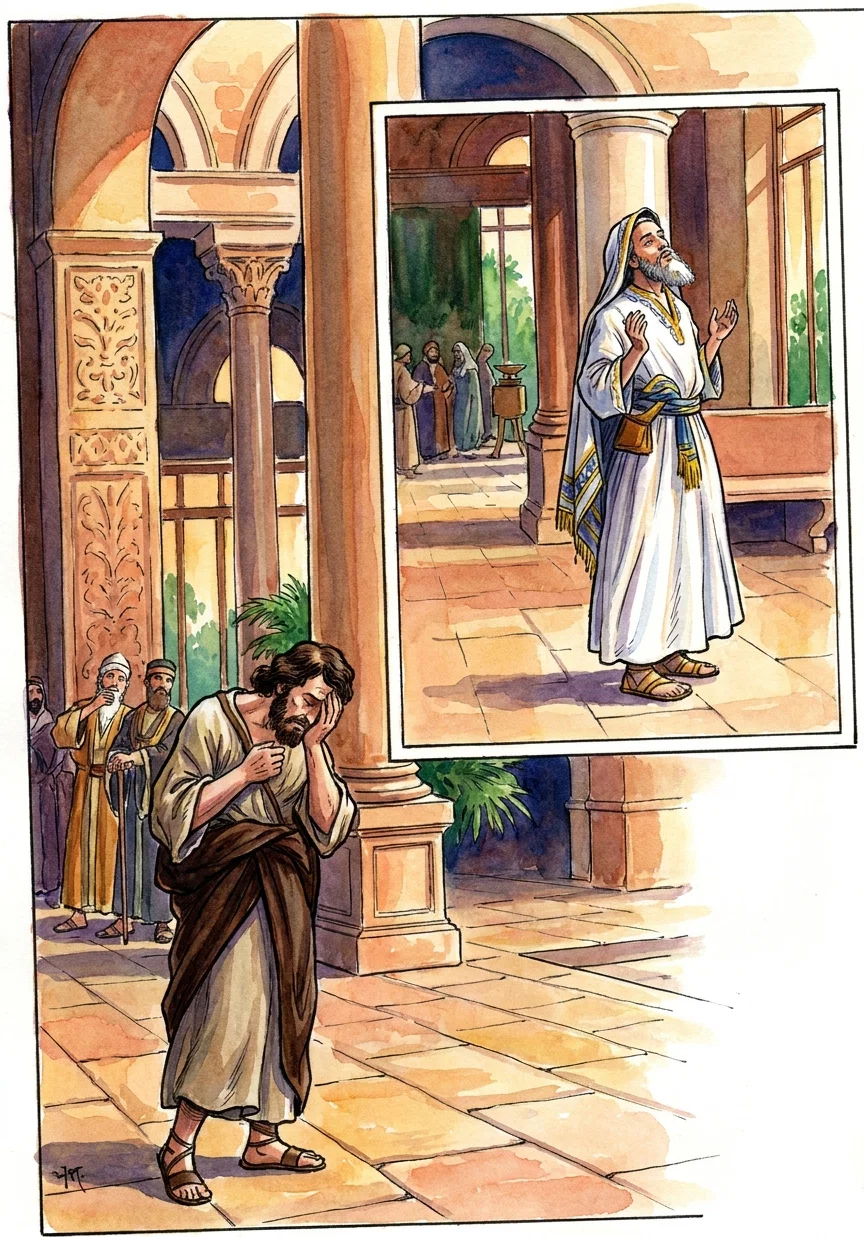 “He is full of self-praise. He looks it, he walks it, he prays it.”
The publican “knew that he had no merit to commend him to God, and in utter self-despair he cried, ‘God be merciful to me, a sinner.’”
“He is full of self-praise. He looks it, he walks it, he prays it.”
The publican “knew that he had no merit to commend him to God, and in utter self-despair he cried, ‘God be merciful to me, a sinner.’”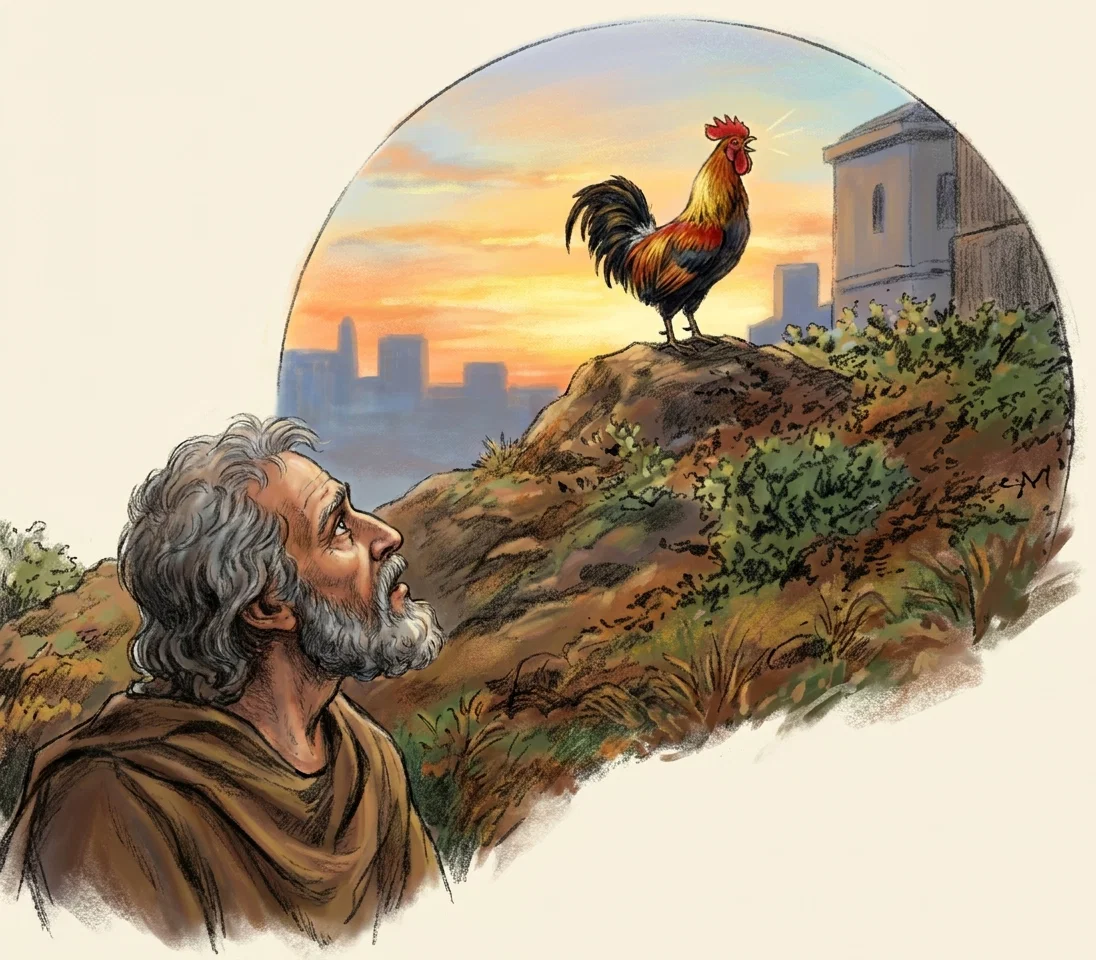 The crowing of the cock reminded him of the words of Christ.
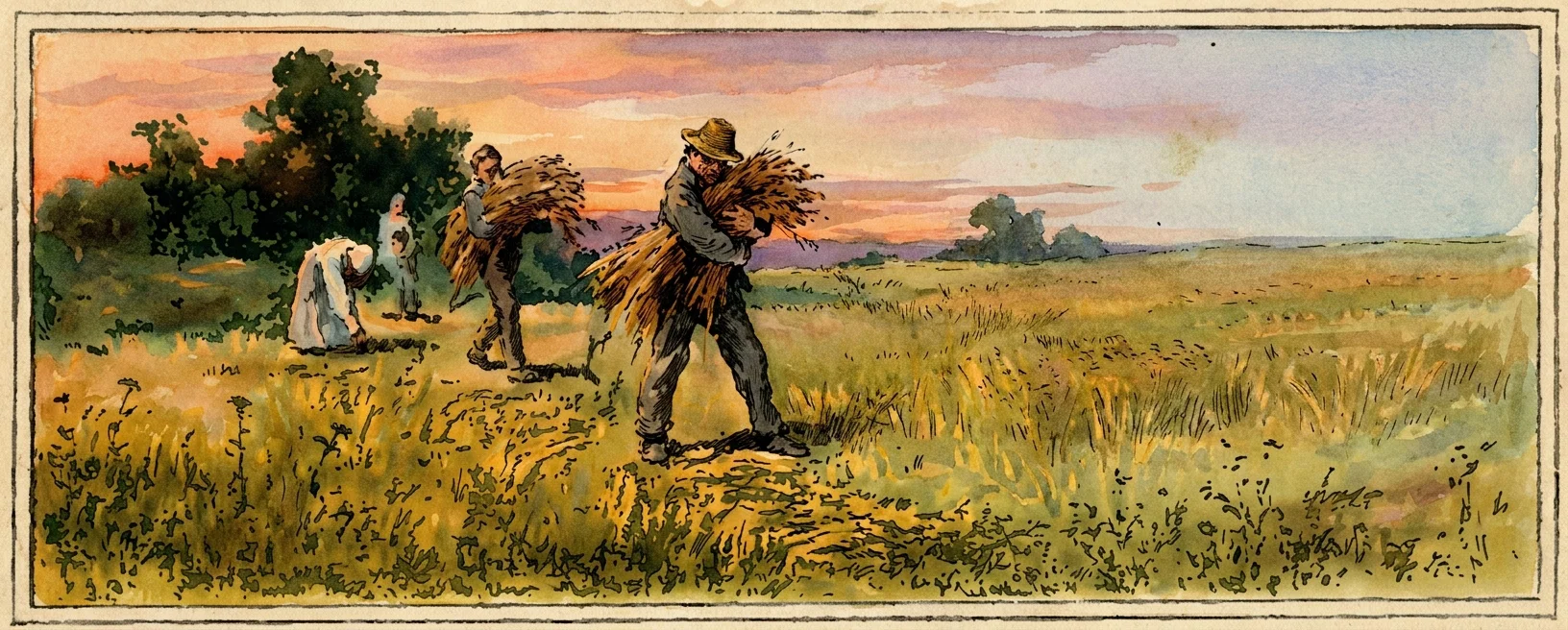 A pastoral scene shows a rural path or field bordered by tall grasses and low flowering plants. In the foreground, a prominently drawn figure in a broad hat and loose, draped clothing walks toward the right, carrying a large bundle or sheaf across the chest. Behind this person, two smaller figures stand or sit near the edge of the path, with one appearing to bend or kneel. Dense trees and shrubbery form a dark background on the left, while the open landscape extends across the right; no lettering or other text is visible within the scene.
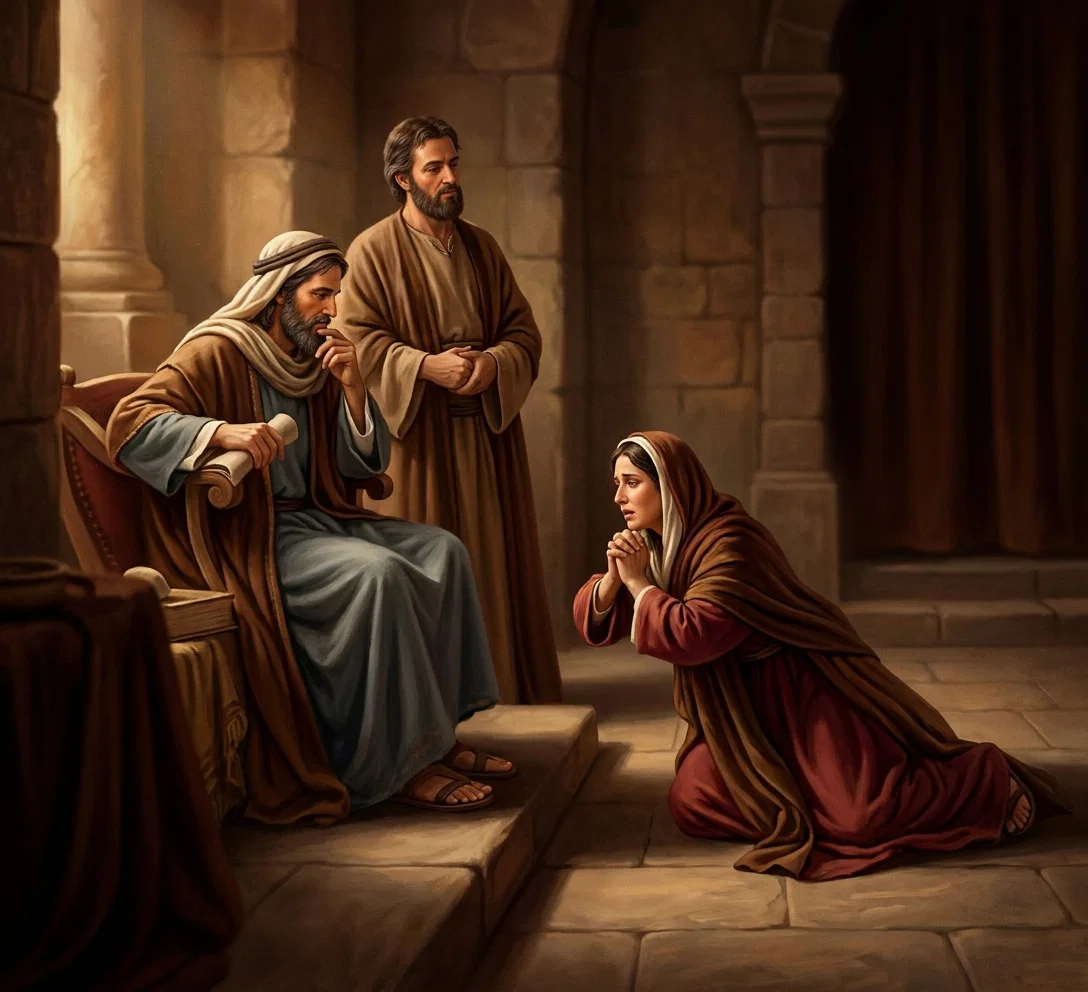 "And there was a widow in that city, and she came unto him, saying, Avenge me of mine adversary."
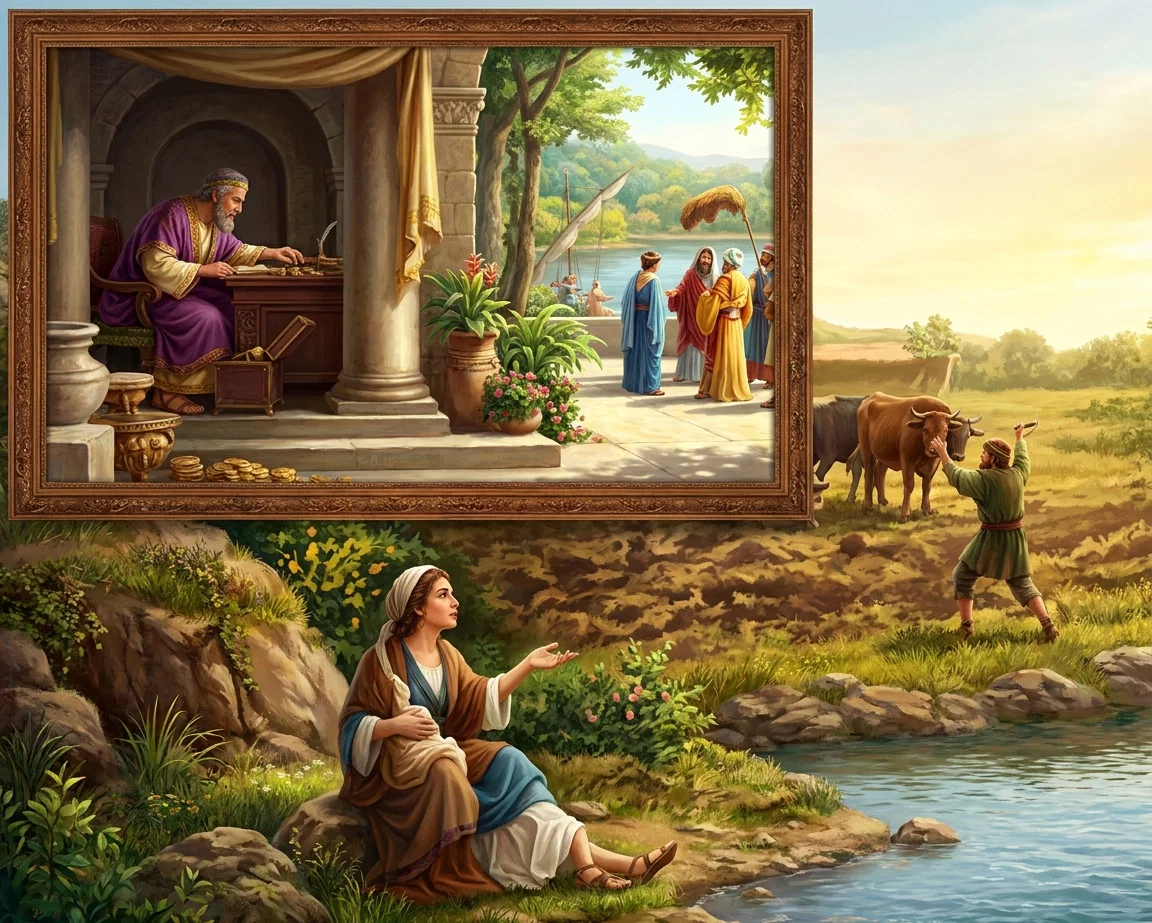 “Go to now, ye rich men, ye have heaped treasure together for the last days.”
 “Behold, the husbandman waiteth for the precious fruit of the earth, and hath long patience for it, until he receive the early and latter rain.”
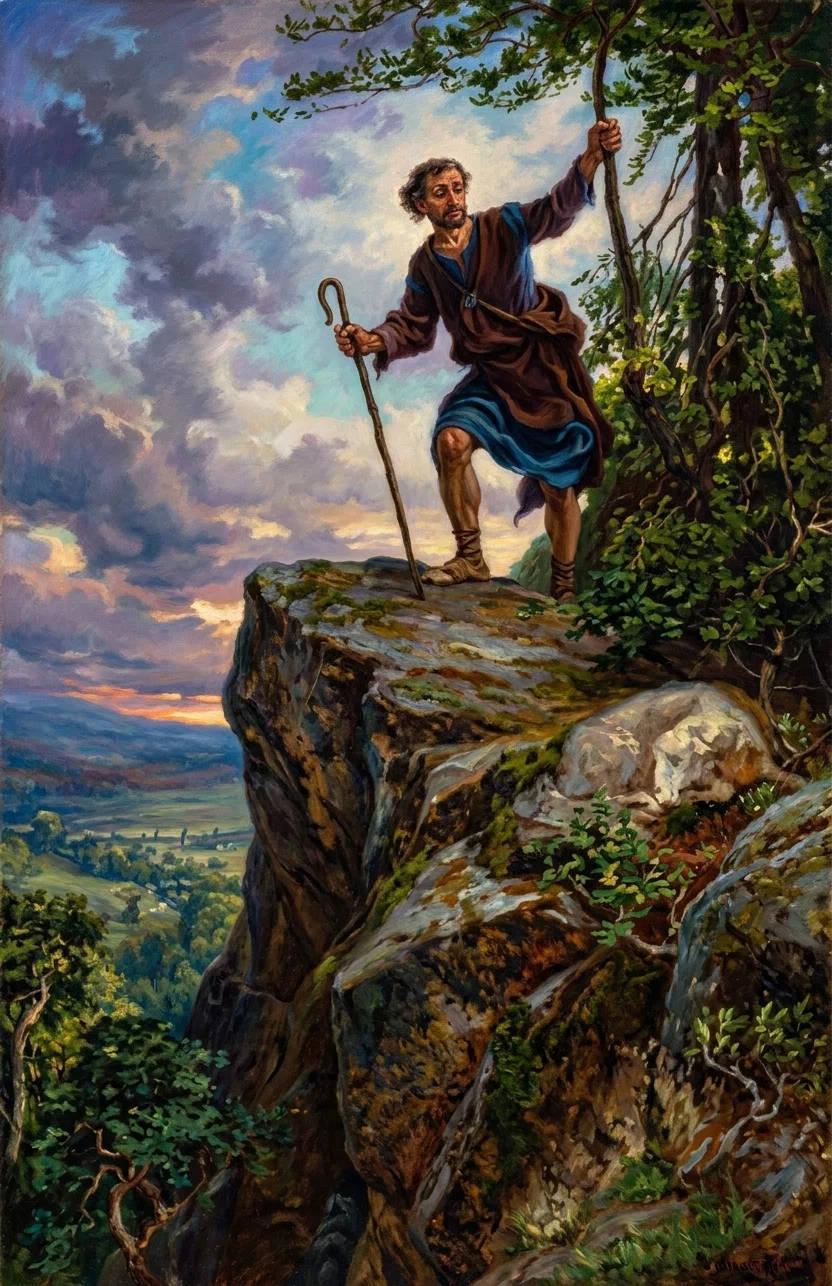 SEEKING THE STRAYING
"He goes to the very edge of the precipice, at the risk of his own life."
SEEKING THE STRAYING
"He goes to the very edge of the precipice, at the risk of his own life." A panoramic rural landscape is divided into three adjoining panels. The broad central scene shows a steep, darkly textured hillside descending toward a cultivated field marked by many curved rows, with a solitary robed figure standing in the foreground and extending one arm. A large, leafless, twisting tree frames the left panel, while the right panel continues the furrowed farmland beneath a hazy sky, with low vegetation and distant trees along the horizon. No visible lettering or other text appears within the depicted scene.
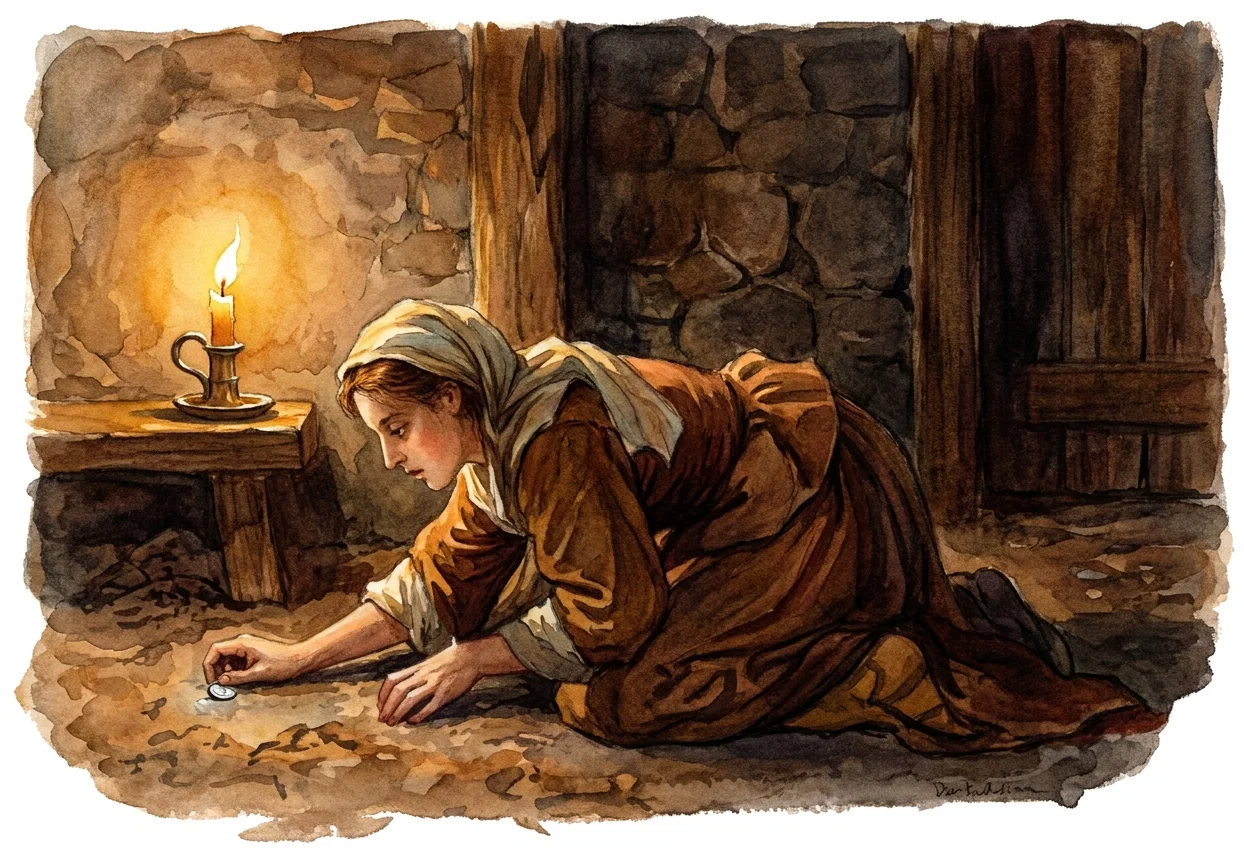 “What woman having ten pieces of silver, if she lose one piece, doth not light a candle, and sweep the house, and seek diligently till she find it?”
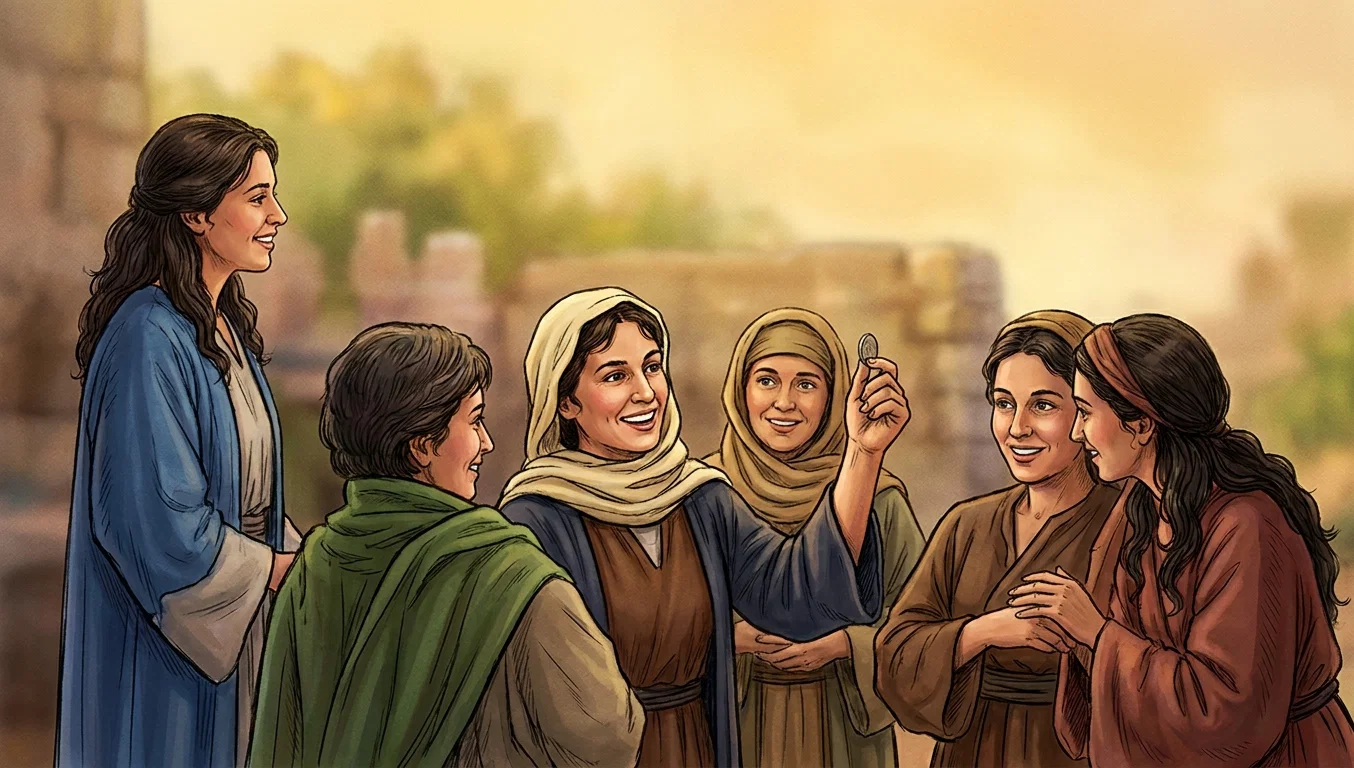 “When she hath found it, she calleth her friends and her neighbors together, saying, Rejoice with me, for I have found the piece which I had lost.”
 A quiet pastoral landscape stretches across the scene, with furrowed ground and low vegetation in the foreground, dense trees or brush along the left side, and open fields fading toward hazy hills in the distance. Near the center, a large light-colored sheep stands prominently beside a darker, upright form that appears to be a shepherd or tree trunk, with indistinct foliage around it. The composition emphasizes the animal against the broad rural setting, and no lettering or other text is visible within the image.
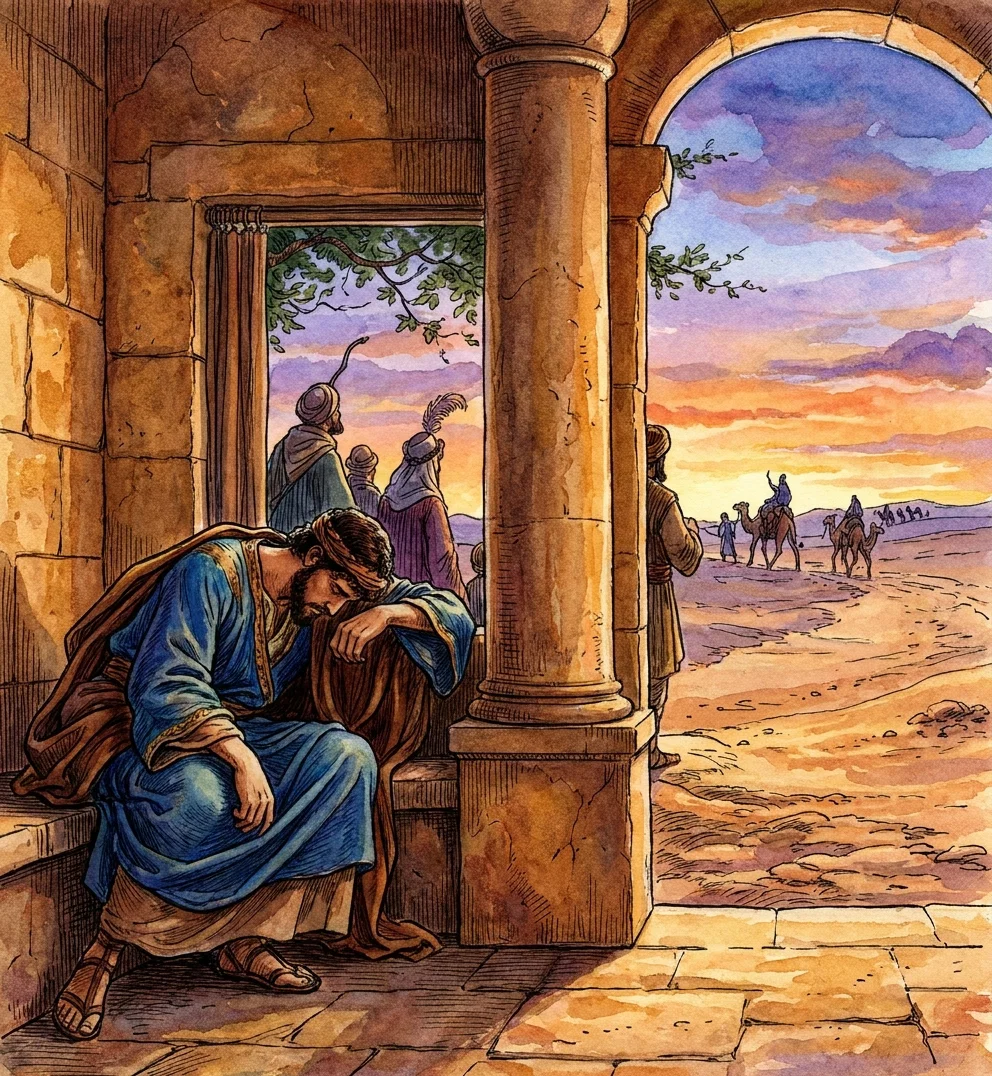 “Not many days after the younger son gathered all together, and took his journey into a far country.”
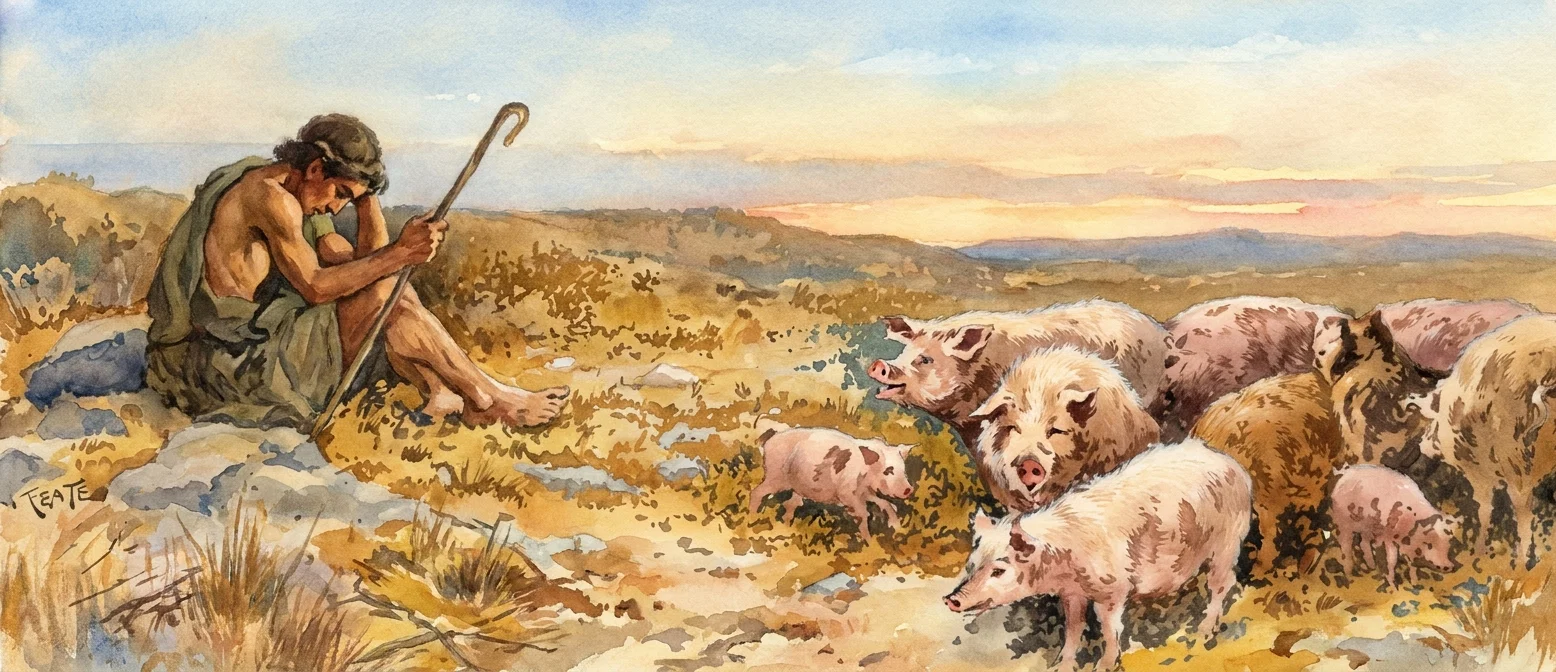 “Sitting upon the ground, in that desolate and famine-stricken land, with no companions but the swine.”
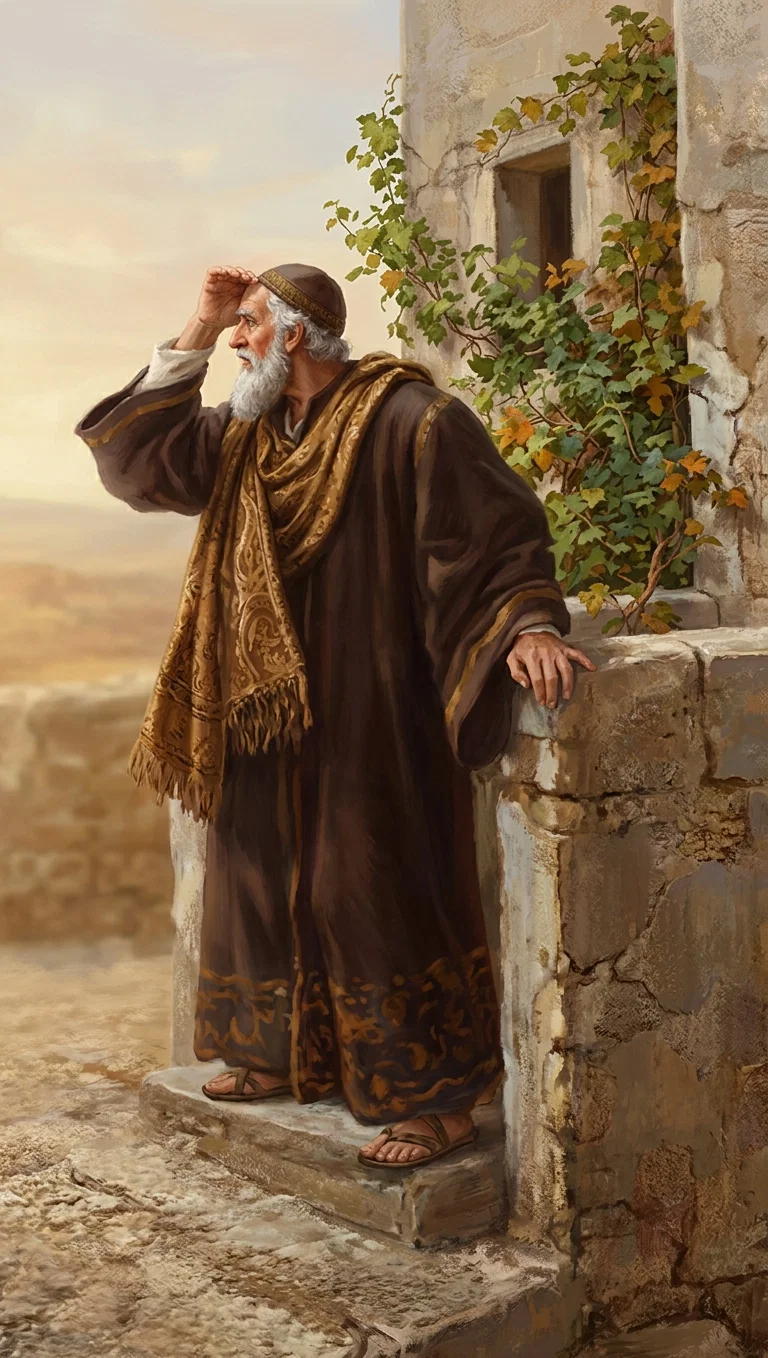 “While he is yet a great way off, his father discerns his form. Love is of quick sight.”
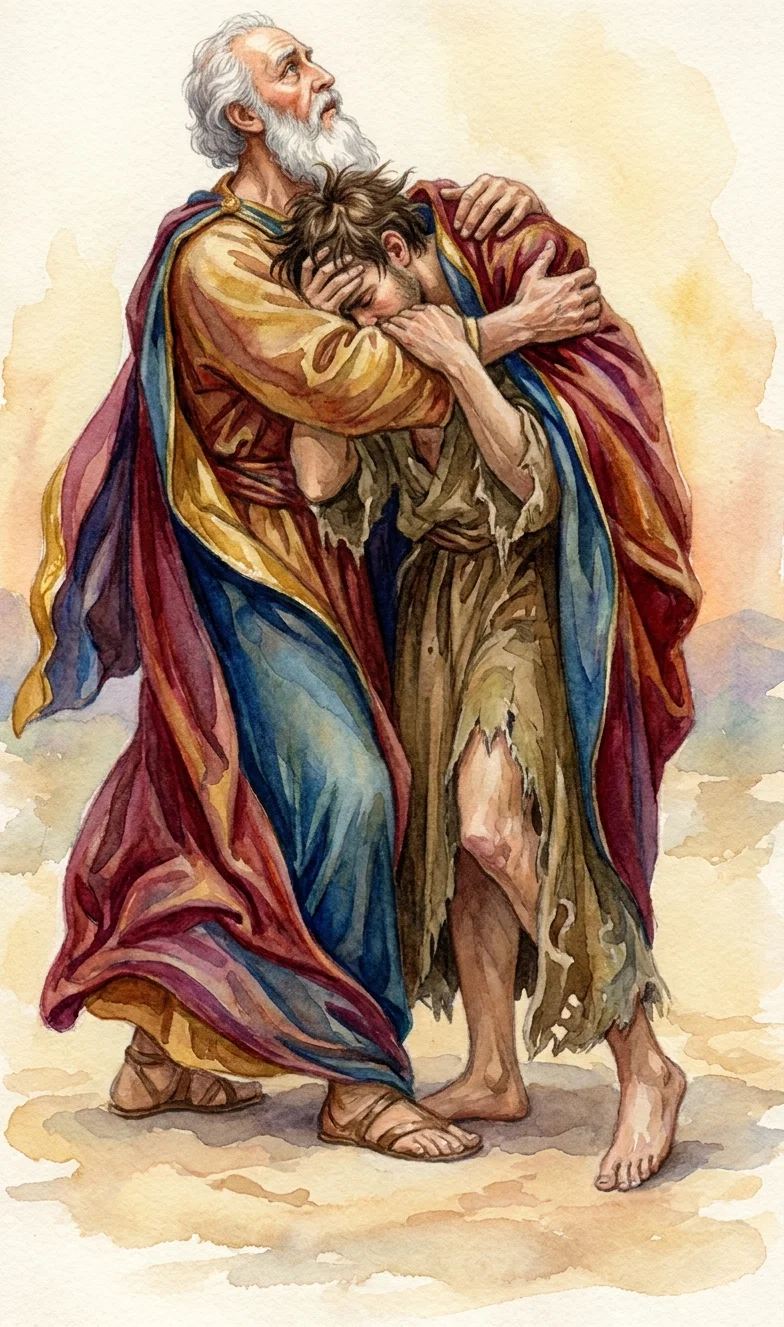 “He takes from his own shoulders the broad, rich mantle, and wraps it around the son's wasted form, and the youth sobs out his repentance.”
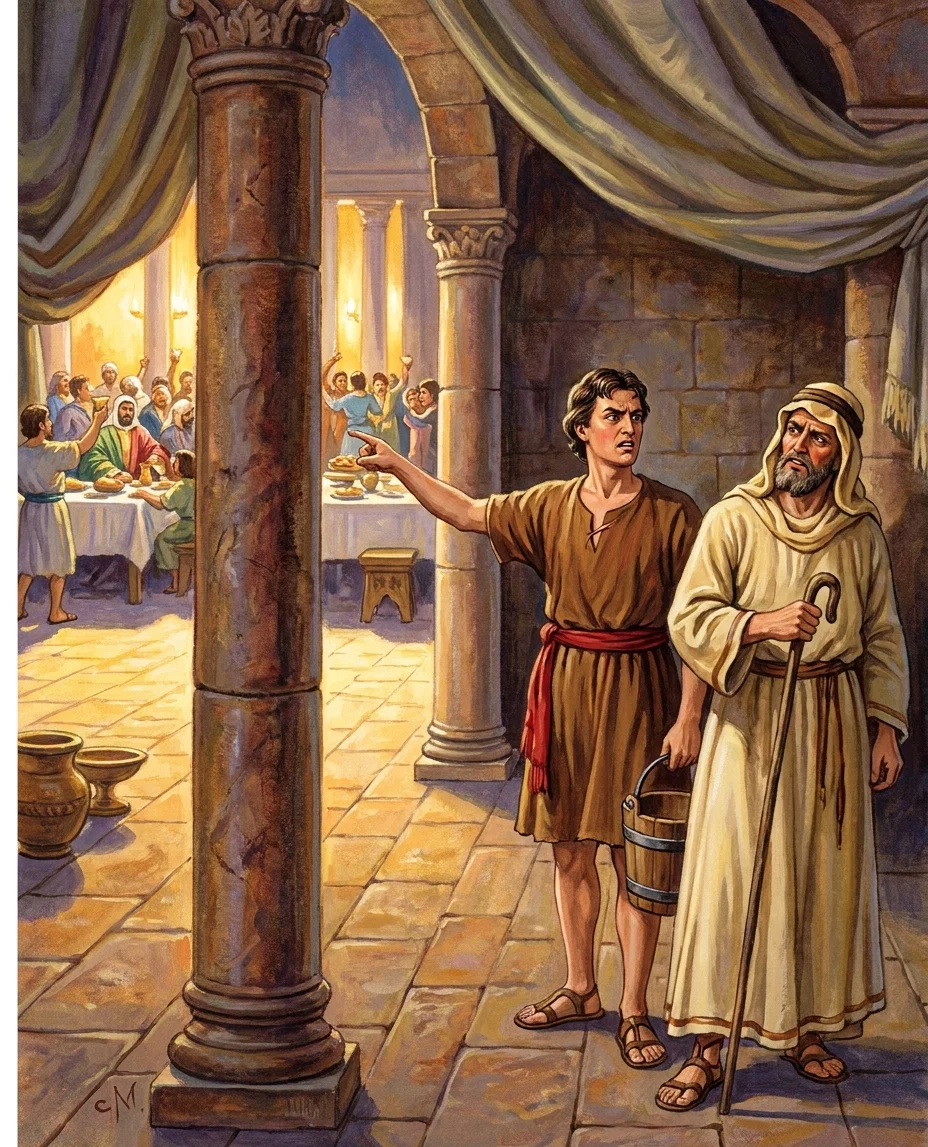 “He called one of the servants, and asked what these things meant. . . . And he was angry, and would not go in.”
 A three-panel pastoral scene depicts a gardener tending a garden or orchard. In the broad central panel, a man wearing a brimmed hat and work clothes stands among cultivated ground, leaning on a long-handled hoe or spade as he works the soil. A rustic vertical fence stretches behind him, with trees and dense foliage framing the scene. The narrower side panels show close views of leafy vegetation, shrubs, and tree trunks, suggesting the surrounding orchard or garden. No lettering or other text appears within the artwork.
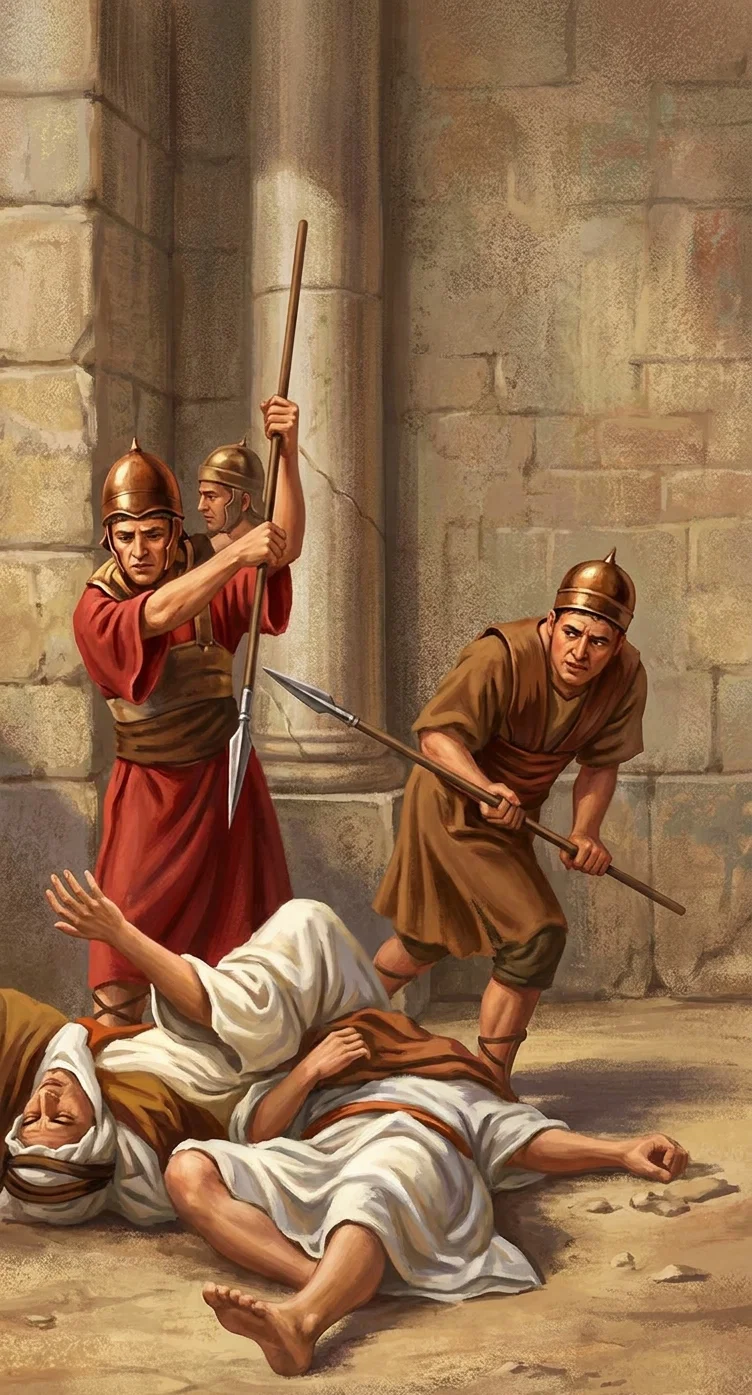 …'s “soldiers” had cut down some Galilean …ims in “the very act of slaying their sacrifices.”
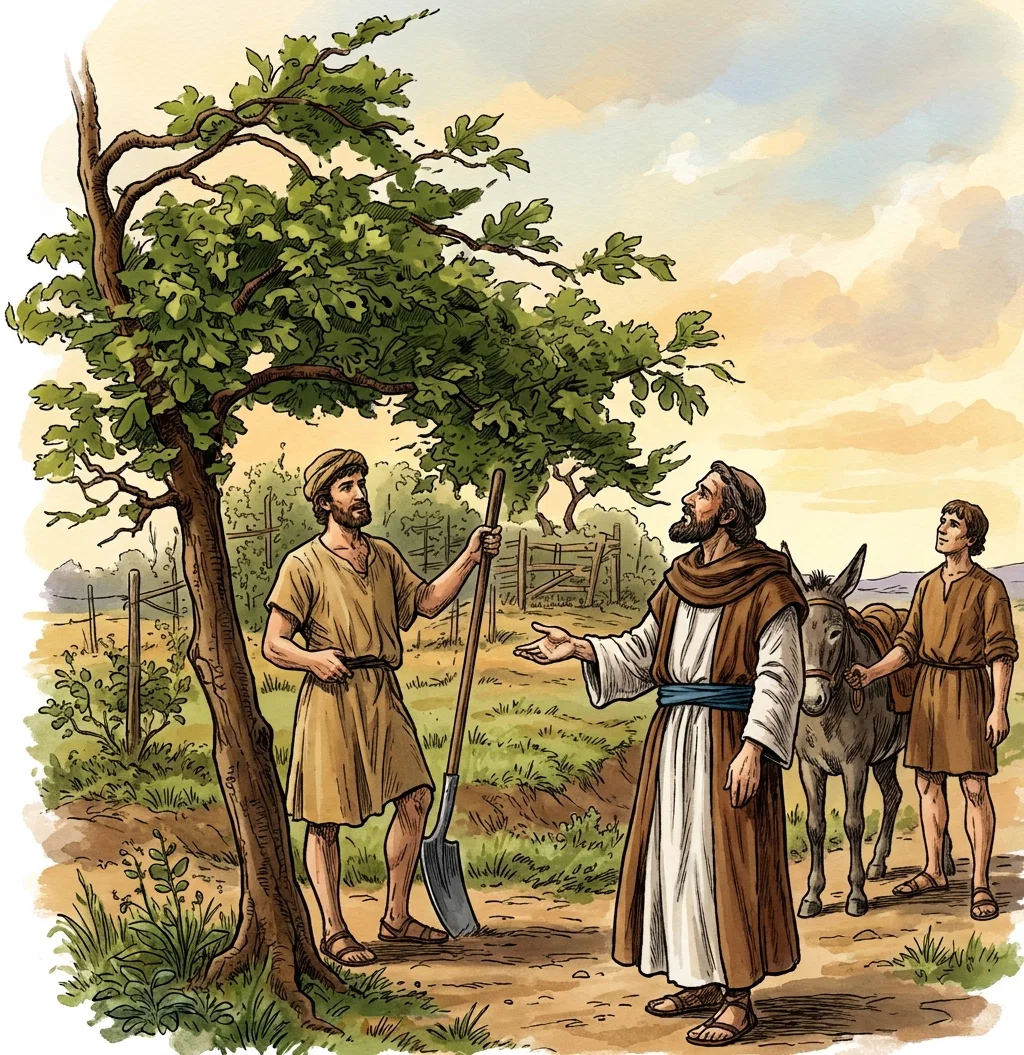 “Then said he unto the dresser of his vineyard, Behold, these three years I come seeking fruit on this fig-tree, and find none: cut it down: why cumbereth it the ground?”
 A young woman stands in a leafy garden or hedgerow, shown in profile amid dense foliage and tree branches. She wears a long dress with a dark fitted bodice or shawl and appears to be gathering or carrying a large bundle of plants, flowers, or brush in front of her. A substantial tree trunk rises near the left side, while tangled vegetation fills the background and frames the figure. The scene is enclosed by a simple rectangular border, with no visible lettering or other text within the image.
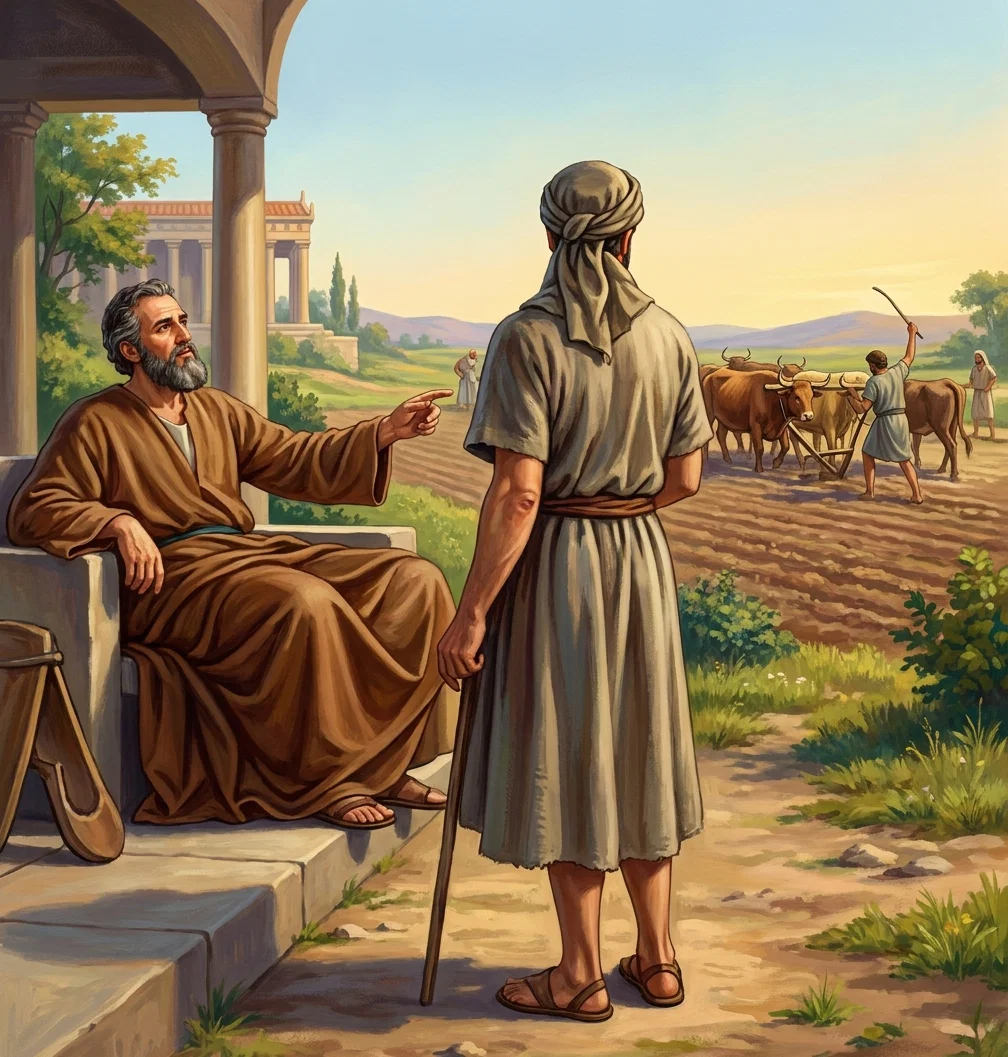
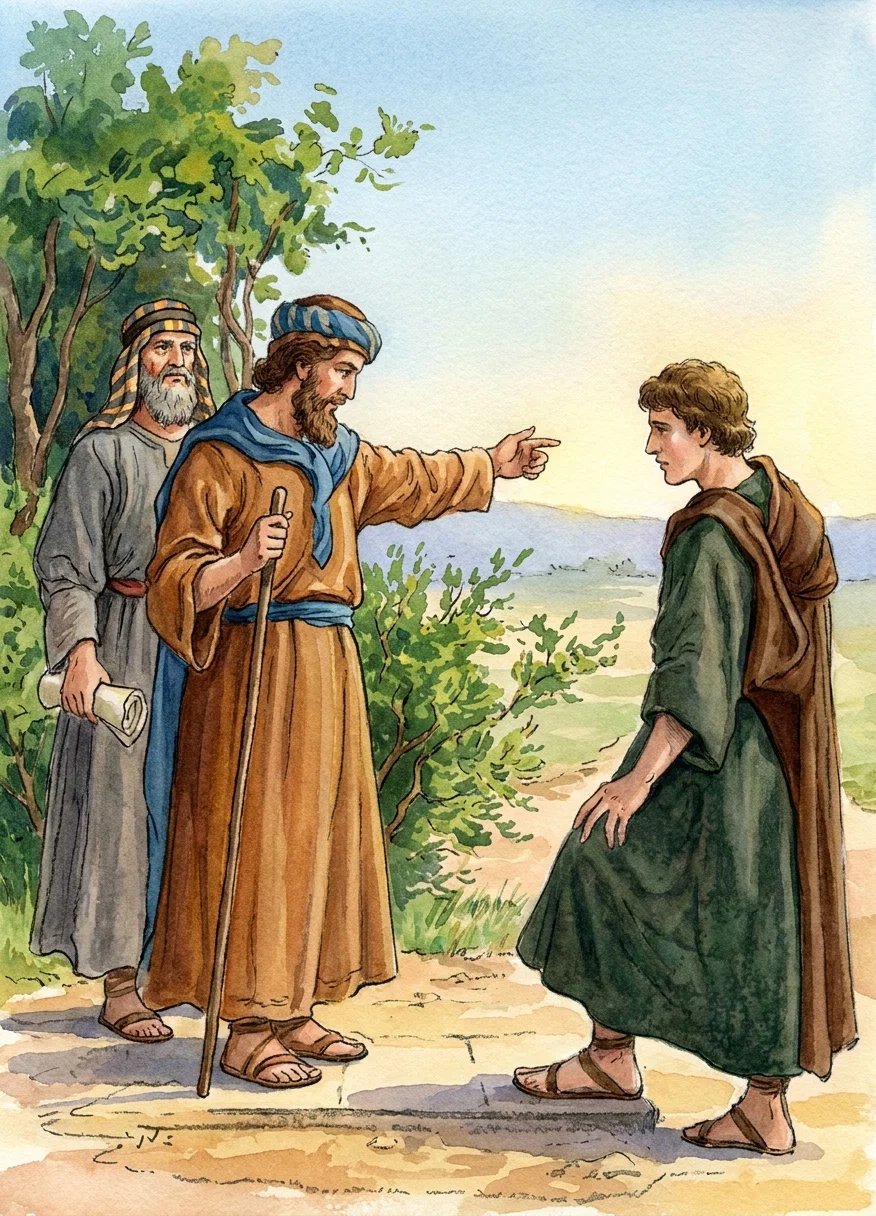 “I have bought a piece of ground, and I must needs go and see it; I pray thee have me excused.”
 “I have bought five yoke of oxen, and I go to prove them: I pray thee have me excused.”
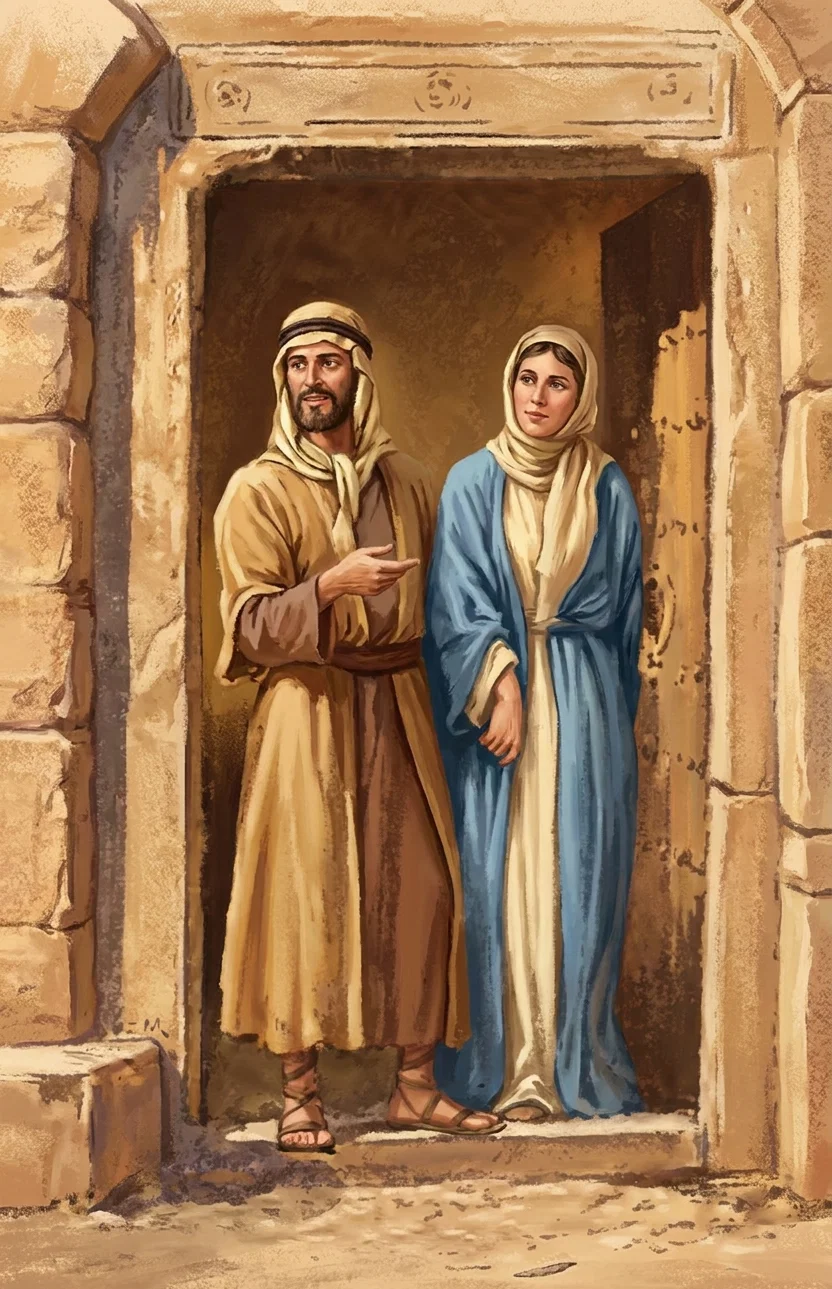 “I have married a wife, and therefore I cannot come in.”
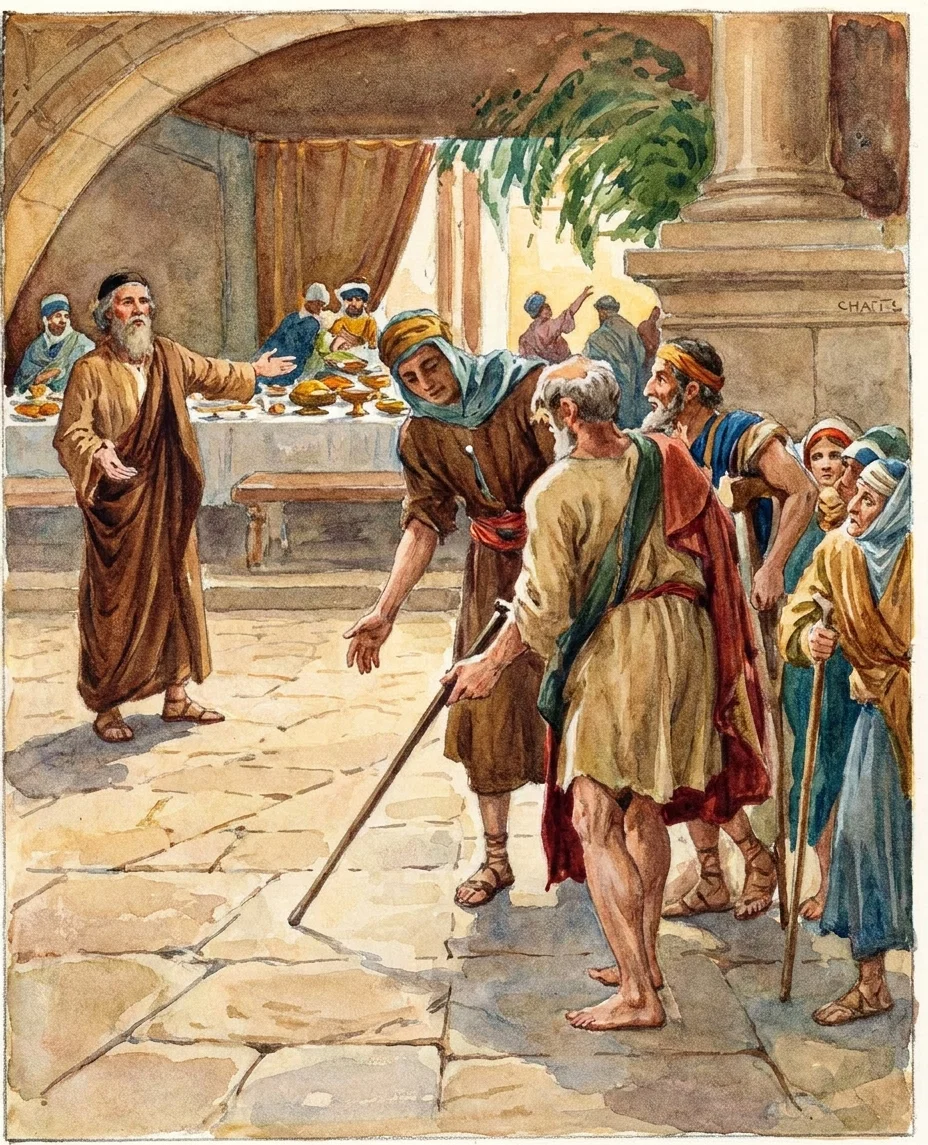 “Go out quickly into the streets and lanes of the city, and bring in hither the poor, and the maimed, and the halt, and the blind.”
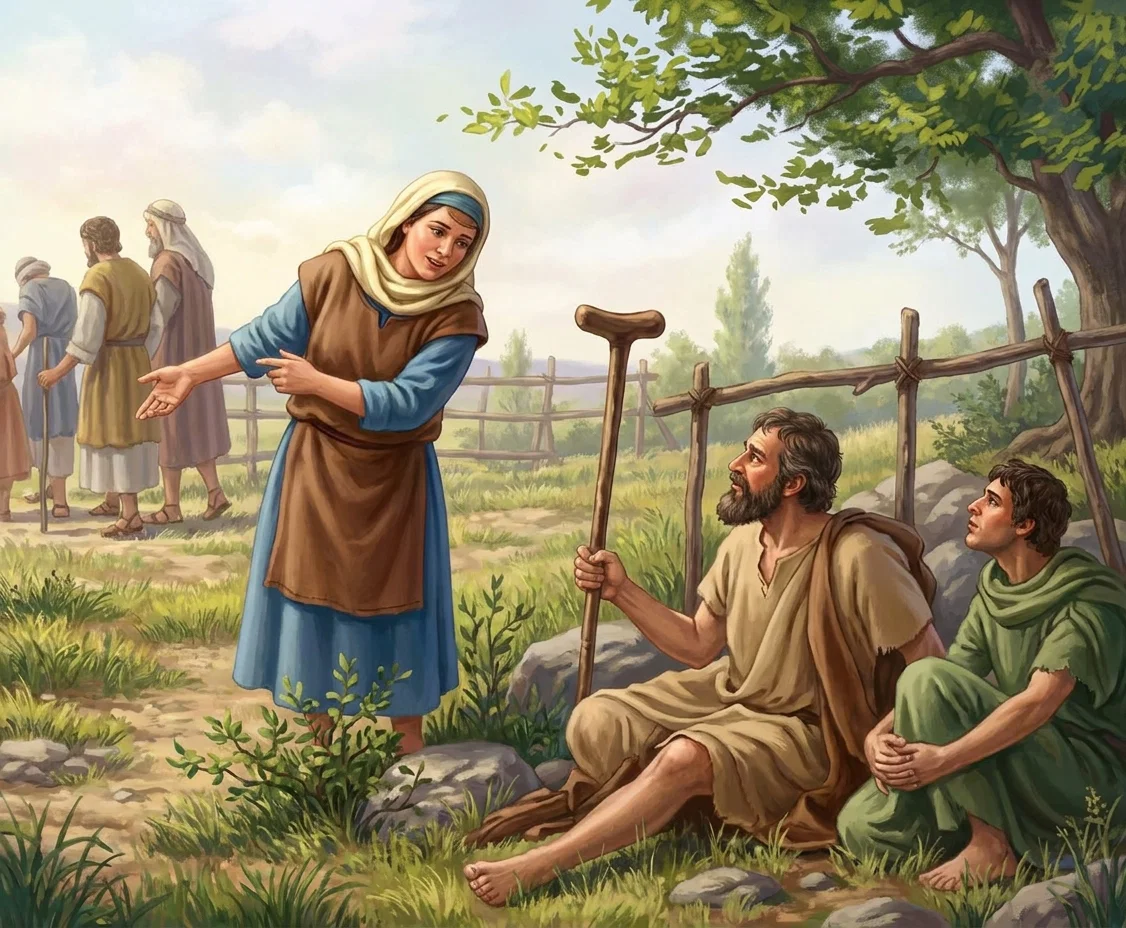 “Go out into the highways and hedges, and compel them to come in.”
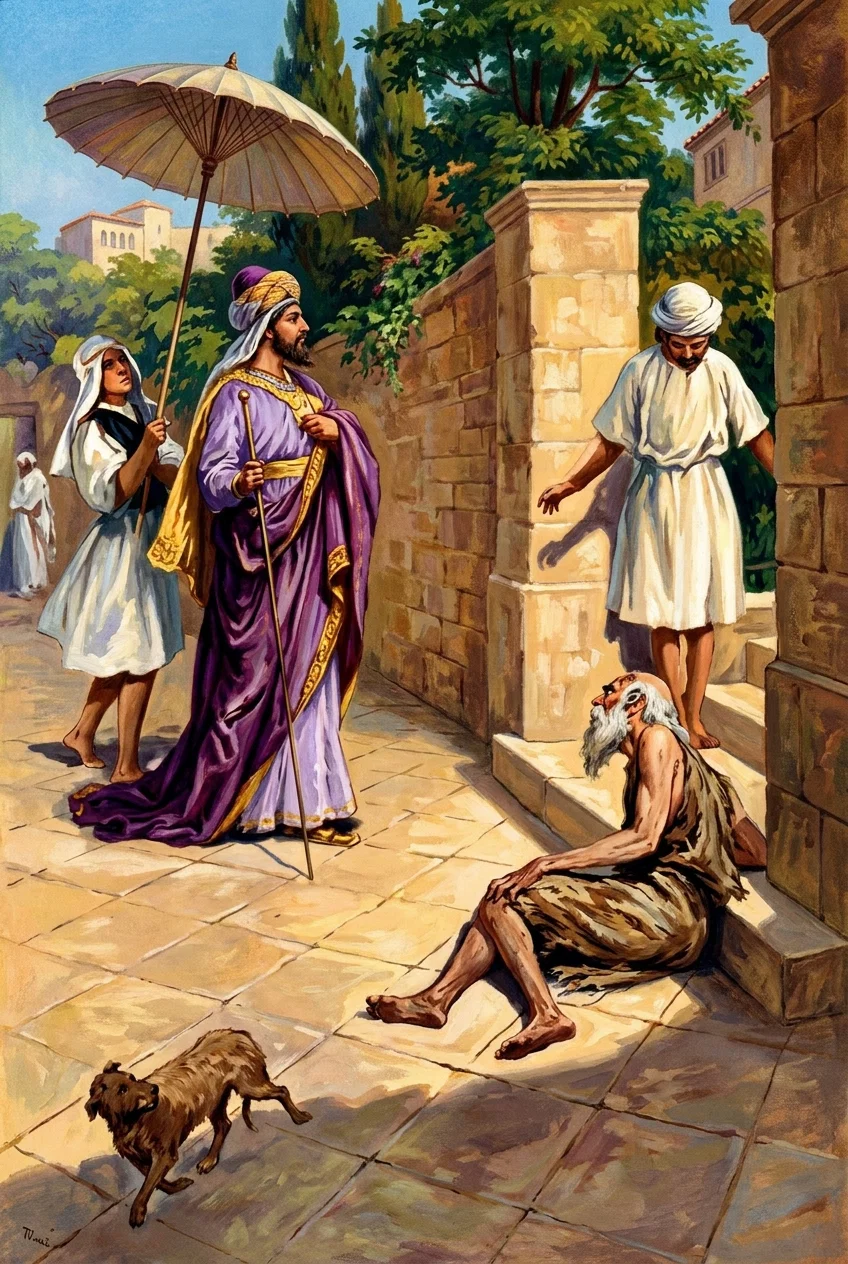 AT THE RICH MAN’S GATE
“If the poor, loathsome specimen of humanity could be comforted by beholding him as he entered his gates,”
AT THE RICH MAN’S GATE
“If the poor, loathsome specimen of humanity could be comforted by beholding him as he entered his gates,” An oval-framed rural scene shows several people working among tall, wind-swept grain or grasses. Near the center, a bearded man in a long robe stands prominently, accompanied by other figures partially obscured by the crop; some appear to be bending or gathering plants. On the right, a solitary figure in darker clothing crouches or stoops in the field. Low shrubs and a line of trees stretch across the distant horizon beneath a broad, lightly clouded sky, creating a pastoral agricultural setting.
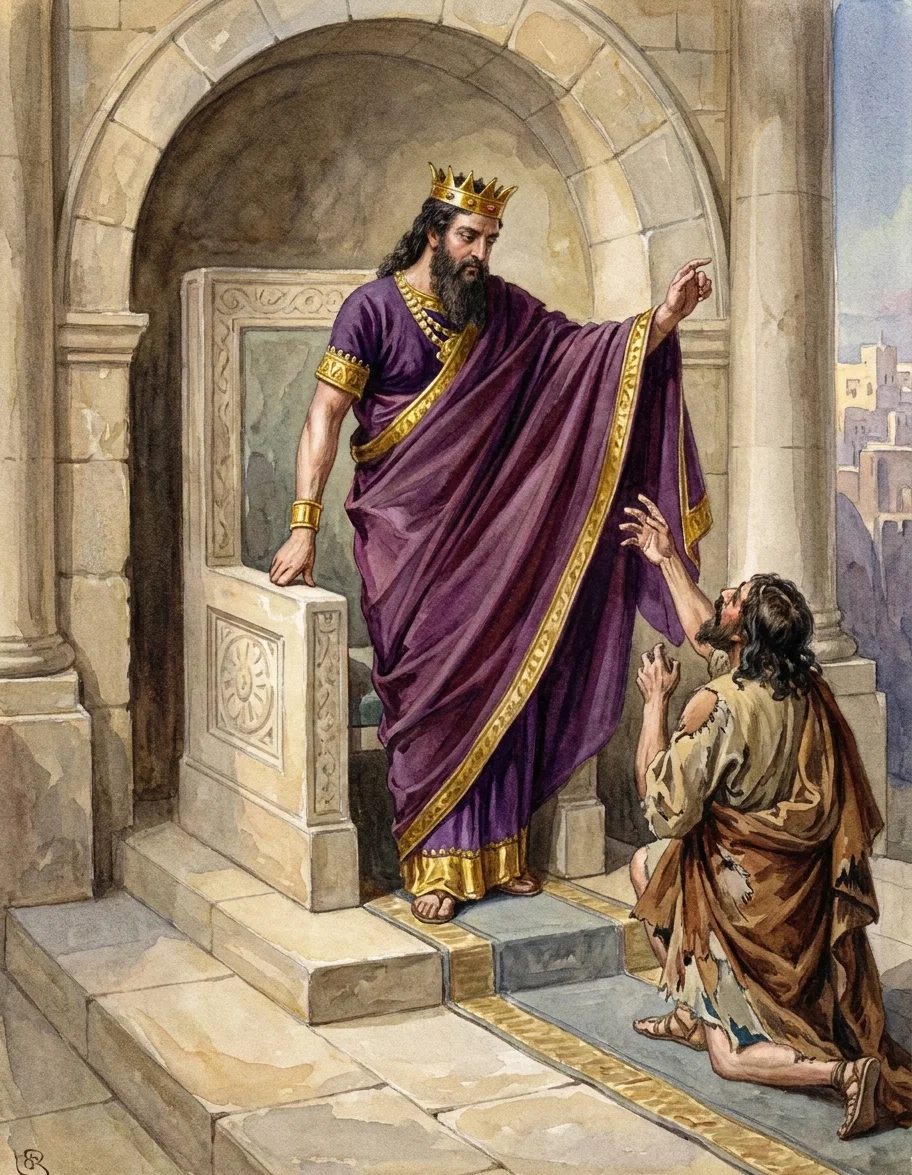 “The terrified man fell at his feet and besought him, saying, ‘Have patience with me, and I will pay thee all.’”
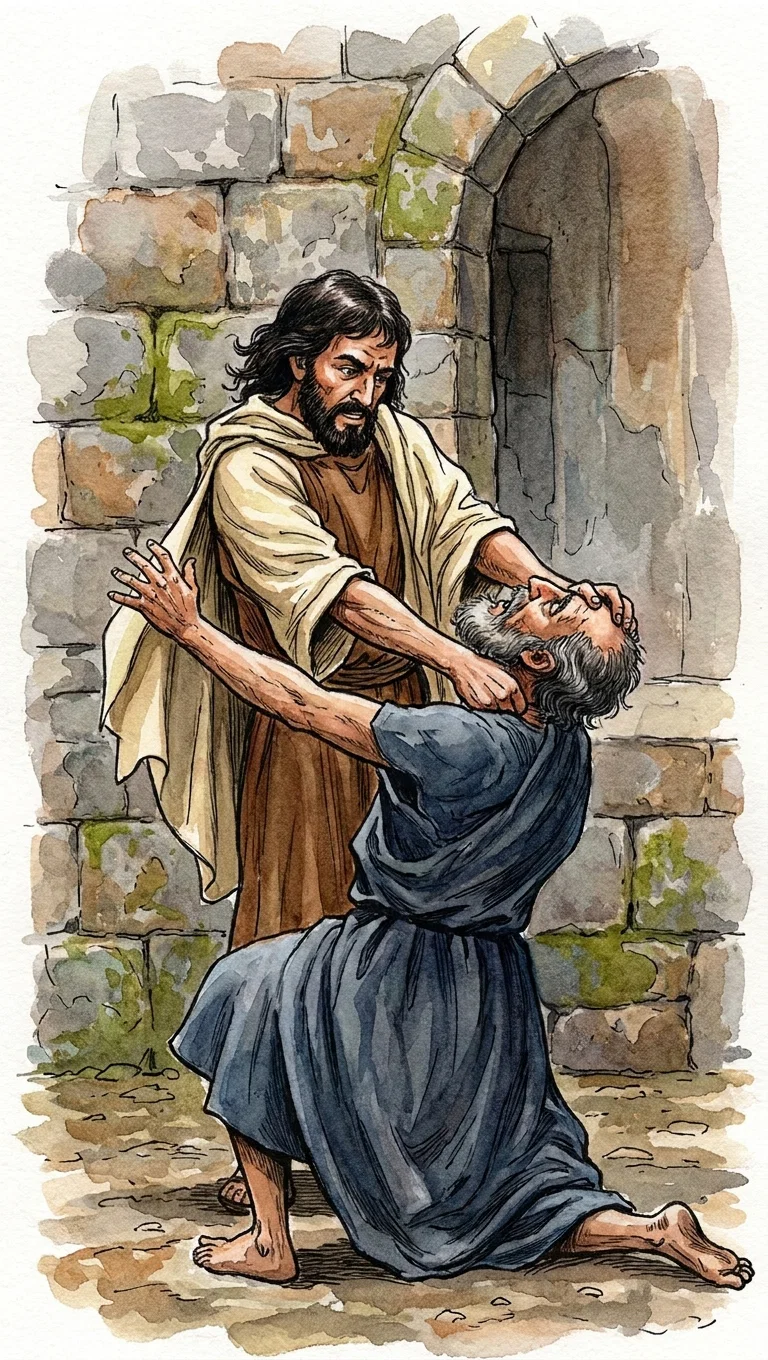 He “took him by the throat, saying, Pay me that thou owest.”
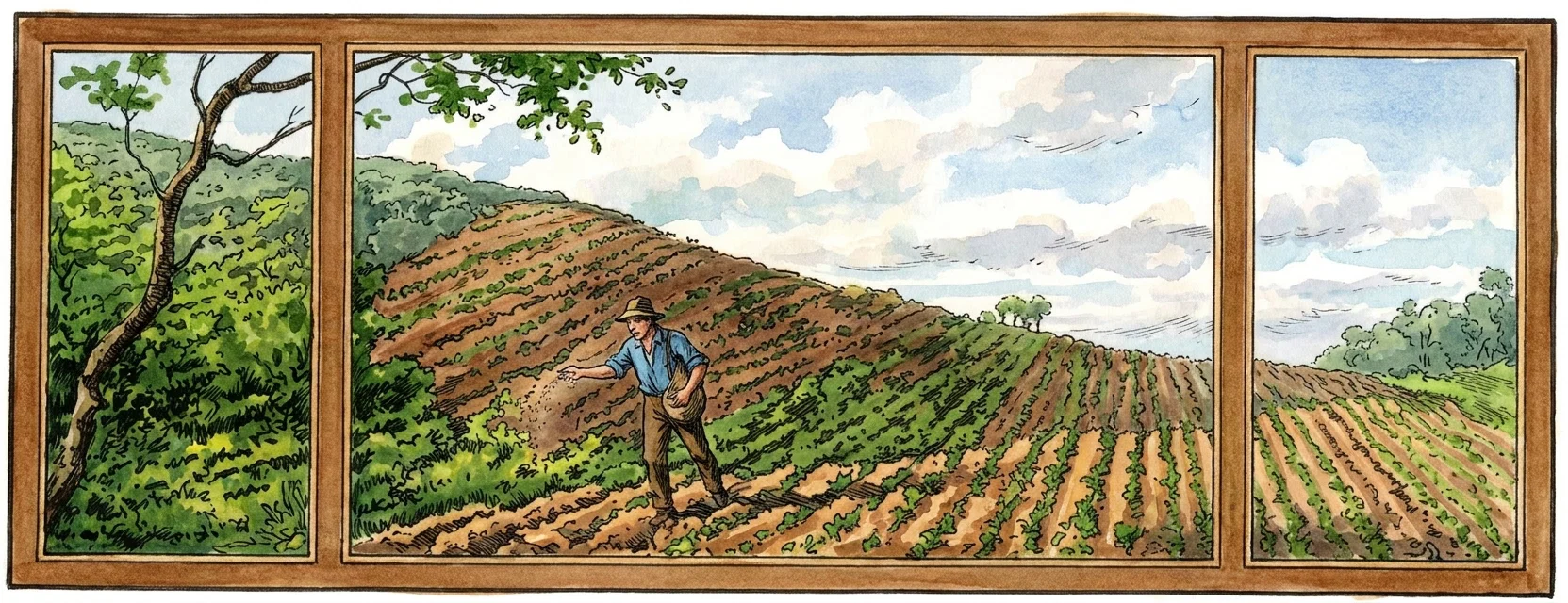 A panoramic rural landscape unfolds across three adjoining panels, showing a steep, darkly shaded hillside covered with regularly planted rows, suggestive of a vineyard or cultivated field. In the central panel, a solitary human figure stands among the furrows, appearing to work or survey the land. A gnarled, leafless tree frames the left section, while the right section continues the patterned rows toward a distant, uneven horizon. The sky is mostly open and pale, with a few small marks suggesting distant birds or clouds.
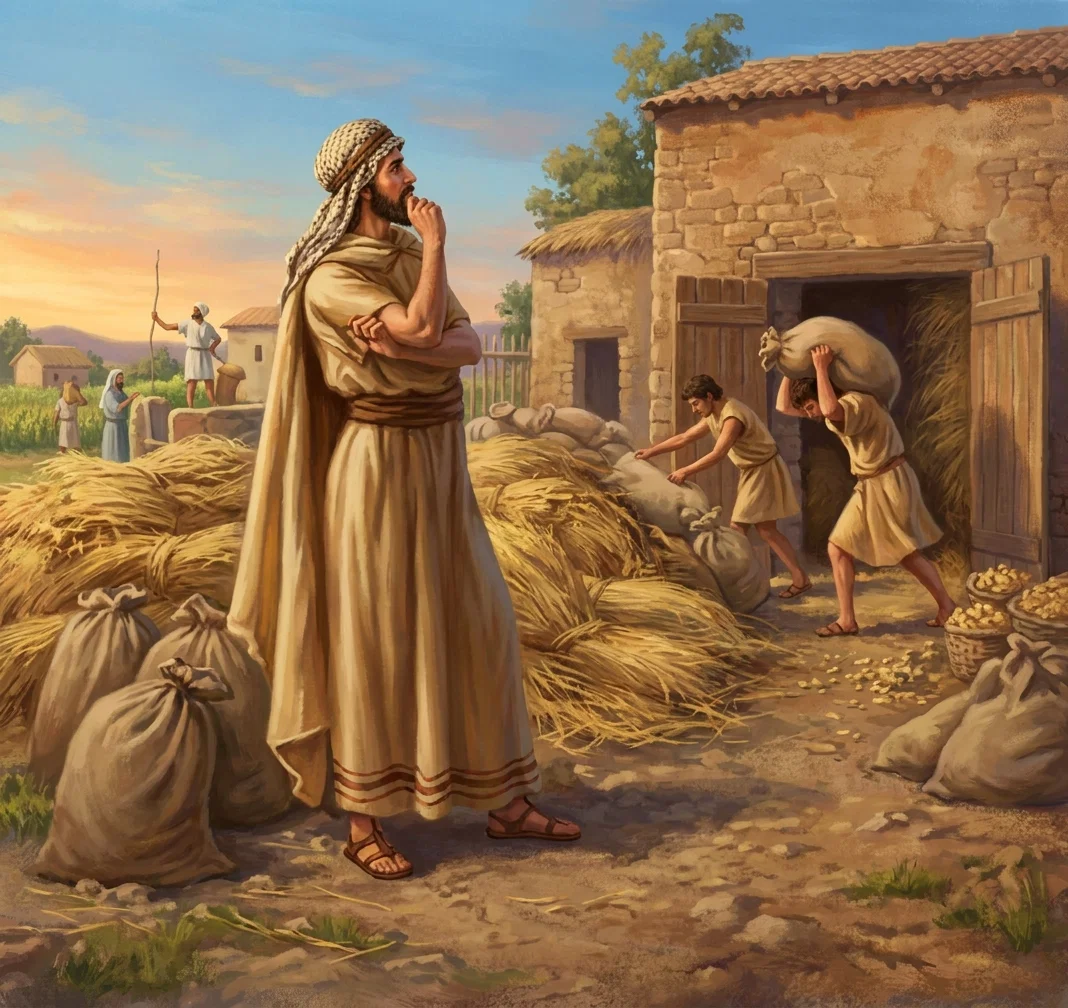 “This will I do: I will pull down my barns, and build greater.”
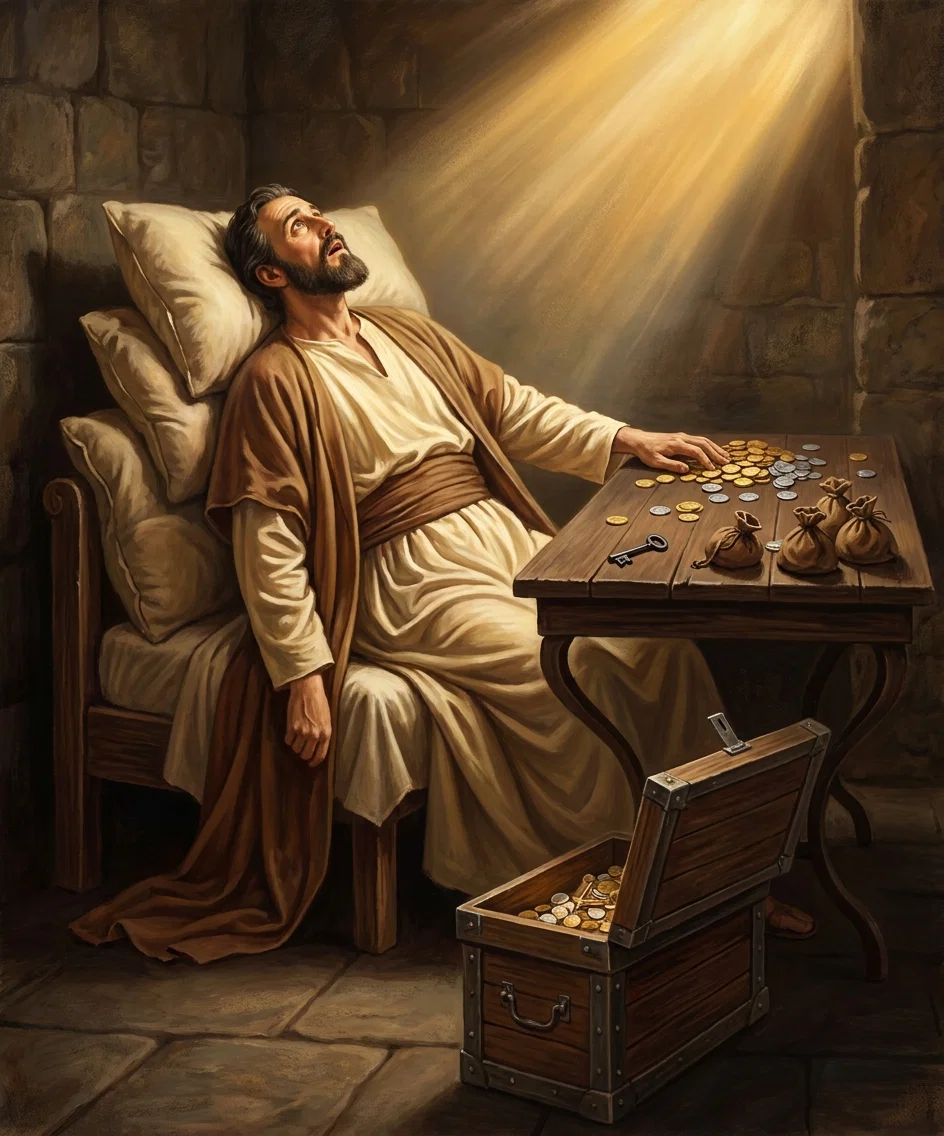 “Thou fool, this night thy soul shall be required of thee.”
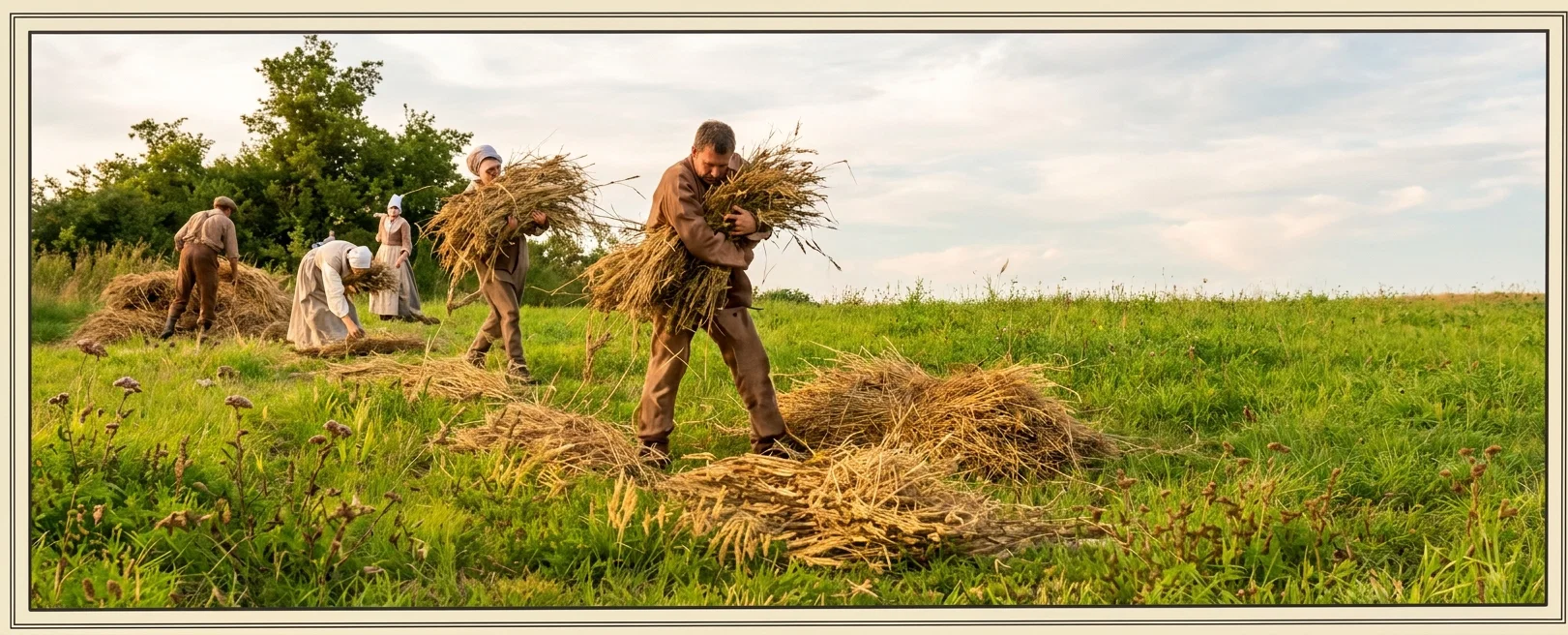 A pastoral scene shows a well-dressed man in the foreground walking along a rough, slightly elevated path while carrying a large bundle of belongings on his back. Behind him, two less prominently rendered figures stand near a low stone wall or rocky rise, with one appearing to gesture or carry something. Trees and dense grasses fill the left and lower portions of the landscape, while the right side opens into a broad, pale sky or distant space. No lettering or other text appears within the image.
 A three-panel rural scene depicts a man working in a vineyard or cultivated field. In the central panel, a solitary laborer wearing a brimmed hat and dark vest bends slightly while using a long-handled hoe or similar tool against the ground. Behind him are rows of tall plants or vines enclosed by a rustic vertical-stick fence, with trees framing the scene. The narrow side panels show dense vegetation, leafy branches, shrubs, and additional fenced or planted areas, creating a continuous pastoral setting. No lettering or other text appears within the image.
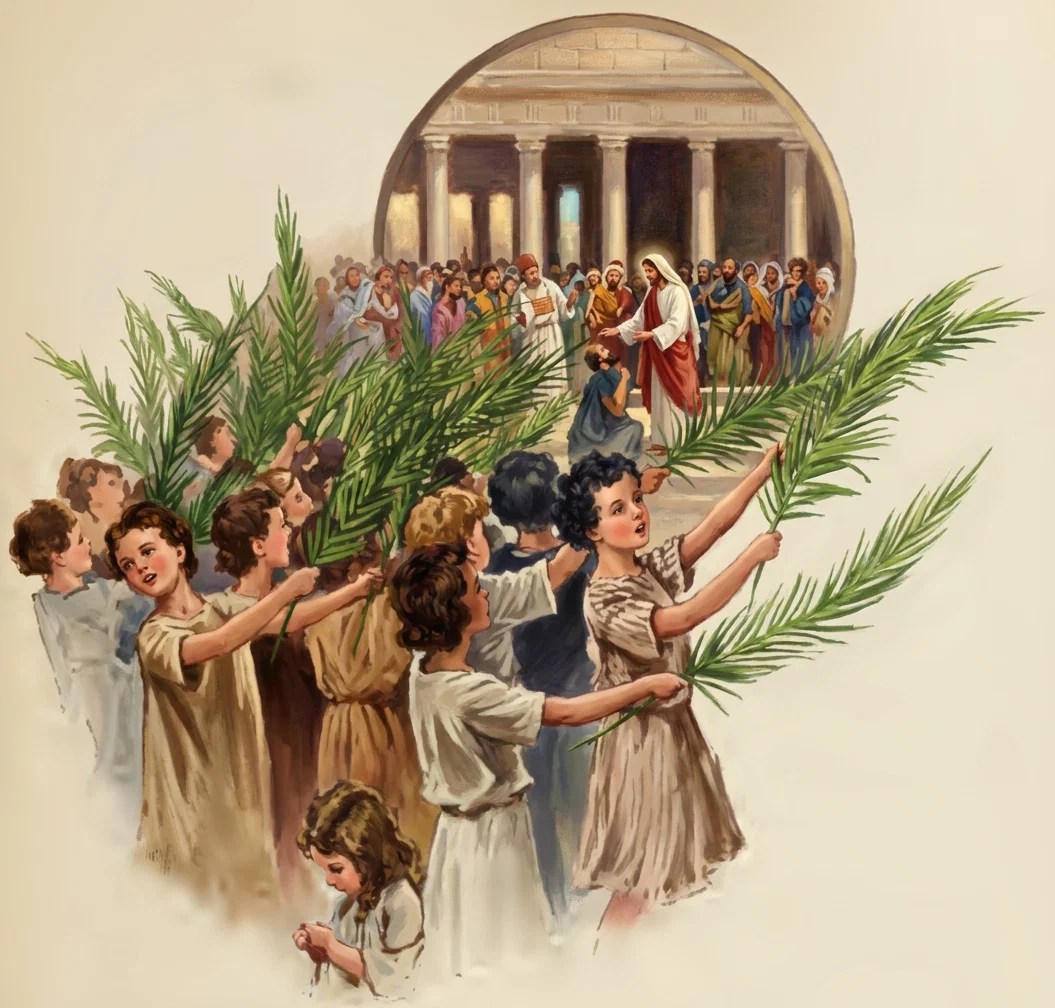 “Baby voices were lisping the praises of the mighty Healer.”
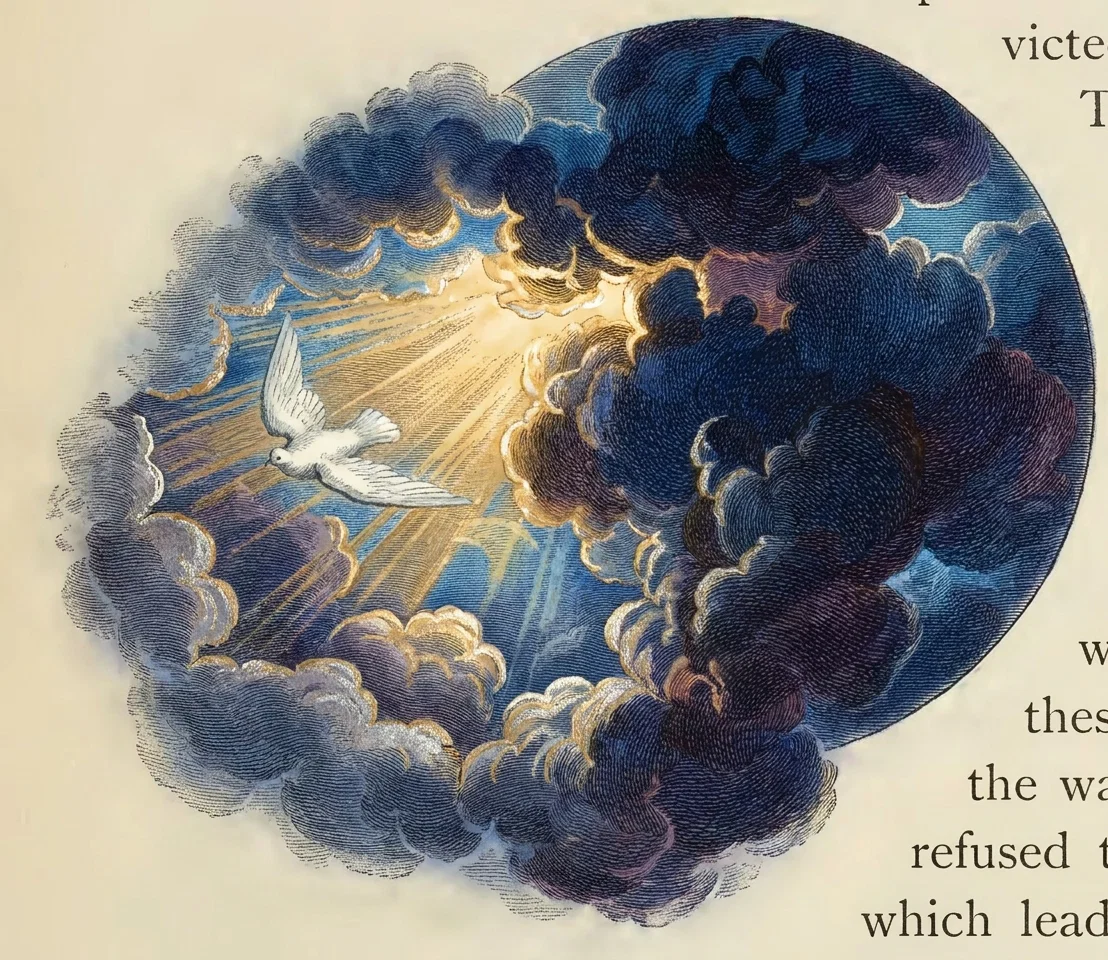 “The heavens were opened, and the Spirit of God like a dove rested upon Him.”
 A woman stands in a leafy vineyard or garden, bending slightly as she gathers grapes or foliage into a large woven basket held at her side. She wears a long dress with a light blouse and dark sash or bodice, and her head is turned toward the plants. Dense vines and branches fill the background and form a natural canopy, while a rustic wooden fence or trellis runs horizontally across the lower middle of the scene. The composition is enclosed by a simple rectangular border, with no visible lettering or other text.
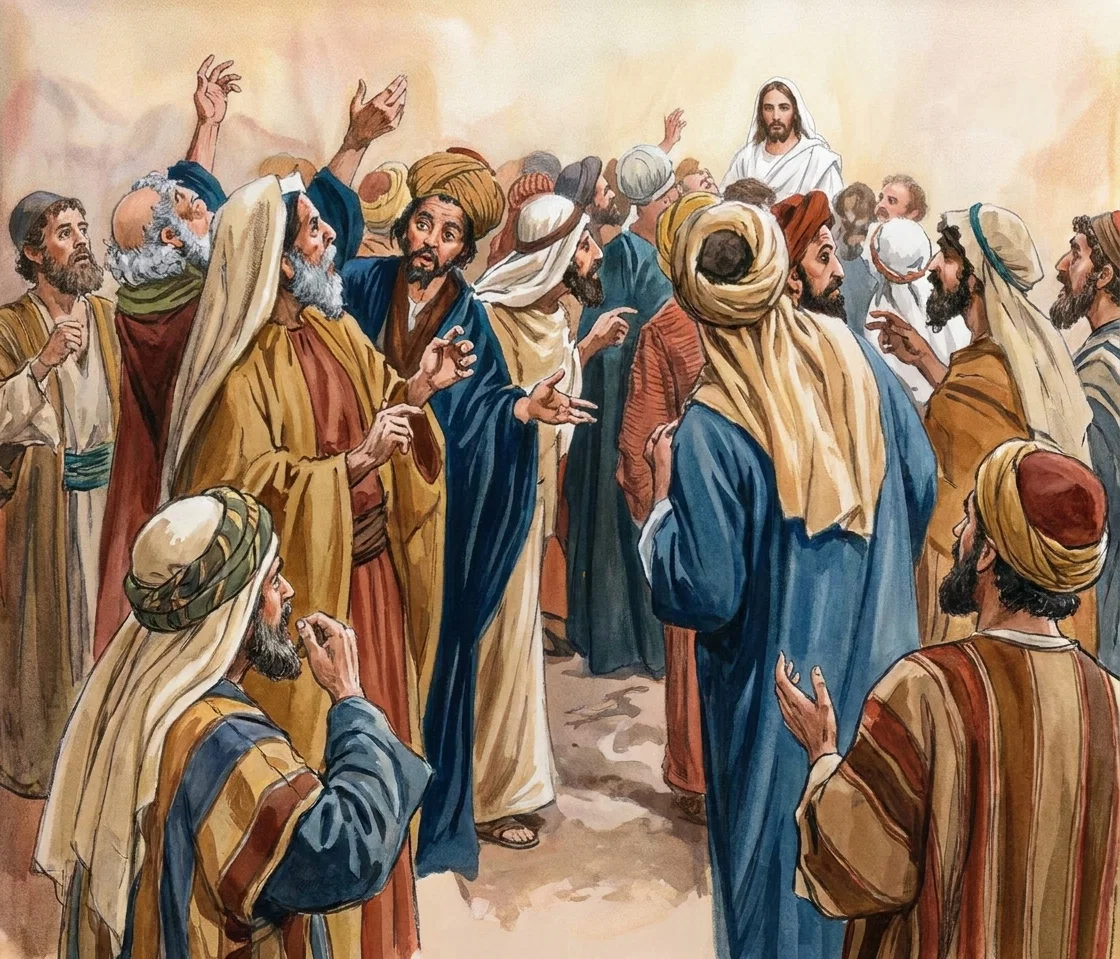 “They saw in the husbandmen, a picture of themselves, and they involuntarily exclaimed, ‘God forbid.’”
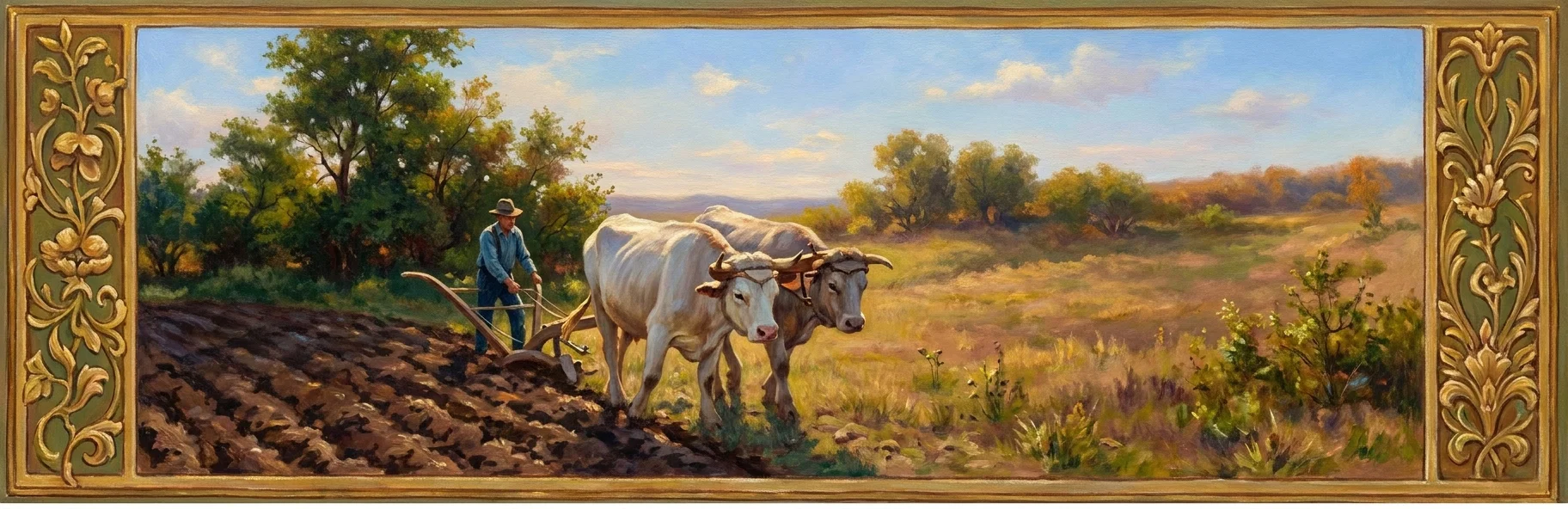 A pastoral agricultural scene shows two oxen standing side by side in the center, apparently yoked together and attached to a plow or farming implement. The animals face right across an open, lightly textured field, while dark trees and dense vegetation rise along the left edge. Furrows or rough soil appear in the foreground beneath them, and a low, hazy horizon extends across the background. No clearly legible text or lettering is visible within the scene.
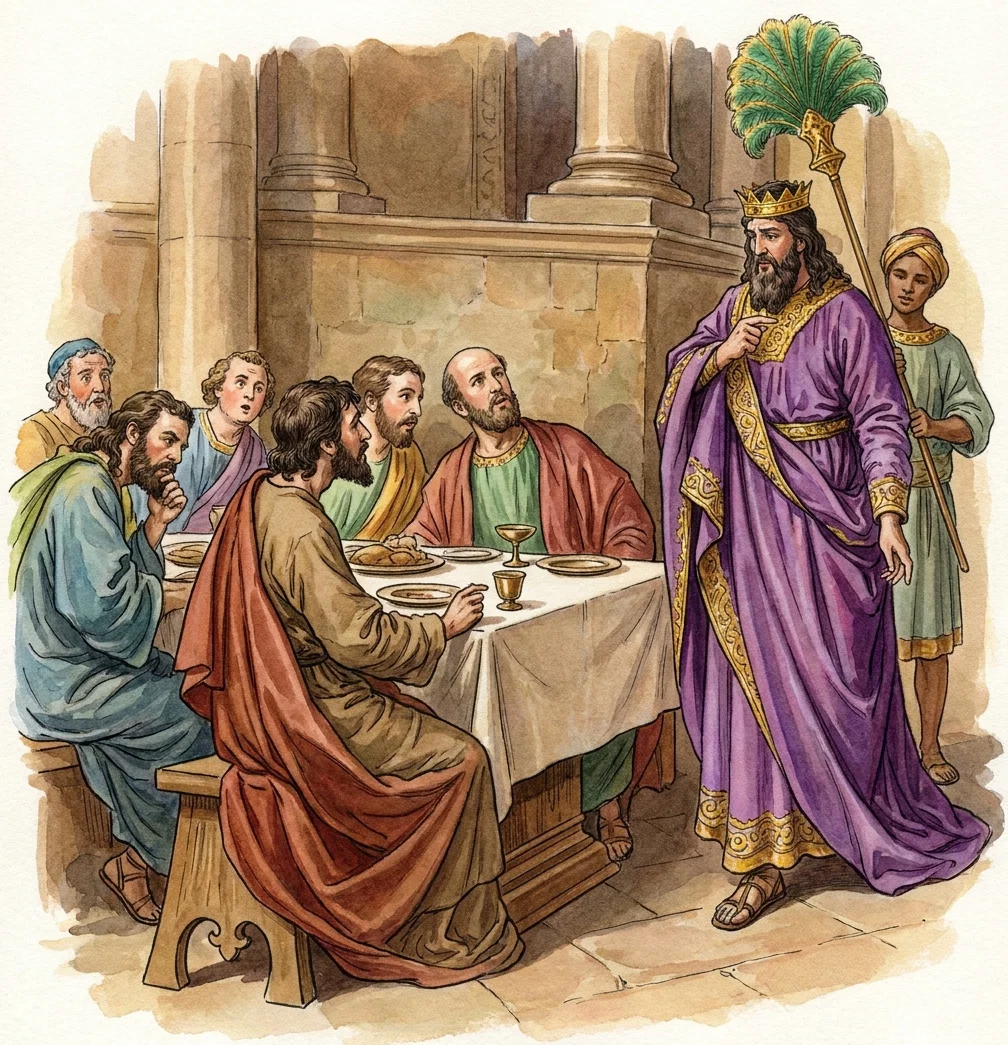 “...And he saith unto him, Friend, how camest thou in hither, not having a wedding garment.”
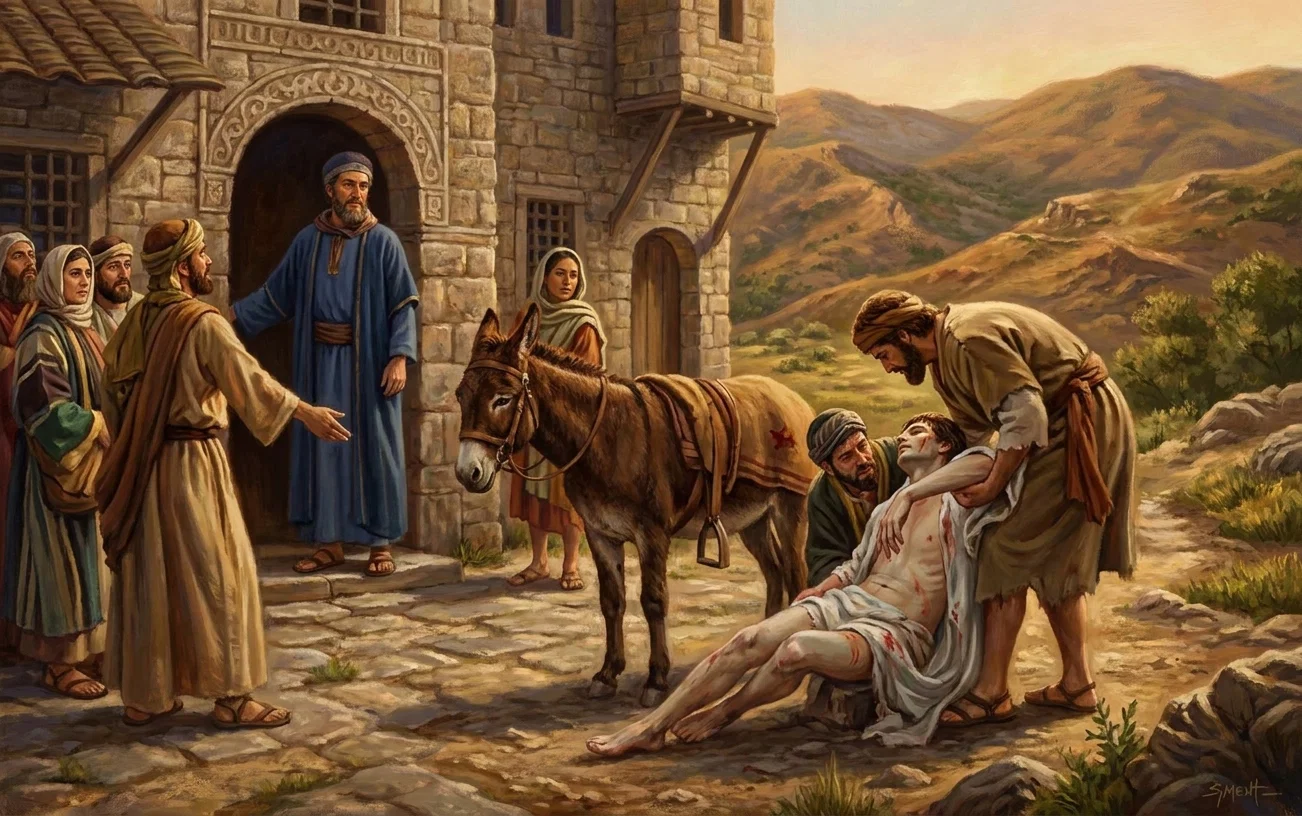 A SERVICE OF 1907
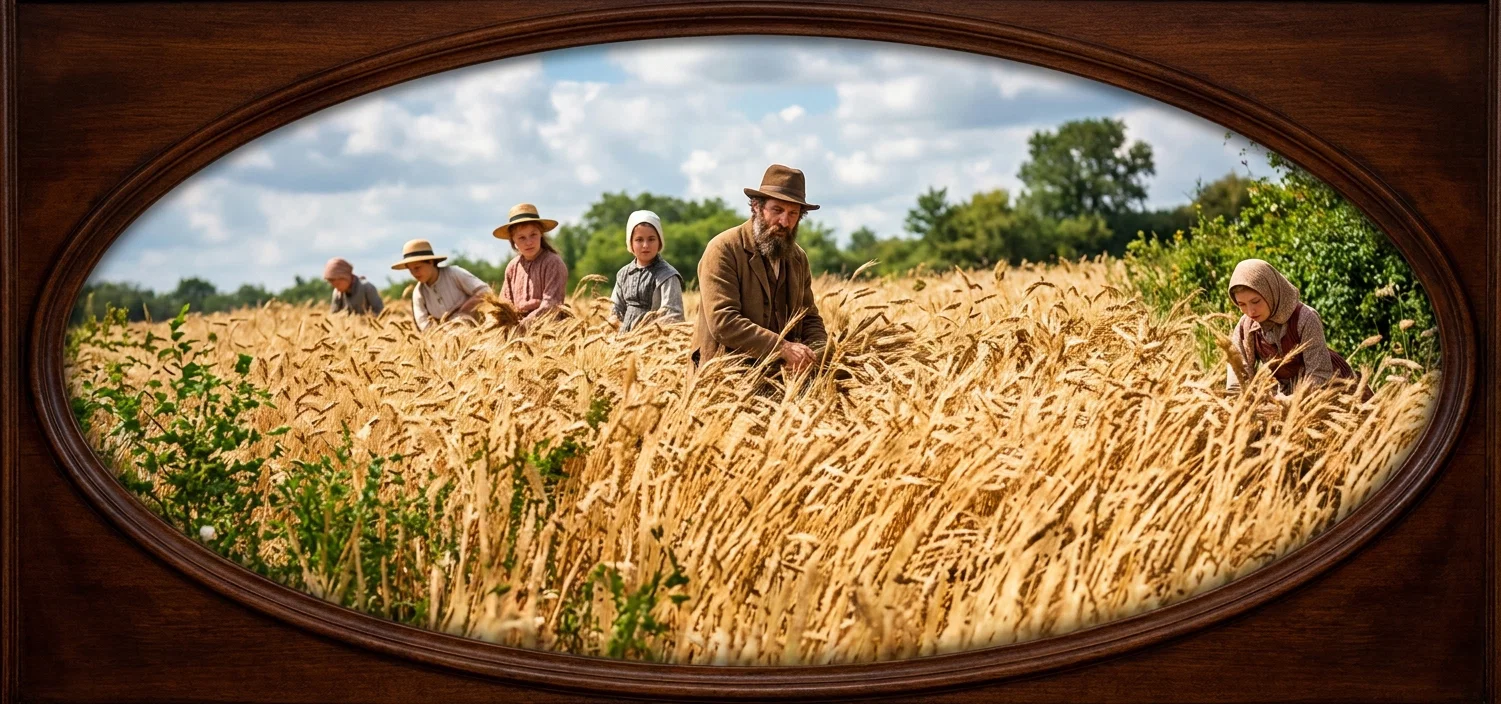 An oval-framed rural scene shows several people scattered through a tall field of grain or grasses. In the middle distance, a small group of figures—some wearing broad-brimmed hats and one appearing to carry or hold a bundle—stands amid the vegetation, while another person bends or works at the right. Dense stalks and leafy plants fill the foreground, with a low, hazy landscape and dark cloudlike forms stretching across the background. The composition emphasizes communal labor in an open countryside setting.
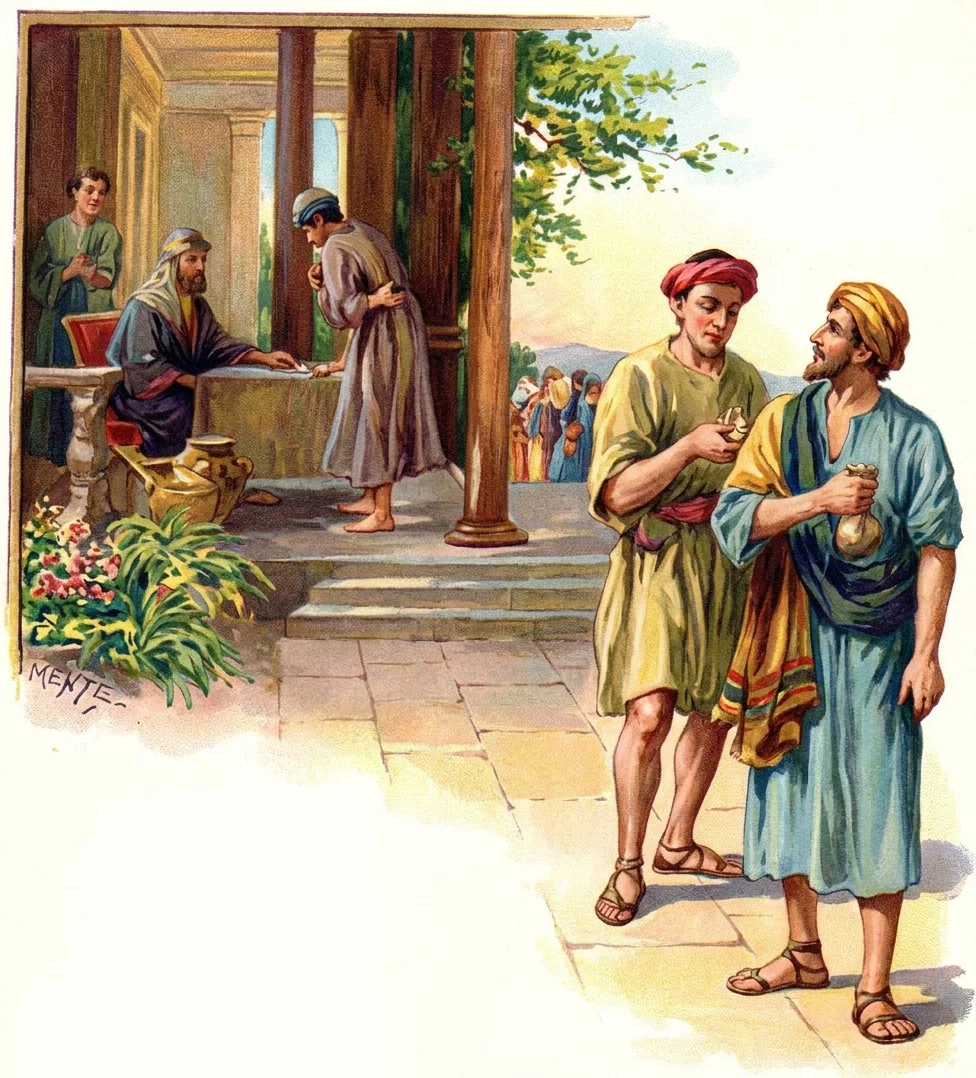 “A man traveling into a far country . . . called his own servants, and delivered unto them his goods.”
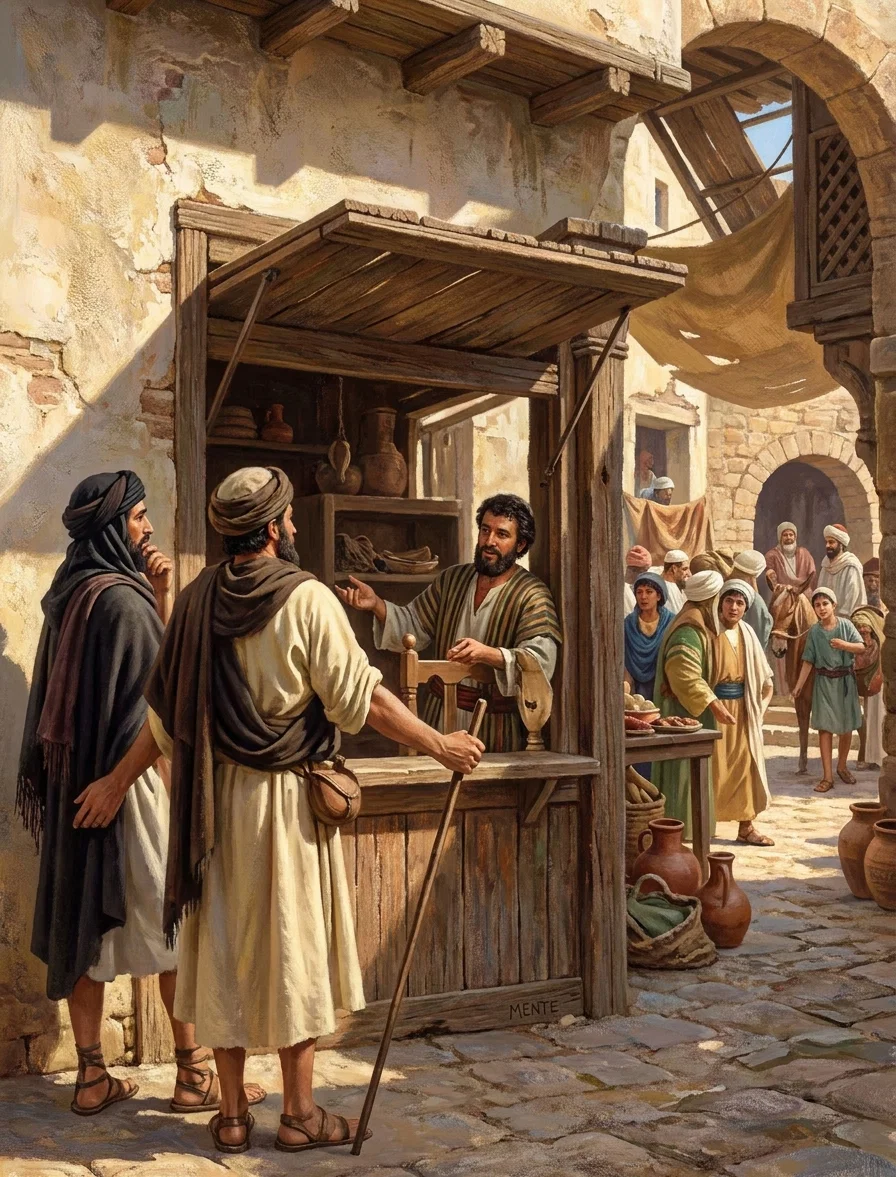 “He that received the five talents went away and traded with the same, and made them other five talents.”
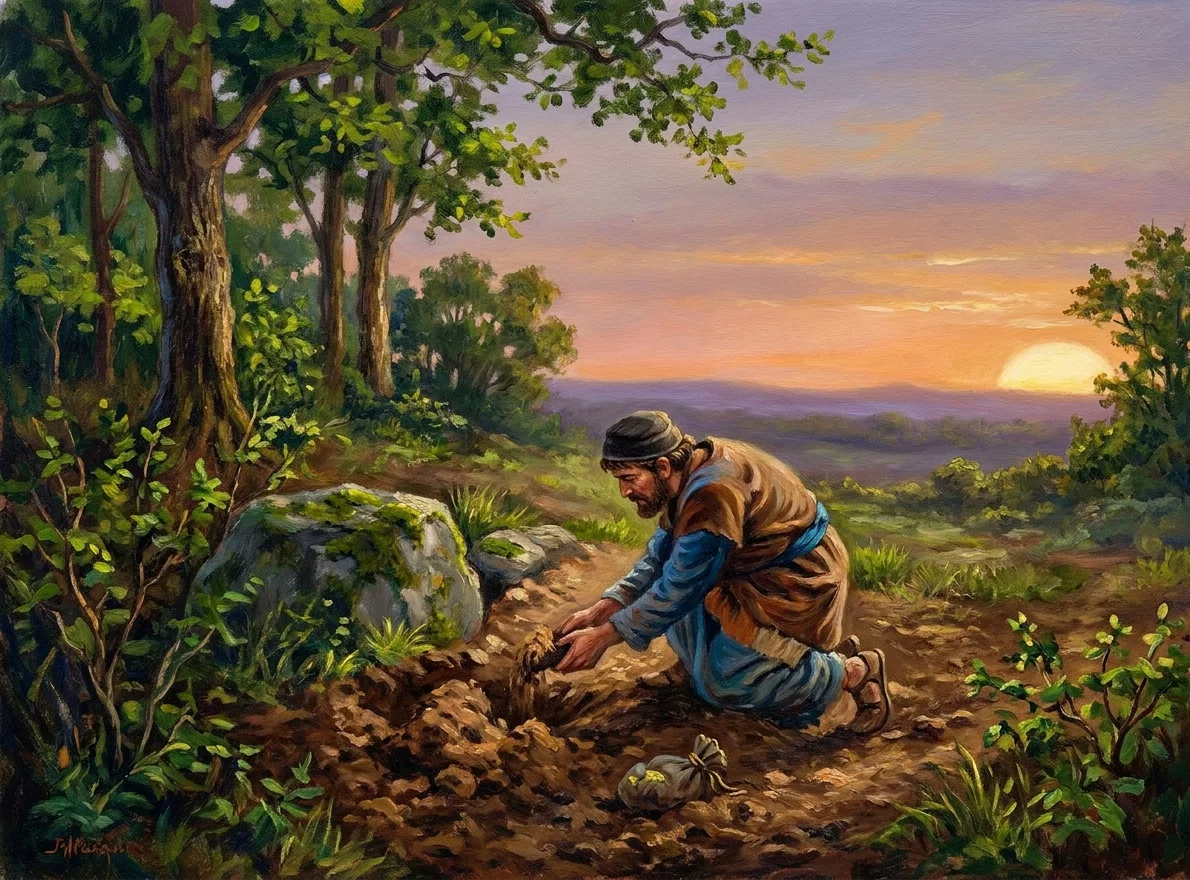 “The man who received the one talent ‘went and digged in the earth, and hid his lord’s money.’”
 A panoramic rural landscape shows a steep, cultivated hillside covered with orderly rows of vines or crops descending toward the foreground. In the central panel, a solitary farmer stands among the furrows, appearing to work the ground with a long-handled tool, while a broad wooded or scrub-covered ridge rises behind him beneath a pale sky. Narrow side panels extend the scene, showing additional sloping farmland and vegetation, including a prominent bare, twisting tree trunk and branches at left. No readable lettering or signs are visible within the image.
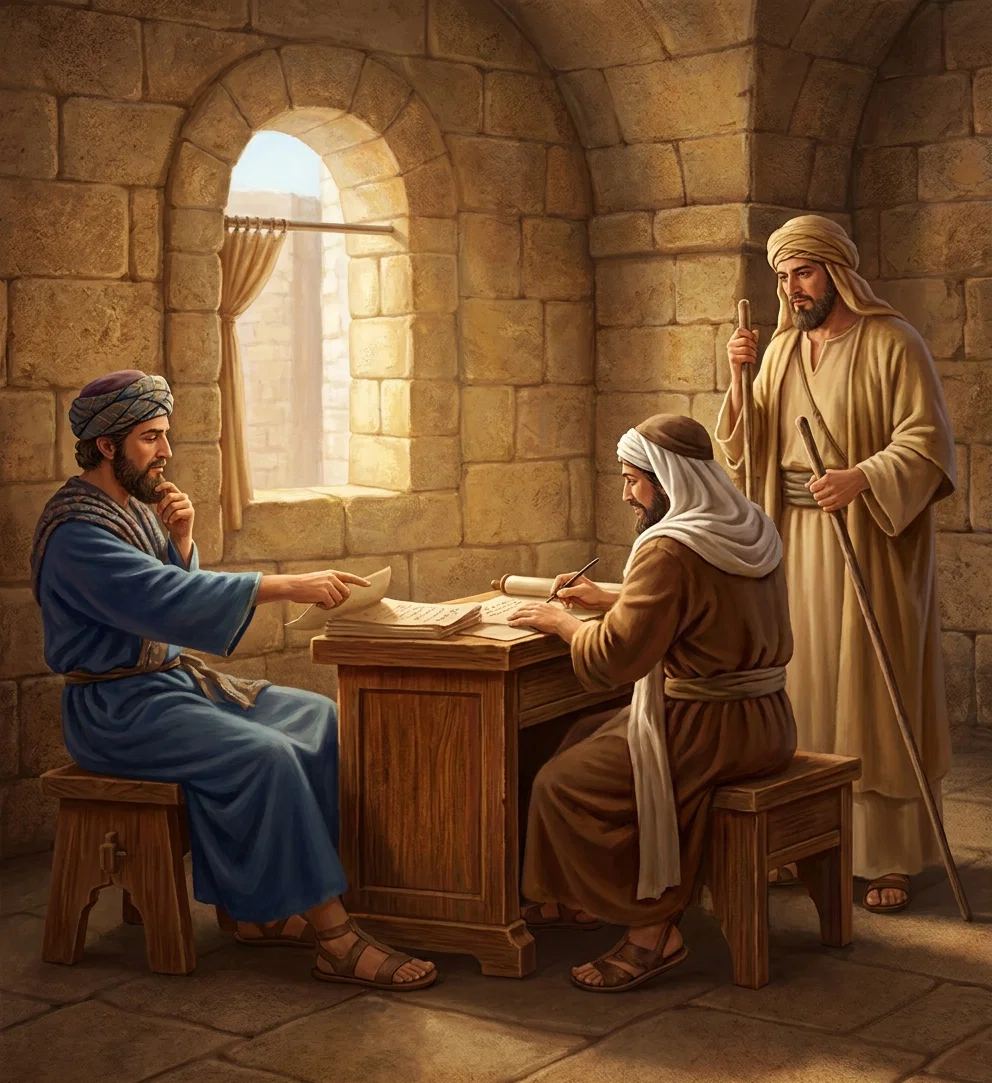 “He said unto him, Take thy bill, and sit down quickly, and write fifty.”
 A woman stands outdoors beneath dense, overhanging foliage, bending slightly as she gathers or tends plants. She wears a dark bodice or jacket over a light blouse, with a long striped skirt, and holds a large woven basket or bundle in front of her. A low wooden fence or rail runs across the lower middle of the scene, partly obscured by leaves and branches. The composition is framed by a simple rectangular border, with abundant vegetation filling the background and no visible lettering, animals, or other people.
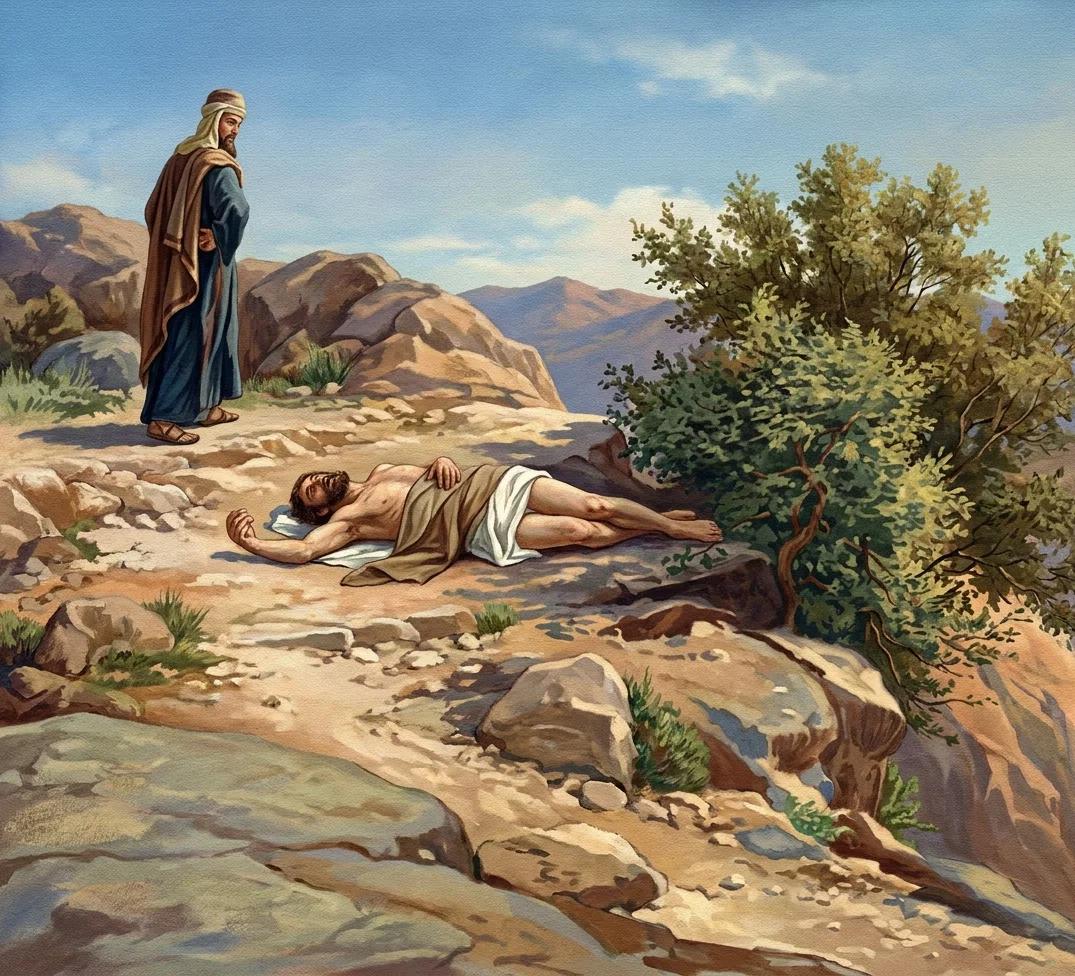 “A priest came that way,” and “passed by on the other side.”
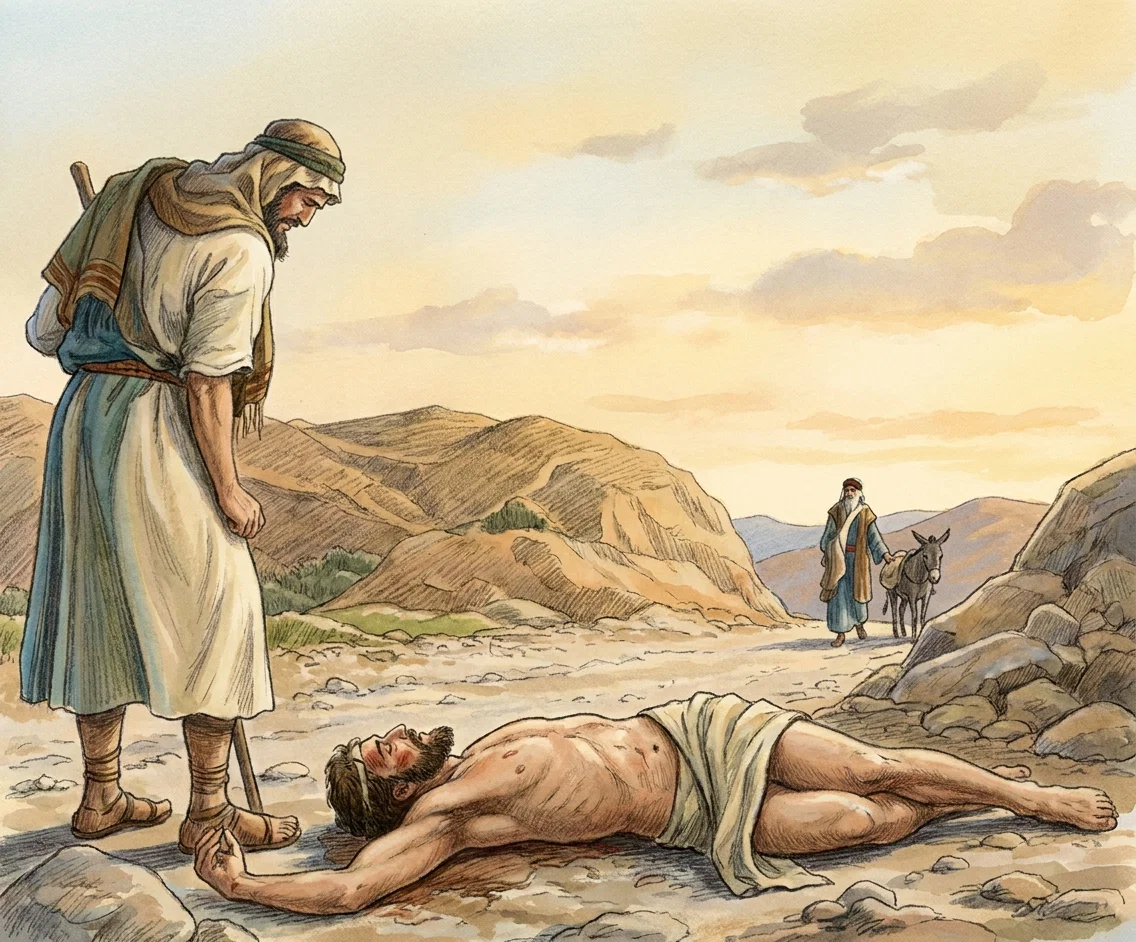 “Then a Levite appeared. . . . He stooped and looked at the sufferer.”
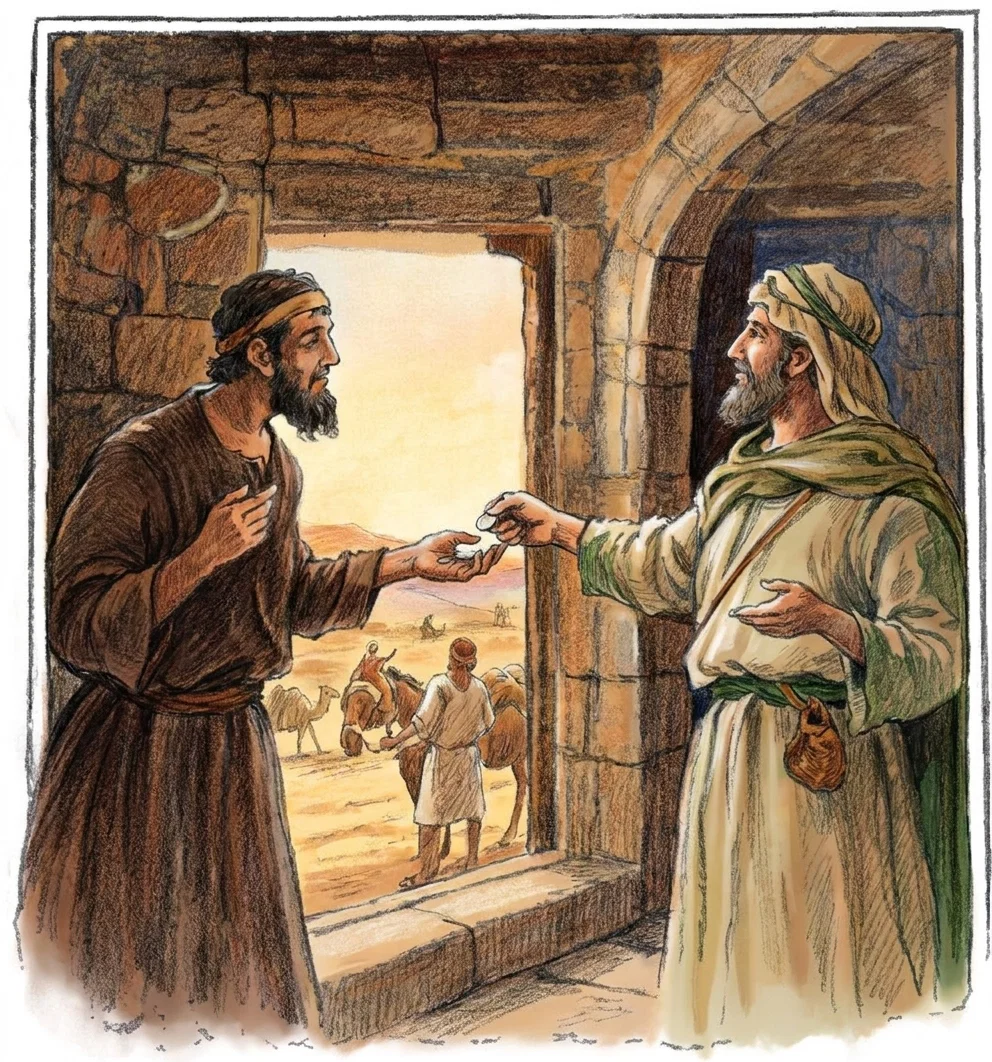 “He took out two pence, and gave them to the host, and said unto him, Take care of him.”
 A solitary farm laborer stands in the center of a rural field, dressed in dark work clothes and a brimmed hat, leaning forward as he holds a long-handled hoe or rake against the soil. Behind him is a rustic vertical-post fence stretching across the scene, with trees and dense vegetation framing both sides and a lightly wooded landscape beyond. The image is arranged in three adjoining panels: the central panel presents the full figure at work, while the narrower side panels show close views of foliage, crops, fence posts, and tree trunks. No lettering or other text appears within the depicted scene.
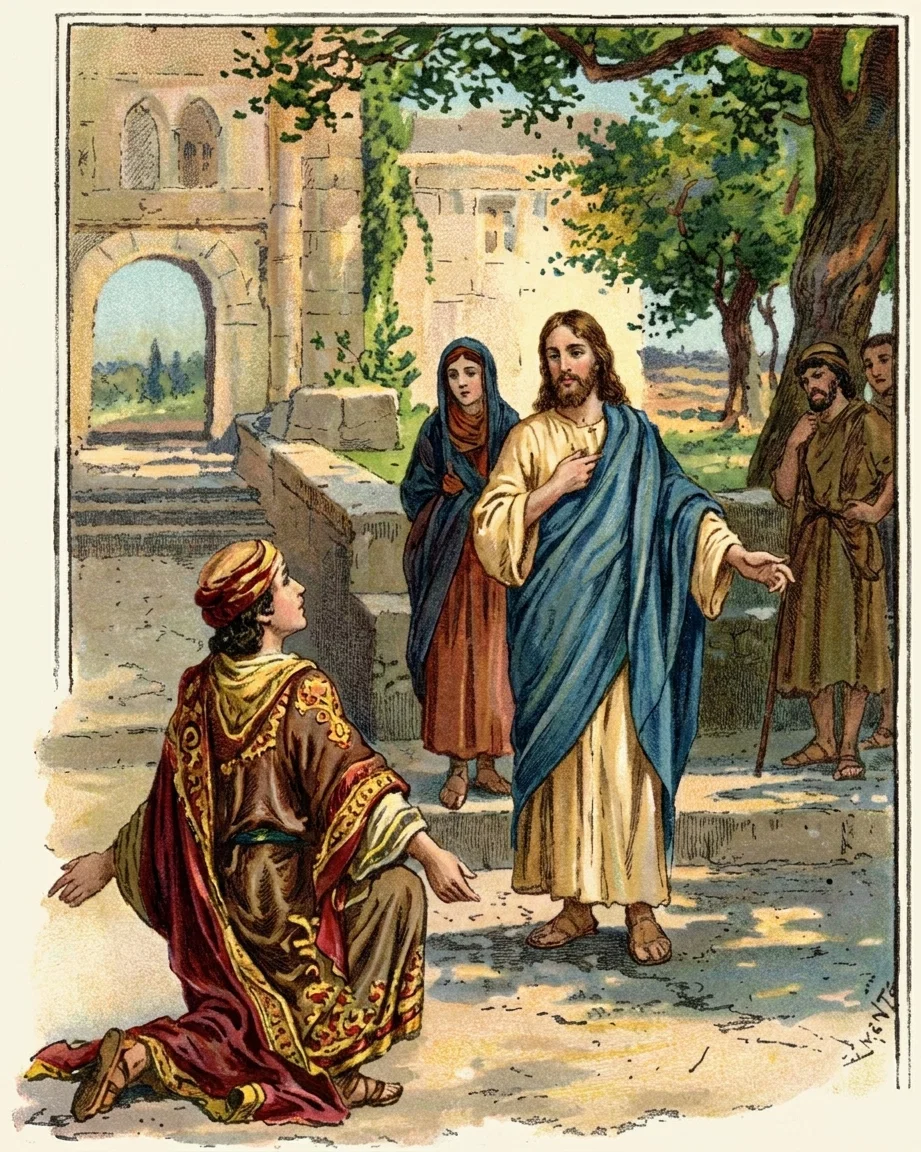 “A young ruler came, ... and kneeling, reverently saluted Him.” ... gave him ... make manifest
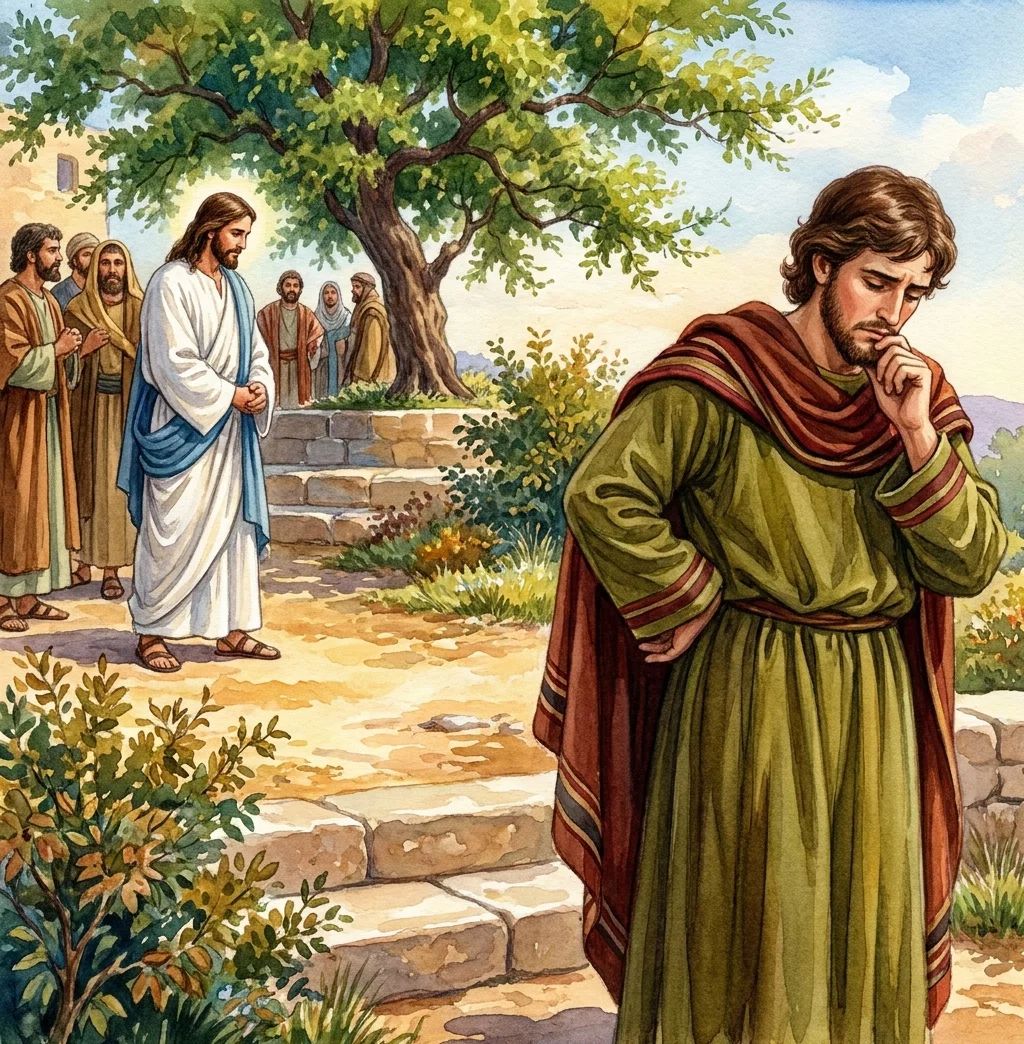 “He went away sorrowful, for he had great possessions.”
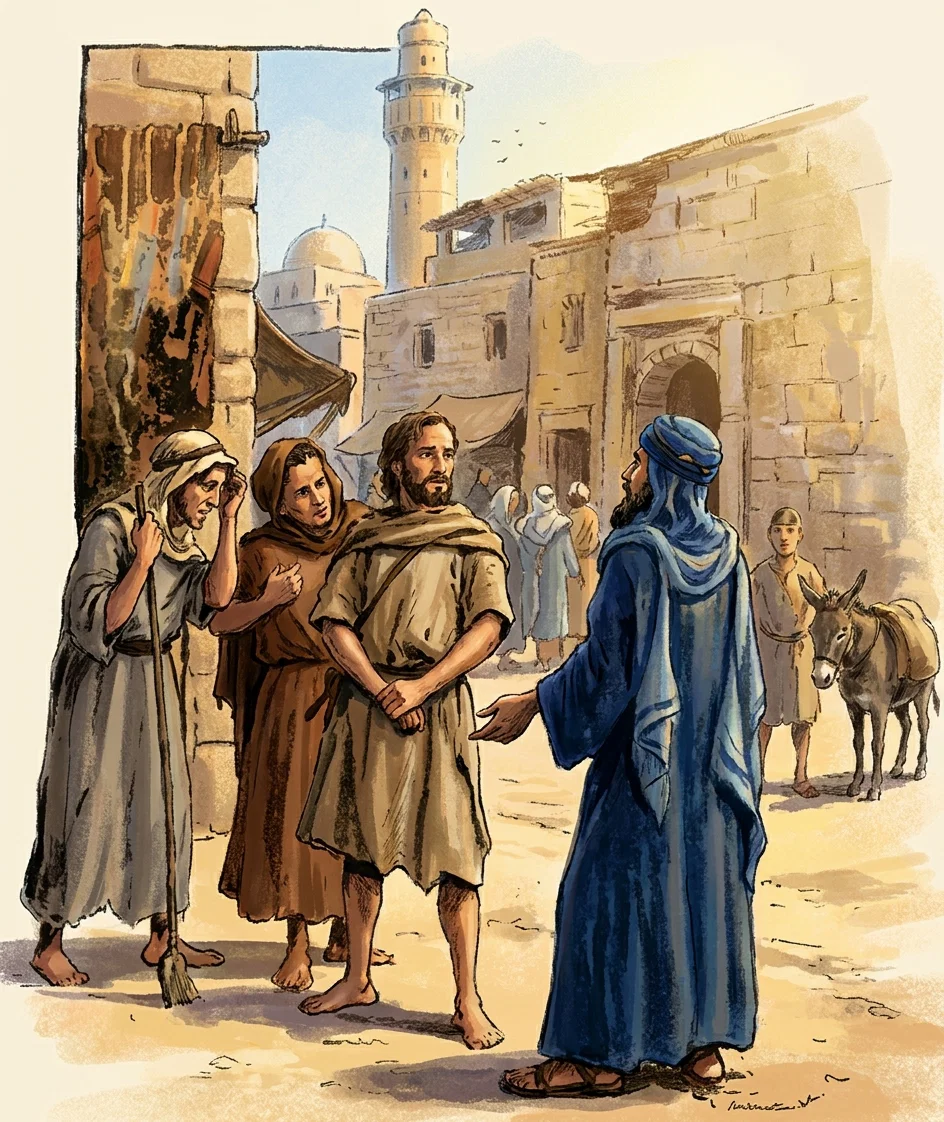 “The kingdom of heaven is like unto a man that is an householder, which went out early in the morning to hire laborers.”
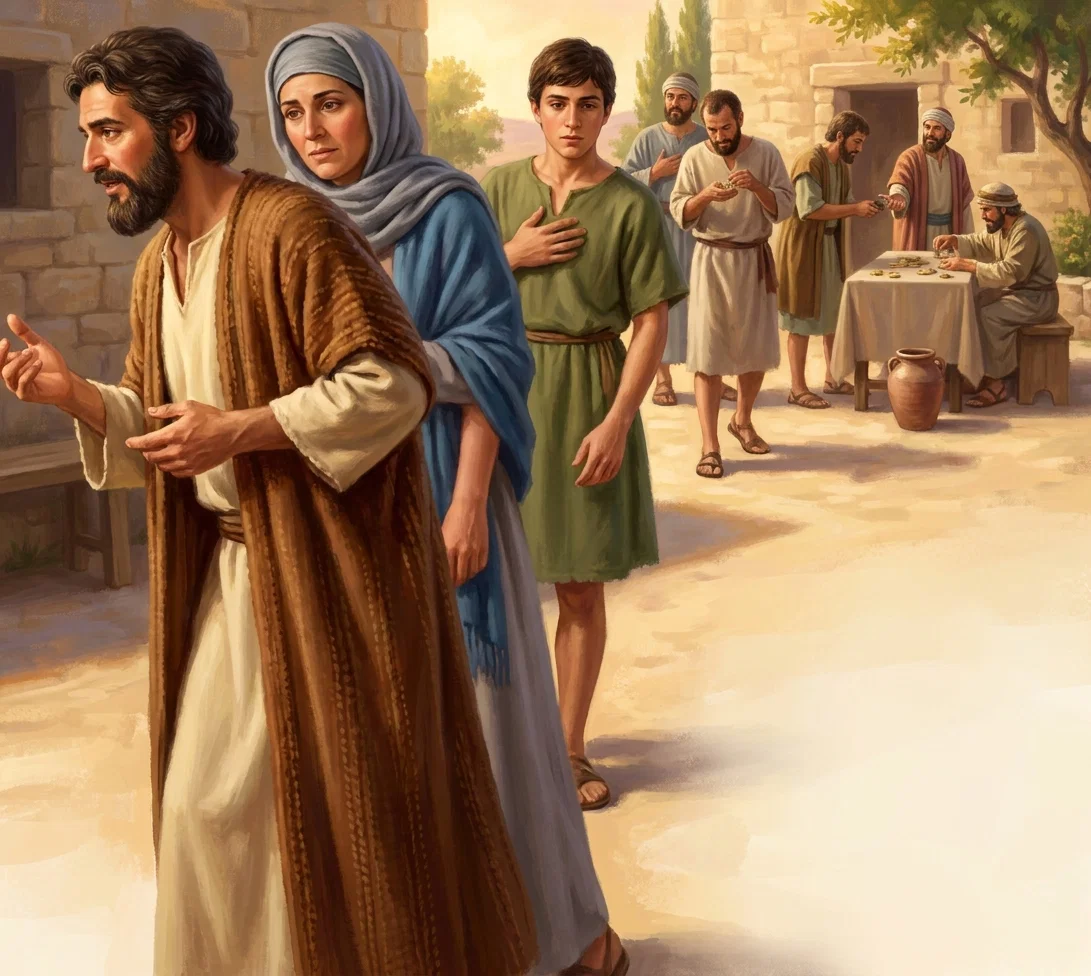 “The householder paid them for a full day’s work.”
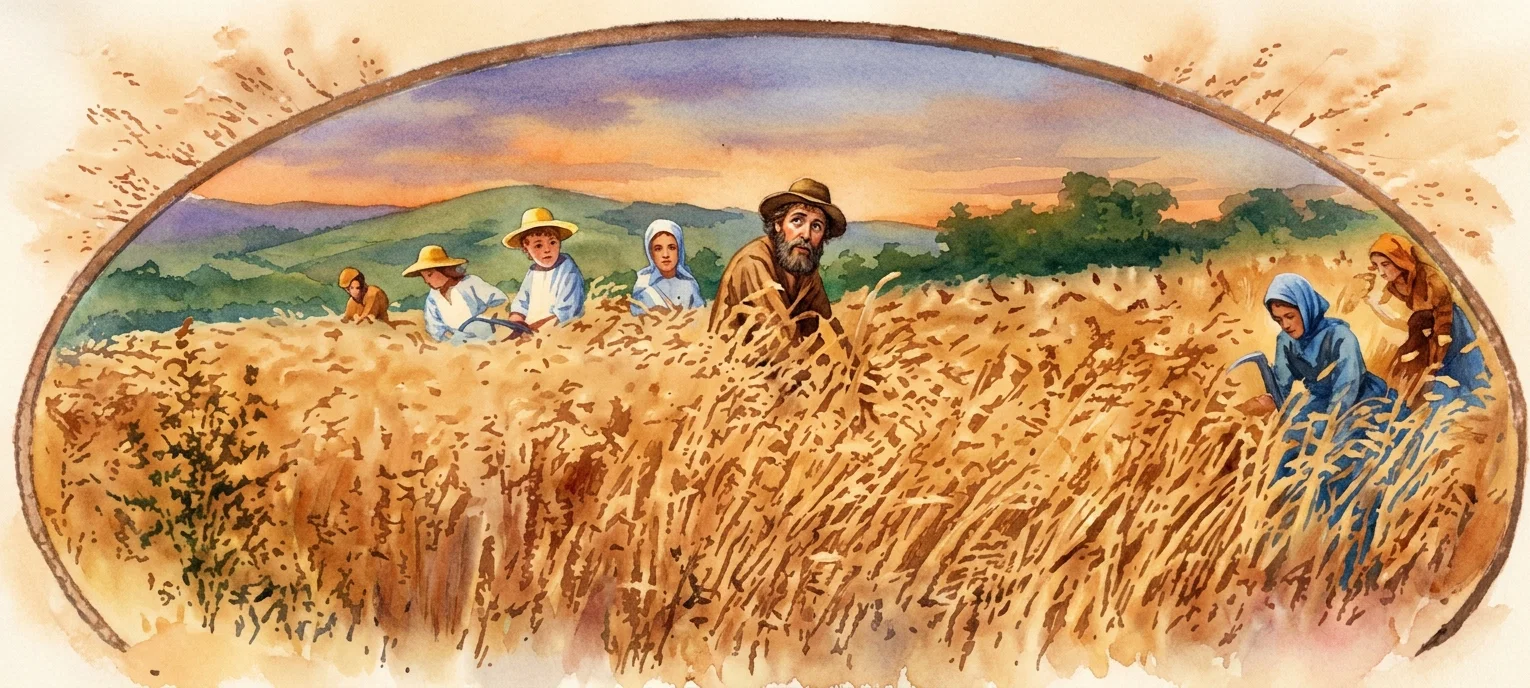 A pastoral scene shows several figures, including Christ and his disciples, seated or standing amid a broad field of tall grasses on the Mount of Olives. The composition is framed by a large oval arch, with the figures scattered across the middle distance and low hills or dark vegetation along the horizon. On the right, two prominent women appear among the grasses, while additional people are visible toward the center and left. The subdued landscape and evening atmosphere suggest the setting associated with awaiting the bridegroom.
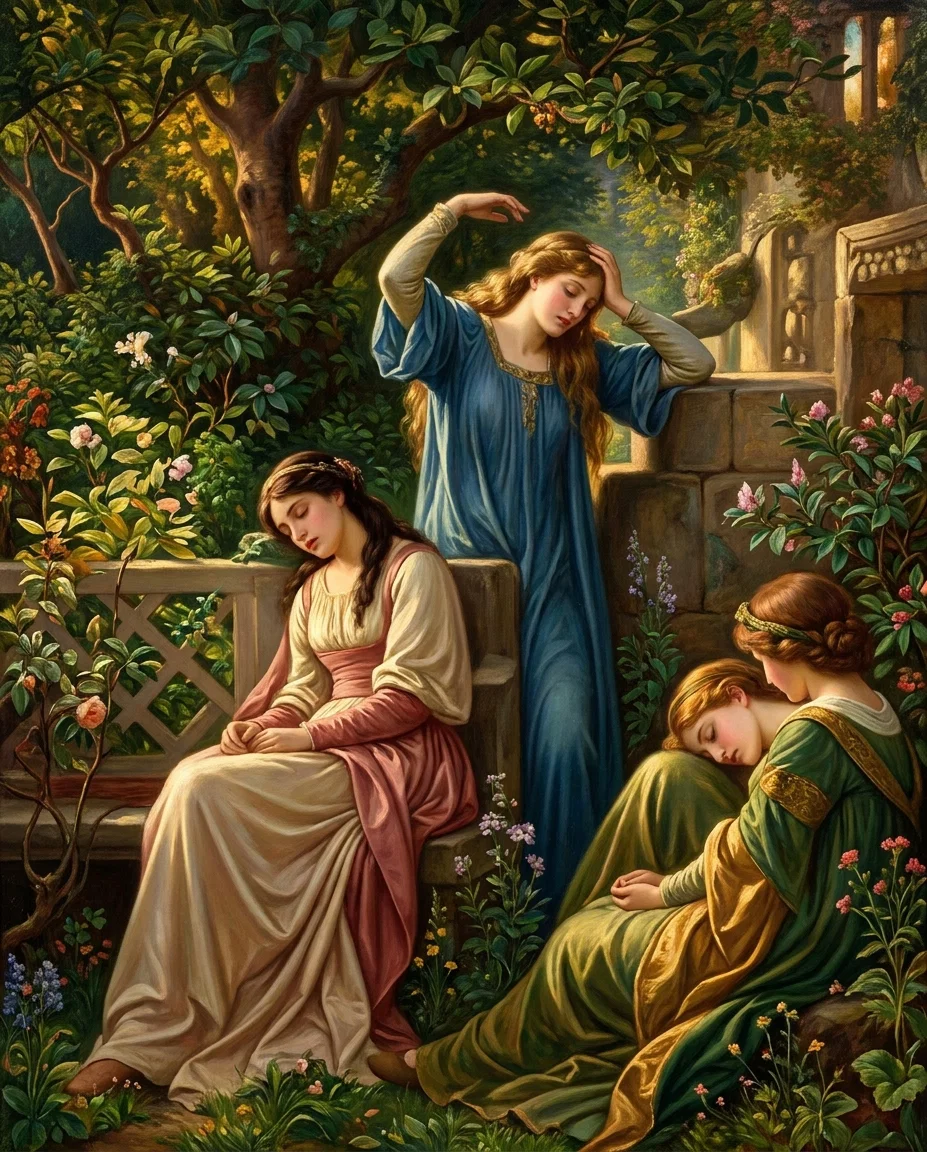 “The watchers become weary, and fall asleep.”
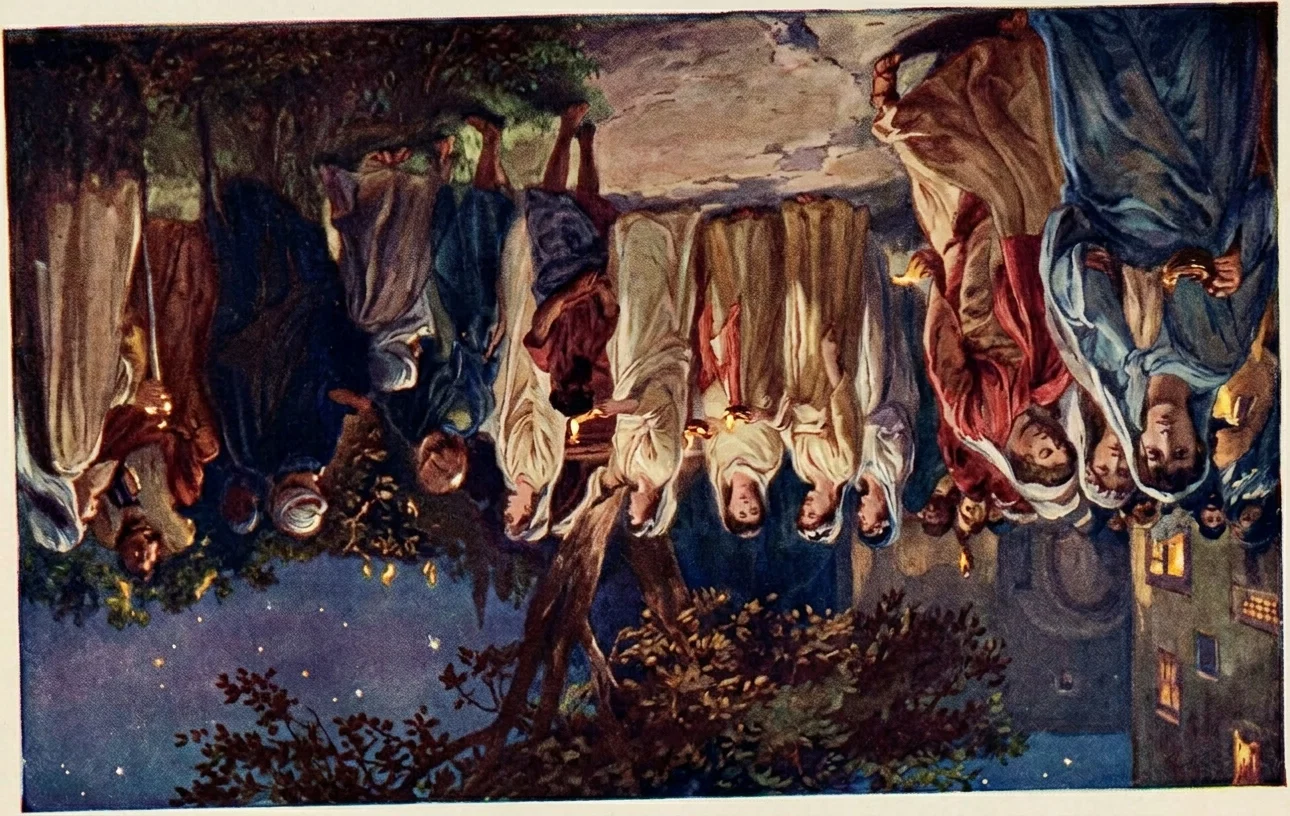 *BEHOLD, THE BRIDEGROOM COMETH.*
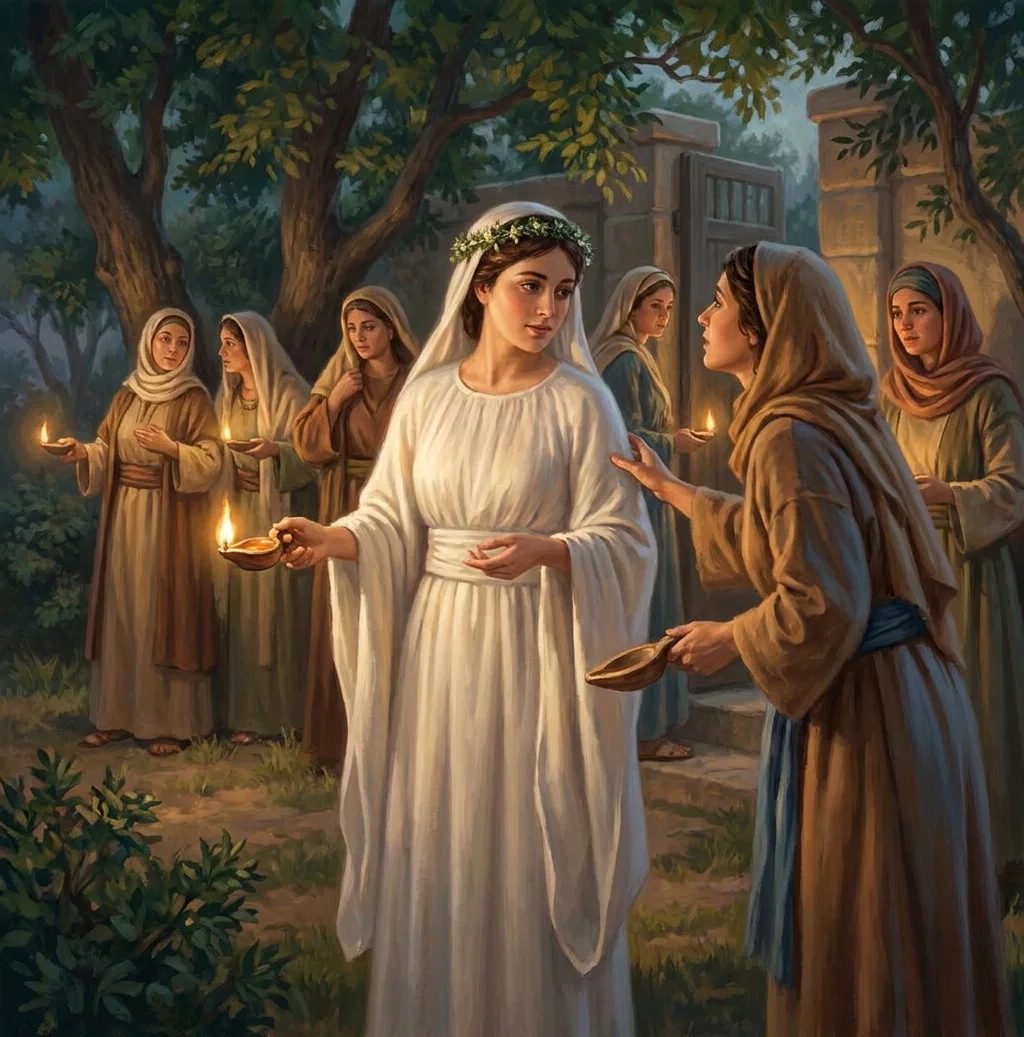 “Give us of your oil: for our lamps are going out.”
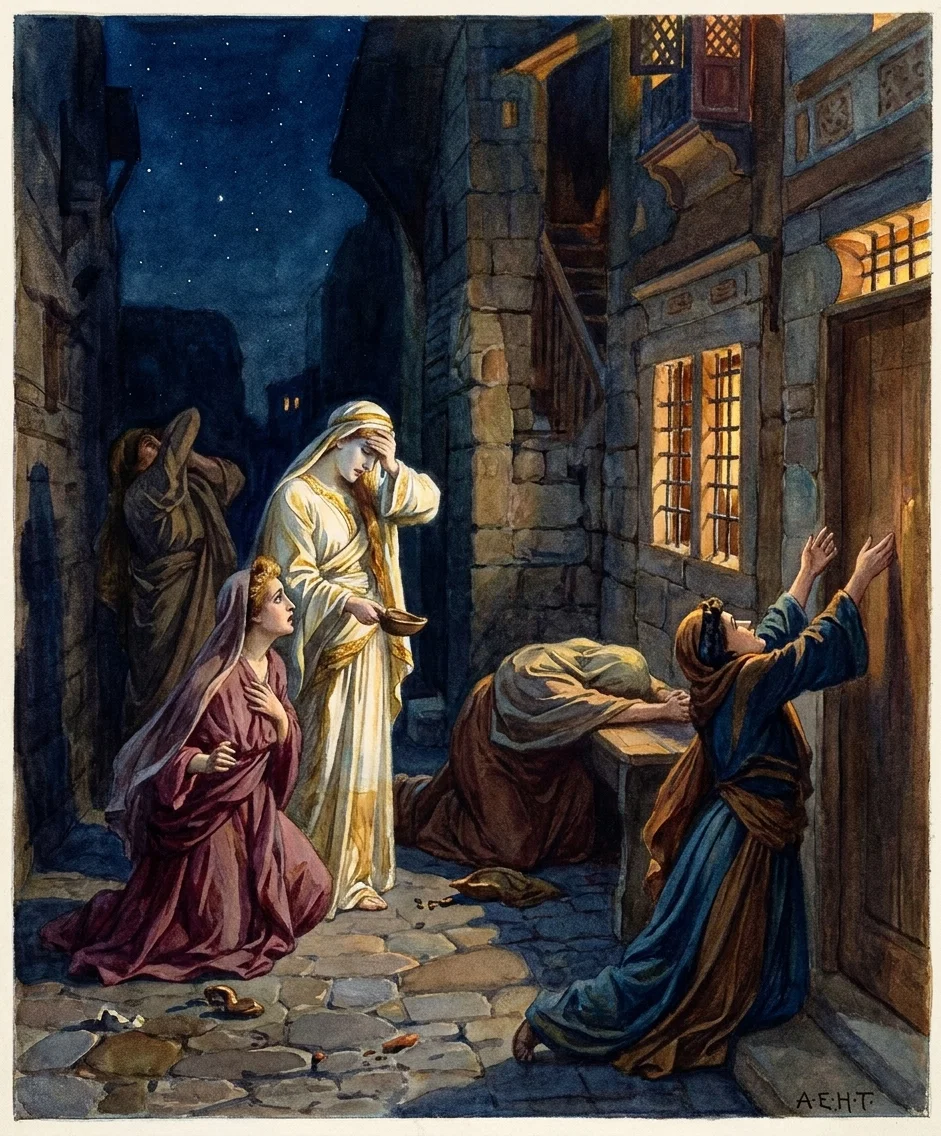 “They were left standing without, in the empty street, in the blackness of the night.”
 The Marriage Feast