“He also that received seed among the thorns is he that heareth the word; and the care of this world, and the deceitfulness of riches, choke the word, and he becometh unfruitful.”
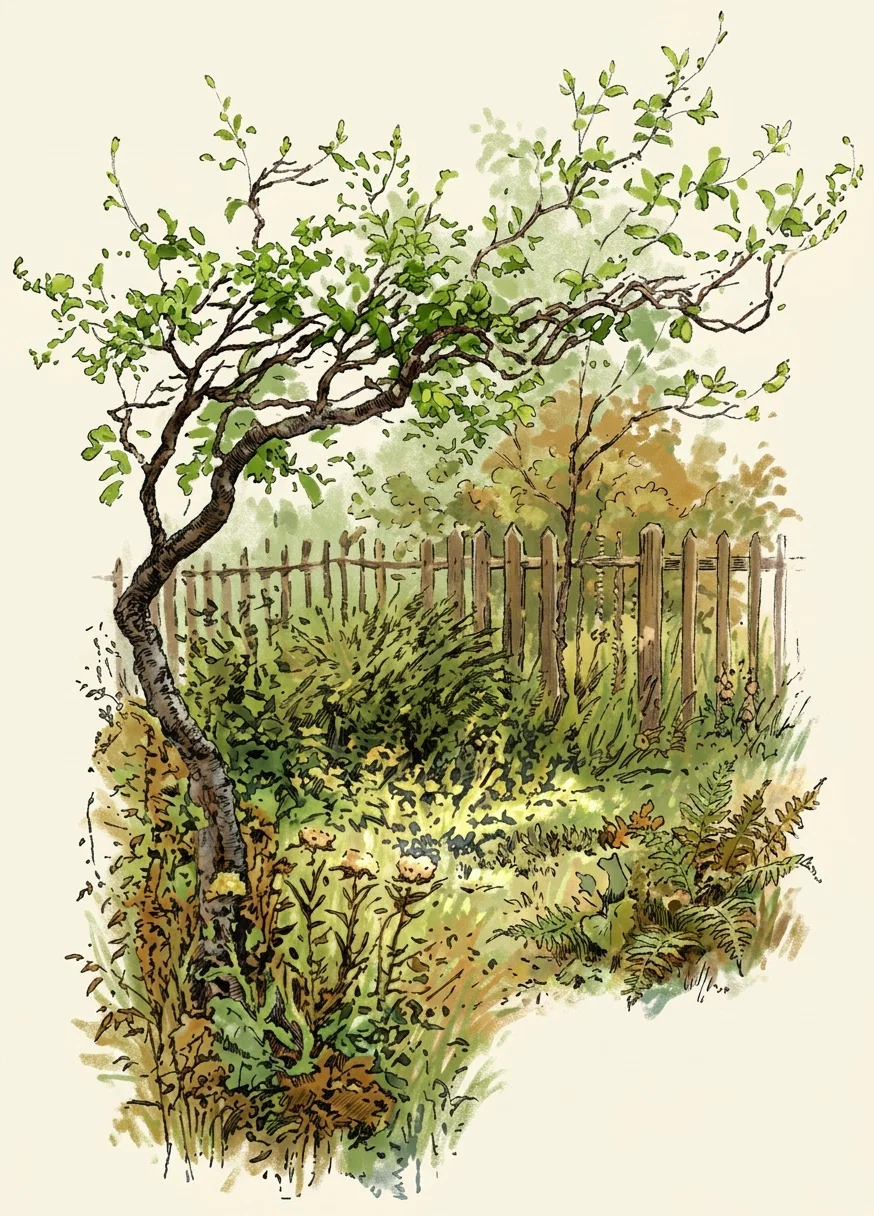
The gospel seed often falls among thorns and noxious weeds; and if there is not a moral transformation in the human heart, if old habits and practises and the former life of sin are not left behind, if the attributes of Satan are not expelled from the soul, the wheat crop will be choked. The thorns will come to be the crop, and will kill out the wheat.
Grace can thrive only in the heart that is being constantly prepared for the precious seeds of truth. The thorns of sin will grow in any soil; they need no cultivation; but grace must be carefully cultivated. The briers and thorns are always ready to spring up, and the work of purification must advance continually. If the heart is not kept under the control of God, if the Holy Spirit does not work unceasingly to refine and ennoble the character, the old habits will reveal themselves in the life. Men may51profess to believe the gospel; but unless they are sanctified by the gospel their profession is of no avail. If they do not gain the victory over sin, then sin is gaining the victory over them. The thorns that have been cut off but not uprooted grow apace, until the soul is overspread with them.
Christ specified the things that are dangerous to the soul. As recorded by Mark He mentions the cares of this world, the deceitfulness of riches, and the lusts of other things. Luke specifies the cares, riches, and pleasures of this life. These are what choke the word, the growing spiritual seed. The soul ceases to draw nourishment from Christ, and spirituality dies out of the heart.
“The cares of this world.” No class is free from the temptation to worldly care. To the poor, toil and deprivation and the fear of want bring perplexities and burdens. To the rich come fear of loss and a multitude of anxious cares. Many of Christ’s followers forget the lesson He has bidden us learn from the flowers of the field. They do not trust to His constant care. Christ can not carry their burden, because they do not cast it upon Him. Therefore the cares of life, which should drive them to the Saviour for help and comfort, separate them from Him.
Many who might be fruitful in God’s service become bent on acquiring wealth. Their whole energy is absorbed in business enterprises, and they feel obliged to neglect things of a spiritual nature. Thus they separate themselves from God. We are enjoined in the Scriptures to be “not slothful in business.” We are to labor that we may impart to him who needs. Christians must work, they must engage in business, and they can do this without committing sin. But many become so absorbed in business that they have no time for prayer, no time for the study of the Bible, no time to seek and serve God. At times the longings of the52soul go out for holiness and heaven; but there is no time to turn aside from the din of the world to listen to the majestic and authoritative utterances of the Spirit of God. The things of eternity are made subordinate, the things of the world supreme. It is impossible for the seed of the word to bring forth fruit; for the life of the soul is given to nourish the thorns of worldliness.
And many who are working with a very different purpose, fall into a like error. They are working for others’ good; their duties are pressing, their responsibilities are many, and they allow their labor to crowd out devotion. Communion with God through prayer and a study of His word is neglected. They forget that Christ has said, “Without Me ye can do nothing.” They walk apart from Christ, their life is not pervaded by His grace, and the characteristics of self are revealed. Their service is marred by desire for supremacy, and the harsh, unlovely traits of the unsubdued heart. Here is one of the chief secrets of failure in Christian work. This is why its results are often so meager.
“The deceitfulness of riches.” The love of riches has an infatuating, deceptive power. Too often those who possess worldly treasure forget that it is God who gives them power to get wealth. They say, “My power and the might of mine hand hath gotten me this wealth.” Their riches, instead of awakening gratitude to God, lead to the exaltation of self. They lose the sense of their dependence upon God and their obligation to their fellow-men. Instead of regarding wealth as a talent to be employed for the glory of God and the uplifting of humanity, they look upon it as a means of serving themselves. Instead of developing in man the attributes of God, riches thus used are developing in him the attributes of Satan. The seed of the word is choked with thorns.
“And pleasures of this life.” There is danger in amusement that is sought merely for self-gratification. All habits of indulgence that weaken the physical powers, that becloud the mind, or that benumb the spiritual perceptions, are “fleshly lusts, which war against the soul.”
“And the lusts of other things.” These are not necessarily things sinful in themselves, but something that is made first instead of the kingdom of God. Whatever attracts the mind from God, whatever draws the affections away from Christ, is an enemy to the soul.
When the mind is youthful and vigorous, and susceptible of rapid development, there is great temptation to be ambitious for self, to serve self. If worldly schemes are successful, there is an inclination to continue in a line that deadens conscience, and prevents a correct estimate as to what constitutes real excellence of character. When circumstances favor this development, growth will be seen in a direction prohibited by the word of God.
In this formative period of their children’s life, the responsibility of parents is very great. It should be their study to surround the youth with right influences, influences that will give them correct views of life and its true success. Instead of this, how many parents make it their first object to secure for their children worldly prosperity. All their associations are chosen with reference to this object. Many parents make their home in some large city, and introduce their children into fashionable society. They surround them with influences that encourage worldliness and pride. In this atmosphere the mind and soul are dwarfed. The high and noble aims of life are lost sight of. The privilege of being sons of God, heirs of eternity, is bartered for worldly gain.
Many parents seek to promote the happiness of their children by gratifying their love of amusement. They allow them to engage in sports, and to attend parties of pleasure, and provide them with money to use freely in display and self-gratification. The more the desire for pleasure is indulged, the stronger it becomes. The interest of these youth is more and more absorbed in amusement, until they come to look upon it as the great object of life. They form habits of idleness and self-indulgence that make it almost impossible for them ever to become steadfast Christians.
Even the church, which should be the pillar and ground of the truth, is found encouraging the selfish love of pleasure. When money is to be raised for religious purposes, to what means do many churches resort?—To bazaars, suppers, fancy fairs, even to lotteries, and like devices. Often the place set apart for God’s worship is desecrated by feasting and drinking, buying, selling, and merry-making. Respect for the house of God and reverence for His worship are lessened in the minds of the youth. The barriers of self-restraint are weakened. Selfishness, appetite, the love of display, are appealed to, and they strengthen as they are indulged.
The pursuit of pleasure and amusement centers in the cities. Many parents who choose a city home for their children, thinking to give them greater advantages, meet with disappointment, and too late repent their terrible mistake. The cities of to-day are fast becoming like Sodom and Gomorrah. The many holidays encourage idleness. The exciting sports—theater-going, horse-racing, gambling, liquor-drinking, and reveling—stimulate every passion to intense activity. The youth are swept away by the popular current. Those who learn to love amusement for its own sake, open,55the door to a flood of temptations. They give themselves up to social gaiety and thoughtless mirth, and their intercourse with pleasure-lovers has an intoxicating effect upon the mind. They are led on from one form of dissipation to another, until they lose both the desire and the capacity for a life of usefulness. Their religious aspirations are chilled; their spiritual life is darkened. All the nobler faculties of the soul, all that link man with the spiritual world, are debased.
It is true that some may see their folly and repent. God may pardon them. But they have wounded their own souls, and brought upon themselves a life-long peril. The power of discernment, which ought ever to be kept keen and sensitive to distinguish between right and wrong, is in a great measure destroyed. They are not quick to recognize the guiding voice of the Holy Spirit, or to discern the devices of Satan. Too often in time of danger they fall under temptation, and are led away from God. The end of their pleasure-loving life is ruin for this world and for the world to come.
Cares, riches, pleasures, all are used by Satan in playing the game of life for the human soul. The warning is given, “Love not the world, neither the things that are in the world. If any man love the world, the love of the Father is not in him. For all that is in the world, the lust of the flesh, and the lust of the eyes, and the the pride of life, is not of the Father, but is of the world.” He who reads the hearts of men as an open book says, “Take heed to yourselves, lest at any time your hearts be overcharged with surfeiting and drunkenness and cares of this life.” And the apostle Paul by the Holy Spirit writes, “They that will be rich fall into temptation and a snare, and into many foolish and hurtful lusts, which drown men in destruction56and perdition. For the love of money is the root of all evil; which, while some coveted after, they have erred from the faith, and pierced themselves through with many sorrows.”
PREPARATION OF THE SOIL
Throughout the parable of the sower, Christ represents the different results of the sowing as depending upon the soil. In every case the sower and the seed are the same. Thus He teaches that if the word of God fails of accomplishing its work in our hearts and lives, the reason is to be found in ourselves. But the result is not beyond our control. True, we can not change ourselves; but the power of choice is ours, and it rests with us to determine what we will become. The wayside, the stony-ground, the thorny-ground hearers need not remain such. The Spirit of God is ever seeking to break the spell of infatuation that holds men absorbed in worldly things, and to awaken a desire for the imperishable treasure. It is by resisting the Spirit that men become inattentive to or neglectful of God’s word. They are themselves responsible for the hardness of heart that prevents the good seed from taking root, and for the evil growths that check its development.
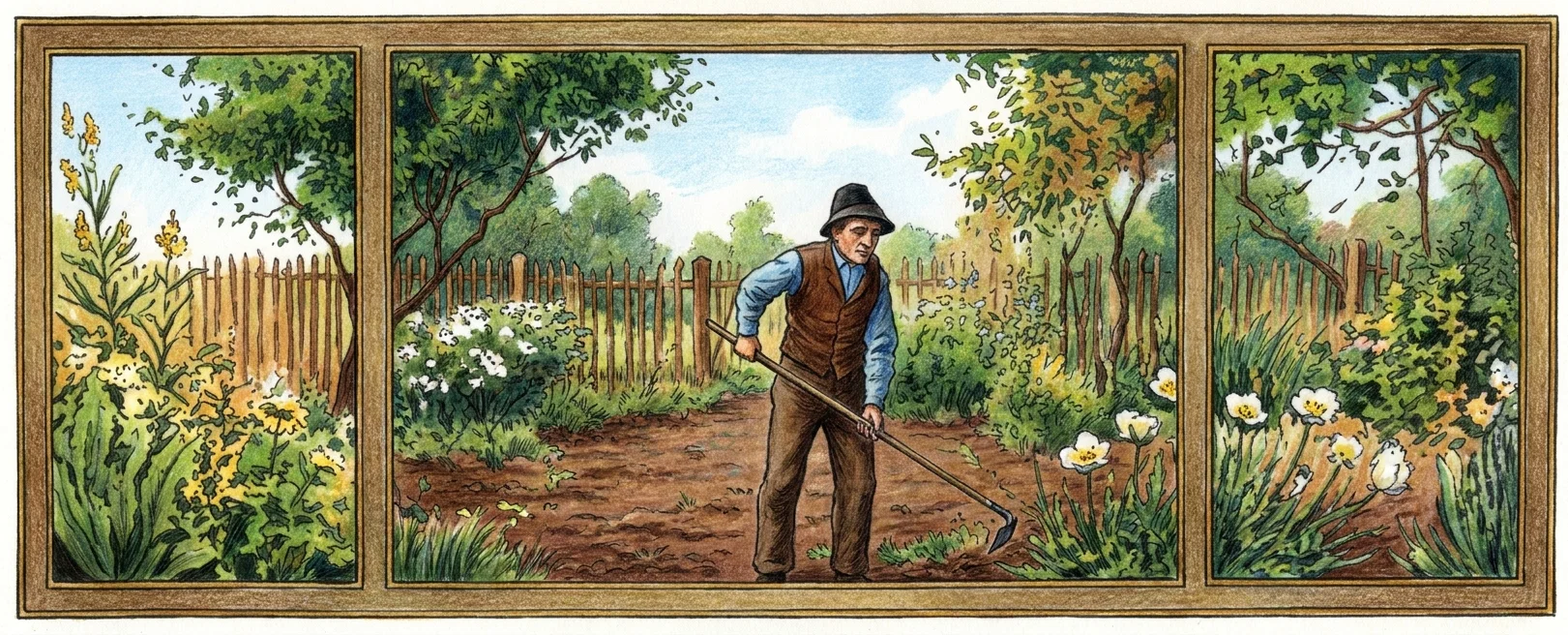
The garden of the heart must be cultivated. The soil must be broken up by deep repentance for sin. Poisonous, Satanic plants must be uprooted. The soil once overgrown by thorns can be reclaimed only by diligent labor. So the evil tendencies of the natural heart can be overcome only by earnest effort in the name and strength of Jesus. The Lord bids us by His prophet, “Break up your fallow ground, and sow not among thorns.” “Sow to yourselves in righteousness; reap in mercy.” This work He desires to accomplish for us, and He asks us to co-operate with Him.
The sowers of the seed have a work to do in preparing hearts to receive the gospel. In the ministry of the word there is too much sermonizing, and too little of real heart-to-heart work. There is need of personal labor for the souls of the lost. In Christ-like sympathy we should come close to men individually, and seek to awaken their interest in the great things of eternal life. Their hearts may be as hard as the beaten highway, and apparently it may be a useless effort to present the Saviour to them; but while logic may fail to move, and argument be powerless to convince, the love of Christ, revealed in personal ministry, may soften the stony heart, so that the seed of truth can take root.
“But other fell into good ground.”
So the sowers have something to do that the seed may not be choked with thorns or perish because of shallowness of soil. At the very outset of58the Christian life every believer should be taught its foundation principles. He should be taught that he is not merely to be saved by Christ’s sacrifice, but that he is to make the life of Christ his life and the character of Christ his character. Let all be taught that they are to bear burdens and to deny natural inclination. Let them learn the blessedness of working for Christ, following Him in self-denial, and enduring hardness as good soldiers. Let them learn to trust His love and to cast on Him their cares. Let them taste the joy of winning souls for Him. In their love and interest for the lost, they will lose sight of self. The pleasures of the world will lose their power to attract and its burdens to dishearten. The plowshare of truth will do its work. It will break up the fallow ground. It will not merely cut off the tops of the thorns, but will take them out by the roots.
IN GOOD GROUND
The sower is not always to meet with disappointment. Of the seed that fell into good ground the Saviour said, This “is he that heareth the word, and understandeth it; which also beareth fruit, and bringeth forth, some an hundred-fold, some sixty, some thirty.” “That on the good ground are they, which, in an honest and good heart, having heard the word, keep it, and bring forth fruit with patience.”
The “honest and good heart” of which the parable speaks, is not a heart without sin; for the gospel is to be preached to the lost. Christ said, “I came not to call the righteous, but sinners to repentance.” He has an honest heart who yields to the conviction of the Holy Spirit. He confesses his guilt, and feels his need of the mercy and love of God. He has a sincere desire to know the truth,59that he may obey it. The good heart is a believing heart, one that has faith in the word of God. Without faith it is impossible to receive the word. “He that cometh to God must believe that He is, and that He is a rewarder of them that diligently seek Him.”
This “is he that heareth the word, and understandeth it.” The Pharisees of Christ’s day closed their eyes lest they should see, and their ears lest they should hear; therefore the truth could not reach their hearts. They were to suffer retribution for their wilful ignorance and self-imposed blindness. But Christ taught His disciples that they were to open their minds to instruction, and be ready to believe. He pronounced a blessing upon them because they saw and heard with eyes and ears that believed.
The good-ground hearer receives the word, “not as the word of men, but as it is in truth, the word of God.” Only he who receives the Scriptures as the voice of God speaking to himself is a true learner. He trembles at the word; for to him it is a living reality. He opens his understanding and his heart to receive it. Such hearers were Cornelius and his friends, who said to the apostle Peter, “Now therefore are we all here present before God, to hear all things that are commanded thee of God.”
A knowledge of the truth depends not so much upon strength of intellect as upon pureness of purpose, the simplicity of an earnest, dependent faith. To those who in humility of heart seek for divine guidance, angels of God draw near. The Holy Spirit is given to open to them the rich treasures of the truth.
The good-ground hearers, having heard the word, keep it. Satan with all his agencies of evil is not able to catch it away.
Merely to hear or to read the word is not enough. He who desires to be profited by the Scriptures must meditate60upon the truth that has been presented to him. By earnest attention and prayerful thought he must learn the meaning of the words of truth, and drink deep of the spirit of the holy oracles.
God bids us fill the mind with great thoughts, pure thoughts. He desires us to meditate upon His love and mercy, to study His wonderful work in the great plan of redemption. Then clearer and still clearer will be our perception of truth, higher, holier, our desire for purity of heart and clearness of thought. The soul dwelling in the pure atmosphere of holy thought will be transformed by communion with God through the study of the Scriptures.
“And bring forth fruit.” Those who, having heard the word, keep it, will bring forth fruit in obedience. The word of God, received into the soul, will be manifest in good works. Its results will be seen in a Christlike character and life. Christ said of Himself, “I delight to do Thy will, O My God; yea, Thy law is within My heart.” “I seek not Mine own will, but the will of the Father which hath sent Me.” And the Scripture says, “He that saith he abideth in Him ought himself also so to walk, even as He walked.”
The word of God often comes in collision with man’s hereditary and cultivated traits of character and his habits of life. But the good-ground hearer, in receiving the word, accepts all its conditions and requirements. His habits, customs, and practises are brought into submission to God’s word. In his view the commands of finite, erring man sink into insignificance beside the word of the infinite God. With the whole heart, with undivided purpose, he is seeking the life eternal, and at the cost of loss, persecution, or death itself, he will obey the truth.
And he brings forth fruit “with patience.” None who receive God’s word are exempt from difficulty and trial; but61when affliction comes, the true Christian does not become restless, distrustful, or despondent. Though we can not see the definite outcome of affairs, or discern the purpose of God’s providences, we are not to cast away our confidence. Remembering the tender mercies of the Lord, we should cast our care upon Him, and with patience wait for His salvation.
Through conflict the spiritual life is strengthened. Trials well borne will develop steadfastness of character, and precious spiritual graces. The perfect fruit of faith, meekness, and love often matures best amid storm-clouds and darkness.
“The husbandman waiteth for the precious fruit of the earth, and hath long patience for it, until he receive the early and latter rain.” So the Christian is to wait with patience for the fruition, in his life, of the word of God. Often when we pray for the graces of the Spirit, God works to answer our prayers by placing us in circumstances to develop these fruits; but we do not understand His purpose, and wonder, and are dismayed. Yet none can develop these graces except through the process of growth and fruit-bearing. Our part is to receive God’s word and to hold it fast, yielding ourselves fully to its control, and its purpose in us will be accomplished.
“If a man love Me,” Christ said, “he will keep My words; and My Father will love him, and we will come unto him, and make our abode with him.” The spell of a stronger, a perfect mind will be over us; for we have a living connection with the source of all-enduring strength. In our divine life we shall be brought into captivity to Jesus Christ. We shall no longer live the common life of selfishness, but Christ will live in us. His character will be reproduced in our nature. Thus shall we bring forth the fruits of the Holy Spirit—“some thirty, and some sixty, and some an hundred.”
“First the Blade, then the Ear”
The parable of the sower excited much questioning. Some of the hearers gathered from it that Christ was not to establish an earthly kingdom, and many were curious and perplexed. Seeing their perplexity, Christ used other illustrations, still seeking to turn their thoughts from the hope of a worldly kingdom to the work of God’s grace in the soul.
“And He said, So is the kingdom of God, as if a man should cast seed into the ground; and should sleep, and rise night and day, and the seed should spring and grow up, he knoweth not how. For the earth bringeth forth fruit of herself; first the blade, then the ear, after that the full corn in the ear. But when the fruit is brought forth, immediately he putteth in the sickle, because the harvest is come.”
The husbandman who “putteth in the sickle, because the harvest is come,” can be no other than Christ. It is63He who at the last great day will reap the harvest of the earth. But the sower of the seed represents those who labor in Christ’s stead. The seed is said to “spring and grow up, he knoweth not how,” and this is not true of the Son of God. Christ does not sleep over His charge, but watches it day and night. He is not ignorant of how the seed grows.
The parable of the seed reveals that God is at work in nature. The seed has in itself a germinating principle, a principle that God Himself has implanted; yet if left to itself the seed would have no power to spring up. Man has his part to act in promoting the growth of the grain. He must prepare and enrich the soil and cast in the seed. He must till the fields. But there is a point beyond which he can accomplish nothing. No strength or wisdom of man can bring forth from the seed the living plant. Let man put forth his efforts to the utmost limit, he must still depend upon One who has connected the sowing and the reaping by wonderful links of His own omnipotent power.
There is life in the seed, there is power in the soil; but unless an infinite power is exercised day and night, the seed will yield no returns. The showers of rain must be sent to give moisture to the thirsty fields, the sun must impart heat, electricity must be conveyed to the buried seed. The life which the Creator has implanted, He alone can call forth. Every seed grows, every plant develops, by the power of God.
“As the earth bringeth forth her bud, and as the garden causeth the things that are sown in it to spring forth, so the Lord God will cause righteousness and praise to spring forth.” As in the natural, so in the spiritual sowing; the teacher of truth must seek to prepare the soil of the heart; he must sow the seed; but the power that alone can64produce life is from God. There is a point beyond which human effort is in vain. While we are to preach the word, we can not impart the power that will quicken the soul, and cause righteousness and praise to spring forth. In the preaching of the word there must be the working of an agency beyond any human power. Only through the divine Spirit will the word be living and powerful to renew the soul unto eternal life. This is what Christ tried to impress upon His disciples. He taught that it was nothing they possessed in themselves which would give success to their labors, but that it is the miracle-working power of God which gives efficiency to His own word.
“As the earth bringeth forth her bud.”
The work of the sower is a work of faith. The mystery of the germination and growth of the seed he can not understand. But he has confidence in the agencies by which God causes vegetation to flourish. In casting his seed into the ground, he is apparently throwing away the precious grain that might furnish bread for his family. But65he is only giving up a present good for a larger return. He casts the seed away, expecting to gather it many-fold in an abundant harvest. So Christ’s servants are to labor, expecting a harvest from the seed they sow.
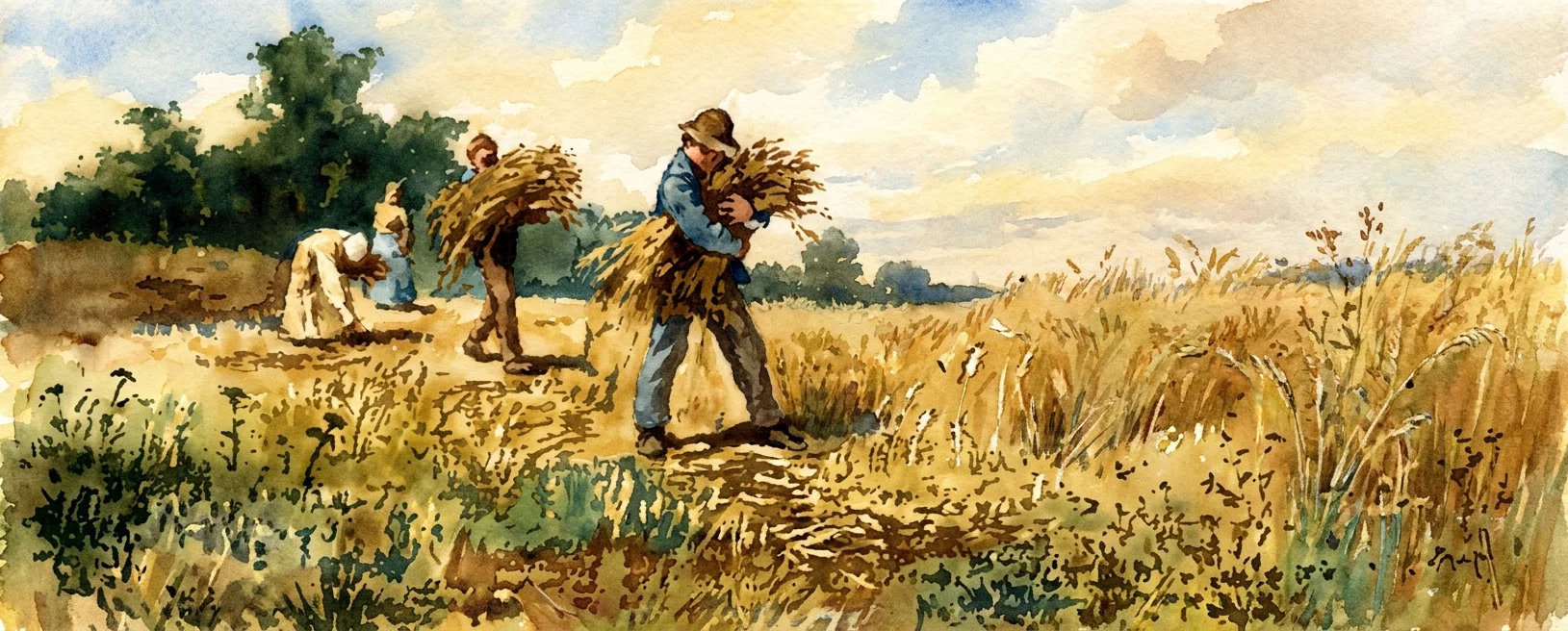
The good seed may for a time lie unnoticed in a cold, selfish, worldly heart, giving no evidence that it has taken root; but afterward, as the Spirit of God breathes on the soul, the hidden seed springs up, and at last bears fruit to the glory of God. In our life-work we know not which shall prosper, this or that. This is not a question for us to settle. We are to do our work, and leave the results with God. “In the morning sow thy seed, and in the evening withhold not thine hand.” God’s great covenant declares that “while the earth remaineth, seed-time and harvest . . . shall not cease.” In the confidence of this promise the husbandman tills and sows. Not less confidently are we in the spiritual sowing to labor, trusting His assurance, “So shall My word be that goeth forth out of My mouth; it shall not return unto Me void, but it shall accomplish that which I please, and it shall prosper in the thing whereto I sent it.” “He that goeth forth and weepeth, bearing precious seed, shall doubtless come again with rejoicing, bringing his sheaves with him.”
The germination of the seed represents the beginning of spiritual life, and the development of the plant is a beautiful figure of Christian growth. As in nature, so in grace; there can be no life without growth. The plant must either grow or die. As its growth is silent and imperceptible, but continuous, so is the development of the Christian life. At every stage of development our life may be perfect; yet if God’s purpose for us is fulfilled, there will be continual advancement. Sanctification is the work of a lifetime. As our opportunities multiply, our experience will enlarge, and66our knowledge increase. We shall become strong to bear responsibility, and our maturity will be in proportion to our privileges.
“It sends down its roots into the earth, it drinks in the sunshine, the dew, and the rain.”
The plant grows by receiving that which God has provided to sustain its life. It sends down its roots into the earth. It drinks in the sunshine, the dew, and the rain. It receives the life-giving properties from the air. So the67Christian is to grow by co-operating with the divine agencies. Feeling our helplessness, we are to improve all the opportunities granted us to gain a fuller experience. As the plant takes root in the soil, so we are to take deep root in Christ. As the plant receives the sunshine, the dew, and the rain, we are to open our hearts to the Holy Spirit. The work is to be done, “not by might, nor by power, but by My Spirit, saith the Lord of hosts.” If we keep our minds stayed upon Christ, He will come unto us “as the rain, as the latter and former rain unto the earth.” As the Sun of Righteousness, He will arise upon us “with healing in His wings.” We shall “grow as the lily.” We shall “revive as the corn, and grow as the vine.” By constantly relying upon Christ as our personal Saviour, we shall grow up into Him in all things who is our head.
The wheat develops, “first the blade, then the ear, after that the full corn in the ear.” The object of the husbandman in the sowing of the seed and the culture of the growing plant is the production of grain. He desires bread for the hungry, and seed for future harvests. So the divine Husbandman looks for a harvest as the reward of His labor and sacrifice. Christ is seeking to reproduce Himself in the hearts of men; and He does this through those who believe in Him. The object of the Christian life is fruit-bearing,—the reproduction of Christ’s character in the believer, that it may be reproduced in others.
The plant does not germinate, grow, or bring forth fruit for itself, but to “give seed to the sower, and bread to the eater.” So no man is to live unto himself. The Christian is in the world as a representative of Christ, for the salvation of other souls.
There can be no growth or fruitfulness in the life that is centered in self. If you have accepted Christ as a personal68Saviour, you are to forget yourself, and try to help others. Talk of the love of Christ, tell of His goodness. Do every duty that presents itself. Carry the burden of souls upon your heart, and by every means in your power seek to save the lost. As you receive the Spirit of Christ,—the spirit of unselfish love and labor for others,—you will grow and bring forth fruit. The graces of the Spirit will ripen in your character. Your faith will increase, your convictions deepen, your love be made perfect. More and more you will reflect the likeness of Christ in all that is pure, noble, and lovely.
“When the fruit is brought forth, immediately he putteth in the sickle.”
“The fruit of the Spirit is love, joy, peace, long-suffering,69gentleness, goodness, faith, meekness, temperance.” This fruit can never perish, but will produce after its kind a harvest unto eternal life.
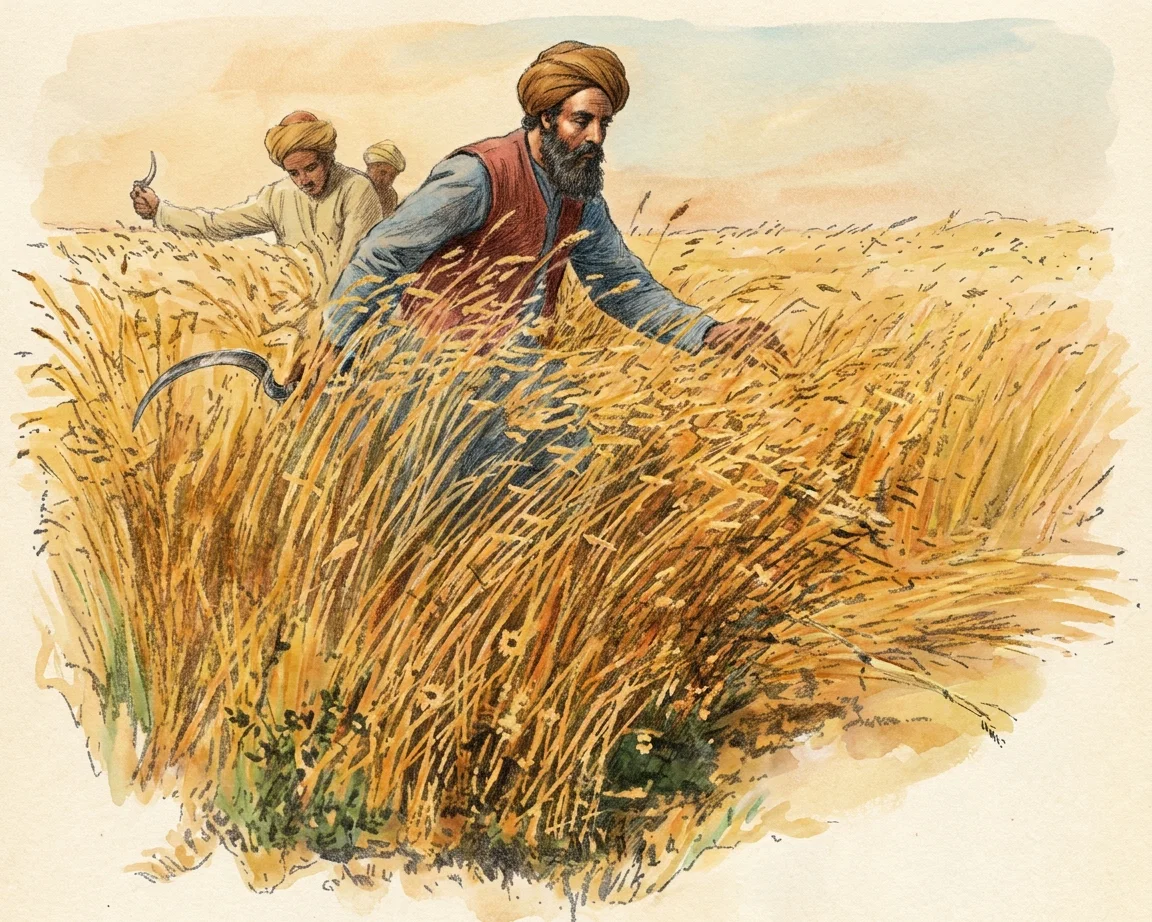
“When the fruit is brought forth, immediately he putteth in the sickle, because the harvest is come.” Christ is waiting with longing desire for the manifestation of Himself in His church. When the character of Christ shall be perfectly reproduced in His people, then He will come to claim them as His own.
It is the privilege of every Christian, not only to look for, but to hasten the coming of our Lord Jesus Christ. Were all who profess His name bearing fruit to His glory, how quickly the whole world would be sown with the seed of the gospel. Quickly the last great harvest would be ripened, and Christ would come to gather the precious grain.