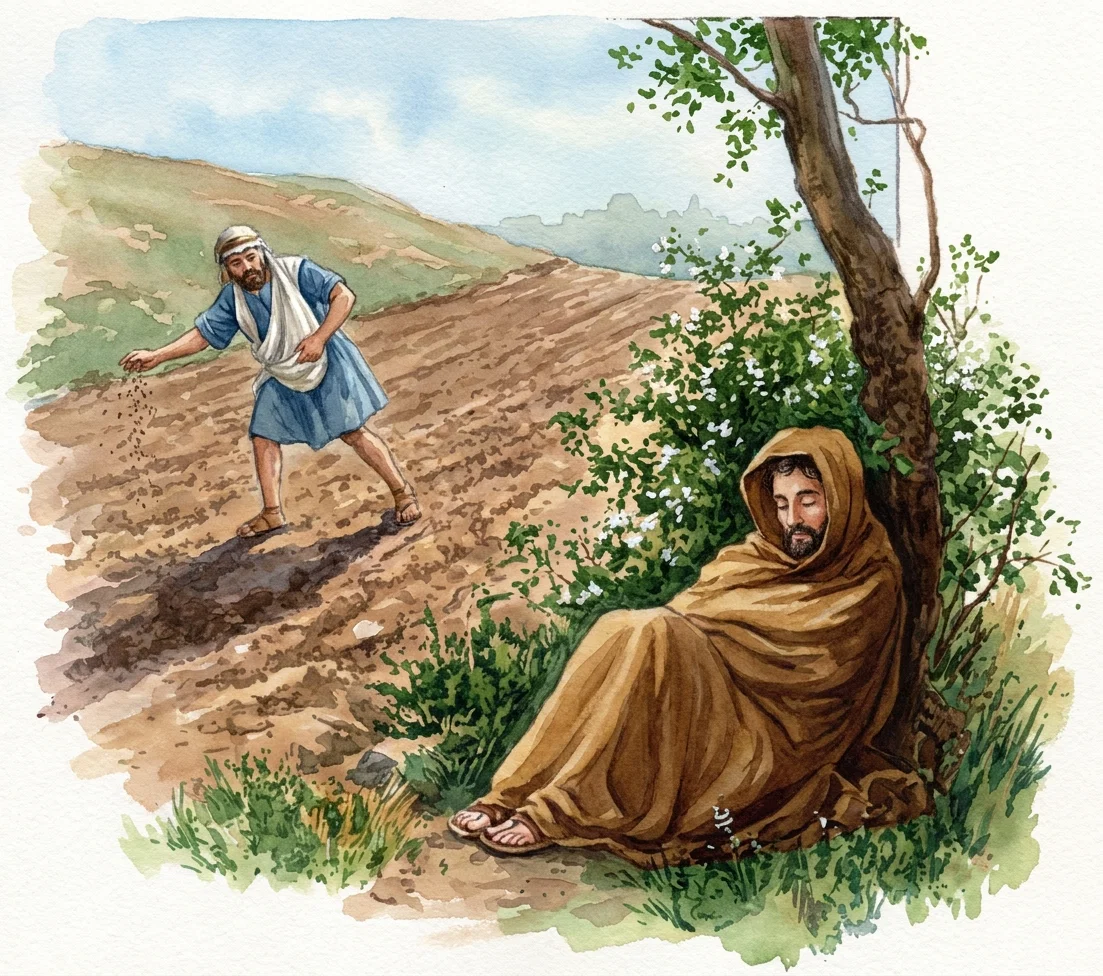
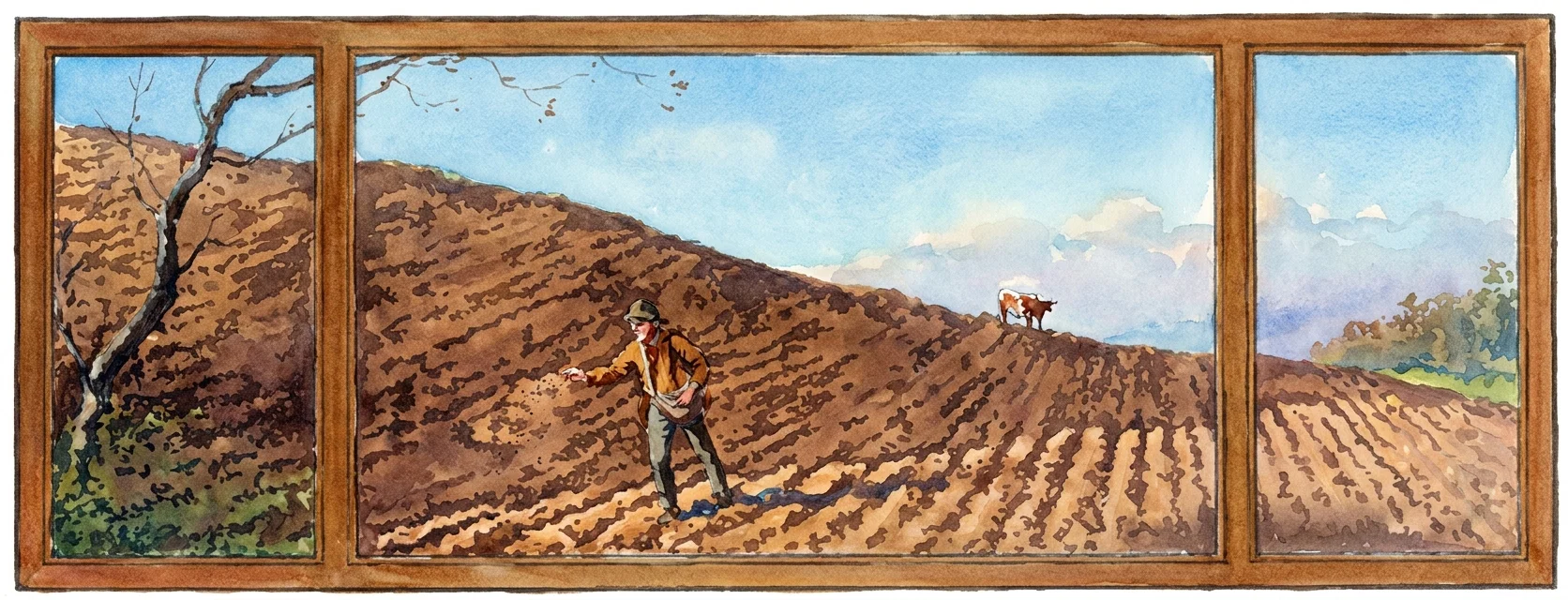
ANOTHER parable put He forth unto them, saying, The kingdom of heaven is likened unto a man which sowed good seed in his field; but while men slept, his enemy came and sowed tares among the wheat, and went his way. But when the blade was sprung up, and brought forth fruit, then appeared the tares also.”
“The field,” Christ said, “is the world.” But we must understand this as signifying the church of Christ in the world. The parable is a description of that which pertains to the kingdom of God, His work for the salvation of men, and this work is accomplished through the church. True, the Holy Spirit has gone out into all the world; everywhere it is moving upon the hearts of men; but it is in the church that we are to grow and ripen for the garner of God.
“He that sowed the good seed is the Son of man. . . . The good seed are the children of the kingdom; but the tares are the children of the wicked one.” The good seed represents those who are born of the word of71God, the truth. The tares represent a class who are the fruit or embodiment of error, of false principles. “The enemy that sowed them is the devil.” Neither God nor His angels ever sowed a seed that would produce a tare. The tares are always sown by Satan, the enemy of God and man.
In the East, men sometimes took revenge upon an enemy by strewing his newly-sown fields with the seeds of some noxious weed that, while growing, closely resembled wheat. Springing up with the wheat, it injured the crop, and brought trouble and loss to the owner of the field. So it is from enmity to Christ that Satan scatters his evil seed among the good grain of the kingdom. The fruit of his sowing he attributes to the Son of God. By bringing into the church those who bear Christ’s name while they deny His character, the wicked one causes that God shall be dishonored, the work of salvation misrepresented, and souls imperiled.
Christ’s servants are grieved as they see true and false believers mingled in the church. They long to do something to cleanse the church. Like the servants of the householder, they are ready to uproot the tares. But Christ says to them, “Nay; lest while ye gather up the tares, ye root up also the wheat with them. Let both grow together until the harvest.”
Christ has plainly taught that those who persist in open sin must be separated from the church; but He has not committed to us the work of judging character and motive. He knows our nature too well to entrust this work to us. Should we try to uproot from the church those whom we suppose to be spurious Christians, we should be sure to make mistakes. Often we regard as hopeless subjects the very ones whom Christ is drawing to Himself. Were we72to deal with these souls according to our imperfect judgment, it would perhaps extinguish their last hope. Many who think themselves Christians will at last be found wanting. Many will be in heaven who their neighbors supposed would never enter there. Man judges from appearance, but God judges the heart. The tares and the wheat are to grow together until the harvest; and the harvest is the end of probationary time.
There is in the Saviour’s words another lesson, a lesson of wonderful forbearance and tender love. As the tares have their roots closely intertwined with those of the good grain, so false brethren in the church may be closely linked with true disciples. The real character of these pretended believers is not fully manifested. Were they to be separated from the church, others might be caused to stumble, who but for this would have remained steadfast.
The teaching of this parable is illustrated in God’s own dealing with men and angels. Satan is a deceiver. When he sinned in heaven, even the loyal angels did not fully discern his character. This was why God did not at once destroy Satan. Had He done so, the holy angels would not have perceived the justice and love of God. A doubt of God’s goodness would have been as evil seed, that would yield the bitter fruit of sin and woe. Therefore the author of evil was spared, fully to develop his character. Through long ages God has borne the anguish of beholding the work of evil, He has given the infinite Gift of Calvary, rather than leave any to be deceived by the misrepresentations of the wicked one; for the tares could not be plucked up without danger of uprooting the precious grain. And shall we not be as forbearing toward our fellow-men as the Lord of heaven and earth is toward Satan?
The world has no right to doubt the truth of Christianity73because there are unworthy members in the church, nor should Christians become disheartened because of these false brethren. How was it with the early church? Ananias and Sapphira joined themselves to the disciples. Simon Magus was baptized. Demas, who forsook Paul, had been counted a believer. Judas Iscariot was numbered with the apostles. The Redeemer does not want to lose one soul; His experience with Judas is recorded to show His long patience with perverse human nature; and He bids us bear with it as He has borne. He has said that false brethren will be found in the church till the close of time.
“But while men slept, his enemy came and sowed tares.”
Notwithstanding Christ’s warning, men have sought to74uproot the tares. To punish those who were supposed to be evil-doers, the church has had recourse to the civil power. Those who differed from the established doctrines have been imprisoned, put to torture and to death, at the instigation of men who claimed to be acting under the sanction of Christ. But it is the spirit of Satan, not the Spirit of Christ, that inspires such acts. This is Satan’s own method of bringing the world under his dominion. God has been misrepresented through the church by this way of dealing with those supposed to be heretics.
Not judgment and condemnation of others, but humility and distrust of self, is the teaching of Christ’s parable. Not all that is sown in the field is good grain. The fact that men are in the church does not prove them Christians.
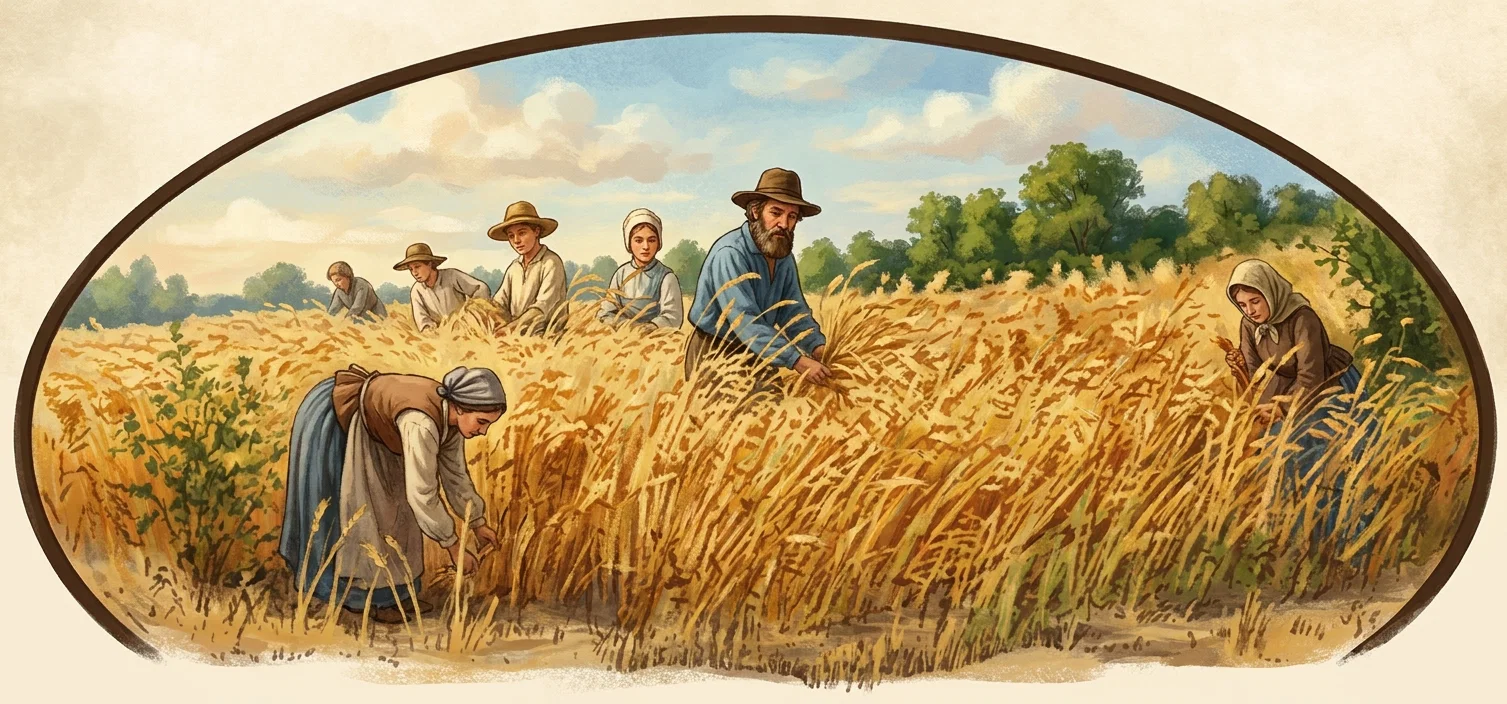
The tares closely resembled the wheat while the blades were green; but when the field was white for the harvest, the worthless weeds bore no likeness to the wheat that bowed under the weight of its full, ripe heads. Sinners who make a pretension of piety mingle for a time with the true followers of Christ, and the semblance of Christianity is calculated to deceive many; but in the harvest of the world there will be no likeness between good and evil. Then those who have joined the church, but who have not joined Christ, will be manifest.
The tares are permitted to grow among the wheat, to have all the advantage of sun and shower; but in the time of harvest ye shall “return, and discern between the righteous and the wicked, between him that serveth God and him that serveth Him not.” Christ Himself will decide who are worthy to dwell with the family of heaven. He will judge every man according to his words and his works. Profession is as nothing in the scale. It is character that decides destiny.
The Saviour does not point forward to a time when all the tares become wheat. The wheat and tares grow together until the harvest, the end of the world. Then the tares are bound in bundles to be burned, and the wheat is gathered into the garner of God. “Then shall the righteous shine forth as the sun in the kingdom of their Father.” Then “the Son of man shall send forth His angels, and they shall gather out of His kingdom all things that offend, and them which do iniquity; and shall cast them into a furnace of fire; there shall be wailing and gnashing of teeth.”
“Like a Grain of Mustard Seed”
IN the multitude that listened to Christ’s teaching there were many Pharisees. These noted contemptuously how few of His hearers acknowledged Him as the Messiah. And they questioned with themselves how this unpretending teacher could exalt Israel to universal dominion. Without riches, power, or honor, how was He to establish the new kingdom? Christ read their thoughts and answered them:— “Whereunto shall we liken the kingdom of God? or with what comparison shall we compare it?” In earthly governments there was nothing that could serve for a similitude. No civil society could afford Him a symbol. “It is like a grain of mustard seed,” He said, “which, when it is sown upon the earth, though it be less than all the seeds that are upon the earth, yet when it is sown, groweth up, and becometh greater than all the herbs, and putteth out great branches; so that the birds of the heaven can lodge under the shadow thereof.”
The germ in the seed grows by the unfolding of the life-principle which God has implanted. Its development depends upon no human power. So it is with the kingdom of Christ. It is a new creation. Its principles of development are the opposite of those that rule the kingdoms of this world. Earthly governments prevail by physical force; they maintain their dominion by war; but the founder of the new kingdom is the Prince of Peace. The Holy Spirit represents worldly kingdoms under the symbol of fierce beasts of prey; but Christ is “the Lamb of God, which taketh away the sin of the world.” In His plan of government there is no employment of brute force to compel the conscience. The Jews looked for the kingdom of God to be established in the same way as the kingdoms of the world. To promote righteousness they resorted to external measures. They devised methods and plans. But Christ implants a principle. By implanting truth and righteousness, He counterworks error and sin.
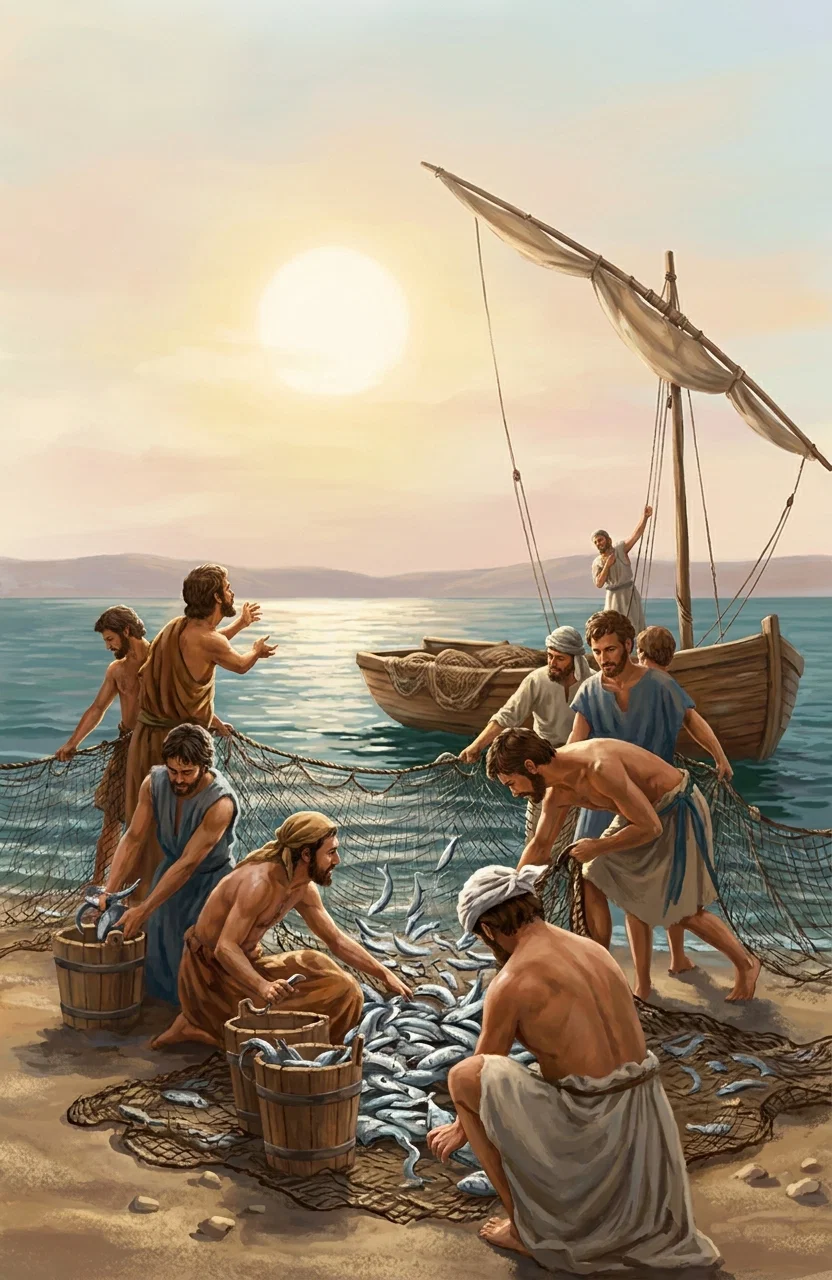
As Jesus spoke this parable, the mustard plant could be seen far and near, lifting itself above the grass and grain, and waving its branches lightly in the air. Birds flitted from twig to twig, and sang amid the leafy foliage. Yet the seed from which sprang this giant plant was among the least of all seeds. At first it sent up a tender shoot; but it was of strong vitality, and grew and flourished until it reached its present great size. So the kingdom of Christ in its beginning seemed humble and insignificant. Compared with earthly kingdoms it appeared to be the least of all. By the rulers of this world Christ’s claim to be a king was ridiculed. Yet in the mighty truths committed to His followers the kingdom of the gospel possessed a divine life. And how rapid was its growth, how wide-spread its influence! When Christ spoke this parable, there were only a few Galilean peasants to represent the new kingdom. Their poverty, the78fewness of their numbers, was urged over and over again as a reason why men should not connect themselves with these simple-minded fishermen who followed Jesus. But the mustard seed was to grow and spread forth its branches throughout the world. When the earthly kingdoms whose glory then filled the hearts of men should perish, the kingdom of Christ would remain, a mighty and far-reaching power.
So the work of grace in the heart is small in its beginning. A word is spoken, a ray of light is shed into the soul, an influence is exerted that is the beginning of the new life; and who can measure its results?
Not only is the growth of Christ’s kingdom illustrated by the parable of the mustard seed, but in every stage of its growth the experience represented in the parable is repeated. For His church in every generation God has a special truth and a special work. The truth that is hid from the worldly-wise and prudent is revealed to the child-like and humble. It calls for self-sacrifice. It has battles to fight and victories to win. At the outset its advocates are few. By the great men of the world and by a world-conforming church, they are opposed and despised. See John the Baptist, the forerunner of Christ, standing alone to rebuke the pride and formalism of the Jewish nation. See the first bearers of the gospel into Europe. How obscure, how hopeless, seemed the mission of Paul and Silas, the two tent-makers, as they with their companions took ship at Troas for Philippi. See “Paul the aged,” in chains, preaching Christ in the stronghold of the Cæsars. See the little communities of slaves and peasants in conflict with the heathenism of imperial Rome. See Martin Luther withstanding that mighty church which is the masterpiece of the world’s wisdom. See him holding fast God’s word against emperor and pope, declaring, “Here I take my stand;79I can not do otherwise. God be my help.” See John Wesley preaching Christ and His righteousness in the midst of formalism, sensualism, and infidelity. See one burdened with the woes of the heathen world, pleading for the privilege of carrying to them Christ’s message of love. Hear the response of ecclesiasticism: “Sit down, young man. When God wants to convert the heathen, He will do it without your help or mine.”
The great leaders of religious thought in this generation sound the praises and build the monuments of those who planted the seed of truth centuries ago. Do not many turn from this work to trample down the growth springing from the same seed to-day? The old cry is repeated, “We know that God spake unto Moses; as for this fellow [Christ in the messenger He sends], we know not from whence he is.” As in earlier ages, the special truths for this time are found, not with the ecclesiastical authorities, but with men and women who are not too learned or too wise to believe the word of God.
“For ye see your calling, brethren, how that not many wise men after the flesh, not many mighty, not many noble, are called; but God hath chosen the foolish things of the world to confound the wise; and God hath chosen the weak things of the world to confound the things which are mighty. And base things of the world, and things which are despised, hath God chosen, yea, and things which are not, to bring to naught things that are;” “that your faith should not stand in the wisdom of men, but in the power of God.”
And in this last generation the parable of the mustard seed is to reach a signal and triumphant fulfilment. The little seed will become a tree. The last message of warning and mercy is to go to “every nation and kindred and tongue,” “to take out of them a people for His name.” And the earth shall be lightened with His glory.
Other Lessons from Seed-Sowing
From the work of seed-sowing and the growth of the plant from the seed, precious lessons may be taught in the family and the school. Let the children and youth learn to recognize in natural things the working of divine agencies, and they will be enabled to grasp by faith unseen benefits. As they come to understand the wonderful work of God in supplying the wants of His great family, and how we are to co-operate with Him, they will have more faith in God, and will realize more of His power in their own daily life.
God created the seed, as He created the earth, by His word. By His word He gave it power to grow and multiply. He said, “Let the earth bring forth grass, the herb yielding seed, and the fruit-tree yielding fruit after his kind, whose seed is in itself, upon the earth; and it was so. . . . And God saw that it was good.” It is81that word which still causes the seed to grow. Every seed that sends up its green blade to the sunlight declares the wonder-working power of that word uttered by Him who “spake, and it was;” who “commanded, and it stood fast.”
Christ taught His disciples to pray, “Give us this day our daily bread.” And pointing to the the flowers He gave them the assurance, “If God so clothe the grass of the field, . . . shall He not much more clothe you?” Christ is constantly working to answer this prayer, and to make good this assurance. There is an invisible power constantly at work as man’s servant to feed and to clothe him. Many agencies our Lord employs to make the seed, apparently thrown away, a living plant. And He supplies in due proportion all that is required to perfect the harvest. In the beautiful words of the psalmist:—
“Thou visitest the earth, and waterest it; Thou greatly enrichest it; The river of God is full of water; Thou providest them corn when Thou hast so prepared the earth. Thou waterest her furrows abundantly; Thou settlest the ridges thereof; Thou makest it soft with showers; Thou blessest the springing thereof. Thou crownest the year with Thy goodness; And Thy paths drop fatness.”
The material world is under God’s control. The laws of nature are obeyed by nature. Everything speaks and acts the will of the Creator. Cloud and sunshine, dew and rain, wind and storm, all are under the supervision of God, and yield implicit obedience to His command. It is in obedience to the law of God that the spire of grain bursts through the ground, “first the blade, then the ear, after that the full corn in the ear.” These the Lord develops82in their proper season because they do not resist His working. And can it be that man, made in the image of God, endowed with reason and speech, shall alone be unappreciative of His gifts and disobedient to His will? Shall rational beings alone cause confusion in our world?
In everything that tends to the sustenance of man is seen the concurrence of divine and human effort. There can be no reaping unless the human hand acts its part in the sowing of the seed. But without the agencies which God provides in giving sunshine and showers, dew and clouds, there would be no increase. Thus it is in every business pursuit, in every department of study and science. Thus it is in spiritual things, in the formation of character, and in every line of Christian work. We have a part to act, but we must have the power of divinity to unite with us, or our efforts will be in vain.
Whenever man accomplishes anything, whether in spiritual or in temporal lines, he should bear in mind that he does it through co-operation with his Maker. There is great necessity for us to realize our dependence on God. Too much confidence is placed in man, too much reliance on human inventions. There is too little confidence in the power which God stands ready to give. “We are laborers together with God.” Immeasurably inferior is the part which the human agent sustains; but if he is linked with the divinity of Christ, he can do all things through the strength that Christ imparts.
The gradual development of the plant from the seed is an object-lesson in child-training. There is “first the blade, then the ear, after that the full corn in the ear.” He who83gave this parable created the tiny seed, gave it its vital properties, and ordained the laws that govern its growth. And the truths which the parable teaches were made a living reality in His own life. In both His physical and His spiritual nature He followed the divine order of growth illustrated by the plant, as He wishes all youth to do. Although He was the Majesty of heaven, the King of glory, He became a babe in Bethlehem, and for a time represented the helpless infant in its mother’s care. In childhood He did the works of an obedient child. He spoke and acted with the wisdom of a child, and not of a man, honoring His parents, and carrying out their wishes in helpful ways, according to the ability of a child. But at each stage of His development He was perfect, with the simple, natural grace of a sinless life. The sacred record says of His childhood, “The child grew, and waxed strong in spirit, filled with wisdom; and the grace of God was upon Him.” And of His youth it is recorded, “Jesus increased in wisdom and stature, and in favor with God and man.”
The work of parents and teachers is here suggested. They should aim so to cultivate the tendencies of the youth that at each stage of their life they may represent the natural beauty appropriate to that period, unfolding naturally, as do the plants in the garden.
Those children are most attractive who are natural, unaffected. It is not wise to give them special notice, and repeat their clever sayings before them. Vanity should not be encouraged by praising their looks, their words, or their actions. Nor should they be dressed in an expensive or showy manner. This encourages pride in them, and awakens envy in the hearts of their companions.
The little ones should be educated in childlike simplicity.84They should be trained to be content with the small, helpful duties and the pleasures and experiences natural to their years. Childhood answers to the blade in the parable, and the blade has a beauty peculiarly its own. The children should not be forced into a precocious maturity, but should retain as long as possible the freshness and grace of their early years.
The little children may be Christians, having an experience in accordance with their years. This is all that God expects of them. They need to be educated in spiritual things; and parents should give them every advantage, that they may form characters after the similitude of the character of Christ.
In the laws of God in nature, effect follows cause with unerring certainty. The reaping will testify as to what the sowing has been. The slothful worker is condemned by his work. The harvest bears witness against him. So in spiritual things: the faithfulness of every worker is measured by the results of his work. The character of his work, whether diligent or slothful, is revealed by the harvest. It is thus that his destiny for eternity is decided.
Every seed sown produces a harvest of its kind. So it is in human life. We all need to sow the seeds of compassion, sympathy, and love; for we shall reap what we sow. Every characteristic of selfishness, self-love, self-esteem, every act of self-indulgence, will bring forth a like harvest. He who lives for self is sowing to the flesh, and of the flesh he will reap corruption.
God destroys no man. Every one who is destroyed will have destroyed himself. Every one who stifles the admonitions of conscience is sowing the seeds of unbelief, and these will produce a sure harvest. By rejecting the85first warning from God, Pharaoh of old sowed the seeds of obstinacy, and he reaped obstinacy. God did not compel him to disbelieve. The seed of unbelief which he sowed, produced a harvest of its kind. Thus his resistance continued, until he looked upon his devastated land, upon the cold, dead form of his first-born, and the first-born of all in his house and of all the families in his kingdom, until the waters of the sea closed over his horses and his chariots and his men of war. His history is a fearful illustration of the truth of the words that “whatsoever a man soweth, that shall he also reap.” Did men but realize this, they would be careful what seed they sow.
As the seed sown produces a harvest, and this in turn is sown, the harvest is multiplied. In our relation to others, this law holds true. Every act, every word, is a seed that will bear fruit. Every deed of thoughtful kindness, of obedience, or of self-denial, will reproduce itself in others, and through them in still others. So every act of envy, malice, or dissension, is a seed that will spring up in a “root of bitterness,” whereby many shall be defiled. And how much larger number will the “many” poison. Thus the sowing of good and evil goes on for time and for eternity.
Liberality both in spiritual and in temporal things is taught in the lesson of seed-sowing. The Lord says, “Blessed are ye that sow beside all waters.” “This I say, He which soweth sparingly shall reap also sparingly; and he which soweth bountifully shall reap also bountifully.” To sow beside all waters means a continual imparting of God’s gifts. It means giving wherever the cause of God or the needs of humanity demand our aid.86This will not tend to poverty. “He which soweth bountifully shall reap also bountifully.” The sower multiplies his seed by casting it away. So it is with those who are faithful in distributing God’s gifts. By imparting they increase their blessings. God has promised them a sufficiency that they may continue to give. “Give, and it shall be given unto you; good measure, pressed down, and shaken together, and running over, shall men give into your bosom.”
And more than this is wrapped up in the sowing and the reaping. As we distribute God’s temporal blessings, the evidence of our love and sympathy awakens in the receiver gratitude and thanksgiving to God. The soil of the heart is prepared to receive the seeds of spiritual truth. And He who ministers seed to the sower will cause the seed to germinate and bear fruit unto eternal life.
By the casting of the grain into the soil, Christ represents the sacrifice of Himself for our redemption. “Except a corn of wheat fall into the ground and die,” He says, “it abideth alone; but if it die, it bringeth forth much fruit.” So the death of Christ will result in fruit for the kingdom of God. In accordance with the law of the vegetable kingdom, life will be the result of His death.
And all who would bring forth fruit as workers together with Christ, must first fall into the ground and die. The life must be cast into the furrow of the world’s need. Self-love, self-interest, must perish. But the law of self-sacrifice is the law of self-preservation. The seed buried in the ground produces fruit, and in turn this is planted. Thus the harvest is multiplied. The husbandman preserves his grain by casting it away. So in human life, to87give is to live. The life that will be preserved is the life that is freely given in service to God and man. Those who for Christ’s sake sacrifice their life in this world, will keep it unto life eternal.
“The seed dies to spring forth into new life, and in this we are taught the lesson of the resurrection. All who love God will live again in the Eden above. Of the human body laid away to molder in the grave God has said, “It is sown in corruption; it is raised in incorruption: it is sown in dishonor; it is raised in glory: it is sown in weakness; it is raised in power.”
Such are a few of the many lessons taught by nature’s living parable of the sower and the seed. As parents and teachers try to teach these lessons, the work should be made practical. Let the children themselves prepare the soil and sow the seed. As they work, the parent or teacher can explain the garden of the heart with the good or bad seed sown there, and that as the garden must be prepared for the natural seed, so the heart must be prepared for the seed of truth. As the seed is cast into the ground, they can teach the lesson of Christ’s death; and as the blade springs up, the truth of the resurrection. As the plants grow, the correspondence between the natural and the spiritual sowing may be continued.
The youth should be instructed in a similar way. They should be taught to till the soil. It would be well if there were, connected with every school, lands for cultivation. Such lands should be regarded as God’s own school-room. The things of nature should be looked upon as a88lesson-book which His children are to study, and from which they may obtain knowledge as to the culture of the soul.
In tilling the soil, in disciplining and subduing the land, lessons may constantly be learned. No one would think of settling upon a raw piece of land, expecting it at once to yield a harvest. Earnestness, diligence, and persevering labor are to be put forth in treating the soil preparatory to sowing the seed. So it is in the spiritual work in the human heart. Those who would be benefited by the tilling of the soil must go forth with the word of God in their hearts. They will then find the fallow ground of the heart broken by the softening, subduing influence of the Holy Spirit. Unless hard work is bestowed on the soil, it will not yield a harvest. So with the soil of the heart: the Spirit of God must work upon it, to refine and discipline it, before it can bring forth fruit to the glory of God.
The soil will not produce its riches when worked by impulse. It needs thoughtful, daily attention. It must be plowed often and deep, with a view to keeping out the weeds that take nourishment from the good seed planted. Thus those who plow and sow prepare for the harvest. None need stand in the field amid the sad wreck of their hopes.
The blessing of the Lord will rest upon those who thus work the land, learning spiritual lessons from nature. In cultivating the soil the worker knows little what treasures will open up before him. While he is not to despise the instruction he may gather from minds that have had an experience, and from the information that intelligent men may impart, he should gather lessons for himself. This is a part of his training. The cultivation of the soil will prove an education to the soul.
He who causes the seed to spring up, who tends it day and night, who gives it power to develop, is the Author of our being, the King of heaven, and He exercises still greater care and interest in behalf of His children. While the human sower is planting the seed to sustain our earthly life, the Divine Sower will plant in the soul the seed that will bring forth fruit unto life everlasting.
“The blessing of the Lord will rest upon those who thus work the land, learning spiritual lessons from nature.”