The parable of the wedding garment opens before us a lesson of the highest consequence. By the marriage is represented the union of humanity with divinity; the wedding garment represents the character which all must possess who shall be accounted fit guests for the wedding.
In this parable, as in that of the great supper, are illustrated the gospel invitation, its rejection by the Jewish people, and the call of mercy to the Gentiles. But on the part of those who reject the invitation, this parable brings to view a deeper insult and a more dreadful punishment. The call to the feast is a king’s invitation. It proceeds from one who is vested with power to command. It confers high honor. Yet the honor is unappreciated. The king’s authority is despised. While the householder’s invitation was regarded with indifference, the king’s is met with insult and murder. They treated his servants with scorn, despitefully using them and slaying them.
The householder, on seeing his invitation slighted, declared that none of the men who were bidden should taste of his supper. But for those who had done despite308to the king, more than exclusion from his presence and his table is decreed. “He sent forth his armies, and destroyed those murderers, and burned up their city.”
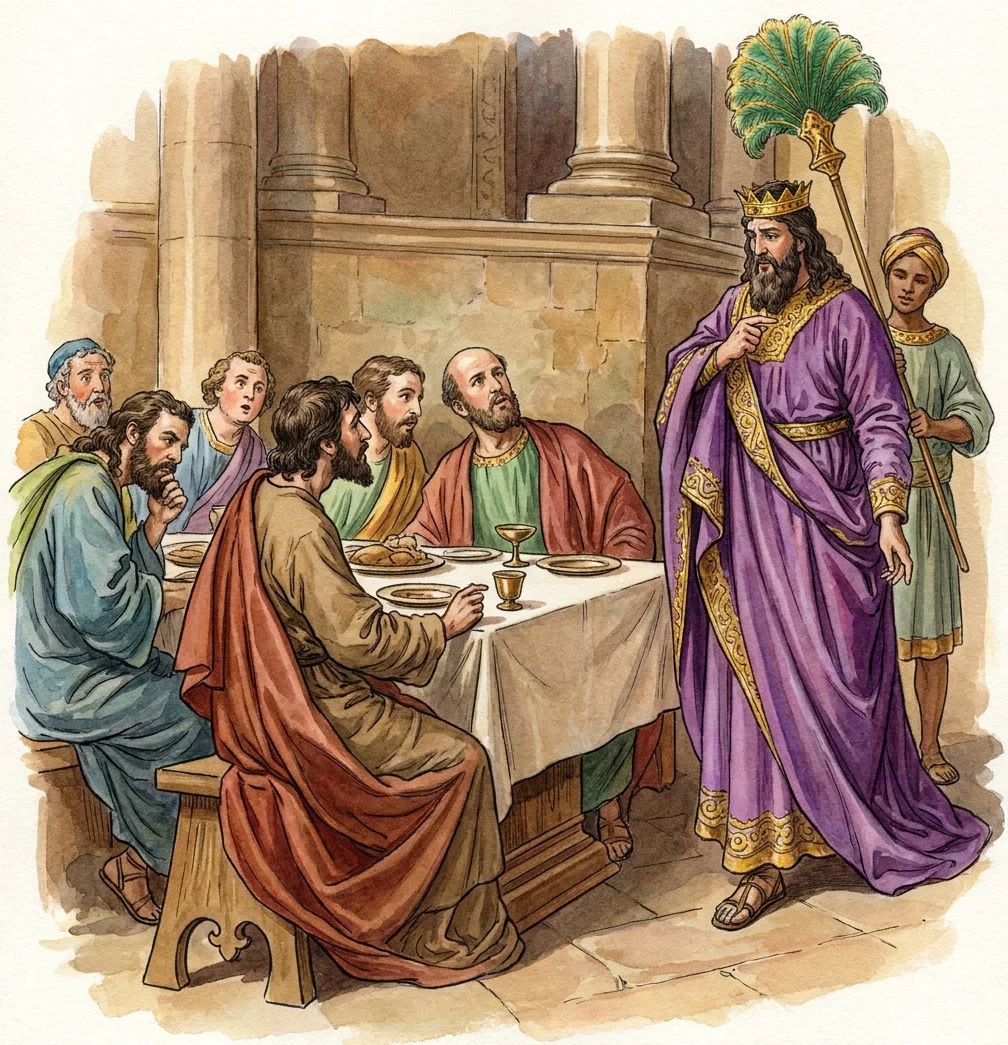
In both parables the feast is provided with guests, but the second shows that there is a preparation to be made by all who attend the feast. Those who neglect this preparation are cast out. “The king came in to see the guests,” and “saw there a man which had not on a wedding garment; and he saith unto him, Friend, how camest thou in hither not having a wedding garment? And he was speechless. Then said the king to the servants, Bind him hand and foot, and take him away, and cast him into outer darkness; there shall be weeping and gnashing of teeth.”
The call to the feast had been given by Christ’s disciples. Our Lord had sent out the twelve and afterward the seventy, proclaiming that the kingdom of God was at hand, and calling upon men to repent and believe the gospel. But the call was not heeded. Those who were bidden to the feast did not come. The servants were sent out later to say, “Behold, I have prepared my dinner; my oxen and my fatlings are killed, and all things are ready: come unto the marriage.” This was the message borne to the Jewish nation after the crucifixion of Christ; but the nation that claimed to be God’s peculiar people rejected the gospel brought to them in the power of the Holy Spirit. Many did this in the most scornful manner. Others were so exasperated by the offer of salvation, the offer of pardon for rejecting the Lord of glory, that they turned upon the bearers of the message. There was “a great persecution.” Many both of men and women were thrust into prison, and some of the Lord’s messengers, as Stephen and James, were put to death.
Thus the Jewish people sealed their rejection of God’s309mercy. The result was foretold by Christ in the parable. The king “sent forth his armies, and destroyed those murderers, and burned up their city.” The judgment pronounced came upon the Jews in the destruction of Jerusalem and the scattering of the nation.
The third call to the feast represents the giving of the gospel to the Gentiles. The king said, “The wedding is ready, but they which were bidden were not worthy. Go ye therefore into the highways, and as many as ye shall find, bid to the marriage.”
The king’s servants who went out into the highways “gathered together all as many as they found, both bad and good.” It was a mixed company. Some of them had no more real regard for the giver of the feast than had the ones who rejected the call. The class first bidden could not afford, they thought, to sacrifice any worldly advantage for the sake of attending the king’s banquet. And of those who accepted the invitation, there were some who thought only of benefiting themselves. They came to share the provisions of the feast, but had no desire to honor the king.
When the king came in to view the guests, the real character of all was revealed. For every guest at the feast there had been provided a wedding garment. This garment was a gift from the king. By wearing it the guests showed their respect for the giver of the feast. But one man was clothed in his common citizen-dress. He had refused to make the preparation required by the king. The garment provided for him at great cost he disdained to wear. Thus he insulted his lord. To the king’s demand, “How camest thou in hither not having a wedding garment?” he could answer nothing. He was self-condemned. Then the king said, “Bind him hand and foot, and take him away, and cast him into outer darkness.”
By the king’s examination of the guests at the feast is represented a work of judgment. The guests at the gospel feast are those who profess to serve God, those whose names are written in the book of life. But not all who profess to be Christians are true disciples. Before the final reward is given, it must be decided who are fitted to share the inheritance of the righteous. This decision must be made prior to the second coming of Christ in the clouds of heaven; for when He comes, His reward is with Him, “to give every man according as his work shall be.” Before His coming, then, the character of every man’s work will have been determined, and to every one of Christ’s followers the reward will have been apportioned according to his deeds.
It is while men are still dwelling upon the earth that the work of investigative judgment takes place in the courts of heaven. The lives of all His professed followers pass in review before God. All are examined according to the record of the books of heaven, and according to his deeds the destiny of each is forever fixed.
By the wedding garment in the parable is represented the pure, spotless character which Christ’s true followers will possess. To the church it is given “that she should be arrayed in fine linen, clean and white,” “not having spot, or wrinkle, or any such thing.” The fine linen, says the Scripture, “is the righteousness of saints.” It is the righteousness of Christ, His own unblemished character, that through faith is imparted to all who receive Him as their personal Saviour.
The white robe of innocence was worn by our first parents when they were placed by God in holy Eden. They lived in perfect conformity to the will of God. All the strength of their affections was given to their Heavenly Father. A beautiful soft light, the light of God, enshrouded the holy pair.311This robe of light was a symbol of their spiritual garments of heavenly innocence. Had they remained true to God, it would ever have continued to enshroud them. But when sin entered, they severed their connection with God, and the light that had encircled them departed. Naked and ashamed, they tried to supply the place of the heavenly garments by sewing together fig-leaves for a covering.
This is what the transgressors of God’s law have done ever since the day of Adam and Eve’s disobedience. They have sewed together fig-leaves to cover the nakedness caused by transgression. They have worn the garments of their own devising, by works of their own they have tried to cover their sins, and make themselves acceptable with God.
But this they can never do. Nothing can man devise to supply the place of his lost robe of innocence. No fig-leaf garment, no worldly citizen-dress, can be worn by those who sit down with Christ and angels at the marriage supper of the Lamb.
Only the covering which Christ Himself has provided, can make us meet to appear in God’s presence. This covering, the robe of His own righteousness, Christ will put upon every repenting, believing soul. “I counsel thee,” He says, “to buy of Me . . . white raiment, that thou mayest be clothed, and that the shame of thy nakedness do not appear.”
This robe, woven in the loom of heaven, has in it not one thread of human devising. Christ in His humanity wrought out a perfect character, and this character He offers to impart to us. “All our righteousnesses are as filthy rags.” Everything that we of ourselves can do is defiled by sin. But the Son of God “was manifested to take away our sins; and in Him is no sin.” Sin is defined to be “the transgression of the law.” But Christ was obedient312to every requirement of the law. He said of Himself, “I delight to do Thy will, O My God; yea, Thy law is within My heart.” When on earth He said to His disciples, “I have kept My Father’s commandments.” By His perfect obedience He has made it possible for every human being to obey God’s commandments. When we submit ourselves to Christ, the heart is united with His heart, the will is merged in His will, the mind becomes one with His mind, the thoughts are brought into captivity to Him; we live His life. This is what it means to be clothed with the garment of His righteousness. Then as the Lord looks upon us, He sees, not the fig-leaf garment, not the nakedness and deformity of sin, but His own robe of righteousness, which is perfect obedience to the law of Jehovah.
The guests at the marriage feast were inspected by the king. Only those were accepted who had obeyed his requirements and put on the wedding garment. So it is with the guests at the gospel feast. All must pass the scrutiny of the great King, and only those are received who have put on the robe of Christ’s righteousness.
Righteousness is right-doing, and it is by their deeds that all will be judged. Our characters are revealed by what we do. The works show whether the faith is genuine.
It is not enough for us to believe that Jesus is not an impostor, and that the religion of the Bible is no cunningly devised fable. We may believe that the name of Jesus is the only name under heaven whereby man may be saved, and yet we may not through faith make Him our personal Saviour. It is not enough to believe the theory of truth. It is not enough to make a profession of faith in Christ and have our names registered on the church roll. “He that keepeth His commandments dwelleth in Him, and He in him. And hereby we know that He abideth in us, by313the Spirit which He hath given us.” “Hereby we do know that we know Him, if we keep His commandments.” This is the genuine evidence of conversion. Whatever our profession, it amounts to nothing unless Christ is revealed in works of righteousness.
“...And he saith unto him, Friend, how camest thou in hither, not having a wedding garment.”
The truth is to be planted in the heart. It is to control314the mind and regulate the affections. The whole character must be stamped with the divine utterances. Every jot and tittle of the word of God is to be brought into the daily practise.
He who becomes a partaker of the divine nature will be in harmony with God’s great standard of righteousness, His holy law. This is the rule by which God measures the actions of men. This will be the test of character in the Judgment.
There are many who claim that by the death of Christ the law was abrogated; but in this they contradict Christ’s own words, “Think not that I am come to destroy the law, or the prophets. . . . Till heaven and earth pass, one jot or one tittle shall in no wise pass from the law.” It was to atone for man’s transgression of the law that Christ laid down His life. Could the law have been changed or set aside, then Christ need not have died. By His life on earth He honored the law of God. By His death He established it. He gave His life as a sacrifice, not to destroy God’s law, not to create a lower standard, but that justice might be maintained, that the law might be shown to be immutable, that it might stand fast forever.
Satan had claimed that it was impossible for man to obey God’s commandments; and in our own strength it is true that we can not obey them. But Christ came in the form of humanity, and by His perfect obedience He proved that humanity and divinity combined can obey every one of God’s precepts.
“As many as received Him, to them gave He power to become the sons of God, even to them that believe on His name.” This power is not in the human agent. It is the power of God. When a soul receives Christ, he receives power to live the life of Christ.
God requires perfection of His children. His law is a transcript of His own character, and it is the standard of all character. This infinite standard is presented to all that there may be no mistake in regard to the kind of people whom God will have to compose His kingdom. The life of Christ on earth was a perfect expression of God’s law, and when those who claim to be children of God become Christlike in character, they will be obedient to God’s commandments. Then the Lord can trust them to be of the number who shall compose the family of heaven. Clothed in the glorious apparel of Christ’s righteousness, they have a place at the King’s feast. They have a right to join the blood-washed throng.
The man who came to the feast without a wedding garment represents the condition of many in our world to-day. They profess to be Christians, and lay claim to the blessings and privileges of the gospel; yet they feel no need of a transformation of character. They have never felt true repentance for sin. They do not realize their need of Christ or exercise faith in Him. They have not overcome their hereditary or cultivated tendencies to wrong-doing. Yet they think that they are good enough in themselves, and they rest upon their own merits instead of trusting in Christ. Hearers of the word, they come to the banquet, but they have not put on the robe of Christ’s righteousness.
Many who call themselves Christians are mere human moralists. They have refused the gift which alone could enable them to honor Christ by representing Him to the world. The work of the Holy Spirit is to them a strange work. They are not doers of the word. The heavenly principles that distinguish those who are one with Christ from those who are one with the world have become almost indistinguishable. The professed followers of Christ are316no longer a separate and peculiar people. The line of demarcation is indistinct. The people are subordinating themselves to the world, to its practises, its customs, its selfishness. The church has gone over to the world in transgression of the law, when the world should have come over to the church in obedience to the law. Daily the church is being converted to the world.
All these expect to be saved by Christ’s death, while they refuse to live His self-sacrificing life. They extol the riches of free grace, and attempt to cover themselves with an appearance of righteousness, hoping to screen their defects of character; but their efforts will be of no avail in the day of God.
The righteousness of Christ will not cover one cherished sin. A man may be a law-breaker in heart; yet if he commits no outward act of transgression, he may be regarded by the world as possessing great integrity. But God’s law looks into the secrets of the heart. Every act is judged by the motives that prompt it. Only that which is in accord with the principles of God’s law will stand in the Judgment.
God is love. He has shown that love in the gift of Christ. When “He gave His only begotten Son, that whosoever believeth in Him should not perish, but have everlasting life,” He withheld nothing from His purchased possession. He gave all heaven, from which we may draw strength and efficiency, that we be not repulsed or overcome by our great adversary. But the love of God does not lead Him to excuse sin. He did not excuse it in Satan; He did not excuse it in Adam or in Cain; nor will He excuse it in any other of the children of men. He will not connive at our sins or overlook our defects of character. He expects us to overcome in His name.
Those who reject the gift of Christ’s righteousness are317rejecting the attributes of character which would constitute them the sons and daughters of God. They are rejecting that which alone could give them a fitness for a place at the marriage feast.
In the parable, when the king inquired, “How camest thou in hither not having a wedding garment?” the man was speechless. So it will be in the great Judgment-day. Men may now excuse their defects of character, but in that day they will offer no excuse.
The professed churches of Christ in this generation are exalted to the highest privileges. The Lord has been revealed to us in ever-increasing light. Our privileges are far greater than were the privileges of God’s ancient people. We have not only the great light committed to Israel, but we have the increased evidence of the great salvation brought to us through Christ. That which was type and symbol to the Jews is reality to us. They had the Old Testament history; we have that and the New Testament also. We have the assurance of a Saviour who has come, a Saviour who has been crucified, who has risen, and over the rent sepulcher of Joseph has proclaimed, “I am the resurrection and the life.” In our knowledge of Christ and His love the kingdom of God is placed in the midst of us. Christ is revealed to us in sermons and chanted to us in songs. The spiritual banquet is set before us in rich abundance. The wedding garment, provided at infinite cost, is freely offered to every soul. By the messengers of God are presented to us the righteousness of Christ, justification by faith, the exceeding great and precious promises of God’s word, free access to the Father by Christ, the comfort of the Spirit, the well-grounded assurance of eternal life in the kingdom of God. What could God do for us that He has not done in providing the great supper, the heavenly banquet?
In heaven it is said by the ministering angels: The ministry which we have been commissioned to perform we have done. We pressed back the army of evil angels. We sent brightness and light into the souls of men, quickening their memory of the love of God expressed in Jesus. We attracted their eyes to the cross of Christ. Their hearts were deeply moved by a sense of the sin that crucified the Son of God. They were convicted. They saw the steps to be taken in conversion; they felt the power of the gospel; their hearts were made tender as they saw the sweetness of the love of God. They beheld the beauty of the character of Christ. But with the many it was all in vain. They would not surrender their own habits and character. They would not put off the garments of earth in order to be clothed with the robe of heaven. Their hearts were given to covetousness. They loved the associations of the world more than they loved their God.
Solemn will be the day of final decision. In prophetic vision the apostle John describes it: “I saw a great white throne, and Him that sat on it, from whose face the earth and the heaven fled away; and there was found no place for them. And I saw the dead, small and great, stand before God; and the books were opened; and another book was opened, which is the book of life; and the dead were judged out of those things which were written in the books, according to their works.”
Sad will be the retrospect in that day when men stand face to face with eternity. The whole life will present itself just as it has been. The world’s pleasures, riches, and honors will not then seem so important. Men will then see that the righteousness they despised is alone of value. They will see that they have fashioned their characters under the deceptive allurements of Satan. The garments319they have chosen are the badge of their allegiance to the first great apostate. Then they will see the results of their choice. They will have a knowledge of what it means to transgress the commandments of God.
There will be no future probation in which to prepare for eternity. It is in this life that we are to put on the robe of Christ’s righteousness. This is our only opportunity to form characters for the home which Christ has made ready for those who obey His commandments.
The days of our probation are fast closing. The end is near. To us the warning is given, “Take heed to yourselves, lest at any time your hearts be overcharged with surfeiting, and drunkenness, and cares of this life, and so that day come upon you unawares.” Beware lest it find you unready. Take heed lest you be found at the King’s feast without a wedding garment.
“In such an hour as ye think not the Son of man cometh.” “Blessed is he that watcheth, and keepeth his garments, lest he walk naked, and they see his shame.”
SERVICE
“Not to be ministered unto, but to minister.”Matt. 20 : 28.
A SERVICE OF 1907
Talents
CHRIST on the Mount of Olives had spoken to His disciples of His second advent to the world. He had specified certain signs that were to show when His coming was near, and had bidden His disciples watch and be ready. Again He repeated the warning, “Watch therefore; for ye know neither the day nor the hour wherein the Son of man cometh.” Then He showed what it means to watch for His coming. The time is to be spent, not in idle waiting, but in diligent working. This lesson He taught in the parable of the talents.
“The kingdom of heaven,” He said, “is as a man traveling into a far country, who called his own servants, and delivered unto them his goods. And unto one he gave five talents, to another two, and to another one; to every man according to his several ability; and straightway took his journey.”
The man traveling into a far country represents Christ,326who, when speaking this parable, was soon to depart from this earth to heaven. The “bondservants,” or slaves, of the parable, represent the followers of Christ. We are not our own. We have been “bought with a price,” not “with corruptible things, as silver and gold, . . . but with the precious blood of Christ;” “that they which live should not henceforth live unto themselves, but unto Him which died for them, and rose again.”
All men have been brought with this infinite price. By pouring the whole treasury of heaven into this world, by giving us in Christ all heaven, God has purchased the will, the affections, the mind, the soul, of every human being. Whether believers or unbelievers, all men are the Lord’s property. All are called to do service for Him, and for the manner in which they have met this claim, all will be required to render an account at the great Judgment-day.
But the claims of God are not recognized by all. It is those who profess to have accepted Christ’s service, who in the parable are represented as His own servants.
Christ’s followers have been redeemed for service. Our Lord teaches that the true object of life is ministry. Christ Himself was a worker, and to all His followers He gives the law of service,—service to God and to their fellow-men. Here Christ has presented to the world a higher conception of life than they had ever known. By living to minister for others, man is brought into connection with Christ. The law of service becomes the connecting link which binds us to God and to our fellow-men.
To His servants Christ commits “His goods,”—something to be put to use for Him. He gives “to every man his work.” Each has his place in the eternal plan of heaven. Each is to work in co-operation with Christ for the salvation327of souls. Not more surely is the place prepared for us in the heavenly mansions than is the special place designated on earth where we are to work for God.
GIFTS OF THE HOLY SPIRIT
The talents that Christ entrusts to His church represent especially the gifts and blessings imparted by the Holy Spirit. “To one is given by the Spirit the word of wisdom; to another the word of knowledge by the same Spirit; to another faith by the same Spirit; to another the gifts of healing by the same Spirit; to another the working of miracles; to another prophecy; to another discerning of spirits; to another divers kinds of tongues; to another the interpretation of tongues: but all these worketh that one and the selfsame Spirit, dividing to every man severally as He will.” All men do not receive the same gifts, but to every servant of the Master some gift of the Spirit is promised.
Before He left His disciples, Christ “breathed on them, and saith unto them, Receive ye the Holy Ghost.” Again He said, “Behold, I send the promise of My Father upon you.” But not until after the ascension was the gift received in its fulness. Not until through faith and prayer the disciples had surrendered themselves fully for His working, was the outpouring of the Spirit received. Then in a special sense the goods of heaven were committed to the followers of Christ. “When He ascended up on high, He led captivity captive, and gave gifts unto men.” “Unto every one of us is given grace, according to the measure of the gift of Christ,” the Spirit “dividing to every man severally as He will.” The gifts are already ours in Christ, but their actual possession depends upon our reception of the Spirit of God.
The promise of the Spirit is not appreciated as it should be. Its fulfilment is not realized as it might be. It is the absence of the Spirit that makes the gospel ministry so powerless. Learning, talents, eloquence, every natural or acquired endowment, may be possessed; but without the presence of the Spirit of God, no heart will be touched, no sinner be won to Christ. On the other hand, if they are connected with Christ, if the gifts of the Spirit are theirs, the poorest and most ignorant of His disciples will have a power that will tell upon hearts. God makes them the channel for the outworking of the highest influence in the universe.
OTHER TALENTS
The special gifts of the Spirit are not the only talents represented in the parable. It includes all gifts and endowments, whether original or acquired, natural or spiritual. All are to be employed in Christ’s service. In becoming His disciples, we surrender ourselves to Him with all that we are and have. These gifts He returns to us purified and ennobled, to be used for His glory in blessing our fellow-men.
To every man God has given “according to his several ability.” The talents are not apportioned capriciously. He who has ability to use five talents receives five. He who can improve but two, receives two. He who can wisely use only one, receives one. None need lament that they have not received larger gifts; for He who has apportioned to every man, is equally honored by the improvement of each trust, whether it be great or small. The one to whom five talents have been committed is to render the improvement of five; he who has but one, the improvement of one. God expects returns “according to that a man hath, and not according to that he hath not.”
“A man traveling into a far country . . . called his own servants, and delivered unto them his goods.”
USE OF TALENTS
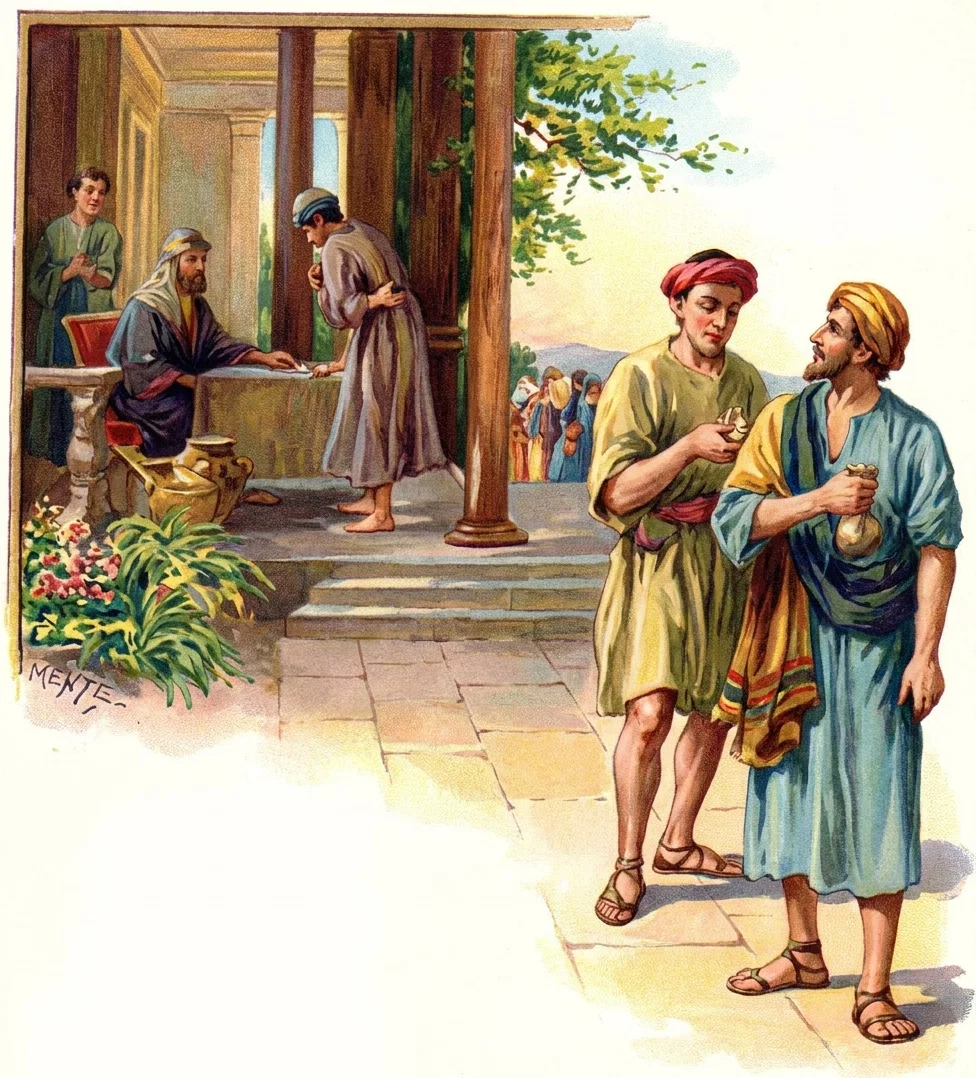
In the parable he that had “received the five talents went and traded with the same, and made them other five talents; and likewise he that had received two, he also gained other two.”
The talents, however few, are to be put to use. The question that most concerns us is not, How much have I received? but, What am I doing with that which I have? The development of all our powers is the first duty we owe to God and to our fellow-men. No one who is not growing daily in capability and usefulness is fulfilling the purpose of330life. In making a profession of faith in Christ we pledge ourselves to become all that it is possible for us to be as workers for the Master, and we should cultivate every faculty to the highest degree of perfection, that we may do the greatest amount of good of which we are capable.
The Lord has a great work to be done, and He will bequeath the most in the future life to those who do the most faithful, willing service in the present life. The Lord chooses His own agents, and each day under different circumstances He gives them a trial in His plan of operation. In each true-hearted endeavor to work out His plan, He chooses His agents, not because they are perfect, but because, through a connection with Him, they may gain perfection.
God will accept only those who are determined to aim high. He places every human agent under obligation to do his best. Moral perfection is required of all. Never should we lower the standard of righteousness in order to accommodate inherited or cultivated tendencies to wrongdoing. We need to understand that imperfection of character is sin. All righteous attributes of character dwell in God as a perfect, harmonious whole, and every one who receives Christ as a personal Saviour is privileged to possess these attributes.
And those who would be workers together with God must strive for perfection of every organ of the body and quality of the mind. True education is the preparation of the physical, mental, and moral powers for the performance of every duty; it is the training of body, mind, and soul for divine service. This is the education that will endure unto eternal life.
Of every Christian the Lord requires growth in efficiency and capability in every line. Christ has paid us our wages, even His own blood and suffering, to secure our willing331service. He came to our world to give us an example of how we should work, and what spirit we should bring into our labor. He desires us to study how we can best advance His work and glorify His name in the world, crowning with honor, with the greatest love and devotion, the Father who “so loved the world, that He gave His only begotten Son, that whosoever believeth in Him should not perish, but have everlasting life.”
But Christ has given us no assurance that to attain perfection of character is an easy matter. A noble, all-round character is not inherited. It does not come to us by accident. A noble character is earned by individual effort through the merits and grace of Christ. God gives the talents, the powers of the mind; we form the character. It is formed by hard, stern battles with self. Conflict after conflict must be waged against hereditary tendencies. We shall have to criticize ourselves closely, and allow not one unfavorable trait to remain uncorrected.
Let no one say, I can not remedy my defects of character. If you come to this decision, you will certainly fail of obtaining everlasting life. The impossibility lies in your own will. If you will not, then you can not overcome. The real difficulty arises from the corruption of an unsanctified heart, and an unwillingness to submit to the control of God.
Many whom God has qualified to do excellent work accomplish very little, because they attempt little. Thousands pass through life as if they had no definite object for which to live, no standard to reach. Such will obtain a reward proportionate to their works.
Remember that you will never reach a higher standard than you yourself set. Then set your mark high, and step by step, even though it be by painful effort, by self-denial and sacrifice, ascend the whole length of the ladder332of progress. Let nothing hinder you. Fate has not woven its meshes about any human being so firmly that he need remain helpless and in uncertainty. Opposing circumstances should create a firm determination to overcome them. The breaking down of one barrier will give greater ability and courage to go forward. Press with determination in the right direction, and circumstances will be your helpers, not your hindrances.
Be ambitious, for the Master’s glory, to cultivate every grace of character. In every phase of your character-building you are to please God. This you may do; for Enoch pleased Him, though living in a degenerate age. And there are Enochs in this our day.
Stand like Daniel, that faithful statesman, a man whom no temptation could corrupt. Do not disappoint Him who so loved you that He gave His own life to cancel your sins. He says, “Without Me ye can do nothing.” Remember this. If you have made mistakes, you certainly gain a victory if you see these mistakes, and regard them as beacons of warning. Thus you turn defeat into victory, disappointing the enemy, and honoring your Redeemer.
A character formed according to the divine likeness is the only treasure that we can take from this world to the next. Those who are under the instruction of Christ in this world will take every divine attainment with them to the heavenly mansions. And in heaven we are continually to improve. How important, then, is the development of character in this life.
The heavenly intelligences will work with the human agent who seeks with determined faith that perfection of character which will reach out to perfection in action. To every one engaged in this work Christ says, I am at your right hand to help you.
As the will of man co-operates with the will of God, it becomes omnipotent. Whatever is to be done at His command, may be accomplished in His strength. All His biddings are enablings.