Your ShelfYour Projects

Signs of the Times, Vol. 39, No. 23.

Religious Combinations in Politics

Signs of the Times

Jun 11, 1912

Pacific Press Publishing Association · Mountain View, California · Jun 11, 1912

Religious Combinations in Politics
“Jesus answered, My kingdom is not of this world.” —John 18:36.
“They are not of the world, even as I am not of the world.” —John 17:16.

Religious Combinations in Politics

(From Report adopted by the U. S. Senate, 1829)
EXTENSIVE religious combinations to effect a political object are, in the opinion of the committee, always dangerous. This first effort of the kind calls for the establishment of a principle which, in the opinion of the committee, would lay the foundation for dangerous innovations upon the spirit of the Constitution, and upon the religious rights of the citizens. If admitted, it may be justly apprehended that the future measures of the Government will be strongly marked, if not eventually controlled, by the same influence. All religious despotism commences by combination and influence; and when that influence begins to operate upon the political institutions of a country, the civil power soon bends under it; and the catastrophe of other nations furnishes an awful warning of the consequence.”
“If the principle is once established that religion, or religious observances, shall be interwoven with our legislative acts, we must pursue it to its ultimatum.”

To the Reader

TO THE READER.—This paper is published in the interests of LIBERTY—YOUR liberty as well as ours. We believe that our liberties, yours as well as ours, are in danger; that inalienable rights are jeopardized by movements and influences now operating. Some friend may send you this paper. You will not be asked to pay for it; but we do plead with you to read and weigh what it contains. We should be glad to hear from you either favorably or adversely.

"IF YE WILL INQUIRE, INQUIRE YE."

This Inquirers' Department is conducted for the purpose of helping those who are studying the Bible. The answers are oftentimes only suggestive. They are never to be considered infallible, only as they agree with the infallible Word. The writer who may answer them does not consider that his opinion is infallible. He will simply give the best that he has, and plead with the inquirer to search the Word. Such questions only will be answered as, to the editors, seem to minister to the good of the readers and to the mission of the paper. We can not answer repeatedly in the same volume questions upon the same scripture. The name and address must accompany question, not for publication, but as an evidence of good faith, and that answer may be made by letter if deemed advisable. No letters are answered which do not contain the name of the writer. It is well always to enclose stamp for reply.

Matthew 12:40

3775 — Matthew 12:40

How can Matt. 12:40 be explained, in view of the record that Jesus died and was buried Friday afternoon and was resurrected early Sunday morning?
If one will read the record concerning our Lord's betrayal, death, and resurrection, he will find an expression used again and again, in varied form—"in three days" or "within three days," "three days," and "after three days"—all used with respect to the same period of time. It will be noticed that Matt. 12:40 does not say that as Jonah was three days and three nights in the whale's belly, so shall the Son of Man be three days and three nights in the grave, but "in the heart of the earth,"—within the power of the darkness of earth, the rulership of earth. That would take from the time of our Lord's betrayal to His resurrection, which includes at least part of three days and the whole of another. Nothing more is implied in the text by "three days and three nights," as shown by the very usage of these terms in the Gospel. Three days and three nights after the time when our Lord was betrayed, or on the third day after that, He was brought from the grave. He met with His disciples on what would be our Thursday afternoon, the first evening of that day beginning at about three o'clock. He was crucified twenty-four hours from that time. For about thirty-six hours He was in the tomb, or another full day and part of the next. But parts of days are counted as full days in general terminology, and both prediction and fulfilment are met in this understanding of the scripture. Much more might be said, but we think these hints will be sufficient. See "Questions and Answers," pages 28-34 inclusive.

3776—Every Creature of God Is Good

Will you please explain 1 Tim. 4:3, 4? It reads as if every creature of God is fit for food, if it be received with thanksgiving. O. C. L.
There are several points in this passage which should be taken into consideration in the study of the scripture:
1. It is not a prophecy particularly of the last days. It does not say "in the last days" about which the Spirit speaks expressly, but "in later times;" "subsequent seasons," one translation reads. That is, in later times than the apostle's day all these things should come in with the apostasy.
2. It would be among those that once professed the truth of God—they should fall away from the faith. Instead of looking to the Lord Jesus Christ for salvation, they would manufacture various ways of their own.
3. In thus departing from Christ they would give heed to seducing spirits and doctrines of demons. Two of these doctrines of demons are set forth in the very beginning of the Bible, in the temptation under which our first parents fell. The serpent came to the woman and said, "Ye shall not surely die . . . ye shall be as God." Gen. 3:4, 5. The immortal soul and the power within one's self to persist are two of the doctrines of demons, both of which lead away from utter and absolute dependence upon the Lord Jesus Christ. Departing from the faith and giving heed to the delusions and deceptions of the enemy, of course, would lead to hypocrisy and to the hardening of the conscience.
4. There would come into this apostasy forbidding to marry; not forbidding all to marry, but perhaps forbidding some to marry, demanding celibacy—not merely discouraging marriage (sometimes it is proper to do that), but as a matter of religion forbidding to marry, and commanding to abstain from meats as a religious matter, authorizing stated fasts. All these things are not of the Gospel. It is an assurance of an apostle that "marriage is honorable" in all.
5. The word from which "meats" comes does not mean flesh food. It is not a mere command to abstain from flesh, but from food. The Greek word is "broma," meaning food of any kind, either vegetable or animal. These commands of apostasy would deprive one of regular food at times, just as apostasy has been doing through all the centuries in its authorized stated fasts. A fast, to be worth anything, must be voluntary.
6. We do not see anything in this passage which would imply that all things are fit for food. God has shown us in His Word again and again that not all things are best. He Himself has separated between the clean and the unclean, as in Leviticus 11 and Deuteronomy 14; and science has demonstrated the truthfulness of God's classification in absolutely forbidding the things prohibited of God, as swine's flesh, when one is sick or convalescent; and there are many indeed who from the purely scientific standpoint abjure these altogether.
7. It is better to us, it seems, to understand the text in this way,—that this apostasy commands to abstain from meats which God created to be received with thanksgiving by them that believe and know the truth concerning just what God has given. "For every creature of God is good, and nothing to be rejected, if it be received with thanksgiving: for it is sanctified through the Word of God and prayer." There are some things that are sanctified, or set apart, for food. God has told us very plainly that they are good for food. There are some things that are not so given. Those things which He has given for food, we may ask His blessing upon, and receive them with thanksgiving. This is the meaning of the text.

3773 — Book of Enoch

Can you tell us in the "Question Corner" what is positively known about the book of Enoch? W. L. B.
Concerning this among authorities various opinions have been advanced. The "Popular and Critical Bible Encyclopœdia" tells us that "it seems to have been composed a little before Christ's appearance, by a Jew who had studied well the book of Daniel. At the same time we freely confess that the Saviour is spoken of in terms expressive of His dignity, character, and acts, surpassing the descriptions which other Jewish books present. Several circumstances render it apparent that it was originally composed in the Hebrew or Chaldee language." The object of the book seems to have been to comfort and strengthen the people of the time when it was written. Some think that it is possibly quoted by Jude, while there is question whether Jude really quoted the book of Enoch or not. This book may have been based on earlier sayings of Enoch, embodying them in its text.
The Standard Dictionary, however, speaks of two books of Enoch. The Ethiopic Enoch first became known in modern times through copies brought from Abyssinia in 1773 by J. Bruce, the traveler. That book contains 107 chapters, consisting of at least three primary works fused together by an editor. These three parts are the book of Enoch proper, chapters 1-36 and 72-105; the book of similitude, chapters 37-71; and the apocalypse of Noah, or more correctly, certain fragments of a book which probably existed as a whole under some title, ascribed to Noah. The book recounts the punishment of the sinning angels. And in doing this, Enoch narrates his extensive travels through the universe. In the fragment pertaining to Noah, the subject of the Flood is pictured as an event of the future (from the view-point of Enoch, of course), including accounts of leviathan, behemoth, and various nature elements, which come into play in the great catastrophe.
Then there is described the Slavonic Enoch. This book was made accessible in modern times in 1896 by Professor Charles and Mr. Morfill. This book is divided into sixty-eight chapters. The Slavonic book of Enoch was evidently at first written in Greek. After all that has been said upon it, it would be difficult to prove that this is the book of Enoch to which the apostle Jude refers. It would be more likely to believe that the writer of these books of Enoch bases his on some earlier writing which may have contained some of the teachings of Enoch.

3774 — Melchizedek

Who was Melchizedek as he first appears in Gen. 14:18? Was he Christ Himself, or only an ordinary man?
E. H.
That he was not an ordinary man is indicated by the description given in the 7th chapter of Hebrews, and that he was more than ordinary is also shown by the fact that Abraham offered homage to him. He was greater than Abraham. That he was not our Lord Himself is also shown by the fact that Christ is made like unto him, a priest after the same order. This has led some good Bible students to conclude that Melchizedek was a representative of another world, one of the unfallen worlds, just the same as Adam would have been at the head of this world if he had not sinned. Adam, in the third chapter of Luke, is called "the son of God." He would have been the priest of this world had he not fallen. Other worlds doubtless have their fathers, or the one who occupies the same relation to that world as did Adam to this, and this man who visited Abraham may have been the head of some other world placed here for a little time as an illustration, or object-lesson, for the generations to come. The very name itself means "king of righteousness," in the Hebrew,—"melech," king; and "zedek," righteousness.

3777 — Knowledge of the Truth, and When We Receive It

Please explain Heb. 10:26-29. What is the "knowledge of the truth," and when do we receive it?
By the knowledge of the truth in this passage is meant that clear depth of knowledge that comes by conversion to God and harmony with His truth through the Spirit. He who has the knowledge of the truth there referred to is one who has tasted of the good Word of God, who has realized the cleansing of the blood of the Son of God and the power of the Spirit of grace. Now when a man, in the light of this, will turn away from the truth of God, turn away from the means of grace which God has given, there is no other power by which God can reach him. His sin is unpardonable because it is unrepentable. When one, in the very light of the knowledge of the power and goodness of God, turns from that power, he puts himself in a position where he can not tell when good comes. The sad thing of it is not that God's mercy is not just as great as before, not that God is not just as willing to help as ever before; but the man, by his very sinning, takes himself away from the channel from which the help of God flows.

3778 — Roosevelt and a Catholic President

Did Mr. Roosevelt ever express the hope that he might see the time when a Catholic would occupy the presidential chair, or words to that effect?
He did, we believe, about five years ago; spoke to the effect that he would be glad to see the time when a Catholic would occupy the presidential chair. There was a great deal of discussion about it at the time, and some earnest protests were sent to Mr. Roosevelt from religious bodies.
Schedule for Week Ending June 22

Schedule for Week Ending June 22

Sunday June 16 Isaiah 17, 18
Monday " 17 " 19, 20
Tuesday " 18 " 21, 22
Wednesday " 19 " 23, 24
Thursday " 20 " 25, 26
Friday " 21 " 27, 28
Sabbath " 22 Psalms 54, 55, 56

Isaiah’s Judgments and the Psalms

Our readings begin with the "burden of Damascus" and God's judgments upon that city. Then to the land of the rustling of wings, which many take to be the United States of America. Then the burden of Egypt, of Philistia, of the wilderness, of the valley of vision, of Tyre. Then from the destruction and judgments upon these various nations, sections, peoples, the prophet carries us forward to the judgments of God upon the earth, when the earth shall be "utterly emptied" and "utterly spoiled," when all the wicked upon the earth "shall be gathered together, as prisoners are gathered in the pit," and shall be shut up in the prison "many days," evidently the thousand years of Revelation 20. Following this is the prophet's expression of confidence in God, the refuge and strength of His children. The prophet looks forward even to the resurrection as set forth in Isa. 26:19, a clear, strong refutation of the doctrine that the resurrection is not taught in the Old Testament. Chapter 28 is a strong reproof against the ten-tribe kingdom of Samaria, and then looks forward to the time again when Christ shall reign.
Psalms 54, 55, and 56 are a good conclusion to the week's reading. These, as well as those of the previous week, are largely personal experience psalms, and those that ought to take strong grip of the hearts of devout readers.

America and Religious Liberty

By Charles Miles Snow, Author of "Rise and Fall of Religious Liberty in America"

IV—Forces of Retrogression in the Ascendancy
T was one hundred fifty-six years from the landing of the Pilgrims to the signing of the Declaration of Independence. And what was achieved in that long span of years? — Little. Their brightest minds and greatest souls groaned under the chains of a spiritual tyranny forged for them by a State Church.
It has been one hundred thirty-six years since the signing of the Declaration of Independence; and what has been accomplished?
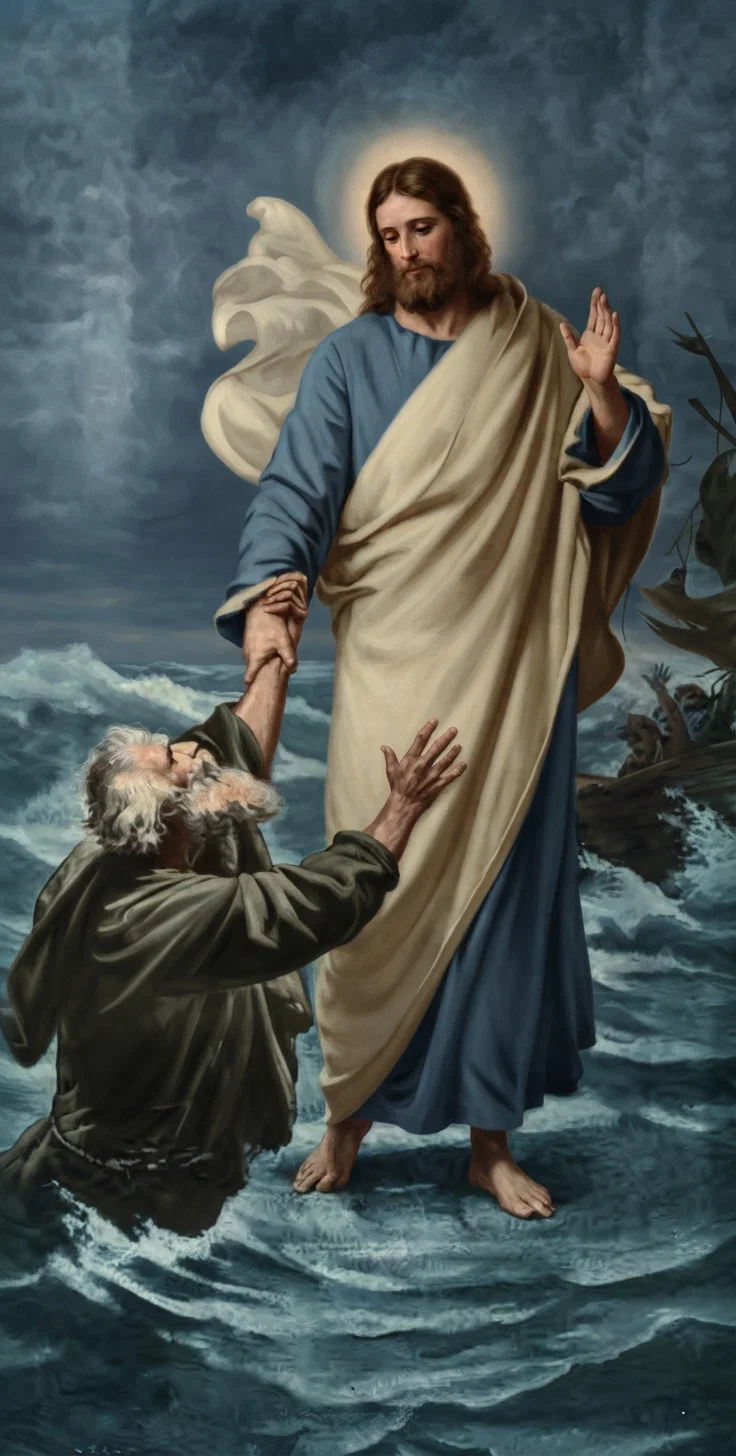
Plockhorst Jesus, the Saviour of men; but He saves not by political enactment or civil law, but by His own intrinsic moral power of life and love. He will save every soul when like Peter he will cry, "Lord, save me."
Rather, what has not been accomplished? It would seem that the very flood-gates of knowledge and progress were opened with the adoption of the Constitution, which guaranteed to all men equality before the law, and recognized the realm of conscience as outside the jurisdiction of the State. That was the secret spring so long hidden, which, touched by the finger of destiny, has put before the world a nation unsurpassed by any and helping in the progress of them all. That Constitution, with its guarantees of religious and civil equality, struck the shackles from the mind and conscience, and we are to-day viewing the result of that mighty emancipation. As already intimated, it is not confined in its effects to the United States of America. The anvil sparks from that smiting have set the world on fire, and the people of every land are crying for liberty — and getting it, little by little.
But there has been and still is in this country a powerful influence for retrogression. There is a combination in the religious world which considers itself robbed of its prerogatives so long as it is unable to dictate to men in spiritual things and force compliance with its decrees under threat of pains and penalties. That combination is not confined to the Roman Catholic Church. It has grown up like the night-sown tares of the Bible among the good plants of a better sowing. It is at the hands of a combination of influential forces that our priceless heritage of soul-freedom is in danger. In the year 1863 that influence, or force, took definite form and shaped its purpose. Its allies in that particular field have increased to prodigious proportions, and at the present time the halls of legislation, both State and national, are echoing with their insistent demands.
This persistent, aggressive force has set itself the task of removing the very foundations of our national structure, and building upon the ruins thereof another edifice dedicated to the union of the sacred and the secular, making the conscience and the faith of men the football of religious and political majorities.
The danger is none the less because these forces do not openly ask for the union of Church and State. Rather the danger is greater because they deny the desire for such a union while they industriously go on with the effort to accomplish it. So long have we enjoyed the fruit of religious liberty that we have forgotten to nourish and guard the tree which has borne it. Americans are studying many questions, are absorbed in many undertakings; but while we have plucked the ripened fruit, we have given little heed to the worm that has been cutting away at the root of the tree. The danger is real, and the forces of retrogression are sedulously mobilizing for the attack upon that immortal document which speaks a great nation's purpose.

The National Reform Association

The forces of retrogression, in this particular, find their nucleus in, and draw their inspiration and their arguments from, that organization already referred to as having its origin in the year 1863 — the National Reform Association. The name signifies the purpose of the organization, and indicates at once that it has set itself against the fundamental principles of the Government. Its avowed purpose is to re-form the nation. The principles upon which the nation was founded and which have made it what it is — the wonder and admiration of the world — are out of harmony with the principles of that organization. The principles upon which the colonial governments were founded, and which made them the brooding places of persecution and intolerance, are the principles which are strenuously advocated by that association. The colonial governments were patterned after the theocracy of ancient Israel. The lecturers of the National Reform Association have repeatedly uttered a demand for the return of this nation to the theocratic form of government.
There may be no immediate danger that the nation will change its form of government to that of a theocracy; and yet principle after principle which that organization holds is being accepted and acted upon by other and larger organizations. While repudiating the theocratic idea, in name, these other organizations accept and urge forward the principles advocated by the National Reform Association which are theocratic in their nature, subversive of the principles of freedom, and inimical to the best interests of the whole people.

Why Divorced from Religion

It is a notable fact that the Constitution of the United States contains no recognition of any particular religion; that it forbids Congress to legislate in the interests of any religious establishment; that it nowhere declares the nation to be a Christian nation, and nowhere mentions the name of Jesus Christ or of the Almighty. This was not donebecause of a feeling of disrespect on the part of its framers for religion or for Deity, but in order that the practise of religion might be free, and in order that the Constitution should give no excuse for men to interfere with other men in their relation to the Deity.
But the National Reform Association, repudiating the principle of liberty of conscience, has set for itself the definite and all-absorbing purpose of undermining liberty of conscience by remodeling the Constitution upon lines which will make it revoke what now it guarantees. From the preamble to the constitution of the National Reform Association we quote these words, which tell the association's vital intent:
"Believing that a written constitution ought to contain explicit evidence of the Christian character and purpose of the nation which frames it, and perceiving that the silence of the Constitution of the United States in this respect is used as an argument against all that is Christian in the usage and administration of our Government,"
"We, citizens of the United States, do associate ourselves under the following articles, and pledge ourselves to God and to one another, to labor, through wise and lawful means, for the ends herein set forth."
In the second article of the association's constitution, its purpose is further explained:
"Article II. The objects of this society shall be to maintain existing Christian features in the American Government; to promote needed reforms in the action of the Government touching the Sabbath, the institution of the family, the religious element in education, the oath, and public morality, as affected by the liquor traffic and other kindred evils; and to secure such an amendment to the Constitution of the United States as will declare the nation's allegiance to Jesus Christ, and its acceptance of the moral laws of the Christian religion, and to indicate that this is a Christian nation, and place all the Christian laws, institutions, and usages of our Government on an undeniably legal basis in the fundamental law of the land."
This would mean, in case of its adoption by the nation, a complete repudiation of the principles upon which the nation was founded. It is a blow aimed at the very foundation pillars of the national structure. It is, in fact, a declaration of war, not against the people, but against the Government itself, not for the acquisition of territory, but for the complete transformation of its character and the annihilation of its principles and purposes.
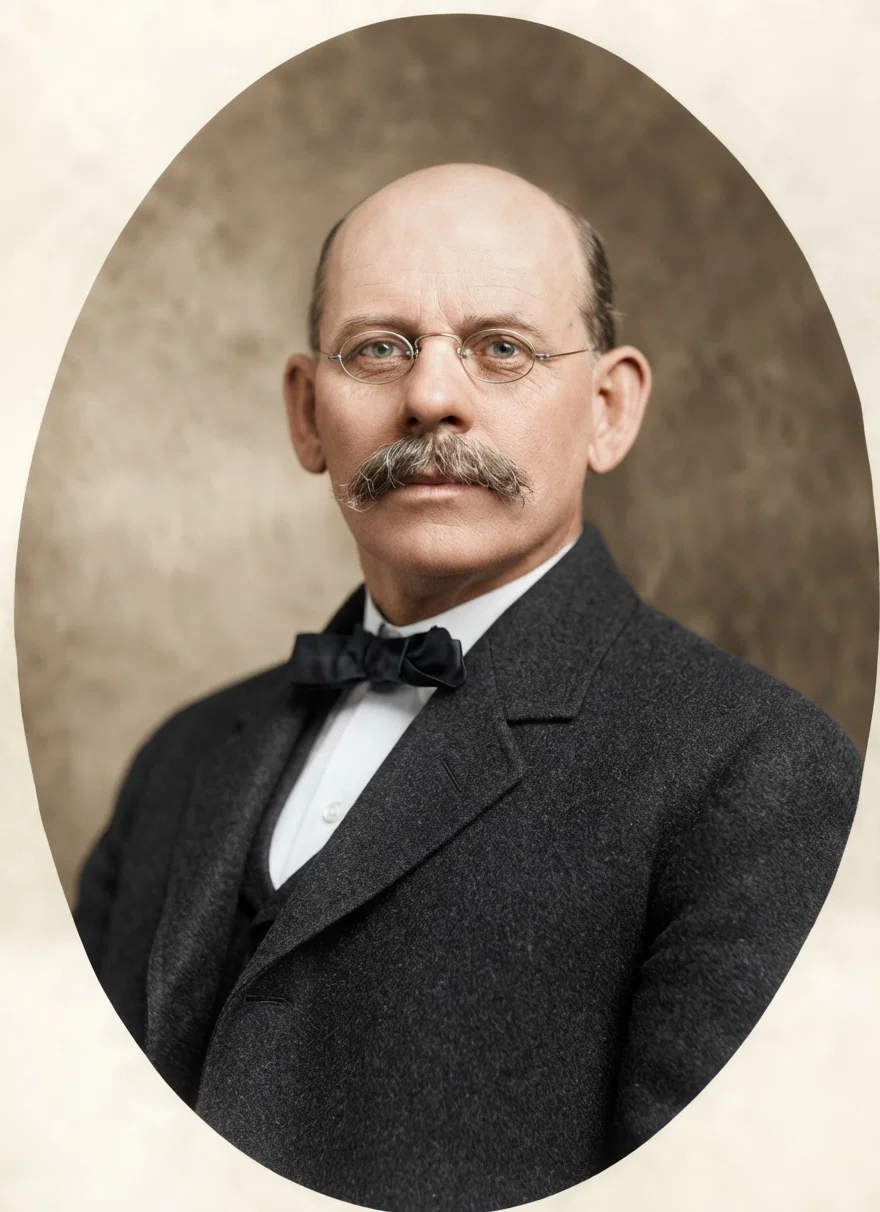
The Rev. J. S. Martin, General Superintendent of the National Reform Association
Where had stood the principle of the separation of Church and State, that would put the principle of the union of religion and State, or Church and State, which is unquestionably its equivalent.
Where the nation had refused to require a religious test as a qualification for any office or public trust, that would put the religious test as the chief test.
Where the nation refuses to permit the taxation of the general public for the promulgation of any religion or the support of teachers of religion, that would put the opposite principle, the teaching and support of religion by public taxation.
The nation establishes the equality of all its citizens without respect to their religion; but the National Reform régime would establish the superiority of the professor of religion by requiring the non-religious citizen to yield a certain amount of homage to religious practises in which he has no faith.
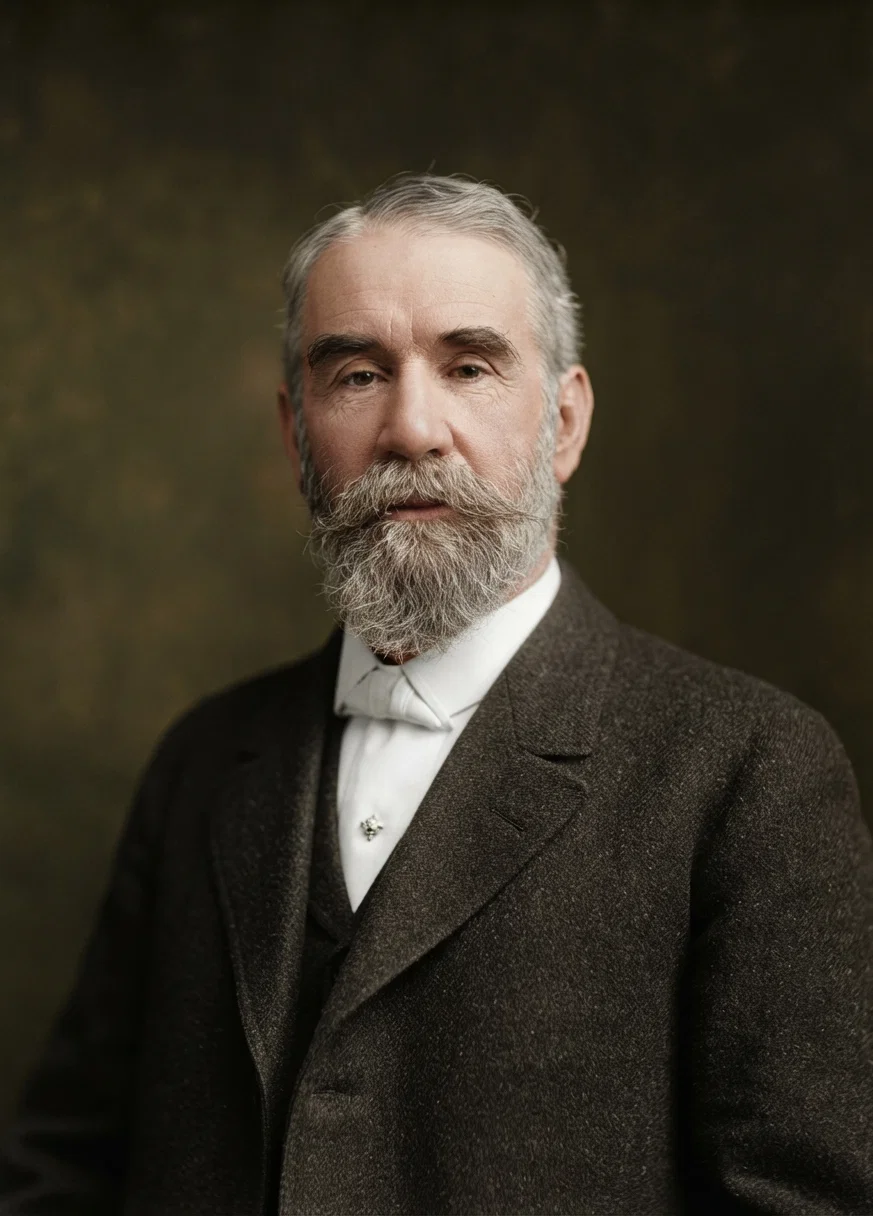
The Rev. S. F. Scovel, President of the National Reform Association
The nation, in refusing to Congress authority to establish any religion, makes it impossible for the nation constitutionally to enforce any religious ordinances; but the Government as remodeled in harmony with National Reform purposes, would require, among other laws, a law penalizing honest labor on the day which that transformed nation would select as its sabbath, and make liberty in the matter of religious belief and practise a thing of the past, outlawing conscience, making of religion a legal formalism, and instituting again the spiritual tyranny of the Dark Ages.

All in the Principles

This is not all "nominated in the bond," is not openly declared; but it is all in the principles espoused by that organization and its supporters, as truly as the chick is in the egg or the tree in the acorn. Dr. J. S. Martin, general superintendent of the association, in answering questions at the close of an address at Winona Lake, Indiana, in August, 1909, stated unequivocally that the no-religious-test guarantee of the National Constitution ought to be modified. The purpose of that organization to accomplish that modification was plainly expressed also in the program adopted at the World's Christian Citizenship Conference held in Philadelphia, Pennsylvania, November 16-20, 1910.
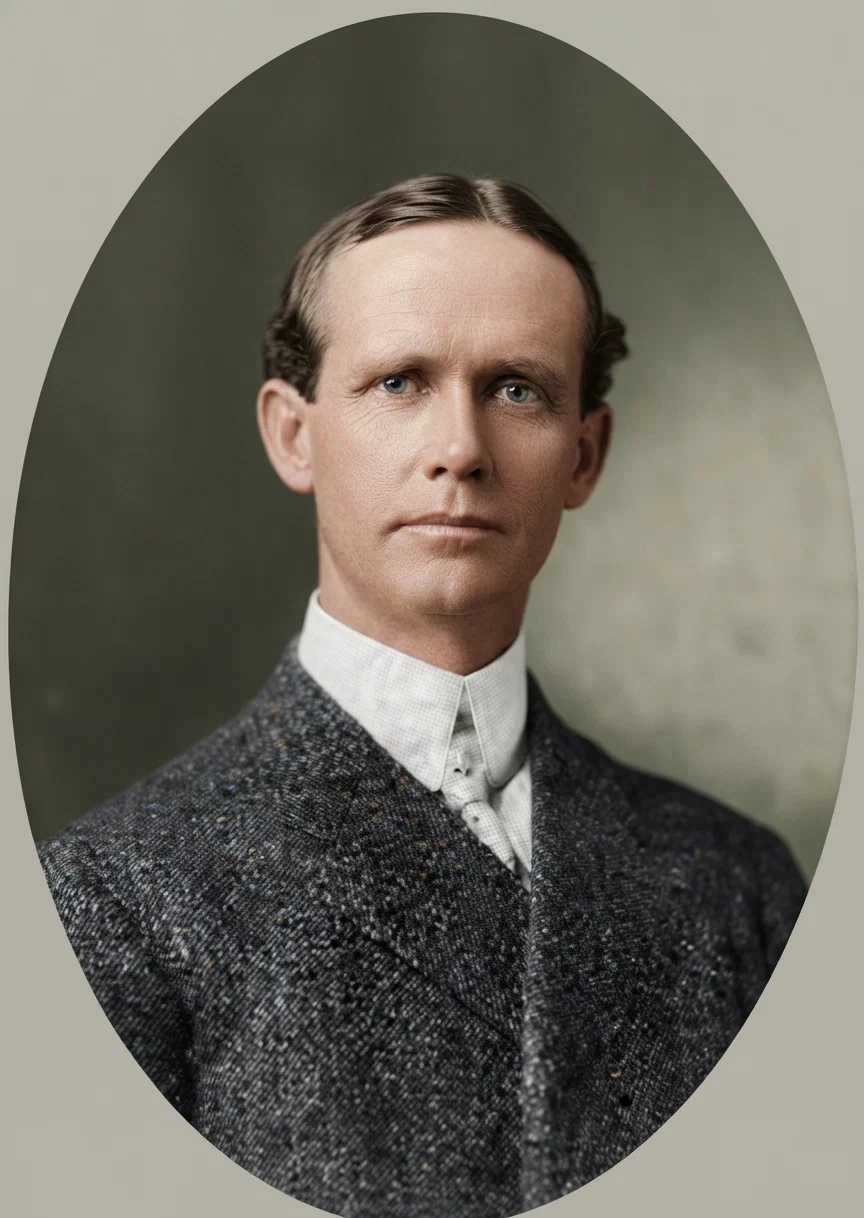
The Rev. John Royal Harris, a prominent National Reformer and Presbyterian Pastor of Philadelphia
It is perfectly apparent that should the purpose of the National Reform Association, as expressed in its constitution and preamble, ever be accomplished in this country, a national religion would be established, and laws regulating religious concernments would be as constitutional as laws relating to the tariff and interstate commerce. But when a nation legislates on religious things, it invades the realm of conscience, the citadel of the soul; and the distressful history of the Dark Ages and of the American colonies ought to be a sufficient warning as to what is involved in that. In view of what the Reformation did in bringing men from the darkness and misery of soul bondage, and in view of the further step and the fuller accomplishment in this country in freeing conscience from the penalties of law, the success now attending that disintegrating propaganda is marvelous and alarming.

The Working Out of Right Principles

The nation, since the adoption of the first amendment to the Constitution, has stood more squarely upon the Christian principles of civil government than any other nation in the world. It has done this without making any declaration of purpose to be Christian, or to favor one sect or religion above another. It has done this because it has made no such declaration, but in religion has left every individual free to follow the dictates of his own conscience. It has sought to guarantee to every inhabitant the greatest personal liberty consistent with the equal rights of all,—a thing it could never accomplish if it attempted to exercise jurisdiction over the souls of men.
The people are now asked to choose between a nation professing Christianity and scourging the bodies of men to save their souls, and a nation making no such profession and practising no such unchristian barbarities.
Referring to the lack of the acknowledgment of God and of religion in the Constitution, the Hon. George Shea, chief justice (Continued on page 9)

America and Religious Liberty

(Continued from page 4)
of the Marine Court of New York, declares that the principles of Holy Writ were “not less understood, not less manifest, not less reverenced and obeyed, because not formulated by legislation.”—“Nature and Form of the American Government,” page 66. It is worthy of note in this connection that the constitution of the Confederate States of America did contain such an acknowledgment of Deity as the National Reform Association proposes for the National Constitution, and that its existence ceased in less than five years in spite of such a talisman.
Now, in State after State, branches of the National Reform Association are being formed; and one of the chief purposes of the organization’s existence is being espoused in every State in the Union. Wherever a law is demanded enforcing a sabbath upon the people, there a principle of the National Reform Association is being promulgated; and wherever that demand is acceded to, the people who urge it are accepting the principle of a union of Church and State, and the principle that the State is at liberty to legislate in the realm of religion. As that is the principle which dominated the Dark Ages and made them dark, it is to be hoped that Americans will rally to a defense of the principles of religions and civil liberty contained in the great American Bill of Rights—the Constitution of the United States.
C. M. SNOW.
Continue reading: Look and Live