Review and Herald Publishing Association · Washington, D. C. · Oct 2, 1913
Lo, He Comes
By C. M. Snow
C. M. SNOW
Through the twilight, through the gloaming,
Of the swiftly passing day,
God is flashing to the nations
Signals of the coming fray.
Men may read it in the judgments
That are falling on the world,
In the deeds that quench the Spirit,
Where sin’s banners are unfurled;
They may read it in the reckless
Race for riches, place, and fame,
While the racers crush the helpless
In their mammon-maddened game;
It is written in the records
Of the strivings of the soul
That has bartered all of heaven
For a gilded crumbling goal.
Heed, ye careless! heed the warning
God is flashing forth today!
Earth and heaven are loudly telling
That our God will not delay.
He is coming, say the prophets—
Shout it till the welkin rings!
He is coming,— earth declares it,—
Lord of lords and King of kings.
LIBERTY
A MAGAZINE OF RELIGIOUS FREEDOM
PUBLISHED QUARTERLY 10 CTS. A COPY 35 CTS. A YEARWASHINGTON, D. C.
PRICES, POST-PAID
Yearly subscription $ .35
Three years (or 3 subs. 1 year) .90
Four years (or 4 subs. 1 year) 1.00
Ten years (or 10 subs. 1 year) 2.00
Ten copies, one year, to one address or more 2.00
(Subscriptions for less than one year not accepted)
20 copies ordered at one time 1.00
50 copies ordered at one time 2.00
100 copies ordered at one time 4.00
NO EXTRA CHARGE ON FOREIGN
SUBSCRIPTIONS
SPECIAL
American Principles Number
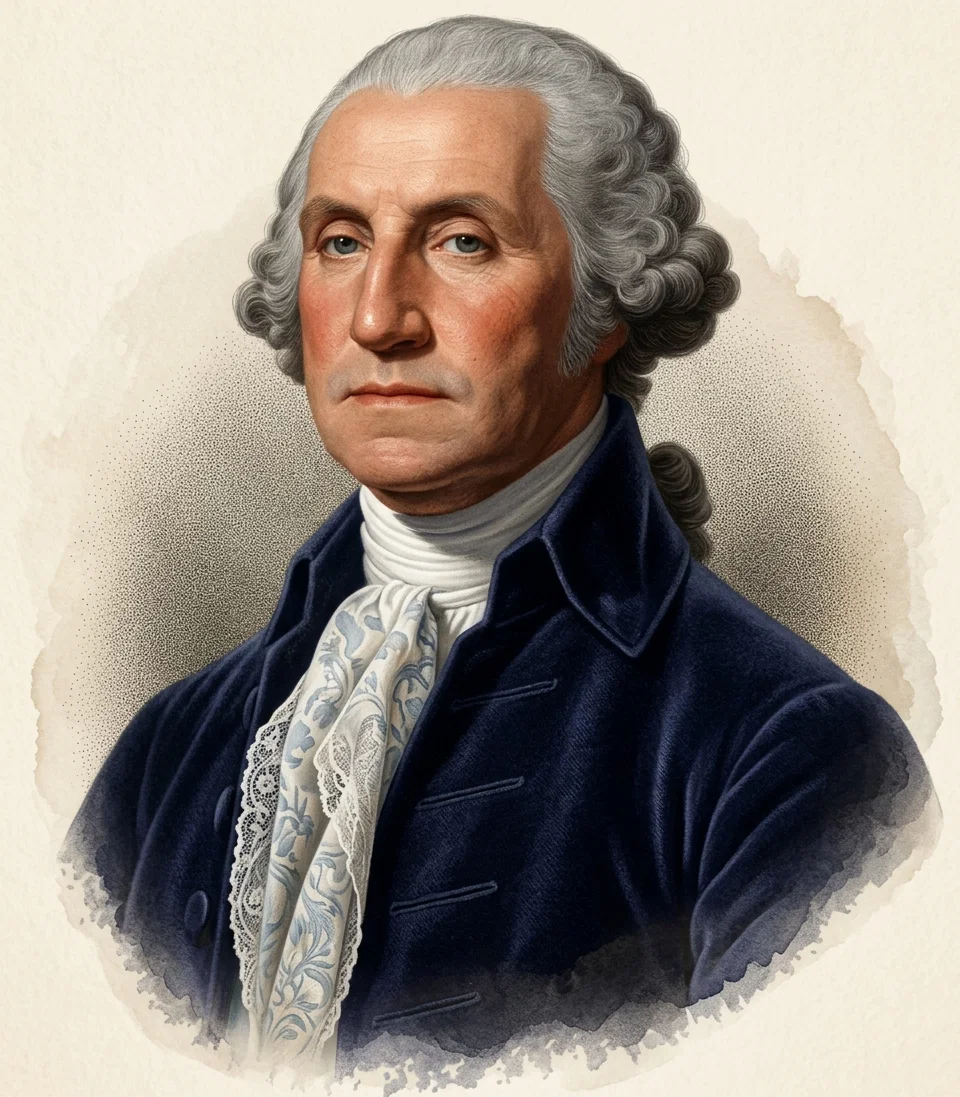
Striking Cover: Two-Color Portrait of Geo. Washington;
Back-Page Cartoon, “Undermining the Foundations”
PARTIAL CONTENTS
Will “Christian Citizenship” Save the World?
Catholics and Protestants Have Equal Rights
Religion in the Public Schools
American Principles of Freedom
National Reformism — A Layman’s View
Struggles for Freedom
Congressman Bartholdt on Personal Liberty and Sunday Legislation
Forces Antagonistic to America
Freedom of Speech
Religious Liberty in the Philippines
Roger Williams, “the First American”
World’s Christian Citizenship Conference
Constantine’s Sophistry Practised on Americans
Jefferson’s Prophecy Nearing Fulfillment
Voluntary Religion an American Policy
Mayor Gaynor’s Rebuke to a Religious Spy
What Prominent Men Have Said About Religious Legislation
and the Rights of the Minority (with portraits)
The Liquor Traffic vs. Personal Liberty
AN ARSENAL OF EFFECTIVE RELIGIOUS
LIBERTY AMMUNITION
The portrait and cartoon on the cover make this an easy seller. The articles are exceptionally valuable and interesting.
AGENTS WANTED EVERYWHERE IN AMERICA! Send ten cents for sample copy. Liberal terms to agents on yearly subscriptions. Write today for particulars.
Become our agent by sending $1.00 for 20 copies; $2.00 for 50; $4.00 for 100. We pay the postage and will ship to one or more addresses as desired. Send $2.00 for 10 yearly subscriptions for your friends.
ORDER THROUGH OUR NEAREST AGENCY
If you do not know the address of our Agency, ask “Liberty Magazine,” Washington, D. C.
Supplies for Home Missionary Workers
SPECIAL TRACT ASSORTMENTS
The tracts and pamphlets contained in these packages cover, in a complete manner, the subjects indicated, and are bringing the truth to the attention of thousands of people every year.
ARE YOU DOING YOUR PART IN DISTRIBUTING THIS LITERATURE among your friends and associates?
No. 1. Coming of the Lord and Signs of the Times. 342 pages; price, 25 cents.
No. 2. The Sabbath. 408 pages; price, 25 cents.
No. 3. State of the Dead and Immortality of the Soul. 400 pages; price, 25 cents.
No. 4. Health and Temperance. 294 pages; price, 25 cents.
No. 5. Religious Liberty. 196 pages; price, 10 cents.
The tracts on the above subjects have been carefully selected, to enable the workers to secure as large an assortment as possible on the subjects presented.
POUND PACKAGES OF TRACTS
These packages contain about 18 tracts on each of the following subjects, each tract being printed on single sheet, CONDENSED, RIGHT TO THE POINT, and covering the subject in a remarkably clear manner:—
The Sure Word of Prophecy
Prophetic History of the World
Second Coming of Christ
Signs of Our Times
The Sanctuary
The 2300 Days
The Law of God
The Sabbath of the Bible
The First Day of the Bible
Who Changed the Sabbath?
The Great Threefold Message
The Seal of God and the Mark of the Beast
Church and State
Life and Immortality
The Great Judgment-Day
The Home of the Saved
Price per pound, post-paid - - - 50 cents.
Review and Herald Publishing Association, Washington, D. C.
ORDER OF YOUR TRACT SOCIETY
Communion With God
By Eliza H. Morton
ELIZA H. MORTON
PRAYER is the opening of the heart,
A letting in of God,
A feeling of a weakness great,
A turning to the Lord.
No goodness ours, but all our thought
To do the Master’s will,
To feel the emptiness of life,
To hear the “Peace, be still.”
And when the soul is outward poured
And self is cast aside,
Then Jesus comes with listening ear
And arms extended wide.
’Tis sweet to plead with One who notes
Our every thought and word,
With One who understands and feels,
And bids us know we’re heard.
There’s need of earnest, fervent prayer,
For love is waxing cold;
Let’s cast our burdens on the Lord—
In faith we may be bold.
With shining faces we may stand
In sunlight from above,
And feel the Spirit as it comes
In waves of tender love.
When strengthened with God’s strength divine,
New zeal and life and power
Will fill our hearts and touch our lives
And help us every hour;
Then give us, Lord, for thine own sake,
A thirsting after thee,
That we may grow in grace and all
Thy light and glory see.
Portland, Maine.
The Triumph of Faith
By Ellen G. White
MRS. E. G. WHITE
ALL that was in his power to do to remove the cause of Israel’s apostasy, the prophet Elijah had done. He had executed the judgments of God upon the false prophets. He had set before the people their apostasy; he had called upon them to humble their hearts and turn to God. The people had confessed their sins and acknowledged the God of Israel as the living God. Now his curse was to be withdrawn, and his blessings renewed. The land was to be refreshed with rain.
“Get thee up, eat and drink,” Elijah said to Ahab; “for there is a sound of abundance of rain.”
Then the prophet went up to the top of Carmel to pray. Throughout the day he had unflinchingly performed the will of God, and now, his work ended, he humbly bowed down, “his face between his knees,” and interceded with God for penitent Israel.
When Elijah had bidden Ahab prepare for rain, he had no outward evidence that the showers were about to fall. He saw no clouds in the heavens, heard no thunder. He spoke the word that the Spirit of the Lord moved him to speak. He did everything in his power to show his faith in the word of God, then he prayed for the outpouring that God had promised.
Again and again Elijah sent his servant to a point overlooking the Mediterranean, to see if there was any visible token that God had heard his prayer. Each time the servant returned with the word, “There is nothing.” The prophet did not become impatient or lose faith, but continued his earnest pleading. For the sixth time the servant returned with the word that there was no sign of rain in the heavens. Undaunted, Elijah sent him forth once more; and this time the servant returned with the word, “Behold, there ariseth a little cloud out of the sea, like a man’s hand.”
This was enough. Elijah did not wait for the heavens to gather blackness. In that small cloud he beheld an abundance of rain; and he acted in harmony with his faith, sending his servant quickly to Ahab with the message, “Prepare thy chariot, and get thee down, that the rain stop thee not.”
It was because Elijah was a man of large faith that God could use him in this grave crisis in the history of Israel. As he prayed, his faith reached out and grasped the promises of heaven; and he persevered in prayer until his petitions were answered. He did not wait for the full evidence that God had heard him, but was willing to venture all on the slightest token of his favor. The Scripture says of him, “Elias was a man subject to like passions as we are, and he prayed earnestly that it might not rain: and it rained not on the earth by the space of three years and six months.”
It is faith such as this that is needed in the world today,—faith that will lay hold on the promises of God’s Word, refusing to let go until Heaven hears. It is faith that connects us with Heaven and brings us strength for coping with the powers of darkness. Through faith God’s children have “subdued kingdoms, wrought righteousness, . . . stopped the mouths of lions, quenched the violence of fire, escaped the edge of the sword, out of weakness were made strong, waxed valiant in fight, turned to flight the armies of the aliens.” And through faith we today are to reach the heights that God desires us to gain. “If thou canst believe, all things are possible to him that believeth.”
Faith is an element of prevailing prayer. “He that cometh to God must believe that he is, and that he is a rewarder of them that diligently seek him.” “If we ask anything according to his will, he heareth us: and if we know that he hear us, whatsoever we ask, we know that we have the petitions that we desired of him.” With the persevering faith of Jacob, with the unyielding persistence of Elijah, we may present our petitions to the Father, claiming all that he has promised. The honor of his throne is staked for the fulfilment of his word.
The shades of night were gathering about Mt. Carmel as Ahab prepared for the descent. “It came to pass in the meanwhile, that the heaven was black with clouds and wind, and there was a great rain. And Ahab rode, and went to Jezreel.” As he journeyed toward the royal city through the darkness and the blinding rain, Ahab was unable to see his way before him. Elijah, as the prophet of God, had that day humiliated Ahab before his subjects, had slain his idolatrous priests, but he still acknowledged him as Israel’s king. Now as an act of homage, and strengthened by the power of God, he ran before the royal chariot, guiding the king to the entrance of the city.
In this gracious act of God’s messenger to a wicked king is a lesson for all who claim to be servants of God, but who are exalted in their own estimation. There are those who feel above performing duties that to them appear menial. They hesitate to perform needful service,940fearing that they will be found doing the work of a servant. These have much to learn from the example of Elijah. By his word the treasures of heaven were for three years withheld from the earth. He was signally honored of God as, in answer to his prayer on Carmel, fire flashed from heaven and consumed the sacrifice. His hand executed the judgment of God in slaying hundreds of idolatrous prophets; and his petition for rain had been granted. And yet, after the signal triumphs of the day, he was willing to perform the service of a menial, to run before the chariot of Ahab for many miles in the darkness and the storm.
The Lord's Treasury
By E. K. Slade
Gospel Finance—No. 11
The Lord's Treasury
E. K. SLADE
A GREAT deal of importance is attached to the idea of knowing what and where God's treasury, or storehouse, is. There could be but little meaning to the words, “Bring ye all the tithes into the storehouse, that there may be meat in mine house,” if we are left free to use and pay our tithes in any way or place to suit the fancy of each one. There are those who feel that they should be permitted to pay their tithes where they choose, regardless of God's organized work. In past years tithes have been paid by individuals to various enterprises or direct to a certain minister in such a way as to cripple the work and cause much perplexity, but at present that practise does not prevail to so great an extent. No minister in good standing will receive that which God commands to be brought into his treasury. No member in good standing will ignore the order required in the house of God in the payment of tithes.
Our work is organized as near as we can know in harmony with plans outlined in the Word of God. He has his agencies in the earth for carrying forward his work. Those agencies, organized and operating in harmony with his truth, and giving the message and performing the work required for man's salvation and for properly warning the world, must be recognized as God's work in the earth. Those called out by the message and engaged in his work certainly constitute what he chooses to refer to as “mine house” in the world. The tithes and offerings are called for as the only means of financing his work. They are to be brought into the “storehouse,” or treasury, that the work of God in the earth may not suffer. There can be no question regarding the urgency of the requirement for all tithes and offerings to be brought to the treasury of God's house, the church. “If all, both rich and poor, would bring their tithes into the storehouse, there would be a sufficient supply of means to relieve the cause from financial embarrassment, and to carry forward nobly the missionary work in its various departments.”
It is not our purpose, and neither can it be necessary, to produce arguments to show that our church and conference treasuries are God's storehouse, or treasury, in connection with his work at this time. It is of importance to us to see the wisdom in this arrangement and the principles involved for the protection of the cause and the good of those conforming thereto.
Men are selected and set apart for the ministry, not by one or two or a few persons, but by organized conferences in harmony with and having the approval of the denomination. Credentials are granted to those whose lives and labors and whose talents and training are in harmony with the high standard required by the denomination. Such credentials are granted for only a year at a time. When conditions will not warrant it, they are not renewed. Under this arrangement money from God's treasury is used to support only those laborers having the approval of the body. It takes the task of determining who shall be supported from the funds, from one or two or a few, and places it upon the whole people.
This arrangement is of great importance. Great care is exercised in all our conferences in the selection of workers whose support is to come from the tithes. Every member in the churches whose tithes and offerings go to the conference treasury is permitted to have a voice in determining who shall be set apart to the ministry and receive support from the treasury. Left to a few, grave complications would develop. For each member to decide who shall be supported by his tithe is wholly out of harmony with the light which God has given for the management of his work. The denomination under the guidance of God through his Word is to decide who shall be set apart as ministers and missionaries. The denominational treasury must of necessity receive and disburse the funds for the support of the work of God in the earth. To disregard this order brings great confusion and demoralization to the work of God.
There are those who assume the responsibility of ignoring the Lord's treasury by paying tithes direct to individuals, yet such cases are few.
The tithe is withheld or diverted by some because there are ministers employed whom they do not like or because the work is not managed to suit them. They would rather rob God or risk paying tithe to an individual than to recognize the order existing in the church by paying it into the treasury, where every penny is accounted for and used in harmony with the divine plan.
These cases are of such a character as to emphasize the importance of the organized plan. In nearly all such cases the recipients of the tithes are individuals who could not be recognized or who have been rejected by the body as public laborers. The payment of our tithes is to be to God and not to man; and he who will rely upon his own judgment, impressions, or preferences by paying to a man of his choice instead of coming to the treasury of the Lord's house, is making a serious mistake.
Mount Vernon, Ohio.
Offerings for the Support of God's Cause
By William Covert
WILLIAM COVERT
The whole question of man's redemption is based upon the great offering made by Christ for sin, and the gospel of this offering must be carried to all mankind by continual sacrifices and offerings made by men.
The tithe is to be invested in evangelistic work, while funds procured through offerings are to pay for meeting-houses, provide institutions, and defray such associated expenses as cannot be legitimately met from the tithe. Our people are almost a unit upon the subject of tithing, and they ought to be as well agreed upon the question of offerings as they are upon the matter of tithing. We know the tithe is designed to furnish the means and to equalize the financial burden of evangelistic work, so as to rest with equal weight upon each one. Why not then make our offerings upon the same principle of unity that we pay our tithes, and with the same frequency? We could do this according to the amount of funds to be raised for any specified5purpose.
And if the per cent paid was according to the income of each member, the burden would then be equalized. If such a system should be generally adopted, it does not seem that any one would have a right to complain about it, for the poor would not have a large sum to raise, and the rich would have an abundance with which to pay their share.
Let this income offering be sent to the treasury every time the individual pays his tithe, and the conference would always be supplied with funds for its essential work. There are many expenses to be met in caring for a conference that the tithe was never designed to cover; and if there were an adequate stream coming in in a regular flow, as the Lord's tithe comes to the conferences, then the conferences would have their tent and camp-meeting interests, their school work, their medical departments, their city missions with their multiplied demands, and all the many incidental expenses cared for.
Since God works by order in all that he does, it follows that he has given advice in his Word which will apply to offerings as definitely as to tithes, and this advice should be sought out and heeded.
In speaking of the offenses committed in financial matters he says to delinquents, “Ye have robbed me in tithes and offerings.” And then he calls upon all who are guilty to restore to his cause what they have taken or have withheld from it. The basis upon which God's people are to make their offerings is in proportion to the light and the blessings they receive from God. “For unto whomsoever much is given, of him shall much be required: and to whom men have committed much, of him they will ask the more.” Luke 12:48. “Freely ye have received, freely give.” Matt. 10:8. If God has given to us great light, then we owe to the world a great debt, for God has put us under obligation to give the light to all the world so far as he has given light to us. “Every man according as he purposeth in his heart, so let him give; not grudgingly, or of necessity: for God loveth a cheerful giver.” 2 Cor. 9:7. But can God love niggardly giving and stingy offerings?
The regulations for offerings in Israel which God proclaimed through Moses was that every male of the nation should appear before the Lord three times in the year, and when he went to the meeting the command was, “They shall not appear before the Lord empty: every man shall give as he is able, according to the blessing of the Lord thy God which he hath given thee.” Deut. 16:16, 17.
These offerings were made first at the season of the Passover; second, about fifty days later at the feast of weeks, or Pentecost; third, at the harvest ingathering about the middle of the seventh month, called the feast of tabernacles. In each of these gatherings there were the products of the land and of the labor of the people, which were offered, besides pledges or vows to be paid, and free-will offerings to be made. See Ex. 23:14-17; Lev. 23:10-44.
Of course, it is not expected that God's people now will follow the routine laid down for ancient Israel, but the liberality of their offerings and the equalization of the burdens should furnish us a lesson which we would do well to imitate. Furthermore, the apostle Paul has adopted the principle of equalization in making offerings, and advised that it be done by “every one of you . . . as God hath prospered him.” 1 Cor. 16:2. But the apostle advised more frequent giving than anciently, for he counseled that it be laid aside weekly, so as to have it ready at any time when it might be called for. In a later communication to the same church he said that he had written to the churches as he did upon the subject of this offering on purpose that there might be an equality of the burden. “For,” he says, “if there be first a willing mind, it is accepted according to that a man hath, and not according to that which he hath not. For I mean not that other men be eased, and ye burdened: but by an equality, that now at this time your abundance may be a supply for their want.” 2 Cor. 8:12-14.
Herein is set forth by the apostle the principle of Christian giving for God's cause according to the income or prosperity of each member. It was to be a regular laying aside from week to week according to the prosperity of the member. The apostle explains the intention himself. He wanted all to give, but his intention was that the men of greater income might give accordingly, so as not to compel the poorer brethren to give more than their proportion. He wanted the income of each one to decide what that one could give; and this is right and equal for all, just the same as the tithing according to a man's income is equal for all. Then the needs of the cause should determine what the budget is to be, so that the leaders can adjust the amount according to the principle set forth.
One reason assigned by Paul why he wanted the churches to adopt the method he advised for raising funds was that the financial business would be out of the way when he arrived. His desire was that “there be no gatherings” when he should come. I am sure that many of our ministers who have had the burden of raising funds among our churches can sympathize with the apostle in this matter. O, how often even the Sabbath services are largely devoted to raising money for some branch of the cause; or, if not on the Sabbath day, then a special time is appointed to solicit money when the time ought to be devoted to the real, vital needs of the church and the community. But it is encouraging to know that there is growing up a large-hearted liberality in offerings among our people, and may we not hope that soon plans will be devised to make the offerings for both home and foreign work as regular and strong as the tithe is for the evangelistic work?
The ideal condition is sought after and advised by Malachi, and our earnest request should constantly be for the day to be hastened when the windows of heaven shall be opened and the spirit of faithful obedience fully manifested among God's remnant people.
A Morning Soliloquy
By A. Smith
A. SMITH
“How precious also are thy thoughts unto me, O God! how great is the sum of them! If I should count them, they are more in number than the sand: when I awake, I am still with thee.” Ps. 139:17, 18.
When I awake each morning, I should look upon the day before me as possibly my last one of life, and fill its precious moments with golden thoughts and deeds. My character is as a flower vase to be filled with roses and lilies from the garden of God’s love (Gal. 5:22-24), or with Satan’s weeds from the fields of sin. Every pure thought and word and action fragrant with the grace of humility in Christ, is the fruit of the Holy Spirit. Shall I, then, fill my vase today with these mementos of Eden? or shall I fill it with the devil’s weeds of unkind or impure words and deeds? Shall I make myself generally disagreeable and unkind to my associates, and self-conscious of guilt toward my God?—No, let me rather throw out the offensive weeds, cleanse my vase in the fountain for sin, and fill it with the life-giving water of the Holy Spirit.
I have not a moment to lose. When Christ comes, my character will be fixed beyond all change forever. The Holy Spirit will never place the seal of the living God upon the impure-minded man or woman, or the jester or foolish talker, upon him who is fascinated with the foolish things of this world; for it would sanction such evil things in heaven.
“May my angel’s record, every closing day,
Shine with love’s bright moments all the way.”
God Not Ashamed of Us
By H. H. VOTAW
H. H. VOTAW
Oftentimes the skeptic feels that he has completely silenced the believer by a reference to the sins — grievous sins — of the patriarchs, the records of whose lives the Scriptures give. Every Christian worker and almost every Christian layman has been confronted by some unbeliever who marshaled the mistakes of certain Biblical characters as proof that God either does not require a high standard of living of any one or that he arbitrarily chose certain ones as his children, regardless of their sins.
Only a most cursory reading of the Word could overlook the fact that God has always rebuked sin and reproved sinners even when the latter were his chosen subjects. Only a mind blinded by prejudice, it would seem, could fail to see that the very records of mistakes that the Bible gives are evidence that God is not biased in favor of some to the detriment of others. The attitude of mind with which God seems to view the children of men is revealed in the following words: “But now they desire a better country, that is, an heavenly: wherefore God is not ashamed to be called their God.” Heb. 11:16.
It is the man who is content with sin, willing to live in sin, that God finally rejects. It is the one who aspires to no higher things, desires no better things, who is accounted unworthy of citizenship in the kingdom of God. It is not the man who falls into sin, but the man who falls and makes no effort to rise, who is satisfied to remain in the filthy rags of unrighteousness, who brings shame and disgrace to his Maker. Though we sin through the weakness of the flesh, if we do not assent with the mind, if we do not approve with our hearts, if we seek to rise above it, if we “desire” better things, “God is not ashamed to be called” our “God.”
Simla, India.
Fearlessness in Faith
THERE IS a grand fearlessness in faith. He who in his heart of hearts reverences the good, the true, the holy,—that is, reverences God,—does not tremble at the apparent success of attacks upon the outworks of faith. They may shake 'those who rest on those outworks—they do not move him whose soul reposes on the truth itself. He needs no prop nor crutches to support his faith. Founded on a Rock, faith can afford to gaze undismayed at the approaches of infidelity.—F. W. Robertson.
The Danger of Doing Nothing
By Adolph Monod
BETWEEN the great things that we cannot do and the small we will not do, the danger is that we shall do nothing.
— Adolph Monod.
The Bengal Leper's Cry for Deliverance Answered
By William Ambrose Spicer
IN recounting in these columns from time to time stories of providential interpositions and deliverances, we have not dealt with narratives of divine healing. It is because these experiences are so numerous. The Lord is continually giving special physical blessings in answer to prayer for the sick. One hears on every side the testimonies to God's healing power. But the account of the healing of our one-time leper brother in India is so out of the ordinary, that we give it as one of those special deliverances that bear witness to the intervening hand of the living God. The story is told in the man's own words as set down by Brother L. G. Mookerjee, of Calcutta, who interviewed the brother at our request a year or two ago.
Now eighty years old, Brother Sadhan Chandra Sircar is strong in the faith of the “blessed hope,” and delights to witness for the Lord and to his truth in dark Bengal. At twenty he was stricken with the deadly leprosy, which proceeded to a stage that would long ago have ended his life had not God intervened miraculously. He says:—
As a youth I was well instructed in the Hindu sacred writings, the shastras, and so, though I had this dreadful disease, I was much reputed in the villages as a holy man. By the age of forty, the disease had developed to the state where toes and fingers had dropped off, joint by joint. I still carry this sign of the malady; namely, hands and feet without fingers and toes.
At this time my heart was always after God. The hunger of soul grew daily. Just then a missionary visited our village. It was a time of famine, and he was going from place to place by boat, distributing rice and salt. One of the neighbors drew my attention to him as he was passing along the canal by my thatched house. I called to the missionary, and he talked with me from the boat, discussing religion. He asked me if I could read, and as I replied, “Yes,” he left me a copy of Matthew's Gospel.
In this I read of the spotless life of Jesus. Our own scriptures had taught us the evil lives of Krishna and others of our gods, who lived in sin; and I had concluded that these were sinners the same as I. But here was one who did no sin. After a struggle, I determined to be a follower of Christ. I read the experience of the leper, in Matt. 8: 1-3, and believed on Jesus as my only physician. At this time, in 1875, I was baptized by this missionary.
After baptism the missionary and myself went to the Lord in prayer, asking God to heal my leprosy, anointing my body with oil at the same time. It was about six months that we continually kept this matter before the Lord; then the good Lord answered our prayers, and I was healed, to my own astonishment and to the wonderment of all the villages. People flocked from far and near to see me, and this gave opportunity to witness to the true Saviour and Healer.
Many became Christians through my humble efforts, and in process of time I was made pastor of the village church. A chapel was built on my own grounds, next to my dwelling-place.
In 1906, Brother L. G. Mookerjee sent several workers with Bengali tracts through the villages. One came to my hands, “Jesus Christ a Sabbath-Keeper: What That Means to Us.” It had a picture of Jesus walking the way of the ten commandments, leaving footprints for us to follow. The thought struck me. “The same Jesus who healed me of the leprosy kept the seventh-day Sabbath, and I ought to follow his footsteps.” This made me resolve that by his grace, I would keep the Sabbath that Jesus kept as my example. Since then I have rejoiced in the blessed truth. I have had a great deal of persecution and many losses to suffer, but am still waiting joyfully for my Master's return, and hope to remain firm unto the end.
It is not a story of Bible times, or of Judea or Galilee. It is easy to believe in wonders wrought in olden time and in Bible lands by the hand of God. This is one of those incidents of our own time that help us to understand that God is the living God still, calling his children to him over many a strange path, and showing his power to save. It was characteristic of the living faith that laid hold of this blessing of physical healing from so hopeless a malady that the brother should have thus resolutely laid hold also of the Sabbath truth, following in this obedience the footprints left by Jesus as our example. W. A. S.
The Continuity of Life
By Francis M. Wilcox
CONSIDERABLE discussion has gone the rounds of the press during the last few weeks over an address recently delivered before the British Association for the Advancement of Science by the president of the association, Sir Oliver Lodge. In this address he argues for the continuity of life, and claims that this continuity is entirely in harmony with the principles of true science. He has found experimental proof of the continuity of existence through his work in connection with the Society of Psychical Research, of which he was formerly the president.
This address from a man of recognized scientific standing and research will have a strong influence in inclining many minds to the study of the experimental proofs that Sir Oliver claims to have found in connection with his investigation of spiritualistic manifestations. It shows the character of some of the believers in this occult science, and the manner in which this great delusion is enthralling the minds of men who occupy prominent positions in the world of science and letters.
The Scriptures of Truth plainly teach a life beyond the tomb, but death is not the door to that continued existence. Death is not set forth as a period of transition from one state to another. It is represented as a state in which life ceases. Man’s physical and mental powers are at rest. He has no longer an existence among the living on earth or among the spiritual beings of any place or sphere. The only way in which he will ever again live on this earth is through the resurrection at the last great day.
The patriarch Job, in common with other Bible writers, plainly teaches this truth. When sick and suffering, with the grave apparently as his resting-place,943he inquires, “If a man die, shall he live again?” He answers the question to which his fears give rise: “All the days of my appointed time will I wait, till my change come. Thou shalt call, and I will answer thee: thou wilt have a desire for the work of thine hands.” Of the dead he plainly declares, “Man lieth down, and riseth not: till the heavens be no more, they shall not awake, nor be raised out of their sleep.” And of the dead man’s knowledge of events transpiring on the earth, he declares, “His sons come to honor, and he knoweth it not; and they are brought low, but he perceiveth it not of them.”
By the power of him who conquered death the graves will be opened; the sleeping saints will rise to glorious immortality in life beyond the tomb. It is this hope on the part of the Christian that robs death of its terrors, and in the glad resurrection morn enables him to joyfully sing: “O death, where is thy sting? O grave, where is thy victory?” It is better to take as the basis of our faith the word of divine revelation rather than the conclusions reached by the Society of Psychical Research.
F. M. W.
Christians and the Gospel
By C. M. S.
THE great world needs the gospel, and needs it now as never before, and must have it now, or never know the blessings of its saving, uplifting power.
We have the gospel. Can we withhold it from the world, and still have it? The world needs the light. They who have the gospel have the light. Can we keep it to ourselves and still have it?—Clearly, no.
The duty of the followers of Christ to the idol-stricken world is plainly set forth in the gospel message itself. That gospel is a pure, living, flowing stream. Stagnant water is never pure. If we accept the gospel, and then seek to hold it to ourselves, it is no longer the water of life, and we who so hold it, make of ourselves stagnant pools instead of living fountains. The condition of the world today is appealing to the true Christian, stronger than any words can do, for that help which can come to it only through the gospel. The Christian is indeed the salt of the earth; but the salt that will not do its allotted work will very soon lose its savor, soon be worthless. While the world is appealing for the gospel, they who have it must give it, or its possession will soon mean to them nothing but an empty form, a lifeless husk.