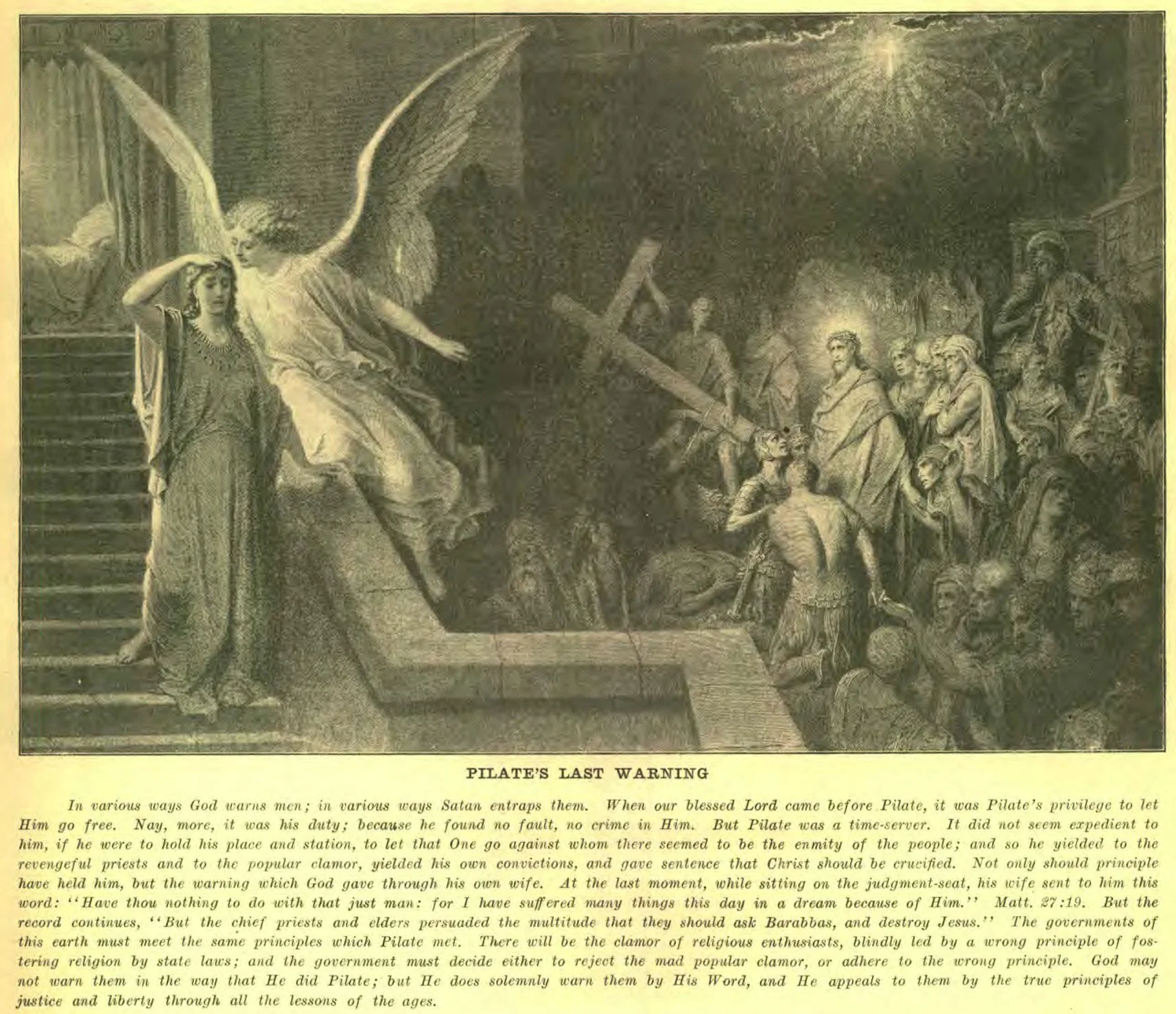
"If any man hear My sayings, and keep them not, I judge him not; for I came not to judge the world, but to save the world." John 12:47.
"We are ambassadors therefore on behalf of Christ, as tho God were entreating by us: we BESEECH you on behalf of Christ, be ye reconciled to God." 2 Cor. 5:20.
"Not that we have lordship over your faith, but are helpers of your joy: for in faith ye stand fast." 2 Cor. 1:24.
"Knowing therefore the fear of the Lord, we PERSUADE men." 2 Cor. 5:11.
3027.—Why Postage?
By Editor
One good brother wants to know why you request two cents sent by the Bible Band readers who ask questions and ten cents from those outside. S. M. K.
First of all our Bible Band readers are those who are specially studying the Bible and who are supposed to be really and truly interested in the Word, and we are endeavoring to encourage them in that study. We have asked from each of them ten cents for schedule of readings. This year we are doing more than that for them; we are giving them the full worth of their money in a commercial way.
2. A great many questions come to us which demand the expenditure of a good many dollars in the course of the year for postage. It is but right certainly that at least two cents should be enclosed by a Bible Band member. His question may be answered in the paper. We may think best to answer it by mail; if so, it is but right that he should furnish the postage.
3. A great many questions are asked which require very much time on the part of the editors in looking up. If we could charge simply time on each question, that would be a different matter; we would make the price of course different to each one in proportion to the amount of time required. This we can not do, therefore we have tried to place it at a low minimum rate. If one wishes questions answered by letter, he certainly ought to be willing to pay the expense connected with it. Many times, ten cents does not begin to meet the expense connected with the answering of the question. Most of our readers appreciate this. Once in a while one will send us a dollar for the answering of the questions, and feel that the information is worth the amount. Some have even sent more than this. We are endeavoring to do in our Question Corner and in our Bible Band the best that we possibly can do with the time and limitations considered, for our readers and our Bible Band members. We are willing to spend our own time to the fullest extent in order to help them; but it is not just that the house of publication should be at expense which is almost if not wholly for the benefit of others. Therefore for the sake of the house of publication we are asking our inquirers, as we have done, to enclose postage. We are not demanding it of any; and if any think the price is too high, that will accommodate us just as well, because we have always on hand more questions than we can answer promptly.
3028.—The Seventh-Day Sabbath
Will you give me the reasons for keeping the seventh day of the week for the worship of God by His people, and where I may find the "Thus saith the Lord"? INQUIRER AFTER TRUTH.
First, the institution of the Sabbath. God rested upon the seventh day, blessed the seventh day, sanctified the seventh day, which means set it apart for a holy service. Gen. 2:2, 3. He did that in the very beginning for man. Mark 2:27. He did it before sin entered. He did it for the head of the race, hence for all his children, all that should come afterward.
Secondly, when He committed to Israel the law and the oracles of God (Rom. 9:4), and made them priests to all the nations, He guarded and enjoined that Sabbath by one commandment in His holy law which reads as follows:
"Remember the Sabbath day, to keep it holy. Six days shalt thou labor, and do all thy work: but the seventh day is the Sabbath of the Lord thy God: in it thou shalt not do any work, thou, nor thy son, nor thy daughter, thy man servant, nor thy maid servant, nor thy cattle, nor thy stranger that is within thy gates: for in six days the Lord made heaven and earth, the sea, and all that in them is, and rested the seventh day: wherefore the Lord blessed the Sabbath day, and hallowed it." Ex. 20:8-11.
Thirdly, our Lord Jesus Christ declared that it was easier for heaven and earth to pass, than one tittle of the law to fail. Luke 16:17. He kept those commandments in His own blameless life, and died upon the cross in order to save men from their transgression. John 15:10; 1 Peter 2:22. The holy women who had followed Him all through His life, kept the Sabbath after Jesus died, and kept it "according to the commandment." Luke 23:56. His own beloved apostle tells us that "he that saith he abideth in Him [Christ] ought himself also so to walk, even as He walked." See the last few numbers also of the SIGNS.
3029.—Forgiveness of Those Who Pierced Jesus
Those who crucified Jesus believed after He was crucified that He was the Son of God. See Matt. 27:35, 36, 54. And seeing that those things were hid from them, and they perceived not the things that were said (Luke 18:34), did they not do those things through unbelief? See 1 Tim. 1:13. In the light of the above scriptures, would not they be saved through the prayer of Jesus when He said, "Father, forgive them; for they know not what they do"?
There is forgiveness for every soul of man if he will only accept it. The prayer of Jesus shows the divine disposition. "Father, forgive them; for they know not what they do." It does not mean that such would be cleansed of their sins whether they desired it or not. It simply means that the One who suffered all those things had nothing in His heart but forgiveness for them, and that forgiveness of Jesus Christ is purchased for every soul, tho his sins be as scarlet or crimson; but in order that the sinner may avail himself of that wonderful life of God, he must yield the sin, give it all to God, that God may take it away. There must be cooperation on the part of the sinner; and in all probability those who pierced Him will be among those who would not avail themselves of the benefits of His crucifixion. The words of the centurion in Matt. 27:54 do not necessarily mean that he saw in Christ the Messiah, the Saviour of men; only that that idolatrous man saw in Him a divine personage. "Truly this was the Son of God," or as rendered by some, "a Son of God." He saw in Him divinity just as Nebuchadnezzar saw in the form of the Fourth a divine person; but Nebuchadnezzar did not accept of that divine person at that time, nor have we any reason to believe that the Roman soldier did.
To our minds, they who pierced Him, noted in Rev. 1:7, refer more to the very ones that compassed His death, having every evidence in the world to show them that He was indeed the Messiah, the Son of God; namely, the Jewish priests and rulers. The Romans were simply instruments which executed their will. All these things we must leave with the Master, and to the disclosures of the future.
Please explain the 10th and 11th verses of Ezekiel 19. "Thy mother is like a vine in thy blood." B. B. 392.
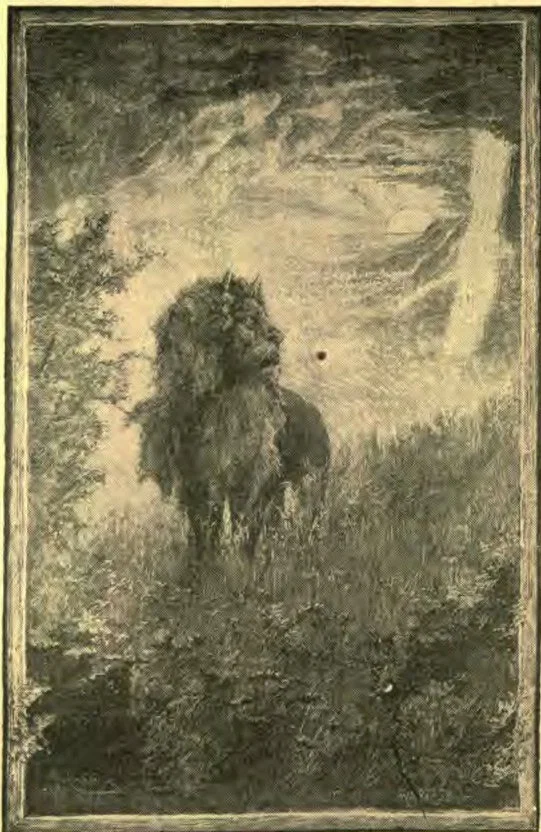
Read the margin for the better meaning. "In thy blood" means "of thy kind." See also margin of the Revised Version, "Thy mother was like a vine in thy likeness, planted by the waters: it was fruitful and full of branches by reason of many waters." Jerusalem or Israel is likened to a vine. The degenerate king was the son of that vine. At one time in her better days she was full of vigor, and full of strong branches, and these branches were like rods for scepters used by kings. Then she was exalted among the nations of the earth. In the days of Solomon all kings of the earth came to hear his wisdom; but she had lost her glory, was plucked up by the Lord and cast down and consumed. The whole chapter is a lamentation, a dirge, for the sorrows that came upon Jerusalem, at one time likened to a lioness, the strongest of all beasts; to a vine, the strongest of plants; but strength and beauty and fruitfulness had departed because of sin.
3031.—The Sanhedrin.
What is the reason that the Sanhedrin was composed of both Pharisees and Sadducees at the time of Christ's trial? B. J.
Simply because men of influence were elected to that position. Sometimes those in the priesthood were Pharisees and sometimes Sadducees. Positions of influence had become a matter of barter and traffic in the days of our Lord and previous to that time, just as they are in some circles at the present time. If one had sufficient money or influence or both, he could secure the coveted position; consequently men of both classes, Pharisees and Sadducees, were elected to the office.
For Rom. 14:6 see Question No. 2981, Signs of Nov. 24, 1909.
3032.—J. S. D.—Animals in the Desolate Earth.—Will there be animal- and bird-life in the desolate earth when the saints are in heaven during the millennium? From Isaiah 34, in which Idumea is used as a type of the earth, it seems clearly evident that there will be wild beasts and birds of prey left in the earth after men are destroyed. The expression, "All the birds of the heavens were fled," in Jer. 4:25, would be no more than what would take place in any time of great commotion. That would not necessarily mean their destruction. Then, too, when the wicked are raised and come upon the new earth, the animal life will furnish them food as they come up around the camp of the saints and the beloved city to destroy it. Later, in the last great conflagration, in which the earth, saturated with sin, will be set on fire by the presence of the Lord, all flesh shall perish together; that is, all those who are not identified with Him.
3033.—J. S. D.—Matt. 24:29.—The shaking of the powers of heaven we understand to be just as literal as the darkening of the sun and the moon and the falling of the stars which are mentioned in the same connection. The shaking will be a literal shaking. See Heb. 12:25, 26, where the shaking of Mount Sinai is referred to, when the whole mountain quaked greatly. We read further, "Whose voice then shook the earth: but now He hath promised, saying, Yet once more I shake not the earth only, but also heaven. And this word, Yet once more, signifieth the removing of those things that are shaken, as of things that are made, that those things which can not be shaken may remain." See also Joel 3:16; Rev. 16:17-21.
3034.—J. S. D.—Isa. 65:23; 11:6.—We do not understand that there will be children born in the earth made new. We read in Luke 20:35, "They which shall be accounted worthy to obtain that world, and the resurrection from the dead, neither marry, nor are given in marriage." The prophet is there speaking of conditions which would have come to be true even in this world if God's children had been faithful to Him; but as they were not, these prophecies will be fulfilled in far more blessed fruition in the world to come.
3035.—J. S. D.—Matt. 24:14.—The passage in question refers to the destruction of Jerusalem, and it also may be typical of troubles which will occur in the last days; for in the last days, as in that time, God's people will have to flee into the mountains to escape the persecution.
Please Be Definite
By Editor
Please Be Definite.—For instance, a question comes to us asking us to be so kind as to explain the meaning of the latter part of "the 28th verse of Hebrews." But the question is not definite enough so that we may know what chapter is referred to. There are five chapters in Hebrews which have 28 verses or more: chapter 7, chapter 9, chapter 10, chapter 11, chapter 12. If our correspondent will tell us what chapter is referred to we will be glad to answer the question if we can.
The Dragon Voice
By Mrs. E. G. White
By Mrs. E. G. White
TO the apostle John on the Isle of Patmos, were opened scenes of deep and thrilling interest in the experience of the church. Subjects of vast importance were presented to him in figures and symbols, that those who should turn from error to truth might become intelligent concerning the perils and conflicts before them. The history of the Christian world to the very close of time, was revealed to him. With great clearness he saw the position, dangers, conflicts, and final deliverance of the people of God. He records the closing message which is to ripen the harvest of the earth, either as sheaves for the heavenly garner, or as fagots for the fires of the last day.
John beheld in vision the redeemed people of God. He saw the triumph of those who had gained the victory over the beast and over his image. He marked the trials which they had endured for the truth’s sake, and He saw their unyielding firmness in adhering to the commandments of God against the oppressive powers that sought to force them to disobedience.
Important Symbols
Under the symbols of the great red dragon, a leopard-like beast, and a beast with lamblike horns, the earthly governments which would be especially engaged in trampling upon God’s law and persecuting His people, were presented to John. Their war is to be carried on till the close of time. The people of God, symbolized by a holy woman and her children, are represented as greatly in the minority. In the last days, only a remnant still exists. John speaks of them as those that “keep the commandments of God, and have the testimony of Jesus Christ.”
For many centuries, first through paganism and then through the Papacy, Satan exerted his powers to blot from the earth God’s faithful witnesses. Both heathen and papists were actuated by the same dragon spirit. They differed only in that the Romish apostate, making a pretense of serving God, was the more dangerous and cruel foe.
4
Through the agency of Romanism, Satan took the world captive. The professed church of God was swept into the ranks of this delusion, and for more than a thousand years the true people of God suffered under the dragon’s ire.
A New Persecutor
At the time when the Papacy, robbed of its strength, was forced to desist from persecution, John beheld a new power coming up to echo the dragon’s voice, and carry forward the same cruel and blasphemous work. This power, the last that is to wage war against the church and the law of God, is represented by a beast with lamblike horns. The beasts preceding it had risen from the sea; but this came up out of the earth, representing the peaceful rise of the nation which it symbolized—the United States.
The “two horns like a lamb” well represent the character of our own Government, as expressed in its two fundamental principles,—Republicanism and Protestantism. These principles are the secret of our power and prosperity as a nation. Those who first found an asylum on the shores of America, rejoiced that they had reached a country free from the arrogant claims of popery and the tyranny of kingly rule. They determined to establish a government upon the broad foundation of civil and religious liberty.
But the stern tracings of the prophetic pencil reveal a change in this peaceful scene. The beast with lamblike horns speaks with the voice of a dragon, and “exerciseth all the power of the first beast before him.” Prophecy declares that he will say to them that dwell on the earth, “that they should make an image to the beast,” and that it will cause “all, both small and great, rich and poor, free and bond, to receive a mark in their right hand, or in their foreheads: and that no man might buy or sell, save he that had the mark, or the name of the beast, or the number of his name.” Thus Protestantism is to follow in the steps of the Papacy.
God's Warning
It is at this time that the third angel is seen flying in the midst of heaven, proclaiming, “If any man worship the beast and his image, and receive his mark in his forehead, or in his hand, the same shall drink of the wine of the wrath of God, which is poured out without mixture into the cup of His indignation.”
In marked contrast with this multitude stands a little company who will not swerve from their allegiance to God: “Here are they that keep the commandments of God, and the faith of Jesus.” These are they of whom Isaiah speaks: “They that shall be of thee shall build the old waste places: thou shalt raise up the foundations of many generations; and thou shalt be called, The repairer of the breach, The restorer of paths to dwell in.” The breach was made in the law of God when the Sabbath was changed by the Romish power. But the time has come for that divine institution to be restored. The breach is to be repaired, and the foundation of many generations to be raised up. And this message is the last to be given before the coming of the Lord. Immediately following its proclamation, the Son of Man is seen by the prophet coming in glory to reap the harvest of the earth.
"Time's Noblest Offspring"
America in the Light of Prophecy
AMONG the learned men who came to America in the eighteenth century was George Berkeley, afterward bishop of Cloyne, Ireland. He went to Newport, Rhode Island, to found a university, subsequently giving his American estate, and several hundred volumes of his library, to Yale College. It was while interested in America that he wrote his poem containing the oft-quoted stanza:
"Westward the course of empire takes its way,The first four acts already past;The fifth shall close the drama with the day;Time's noblest offspring is the last."
The stanza has been quoted as prophetic. As a matter of fact, it is founded on Bible prophecy. The first four acts of the great world-drama are the history and life of the empires of Babylon, Medo-Persia, Grecia, and Rome. Three of these, as world powers, have been for centuries in a divided state. But when Bishop Berkeley wrote his poem a new star had risen in the horizon. A new world was opening before the nations. A new flag was about to be unfurled to the breezes of heaven.
All this God has foretold in prophecy. The great church-and-state system of government, which in different forms has cursed the world from Nimrod, the founder of Babylon, and will to the second coming of Christ, earth's lawful King, is represented in Revelation 13 by a composite beast with seven heads and ten horns. It includes in its symbolism the great persecutors of the church for conscience' sake in the sad history of earth's past, and this in a twofold sense, in both body and successive heads.
It possesses the mouth of a lion (Babylon, Dan. 7:4; Jer. 4:7, 13), the feet of a bear (Medo-Persia, Dan. 7:5), the body of a leopard (Grecia, Dan. 7:6), and the ten horns of Rome (Dan. 7:7), and it is inspired and upheld by the dragon (the devil, Rev. 12:9). The heads represent the same powers, being successive (Rev. 17:9, 10), not contemporaneous like the horns. (See article in our last issue.)
The animus comes from the seat of the mind, the head. The head controls the beast, and makes the beast what he is while the head exists.
The beginning of this persecuting régime, this great, abnormal system, was Babylon, that power which has made all the kingdoms of earth drunken. The first head is Babylon, represented as a lion in its civil aspect, as a gorgeously arrayed harlot in its religious aspect. The second head is Medo-Persia, continuing the same Babylonian system in another form. The third is Grecia. The fourth is Pagan Rome, through which the dragon, Satan, wrought to destroy Christ. Rev. 12:4. The fifth, the head dominant during the "forty and two months" of Rev. 13:5 (see also Dan. 7:25; Rev. 11:3; 12:6, 14), is generally known by the designation of the Papacy.
A Symbol of the New World System
Just at the time when the papal head is wounded (Rev. 13:3, 10), beginning with the Reformation and culminating in 1798, John sees another power, symbolized by a beast, rising up out of the earth, having two horns like a lamb, yet speaking like a dragon. Rev. 13:11.
Note therefore that this beast must symbolize a power rising to prominence about 1798; it comes up, not out of the "sea" (denoting peoples, nations, Rev. 13:1; 17:1, 15), but out of the earth, a region hitherto unoccupied by the historic nations. Its growth is rapid, its progress in coming up is visible. It has two horns like a lamb; it speaks as a dragon; and the latter part of the chapter is the development of this dragon spirit.
Two Horns Like a Lamb
It will be noticed that in this beast are combined two prominent apocalyptic symbols. (1) It has two horns like a lamb. In type and prophetic symbol a lamb stands for Jesus our Saviour. He is represented in Rev. 5:6 as "a Lamb . . . having seven horns." A horn is an emblem of power, exaltation, strength. Seven would denote perfection in all things which would make the Lamb truly exalted and powerful. A beast with two horns like a lamb would denote a power professing to possess, holding in prominence, two Christian principles or characteristics, principles which, applied to civil government, would make that government characteristic, or distinguished from all other governments, even as they distinguished Christianity from all other religions. (2) A dragon is the symbol of Satan, operating through earthly governments, inducing them to persecute the children of God. "The dragon . . . persecuted the woman." Rev. 12:9, 13.
Here are the prominent characteristics or specifications concerning the power symbolized by the two-horned beast:
1. It must be rising to prominence in the world's affairs about A.D. 1800.
2. Its rise would be rapid and marvelous.
3. It must arise, not among the great nations of history, "the sea;" but in hitherto ungoverned, undeveloped regions, "the earth."
4. It will possess as characteristics of strength and prominence two principles, characteristic of Christianity alone among religions, and of itself alone among nations.
5. Nevertheless it would speak as a dragon, or promulgate persecuting laws.
Search through all the centuries and tomes of history, and but one power, one5nation, one government, alone, of all earth's governments, can be found in which these specifications are fulfilled, and they are all fulfilled or fulfilling in that one.
That nation is our nation.
That government is these United States of America.
1. In 1798, when the papal beast went into captivity, this nation was just rising to power. July 4, 1776, its independence was declared. Then followed eight long, cruel, depleting years of war, not for conquest, but for liberty, for a principle. In 1788 its glorious Constitution was adopted by eleven of the states; by the last two of the original thirteen in 1789, 1790. And at the time the prophetic vision applied it was the one great young power in the world.
2. Its rise since its birth has been rapid and marvelous, a fact familiar to all observers and students and citizens.
3. It came not up in the Old World, the theater of the great drama enacted in its several parts by Babylon, Medo-Persia, Grecia, and Rome, but from a New World, a new continent, amid untrodden solitude and virgin forests.
Two Principles in Christianity
4. It possessed in its making two principles only dreamed of by the most sanguine statesman who may have loved them in the past. In this glorious nation they were crystallized into its charters of existence.
The first of these was the equality of man. This is preeminently the teaching of Christianity, but of no other religions which the world has ever known. It was Christ who said: "One is your Master, even Christ; and all ye are brethren."Matt. 23:8. It was Christ's apostle who said: "There is no respect of persons with God." "God that made the world and all things therein, . . . hath made of one blood all nations of men for to dwell on all the face of the earth." Rom. 2:11; Acts 17:24-26.
The second great principle vouchsafed to men by Christian ethics, so far as interference of man is concerned, is the right and privilege of every man to worship God, or not to worship, how or when he will, providing he does not interfere with the equal rights of his fellow men.
This principle may be termed religious liberty. The Gospel of Christ compels no one. It is not "Thou shalt," nor "Thou shalt not." Its language is, "Whosoever will," "let him come." Rev. 22:17. Listen to a chosen servant of the King of heaven: "Now then we are ambassadors for Christ, as tho God did beseech you by us; we pray you in Christ's stead, be ye reconciled to God." "Knowing therefore the terror of the Lord, we persuade men." 2 Cor. 5:20, 11.
And Jesus Himself said, "If any man hear My words, and believe not, I judge him not; for I came not to judge the world, but to save the world." John 12:47.
And that resolute apostle who was once so ready to use carnal weapons, writes: "Dearly beloved, I beseech you as strangers and pilgrims, abstain from fleshly lusts." "Neither as being lords over God's heritage." 1 Peter 2:11; 5:3. "Not for that we have dominion [lordship] over your faith," says Paul, "but are helpers of your joy; for by faith ye stand." 2 Cor. 1:24. How different are the words of these apostles from the practise of those "lords spiritual" who now claim to be their direct successors! "If ye were Abraham's children, ye would do the works of Abraham." John 8:39.
Look over all the religions of the past — pagan or perverted Christian — and in not one do we find these two particulars. The curse of caste, the creation of offices and positions, a haughty, imperious, and ambitious hierarchy, religious dogmas enforced by royal edict or legislative enactment, one or all are present in all the religions of earth save that of Christ. They are present in all forms of perverted Christianity.
Christian Principles in This Government
Both of these divine principles of equality and liberty are embodied in the charters of our freedom in this country so far as they can be embodied in earthly government. In other words, the United States Government embodies the Christian idea of civil government, or is in principle what a civil government ought to be. The first principle, equality of all men, is found in that document which sounded the birth-note of freedom, and which made Americans free men:
"We hold these truths to be self-evident, thatALL MEN ARE CREATED EQUAL; that they are endowed by their Creator with certain inalienable rights; that among these are life, liberty, and the pursuit of happiness. That to secure these rights, governments are instituted among men, deriving their just powers from the consent of the governed."—Declaration of Independence.
The second principle — religious liberty — is embodied in this, but is guarded above question in the Constitution, the fundamental law of our Government. The First Amendment reads:
"Congress shall make NO LAW respecting an ESTABLISHMENT OF RELIGION, or prohibiting the free exercise thereof, or abridging the freedom of speech or of the press."
No other government of any note in the world holds these two principles. There are republics like Switzerland and France, but they have their state religions, supported by many to whom they are intolerable burdens. The United States Government stands unique in this respect; and these principles have been the magnetic power which has drawn to our shores from the autocratic and intolerant priest-ridden nations of the Old World the persecuted and oppressed millions. They found here religion "without a pope and a state without a king," and the consequent privilege of worshiping or not worshiping God according to their own consciences and understanding of His will.
Prophecy Fulfilled
The identity of these Christian principles in this Government, and the fulfilment of the divine prophecy, are well set forth by America's great historian, George Bancroft:
"The Constitution establishes nothing that interferes withEQUALITY OR INDIVIDUALITY. It knows nothing of differences by descent, or opinions of favored classes, or legalized religion, or the political power of property. It leaves the individual alongside the individual. . . .VINDICATING THE RIGHT OF INDIVIDUALITYeven in religion, and inRELIGION ABOVE ALL, the new nation dared to set the example of acceptingIN ITS RELATIONS TO GOD THE PRINCIPLE FIRST DIVINELY ORDAINED IN JUDEA."—History of the Constitution of the United States, book 5, chapter 1.*
More than this: the influence of this Government has ameliorated the Old World conditions, so that dungeon and rack have slunk into night and obscurity, and the martyr's pyre is extinguished.
Later on, the shackles of slavery were broken from the feet of the slave, and the principle of liberty and equality again crystallized into fundamental law the following:
"No state shall make or enforce any law which shall abridge the privileges or immunities of the citizens of the United States; nor shall any state deprive any person of life, liberty, or property, without due process of law, nor deny to any person within its jurisdiction the equal protection of the laws."—Fourteenth Amendment, Section 1.
Grand and noble sentiments and principles! Would God they might continue in the government of the nation forever. They made the best civil government upon which the sun ever shone; and if held in the hearts of the people, would continue such a government.
But, alas, the beast with the lamblike horns speaks with a dragon voice; it becomes a persecutor. It makes an image to the ten-horned beast; that is, it unites church and state. It enforces the mark of the Papacy, the sign which she claims of her power, the Sunday enforced by law. It enforces under penalties of legal boycott and even under death the image and the mark.
Is this possible? Nay, it is probable. Read in proof of it the departure of this country from her basic principles as set forth in other6articles in this paper. What means the religious legislation of the last few years? What mean the many court-made laws and prosecutions for conscience' sake?
God forewarned us of these things eighteen centuries ago. Who will heed this warning? Who will place his affections upon the heavenly land, whose inhabitants know no blight, no sorrow, no death, but glorious life forevermore?
'Another beast coming up out of the earth; and he had ten horns like a lamb, and he spake as a dragon.' Rev. 13: 11.