Signs of the Times, Vol. 41, No. 13.

World-Wide Turbulence and Discontent

Signs of the Times

Apr 7, 1914

Pacific Press Publishing Association · Mountain View, California · Apr 7, 1914

World-Wide Turbulence and Discontent

SOCIETY IN EVERY NATION OF THE WORLD IN THE GRASP OF REVOLUTIONARY FORCES — WHAT IS THE OUTLOOK? — WILL CONDITIONS BECOME ANY BETTER? — WHAT DO THESE THINGS BETOKEN?
THE nations of earth have for a generation been sowing seeds of discontent. There have been great armies of agitators who were not satisfied with existing conditions, and who have been demanding radical changes.

IN ALL PARTIES AND ORGANIZATIONS

These agitators have been found in practically all the political parties. They have been found also in various forms of social organizations that have had the great aim before them of working for the betterment of society.
Many of these agitators have been true patriots, who have seen how conditions were shaping themselves, and who have felt that something must be done to change the order of things, or a world-wide revolution would surely result.
The agitation of these reform workers has continued to grow stronger and stronger, and still the conditions that are confronting us in the world are growing worse every year. If we acknowledge existing fact, we must recognize this as true.

THE REFORMS HAVE NOT MATERIALIZED

While this agitation has been for the purpose of producing reforms, yet in many instances it has been in reality sowing the seeds of discontent. We do not purpose to speak of any of these agitators either to commend or to condemn them. We simply desire to call attention to the actual facts as they exist.
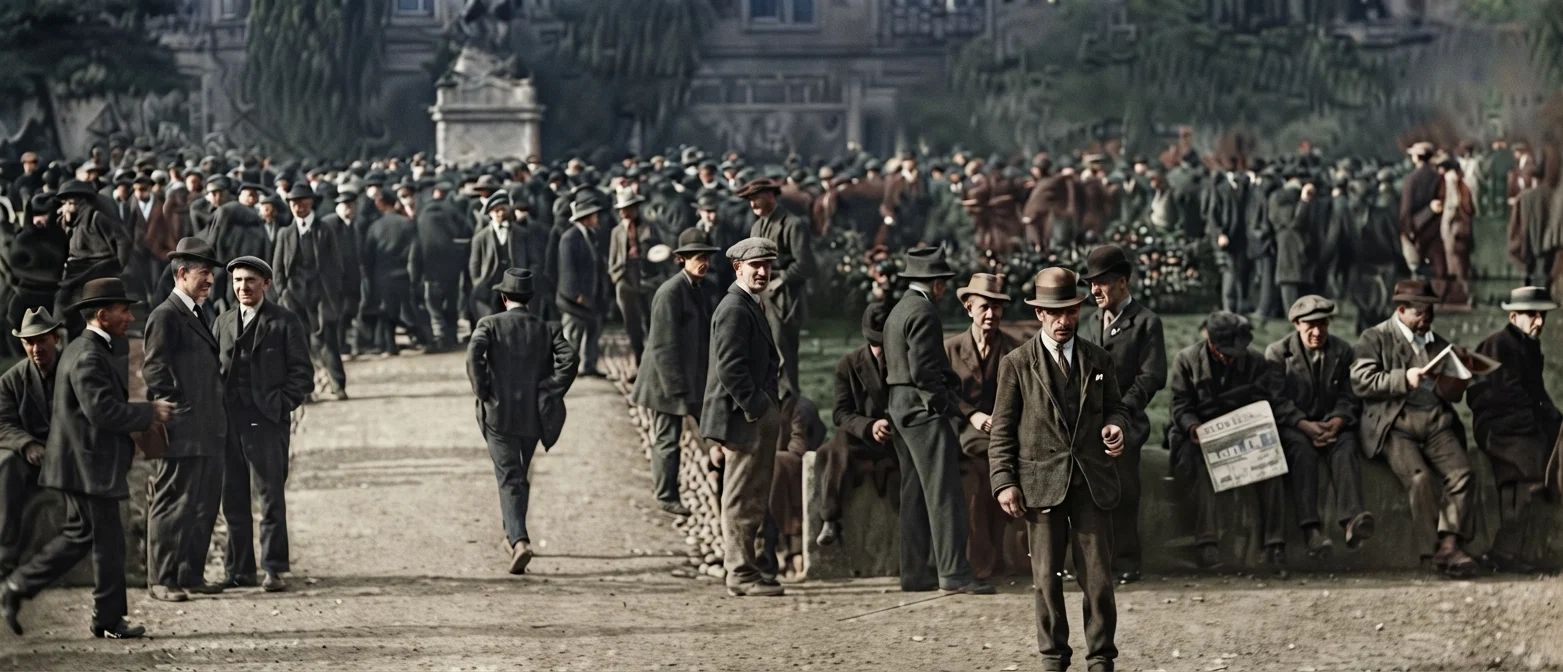
We have now reached a situation in the world where conditions are becoming intensely alarming. The illustrations connected with these paragraphs are merely characteristic of what may be seen in every nation in every corner of the globe. Armies of discontented men are forming to march they know not where, but they are determined to bring about a change. The spirit of revolution is abroad everywhere, and the nations are powerless before it.

MAN AGAINST MAN

It is not merely one nation rising up against another, but it is citizen against citizen in the same nation. Society is breaking to pieces under the disintegrating forces that are at work.
As long ago as 1908, Dr. Charles William Eliot, who until that year had been president of Harvard University, declared, in a speech in New York City: "The defenses of society against criminals have been broken down. . . . The impunity with which crimes of violence are now committed is a disgrace to the country, and demonstrates the urgent need of much more effective protective forces. A far worse form of lawlessness is the violation of law by rich corporations. Any man or any corporation who conducts business on the edge of the law, so to speak, is a morally lawless person."
ARMY OF UNEMPLOYED, DISCONTENTED MEN Illustrative of what may be seen in every nation of the world
Speaking of the machinery of the law which has been provided to protect society, he said further: "It neglects to provide the protective forces necessary to secure its peace. It fails to educate the children in reverence and obedience, and inspire them with the love of liberty under the law. It declines association with burglars and forgers, but not with dishonest promoters, corrupt officials, and with lawyers who teach their clients how to evade the law."

AS VIEWED BY A PROPHET

More than five hundred years before Christ, one of the prophets declared: "And at that time shall Michael stand up, the great Prince which standeth for the children of thy people: and there shall be a time of trouble, such as never was since there was a nation even to that same time: and at that time thy people shall be delivered, every one that shall be found written in the book." Dan. 12: 1.
Here is a time of trouble brought to view that eclipses everything that has ever gone before in any of the nations, and it comes just before the time when God's people are to be delivered. The language is clear and simple; and if we believe the word of God, we may understand it.

THE DEVIL COMES WITH GREAT WRATH

Nearly two thousand years ago, another prophet declared, "Wo to the inhabiters of the earth and of the sea! for the devil is come down unto you, having great wrath, because he knoweth that he hath but a short time." Rev. 12: 12.
When the devil knows that his time on earth is short, his satanic fury rises to the highest pitch, and he does everything within his power to stir individuals in all the nations to the most intense spirit of turbulence and strife.
The Master likened the times just before His coming, to the days of Noah and of Lot, saying, "As it was in the days of Noah, so shall it be also in the days of the Son of man." Luke 17: 26. And again: "But as the days of Noah were, so shall also the coming of the Son of man be. For as in the days that were before the Flood they were eating and drinking, marrying and giving in marriage, until the day that Noah entered into the ark, and knew not until the Flood came, and took them all away; so shall also the coming of the Son of man be." Matt. 24: 37-39.

THEY "KNEW NOT"

This scripture states that eating and drinking, marrying and giving in marriage — in other words, the activities and the pleasures of life — absorbed the attention of the people in that time, so that they refused to hear or heed the ringing warning that Noah was proclaiming to the world. The text says that they "knew not until the Flood came." The reason why they did not know was that they refused to heed the warning sent. God made His warning plain. And so in these times, He has specifically told, through His prophets, what is coming upon this world. He has told every one what these things mean; and if we will accept that word, we may know that the end of all things is at hand, and the coming of Christ is near.
But if we refuse these warnings, it will be with us as it was with the people in Noah's time, — we will know not until the great event is here, and we are forever shut away from the benefits and blessings of eternity.

AUTHENTIC RECORD OF THAT ANCIENT VIOLENCE

The Master not only tells us that the days just preceding His coming will be as were those in the times of Noah, but He caused an inspired record to be made of the conditions of that time. Speaking of the days before the Flood, this record says: "And God saw that the wickedness of man was great in the earth, and that every imagination of the thoughts of his heart was only evil continually." "The earth also was corrupt before God, and the earth was filled with violence. And God looked upon the earth, and, behold, it was corrupt; for all flesh had corrupted his way upon the earth. And God said unto Noah, The end of all flesh is come before Me; for the earth is filled with violence through them; and, behold, I will destroy them with the earth." Gen. 6: 5, 11-13.

THE SCENES OF VIOLENCE TO BE REPEATED

In that time, this record says, every imagination of the thoughts of man's heart was evil. It says also that the earth became corrupt; and furthermore, that it was filled with violence. The very word "violence" suggests scenes of rioting and of internal strifes, and the unerring voice of prophecy proclaims that the conditions that obtained throughout the world in Noah's day will be repeated just before the second coming of Christ.
Now there have been scenes of violence and revolution in small sections of the world in all periods of its history, but these prophecies call for world-wide revolution and strife.

A DOZEN LINES OF PROPHECY

There are not less than a dozen distinct lines of prophecy given in the Bible, all of which focus upon this generation as the one that will see the second coming of Christ. Every one of the conditions of this time has been pointed out by numerous independent prophecies, in addition to these great lines of prophecy. And if we do not understand the meaning of this time and the great event that lies just before us, it will be for the reason that we have neglected to study and heed the warnings God has given us in His word. This violence that is breaking out in the world now is only the beginning. It will grow worse and worse until the end is reached; and we should sense its meaning, because those who understand the situation and who are prepared for the issue are soon to reap the rich rewards of eternity. Let us not be in the condition of the antediluvian world, who "knew not until the Flood came," and destroyed them all.

DANISH-NORWEGIAN SEMINARY

THE WORLD'S BIRTHDAY

The Birthdays of Children Are Observed—We Memorialize Great Events in a Nation—Why Not Memorialize the Birth of a World?—Can the Dates of Such Events Be Shifted?
By LE ROY E. FROOM
WITH what joyful anticipation the child looks forward to his birthday—on the first of December, let us say. How many questions are asked about that birthday cake, with its candles! How slowly the days seem to drag—for a birthday can not be hurried up or changed, you know. It stands for a historic fact that no power can change, for it must forever remain that on the first day of December that baby boy was born. And each succeeding birthday, falling ever on the same day, with no possibility of a change, bears witness to this fact.

THE BIRTH OF THE WORLD

When the world came forth from the Creator's hand, it was the perfection of beauty. Step by step it was formed into a veritable Paradise, carpeted with foliage of softest velvet, and teeming with happy life. Creation week was the most wonderful week the world has ever known. From a dark, chaotic mass in the beginning, there came forth, in succeeding days, light, firmament, dry land and vegetation, sun, moon, and stars, fish and fowl, man and beast. By the word of the living God this marvelous transformation was wrought.

THE WORLD'S MEMORIAL DAY

A world had been born. Should not such a great event have a memorial—a birthday? Almost all notable events are memorialized. Each nation memorializes some notable event in her history, setting apart a day for that purpose, that her citizens may ever remember the event it commemorates. The signing of the Declaration of Independence is memorialized by the observance of the fourth of July.
Yes, the world has a birthday—a memorial. The crowning act of the Creator in the completion of this world was the setting apart of the Sabbath as creation's memorial. Thus reads the record: "And on the seventh day God ended His work which He had made; and He rested on the seventh day from all His work which He had made. And God blessed the seventh day, and sanctified it: because that in it He had rested from all His work which God created and made." Gen. 2:2, 3.
Again: "Remember the Sabbath day, to keep it holy. Six days shalt thou labor, and do all thy work: but the seventh day is the Sabbath of the Lord thy God: in it thou shalt not do any work, thou, nor thy son, nor thy daughter, thy man servant, nor thy maid servant, nor thy cattle, nor thy stranger that is within thy gates: for in six days the Lord made heaven and earth, the sea, and all that in them is, and rested the seventh day: wherefore the Lord blessed the Sabbath day, and hallowed it." Ex. 20:8-11.

CAN WE CHANGE INDEPENDENCE DAY?

The American Independence Day can never be changed from July 4 to any other day. It must forever remain a fact that on July 4, 1776, the Declaration of Independence was signed by the representatives of the American colonies. Neither Congress nor any other power can change the day, for the event memorialized is one hundred and thirty-eight years in the past.

UNCHANGEABLE AS A BIRTHDAY

So with the Sabbath-birthday of the world; it is as unchangeable as the birthday of the child or of the independence of the nation. The fact must forever remain that the living God rested on the seventh day of the first week of this earth's history. God Himself can not change this fact, for He can not lie, and the event is nearly six thousand years in the past.

A MEMORIAL OF CONVERTING POWER

But that is not all. "Moreover also I gave them My Sabbaths, to be a sign between Me and them, that they might know that I am the Lord that sanctify them." Eze. 20:12. Not only should the Sabbath bring to our minds the birthday of the world, but it should also remind us that the same creative power which brought the world into being can transform the heart and life.
With what holy joy, then, should every child of God look forward to the Sabbath as it comes to close the week of toil—the memorial of creation, and the sign of personal re-creation! How we should plan for it, prepare for it, and when it comes with the precision of eternity, observe it! Wonderful twofold birthday!

Things for Us to Keep if We Enjoy His Keeping

"BECAUSE thou hast kept the word of My patience, I also will keep thee from the hour of temptation, which shall come upon all the world, to try them that dwell upon the earth. Behold, I come quickly: hold that fast which thou hast, that no man take thy crown." Rev. 3:10, 11. The people especially addressed by this scripture are those living when the second coming of Christ is near — a time in which, as expressed in other scriptures, special patience must be manifest in those who meet aright the perils of the time.
The apostle James, after noting the conflict that will be manifest between employer and employee, says, "Be patient therefore, brethren, unto the coming of the Lord"; and, "Be ye also patient; stablish your hearts: for the coming of the Lord draweth nigh." James 5:7, 8. Peter speaks of the people of the Lord in that time, and says they "are kept by the power of God through faith unto salvation ready to be revealed in the last time. Wherein ye greatly rejoice, though now for a season, if need be, ye are in heaviness through manifold temptations: that the trial of your faith, being much more precious than of gold that perisheth, though it be tried with fire, might be found unto praise and honor and glory at the appearing of Jesus Christ." 1 Peter 1:5-7.
Our Saviour Himself clearly showed that His coming will be at a time of great declension in faith. He inquires, intimating a negative reply, "When the Son of man cometh, shall He find faith on the earth?" Luke 18:8. It seems as though the work of "higher critics" were spreading that very declension of faith. Paul, speaking of this same time, says: "Yet a little while, and He that shall come will come, and will not tarry. Now the just shall live by faith." Heb. 10:37, 38.

SOME THINGS WE ARE TO KEEP

While the Lord, on His part, promises to keep, it is in response to a keep on the part of His people. He says, "Keep yourselves in the love of God, looking for the mercy of our Lord Jesus Christ unto eternal life." Jude 21.
James presents as an essential in "pure religion," to "keep himself unspotted from the world." James 1:27. In like manner Paul exhorted Timothy, "Keep thyself pure." 1 Tim. 5:22. His exhortation to the Ephesians is equally important for all believers: "Keep the unity of the Spirit in the bond of peace." Eph. 4:3. How forcible are the words of Solomon, "Keep thy heart with all diligence ["above all keeping," margin]; for out of it are the issues of life"! Prov. 4:23.
The Lord's promise is, to "keep him in perfect peace, whose mind is stayed on Thee: because he trusteth in Thee." Isa. 26:3. He has promised angelic care to those who "fear Him." Ps. 34:7. To those who "with thanksgiving" make their requests to Him, is promised, "The peace of God, which passeth all understanding, shall keep your hearts and minds through Christ Jesus." Phil. 4:7. And when the Lord compared His people to a "vineyard of red wine," He said, "I the Lord do keep it; I will water it every moment: lest any hurt it, I will keep it night and day." Isa. 27:3. A blessed keeping, indeed, to those who keep the way of the Lord, and follow His leadings!
J. N. LOUGHBOROUGH.

My Grace Is Sufficient

AND He said unto me, My grace is sufficient for thee: for My strength is made perfect in weakness. Most gladly therefore will I rather glory in my infirmities, that the power of Christ may rest upon me. Therefore I take pleasure in infirmities, in reproaches, in necessities, in persecutions, in distresses for Christ's sake: for when I am weak, then am I strong.—Paul.

TRIUMPHED AGAINST WISDOM OF GREEKS

SERIOUS OBSTACLES CONFRONTED—PAUL PRESENTED THE CRUCIFIED ONE WITH POWER—A GLANCE AT THE CROSS WOULD EVER CAUSE HIM TO RENEW HIS ZEAL—A MIGHTY WORK ACCOMPLISHED AT CORINTH By MRS. E. G. WHITE
DURING the first century of the Christian era, Corinth was one of the leading cities, not only of Greece, but of the world. Greeks, Jews, and Romans, with travelers from every land, thronged its streets, eagerly intent on business and pleasure. A great commercial center, situated within easy access of all parts of the Roman Empire, it was an important place in which to establish memorials for God and His truth.
Among the Jews who had taken up their residence in Corinth, were Aquila and Priscilla, who afterward became distinguished as earnest workers for Christ. Becoming acquainted with the character of these persons, Paul "abode with them."

OPPOSED BY DEMORALIZING RITES AND CEREMONIES

At the very beginning of his labors in this thoroughfare of travel, Paul saw on every hand serious obstacles to the progress of his work. The city was almost wholly given up to idolatry. Venus was the favorite goddess; and with the worship of Venus were connected many demoralizing rites and ceremonies. The Corinthians had become conspicuous, even among the heathen, for their gross immorality. They seemed to have little thought or care beyond the pleasures and gaieties of the hour.

PHILOSOPHY AND SCIENCE THEIR ONLY REMEDY

Jesus, whom Paul was about to present before the Greeks in Corinth as the Christ, was a Jew of lowly origin, reared in a town proverbial for its wickedness. He had been rejected by His own nation, and at last crucified as a malefactor. The Greeks believed that there was need of elevating the human race; but they regarded the study of philosophy and science as the only means of attaining to true elevation and honor. Could Paul lead them to believe that faith in the power of this obscure Jew would uplift and ennoble every power of the being?
To the minds of multitudes living at the present time, the cross of Calvary is surrounded by sacred memories. Hallowed associations are connected with the scenes of the crucifixion. But in Paul’s day, the cross was regarded with feelings of repulsion and horror. To uphold as a Saviour of mankind one who had met death on the cross, would naturally call forth ridicule and opposition.

A STUMBLING-BLOCK TO SOME, FOOLISHNESS TO OTHERS

Paul well knew how his message would be regarded by both the Jews and the Greeks of Corinth. "We preach Christ crucified," he admitted, "unto the Jews a stumbling-block, and unto the Greeks foolishness." Among his Jewish hearers there were many who would be angered by the message he was about to proclaim. In the estimation of the Greeks, his words would be absurd folly. He would be looked upon as weak-minded for attempting to show how the cross could have any connection with the elevation of the race or the salvation of mankind.

THE ONE OBJECT OF SUPREME INTEREST

But to Paul, the cross was the one object of supreme interest. Ever since he had been arrested in his career of persecution against the followers of the crucified Nazarene, he had never ceased to glory in the cross. At that time, there had been given him a revelation of the infinite love of God, as revealed in the death of Christ; and a marvelous transformation had been wrought in his life, bringing all his plans and purposes into harmony with heaven. From that hour he had been a new man in Christ. He knew by personal experience that when a sinner once beholds the love of the Father, as seen in the sacrifice of His Son, and yields to the divine influence, a change of heart takes place, and henceforth Christ is all and in all.

ONE GLANCE REVIVED HIS FLAGGING ENERGIES

At the time of his conversion, Paul was inspired with a longing desire to help his fellow men to behold Jesus of Nazareth as the Son of the living God, mighty to transform and to save. Henceforth his life was wholly devoted to an effort to portray the love and power of the Crucified One. His great heart of sympathy took in all classes. "I am debtor," he declared, "both to the Greeks, and to the barbarians; both to the wise, and to the unwise." Love for the Lord of glory, whom he had so relentlessly persecuted in the person of His saints, was the actuating principle of his conduct, his motive power. If ever his ardor in the path of duty flagged, one glance at the cross and the amazing love there revealed, was enough to cause him to gird up the loins of his mind, and press forward in the path of self-denial.
Behold the apostle preaching in the synagogue at Corinth, reasoning from the writings of Moses and the prophets, and bringing his hearers down to the advent of the promised Messiah. Listen as he makes plain the work of the Redeemer as the great High Priest of mankind,—the One who through the sacrifice of His own life was to make atonement for sin once for all, and was then to take up His ministry in the heavenly sanctuary. Paul’s hearers were made to understand that the Messiah for whose advent they had been longing, had already come; that His death was the antitype of all the sacrificial offerings; and that His ministry in the sanctuary in heaven was the great object that cast its shadow backward, and made clear the ministry of the Jewish priesthood.

HE SHOWED IT FROM THE PROPHECIES

Paul "testified to the Jews that Jesus was Christ." From the Old Testament Scriptures, he showed that according to the prophecies and the universal expectation of the Jews, the Messiah would be of the lineage of Abraham and of David; then he traced the descent of Jesus from the patriarch Abraham through the royal psalmist. He read the testimony of the prophets regarding the character and work of the promised Messiah, and His reception and treatment on the earth; then he showed that all these predictions had been fulfilled in the life, ministry, and death of Jesus of Nazareth.
Paul showed that Christ had come to offer salvation first of all to the nation that waslooking for the Messiah's coming as the consummation and glory of their national existence. But that nation had rejected Him who would have given them life, and had chosen another leader, whose reign would end in death. He endeavored to bring home to his hearers the fact that repentance alone could save the Jewish nation from impending ruin. He revealed their ignorance concerning the meaning of those Scriptures which it was their chief boast and glory that they fully understood.

TOLD HIS STORY WITH POWER

In the power of the Spirit, Paul related the story of his own miraculous conversion, and of his confidence in the Old Testament Scriptures, which had been so completely fulfilled in Jesus of Nazareth. Paul's words were spoken with solemn earnestness, and his hearers could not but discern that he loved with all his heart the crucified and risen Saviour. They saw that his mind was centered in Christ, that his whole life was bound up with his Lord. So impressive were his words, that only those who were filled with the bitterest hatred against the Christian religion could stand unmoved by them.

THE STREAMING LIGHT THAT DRAWS

To the heathen, as well as to the Jews, Paul and his companions preached Christ as the Saviour of the fallen race. Avoiding complicated, far-fetched reasoning, the messengers of the cross dwelt upon the attributes of the Creator of the world, the supreme Ruler of the universe. Their hearts aglow with the love of God and of His Son, they appealed to the heathen to behold the infinite sacrifice made in man's behalf. They knew that if those who had long been groping in the darkness of heathenism, could but see the light streaming from Calvary's cross, they would be drawn to the Redeemer. "I, if I be lifted up," the Saviour had declared, "will draw all men unto Me."

REALIZED THE TERRIBLE DANGERS

The gospel workers in Corinth realized the terrible dangers threatening the souls of those for whom they were laboring; and it was with a sense of the responsibility resting on them that they presented the truth as it is in Jesus. Clear, plain, and decided was their message—a savor of life unto life, or of death unto death. And not only in their words, but in the daily life, was the gospel revealed. Angels cooperated with them, and the grace and power of God was shown in the conversion of many. "Crispus, the chief ruler of the synagogue, believed on the Lord with all his house; and many of the Corinthians hearing believed, and were baptized."
Though Paul had a measure of success in Corinth, yet the wickedness that he saw and heard in that corrupt city almost disheartened him. The depravity that he witnessed among the Gentiles, and the contempt and insult that he received from the Jews, caused him great anguish of spirit. He doubted the wisdom of trying to build up a church from the material that he found there.

PLANNED TO LEAVE BUT TOLD TO REMAIN

As he was planning to leave the city for a more promising field, and seeking earnestly to understand his duty, the Lord appeared to him in a vision, and said, "Be not afraid, but speak, and hold not thy peace: for I am with thee, and no man shall set on thee to hurt thee: for I have much people in this city." Paul understood this to be a command to remain in Corinth, and a guarantee that the Lord would give increase to the seed sown. Strengthened and encouraged, he continued to labor there with zeal and perseverance.

TREMBLED LEST THE HUMAN IMPRESS BE REVEALED
The apostle's efforts were not confined to public speaking; there were many who could not have been reached in that way. He spent much time in house-to-house labor, thus availing himself of the familiar intercourse of the home circle. He visited the sick and the sorrowing, comforted the afflicted, and lifted up the oppressed. And in all that he said and did, he magnified the name of Jesus. Thus he labored, "in weakness, and in fear, and in much trembling." He trembled lest his teaching should reveal the impress of the human rather than the divine.
Paul's later efforts in Corinth were not without fruit. Many turned from the worship of idols to serve the living God, and a large church was enrolled under the banner of Christ. Some were rescued from among the most dissipated of the Gentiles, and became monuments of the mercy of God and the efficacy of the blood of Christ to cleanse from sin.
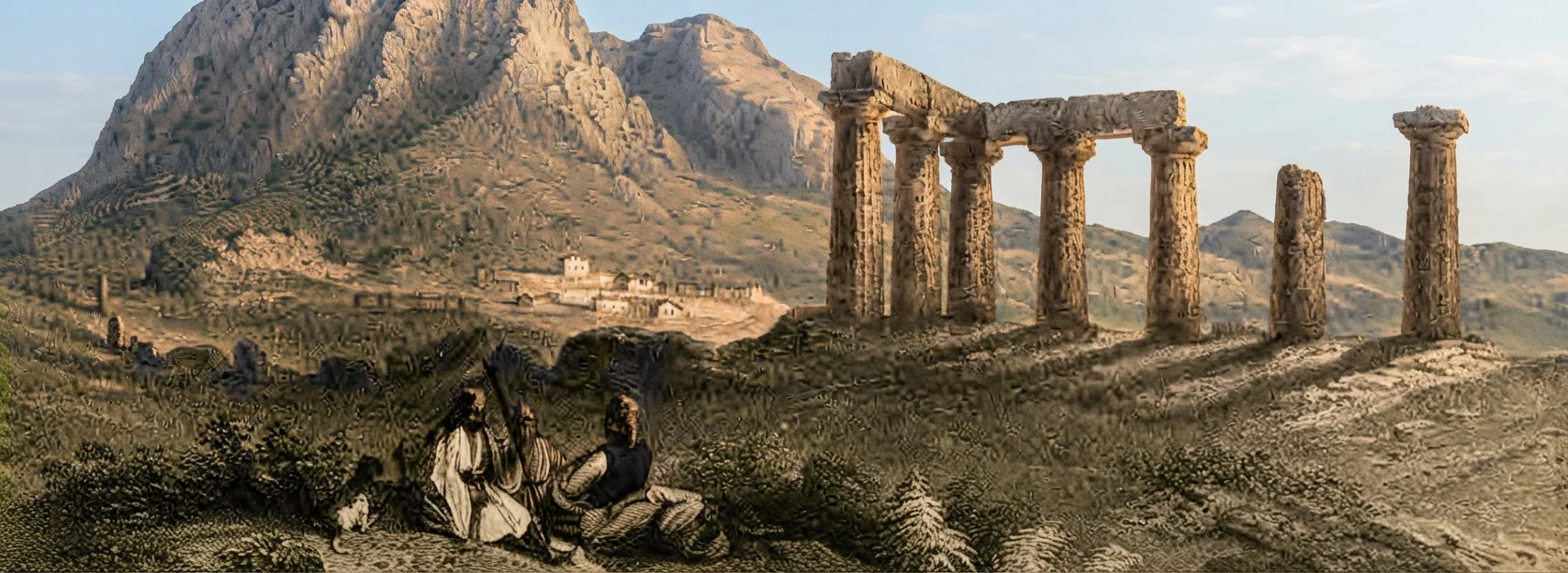
RUINS AT CORINTH
RUINS AT CORINTH

Why Are Not the Oppressed and Distressed Relieved?

A Demonstration

ARE you sometimes perplexed in regard to the injustice and suffering that exist in the world, wondering why He who has all power does not relieve the oppressed and distressed?
Consider how widely this earth's experiences are observed—that numberless inhabitants of unnumbered worlds are watching developments from cause to effect in your life, and learning therefrom the beauty of holiness and the sinfulness of sin.
The Infinite will not allow one of His creatures to suffer any evil that He is not prepared to turn into a manifold good. And in proportion to the ordeal that we endure is the benefit that accrues to us eventually.
And while the individual himself is thus recompensed for his trials, he is an object-lesson to the intelligent universe,—"a spectacle," says Sacred Writ, "to angels and to men," that they may learn, by observation, what the inhabitants of the earth are learning by hard experience.
A man who submits to an untried surgical operation in order that the world may have the benefits gained from the experiment, is esteemed a hero. But even a hero will not thus place his life in jeopardy unless he has much faith in the surgeon. And, in sooth, not a great degree of heroism is required for a person to trust his life with a physician in whom he has abounding confidence.
Have we not sufficient confidence in the Great Physician to induce us to trust ourselves in His hands? Our race, by its own perverse course, has brought upon itself a malady which only the Mighty Healer can cure. Surely it would be extreme audacity on our part to dictate that He use only mild remedies.
Instead of taking such a course, it is but reasonable that we submit unflinchingly to any form of treatment to which He may subject us, grateful that One so capable and so humane is willing to take our case. ADELAIDE D. WELLMAN.

The Vital Topic

LET your conversation be without covetousness; and be content with such things as ye have: for He hath said, I will never leave thee, nor forsake thee. So that we may boldly say, The Lord is my helper, and I will not fear what man shall do unto me. Remember them which have the rule over you, who have spoken unto you the word of God: whose faith follow, considering the end of their conversation. Jesus Christ the same yesterday, and to-day, and forever. Heb. 13:5-8.
Some things we ought never to talk about. First, the subject we love most, and regard as most important,—ourselves. It is bad taste, ill-mannered, and unprofitable generally.
The Holy Spirit has set us a wonderful example on this point. "He shall not speak of Himself." His mission is to talk of Christ, to inspire conversation about Christ. John 16:13-15. After the mind has ranged the world of thought, from Babylon to Greece and from Greece to the farthest West, and found no rest, then when brought in touch with Jesus by the word and Spirit of God, it stands entranced, charmed, and satisfied. It seeks no further, but for more, "more about Jesus." To know more of Him is the one purpose of the mind and heart; and to that fixed purpose the heart and mind of the true Christian are firmly and steadily held even to advanced old age, and as long as life lasts it grows.
When, in our experience, we meet Jesus, the scales that have veiled all nature fall from our eyes—the scales that have given a wrong vision of every object about us and of ourselves, so that self is overestimated, and God and our fellows are underestimated, undervalued. Mountains that have appeared as mole-hills, and mole-hills that have appeared as mountains, are now seen in their proper proportions.
Meeting and knowing Jesus has changed all. How small our greatest heroes appear beside Him! How small self in its true proportion measures! The altogether lovely One is the only true standard by which to measure the altogether faulty ones.
"It is God's likeness, not our own, that is to be impressed on the heart." "Let Christ appear, and self be hid in Him."
"Habitually dwelling upon Christ, His exalted character, and the all-sufficient merits of His sacrifice, increases faith, sharpens the imaginative powers, strengthens the longing desire to be like Him, and creates holy earnestness in prayer that makes it efficacious." ("Gospel Workers," pages 264, 265.) Let us think and talk of Jesus.
G. B. STARR.

Mercy and Truth

LET not mercy and truth forsake thee: bind them about thy neck; write them upon the table of thine heart: so shalt thou find favor and good understanding in the sight of God and man.—Solomon.
Continue reading: WHY GOD RAISES THE DEAD