Signs of the Times, Vol. 43, No. 28.

Modern Speed Mania

Signs of the Times

Jul 18, 1916

Pacific Press Publishing Association · Mountain View, California · Jul 18, 1916
Modern Speed Mania

By Charles G. Bellah
IN this time of intense action and reaction, brevity is the universal slogan. We say there is no royal road to learning, yet we persuade ourselves that there is a stenographic one. Shorthand work is very popular now. Time is too precious to spend in climbing the winding stairway to success; so we make a bee line for the elevator. Vigorous endeavors are made to crowd days into hours, and hours into minutes; while the candle is burned at both ends, and in the middle too.
Holy Writ clearly indicates that in the last days, just such a spirit will be manifest. In "the time of the end," "many shall run to and fro." Dan. 12: 4. Both sinner and saint will be running. The sinner runs with the world for pleasure and profit; the saint runs through the world with power and pardon. The sinner runs for love of silver, and glitter of the coin; the saint runs for the love of souls, and the glitter of the crown. The sinner will run, and the saint must; and the intensity of both classes will increase as the days slip by.
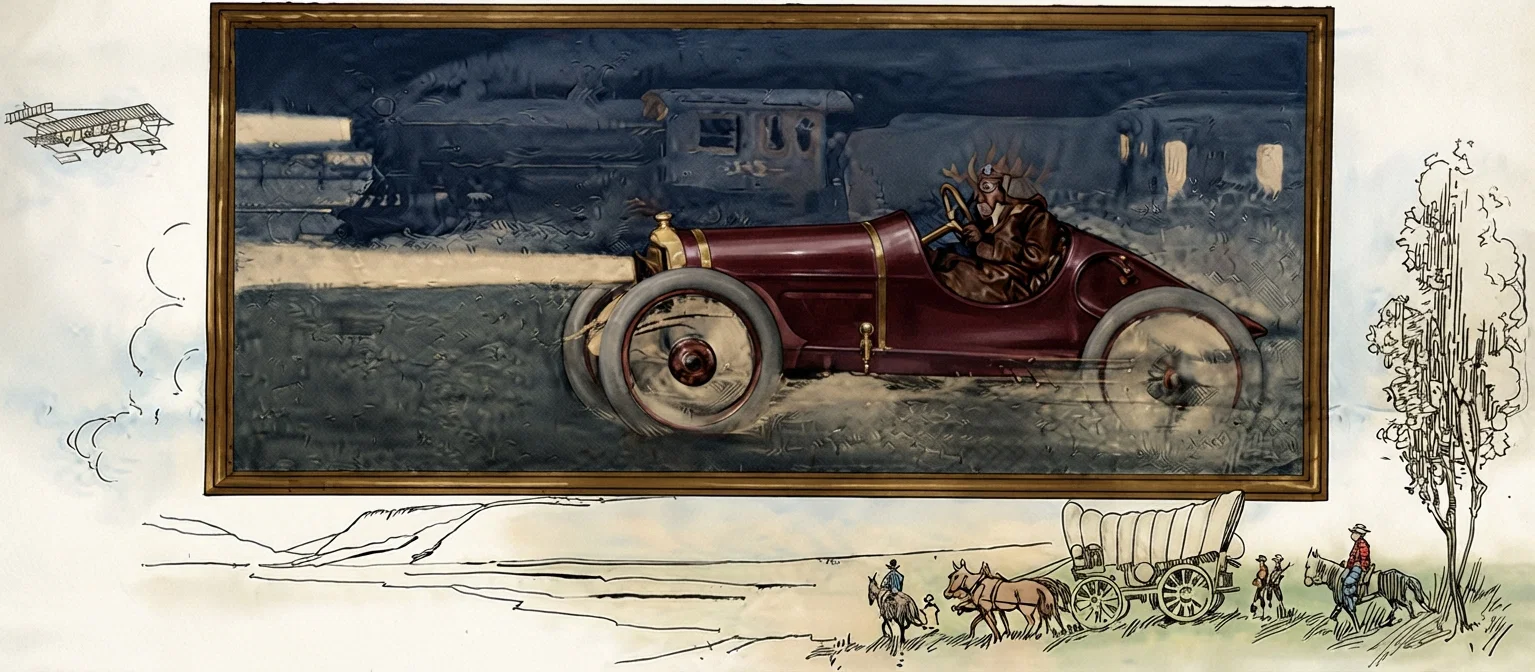
Sixty years ago, our forefathers manifested no impatience while driving across the country in an old ox cart, at the rate of a few miles a day, and joyfully arrived at their destination in ample time. Now as men are whirled over ribbons of shining steel at the rate of sixty miles an hour, when the throbbing engine stops but a moment to coal and take water, one may observe a dozen heads thrust out of half as many windows, and hear anxious voices asking why they are losing so much time. And at the station, if the train is five minutes late, watches are inspected at least every minute.
The multiplicity of modern inventions for quickly doing things has almost annihilated time and space. More of this world's history is lived in six months now, than in a hundred years a few centuries back. Men used to be satisfied with keeping a diary; but now, when so much is crowded in so little, a "horary" is the only requisite. We literally throw the flimsy rein on the neck of the panting steed, apply the spurs, and away we go. Old Phil Sheridan wouldn't keep in sight now. In life's brief record, we flip two — yes, a half dozen — pages at once. Truly life is but a fleeting noise between two long silences. Scarcely do we begin to live till we begin to die.
A modern globe-trotter enters an up-to-date barber shop, gets a hair-cut, has his suit pressed, and his shoes polished, and reads the news, all at the same time. On his way, he pauses a moment in a circulating library, secures a book of quick reference, up-to-date, revised, addenda, and with loose-leaf attachment for later revisions. Then he cuts across lots, past transient houses, quick-lunch counters, mended-while-you-wait shops; rushes into the station, purchases a ticket over an air-line limited through train from "St. Joe" to "Frisco," gets aboard, sits down, and nervously reads the five o'clock Meteor at four-thirty.
Perhaps it is nobler to wear out than to rust out; but when either is done, we are dead, and dead for a long time. People are prone to forget that fast living is slow dying, and that to burn the candle at both ends is an expensive way to "make ends meet." If we would unstring the old harp occasionally, it would last much longer, and make sweeter melodies. Hurrying around after wealth the first half of life, often necessitates worrying around after health the remainder.
Modern mottoes are, "Strike till the iron gets hot," and, "All things come to him who hustles while he waits." The average business man acts as if he had been born about fifteen minutes late, and was doing his utmost to catch up. He retires with the owl, and gets up with the rooster, and is never considered late until he is dead; then people speak of him as "the late Mr. —."
We have no condemnation or criticism for this spirit of intensity. The sad thing is not that it gets a firm hold upon God's people, for this very spirit is for the express purpose of assisting in quickly giving to all the world, in this last generation, the gospel of Jesus Christ. God will have no fault to find with the majority of His people for not running; but because in their haste, obedience is often left out. Paul says, "Ye did run well; who did hinder you that ye should not obey the truth?" Gal. 5: 7. Commended for running, but condemned for disobedience!
A little boy and girl, on their way to school one morning, saw they were going to be late. Having no written excuse, the boy feared the teacher. A bright idea seemed to have come to him, as he said, "Mary, let's stop and pray that the teacher may not be angry with us." His sister, wiser than he, replied, "No; let's keep hiking while we pray." That is what God wants all His children to do in these last, perilous times.
Every one must run. He who runs now with a message will not have the sad experience of running later for a message and not finding it. The prophet Amos sternly says: "Behold, the days come, saith the Lord God, that I will send a famine in the land, not a famine of bread, nor a thirst for water, but of hearing the words of the Lord: and they shall wander from sea to sea, and from the north even to the east, they shall run to and fro to seek the word of the Lord, and shall not find it." Amos 8: 11, 12. Reader, which will you do, run willingly now, or woefully then? God help each to make the right decision!
Yet through it all, and above all, every true, blood-bought child of the King must —
"Take time to be holy. The world rushes on. Spend much time in secret, With Jesus alone."
While the Master says, "Go out quickly into the streets and lanes of the city, . . . and compel them to come in, that My house may be filled" (Luke 14: 21, 23), He also says, "Tarry ye . . . until ye be endued with power from on high" (Luke 24: 49). No use to run in the world, unless we have first tarried with its Maker. Get down in humility with the old Book, and we get up in power with the Author. Always talk to God for the people, before talking to the people for God.
"The race is not [always] to the swift, nor the battle to the strong." Eccl. 9: 11. Ahimaaz greatly outran Cushi; but having only heard a great tumult, he did not know what it meant, and was told by the king to stand aside. Cushi received his tidings, bowed, and then ran with a message that mightily stirred the mourning father. When we "run with patience," as the Father desires we should, then we will be able not only to sing with mighty inspiration, "I'll go where You want me to go," but to sing with grim determination, "I'll stay where You want me to stay." May God help us to start right, and start right away.

Does the Sabbath Begin at Sunset?

Is It for the Christian, or for the Jew Only?

By Carlyle B. Haynes
THERE are many people who think they can make a Sabbath of their own; and it will be well for us to consider the question, Was the Sabbath difficult to make? The claim is made that merely selecting one day and resting on it makes that day a Sabbath. It is said that a person can begin work at any time,—on Monday, Tuesday, or Wednesday,—work six days, and then rest one, and the one on which the rest is performed thus becomes the Sabbath of the one who rests. Those who make such statements lose sight of the fact that God's rest, and not theirs, forever fixes the day.
There are others who declare that the custom and will of the majority is the deciding factor in this matter, and still others who assert that the law of the land should settle the matter. It becomes important, therefore, to find an answer to this question as to the difficulty of making a Sabbath.
And to find a correct answer, we must refer to the question we have considered in previous articles, How was the Sabbath made? In studying that question, we learned that Christ made the true Sabbath by creating a world in six days, resting on the seventh day from this creative work, blessing the seventh day, and making it holy.

Can Congress Create?

THE first requisite to the making of a Sabbath, then, is the power to create. And with this we may bring our study of this particular point to an end; for all will admit that no man, no body of men, no congress of men, no denomination of men, possesses creative power. And from this it is plain that only the Creator can make a Sabbath. And He has made a Sabbath. He does not ask us to make another, but He does ask us to keep holy the one He has made.

Was It for the Jews Only?

THE assertion is often made that the seventh-day Sabbath was for the Jews only. Referring to our consideration of the time when the Sabbath was made, the reader will recall that the Sabbath was made at creation, which was more than two thousand years before there was a Jew. Therefore it could not have been made especially for the Jews.
We do not need to go outside the Bible to find proof of this. "He said unto them, The Sabbath was made for man, and not man for the Sabbath." Mark 2:27. The Sabbath was made not merely for the Jews, but for all mankind. It was given to the father of the race, Adam. It was set apart, sanctified, appointed in Eden to be the Sabbath of the human race. Therefore all mankind are under obligation to observe it.
If all mankind had observed the Sabbath, idolatry would never have been established on the earth. The keeping of the Sabbath takes one's mind back to the work of creation, of which it is a memorial; and no person could have worshiped an idol when every week his attention was called to the Creator.

Temporary or Eternal?

WHENEVER the Sabbath question is discussed, the claim is advanced that the seventh-day Sabbath was designed by God to continue only until Christ should come and introduce the gospel. This claim will be discussed in detail later, when the subject of the relation of the law and the gospel is considered; but at this point, attention may be directed to a passage or two of Scripture to show how groundless this claim is.
The Sabbath is not a temporary but an eternal institution. This is evident from the following text: "The works of His hands are verity and judgment; all His commandments are sure. They stand fast forever and ever, and are done in truth and uprightness." Ps. 111:7, 8. Thus the Sabbath commandment will "stand fast forever and ever." To observe the Sabbath is just as much the duty of every person now as it has been at any period since the beginning of the race.
God designed that His people should keep the Sabbath not only until Christ's first coming, but until the very end of time. Even throughout eternity, His people will keep the Sabbath; for we are told: "As the new heavens and the new earth, which I will make, shall remain before Me, saith the Lord, so shall your seed and your name remain. And it shall come to pass, that from one new moon to another, and from one Sabbath to another, shall all flesh come to worship before Me, saith the Lord." Isa. 66:22, 23.
Inasmuch, therefore, as the Sabbath is to be kept by those who are saved in the kingdom of God, and who will live on the new earth, would not all who desire a home in that land do well to begin its observance at this time?

Sunset or Midnight—Which?

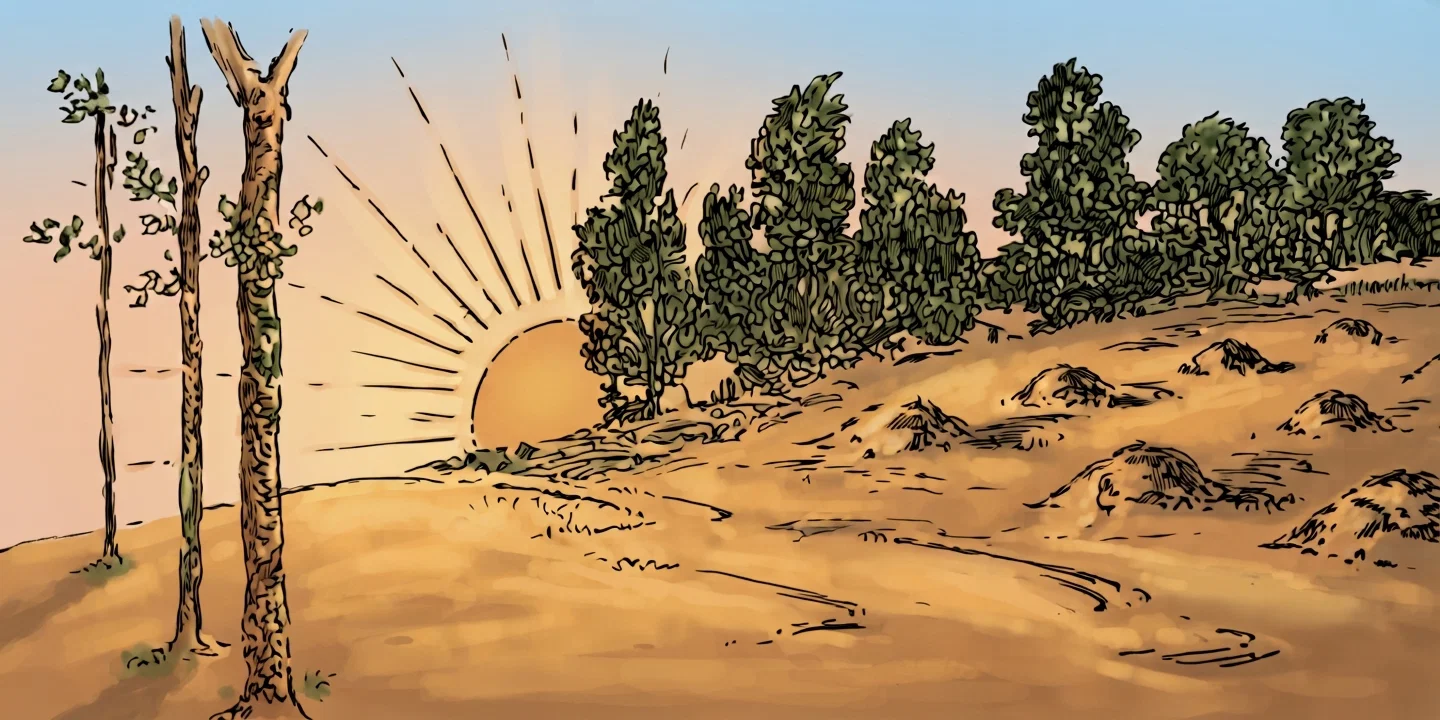
IN closing our discussion of the making of the Sabbath, it may be well to point out that the Sabbath of the Bible, the seventh-day Sabbath, begins at sunset, and closes at sunset. We are told that "the evening and the morning were the first day." Gen. 1:5. That is, the evening, the dark part of the day, comes first; and then the light part. The day begins at sunset, the preceding day then closing.
Again we are told that "from even unto even, shall ye celebrate your Sabbath." Lev. 23:32. The "even" begins at sunset, as will be evident from the following verses: "At the place where the Lord thy God shall choose to place His name in, there thou shalt sacrifice the Passover at even, at the going down of the sun, at the season that thou comest forth out of Egypt." Deut. 16:6. "At even, when the sun did set, they brought unto Him all that were diseased, and them that were possessed with devils." Mark 1:32.
An illustration of this will be found in the following scripture: "When the gates of Jerusalem began to be dark before the Sabbath, I commanded that the gates should be shut, and charged that they should not be opened till after the Sabbath." Neh. 13:19.

The Lust for Empire

A Thwarted Attempt to Wrest Universal Sovereignty from the Creator

By Percy T. Magan
THE lust for empire and world dominion — each one of the great powers striving to exalt itself — is one of the causes of the present colossal upheaval in Europe. An innate desire for self-exaltation possesses the soul of each of the belligerents.
And this is true not only of the belligerents; it is true also of the would-be peacemakers. On the part of the Vatican there is a determination to thrust herself into such a position between the mighty wrestlers that when the war shall end through her mediation, a restoration of her old-time power, glory, and world empire shall have been brought about. She seeks, in the rôle of a peacemaker, to reëstablish her claim to a power and authority superior to that of kings and rulers of nations; and certain it is that if she is successful, she will use this power as she has used it before, — to force her religion and creed upon the inhabitants of the world, whether they like it or not. She will be true to her motto, "Semper eadem" — always the same. To bring the world beneath her sway, politically and religiously, is the undying purpose of the Vatican.
Rome, in a recently issued papal encyclical, declared that the "root cause" of the war is that her theories in regard to the relation of civil government to religion have been abandoned by the nations.

The "Earth Hunger" Disease

FORTUNE, in one way or another, seems to have smiled upon some of the great powers more than upon others. These have gathered to themselves much of the earth and the things that pertain thereto. Such fear that if they peaceably permit any of their neighbors to share in their acquisitions, it will mean their own undoing in the nerve-racking race for international supremacy.
Other great powers have not been so fortunate. They do not possess as many or as flourishing colonies, and they are determined to secure by force of arms what they consider their just share.
"Earth hunger" is a disease with which all so-called great powers are afflicted. For many years they had been suffering of the malady; and when 1914 came, the fever was running so high that an eruption was due to appear.
Of all the worldly lusts to which the mind of man is heir, the lust for universal empire, civil or religious, is the mightiest. To the unregenerate heart there is nothing like it. Compared with it, the acquisition of gold and silver pales into insignificance. Only a few bold souls have ever dared even to conceive of this, the most entrancing of human ambitions. It is truly a game for kings and popes to play, and few even of these have had the nerve to play it. Nebuchadnezzar, Alexander the Great, Julius Cæsar, and Napoleon Bonaparte have each in turn aspired to the pinnacle of world dominion. And in a religious way, Gregory VII, the famous Hildebrand, was infected with the same germ. It is this insane lust for universal empire, in things religious and things civil, that dominates in the world to-day.

The Right of Universal Empire

BUT there is only One who holds inherent right to universal empire — the Maker of the universe. To Him, by virtue of His creative power, belongs the right to reign — to reign over earth and all mankind; for the Scripture says:
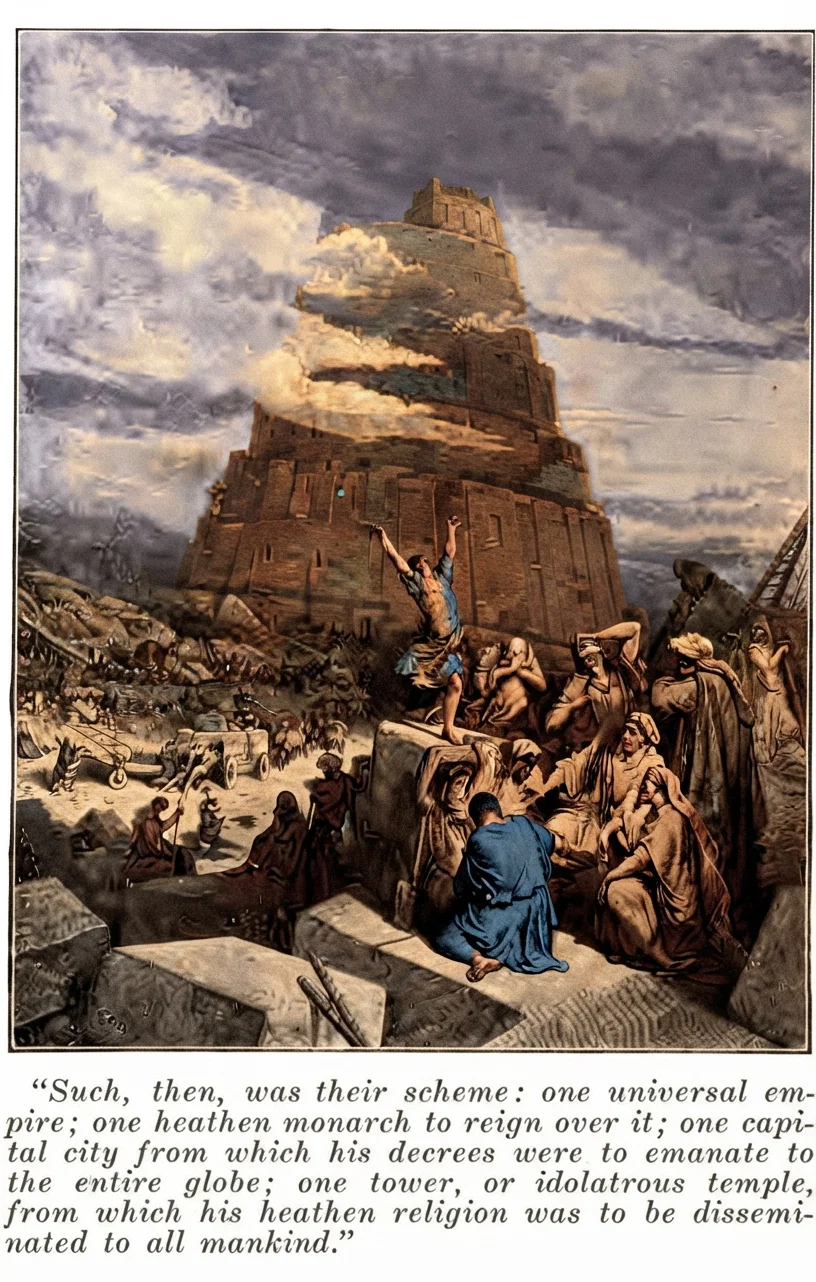
Such, then, was their scheme: one universal empire; one heathen monarch to reign over it; one capital city from which his decrees were to emanate to the entire globe; one tower, or idolatrous temple, from which his heathen religion was to be disseminated to all mankind.
"For by Him were all things created, that are in heaven, and that are in earth, visible and invisible, whether they be thrones, or dominions, or principalities, or powers: all things were created by Him, and for Him: and He is before all things, and by Him all things consist." Col. 1: 16, 17.
From this it is clear that all thrones, dominions, principalities, and powers are created by the Lord. His, therefore, is the right to prescribe the extent and limits of their authority.
But in the very dawn of time, an attempt was made to wrest this universal sovereignty from the Creator. The story is familiar to most of us, that Satan was once an angel of light, and that he fell from his high estate, and was cast out of heaven. But the cause of his degradation is little known or understood. Concerning this the Scripture states:
"How art thou fallen from heaven, O Lucifer, son of the morning! how art thou cut down to the ground, which didst weaken the nations! For thou hast said in thine heart, I will ascend into heaven, I will exalt my throne above the stars of God: I will sit also upon the mount of the congregation, in the sides of the north: I will ascend above the heights of the clouds; I will be like the Most High. Yet thou shalt be brought down to hell, to the sides of the pit." Isa. 14: 12-15.
Lucifer was cast out of heaven because he had said, "I will exalt my throne above the stars of God: . . . I will be like the Most High." In other words, the thing for which Satan was cast out of heaven was his arbitrary attempt to usurp the throne of God. He had attempted to make himself ruler over the angels of heaven, and he had done this without ascertaining whether they wished to have him rule over them or no. He did not care anything for the doctrine of the consent of the governed. Here lay the origin of that wicked principle of arbitrary rule and authority which has been seen in so many kings and nations from that day down to this.

Satan's Ideal Government

MARK it, Satan did not say, "I will exalt myself," but, "I will exalt my throne." In the very nature of things, a throne signifies government — governmental power. Therefore Satan's proclamation was that he intended to set up a government of his own in place of the government of God. Moreover, his plan was, to set up his government arbitrarily. "I will exalt." He did not propose this prerogative for himself by the suffrage of his fellows. He had determined to make himself absolute sovereign of the universe by his own despotic power. Absolute, despotic monarchy was then Satan's model and ideal of government.
It was for this principle and purpose that he fought against God and against Christ and against the angels of Christ; and it is for this principle and this purpose that, directly and through instrumentalities, he has been contending against Christ and the church of Christ ever since. "He was cast out into the earth." Rev. 12: 9. And this is made clear from the words in the Scripture concerning Satan, "which didst weaken the nations." He is the one who has instigated rulers to acts of aggrandizement and arbitrary rule, and in the end these elements bring only weakness to a nation.

Thwarts the Babel Builders

DURING the days immediately after the Flood, it was divinely appointed that the descendants of Noah, although they all spoke the same language, should journey to different parts of the earth, and dwell there as separate and distinct nations. Thus it is written: "These are the families of the sons of Noah, after their generations, in their nations: and by these were the nations divided in the earth after the Flood." Gen. 10: 32. See also Gen. 10: 5, 18, 20.
As these people journeyed, they found a plain in the land of Shinar, "and they dwelt there." They had been told to go on and scatter abroad; but instead of doing this, they remained together in one company in the land of Shinar. There they built a city and a tower, and said, "Let us make us a name, lest we be scattered abroad upon the face of the whole earth." Gen. 11: 4. The Lord had told them to scatter abroad; but they determined, in spite of this, to remain together under one flag, as one nation. Then the Lord said: "Behold, the people is one, and they have all one language; and this they begin to do: and now nothing will be restrained from them, which they have imagined to do." Verse 6.Therefore the Lord confounded their language, and scattered them abroad upon the face of the earth; for the Almighty well knew that if there was only one nation on the earth, its power would be so great that its rulers would be restrained from nothing, and the situation of mankind in general would be intolerable.
Why was it, then, that God visited His displeasure in such a drastic manner upon the builders of the Tower of Babel? Why should He compel them to cease their building? God certainly knew that they never could construct a tower whose top would reach to heaven. But the visitation at Babel was a preventive measure, interposed by God to make it impossible for the human family to pursue a certain policy. It was done to restrain them from embarking upon certain projects which they had conceived.

Devil's Counterfeit of Gate to Heaven

THE leader in this rebellion was Nimrod, which name signifies "an extremely impious rebel." Nimrod and his followers had determined to disobey the commandment that man should scatter abroad throughout the earth and found many nations. They had determined to "make us a name, lest we be scattered abroad." The city which they designed to build was to be the capital of this world-wide empire; and the tower, or temple, was to be the place from which the tenets and doctrines of this one state-controlled, heathen religion was to be promulgated and enforced upon all the sons of men. Such, then, was their scheme: one universal empire; one heathen monarch to reign over it; one capital city from which his decrees were to emanate to the entire globe; one tower, or idolatrous temple, from which his heathen religion was to be disseminated to the inhabitants of all the earth.
The genius of the thought in the whole scheme is found in the name of the kingdom. At the present time, the word "babel" signifies "confusion," because of what occurred at that place; but originally it meant "gate of God." It was the devil's counterfeit of the gate and road to heaven. It was his endeavor to accomplish on earth what he had failed to accomplish in heaven. But God foresaw that it could only result in the very opposite of all this, and knew that instead of peace and liberty, it meant bloodshed and despotism. Satan originated the vast scheme so that whenever and wherever some soul should arise to teach the true religion of God, he could be crushed to the dust.
The introduction of different tongues was God's method of forever checking a world empire — a world-religion plan. Forever the different languages were to prove a barrier to world empire in either church or state. In God's goodness, He did it so that in the ages to come, when His worshippers were persecuted in one land, they could flee for safety to another. God did it so that when laws restricted liberty of conscience in one country, another could extend to the oppressed an asylum and a sanctuary.
Foiled in his efforts, Satan has worked unceasingly, from that time to this, to do indirectly that which he has been prohibited from doing directly; and when the dire day shall arrive that he shall accomplish his desires, God will come down, and there shall be a confusion infinitely greater than that at Babel. And in that day, the different languages will come to an end forever, and again there will be one tongue for all the righteous.

DO WE LOOK FOR ANOTHER?

By the late MRS. E. G. WHITE
FROM Herod's dungeon, where, in disappointment and perplexity concerning the Saviour's work, John the Baptist watched and waited, he sent two of his disciples to Jesus with the message: "Art Thou He that should come, or do we look for another?" Matt. 11:3.
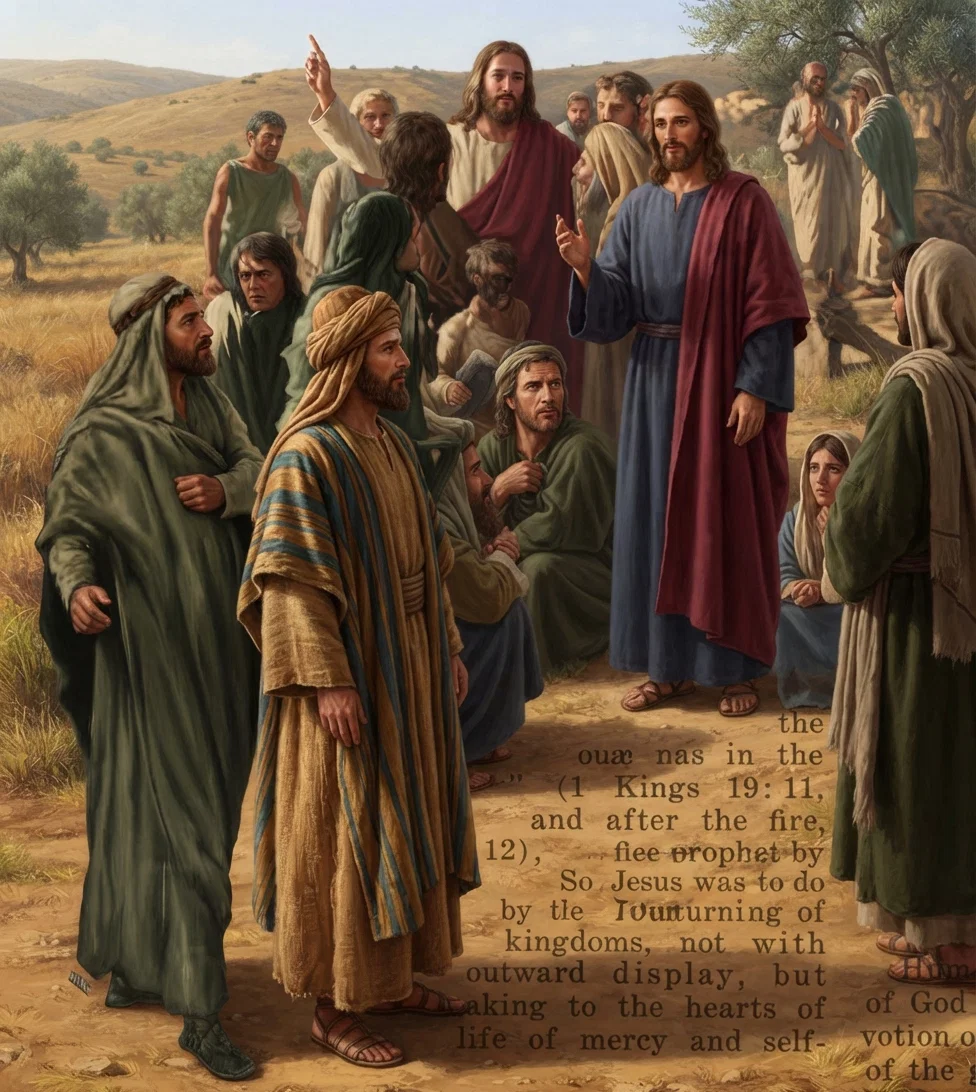
The Saviour did not at once answer the disciples' question. As they stood wondering at His silence, the afflicted were coming to Him. The voice of the mighty Healer penetrated the deaf ear. A word, a touch of His hand, opened the blind eyes to behold the light of day, the scenes of nature, the faces of friends, and the face of the Deliverer. His voice reached the ears of the dying, and they arose in health and vigor. Paralyzed demoniacs obeyed His word, their madness left them, and they worshiped Him. The poor peasants and laborers, who were shunned by the rabbis as unclean, gathered about Him, and He spoke to them the words of eternal life.

Liberating the Captives

THUS the day wore away, the disciples of John seeing and hearing all. At last Jesus called them to Him, and bade them go and tell John what they had seen and heard, adding, "Blessed is he, whosoever shall not be offended in Me." Verse 6. The disciples bore the message, and it was enough.
John recalled the prophecy concerning the Messiah: "Jehovah hath anointed Me to preach good tidings unto the meek; He hath sent Me to bind up the broken-hearted, to proclaim liberty to the captives, and the opening of the prison to them that are bound; to proclaim the year of Jehovah's favor, and . . . to comfort all that mourn." Isa. 61:1, 2, A. R. V. Jesus of Nazareth was the Promised One. The evidence of His divinity was seen in His ministry to the needs of suffering humanity. His glory was shown in His condescension to our low estate.
The works of Christ not only declared Him to be the Messiah, but showed in what manner His kingdom was to be established. To John was opened the same truth that had come to Elijah in the desert, when "a great and strong wind rent the mountains, and brake in pieces the rocks before the Lord; but the Lord was not in the wind; and after the wind an earthquake; but the Lord was not in the earthquake; and after the earthquake a fire; but the Lord was not in the fire" (1 Kings 19:11, 12); and after the fire, God spoke to the prophet by a still small voice. So Jesus was to do His work, not by the overturning of thrones, and kingdoms, not with pomp and outward display, but through speaking to the hearts of men by a life of mercy and self-sacrifice.
The kingdom of God comes not with outward show. It comes through the gentleness of the inspiration of His word, through the inward working of His Spirit, the fellowship of the soul with Him who is its life. The greatest manifestation of its power is seen in human nature brought to the perfection of the character of Christ.
The followers of Christ are to be the light of the world; but God does not bid them make an effort to shine. He does not approve of any self-satisfied endeavor to display superior goodness. He desires that their souls shall be imbued with the principles of heaven; then, as they come in contact with the world, they will reveal the light that is in them. Their steadfast fidelity in every act of life will be a means of illumination.
Wealth or high position, costly equipment, architecture or furnishings, are not essential to the advancement of the work of God; neither are achievements that win applause from men and administer to vanity. Worldly display, however imposing, is of no value in God's sight. Above the seen and temporal, He values the unseen and eternal. The former is of worth only as it expresses the latter. The choicest productions of art possess no beauty that can compare with the beauty of character, which is the fruit of the Holy Spirit's working in the soul.

The Treasures of Eternity

WHEN God gave His Son to our world, He endowed human beings with imperishable riches—riches compared with which the treasured wealth of men since the world began is nothingness. Christ came to the earth and stood before the children of men with the hoarded love of eternity; and this is the treasure that, through our connection with Him, we are to receive, to reveal, and to impart.
Human effort will be efficient in the work of God just according to the consecrated devotion of the worker,—by revealing the power of the grace of Christ to transform the life. We are to be distinguished from the world because God has placed His seal upon us, because He manifests in us His own character of love. Our Redeemer covers us with His righteousness.
In choosing men and women for His service, God does not ask whether they possess worldly wealth, learning, or eloquence. He asks: "Do they walk in such humility that I can teach them My way? Can I put My words into their lips? Will they represent Me?"
God can use every person just in proportion as He can put His Spirit into the soul temple. The work that He will accept is the work that reflects His image. His followers are to bear, as their credentials to the world, the ineffaceable characteristics of His immortal principles.

The Christ Touch

CHRIST touched the leper, and healed him. He Himself was not contaminated. In this world of sin, we may touch and heal the afflicted, yet not become infected, if it be the Christ touch. Without that, we would be contaminated. Phil. 2:15. M. A. H.
Continue reading: A Declaration of Interdependence