Your ShelfYour Projects

Signs of the Times, Vol. 32, No. 15.

FUNDAMENTAL PRINCIPLES. No. 9.

Signs of the Times

Apr 11, 1906

Pacific Press Publishing Company · Mountain View, California · Apr 11, 1906

FUNDAMENTAL PRINCIPLES. No. 9.

From Virginia's "ACT for Establishing Religious Freedom," 1785.
Be It Therefore Enacted by the General Assembly,
That no man shall be compelled to frequent or support any religious worship, place, or ministry whatsoever, nor shall be enforced, restrained, molested, or burthened in his body or goods; nor shall otherwise suffer on account of his religious opinions or belief; but that all men shall be free to profess, and by argument to maintain, their opinions in matters of religion, and that THE SAME SHALL IN NOWISE DIMINISH, ENLARGE, OR AFFECT THEIR CIVIL CAPACITIES.
And though we well know that this Assembly, elected by the people for the ordinary purposes of legislation only, have no power to restrain the acts of succeeding Assemblies, constituted with the powers equal to our own, and that therefore to declare this act irrevocable, would be of no effect in law, yet we are free to declare, and do declare, that the rights hereby asserted are of the NATURAL RIGHTS OF MANKIND, and that if any act shall be hereafter passed to repeal the present or to narrow its operation, SUCH ACT WILL BE AN INFRINGEMENT OF NATURAL RIGHT.

OUR PUBLICATIONS

This is the space to watch carefully each week, that you may not miss any of the good books we are reviewing.

Making Home Peaceful

By Mrs. L. D. Avery-Stuttle. All of the little folks (and some of the big ones) who have read "Making Home Happy" will be delighted to know that they can now read the sequel to that story in the new book, "Making Home Peaceful," by the same author. It is written in the same happy vein as her former book, that so delights the heart of the reader, and will prove very interesting and helpful from beginning to end.
It has been the supreme purpose of the author to show the reader, by means of a happily-conceived object-lesson how the true spirit of the ever-blessed Christ-love can be given tangible expression in every-day home life, and how the incoming of that love will transform a joyless abode into a happy home. Too often this must be accomplished through the ministry of pain and sorrow. Far better to read and heed a lesson of love and peace, and of escape from unloveliness and strife, such as is so plainly and clearly set forth in the pages of this book. 232 pages, attractive cloth cover - - - $0 75

How a Little Girl Went to Africa

By Leona M. Bicknell. The story of a trip to Africa, told by a little girl of eight or nine years. She writes first of the long voyage; of the great sea, and of the great cities she saw at stopping places. Then of the far-off country, of the queer little African children, of the Boer war, and of the home life, of the ostrich farms, and of the diamond mines, of the strange tropical fruits and flowers, etc. The book is also finely illustrated with some of the strange, queer African scenes. 172 pages, cloth bound - - - - - - - $1 00

The House We Live In

or The Making of the Body. By Vesta J. Farnsworth. A book for home reading, intended to assist mothers in teaching their children how to care for their bodies, and the evil effects of narcotics and stimulants.
It is written in conversational style—a mother talking to her children, and is fully illustrated. It contains 218 pages, and is strongly bound in cloth. Price - - - $0 75

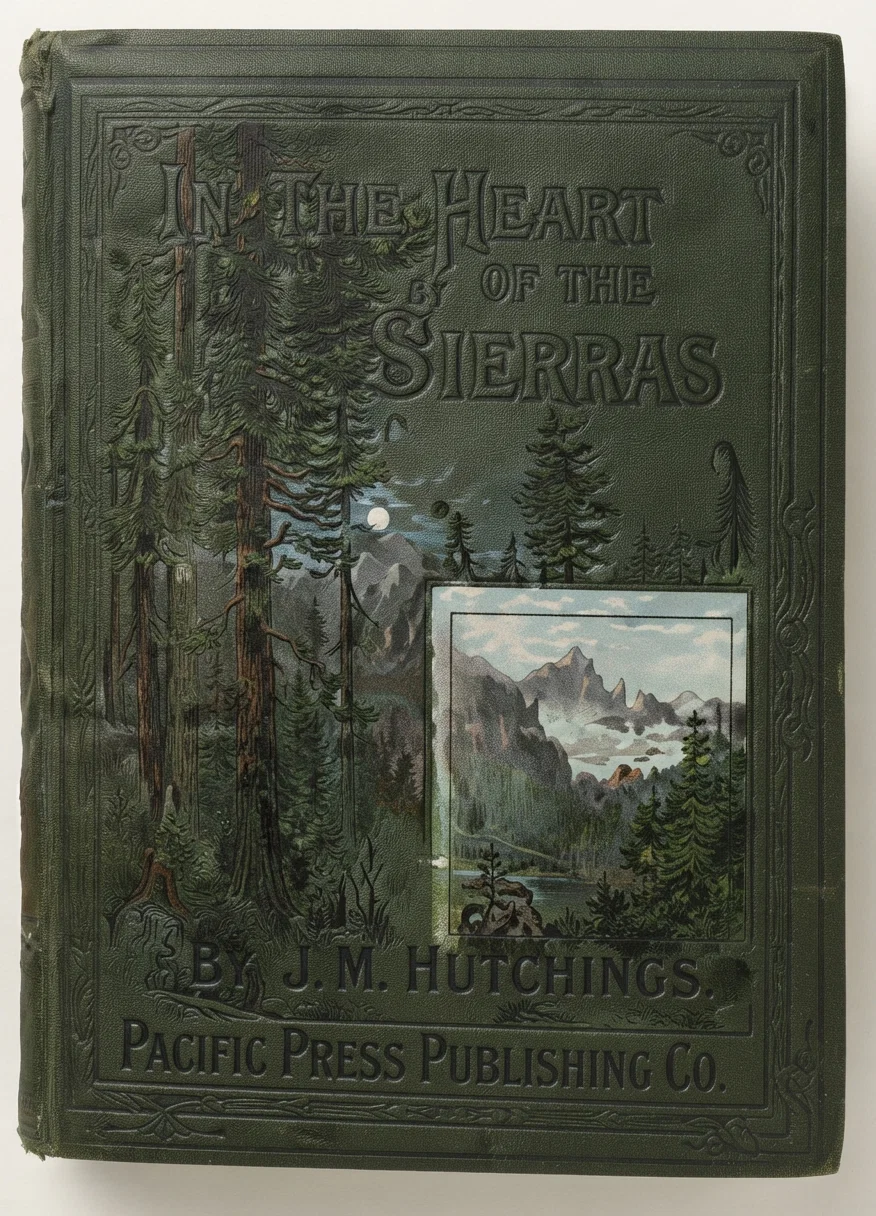
In the Heart of the Sierras

By Col. J. M. Hutchings. The most authentic and intensely-interesting description of the Yosemite Valley and big tree groves of California ever written.
It contains nearly 500 pages of text, with over 150 illustrations, twenty-eight of which are beautiful full-page artotypes. It portrays, by aid of the artist's genius and the author's facile pen, the lofty mountains and charming valleys, the placid lakes and the thundering cataracts, of the world-renowned Yosemite. The mission of this work is to make the best possible presentation of the marvelous scenery and sublime natural wonders of this unique region.
Fine English cloth, embossed in jet and gold - - - $2 75
" " " " " " " " " " " gold edges 3 25
Full sheep, library style, marbled edges - - - 3 50
Full morocco, gold edges - - - - - - 4 75

Tourists' Edition

Is the same size page, and contains everything that our elegant subscription edition does, except the artotype plates. It is printed on a fine quality of thinner paper, bound in paper binding. Reduced from 75c to 50c for immediate orders.

Pacific Press Publishing Co.

Mountain View, California,
1109 E. 12th St., Kansas City, Mo. 285 Salmon St., Portland, Ore.

Terms of Subscription.

Per Year, post-paid . . . . . . . . . . . . . . . . . . . . . . . . . . . . . . . . . . . . . . . . . . . . . . . . . . . . . . . . . . . . . . . . . . . . . . . . . . . . . . . . . . . . . . . . . . . . . . . . . . . . $1.50 Six Months, 75 cts. Three Months, 40 cts. To Foreign Countries, per year, $1.75.

SPECIAL TERMS.

1. One new yearly subscription and one renewal, or two new yearly subscriptions, sent at one time, $2.50.
2. Two new yearly subscriptions and one renewal, or three new yearly subscriptions, sent at one time, $3.25.
3. Three new yearly subscriptions and one renewal, or four new yearly subscriptions, sent at one time, $4.00.
Sample copies sent on application.

TO OUR PATRONS.

Please be careful to write all names of persons and places plainly.
Send money by Post-office Money Order, Express Order, or Bank Draft on New York, Chicago, or San Francisco.
Orders and Drafts should be made payable to the Pacific Press Publishing Co.
Paper money or silver should be sent in a registered letter.
Registered mail is safe. Unregistered mail is at the risk of the sender.
The address label on your paper will indicate the time to which your subscription is paid. In case of non-receipt of papers, or any other irregularity, please notify us immediately.
When subscriptions expire, no more papers are sent to the party except by special arrangement.
You are requested to watch the date on your label, and renew early, and save the loss of papers. We can not always furnish missing numbers.
When requesting change of address, be sure to give both old and new addresses.
Important.—If you order SIGNS, Our Little Friend, books, etc., at the same time, use a separate sheet of paper for each. If this request is complied with, it will materially assist in the prompt and accurate despatch of the business.
When writing to the editor, be sure to use a separate sheet of paper.

MESSAGE SERIES OF THE SIGNS.

We have 1,000 copies No. 1, and 1,650 No. 4 of the Message Series of THE SIGNS OF THE TIMES on hand.
No. 1 contains— The Great Home Coming, by C. M. Snow Nearness of the End, Mrs. E. G. White Object of Prophecy, R. A. Underwood Prophecy May Be Understood, W. S. Sadler Importance of Prophecy, S. H. Lane Christ Will Come Again, Geo. B. Thompson Three Visions of Earth's Dominion What His Coming Means, Dr. B. F. Richards Christ Our Life, William Covert
No. 4 contains— A Spirit-Filled Church, W. A. Spicer Receive Ye the Holy Spirit, A. G. Daniells Spiritual Gifts, J. N. Loughborough The Apostasy, W. W. Prescott The Great Center of Sanctuary Service, J. O. Corliss The Seal of God, R. S. Owen Our Preparation for the End, Mrs. E. G. White God's Last Protest, A. O. Tait The Church Militant and Triumphant, M. C. Wilcox
Price 2 ½ cents each. SIGNS OF THE TIMES, Mountain View, Cal.

THE CROWNING ACT OF INFINITE LOVE.

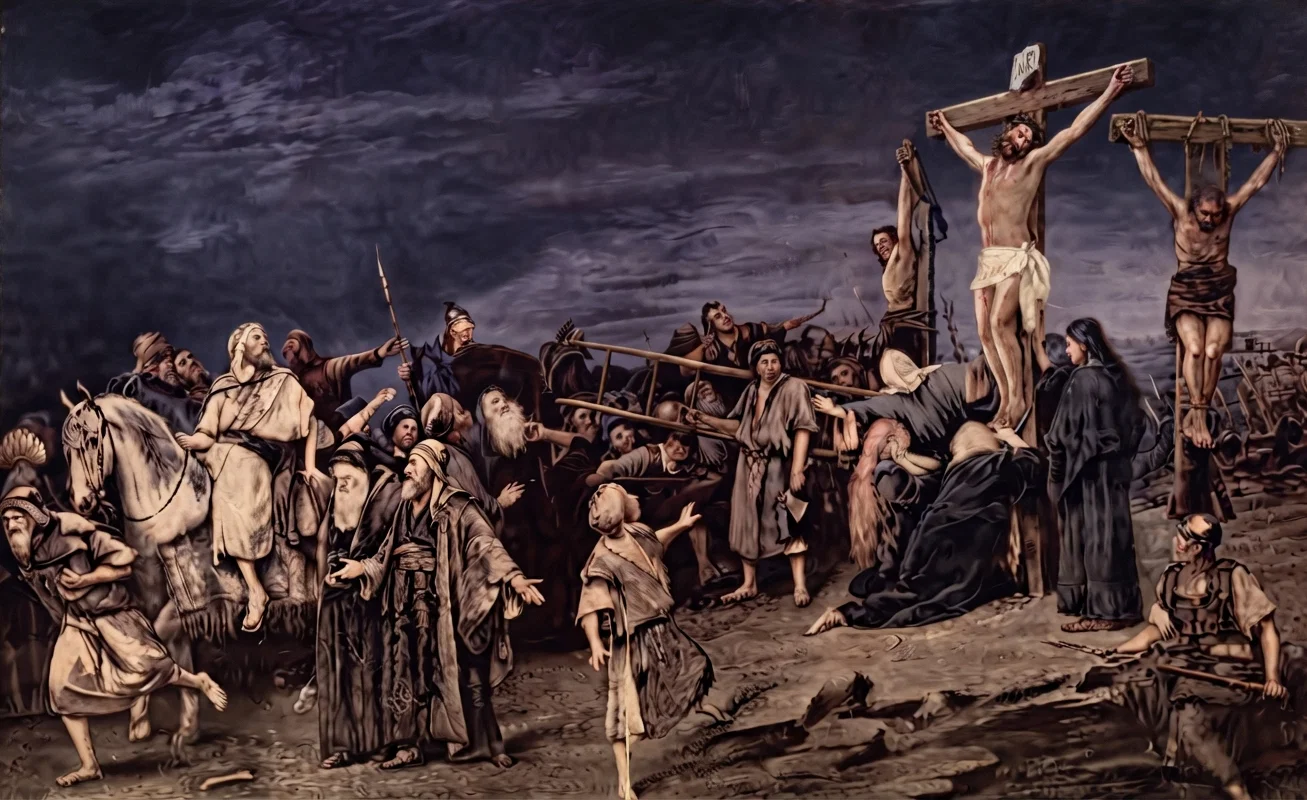
THE love of God! The love of God manifest in deed! The love of God for the unlovely and unloving! The love of God, in order that the unlovely might become lovable; that the unloving might love! Such was the crucifixion of the Son of God, the climax of love unselfish, the crisis of the universe, the destruction of death by dying! "For scarcely for a righteous man will one die; for peradventure for the good man some one would even dare to die. But God commendeth His own love toward us, in that, while we were yet sinners, Christ died for us."
IT was no love of mere impulse that was manifest at the Crucifixion. It was not the love of an age or a dispensation. In ancient times God had said: "I have loved thee with an everlasting love." It was not the love of Jesus which at the cross spoke the loudest; it was the love of God the Father "in Christ reconciling the world unto Himself," that was manifest on Golgotha's hill. "For God so loved the world, that He gave His only-begotten Son." Neither did the Son die because so compelled; He "gave Himself for us, that He might redeem us from all iniquity, and purify unto Himself a people for His own possession, zealous of good works." But when Christ walked the earth and died upon the cross, He revealed not Himself; "The Father that dwelleth in me, He doeth the works."
WHEN, in the beginning the eternal Son of God laid down His high prerogatives, and took upon Himself the form of a servant, the crucifixion was in the gift, angel tho He first became. He was "the Lamb of God" "slain from the foundation of the world." When He there gave Himself, He gave Himself to be all that lay between the giving and the crucifixion: the Chief Minister among all the angelic host, bearing continually the accusations of the adversary, and answering them with, "Jehovah rebuke thee;" the Babe in Bethlehem, the Child, the Boy, the Young Carpenter at Nazareth; the Tempted One in the wilderness, meeting the cumulated craft and deceptive power of the ages of sin; the Minister in word and deed to the poor and needy; despised and rejected of men, even His own; the agony of Gethsemane; the climax of the Crucifixion,—all speaking in tones, clear, penetrating, all-persuading to every responsive heart, in the broad universe, God loves you; see how much God loves you.
IN this love was involved all the patient suffering of the hatred of demons, and men the agents of demons. In it was involved the nail-piercing fastening to the cross, the awful disgrace of being adjudged guilty of the highest crime, yet absolutely innocent; the mocking by the base mob, and the elders and priests of His own people; the sorrow of the mother, and the disappointment of His disciples; the awful darkness that shut from His longing soul the Father's face; the awful despair to be felt by the sinner at last, and the closing scene, the loss of consciousness—death. Yet from it all He shrank not. "Lo, I am come to do Thy will, O God." From that He swerved not; humanity might plead as in Gethsemane's garden, "Let this cup pass," but love prays triumphantly over all, "Nevertheless not what I will, but what Thou wilt."
O SOUL, sinful tho you may be, does not this love appeal to you? It was for you. It was poured out that you might drink. He died that you might not die. He took upon Himself sin for your sake, that sin might not crush you into oblivion with its intolerable burden. You live even now because of that sacrifice. Long ago, the earth would have been rolling on a dark and void and hopeless, disintegratingwreck, if the love of God had not been poured out in unstinted measure in healing streams to make even physical life possible to the sinner. He prolongs the life you live, that His goodness may lead to repentance of sin, and that you may lay hold of eternal life in Him. He has purchased all that man forfeited by sin. The earth is His, and He made it; sin alienating it, He bought it with His life. Therefore every blessing is a blood-bought blessing. The very sunlight by which you thrive, which ripens the corn and the fruit on which you live, which glows in your grate, which looks down on your deeds of darkness, is a blood-bought blessing. The very air you breathe, by which you blaspheme His name, is blood-bought. The streamlet sings its song of joy; the birds warble forth His praise; the grass and flowers look up to Him, and exhale their fragrance on the air, but you, with reasoning powers, with some sense of justice and right, refuse to render to Christ the Lord what belongs to Him! More than all else, He wants you. "Son, give Me thy heart." Come just as you are. Let His love break your heart. Let Him take you, all unworthy as you know yourself to be, and make you "to the praise of the glory of His grace."
FELLOW pilgrim, how does the cross appeal to you? Are you weary? Do you see only the nail-pierced hands, the thorn-crown wounded brow, and read in them your own sufferings? Or do you see in the cross the all-comprehending love of God to you, a pledge of all you need forever? That is what He wants you to see. Listen: "He that spared not His own Son, but delivered Him up for us all, how shall He not also with Him freely give us all things?"—Nay more, He has given us all things in Him; "for in Him dwelleth all the fulness of the Godhead bodily, and in Him ye are made full." Know that when you accepted Him "in everything ye were enriched in Him, in all utterance and knowledge; even as the testimony of Christ was confirmed in you; so that ye come behind in no gift; waiting for the revelation of our Lord Jesus Christ who shall also confirm you unto the end, that ye be unreprovable in the day of our Lord Jesus Christ." "For I am persuaded," declares one who was called to suffer for His sake, "that neither death, nor life, nor angels, nor principalities, nor things present, nor things to come, nor powers, nor height, nor depth, nor any other creature, shall be able to separate us from the love of God, which is in Christ Jesus our Lord."
"When I survey the wondrous cross On which the Prince of Glory died, My richest gain I count but loss, And pour contempt on all my pride."

WHAT GOOD?

The Question of Skating-Rinks.

THE question which the mere nominal professor asks concerning questionable things is, "What harm is there in them?" The very question shows the negative life of the asker, and indicates that his object in the life which he possesses is comfortable ease rather than unselfish service; is present enjoyment rather than noble character-building.
Just now, all through the country, is the skating-rink "fad," in some places, a "craze." The exercise appeals to the young Christian, and there are never wanting human appeals from acquaintances and companions to confirm any lingering desire to take part. The question has been asked us, and we wish to examine it.
What good is it physically?
What good is it financially?
What good is it mentally?
What good is it socially?
What good is it morally? This fairly covers the field.
1. Physically.—"It is exercise," we are told. Yes, but is it exercise under conditions which make for health? It is exercise in a crowded hall, soon filled with the unwholesome exhalations of many steaming human bodies, inhaling an atmosphere laden with carbon dioxide, the fumes of tobacco and whisky, and the effluvia and impurities consequent on the gathering of such a crowd in such a place. Exercise is almost invariably taken to excess, as the mad indulgence of the sport has often demonstrated. This exercise is often continued till late hours, and it leaves the exhausted system in a splendid condition for the propagation of germs of influenza, pneumonia, and tuberculosis. It robs the most nervous temperaments—those who naturally go to excess in such a sport—of needed sleep, and so tends to make them nervous wrecks. It leads those who are heated to indulge in iced refreshments or drinks, rarely or never beneficial. The skating-rink is therefore of no benefit to its devotees physically.
2. Financially.—It is absolutely no financial benefit to its patrons, whatever it be to its promoters. It can be a place which easily robs the young man of limited wages of all his hard earnings; and when the fad is over he has a pair of worn or broken skates, and an education which will never commend him to a single wise business man. The promoters, the saloons, the purveyors of drinks, the doctors, and perhaps, prematurely, the undertakers, are the chief beneficiaries of the rink. The patron is always poorer.
3. Mentally.—No one thinks, save the low-grade intellect, that the rink would be a profit mentally. It does not require a great mentality to operate a pair of roller skates on a smooth floor. The professors and graduates of the rink will never, because of the acquired art, be known in the halls of fame, or add luster to the renown of their Alma Mater.
4. Socially.—We are not among those who would mark the boundaries of social divisions by the dollar, the eagle, or the bond, or by any ancient coat of arms. The true "hall-mark" of a gentleman or lady is moral character and good behaviour; and the best code of etiquette is the Golden Rule. No young man who cares for himself ought to choose other companions. No true, pure young woman would wish to. The social companion of the parlor ought to be on the same level, of the same brand, as the social companion in amusement. Do fathers and mothers, ambitious for their sons and daughters, believe for one moment that their standing in good society will be helped or established by the associations at the rink?
5. Morally.—What is its moral benefit? What parent wants to throw his pure daughter or growing son into a human mass of all kinds and characters, all on an equality by virtue of the fee paid at the door?
Oftentimes the best and most graceful performer in such a place is the most disreputable in character. It is easy for such a one to gain strong influence over an impressible boy or girl who are there with all restraint thrown off. Vice and low conversation and action become familiar, the nice sense of morality and modesty is lost, and the first step is taken in a downward career, which often ends in life-long disgrace and degradation. Places like the rink, invariably given to excess and broadest license, ever level down, never up.
In the light of these considerations, what candid man or woman will not agree with us that the skating-rink is of no physical, financial, mental, social, or moral good. It is therefore a good place to let alone. Let reason and right principle settle that forever, and the enlightened mind and conscience will ever find something better in every way.

GOD COMMENDS FAITH—NOT SIN.

IN the eleventh chapter of Hebrews a number of persons are spoken of in terms highly commendatory. It is well to note especially why they were deemed worthy of commendation. The one thing to their credit was their faith. All of these people had faults. Many of them have faults recorded against them in the Scriptures, some of them very grievous sins; yet God has deemed them worthy of special mention—has set His seal of approval upon them.
Infidels and skeptics are wont to point out the defects of these people, and then point to the fact that God commends such men. Some will take warrant to commit sins of which these persons were guilty, because of their honorable mention by the Spirit's dictation, while others refuse to acknowledge God at all because, they allege, He endorsed men who were guilty of atrocious deeds. This course is in keeping with that of the scribes and Pharisees who said of Christ, "This man receiveth sinners, and eateth with them," and therefore they rejected Him.
Such logic is in sheer ignorance of God's mercy, which is in full harmony with His perfect justice. Such one-sided deductions come of superficial reading of the Scriptures, and a lack of understanding of the character of God and His wonderful love for His creatures. Those who view the situation from such a standpoint apparently think that God is just such a One as themselves, and they judge Him by themselves, setting up their own fallible standard of judgment and justice instead of God's perfect standard.
God has not commended any man for his faults, but, no matter how faulty, He does commend faith. He does not regard sin lightly, yet He loves the creature; and this is the basis of His perfect plan of salvation. "God so loved the world, that He gave His only-begotten Son, that whosoever believeth in Him should not perish, but have everlasting life." God does not let sin, which is "the transgression of the law," pass unnoticed, or its punishment go by default. That is shown by His gift of His sinless Son to die for sinners, and then by making faith in Him a condition of justification, of pardon. He thus devised at great sacrificea plan by which He can be just and yet justify them that believe in Christ.
So we have this emphatic statement by the apostle Paul: "Being justified by faith, we have peace with God through our Lord Jesus Christ." Peace with God implies being in His favor, regardless of previous character or condition. Only the exercise of faith, the "faith that works by love," which is "the faith of Jesus," can bring one into a position where God can commend him.
It is only by a continuous faith in Christ that one can stand "perfect and complete in all the will of God," and therefore be worthy of commendation by Him. "He that covereth his sins shall not prosper; but whoso confesseth and forsaketh them shall have mercy." If skeptics would only believe the Gospel, and honestly contemplate the merciful plan of salvation, they would see the beauty and reasonableness of God's love, and no longer charge Him with human folly and vindictiveness. "The wages of sin is death;" "sin, when it is finished, bringeth forth death;" but the gift of God is eternal life through Jesus Christ our Lord." G.

What He Has in Store for Them

CHARACTERISTICS OF GOD'S REMNANTS. NO. 2.

What He Has in Store for Them.

CHRIST says of those who are accounted worthy to be numbered among the overcomers: "I will write upon him the name of My God, and the name of the city of My God, the New Jerusalem, which cometh down out of heaven from My God, and Mine own new name." Rev. 3:12.
Can we even imagine that God will permit His name, the symbol of His righteous character, to be stamped for eternity upon the forehead of any soul who is hiding sin in his heart? God will permit no Achans in heaven. The lesson of the hidden theft in the camp of Israel is full of meaning for the child of God. Not for one moment must we harbor the thought that Jesus Christ, whose life in human form and whose death on Calvary were made necessary by sin, will write His own new name upon the forehead of any soul who is clinging to sin while professing to serve Him.
Can we imagine that the righteous Ruler of that city where only righteousness is ever to be, will ever label you or me for a habitation there, while there remains in our hearts the root of that evil plant which disrupted the peace of heaven, and put the seal of death on the tomb of the Son of God? Such can never be. If we allow any such idea to actuate us, as even a remote possibility, we are following a will-o'-the-wisp into the mire and quicksands of eternal death. God will not stamp us righteous till we are. And we will not be able to look upon the glorious majesty of the coming Christ, unless, before the time He appears, we have bid a final farewell to the last cherished sin, and have set our faces against it as firmly as the rock of ages. Christ says of that city: "There shall in nowise enter into it anything unclean, or he that maketh an abomination and a lie; but only they that are written in the Lamb's book of life." Rev. 21:27.
"They that wash their robes" in the blood of Christ from all the defilements of sin are given "the right to the tree of life," and to "enter in by the gates into the city;" they have left outside everything that would have bound them to the kingdom of the adversary. They that cling to their sins are left outside with them. Inside those gates of pearl they can never enter; over that jasper wall they can not go; in the joyous pleasures and occupations of the redeemed they can never participate. "Without are the dogs, and the sorcerers, and the fornicators, and the murderers, and the idolators, and every one that loveth and maketh a lie." Rev. 22:15.
If the tendrils of our hearts have wound themselves around some dear sin, our only hope is in cutting loose, no matter how much the cutting process may hurt us; for the longer they grow, the stronger they get. If you permit them too long to continue, a time may come—nay, will come—when you will have no power to cut loose, and they will drag you down with them, as the heavy cannon-ball drags the dead sailor down into the sea. Cut loose; cut loose now! The price of our dalliance with sin is far too dear. We can't afford to trade off a whole eternity of righteous life and enjoyment for a few short years of sinful pleasure here.
"To him that overcometh will I grant to sit with Me in My throne, even as I also overcame, and am set down with My Father in His throne." O, how much there is wrapped up in that! There is a striving for the Christ-life here, in temperance, in righteousness, in work, and then the right to be an inhabitant of the New Jerusalem, and to sit upon the throne of Him who is "King of Kings and Lord of Lords."
Out of this over-grown garden of weeds Christ will take the choice plants of His most tender care, and place them where the weeds and the tares can never come to annoy and destroy. Out from among the ragged rocks of this disrupted and worn-out old world, Christ is even to-day chiseling and polishing stones that are to reflect the glory of His never-diminishing righteousness throughout eternity. Out from among the weepings and the woes, the sickness and the sins, the wasted opportunities and the blasting pleasures of life, Christ is to-day fashioning characters that He is going to entrust with the glorious honor of bearing His name, the symbol of His character, all through eternity. Of each such individual He says, "I will make him a pillar in the temple of My God, and he shall go out thence no more." God grant that this may be said of you who read these words.
S.

Question Corner

1799.—The Lord and Samson.
How could God be with Samson when he told lies and did other things that were not right? F. H.
The writer of Hebrews places Samson among the great examples of faith. The Lord was not with Samson because he told lies or made mistakes or blunders; He was with him despite those things. Samson believed, as did David and other men of all ages, that it was perfectly proper to use deception with one's enemies. The highest standard would be to tell the truth at all times. Samson evidently did not see the sinfulness of the things that he was doing; he did, however, see the importance of serving God and freeing God's land from the power of the Philistines; and the Lord accepted the rough, uncouth, uninstructed faith of the man; but this does not mean that he endorsed all that Samson did. Abraham made a mistake in wedding Hagar. The Lord accepted him despite his mistake. There are thousands to-day who are breaking God's law weekly; He accepts them, not because of their transgression of His law, or because of their substitution of men's traditions for an essential part of that law; but despite their errors, He accepts them. It is the perfect faith that God asks, and he who has the perfect faith will be led on to more and more perfect conduct.

Question Corner.

(Continued from page 5.)
1804.—God's Loving and Hating.
Will you please explain Rom. 9:11-14, why God loved Jacob and hated Esau before they were born, having done neither good nor evil? L. R.
In the first place the terms love and hate, when used of God, must not be confounded with such terms when used by men, since man is not normal, and his love has more or less of the elements of selfishness in it, if not wholly so, and his hates are wholly selfish, unless he is regenerated of God. It may be said that God hates with love. He bears no vindictive spirit, no evil thought, against the greatest sinner. His own words are, "Let the wicked forsake his way, and the unrighteous man his thoughts, . . . and He will abundantly pardon;" "as I live, saith Jehovah, I have no pleasure in the death of the wicked, but that the wicked turn from his evil way and live;" and yet for the very safety of the universe, in justice to the loyal, and in mercy to the wicked, God must cast those who are incorrigibly so in the oblivion which they choose. He hates sin, and if man will choose sin, he makes himself a part of that very thing; so when the Lord speaks of characters like Jacob and Esau, He speaks of them not merely as individual men, but as characters; and the character of Jacob He loved, and the character of Esau He hated. Jacob's character was manifest in that he would do anything in order that he might have the birthright of God and the blessing of God. Esau so despised it that he was willing to sell it for a mess of pottage. The Lord chose for the progenitor of those through whom His truth was to be given to the world, a man that prized the gift and the blessing of God, and set aside the man who despised these things, knowing that the character of each would, to a greater or less extent, be perpetuated in his descendants. Again, the election spoken of did not forbid the salvation of Esau. God chose Abraham, Isaac, and Jacob, for the channels of the chosen seed. He rejected Ishmael and Esau for that purpose, but that did not cut them off from God if they were willing to seek Him in His appointed way.
1805.—Souls Under the Altar. Rev. 6: 9-11.
Will you please explain Rev. 6:9-11, about the meaning of that scripture? I have never heard this text considered. M. Z.
The passage comes in the prophecy of the seven seals. The opening of the fifth seal probably took place about the close of the twelve hundred sixty years of papal persecution, indicated in the previous verse. John is given a vision of something of the awful work that had been done. He saw that these crimes cried to God for vengeance. That does not mean that these souls were actually thus crying. Many of them had gone down praying for their murderers, as did Stephen, but justice demanded that the awful crimes should be remembered in high heaven, just as the Lord said to Cain, "Thy brother's blood crieth unto Me from the ground;" not that the blood had a voice, but the crime he had committed demanded punishment as truly as tho the blood had cried. Gen. 4:10. So we read in Hab. 2:9-11 of a house built by fraud and oppression, that the stone shall cry out of the wall and the beam out of the timber shall answer it. Not that these inanimate things speak, but that the oppression that had been exercised in the building of the house, in the putting in of the stones and timbers, demanded it. So the awful persecutions of the Dark Ages and the destruction of souls, demanded that the Lord should avenge His children, just as if they were actually crying out for it, seemingly before the time. Then the Lord, in His goodness, assures His living people that, tho to man's blinded eye He seems to pay no attention to these things, yet after all He remembers them. He will vindicate them, as indicated by the white robe, and bids them rest until all persecution shall be past and all His children enter upon their reward. These dead ones are personified, so to speak. Justice is represented as crying through them, because they were the ones that suffered by the injustice and persecution.

The Sun and the Day

1800.—The Sun and the Day.
In the history of creation there was evening and morning before the sun was created. How can it be that there was light and darkness three days before the sun and moon were created?
First of all, we can not believe that the Lord is so limited that He could not give light apart from the sun. The sun is the light-bearer; but it is a generally-accepted rendering, we believe, that the language of Gen. 1:14-18 shows that, tho they did not appear, the sun and moon were created in the very beginning when the earth was, but that the heavy mist or cloudbank surrounding the earth had entirely shut them away from the earth until God said, Let them appear in the heavens; so that if any one had been on the earth, he would have seen them for the first time, the light previous to that time being diffused through the heavy clouds of vapor hanging over the earth; just as now, for limited times, it is impossible to tell where the sun is. The great part of the vapors may have been deposited in the form of water upon the earth, and the remainder of it left in the atmosphere in the form of clouds or invisible moisture.

First Day of the Week

1801.—First Day of the Week.
Editor of SIGNS OF THE TIMES: Read John 20:1, 19, 26; Acts 20:7-11; 1 Cor. 16:1, 2. Please answer. R. Mc.
We have not space in this column to explain all these texts which have reference to the first day of the week. We refer our querist to Apples of Gold Library No. 76, and Bible Student's Library No. 137 (price two cents each), in which all these texts are considered. Will state in brief, in this, that they all refer to one and the same day, with the exception of John 20:26; that in no case is the first day of the week called a sacred day, but every instance of its use indicates that it was merely a secular day; and that of all the meetings which took place on that day, but one was a religious meeting, a farewell meeting of the apostle; that the other meetings showed that the disciples themselves did not believe that Jesus had arisen, and that He met them as they were together in their own common abode.

Tormented Forever and Ever

1802.—Tormented Forever and Ever.
Will you please explain Rev. 20:10, "And they shall be tormented day and night forever and ever"?
That there shall be no ever-existing place of torment in which conscious beings shall perpetuate an endless existence of misery is very clear from the statement of Rev. 5:13, where the prophet hears sounds of praise from every part of God's universe; and also from Rev. 22:3, "And there shall be no more curse." The word "torment" in its original sense bears the simple meaning of testing, and the test, to all eternity. For a full explanation of this text see No. 111 of Bible Student's Library, "Tormented Forever and Ever," or "God's Test of Immortality." (Price two cents, of the publishers of this paper.) The reading of this tract I am sure will make it clear.

He That Eateth Herbs

1803.—"He That Eateth Herbs." Rom. 14:2.
Please explain the above. Is this a point against strict vegetarian diet? E. C. P.
No, it is neither against a vegetarian diet, nor for it. That is not the point of the apostle's remarks at all. The one great thing emphasized in the fourteenth chapter of Romans is that God is judge, and that man has no right to judge his brother. "Let not him that eateth set at naught him that eateth not; and let not him which eateth not judge him that eateth; for God hath received him."
(Continued on page 16.)
Continue reading: THREE GREAT OVERPOWERING EVILS