Your ShelfYour Projects

Signs of the Times, Vol. 37, No. 19.

Question Corner
Earlier text: Higher Criticism

The Great White Plague

Danger from Flesh-Eating

It is not always the best looking cattle that are free from disease. Sometimes the lacteal or milk glands are greatly diseased, when the cow is fairly well. A thin, scrawny cow ought always to excite suspicion. It is well to sterilize all milk.
The men who are working for the suppression of tuberculosis are doing noble work for humanity in national, state, and local associations. But the individual can do more for himself. The real end of the thing after all lies in the immediate locality, in the family some of whose members are affected, and in the individual himself. There ought to be that love for one's fellow which would lead every one to take proper precautions.
Some time ago it was stated that one seventh of all the deaths in the United States came from tuberculosis in one form or another. We have seen recent statements which would indicate that there was a gain for the better in this respect; but according to the statistics of a life-insurance company which lie before us as we write, there is no ground for encouragement. For instance, in the ordinary statement of that company, deaths during 1909 on which policies were paid, number 2,813. Of these, 526 were from tuberculosis,—almost one fifth of the whole number. 140 of these were between the ages of 20 and 29; 189 between the ages of 30 and 39; 120 between the ages of 40 and 49. Only seven were under 20, and only one was over 70. It can be seen that it took the very strength of manhood, for these statistics are wholly among males.
A disease akin to that in the terror it arouses, and, some contend, even in its nature, is cancer; 167 were from cancer; 399 from diseases which came about through wrong habits of eating and drinking.
Among the females in the same table there are 629 deaths recorded; and 142 of these deaths were from tuberculosis—almost one fourth; the next highest, 64 from cancer. Surely such statistics as these, which are presumably above average, ought to arouse not only investigation but real interest. Neither ought they to frighten people. But they ought to lead to a proper course of living.
Among the causes of tuberculosis is first of all carelessness on the part of those who are affected, in the matter of the sputum. This is ejected anywhere and everywhere. It soon dries, becomes impalpable dust in the atmosphere, is inhaled, and in the throats and lungs of those who have colds or weakness the disease germs are many times fastened forever. Any one who has affected lungs, ought to be more than careful regarding the sputum. Old cloths or rags can be used for the sputa and burned. If one is confined to room or bed, proper vessels can be used which contain disinfectants.
Another cause, without question, comes from diseased meat and milk. For instance, there lies before us Clay, Robinson & Co.'s live stock report, published in Chicago. The first article on the editorial page contains a report from the North British Agriculturalist of Edinburgh, Scotland. That report shows that of the 57,751 head of home fed cattle slaughtered in Glasgow last year, no fewer than 9,614 head, or slightly over 16 per cent, were affected with tuberculosis. That is nearly one sixth.
A very intelligent correspondent that we have in Colorado, one who is dealing in cattle and stock all the time, writes us regarding this matter. In a conversation with a wholesale butcher, the butcher told him that he never bought dairy cows if he could avoid it, as they were invariably more or less diseased in the viscera. And our correspondent says, “This has also been my experience in slaughtering for this locality.” He continues: “The above butcher told me he was afraid of milk; and I must say I am also. Unsterilized milk, cream, and butter must, it seems to me, contain the very essence of any disease that the dairy herd may have.”
He relates another instance as follows: “A neighbor of mine the other day at the Denver stock shed bought twelve yearling bulls to be shipped to this place and turned out on the range; but on being tested, six showed tuberculosis—one half. Another thing has occurred to me from time to time,—that as a rule diseased cattle do not get fat; and as the highest prices are paid for the fairest and fattest animals, it has a strong tendency to leave the diseased animals on the range and farm for breeding purposes.”
To show the contagion of the disease, he tells of a shipment of yearlings to Kansas City. Shipped with these yearlings was a lean, poor cow, or one that our correspondent designates as a “hungry favored cow” shipped as a “canner;” that is, one from which canned meat is made. But as the shipment was delayed “for sixty days, she got so bad, slobbering over the hay,” that she was taken a mile away and shot. By the time the yearlings, however, got to market, 15 per cent had swelling of the glands of the neck. They were bought, notwithstanding, by Swift & Co., with no reduction in price, fed for a while, and slaughtered.
We are further told: “It is a well-known fact that Government inspectors only condemn the animals that are too far gone. In other cases the affected parts are cut out.” While our correspondent is dealing in these things all the time, he concludes, “No one need feel aggrieved if the price of meats go beyond his reach, as long as there is anything else left to eat.”
But abstaining from milk or meat is not alone sufficient. There ought to be an abundance of fresh air, and deep breathing. It is a sad, sad fact that so many thousands and millions deprive themselves of the real life which God has given in the sweet, fresh air of heaven, either by closed rooms or by compressed lungs. The evil is about the same in either case. The wickedness of corset-wearing is measured in increased deaths from tuberculosis. But this is no worse than the closing of rooms and the inhaling of foul air over and over again until the whole system is poisoned. Why not take the one thing which can not be monopolized, and use it to the fullest? It does not cost anything. All that it asks is admittance into our dwellings and into our lungs. If it is in a cold climate, it does not cost very much to make arrangements so that the fresh air can be warmed. Churches and schoolhouses can be easily arranged so that the fresh air shall come in above the heads of the children or the assemblies and save from the drafts which so many fear.
Out-of-door sleeping is a splendid thing. We hope to see the time come when there will be thousands where there are now units sleeping practically out-of-doors, on screened porches, so as to get the fulness and blessing of fresh air.
Then in connection with living in the fresh air, deep breathing is advantageous several times a day—long, deep inhalations. Let the food be simple, nourishing, blood-feeding, bone- and muscle-building, instead of feeding for the appetite. There is one excellent old motto, “Eat ye that which is good; custom will render it most delightful.”
It will be utterly impossible for mankind to hide itself from tuberculosis germs which abound almost everywhere, in the foul atmosphere of cities and crowded buildings. But man can do one thing, however; and that is, fortify his system against it, so that his own healthful, oxygenized life-giving blood will prove a germicide and a protecting wallagainst vicious bacteria. There is such an abundance of good things to eat in fruits and grains, and the best and strongest drink in the world is clear, pure water. All these, with clear hope and consecration in Jesus Christ, will bring a strong and happy life.

“Scientific” Conclusions

A CERTAIN famous prehistoric skull was unearthed at Gibraltar a few years ago. Many scientists have produced various theories regarding the skull, and according to the Christian Advocate Prof. Arthur Keith of London has lately announced his conclusions, and here they are:
1. “I have little doubt that the skull is that of a woman.
2. “Discarding technicalities, from the size of her brain she must have been a shrewd one—probably a woman, too, of considerable spirit.
3. “One can reckon pretty accurately also the time at which she lived.
4. “It must have been at least 600,000 years ago.
5. “From the shape of the jaws and the fact that the muscles of mastication were remarkably strong it is possible to deduce what this prehistoric woman ate. Nuts and roots probably entered very largely into her diet. . . .
6. “The men of 600,000 years ago were without doubt long-armed. Their legs were short, and they had abnormally thick necks. It is clear, too, I think, that their brains were far larger than has previously been conceded to be the case. It seems reasonably certain, too, that they were able to speak to each other, for from my examination of the brain cavity of the skull I have been able to deduce quite clearly that the cells controlling speech were there.”
He also declares that—
“The prehistoric woman’s skull indicates she had a large nose. Her eyes, too, must have been prominent, and her palate was one third larger than that of the woman of to-day.”
The Christian Advocate well remarks, “Many people charge Christians with mental weakness or superstition because they believe in things that they can not see and in things that are not now able to be paralleled; but it must be a very confiding and superstitious class, scientific or unscientific, who will believe that all this stuffing and stretching can be demonstrated from a single skull.”

“Death in the Pot”

It is not in ancient times alone that death is found in the pot in which is cooked food. It is not an infrequent thing nowadays. A lady writes us from the North giving an account of the purchase of a piece of beef and what looked to be a healthy beef liver. On washing it she discovered that it contained various hard lumps. The ducts of the liver and the lumps were incased in calcareous coatings, and the lumps exuded a gray pus. The liver was not cooked, but given to the dog, which shortly began to cough. The cough continued for two weeks, and then ceased; but the dog broke out with sores, and became so bad that it was killed. The lumps were probably of a tuberculous character. Our correspondent feels there is better food than flesh meats; and there is, in great abundance—better in every way.

More Rice and Less Meat

Buttons bearing the inscription, “More Rice and Less Meat,” were given to the visitors at the State Land Congress held at Little Rock, Arkansas, March 23 to 25. Bread and cake made from 75 per cent cottonseed-meal refined, and 25 per cent wheat flour, were exhibited, and samples given to visitors. The bread is darker than graham bread, and as light as white bread, and contains about twice as much proteid as meat.
LESLIE LITTELL.
Hardy, Arkansas.

An Awful Sentence

A despatch from London, April 25, tells us that the son of a Haywards Heath blacksmith stole a lump of coal worth about ten cents, yielding, we suppose, to a momentary temptation. It was acknowledged by the prosecutor that he was a good boy, and yet he was sentenced to six years' imprisonment, and his father fined to the extent of $6.50, and 50 cents weekly towards his son's maintenance while in prison. We are glad, however, that the English people themselves are lifting voice against it. A tremendous protest has been raised, and the Home Secretary is receiving many letters; in fact, the matter has come before Parliament. It is thought that it may make a great change in the jurisprudence of the lower courts of England, which are not in the hands of an experienced judiciary, but rather of what might be called laymen. Surely English justice is not manifest in this matter, and we can not believe that such a sentence will be allowed to stand.

Government Wood Testing Laboratory

The United States Department of Agriculture has erected in connection with the University of Wisconsin at Madison, in that state, a building for the testing of woods, and will maintain a force of thirty-five or forty persons required to carry on the work. In this institution it will probably have the largest and best equipped wood testing laboratory in the world. The work will lie along the lines of wood preservation, timber testing, and chemical engineering. It certainly ought to be of a great deal of interest to the people of the country to have various kinds of wood tested, and investigations demonstrated along the line of preventing destruction by decay and other causes. The Agricultural Department of the Government is certainly doing good work for the people.

Lord Kelvin on Divine Revelation

In the “Life of Lord Kelvin,” recently published, are some interesting statements as to the great scientist’s views on divine revelation. On hearing read from Darwin’s works the passage “in which he expresses his disbelief in divine revelation and in any evidence of design, he pronounced such views utterly unscientific, and vehemently maintained that our power of discussing and speculating about atheism and materialism was enough to disprove them. Evolution, he declared, would not in the least degree explain the great mystery of nature and creation. If all things originated in a single germ, then that germ contained in it all the marvels of creation—physical, intellectual, and spiritual—to be afterwards developed. It was impossible that atoms of dead matter should come together so as to make life.”—Present Truth.

Eating and Drinking Dyes.

The National Food Magazine declares that America bought 659 tons of coal-tar dyes from Germany last year, and a good many of these dyes were used to color “jams, jellies, and other painted foods we eat. America’s importation of chemicals from all nations for use in food products and patent medicines last year reached the bewildering sum of $85,000,000, or just about twice what it was ten years ago, or before the national food and drugs act went into effect. This is to say nothing of the enormous consumption of chemicals of home manufacture. American food reactionaries say making foods pure would make them more expensive. Well, our food supply to-day, generally speaking, is the most impure in the world, and it is the most expensive. Germany’s foods are the purest of any, and they are the cheapest.” This is worth considering, isn’t it?

Dye Turns White Hens Pink

One of the novelties which experiments at Cornell University, New York, is developing, is the changing of a pure white hen to pink by feeding the hens with rhodamine dye, the feathers of a white hen changing to a delicate pink; and the same coloring was marked in the white of her eggs.

BOOK NOTICES

“Fighting the Traffic in Young Girls; or War on the White Slave Trade.” By Ernest A. Bell, Secretary of the Illinois Vigilance Association. Illustrated. Price, fine cloth, inlay on cover, gilt stamp, $1.50; half morocco, $2.00. L. W. Walter Co., Chicago, Ill.
A few months ago the country was stirred, a little at least, over the revelations of the systematic traffic in girls, emigrant girls, country girls, unsophisticated, and often innocent girls, this traffic conducted by a regularly organized gang of harpies in various cities. It came before the United States Senate. This book gives horrible facts, stories of actualities that should stir the soul to its deepest depths. Yet it is but an accurate account of a small part of this shameless traffic. It reveals the methods used by these diabolic men to lure innocent young girls from home and innocence, and sell them to keepers of dives. It shows the magnitude of the organization and its working, beginning in Paris and extending to the ends of the earth. The object of its author is to arouse men and women, fathers and mothers, to save their boys and girls; to arouse the sleeping and indifferent, and save the innocent. There are special chapters written by Hon. Edwin W. Sims, United States district attorney, Chicago; Hon. Harry A. Parkin, his assistant; Hon. Clifford G. Roe, assistant state's attorney, Chicago; William Alexander Coote, secretary of the National Vigilance Association, London; the late Mr. Charles N. Crittenton, Mrs. Ophelia Amigh, Miss Florence Mabel Dedrick, and five other noted men and women. The book tells sad, awful stories of man's inhumanity, brutality, bestiality. It ought to arouse public opinion and lawmakers to that extent that there would be no room for the white slave dealer on the earth.
“The Science of Living, or the Art of Keeping Well.” By William S. Sadler, M.D., Professor of Physiologic Therapeutics, the Postgraduate Medical School of Chicago, etc. Illustrated, 420 pages. Well bound. Price $1.50 net.
The object of the author is to present in clear, forcible language to the lay reader, the student, and the health-seeker a concise outline of modern hygiene as it has been worked out in the great research laboratories of the world. It seems to us that the book does this, and does it, too, free from scientific, technical terms. It tells its stories and gives its instructions in common, clear, every-day English.
The human body, its structure, sunlight, breathing, clothing, digestion, nutrition, foods, mistakes, drinking, bathing, etc., etc., the whole category of man's needs in health building and maintaining is quite fully covered. There are 42 illustrations and diagrams, which help to illuminate the work. In our general examination, it seems to be an excellent work. Valuable food tables add to its value.
“The Apostles as Every Day Men.” By President Robert Ellis Thompson, S. T. D. Price 50 cents. The Sunday School Times Company, Philadelphia.
There are seven chapters in this little work: Simon Peter and Andrew; James and John; Philip and Nathanael; Thomas and Matthew; James and Jude; Simon the Zealot and Judas; What Became of the Apostles? It is a striking little work, and whether you agree with Dr. Thompson or not in all his conclusions, you will close the book with the feeling that you know the apostles better, and that you love God more for the work that He wrought through fallible men.
“The Anti-Saloon League Year Book for 1910,” published by the Anti-Saloon League of America, Westerville, Ohio, compiled and edited by Ernest Hurst Cherrington, editor of the American Issue, is a convenient encyclopedia of facts and figures relating to the liquor traffic and the temperance reform. It is the official book of the League, telling what that organization has done, and much more besides. The book contains many statistical tables, maps, diagrams, compiled from the most reliable statistics of government reports and census and revenue returns. Bound in manila, 35 cents; in cloth, 60 cents.
“Speakers’ Manual of Pronunciation.” By Fannie Dickerson Chase. Bound in cloth and leather. Prices 25 and 50 cents. Review and Herald Publishing Association, Washington, D. C.
This is a convenient little volume giving the approved pronunciation of nearly two thousand words often mispronounced, including lists of proper names, foreign words and phrases, homonyms for class use, general suggestions and rules for spelling, together with exercises in enunciation and pronunciation. It is a helpful little manual.

Shiloh: the Man of Sorrows

By Mrs. L. D. Avery-Stuttle
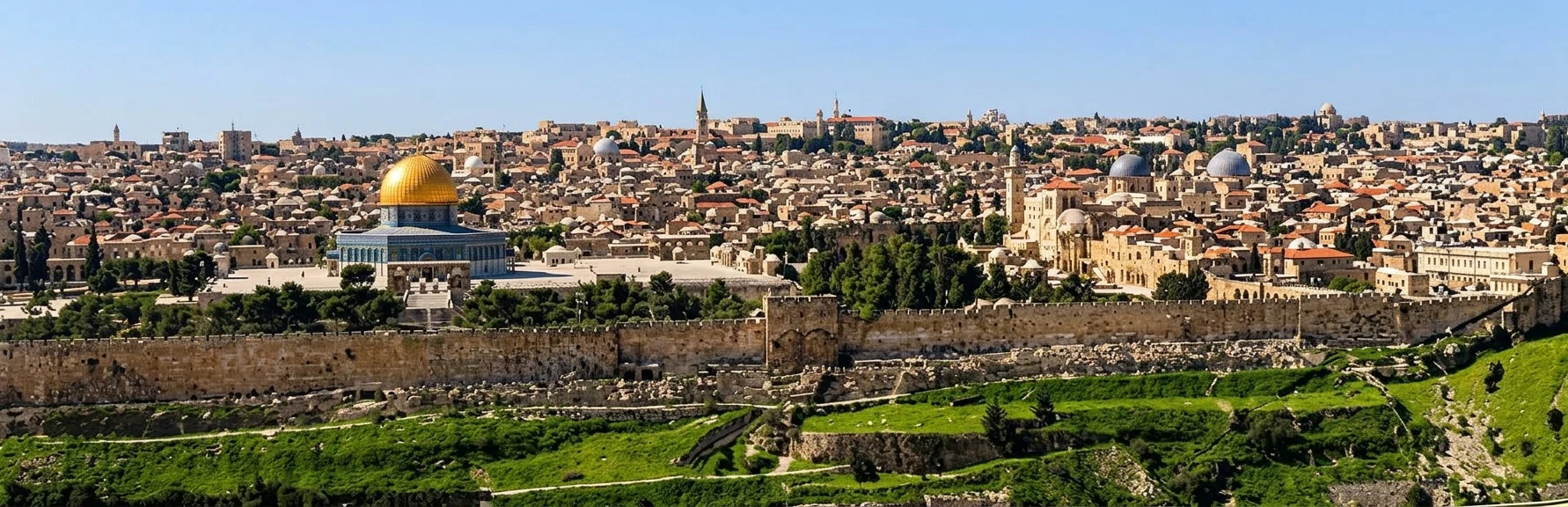
Modern Jerusalem. The large dome in the foreground is the Mosque of Omar, which occupies the ground of the ancient temple.

Chapter XI.—Searching for the Child

THE entire encampment was early astir the next morning. One by one the white tents at Beeroth, the “city of wells,” had disappeared; and by the time the April sun gilded the crests of the eastern hills, the cavalcade was again in the line of march southward.
It was yet early morning when the northern walls of the holy city became discernible, while, towering far above them, like a glistening chrysolite, gleamed the yellow dome of the temple. The fairy fingers of the morning rested upon it with gentle touch. A few fleecy clouds floated lightly above the summit of Olivet, which was already blushing rosy red, kissed by the sun.
As the vast multitude catch the first glimpse of the city, a joyous shout of thanksgiving rises from thousands of lips, and up from the mighty throng peals the glad notes of the psalm of David. The shout is borne from peak to peak, and echoed from valley to valley:
“Our feet shall stand within thy gates, O Jerusalem. . . . Peace be within thy walls, and prosperity within thy palaces.”
Our cavalcade enters the city of David through the Damascus gate. Crowds of people throng the streets. From Antioch and Damascus on the north to Havilah and Ophir in the far south, and from Mesopotamia and Chaldea in the east to Egypt and even the far-away isles of the Great Sea come the seed of Abraham from the many lands whither they have been scattered, to keep the Passover at Jerusalem. The rich and the poor, the servant and his master, the borrower and the lender, the devout and the frivolous, the high-born Sadducee and the despised publican,—all classes and all conditions meet at the Passover.
With the others comes the Jewish proselyte—Herod Antipas—from his fair palace, and his lordly mansion at Jerusalem is thrown open and crowded with distinguished guests. Everywhere on the hillsides and in the valleys round about the regal city, are sprinkled the white tents of the pilgrims,—and right royally are they entertained; for Eastern hospitality prevails everywhere at the time of the Passover.
One by one the days of the sojourn in Jerusalem pass by,—each one pregnant with a new and vast significance to the heart of a Lad passing in and out of the temple amid the throng of worshipers. The eating of the paschal lamb, the solemn sprinkling of the blood, the ascending clouds of incense, the absolute perfection required in every type, the complete banishment of every crumb of leaven from every house, the wonderful and significant services of the temple,—these things impress the soul of the youthful Son of the carpenter with growing certainty that in some mysterious manner He is connected with all this grand array of rites and ceremonies. Every moment the impression deepens. Every moment the Spirit of the Almighty is whispering to His soul those lessons of tremendous import, upon the receiving and carrying out of which by this simple and unassuming Child, hangs the destiny of earth!
The last day of the Passover comes and goes, and the succeeding evening, at set of sun, the northern-bound pilgrims again encamp at Beeroth.
Let us visit yonder tent, pitched hard by one of the springs of Beeroth. Everything is in a bustle of excitement and anxiety. A spirit of distress and unrest has fallen upon the camp of the carpenter of Galilee. In the door of the tent stands a man long past the prime of life: to this fact the fast whitening locks upon the noble head testify. The eyes are dark, and mild and gentle as a woman’s, and just now are filled with an expression of deep anxiety. He is gazing fixedly at a woman who is hastening toward him from the farther side of the encampment. Her lustrous waving hair hangs unconfined over her shoulders, and the last rays of the setting sun have turned it into shining threads of spun gold. In her still youthful eyes, deep and blue as the sky above her, lurks the shadow of an awful fear.
“Ho, my Mary! hast thou news of Him—of the Child?”
“Nay, nay, O my husband; and verily I have sought Him among all our kinsfolk and acquaintance. And now the night falleth; already the road toward Jerusalem is wrapped in shadows. O my Child! my Child! whither hast Thou gone?” And the half distracted woman pauses a moment by the side of her husband, wringing her hands in distress.
“Pray what can have caused this so great anxiety to the wife of the carpenter?” questions a glib voice close at hand,—a voice full of sarcasm and bitterness. It is the voice of Rabbi Shaphan.
“Peace be to thee, O rabbi! but of a truth I am in deep perplexity,—and stay; mayhap thou hast seen Him,—the Lad, my young Son!”
“But He hath again escaped thy watchful care? Dost thou remember how I charged thee even a few days ago, saying, ‘Beware lest evil come to thee through this thy Son’? Behold, even now He followeth after His ungodly companions. Go, woman, find the robber Barabbas; when thou hast found him, thy Son will not be far distant.”
With a groan of agony, the mother turns her white face toward Jerusalem, and quickly disappears among the shadows of the valley. Dazed and confounded, the carpenter stands for a moment in the door of the tent, and then, as if awakening from a horrid dream, follows after her with long strides.
The yellow moon hangs low over the summit of Olivet, and the shrill voice of the cock tells that it is at least the third hour of the night, when the travelers, weary and sick at heart, near the walls of the city. Forgetting that the massive gates are closed on this night, because the Passover is ended, they had hoped to find entrance, and rest until the morning. So, weary and discouraged, they await the tardy breaking of the day, outside the walls of the city.
At sunrise, the great gates are thrown wide open; while up and down the streets, already crowded and noisy, wander the carpenter of Nazareth and his young wife. The birds sing cheerily; the flowers open their beautiful eyes to the spring sunshine; the streets and market-places are thronged with a motley crowd bent upon business or pleasure, for the visitors at the Passover have not all departed; the sun shines brightly in the heavens; but in the hearts of these two, the awful gloom of night is still abiding.
At last the day is spent, and the shades of evening again wrap the hills of Benjamin with a gray mantle. The second day passes like the first, in unavailing search and bitter tears. At the dawning of the third day, misery and hopeless despair envelop them as with a robe of darkness. Not a street nor a lane but has been thoroly explored. Not a friend nor even a casual acquaintance but has been questioned with wildly beating hearts. In vain.
“See; it is nearing the eleventh hour of the day, mine husband, and the Child cometh not. How can I lay me down to rest again this night also! Look! yonder is the dark tower of Antonia. I can scarce keep back the fear that my Son, it may be, hath been placed within its gloomy walls. Hark! is not that the voice of the Lad?” and the speaker hurries forward until she stands beneath the grim structure.
“No; it is only the sighing of the breeze, or it may be the low cooing of the doves. O why was I thus unmindful of my sacred trust!” continues the woman, sinking upon her knees in the shadow. “Verily, O God, Thou hast bestowed great honor upon thine handmaid, and didst not consider her lowly estate. Yet have I forgotten the charge Thou gavest me.”
“Thinkest thou,” asks the carpenter, desperately, “that Herod Antipas, remembering that it was the unholy will of his father to destroy the Babe, hath set spies to discover the Lad, and perchance venture to do Him harm?”
“I know not; it may be so. I only know that already the Child hath enemies who are strong and powerful. As for myself, I can not but fear the treachery of Rabbi Shaphan, as well as that of others whom his influence affects. Verily, we have guarded the secret of His birth. Yet often, when the priests and rabbis have demanded that I rebuke Him because He refuseth to be led to them, I have felt a premonition of coming evil. O my husband! woe be unto me; for the prophecy of Simeon already proveth itself true; for behold I feel this day the piercings of the sword in mine own heart.”
(To be continued)

Several Whys Answered

NATIONS are on tension; disputes are constantly arising; war possibilities are freely discussed. This state of affairs has existed for some time. WHY don’t these nations clash? WHY is peace maintained?
The Gospel has been preached more extensively during the past 100 years than for 2,000 years before. WHY?
Time was, and that not very long ago, when there were but few religious denominations in the world. There are scores now. WHY?
Political, social, and industrial questions are multiplying and growing more complex. WHY?
These questions and many others are ably answered in the June Signs Monthly. Why not begin your subscription with this number? $1.00 a year.
If you wish to begin selling this magazine, now is the time. Fifty copies cost but $2.00; you sell them for $5.00.
Further information will be given, or orders received, by your tract society, or the Signs of the Times, Mountain View, California.

The Outdoor Cure

For Semi-Invalidism
For the Blues
For Poor Digestion
For Brain Weariness
For Tired Nerves
Have you tried it? If not, get a copy of the new book just from the press on NATURE AND THE OUTDOOR LIFE, by M. Ellsworth Olsen, Ph.D., which bears the breezy title—
Out-of-Doors
With an introduction by the famous author and lecturer Jacob Riis
THE book is permeated with a wholesome outdoor spirit. To read it is like getting a whiff of fresh mountain air. The writer is evidently in love with God's great out-of-doors, and has a way of making others fall in love with it, too. He points out the supreme value of fresh air from the point of view of health preservation. He shows that the morning walk, garden-making, camping, and other forms of open-air recreation are really remarkably effective remedies for common physical ills, and that open-air sleeping has done wonders in building up the health. He also discusses the serious moral and social problems growing out of the tendency to leave the country and crowd into the large cities. Education comes in for its share of attention, and is shown to consist of something more than book knowledge. In a chapter on “The Higher Ministry of Field and Wood,” we are reminded of the spiritually uplifting influences to be found out-of-doors, and are led to see nature telling the story of God's love and care. Altogether it is an inspiring book with a message of peace and power straight from God's out-of-doors.
Here are the titles to some of the chapters
Beauty Culture Out-of-Doors
“Too Much House”
The Young Man's Needs
Around the Camp-Fire
Back to Nature and the Soil
Every page contains something interesting and helpful
Daintily bound in green cloth with gold title
104 pages, 60 cents, post-paid
Pacific Press Publishing Association
Mountain View, California
Portland, Ore.  Calgary, Alberta  Kansas City, Mo.

Life and Health

A PRACTICAL health journal, published with a view of meeting hygienic needs in every home; teaching how to care for the health and how to preserve life; prescribing simple home treatments to assist nature in throwing off diseases rather than adding more poison by using drugs or unnatural stimulants as remedies; teaching how to avoid disease as far as possible, how to manage in the home when sickness does come, and how to combat the disease by simple remedies which nature provides.
Send for sample copy and special rates to agents. Price 10 cents per copy or $1.00 per year.
Address, LIFE & HEALTH, Takoma Park, D.C.

LIBERTY

THE OFFICIAL ORGAN OF
THE RELIGIOUS LIBERTY BUREAU
AN illustrated, 48-page, quarterly magazine, published as an exponent and advocate of true religious liberty; defending Christianity and the rights of conscience; upholding the Bible as the infallible word of God; recognizing the church and state as ordained of Heaven for specific and distinct purposes, but vigorously protesting against the alliance of the church with the state in the attempt to advance religion and to promote the state.
Price 25 cents per year. Liberal terms to agents.
Address, LIBERTY, Takoma Park, D. C.

New Nurses’ Class at Glendale Sanitarium

Los Angeles, Cal.
A new class for the training of medical missionary nurses will be started at Glendale Sanitarium on the 1st day of June. This school is affiliated with San Fernando Academy, where a year of preparatory work is given. Term at Glendale, two years. If desired, advanced medical work can be arranged for at Loma Linda after graduation.
Arrangements are such that students can work their whole way, as allowances are liberal. Full particulars upon application. Intending students please apply at once to Dr. Belle Wood-Comstock, Glendale Sanitarium, Glendale, Cal.

Overland Limited

IN THREE DAYS SAN FRANCISCO

Overland Limited

TAKES YOU To Chicago
ACROSS GREAT SALT LAKE AND HIGH SIERRA BY DAYLIGHT
Luxurious High-class Equipment Electric Lighted Throughout
Pullman Drawing-room Stateroom Vestibuled Sleeping-cars Careful and Attentive Dining Service Parlor Observation-car with Library and Cafe Ladies’ Reading-room Gentlemen’s Smoking-room Daily News Bulletins Latest Papers and Magazines
Southern Pacific
Continue reading: Sketches of the Metropolis of Japan