Your ShelfYour Projects

Signs of the Times, Vol. 37, No. 25.

Render Unto Cæsar

Signs of the Times

Jun 28, 1910

Pacific Press Publishing Association · Mountain View, California · Jun 28, 1910

Render Unto Cæsar
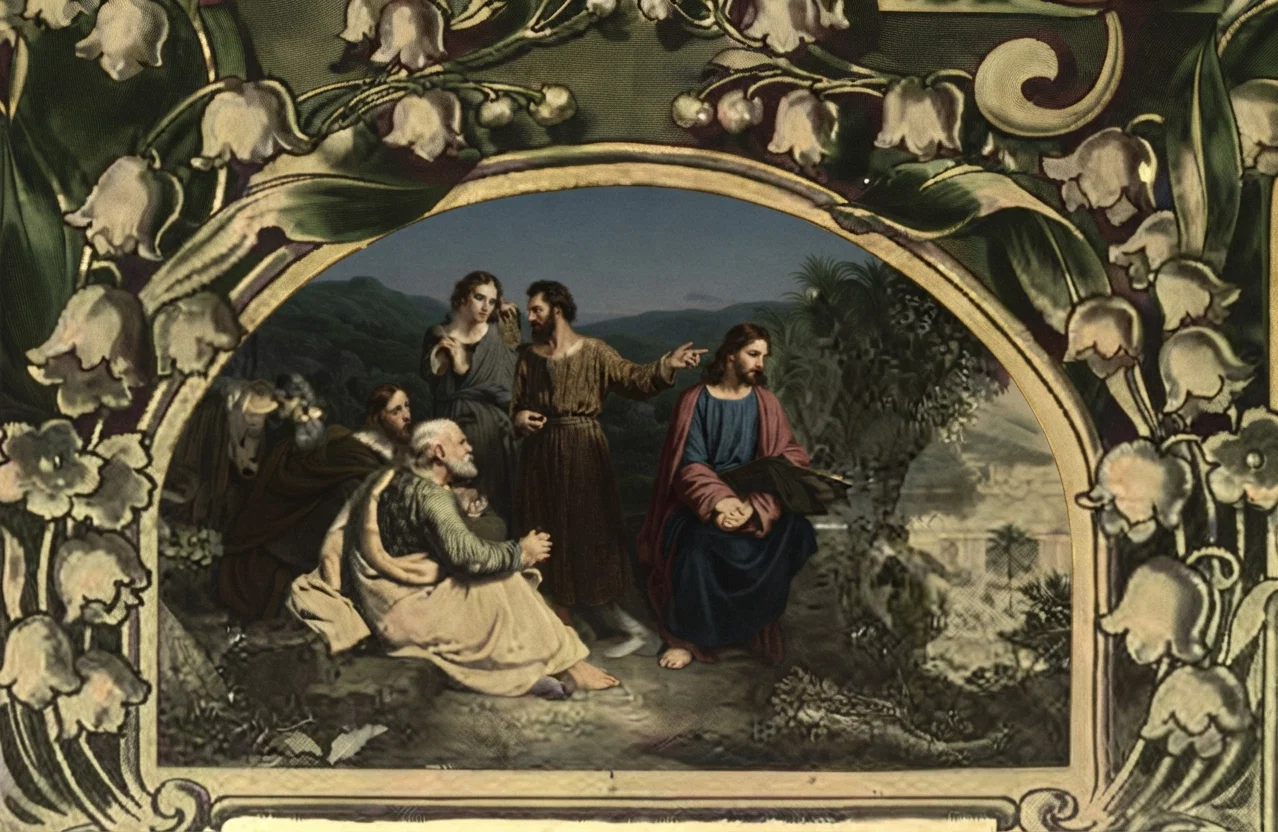
"Render unto Cæsar the things that are Cæsar's, and unto God the things that are God's." Luke 20:25.
"Not that we have lordship over your faith, but are helpers of your joy: for in faith ye stand fast." 2 Cor. 1:24.

The Truest Freedom

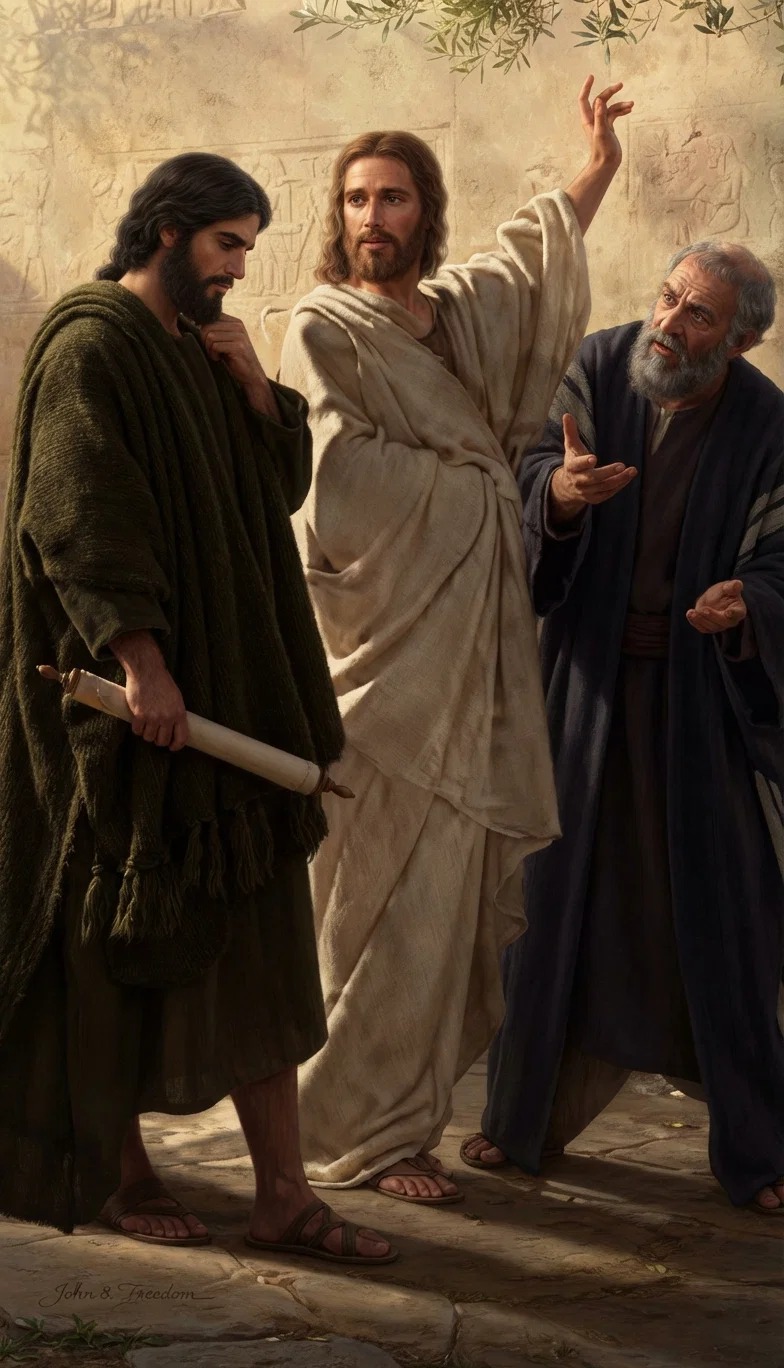
"If ye abide in My word, Then are ye truly My disciples; And ye shall know the truth, And the truth shall make you free. They answered unto Him, We are Abraham's seed, And have never yet been in bondage to any man: How sayest Thou, Ye shall be made free? Jesus answered them, Verily, verily, I say unto you, Every one that committeth sin is the bond-servant of sin. And the bond-servant abideth not in the house forever. If therefore the Son shall make you free, Ye shall be free indeed."

"IF YE WILL INQUIRE, INQUIRE YE."

This Inquirers' Department is conducted for the purpose of helping those who are studying the Bible. The answers are oftentimes only suggestive. They are never to be considered infallible, only as they agree with the infallible Word. The writer who may answer them does not consider that his opinion is infallible. He will simply give the best that he has, and plead with the inquirer to search the Word. Such questions only will be answered as, to the editors, seem to minister to the good of the readers and to the mission of the paper. We can not answer repeatedly in the same volume questions upon the same scripture. The name and address must accompany question, not for publication, but as an evidence of good faith, and that answer may be made by letter if deemed advisable. No letters are answered which do not contain the name of the writer. It is well always to enclose stamp for reply.

3165.—Made Free

Please explain through the Question Corner Rom. 8:2. A. W.
The meaning of Rom. 8:2 can only be found by experience. We can tell it, however, in theory. In the seventh chapter the apostle Paul points out that natural man is in bondage to his carnal heart; but in that condition, longing for release, he gets a sight of the Lord Jesus Christ, and through Him obtains freedom. Then he declares, "There is therefore now no condemnation to them that are in Christ Jesus," because Christ has forgiven all the sin and taken away the guilt which brought the condemnation. The second verse tells us by what means Christ did that: "For the law of the Spirit of life in Christ Jesus hath made me free from the law of sin and death." The law in Christ is freedom, because Christ always kept that law, and the law always kept means righteousness, and "in the way of righteousness is life; and in the pathway thereof there is no death." Prov. 12:28. Christ Jesus therefore has in Himself a life absolutely free from sin; a life in which the power of the Spirit flows free. That Spirit was in Him life even as the law was life, for "the commandment . . . was ordained to life." Rom. 7:10. But to the man who has sinned, that law becomes the law of sin and death, because it is a perverted law; and man's carnal heart has perverted that law in his own nature, and brings him into bondage; but when he gives his all to Christ, lays down all his rebellion against God and his enmity to the law of God, the perfect law which is in Christ Jesus comes into the man's own life, and makes him free from the perverted law which he had followed in the past. This is explained later in verses 5-11. The law in Christ is perfect liberty. The law apart from Christ brings only condemnation and death.

3170.—Man or the Bible

Must we always follow the Holy Bible, or our prelates? C. A. A.
The Bible by all means. To God we must give an account. Rom. 14:12. It is His Word which shall judge us in the last day; therefore it ought to be His Word which we should follow.
The other question asked by our correspondent will be answered if he will state what is meant by "deeds are awkward."
OUR BIBLE BAND
OUR BIBLE BAND

Schedule for Week Ending July 9, 1910

Sunday July 3 1 Chronicles 27-29
Monday " 4 2 Chronicles 1-5
Tuesday " 5 " 6-8
Wednesday " 6 " 9-12
Thursday " 7 " 13-17
Friday " 8 " 18-20
Sabbath " 9 " 21-23

3166.—Pentecost

Will you please explain the way of locating the time of the feast of Pentecost? Lev. 23:11 says, "And he shall wave the sheaf before the Lord, to be accepted for you: on the morrow after the Sabbath the priest shall wave it." Verse 15 says, "And ye shall count unto you from the morrow after the Sabbath, from the day that ye brought the sheaf of the wave-offering; seven Sabbaths shall be complete." Is this Sabbath that they were to count from the day after, the ceremonial sabbath of the Passover, or the Sabbath of the Lord—the seventh day? Did Pentecost come on Sunday the year that Christ was crucified? Did it always fall on the first day of the week? If so, why is it that the Jewish people are keeping this feast on a different day of the week now?
1. The word "Pentecost" means fiftieth, having reference to the fiftieth day. Passages which refer to it are Ex. 23:16; 34:22; Num. 28:26-31; Deut. 16:9-14; Lev. 23:15-21.
2. The first sheaf offered at the Passover and the two leavened loaves at Pentecost marked the beginning and ending of the grain harvest, and the interval between these was called the Pentecostal season. Pentecost was used by the Jews as commemorating the giving of the law on Sinai the fiftieth day after the Exodus, or the fiftieth from the morrow after the Sabbath.
3. The Passover was marked by the full moon of the first month; that full moon did not always come on a certain day of the week, as the custom of the Jews at the present time shows. The first and last days of the Passover feast were considered holy days. It mattered not on what days of the week they came.
4. In the year of our Lord's crucifixion the Passover sabbath seems to have been the weekly Sabbath also. That weekly Sabbath was "a high day;" that is, it was the day of the Passover sabbath, too. It is impossible, in the little space of the Question Corner, to discuss the question exhaustively. It is not one that is easy to determine, as it might seem at first sight. As a general thing it is held that the Pentecost of Acts 2:1 came on the first day of the week. And yet the very fact that the day of the week is not mentioned is positive, clear evidence that it is not the day of the week that is honored, but the antitype of the Pentecost; because one first day of the week was passed over in entire silence between the ascension and the Pentecost. If it had been the day of the week, surely the Lord would have given us mention of that day which intervened, as well as the day of the Pentecost itself. But the fact that inspiration is entirely silent upon this, shows that it is not the day of the week that is honored.
5. "The Bible Encyclopedia," by Fausset, has this note, which may be helpful: "The Jews called Pentecost 'the concluding assembly of the Passover.' If the last supper was on the legal day, the 14th of Nisan, and the Sabbath of Jesus' lying in the grave was the day of the omer, the Pentecost of Acts 2, fifty days after, must have been on the Jewish Saturday-Sabbath. Others make the 13th that of the supper; the 14th the crucifixion, the Passover day; the 15th the day of Jesus' sleep, the Saturday-Sabbath; the holy convocation, or Sunday, the first day, the omer day; fiftieth day from that would be Pentecost or Lord's day," by which Sunday is meant. This will show the reason for the two conclusions.

3168.—The Angel Gabriel

Please give us a little light on Dan. 8:15, 16; 9:21-23; Luke 1:19. A Bible study before me on the Personality of the Holy Spirit cites these texts as evidence that it is Gabriel who occupies the place from which Satan fell. Eze. 28:11-16.
We do not know what the endeavor to prove that Gabriel occupies the place once occupied by Satan, has to do with the personality of the Holy Spirit. All that the passages in question reveal to us is that Gabriel was sent to Daniel with instructions from Christ, and to Zacharias with instructions concerning his son John. They teach us this and nothing more. The same angel appears to us in the Revelation, and is called Christ's angel, whom He sent unto John, a fellow servant with the prophets of the past. Rev. 1:1-3; 22:8, 9. We do not believe that the place occupied by Satan has yet been filled, and there seems every reason to believe that it will not be until the great problem of sin is settled and all strife is banished from God's universe; then the one to whom it belongs will be given the position. If it is designed to imply by this question that Gabriel is the Holy Spirit, we can only say this,—that God places His Spirit upon His angels as He does upon human beings, and the angels in that way become the bearers of the blessings of God's Spirit even as do human beings become the bearers of the blessings. The whole thing is expressed when Gabriel addressing John speaks of himself as a fellow servant with John.

3167.—Carnal Mind

Please tell me through the Question Corner whether Paul possessed a carnal mind when he made the expression found in Rom. 7:24. A. W.
When Paul made the expression found in Rom. 7:24 as an actual experience, he was just passing from the condition of the carnal mind recorded in Rom. 7:14, to the mind of the Spirit, recorded in Rom. 8:2. When he wrote the epistle, he has passed from Romans 7 to Romans 8. Romans 8 tells us what the carnal mind is. It is a mind at enmity with the law of God. It is literally the mind of the flesh, and when possessed in the Scriptural sense, means a mind which is dominant, which has a ruling power over the man. One can not be said to have the carnal mind who is merely tempted to do wrong or tempted to follow the things of the flesh. He has the carnal mind when he minds or follows the things of the flesh. "To be carnally minded is death." Paul could not be said to be carnally minded when he was walking in the light of God's law, and finding joy therein; nor can any one else. One may have temptations to sin; one may feel the movings and strivings of the flesh. The real test is the yielding; and the man who is ruled by the carnal mind, not simply yields, but goes willingly after the flesh; while the spiritual mind is a mind which delights in the law of God, and walks in all His commandments.

3169.—Epistle of Barnabas

Professor Totten quotes in one of his leaflets Barnabas 13:9, 10, Apocryphal New Testament. I would like to know through the SIGNS what claim the Apocryphal New Testament has, or is generally considered to have, to inspiration.
The Apocryphal New Testament consists of a mass of writings which began to spring up immediately after the generation of the apostles. Many of them of course contain expressions from the Bible, quotations perhaps from the words of Jesus, and some things of that kind to give them currency; but so far as the inspiration of these Scriptures is concerned, they have no claim upon us. Of the epistle of Barnabas it may be said that he is not its author; and (2) that it is of no authority.

David, Solomon, and the Kings of Judah

Our lesson begins with David's preparation for the building of the house of God, his charge to Solomon his son, Solomon's plans in the building of that house, and the wonderful blessing of God upon it. The Lord does not hide from us the awful mistakes made by the wisest king of Israel. Our lesson carries us through the reign of the wretched Rehoboam, who lost the Ten Tribes by his foolish stubbornness, and much of his riches also to the king of Egypt. He was followed by Abijah; then Asa, who was truly a reformer. Then came the good king Jehoshaphat, who nevertheless made the awful mistake of making alliance with wicked Israel. But unlike his father, he received reproof, and manifested marked faithfulness in his last days, in his earnest endeavor to restore completely the worship of God. His connection with the house of Israel lived after him, as shown in his progeny and successors.

Conceptions of Liberty

THE very longing for liberty is good, even tho that longing may be for license. To put it in another way, stagnation is death, and the soul in stagnation is not free. Liberty is life; and therefore the very longing for liberty, even tho that longing may be perverted, is hopeful. God has placed that longing in the human heart in order that man may develop and progress. Sin and selfishness have perverted it. He would have us know true liberty, and the greatest liberty is that which delivers us from the greatest bondage. The greatest bondage in this world is sin, because sin when it is finished brings death. There would be no death in God's universe if it had not been for sin, infraction of divine law. Therefore above all other longings for freedom, freedom from sin ought to be dominant.
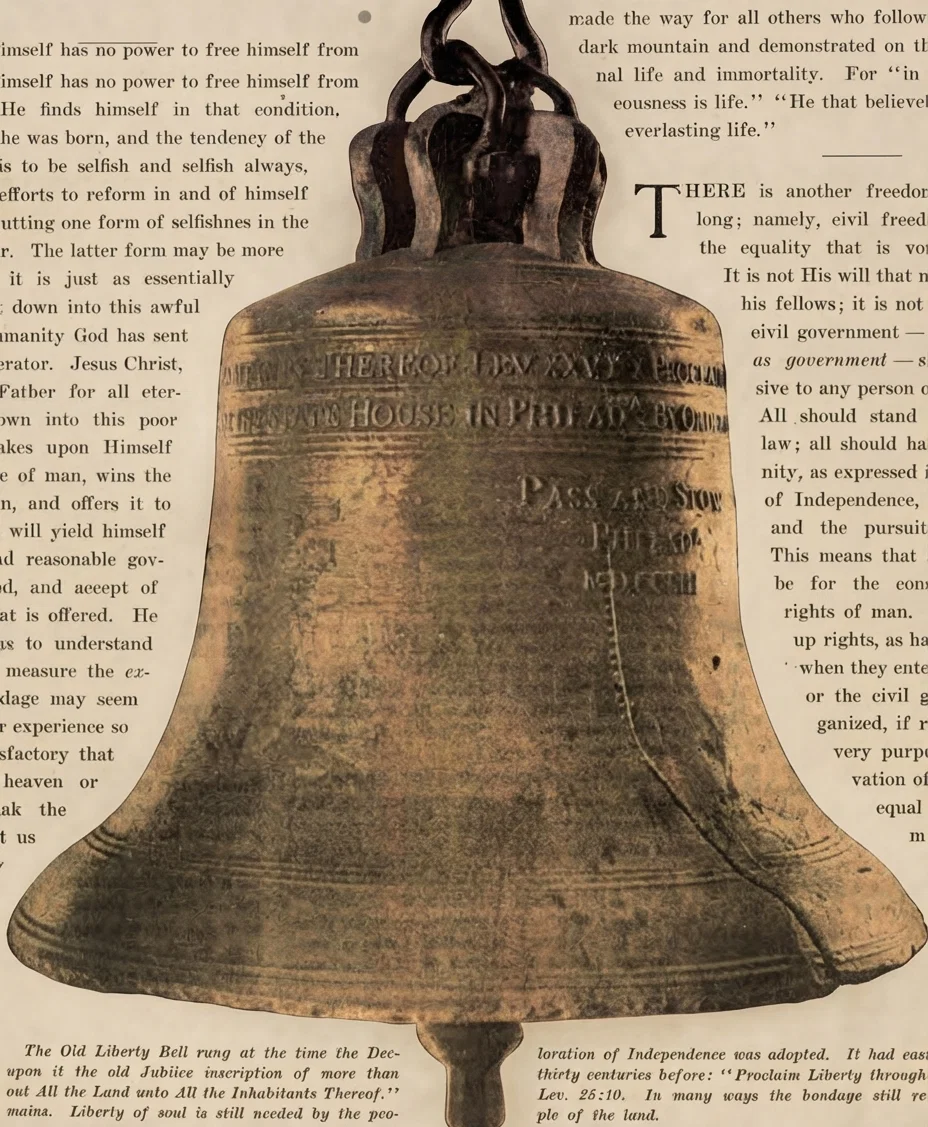
The Old Liberty Bell rung at the time the Declaration was signed, and it bears upon it the old Jubilee inscription of more than a century before: 'Proclaim Liberty throughout All the Land unto All the Inhabitants Thereof.'" But the inscription means. Liberty of soul is still needed by the people.
He comes to us with the assurance that "nothing is too hard" for God, and that tho the sins be "as scarlet," they shall be "white as snow," and tho they be "red like crimson, they shall be as wool."
MAN in himself has no power to free himself from sin. He finds himself in that condition. There he was born, and the tendency of the natural heart is to be selfish and selfish always, and all man's efforts to reform in and of himself alone are but putting one form of selfishness in the place of another. The latter form may be more respected, but it is just as essentially selfish; and yet down into this awful condition of humanity God has sent the mighty Liberator. Jesus Christ, one with the Father for all eternity, comes down into this poor dark world, takes upon Himself the very nature of man, wins the victory over sin, and offers it to every soul who will yield himself to the pure and reasonable government of God, and accept of the freedom that is offered. He does not ask us to understand the how, or to measure the extent. The bondage may seem so great and our experience so sad and unsatisfactory that no power in heaven or earth can break the bondage and set us free. We may have multiplied our sins until it seems that they are great overwhelming mountains that crush us down. But
THIS freedom, this spiritual freedom, this liberty of righteousness, He offers to every soul on earth. Whether that soul be the son of Japheth or the son of Ham, it is open alike to all; and whether the skin be white while the heart is black, He is able to cleanse the heart. But that cleansing can only be by righteousness, and the soul who accepts the cleansing must choose the righteousness. In that righteousness is life, life forevermore if persevered in. That does not mean that the grave may not hide for a time the possessor of freedom and righteousness. It hid for a time its Author; but in passing through the grave He made the way for all others who follow Him, tunneled its dark mountain and demonstrated on the hither side eternal life and immortality. For "in the way of righteousness is life," "He that believeth on the Son hath everlasting life."
THERE is another freedom for which men long; namely, civil freedom, together with the equality that is vouchsafed of God. It is not His will that man should enslave his fellows; it is not in His order that civil government — divinely ordained as government — should be oppressive to any person or class of persons. All should stand equal before the law; all should have equal opportunity, as expressed in the Declaration of Independence, "of life, liberty, and the pursuit of happiness." This means that legislation should be for the conservation of the rights of man. Men do not give up rights, as has been often said, when they enter society. Society or the civil government is organized, if rightly so, for the very purpose of the conservation of human rights — equal rights for all. It means that the strong shall not oppress the weak; it means the many shall not override the few. It means that the weak shall be protectedand the rights of the few as well as the many respected.
It is an utterly wrong principle of government that the country shall be run for a party. That party is worthy only to die, and die forever, that has for its principles the government for its class. That political party is worthy only to live which has for its principles the protection of the individual however weak he may be or whatever his condition may be. For the protection of the person and the conservation of the rights of the individual means the protection and the conservation of the rights of all — equality of mankind.
LIBERTY to the union man means many times the strongest rule imaginable over everything not connected with the union; the exercise of the strongest tyranny over those without for the benefit of those within. It is the turning in a new form of the old Mussulman's cry, "Acknowledge Mahomet or die." We know what labor is; we sympathize with the laboring man; we recognize the cruel tyranny of unrestrained capital, the overreaching lordship of the trust, and the domineering arrogance of the great landowner, the classifying and treatment of men as mere parts of great machines worthy of notice only as they serve their purpose. All this and much more may be seen by all unprejudiced eyes. There is tyranny in it, there is slavery in it; but we do not see how liberty can be secured by substituting one form of tyranny or slavery for another. We could not conceive that the slavery of the saw would be better than the slavery of the jack-plane. In other words the tyranny of the corporation magnate seems no worse to us than that of the walking delegate. Slavery under the union may be even worse than slavery under the trust. There are honest souls outside of unions and trusts; we believe there are many honest souls within the unions, who prefer neither slavery, but who rather believe a strong, sturdy, free, independent individualism is better. Yet the bondage of sin is worse than either of these.
EQUALITY of mankind does not mean equal physical proportions, nor equal mental caliber, nor equal ability to grasp, or power to command, opportunity; but it does demand equal liberty for each one to be and say and do just as far as ability and circumstances permit. Politically the weakest is his fellow citizen's equal in life and liberty and the pursuit of happiness.
It was a glorious hour for the world when America's star rose above the horizon and shone this truth anew in the minds of men. As long as it was in the ascendant for its first one hundred years of shining, its influence over all lands was beneficent, speaking freedom to the oppressed of all nations, and hope to the despairing toiler. Seeing it shining from afar, millions in the oppressed and downtrodden monarchies, despotisms, and overcrowded countries of the Old World found here what Emerson designated Opportunity. And when the Old World saw some of the best of her peoples flocking to America, rather than to her own colonies, her own feudal laws of the Dark Ages were softened, amended, or swept away before the enlightenment and liberty of America.
For that freedom our flag stood, but "how has the most fine gold become dim!" While race slavery as such has been abolished, and that part of the land of which it was the curse is better to-day, industrial slavery flourishes in the sweat-shops of our large cities; the spirit of imperialism stalks boldly abroad; we have the "masses" and the "classes," and if we do not have the "lords" we have the "servants." Gold barons, and kings and queens of various sorts, bear sway continuously and temporarily, and the Republic of America is following in the footsteps of the Republic of Rome. No longer where floats to the breeze "the Red, White, and Blue" is there freedom and equality. Man is no longer a peer of his fellows as he was but a few decades ago. And what will be its influence on the Old World?
WHEN the American ship of state was launched, it placed on the reverse side of its great seal this inscription: "Novus Ordo Seclorum," —

A New Order of Things

This new order was especially manifest in these two ideas: Government is of the people; and government is, if right, absolutely separate from religion. This thought is well expressed in the following from George Bancroft the great historian:
"The CONSTITUTION establishes NOTHING that interferes with EQUALITY or INDIVIDUALITY. It knows NOTHING of differences by descent, or opinions, of FAVORED CLASSES, or LEGALIZED RELIGION, or the political power of property. It leaves the individual alongside the individual. . . . Religion was become avowedly the attribute of man and not of a corporation. . . . VINDICATING the RIGHT of INDIVIDUALITY even in religion, and in RELIGION ABOVE ALL, the new nation dared to set the example of accepting in its relations to God the PRINCIPLE FIRST DIVINELY ORDAINED IN JUDEA. It left the management of temporal things to the temporal power; but the American Constitution, in harmony with the people of the several states, WITHHELD from the Federal Government the power to invade the home of reason, the citadel of conscience, the sanctuary of the soul; and not from indifference, but that the infinite Spirit of eternal truth might move in its freedom and purity and power." — "History of the Constitution," book V, chapter 1.
Under these guarantees of equity and liberty, during the succeeding century, both government and genuine religion prospered as under no other government. And this was expected. Said James Madison at that time:
"Every new and successful example, therefore, of a perfect separation between ecclesiastical and civil matters, is of importance; and I have no doubt that every new example will succeed, as every past one has done, in showing that RELIGION AND GOVERNMENT WILL BOTH EXIST IN GREATER PURITY THE LESS THEY ARE MIXED TOGETHER." — Letter to Edward Livingston, July 10, 1822.
On this the compiler of "American State Papers" well remarks:
"How different is this from the constant opposition of so many Christians to-day against every application of the doctrine. If state chaplains are not hired, the early destruction of the state is predicted; if Sunday laws are not enforced, anathemas are pronounced against the whole nation;—and all this, too, when religion in America has prospered better, far better, under the secular principles of government than ever it did in any nation with all its religious teaching by the state. The words of General Grant should ever be remembered by the American people, 'KEEP THE CHURCH AND STATE FOREVER SEPARATE.'" — "American State Papers," page 77.
THE only hope of continuance in any government or organization is to abide true to its principles which gave it life. If it be false to those principles, there is nothing to preserve it. This is true of Protestantism; it is true of republicanism. The two great principles standing in the forefront of American republicanism and democracy were the equality of men; man's right to choose to worship God according to the dictates of his own conscience. These principles preserved in national life, in state and municipal government, and the hearts of the citizens of America, would perpetuate the Republic forever; but if these principles be trampled under foot, America will go as have all the other countries of the world; and instead of a shining light of liberty to the nations of the earth, she will become an ignis fatuus to lead the world back to the slough of despond, to the darkness of oblivion — the Dark Ages.
When she turns as she is doing from the "new order of things," which gave the world itself a new lease of life, to the Old World methods, to imperialism, to class distinction, to court honors, to religion and state union, to autocratic rule, she is leading the world from light to darkness; and the Old World, which has been groping toward the clear shining of the light, is now saying republics are a failure, American freedom and equality of men are myths or at the best but impractical ideals in government; and the whole world, in consequence of America's lapse, is reverting — in "a highly civilized manner" of course, but not the less truly — to the despotism of the Dark Ages.
WE may try to look upon the question lightly, but the wholesale demand arising from religious bodies for a Sunday law is just what Rome did in the beginning of her downfall. That demand for religious legislation marks two great things: first, that the church is losing her power with God; and secondly, that she is substituting for the power of the Spirit the arm of flesh; and this has inevitably worked ruin both to the church and to the civil body which united with it.
THIS is a matter of divine prophecy. This great part which America is playing in the world's drama, is just as truly a matter of the prophetic Word aswas the part which Rome played. It behooves every intelligent American and every true Christian to lift warning voice and earnest protest against the downward trend. It may go on in spite of him, and the prophecy assures us that it will go on to ruin; but there lies beyond this Republic and all the world's empire the everlasting kingdom of Jesus Christ, for the glorious inheritance of which He is now gathering out His subjects ruled by their own consent, serving eternally of their own glad volition. That is the government, reader, that gives the liberty to which these imperfect notes invite you.
Continue reading: Higher Criticism