Your ShelfYour Projects

Signs of the Times, Vol. 24, No. 40.

CHRIST IS COMING

Signs of the Times

Oct 6, 1898

Pacific Press Publishing Company · Oakland, California · Oct 6, 1898

CHRIST IS COMING.
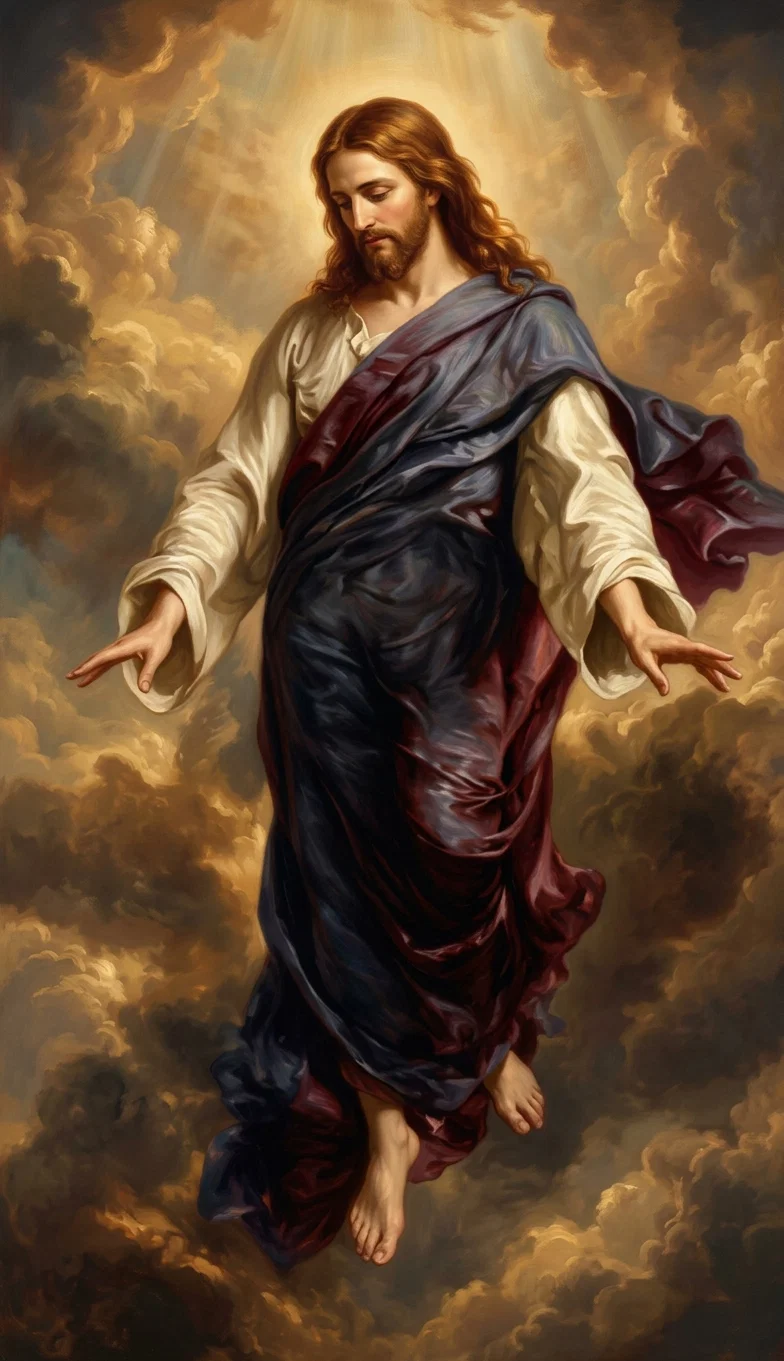
“How long, O Lord, how long?” has been the agonizing question of God’s seers, and poets, and prophets of all ages. Being in sympathy with the great Heart of infinite justice, and love, and purity, and tenderness, they have been intensely pained as they have beheld the earth overspread with injustice, oppression, slavery, war, strife, impurity, hatred, cruelty, and all forms of wrong, and sin, and crime. In agony of heart have they raised their cry to heaven, “How long, O Lord, how long?”
So also has the cry of the oppressed arisen. It may not have taken the form of those words, but so the Spirit has shaped it. The oppressed poor have raised the cry.
The worse than orphaned children and widowed mother (once a fair young happy bride), whose father and husband is a victim of the rum fiend and the greed of men, who mock her misery, have looked to what seemed an unbroken, frozen sky, and cried, “How long, O Lord, how long?”
In ceaseless rhythm to the clank of the coffle chain, or the driver’s lash, from the poor, toiling slave (a man in God’s image) has the cry ascended, “How long, O Lord, how long?”
So also the blood of the martyrs of Jesus Christ crieth to God. So also from many hearts, unheard by human ear, struggling on in agony of soul, the mute cry rises, “How long, O Lord, how long?”
The earnest reformer, having Christ’s Spirit, touched by the woes of the children of men, cry: “How long, O Lord, how long shall the wicked triumph? How long shall black lust triumph over innocence and debase womanhood? How long shall truth be crushed to earth, and error, honored, stalk abroad? How long shall war’s fiery visage loom threatening in the heavens, while thousands are offered in holocausts at his demand? How long will God’s professed children choose hoary and lying tradition instead of the truth of His Word, and sacrifice Jesus the Saviour anew at the altar of science falsely so called?”
There is but one answer to all these as respects the earth in general. Individual hearts may find release from agony in death, in some combination of providential circumstances, in the reception of the presence of Christ in the heart; but the general multiform agony and chorus of earth will be prolonged till

Christ Shall Come.

One of the reasons why He is coming is to forever banish all sin and evil. This is as much a part of the great plan which began with creation’s dawn as His coming as the Babe of Bethlehem, or the Christ of Calvary. He is coming again to finish His work. He is coming to gather out of the world of misery, and want, and wo, and death, those who are linked to Him by faith and righteousness.
His coming will reveal His glorious refulgent presence, before which the moon and stars will be banished, and the sun will refuse to shine.
Then the wicked will perish by the forthshining of His presence. Not having His glory within, having refused it as veiled in the humanity of Jesus, they can not endure its revelation from without.
But those who have received that glory by accepting the righteousness of God by faith in Jesus Christ, will with joy hail the Saviour when He comes. They will say: “Lo, this is our God; we have waited for Him; and He will save us. This is the Lord; we have waited for Him, we will be glad and rejoice in His salvation.” He is coming again to renew the earth, to change the kingdom, to restore the reign of God, to banish sin and death forever. “In His days shall the righteous flourish; and abundance of peace so long as the moon endureth. He shall have dominion also from sea to sea, and from the river unto the ends of the earth.” “And the kingdom and dominion, and the greatness of the kingdom under the whole heaven, shall be given to the people of the saints of the Most High, whose kingdom is an everlasting kingdom, and all dominions shall serve and obey Him.”
Reader, “this same Jesus” who is coming again is the sinner’s Friend. The truly righteous know Him to be their Friend; for in His righteousness alone they boast. But, sinner, He is thy Friend. He came to this world for thee. He lived the life of a man in this world of sin for thee. He met temptation of every description and potency and conquered it for thee. He died for thee upon the cruel cross. He lives again on high, the great High Priest, for thee, that thou mayest overcome all sin, and be ready to greet Him as thy Friend when He comes again. O, will you not accept Him now, that you may know Him then as thy Friend?
X.

Surely I Come Quickly

“SURELY I come quickly.” Rev. 22 : 20.

SOME PROPHECIES OF CHRIST’S SECOND COMING.

The transfiguration on the mount, in which Moses and Elias appeared, was a miniature representation of the coming of the Lord in glory, to raise the righteous dead, and to translate the living. Ever after that memorable day, the coming of the Lord must have been a more vivid reality to Peter, James, and John, than it had been before.
Jesus said to them, “When the Son of man shall come in His glory, and all the holy angels with Him, then shall He sit upon the throne of His glory;” and now these three disciples could realize what that glory would be. They had been eye-witnesses of His majesty, and had beheld the glory of His coming.

Surer Than Sight.

Perhaps some may be inclined to say, “If I could have such evidence as that, I should have no doubt about the matter. If I could only see for myself, I should know that these things are so.” Well, now read what Peter says immediately after his reference to the transfiguration:—
“We have also a more sure word of prophecy; whereunto ye do well that ye take heed, as unto a light that shineth in a dark place, until the day dawn, and the day star arise in your hearts; knowing this first, that no prophecy of the Scripture is of any private interpretation. For the prophecy came not in old time by the will of man; but holy men of God spake as they were moved by the Holy Ghost.” 2 Peter 1: 19–21.
The sure word of prophecy is more sure than any panoramic view can be. Our eyes may deceive us, but the Word of God “liveth and abideth forever.” It is something that is more sure than anything that man has seen; it is something that comes direct from “the Spirit of truth.” Men’s eyes may deceive them; but the word of prophecy does not deceive upon any human faculty; it “came not in old time by the will of man; but holy men of God spake as they were moved by the Holy Ghost.”
An instance of how the prophecy came not by the will of man, is afforded by the case of Balaam. It is true that Balaam was not a “holy man of God;” but the fact that he intended to pronounce a curse, makes it more apparent that the prophecy came not by the will of man. Balaam was tempted by the promise of a great reward to go and curse Israel, but God, in His great love for His people, “turned the curse into a blessing.” When Balak reproached Balaam for not cursing Israel, the latter replied, “If Balak would give me his house full of silver and gold, I can not go beyond the commandment of the Lord, to do either good or bad of mine own mind; but what the Lord saith, that will I speak.” Num. 24: 13.
While Balaam was thus passive in the hands of the Lord, he uttered this prophecy: “I shall see Him, but not now; I shall behold Him, but not nigh; there shall come a Star out of Jacob, and a Scepter shall rise out of Israel, and shall smite the corners of Moab, and destroy all the children of Sheth. And Edom shall be a possession, Seir also shall be a possession for his enemies; and Israel shall do valiantly. Out of Jacob shall come He that shall have dominion, and shall destroy him that remaineth of the city.” Num. 24: 17–19.
Here we have one instance of the “sure word of prophecy” concerning the coming of the Lord. Considering the circumstances under which it was uttered, it is a notable instance. It shows most fully that prophecy is something that has in it nothing of the human, but is wholly divine. No human frailty enters into it, but it comes direct from the Holy Spirit. Thus it is “more sure” than human eyesight. For this reason it is that it was said, “If they hear not Moses and the prophets, neither will they be persuaded, tho one rose from the dead.”

The Most Ancient Prophecy.

Still more ancient than the prophecy given through Balaam is the one uttered by Enoch. Jude speaks of the destruction of the wicked, and says (verses 14, 15): “And Enoch also, the seventh from Adam, prophesied of these, saying, Behold, the Lord cometh with ten thousand of His saints, to execute judgment upon all, and to convince all that are ungodly among them of all their ungodly deeds which they have ungodly committed, and of all their hard speeches which ungodly sinners have spoken against Him.”
The well-known prophecy uttered by Job is perhaps more ancient than that spoken by Balaam. After expressing a wish that his words might be graven in the enduring rock, he said: “For I know that my Redeemer liveth, and that He shall stand at the latter day upon the earth; and tho after my skin worms destroy this body, yet in my flesh shall I see God; whom I shall see for myself, and mine eyes shall behold, and not another; tho my reins be consumed within me.” Job 19: 25–27.
This prophecy brings to view the Christian’s hope, namely, the resurrection of the dead at the coming of the Lord, showing that from the earliest times this was the hope of God’s people. It was “the hope of the promise made of God unto our fathers.” Acts 26: 6. But more explicit than any yet quoted, as showing “the power and coming of our Lord Jesus Christ,” is the following, by “the sweet psalmist of Israel,” who could say, “The Spirit of the Lord spake by me, and His word was in my tongue.” 2 Sam. 23: 2. The word of the Lord, which was in his tongue, said:—
“The mighty God, even the Lord, hath spoken, and called the earth from the rising of the sun unto the going down thereof. Out of Zion, the perfection of beauty, God hath shined. Our God shall come, and shall not keep silence; a fire shall devour before Him, and it shall be very tempestuous round about Him. He shall call to the heavens from above, and to the earth, that He may judge His people. Gather My saints together unto Me; those that have made a covenant with Me by sacrifice. And the heavens shall declare His righteousness; for God is judge Himself.” Ps. 50: 1–6.
Again the Lord spoke by him to the same intent: “Let the heavens rejoice, and let the earth be glad; let the sea roar, and the fulness thereof. Let the field be joyful, and all that is therein; then shall all the trees of the wood rejoice before the Lord; for He cometh, for He cometh to judge the earth; He shall judge the world with righteousness, and the people with His truth.” Ps. 106: 11–13.
Isaiah and Jeremiah, and the later prophets, were also burdened with this same message of the power and glory of the second advent. Therefore, since that event is of such overwhelming importance, how true the words that we “do well” to “take heed” to the sure word of prophecy “as unto a light that shineth in a dark place, until the day dawn, and the day star arise”!
This present age is called night. Says Paul, “The night is far spent, the day is at hand; let us therefore cast off the works of darkness, and let us put on the armor of light.” Rom. 13: 12. And this he says in view of the fact, previously stated, that it is high time to wake out of sleep, because our salvation is near. The dawning of the day, and the arising of the day star, refer to the coming of Christ, who is “the bright and morning star.” Rev. 22: 16. So Isaiah, like Paul, tells of the night of darkness, and the coming of the dawn. Looking with prophetic sight down the ages, he says:—
“Arise, shine; for thy light is come, and the glory of the Lord is risen upon thee. For, behold, the darkness shall cover the earth, and gross darkness the people; but the Lord shall arise upon thee, and His glory shall be seen upon thee. And the Gentiles shall come to thy light, and kings to the brightness of thy rising.” Isa. 60: 1–3.
This is commonly applied simply to the spread of the Gospel; but what follows, taken in connection with parallel passages in the New Testament, shows that the prophet saw the triumph of the Gospel in the final destruction of the wicked, and the salvation of the righteous in the New Jerusalem. (Read the sixtieth chapter and compare with the twenty-first of Revelation.)
The dawning of the day, and the rising of the day star, will be when the glory of the Lord shall fill the earth, and the people shall be righteous. This present time is night, because the darkness of sin covers the people. In the midst of this night, our only light is that which shines from God’s Word. David said, “Thy Word is a lamp unto my feet, and a light unto my path.” Ps. 119: 105. The lamp of prophecy, lighted from the glory that surrounds the throne of God, sheds its beams amidst the darkness that overspreads the earth, and is the wayfaring man’s only guide till the glory of the Lord shall arise in full splendor upon him. Whosoever takes heed to it, his path shall be “as the shining light, that shineth more and more unto the perfect day.” Prov. 4: 18.
E. J. Waggoner.

YET A LITTLE WHILE.

Yet a little while, and He that shall come will. The heavens as a scroll shall pass away; Angelic forms the firmament shall fill, And usher in the last tremendous day.
Yet a little while, and mountains shall remove, And islands sink with all their living freight, And saints the promise of their God shall prove; The Word endures, tho all the mountains quake.
Yet a little while, and Michael’s trump shall sound, And penetrate the ears of those who sleep, And million millions spring up from the ground, No more to die, no more to mourn and weep.
Yet a little while, and those who love shall be Caught up by angels’ arms to meet their King. Clothed in bright robes of immortality, They’ll touch the golden harp, to praise and sing.
Yet a little while we’ll sweep up through the stars, To heaven’s gates of pearl and streets of gold, Borne up in clouds that gleam like fiery cars, And see the wonders of all space unfold.
Yet a little while and tears will all be past, And disappointments never more bereave. We’ll sing in triumph, “O, ’tis heaven at last!” And from our King the crown of life receive.
Only a little while; have patience, soul. Look up, and still the waiting time beguile. The waves and billows that about thee roll Shall only be for yet a little while.
Earth hastens by. It’s sorrows soon shall cease. The city beckons where shall naught defile. He comes, the Lord of everlasting peace. Be brave, be still for yet a little while.
And as a bridegroom comes to meet his bride, So shall thy Lord meet thee, beloved and blest. Robed in His beauty, folded to His side, A little while and thou shalt be at rest.
FRANCES E. BOLTON.

Jesus Christ

Jesus Christ never designed the church to be a recruiting ground for societies, guilds, associations, unions, clubs, etc., but a thoroughly organized force to lead against the strongholds of sin.

A LESSON FOR OUR TIME.

Christ knew that the disciples could not take in the representation He had given them in answer to their question, “When shall these things be? and what shall be the sign of Thy coming, and of the end of the world?” Christ knew the terrible future of the once chosen people of God, but He knew also that His disciples could not fully understand His description of the fearful scenes to be enacted at the destruction of Jerusalem. In His answer, the two events,—the destruction of Jerusalem and the end of the world,—are merged into one. It was in mercy to His disciples that Christ thus blended these two events, leaving them to study out the meaning for themselves.
Christ had made every effort to keep His disciples informed in regard to the truth. He had given them every opportunity to know the truth. He had invited them to place their confidence in Him as their Messiah, and in His mission and work. But they had not yet a proper understanding of the nature of His kingdom. They were thrilled with distress as they listened to His lamentation over Jerusalem; but they did not realize the true meaning of His words. Had Christ opened to them future events as He saw them, they would have been unable to endure it. To the last they looked for a temporal kingdom, which was to be established at Jerusalem.
Christ’s declaration of the scenes to be enacted at the destruction of Jerusalem, they associated with His personal coming, when He Himself would punish the Jews, but would also free them from the Roman bondage. He had told them definitely that He would come a second time, and probably His judgments would then fall upon those who rejected His love. He would then, they thought, lay low every stone in the building; for they believed that no earthly power could do this.
But retribution was to fall before this on the apostate nation, which was still further to show its malignity to Christ by its treatment of His followers.
From the destruction of Jerusalem, Christ passed on to a much greater event, the last link in the chain of His earth’s history,—the coming of the Son of God in majesty and glory. “Immediately after the tribulation of those days shall the sun be darkened, and the moon shall not give her light, and the stars shall fall from heaven, and the powers of the heavens shall be shaken; and then shall appear the sign of the Son of man in heaven; and then shall all the tribes of the earth mourn, and they shall see the Son of man coming in the clouds of heaven with power and great glory. And He shall send His angels with a great sound of a trumpet, and they shall gather together His elect from the four winds, from one end of heaven to the other.”
Christ gave special directions with regard to this event. “Now learn a parable of the fig tree,” He said: “When His branch is yet tender, and putteth forth leaves, ye know that summer is nigh; so likewise ye, when ye shall see all these things, know that it is near, even at the doors. Verily I say unto you, This generation [the generation that sees the signs] shall not pass, till all these things be fulfilled. Heaven and earth shall pass away, but My words shall not pass away. But of that day and hour knoweth no man, no, not the angels of heaven, but My Father only.” Christ stated plainly to His disciples that He Himself could not make known the day and hour of His second appearing. Had He been at liberty to make this time known, what need would there have been for Him to exhort them to maintain an attitude of constant expectancy, living and working and waiting as tho each day was, not their own, but the Lord’s, cultivating fidelity, faith, and love, and purifying the soul through the truth?
Christ tells His disciples that the time of His appearing is involved in secrecy. There will be those who claim to know the time of that great event. Very earnest are they in mapping out the future, which the Lord has placed in a thick cloud, that the day, the month, and even the year may not be known. Notwithstanding the continued failures of these time-setters, they still continue their work. But their reasoning is false, and the Lord has warned them off the ground they occupy; for the coming of the Son of man is God’s mystery. “Secret things belong unto the Lord our God; but those things which are revealed belong unto us and to our children forever.”
“But as the days of Noe were, so shall also the coming of the Son of man be. For as in the days that were before the flood they were eating and drinking, marrying and giving in marriage, until the day that Noe entered into the ark, and knew not until the flood came, and took them all away; so shall also the coming of the Son of man be.” God does not here bring to view a temporal millennium, a thousand years in which all are to prepare for eternity. He tells us that as it was in Noah’s day, so will it be when the Son of man comes again.
How was it in Noah’s day?—“God saw that the wickedness of man was great in the earth, and that every imagination of the thoughts of his heart was only evil continually.” Had man co-operated with God, there would have been no Cain-worshipers. Abel’s example of obedience would have been followed. Men might have worked out the expressed will of God. They might have obeyed His law, and in obedience they would have found their safety and salvation. God and the heavenly universe would have helped them to retain the divine likeness. Longevity would have been preserved; and God would have delighted in the work of His hands. But the inhabitants of the antediluvian world turned from Jehovah, refusing to do His holy will. They followed their unholy imagination and perverted ideas. “And God looked upon the earth, and, behold, it was corrupt; for all flesh had corrupted his way upon the earth. And God said unto Noah, . . . The earth is filled with violence. . . . Make thee an ark of gopher wood; rooms shalt thou make in the ark, and shalt pitch it within and without with pitch. . . . And, behold, I, even I, do bring a flood of waters upon the earth, to destroy all flesh, wherein is the breath of life, from under heaven; and everything that is in the earth shall die.”
Remember the warning, “As the days of Noe were, so also shall the coming of the Son of man be.” It was because of the wickedness of the inhabitants of the old world that they were destroyed; and to-day the world is following in the same way. It presents no flattering signs of millennial glory. Human lawmakers open their law books, and pronounce sentence against those who do not keep their laws. But those who frame and enforce these laws are themselves transgressors of God’s law, and their transgression is filling the earth with wickedness and moral pollution. Their betting, their horse-racing, their gambling, their dissipation, their lustful practises, their untamable passions, are fast filling the world with violence. Bank failures ruin thousands of families. Widows and orphans are left to starve. And yet those in authority are making and enforcing laws to uphold the first day of the week, which God has given as a common working day.
These lawmakers speak to those under their supervision, saying, Verily, the first day of the week ye shall keep, because it is the world’s sabbath. The churches keep this day as holy, and those under our supervision shall keep it also, because it is so enforced on our statute-books. We have chosen Sunday as the sabbath, and therefore every one must keep it.
What is this day that is so universally exalted?—It is a spurious sabbath, a common working day. It is accepted in the place of the seventh day, which the Lord has sanctified and blessed; and the sure consequence of this course may be seen in the punishment which fell upon Nadab and Abihu, the sons of Aaron. As priests of God, they had been commanded to offer always the fire of God’s own kindling, which was kept burning before God day and night. This law was ever to be observed. But Nadab and Abihu had used wine too freely. Their minds were not keen, but confused; and they were unable to distinguish between the sacred and the common. “And Nadab and Abihu, the sons of Aaron, took either of them his censer, and put fire therein, and put incense thereon, and offered strange fire before the Lord, which he commanded them not. And there went out fire from the Lord, and devoured them, and they died before the Lord.”
The Lord has given directions regarding His Sabbath: “The Lord spake unto Moses,saying, Speak thou also unto the children of Israel, saying, Verily My Sabbaths ye shall keep; for it is a sign between Me and you throughout your generations; that ye may know that I am the Lord that doth sanctify you. Ye shall keep the Sabbath therefore; for it is holy unto you. Every one that defileth it shall surely be put to death; for whosoever doeth any work therein, that soul shall be cut off from among his people. Six days may work be done; but in the seventh is the Sabbath of rest, holy to the Lord; whosoever doeth any work in the Sabbath day, he shall surely be put to death. Wherefore the children of Israel shall keep the Sabbath, to observe the Sabbath throughout their generations, for a perpetual covenant. It is a sign between Me and the children of Israel forever; for in six days the Lord made heaven and earth, and on the seventh day He rested, and was refreshed.”
The statutes of the Lord are to be reverenced and obeyed. But those who strive to make His law a dead letter, He will certainly punish. God is supreme authority in all His requirements, and when His law is set aside as a matter of no consequence, the transgressor must surely bear the consequence of his own sin, though God bears long with him.
“Therefore be ye also ready; for in such an hour as ye think not the Son of man cometh. Who then is a faithful and wise servant, whom his lord hath made ruler over his household, to give them meat in due season? Blessed is that servant, whom his lord when he cometh shall find so doing. Verily I say unto you, That he shall make him ruler over all his goods. But and if that evil servant shall say in his heart, My lord delayeth his coming; and shall begin to smite his fellow-servants, and to eat and drink with the drunken; the lord of that servant shall come in a day when he looketh not for him, and in an hour that he is not aware of, and shall cut him asunder, and appoint him his portion with the hypocrites; there shall be weeping and gnashing of teeth.”
MRS. E. G. WHITE.

REST AND REFUGE IN GOD.

“Let not your heart be troubled,” said the Ruler of the world; Tho the earth be filled with tumult, tho war-banners be unfurled, Rest, O, rest in peace, and fear not, tho disasters fill the land, He who knoweth all and ruleth all upholds thee by His hand!
Many human hearts are failing, filled with dread and sick with fear; Few are they who know the tokens—blinded many a priest and seer— But the wise who heed the Guide-book hear thro’ all their Leader’s voice: “Thy redemption draweth nearer. Lift thine eyes; behold, rejoice.”
Manifold the advent tokens; by the holy, blessed Word We may know the time is nearing for the coming of the Lord; Not to men is knowledge given of that awful day and hour, But He wills we read the signals, shun the storm ere darkness lower.
Think not of impending trials; “as thy days thy strength shall be;” God will send His holy angels to protect and comfort thee. Point all men to Christ the Saviour, who, with loving outstretched arms Gladly shelters all who enter from the furious gath’ring storms.
Rise and do the Master’s bidding. Go forth now, while shines the light. *Rich reward to you is promised; day is closing, soon the night, When the call will cease forever, and the Saviour will appear, Bringing meed for all his faithful. Work for Him, and you will hear:—
“Well done, good and faithful servant. Thou hast ever loyal been, Doing all thou couldst to serve Me; to My joys now enter in; . . . Enter in to life immortal—to the home I won for thee, City of eternal glory, where the many mansions be.”
MARY EVELYN WHITE.
Birmingham, Alabama.
Continue reading: SIGNS OF THE END