Your ShelfYour Projects

Signs of the Times, Vol. 30, No. 4.

VICTORY AT LAST

Signs of the Times

Jan 27, 1904

Pacific Press Publishing Company · Oakland, California · Jan 27, 1904

VICTORY AT LAST.
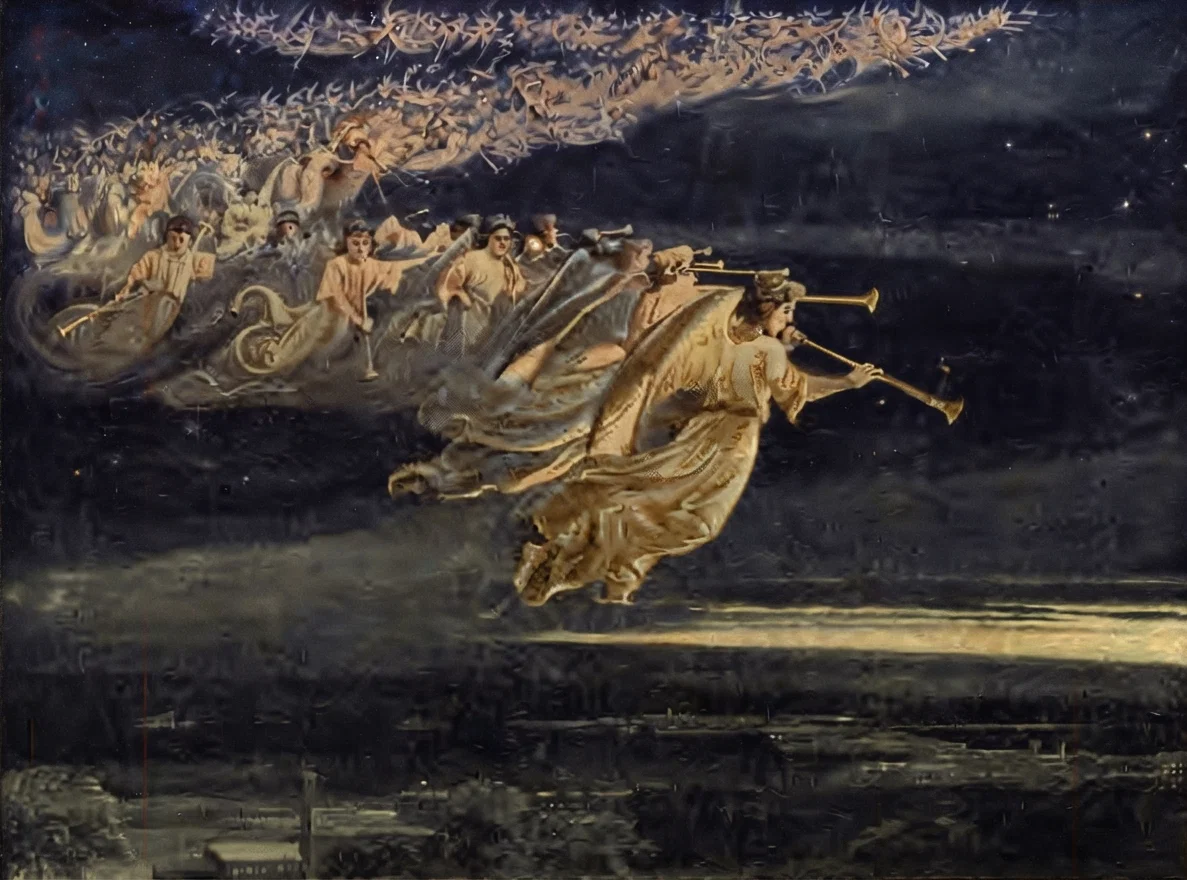
"They shall not hunger nor thirst; neither shall the heat nor sun smite them; for He that hath mercy on them shall lead them, even by the springs of water shall He guide them." Isa. 49:10. While passing through the shadows and toils of earth, it is cheering to look beyond, and see the sunshine of an endless day. Ever since the Gospel was manifested, and Abel enjoyed its consolations, the hope of immortality, and a life beyond the grave has lived in the heart of men, and given zeal and enjoyment to their worship; and now the sunshine of heaven seems brighter and the rest sweeter, as we are drawing nearer to it. The coming glory seems more desirable, as the time approaches for its revelation.
Let us look at the characteristics of those who shall be entitled to the promised reward in that kingdom of glory so soon to come. They shall be gathered from the north, south, east, and west (Ps. 107:3; Isa. 49:12), so that nationality makes no difference in making up the armies of the skies. All are by adoption "sons of God." The first feature worthy of note is, that they have made a covenant with God by sacrifice. Ps. 50:5. They are a tried people. John said, in the beginning of the New Testament dispensation, "In the world we shall have tribulation." Luke also testified, "We must through much tribulation enter into the kingdom of God." Paul inquires, "Who shall separate us from the love of Christ? shall tribulation, or distress, or persecution, or famine, or nakedness, or peril, or sword?" (Rom. 8:35); and, while drinking of the baptism of suffering, exclaims, "I am exceeding joyful in all our tribulation;" and again, "We glory in tribulations also, knowing that tribulation worketh patience." Rom. 5:3.
In the Prophetic Age the story was the same. Noah could point to more than a century of unbelief and ridicule. Isaiah was no stranger to hardship, and Jeremiah from his dungeon could testify the same. Christ, when teaching those who were to suffer in His cause, added: "Rejoice, and be exceeding glad; for great is your reward in heaven; for so persecuted they the prophets which were before you." Coming down to the evening of this world's history, the facts are the same. "The dragon was wroth with the woman, and went to make war with the remnant of her seed, which keep the commandments of God, and have the testimony of Jesus Christ." Rev. 12:17. A little way on, and the tried ones can shout, "Victory at last;" for the angel says of them: "These are they which came out of great tribulation, and have washed their robes, and made them white in the blood of the Lamb." Rev. 7:14. With these texts before us, the conclusion is inevitable. Those that will not suffer with Christ, shall never reign with Him. Feet that enter into rest will be scarred with thorns, and toil-worn with the journey. Hands that finally sweep the harp-strings of heaven, will be active here in the Master's vineyard. Hearts that know the bliss of heaven, will first know the sorrows of earth. The desert comes before Canaan. The Captain of our salvation was "made perfect through suffering," and the children must pass that crucible before they can reflect the Master's image. Only the refining process can develop the sweet trust of a pure and holy life. In the words of the poet,—
"Are We Ready . . . to Be Gathered When the Angels Come to Gather the Elect?"
"Then all the scoffs and scorn I've borne For His dear sake who died for me, To everlasting joys will turn, In glorious immortality."
Another of the characteristics of the redeemed is obedience. Of Abraham the record says that he obeyed God; and because of this, he obtained favor with the Almighty. The chief requirement in the Old Covenant was, "Obey My voice." Ex. 19:5. All through the Jewish age obedience brought blessings, while disobedience brought calamity. The wise man says, "Fear God, and keep His commandments; for this is the whole duty of man." Eccl. 12:13. Paul, in writing to Christian converts, says, "Ye have obeyed from the heart that form of doctrine which was delivered you." Rom. 6:17. The same is true of the remnant church at the close of time. They, too, are obeying God. Rev. 14:12. Even Christ, the sinless One, learned obedience "by the things which He suffered." Heb. 5:8.
Faith is a prominent feature in the class that shall enjoy the promise contained in our text. Faith is the strong cord that has bound the church to God in all ages. In this we have the mighty motive that has filled the world with martyrs, and the Lamb's Book of Life with the names of the redeemed. Hebrews 11 contains a roll of honor of men who stood out prominent as landmarks in their generation, who, through faith, gained victories, and died as conquerors. The last church possesses this grace. "Without faith it is impossible to please Him." Heb. 11:6. Lack of faith caused the rejection of Israel. See Deut. 32:20. "And He said, I will hide My face from them, I will see what their end shall be; for they are a very froward generation, children in whom is no faith." Again (Heb. 4:2), "The Word preached did not profit them, not being mixed with faith in them that heard it." If space allowed I should be glad to notice at length Noah's clinging by faith to God, and preparing for the destruction that was coming on a guilty world,—a destruction as yet unseen, and, according to all reason, improbable, if not impossible. A hundred years of worldwide opposition did not shake his faith in God. Nor did the faith of the Hebrew children waver while standing for God, with a fiery furnace yawning to receive them, and an idolatrous world around them. I do not read thatthey had ever won a name for bravery, and yet they feared not to say to the mightiest monarch on earth, "We are not careful to answer thee in this matter." They were willing to die, but never to prove disloyal; and the Son of God came down and walked in the fire with His children.
"O, for a faith that will not shrink, Tho pressed by many a foe." Faith makes heroes; and Daniel, calmly looking up from a den of lions, is but another instance of the power of that faith that is fixed upon the living God; and, when that faith is fired by love, the cause of God is first, and life is second. Take the case of Stephen, giving his last testimony with his face like an angel's, and dying with a vision of glory before his eyes. O, for more of such faith! We might notice the sacrifice of Moses, the faith of Elijah, and the devotion of Paul; but space forbids. The last church possesses this grace, this faith which the storms of earth can not shake. Rev. 14:12 declares not only that they obey God, but that they have the "faith of Jesus."
Here, then, are the prominent features of the blood-washed throng. They sacrifice whatever the cause of God demands. They "keep the commandments of God, and the faith of Jesus." And now let us examine ourselves, and see if we can claim the promises that God has made to the righteous. Are our time, talents, and means consecrated to the cause of God? Are we sacrificing for the truth? Are we obeying the holy law of right, and is every element of our being in subjection to the law of Christ? Are our sins all confessed and forgiven, or have we some sins left for the Judge to pass sentence upon at the last day. Have we that living, loving faith that makes working for God a privilege? Are we ready for the coming of the Son of God, and to be gathered when the angels come to gather the elect? These are pertinent questions in view of the advent and the judgment, and we shall have to meet both. If we are reconciled to God, then we can read the promise and rejoice in the shelter and protection offered. "They shall not hunger nor thirst." O the tender care that God has for His people! Christ came to earth for us, and returned to heaven to prepare a place for those who would accept Him. He is coming after His children ere long; coming with all His angels to gather His elect. The trumpet shall sound, and then—O what a gathering? Graves that men had long forgotten, God has remembered. Unnumbered multitudes spring to life. God gathers His chosen ones, some from mossy tombs, some from humble resting places, and some from the shadow of imposing marble. That call from the Son of God none may resist. Even the waves yield the saints out of their cavernous depths. Still others are lifting up eager, waiting hands out from living homes, and, as the angels gather them, the grand shout of triumph rolls its billows up against the heavens, "O death, where is thy sting? O grave, where is thy victory?"
Paul adds to the picture the sweet joy of the re-union of friends. "We shall be caught up together with them." O the heart-aches that will then cease forever. O the loneliness that will then be banished. We shall know as we are known. Husband and wife, with loving embraces, meet to part nevermore. Brothers and sisters meet with clasp of glad hands. Parents and children greet each other with a joy beyond words, to tread together eternal pathways. Friends mingle in sweetest fellowship. Joy is complete, and the former things are not remembered, neither come into mind. The song of Moses and the Lamb is chanted by immortal voices, and tongues freed from corruption. The chariots of heaven convey the redeemed up to the Father's house. The jasper walls appear. "O that home of the soul!" My pen lingers, as I realize how powerless language is to portray the glories of that better land. How barren are words to describe that city of the pearly gate. Its glory gleams along the pages of Revelation. Bright with the radiance of heaven, 'neath the tender glow of a Saviour's love, it shines with the fadeless beauty of immortality. Its foundation stones are rainbows of light, its crystal walls, reaching high in the heavens. God grant that reader and writer may be there.

THE BIBLE TO BE UNDERSTOOD BY ALL.

"Search the Scriptures; for in them ye think ye have eternal life; and they are they which testify of Me." "And this is life eternal, that they might know Thee the only true God, and Jesus Christ, whom Thou hast sent." "For He whom God hath sent speaketh the words of God; for God giveth not the Spirit by measure unto Him. The Father loveth the Son, and hath given all things into His hand."
BY searching the Scriptures we are to know God and Jesus Christ, whom He hath sent. The Bible has not been given for the benefit of ministers only; it is the book for the people; it is the comfort of the poor man. It is a great mistake for ministers to give the impression to the people that they should not read the Bible because they can not understand its sacred teachings, and should be content with the interpretation given by those whose business it is to proclaim the Word of God. Ministers who thus educate the people are themselves in error. The Bible and the soul were made the one for the other, and through the agency of the Word and the Holy Spirit God moves upon the heart. To him who receives the love of the truth, the Word of God is as a light that shineth in a dark place, pointing out the path so plainly that the wayfaring man, tho a fool, need not err therein.
He realizes that "the entrance of Thy words giveth light; it giveth understanding unto the simple."
The uneducated man, in earnest desire of soul, may, in his humility and simplicity, reap from the Bible far greater consolation than the learned or more exalted and honored man. He may never be able to present to another the same evidences of the inspiration of the word that a learned man could, but he can bear in his life and character a testimony of strength, showing forth in his outward demeanor the evidences of the power of the truth. God means that the poor and uneducated should have His Word as a sure light and guide in the path of righteousness. If they are sincere, and desire earnestly to know the will of God, they will not be left in darkness. It is the privilege of every one to be wise for himself in reading the Scriptures. No man can safely trust his soul to the minister, or to men who are learned and talented. Jesus charged the priests and rulers, who were regarded as learned in the Scriptures, as being ignorant both of the Scriptures and the power of God. Those to whom God has intrusted talents are responsible for the use of their gifts, and should study the Bible as a book that may be understood. A single text has proved in the past, and will prove in the future, a savor of life unto life to many a soul. As men diligently search, the Bible will open out new treasures of truth, that will be as bright jewels to the mind.
If the poor and unlearned are not capable of understanding the Bible, then the mission of Christ to our world was useless; for He says, "The Spirit of the Lord is upon Me, because He hath anointed Me to preach the Gospel to the poor; He hath sent Me to heal the broken-hearted, to preach deliverance to the captives, and recovering of sight to the blind, to set at liberty them that are bruised." The command to search the Scriptures, Christ addressed not only to the Pharisees and scribes, but to the great multitude of the common people who crowded about them. If the Bible is not to be understood by every class of people, whether they be rich or poor, what would be the need of the Saviour's charge to search the Scriptures? What profit would there be in searching that which could never be understood? What would be the consistency of this command, if the searching of the Scriptures would not dispel the clouds of error, and would not lead men to an understanding of the revealed will of God to man?
Let every one who has been blessed with reasoning faculties, take up the neglected Bible and search the Scriptures, that he may understand what is the will of God concerning him. In this book heavenly information is given to men. The Bible has been addressed to every one—to every class of society, to those of every clime and age. The duty of every intelligent person is to search the Scriptures. Each one should know for himself the conditions upon which salvation is provided. Satan has interposed his shadow between your soul and the bright beams of light that shine from heaven to guide you to the portals of bliss. Through his confederacy of evil angels and evil men, Satan has wrought in such a way as to bury up the truth, under the rubbish of human traditions, customs, and practices.
In Christ's day, as in our day, the people were looking to the educated men, to the scribes and Pharisees, to explain to them the meaning of that which the God of heaven had revealed. These teachers had departed from God, and were following their own understanding, and did not follow the ways of the Lord. They thought they must interpret the Scripturesin a way that would harmonize with their course of action. They were seeking the praise of men, and departing more and more from the plainly revealed way of the Lord, following the traditions of men's devising. Of them Christ declared, "In vain do they worship Me, teaching for doctrines the commandments of men."
The Pharisees and the religious teachers so misrepresented the character of God that it was necessary for Christ to come to the world to represent the Father. Through the subtlety of Satan, men were led to charge upon God satanic attributes; but the Saviour swept back the thick darkness which Satan had rolled before the throne of God in order that he might intercept the bright rays of mercy and love, which came from God to man. Jesus Christ revealed the Father in His true character to the world, representing Him as full of mercy, love, and light. Christ took upon Him humanity in order that the light and radiance of divine love should not extinguish man. When Moses pleaded, "I beseech Thee, show me Thy glory," he was placed in the cleft of the rock, and the Lord passed by before him. When Philip asked Christ to show them the Father, He said, "He that hath seen Me hath seen the Father." He revealed the Father to Philip as He had revealed Him to Moses when He passed by before Him, and proclaimed, "The Lord, the Lord God, merciful and gracious, long-suffering, and abundant in goodness and truth." Jesus proclaimed Himself to the world as the perfect representation of the Father, and invited the love and confidence of the world to be centered in the Father. He said: "I am in the Father, and the Father in Me." "If ye had known Me, ye should have known My Father also; and from henceforth ye know Him, and have seen Him. . . . Believest thou not that I am in the Father, and the Father in Me? the words that I speak unto you I speak not of Myself; but the Father that dwelleth in Me, He doeth the works. Believe Me that I am in the Father, and the Father in Me; or else believe Me for the very works' sake."
In plain language the Saviour taught the world that the tenderness, the compassion and love that He manifested toward man, were the very attributes of His Father in heaven. Whatever doctrine of grace He presented, whatever promise of joy, whatever deed of love, whatever divine attraction He exhibited, had its source in the Father of all. In the person of Christ we behold the eternal God engaged in an enterprise of boundless mercy toward fallen man. Christ clothed His divinity with humanity, that His humanity might touch humanity, and divinity reach divinity.

SONG FOR TROUBLED HEARTS.

BY BENJAMIN PHILLIPS.
CheerfUL thoughts and sunny May Chase the storm of grief away; Troubled heart and frowning face Strengthen mis'ry every place.
June, with sweet perfume and flowers Brings refreshment for thy hours; Clouds that darken winter's sky See thee hide thy face to sigh.
Useless 'tis to murmur o'er Dear, dead pleasant days of yore; They will never come again If we welcome care and pain.
But sweet fortune to implore Often brings it to our door; Vain it is for thee to sigh When the clouds come o'er the sky.
Proudly wilt thou crush a sigh? Winter soon will hasten by— Foolish is the cry and vain; "Summer comes not back again."

History of Government

BY ALONZO TREVIER JONES

AUTHOR OF "TWO REPUBLICS," "EMPIRES OF THE BIBLE," "GREAT EMPIRES OF PROPHECY," ECCLESIASTICAL EMPIRE," ETC.

IV. THE ESTABLISHING OF IMPERIALISM.

It took 1,700 years for imperialism to establish itself in a position of recognized authority. While the heads of the tribes, or collections of tribes, were all ready to follow the example of Nimrod in assuming the title and asserting the power of king; and while the tribes, or collection of tribes, were willing to recognize this claim of the king; yet no tribe, no collection of tribes, nor any king, was willing for a moment to consent to the claim of any one to the title, prerogatives, and power of king of kings—imperial absolutism. And this persistent refusal on the part of both the kings and the people to submit to any such power or authority as that of king of kings, kept the imitators of Nimrod busy for 1,700 years.
The single Bible sentence touching Chedolaomer's empire and experience—"Twelve years they served Chedolaomer, and in the thirteenth year they rebelled"—is the story of the peoples and kings, and is the experience of every would-be king of kings, from Nimrod forward for 1,700 years. Each would-be king of kings was compelled to conquer his way to imperial dominion; and, after having acquired it, was compelled to exercise constant watchfulness and activity to maintain himself in the power which he had gained, against the ever-ready and persistent disposition of kings and people to break the yoke and enjoy their native freedom. He was also in constant danger of being swept aside, and his empire possessed, by some other aspirant to empire.

Egyptian Imitators.

The most notable of the far-ancient imitators of Nimrod and Chedolaomer, was King Thothmes III., of Egypt. He succeeded in establishing his power over all the people and tribes and nations of the East as far eastward as to the borders of India. Indeed, the empire of Egypt was as truly universal in that day as was that of Alexander or Rome in their later days. This power was maintained, and people were held in subjection, through the reigns of his three immediate successors; but in the reign of the fourth the whole structure went absolutely to pieces. Every king and every tribe, however petty, broke loose from Egyptian power and asserted the independence of their native freedom; and it was not until the time of the third of this king's successors that imperial power was again gained by Egypt. Then Seti I. succeeded in establishing the power of Egypt over the same extended territory as had Thothmes III.; but at his death, revolt occurred in Ethiopia, and Egypt's claim of empire was disputed by the Hittites, the outcome of which dispute was, that the king of Egypt was compelled to enter into a treaty with the king of the Hittites, recognizing that nation on an equality with Egypt. And no sooner had this king passed away than the Egyptian empire went finally to pieces before invading powers, who founded dynasties in all parts of the country, sacked and burned the cities, and compelled the Egyptian people "to bow the neck to kings of foreign races."

An Empire of Peace and By Peace.

The next universal empire after that of Egypt was the empire of Israel under Solomon. The conquests and empire of Solomon were no less extended than were those of Egypt; and the empire of Israel under Solomon was as truly universal in that day as were those of Egypt and Alexander in their respective days. Yet the conquests accomplished, and the empire established, by Solomon were altogether by peace. And the power exerted in these conquests and the government of this empire was only the power of the peace, the wisdom, and the righteousness of God. For "God gave Solomon wisdom and understanding exceeding much, and largeness of heart, even as the sand that is on the seashore. And Solomon's wisdom excelled the wisdom of all the children of the East country, and all the wisdom of Egypt. For he was wiser than all men; . . . and his fame was in all nations round about." And "all the kings of the earth sought the presence of Solomon, to hear his wisdom, that God had put in his heart."
All these kings came to him, not as mere curiosity seekers; but to recognize his supremacy and to do him honor in it. For "they brought every man his present, vessels of silver, and vessels of gold, and raiment, harness, and spices, horses, and mules, a rate year by year." The "presents" themselves were a recognition of sovereignty; and their bringing them as "a rate" and "year by year" shows that they were an annual tribute rendered in recognition of the sovereignty of Solomon and of the empire of Israel, by "all the kings of the earth." It is true, as already stated, that this conquest of all the kings was not by force of arms; and the carnage of battle; yet it was none the less a fact. For there is more power in the wisdom and righteousness of God manifested through sincere hearts of men than in all the governments, armies, and weapons of war that this world can ever know.
But this empire Solomon himself lost, by turning from the wisdom and righteousness of God, and adopting the ways of the heathen.
For immediately upon Solomon's turning to the ways of the heathen, adversaries arose on every side; and the empire of Israel went the way of all the empires that had been before it. But in this universal conquest and empire established by the peace, the wisdom, and the righteousness of God, God demonstrated to His own people what He would have done for the world by them, if they had been loyal to Him in peace, wisdom, and righteousness, and had not gone into idolatry and the evil ways of the heathen, and then rejected God and demanded a king "like all the nations." And in this God also gave witness to all the nations of the earth of what He was ready, willing, and anxious to do in all the earth, even in the great apostasy that brought kingships, if only those kings would recognize Him and serve Him in holiness of heart.

The Subjection of the Peoples.

This peaceful empire of Israel under Solomon brought a respite to all the nations from the long succession of oppressions of the despotic imitators of Nimrod. And this inspired them anew with a love of freedom and government of their own choice. This made it harder for the despotic, world-conquering kings of Assyria to again establish an empire of the Nimrod stripe. Yet, in spite of all difficulties, the kings of Assyria in straightforward succession for 400 years persistently asserted imperial power, and nothing short of universal conquest and empire. And their work was as tedious as it was persistent; for there was not a king who succeeded to the Assyrian throne who was not compelled on his own part to conquer all that his predecessors had conquered; and, in many instances, they were compelled to repeat their conquests year by year throughout their whole reign. Shalmaneser II., whose reign was one of the longest in the Assyrian annals, made thirty-three campaigns in the thirty-one years of his reign; and many of these were made into the same countries and against the same peoples that his father had conquered in his reign. And the work of these two was only the repetition of what their predecessors had done, and was what their successors were compelled to do during all the following 300 years, through the reigns of Tiglath-Pileser, Shalmaneser, Sargon, Sennacherib, Esar-Haddon, unto the pinnacle of Assyrian supremacy in the reign of Assur-bani-pal. Then Assyria was broken down, and the kingdom of Babylon under Nabopolassar and Nebuchadnezzar was expanded into empire by the same means by which the persistent power of former conquests had established the universal empire of Assyria.
And this perpetual hammering during the 400 years of Assyrian supremacy, which was immediately taken up and continued by Babylon, so broke the spirit of the peoples of the earth, that practically there was no further attempt of the conquered peoples to throw off the incubus of imperialism. They submitted to the inevitable, accepted imperial power as final, and left imperialism free to manifest itself fully in the world, and to show what it could do when it had its own way untrammeled and undisputed.
History of Government BY ALONZO TREVIER JONES AUTHOR OF "TWO REPUBLICS," "EMPIRES OF THE BIBLE," "GREAT EMPIRES OF PROPHECY," ECCLESIASTICAL EMPIRE," ETC.

MUSINGS.

BY ELIZA VEEDER DOW.
"THEN Pilate therefore took Jesus, and scourged Him!"

For You, For Me

O, for you, for me, was this thing done! For you, for me, was that Holy One, that divine Being put to this humiliation! For you, for me, was the Son of God led out by a mocking mob! For you, for me, was that cruel crown of thorns placed on that dear brow, and for us all did He stand there and submit to the rough smiting of an infuriated mob!

Christ Before Earthly Tribunals

Have you ever endured such humiliations? Have you ever stood before the tribunals of earth, and been subjected to such gross and cruel treatment?

CHRIST'S TRANSFIGURATION.

BY SARAH E. BILLYARD.
NEARLY nineteen centuries ago a little group stood on a mountain top in far-away Galilee, and there witnessed a sight which no mortal eyes will ever again behold until the Son of God is seen coming in the clouds of heaven, "with all His holy angels with Him."
It was the glorious privilege of Peter and James and John to see Christ transfigured; to see the sublime grandeur of His countenance and His shining raiment. And Peter, filled with awe and wonder, said, "Master, it is good for us to be here; let us make three tabernacles, one for Thee, and one for Moses, and one for Elijah," but Christ had work for Peter in the valleys of the world's needs. So He has work in the same valleys for you.
The work may not be of your own choosing. It may be very humble work, just doing the very best you know how, in the place God has assigned you, but whether your work is amidst the fields whitening for the harvest, or within the environments of home, let this thought cheer you: the same Jesus that so signally blessed Peter, and James, and John, is coming again. His coming is near at hand, and if our appointed work is faithfully done, we shall take part in that wonderful transfiguration, when mortality shall put on immortality, and hope shall be swallowed up in fruition.

DO NOT COMMIT SUICIDE.

"Will a man leave the snow of Lebanon which cometh from the rock of the field? or shall the cold flowing waters that come from another place be forsaken?" Jer. 18:14.
WILL a man make a fool of himself? Will a man mistake his cistern for a fountain? Will a man cut himself off from the vital force? Will a creature part with the Creator? He likes to do it; he likes to try it. Why? The fool hath said in his withered heart, There is no God; to that debased act may a man come who was made in the image and likeness of God! The idea is that a man will cut himself off from the main; cut himself away from the eternal river of feeding snow of Lebanon, and will begin to make himself a little cistern. Alas! a broken cistern that can not hold water. Think of this suicide of isolation, the madness of amputating our life, of leaving the Inexhaustible, the Eternal, the Infinite, and becoming little, miserable, devouring selves.
This great council is a protest against such insanity; it brings us into sympathy with the Eternal.
"You see that man crossing the street to the bank?" "Yes." "Very singular case."
"How so?" "That man is living on his capital." "Well, what harm is there in that?"
"Why, he is eating himself up, consuming himself; he ought to have his capital so invested that it will bring him in an income, a revenue day by day, year by year, in order that the income may be still growing."
This is from a secular point of view. This man is living on his capital; he has cut himself off from vital, remunerative, compensative energies and the agencies and ministries and is eating up what he has. What are we doing? Are we cutting ourselves away from the fountains that rise out of the river of God and living on our own miserable selves? Are we consuming our own vitals?
What is about the worst thing that can occur in military operations? Ask an old soldier and he will undoubtedly tell you, it is to have the enemy get behind, and cut off the supplies. That to them is the horrible possibility and the dreadful mischief, that the supplies should be cut off. Do you think this an instance of misfortune? Then beware, lest you be found doing the same thing. Be careful that you do not cut off your supplies. If you have dismissed PRAYER, go back to your old supplies, back to God, back to the Fountain. Live and move and have your being in God, and then no man can impoverish you until he has impoverished God. The river of God is full of water. He giveth without being impoverished.
Why, here is a man greatly disappointed. He is almost dangerous! He is trying to light a gas jet and has struck and exhausted a dozen lucifer matches and no light comes, and a voice inquires, "Are you sure the gas is turned on at the meter?" It is not! Do not laugh at him, for you laugh at your own souls if you be not wise unto salvation, if you are trying to live without being connected with the main, with the living God.
The atheist prays downward, not upward. Let us try to deliver some minds from this most unholy delusion. You can not do without God. Now here is an instance that will illustrate vividly what I mean. It is a man who has, to the best of his ability, hermetically sealed his house, and thus excluded the fresh air, the sharp spring, and sunny, genial summer. How is he going to live? He has a pair of bellows, and is going to live at the nozzle of his elbows! Now the application is, Have you been trying to feed your soul on some poisonous and inadequate atmosphere? If so, then heed the plea of the Bible which counsels your union with inexhaustible sources. "My people have committed two evils: they have forsaken Me the fountain of living waters, and hewed them out cisterns, broken cisterns, that can hold no water."
Sanitarium, Cal.

INSTANCES OF SOUL-WINNING.

[Rev. J. W. Weddell, D.D., in the Examiner.]
DR. H. CLAY TRUMBULL, lately deceased, himself a great soul-winner, introduces his little book on "Individual Work for Individuals," one of the most cheering and stimulating things ever written, by relating the incident of his conversion. It came about through a soul-winning letter addressed to him personally by a friend. Dr. Trumbull was then a young man, a clerk in a railroad office at Hartford.
"Before I had read the last of this letter," he says, "I was on my knees in that lofty tower summit, asking forgiveness of God, and committing myself to a long-slighted Saviour. That was a turning point in my life course." He was led to it by the simple fact that a friend could think enough of him to speak to him about his soul. And so he gives it as his deliberate judgment that "the seeking of a single individual by a single individual has been God's chosen way of evangelizing from the beginning of the Christian ages, even to the present day."
Here is a leaf out of the autobiography of a soul-winning pastor, one of the most successful that ever lived, Dr. C. L. Goodell, of St. Louis. I knew him to love him.
"Across the street from my study there was once a beautiful house where a worthy family lived, as yet without a Christian hope. They were my parishioners and valued friends. Often in my study alone did I pray with the greatest of earnestness for their conversion, but in vain. One day, as I was looking from my window over their cultivated grounds and inquiring within myself why they did not become Christians, I saw the fountain playing in the yard, and it occurred to me that the water was carried there from a reservoir by a pipe laid to their home. I noticed, too, the street lamp on the corner of their grounds. I remembered that gas pipes communicated with that. Without these pipes laid directly to this house there would be neither water nor light there, however abundant the supply might be at the source. It flashed upon me like a revelation that my prayers were vain, alone. I resolved at once to carry the water of life and the light thereof straight into that home, praying as I went; and soon, by God's grace, it became a rejoicing Christian household. I had been waiting for God to convert that family. He had been waiting for me to carry His salvation there. That incident has ordered my whole ministry. I have prayed more than before, but I have charged myself with bearing special tidings to individual hearts, whether I spoke from the pulpit or along the wayside, and from house to house, as did St. Paul."
Such is the record of one whom Dr. William M. Taylor called "the great heart of the Western pulpit," a happy, genial soul, yet always reaching out to win men to his Christ, and having marvelous success therein. We get the best cue to his blessed success in what his biographer, Professor A. H. Currier, says of him:—
"For years, as he also confessed, he seemed in his work to be like a man standing up before four or five hundred empty bottles trying to fill them from the platform with a hose. The water dashed over them, and a little of it went in, but not much was accomplished. Then he tried a different way. He took up a bottle, put in a funnel and filled that bottle. Then he filled another. In other words, he worked with individuals, and in this way more was accomplished. One by one the souls were gathered in, hand-picked. Each one represented much prayer and labor, often for years."
Continue reading: BURDENS, A MEASURE OF STRENGTH