Your ShelfYour Projects

Review and Herald, Vol. 80, No. 11.

Publishers' Page
Earlier text: Personal Recollections

Father and Daughter

THERE are two things that can be done by a father for his daughter, and that, if they were always done, would, in the course of a single generation, make our womankind approach a level which they have never yet reached. The first is to gain the confidence of his daughter in her earlier years, and the second is to keep it unimpaired and to perpetuate it.
If he be his daughter’s friend and chosen companion, sharing all her little confidences and imparting to her much of what he knows, with the intuition of a woman and the breadth and sanity of a man, the girl will grow up with a mind unlike the minds of many women in whom femininity verges upon fatuity. From close association with a father, the young girl quite unconsciously acquires something of the largeness of the man’s nature, and loses something of the pettiness and narrowness of the woman’s. His tolerant, genial spirit will moderate her tense emotionalism. His sense of humor will rid her of sentimentalism, and imbue her with a sense of true proportion. His fun, his good comradeship, his affection, and his knowledge of life will help to send her forth into the world strengthened and developed as no purely feminine influence could strengthen and develop her.
The love of a father for his daughter is, I think, the very purest love that earth can know, the love that comes the nearest to what we all imagine the divine love to be. The love of a father for his son is intense and overmastering; yet there is a touch of personal pride, of almost conscious egoism, in it which renders it not wholly selfless and serene. But the love of a father for the girl child who has been born to him is more than any other love on earth in its purity, its unalterable constancy, its power of self-sacrifice, its profound delight, and its infinite tenderness.— Harry Thurston Peck, in Cosmopolitan.

Some Country Slaughter-Houses

In the February number of the Teachers' Sanitary Bulletin, published by the State Board of Health of Michigan, we find the following report of visits to the slaughter-houses from which comes the local meat supply for the city of Kalamazoo. The writer who had the courage to deal with a local health question in this forcible way is Rev. Caroline Bartlett Crane, of Kalamazoo. After stating the circumstances which led up to the tour of inspection, the writer says:—
“Where to begin? Where did our meat come from, anyway? I had long had a vague idea that here was a matter which needed looking into. But there are so many things that need looking into, and this one so particularly uninviting! My thoughts reverted to certain old, dilapidated structures standing paintless and forlorn upon the edge of sluggish streams. On country drives of summer evenings who has not been made aware of these establishments, so unobtrusive to the sight, so insistent upon the olfactories, where is carried on a gruesome business which our human constitution seems to require, but which we wish to think as little as possible about? Nobody but small boys, I supposed, ever had the courage—or the stomach—to peer into these grizzly precincts; and now it seemed necessary that I should visit them myself. On March 21 of last spring, having secured information of the number and the exact location of these slaughter-houses which encircle the city of Kalamazoo, I proceeded immediately upon a tour of inspection, which covered six of the seven places in a day and a half, before any of the proprietors got wind of our intentions. The seventh place we also visited, but found it closed and locked, so that a second visit was necessary, after the proprietor had learned of our previous attempt.
“I was accompanied on these visits by two men and two women, one the wife of our mayor at that time, Judge Alfred J. Mills; the other the wife of a former mayor, the Hon. Otto Ihling.
“We did not start upon our rounds ‘expecting to find a parlor,’ as the proprietor of one of these places afterward sneeringly remarked to a newspaper reporter. We did start out pledged to make no comments and to show no surprise at anything we might witness; and we were kept speechless, not so much by resolve, as by the unspeakableness of the state of things which everywhere was revealed to us.
“Since this state of things proved to be news to our mayor and city council (which, ex-officio, constitute our local board of health) as well; since I never found any one who professed to be aware of the condition of things, and since, from a large correspondence following with health officers and other officials, State and national, all over the country, I am persuaded that the condition of things about Kalamazoo is not exceptional, but, rather, typical,—I will attempt briefly to describe to you what I found; and I trust you will believe that this is no hysterical version, but a simple and restrained account of facts.
“These seven slaughter-houses are all situated within one mile of the city limits of Kalamazoo, upon or near frequented roads. Not one of the seven buildings or premises has anything whatever in point of construction, arrangement, or care, to redeem it from utter condemnation. Entirely without provision for drainage of either house or ground, the earth beneath and around is soaked with the rotted blood and filth of many years. The pens and sheds containing the animals to be slaughtered are, for the most part, apparently bottomless pits of mud and filth, into which the half-devoured, uncooked offal is trampled, while squealing pigs carry on, literally, an intestine warfare; presenting, when it is remembered that these same swine are destined shortly to be eaten by ourselves, a sight as revolting as human imagination could picture. In one pen we saw trampled into the mud the decomposing body of a very small calf, quite too young, I think, to have been born, and inevitably suggesting the previous slaughter of a pregnant animal.
“As to the buildings themselves, they are nearly all old, abandoned barns or sheds, unpainted, weather-beaten, warped, decaying; and they are, with one exception, filthy to an unspeakable and an unimaginable degree. Dense black cobwebs drape the open lofts and upper walls; but when one gets down to within six or seven feet of the floor, nothing less than a hoe and plane long and conscientiously applied could remove from walls, floors, posts, and shelves the caked blood, grime, grease, hair, mold, and other quite unmentionable filth which covers every inch of every exposed surface, and which, in many large areas, was actually more than an inch thick. The cooling rooms—foul-smelling as the rest—showed somewhat less of blood and chunks of putrid flesh on the walls, but more of green mold and slime. In none of these places did we find evidence of even the floors having been washed with even cold water. The place last visited—the one, by the way, which is reputed to furnish as many carcasses as all the rest together—was the only one in which they claimed to have a hose or any means of flushing floors,—a broom and pail being the extent of what cleansing paraphernalia apparent in the others.
As this floor gave no evidence of ever being flushed, I questioned particularly, only to receive repeated assurance that they did use a hose. After leaving the building, I mustered courage of my convictions to return and say: ‘If you don’t mind, sir, I’d like very much to see that hose.’ And the man replied, after some hesitation, that it was ‘over at the house.’ I will say, however, to be just, that a disinterested person has since assured me of having seen a hose on the floor of that place; but he more than doubted its habitual use.
“In some of the places, the floor appeared to have been roughly scraped, as with a hoe; in others, dirt could have been shoveled out, on Saturday afternoon, when the last slaughtering had been done Friday; and in one place the animal had evidently been stabled over night, which now lay deprived of its skin, on that filthy floor.
“Rats, those fell distributors of slaughter-house disease to neighboring farms, were in evidence everywhere. I regret now that I did not procure some of them for examination for the presence of trichinae. But at the time of my visit I had omitted the appointment of an official rat catcher, and after my objection to the condition of things became public, I naturally could find no opportunity for making rat reprisals against the enemy.
“As to the manner of slaughtering and dressing animals, it is no wise better than one would infer from the surroundings. In the last place visited,—the largest one, which kept the hose over at the house,—the beeves awaiting slaughter are confined in a filthy shed, only separated from the slaughter-room by one thickness of ill-fitting boards, through which it is to be presumed they witness, trembling, the fate of those which precede them. The man in charge told me that they had to be dragged in by the head, because ‘they seem to be afraid.’ Surely, here is something which concerns the humane society.
“After knocking in the head and bleeding (which painful spectacle we avoided in every place visited), the animals were skinned by a big, burly, sweaty negro, who ever and anon wiped the grease from his knife on the manure-covered flanks of the cow, and when he was not using his knife, held it by the blade in his mouth. After skinning, the viscera were removed by a white man, who threw parts of them, including the liver and heart, on the floor, and slapped the delicate sweetbreads onto a rusty hook against the filth-crusted wall.
“By a shelf in one corner, a boy—whom we so regretted to see in this place—was cutting up the viscera, and throwing that part designed for human consumption onto the floor under the shelf, while from time to time he opened a door into the offal pen, and hurled handfuls of intestines over the heads of the hogs that stood with expectant snouts ranged at the threshold. A pail of water stood on the floor, and the white man, the boy, and the negro came from time to time to wash their hands and knives in it. When a beef had been eviscerated and hung up, before splitting, the butcher dipped a piece of an old gummy sack into this same pail of same water, and zealously, as for our approval, scrubbed dirt into the naturally clean interior of the cow.
“In every place I examined the knives, saws, and cleavers. They were always found stuck into or hanging flat against the crusted walls. They were invariably filthy, with blood, grime, and hair thickly bedded about the handle. It is perhaps needless to add that the hands and clothing of the butchers were as filthy as their filthy methods and surroundings.
“Now I well know that, revolting as this all is, the danger to the public health from filthy ways of butchering is hardly comparable to the dangers from meat which is itself diseased. Concerning that, however, you know a great deal more than I do; and hence I wish only to remark that, by the method which now obtains in Kalamazoo, and, as I understand, in almost all the cities and villages of our State, and in other States as well, there is nothing—not even the necessity of taking out a butcher’s license—to prevent any kind of a man from killing any kind of a beast in any kind of a place, and selling it to any local dealer who may, or may not, be aware if that animal came to the slaughter-house diseased, dying, or dead.”

In a Street Car

“Jesus loves me, this I know.”
SWEET and clear rang out the childish treble. It was on a horse car. A little girl, between three and four years old, has been out visiting with her mother, and, being shy among strangers, has kept quiet till her prattling little tongue could stand it no longer. So, as soon as the horses began to trot and the bells to jingle, she began—
“Jesus loves me, this I know; For the Bible tells me so; Little ones to him belong, They are weak, but——”
The car stopped; so did the singer. Two or three passengers got in. Ding! ding! went the bell. Away went the car. Away went the singer—
“They are weak, but he is strong.”
A smile went round the car, but the little one, kneeling on the seat and looking out of the window, and therefore quite unconscious of it all, sang on—
“Yes, Jesus loves me! Yes, Jesus loves me! Yes, Jesus loves me! The Bible tells me so!”
I do not know how many hearts were touched during that ride, which was quite a long one, and many passengers came and went. I do not know how many burdens were lifted, but I know that, while the song lasted, every one on the car heard the gospel message. Everybody listened; everybody smiled; there was not a frown; there was not a troubled look on any face. The simple story of Jesus and his love had driven them all away. At length the song ceased, the mother turned, the little head was resting against the window. The baby was fast asleep. She had “done what she could.”—Selected.

The Hotel Bar

A bar to heaven, a door to hell; Whoever named it, named it well. A bar to manliness and wealth, A door to want, and broken health. A bar to honor, pride, and fame, A door to sin, and grief, and shame; A bar to hope, a bar to prayer, A door to darkness and despair, A bar to honored, useful life, A door to brawling, senseless strife; A bar to all that's true and brave, A door to every drunkard's grave. A bar to joys that home imparts, A door to tears and aching hearts; A bar to heaven, a door to hell, Whoever named it, named it well.
— Selected.

A High Impeachment of Patent Medicines

PROFESSOR H. W. WILEY, chief of the Division of Chemistry in the Department of Agriculture, in a paper read before the Society of Medical Jurisprudence, said: “The formula of the patent medicine ought to be on the label of the bottle. The alcohol habit and the cocaine habit have been caused by the use of patent medicines. Many patent medicines have ingredients that should be sold only under their own names.” He illustrated it by saying that in Jamaica ginger and bay rum methyl alcohol is often substituted for ethyl alcohol, and is a very dangerous adulteration.
Dr. Wiley stated that he personally knew of a case wherein the substitution in Jamaica ginger of methyl alcohol for the proper ethyl alcohol had caused a resident of Boston to lose his eyesight, and in the case of bay rum, where methyl alcohol was put in instead of ethyl, it made the preparation likely to cause atrophy and paralysis of the optic nerve, which is an incurable affection. He informed the society that last year Congress authorized the department to start a systematic investigation of drug impurities, as it had tested foods for fifteen years, but no laboratory had been provided. However, with this month they are to begin to do as much as they can, using the department’s other laboratories. Physicians present said that so many drugs are adulterated or inert that many of them simply give as prescriptions a few fundamental remedies, leaving their patients to do as they please about tonics and stimulants.—The Christian Advocate.

Do It This Very Moment

“Do it this very moment! Don’t put it off—don’t wait! What’s the use of doing a kindness If you do it a day too late?”

Our Mission on the Gold Coast, West Africa
D. U. HALE
[Since the latter part of 1897 our Sabbath-keeping brethren at Cape Coast Castle on the Gold Coast have been without laborers. After looking over the field, the Mission Board asked Elder D. U. Hale, who had been compelled to leave this mission in 1897 on account of failing health, to return and continue the work. The following, descriptive of the mission farm and his own feelings in regard to returning, was written in response to the invitation. It truly contains food for thought.]
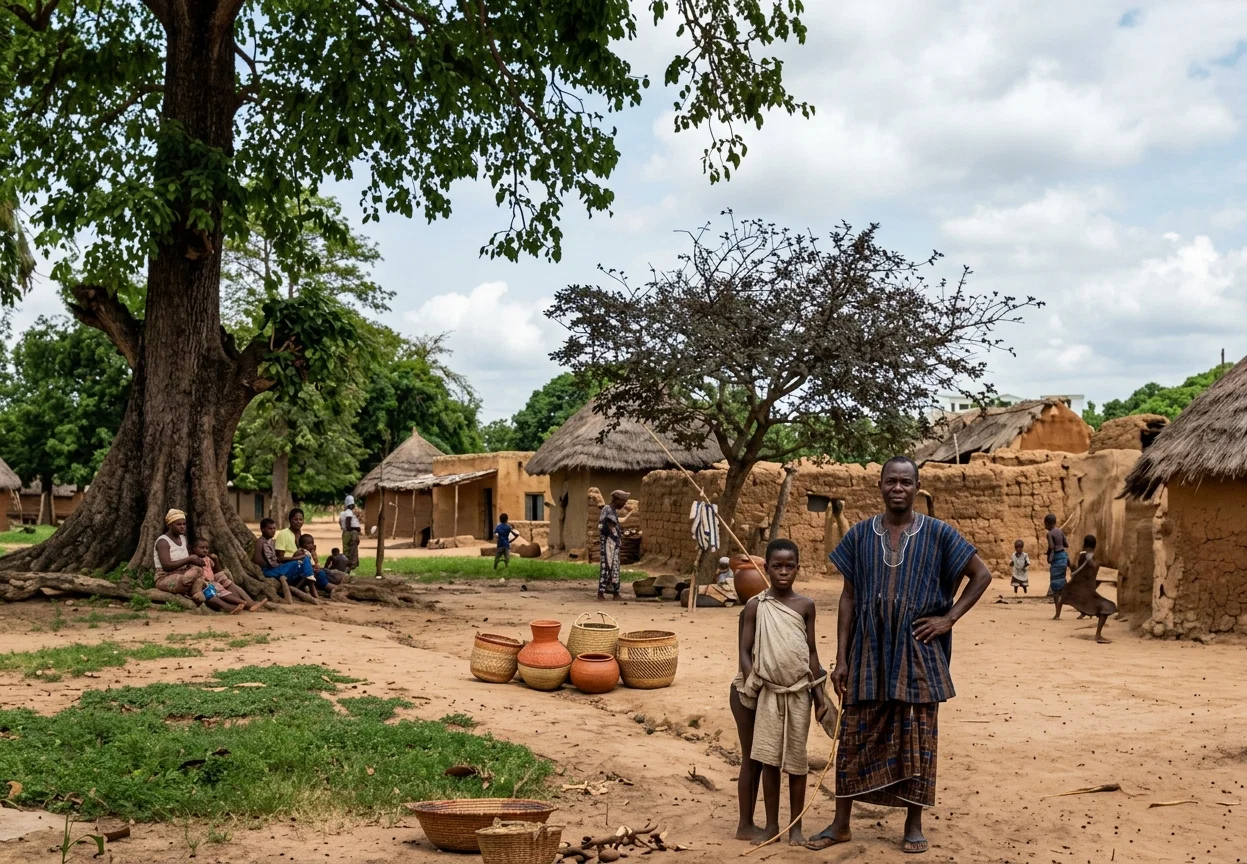
A WEST AFRICAN VILLAGE
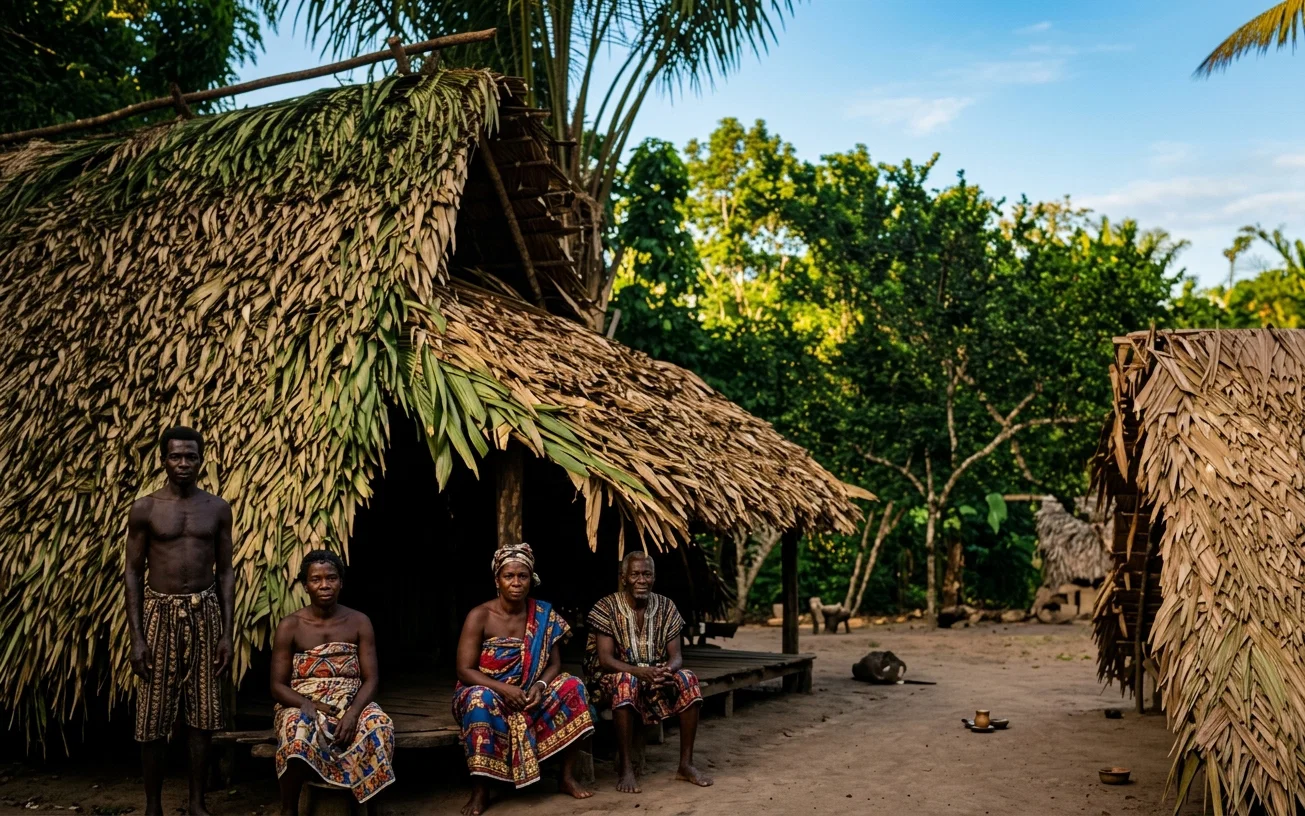
Our first work on the West Coast was to select a location for a permanent mission. While we were engaged in this, a brother who owned considerable land offered us a strip off a tract which was said to be twelve miles square. The corner he gave us was three miles square. It is located about forty miles northeast of Cape Coast Castle, and about twenty-three miles from Salt Pond. This he deeded to the General Conference Association of Seventh-day Adventists, and we had the deed recorded and the colony stamp affixed, which makes it legally ours in every respect. All the natives understand that it belongs to the “White Man’s Mission.”
There is a scarcity of water on the land. We dug fifty-one feet and struck solid granite, but found no water. A little over the line is water near the surface. The land is quite productive, and with a little cultivation a small place could be made to produce enough of the native fruits to supply a large number of pupils. While there, we had growing corn, sweet potatoes, tomatoes, and many other vegetables, besides the native fruits, which grow almost spontaneously—the plantain, banana, palm-nut, pineapple, papaw, yam, etc.
The greatest lack on the mission farm is buildings. There is plenty of soil suitable for the manufacture of sun-dried brick, which makes the best house on the coast. If temporary buildings could be erected, the mission boys could make the brick needed.
One Sabbath while I was on the farm, I took Brother Dolphijn and started to the villages to preach. At the first village, the natives ran quickly to get the brinyea (white man) a chair. There was only one chair in the village, but this, they brought it, and I sat down. I told Brother Dolphijn to ask them if they wanted preaching. They expressed themselves as anxious to hear. I spoke, and Brother Dolphijn interpreted. They seemed to be much interested.
From there we passed to the next village, then to another, until we had visited five, and preached as many sermons. At the last an old blind man was the chief. After I had finished preaching and was preparing to leave, I went to him to shake hands with him. He spoke with much feeling. As he clung to my hand and talked, the tears were rolling down his cheeks. I could not understand what he said, but my own heart leaped for joy as I realized the fact that the gospel had touched at least one heart that day. There are millions who are blind to the gospel of Christ, and are groping in darkness in that benighted land. O, let us send them the light!
Just before leaving West Africa I baptized four natives. As far as I can learn, all but one are faithful; and he, with his wife, now wishes to give up his work and keep the Sabbath again, but they need some one to encourage and help them. Brother Dolphijn has been holding up the banner of truth almost alone. Because of his straight walk, those who know him have confidence in his religion. His younger son is in Liverpool, attending school. He is looking forward to returning to the Gold Coast to aid Brother J. D. Hayford in opening up an industrial mission on his grant of land, west of Cape Coast Castle, on the Pra River. Up this river there are several villages with not a Christian in them; neither have there ever been any missionaries in them. Some of these have been asking for help. I visited a few of them on one of my trips.
It is hard to find a place on the Gold Coast where openings can not be found for presenting the truth. Christ left his home of life, security, and peace, and came to this land of death, trouble, and distress, that he might save some. There are some who say they can not—will not—go because it is a land of disease and death. My brethren, in going we only leave one land of death to go to another. If we die there, we do no more than Christ did for us. “If we suffer, we shall also reign with him.” It may be suffering over there in Africa, but it will be reigning when Jesus comes. A million souls on the Gold Coast who speak the Fanti language are looking to us for the last message. Brethren and sisters, shall we give it? Have your lips been touched with the live coal from off the altar? God is now saying, “Whom shall I send, and who will go for us?” What is your response?

Trip to Dutch Guiana

D. C. BABCOCK
It was my privilege recently to make quite a trip through portions of Dutch Guiana. The territory of Dutch Guiana comprises about forty-six thousand square miles. This country was discovered by Vincent Yanez Pinzon, one of the lieutenants of Columbus, in 1499. The colony was first established in 1581, when the Dutch settled on the banks of the Demerara River, and opened up trade with the natives. The Spanish were the discoverers of this country, and the Dutch the first settlers. In 1674 the Dutch acquired the perpetual title to the territory from England, in exchange for the colony now occupied by New York.
There is a population of about ninety-one thousand. The principal products of the colony are sugar, rum, molasses, coffee, cocoa, cotton, yams, and precious woods. Rice is raised in the interior by the bush negroes, to whom I will refer hereafter.
The principal missionary efforts have been undertaken by the Moravians, who have hazarded their lives for the cause of God. Owing to climatic influence, hundreds of these noble missionarieshave laid down their lives for the Master's sake, along the streams of this colony. And only the day of judgment will reveal the amount of good that has been accomplished by these soldiers of Christ in going forth into the wilds of these colonies to bring the message of truth to perishing humanity. As fast as one missionary fell, another would offer himself to the service of God, and now we find the Moravian missions established in different parts of the colony.
On arriving at Paramaribo, the capital, it was my privilege to call on the bishop of the Moravian church, F. Stahelin by name. Although we had some difficulty in understanding each other, he speaking the German and Dutch languages, and I the English, yet by the assistance of his kind wife, who spoke English a little, and by my use of what German I knew, we got along nicely in our visit together. He gave me much information concerning the mission work throughout the colony, which will assist us greatly in our future labors there.
BUSH NEGRO VILLAGE
BUSH NEGRO VILLAGE
They have a well-established mission in the city of Paramaribo, carrying on all kinds of trade and manufacture that are found there. As I visited each department with the bishop, I could see that they were all attended with prosperity. They seem to be an earnest, sincere people, sacrificing talents and means for the advancement of the kingdom of God.
I also visited several other ministers, and a number of prominent business men in the city, and, strange to say, the majority of them gave us a hearty invitation to open up our work in that colony. About two years ago I formed the acquaintance of Dr. Bradley, from the United States, a manager of one of the gold placers. The third day I was there, I hunted him up, and was gladly received by him. He urged me to come there and begin our work, and offered to take me on their steam launch into the interior, and provide me a comfortable place to stay and do missionary work while I remained in that section in which they were working. These gold placers are largely worked by the bush negroes.
These negroes are a wild people, numbering from twelve to fifteen thousand, and living wholly in the interior. They were formerly slaves brought to this colony by the Portuguese; but when their tax gatherers went along the coast gathering taxes, the Portuguese sent their slaves into the interior until the tax gatherers had passed, expecting them to return when they were called upon. But finding suitable localities in the interior, the slaves decided to remain there. When the emancipation proclamation was issued by the British government, some joined them from Barbados, and others from the near West Indies, so that now they are a strong and independent nation of themselves. They are not subject to the government of Dutch Guiana, but maintain a government of their own. They have all the original customs and habits of the Congo nation, and speak the original tongue. They also use a little Dutch and French mixed.
I visited a company of these people, and through an interpreter laid before them, to some extent, our plans of labor. It seemed indeed strange to stand before a people of whom I had read much in the life of David Livingstone, and see them in their natural African element, tattooed over the greater part of their bodies and faces, with brass bands around their arms and legs. Physically, they are the strongest nation I have ever met. There is a longing desire in their hearts to have their children educated; and they made an earnest appeal to me to send a teacher among them. My heart almost melted within me as I realized our lack of facilities for carrying the last message of mercy to this people. And when I contemplate the situation of affairs in this colony, with so many different peoples to whom the message must be carried, I can only ask the Lord to help us to reveal to them the mystery of godliness. There are Japanese, Javanese, Chinese, Assyrians, Germans, Italians, etc. Representatives of almost every nation may be seen walking up and down the streets of this city. It seemed marvelous to me, as I met the different nationalities, how the Lord opened the way for me to converse with many of them; and I explained to them, to some extent at least, the message that God has given us for the world. There was a friendly disposition manifested by all, and it seems to me that there never was a time when the message of truth could be carried to this people with more success than at the present time. One gentleman, a native of the place, who had traveled extensively in the United States, and had returned and located a cocoa plantation up the Surinam River, gave me an urgent invitation to send workers there soon.
There are tribes of Indians living in the interior of Dutch and French Guiana, that are not found near the Venezuelan territory. Their habits of life are somewhat different from those of the Indians found along the coast of British Guiana. They are wild in their nature, and savage in their disposition; yet they are becoming more and more susceptible to the influences of the white race, and it is to be hoped that the gospel of Christ may soon be carried to them.
While visiting the wild bush negroes, I had the opportunity of seeing them in their morning worship. When I came upon them, they were offering sacrifice to their god. A little pole was inserted in the ground, and upon it hung a white flag. Beneath this flag was a small vessel, into which they poured rum until it was full, the priest all the time going through a ceremony. He then took the vessel, and poured out its contents upon the ground. Again he would fill it, and go through the same ceremony, until all the rum was used. He then told the worshipers that if they would take the sand upon which the rum was poured, and make a cross upon the top of their feet, and rub it on the soles of their feet, it would protect them in walking, and they would never slip when crossing the falls. It seemed indeed sad to see them come so solemnly to perform the ceremony, and then go away muttering something to their god.
What a different state of affairs our laborers have to meet in the United States, where but few deny the existence of the Son of God! When the worship was finished, I stepped forward and offered my hand to the priest, and through an interpreter entered into conversation with him. He seemed willing to listen to me, and after a short conversation, I desired to have his company stand where I could get a picture of them. He readily consented; but when I got them in the proper position and opened up the camera, the captain himself became frightened, and soon the people were going in every direction. I again ventured to go among them, and engaged in conversation with them; and after talking a while, two of them desired baptism. I presented to them the necessity of fully accepting Christ before they could be baptized, and showed them that a change of life, by the giving up of rum and their forms of worship, was essential before baptism. We have a brother in Dutch Guiana who speaks their language, and he has kindly offered to go with me to the homes of this people in the forest and labor with them for a time. It is considered by many as dangerous, as many who go among them never return. But I believe that if careful labor is done for them, God will openthe way, and many will be brought to the light of his truth.
Paramaribo is beautifully situated on the left bank of the Surinam River, just above the mouth of the Saramacca. The city is laid out in squares, with the markets well arranged. Although the streets are not so well kept, there was one feature that greatly pleased me, and that was the cleanliness about the dwellings. Even the small huts in which the negroes live were cleanly kept. The houses are all painted white, and with tropical plants of every description, set in many different forms, present a beautiful appearance. The population of the city is about forty thousand. The ground gradually rises from the sea-coast to the city. The government buildings are so situated that to one going up the river to the port they present a striking appearance. The river's edge is lined with the almond tree, which, with the beautiful green grass, closely cut, and the white buildings standing a little distance from the shore, presents a feature that will ever be remembered by one visiting the capital of Surinam. The people generally enjoy good health, except when such epidemics as yellow fever and smallpox visit them.
We now have one laborer in this field, canvassing for our books. My prayer is that God will open the way for some one who can speak the Dutch language to enter this city and publicly present the truth to the people, that they may hear the message for this time.
Georgetown, British Guiana.

E. H. WILBUR

China

HONGKONG.—I came to Hongkong to remain a few days during the week-of-prayer services. On my way here I had an interesting talk with the engineer of the steamer, and tried to sell him a copy of “Christ’s Object Lessons.” He has been buying copies of the Signs of the Times and of the Pacific Health Journal of me lately, and some time ago purchased a Bible and a copy of “Thoughts on Daniel and the Revelation” from Brother La Rue. I canvassed some Chinese merchants on the steamer. One man who could understand English well listened as I read and told the story of the prodigal son, and then he related the story in Mandarin to another Chinese merchant, who could not understand English. He must have told the story well, for the second merchant was anxious to buy the book for his son, although he was not willing to pay the price. I think cheaper books will sell better to the few Chinese who do not understand English. In this city the people buy and sell with pennies and cash. The cash is worth one twentieth of an American cent. I occasionally sell the Signs to English-speaking natives. I will be glad when we get some books on present truth in the Chinese language.
We have now lived in Canton about two months. We feel quite at home, and find the Chinese very friendly. The children are sometimes heard to say, as I pass, “Banquoy! banquoy!”—“foreign devil,”—but those near our home say, “Sin Sang!”—“teacher.”

E. H. WILBUR

The Jamaica Conference

Our meetings in Jamaica closed with a general meeting in Kingston, the capital, continuing from Friday to Monday night.
In all our country meetings, we had talked over the principles of our work and of conference organization, and all heartily responded to the call to put every shoulder to the wheel. Our workers were all united in the idea that the time had come in the progress of the cause in Jamaica, when a conference organization, assisted though it must be for the present from Mission Board funds, would prove of educational value to the field, and would help to lay responsibilities upon the churches.
Our mission church in Kingston comfortably seats about two hundred and fifty. Our own people filled this. Sunday evening many more were crowded into the building.
There are nearly twelve hundred Sabbath-keeping adults in Jamaica, the fruit of ten years of labor. Many will remember that ten years ago, at a General Conference, Sister Harrison, of Jamaica, came to us with an appeal in behalf of this little island field. In response to that call, A. J. Haysmer and his wife were sent there. In all the years that have passed, the truth has steadily made its way among the people.
Nine organized churches were directly represented at the conference by delegates, while eight others were represented by the workers in charge of the different districts. Various unorganized companies were also represented by members. The resources of our people in Jamaica are not large. But the resources are bound to grow. The discussion of the work in conference session was a great inspiration to the believers. They were able better to understand the nature of our work and organization, and the responsibility of the individual member and church in relation to the conference.
More and more the burdens may be laid upon the local believers. Licenses were voted to four Jamaican laborers, and altogether there is good prospect of developing workers in this field not only for its own needs, but for other tropical fields. As we talk of the call from Africa for workers of the African race, our Jamaican brethren freely volunteer for service any time they are needed. The British government has successfully used Jamaican and West Indian troops in Africa. In the Ashanti campaign they readily met the difficulties of the Gold Coast climate. As the work grows in Jamaica, I believe it will be able in due time to furnish us faithful and disciplined laborers for other fields. A training school is greatly desired by all; but they have not the resources, nor have they developed plans, for such an enterprise just yet.
It is a great help in this field that so many of the believers are cultivators of the soil. However small the plot of land, the man who works it is independent, master of his own labor. The truth has been carried into new districts at times by men taking up land in unentered territory, and so planting the leaves of truth among the people.
Small as the island is, there is still much unworked territory. The conference voted a resolution pledging the churches to greater faithfulness in caring for themselves and in effort for their neighbors, so that the ministerial laborers may be more free to go into new districts. In Jamaica, as elsewhere, the churches feel the thrill of the new time.
The cash system in the canvassing work was heartily adopted. The most telling argument in favor of it came from the ranks of the canvassers.
The conference elected the following brethren as their executive committee: F. I. Richardson, W. W. Eastman, J. B. Beckner, Hubert Fletcher, Linton Rashford. Courage and zeal filled the hearts of all as the conference closed. Seventeen churches compose the new conference, and the coming year will certainly add to the number organized. I believe that nearly a dozen church buildings are in process of erection.
Kingston is a busy town, with a population of about fifty thousand. With the cooling sea breezes sweeping over these islands, the houses are built only in semitropical style. The European population of Jamaica is not large,about fourteen thousand English people being reported in the census. A large proportion of these must be in Kingston. The entire West Indies has been passing through financial depression, and the glory of the old plantation days is dimmed. But the cities are growing, I believe, and these island fields have a future before them in our work, small though their area may be.
Jamaica is a beautiful spot, and fertile. All is in miniature. It has little rivers, and little mountains; but it is a little world in itself. With a population of eight hundred thousand, it should yet develop a conference well able to be a factor in pushing this glorious message on to the ends of the earth. As from year to year the brethren in Jamaica gather for annual conference, I believe we shall hear of growth both in numbers and in grace. The labors bestowed upon this island have not been in vain. The believers appreciate the message we have sent them, and will join in sacrificing for it.
W. A. SPICER.
British Guiana.
Continue reading: General Notes