Your ShelfYour Projects

Signs of the Times, Vol. 25, No. 4.

ALONE

Signs of the Times

Jan 25, 1899

Pacific Press Publishing Company · Oakland, California · Jan 25, 1899

ALONE.
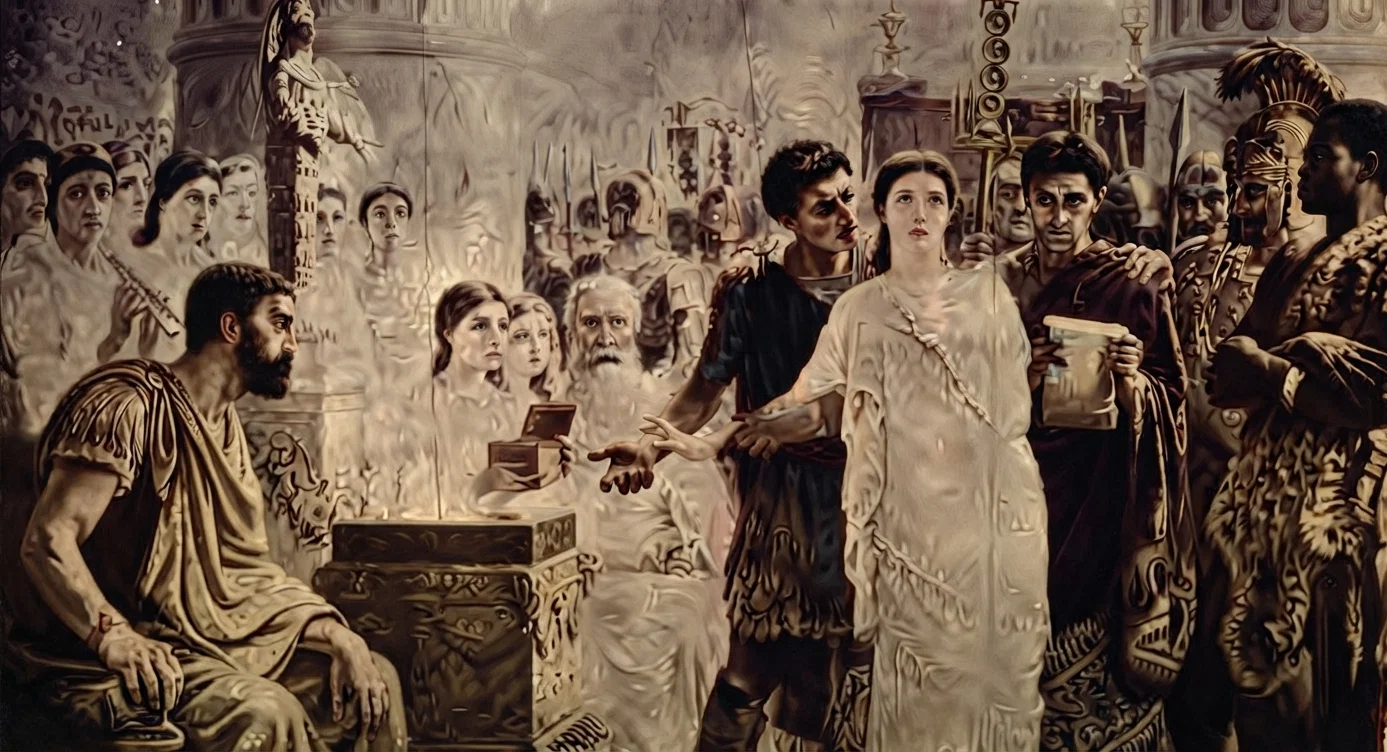
IT is human to stand with the crowd; it is divine to stand alone.
It is man-like to follow the people, to drift with the tide; it is Godlike to follow a principle, to stem the tide.
It is natural to compromise conscience and follow the social and religious fashions for the sake of gain or pleasure; it is divine to sacrifice both on the altar of truth and duty.
"No man stood with me, but all men forsook me," wrote the battle-scarred apostle in describing his first appearance before Nero, to answer for his life, for believing and teaching contrary to the accepted views of the Roman world.
Truth has been out of fashion since man changed his robe of fadeless light for a garment of faded leaves.
Noah built and voyaged alone. His neighbors laughed at his strangeness—and perished in style.
Abraham wandered and worshiped alone. The Sodomites smiled at the simple shepherd—followed the fashion, and fed the flames.
Daniel dined and prayed alone. Elijah sacrificed and witnessed alone. Jeremiah prophesied and wept alone. Jesus lived and died alone. And of the lonely way His disciples should walk, He said: "Strait is the gate, and narrow is the way, which leadeth unto life, and few there be that find it."
Of their treatment by the "many" who walk in the "broad way" He said: "If ye were of the world, the world would love his own; but because ye are not of the world, but I have chosen you out of the world, therefore the world hateth you."
CHRIST OR DIANA.
CHRIST OR DIANA.
The church in the wilderness praised Abraham and persecuted Moses. The church of the kings praised Moses and persecuted the prophets. The church of Caiaphas praised the prophets and persecuted Jesus. The church of the popes praised the Saviour and persecuted the saints. And multitudes now, both in the church and the world, applaud the courage and fortitude of the patriarchs and prophets, the apostles and martyrs, but condemn as stubbornness or foolishness like faithfulness to truth to-day.
The artist in the accompanying cut has beautifully illustrated the battle between conscience and the crowd. The maiden worships Jesus, the world worships Diana. Her persecutors insist that the form of worship followed by the "best people" in all the Roman Empire ought to be good enough for a humble maid. But she chooses to stand alone against the world.
Her worldly friends make light of her convictions and urge that she follow the religious fashions which are "so perfectly exquisite," while her faith and her people are "perfectly horrid." But she parts with her friends and stands alone.
Her anxious lover pleads his love and urges her to yield to what all the world declares is right. One grain offered on the altar of Diana, "whom all Asia and the world worshipeth," and she is free.
But the maiden is deaf to his pleadings, and dies alone.
Wanted to-day.—Men and women, young and old, who will obey their convictions of truth and duty at the cost of fortune and friends and life itself."Whosoever therefore shall be ashamed of Me and of My words in this adulterous and sinful generation; of him also shall the Son of man be ashamed, when He cometh in the glory of His Father with the holy angels."
"Thou shalt not follow a multitude to do evil." "Every one of us shall give account of himself to God." "All that will live godly in Christ Jesus shall suffer persecution."
"And when the servant of the man of God was risen early, and gone forth, behold, an host compassed the city both with horses and chariots. And his servant said unto him, Alas, my master! how shall we do? And he answered, Fear not; for they that be with us are more than they that be with them. And Elisha prayed, and said, Lord, I pray Thee, open his eyes, that he may see. And the Lord opened the eyes of the young man; and he saw; and, behold, the mountain was full of horses and chariots of fire round about Elisha."
"Lo, I am with you alway, even unto the end of the world." "I will pray the Father, and He shall give you another Comforter, that He may abide with you forever."
A. F. BALLENGER.

THE BLESSING OF OBEDIENCE.

"AND one of the scribes came, and having heard them reasoning together, and perceiving that He had answered them well, asked Him, Which is the first commandment of all?" Christ's answer was direct and explicit. "The first of all the commandments," he said, "is, Hear, O Israel: The Lord our God is one Lord; and thou shalt love the Lord thy God with all thy heart, and with all thy soul, and with all thy mind, and with
all thy strength; this is the first commandment." "The second is like, namely this," Christ continued; for it flows out of it and is founded upon it. "Thou shalt love thy neighbor as thyself, There is none other commandment greater than these."
"And the scribe said unto Him, Well, Master, Thou hast said the truth; for there is one God; and there is none other but He; and to love Him with all the heart, and with all the understanding, and with all the soul, and with all the strength, and to love his neighbor as himself, is more than all whole burnt-offerings and sacrifices."
This response from one of the scribes, the plain statement of his convictions, was more than the scribes and Pharisees thought to hear. Truth that condemned their own traditions and example had been expressed by Christ, and voiced by one of their own number.
When Jesus saw that the scribe had the moral courage to speak the truth, before the frowning Pharisees, and that "he answered discreetly," He said unto him, "Thou art not far from the kingdom of God." And no man after that durst ask Him any question.
The law of God is not made up of so many separate precepts, some of which are of great importance, while others are of less importance, and may be ignored. Christ presents the commandments as a divine whole. Under two heads, love to God and love to our neighbor, all the precepts are bound together in a sacred unity. These two principles are immutable, as eternal as the throne of God. By them man's character is tested, and he is shown to be obedient or disobedient. Those who obey the first, loving God supremely, will pour out the riches of God's goodness in love and compassion to their fellow-men. They will do far more than merely acknowledge the truth; they will offer far more than a ceremonial worship; they will give to God the whole service required by Him; for supreme love to God is an evidence that the truth is an abiding principle in the heart.
But when man fell, the law of self was set up. This law harmonizes with the will of sinful humanity. There is no strife between them. But when the Word of God speaks to the conscience, telling of a higher than human will, even the will of God, man's will desires to go its own way, irrespective of consequences. The charm of obedience was broken by Adam's disobedience. A sense of the importance of obedience as an absolute necessity, ceased to exist in the mind. And now man thinks, If I choose, I can obey God; and if I choose, I can disobey Him.
Christ came to this earth to show the human race how to obey God. He might have remained in heaven, and from there given exact rules for man's guidance. But he did not do this. In order that we might make no mistake, He took our nature, and in it lived a life of perfect obedience. He obeyed in humanity, ennobling and elevating humanity by obedience. He lived in obedience to God, that not only by word of mouth, but by His every action, He might honor the law. By so doing, He not only declared that we ought to obey, but showed us how to obey.
Our only safety is in dying to self, and depending wholly on Christ. We need to keep ever before us the reality of Christ's humanity. When He became our Substitute and Surety, it was as a human being. He came as a man, to render obedience to the only true God. He came not to reveal God as wanting in power, but God in all His fulness. He came to show what God is willing to do and what He has done that we might be made partakers of the divine nature. While enduringthe contradiction of sinners against Himself, our Saviour lived a perfect human life. This He did that we also might be perfect. He is everything to us, and He bids us look to Him, for "without Me," He says, "ye can do nothing."
The obedience that Christ rendered is exactly the obedience that God requires from human beings to-day. It was the obedience of a son. He served His Father in willingness and freedom, and with love, because it was the right thing for Him to do. "I delight to do Thy will, O My God," He declared; "yea, Thy law is within My heart." Thus we are to serve God. Our obedience must be heart-service. It was always this with Christ. If we love Him, we shall not find it a hard task to obey. We shall obey as members of the royal family. We may not be able to see the path before us, but we shall go forward in obedience, knowing that all issues and results are to be left with God.
In keeping God's commandments there is great reward, even in this life. If we are obedient, our conscience does not condemn us. Our hearts are not at enmity with God, but at peace with Him. "The law of the Lord is perfect, converting the soul; the testimony of the Lord is sure, making wise the simple. The statutes of the Lord are right, rejoicing the heart: the commandment of the Lord is pure, enlightening the eyes. The fear of the Lord is clean, enduring forever; the judgments of the Lord are true and righteous altogether. More to be desired are they than gold, yea, than much fine gold; sweeter also than honey and the honeycomb. Moreover by them is Thy servant warned, and in keeping of them there is great reward." "The mercy of the Lord is from everlasting to everlasting upon them that fear Him, and His righteousness unto children's children; to such as keep His covenant, and to those that remember His commandments to do them."
The grace of God is the line of demarcation between God's children and the multitude that believe not. While one is brought into captivity to Christ, another is brought into captivity to the prince of darkness. The heart of the one who responds to the drawing of Christ glows with the Saviour's love. He shows forth the praises of Him who has called him from darkness into marvelous light. He can not help using his talent of speech to tell of the grace which has been so abundantly bestowed on him; for he has enlisted with those who are striving to advance the glory of God, and has thus become a channel of light. Willing and obedient, he is one of the number called by Inspiration "a royal priesthood, an holy nation, a peculiar people."
MRS. E. G. WHITE.

HARMONY OF THE GOSPELS.

CONSIDERABLE effort is made on the part of some Bible students and persons desirous of showing the consistency and reliability of the Inspired Record, to demonstrate what is termed the “harmony of the Gospels.”
While this is doubtless a laudable undertaking, the question arises whether the most satisfactory results are not to be obtained in working from another standpoint. There is a very appreciable and convincing harmony that is disconnected from dates, locality, and outward circumstance of every kind. This is the harmony of the soul as it takes in the living Word when it is read or preached. The Divine Record finds a prompt and complete response in the needy soul, receiving the living breath that sets the chords of the human heart in heavenly motion. Here is a harmony, clear and distinct, and true as “the music of the spheres.” While one is musing on heavenly things, the celestial flame begins to glow. “The Spirit itself beareth witness with our spirit.” We will to do His will (John 7:17), and, consequently, know of the doctrine.
There can be in this no mistake. There is the answer of a good conscience toward God, a tasting of the good Word of God, and of the powers of the world to come. Harmony has come into the soul because we are reconciled to God. His thoughts become our thoughts; the vibrations on earth correspond to those in heaven; the things that are loosed on earth are loosed in heaven. “Glory to God in the highest,” comes from enraptured tongues, both human and angelic. We are in harmony with Matthew, we are in harmony with Mark and Luke, we are in harmony with John, and they are all in harmony with us, and, being in harmony with us, they must needs be in harmony with each other. This is a matter of course, an axiomatic truth.
It is the privilege of every child of God, unschooled though he may be, to produce such a harmony of the Gospels as may excel all statistical efforts at harmonizing them. As when, of old, in harmony with the midnight music of the prisoners, the earth vibrated and swung loose the prison doors, so the chords of the fettered soul are broken, and man sees eye to eye with Heaven. F. D. STARR.

The Want of Motive

What makes life dreary is the want of motive.—George Eliot.

THE PEOPLE'S FRIEND.

All hail the Christ of Nazareth, Who came to banish strife, He took the bitterness from death, The hopelessness from life. He gave to faith a mode of speech It ne'er had known before; But, best of all, He came to preach The Gospel to the poor.
Altho the dawn of glory broke Upon His natal morn, He came from poor and humble folk, And He was lowly born. He was a common carpenter; He labored for His bread. On all the earth He had not where To lay His weary head.
In humble guise and simple dress, He went from place to place. He deigned to share earth's wretchedness, To save a fallen race. Altho He left a legacy, The richest ever known, He lived Himself in poverty, With naught to call His own.
Unto the toiling multitude He opened heaven's gate,, But said the rich should not intrude Into that blest estate. He said that Mammon's sordid slaves Could never be the Lord's; He smote the money-changing knaves With whip of plaited cords.
From scribe and priest and Pharisee He tore the cloak of fraud. He recognized no royalty Excepting that of God. Degrees and castes to Him were naught, Within His splendid plan, He knew but equals; and He taught The brotherhood of man.
He sought to make this warring earth More like the world above. He sought to bring a state to birth, Built on the law of love; A state of charity and peace, Of good-will unto men, Where all should share the world's increase, And He should come again.
He pointed to the highest good, The truest liberty. He taught that love and brotherhood Alone can make us free. If men would follow His commands, The clouds would roll away, And, breaking over all the lands, Would come the grander day.
He was the poor man's dearest Friend, The truest ever known. The things He taught would bring an end To Shylock, bond, and throne; Would put a stop to greed and war; Would free the world from hate; And on the future's shining shore, Would plant the social state.
O Carpenter of Nazareth, We need Thy presence now; Thy people still are led to death, The thorns upon their brow! A prayer for Thee, o'er all the earth, Comes from the toiling throng, To bring the better day to birth, And free the world from wrong.
J. A. EDGERTON.

THE BLESSING AND THE CURSE.

THE two chapters of Galatians that we have already studied give us sufficient idea of the entire book so that we can wholly take leave of the Galatian brethren, and consider the book as addressed solely to us. The circumstances that called forth the writing of the epistle were that the Galatians, having accepted the Gospel, were led astray by false teachers, who presented to them "another gospel," that is, a counterfeit gospel, since there is but one for all time and for all men. The way it was presented to them was, "Except ye be circumcised after the manner of Moses, ye can not be saved." Outward circumcision was given as a sign of righteousness which the individual already possessed by faith. Rom. 4:11. It was a sign that the law was written in the heart by the Spirit, and it was therefore only a mockery and a sham when the law was transgressed. Rom. 2:25-29. But for one to be circumcised in order to be saved, was to put his trust in works of his own and not in Christ. Now, altho there is in these days no question as to whether or not a man should submit to the specific rite of circumcision, in order to be saved, the question of salvation itself, whether by human works or by Christ alone, is as important and vital as ever.
Instead of attacking their error, and combating it with hard argument, the apostle begins with experience, the relation of which illustrates the case in hand. In this narrative, he has occasion to show that salvation is wholly by faith, for all men alike, and not in any degree by works. As Christ tasted death for every man, so every man who is saved must have Christ's personal experience of death and resurrection and life. Christ in the flesh does what the law could not do. Gal. 2:21; Rom. 8:3, 4. But that very fact witnesses to the righteousness of the law. If the law were at fault, Christ would not fulfil its demands. He shows its righteousness by fulfilling, or doing, what it demands, not simply for us, but in us. The grace of God in Christ attests the majesty and holiness of the law. We do not frustrate the grace of God; if righteousness could come by the law, then would Christ be dead in vain. But to claim that the law could be abolished, or could relax its claims, and thus be of no account, is also to say that Christ is dead in vain. Let it be repeated; righteousness can not possibly come by the law, but only by the faith of Christ; but the fact that the righteousness of the law could be attained in no other way by us than by the crucifixion and resurrection and life of Christ in us, shows the infinite greatness and holiness of the law.

The Lesson for the Week.

"O foolish Galatians, who hath bewitched you, that ye should not obey the truth, before whose eyes Jesus Christ hath been evidently set forth, crucified among you? This only would I learn of you, Received ye the Spirit by the works of the law, or by the hearing of faith? Are ye so foolish? having begun in the Spirit, are ye now made perfect by the flesh? Have ye suffered so many things in vain? if it be yet in vain. He therefore that ministereth to you the Spirit, and worketh miracles among you, doeth he it by the works of the law, or by the hearing of faith? Even as Abraham believed God, and it was counted to him for righteousness. Know ye therefore that they which are of faith, the same are the children of Abraham. And the Scripture, fore-seeing that God would justify the heathen through faith, preached before the Gospel unto Abraham, saying, In thee shall all nations be blessed. So then they which be of faith are blessed with faithful Abraham. For as many as are of the works of the law are under the curse; for it is written: Cursed is every one that continueth not in all things which are written in the book of the law to do them." Gal. 3:1-10.
It may be well to call attention to the fact that the words, "that ye should not obey the truth," in the first verse, do not appear in the Revised Version. The thought is there, however, and since the same words are used in chapter 5:7, where the Revised Version also has them, we may well take them as they come in the ordinary version. The fact is, as learned in the first chapter, that departure from the Gospel means departure from God. Now God is the God of truth; therefore departure from Him is disobedience to the truth.

The Sin of Witchcraft.

The apostle asks those who are departing from God and His truth, "Who hath bewitched you?" "Behold, to obey is better than sacrifice, and to harken than the fat of rams. For rebellion is as the sin of witchcraft, and stubbornness is as iniquity and idolatry." 1 Sam. 15:22, 23. If you look up this text in the Bible, you will see that in both instances the words "is as" are added. The literal Hebrew is, "Rebellion is the sin of witchcraft, and stubbornness is iniquity and idolatry." And how so?—Plainly enough, since stubbornness and rebellion are rejection of God; and he who rejects God, puts himself under the control of evil spirits. All idolatry is devil-worship. "The things which the Gentiles sacrifice, they sacrifice to devils." 1 Cor. 10:20. There is no middle ground. Christ says, "He that is not with Me is against Me." Matt. 12:30. That is, disobedience, rejection of the Lord, is the spirit of antichrist.

The Safeguard against Spiritualism.

Spiritualism is only another name for ancient witchcraft and soothsaying. It is a fraud, but not the kind of fraud that most people think it is. There is reality in it. It is a fraud in that, while it professes to receive communications from the spirits of the dead, it has communication only with the spirits of devils, since "the dead know not anything." To be a Spiritualist medium is to give one's self to the possession of demons. Now there is only one protection against this, and that is to hold fast to the Word of God. He who lightly regards God's Word, severs himself from association with God, and puts himself within Satan's influence. Even tho a man may denounce Spiritualism in the strongest terms, if he does not hold to God's Word, he will sooner or later be carried away by the strong delusion. Only by keeping the Word of Christ's patience can men be kept from the temptation that is coming on all the world. Rev. 3:10. "The spirit that now worketh in the children of disobedience" (Eph. 2:2), is the spirit of Satan,—the spirit of antichrist,—and the Gospel of Christ, which reveals the righteousness of God (Rom. 1:16, 17), is the only salvation from it.

Christ Visibly Crucified.

"Jesus Christ was openly set forth crucified" before their eyes, said the apostle Paul, and he knew, for he first preached to them. But the experience of the Galatians was not peculiar to them. The cross of Christ is a present thing. The expression,"Come to the cross," is not a mere empty formula, but an invitation that can be literally complied with. Not until one has seen Christ crucified before his eyes, and until he can see the cross of Christ wherever he goes, does one know the reality of the Gospel. Let those scoff at this who will; the fact that a blind man can not see the sun, and denies that it shines, will not frighten any one who sees from talking about its glory. Our next lesson will deal more fully with this matter of the cross in all creation. But, accepting the fact on the apostle's testimony, is it not marvelous that those who had seen and accepted Christ crucified for them, could turn away from Him, to trust in their own works for salvation? Could it be anything less than witchcraft that could produce such a result?

Hold Fast the Beginning.

"Are ye so foolish? having begun in the Spirit, are ye now made perfect by the flesh?" Foolish is but a feeble term for it. The man who has not power to begin a work, has strength to finish it! Impossible. Who has power to beget himself?—No one; we come into this world without having begotten ourselves; we are born without strength; and, therefore, all the strength that ever manifests itself in us, comes from another than ourselves. It is all given to us. The new-born babe is the representative of man, "A man is born into the world." All the strength that any man has of himself is found in the infant as it utters its first cry with its first breath. Even so in things spiritual. "Of His own will begat He us with the Word of truth." James 1:18. We can no more live righteous lives by our own strength than we could beget ourselves. The work that is begun by the Spirit, must be carried to completion by the Spirit. "We are made partakers of Christ, if we hold the beginning of our confidence steadfast unto the end." Heb. 3:14. "He which hath begun a good work in you will perform it until the day of Jesus Christ." Phil. 1:6. And He alone can do it.

Experience in the Gospel.

"Have ye suffered so many things in vain? if it be yet in vain. He therefore that ministereth to you the Spirit, and worketh miracles among you, doeth he it by the works of the law, or by the hearing of faith?" These questions show that the experience of the Galatian brethren had been as deep and as real as would be expected from those before whose eyes Christ was openly crucified. The Spirit had been given to them, miracles had been wrought among them, and even by them, for the gifts of the Spirit accompany the gift of the Spirit; and as the result of this living Gospel among them, they had suffered persecution; for "all that will live godly in Christ Jesus shall suffer persecution." 2 Tim. 3:12. This makes the case the more serious. Having shared the sufferings of Christ, they were now departing from Him; and this departure from Christ, through whom alone righteousness can come, was marked by disobedience to the law of truth. They were insensibly but inevitably transgressing the law to which they were looking for salvation.

“Children of Abraham.”

The questions asked in verses 3, 4, and 5 suggest their own answer. The Spirit was ministered, and miracles were wrought, not by works of law, but by the "hearing of faith," that is, by the obedience of faith, for faith comes by hearing the Word of God. Rom. 10:17. Thus Paul's labor, and the first experience of the Galatians, were exactly in line with the experience of Abraham, whose faith was accounted for righteousness. Let it be remembered that the "false brethren" who preached "another gospel," even the false gospel of righteousness by works, were Jews, and claimed Abraham for their father. It would be their boast that they were children of Abraham, and they would appeal to their circumcision as proof of the fact. But the very thing upon which they relied as proving them to be children of Abraham, was proof that they were not, for "Abraham believed God, and it was counted to him for righteousness." Abraham had the righteousness of faith before he was circumcised. Rom. 4:11. "Know ye therefore that they which are of faith, the same are the children of Abraham." Abraham was not justified by works (Rom. 4:2, 3), but his faith "wrought righteousness."

The Gospel to the Gentiles.

"The Scripture, foreseeing that God would justify the heathen through faith, preached before the Gospel unto Abraham." This verse will bear much reading. An understanding of it will guard one against many errors. And it is not difficult to understand; simply hold to what it says, and you have it. For one thing, the verse shows us that the Gospel was preached at least as early as the days of Abraham. And it was God Himself who preached it; therefore it was the true and only Gospel. It was the same Gospel that Paul preached; so that we have no other Gospel than that which Abraham had. The Gospel differs in no particular now from what it was in Abraham's day; for his day was the day of Christ. John 8:56. God requires just the same things now that He required then, and nothing more. Moreover, the Gospel was then preached to the Gentiles, for Abraham was a Gentile, or, in other words, a heathen. He was brought up as a heathen (Joshua 24:2), and was one till the Gospel was preached to him. So the preaching of the Gospel to the Gentiles was no new thing in the days of Peter and Paul. The Jewish nation was taken out from among the heathen, and it is only by the preaching of the Gospel to the heathen that Israel is built up and saved. See Acts 15:14-18; Rom. 11:25, 26. Thus we see that the apostle takes the Galatians, and us, back to the fountain-head,—to the place where God Himself preaches the Gospel to us Gentiles. No Gentile can hope to be saved in any other way or by any other gospel than that by which Abraham was saved.

The Blessing of Abraham.

The Gospel was summed up to Abraham in these words: "In thee shall all nations be blessed." It should be stated here that the two words "heathen" ("Gentiles," in R.V.) and "nations," in verse 8, come from the same word in the Greek. In both the Hebrew and the Greek "the heathen" and "the nations" are the same. Now the blessing of Abraham was the blessing of sins forgiven, and of righteousness by faith. See Rom. 4:6-11. And this faith was personal faith in Christ crucified and risen, as we learn from Acts 3:25, 26: "Ye are the children of the prophets, and of the covenant which God made with our fathers, saying unto Abraham, And in thy seed shall all the kindreds of the earth be blessed. Unto you first God, having raised up His Son Jesus, sent Him to bless you, in turning away every one of you from his iniquities." "All nations" are included in this blessing; hence we are again brought to the fact that there is no gospel for any people under heaven except the Gospel that was preached to Abraham. See Acts 4:12. The blessing comes to all, but is not accepted by all.

“They Which Be of Faith.”

These are "blessed with faithful Abraham." That blessing is that their sins are forgiven, and the Lord "will not impute sin" to them. "Sin is the transgression of the law." 1 John 3:4. So, then, the Lord will not impute transgression of the law to those who are of faith. But the Lord will deal justly, and will tell the truth; therefore, when the Lord does not impute sin to anybody, that shows that he has no sin, or, in other words, he is not a transgressor of the law, and if not a transgressor of the law, then he is a keeper of the law. Here, again, we come back to the point that justification by faith means nothing else than being made righteous, or doers of the law, by faith. The blessing is "in turning away every one of you from his iniquities."

A Contrast: Under the Curse.

Note the sharp contrast in verses 9 and 10. "They which be of faith are blessed," but, "as many as are of the works of the law are under the curse." Faith brings the blessing; works bring the curse, or, rather, leave one under the curse. The curse is on all, for "he that believeth not is condemned already, because he hath not believed in the name of the only-begotten Son of God." John 3:18. Faith removes the curse. Who are under the curse?—"As many as are of the works of the law." Note that it does not say that those who do the law are under the curse, for that would be a contradiction of Rev. 22:14: "Blessed are they that do His commandments, that they may have right to the tree of life, and may enter in through the gates into the city." "Blessed are the undefiled in the way, who walk in the law of the Lord." Ps. 119:1. So, then, they that are of faith are keepers of the law; for they that are of faith are blessed, and those who do the commandments are blessed. By faith they do the commandments. The Gospel is contrary to human nature, and so it is that we become doers of the law, not by doing it, but by believing. "The Gentiles, which followed not after righteousness, have attained to righteousness, even the righteousness which is of faith. But Israel, which followed after the law of righteousness, hath not attained to the law of righteousness. Wherefore? Because they sought it not by faith, but as it were by the works of the law. For they stumbled at that Stumbling-stone; as it is written, Behold, I lay in Sion a Stumbling-stone and Rock of Offense; and whosoever believeth on Him shall not be ashamed." Rom. 9:30-33.

What the Curse Is.

No one can read Gal. 3:10 carefully and thoughtfully without seeing that the curse is transgression of the law. Disobedience to God's law is itself the curse; for "by one man sin entered into the world, and death by sin." Rom. 5:12. Sin has death wrapped up in it. Without sin death would be impossible, for "the sting of death is sin." 1 Cor. 15:56. "As many as are of the works of the law are under the curse." Why? Is it because the law is a curse?—Not by any means. Why then?—Because it is written, "Cursed is every one that continueth not in all things which are written in the book of the law to do them." Mark it well: they are not cursed because they do the law, but because they do not do it. So, then, we see that being of the works of the law does not mean that one is doing the law. No; "the carnal mind is enmity against God; for it is not subject to the law of God, neither indeed can be." Rom. 8:7. All are under the curse, and he who thinks to get out by his own works, remains there. The curse consists in not continuing in all things that are written in the law; therefore the blessing means perfect conformity to the law. This is as plain as language can make it.

Blessing and Cursing.

"Behold, I set before you this day a blessing and a curse; a blessing, if ye obey the commandments of theLord your God, which I command you this day; and a curse, if ye will not obey the commandments of the Lord your God, but turn aside out of the way which I command you this day, to go after other gods." Deut. 11:26-28. "I call heaven and earth to record this day against you, that I have set before you life and death, blessing and cursing; therefore choose life, that both thou and thy seed may live, that thou mayest love the Lord thy God, and that thou mayest obey His voice, and that thou mayest cleave unto Him; for He is thy life." Deut. 30:19, 20.

What It Means to Us.

Have you fully grasped the meaning of all this? Do you see what it means to us? Do you realize what the blessing of the Lord is? It is righteousness, perfect harmony with God's perfect law. This is the blessing of Abraham, which he obtained through faith in Christ, and which is offered to all men of all nations. Freedom from sin! "Not by works done in righteousness, which we did ourselves" (Titus 3:5, R. V.), but by the "works, which God afore prepared that we should walk in them" (Eph. 2:10). Backslider or sinner of the world, whoever you are, this means you. You have desired to do right, to "live a better life," but you have not been able. Well, there is One, and only One, who can live that better life, and that is Christ. He can impart to you the blessing of obedience of righteousness. "He is thy life;" therefore take Him, submit to Him, and He will live in you that blessed life that will make you a blessing. E. J. WAGGONER.

WORKING WITH GOD.

TAKE hold with God in His steady work for lifting up the world, and you shall fairly forget that there are these grasshoppers and crickets screaming and chirping and asking questions around you, even if they aspire so far, in their wrangling disputations, as to doubt whether there be any world, be any heaven, be any God, or any life worth living. Let your vine blossom and bear fruit, let the fruit ripen and hang in fragrant and luscious bunches heavy upon the bough, and you do not put the knife to the bark to see if the vine is alive. Nay, you do not argue with any one who asks you if it be worth the manure you spread about its roots. Live in the life which enlarges, live with all your might in the life of God, and you forget that any one has asked whether life is worth the living.—E. E. Hale.
Continue reading: THE DECALOGUE
