Your ShelfYour Projects

Review and Herald, Vol. 88, No. 2.

The Call of the New Year

Review and Herald

Jan 12, 1911

Review and Herald Publishing Association · Washington, D. C. · Jan 12, 1911

The Call of the New Year

Quit you like men, be strong; There’s a burden to bear, There’s a grief to share, There’s a heart that breaks ’neath a load of care— But fare ye forth with a song.
Quit you like men, be strong; There’s a battle to fight, There’s a wrong to right, There’s a God who blesses the good with might— So fare ye forth with a song.
Quit you like men, be strong; There’s a work to do, There’s a world to make new, There’s a call for men who are brave and true— On! on with a song!
Quit you like men, be strong; There’s a year of grace, There’s a God to face, There’s another heat in the great world race— Speed! speed with a song!
— William Herbert Hudnut.

BOOKS

For Old and Young

“Gospel Order,” a Brief Outline of the Bible Principles of Organization, by W. A. Spicer. This pamphlet, just from the press, which can be purchased for —

ONLY TEN CENTS

is a concise, clean-cut presentation of God’s plan of church organization, as developed in “the church in the wilderness,” in New Testament times, and in the third angel’s message.
Boys and girls from the ages of eight or ten upward will greatly enjoy “THE HOUSE WE LIVE IN,” by Vesta J. Farnsworth. “The house we live in,”—the human body,—is pictured and described in this volume in a way which will carry the reader through its 218 pages in intense and sustained interest. Children as young as six or seven can understand the chapters, when read to them by an older person, and the book will be of interest to both old and young. It is in the form of a conversation carried on by a mother with her children, and the parts of the body are compared to the walls of the rooms and the general conveniences of the home. The book serves to emphasize the wisdom of God in creating and keeping in order the wonderful mechanism of the body, and gives the reader the valuable essentials of physiology and hygiene in a very entertaining manner. The book has been chosen by teachers as a valuable help in school work. Price, in cloth, profusely illustrated, $1.
“MY GARDEN NEIGHBORS,” by Dr. L. A. Reed. This book of 256 pages contains fifteen chapters, divided into what the author terms true stories of nature’s children,—descriptions of lives and habits of the birds and other creatures who visited the author’s garden. The book is supplemented with a chapter entitled “Introduction to Birds,” showing how to make a careful study of birds. Abundantly illustrated in cloth, $1.
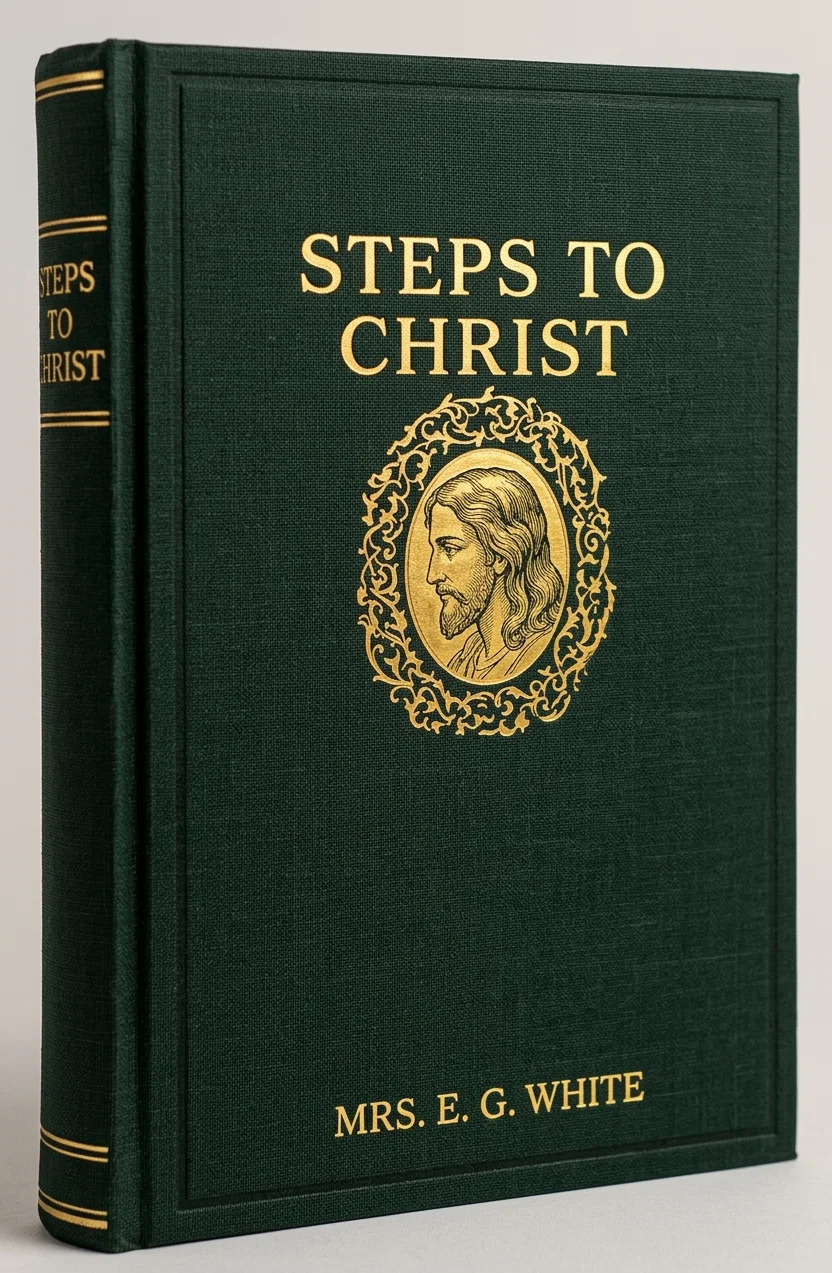
“STEPS TO CHRIST,” by Mrs. E. G. White. The new illustrated edition forms one of the best gift-books in our entire list. While scarcely a book for the children, it is a suitable gift-book for either old or young. It is translated into fourteen languages, which indicates the esteem in which it is held. It will be found a valuable companion for the young disciple, and an effective aid to the Christian worker. Cloth, 60 cents; gilt, $1; Russia, red leather, $1; morocco, de luxe, printed on extra quality paper, especially suitable for gift purposes, $1.50.
“UNCLE BEN’S COBBLESTONES.” Familiar talks with boys and girls about the common articles of every-day use, such as air, water, sunshine, fire, smoke, glass, coal, salt, paper, matches. Through these common articles the author directs the youthful minds to many practical lessons. Uncle Ben tells about more than one hundred different things in all. Beautifully illustrated; 221 pages; board, $1.

JUST IMPORTED

LIVES OF GREAT MEN AND WOMEN

For the benefit of our young people who desire to supplement their regular Reading Course with helpful biographical study, we have imported from London a limited quantity of the following books, being the lives of great leaders.
It is conceded that no works are so inspiring to young men and women as those dealing with the lives and achievements of those who have been successful in their chosen field. While they last, we will furnish these books, post-paid, at 60 cents each. The titles follow: —
“John Williams,” by Rev. James J. Ellis; “Two Noble Lives,” by David J. Deane; “John Knox,” by G. Barnett Smith; “Robert Morrison,” by William John Townsend; “James Hannington,” by Chas. D. Michael; “David Livingston,” by A. Montefiore-Brice, F. R. G. S.; “Robert Moffat,” by David J. Deane; “The Canal Boy Who Became President,” by Frederic T. Gammon; “Samuel Crowther,” by Jesse Page; “William Carey,” by John Brown Myers; “Florence Nightingale,” by Eliza F. Pollard.
Order from Your Tract Society, or from the

Review & Herald Publishing Association

Takoma Park Station,
WASHINGTON, D. C.

The Beautiful Hills

MARY VALLIANT NOWLIN
The beautiful hills are far away,— The Canaan hills in the land of day,— And this is a sad, sad place to be, This world of darkness and misery. Of sorrow and pain there is so much, And of broken hearts; and life is such. And O, the crying that won’t be still, And the vacant places none can fill; But ever the sweet songs come and go Like the silvery sound of the river’s flow. Some day the moan of the bar will cease, And our burdened hearts will find release. Change may these hills that we look on here With every change of the changing year; But morning comes, and the break of day Now shows us the other hills away,— The Canaan hills that forever stand Firm fixed by God’s own mighty hand.
O happy hills! O heavenly cheer! O songs of peace that we scarce can hear For babel voices of strife and care, And the sound of grinding everywhere! My spirit yearns, yea, it thirsts to be Filled with thy fulness, flowing free Like the potent move of the mighty tide Out on the deep where the white ships ride. Come, fill me now, while I’m waiting here, That my song may reach (sweet, heavenly cheer) Some who are weary and dumb with pain, That they may hear and take heart again,— May hear and be glad, while they look afar Where a beacon shines, like a shining star, Of the distant land stretching far away,— Sweet home where the hills of glory lay. There afflictions shall not rise again, Nor voice of crying nor moan of pain.
O God! on that blessed glory shore I long to meet with my loved once more. Lord, I ask that those for whom I pray May be where the hills of glory lay. But I can not see. On roll the years, With prayers unanswered, and blinding tears. But there comes once more the heavenly swell Of the songs of peace, and all is well. From the crystal sea their paeans roll Like the voice of God. Rest, rest, my soul; Life is but brief, and brief is its pain; O loved and lost, we shall meet again. The lifting mists of night’s shadows show The morning coming, when I shall know. Arise; for surely the night is o’er. All hail to the hills of the Canaan shore! Arise and sing; for the dawning light Will show us the heavenly hills in sight.
Takoma Park, D. C.

The Home School

MRS. E. G. WHITE
PARENTS have been given a wonderful work to do. The home life, in order to be successful, demands careful study. The home is to be a school, in which children are to be trained for the higher school. The father and mother should make the decision, “I will behave myself wisely in a perfect way. . . . I will walk within my house with a perfect heart.”
The husband and wife must love and respect each other. Thus only can the children be taught to respect their parents. If parents realized how greatly their attitude toward each other influences the conduct of the children, they would offer earnest prayers to God for wisdom to understand and teach the way of the Lord.
In the home school there is to be no exaction, no commanding. Love is to bear rule. From their babyhood, the children are to be taught to defer to one another, to show unselfishness in the smallest matters. If all were to learn this lesson in childhood, the curse of grasping for the supremacy would not so often be seen in the church.

Parents as Teachers

By precept and example, parents are to teach their children never to speak falsely. When a falsehood is uttered, the heavenly angels turn away in sorrow, grieved that Christ’s heritage should so dishonor him. One falsehood spoken prepares the way for another. The Lord desires all to adhere strictly to the truth, to be straightforward in every transaction. Never tell a lie, because thus you hurt your own soul, and disgrace yourself in your own eyes.
Parents are the first teachers of their children; and by the lessons that they give, they, as well as their children, are being educated. As parents consecrate themselves, body, soul, and spirit, to the doing of their God-given work, the Lord will teach them precious lessons, giving them wise words to speak, and helping them to show patience and forbearance under provocation.
Parents, never let your children hear you speak a word of impatience. Give them the help of a Christlike example. Accept the invitation: “Take my yoke upon you, and learn of me; for I am meek and lowly in heart; and ye shall find rest unto your souls. For my yoke is easy, and my burden is light.” In complying with this invitation, you will find joy in service, and sweetness of disposition will be brought into the life.

Position of the Mother

The mother is the queen of the home, and the children are her subjects. She is to rule her household wisely, in the dignity of her motherhood. Her influence in the home is to be paramount; her word, law. If she is a Christian, under God’s control, she will command the respect of her children.
From the mother the children are to learn habits of neatness, thoroughness, and despatch. To allow a child to take an hour or two in doing a piece of work that could easily be done in half an hour, is to allow it to form dilatory habits. The mother should show the necessity of order, neatness, and despatch, acting at the same time with such reasonableness that the children will not think her exacting. The habits of industry and thoroughness that she teaches her children will be an untold blessing to them in the larger school of life, upon which they must enter as they grow older.
Mothers, keep your children occupied. If you fail to do this, Satan will do it for you. Set them some task to do each day. As early in life as possible, children should be trained to share the burdens of the home. Too often the mother’s life is almost that of a slave, while her daughters live the life of ladies. In nearly every case, the mother herself is to blame for this condition of things. While the children are still young, the mother should give them some simple task to do, telling them that they are helping her. It will take longer for her to teach them how to do the work than it would for her to do it herself; but let her remember that she is laying in their characters the foundation of helpfulness. Let her remember that thehome is a school, in which she is the head teacher. It is her part to teach her children how to perform the duties of the household quickly and skilfully.
The mother is patiently to guide and direct and teach, helping the children by kind, encouraging words. If she is a learner in the school of Christ, she will be a wise teacher and a safe guide, knowing how to restrain hasty words, and how to show patience and cheerfulness in the face of trial and misfortune.

A Change Needed

We need homes that are surrounded by a sanctified atmosphere. Unconverted families are Satan’s strongest allies. The members of them work counter to God. Some parents are harsh, denunciatory, overbearing, while others are careless and overindulgent, letting their children follow the course of disobedience until they do very wicked things, and are a spectacle of shame to angels and to men. Such parents need to feel the converting power of God. By giving way to anger, and by selfish indifference, they unfit their children for this world and the next. How long will the Lord bear with this kind of work? He calls for a decided change in the home school. Let fathers and mothers repent of their neglect. “Then will I sprinkle clean water upon you, and ye shall be clean: from all your filthiness, and from all your idols, will I cleanse you. A new heart also will I give you, and a new spirit will I put within you: and I will take away the stony heart out of your flesh, and I will give you an heart of flesh. And I will put my spirit within you, and cause you to walk in my statutes, and ye shall keep my judgments, and do them.” “The Lord thy God will circumcise thine heart, and the heart of thy seed, to love the Lord thy God with all thine heart, and with all thy soul, that thou mayest live.”
It is a fact that the Lord will thoroughly purge his floor and gather his wheat into his garner. Everything that can be shaken will be shaken. The Lord is calling for a people who, in spirit and word and deed, will bear fragrant fruit. He is indignant with those who are greatly dishonoring him; and unless they change, he will punish them for their sins. But if they repent, he will see their helplessness, and will have pity upon them. “The Lord shall judge his people, and repent himself for his servants, when he seeth that their power is gone.”
I am writing this to the parents among us because I greatly desire them to learn, and to teach to their children, the beautiful lessons that we must learn on earth before we can enter heaven. In everything you do, ask yourselves, “How will this help my children to prepare for the mansions that Christ has gone to prepare for those who love him?” When the work in the home school is done as it should be, families will bring into the church such a noble unselfishness that heavenly angels will love to linger there. The feelings of resentment, so quickly aroused, will be looked upon as grieving the great, self-sacrificing heart of Jesus. Hearts will be refined and purified, made fit for the indwelling of the Lord Jesus.
Keep Christ before your children by singing songs to his glory, by seeking him in prayer, and by reading from his Word, so that he will seem to them an ever-present Guest. Then they will love him, and will be brought so closely into unison with him that they will breathe out his Spirit. They will feel a new relationship to one another in Christ.
When parents do faithfully the work resting upon them, a holy influence will be brought into the church; and in the power of God, men and women will go forth into the service to which he calls them, however difficult, dangerous, or trying it may be.

A Friend of Sinners

D. H. KRESS, M. D.
A LITTLE boy's definition of a friend was, “one who knows all about us, and loves us just the same.” Parents, though aware of the weaknesses and defects of their children, love them just the same.
Such a friend we have in Jesus. No one knows so well as he the infirmities of mankind, but he loves us just the same. “God so loved the world, that he gave his only begotten Son,” and Jesus revealed to us this love in his ministry while here upon earth. He is touched “with the feeling of our infirmities.”
No one can so fully understand or comprehend what it means to be touched with the feeling of another's infirmities as can a father or a mother. The unfortunate child in a household is loved none the less because of its infirmities. The parents are touched with the weaknesses and defects that some one less compassionate may criticize and condemn.
So Jesus is touched with the feeling of man's infirmities. Those who are often passed by on the wayside by priest and Levite as hopeless cases, are the objects of his special pity and compassion. We read, “Then drew near unto him all the publicans and sinners for to hear him.” Jesus was the friend of sinners when here upon earth, and sinners felt this as they came into his presence. It was a knowledge of his father's love and friendship that led the prodigal, clothed with rags, and having spent his all in riotous living, to determine, “I will arise and go to my father.”
While the wayward son possessed a certain knowledge of his father's love, a new and fuller revelation awaited him. All he dared hope for was to be made as one of his hired servants. But the reception he received was not that of a servant; it was the reception of a son. “Bring forth the best robe, and put it on him,” was the father's command; “let us eat, and be merry: for this my son was dead, and is alive again; he was lost, and is found.”
The elder brother could neither understand nor comprehend this love, and was led to criticize the act. The father recognized the prodigal as his son, even when feeding the swine, and when dead and lost to him. The love in the father's heart remained unchanged through all the years of separation; but now that the son returned, he was able to give expression to the love and pity which dwelt in his bosom. It is the goodness of God that leads to repentance.
In recounting the various providences by which the wayward are brought to cry unto God and helped out of their trouble, David says, “Whoso is wise, and will observe these things, even they shall understand the loving-kindness of the Lord.” Like the prodigal, they will recognize suffering, reverses, and affliction as God's appointed means of leading them back to the path of peace and life. With David they will say, “It is good for me that I have been afflicted; that I might learn thy statutes.” They will recognize God as their friend, even in suffering, and will glory in tribulation.
Takoma Park, D. C.

The Christian's Ready Answer

WM. COVERT
As Christians we are admonished to be always ready with an answer when men wish to know the basis of our hope. 1 Peter 3:15. No proposition could involve a question of greater consequence than this, because our hope in Christ includes all that is stable and good. We show the estimate that we place upon our own salvation by the effort we are willing to put forth in saving others. Also the success which attends our evangelistic labor is determined in a very large degree by the fervor with which we do this work. If we are indifferent regarding our own redemption from sin, how can we hope to lead others to the Saviour of sinners? We must be enthusiastic over our own hope before any one will be led to ask us about it. People inquire most earnestly after those things which they think will do them the greatest good, but shun those things which seem to them undesirable.
Our hearts must become the sanctified abode of the Lord, so that we may be always ready to teach anxious hearts how to find the Saviour. Therefore, the constant attitude of the Christian should be that of readiness to lead the lost out of the dark wilderness of sin into the bright light of righteousness.
The answer to questions concerning the Christian's hope will be given with meekness, because the Spirit of Christ never leads to boasting; yet there will be great confidence in the answer, because we know the ability and the love of him who gives us hope. The reason of our hope is based upon God's love for man, and the proof of that love is demonstrated by the offering which has been made to secure his release from condemnation. God estimated the worth of every object in heaven and earth, and then gave the one which was greatest in value of them all, to provide man with his blessed hope. And it was the hopewhich was provided that became to the man an anchor to his soul, both sure and steadfast. That anchor holds, immovable as the eternal hills. It is the rock of ages, the sure foundation, the shelter from the storm, the eternal, unshakable stay. It is the way, the truth, the life. It is the hope which is rooted and grounded, and which can never fail.
Chicago, Ill.

Organization

W. E. HASKELL
WHAT is God's plan of organization? This must be determined by his Word. The human body, presented in the Word as an object-lesson of Christ and the church, is sufficient of itself to make plain the truth on this question.

In the Heavens

It is also true that “the heavens declare the glory of God.” As spiritual lessons are revealed in creation, may we not expect to see God’s plan of organization for his spiritual kingdom revealed in the organization of the heavens? What is the plan followed in their organization? Do we find each of the heavenly bodies, or each smallest group of bodies, with its orbit directly and only around one great final center, separate and independent from every other body or group?
Rather, we find one or more satellites revolving around a controlling planet, and many planets, forming a system, circling their central controlling sun; and many of these systems combined, revolving around a common center, thus forming a still higher system; and this continuing in ascending scale until we reach the final systems, circling the great final center, by which all are held together in one harmonious whole.
Under Christ, by whom “all things consist,” each body, according to its size and position, influences every other body, and is influenced by each in maintaining the perfect order of the heavens. Yet neither planet nor sun is supreme, but Christ is over all, controlling every system and every satellite. By him they all are fitly and wondrously placed, upheld, and controlled for the working out of the great plan by which the glory of God is declared.
If all were endowed with intelligence and freedom of choice, and if, in dissatisfaction with sun control, or in supposed loyalty to Christ, any one planet with its satellites should draw apart, no longer revolving in its appointed place in its system and higher systems, but choosing an independent orbit, would not such a course be in direct conflict with Christ’s plan and the harmony of the heavens?

In the Church

In the collective organization of the church, we should, as “members one of another” (Rom. 12:5), “be subject one to another” (1 Peter 5:5) in local church and conference, in union conference, and in General Conference; yet also, as “members of Christ” (1 Cor. 6:15), be subject to Christ alone as our head, who is the “head of the church” (Eph. 5:23), local and collective, and the “head of every man.” 1 Cor. 11:3. Any abuse of organization, imaginary or real, is no reason for setting aside, or drawing apart from, Christ’s plan, but rather for pressing together, that we may “grow up into him in all things, which is the head, even Christ: from whom the whole body fitly joined together and compacted by that which every joint supplieth, according to the effectual working in the measure of every part; maketh increase of the body unto the edifying of itself in love.” Eph. 4:15, 16.
When this is done the church will be “as the morning, fair as the moon, clear as the sun, and terrible as an army with banners.” Then will it, even as the heavens above, “declare the glory of God,” and the earth will be “lightened with his glory.”
Brayton, Tenn.

The Two Covenants

M. E. STEWARD
THE history of the two covenants reveals plainly how unreliable is man, and how sure and faithful is our divine Lord.

The first covenant:—

1. The first covenant was made with the Israelites at Mount Sinai. God spoke his law, and the people said: “All that the Lord hath said will we do, and be obedient.” Ex. 24:7. This was the people’s part of the covenant.
2. The Lord’s part, or promise, was: “If ye will obey my voice indeed, and keep my covenant, then ye shall be a peculiar treasure unto me above all people: for all the earth is mine; and ye shall be unto me a kingdom of priests, and an holy nation.” Ex. 19:5, 6.
3. The children of Israel did not keep their part of the covenant. Exodus 32; Heb. 8:9. God forgave them through the provisions of the new covenant. See “Patriarchs and Prophets,” pages 363-373.

Nature of the first covenant:—

1. The condition was, Obey and live; but “cursed be he that confirmeth not all the words of this law to do them.” Deut. 27:26. There was no forgiveness in the first covenant.
2. There was no Saviour in it. The people depended on themselves to keep it.
NOTE.— “Feeling that they were able to establish their own righteousness, they declared, ‘All that the Lord hath said will we do, and be obedient.’ They had witnessed the proclamation of the law in awful majesty, and had trembled with terror before the mount; and yet only a few weeks passed before they broke their covenant with God, and bowed down to worship a graven image. They could not hope for the favor of God through a covenant which they had broken; and now, seeing their sinfulness and their need of pardon, they were brought to feel their need of the Saviour revealed in the Abrahamic covenant.”—“Patriarchs and Prophets,” page 372.

The new covenant:—

1. The new covenant is the gospel; it is redemption from the transgressions of the law, through Christ.
2. It was made with Adam in the promise of One who should bruise the serpent’s head. Gen. 3:15. It was renewed with Abraham in the promise of the Messiah and the saints’ inheritance in the new earth; and it brings men to obedience to God’s commandments. Gen. 26:3-5. It was in force during the existence of the old covenant, and embraces every child of God, from Adam to the end of the world.
3. It is called the new covenant because the blood that sealed it—“the precious blood of Christ”—was not shed on Calvary until after the first covenant had been ratified at Sinai by the blood of the sacrifice.

Blessings of the new covenant:—

1. The new covenant was established upon “better promises,” because it provides for the forgiveness of sins, and grace to renew the heart.
2. Christ is ours through the provisions of the new covenant, and in him we have eternal life. 1 John 5:11, 12. We also have the help of the Holy Spirit to enable us to keep the Father’s law.
3. In the new covenant God’s law is written on the loving, reverent hearts of his children.
“For this is the covenant that I will make with the house of Israel after those days, saith the Lord; I will put my laws into their mind, and write them in their hearts: and I will be to them a God, and they shall be to me a people: and they shall not teach every man his neighbor, and every man his brother, saying, Know the Lord: for all shall know me, from the least to the greatest.”

The new covenant unchangeable:—

1. The covenant of Dan. 9:27 is the new covenant. “He [the Messiah; verses 25, 26] shall confirm the covenant with many for one week.” A day being a year in prophecy, this week is seven years. For three and one-half years Christ personally taught all the principles of the new covenant, and “he taught them as one having authority.” Matt. 7:29. “In the midst of the week” he caused the “sacrifice and the oblation to cease” by the sacrifice of himself, who was the great antitype of all the Jewish sacrifices. After the death of the Saviour, his disciples continued to labor for the “many”—the Jews—three and one-half years longer. At the end of that time, Peter had his vision on the housetop, and the gospel began to go to the Gentiles. About the same time, at the martyrdom of Stephen, “they that were scattered abroad went everywhere preaching the word.” Acts 8:4.
2. The new covenant that saves from sin and writes the law in the heart was doubly confirmed by the promise and oath to Abraham, and now it was sealed by Christ’s death. “Though it be but a man’s covenant, yet if it be confirmed, no man disannulleth or addeth thereto.” Gal. 3:15.
3. What about changing any part of the new covenant after the death ofChrist? The law of ten commandments is a part of that covenant; it is, in fact, the foundation of it. Neither Christ nor his disciples changed the Sabbath of the fourth commandment. Yet man attempts to “disannul” God’s Sabbath (Ex. 20:8-11), and to “add thereto” the Sunday sabbath! Those who are loyal to God’s law are given many promises in the Bible, even the last one in it. Rev. 22:24.
Sanitarium, Cal.

Its Political Tendencies

History of the Jewish Priesthood—No. 7

Its Political Tendencies

J. O. CORLISS
The Hebrew priesthood was established for one great and enduring purpose. Its services, of themselves, were of no value, except to shadow forth the atonement work of Him who was to come as the heavenly Head of a “royal priesthood.” I Peter 2:9; Heb. 10:1-12. Had the Israelites, or even the priests themselves, comprehended the design of the sacrificial offerings so constantly exhibited, probably there would have been no occasion for the Lord to say: “To what purpose is the multitude of your sacrifices unto me? . . . I delight not in the blood of bullocks, or of lambs, or of he goats. When ye come to appear before me, who hath required this at your hand, to tread my courts?” Isa. 1:11, 12.
But important as were the daily ceremonies of the priesthood in foreshadowing the continual sacrifice and ministry of Christ, the personnel of that priesthood materially failed as a true type of him who was an eternal priest in the Melchizedek line of ministration. Heb. 6:20. They had been chosen of God to be a holy, or separate order (I Peter 2:5), that they might minister in “holy things.” I Cor. 9:13. They were therefore anointed with holy oil (Ex. 30:25), and clothed in holy garments (Ex. 28:2, 4), that they might minister in the holy places of the earthly sanctuary. Ex. 26:33.
Yet for all this, the Hebrew priesthood was but the mere skeleton, or framework, of the Hebrew religion. Its place, though highly important, was inferior to some other positions in God’s work. Moses was pointed out as standing incomparably above every other person, whether prophet, priest, or king. Num. 12:6-8. It was, however, steadfast in the celebration of its appointed rites, even after their significance was lost to the intellect. Heb. 9:12-14. Its persistence in these forms not only maintained the order intact, but rendered it the rallying-point of the nation upon its return from Babylonian captivity. It lived to the end of the Persian and Grecian empires, and into the opening of the world-wide Roman dynasty. It witnessed the advent of Him whose sacrifice for sin and whose future ministry were typified in its daily and yearly services. When the Jewish earthly types were to give way to the heavenly substance, and the nation’s last struggle for the mastery came, its priesthood was the last institution visible as the great crisis culminated.
Even now the family names of “Cohen” and “Levy” are persistent witnesses to the cohesiveness of that priestly system. In Jewish synagogues the modified priestly services are still honored, so far as consistent with modern usages. The people are still blessed by the rabbi priest as of old, and his attendant pours water on his hands after the Levitical manner. All these functions are purely mechanical, as they came to be under the old system, after their failure to herald the approach of the better, heavenly way.

In the Days of Saul

After the establishment of the monarchy under Saul, the priests became seemingly mere instruments under the king’s direction. Why this position of superiority was assumed by the king one can only conjecture. The fact that the king was anointed to his office by the same holy oil as the priests (I Kings 1:39), may have made them think themselves above the priests, because of being rulers over the whole nation. The assumption of a political attitude by the priests may also have strengthened the incentive to make underlings of the priests.
Be that as it may, we know that Ahimelech was the victim of Saul’s wrath. I Sam. 22:18. Briefly told, the story is this: David fled from Saul, and went to Nob, where he met the priest, and was there fed by him. The incident was related to the king, when he called the trembling priest before him for an explanation. The result of the affair was that Doeg, who gave the information to Saul, was commanded to slay all the priests, which he did to the number of eighty-five. Abiathar, the son of Ahimelech, and joint high priest with Zadok (2 Sam. 8:17), was deposed by Solomon. I Kings 2:27.

During the Reign of David and Solomon

The priestly services seem to have improved somewhat under the direction of David and Solomon. The earlier military blasts of silver trumpets by which the national assembly was brought together (Num. 10:2-7), and the discordant din of explosive sounds from ram’s horns, by which to strike terror to the hearts of enemies,—all this gave way to a milder service, in which song and prayer, accompanied by harp, psaltery, and cymbal, were connected with the more sanguinary functions. I Chron. 25:1; 15:19.
We are told that when David rearranged the priesthood and its services, he named the families to whom would belong the twenty-four courses to be served. I Chron. 24:7-19. He also set apart two families, one each from the line of Eleazar and Ithamar, from which the high priests should be taken to serve over the other priests. Verse 6. The result of this was that more than one high priest was likely to be serving at the same time. In fact, we find under David three high priests in service at one and the same time. I Kings 4:4; compare with I Chron. 27:5. Abiathar was banished by Solomon to Anathoth, his birthplace, because of his interference with the succession to the throne, and then was expelled from office, which was filled by Zadok. I Kings 2:20, 27, 35.
Not only did the priesthood become subject to the will of the kings, but the kings’ sons were permitted to fill the office of “chief rulers.” 2 Sam. 8:18. It will be noticed that this last reference follows the enumeration of King David’s chief officers. Benaiah, a priest, is mentioned as having control of certain divisions of the army, and then come the words which speak of David’s sons as chief rulers over all these. The matter is made still clearer in the enumeration of Solomon’s chief officers. In this case, Azariah, the son of Zadok, was the priest, or, as the margin has it, “chief officer.” I Kings 4:2. Thus we see that the chief priest is put next to the king himself in the enumeration of his head officers. In 2 Sam. 8:18, David’s sons held this same position, which shows that the office of chief ruler was at least interchangeable with that of the high priest. Where the words “chief rulers” occur in the Authorized Version, the Latin Vulgate always has it “sacerdotes.”
The connection of the Jewish priesthood with the secular power, so that its members were no longer separate from the common people, but became tax-collectors, warriors, etc., was the reason why its services lost their significance upon the people. Probably this was just as the enemy of all true service would have it. It has ever been his design to cover up and destroy the true view of the Saviour’s ministry in the heavenly sanctuary, lest the sinner should avail himself of its provisions, and be saved from the delusive snare which besets the feet of all. This may be fully seen in the false priesthood of the present.
Mountain View, Cal.

When You Are Disappointed

You are disappointed. Do you remember, if you lose heart about your work, that none of it is lost; that the good of every good deed remains, and breeds, and works on forever; and all that fails and is lost is the outside shell of the thing, which, perhaps, might have been better done, but, better or worse, has nothing to do with the real spiritual good which you have done to men's hearts, and for which God will surely reward you in his own way and time.—Charles Kingsley.
Continue reading: Mastery of Self