Your ShelfYour Projects

Signs of the Times, Vol. 28, No. 47.

THE REVELATION OF JESUS CHRIST

Signs of the Times

Nov 19, 1902

Pacific Press Publishing Company · Oakland, California · Nov 19, 1902

“THE REVELATION OF JESUS CHRIST.”

V. A Persecuted Church.
SMYRNA was a city in Asia Minor on the Ægean Sea, about forty miles north of Ephesus. It was built by Theseus B.C. 1312, and named after his wife. It was destroyed in B.C. 628. Alexander the Great, through Lysimachus, built a new city by the same name in B.C. 320. It was an important commercial port, and famous for its beauty. Christianity was early planted there, and Polycarp, a pupil of John, a bishop of the church, suffered martyrdom here in A.D. 155, eighty-six years after his conversion. The modern city, possessed by the Turks since 1313, has a population of 180,000. It is on the whole wicked, degraded, filthy, possessed of a cosmopolitan population. Here dwelt anciently a persecuted church, and so a fitting type of that phase of the Church of Christ in general, dominant say from A.D. 140 to 300. The characteristics will be more clearly revealed in the scripture that follows:—
The Letter. Rev. 2:8–11.
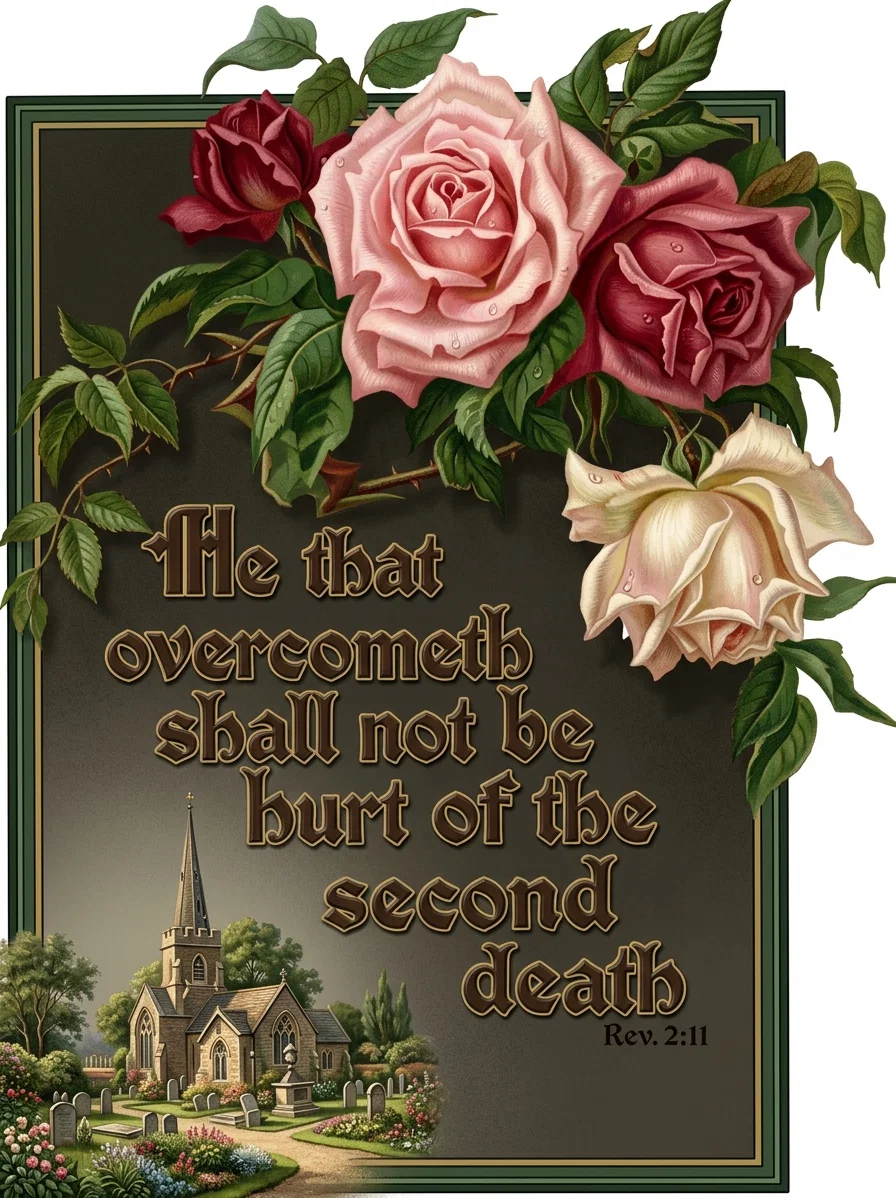
(8) “And to the angel of the church in Smyrna write:— “These things saith the First and the Last, who was dead, and lived again. (9) I know thy tribulation, and thy poverty (but thou art rich), and the blasphemy of them that say they are Jews, and they are not, but are a synagogue of Satan. (10) Fear not the things which thou art about to suffer: behold the devil is about to cast some of you into prison, that ye may be tried, and ye shall have tribulation ten days. Be thou faithful unto death, and I will give thee the crown of life. (11) He that hath an ear, let him hear what the Spirit saith to the churches. He that overcometh shall not be hurt of the second death.”

Questions on the Text.

Which is the second of the seven churches addressed?
“To the angel of the church in Smyrna write.”
What characteristics are given of the writer?
“These things saith the First and the Last, who was dead, and lived again.”
What is the first thing He knows of the church in Smyrna?
“I know thy tribulation.”
What does He mention as the second thing?
“I know thy poverty.”
What paradoxical statement does He add?
“But thou art rich.”
What further fact does the Master mention?
“I know . . . the blasphemy of them which say they are Jews, and they are not, but are a synagogue of Satan.”
What double assurance does He give them?
“Fear not the things which thou art about to suffer.”
Of what does He foretell?
“Behold, the devil is about to cast some of you into prison, that ye may be tried.”
How long would this special tribulation last?
“Ye shall have tribulation ten days.”
What exhortation and promise does He give?
“Be thou faithful unto death, and I will give thee the crown of life.”
What universal command does He give?
“He that hath an ear, let him hear what the Spirit saith to the churches.”
What promise does He make to the overcomer?
“He that overcometh shall not be hurt of the second death.”

Exposition and Comment.

1. “The First and the Last.”—We are not to understand from this that at one time our Lord was not and there will come a time when He will not be. He is comforting a church who is meeting persecution from seemingly invincible powers. The Master whom she serves is reminding her that He is before all opposing forces, and when they are forever gone, He will still exist. He knows the power of their persecutor. Human as the church is human, He met the persecutions, yea, even unto death. The rock sepulcher was closed over him; the Roman seal and guard secured the prison-house from all outward attempts; but the Dead lived again, the mighty Conqueror over all foes. It is He who writes to suffering Smyrna to assure her that she will not be forgotten.
2. “I know thy tribulation.”—Smyrna means “myrrh;” and myrrh is the product of a low thorny tree (balsamodendron opobalsamum), which grows chiefly in Arabia. It is of a strong and agreeable smell, was used medicinally, as a compound of the holy ointment (Ex. 30:23), in embalming the dead (John 19:39), as an agreeable perfume (Est. 2:12; Ps. 45:8; Prov. 7:17), and as a valuable gift (Matt. 2:1, 11). Its fragrant odor would be more manifest by crushing, squeezing, pressing, bruising, and that is the root meaning of tribulation. The church in Smyrna represents the church of God in the dark days of pagan persecution under Imperial Rome. The Statewas dominant, but religion was woven into its every fiber. It was literally impossible for a Christian to live and not continually transgress Roman law. Through the utter indifference to all things religious, or even moral, on the part of many of the emperors and lower officials, many of these minor things were overlooked. Some of the sufferings of the Christians during the rule of Pagan Rome came through the devilish cruelty and oppression of the emperors toward every one in general upon whom they thought it safe to vent their innate malice. The worst persecutions came generally from the most conscientious pagan rulers. It was a time to the church when the only certain thing was faith in God; and from her tribulation, her sacrifice and suffering for Christ’s sake, arose a sweet-smelling savor. Dear soul, are you in the pressure of tribulation? Jesus Christ knows it, and is with you.
3. Poverty—Riches.—Tribulation, persecution, invariably bring poverty in worldly goods. It is not a time to pile up wealth, to acquire great riches. Goods are confiscated, houses are destroyed, fine and imprisonment, and need of companions in affliction lick up money and means. But those who look to God at such times receive more than compensation. The believers in Smyrna were rich in God. “Hearken, my beloved brethren; did not God choose them that are poor as to the world to be rich in faith, and heirs of the kingdom which He promised to them that love Him?” James 2:5. The lesson of all history is that the Church of Christ is far less likely to fail under the discouragements and deprivations of poverty than she is under the blandishments, flattery, and deceptions of worldly riches and prosperity. To His suffering poor Jesus says: “Blessed are ye poor; for yours is the kingdom of God.” The child of God, tho in deepest poverty, may sing:—
“A tent or a cottage, O why should I care? He is building a palace for me over there: Tho exiled from home, yet still I may sing, All glory to God, I’m the child of a king.”
4. Jews—“Synagogue of Satan.”—Even as literal Jews—professedly the people of God—were the persecutors of the church in ancient Smyrna; even so the apostate church became the persecutor of the true in the second period of her history, prior to A.D. 300. “He is not a Jew who is one outwardly; neither is that circumcision which is outward in the flesh; but he is a Jew who is one inwardly; and circumcision is that of the heart, in the spirit not in the letter; whose praise is not of men, but of God.” Rom. 2:28, 29. The true Jew, according to the Word of God, is the follower of Jesus Christ, grafted by faith into the true stock (Rom. 11:17), becoming through Christ fellow citizens with the saints, members of the commonwealth of Israel (Eph. 2:11–20), the seed of Isaac and Abraham (Rom. 9:6–8; Gal. 3:29). Let not the earnest, obedient Christian feel reproached if he be called a Jew. His praise is of God if not of men. Those who profess the name of Jesus and yet reject His words, are not Jews, but are of the synagogue of Satan, heeding his call, and even tho not knowing it they are marshaled under his banners.
5. “Fear not.”—The suffering was coming, it will come, to all God’s children. And our Lord announces it with the assuring “Fear not.” Satan will do all he can to break the spirit and destroy the faith; but fear not. You shall come forth from the trial refined as gold. The prison-house may be the grave into which you will enter; fear not. Christ has broken its bars. He was dead, He lives again forever.
6. “Ten days.”—The days are prophetic, even as the little church in Smyrna was prophetic. Ten literal days of tribulation are of small moment; and the persecuted church met many such. These days represent ten years (Num. 14:34; Eze. 4:4–6), the persecution under Diocletian 302 to 312, the greatest under Pagan Rome.
7. “The crown of life.”—The church in Smyrna was not to see her Lord come. Her day would long be past when that event should take place. The only certainty which was before her in this world was suffering and death. But if true to God, life, eternal life, was hers. Note it is not a crown of life, but the crown of life; the very crown fitted for her, the crowns for the faithful ones. The complement to this promise are the words to the overcomer in verse 11. God’s children may die here; men may put them to death in the most ingenious and cruel ways imaginable. It is their part to be faithful to the end. It is His part to save them from “the second death,”—the wages of sin—and to give them the crown of life. From the first death Jesus Christ will call all forth to life (Acts 24:5); from the second death, chosen by the wicked in choosing character, rendered by eternal justice, there is no resurrection (chapter 20:14). To His faithful ones Jesus is still saying, “I say unto you My friends, Be not afraid of them that kill the body, and after that have no more that they can do. But I will warn you whom ye shall fear: Fear Him, who after He hath killed hath authority to cast into hell; yea, I say unto you, Fear Him.” Luke 12:4, 5. It is the fear of loving, reverent obedience that is demanded.
AGAINST His persecuted people in this age God brings no reproach, offers no reproof, no rebuke. He recognizes their faithfulness. He cheers them in the darkness, He sustains them in the trial, He keeps for them the crown of life eternal. And the promise is for all similarly situated. “He that hath an ear let him hear what the Spirit saith to the churches.”

SERVANTS AND SONS.

Enslaved in Order to Be Freed.

God has bought us in order to make us free; for His service is the only real freedom. The more firmly we are bound to Him, the freer we are. “He that is called in the Lord, being a servant, is the Lord’s freeman; likewise also he that is called, being free, is Christ’s servant. Ye are bought with a price; be not ye the servants of men.” 1 Cor. 7:22, 23. He has “delivered us from the power of darkness,” and He assures us that sin shall not have dominion over us. That which He has purchased with His blood, He will guard with His life.
“Servant of God” is the highest title that any creature in the universe can bear; for it is borne by Him in whom all things were created. God refers to Christ again and again as “My Servant.” When Christ came to this earth He “took on Him the form of a servant” (Phil. 2:7); the reality He already had in heaven. To His disciples, even while justly claiming to be their Lord, He said “I am among you as he that serveth” (Luke 22:27); and His greatness is due to the fact that He willingly performs the greatest, or as men would regard it, the lowest, service. So He says to us, “Whosoever will be chief among you, let him be your servant.” Matt. 20:27.
The highest place any being, whether man or angel, can occupy is that of servant of the Most High God.
Yet God calls us sons. “When the fulness of the time came, God sent forth His Son, born of a woman, born under the law, that He might redeem them that were under the law, that we might receive the adoption of sons. And because ye are sons, God sent forth the Spirit of His Son into our hearts, crying, Abba, Father. So that thou art no longer a bondservant, but a son; and if a son, then an heir through God.” Or, “an heir of God through Christ.” Gal. 4:4-7.
Recall the parable of the prodigal son, which was given to show us how God receives repentant sinners. The son when his father met him, began to repeat the words that he had before decided to say: “Father, I have sinned against heaven, and before thee, and am no more worthy to be called thy son; make me as one of thy hired servants.” Luke 15:18, 19. But the father did not give him time to finish. As soon as he acknowledged himself unworthy, and before he had time to beg to be taken as a servant, the father gave orders for the best robe and a feast, saying, “This my son was dead, and is alive again.”
Thus God in His great love receives us. “Behold, what manner of love the Father hath bestowed upon us, that we should be called the sons of God!” It is marvelous; and yet, if God is to receive men at all, that is the only ground on which He could receive them. We must either be sons or nothing. Why?—Because we should be utterly unprofitable as hired servants. What could we do that would be worth paying for? What wages could God set that we could earn? When we ourselves are “less than nothing, and vanity,” what could our best work be? Who would dare mention wages in connection with anything he could do for the Lord? “Who hath first given to Him, and it shall be recompensed unto him again? For of Him, and through Him, and to Him, are all things; to whom be glory for ever.” Rom. 11:35, 36.
“Behold, what manner of love!” We are not worthy to be servants, and therefore the Lord makes us sons! The servant must have wages, and we are not capable of earning wages; but the son gets no wages; he receives everything that the father has, as his by birthright; and such is our relation to God. Marvelous love! Unspeakable gift! Boundless grace! Our worthlessness recommends us to His highest favor! He buys us as servants; but we are not worth anything in that capacity; so the purchase price—the life of Christ—is transferred to us, and, lo, His worthiness becomes ours, and makes us sons.
E. J. Waggoner.

ONLY BY THE SPIRIT’S POWER.

NONE but He who has created man can effect a change in the human heart. God alone can give the increase. Every teacher is to realize that he is to be moved by divine agencies. The human judgment and ideas of the most experienced are liable to be imperfect and faulty, and the frail instrument, subject to his own hereditary traits of character, has need to submit to the sanctification of the Holy Spirit every day, else self will gather the reins and want to drive. In the meek and lowly spirit of the learner, all human methods and plans and ideas must be brought to God for His correction and indorsement; otherwise the restless energy of Paul or the skilful logic of Apollos will be powerless to effect the conversion of souls.—Mrs. E. G. White.

Loveless Lives Are Godless

“LOVELESS lives must be Godless, no matter how religious they may seem to be.”

The Prophecy of Zechariah

By Roderick S. Owen

RITUALISM AND RIGHTEOUSNESS.

Chapters 7 and 8.

By reading these two chapters it will be seen that they both relate to a question asked in the temple of the Lord, and the answer and explanation given by the prophet of God. Hence they may be studied as one. Two years prior to this time the prophet Haggai had told the people that the time had come for them to go up to the mountain and bring wood, and build the Lord's house in Jerusalem, at the same time reproving them for dwelling in houses ceiled with cedar, while His house was lying waste. God also told them that if they would go forward and build His house, He would take pleasure in them. He also stated that their lack of His blessing was due to the fact that they were running every man after his own things, and neglecting God's work.
Under the stimulus of the encouragement of the prophet, the people began to labor, and the work was prosecuted to such an extent that the temple services could be partially carried on. The Lord did bless them, and they were led to rejoice in what they saw accomplished.
In the midst of their rejoicing, however, they came to certain times in the year which had been set apart as days of fasting and mourning before God. With the return of these occasions would come the thought of evil which might again befall them, and those who doubted and hesitated would suggest that their prosperity would be transient, and that calamity would again come upon the city, and all their work would be destroyed.
This lead the people to send a question up to the temple by the hands of certain ones who went up to pray. These said to the priest: “Should I weep in the fifth month, separating myself, as I have done these so many years?” By referring to chapter 8:19 we find that this question involved not only the fifth, but also the fourth, seventh, and tenth months. All through their captivity they had observed these as times of mourning and fasting for the following reasons: The tenth month, because in that month came Nebuchadnezzar with all his army and laid siege to the city of Jerusalem (Jer. 52:4). The fourth month, because it was upon the ninth day of that month that the walls were broken down and the city taken (Jer. 52:6, 7). The fifth month because upon the tenth day of that month were the Lord's house, the king's palace, and all the great buildings in Jerusalem burned by Nebuchadnezzar (Jer. 52:12). The seventh month because in that month was the last vestige of their government in the land of their fathers swept away by the murder of Gedaliah (Jer. 41:1–3).
These times of mourning observed during the captivity present before us a sad picture. The feelings of the captives are pathetically expressed in the Psalm as follows:—
“By the rivers of Babylon, There we sat down, yea, we wept, When we remembered Zion. We hanged our harps upon the willows in the midst thereof.”
And when requested to sing in their captivity they replied:—
“How shall we sing the Lord’s song In a strange land?”
Yes, in a strange land, their beautiful city a heap of ruins, the sepulchers of their fathers possessed by strangers, the land of promise a desolation, its cities broken down, its fruitful hills and vales laid waste. No more was heard in their land the sound of the trumpet calling them to come up before the Lord; no happy throngs were seen wending their way over mountain and plain, by rippling brook and rushing river, to attend the great annual feasts in the city of David; no more is seen the great high priest clothed in his beautiful garments passing in and out before the people, and placing the blessing of their God upon them; no more do the mountains about Jerusalem echo and re-echo the grand chorus of the thousands of Levites as they chant the praises of Jehovah, or the glad responsive acclaim of that people whose God is the Lord. The hills are as silent as the halls of death; the fields are as barren as the mountains of Gilboa. The Israelites are gone and with them the blessing of their God.
In explaining why all this came upon them, the prophet says:—
“Thus speaketh the Lord of hosts, saying, Execute true judgment, and show mercy and compassions every man to his brother; and oppress not the widow, nor the fatherless, the stranger, nor the poor; and let none of you imagine evil against his brother in your heart. But they refused to hearken, and pulled away the shoulder, and stopped their ears, that they should not hear. Yea, they made their hearts as an adamant stone, lest they should hear the law, and the words which the Lord of hosts hath sent in His Spirit by the former prophets; therefore came a great wrath from the Lord of hosts. Therefore it is come to pass, that as he cried, and they would not hear; so they cried, and I would not hear, saith the Lord of hosts; but I scattered them with a whirlwind among all the nations whom they knew not. Thus the land was desolate after them, that no man passed through nor returned; for they laid the pleasant land desolate.” Zech. 7:9–14.
To those who were saying that the present prosperity would not last, and that they never would have a time of perfect peace, the prophet foretells the following scene of tranquillity:—
“Thus saith the Lord: I am returned unto Zion, and will dwell in the midst of Jerusalem; and Jerusalem shall be called a city of truth; and the mountain of the Lord of hosts the holy mountain. Thus saith the Lord of hosts: There shall yet old men and old women dwell in the streets of Jerusalem, and every man with his staff in his hand for very age. And the streets of the city shall be full of boys and girls playing in the streets thereof. Thus saith the Lord of hosts: If it be marvelous in the eyes of the remnant of this people in these days, should it also be marvelous in Mine eyes? saith the Lord of hosts.” Chap. 8:3–6.
But the following verses show that all this would follow not because of fasting or form, but on condition of their faithfulness in heeding the words of God's prophets, and that He would be just as certain to bring His blessing upon them for obedience, as He had been to punish them for their sin, for there is absolutely no changing of His purposes. They must speak every man the truth to his neighbor; they must execute the judgment of truth in their gates; they must not imagine evil in their hearts against their neighbors; they must love no false oath; for all these things the Lord doth hate.
But now the captivity of Zion is turned. The Lord has caused His face to shine upon His inheritance, and they are again dwelling in the land of their fathers. Shall they continue to mourn and fast as in the captivity? Ah, no indeed. By their joy and gladness of heart, and as an expression of their faith, these days of mourning which marked their greatest defeats and severest afflictions are to be turned into cheerful feasts of rejoicing before the Lord, in which they are to recount His manifold mercies and multiplied blessings. Other cities witnessing this would be so anxious to share in it that they would say:—
“Let us go speedily to pray before the Lord, and to seek the Lord of hosts; I will go also. Yea, many people and strong nations shall come to seek the Lord of hosts in Jerusalem, and to pray before the Lord. Thus saith the Lord of hosts: In those days it shall come to pass, that ten men shall take hold of all the languages of the nations, even shall take hold of the skirt of him that is a Jew, saying, We will go with you; for we have heard that God is with you.” Chap. 8:21–23.
Such would have been the prosperity and influence of that people, through Christ, had they been faithful to their God. But alas! they failed. Nevertheless, God has a remnant, and they, together with all who can be gathered out for His name, shall see His glory in the full accomplishment of His purpose.
We are now living in the time when God has set His hand a second time to recover the remnant of His people, and the Deliverer that is to come will come, and will not tarry, and God's purpose shall be carried out, not in the natural descendants of Jacob, but in those who are Jews inwardly, whose circumcision is of the heart and not of the flesh, and who, being Christ's, are the true Israelites and the children or seed of Abraham.
In view of this fact, let us see what lessons we may learn from these chapters. We have been in the captivity of sin, but the same God of Israel still lives to turn our captivity, and to cause His face to shine upon us that we may be saved. We have passed weary days of fasting and mourning before the Lord. These days were in memory of our defeats and the victories of our enemy. But now these shall be turned into days of joy and rejoicing in which we shall feast upon the blessings of the Lord, as we with joy draw water out of the wells of salvation. Long have we lived in an enemy's land. Soon we are to possess our goodly inheritance, whose fields are living green, whose hills and valleys will be robed in such beauty as to fascinate and charm the beholder, whose water will be the pure river of water of life, and whose inhabitants shall be immortal.
Shall you be there? Shall I be there?
[The next article of this series is, “The Coming and Rejection of the Lovely One.”]

A Spiritual Guide.

As the railroad guidebook would give directions from one State to another, so the Word of God gives specific directions from earth to heaven.—Edward Mount.

The Life of Christ.

The Revelation and Exemplification of the Divine Law.

When the Son of God came to our world to assume the “form of a servant” “in the likeness of men,” He exclaimed, “Lo, I come; in the volume of the Book it is written of Me, I delight to do Thy will, O My God; yea, Thy law is within My heart.” Ps. 40:7, 8. See also Heb. 10:7–9. Though He came as the Lamb of God destined for sacrifice, He came with a song of triumphant joy in His heart. It was in notes of deepest and sweetest melody that He sang, “I delight to do Thy will, O My God.” To do His Father’s will, to keep His law, was to Jesus the supreme good, the joy and end of life. What enabled Him to glory in the doing of that will and the keeping of that law, was the fact that the law was enshrined in His heart. His Father’s law was the law of His own being—the law of righteousness, the law of life. As the life of God is the life of Christ, so the law of God is the law of Christ. Hence when Jesus sings, “Thy law is within My heart,” He virtually sings, “Thy righteousness, Thy life, Thy Spirit, is within My heart.” When He says, “I come to do Thy will, O God,” He is really saying, I come to live Thy life, O God; that is, to unfold God’s law, to exemplify God’s life to a fallen race. He came to place before the eyes of men an all-comprehensive object-lesson. Through His own life of self-renouncing, self-denying service He revealed God; He demonstrated the character of His Father. In going about doing good, He eloquently portrayed God. He came to minister, not to be ministered unto, in order that He might lead men to see that God lives to give; yea, that God lives by giving; in short, Jesus came to show that

God Is Love.

To do God’s will, then, is to serve one another in love; to go about doing good, to love one’s neighbor as himself. Jesus spent all His days on earth in self-denying ministry; and in doing this He was doing God’s will, keeping God’s commandments. He Himself declares “I came down from heaven, not to do Mine own will, but the will of Him that sent Me.” John 6:38. From all eternity Jesus, as the Son of God, did His Father’s will. He came to this world and was made flesh, in order that, as the Son of Man, He might do His Father’s will, and thus condemn sin in the flesh. For “sin is the transgression of the [God’s] law,” of God’s will. The Scriptures repeatedly declare that in Christ was no sin. Hence He never transgressed the divine law. If He never transgressed that law, He must ever have kept it. But His life was consumed in the service of love. He thus revealed and enforced the great truth that “love is the fulfilling of the law.” Rom. 13:10. Through Solomon the Holy Spirit declares that to “fear God and keep His commandments” is “the whole duty of man.” The same Spirit, through the lips of Jesus, declares that to love God with all the heart, and our neighbor as ourselves, is to fulfil the law of God. Hence Jesus, in His life of loving service, was Himself the divine law—the Ten Commandments—“drawn out in living characters.” He was God’s epistle, God’s letter, God’s message, known and read of men.

The Supreme Glory of Christ.

He did not even come in His own name. “I am come in My Father’s name,” He avers. John 5:43. He came that men might see and know, not Himself, but the Father. Hence He emptied Himself in order that the Father might appear in Him. He spoke not of Himself, but ever of the Father; He sought not His own glory, but His Father’s; for to the Pharisees He declared, “He that speaketh of himself seeketh his own glory.” He not only spoke in His Father’s name, but in that same name He did all His mighty acts. “I do nothing of Myself,” He protests. John 7:18; 8:28. The working maxim of His life was, “None of self, and all of Thee.” The supreme glory of Christ lay in the fact that He sought not His own glory; His everlasting honor, in the fact that in every deed and word of His life He honored not Himself, but the Father. Never did He entertain a thought of Himself, of His own glory, or of the esteem of men. To be about His Father’s business; to do the works which His Father had given Him to finish; to speak the words which He had heard from His Father; to fulfil the commandment enjoined on Him by His Father—these constituted the program and object of His life. How He hastened to disclaim for Himself the very works He did: “The Father that dwelleth in Me, He doeth the works.” Every act that marks the life of our Lord proclaims with a thousand tongues, “Thine is the glory and the power.”
The doing of God’s will is the yoke that Jesus took and bore, and forever consecrated. This yoke He found easy and the burden light, because they were borne in love. Love makes all things—even hard things—easy. “God soloved the world that He gave His only-begotten Son;” Christ so loved the Father—and the world—that He rejoiced in being given. Love made it God’s will that His Son should lay down His life for the sins of the world. And, because this was His Father’s will, He passed through the awful shades of Gethsemane and Calvary with the prayer, “Not My will, but Thine, be done!” Ah, He could even say then, “My meat is to do the will of Him that sent Me, and to finish His work.” John 4:34. In the doing of that will He found sustenance, strength, yea, life itself. Jesus never did anything in a merely perfunctory spirit. Love never does. “I delight to do Thy will” meant, to Him, I delight to be “made a little lower than the angels, for the suffering of death.” Not for its own sake did the Saviour delight in the suffering of death, but because in it He discerned God’s will; and He knew that God’s will was determined in love, and that love knows nothing but good. To be in the line of God’s will, of His law, is to be in the way of love; and to be in the way of love, is to be in the way of peace, and joy, and life eternal.

Our Model.

But now, dear reader, we need to make the application. That Life of His was given to the world as our pattern, as the model to which we are to conform our lives. “He that saith he abideth in Him [Christ] ought himself also so to walk, even as He walked.” 1 John 2:6. Paul, referring to Christ humbling Himself and becoming obedient, even to the death of the cross, enjoins us to “Let this mind be in you, which was also in Christ Jesus.” Phil. 2:5. Did not Christ renounce His own will? What, then, is our duty? Did He seek His own glory? Whose glory should we seek? Did He minister to Himself? Whom should we serve? Did not He lay down His life for us? Ought not we “to lay down our lives for the brethren”? Did not He keep His Father’s commandments? Whose commandments ought we to keep?
In one breath He avers, “I am the light of the world;” in another, “Ye are the light of the world.” There is no contradiction here. He came to be what God would have us be. We are to let our light so shine that others will be led to glorify, not us, but our Father who is in heaven. “As My Father hath sent Me, even so send I you.” Did He not teach us to pray, “Thy will be done in earth, as it is in heaven”? Is that prayer fulfilled in our lives, as it was in His? Did He not say to the Father, “I have declared unto them Thy name”? Whose name should we declare and honor before the world? Did He not teach by precept and practise that “it is more blessed to give than to receive”? Do our lives attest the truthfulness of this sublime maxim?
May God grant that you and I may be of that happy number who shall repeat, to the extent of their consecrated capacity, the great and holy life of Him who lived it first. We need ever to remember that “Not every one that saith unto Me, Lord, Lord, shall enter into the kingdom of heaven; but he that doeth the will of My Father which is in heaven.” Matt. 7:21. How inspiring the glorious promise: “He that doeth the will of God abideth forever.” 1 John 2:17.
[The next article in the series is “Infinite Love Makes an Infinite Sacrifice.”]
Continue reading: A WARNING CRY