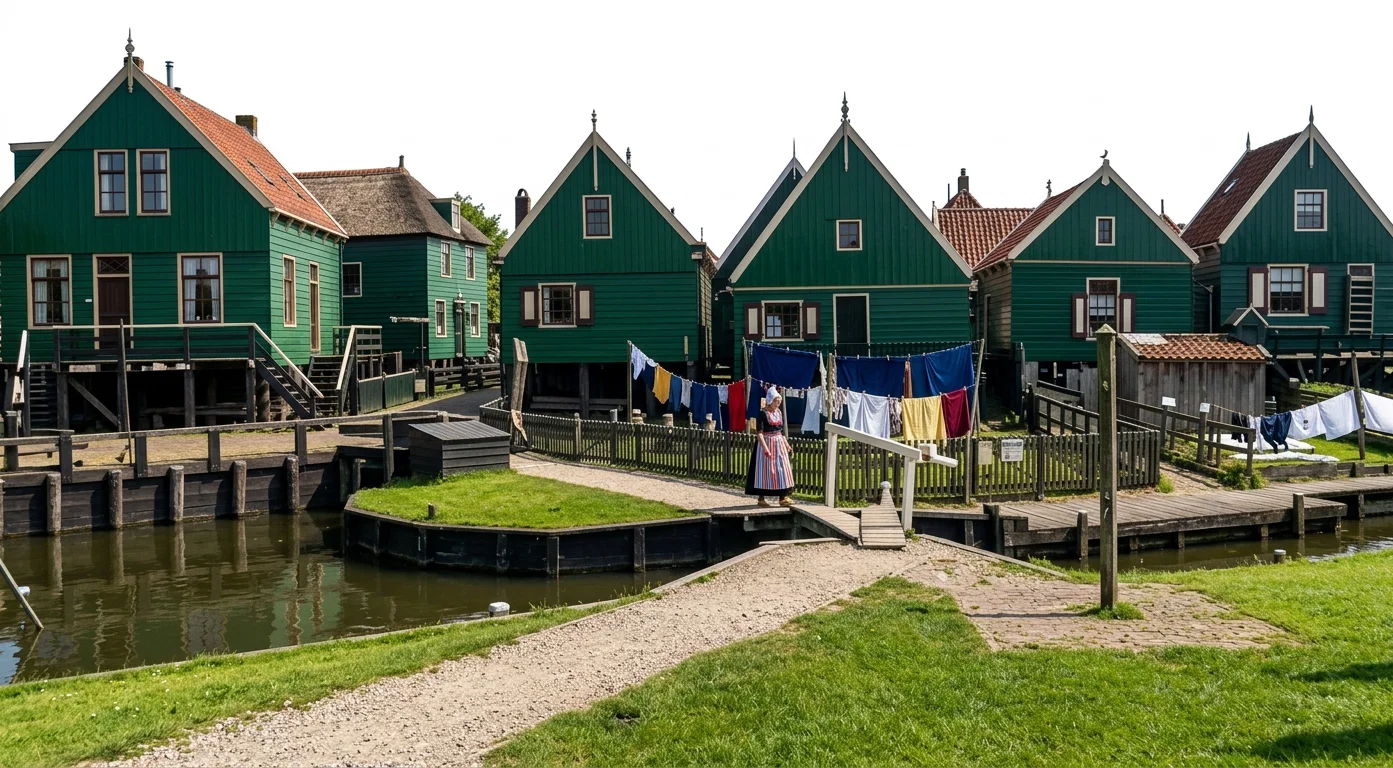
That the reader may more plainly understand our surroundings, as we are here attending the annual meeting of this field, we will give a brief sketch of the city in which we have had the meeting, of the countries of Holland and Belgium, and of the present condition of our work here.
The meeting for the Holland and Flemish Belgium Mission was held in this city, Amsterdam, December 24–27. While The Hague is the seat of the court and government of Holland, yet Amsterdam is the true capital. It contains five hundred and thirty-nine thousand people. It is built on ninety distinct islands, connected by three hundred fine bridges, which gracefully arch the scores of canals that connect with one of the broadest and deepest canals in Europe, on whose waters is borne the commerce of many nations. Most of the houses are erected on piles driven into the wet, sandy ground, so that the inhabitants of the city have been compared to “rooks, or too sandy for use. Wheat and rye, barley and oats, potatoes and beets, are grown; plums, apples, and cherries are the chief fruits. Butter and cheese are the sources of the greatest wealth of the land, which has sometimes been called the “dairy farm” of England. About twenty thousand men are engaged in fishing for the herring, the cod, the turbot, and the soles. England consumes one hundred and twenty million dollars’ worth of Dutch produce every year.
Holland has had an illustrious history. America owes much to the Dutch, from whom came many of their ideas of liberty. The Pilgrim Fathers sojourned in Holland. For the freedom of the Hollanders the noble William of Orange worked and suffered, withstanding the fanaticism and bigotry of the Spaniards in the sixteenth century. It was in behalf of the rights of this country that the sturdy burghers of Leyden endured that famous siege in 1574, when they welcomed the steady inroads of the storm-tossed Atlantic, which they let loose over their low and carefully cultivated fields, to bring nearer the relieving fleet, which brought succor to an almost famished city. During those days of trying persecution, carried on by the wicked Spanish Inquisition, it was the wives of the men of Holland who would “take her stand by her husband’s stake, and while he was enduring the fire, would whisper words of solace, or sing psalms to cheer him.” It was the maidens of these Low Countries, who were able to “lie down in their grave as if they were entering into their chamber of nightly sleep; or go forth to the scaffold and the fire dressed in their best apparel, as if they were going to their marriage.”
As to Belgium, it contains 11,373 square miles, and 6,693,800 inhabitants, fifty-two per cent of whom speak Flemish, and therefore belong to the Holland and Flemish Belgium Mission. The prevailing religion is Roman Catholic; there are about twenty thousand Protestants in Belgium. It contains a number of cities. It is the most densely populated country in Europe. It has rich mines of coal and iron, as well as of zinc and lead. No country in the world is more carefully cultivated than Belgium, and though it is so densely populated, it raises twice as much food as it consumes. It manufactures cotton, woollen, silk, and linen goods, as well as machinery. Since its formation as a kingdom, in 1830, the trade of Belgium has increased more rapidly than has the trade of any other European country. Its chief buyer is France, which receives seventy million dollars of Belgian goods each year. One third of her commerce is transported by water, two thirds by land.
In reference to the country of the Netherlands it has been said: “There is a land where the rivers, so to speak, flow over the heads of the people; where mighty towns rise below the level of the sea, which dominates and almost overwhelms them; where broad tracts of cultivated ground are alternately rescued from, and swallowed up by, the waters.”
From “The Four Track News”
From north to south the country is about one hundred and fifty miles long, with an average breadth of one hundred miles; area, 12,650 square miles (about as large as Connecticut and New Jersey); population, 5,265,000. To ward off the attacks and conquests of Holland’s ever-present enemy, the sea, there are large dunes on the west, and artificially constructed embankments, or dykes, along the rivers; and where the dunes are insufficient along the seashore, dykes have also been built of piles and massive blocks of granite. One of the dunes is one hundred and ninety-seven feet high; some of the dykes are thirty feet in height, and three hundred and fifty feet thick. There are fifteen hundred and fifty miles of these dykes in the country, and it cost over sixty million dollars to construct them. At Utrecht long-continued westerly winds have caused the river to rise eighteen feet above the pavement of the streets. In the spring, when the ice breaks up, disastrous floods are sometimes caused by the giving away of these embankments. The total length of the navigable river channels in Holland is three thousand miles, and there are nineteen hundred miles of canals. Much of the land has been formed by the deposits of the rivers; much of it has been recovered from the bottom of the sea. Between 1815 and 1875 nearly one hundred and forty-three thousand acres was thus reclaimed. To drain the polder of the Haarlem Meer, which contains seventy square miles, required the expenditure of nearly five million dollars; but the value of the produce grown there amounts to about one million dollars annually. They are now draining the Zuyder Zee. The windmill and the steam-engine have a large part to act in this work of wresting the land back from the water’s grasp.
Only thirty-four per cent of the soil of the Netherlands is capable of cultivation; the rest is too low and marshy or too sandy for use. Wheat and rye, barley and oats, potatoes and beets, are grown; plums, apples, and cherries are the chief fruits. Butter and cheese are the sources of the greatest wealth of the land, which has sometimes been called the “dairy farm” of England. About twenty thousand men are engaged in fishing for the herring, the cod, the turbot, and the soles. England consumes one hundred and twenty million dollars’ worth of Dutch produce every year.
Having thus surveyed the territory of the mission, we will now give more minute attention to our own work in this field. There are encouraging omens on every hand. While our membership here one year ago was only thirty-seven, it is now seventy, and fifty of these seventy were at the meeting. The Sabbath forenoon service was conducted by Elder Conradi, and those who desired to confess Christ in public were given an opportunity to do so, and a hearty invitation was extended to backsliders to return. Three went forward in baptism that evening, and three former members returned.16A good social meeting was held in the afternoon.
Brother H. F. Schuberth assisted during the conference. In addition to this, the six gospel workers employed in the field were present, and their experiences strengthened the believers to go forth with more determination than ever to conquer, through the blood of the Lamb. Twelve received permission to engage in the sale of our publications the coming year. The tithe for 1903 in this mission is three hundred and forty dollars; Sabbath-school offerings, forty-eight dollars. Considerable interest was manifested in the German East African Mission, and the First-day offerings during 1904 are to be dedicated to that field.
Since the German Union meeting in Friedensau, we have begun work in Flemish Belgium, at Antwerp, a city of two hundred and seventy-eight thousand inhabitants. Elder Klingbeil, assisted by his wife and a lady Bible worker, has succeeded in securing the regular Sabbath attendance of about six in that city. They have not had a very easy time working among the people, who are in general Catholics. To hear them relate their experiences reminds one of what is told concerning Protestant missionary work in Ecuador, Bolivia, and Peru. Packs of boys have preceded the workers, pushing open the doors, and warning the people against buying the Protestants’ literature. Our sisters have been snow-balled, mud-balled, drenched with pailfuls of water thrown upon them from overhanging windows, cuffed on the cheek by rough and persecuting hands, dragged down the door-steps, insulted and taunted in many ways; but they are of good courage, and have been given grace to suffer and endure patiently, thankful for the preservation of their lives through it all. They find many persons who can not read; some are very ignorant of Christ, and think that, as the mother should have more honor than the son, Mary certainly is entitled to greater respect than is to be accorded to our Saviour.
We believe that more encouraging days are before the workers in Holland. We hope that in Belgium there may be good, strong churches raised up. We trust that the great falling away which occurred in the Holland Mission during the spring of 1902, over the sanctuary question and the binding claims of the law of God, will only serve to impress upon our brethren in Holland, and our friends throughout the whole world, the necessity of our being rooted and grounded in the truth as it is revealed in the Word, for this generation.
The storm is surely coming. We have seen a few manifestations of the power of the enemy of souls; but the unbelief which caused the downfall of about two hundred of our brethren in Holland, will, we fear, still more terribly devastate our churches in general, unless there is a mighty reformation in its individual members, and a thorough return to the prayerful, childlike study of the Scriptures, that, by the power of the Holy Spirit, we may carry out their blessed teachings in the daily life. Persecutions from without assail the church in Belgium, in North Russia, in South Russia, in various parts of the German empire, and in Turkey; but the weapons which will prove our most terrible foes are our own lack of harmony and union and of the study and practise of the Sacred Writings.
Offerings Every Week
By William Covert
WM. COVERT
A SHORT time ago we enjoyed the occasion of our annual offerings very much. A child of God is always made glad when he sees provisions made for spreading the gospel of the kingdom. Why not make substantial offerings every week? The situation in the world demands of us a strenuous effort. We are blessed as Christians in proportion to the effort put forth in advancing the Lord’s cause. A church that does not work to advance the gospel among sinners is the most cheerless, lifeless organization in the world. Church-members who do not work in this way become wretched and miserable. A Seventh-day Adventist company that does not engage actively in promulgating the message of Jesus’ second coming is of all organizations the most inconsistent.
Every consideration argues that we should select the most effective method possible for raising means to forward the third angel’s message, and then push ahead with great faithfulness. The plan of weekly offerings is an admirable method for providing funds to extend and build up the work in many lands. Its frequent occurrence is greatly in its favor. Through this means our attention is often called to the great wide harvest-field. The aggregate amount of fifty-two offerings in twelve months can scarcely fail to make a handsome sum.
If each of the seventy thousand Adventists in the world should give ten cents a week, the total offering for one week would be seven thousand dollars, and for one year it would give the grand total of three hundred and sixty-four thousand dollars. It may be said that some members can not do as much as is suggested. True; but many could do much more, so the average could be made to reach that amount. The missionary offerings for the year 1904 should greatly exceed those of any previous year. If any have been neglecting this matter, let them give it immediate attention.
Every church should use the envelope plan in carrying this into effect. Almost every church that does use the missionary envelopes for its weekly offerings has greatly increased the amount given. And usually the spirituality and courage of the members have increased in a like ratio. These envelopes can always be secured through the tract society department of the conference. There should be frequent remittances to the Mission Board, in order that the many needs of the cause may be regularly supplied.
Every church should agitate this subject until all become thoroughly aroused. They should also teach its needs and methods until every one is perfectly instructed. Keep at it, and soon it will be enjoyed, and then it will be easy.
Dedication at Grove Town, Jamaica
By W. Jay Tanner
W. JAY TANNER
THROUGH the blessing and favor of the Lord we were able, on February 7, to add another church to those already dedicated in Jamaica. This time it was at Grove Town. At the dedicatory service there were present, besides Elder J. B. Beckner and the writer, a goodly number of brethren and sisters from neighboring companies, and a large number not of our faith. The new church presented a very neat appearance. It is considered marvelous by many that it was built so quickly—three years. It usually takes ten or twelve years to build a church here. We are also glad to report that it was dedicated without a farthing of debt upon it. In fact, in this conference we are following the plan of presenting no church to the Lord until it is payed for.
While at Grove Town we also organized the company into a church of thirty-eight members. Besides these five others are awaiting baptism. Although times are extremely hard in Jamaica, owing to the recent hurricane, we feel we have many things to praise God for, and we do praise him.
Mission Notes
IN one of the cities of Si-chuan, China, nine families recently burned their idols. Among these, one man, formerly an exorcist, destroyed about five thousand cash worth of paraphernalia employed in his trade, and gave two gongs to be melted and made into a new one to be used in his own village to call the people to worship God.
A COMPARISON of the condition of Protestant missions in India now and fifty years ago has been published by Dr. George Smith, whose service as a missionary began at the earlier date. Then there were 373 ordained missionaries in the country, now there are 1,124, for 29 native pastors then, there are now 1,100; for 551 native catechists, 7,179; for 102,951 native Christian communicants, 1,013,463; for 1,900 students in colleges and high schools in 1851, 56,742; for 310 native churches, 6,783.—Selected.
IN the Central Sudan is a territory bounded by the Sahara Desert on the north, and by the two great rivers, the Niger and the Binue, which meet at Lokoja, three hundred and fifty miles from the northwest coast of Africa. Its people, the Hauses, are a Mohammedan nation of fifteen million, of whom it is estimated that two thirds are slaves. They live mainly in walled cities, some of them having two hundred thousand inhabitants. They carry on extensive manufactures, smelting iron from native ore, weaving cloth, cultivating fertile fields. Their ruling classes are strong, healthy, able men. They possess a literature of their own, and maintain schools for their boys. Polygamy flourishes, and their women are uneducated.—Selected.
The Dead Sea
By Wm. P. Finney
I LOOKED upon a sea,
And lo! ’twas dead,
Although by Hermon’s snows
And Jordan fed.
How came a fate so dire?
The tale’s soon told:
All that it got it kept,
And fast did hold.
All tributary streams
Found here their grave,
Because this sea received,
But never gave.
O sea that’s dead! teach me
To know and feel
That selfish grasp and greed
My doom will seal.
And, Lord, help me my best,
Myself, to give,
That I may others bless,
And, like thee, live.
— Wm. P. Finney.
Bermuda
By Jas. A. Morrow
HAMILTON.— Last Friday afternoon, as my wife and I were walking through the park, we met a lady to whom I had sold a copy of “Christ’s Object Lessons.” She immediately said, “I am so glad I have met you. I was just thinking of you. I want you to bring one of those books for a friend of mine.”
Last Monday I took fifteen orders for “Coming King” and “Christ’s Object Lessons.” It seemed that the Lord led me to one home. The wife was just recovering from a two weeks’ illness, and her husband gave me his order for a book, to be delivered one month later. But before I left the house, they asked me if I had an extra copy with me; they wished to buy it, so she could read it while convalescing.
Every fortnight I have been going to Somerset on Sunday, to sell books. Often I have a service in the morning before I go, or when I return. I have just looked over my Sunday sales for sixteen weeks, and find they have amounted to fifty pounds.
We are now taking three hundred of the Caribbean Watchman each month in Hamilton. Of these, Mrs. Morrow sells about one third to the people in the town, and the members of the church sell the rest. We are taking a club of twenty-five Signs, which a young brother sells on the streets and in the business houses after Sabbath.
Sixteen of the Boers left for South Africa last week. These took four copies of “Thoughts on Daniel and the Revelation” with them. One is keeping the Sabbath, and said he wanted now to take these new-found truths to his family. Three are keeping the Sabbath among those who remain. Two called to see me last night, and had a long Bible study. They gave me orders for two “Bible Readings” and “Great Controversy,” in Holland.
Our hearts are in the work, and we expect to share in it until its close.
JAS. A. MORROW.
Porto Rico
By B. E. Connerly
I HAVE just returned from another long trip through the island, and am glad to report some of the experiences that I had this time. In Guanica and Aguirre, where are located two large sugar-mills, I made the initial steps toward introducing our literature among their thousands of employees. I spent five days in Ponce, the largest and busiest city of the island. Here I made the acquaintance of many of the business men, and visited all the factories and founderies, the large commission houses, and the docks, and formed plans for future work and the distribution of our literature there.
In Salinas I had an appointment with a young man who had become much interested in the subject of the coming of the Lord and the Sabbath question, through reading El Centinela de la Verdad. I found him to be a young minister who seemed to be really hungering after the truth. He had studied these subjects quite thoroughly from the paper, and was ready for the truth. We had Bible study and prayer, and he said that he could not sleep at night until he decided to keep the Sabbath of the Lord.
On Sunday night I heard him preach; he asked his congregation what day Jesus kept for the Sabbath, and they answered, “Saturday.” He said, “That is right, and Saturday is still the Sabbath;” and then one of the men in the congregation said, “Why, then, does it say on the wall in that motto yonder, ‘Remember to keep holy Sunday’?” The minister replied, “My friends, I have just learned that that is not Bible, and it shall come down.” When this young man first found our articles on the Sabbath in the paper, he took the paper to one of the American ministers in Ponce, and asked him if he knew who we were. The minister answered that he did, and that it would be best for him to let us and our papers alone; for in a little time we would tell him not to eat meat or eggs or to use tobacco, and the young man said, innocently, “Will they give me Bible for it, as they have here for the Sabbath?” We think very probable that he will soon join us in the work.
In Cayey there are two hundred and fifty soldiers to whom I have promised to send literature. In many places I found want and poverty. People are really suffering for food. They are eager to read our papers, but are too poor to buy them. I traveled more than three hundred miles, and worked in more than twenty cities and villages, taking about two hundred subscriptions for our paper. I am glad to be here. The work looks encouraging.
B. E. CONNERLY.
Nova Scotia
By William Guthrie
HALIFAX.—I am led to write a second note regarding help for the new Halifax church. Since my first note, which appeared January 28 in our good paper, we have received $18.50. I feel satisfied that the reason for our receipts being so small is the fact that the call was for so small a sum that all have thought that others would send the needed amount, and thus but few have sent anything. Any possible surplus will be devoted to mission work under the Canadian Union Conference.18So I beg of you, do not delay, but act at once. We have done our utmost here, and need help in raising the $487.82 lacking on the new church in this city.
As I reported, our membership is largely made up of sisters. We have told our sisters here of your love for the truth, and I rest confidently in the belief that help will come. We have been hard at work since the church was dedicated, and have just entered in earnest upon the discussion of the Sabbath question. At the close of the service, February 19, six dear souls professed faith in the binding obligation of the Sabbath of the fourth commandment. We have also great hope of others who are yet undecided.
Please send all money by postal or express orders to the treasurer of the General Conference, 222 North Capitol St., Washington, D. C., or to William Guthrie, 282 Maynard St., Halifax, Nova Scotia. Bank drafts cost twenty-five cents exchange here. WM. GUTHRIE.
Fiji
By C. H. Parker
MUALEVU LOMOLOMO LAU.— Since we returned to Fiji a year and a half ago, we have labored very hard in locating our new mission in another district, clearing land, putting up houses, teaching and preaching, visiting and holding meetings, besides studying the language. Our health is much better than when we were in Tasmania, and as good as when we left America. For this we praise the Lord.
In the Suva district the work is very gratifying. Several good, strong companies have been raised up, and there are calls from several places for the living preacher. In this district we have two churches and one company. From the first, we have been hindered in not having a boat to get out among the islands. But this will soon be a thing of the past, as we have a boat now being built. We have two houses under construction, in which the students will live while preparing for work. The veranda will be used for a schoolroom.
We watch with intense interest every move which our general work makes. We know the Lord is leading.
C. H. PARKER.
Transcaucasia
By V. Pampaian, M. D.
TIFLIS.— Just three months after leaving America, we arrived at our destination. We have now been in Tiflis two weeks. We have spent much of this time in trying to find a location. It is a very thickly populated city, and houses are scarce, so we have taken two rooms for the present. In this strange country, in fact all along the way, the Lord has not left us alone, but has raised up friends to render the help that we needed.
Half of the population here is Armenian, so we are not strangers entirely, on account of the language. The Armenian spoken here is different from that to which we have been accustomed, but we shall soon learn it, as it will not be like mastering a new language. We shall have to learn the Russian language, as all legal business is done in that tongue.
We hope to be able to open treatment rooms as soon as we are settled, if the government does not interfere. We have reason to hope for success.
From Hamburg we came through Philippopolis, Bulgaria, to visit some friends. We intended to remain only a few days; but as our friends had been hearing something of these new doctrines, they were anxious to have us come and study with them. We could not pass them by without giving them some instruction in the third angel's message. We found Bulgaria a very good field in which to work. They enjoy religious liberty there. We believe the Lord has some people in the Caucasus. We are of good courage, and in good health.
V. PAMPAIAN, M. D.
British Guiana
By D. C. Babcock
SINCE our last report, nine have been baptized, and others are awaiting baptism.
In company with Elder Giddings, I visited the Canje Creek church. This church is seventy miles in the interior, and although it has not been visited often, yet the company is increasing in numbers and spirituality. It has become necessary on account of the growth of the company, to erect a new place of worship. Two were baptized and united with the church at the time of our visit.
TRAVELING IN BRITISH GUIANA
For a long time this church has been calling for a school, and during our meeting with them, plans were laid for the opening of a school in the near future. A teacher has been secured, and I expect to return there this week with the teacher. The old church will be converted into a school building.
Just before the holidays, I went one hundred and twenty miles up the Demerara River, to see the few remaining there. For a long time this company has been passing through severe trials, and it seemed as if Satan was determined to overthrow them, but the Lord gave a mighty victory. Confessions were made, and when that is done, the inevitable result must be victory.
The house of worship was badly dilapidated, but arrangements were made to repair it, and yesterday I received a good letter from the elder, saying that “the church is finished, and the work was done by the two greatest sinners, myself and ——.” I must confess that I went to visit this church very reluctantly, but I praise the Lord for the rich experience. I learned a good lesson.
On my return home, I found a letter yesterday, calling me to Queenstown, Essequebo. The next morning my wife and I took the steamer to visit that company, and attend to baptism. Here we buried with the Lord a young man who has been teaching in the public schools. We began the week-of-prayer readings with this company, and the Lord came very near. Some of the brethren from Danielstown, six miles distant, attended the meeting, and all were greatly encouraged.
On our way returning, we stopped one night with the Leynan church, and our meeting of praise continued until late in the night. The next day we reached Georgetown in the midst of the week of prayer. Elder Giddings had been with this church during the first part of the readings, and when we arrived, he went to assist the church at New Amsterdam. Here two great victories in one were gained. A brother who has been separated from his companion for a long time, was made to praise the Lord, when his wife accepted the message of salvation, was buried with the Lord, and the father, mother, and children went to their own home once more, to battle, not among themselves, but against principalities, against powers, against the rulers of the darkness of this world. What witnesses for the mighty power of God! Let us learn that one precious lesson, the Lord is sufficient for all these things.
Last Monday, February 1, our tent was pitched for the fourth series of meetings, in Plaisance, a large village six miles from Georgetown. Before the tent was fully pitched, one of the workers went out to borrow some tools, and we were compelled to wait a long time for his return. He was detained in holding a Bible reading on the Sabbath question.
Last night the meetings began, and although we secured a large lot for the tent, yet the people could not get standing room on the tent lot, but occupied adjoining lots. Several intelligent young men have recently accepted the truth, and I hope to see them soon prepared for the work. The last message is going with power, as a final witness, and they who expect to be saved had better get ready now. Decisions for life and for death are being forever settled in the church, and every-day experiences are now testing men’s lives.
D. C. BABCOCK.
British Columbia
By J. L. Wilson
PORT SIMPSON.—A number of questions have been asked me about work among the Indians in Port Simpson, which it may be best to answer through the REVIEW. The Port Simpson Indians are a very fine race. It is not the heathen town that some of our Eastern brethren might imagine it to be. The missionaries have been among them over forty years, and while they have not reached the standard to which the third angel’s message will bring them, yet they are more devout and moral than many in our white Christian communities.
Port Simpson is a nice little town of about eight hundred inhabitants, who live in neatly built houses of the most modern design. There are four church buildings in the place. Some of these are used every night, and companies from three of these churches hold street meetings preceding every service in their churches. This they do rain or shine; of course it is not very pleasant in the rain, but the natives do not mind it.
We organized a church there in December, with six members. Our brethren preach on the street every Sabbath afternoon. Quite a number gather to this meeting, and a deep interest is shown in the things of God. One of our native brethren does most of the preaching on the street. This brother has been studying the truth for eight years. The Lord has blessed him with a knowledge of the message, and he has consecrated himself to his service. This work is being carried on and supported by the British Columbia Conference.
I would, therefore, say to those who may feel disposed to help this work, or any other work in this conference, please do it through the proper channel, which is the British Columbia Tract and Missionary Society, 609 Gore Ave., Vancouver, British Columbia. I will also state that any call for means for any branch of the work in this conference through any of our papers will be made over the signature of the president and the secretary. If there are any who would like to inquire further concerning this work, they should also write to the address given above. J. L. WILSON.
Giving the Message
By Editor
THE Testimonies state that the time has now come for “publications containing the truth to be scattered like the leaves of autumn.” The special number of The Southern Watchman to be published about the first of May, on the second coming of Christ and the signs just preceding it, will be filled with present truth from cover to cover; yet it will be presented in such a way as not to arouse prejudice. Its object will not be to present masterly arguments in language that only the learned can understand, but to give the message in such a simple, clear-cut, comprehensive manner that “he who reads will understand.”
The work on this special issue is progressing nicely, and no efforts are being spared to make this number one that will sell at sight. It will be well illustrated, and the matter that it will contain will be just what is wanted at this special time. There is no question about its being the best seller that we have ever had in the way of a paper. The events that are now taking place throughout the world certainly afford most excellent opportunity for placing in the hands of the people something pertaining to the special signs of our times. The war in the East, the agitated condition of all the nations, the great city fires, the labor troubles, and other startling events that are now becoming so numerous, are all permitted for a purpose. The public mind is aroused, and there will never be a more opportune time for the circulation of our literature than during the next few months. We trust that these things will be fully realized by every Seventh-day Adventist, and that this special, message-giving issue of the Watchman may have such a wide circulation as to mark the beginning of a new epoch in the scattering of our publications “like the leaves of autumn.”
Although this number will contain twenty-four pages, be profusely illustrated,19and printed in two colors, the retail price will be only five cents a copy. It seems to us that such an issue as this, printed in colors, to be sold at a nickel a copy, ought to have a circulation of at least half a million. We believe that this can easily be done by a united effort. As the month of May is usually the most pleasant time of year, it will afford a favorable opportunity of getting out and circulating the paper. It will be furnished as follows: 5 to 24 copies to one address, 4 cents a copy; 25 or more copies to one address, 3 cents a copy. Thus, 25 copies would cost 75 cents, and could be sold for $1.25; 100 copies would cost $3, and could be sold for $5.
There may be some, however, who can not go out with the paper, but who would like to take part in its circulation. Such persons may send in a list of names, and single copies will be sent directly to the names given, at the following rates: 1 to 24 copies, 5 cents a copy; 25 to 99 copies, 4 cents a copy; 100 or more copies, 3½ cents a copy. This is an excellent and inexpensive way of doing missionary work, and it will be the aim of the publishers to make this special number as attractive as possible, so that those who receive a copy will not fail to read it. It will be appropriate to send to all classes, and we certainly hope that it may have the circulation that the time and subject demand.
There may be given two reasons for publishing this special issue: first, the giving of the message in such a way as to reach many who would not receive it in any other way; second, to meet the issues of the present hour while the minds of men everywhere are being stirred on account of the tremendous happenings that are occurring before our eyes almost daily. We certainly have an opportunity now of placing in their hands that which will let them know that these things are the signs which show that the “coming of the Lord draweth nigh,” and will lead them to prepare for that event. We therefore trust that all our brethren and sisters will unite heartily in this effort.
Send in your orders now, as they will be filled in the order in which they are received. They may be sent to the Southern Publishing Association, 1025-27 Jefferson St., Nashville, Tenn., or through your State tract society.