I often wonder why men who profess to be followers of the meek and lowly Jesus, and especially those who claim to be keeping the commandments of God, do not give heed to this statement of Holy Writ: “A righteous man regardeth the life of his beast.” How can any one who has read Christ’s biography as recorded in the Gospels, imagine him whipping a horse, a cow, a dog, or any other animal which God has loaned us for our use here on this earth? But how often we see those who profess to be followers of the meek and lowly Nazarene doing these very things, seemingly without a thought that the poor dumb brutes on which they are venting their fury can feel pain. And yet such a person seems to think the animal should know right from wrong, and know just what is required of it, and obey at all times. If it did this, it surely would be wiser than its owner; for he neither does nor seems to know what his Maker and Owner requires of him.
I have known professed Christian men to beat a poor horse or cow because, after weeks of confinement, it found itself free, and ran from its master in order to obtain the exercise its nature required. When these animals find that their little escapades are followed with beatings even though they return peaceably to the place in which their masters wish to keep them, who can blame them for trying to keep out of their masters’ way?
If such men were dumb animals, and had the same disposition they now have, what would they do under similar circumstances? Would they walk quietly into the very place where they well knew they were going to be lashed with a rawhide, or perhaps with something worse, and stand perfectly quiet until the heavy blows caused ridges to rise on their backs and sides, perhaps on their heads?
My brother, do you say, Well, I would not run off in the first place; I would do what I was told by my master who fed me? Ah! would you? and do you do that? Are we not told to be merciful? “Blessed are the merciful; for they shall obtain mercy.” Matt. 5:7. From whom?—From God, their master and keeper.
I have had domestic animals all my life, and I believe they appreciate kind words. They will follow those who treat them kindly, and will not have to be driven. When I wish an animal to do a certain thing or go to a certain place, I try to get it to comply with my wishes without harshness, and I succeed. Then I always pet it, and let it know in various ways that it has done what pleases me, and it soon learns that I do not wish to harm it, and will follow me into the stable or the yard without any trouble.
Brethren, let us practice the law of kindness, and treat the dumb animals which the Lord has loaned us as we shall wish we had when called to give an account of our stewardship in regard to these things. If we have been in the habit of treating our animals harshly or unkindly, it may take a great deal of patience and time to teach them that we do not mean to harm them; but let us be gentle and patient, and we shall not only succeed, but our influence upon the world will be better.
Leave Your Children Good Books
Many people are anxious about their children, and are wondering what will befall them when they can no longer have parental care and oversight. They fear that the property they leave them may prove a hurt rather than a blessing, and so they have great anxiety.
One thing is very safe to leave to a family of children, that is, a library of good books. Let them be books which will be interesting, healthful, profitable, and of permanent value, and you may be well assured that such books, left in the hands of children, will not be wasted nor squandered, but will exercise a healthful influence, and will perhaps save children from many of the dissipations and follies into which young people are especially liable to be led. Persons who have an inclination to read are not likely to be lonely, and so are less inclined to run after evil company and vicious indulgences than are those who have no intellectual occupations to engage their attention.
Let parents begin early in life, give their children good books, and cultivate a taste for profitable reading, and they will have much less trouble than if their children are left to satisfy their hungry minds with the garbage of fiction, and with amusements which have nothing intellectual in their character.
A person who has an appetite for reading, and has plenty of good books to read, will not be likely to spend his time over “the devil’s picture book,”—a pack of cards,—nor will he need to hang around saloons, or chase after pugilists and clowns and circuses, when he can hold communion through books with the noblest and purest minds, and can roam the earth from end to end under the guidance of those who have traversed it, and have recorded their experiences and observations.
If you wish your children to be intelligent, well informed, prosperous, influential, and fit to associate with honorable and intellectual people, see to it that they have plenty of good reading; and as a tree set out will grow and bear fruit when you are asleep, so a good book purchased may give good counsel and kind advice to those you love, long after your eyes have grown dim in death, and your heart has ceased to throb, and your lips to pray. And the book of which a child can say, “My mother gave me this,” or “My father gave me this,” is more likely to be read, and treasured, and preserved, than one which has been bought for money, and which may be sold again if there is opportunity to dispose of it.
Every family should have a library of well-chosen books, and each member of the family should also have his own library,—the beginning of a library; and it rests with the parents to say how the library shall begin, and what it shall contain, and to stamp upon it its character in the very outset. You can largely direct the reading of your household if you will begin in season; but if you wait till their minds are poisoned with evil literature, you may mourn and weep over their folly in vain, but can never recall the lost opportunities of guiding and influencing your children for good.—The Christian.
Influence
“The smallest bark on life's tumultuous ocean
Will leave a track behind for evermore;
The lightest wave of influence set in motion,
Extends and widens to the eternal shore.”
Like a Bairn to His Mother
“LIKE a bairn to his mother,
A wee birdie to its nest,
I wad fain be gangin' noo
Unto my Saviour's breast;
For he gathers in his bosom
Witless, worthless lambs like me,
And carries them himsel',
To his ain countrie.”
Christ's Presence and Power After His Ascension
“THIS is certain, that Christ never intended by the translation of his body to heaven to deprive earth of any of his energy or power or virtue.”
A Mission to the Santals/
By William Ambrose Spicer
W. A. SPICER
By pictures recently received from India, I see that Brother W. A. Barlow has been blessed in his efforts to make a garden in the wilderness. He has established a mission especially for the Santal people, at Simultala, a station about thirty miles from our Karmatar orphanage and school.
The Santals are one of the largest of the aboriginal peoples who roamed over India two thousand years ago, before the Aryan conquerors filled the land. They were driven into the hilly country of western Bengal, where they have preserved many of the old ways and traditions. Little was known of them until, a generation ago, the whole tribe went on a strike against money lenders and the administration of the land laws.
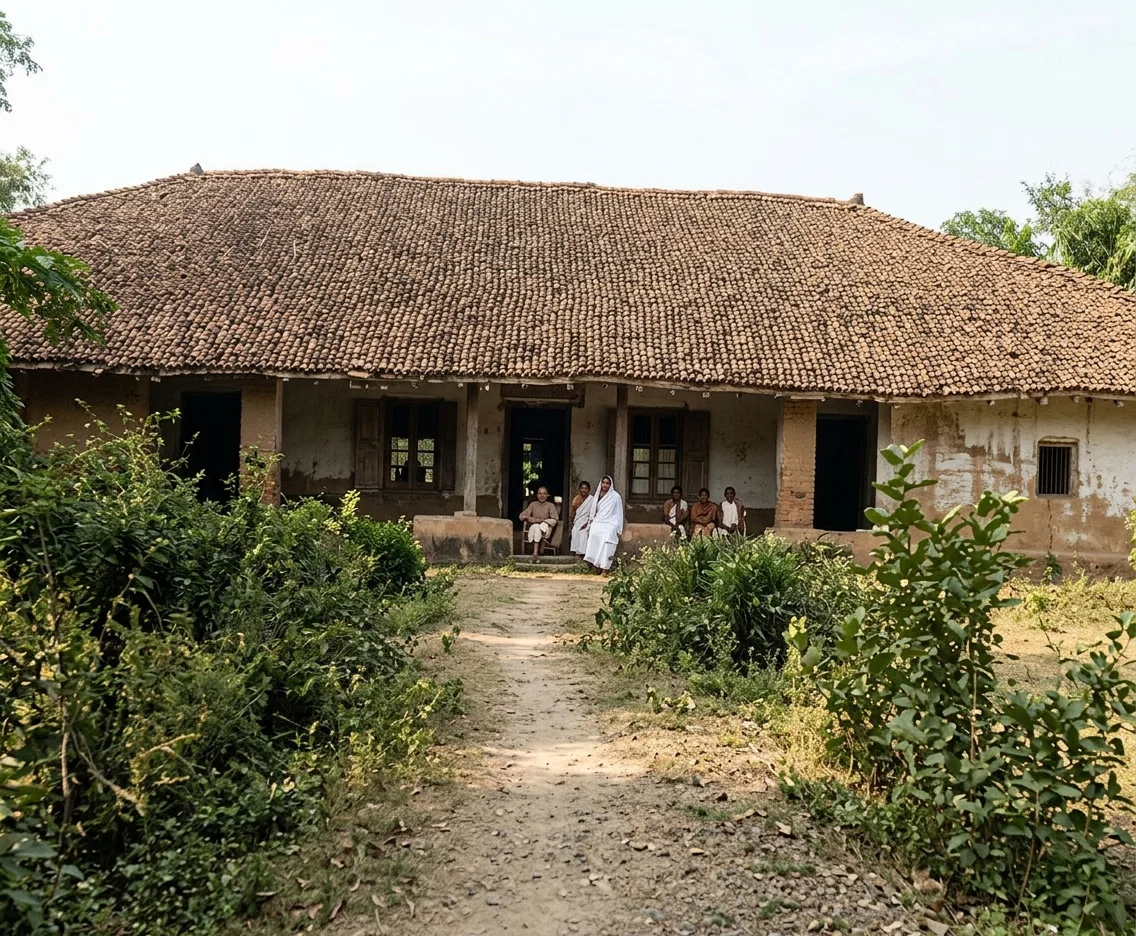
Simultala station has a few European houses and a few score of native dwellings. Brother Barlow went into the country a mile and a half from the village, and procured a few acres from the native proprietor, on a very desolate-looking slope of land. It had only the merit of being near the peasant settlements in the surrounding country. But with water available for irrigation, and by the art of the native builders working under his supervision, our brother has established very homelike headquarters for evangelistic work in that region.
Brother Barlow went to India under a Church of England organization, and later became associated with an independent Baptist Mission in the Santal country. Thus he obtained a knowledge of the Santali language. Later he came in contact with our work, and accepted the truths presented. After a short experience in the canvassing work, he felt that he should start a mission among the Santals. By touring among the various towns of India, collecting funds from those interested in such an effort, he has been enabled to gather sufficient to put up a few mud-walled buildings, and establish his work. We have helped him in his enterprise also from our own mission funds to some extent.
Brother Barlow first camped in a tent under a large banyan tree by the side of his plot. Here, while getting his grounds in shape and evangelizing among the villages, he contracted the cholera, which delayed him for a time. Later the house now used as a church building was put up, and his family joined him. Here I visited them several times, and watched with interest the building of a mission station in the wilds, with limited facilities.
MISSIONARY’S BUNGALOW, SIMULTALA
The larger building, or bungalow, now his home, was reared amidst difficulties. Delayed by having to go out to solicit funds for building, the rains overtook the workmen before the roof was up. The mud walls were practically ruined, and the work stopped until after the rainy season. Then the workmen were again rallied, and the very habitable bungalow shown in the illustration has been carried to completion. The thick walls of mud are built up, layer upon layer, and allowed to dry in the hot sun and air. While white ants and other earth workers can bore through mud walls, they are really firm and substantial.
A native barber proved the master and leader of the workmen engaged on the wall. The bamboo roof frame was tied together with cords, not a nail, I suppose, being driven in it. The potter set up his wheel on the veranda of the house, and turned the tiles for the roof on the spot. Brother Barlow intended burning some brick for lining their living room to a certain height, in order to shut out dampness, and to protect against the invasion of enemies that might burrow in the walls.
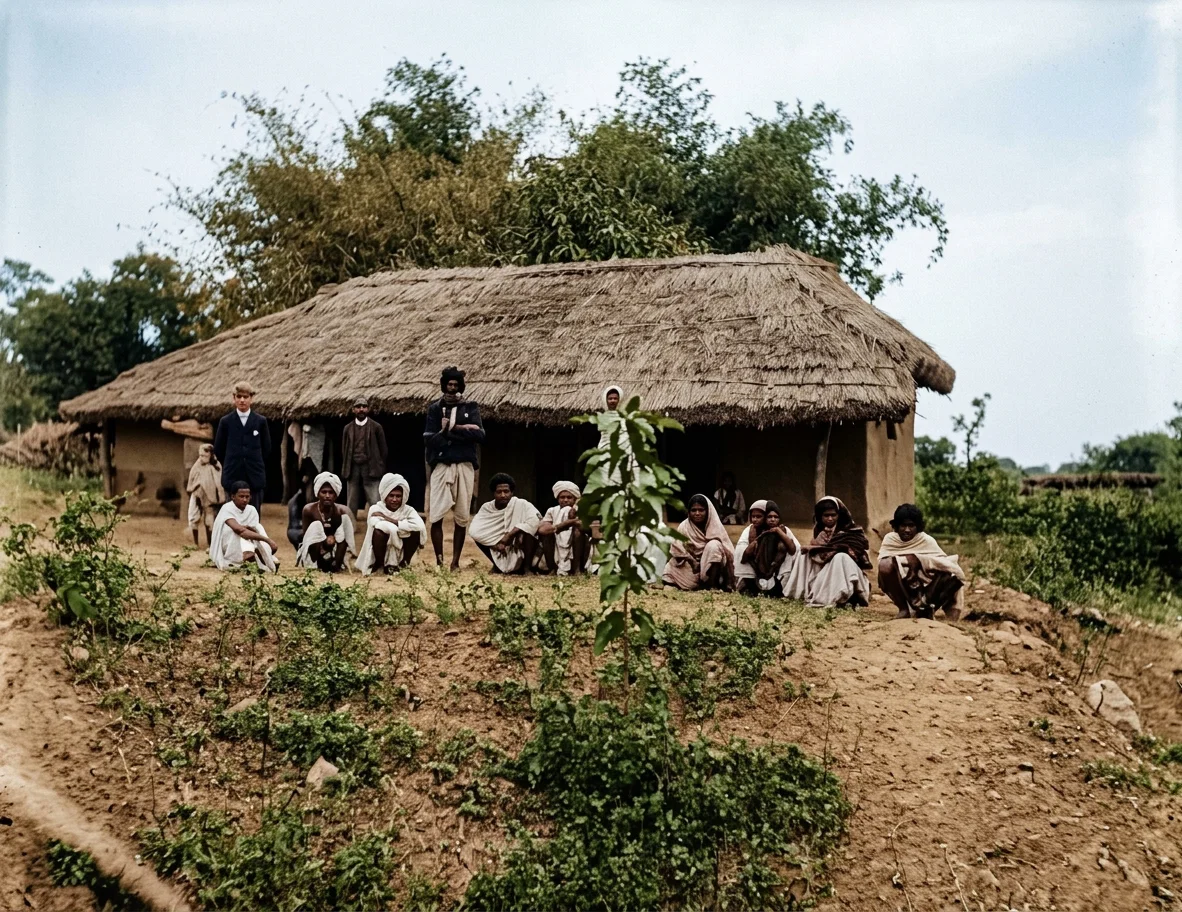
Sister Barlow has spent some time at our Calcutta Sanitarium, getting acquainted with our methods of helping the sick and with the principles of healthful cookery. As Brother Barlow has toured in the interests of his mission collections, he has distributed thousands of our English tracts over India, and I hear that one or two Eurasian people in the Simultala railway station village have accepted the Sabbath truth. It is a pleasant sight to see a crowd of Santals sitting on the ground around Brother Barlow, singing our familiar gospel hymns in their native tongue, keeping time with slightly swaying bodies to the sound of clapping hands.
It is not altogether pleasant to live apart from those of our own tongue and habits, especially for the mother of the house, who must look after the place, and be all things to the native community while her husband is on a tour. Such a life has few of the conveniences and comforts to which we get accustomed in the home land. But it has its compensations. We are glad Brother Barlow has been led to join us in carrying this truth through India. His efforts to plant a station among the Santals has shown what can be done where there is a will to work. He has appealed for help from railway men and officials of every class, and the result shows that we need not fear to ask help for a worthy cause from men of the world. We need to learn that lesson, and to use it within bounds. Too often we take it for granted that people of the world will not help our enterprises, and so do not ask them.
CHURCH BUILDING, SIMULTALA’ MISSION
As the work goes on in these great mission fields, we expect to find many more missionaries already having the languages, whom God is preparing to join with us in publishing the message in every tongue. As we are ready to support with prayers and means a really world-wide crusade that shall quickly finish the work, the Lord will surely raise up laborers.
The Medical Work in Argentina
By R. H. Habenicht
R. H. HABENICHT, M. D.
We arrived in Buenos Ayres, December 2, just five weeks from the day we left Battle Creek. The trip was a pleasant one all the way, with the exception of a few days after we left England, during which time our little girl was sick. The ship’s steward was very kind to us. The last two weeks of the trip all were well, and we enjoyed it very much.
Shortly after our arrival, we began to lay plans for beginning work, although no way seemed open. We found that in order to be admitted to regular medical practice, I would need to pass an examination in Spanish, in all the branches taught in the medical college, just as the students finishing the course do; and it would cost nine hundred pesos, or about three hundred and sixty dollars, gold. We first thought of opening treatment rooms in Buenos Ayres, and working in that way till I had learned the language, and passed the examination, but the way did not seem clear for this.
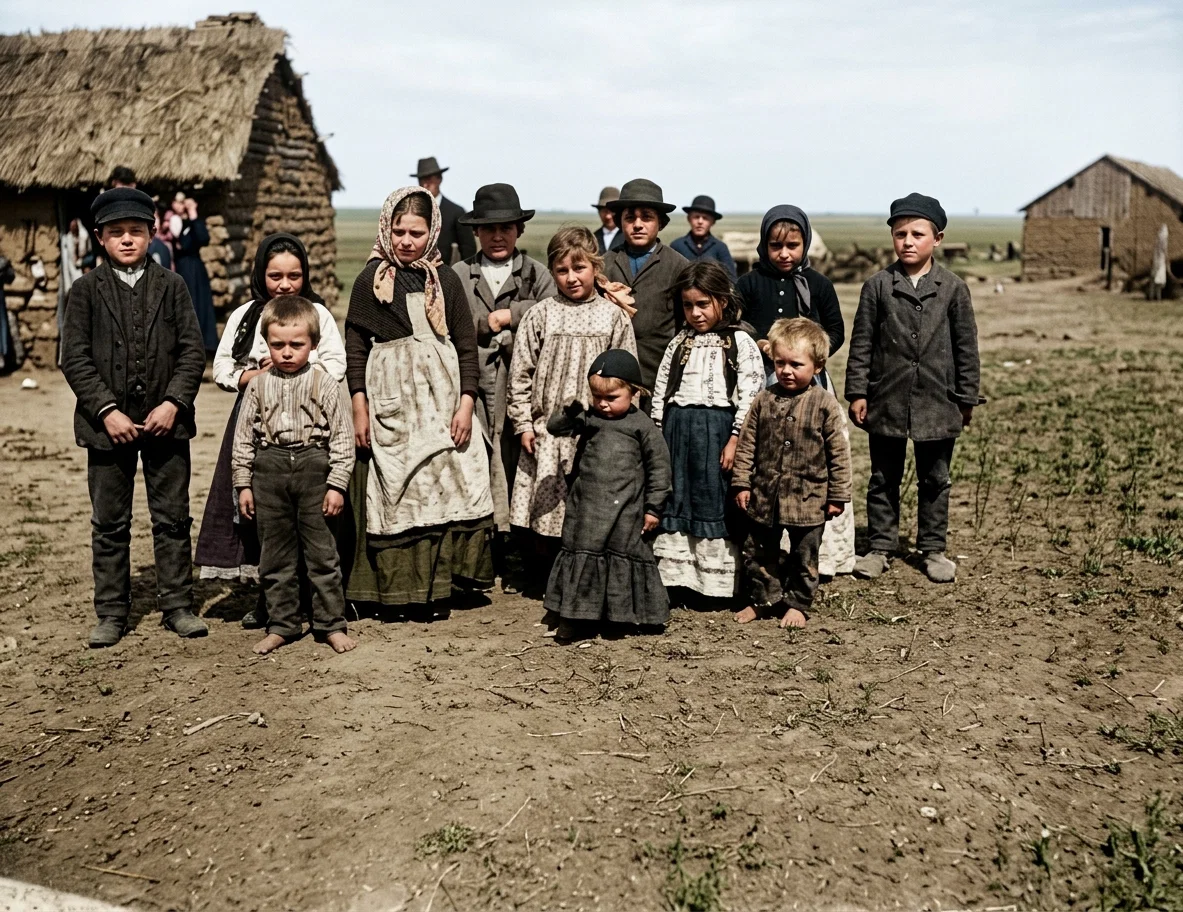
GERMAN RUSSIAN COLONISTS IN ARGENTINA
About the middle of January I made a trip to the province of Entre Rios, where our school is located; and while there, the way opened for work in those parts. The town of Crespo was the place suggested to my mind, and in company with Elder J. W. Westphal, I visited that place. While there, we met a druggist who speaks German, and had a conversation with him in regard to our plans. He seemed very anxious that we should begin work in his city, and offered to go to Parana, the capital of the province, and help secure the permit for it. We considered the matter, and decided to do so if the permit could be secured. It was decided that I should go with the druggist to Parana, which is about thirty miles from Crespo. On our way to the station, I told Brother Westphal that I did not feel free to go alone with this man, not being able to speak Spanish nor very good German; so it was thought best for Brother Mass to go with me. When we arrived at the station, the druggist said that he would drive, and we could go on the train. We then decided to drive also. Then he decided to go on the train, and meet us in the city the next morning. We made the drive in the night, as the day was very hot, and in the morning we went to the place appointed, to find that our man had taken the early train, and had gone back to Crespo. Thus we were left with no one to speak Spanish for us, and neither of us was able to make our business known. We met a German in a restaurant who cited us to a Mr. Clark who could speak English. We found him to be the British proconsul, and also the head official of the railroad of the province. He treated us very kindly, and told us that he knew our man, the druggist, and that his aim was to see the president before our arrival, and thus shut us out, as he himself was acting the part of a doctor. An English physician, a friend of his, had formerly been at the same place, and he knew all about it. He gave me a letter of introduction to the president of the board of hygiene, and sent an interpreter with us, in a cab which he ordered for us. We were kindly received by the president, and in a few minutes the required permission was obtained, and we went on our way rejoicing.
I returned to Buenos Ayres; and as soon as we could make ready, we moved to our new field. We spent a few days at the school, and then came to our present location in Crespo, Entre Rios, about ten miles from our school. March 1 we began work. Our first treatment was given to the comisario, or chief officer of the place. We then gave treatments in one of the rooms of the small house in which we live.
From the first, we have been busy, having as many as thirty-two calls a day for advice and treatment. Often four or five wagons stand in front of our door, containing beds with sick people, many coming from ten to thirty miles. As the sick come to us, we are made to realize the great need of instruction in the simple principles of right living. The habits of the people are such as breed diseases of the worst kinds. We are glad to be able to tell them some things which may help them. A few cases are creating special interest in our work. One man who has been paralyzed for four years, and has been to all the large cities for help, is recovering rapidly. The removal of a rapidly growing tumor, and the extraction of a cataract from a blind eye, which resulted in the restoration of sight, are being noised abroad, and people are coming from other towns for treatment.
We now have another house near by which we use as office and treatment rooms. Brother L. Brooking, who spent two years at the Sanitarium, is now with us, rendering valuable assistance. The last year’s failure in crops has made the times extremely hard, so that the financial part of the work is not so good as it would otherwise be. But as it is, our first month’s work came to three hundred and eleven pesos.
I spend two afternoons each week in school, teaching vocal music, physiology, and simple treatments. On Sabbaths we meet with the various companies near us, and try to help them all we can.
God has blessed me much in the study of the language. Although very busy with other work, having only evenings for study, in less than five months I am able to conduct my school lessons in Spanish. I have also greatly improved in my use of German, as most of the people here are German. We hope soon to start work on a permanent basis. Pray that God may bless still more, and that we may soon enter the large cities. We give him all the praise for what has been done.
Crespo.
The Mission in Basutoland
By J. M. Freeman
J. M. FREEMAN
SINCE my last report I have had the privilege of attending the conference in Cape Town. It is now three months since I returned to Basutoland. I had to travel through the troubled portion of the Orange River Colony. Of course I had military permit; but it was the Lord who protected me from danger. On my return I spent a few weeks at Bloemfontein, assisting the little company there. One brother and sister donated a cart, a wheelbarrow, and some other useful articles, to the mission. A week after my return one of the four native women whom I had baptized before going to the conference, was taken ill and died. She had been convicted at one of the meetings, and after talking and praying with her at the close of the services, she gave herself to the Lord, and found peace. She was a heathen, the wife of the village chief. When she desired baptism, I advised her to wait until my return from the conference. But she insisted on being baptized, suggesting that something might happen if it were delayed. Even her husband tried to urge her to put off the event, desiring to call his friends together to celebrate it. But after a while I yielded to her wishes, little thinking that one of my first duties on my return would be to lay her away to rest. Up to the evening before she died, she expressed trust and peace in God. I believe she will have a part in the first resurrection.
Through the kindness of brethren and sisters in America, I have been enabled to put up a meetinghouse, which serves as a schoolroom as well. It is twenty-six by fifteen feet, and is sometimes too small to accommodate the people in our Sunday meetings. We have a school of15earnest young natives, from eight to over twenty years of age. Some of them have attended other schools. Education is practically free, even in the higher training schools. Six pounds a year is charged for board, lodging, and tuition. There are many schools all over the country; and although our views are known, and some are opposed to us, still the people have been calling for a school, and have left the others to attend ours. In the beginning, I required all to work two hours a day for their tuition, at any kind of work given them. All agreed, and we began with an enrollment of thirty-three.
On the second day of the school, the girls marched up to my place, to say that they would work only the first hour. I marched them back to the building, and had a talk with them, and told them what rebellion is, and reminded them that they had asked for the school and agreed to the conditions, and that the rule would not be altered. I gave any who desired the opportunity to withdraw. The result was that they expressed themselves sorry for what they had done, and promised not to repeat the offense.
Brother Kalaka, a native young man, who has spent two years at our college in Claremont, is the teacher. Previously to attending Union College he had spent several years in the school at Basutoland. I feel quite sure that if the native schools are conducted according to the light given us, the result will be more satisfactory than other work among these people. Their desire to secure an education is marvelous. True, all may not have the right motive, but certainly the educational work is a means by which we can daily instill principles that will make an impression on souls. We sadly need efficient white persons to oversee the school and take part in the daily routine. Besides this, they could assist the native teacher in his studies, take charge of the place, conduct meetings, and attend to calls from the school. I am compelled to be away frequently, sometimes for a week, or even a month, and the school, the daily morning prayer meeting, and the weekly meeting for seekers, two meetings on Sabbath and one on Sunday, besides the general care of the place, must all be left for the young teacher. It is absolutely necessary for Brother Kalaka or myself to go about among the people, to secure and keep open the opportunities for work, and to place literature in their hands.
We teach the native language, also English to those already able to read their own language. All desire to learn English. As a race the Basutos have received more school advantages than any other tribe. In a manner this prepares the way for our work, although it is also the cause of opposition.
Wherever I go to talk to the people, if any who belong to other missions are present, the question of the Sabbath is introduced almost immediately, and I have to take up the subject without any delay.
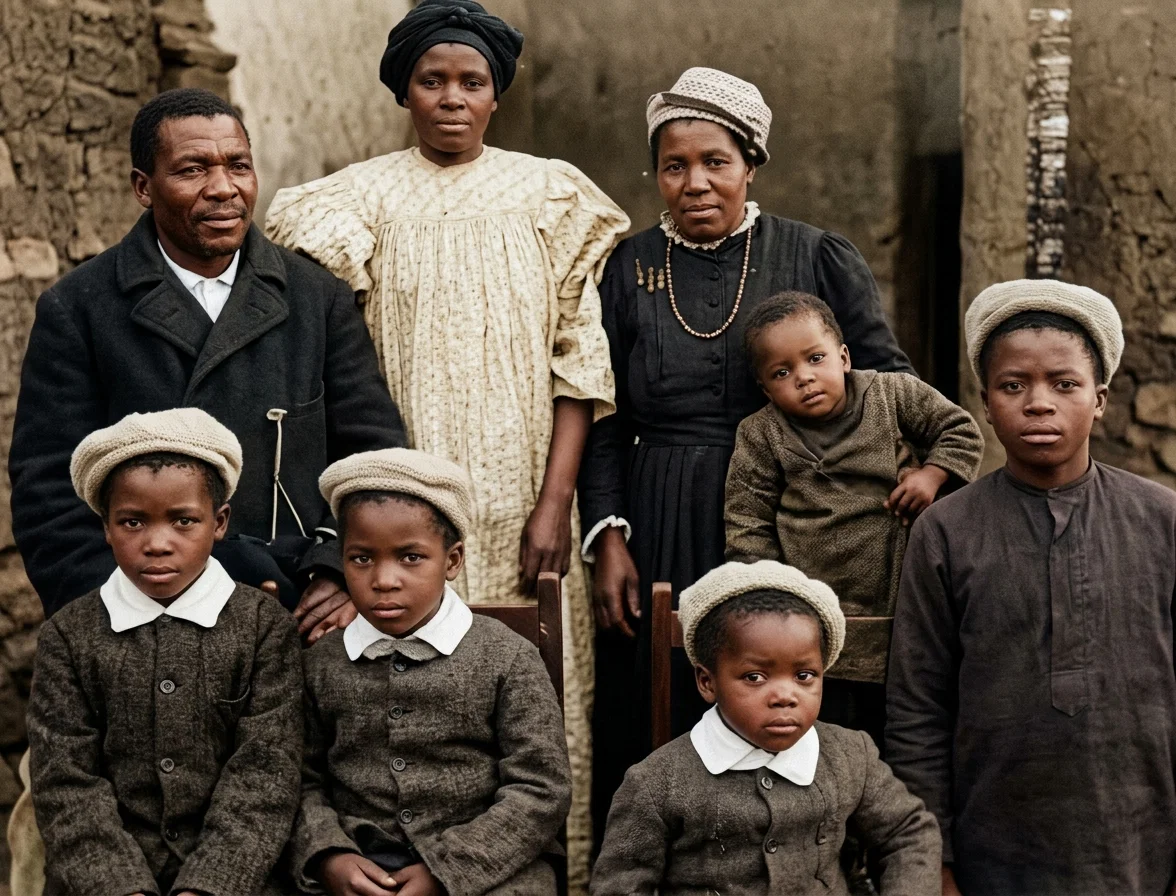
A BASUTO FAMILY
I sent Brother Kalaka to Maseru, the principal English official settlement. A larger number of natives live in this place than in any other, and many come and go from inland villages. Taking “Steps to Christ,” “Coming of the Lord,” and tracts on the Sabbath, he started out to see how they would sell. The demand for the Sabbath tracts was greater than for any other, and he reports that during the week he was there, he had to spend much of his time in conversing on the Sabbath and Sunday question.
Last week we visited a prominent chief. He engaged us in conversation during the whole day. Afterward he did me the honor to introduce me to seven of his wives. The eighth was ill. One of the women is a professed Christian, and has received a liberal education in the native language. As usual, the Sabbath question was introduced. There are people who fully believe that the Bible teaches that the seventh day should be observed, and really think that Sunday is the seventh day. This is natural, as the natives have no names for the days, but count from Monday. Our views seem to be known everywhere.
This is an important field; but like all other native territories, one cannot expect much, if any, return in money or its equivalent to help the work along; for the people generally are poor. Besides Basutoland, there are many other large native tracts that must be entered. But teachers, as well as other workers, must be supported. Some places ought to be entered now, while they are free from martial law restriction. I am sure we are all anxious that this old world, with all its misery, should come to an end, and the glorious kingdom begin. But this means that the gospel of the kingdom must first be proclaimed everywhere. How much of Africa is untouched! A large part of the help for this work must come from our brethren abroad. We need medical missionary help. This work would probably bring some return. Just as soon as the war is over, we shall need a good, serviceable wagon, strong but light, and conveniently constructed, to enable us to go about from farm to farm and from one native kraal to another with books. As we go from place to place, we have free opportunity to teach the truth. I have traveled over this country, and know the habits of the people, and I am confident that this is the work we ought to be ready to engage in at once. What help are the thousands of brethren in America able and willing to give to hasten the work in this field to a finish?
Kolo, Basutoland.
Large Arrival of Missionaries in Shanghai
DURING the months of October and November of 1901, there was an abnormally large arrival of missionaries in Shanghai,—during November about one hundred and thirty, and in October one hundred and sixteen, representing, in all, twenty-four different societies in Europe and America. The majority of these were former workers returning to their field.
Missionaries Slain in New Guinea and Native Response
COMPARATIVELY few particulars have been received concerning the slaying in New Guinea of the missionaries, Messrs. Chalmers and Tomkins. The London Society requested that no acts of vengeance should be inflicted upon the tribe that was guilty of their death. But the government deemed it necessary to administer some punishment, and so the house in which the missionaries were killed was burned, and a large war canoe blown up with dynamite. We quote from one of the native preachers who has been working in New Guinea for nearly thirty years, having been one of the original band of South Sea missionaries, which shows the Christian spirit that prevails among the converts in New Guinea: “May you have life and happiness. At this time our hearts are very sad, because Tamate [Mr. Chalmers] and Mr. Tomkins and the boys are not here, and we shall not see them again. I have wept much. Tamate I shall not see again here, but if we are strong to do the work of God thoroughly and all the time till our time (on earth) shall finish, we shall see him again. Hear my wish. It is a great wish. The remainder of my strength I would spend in the place where Tamate and Mr. Tomkins were killed. In that village I would live. In that place where they killed men, Jesus Christ’s name and his word I would teach to the people, that they may become Jesus’ children. My wish is just this. You know it. I have spoken.”
New Orleans
By O. M. Hayward
New Orleans, the metropolis of the South, has long been pointed out as a place where work should be done. The Testimonies have several times made special mention of it, and urged that the banners of truth be planted there in a strong, judicious work that would win the people. Just now, returning from a ten days’ visit to the place, I want to testify to my brethren, and especially to those engaged in the medical missionary work, that there is no more interesting, promising, or needy field than New Orleans as regards size, location, social and industrial conditions, and missionary opportunities.
At a meeting of the Southern Union Conference Committee last April, it was decided, in response to an earnest appeal from Elder S. B. Horton, president of the Louisiana Conference, that the writer should visit New Orleans as soon as possible, and in connection with Elder Horton study the situation and make arrangements for a medical missionary enterprise. Ever since that time there have been earnest prayers ascending continually to God in behalf of that city, and those prayers have been answered. A building in the center of New Orleans, Nos. 303, 305, St. Charles Street, has been rented, and a food store and health restaurant was opened July 1. The restaurant is in charge of Brother D. D. Fitch and his mother, Sister D. A. Fitch. Two nurses will begin work at once, giving treatments in the homes of patients. It is expected that treatment parlors will be opened on the second floor of the restaurant building in the near future.
During the last two years repeated efforts have been made to get some workers located in New Orleans, and it is a matter for a great deal of thankfulness that we are able to secure such valuable help at this time. We regard this as one of the many evidences that God is ready now to work with us in a wonderful manner for the great crescent city. Another evidence is the readiness with which we found openings that enabled these laborers to begin work at once, developing a permanent and substantial institution.
The building that has just been rented was formerly used by the W. C. T. U. for restaurant purposes, the man who recently occupied it having purchased the outfit from them a few months ago. He carried on the same business, and transferred it to our people at a very low figure, in order that he might be free to devote his time to a pleasure-boat business in which he has recently become interested, and over which his enthusiasm ran so high that he was willing to dispose of his restaurant at almost any price. He transfers to us his business, all the furniture for dining room, serving room, kitchen, and rooms above, for twelve hundred dollars, and indorses us to the landlord for the unexpired term of his lease, nineteen months. The location is said by persons who are in a position to know, to be a valuable one. Brother Horton says he has had his eye on it for three years, wishing and praying that it might fall into our hands.
With this opening before us, we estimated that we could start a health restaurant safely and creditably with a capital of two thousand dollars. We also did all we could to find out how such a restaurant as we should operate would be received, and met with encouragement from many sources. But all this amounted to nothing, since we had no money to invest. Several plans were discussed, and while praying over them, we were all impressed to go to our brethren at Welsh, and tell them the situation. It was decided that Brethren Horton and Fitch and myself should go there to hold a two days’ meeting. Beginning Friday night and closing Sunday night, we had a very interesting series of meetings. The Lord blessed greatly in the study of the word. In regard to the New Orleans proposition the brethren said, “This opening is of God; we must step into it;” and they sent us back to the city prepared to close a trade with the restaurant man. With courageous hearts and strong faith in God these brethren moved forward unhesitatingly to meet the demands of the hour, and assumed financial burdens which are not right for them at the present time. We trust that their example may lead others to aid in the development of the work in the great city of New Orleans, whose multitudes, engrossed in busy activities during the day, and in seeking comfort and pleasure in river excursions and in the parks and lakeside resorts at night, know but little of the beneficent laws ordained unto life by an all-wise Creator, or of the soon-coming Saviour whose blessings and mercies they so constantly enjoy.
By reason of its location and its trade with the outside world, as well as its size, New Orleans is of general interest, and the work there should have general support. The burden is too great for a small, weak conference with only a few small churches. There is opportunity for some one outside of Louisiana to help. Elder S. B. Horton is glad to receive donations, or to answer questions about this work. His address is 305 St. Charles St., New Orleans, La.
The people of New Orleans are courteous and pleasant to deal with. They welcome Northern enterprise, but will not tolerate Northern or Western aggression along certain lines. They have customs and social ideas which they will permit no one to tear down. Workers there need to be careful and respectful. It is a matter for thankfulness in this connection that Elder Horton is a native of the city, and has lived there nearly all his life. There are many nations represented in New Orleans, and many classes of people for whom we should labor. Believers may be brought out there who will be of great service in carrying the message to other lands.
New Orleans is a thriving, bustling city with unlimited opportunities for missionary work and with glorious possibilities for the wide spreading of the gospel. Work there must be undertaken on a large scale. Such efforts as are being made in some of our large Northern cities would not be out of place in New Orleans. At an early date the readers of the REVIEW will be favored by Elder Horton with a description of the city, its needs and possibilities.
O. M. HAYWARD, Chairman Medical Missionary Department Southern Union Conference.