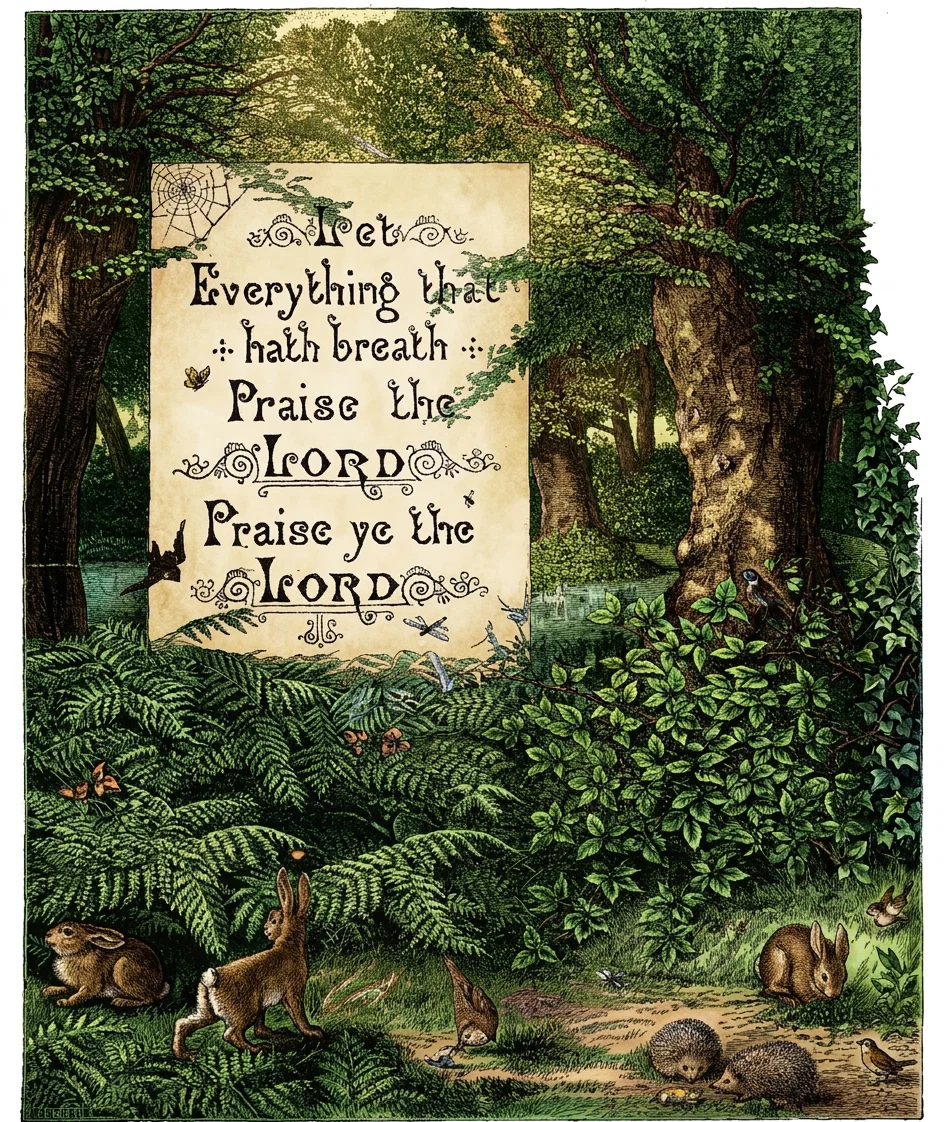
Seventh-day Adventist Publishing Association · Battle Creek, Mich. · Aug 19, 1902
Praise, My Soul, the King of Heaven
“Praise, my soul, the King of heaven;
To his feet thy tribute bring;
Ransomed, healed, restored, forgiven,
Who like thee his praise shall sing?
Praise him! Praise him!
Glorious in his faithfulness.
“Angels, help us to adore him,
Ye behold him face to face!
Sun and moon, bow down before him!
Dwellers all in time and space,
Praise him! Praise him!
Praise with us the God of grace!”
Publishers’ Page
Conducted by the Department of Circulation of the Review and Herald Publishing Company.
Household Necessities
Books That Should Be in Every Home
MORE important to the family than many commodities usually held as indispensable are “Home Hand-Book,” “Man, the Masterpiece,” and “Ladies’ Guide.” These three volumes embody all the information essential in the proper care of the human body, and the home treatment of all the principal diseases to which men and women are subject. A thorough study of these health books will bring a great blessing into the homes of our people, and will qualify them for effective service in the homes of others.
In all communities men and women are struggling in the mist and fog of error. They need the principles of life. They will gladly purchase the books containing these principles, could we only properly reveal them in a simple exhibit of these books. Let all who do not have them order them at once, and receive for themselves the benefits of their teaching, and then go forth into their own neighborhoods with these publications that are “the entering wedge to the message” at this time.
Home Hand-book
This is a wonderful book. It is a strictly up-to-date work on medical science, and incorporates the results of the large experience of the author, Dr. J. H. Kellogg, during twenty-five years’ practice in the Battle Creek Sanitarium, where thousands of chronic invalids of all classes have been cured.
It outlines the best methods of curing disease and preserving the health, and adapts the remedies and the treatment prescribed to the circumstances usually found in the majority of homes. The treatments of over six hundred diseases are given, and an index of symptoms enables one to discover easily the nature of his disease, a feature possessed by no other book of its kind. It is worth many times its price to any family. The world appreciates it, and our people should. The Farm and Fireside says: “Here is a complete medical library in one volume, written for the people by one who has had abundant opportunity for observation and practice, and who has gathered and condensed into this work the latest investigations of our leading medical scientists. The whole book is exceedingly well written; and although we have seen numerous works of this kind, the one in hand is worth all the rest put together. It should be in every household in the land.”
It contains 1,690 large pages, 500 engravings, and 26 full-page colored plates, besides a paper manikin; and is substantially bound in five styles, ranging in price from $4.50 to $9, postpaid.
Man, the Masterpiece
“Man, the Masterpiece, or Plain Truths Plainly Told about Boyhood, Youth, and Manhood,” is a volume that should be read by every youth and man.
This book is “the masterpiece” of Dr. Kellogg’s works. No works on subjects pertaining to boyhood, youth, and manhood approach it in real merit.
We quote from those who occupy positions that especially qualify them to judge of the value of a book of this kind. Dr. C. F. Wilbur, superintendent of the institute for the feeble-minded, Kalamazoo, Mich., says: “‘Man, the Masterpiece,’ is a very valuable addition to a kind of literature that is much needed for the proper education of young men and women. Too little attention is paid by parents to placing in the way of children as they are growing up to manhood and womanhood, many facts and truths which have an important influence in their proper development, and too little effort is made to acquaint them with right living and the ways and means of avoiding the dangerous habits of youth. Dr. Kellogg has spent his life in a constant effort to cultivate the true principles of correct living, and I sincerely recommend this latest work as a most excellent book for the perusal of young people especially, who desire to live right and do right.”
Prof. J. Estabrook, A. M., D. D., late president of the Michigan State Normal School, says: “Pardon my long delay to acknowledge the receipt of your book, ‘Man, the Masterpiece.’ Since the close of the term I have had leisure for a careful examination. I regard it as one of the most valuable and most needed books that has come to my notice. You have treated the most delicate subjects in the most clear and delicate manner. The book ought to be in every house, and read and carefully studied by every parent and teacher. You strike at the very root of the greatest social and moral evils of the age. Multitudes will rise up, and call you blessed for the light you have thrown upon subjects of which the masses know but very little. I hope you will be abundantly rewarded for your earnest, faithful, and most valuable work.”
The book contains 600 octavo pages, with 30 full-page colored plates, and a dissected plate of the human body, showing the position of each important organ, and its relation to all other organs.
Bound in five substantial bindings. Prices range from $3 to $5.50, postpaid.
Ladies’ Guide
In Health and Disease
This book is a blessing to womankind. The chapters devoted to “The Little Girl,” “The Young Lady,” “The Wife,” and “The Mother,” are alone worth many times the price of the book, and are of sufficient importance to justify the assertion that no family should be without it. It is practical and reliable, and gives the very latest scientific investigations of the subjects treated. All directions are so simple, and the means to be employed in prescribed treatments so readily accessible, that in the majority of cases treatment can be successfully taken in the home without the aid of a physician. Many of the leading women in the country have freely expressed their appreciation of this book.
Mary A. Livermore says: “Very much of the feebleness and unwise methods of women, both as regards themselves and their daughters, is the result of ignorance. This work of Dr. Kellogg’s supplies the information which will tend to enlighten them. Thorough, scientific, practical, and clear in conception and utterance, I do not hesitate to recommend it as admirably suited to the remedy of the evils it exposes. Its author is a philanthropist, a physician, a reformer, a man of high moral character; and it is a matter for thankfulness that he has prepared this work.”
Addie Goodrich, a prominent W. C. T. U. worker, and one who knows the needs of women in this age, says: “For years I have wished that such a work might come before the public, contributed by one fully cognizant of the subject. I can but feel that the great Physician has led you to this work, and that it will prove a precious benefactor to the women of to-day. Ignorance is the mother of much suffering. God grant the many hours spent by the author in its preparation may bring sunshine into many lives and homes.”
Thousands of ladies who have purchased this book and followed its teachings have testified of benefits received from it. Over 60,000 volumes have been sold, and many thousands more should be sold as early as possible.
The book is fully illustrated, and substantially bound in five styles, ranging in price from $3 to $5.50, postpaid.
A thorough study of these health books will bring a great blessing into the homes of our people, and will qualify them for effective service in the homes of others.
Make all orders to the State Tract Societies.
The Art of Massage, Its Physiological Effects and Therapeutic Applications
By John Harvey Kellogg
By Dr. J. H. Kellogg, M. D. A complete and systematic treatise on massage, especially one adapted for students of the art, has long been needed.
Concise directions are given for more than forty manipulations. Fifty pages are devoted to the several procedures of massage, which are considered under seven heads; namely, Touch, Stroking, Friction, Kneading, Vibration, Percussion, and Joint Movements. Under these several different heads, more than forty different forms of manipulations are described, care being taken to eliminate all procedures which are of no real practical value.
Every procedure illustrated by half-tone engravings from original photographs. Forty-five plates; one hundred and thirty-nine cuts; ten beautiful, colored anatomical plates.
Half leather binding, postpaid....$3 00
Cloth binding, postpaid.......... 2 25
Healthful Living
A COMPILATION of many important facts selected from thousands of printed pages which have appeared in various forms from Mrs. White’s pen within the last thirty years, and a large amount of manuscript never before printed.
The purpose of this volume is to present in a clear and condensed form the revealed teachings pertaining to health and health reform.
It is neatly bound in cloth, 5 x 7 inches, and contains 336 pages. Price, postpaid, 50 cts.
IN ALL INSTANCES ORDER OF YOUR STATE TRACT SOCIETY OR OF THE REVIEW AND HERALD PUBLISHING CO., BATTLE CREEK, MICH.
In like Manner
By Editor
Editorial
In like Manner
While Jesus was in the very act of blessing his disciples, “he was parted from them, and carried up into heaven.” “And a cloud received him out of their sight. And while they looked steadfastly toward heaven as he went up, behold, two men stood by them in white apparel; which also said, Ye men of Galilee, why stand ye gazing up into heaven? this same Jesus, which is taken up from you into heaven, shall so come in like manner as ye have seen him go into heaven.” Both the fact that Jesus will come again and the manner of his coming are here declared. “This same Jesus . . . shall . . . come.” And the manner of his coming will be like the manner of his going. He “shall so come in like manner.” A cloud received him when he went away, and at his second coming “they shall see the Son of man coming in the clouds of heaven.” No silent, secret coming will fulfill the promise of the men “in white apparel.” “For as the lightning cometh out of the east, and shineth even unto the west; so shall also the coming of the Son of man be.” The prophecies concerning both the time and the manner of Christ’s second coming are so explicit that no one need be in a state of uncertainty concerning this greatest of all events. When he comes, the faithful ones will say, “We have waited for him.” To such waiting ones his coming will not be a surprise.
Fellowship with God
The purpose of the gospel is to restore that fellowship with God which was interrupted by sin. “Your iniquities have separated between you and your God.” “At that time ye were without Christ, being aliens from the commonwealth of Israel, and strangers from the covenants of promise, having no hope, and without God in the world: but now in Christ Jesus ye who sometimes were far off are made nigh by the blood of Christ.” Christ’s life manifested in the flesh is the bond of union which unites us again with him and his Father. “For the life was manifested, and we have seen it, and bear witness, and show unto you that eternal life, which was with the Father, and was manifested unto us; that which we have seen and heard declare we unto you, that ye also may have fellowship with us: and truly our fellowship is with the Father, and with his Son Jesus Christ.” Since “God is light,” those who claim fellowship with him should walk in the light. “If we say that we have fellowship with him, and walk in darkness, we lie, and do not the truth.” Walking in the light is the experience of that fellowship which means cleansing from sin. “If we walk in the light, as he is in the light, we have fellowship one with another, and the blood [life] of Jesus Christ his Son cleanseth us from all sin.” All that the Lord is, and all that he has, he wishes to share with us, but the essential basis of this communion is that we shall share with him in his character. He desires to have all things in common with us, but we must be willing to have all things in common with him. What a blessed privilege is this! To such a partnership we are all invited.
The Power of the Cross
The cross means a crucified Christ. The power of the cross is the power to lay down life and to take it again. The resurrection appeals more strongly to our senses as being the greater display of the divine power, but this is only our human estimate based upon outward appearances. In the divine estimate it was all in the one display of the power of a Saviour’s love, who gave himself for us. “The preaching of the cross is to them that perish foolishness; but unto us which are saved it is the power of God.” “We preach Christ crucified, unto the Jews a stumbling-block, and unto the Greeks foolishness; but unto them which are called, both Jews and Greeks, Christ the power of God.” The power of the cross conquers the devil. “That through death he might destroy him that had the power of death, that is, the devil.” The power of the cross gives victory over death and the grave. “I am the first and the last, and the Living One; and I became dead, and behold, I am alive forevermore, and I have the keys of death and of hades.” The power of the cross brings the reconciliation between man and God. “That he might reconcile both unto God in one body by the cross, having slain the enmity thereby.” The power of the cross is a safe thing in which to make our boast. “God forbid that I should glory, save in the cross of our Lord Jesus Christ, whereby the world is crucified unto me, and I unto the world.” The power of the cross is the power of the indwelling Christ. “I am crucified with Christ: nevertheless I live; yet not I, but Christ liveth in me.” Without the power of the cross there is no hope for us in the fight with sin; but with it there is every ground of confidence of complete victory.
“Down at the cross, where my Saviour died,
Down where for cleansing from sin, I cried,
There to my heart was the blood applied;
Glory to his name.”
Heavenly Things First
The true believer has been delivered from the power of darkness, and translated into the kingdom of God’s dear Son. While he is still in the world, he is not of the world. He has set his affections on things above. The evidence to the unbelievers that this is a real experience is found in the attitude which the Christian takes toward the things of this world. The men of the world, “whose end is destruction, whose god is their belly, and whose glory is in their shame, who mind earthly things,” naturally devote their energies to acquiring as much of this world as possible. Having no resources or possessions in God, refusing the gift of all things in Christ, and so not believing that all things are theirs, the men of the world use time and strength and ability in the effort to acquire by their own work as much as possible of what they have refused to accept as a gift. The Christian learns to look at things in their true relation, and to estimate righteousness, the perfection of character, as of more value than mere material possessions. He has accepted as his guide to eternal prosperity the words of the Master: “Be not therefore anxious, saying, What shall we eat? or, What shall we drink? or, Wherewithal shall we be clothed? For4after all these things do the Gentiles seek; for your Heavenly Father knoweth that ye have need of all these things. But seek ye first his kingdom, and his righteousness; all these things shall be added unto you.” The Christian is to seek the necessaries of life, not as things material, which are in themselves to be the objects of his seeking, but as the secondary and incidental blessings which constitute a part of the unspeakable gift. The earth, restored and renewed, will be gained by seeking first the heavenly possessions: heaven and earth will both be lost by seeking first the earthly possessions. This will be demonstrated in this generation. Are you a Christian? Have you given up all things in order to receive all things? Bear your testimony to the world.
Spiritual Financing
By Uriah Smith
“LIKEWISE reckon ye also yourselves to be dead unto sin, but alive unto God through Jesus Christ our Lord.” Rom. 6:11, 12.
Paul was a ready reckoner; but the subjects of his reckoning went beyond those matters which ordinarily engage the attention of men here. His financing takes in the present and the future. “For I reckon that the sufferings of this present time are not worthy to be compared with the glory which shall be revealed in us.” Rom. 8:18. And again: “For our light affliction, which is but for a moment, worketh for us a far more exceeding and eternal weight of glory: while we look not at the things which are seen, but at the things which are not seen: for the things which are seen are temporal; but the things which are not seen are eternal.” 2 Cor. 4:17, 18.
In the scripture first quoted, he exhorts us to indulge in the same reckoning; that is, to be “dead” and “alive”—dead unto sin, but alive unto God. How intimately both the duties and the privileges of the believer are bound up together with Christ Jesus, his Lord. Sin is the corrupt thing that belongs to the sinner’s estate of death. We are dead to sin by renouncing and turning away from it. We are alive unto God by casting off the works of darkness, and putting on the armor of light. “But put ye on the Lord Jesus Christ, and make not provision for the flesh, to fulfill the lusts thereof.” Rom. 13:12–14. Such, as explained by the apostle, is the theory of the Christian’s real condition. The Christian is one who, like his Master, is already dead to all sin, and alive only toward God. He has ceased, in other words, to have anything further to do with sin. With God he has everything further to do. This has resulted, as a matter of course, from the close union, or, as it were, incorporation, which his faith has effected between him and Jesus Christ.
In theory, the believer has just as little to do with sin as has Jesus in heaven. This explains how the apostle can elsewhere employ such amazing language about mortal man as this: “Risen with Christ” (Col. 3:1), sitting with him in “heavenly places” (Eph. 2:6), “for ye are dead, and your life is hid with Christ in God.” Col. 3:3. The aim is to make the Christian life such in fact, and not only such in conception.
In moral training of character, there is no better way of attaining an ideal than to be persuaded that it is the true ideal for us. Let us suppose a man claiming to be dead to all sin; yet in a given instance an evil idea masters him. Between these two conditions—deadness to sin, and being overpowered by sin—is there not an incongruity which is not simply painful but intolerable? These conditions cannot possibly exist together. A contradiction in fact, between his theoretical position and his actual conduct, is not a condition of affairs in which he can rest. Either his ideal must be abandoned, or an effort must be made to shape his behavior in compliance with it. But to abandon the ideal would be to abandon Christ. The conclusion becomes irresistible. Let not this wrong desire lord it any longer over you in this fashion, if, indeed, you are a man dead to all sin. As the apostle enjoins in verse 12: “Let not sin therefore reign in your mortal body, that ye should obey it in the lusts thereof.” As death hath no more dominion over Christ (verse 9), so sin should have no more dominion over us. “Let not sin therefore reign.” Nevertheless we may be alive to God. This thought should help our peace, aid our caution, and draw us to the means of grace provided for us by faith in Christ. C. H. Spurgeon, in his “Sermon Notes,” relates the following anecdote, which, on account of the striking lesson it contains, we take the liberty here to transcribe:—
“In the fourth century, when the Christian faith was preached in its power in Egypt, a young brother sought out the great Macarius. ‘Father,’ said he, ‘what is the meaning of being dead and buried with Christ?’”
“‘My son,’ answered Macarius, ‘you remember our dear brother who died and was buried not long ago? Go now to his grave, and tell him all the unkind things you ever heard of him, and that we are glad he is dead, and thankful to be rid of him; for he was such a worry to us, and caused so much discomfort in the church. Go, my son, say that, and hear what he will answer.’”
“The young man was surprised, and doubted whether he really understood; but Macarius only said, ‘Do as I bid you, my son, and come and tell me what our departed brother says.’ The young man did as he was commanded, and returned.
“‘Well, what did our brother say?’ asked Macarius.
“‘Say, father!’ he exclaimed. ‘How could he say anything? He is dead.’”
“‘Go again, my son, and repeat every kind and flattering thing you ever heard of him; tell him how we miss him; how great a saint he was; what noble work he did; how the whole church depended upon him; and come again and tell me what he says.’”
“The young man began to see the lesson Macarius would teach him. He went again to the grave, and addressed many flattering things to the dead man, and then returned to Macarius.
“‘He answers nothing, father; he is dead and buried.’”
“‘Now you know, my son,’ said the old father, ‘what it is to be dead with Christ. Praise and blame equally are nothing to him who is really dead and buried with Christ.’”
“Sin may rebel, but it shall never reign, in a saint. It is like Daniel’s beasts,—though their dominion is taken away, their lives are prolonged for a season and a time.”—Brooks.
Men must not suffer a single sin to survive. If Saul had destroyed all the Amalekites, as he was commanded, no Amalekite would have lived to destroy him.
U. S.
Studies in the Gospel Message
THE subject of the Sabbath-school lesson for August 30 is, The Living Principle in History, and the portion of Scripture upon which it is based is Dan. 2:31-49.
That history which it is of any profit to study is more than a mere record of disconnected and unrelated facts. “History, when rightly written, is but a record of providence; and he who would read history rightly, must read it with his eye constantly fixed on the hand of God. Every change, every revolution in human affairs, is, in the mind of God, a movement to the consummation of the great work of redemption.” “Whoever will read the history of the world and of the church of God, with his eye fixed on the providential agency which everywhere overrules the events of the one to the furtherance and well-being of the other, will see all history illuminated by a light, and animated by a spirit, of which the mere chronicler of events knows nothing. He will feel that history has a sacred philosophy, that he is standing in the council chamber of eternity, reading the annals of infinite Wisdom and Mercy, as blended and developed in the great work of human redemption.5He will see in all history such a shaping of every event as finally to further the cause of truth.”
And this orderly march of events is not controlled in an arbitrary way. It is true that “the Most High ruleth in the kingdom of men, and giveth it to whomsoever he will,” but the rise and fall of nations is not fixed simply by the calendar or by an arbitrary decree of the King of the nations. It is determined rather by the attitude of these nations toward the purpose of God to make known and to establish his kingdom in the earth.
The central figure in all history is the man Christ Jesus. In him we find the key to the correct interpretation of all history. Because of his wondrous self-sacrifice in identifying himself with humanity that he might win back a rebellious world to loyalty to the government of his Father, “wherefore God also hath highly exalted him and given him a name which is above every name: that at the name of Jesus every knee should bow, of things in heaven, and things in earth, and things under the earth; and that every tongue should confess that Jesus Christ is Lord, to the glory of God the Father.” This purpose of God in its relation to the nations, and his instruction to them in view of it, is clearly set forth in the second psalm:—
“Why do the nations rage,
And the peoples imagine a vain thing?
The kings of the earth set themselves,
And the rulers take counsel together,
Against the Lord, and against his anointed, saying,
Let us break their bands asunder,
And cast away their cords from us.
He that sitteth in the heavens shall laugh:
Then shall he speak unto them in his wrath,
And vex them in his sore displeasure.
Yet I have set my king
Upon my holy hill of Zion.
The Lord said unto me, Thou art my son;
This day have I begotten thee.
Ask of me, and I will give thee the nations for thine inheritance,
And the uttermost parts of the earth for thy possession.
Thou shalt break them with a rod of iron;
Thou shalt dash them in pieces like a potter’s vessel.
Now therefore be wise, O ye kings:
Be instructed, ye judges of the earth.
Serve the Lord with fear,
And rejoice with trembling.
Kiss the son, lest he be angry, and ye perish in the way,
For his wrath will soon be kindled.
Blessed are all they that put their trust in him.”
Man was created to be the ruler of this world, not independent of God, but in loving allegiance to him. “Thou hast made him a little lower than the angels, and hast crowned him with glory and honor. Thou madest him to have dominion over the works of thy hands; thou hast put all things under his feet.” But our first parents listened to the false accusations of Satan against God and his government, and attempted to make themselves like God by acting out the character of Satan. Of course this satanic plan failed, just as its author intended, and man lost his dominion. Since that time Satan has exercised the dominion which was first vested in man. “When Satan declared to Christ, The kingdom and the glory of the world are delivered unto me, and to whomsoever I will I give it, he stated what was true only in part, and he declared it to serve his own purpose of deception. Satan’s dominion was that wrested from Adam, but Adam was the vicegerent of the Creator. His was not an independent rule. The earth is God’s, and he has committed all things to his Son. Adam was to reign subject to Christ. When Adam betrayed his sovereignty into Satan’s hands, Christ still remained the rightful King.” Through the work of the Son of God in becoming the last Adam, the head of a new humanity, and in giving himself as the Redeemer of the world, the lost dominion will be recovered, and God’s kingdom will again be established in the earth made new. The history of men and of nations can only be rightly understood when viewed in the light of this eternal purpose of God “which he purposed in Christ Jesus our Lord.”
The essential element in the kingdom of God is righteousness, and this is what makes it permanent in its character. “The kingdom of God is . . . righteousness, and peace, and joy in the Holy Ghost.” “A scepter of righteousness is the scepter of thy kingdom.” This principle of righteousness is to be established in the hearts of those who choose to have the Lord reign over them, and when this gospel of the kingdom shall have been preached in all the world, so that each one has definitely accepted or rejected the Lord as his King, then the rebellious will be overthrown, and the kingdom of the world will become the kingdom of our Lord and of his Christ; and “he shall reign forever and ever.”
In the dream of Nebuchadnezzar and its interpretation by Daniel the prophet we have a brief outline of the course of history from that day until the God of heaven should set up his everlasting kingdom. It was shown that there would be four world kingdoms, one after the other, each one of which would go down in its turn, but the fifth kingdom would not be destroyed, nor be left to other people, but would “stand forever.” The principle which is thus wrought out in this drama of the kingdoms is the fundamental truth of the gospel: “All flesh is grass, and all the goodliness thereof is as the flower of the field: the grass withereth, the flower fadeth: because the Spirit of the Lord bloweth upon it: surely the people is grass. The grass withereth, the flower fadeth: but the word of our God shall stand forever.” The littleness of man and the greatness of God; the weakness of man and the power of God; the shortness of man’s span of life, “born but for one brief day,” and the eternity of God’s existence,—these are the lessons which men are to learn and apply in all the relations of life. Nations are given a place in history with a longer or shorter time upon the stage of action according as rulers and peoples relate themselves to these truths and the establishment of the kingdom of God in the earth. Those who believe in man, and seek to exalt themselves to the place which belongs to God in Christ, will be brought to desolation; those who believe in God, and exalt him in the person of his Son as King of kings and Lord of lords, will themselves become an integral part of that kingdom which “shall stand forever.”
A Missionary Monk of the Dark Ages
By W. A. S.
AMONG the hymns that last because of the life wrought into them, none are fuller of the fervent evangelical spirit than those beginning, “Jesus, thou joy of loving hearts,” and, “Jesus, the very thought of thee;” and they were written by a monk, Bernard of Clairvaux, amidst the heavy gloom of the Dark Ages. Bernard died in 1153.
As we sing these precious gifts of his to the Christian church, it is worth while remembering that the hymns were the expression and fruit of a missionary life. The monk of Clairvaux, while the papal world was all astir over crusading into the holy land with mace and battle-ax, turned his thoughts to the unevangelized masses of northern Europe. He was the organizer and director of missionary enterprises which planted schools in Britain, Germany, and the Scandinavian countries. Far beyond his age in his grasp of Christian doctrine, he undoubtedly sowed much seed that sprang up when later the Reformers were sent of God to break the power of darkness. It suggests a helpful thought to remember that it was a monk who sang,—
“Thy truth unchanged has ever stood;
Thou savest those that on thee call;
To them that seek thee, thou art good,
To them that find thee, all in all.”
Even the Catholic priest or monk of our day is not beyond the reach of this truth that God has given us. We are to pass by none in our efforts and our6prayers. The monk Luther, who was toiling up the sacred stairs at Rome on his knees, was the same little monk that later shook the papal world,—the same, only taken possession of by the glorious truth of justification by faith, and made acquainted with the personal Saviour. It was this same truth that made Bernard the missionary monk.
He declared: “Christ is called not only righteous, but righteousness itself, our justifying righteousness. Let the soul, penitent for its sins, hungering and thirsting after righteousness, believe on him who justifies the ungodly through faith, and it shall have peace with God.”
So, out of his own experience of thirst for the infilling righteousness, he cried,—
“We taste thee, O thou Living Bread,
And long to feast upon thee still;
We drink of thee, the Fountain-head,
And thirst our souls from thee to fill!”
The spirit of missionary service held the monk of Clairvaux close to a living Saviour. In no other way than the way of service can any of us keep warm and fervent our love for the personal Jesus, that hope of every contrite heart, the joy of all the meek. We can live truly only as we are in personal touch with sinners needing help, to be used of God as channels through which he may pour his saving grace.
It was from the heart of the missionary, soul-winning Bernard that these songs came, which will continue to cheer loving hearts until Jesus shall indeed chase the dark night of sin away, and shed o’er the world his holy light.
W. A. S.
Hypnotism Advertisements Spreading Among the Masses
Some idea of the many avenues by which hypnotism and allied practices are spreading among the masses of the people to-day, may be had from the following advertisement, which we find printed in an exchange:—
FREE BOOK ON HYPNOTISM.—Would you like to become a hypnotist, and be able to cast a magic spell over whom you will? You can learn this magic art in an incredibly short time, during your leisure hours. (Think of it!) When you are master of the grand science of hypnotism, your value to yourself and others will be immeasurably increased. It makes you interesting, fascinating, convincing, either in business or society. You can overcome domestic trouble with contentment and happiness. You can make stingy persons liberal. You can mold the minds of men and women, and control their very existence. You can dispel, as if by magic, your own ill luck, misfortune, and unhappiness, and that of others. You can strengthen your will-power and intellect. You can control a subject hundreds of miles away. You can be the central magnet at any social gathering, and mystify and uproariously entertain your friends. You can hypnotize a dozen people at a time. You can make wealthy but obdurate relatives to make you heir to what you deserve.
The price of this wonderful book is ten cents, which sum will more than pay for all the good, but comes infinitely short of measuring the harm, to be derived from its perusal.
A Liberal Platform
By L. A. S.
THE term “liberal” can never be used in its true sense apart from Christianity. Those who condemn the old-fashioned Christianity with its strict injunctions and prohibitions as being too narrow for this progressive age, show that their own minds are too narrow to perceive the truth. Christianity is the expression of the life of God, who is from eternity to eternity, and inhabits all space. The presence of God fills the universe, and his attributes are equally infinite. There can be no narrowness about that which he ordains. The motive power of all liberality is love, and God is love. The liberality of God to the world has been manifested by the gift of his only begotten Son, and with that gift, the greatest that heaven itself could afford, all other things have likewise been given us freely. Liberality could not go further than is revealed in the plan of redemption.
God has provided a platform for his people in the world,—that of “the commandments of God, and the faith of Jesus.” Is this a narrow or illiberal platform? “Thy commandment,” says the psalmist, “is exceeding broad.” The commandments of God cover every relation and condition of life, and apply not merely in this world, but in every part of God’s creation. Allegiance to those commandments links the individual with the great heavenly family, which extends far beyond the confines of this poor world,—the great family which peoples worlds unfallen, and surrounds with shining hosts the throne of God. Such a relationship is broad indeed.
The platform of God’s people to-day is broader than the world. Selfishness fills the world, and has made the minds of its people narrow and illiberal. Its inhabitants are wise in their own conceits. The god of this world has blinded their eyes, that they should not discern the breadth of God’s words and ways, and the narrowness of their own human theories. The breadth of their platform will be the salvation of God’s people in the day of the final overthrow and dissolution of earthly things. L. A. S.
Note and Comment
THE Roman Catholic university at Washington, D. C., has decided to establish “an institute of pedagogy in New York City, which will prepare, under Catholic conditions, those of the laity who wish to teach or supervise instruction in the public schools of that city.”
We may infer from this that Rome deems the present time a favorable one, or foresees a favorable time in the near future, for attacking the institutions of republican government through the avenue of the public schools.
Catholic Federation Address on Protestantism's Decline
THE following words are quoted from an address by the president of the American Federation of Catholic Societies, which recently convened in Chicago:—
Infidelity, agnosticism, or absolute indifference is already digging the grave of Protestantism in the United States. A most important mission of federation of the fraternal, social, and charitable Catholic societies is to secure the layman’s part in helping to make this country Catholic.
The Catholic Church has not been backward in making her demands known in this country, but according to the president of this new federation the church has been a “timid, shrinking apologist” heretofore in comparison with what she intends to be hereafter. In the decline of the Protestant spirit she sees her opportunity.