THAT the tubing of a baby's bottle should never be cleaned with a brush, as the bristles are liable to come out. An efficient substitute is a piece of white tape with a bodkin at the end.
That tidiness should be insisted on in the nursery, so that it may come naturally to the children to love order and neatness.
That it is most important to teach children to eat slowly and masticate their food well.
That swimming is an excellent exercise for girls and boys, and helps to expand the chest and develop the muscles of the body.
That no child can be healthy or happy if it is cold; therefore summer and winter, warm clothing—of different texture, of course—should be equally distributed over the entire body.
Give the baby, and each child if possible, a bed to himself. Have the sleeping-room cool and clean. See that the clothing of the little sleeper is loose at the neck, wrist, and arms, and keep his head uncovered.
If there is anything young animals can not do without, it is fresh air, and babies get less than any other class.
Through pores of the skin the body is continually throwing off poisonous vapors. If the head is covered with the bedclothing, the unfortunate infant will be breathing bad air.
Fashion or no fashion, it is a shame to trim or starch babies' clothing.
The average child suffers from over-feeding and over-dressing. Let him learn to be a trifle hungry.
Half the time when the child cries, he wants fresh air or fresh water. Moistening the lips of a crying baby with cool water will often soothe and refresh him.—Sel.
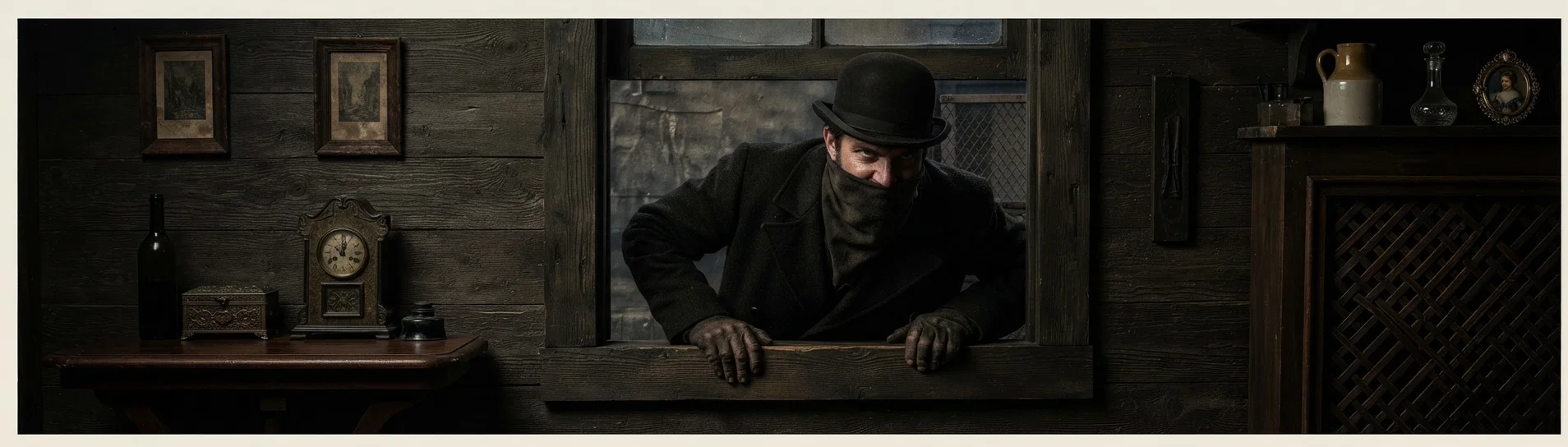
A WICKED THEFT
A WICKED THIEF
Thieves and murderers and the effects of their deeds upon homes are compared with the results of wrong living upon the body, in that excellent book for children
The House
We Live In
The child, or older person, who reads this book, can not fail to see in its simple comparisons powerful arguments for temperance and right habits of life
It contains 218 pages and is fully illustrated, price 75 cents
PACIFIC PRESS PUBLISHING CO.
Oakland, Cal.
for making beautiful, healthful cities, towns, and homes. Its illustrations are instructive. By sending 15 cents to the above address it may be obtained.
THE Cornell University Register, Series 2, No. 3, 1901-1902, has come to hand. Its 532 pages are packed full of information concerning the great university at Ithaca, N. Y. Any one can obtain it by addressing the institution as above.
"MEATLESS DISHES." A Collection of Tested Recipes for Various Dishes in which Meat forms no part. Price 10 cents. The Vegetarian Company, McVicker Building, Chicago. It contains also useful hints as to hygiene, cooking, cheerfulness, etc. We are glad to see the multiplication of such literature.
"SCIENTIFIC DEMONSTRATION OF THEOLOGY, PROPHECY, AND REVELATION." By H. B. Bear, Preston, Hamilton County, Ohio (price 10 cents), is made up of a series of numbered paragraphs, giving largely the writer's own reasonings and conclusions. Among these is the statement that evil is eternal, a most unscientific, unreasonable thing.
"Tuberculosis as a Disease of the Masses and How to Combat It." A prize essay, by S. A. Knopf, M. D., New York. Price 25 cents. M. Firestack, 110 West 96th Street, New York. Full of helpfulness to both physician and layman.
"EARLY CONVERSIONS." By E. Payson Hammond, M. A. Paper covers: 224 pages; price 25 cents. J. S. Ogilvie Publishing Company, 57 Rose Street, New York. This is an old work, but ever good, full of suggestiveness and witness of the power of God to save children.
HOW JAMIE LOST THE PRIZE.
This true incident from an English school-teacher's lips shows how a boy can be both high-minded and unselfish for the sake of another.
Jamie Pettigrew and Willie Hunter were the clever boys in Mr. Howatt's school class, and used to "run neck and neck for the prizes." Examination day came again, Jamie and Willie were left last in the field. Jamie missed question after question, which Willie answered and got the prize.
Says Mr. Howatt, "I went home with Jamie that night, and instead of being cast down at losing the prize he seemed rather to be glad. I couldn't understand it.
"Why, Jamie,' I said, 'you could have answered some of those questions. I know you could.'
" 'Of course I could!' he said with a laugh.
" 'Then why didn't you?' I asked.
"He wouldn't answer for a while; but I kept pressing and pressing him till at last he turned round with such a strange, kind look in his bonnie brown eyes.
" 'Look here,' he said; 'how could I help it? There's poor Willie—his mother died last week, and if it hadn't been examination day, he wouldn't have been at school. Do you think I was going to be so mean as to take a prize from a poor fellow who had just lost his mother?' "
Bravo, my lad! a good speech that; and second was a good place, if not the noblest of any, in all the school that day.—Sunday-school Advocate.
TRUE TO HIS MASTER.
IT is recorded that Frederick the Great of Prussia was once ridiculing Christ and Christianity in the presence of a gathering of his nobles and generals, who were convulsed with laughter at his coarse and impious witticisms. There was one brave general, however, who sat gloomily silent while the laugh went around. This was Joachim Von Zietan, one of the ablest and bravest of them all. Unable longer to endure it, he "dares" something for His Master, whom he loves even more than he loves his king. See him! With the utmost gravity, he rises from his seat, shakes his gray head, and addressing the king, said in solemn tone,—
"Your Majesty knows well that in war I have never feared any danger, and everywhere I have boldly risked my life for you and my country; but there is One above us who is greater than you and I—greater than all men; He is the Saviour and Redeemer, who has died also for your Majesty, and has dearly bought us all with His own blood. This Holy One I can never allow to be mocked or insulted, for on Him repose my faith, my comfort, and my hope in life and death. In undermining the power of this faith, you undermine at the same time the welfare of your State. I salute your Majesty."
The brave old general sat down. Frederick looked at him in amazement and unconcealed admiration, and then and there apologized in the presence of those whom he had entertained with his vulgar jests.—Anon.
ONE USE FOR COFFEE.
THE Christian says: Coffee is a powerful medicine—too powerful to be used as an article of food. But it has its use. Strong vegetable odors are the most effective destroyers of disease germs, and roasted coffee a powerful means of destroying animal. Dry the raw bean, pound it in a mortar, and then roast the powder on a moderately heated oven or tin plate, until it becomes a dark brown color. Sprinkle it in sinks and cesspools, or expose it on a plate in the room. It is said that diphtheria is never known in homes where coffee is browned.
CHICAGO
IN LESS THAN
3 DAYS
From
San Francisco at 10 a. m.
Chicago, Union Pacific & Northwestern Line
DOUBLE Drawing-Room Sleeping Cars, Buffet, Smoking and Library Cars, with Barber. Dining Cars—meals a la carte. Daily Tourist Car Service at 6 p. m., and Personally Conducted Excursions every Wednesday and Friday at 8 a. m. from San Francisco. The best of everything.
R. R. RITCHIE
617 MARKET ST.
PALACE HOTEL
GEN. AGENT PACIFIC COAST
SAN FRANCISCO
OR S. P. COMPANY'S AGENT
THE FRIARS IN SOUTH AMERICA
WHEN the American army took possession of Manila there were about seventeen hundred Catholic friars upon the various islands of the Philippine group. Of this number more than twelve hundred have emigrated, most of them going to South America where they were more confident of a cordial welcome than in Europe. These things happening just as the religious associations were exiled from France, the friars felt that they were likely to find brief rest in Spain, or even in Italy, should they attempt to carry out their peculiar convictions of ecclesiastical privilege in either. Having for many years dwelt with an ignorant and submissive people, they chose to make a home in such countries as afforded a clientele most resembling that which they had lost.
They are now busier than ever, especially in Brazil, forming new orders, organizing new societies, and by a thousand well-known devices separating the natives from their slender accumulations. They distribute showy medals and various insignia, each suspended by a gaudy ribbon from the neck or fastened in the buttonhole; and the disposition of such favors becomes a marked source of revenue. In Brazil their course has already excited no little opposition on account of their pronounced hostility to the free institutions of any country. They are especially denunciatory of civil marriage, obligatory tho it is by the laws of the land; and in many places they have forced to live apart husbands and wives who have been married for years, because not married by a priest. And the most unreasonable thing is that when those compelled to put away their conjugal companions desire to avoid the boycott to which the friars subject them, they are not permitted to marry each other, but are forced to select other mates. Such at least is the statement made by D. Leolinda Daltro in one of the Rio journals. It is even asserted in some of the papers published in South American cities that the present disturbed conditions in many of these Latin republics are due to the intermeddling of these friars from the Philippines, who preach a crusade against all that is identified with democratic institutions or founded upon respect for popular authority.—The Interior.
THE SOUTH AMERICAN CONTINENT TO BE EVANGELIZED.
By W. H. Thurston
[From Mission Board Correspondence.]
TWO years ago a tribe of Indians far back in the interior of Brazil, sent representatives to the capital, with the purpose in view of interviewing the authorities relative to providing them with schools. The delegation was much disappointed in not being able to accomplish their object, and turned homeward. But on their way they providentially met some missionaries, and plans for school work were agreed upon. Schools have since been started.
The fact that even the Indians of South America are calling for schools, and desiring the Gospel to be preached to them, is evidence that the time has come for the Gospel to go to the world. "Say not ye, There are yet four months, and then cometh harvest? Behold, I say unto you, Lift up your eyes, and look on the fields; for they are white already to harvest."
Five years ago a missionary passed through Rio de Janeiro on his way to Chile to labor for the Indians in that country, and he is still in the field doing Gospel work. He told me that he verily believed that when the Gospel was carried to the Indians, the work would be finished, and the Lord would come.
The Lord is using men and women everywhere to spread the Gospel, and John 4:35 is being fulfilled nearly everywhere now. There is still a great work to be done; but it is no greater than can be accomplished in this generation, for the Lord has declared it shall be finished. The question with us is, Shall we all fall into line, and help to do the work? or shall we allow some one else to take our crown?
Not alone Brazil, but all the other countries in our sister continent to the southward, are asking, Who will come and help us? Uruguay is a good country, settled by Spaniards and a considerable number of Germans. The advent message is already being proclaimed there; but the laborers are few. The Argentine Republic, with its broad prairies and vast wheat fields waving in the southern breezes, presents a beautiful picture, and affords splendid opportunities for labor. The Spanish is the language of the country; but there are many German colonies, and some English people there.
When we come to Chile we find a long strip of country with a salubrious climate. Here the message of the Lord's coming is making comparatively slow progress for want of help. The laborers there are calling for canvassers; and when they go, let a few good families, rooted and grounded in the truth, go with them, and locate there, and help in bearing the last message of mercy to that people. Those who go will need some means to get started with, and then they can live there as well as here.
I might speak of Paraguay, Bolivia, Peru, Ecuador and so on around. Who will volunteer to go to these fields, and, pressing the battle to the front, complete the work? The laborers in these countries are working hard, and sacrificing for the cause of truth we so much love. People are accepting the Gospel, and in turn they carry it on to others. They rejoice in the truth when it is presented to them; and all companies and churches go right to work, helping to give the message, for they believe the end is near.
Brethren and sisters, consider these matters prayerfully, and ask God in sincerity, in deed and in truth, "What wilt Thou have me to do?"
W. H. THURSTON.
Scene among the South American Indians.
THE WORK IN EGYPT.
By Louis Passebois
[From a personal letter to the editor.]
We are enjoying much of the Lord's rich blessing. The Lord is working in the land of the Pharaohs, and we are glad. We hope the work will soon extend to many dark spots of the large continent of Africa.
Brother Conradi was recently here with us for a short time, and we had the joy of seeing nine souls go into the waters of the Nile to be buried by baptism with their Lord. A church was then organized with sixteen members. We are glad that the truth is getting a foothold among the natives, and that the Lord is raising able men among them who well know the English language, and thus can get the light, and preach it in their native tongues better than we foreigners could.
The week of prayer was a season of great blessing, and we are confident that it will bring forth fruit to the glory of God. Though our company is small and poor, yet each one did what he could, denying himself for Christ, and those who were in such circumstances that they could not give money gave themselves to the Lord, and we believe the Lord heard their prayer, and accepted them gladly. The donations amounted to a little over forty dollars. No doubt the future has better things for Egypt. We have been a long time without doing anything for this country, and the Lord holds us responsible.
From nearly all standpoints, there is no place in the Orient more suitable than Egypt to be made the center from which to send out laborers in all the Orient and to many dark spots in Africa. Here we might have a training-school for missionaries; and after we have the farm secured, students, especially native scholars, might be sustained at little expense. The soil is very productive where water from the Nile can be obtained. We have all freedom for religious operations, and we can publish here, and send into Turkey, Greece, etc., etc.
Egypt is ready for a more aggressive work. The Lord has prepared the way for us. Now, shall we improve the opportunity? or shall we delay more and more, till we have to do the work under more difficult circumstances? May the Lord give us grace, and help us to do the work as He wishes us to do it.
O that our churches in America might realize the needs of this field here in Africa, and sacrifice to bring light to the thousands who are daily perishing in their sins. Where are the faithful and consecrated workers, ready to enter Egypt and the Soudan, with their millions of souls who have never heard of the Gospel of the kingdom? Where are the consecrated sisters to come here among the millions of women who can never be seen by any man outside their homes, and thus can be reached only by the ministration of women? Doors are wide open for them to enter the homes of Mohammedan ladies who have never heard the Gospel, and who will welcome them.13The work among women must all be done in this country by women, and from house to house. No one can be reached by meetings. We should have dozens of sisters here in Cairo alone. May the Lord roll the burden of this work upon our sisters, and may some say, "Here am I, Lord; send me."
At present I have better health than I have ever had in my life before, and my family also is very well. In the summer-time it is a little hot; but the Lord provides strength, and keeps us, and we were sick, or rather indisposed, only for a short time.
Cairo, Egypt. LOUIS PASSEBOIS.
THE CANDLE
By Charles D. Pratt
[Charles D. Pratt, in the Springfield Republican.]
FAR greater lights He made; there is no need
To waste my feeble flame in open day;
When the sun bids men on their errand speed,
Then I am naught, nor is there one would stay
To seek my aid; but when the darkness falls
And men go groping where with firm, swift pace
They lately trod; when, stumbling, some one calls,
"A light! a light!"—with reassuring face
I smile, and guide them where they wish to go;
I brighten all the house, I pierce the dark,
And what they could not find, I quickly show.
They use me then, and bless my tiny spark.
Once, in a cottage window set, I shined
O'er a dark moor where a lone traveler strayed,
Striving in vain a friendly roof to find;
Trusting in me, he gained it, unafraid.
And once a poet, in his waking dreams,
Hailed this my shaft of light through darkness
hurled;
"How far that little candle throws his beams!
So shines a good deed in a naughty world."
"CHRIST IS ALL."
By Edith O. King
ONE of the cheeriest, sunniest Christians that I ever knew was a poor invalid, who often suffered intense pain.
She had been a handsome, high-strung girl, so I was told, with plenty of money and friends. She was an only daughter, and had been petted, indulged, and spoiled. It seemed, however, that the troubles of Job were no greater than hers. Her parents died within a month of each other, and the guardian who had charge of her estate managed to let it all pass into the hands of others, leaving her penniless. A carriage accident caused her to be a helpless cripple for life, and her society friends all deserted her.
At the time of my acquaintance with her she was living with an elderly cousin, who supported them both by taking in washing.
The neighbors for miles around went to Minnie with their woes, never failing to go away comforted, for her words were like balm to hearts that were hurt. She always had those who came to her for help, kneel and tell their troubles to Jesus, she praying with them. I improved every opportunity of visiting with her when calling for our laundry.
In conversation with her I once asked how she could be so serene and peaceful at all times. You have no father, no mother, no— She stopped me. "You are mistaken, dear. Some day I will write you a letter, telling you why I can smile when others might only weep."
The letter has been a help and encouragement to me, and is yet cherished, altho the hand that wrote it has long since been folded to rest. She wrote:—
"The reason I preferred to write is that I thought it might impress you more deeply to read and think of what I am going to tell you.
"At first I was rebellious and bitter over my loss. Then I tried to submit, then tried to 'follow and obey and bear my burdens too.' But now, thank God, I can repeat the remainder of the stanza as my experience,—
'I never thought it could be thus
Month after month to know (as I now know)
The river of Thy peace, without
One ripple in its flow.'
I even accused God of taking my parents, my bright young brother, my lover, and my friends from me. But I find, tho deprived of these in the flesh, that Christ is all to me in the spirit.
"He has sent a message telling me that He is 'Father of the fatherless' (Ps. 68 : 5), the 'everlasting Father' (Isa. 9 : 6), and has He not bidden us all to call Him 'our Father'? He also says, 'As one whom his mother comforteth, so will I comfort you.' Isa. 66:13. So, by His tender love and care, He supplies the mother's place. He is a 'Friend that sticketh closer than a brother,' an earthly brother. Prov. 18:24.
"My heart thrills with rapture when I read, 'My Beloved is white and ruddy, the chiefest among ten thousand . . . . Yea, He is altogether lovely. This is my Beloved, and this is my Friend.' Canticles 5:10, 16.
"Then He whispers, 'Thy Maker is thine husband; the Lord of hosts is His name.' Isa. 54:5. I read, 'Unto us a Child is born, unto us a Son is given' (Isa. 9:6), and I say, 'Yes, He is born in my heart, the Christ-child is mine.'
"You see now how He supplies every earthly relationship. Moreover He says that He loves me with an 'everlasting love.' He is with me always, and has promised to 'never leave nor forsake' me. Do you wonder longer that I rejoice evermore? The Man of Calvary is my Counselor and Helper, He is also my King, my faithful High Priest, who ever liveth to make intercession for me. He is now preparing for me a home in the house of many mansions, where He will some day, take me to live with Him forevermore."
EDITH O. KING.
Oakland, Cal.
IS THE PRISONER MY BROTHER?
By David Paulson
If prisoners are among the lost sheep who have gone astray, is it not our duty to go after them, and seek to bring them back to the fold? God is no respecter of persons; He loves the sinner in a prison cell just as much as the saint in a church pew. Both are objects of His tender care. If we can not personally visit the convicts in prisons, we can at least help to send them such literature as the SIGNS and the Life Boat.
Very often prison experiences lead men who have previously not given the subject the least thought, to think seriously about their souls' salvation. It is erroneous to imagine that all prisoners are hardened criminals. Many of them were simply weak men who under great provocation or severe temptation performed some wrong act, and consequently had the strong arm of the law laid upon them. The fact is that many prisoners are not as wicked or vicious as thousands of others who are shrewd enough to succeed in covering up their track sufficiently to avoid detection and arrest.
Once a year a sufficiently large edition of "The Life Boat" is issued to enable a copy to be placed in the hands of the majority of the convicts in all our State prisons. The flood of appreciative letters we have received from hundreds of prisoners and more than a score of prison officials, is the best evidence we could have that God has set His stamp of approval on this effort. We know of many men whose careers have been entirely changed for the better by reading a single number of the Life Boat while they sat in a prison cell.
There is no missionary field that has been so strangely neglected by Christian workers as the prison work. A fifty-thousand copy edition of the April Life Boat will be issued as a special Prisoners' Number. Already a friend has subscribed $50 toward defraying this expense; and help from others who feel stirred up on this subject will be thankfully received by the publishers. Such donations may be sent to the Life Boat, 28 Thirty-third Place, Chicago, Ill.
DAVID PAULSON, M.D., Editor L. B.
OUR WORK AND WORKERS.
By Editor
THE Dakota Worker notes the organization of a church at Arvilla, N. D., by Brother N. W. Allee.
JANUARY 26 a church of thirteen members was organized at Midway, Mo., by Brother W. T. Millman.
THE addition of three members to the church at Clinton, Iowa, is reported by Brother N. M. Jorgensen.
HEADQUARTERS of Tennessee River Conference is now at Franklin, Ky. The officers are: President, W. J. Stone; secretary and treasurer, Mrs. E. Spire.
THE brethren at Oshkosh, Wis., have rented the church belonging to the Free Methodists.
THE annual session of the Northwestern Union Conference will be held at Des Moines, Iowa, April 1-10.
AT the last quarterly meeting of the church at Tomah, Wis., three persons were admitted to membership.
THE new house of worship at Seward, Neb., was dedicated on the 2d inst. by Brethren G. M. Brown and O. A. Hall.
THE Minnesota Worker says that the brethren at Drywood have finished their church building, with a nicely furnished schoolroom.
THE brethren of Missouri have instituted a conference poor fund, to which donations are invited. The move is certainly a good one.
THE Watchman, published at Nashville, Tenn., says that three new churches have been organized in that conference since last camp-meeting.
THE baptism of six candidates at Cedar Rapids, Iowa, is reported in the Bulletin by Brother G. W. Anglebarger. There have been twenty-eight members added to this church since last October.
THE Vancouver World of the 7th inst. notes the growth of the church in that place, and announces that work has been commenced on a new house of worship, designed to seat about three hundred people.
A GERMAN work has been inaugurated in St. Louis, Mo., under the auspices of the Southwestern Union Conference. Brother H. Shultz is supervising the organization and starting of this enterprise.
FOUR candidates were baptized in the church in this city, on the 15th inst., by the pastor, Brother J. O. Corliss. Three of these were the fruit of labor at Berkeley, by Brother C. P. Everson. It is expected that a church will be organized in that place in the near future.
BROTHER R. C. PORTER, who is in charge of the work in St. Louis, Mo., is giving special attention to the religious liberty phase. St. Louis is now an important center, and will continue to be such until after the great exposition of 1903, the preparation for which is now in progress.
THE president of Indiana Conference, Brother I. J. Hankins, says: "We are glad to know that our young people in Indiana are organizing for study and for work. Good reports are coming in from the newly-organized societies. Let the good work go on, and let the meetings be conducted by and for the youth and children; but let the church and Sabbath-school officers advise and counsel the youth, encouraging them in every good work."
BROTHER CHARLES CORNELL, elder of the church at Colby, Wash., has been holding Sunday-evening meetings for some time. The local paper of the town recently contained the following notice:—
"If numbers be an encouragement to a public speaker, then Mr. Charley Cornell must have been encouraged Sunday evening; for, notwithstanding cold weather and bad roads, the little white church on the hill was filled. The praise service was entered into with zeal, and Mr. Cornell's remarks received careful attention. Mr. Cornell, an Adventist in belief, is, above all things, a Christian gentleman, and in his Sunday evening services is doing a good work. He deserves the appreciation and assistance of the community if we wish our little village to become one of the representative cities of the Sound."
WRITING to the Illinois Recorder of the work in Chicago, Brother L. D. Santee says:—
"The Life-boat Mission still has its meetings three hundred and sixty-five nights every year, and to know what it is doing, one has only to hear the testimonies of those who have been rescued from the depths. Those having it in charge are very much worn, but they will not abandon their work until others are found to take their place. The Workingmen's Home is still what it was organized to be, a friend of the poor. Health-food stores and hygienic restaurants are being multiplied, and in all these ways God is offering the people something better than they now possess. Those in charge of the Chinese school are deserving of all praise for their faithfulness. There is a lack of teachers, and they labor under many discouragements, but the school continues."
PERIODICALS WANTED.
By Editor
LATE clean copies of the SIGNS OF THE TIMES for free distribution. Address, postpaid, Morris L. Sabin, Berrien Springs, Mich.
"Angels of God." (Spanish.) A collection of five Bible readings on the following subjects: 1. The Angels of God. 2. Satan and His Work. 3. Christ the Resurrection and the Life. 4. The Second Chapter of Daniel. 5. Signs of the Coming of Christ. Two illustrations; paper; price, 6 cents. Address, PACIFIC PRESS PUBLISHING Co., Oakland, Cal.
LESSON 11.—MARCH 15.—THE PARABLE OF THE GOOD SAMARITAN
THE SABBATH SCHOOL INTERNATIONAL SERIES
NOTE.—In the preparation of these lessons all Scripture references, and the pages of "Christ's Object Lessons," should be thoroughly studied first, then the questions. The questions are not the lessons. They are only for the purpose of finding out what we have observed while studying. More of the preciousness of these lessons will be obtained if the lesson is studied each day throughout the week. In the parables of Jesus there is salvation from sin for every type of sinner—from the Pharisee to the prodigal. The notes are wholly selected from such portions of "Christ's Object Lessons" as apply to each lesson.
LESSON 11.—MARCH 15.—THE PARABLE OF THE GOOD SAMARITAN.
25 "And behold, a certain lawyer stood up and tempted Him, 26 saying, Master, what shall I do to inherit eternal life? And He said unto him, What is written in the law? how readest 27 thou? And he answering said, Thou shalt love the Lord thy God with all thy heart, and with all thy soul, and with all thy strength, and with all thy mind; and thy neighbor as thyself. 28 And He said unto him, Thou hast answered right; this do, 29 and thou shalt live. But he, desiring to justify himself, said 30 unto Jesus, And who is my neighbor? Jesus made answer 31 and said, A certain man was going down from Jerusalem to Jericho; and he fell among robbers, which both stripped him 32 and beat him, and departed, leaving him half dead. And by chance a certain priest was going down that way; and when 33 he saw him, he passed by on the other side. And in like manner a Levite also, when he came to the place, and saw him, 34 passed by on the other side. But a certain Samaritan, as he journeyed, came where he was; and when he saw him, he was 35 moved with compassion, and came to him, and bound up his wounds, pouring on them oil and wine; and he set him on his own beast, and brought him to an inn, and took care of him. 36 And on the morrow he took out two pence, and gave them to the host, and said, Take care of him; and whatsoever thou spendest more, I, when I come back again, will repay thee. 38 Which of these three, thinkest thou, proved neighbor unto 37 him that fell among the robbers? And he said, He that showed mercy on him. And Jesus said unto him, Go, and do thou likewise."
SUGGESTIVE QUESTIONS.
What incident led Jesus to speak the parable of the good Samaritan? Who were the Samaritans? When did they settle in Palestine?
Why did this certain lawyer question Jesus?
After receiving a satisfactory reply, what did he ask further? What motive prompted him?
How did Jesus answer this question?
What happened to the man who traveled from Jerusalem to Jericho?
How was he treated by the priest? By the Levite?
Why did not the Samaritan treat him in the same manner? What did he do for the unfortunate man?
After relating this incident, what question did Jesus propound to the lawyer? What evidence have we that he saw the lesson that the Saviour designed to teach?
Then what answer did he receive to the question, "Who is my neighbor?"
What practical lesson may we draw from this incident?
What motive must prompt all true service? From what source also does this spirit emanate?
Where may we find a perfect example of compassion for one's neighbor?