Your ShelfYour Projects

Signs of the Times, Vol. 33, No. 26.

THE HOUR OF JUDGMENT

Signs of the Times

Jun 26, 1907

Pacific Press Publishing Company · Mountain View, California · Jun 26, 1907

THE HOUR OF JUDGMENT.

‘Tis near! the fateful hour of Truth and Judgment! The hour foretold by prophets long ago, When every tongue shall tell of Jesus’ glory, And every soul do homage,—bowing low. What will your answer be in that dread hour When Truth shall shine as burning noonday bright?
*“The Lord will judge and every soul declare Him “The righteous Judge.” His ways are true and right.*
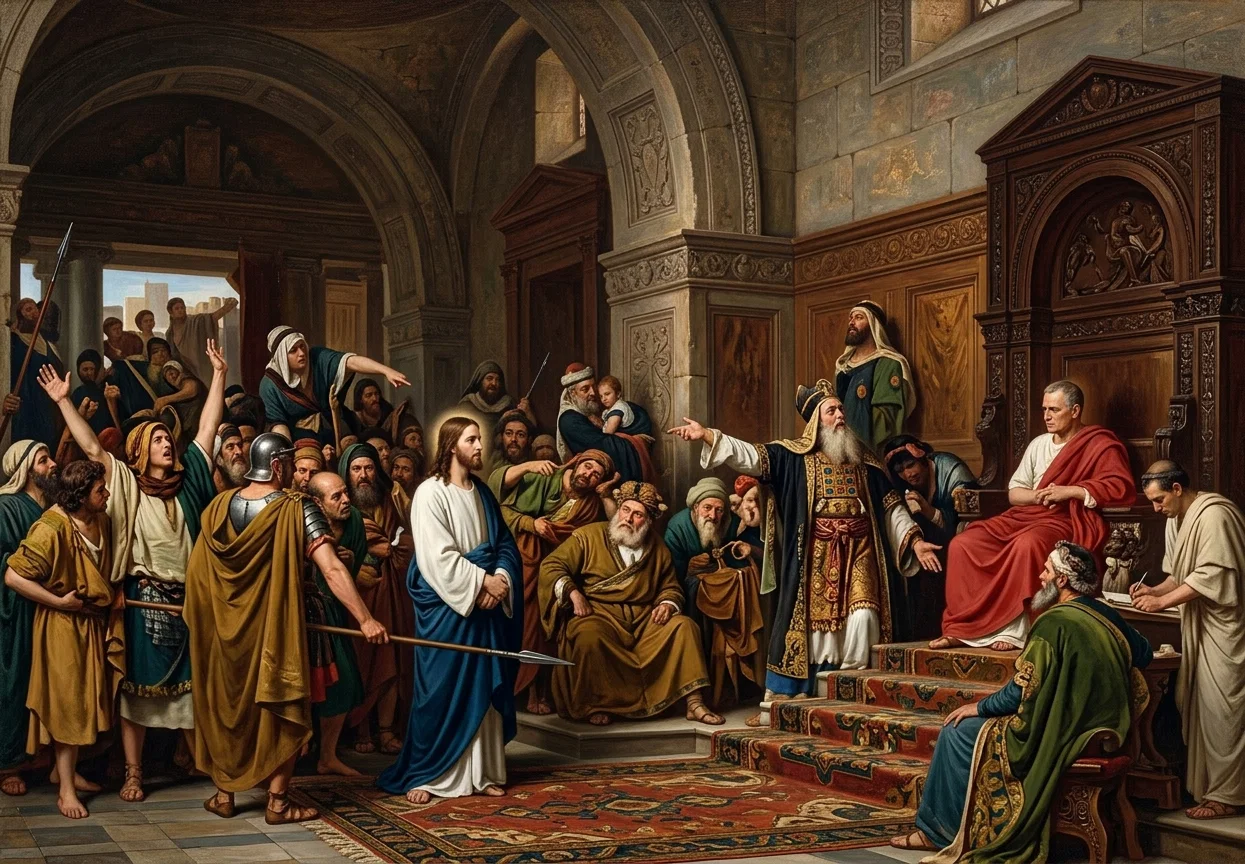
Shall Pilate’s hall of judgment be sufficient For Him who bled and died on Calvary? Shall Satan’s lies deceive throughout the ages, Forever veiling truth and purity? Truth crushed to earth shall rise again in beauty; The hour is here when Truth and Mercy call; The veil of sin shall be forever lifted, And Earth and Heaven shall crown Him Lord of all.
The heavens shall declare His wondrous glory; The angels sing sweet anthems at His feet; The earth shall tell of life and full redemption; The sons of men of love and grace complete. “All-worthy is the Lamb,” the chorus echoes From every field and mountain, hill and plain; And Heaven again sends forth the joyful message: “All-worthy is the Lamb, for He was slain.”
FLORA E. YERGIN.

With Our Inquirers

“If ye will inquire, inquire ye.”
[All questions to this department will be answered which to the editors will seem to minister to the good of the readers and to the mission of the paper. The same question can not be answered repeatedly in the same volume. The name and address must accompany question, not for publication, but as an evidence of good faith, and that answer may be made by letter if deemed advisable. It is well always to enclose a stamp for reply.]

2129.—Times of the Gentiles.

Will you please tell us when the times of the Gentiles will be fulfilled?
C. V. D.
The expression occurs in Luke 21:24, referring to the Jews, “And they shall fall by the edge of the sword, and shall be led captive into all the nations; and Jerusalem shall be trodden down of the Gentiles, until the times of the Gentiles be fulfilled.” “Times of the Gentiles” evidently refers to the times which God has allotted to them in His prophetic word. For a time His Gospel went to His chosen people and thru them to the world. While His people occupied Jerusalem and were true to Him, Jerusalem was held by His own, but when His people apostatized and the kingdom was overturned by Babylon, Jerusalem went into the hands of the Gentiles. After Babylon it was to experience three more overturnings. See Eze. 21:25-27. God declared that after the overturning of the wicked prince of Israel, Zedekiah, “I will overturn, overturn, overturn it.” It would remain overturned “until He come whose right it is, and I will give it Him.” That is the Lord Jesus Christ. Jerusalem will be trodden down by the Gentiles until Christ Himself shall come, and not until then will God’s kingdom and city be restored. Then it will not be the earthly Jerusalem which is in bondage with her children, but Jerusalem which is above, which is free and the mother of all the children of faith.

2131.—Vicarious Atonement.

I recently read in a book circulated by the society of the New Church an article which is in answer to the question, “Is not my guilt imputed to my Saviour and His righteousness imputed to me? If it is not, how am I to get to heaven?” And the answer is: “The doctrines of imputed sin and imputed righteousness are essentially false and unworthy of God. They are doctrines of deception and make-believe. . . . He [God] can not regard any one guilty of sin of which he is not guilty, nor impute to any one a righteousness which he has not done. . . . The idea that God imputed Adam’s sin to all his unborn posterity that He might condemn all, and then His imputation of the whole to the Lord Jesus Christ, and punish Him for us, and pretending that this was doing Him justice was one of the most unjust conceptions imaginable.” Do you consider that he could have any Scriptural authority for his answer? J. A. P.
No more than the Unitarian is the New Church, or Swedenborgian, a Christian church. It is really the church of Swedenborg. The Scriptures expressly declare that we “all like sheep have gone astray; we have turned every one to his own way, and the Lord hath laid on Him [Christ] the iniquity of us all.” It does not say that Adam’s sin is imputed to us all, but the stream does not rise higher than its source. We have inherited Adam’s fallen nature, hence we are fallen, sinful creatures. But He also tells us that “where sin abounds, grace does much more abound.” God does not arbitrarily lay sin upon Jesus Christ, but Jesus Christ voluntarily accepts these sins. God not only “gave His only begotten Son,” but that Son “gave Himself for us, that He might redeem us from all iniquity, and purify unto Himself a peculiar people zealous of good works.” He who knew no sin was made to be sin for us, that we might be made the righteousness of God in Him. 2 Cor. 5:21. There are many texts of the same sentiment. The only hope of the world is in the sacrifice, freewill offering, and power of our Lord Jesus Christ to save. They who ignore that are perverting the word of God. He not only saves us from the sin of Adam, for which we are not responsible, but He will bear the sin of all those who will come to God by Him in faith.

2130.—Third Part of the Stars of Heaven.

Does the third part of the stars of heaven (Rev. 12:4), mean a third part of the angels, or a third part of the Jewish rulers? S.
It seems very clear to us that it means the third part of the angels who are clearly alluded to elsewhere as stars. See Isa. 14:13 and Job 38:7. The great red dragon is expressly said to be Satan. Rev. 12:9.

2132.—The Number of the Beast. Rev. 13: 18.

The number of the beast is said to be the number of a man, six hundred threescore and six. Does it mean that there will be 666 organized churches? Some say there are 660 now, and that if a person belongs to any of these, he has the number of the beast. C. V. D.
First, we do not think that there are so many church organizations as this.
2. A much more plausible explanation is that this name expresses the claims and character of the beast. The popes of Rome have claimed to be the vicar of Jesus Christ, ruling in the place of Christ in the church. It is said that there has been written at some time on the tiara of the pope the expression Vicarius filii Dei. This is the papal claim, “Vicegerent of the Son of God.” In Roman numerals some of these letters have values, I equals 1, V equals 5, L equals 50, C equals 100, D equals 500, and the sum of these letters makes up the number of the name of the power which is symbolized by the beast. In that case we would have 5 plus 1 plus 100 plus 1 plus 5 plus 1 plus 50 plus 1 plus 1 plus 500 plus 1 which equals 666. In Roman notation U and V are the same letter. See the tract “Mark of the Beast and Seal of God,” Bible Students’ Library No. 130, price, two cents.

2133.—The Tribe of Dan.

What is the reason that the tribe of Dan is left out in the numbering of the hundred and forty-four thousand in Rev. 7: 1-8? O. J. S.
Frankly, we do not know. There are two suggestions which have been made in regard to the matter. 1. That because of the first apostasy of the tribe of Dan that tribe itself was about lost; consequently was not numbered with the others in the sealing work. See Judges 18. So also Ephraim is omitted and Joseph added. See Judges 17; Hosea 4:17. 2. Another suggestion is that Dan means judge. The tribe of Dan was the tribe of judging; the sealing work comes in the time of the judgment. In a sort of way all of the tribes come under that one tribe in the judgment and therefore that tribe was not mentioned. We have no definite light ourselves on the omission.

2134.—Firstborn of the Dead. Rev. 1: 5.

Was Christ the first to rise from the dead? A. L. M.
Not in the sense of priority of time. Firstborn and first-fruits indicate preeminence as well as priority, and sometimes preeminence rather than priority of time. So as between Joseph's sons, Ephraim is called the firstborn altho Manasseh was the firstborn. Israel is called the firstborn altho Esau was the firstborn in time. Jesus is called the firstborn of the dead because by virtue of His sacrifice and offering all are raised from the dead. He was also the first in time that should rise from the dead and show light unto the people and to the Gentiles. Acts 26:23. If you will ever keep this in mind that first does not necessarily mean in point of time, but preeminence, all these expressions of scripture will not be difficult to understand.

2135.—The Antecedent of the Pronoun He.

Will you please tell me what is the antecedent of the pronoun “he” in Rev. 16: 16? A. L. M.
The American Standard Revised Version gives the better rendering, “And they gathered them together into the place which is called in Hebrew Har-Magedon.” The antecedent “they” doubtless has reference to the unclean spirits.

2136.—The Word “Creature.” 1 Tim. 4: 4.

To what does the word “creature” here refer? A. L. M.
It seems clear to us that it refers to those things which God has created for food, “every creature of God is good, and nothing is to be rejected, if it be received with thanksgiving; for it is sanctified thru the word of God and prayer.” The Lord has told us in His word what things are fit for food; those are the things which ought to guide us in our eating, because they are the better things for us. If the word of God has set them apart for food we can pray that they may do us good. The word “creature” means a thing created. “Meats,” in the verse previous means food of any kind.

2137.—Life Insurance and Fire Insurance.

What is the difference between life insurance and fire insurance? If one is wrong, why not the other? S.
The Lord has expressly declared to His people, “I am thy life and the length of thy days,” for “He is thy life.” He has promised to be our righteousness, and a wall round about His people. By every assurance which language can convey He has shown His faithful remembrance of them, to care for, cherish and protect, if they will but trust in Him. He has left an organization in this world which ought to be the best insurance society on the face of the earth, His church. Of course it is true that people do not give to Him their lives and that His churches do not remember the poor and needy, but this does not hurt the principle of the thing. As He is our life, we ought to trust Him for life. But He does not make this promise as to our property. Moreover, our property is many times mixed with that of the world. Buildings surround the buildings of God’s people on every side. Obligations many times rest on property, such as mortgages, etc., and those who have loaned money on such buildings many times demand insurance. The only counsel that we could give any one in such a case as that is to follow the Spirit of God and an enlightened conscience, and not judge his brethren. There are those who are doing this. The simple childlike faith of the Christian ought to be to trust God for everything. At the same time exercise the utmost care, faithfulness, and watchfulness.

2138.—Women in the Church.

Please explain 1 Tim. 2:12. C. W. R. B.
Read the whole clause together, “I suffer not a woman to teach, nor to usurp authority over the man.” What the apostle evidently designs to reprove was the assumption of authority on the part of woman. God in the beginning made them equal. Woman was made an help meet for man. Sin came in; our first mother yielded to sin; Adam yielded because he loved his wife. The Lord tells us, not that He decreed it, but from that time forward the woman’s desire should be to her husband and he should rule over her. In other words, his very nature would make him the stronger of the two and the one better fitted to lead out and control in matters of business. So in the church of God the apostle lays down the rule that he does to correct the abuses that might spring up from a misunderstanding of proper relationships. We do not understand by this that woman did not have her field of work in the church, because the same apostle commends Phoebe and other noble women in the Gospel. Woman has a field, and a mighty strong one, and that is in the affections. Her faithfulness and devotion, her intuition and sympathy, are more potent many times than all of the strength and natural leadership which man may possess.

“The Sanctuary” and “the True Tabernacle”
By J. S. Wightman
“And the Lord spake unto Moses, saying, Speak unto the children of Israel, that they bring Me an offering: . . . and let them make Me a sanctuary: THAT I MAY DWELL AMONG THEM.” Ex. 25: 1, 2, 8.
A individual who will devote the time necessary for a careful study of the book of Hebrews, must perceive clearly that the great apostle to the Gentiles lays particular stress upon the subject of the sanctuary which is in heaven, and, for a way of final escape from richly merited punishment, from the consequences of multiplied transgression, points the weary, sin-sick soul to a High Priest “who is set on the right hand of the throne of the Majesty in the heavens; a Minister of the sanctuary, and of the true tabernacle, which the Lord pitched, and not man;” One able to save even “unto the uttermost.” That High Priest is Christ—the same who was with the Father “in the beginning,” who accompanied the hosts of Israel in their march thru the wilderness (1 Cor. 10: 1-4), who was born in a manger on the eventful night when the shepherds watched the flocks and heard the music of the angelic company; who grew to manhood; who walked with the children of men; who healed the sick and afflicted, cleansed the leper, stilled the tempest-tossed Galilee and the still greater tempest that raged in human hearts, taught the world its greatest principles of righteousness and government; who gave up His life upon the tree, that sinners might be eternally redeemed; who triumphantly arose from the grave and ascended to heaven to become “the Mediator of the new covenant”—such an one the apostle Paul declares to be the great High Priest for fallen humanity!

The Sanctuary and the Gospel.

To rightly understand the Gospel—“the power of God unto salvation”—it is necessary to rightly understand the teachings of the Bible concerning the sanctuary. For the two—the institution of the sanctuary and the working-force of the Gospel—are inseparably connected by the very nature of the circumstance that their work is identical.
The Gospel, in fact, gave birth to the sanctuary, and it, in turn, is a part of the Gospel; a piece of literal machinery, if you choose so to call it, with which the working-force of the power of God secures for the individual the “remission of sins.”
Peter writes that it is the “divine power” that has given to us “all things that pertain unto life and godliness;” and we are commended to the love and keeping of “Him that is able to do exceeding abundantly above all that we ask or think, according to the power that worketh in us.” Eph. 3: 20.
The sanctuary, we shall find, is a veritable power-house of that Gospel which is said to be “the power of God.”

The Two Sanctuaries.

There are two distinct sanctuaries brought to view in the Scriptures; the one of which—and its work—can only be clearly understood in the light of the other; the office and glory of the greater interpreted by a correct knowledge of the lesser.
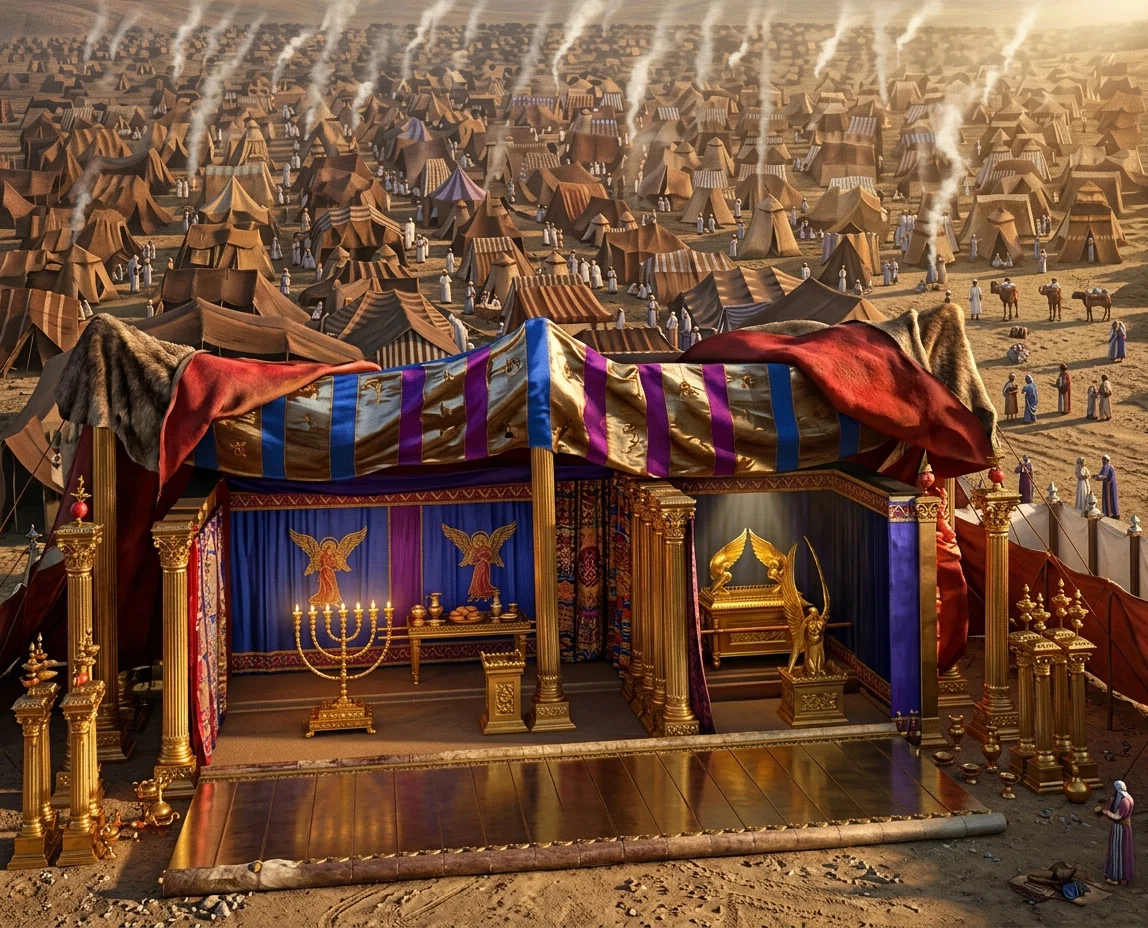
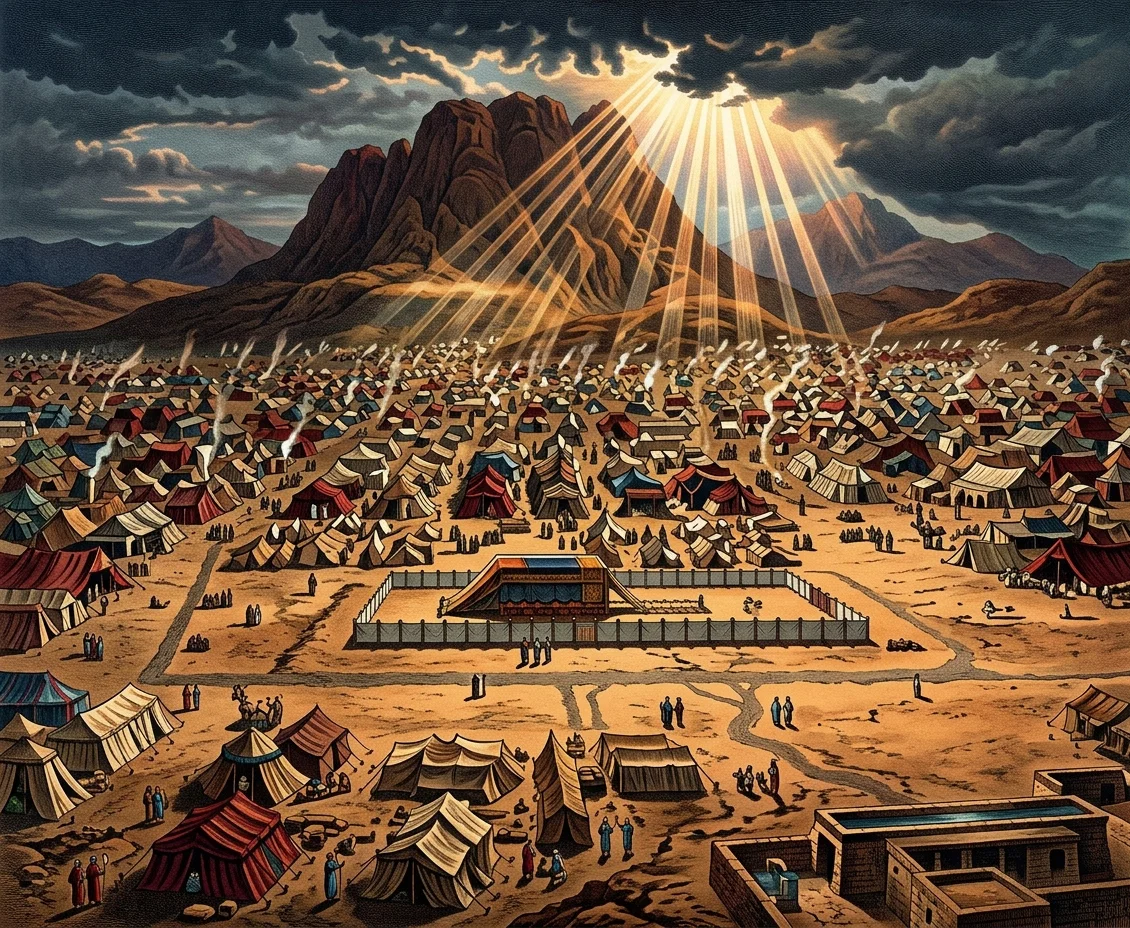
The New Testament describes a worldly sanctuary and even specifies the articles of furniture that it contained. Heb. 9: 1-5. Some fifteen hundred years before the Lord had successfully brought the multitudes of His people out from under the rule of Pharaoh and his cruel taskmasters, across the Red Sea, and into the mountain fastnesses of the wilderness, and in the devouring fires on the glowing height of Mount Sinai commanded His servant Moses: “And let them make Me a sanctuary; that I may dwell among them.” Forthwith the sanctuary was constructed. In the heart of the wilderness and far from the hateful presence of their enemies, the people of God wrought and fashioned a place, “a dwelling-place,” that their Divine Deliverer might ever be with them. Its dimensions, material, furnishings, and all were exactly according to the explicit directions that had been given to Moses in the mount. Exodus 25 to 31. The temple of God was with men. It is interesting to note what occurred when the faithful leader of the hosts of Israel had hung the last curtain upon the court gate of the movable dwelling-place of his God:
“Then a cloud covered the tent of the congregation, and the glory of the Lord filled the tabernacle. And Moses was not able to enter into the tent of the congregation, because the cloud abode thereon, and the glory of the Lord filled the tabernacle.” Ex. 40: 34, 35.
A description of this tabernacle was given last week by other writers, and is found in chapters 25 to 40 of the book of Exodus.
This ancient sanctuary answered every purpose for which it was constructed. Yet it was always typical of, and foreshadowed, a better temple, a more perfect service, “the true tabernacle, which the Lord pitched, and not man.” The earthly sanctuary, and its priests served unto the shadow of “heavenly things.” Heb. 8: 5. And all the rites and ceremonies of ancient Israel were but so many object lessons, pointing to the Lamb of God that taketh away the sins of the world. The significance and efficacy of all these lay in Christ, and every one and all, like an index finger, pointed to the coming Messiah, and were typical, or indicative, of His power to forgive sin, transform the character, and deliver the people from the heavy burdens.
The worldly sanctuary was first pitched in the wilderness, and afterward succeeded by the magnificent temple of Solomon in Jerusalem, and until the time of Christ, and His sacrifice and offering—the price paid at Calvary—the true worship of God for Israel and all nations centered in “the worldly sanctuary.” But with the death of Christ the veil of the temple is rent in twain and that which had been only typical and shadowy—the earthly sanctuary—now passes away, entirely and forever.

The Heavenly Sanctuary.

We now come to a heavenly sanctuary. Christ becomes the great “High Priest” in“a greater and more perfect tabernacle, not made with hands.” Heb. 9: 11. The earthly sanctuary, then, was a figure of “the true;” that is, of the tabernacle in heaven, for the Lord had said to Moses, “See that thou make all things according to the pattern shown thee in the mount.”
The figure serves to show us what the heavenly sanctuary and its service is like; it is a faithful expositor. Thus we read: “For Christ is not entered into the holy place made with hands, which are the figures of the true; but into heaven itself, now to appear in the presence of God for us.” And unlike the sons of Levi, He is the High Priest forever, after the order of Melchizedek. While the first tabernacle was standing, it signified “that the way into the holiest of all [Greek, “holy places,” plural] was not yet made manifest;” but when our Lord ascended on high, He entered the temple of God and became a great High Priest, “having obtained eternal redemption for us.” Heb. 9: 8-12.
John, the beloved apostle, was enabled by the Spirit of God to look into this heavenly sanctuary of the High Priest Christ, and he saw the throne, and before the throne the seven lamps were burning (Rev. 4:5); there was the Son of God, the officiating High Priest (Revelation 5); an altar of incense and a golden censer (Rev. 8:3); and the ark of God’s testament (Rev. 11:19; 15:8). All these objects must be recognized as essential furniture of the sanctuary, and thus we find an exact parallel. “And the temple of God was opened in heaven, and there was seen in His temple the ark of His testament.” Wonderful indeed! The ark—that which contained the tables of stone upon which were written the Ten Commandments—marks with certainty the second apartment of the heavenly sanctuary, as the seven lamps and golden altar of incense mark the first!
The following scriptures will make it clear that the Lord is on His throne; that His throne is in the sanctuary; that the sanctuary is in heaven; and that underneath the mercy-seat of the heavenly sanctuary there is the law of Ten Commandments. Ps. 102:19; 99:1; Jer. 17:12; Ps. 97: 2. From these, and the statement, “Righteousness and judgment are the habitation [establishment, margin] of His throne” what may we conclude? As all “the commandments” are declared by the psalmist to be “righteousness” it is only reasonable to conclude that the law of God—Ten Commandments—is the foundation of His throne! And it is equally obvious that the earthly tabernacle was the earthly throne, “a figure of the true” because—
The ark contained the law of God.
The “most holy” place was the dwelling-place of God.
The sanctuary was the central place of worship.
All this passed away at the cross—the service and its typical work—and was superceded by the heavenly!
The sanctuaries of the Bible, then, consist; first, of the typical tabernacle established with the children of Israel at the Exode from Egypt, which was the sanctuary of the first covenant; and, secondly, of the true tabernacle in heaven, of which the former was a type, or figure, which is the sanctuary of the new covenant. Heb. 9: 24.
Reader, think of a great High Priest now in the heavenly sanctuary, a faithful Advocate, pleading for you and for me! And the apostle declares that “unto them that look for Him shall He appear the second time, without sin unto salvation.” Yes, Christ is coming again! The worldly sanctuary and its service pointed forward to His first advent and the glory of the cross; the heavenly sanctuary and its service presages His second advent and the glory of the crown! He is coming with salvation for those who look for Him! Out of the sanctuary—back to earth—Jesus of Nazareth is coming again! Having “such a High Priest” “let us draw near with a true heart” and in the “full assurance of faith;” for if we are faithful and just to confess our sins, He will be faithful and just to forgive us our sins, and our iniquities will be remembered “no more.”

The Cleansing of the Sanctuary: Its Meaning

By J. O. Corliss

The Expiation of Sin.

The sanctuary of old was so named because it was a sanctified place, set apart for God's dwelling. Ex. 25:1-8. This earthly building was divided into two apartments, in which separate services were conducted before God in behalf of sinners. Heb. 9:6, 7. Turning to the fourth chapter of Leviticus; we learn from verses 27-35 that if one of the common people became conscious of some violation of God's commandments, which he had ignorantly committed, he must immediately bring to the door of the sanctuary a kid of the goats, and there lay his hand on its head, thus setting it apart to die in his stead, for the sin of which he was guilty. He must then kill the victim, when the priest in attendance dipped a finger in the blood, touching with it the horns of the altar of burnt offering, and then spilled the remainder at the base of the altar. The body of the substitute was next carried into the sanctuary thru the body of the priest, and by some mysterious process, the substituted guilt it bore was lodged in the sanctuary.
The object of such a ceremony is obvious. “Sin is the transgression of the law.” 1 John 3:4. “The wages of sin is death.” Rom. 6:23. To transgress any one of God's commandments contained in the ark, within the sanctuary, was to incur the death penalty. To be relieved from this, the sinner was permitted publicly to substitute an innocent victim, thus giving wide acknowledgment to his guilt, and an expressed desire to be reconciled to God's will, as expressed in His law deposited beneath the mercy-seat, which was the typical throne of Heaven. On His part, God freely forgave a sin thus confessed, since the innocent substitute had borne the sin in the sinner's stead.

The Blotting Out of Sin.

This was the ordained method by which the Israelites of old expressed their faith in the future death of Christ for sin. It must be readily seen, however, that altho the Jewish ceremony granted forgiveness for sin, the sin itself was not then blotted out. Had this been done, the people receiving such grace would have been entirely freed from conscience concerning their sins, and the death of Christ would have been of no avail for them, since their sins had already been wiped away. It was therefore necessary that a “remembrance” of these forgiven sins should be had for after consideration. Heb. 10:1-3. For this reason these sins were conveyed into the sanctuary in the way described, there to remain till their final disposal.

The Day of Atonement.

This conclusive act required a special ceremony to be performed on the closing day of the ritualistic year, and by none other than the high priest himself, in the inner apartment of the sanctuary. The time chosen for this was the tenth day of the seventh month, and was called the day of atonement. Lev. 16:29, 30. This was the only day in the year when this at-one-ment of man with his Maker could be fully brought about. The offerings for sin on all other days were but preparatory steps toward that crowning day of all the ceremonial year. On this great day all the sins of all the people which had been conveyed into the sanctuary, thru the daily offerings, were to be atoned for, when they were removed from the sanctuary that its cleansing might be complete.
There was this great difference between the daily services in the outer apartment of the sanctuary, and the annual service conducted in the inner apartment. Thru the daily services sin was transferred from the sinner into the sanctuary, while the annual service was for the cleansing of all sin out of the sanctuary. In the first of these services, individual offerings were made for personal sin, while in the second, the whole congregation of repentant ones were freed from sin by a single offering. In the first, only under priests did the service, while in the second, the high priest alone filled the place of intercessor.
It is therefore clear that this day of at-one-ment—the last day of the ceremonial year—was the time when all the sins of the preceding year, which had been lodged in the sanctuary, were called to “remembrance,” under review, and final disposition made ofthem. In other words, it was the time when Israel's life-work for the past year was examined, and their sins blotted (figuratively, of course) from the records of remembrance, or thrown back upon the guilty, that they might meet the penalty due for their wickedness.
On this day, the first work of the high priest, after offering blood for his own errors, was to bring two goats before the door of the sanctuary, where lots were cast upon them, one of these lots for the Lord, the other for the scape-goat. The goat upon which the Lord's lot fell was slain, and offered for a sin-offering. The other goat was kept alive before the door for another purpose. Lev. 16:7-10. The blood of the sacrificed goat—which was the people's sin-offering—was taken by the high priest into the “most holy” place, and sprinkled upon the mercy-seat, over which was the shekinah, the symbol of God's presence. In this way, an atonement was made for the holy place, because of the sins of the house of Israel having been brought thither. Verse 16. The same thing was done for the vessels in the outer apartment and for the altar. This was the cleansing of the sanctuary from the accumulated sins of the year. Verses 18, 19.
BOTH APARTMENTS OF THE SANCTUARY, SHOWING FURNITURE.
This having been done, the high priest came out to where the live goat was detained, and laying his hands upon the head of that goat, he enumerated the sins of his people, and so placed them upon the goat. This creature was then conveyed alive to an uninhabited part of the country, there to bear, for an indefinite time, all the iniquities of the house of Israel. Verses 20-22.

How Much It Covered.

This work of the atonement, it will be readily seen, covered only past sins, since each year had its own day of atonement. More than this, only those sins came within the scope of that atonement, which had, previous to the final act of the ceremony, been conveyed into the sanctuary by personal confession. Those who chose not to do this, retained their sins upon themselves, since only those sins were put upon the scape-goat which the high priest brought within the sanctuary. Such persons refused to be reconciled to God; therefore the atonement did not avail for them, and they were left to receive the consequence of sin, which is death.
All this was but typical, and was ordained to point that people to the work of Christ in man's behalf. It could go no further; “for it is not possible that the blood of bulls and of goats should take away sins.” Heb. 10:4. It therefore follows that when Christ came and offered Himself as the true sacrifice for sins, all that typical work ceased to avail before God. But the real work, the substance of which all that was but the shadow, must be performed somewhere by the true High Priest. But who is He, and when and where does He accomplish this work?
Concerning this transfer of the priesthood, the apostle says: “Now of the things which we have spoken, this is the sum: We have such a High Priest, who is set on the right hand of the throne of the Majesty in the heavens, a Minister of the sanctuary, and of the true tabernacle, which the Lord pitched, and not man.” Heb. 8:1, 2.

The Antitypical Day of Atonement.

Christ is therefore Minister of a sanctuary located in heaven. But is it one of definite shape, as was the one ministered in by Levitical priests? This question is clearly answered by the apostle: “Christ is not entered into the holy places made with hands, which are the figures of the true; but into heaven itself, now to appear in the presence of God for us.” Heb. 9:24. These words plainly reveal that the earthly sanctuary, (Continued on Page 9.)

The Cleansing of the Sanctuary.

(Continued from Page 5.)
with its appointments, was a figure of the true sanctuary, where our Saviour ministers as high priest. In another sentence the apostle says that the priests of the earthly sanctuary served “unto the example and shadow of heavenly things.” Heb. 8:5.
The earthly sanctuary and its services having been a type, or shadow, of the heavenly temple and its services, we must conclude that the work of Christ, as our High Priest in heaven must have been truly pointed out by the earthly work. This being true, in Christ's work for the world there must be a specific time set apart as a day of atonement, when the sins of all men must be brought up in remembrance for final adjustment, preparatory to the Lord's return to receive the just to Himself, and to let the sins of the incorrigible rest on themselves for punishment.
This can be nothing less than the closing work for man,—an investigation of his life-work,—for the purpose of ascertaining whether he is to live forever reconciled to God, or whether he shall be forever removed from the divine presence. Such a work can not be righteously done until the influence of every one has borne its legitimate fruit. Men's influence does not die with them, as is shown in the cases of Voltaire, Paine, and others, on the one hand; or the Wesleys on the other hand, with all the various missionaries who have spent their lives in telling the story of the cross; for tho they are dead, they yet speak, and not till the last generation has lived will their influence for good or evil be told.

A Solemn Time.

The time of the cleansing of the heavenly sanctuary is therefore a most solemn period in the history of the world. Surely such a work could not be carried forward without divine warning to prepare men for the event. “The Lord God will do nothing, but He revealeth His secret unto His servants the prophets.” Amos 3:7. This matter can be no exception to the rule. Daniel heard two heavenly beings talk about this very thing, when one said to the prophet: “Unto two thousand and three hundred days; then shall the sanctuary be cleansed.” Dan. 8:13, 14.
This cleansing can not refer to the earthly temple which was cleansed once each year. This period covers too much time for that. No, this cleansing was to be in the distant future from Daniel's day; for he was distinctly told that the vision was to be fulfilled at the “time of the end.” May it not be possible that it applies in our own generation? Shall we not, then, seek out of the “Book of the Lord and read,” that we may be ready for all things to come?
Continue reading: The Twenty-three Hundred Days