Your ShelfYour Projects

Signs of the Times, Vol. 31, No. 13.

THE TWENTIETH PSALM

Signs of the Times

Mar 29, 1905

Pacific Press Publishing Company · Mountain View, California · Mar 29, 1905

THE TWENTIETH PSALM

"Jehovah answer thee in the day of trouble; The name of the God of Jacob set thee up on high; Send thee help from the sanctuary, And strengthen thee out of Zion; Remember all thy offerings, And accept thy burnt sacrifice; Grant thee thy heart's desire, And fulfil all thy counsel. We will triumph in Thy salvation, And in the name of our God we will set up our banners; Jehovah fulfil all thy petitions. Now know I that Jehovah saveth His anointed; He will answer him from His holy heaven With the saving strength of His right hand. Some trust in chariots, and some in horses; But we will make mention of the name of Jehovah our God. They are bowed down and fallen; But we are risen, and stand upright. Save, Jehovah; Let the King answer us when we call."
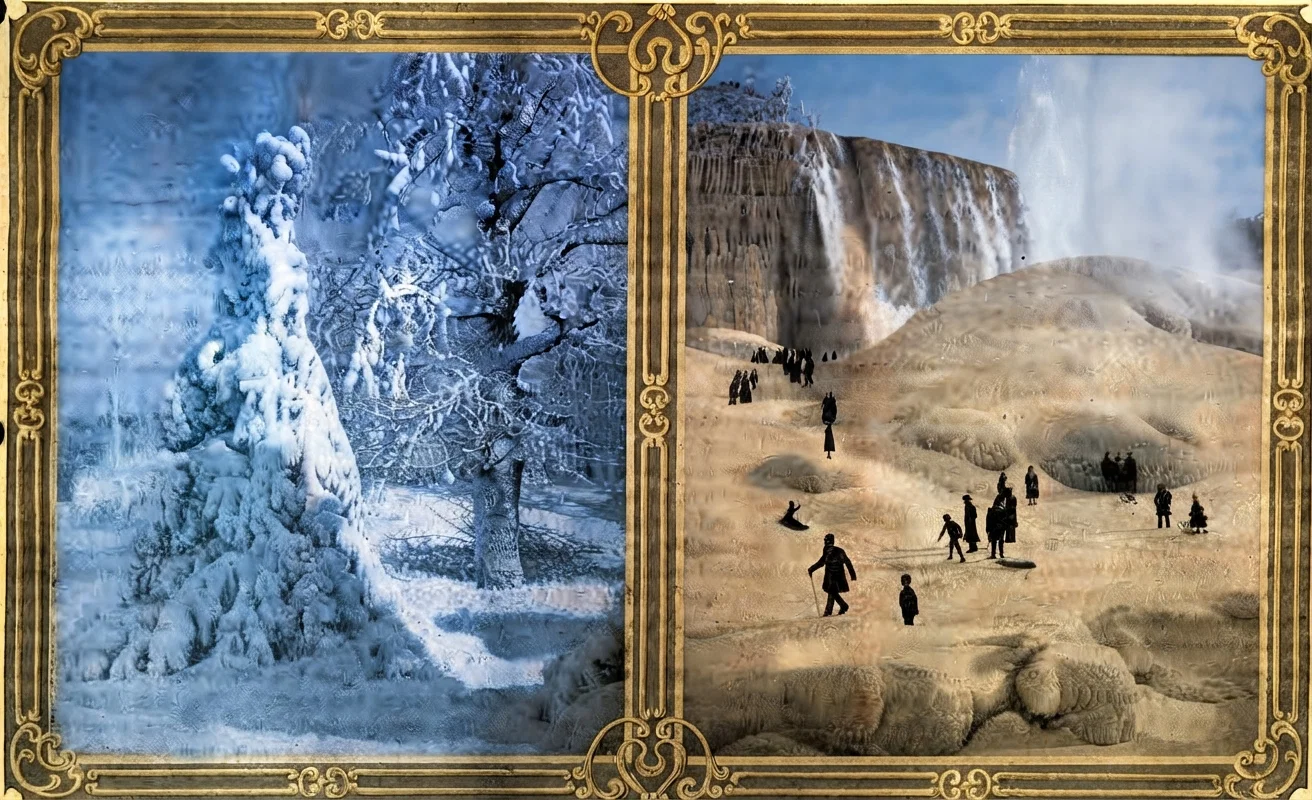
WINTER
WINTER
SUMMER
SUMMER
SPRING
SPRING

Some Up-To-Date BOOKS

Christian Patriotism

The book with the above title, by Alonzo T. Jones, consists of seventeen lucid chapters, being a study of the principles that should govern the Christian patriot in his relation to earthly governments, tracing the great question of the relationship of church and state from the beginning of earth's history to the present day.
This volume is especially appropriate at this time, when our country is agitating the passage of conscience-restricting laws in regard to Sabbath-keeping.
The book is neatly bound in cloth, with gilt title, and contains 104 pages. The regular price is 40 cents, but to all whose orders are sent within thirty days from the date of this paper, it will be sent, post-paid, for 25 cents.

A Guide to Accuracy

In the Use of the English Language

A most interesting book on this subject is one entitled "The Essentials of Our Language," by G. W. Rine, B. L. It is surprising to find how frequently our loved English language is misused, and even abused, by speakers and writers. In this work by Professor Rine, some of our most common expressions are proved to be, not only incorrect, but sometimes positively absurd and vulgar.
"Accuracy in the Use of Words" is the title of the opening chapter, while others are: "Slips in Syntax," "Punctuation and Capitals," "Art of Correspondence," "Art of Sentence Building," "Practical Synonyms Discriminated," "Learning by Doing."
The work is not only invaluable to students, speakers and writers generally, and to those especially who have missed educational advantages, but, unlike most technical works, it is also very interesting. This is because of the many surprising errors in language which are heroically revealed by the author. Even the best informed will find it a valuable and painstaking tutor.
"Essentials of Our Language," comprising 276 pages, divided into seven parts or chapters, bound in cloth, sells for $1.00, post-paid.

Christianity and Science—Modern

The book, "Outlines of Modern Science and Modern Christianity," is a logical presentation of the true principles of Christianity and science, in contrast with modern ideas of Christianity and science. It is written to arrest the downward drift of theology, and place within the minds and hearts of its readers the soul-stirring, life-giving doctrines of the Bible.
The work contains 270 pages, is bound in cloth, and is mailed for 75 cents, post-paid.

Health

How to Find It when It's Lost. How to Keep It when It's Found.
BY B. FRANKLIN RICHARDS
The chapter titles of this excellent work are as follows:—
The Lost Treasure Man's Present Condition Errors in Diet The Enemies of Man The Digestive Agents Timely Suggestions What to Eat and Why To Whom Do We Belong? Useful Information Home Remedies for Common Diseases Seasonable Recipes
This book goes into the details of such every-day questions as good foods, food combinations, influence of stimulants, how to avoid consumption, care of the teeth, use of the bath, etc., etc.
To illustrate and make all these points perfectly clear, several carefully-prepared tables are inserted. These tables alone are worth more than the price of the entire volume.
Contains 222 pages, indexed, cloth bound. Price, $1.00.

For the Children

The House We Live In

A story of our bodily dwelling, told in a way to attract the attention of children, as well as to very much interest them in the important subject of keeping their bodies in a healthy condition. It is more often the rule than the exception that the grown-up children become quite as interested as the smaller ones.
It compares the body and its different organs with a house and its different parts. For example:—
A telephone system illustrates the nerves The kitchen illustrates the stomach A pumping-engine illustrates the heart A bath-room shows the work of the lungs A music-room illustrates the voice A gentle nurse illustrates sleep The burglar illustrates tobacco The murderer illustrates alcohol
It is all told in a story by Mother to her three children, and while it does not so much as mention physiology by name, it teaches it clearly and accurately.
Attractively illustrated, and bound in durable cloth; 218 pages. Price, 75 cents.

SPECIAL MEETING OF STOCKHOLDERS.

NOTICE is hereby given of a special meeting of the stockholders of Healdsburg College at the College in Healdsburg, Cal., Monday, March 20, 1905, at 11 A. M.
This important meeting is called to consider and decide upon the plans on which the school shall be operated in the future; also its relation to the proposed Union Conference Training School in California, and intermediate schools in this conference.
  1. Shall we approve this action of the Pacific Union Conference?
  2. What shall we do with our property?
  3. Shall we establish an intermediate school? If so, shall it be operated in our present buildings, or be started in a rural community?
It is very necessary, also, to have some changes made in our by-laws, place of meeting, etc. In order to do this we must have two-thirds of the stock of the corporation represented. We strongly urge a large attendance, for serious problems must be solved.
College Board, M. H. BROWN, President. H. G. LUCAS, Secretary.

Subscription Request for Signs of the Times

SIGNS OF THE TIMES, Mountain View, Cal.
Dear Brethren:
Enclosed you will find fifty cents in stamps for which please send SIGNS OF THE TIMES to——. I have used two hundred sets of the paper here with good results, and intend to do all I can all the time.
Yours in haste, Sincerely, CLARA SILVER.

OUR LITTLE FRIEND,

Mountain View, Cal.
DEAR LITTLE FRIEND:
We receive you every week, and enjoy hearing you read. I can now read a little, and enjoy reading in the Bible.
We have two little friends we want to send Our Little Friend to for three months each. . . . [Names and addresses.] Enclosed find stamps for same.
Yours in the Master's work,
HAZEL and LOIS MARKEL.

DEAR LITTLE FRIEND:

I am sending in the renewal of my subscription for another year. Please come so I will not miss you. I also send fifteen cents to pay for your visits, also, to Miss Marjorie Redmon. She is a little girl who wants to come to our Sabbath-school, but has no lesson to study at home, so please find sixty-five cents in all.

MY DEAR LITTLE FRIEND:

Enclosed you will find fifty cents to pay for your visits to our home another year. We like to read you, and don't see how we can get along without you. We learn our Sabbath-school lesson from you, and then we take you to public school, and give you to our playmates, who read you with delight.

MIRACLES.

THE word "miracle" is defined to mean "an event in the natural world, but out of its established order, and possible only by the intervention and exertion of divine power; a supernatural event."—"Standard Dictionary." The word in the New Testament comes from two Greek words: dunamis, meaning miraculous power; and sēmeion, a sign, a wonder. We have also ergon, "works," and teras, "wonders," both having reference to true miracles.
Strong ("Systematic Theology," p. 61) declares that a miracle of the Bible, that is, a true miracle, is "an event palpable to the senses, produced for a religious purpose by the immediate agency of God; an event therefore which, tho not contravening any law of nature, the laws of nature if fully known, would not be competent to explain."
WE have little objection in a general way to the above definitions. They declare, as the Bible record clearly shows, that the miracles wrought by the servants of God were not a product of natural agencies, or a product of divine energy through natural law. They show a power or will above the ordinary operations of nature, transcending that law, and often reversing that law. Neither are they a matter of caprice, nor do they appear such to the observer. They always show the highest wisdom; they are wrought for the purpose of the greatest good.
A Sample of God's Everyday Work.
NOW WE know what is said by the various classes of theologians and religionists. Some will have no miracles at all, but the ordinary working of nature's laws, not understood by us, perhaps, but nature's laws still. Others admit the miracles, but declare that God is in all the working of nature, and all are miracles. But looking upon it either way is contrary to the teaching of God's Word and the record of the miracles of His servants. In fact, it is tantamount to a denial of God's Word to characterize all the operations of nature a miracle differing in no sense from the miracles so called, or to say that all are merely the operations of God through nature.
GOD works in nature. Life from Him is operative in nature. But God works and His life operates through law. Life operating through one law transmutes the soil, the sun, the rain, the air into a sweet, luscious melon; by another law into a bitter olive. The law by which the life operates is in the seed, the vine, the tree. The olive tree will not produce the melon; the melon vine will not produce the olive.
LIFE from God operating through one law produces a colored man; through another law, a white man results. These laws may be perverted by men until race characteristics are merged or blended into an individual of different type. But the laws have both to do with men, tho of different capacity and color. But the law using life to produce the flower and the brute can not be perverted into the production of a race of man-vegetables, or man-brutes, which will persist forever.
Now ALL these transmutations may be to us marvelous, wonderful, divine; but they are not miraculous. They are in harmony with laws, which we may not wholly understand, but which we know to be uniform in operation and which we continually use to our own loss or gain. We plant potatoes, we know potatoes will be the product. We sow wheat, and barring foes and catastrophe, we know we shall reap wheat. We plant an apple tree, and we know that from it will come apples. We may know nothing of the wondrous processes by which all these results are wrought; we know that a divine Power spokethe various laws, and Divine Providence constantly places at the disposal of these laws the great currents of life.
WE know more than this if we believe God's Word. We know that all of these laws, divinely given, have been perverted by sin to a greater or less extent. Degeneration marks the whole creation till death supervenes. Man can, through an understanding of these laws, prune, select, fertilize, feed, and in various ways improve, the stocks and breeds, the species and kinds, of animals and plants; but left to themselves, the tendency is ever downward to extinction and death.
WHAT God created He designed should persist forever. Man, under God the prince of this world, was to be the head and ruler forever of this earth. In his realm man was to progress forever. But man sinned. He placed athwart the channel of the working of God's life in his own being his own will and choice, and the law of God's life in man became "the law of sin and death." The mind, instead of ruling the flesh for God, became subject to a perverted flesh in which sin reigned, and therefore the mind became carnal; and "the carnal mind is not subject to the law of God, neither indeed can be." And because of man the whole creation under him became subject to vanity, to sin, to sickness, to degeneration, to decay, to death. The perverted law, originally ordained to life, man finds to be unto death. Yet despite the degeneration and death, life works out wonderful things in the midst of death, things which in the end die also.
BUT God, in His infinite goodness to fallen man, for His own wise reasons, steps into this domain of sin, puts forth His own transcendent power, and lifts the operation of life above the perverted law of sin and death, into the higher realm of the law of righteousness and life. Creative power is exercised over life subject to perverted law. Its operation is a miracle. It is not in conformity to the natural laws which environ man and control a fallen creation. It is in harmony with the law of God's love and righteousness and life. It is a message from Him to His fallen creatures, that God has interposed to lift them to a new plane, a higher life because of a higher law, a new creation in Christ Jesus.
[The subject will be discussed further in the Miracles of Christ Jesus our Lord.]

THE TRUE CHRISTIAN'S ATTITUDE TOWARD THE LAW OF GOD.

IN place of the attitude of antagonism which so very many display to-day toward the law of God and are teaching others to express toward that law, let us look for a moment at the attitude which the Word itself would teach us to maintain.
The writer of that wonderful treatise on the law of God (the 119th Psalm) can not find words to express the fulness of his heart toward that law, and so again and again he uses the interjection: "O how love I Thy law! it is my meditation all the day." Verse 97. (Throughout this psalm the words, "law," "ordinances," "judgments," "statutes," "precepts," and "word" are used interchangeably to save monotonous repetition). "I delight in Thy law." Verse 70.
We can not say, as some have said, that such an attitude was proper and necessary under the old dispensation, but that this law which the psalmist extols was abolished in Christ; for this same writer declares (verse 172): "All Thy commandments are righteousness;" and again (verse 142): "Thy righteousness is an everlasting righteousness, and Thy law is truth." As the commandments are "righteousness," and that righteousness is "everlasting," how we do fly in the face of truth and contradict God when we declare that these same commandments are abolished in Christ or in any other way. As if foreseeing that this very charge would be brought against Him, Christ declares: "Think not that I came to destroy the law or the prophets; I came not to destroy, but to fulfil. For verily I say unto you, Till heaven and earth pass away, one jot or one tittle shall in nowise pass away from the law, till all things be accomplished." Matt. 5:17, 18.
That declaration of our Saviour certainly puts an end to all argument in the matter of the abolition of the law of God. It stands, surer than the "eternal hills," stronger than all the powers of earth and fallen angels, true as God Himself is true, and as perpetual and unchangeable as He is.
In view of that fact, we turn again to the inspired writings of the prophets. Because that law is true and every one of its righteous commandments perpetual in duration, it furnishes the psalmist a theme for exultant song. He says: "Let my lips utter praise; for thou teachest me Thy statutes. Let my tongue sing of Thy word; for all Thy commandments are righteousness" (Verses 171, 172).
There was not in his heart the spirit of hatred so often manifest to-day toward that law. He says: "I love Thy commandment above gold, yea, above fine gold" (verse 127); "the law of Thy mouth is better unto me than thousands of gold and silver" (verse 72); "Unless Thy law had been my delight, I should then have perished in mine affliction" (Verse 92); "I have longed for Thy salvation, O Jehovah; and Thy law is my delight" (verse 174).
This psalm writer was not pleased, as many individuals are, to see the law of God transgressed and its abolition taught. He says: "Thou hast rebuked the proud. Cursed are they that wander from Thy commandments" (verse 21, margin); "Hot indignation [margin, "horror"] hath taken hold upon me, because of the wicked that forsake Thy law" (verse 53); "It is time for Jehovah to work; for they have made void Thy law" (verse 126); "Streams of water run down mine eyes, because they observe not Thy law" (verse 136); "They draw nigh that follow after wickedness; they are far from Thy law" (verse 150).
He not only refuses the suggestion that the law of God could be abolished, but declares that he knew it never could be abolished. "Of old have I known from Thy testimonies, that Thou hast founded them forever" (verse 152); "The sum of Thy word is truth; and every one of Thy righteous ordinances endureth forever (verse 160)." Is there any abolition of the law of God taught here?
But how about the life of those who adhere to the law of God? Is it not filled with hardship, and discouragement, and sorrow?—Far from it. Listen to the psalmist, and then make his experience and this fact yours: "Great peace have they that love Thy law; and they have no occasion of stumbling." Verse 165. Why will they have no occasion?—Because, loving that law, they have come to make its precepts a constituent part of their character; and they have peace—great peace. The world does not have peace. Why?—They have forsaken the law of their God; they have occasion for stumbling. They have not made the precepts of that law a part of their character; so they are at variance one with another, and fight against the very things that are for their best good. In such an attitude true peace is impossible. Insofar as the law of God is being disregarded and abandoned, peace is departing from the earth. So he says, "Blessed are they that keep His testimonies, that seek Him with the whole heart" Verse 2. Then too he can say, "I shall walk at liberty; for I have sought Thy precepts." Verse 45.
This is the attitude of the true Christian, the truly-converted man, toward the law of his God, and this is the happy condition of the one who maintains that attitude. S.

"HISTORY REPEATS ITSELF."

GOD complained of ancient Israel, in Isaiah's time, saying that their iniquities had separated them from God. He said of them, "None calleth for justice, nor any pleadeth for truth; they trust in vanity, and speak lies; they conceive mischief, and bring forth iniquity. . . . The way of peace they know not; and there is no judgment in their goings; they have made them crooked paths; whosoever goeth therein shall not know peace." Isa. 59:4-8.
Now Israel, when true to God, was a type of His true church in the latter times; but when in a backslidden condition, they were typical of the world's worst possible state. They were "worse than the heathen" of their own time, and therefore would fairly typify general conditions in the last days, when evil men "wax worse and worse." The result of the condition described by the prophet is stated in these words: "Judgment is turned away backward, and justice standeth afar off; for truth is fallen in the street, and equity can not enter." Verse 14.
This charge would indicate that the general corruption had affected official circles as well as the common public. So we have a like condition to-day. It must of necessity be that the people's representatives will be like the people, and as the greater opportunity comes to them, they naturally fall into even lower degrees of excess. And in the downward trend of official rectitude nothing gives a greater impetus than the prevalent liquor habit. So it is not surprising that this "camel," laden with corrupt influences, gets not only its head, but a large portion of its body, into the tents of state.Such is the complaint the world over, as far as the so-called "civilized" or "Christian" nations are concerned. We note the situation in one great capital—selecting it because it is the greatest, and not because it is the worst. In some respects it is the best, and therefore the illustration may not be deemed an exaggeration. A current press item says: "There are five unlicensed bars in the British House of Parliament—put there to keep the members from getting drunk at the outside resorts. The Kitchen Committee reports that an average of $233 was spent daily at these joints during the last session."
Other governments may not be so careful to concentrate the indulgence of their parliaments, congresses, legislatures, etc.; but the conditions do not average any better. So we can safely take the current news of the day, and from it read a repetition of the prophet’s statement of old: "Judgment is turned away backward, and justice standeth afar off; for truth is fallen in the street, and equity can not enter. Yea, truth faileth; and he that departeth from evil maketh himself a prey; and the Lord saw it, and it displeased Him that there was no judgment."
G.

TRUE LIBERTY.

THE importance of liberty is accentuated in the fact that no one can be a perfect representative of truth who is not himself free from error. Liberty is the medium of spiritual life; the nearer one comes to being free from sin, the more nearly will he exemplify the life of the perfect One. Therefore, of necessity, Christ would first set free those whom He would send out to proclaim liberty. To this end He “gave Himself for us, that He might redeem us from all iniquity, and purify unto Himself a peculiar people, zealous of good works.”
When Christ calls His disciples “a peculiar people,” He does not mean that they are to be oddities, conspicuous for their long hair, or slovenly dress, or manners that render them essentially obnoxious to people of ordinary refinement. No, they are to be peculiar in their freedom from iniquity. And this purification becomes the medium through which the missionary spirit operates, for it causes them to be “zealous of good works.”
It is for this reason that only those who are made free by Christ are “free indeed” (John 8:36); for the only emancipation that makes us “free indeed” is that which sets us free from sin. The recognized human master of human beings may be the most abject slave to the lusts of the flesh, while the bondservant of such a master may be “the Lord’s freeman.”
Christ’s mission to earth was to “proclaim liberty to the captives,” but in all His ministry we do not read of a single instance of His personally setting servants free from their masters, or directing masters to free their servants. But He did loose multitudes afflicted with disease, forgave the sins of many, and confirmed the covenant by which all who will believe on Him may be likewise set at liberty. And His work of “proclaiming liberty to the captives,” through the agency of those who are His by the obedience of faith, is still going on in the earth.
But the really effectual work must be done through those who, being themselves liberated from sin, are enabled to “walk even as He walked;” to walk with God as did Enoch; to “walk not after the flesh, but after the Spirit.” Being baptized into Christ, they walk with Him “in newness of life.” Hence they are prepared to obey the Master’s commission: “Go ye therefore, and teach all nations, baptizing them in the name of the Father, and of the Son, and of the Holy Ghost; teaching them to observe all things whatsoever I have commanded you.”
Only such as themselves enjoy liberty can successfully proclaim liberty; for they only can truly appreciate the “glorious liberty of the children of God.” Nor will they ignore the record of what it is that Christ has commanded. They will remember that it was the truth that set them free (John 8:32), and that God’s Word is the “truth” by which all must be “sanctified”—set free, and set to work (chapter 17:17). They will remember, also, that the Spirit of truth is the interpreter of the Word of truth (chapter 16:13), and that “where the Spirit of the Lord is, there is liberty.”
Continue reading: Question Corner