Your ShelfYour Projects

Signs of the Times, Vol. 24, No. 19.

THE HEALING GOSPEL

Signs of the Times

May 12, 1898

Pacific Press Publishing Company · Oakland, California · May 12, 1898

THE HEALING GOSPEL.
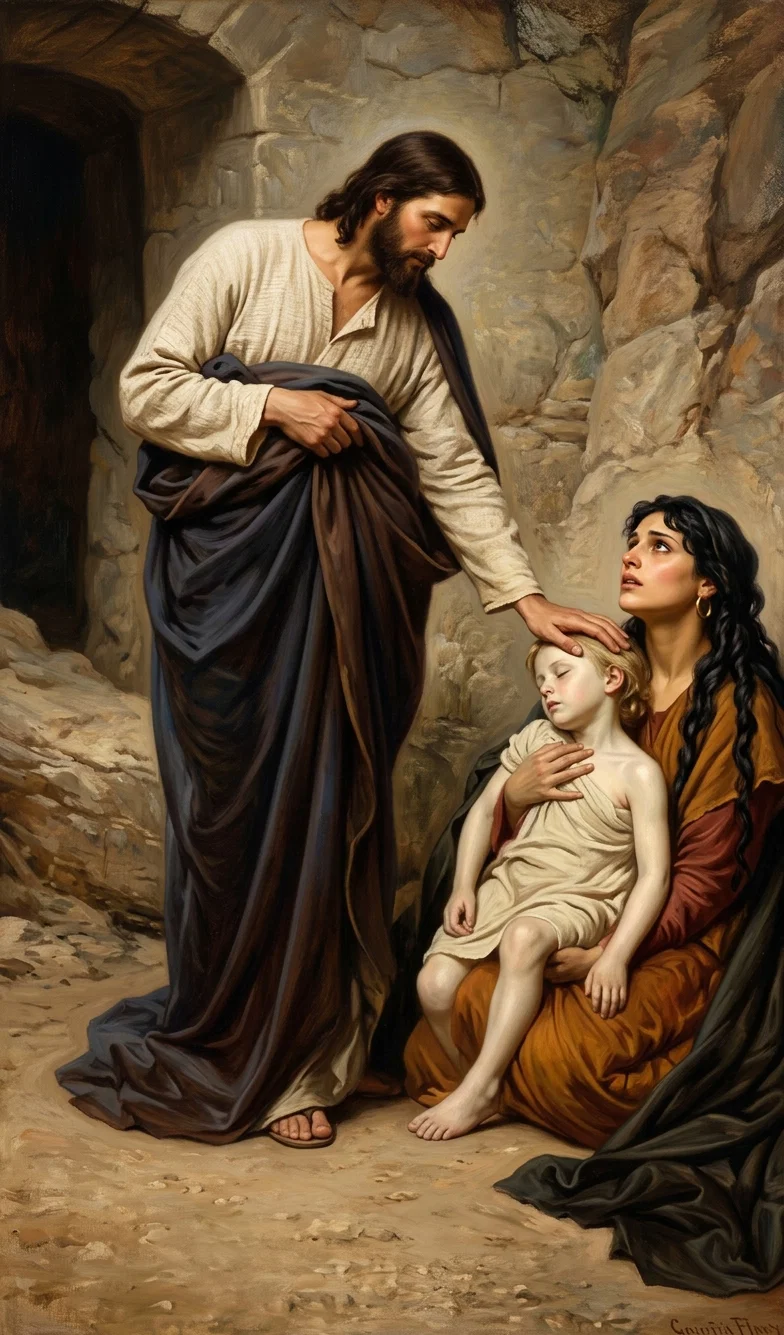
Sin is a disease. It is the most malignant disease that ever found lodgment in human flesh. It is a mysterious thing. Born of the devil, implanted, unhappily by his own consent, in the heart of the man, it pollutes the pure streams of life energy constant flowing from the eternal Source of life, and designed to keep in perfect order the whole body, soul, and spirit.
“Jesus of Nazareth, a Man approved of God among you by miracles and wonders and signs, which God did by Him in the midst of you;” “who went about doing good, and healing all that were oppressed of the devil;” “for this purpose the Son of God was manifested, that He might destroy the works of the devil.” Acts 2:22; 10:38; 1 Jn. 3:8.
It is mysterious and inexplicable, because, while it must enter through the doors of the mind, as a mental process, it passes thence by some subtle means to the bones and sinews and entire physical body. In name a principle,—the principle of evil,—in reality it attacks the physical organism as a material, destructive agent, beclogging and obstructing the operations of nature’s laws, and producing all the ills and sicknesses that have befallen mankind, with death as the culminating evil. More than mere disease, it is the parent germ of all maladies, the epitome of all unhappiness.
But sad, deplorably sad, as is the picture of this world of human beings bowed beneath the weight of sin and sickness, hindered and restricted in all the avocations of what we now call life, only half living both in body and intellect, there is healing, abundant, free for all.
The Holy One of Israel, beholding the iniquity of the people, speaks of it as a sickness of the body: “The whole head is sick, and the whole heart faint. From the sole of the foot even unto the head there is no soundness in it; but wounds, and bruises, and putrefying sores.” Isa. 1:5, 6. This is not a picture of the heathen, the presumably vilest of earth; it is a view of the chosen of God, those who receive the greatest blessings He can give them, but who depart from Him. It is a picture of every soul in whom is sin,—of you and of me if we have not found healing. Is there hope under heaven for such?—Listen: “Come now, and let us reason together, saith the Lord; tho your sins be as scarlet, they shall be as white as snow; tho they be red like crimson, they shall be as wool.” Verse 18. The Lord Himself says it; then it is surely so. Praise His name!
How is it done? by what miracle is this wondrous change brought about?—Here it is, short, simple, easily told, easily understood: “The blood of Jesus Christ His Son cleanseth us from ALL sin;” “and with His stripes we are healed;” “and this is the record, that God hath given to us eternal life, and this life is in His Son. He that hath the Son hath life.” “Believe on the Lord Jesus Christ, and thou shalt be saved.” 1 John 1:7; Isa. 53:5; 1 John 5:11, 12; Acts 16:31. Here is the wonderful compound, the remedy that never fails to effect a cure, and the means whereby we may obtain it. Here again is a mystery, how simple faith in Him who was bruised for our iniquities, whose blood was poured out for us, can cause such a marvelous transformation of the entire man,—cleansing from all sin, mental and physical. But is it true, as the contrast implies, that this faith, also a purely mental process at the first, will go so far as to open up in and through our physical bodies a channel for the free flowing of that great life force now obstructed by sin and its attendant evils? Can it be so fully and gladly true as to mean the producing of a sound body as well as a clean conscience?
Dear soul, why did you think it ever meant anything else? Who has caused you to imagine that the everlasting and glorious Gospel of salvation from sin is only half operative? An enemy hath done this, and how long and successfully has he blinded God’s children, and caused them to be weak in faith! Do you not know that the power of God unto salvation means entire restoration from every effect of sin? It is even so, and this great truth of the complete work of the Gospel is taught in all the ministry of our great Physician. This was His mission here. “The Spirit of the Lord is upon Me, because He hath anointed Me to preach the Gospel to the poor; He hath sent Me to heal the broken-hearted, to preach deliverance to the captives, and recovering of sight to the blind, to set at liberty them that are bruised.” Luke 4:18. He went about “preaching the Gospel of the kingdom, and healing all manner of sickness and all manner of disease among the people,” and “doing good, and healing all that were oppressed of the devil.” Matt. 4:23; Acts 10:38.
Now the blessedness of it all is that this complete Gospel message, the healing of the conscience and of the body, is for us now just astruly and fully as it was for the people then. Never was it intended that the whole of that Gospel should not be in full force from the time of Jesus and the early church on to the end of time. Nowhere can a word be found saying that one portion should cease or be limited. On the contrary, the strongest kind of language proclaims the intent of our Master. “And He said unto them, Go ye into all the world, and preach the Gospel to every creature. . . . And these signs shall follow them that believe: In My name shall they cast out devils; they shall speak with new tongues; they shall take up serpents; and if they drink any deadly thing, it shall not hurt them; they shall lay hands on the sick, and they shall recover.” “All power is given unto Me in heaven and in earth. Go ye therefore, and teach all nations, . . . teaching them to observe all things whatsoever I have commanded you; and, lo, I am with you alway, even unto the end of the world. Amen.” Mark 16:15–18; Matt. 28:18–20.
Do you believe that the Father, for Jesus’ sake, is able to forgive your sins when you ask Him?—You do? And you do ask Him, and you receive that forgiveness, and He graciously brings peace and consolation to your soul. That is the privilege of every man. Do you believe that the Father, for Jesus’ sake, is able to heal your poor body of its diseases and pains?—Certainly He is able. Then do you ask Him to do so; or do you think it is too great a thing to ask? Now how can you believe one part of this present Gospel message and not the other part? How can you believe that for Jesus’ sake your conscience is freed from its burden of guilt, and yet feel that your body must still remain under the cruel power of Satan? Can you really think it is your Father’s will that His children shall be in any-wise in bondage, when the one great aim of redemption is to set them free? “Ask, and it shall be given you; seek, and ye shall find; knock, and it shall be opened unto you; for every one that asketh receiveth; and he that seeketh findeth; and to him that knocketh it shall be opened. Or what man is there of you, whom if his son ask bread, will he give him a stone? or if he ask a fish, will he give him a serpent? If ye then, being evil, know how to give good gifts unto your children, how much more shall your Father which is in heaven give good things to them that ask Him?” Matt. 7:7–11. “No good thing will He withhold from them that walk uprightly.” Ps. 84:11. “Who forgiveth all thine iniquities; who healeth all thy diseases.” Ps. 103:3.
Can more be desired that has not been promised and may be had freely by the simple taking? But all for His honor, and His glory, and not for self. It is His will: “For He hath not despised nor abhorred the affliction of the afflicted; neither hath He hid His face from him; but when he cried unto Him, He heard.” Ps. 22:24. “I cried unto Thee, and Thou hast healed me.” Ps. 30:2. Afflicted one, put your whole trust in Him for complete salvation. Ask Him to show you what it is that prevents the blessing from coming, for most assuredly the obstacle is in your own heart; then give it to Him, and prove what the One who “is touched with the feeling of our infirmities” will do for you as soon as you are prepared to let Him. He is a faithful Saviour—“Jesus Christ the same yesterday, and to-day, and forever.” L. A. PHIPPENY.

ABIDING IN CHRIST.

The object of conversion is twofold, personal and relative. It is to bless us, and make us a blessing. This is an individual work; but how frequently is it the case that those who profess to believe the Word of God so long accustom their minds to be content with little things, that they disqualify themselves to discern and appreciate the great things prepared for them! In the place of receiving in good and honest hearts the Word the Lord sends in messages to help them, to elevate, ennoble, and sanctify them, they cavil and gossip over it, because it cuts directly across their inclination and appetite. In the place of seeing their need of conversion, they regard the means which the Lord has provided to change their characters, as idle tales. Their habits to them are stronger than truth. Unless they will heed the warnings, they will wrap themselves in a deception that, as in the case of Judas, will cause them to become traitors and blind. Individual conversion means a change of character. The human agent must place himself in personal relation to Christ, that in the place of following his own hereditary and cultivated tendencies, he may have the mind of Christ, placing himself under the moulding influence of the Holy Spirit.
The soul of Paul was constantly thirsting for greater knowledge. He exclaimed: “Yea doubtless, and I count all things but loss for the excellency of the knowledge of Christ Jesus my Lord; for whom I have suffered the loss of all things, and do count them but dung, that I may win Christ, and be found in Him, not having mine own righteousness, which is of the law, but that which is through the faith of Christ, the righteousness which is of God by faith; that I may know him, and the power of His resurrection, and the fellowship of His sufferings, being made conformable unto His death.” And how earnest and anxious should every soul be to have a faithful presentation of themselves, of their dangers, and of the trials that await them, that they may lay hold of a power outside of themselves!
The Word must be studied; it must rule in the heart, that we may be prepared to bring from the treasure-house good things. Let the Word of Christ dwell in you richly; then when you are assailed, you will have the armor of God to wear. Having done all, you may stand. We need an abiding Christ with us, as Enoch had when he walked with God three hundred years. We can have what Enoch had: we can have Christ as our constant companion. Enoch walked with God, and when assailed by the tempter, he could talk with God about it. He had no “It is written,” as we have, but he had a knowledge of his heavenly Companion. He made God his Counselor, and was closely bound up with Jesus. And Enoch was honored in this course. He was translated to heaven without seeing death. And those who will be translated at the close of time, will be those who commune with God on earth. Those who make manifest that their life is hid with Christ in God will ever be representing Him in all their life practises. Selfishness will be cut out by the roots.
When many of the disciples left Christ and walked no more with Him, because He had claimed to be that bread which came down from heaven, He had declared: “Verily, verily, I say unto you, Except ye eat the flesh of the Son of man, and drink His blood, ye have no life in you. Whoso eateth My flesh, and drinketh My blood, hath eternal life; and I will raise him up at the last day. For My flesh is meat indeed, and My blood is drink indeed. He that eateth My flesh, and drinketh My blood, dwelleth in Me, and I in him. As the living Father hath sent Me, and I live by the Father; so he that eateth Me, even he shall live by Me.” And what did His own disciples say to His words?—“This is an hard saying; who can hear it?” The spiritual perception of His hearers could not grasp Christ’s words, and “from that time many of His disciples went back, and walked no more with Him.”
Turning to the twelve, Jesus said, “Will ye also go away? Then Simon Peter answered Him, Lord, to whom shall we go? thou hast the words of eternal life. And we believe and are sure that thou art that Christ, the Son of the living God.” But while under the test in the judgment-hall, Peter was but a very dim reflector of the character of his Lord. How much of infirmity, of unmortified sin, of carelessness of spirit, of unsanctified temper, of heedlessness in entering into temptation, he revealed, rather than giving up his own way and will!
Peter would not let his mind take any close view of the cross. The highest testimony he could have borne for Christ under trial was to reveal His steadfast principles, and in revealing the pure, holy beauty of the character of Christ, show that Christ was abiding in him. The Lord would have His followers reveal in their life practise His life of self-denial, lifting the cross at every step. We are to show our consecration in every act. And this will be the highest testimony we can bear to the Redeemer’s glory.
What honor Peter might have done his Lord had he received His words! But he proved himself to be unfaithful, unworthy to be the depositary of the rich treasure of God’s grace. His boastful assertions, while refusing to see himself as Christ saw him, were causing Peter’s light to grow dim. Yet at this time it was his privilege to solicit Christ’s help as earnestly as when, ready to sink beneath the tempestuous waves, he cried, “Lord, save, or I perish.” Then his cry for help brought him a hand that grasped his own; and if, when Christ told him that he would deny his Lord, Peter had said, “Lord, I receive Thy word; altho I can not see that it is possible. I love Thee, but I do not know myself, and I ask Thee to save me from denying Thee, whom I so love,” Christ would have saved him from himself. He would have asked for him help of His heavenly Father. He would have prayed that Peter might have been made watchful over his temper, vigilant when most strongly assailed by the enemy, wide-awake to Satan’s wily assaults. Then how watchful Peter would have been to maintain his loyalty to Christ! While others might deny their Lord, he would remain steadfast.He would listen silently, and learn of Jesus how to conduct himself under charges and provocation, and in the darkest hour. Then he would strive to do honor to Christ and come close to his Saviour.
O, that Peter had learned more of the lesson given in the fifteenth chapter of John, of the necessity of abiding in Christ! “As the branch can not bear fruit of itself,” said Christ, “except it abide in the vine; no more can ye, except ye abide in Me.” Christ longed to have His disciples understand the privileges and advantages coming to them through Him. Peter heard these lessons as Christ pointed to the vine on which was a withered branch, and said: “Every branch in Me that beareth not fruit He taketh away; and every branch that beareth fruit, He purgeth [pruneth] it, that it may bring forth more fruit. . . . As the branch can not bear fruit of itself, except it abide in the vine; no more can ye, except ye abide in Me. . . . If a man abide not in Me, he is cast forth as a branch, and is withered; and men gather them, and cast them into the fire, and they are burned.”
This lesson we will all learn if we believe on Jesus Christ. O, that it might have been received by Judas, who was plotting his Master’s death! If all could have heard this last lesson Christ gave to His disciples, what instruction they would have received! If they had known more of Jesus, more of the deceptions of the human heart; if they could have known the sorrow of Christ’s heart that the Shepherd was to be smitten and His sheep scattered; had they known that He was to gather them again, to speak to them with comforting assurances, they would have known more what His great sacrifice meant. One who loved them was seeking to give them special instruction. He was thinking of them, praying for them. His eye read every phase of their future experience during the terrible ordeal through which He was about to pass. Then how eager would they have been if they could do nothing more than look with sympathy and love upon their Lord, and with faith undimmed show that they realized that His eye was upon them, and that at this trying moment He was guiding, upholding, and caring for them. O, if they could have looked into that heart of Infinite Love, if they could only have seen how sorry He was for them! If words could have passed from Him to them, they would have been, spoken gently and sympathizingly: “Abide in My love.” “Be of good cheer, thou art in Christ’s heart, thou art not alone.”
MRS. E. G. WHITE.

Thanksgiving in Daily Labor

WHAT ought we else to do, both in public and in private, while either digging, plowing, or feeding, but sing hymns to God, and pour out our thanks to Him?—Epictetus.

“THE LORD IS MY SHEPHERD.”

[The following beautiful paraphrase in verse of the twenty-third psalm was one of the earlier poetic efforts of the late Eugene Field.]
My Shepherd is the Lord my God— There is no want I know; His flock He leads in verdant meads, Where tranquil waters flow.
He doth restore my fainting soul With His divine caress, And, when I stray, He points the way To paths of righteousness.
Yea, tho I walk the vale of death, What evil shall I fear? Thy staff and rod are mine, O God, And Thou, my Shepherd, near!
Mine enemies behold the feast Which my dear Lord hath spread; And, lo, my cup He filleth up, With oil anoints my head!
Goodness and mercy shall be mine Unto my dying day; Then will I bide at His dear side Forever and for aye.

THE TESTIMONY OF A GOOD CONSCIENCE.

THERE are moments of serious inquiry in every thoughtful life, seasons of honest, earnest introspection, when the one supreme question is, “Am I really accomplishing God’s purpose in life concerning me?” That question does not, of necessity, originate in a morbid condition of soul. It may be, and ought to be, entertained so as to produce a healthful intellectual and moral activity. It will result in this, provided we are sure of our relationship to Him as the adopted children of His spiritual household. In other words, if we have in our hearts the witness of His Spirit to our adoption, we will be able, without injury to ourselves, to submit to rigid self-examination upon questions that affect our secret motives and manner of living.
Am I doing the will of God, and as He would have me do it? It is well for each one to ask this concerning himself. We can answer this question with confidence if our hearts are right with Him. It is possible for us daily to live so that we can say, “Lord, this is Thy work, and I am doing this task that Thou hast given me for Thee.” All this may be said with a feeling of unworthiness and insufficiency. And yet it may be spoken with humble boldness and inward strength. When this is our attitude before Him, there will come into our hearts joy, peace, and love for His service, however trying that work may be to the flesh. We may go forth day by day with an uplifted countenance, with a feeling that, while we are weighed in the balance, through the mercy of God we are not “found wanting.”—Christian Advocate.

REDEMPTION

The Accomplished Purpose.

ALL the works of God are for a purpose. In the beginning they were pronounced “very good.” Instead of thorns, decay, and death, man had before him everything joyous and beautiful upon which he could look with increasing admiration and complete satisfaction, with the possibility and privilege of ever remaining the possessor of his God-given home. No stooping forms, or tear-dimmed eyes; no whitened hairs by the frost of time, or care-worn brow by blighted hopes. No barren waste with its mirage to disappoint the weary traveler. No devastating storm to waste the labor of man. But there the generous heart of nature, watered by the distilling dews of heaven, brought forth plentifully for the joy and comfort of man, who was created in the image of God. Was it too much to require of him willing and loving obedience? Such must be our service if we would have joy mutual and complete.
But sin has marred the fair creation, so that even the earth is represented as groaning beneath the load of sin upon it, and longing to be delivered from the bondage of corruption. Rom. 8:19–22. The unregenerate knows no other home, and we have not yet seen it, only as the eye of faith has beheld it in the promise of God. This blessed hope cheers the weary pilgrim as he contemplates his future home, and reads of it in the Scriptures of truth.
To them we turn, and for a moment inquire, What has God said concerning the future home of the righteous?
From Gen. 1:26 we learn that man was given dominion over the earth; but he held this dominion no longer than he maintained his allegiance to his Maker; but by yielding to the claims of the great deceiver, the inheritance passed into the hands of him of whom man now became the bond-servant. Rom. 6:16; 2 Peter 2:19. From that time Satan has been the prince of this world. See John 12:31; 14:30; 16:11. He is also called “the prince of the power of the air.” Eph. 2:2. An instance in the life of Christ may serve to make this thought clear to the mind of the reader.
When our Saviour began His work on earth, we find Satan employing every possible device to cause the Son of God to fail, and he began at the very point upon which he caused our first parents to fall. But Jesus gained the victory for us here. The last influence brought to bear upon Christ at this time was the promise that all the kingdoms of earth should be given Him if only He would first offer worship to Satan.
By carefully reading Luke 4:1–7 we observe the following facts: (1) Christ was tempted; (2) He was offered the kingdoms of this world; (3) they were Satan’s to give. If this were not true, there is no force whatever in the word “tempted,” and the victory thus gained availed nothing in our behalf. Christ had come to redeem the lost possession, and He would not accept it from one who had only usurped authority. It had been promised, “And thou, O Tower of the flock, the Stronghold of the daughter of Zion, unto Thee shall it come, even the first dominion.” Micah 4:8. God had declared, “The heaven, even the heavens, are the Lord’s; but the earth hath He given to the children of men” (Ps. 115:16), and thus it must be. “He created it not in vain, He formed it to be inhabited.” Isa. 45:18. This is His purpose. Therefore He says, “The meek shall inherit the earth; and shall delight themselves in the abundance of peace.” Ps. 37:11. “But the wicked shall be cut off from the earth, and the transgressors shall be rooted out of it.” Prov. 2:22. Moreover, we are exhorted to pray, “Thy kingdom come. Thy will be done in earth, as it is in heaven.” Matt. 6:10. This prayer is to be uttered by the last Christians upon earth before the coming of the Lord. Therefore we may not expect this kingdom to be established until the wicked are “cut off from the earth.”
But was not the earth promised to our father Abraham and his posterity? And did they not have the promise fulfilled to them in the possession of Canaan? ’Tis true that the Lord promised to give Abraham all the land he could see (Gen. 13:14, 15), and that this promise included the whole world (Rom. 4:13); yet he was so poor that it was necessary for him to buy the cave of Machpelah of the sons of Heth, in which to bury his dead (Genesis 23). And Stephen in his defense before the high priest says, “And He gave him [Abraham] none inheritance in it, no, not so much as to set his foot on; yet He promised that He would give it to him for a possession, and to his seed after him, when as yet he had no child.” Acts 7:5. Abraham did not expect to receive this present world in fulfilment of that promise; for in speaking of the faithful up to that time the Scriptures say, “These all died in faith, not having received the promises, but having seen them afar off, and were persuaded of them, and embraced them, and confessed that they were strangersand pilgrims on the earth.” Heb. 11:13. He then proceeds to show that the faithful all the way along looked to a time still future, when they with us should come into possession of the long-desired home. Abraham sojourned in the promised land, which he knew “he should after receive for an inheritance.” Verses 8, 9. Again the same writer says, “These all, having obtained a good report through faith, received not the promise; God having provided some better thing for us, that they without us should not be made perfect.” Verses 39, 40.
How then shall they realize the promise? We have seen that the promise was made to Abraham and his seed. Primarily the word “seed” applies to Christ (Gal. 3:16), but includes all who are His by redemption (verse 29). This is in harmony with the language of the second psalm, which concerning Christ says, “Ask of Me, and I shall give thee the heathen for thine inheritance, and the uttermost parts of the earth for thy possession.” We, therefore, are joint-heirs with Christ to the immortal inheritance (Rom. 8:17), and shall at His coming, and the resurrection of the righteous, receive, with all who have died in faith, that kingdom which it is declared is the Father’s good-pleasure to give (Luke 12:32).
The change in the home of man will be no less than that wrought in man himself by the redeeming power of love. He in Christ has become a new creature (2 Cor. 5:17); and for him are created a new heavens and a new earth; for so the Lord has promised: “Behold, I create new heavens and a new earth; and the former shall not be remembered, nor come into mind” (Isa. 65:17; see also Rev. 21:1–4). Peter tells us that the present heavens and earth are reserved unto the fires of the last great day, which will consume all who have resisted the will and love of Christ, saying, “Where is the promise of His coming?” and continues: “The Lord is not slack concerning His promise, as some men count slackness; but is long-suffering to usward, not willing that any should perish, but that all should come to repentance. But the day of the Lord will come as a thief in the night; in the which the heavens shall pass away with a great noise; and the elements shall melt with fervent heat, the earth also and the works that are therein shall be burned up. . . . Nevertheless we, according to His promise, look for new heavens and a new earth, wherein dwelleth righteousness.” 2 Peter 3:9–13. “Blessed are the meek; for they shall inherit the earth.” Matt. 5:5.
This is God’s plan and purpose for all who will here cast aside vain reasonings, accept the cross which infinite wisdom sees is necessary to prepare us for that happy abode, and live the life of faith. There the desert shall blossom as the rose of Sharon, and the parched ground shall become a pool. There the lame man shall leap as an hart, and the tongue that was tied shall be free to sing praises to the great Benefactor. Eyes which never saw the light of day shall be opened to behold creation redeemed. No ravenous beast shall be found there, but the gentleness of Jesus shall be seen in all. And the nations which are saved shall walk in the light of the glory of God and the Lamb, which lightens the city—the New Jerusalem. There the throne of God shall be, and He “shall wipe away all tears from their eyes; and there shall be no more death, neither sorrow, nor crying, neither shall there be any more pain; for the former things are passed away.” Rev. 21:3, 4.
“And they shall build houses, and inhabit them; and they shall plant vineyards, and eat the fruit of them. They shall not build, and another inhabit; they shall not plant, and another eat; for as the days of a tree are the days of My people, and Mine elect shall long enjoy the work of their hands.” Isa. 65:21, 22. “And the ransomed of the Lord shall return, and come to Zion with songs and everlasting joy upon their heads; they shall obtain joy and gladness, and sorrow and sighing shall flee away.” Isa. 35:10. “How great is Thy goodness, which Thou hast laid up for them that fear Thee.” Ps. 31:19. “Let the redeemed of the Lord say so, whom He hath redeemed from the hand of the enemy.” Ps. 107:2.
The reign of sin will soon be past, “And every eye shall see” The One who proved the strength of love Upon the rugged tree.
“A King shall reign in righteousness,” And truth be our delight; The wicked, too, shall then confess The honor of His might.
No more shall tyranny be formed, Oppressing conscience true; For freedom’s note will then resound The Eden home all through.
No more shall man his brother seek With civil law to bind; For all shall know the Saviour meek, Who made of all one mind.
O, how I long to see that day, To reach that happy place, Where all His righteous law obey, And see Him face to face!
J. E. EVANS.
New Orleans, La.

ONE SOLDIER DEAD

[The following poem is expressive of what war really is.]
A FAIR young mother calmly read, While one hand rocked the cradle bed Wherein her first-born slept away The twilight of a summer day. She carelessly the paper turned Till “Latest War News” she discerned; “Our loss was small,” despatches said— “A skirmish, and one soldier dead.”
They troubled not to give his name, Or e’en the troop from which he came; For who, rejoicing in success, Cares if there be one private less? Only a soldier lying there, With blood upon his sunny hair, With no kind friend to raise his head, Or treasure the last words he said.
O happy mother, do you know That not so many years ago That soldier was a baby, too, With face as sweet and eyes as blue As those within yon cradle there, And knew a mother’s tender care, Who now must sit alone and weep Because he wakes not from his sleep?
And other thousands also said, “Only a private soldier dead,” Without a passing thought that he Might one of nature’s nobles be, Or that the words that line contained Would wreck a life that yet remained; His mother waits for him in vain, For he, her only child, is slain.
—Jean Paul Wayne, in Chicago Post.

SPIRITUALISM AND CHRISTIANITY.

WHATEVER may be said of the “absurdities” of Spiritualism and the delusion of Spiritualists, we must give them the credit of knowing something of the numerical strength of the adherents to that doctrine and who those adherents are. Taking this for granted, we have no doubt that one of their leaders spoke the truth when he said, at their recent anniversary at Rochester, N. Y.:—
Warfare between the churches and us is coming to an end; they are coming nearer and nearer to us, until soon there will be no difference at all between Spiritualism and the churches.
Another expression is equally significant, namely:—
In spite of all opposition there are to-day twenty million Spiritualists.
Again he said:—
Spiritualism has gained more converts in fifty years than Christianity gained in three centuries.
This is a virtual admission (tho perhaps unwitting) that Spiritualism and Christianity are two different ideas. We know they are the extremes of opposite thought and spirit, and that makes it all the more ominous that the professed Christian world should be the recruiting ground of Spiritualism. When Spiritualism arose in its modern form, it was for a time ultra infidel, and made comparatively slow progress in the United States and other professed Christian countries until it assumed a quasi Christian guise. Here it met an affinity that logically could not have been expected.
However, there is a reason for it, which crops out in the statement of another speaker, who said that Spiritualism “gives us the proof that spirits can and do return to earth to teach us that death has lost its sting, and the grave its boasted victory.” This is the seductive charm, the siren song, that lures many professed Christians to their ruin. This is the subtle flattery that draws the game into the “snare of the fowler.”
The foundation for this delusive theory was laid in the Garden of Eden, when the author of Spiritualism beguiled the woman with the artful assurance, “Thou shalt not surely die.” The masses of the professed Christian world still adhere to that falsehood; in other words, they believe that man has an undying soul. Thus, being anchored to the very groundwork of Spiritualism, they fall easy victims to all that may be adduced from its root principle,—the immortality of the soul. If they would adhere to the Word of God, in which they profess to believe, they would be secure from all such delusions. The Word says: “The dead know not anything. . . . Their love, and their hatred, and their envy, is now perished; neither have they any more a portion forever in anything that is done under the sun.” Eccl. 9:5, 6.
As to death losing its sting, and the grave its victory, the apostle Paul applies that to the resurrection of the righteous at the coming of Christ in glory. It never can be true of those who do not believe in Christ, who is “the resurrection, and the life.” John 11:25. It never can be true of those who do not fully accept His teachings; for He plainly says, “The words that I speak unto you, they are spirit, and they are life.” John 6:63. The victory over death and the grave, to which allusion is made, is thus described and located by Paul: “When this corruptible shall have put on incorruption, and this mortal shall have put on immortality, then shall be brought to pass the saying that is written, Death is swallowed up in victory. O death, where is thy sting? O grave, where is thy victory?” 1 Cor. 15:54, 55. But how is this victory gained? is it by virtue of anything that the victor has within himself?—No; “thanks be to God, which giveth us the victory through our Lord Jesus Christ.” Verse 57.
Of those professed Christians who are carried away by the wiles of Spiritualism, we might reasonably ask the question that Paul propounded to the Galatians: “O foolish Galatians, who hath bewitched you, that ye should not obey the truth, before whose eyes Jesus Christ hath been evidently set forth, crucified among you?” Gal. 3:1. W. N. G.
Continue reading: The Intense War Spirit