Your ShelfYour Projects

Signs of the Times, Vol. 30, No. 3.

THE LESSON OF NAZARETH

Signs of the Times

Jan 20, 1904

Pacific Press Publishing Company · OAKLAND, CALIFORNIA · Jan 20, 1904

THE LESSON OF NAZARETH.
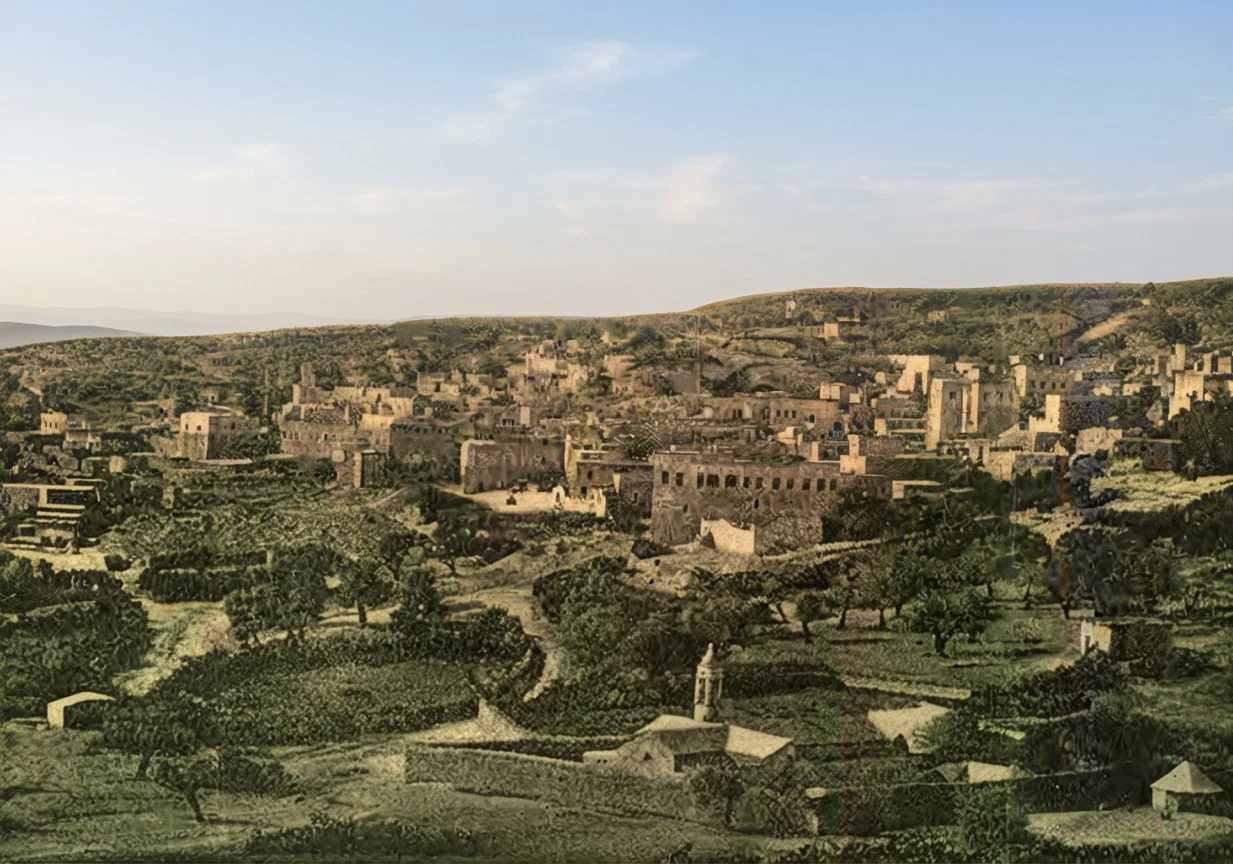
IN bringing a Redeemer out of Nazareth, God has taught the world a lesson whose value is beyond estimate. Why would it not have been better that Christ should have been reared in one of the great, recognized centers of learning and culture? Many suggestions come to the natural heart that this or that course might have been better than the one which Infinite Wisdom chose; but when the eye-salve of heaven has been applied, the wisdom of God's way and the foolishness of our own are plainly evident.
God had a design in bringing the world's Messiah out of the despised Nazareth. He had a design in saving Israel from the Philistines at the hand of a shepherd youth with his sling and pebble; and from the Midianites by Gideon's three hundred, while the heartless hosts went home to comfort and safety. God sees not as men see, and the reason is because men have allowed themselves to be blinded by the deceptions of one who chooses to have men see truth as falsehood, falsehood as fact, and the unreal as the real. They can lift the eyelid from the eyeball, but they can not, without divine aid, lift the curtain hung by the deceiver over the window of the soul.
THE rejectors of Christ asked, "Can there any good thing come out of Nazareth?" God answered the question; but the majority of them never believed the answer. Out of sin-smitten Nazareth came the One who knew no sin; the One who bore the sins of the world, that the world might again one day be free from the burden of transgression. From that least respected city of the Jews, the byword of the nation, the most hopeless, apparently, in moral influence, came He who held the destiny of the whole race in His hands. Is there no lesson in this? Does it mean nothing that one of the most despised cities of the world cradled the Redeemer of the world?—Surely, there is a lesson and a meaning in it all. God meant to teach men hope. He meant to teach men that their hope is not in men, not in the great of earth, not in schools of learning, not in the wisdom of this world, nor in anything that savors of this world; but in Him, and in Him alone.
A View of Nazareth.
A View of Nazareth.
THE world would look for its Saviour among the great and renowned. Popular religion would look for its Saviour among the highest dignitaries of the church; and the kernel of the whole matter would be trust of men in man. All such trust is vanity, and can not reach beyond the curtain of the tomb. In such trust there can be no salvation; for the one in whom the trust is placed has made no atonement, not even for his own sins. God knew that such trust must lead souls to ruin, and so we have the lesson of Nazareth, teaching men to trust, not in the great of earth, not in environment, not in worldly influence, but in Him alone who was made our peace, our sanctification and redemption. Out of the moral darkness of that dark city shone the one clear ray of light that leads to God. On the murky waters of that stagnant pool blossomed the immaculate lily of God's purposes. It was utterly unlike its environment. With its roots in the soil of this earth, it reaches up and blooms in the atmosphere of heaven—linked to the human, yet breathing out the perfume of divinity.
AGAIN there is the lesson that God can make out of the most unpromising material the most precious gems for His eternal kingdom. Many go down in suicide every year, because they consider themselves of no worth to the world, and life of no worth to them, not realizing, or at least refusing to believe, that God can, out of their worthlessness, make that which will be of inestimable worth to all eternity. But God has shown that He can bring glory out of that which is despised, worth out of worthlessness, honor out of dishonor, and turn to His praise the wrath of man. For this reason let the discouraged soul look up. Is your strength gone and your courage weak? Remember this: "He giveth power to the faint; and to them that have no might He increaseth strength. Even the youths shall faint and be weary, and the young men shall utterly fall; but they that wait upon the Lord shall renew their strength; they shall mount up with wings as eagles; they shall run, and not be weary; and they shall walk and not faint." What a picture of strength, beyond anything possessed in human flesh. It is not for those who consider themselves strong; but for those whoknow that they have no strength. The condition is that they "wait upon the Lord." So He brings strength out of weakness, because He is allowed to put His strength where our weakness had been. Paul said, "When I am weak, then am I strong." In other words, when he realized his own weakness, he went to the source of all true strength and obtained strength beyond anything he could hope for in himself.
AND just so it is in every other condition of life. The weak points may be made the strong points. In the place of an evil temper we may have kindliness; in the place of irritability, patience; in the place of gross indulgence, temperance; in the place of profanity, praise; in the place of avarice, benevolence; in the place of anxiety, peace; in the place of selfishness, service; and in the place of hatred, love. As Christ arose out of Nazareth, so may these desirable qualities arise out of hearts that had fostered their antitheses. Does some habit bind the soul and cause despair? God has taught you that you may triumph over that, and make that point a strong bulwark of defense. He can bring out of that unpromising soil a tree that will bear fruit unto life eternal. There is in this fact cause for truest joy and brightest hope, and that is the lesson of Nazareth.
C. M. SNOW.

OIL THE CHURCH—A DREAM.

BY H. A. ST. JOHN.
IN my dream, the first thing that arrested my attention was a multitude of people discussing with great earnestness the question of how best to accomplish, in the quickest and most successful manner, a great task committed to them. It was to be a world-wide work, to be prosecuted among all peoples, and kindreds, and tongues.
Means and messengers were necessary, and both of these called for sacrifice. Plans of procedure must be adopted, and what should they be? Some said one thing and some another, and from every one came suggestions. Some of these were manifestly untenable, while others had the appearance of being truly wise. Gradually the discussion seemed to center around one question, namely, "What shall we do now—in the beginning, first of all?" Again there was a diversity of opinion.
At this juncture a voice was heard speaking from above, and averting the attention of every one. Only three words were uttered, yet those three words were so solemn, so mighty, so impressive, that all ceased, held their peace and dispersed in deep meditation. The three words uttered were, "Oil the church."
I awoke, and at once began to reflect upon the meaning of such a peculiar injunction. I was not long in seeing, as I thought, great significance and importance in the simple requisition, "Oil the church."
God has provided and placed within the reach of every member of the church of Christ the holy oil of the sanctuary. There can be no substitute for it, nor any success without it. The church must have this unction from the Holy One, in order to give the Gospel of the kingdom, the everlasting Gospel, a certain sound in the ears of all nations. And without this certain sound, there will be no certain results of souls saved. This oil, received in its fullest measure, will remove all friction, fault-finding, fear, and worldliness, from the believers; and the church will be filled with faith, hope, and love, and the greatest of these is love. If the church were anointed with the "oil of gladness," great joy would spring up everywhere. The church would then know from blessed experience that "it is more blessed to give than to receive."
Where there is much machinery, there is some one, or more, whose business it is to look after the important matter of oiling. The oiler could not be dispensed with, in safety, for even a single day. The church of Christ on earth is a great organization, existing for the purpose of doing a great work in the earth. Every member thereof should be an oiler. If he is filled with the oil of true joy, he will be taught by it, led by it, comforted by it, and illuminated by it, and, eventually, transformed by it. Thus, all working together, the earth will be illuminated with the glory of God.
This holy oil of the heavenly sanctuary is ever within reach; it ever awaits the demand and reception, not of the church as a body only, but especially of every individual member thereof. The pure thoughts, the pleasing looks, the kind words, the loving deeds of the true Christian, are such only because they are all mingled with the oil of goodness and gladness, the Spirit of the God of life and love. Only thus can a believer or a church arise and shine.
And now, at the last, let me say to the reader, Oil the church by constituting yourself a channel through which the holy oil may constantly flow out in words and deeds of love to all, especially to the household of faith.

THE POWER OF FAITH.

BY MRS. E. G. WHITE.
BY sin we have been severed from the life of God. Of ourselves we are utterly incapable of living a holy life. There are many who realize their helplessness, and who long for that spiritual life which will bring them into harmony with God; they are vainly striving to obtain this life. In despair they cry, "O wretched man that I am! who shall deliver me from this body of death?" Let these desponding, despairing ones look up. The Saviour bids them arise in health and peace. Do not wait to feel that you are made whole. Believe His Word, and it will be fulfilled. Put your will on the side of Christ. Will to serve Him, and in acting upon His Word you will receive strength. Whatever may be the evil practise, the master-passion, which through long indulgence binds you soul and body, Christ is able and longs to deliver. He will impart life to the soul that is "dead in trespasses." He will set free the captive that is held by weakness and misfortune and the chains of sin.
The power of faith is shown by the miracle that Christ performed in healing the child possessed with a deaf and dumb spirit. "Master," the father said to Jesus, "I have brought unto Thee my son, which hath a dumb spirit; and wheresoever he taketh him, he teareth him; . . . and I spake unto Thy disciples that they should cast him out; and they could not."
Jesus asked, "How long is it ago since this came unto him?" The father told the story of long years of suffering, and, then, as if he could endure no more, exclaimed, "If Thou canst do anything, have compassion on us, and help us."
"If Thou canst." Even now the father questioned the power of Christ.
Jesus answered, "If thou canst believe, all things are possible to him that believeth." There is no lack of power on the part of Christ; the healing of the son depends on the father's faith. With a burst of tears, realizing his own weakness, the father casts himself upon Christ's mercy, with the cry, "Lord, I believe; help Thou mine unbelief."
Jesus turns to the suffering one, and says, "Thou dumb and deaf spirit, I charge thee, come out of him, and enter no more into him." There is a cry, an agonized struggle. The demon, in passing, seems about to rend the life from his victim. Then the boy lies motionless, and apparently lifeless. The multitude whispers, "He is dead." But Jesus takes him by the hand, and, lifting him up, presents him, in perfect soundness of mind and body, to his father. Father and son praise the name of their deliverer. The multitude are "amazed at the mighty power of God," while the scribes, defeated and crestfallen, turn sullenly away.
"If Thou canst do anything, have compassion on us, and help us." How many a sin-burdened soul has echoed that prayer. And to all the pitying Saviour's answer is, "If thou canst believe, all things are possible to him that believeth."
It is faith that connects us with heaven, and brings us strength for coping with the powers of darkness. In Christ, God has provided means for subduing every sinful trait, and resisting every temptation, however strong. But many feel that they lack faith, and therefore they remain away from Christ. Let these souls, in their helpless unworthiness, cast themselves upon the mercy of their compassionate Saviour. Look not to self, but to Christ. He who healed the sick and cast out demons when He walked among men, is the same mighty redeemer to-day. Faith comes by the Word of God. Then grasp His promise, "Him that cometh to Me I will in nowise cast out." Cast yourself at His feet with the cry, "Lord, I believe; help Thou mine unbelief."
"If you have faith as a grain of mustard seed," said Jesus, "ye shall say unto this mountain, Remove hence to yonder place; and it shall remove." Tho the grain of mustard seed is so small, it contains that same mysterious life principle which produces growth in the loftiest tree. When the mustard seed is cast into the ground, the tiny germ lays hold of every element that God has provided for its nutriment, and it speedily develops a sturdy growth. If you have faith like this, you will lay hold upon God's word, and upon all the helpful agencies He has appointed. Thus your faith will strengthen and will bring to your aid the power of heaven. The obstacles that are piled by Satan across your path, tho apparentlyas insurmountable as the eternal hills, shall disappear before the demand of faith. "Nothing shall be impossible unto you."
Not because we see or feel that God hears us are we to believe. We are to trust His promises. When we come to Him in faith every petition enters into the heart of God. When we have asked for His blessing, we should believe that we receive it, and thank Him that we have received it. Then we are to go about our duties, assured that the blessing will be realized when we need it most. When we have learned to do this, we shall know that our prayers are answered. God will do for us "exceeding abundantly," "according to the riches of His glory," and "the working of His mighty power."

CONSECRATION.

BY MAIDIE BARNITZ.
Lord, take my heart, I know not how to give it. Take it and keep it in the strength Thine own. Weak, weak, I feel amid mistaken meanings, Through all the might which is Thy strength alone.
And when I ask, still blind, not understanding, For what is only worthy, if denied, Let it be still that, in the onward-going, Only from that, not Thee, I turn aside.
I see not clearly my way before me, Far unexplored the vistas open wide, How should I guess significance from seeming, Or the portent of aught which may betide.
Somewhere, even in our life's supremest effort, Cometh a point where more we can not see. Is it not more sweet to pause without the conflict, And, still serene, to leave all things to Thee?
Lord, take my heart, I would not keep it longer. Poor, poor, were all my efforts, at the best, Only through all to feel that Thou art stronger, When at the last I come to Thee for rest.

History of Government

BY ALONZO TREVIER JONES
AUTHOR OF "TWO REPUBLICS," "EMPIRES OF THE BIBLE," "GREAT EMPIRES OF PROPHECY," "ECCLESIASTICAL EMPIRE," ETC.

III. THE HISTORY OF GOVERNMENT.

The First Arbitrary Ruler among Men.

NIMROD was the first "mighty one in the earth." He was the first one of men to assert power and force, unrestrained, upon men; the first man to assert the absolutism of authority over men. This is evident from the fact, as we have seen, that those before him had not the boldness to assume openly and decidedly the title and prerogative of king, which they knew belonged, by right, only to God. This unwillingness to assume the title of king, and the willingness to assert authority only as viceroy of the king, even though their own idols were held to be the king, shows the recognition of the restraint of a superior authority, and the recognition of that authority above them to which they were responsible and under which they acted only as agent, or viceroy. But with Nimrod, all this was thrown off. He himself would be supreme. He would recognize no superior. He alone would be king. The title and prerogatives of king should merge in him. And this position was taken by him in view of the fact that before this, the title and prerogatives of king merged only in God. This was at once and openly the putting of himself in the place of God. He was assuming the title, the prerogatives, and the absolute authority that belonged only to God; which only God can exercise in righteousness; and which can be exercised by man only in a cruel, wicked despotism.
And all this, which in principle lay in Nimrod's assumption of the title of king, is demonstrated in his career. For, though Babel was the city in which, and over the people of which, he began the assertion of this absolute authority and power, yet he was not content with the assertion of this over Babel alone and leaving it for others to follow his example in their own particular cities; but with Babel he at once grasped by this his kingly authority "Erech, and Accad, and Calneh, in the land of Shinar." Thus he asserted his absolute dominion over the whole of the land of Shinar.
Nor was he content even with this. It was not enough for him to be king—supreme, unrestrained monarch; but he must extend his authority to the farthest limits. For "out of that land he went forth into Assyria, and builded Nineveh, and Rehoboth-Ir, and Calah, and Resen between Nineveh and Calah." He was not content with a kingdom only; but he must expand kingdom into empire, and so assert his authority to the widest possible limit; to be indeed supreme and absolute everywhere.
With the setting up of Nimrod's kingdom, the entire ancient world entered a new historical phase. The oriental tradition which makes that warrior the first man who wore a kingly crown, points to a fact more significant than the assumption of a new ornament of dress, or even the conquest of a province. His reign introduced to the world a new system of relations between the governor and the governed. The authority of former rulers had rested upon the felling of kindred, and the ascendancy of the chief was an image of parental control. Nimrod, on the contrary, was a sovereign of territory, and of men just so far as they were its inhabitants, and irrespective of personal ties. Hitherto there had been tribes—enlarged families—society; now there was a nation, a political community—the State. The political and social history of the world henceforth are distinct, if not divergent.

Distinction between Kingship and Imperialism.

It is notable, as above remarked, that a peculiar characteristic of this imperial sovereignty was the assertion of it primarily over territory, and, secondarily, over people as they might be inhabitants of the territory. Herein lies the essential distinction between kingship and imperialism.
Nimrod's bold example in assuming the title and prerogative of king in the place of God was promptly imitated everywhere, but only as king of a tribe, or associated tribes, or of a city. But plainly, in such an association there was necessarily involved the idea or the consent or voice of the people of the tribe or city concerned. But when the authority and power of king thus asserted over a community or a city was extended over territory, without respect to the tribes or peoples who might be inhabitants of the territory, and was asserted over these simply as a consequence of their being within the territorial limits claimed, this at a stroke swept away all idea or possibility of the people's having any choice or voice in the matter. And that was but the assertion of the completest possible absolutism. In the first there might be room for some lingering thought of limitation upon the monarchy, but in the latter, all this was completely eliminated. This was absolutism complete.
And even in this its ultimate phase, Nimrod's bold example has been diligently followed ever since. The history of the world, yea, even the history of government and of governments, is a history only of kingdoms expanding into empires; kingships by the voice of the people, expanding into imperialism to the exclusion of all possibility or thought of the voice of the people; limited monarchy expanding into absolute monarchical despotism.
Kudur-Nanhandi, king of Elam, was the first one of record to imitate Nimrod's imperialism, tho his success was small. Urukh, king of Ur, was the next to imitate Nimrod's imperialism, and he succeeded in establishing his imperial supremacy over the whole Babylonian plain. The next one was another king of Elam, Kudur-lagamer—the Chedorlaomer of Genesis 14—who surpassed even his exemplar; for he succeeded in establishing his imperial authority not only over the whole of the Mesopotamian plain, but over all the territory westward to the Mediterranean Sea, and almost to the border of Egypt, and kept it all in subjection for twelve years.
And so has proceeded the course of imperialism from Nimrod until now. But having discovered the principle and essential character of imperialism, the history and the practise of it will be discussed in other studies.
History of Government BY ALONZO TREVIER JONES AUTHOR OF "TWO REPUBLICS," "EMPIRES OF THE BIBLE," "GREAT EMPIRES OF PROPHECY," ECCLESIASTICAL EMPIRE," ETC.

IS GOD CRUEL?

SOMETIMES Providence seems to us almost cruel. It was twenty-five years ago, in the pioneering days in Montana. The means of travel in the section where the incident occurred was by lumbering stage-coaches.
One morning the stage-driver started on his route. His only passengers that day were a mother and her infant child. But one of those sudden drops in temperature, not unusual in that region, made the air bitterly freezing. Every wrap the driver could possibly spare was yielded the mother and her child.
But, tho the babe was kept warm, struggle against it as she might, the fatal drowsiness, which is the vestibule to death by freezing, began to seize and numb the mother. Anxious glances into the stage showed the driver what was wrong in it. While the mother hugged the babe to herself, her head was swaying helplessly.
The driver stopped the stage, opened its door, and took the babe from the mother's arms; wrapped it thickly in blankets and furs; placed it securely under the shelter of a seat. Then he pulled the mother out of the stage. The shock and the necessity of standing on the ground partially awakened her. Then he slammed the door, sprang to his seat, whipped up his horses, and left the woman standing there. This brought her to her senses. At once she began to run after the stage screaming, "My baby! My baby! O, my baby!"
Forced into this rude exercise, her blood began to flow swiftly and warmly. The manacles of the death-sleep were broken from her. As soon as he dared, the driver stopped the stage, assisted the now thoroughly-aroused and warmed woman into it, and, putting the babe back into her arms, and wrapping both as protectingly as possible, drove the saved mother and the saved babe to where complete shelter could defend both.
And that stage-driver was not cruel. Nor, when that mother came to understand it all, did she think him cruel. And so "a frowning Providence may hide a smiling face."—Sel.

What Have I Done for God?

It is a good thing to pause now and then and ask oneself, What have I done for God this year, this month, this week, this day? How meager in service would many a life appear under such questioning! But ought not every Christian to put the searching query, and to answer it with conscientious fidelity? It will one day be asked by other lips, and under circumstances that will admit no quibbling in reply. It is well to make the self-examination now, while there is still opportunity, not indeed to retrieve the past—that is gone forever—but to do better service hereafter.—The Examiner.

Plant More Rosebushes

It never rains roses; when we want more roses we must plant more bushes.—George Eliot.
Continue reading: THE FASCINATION OF THE MYSTERIOUS