Your ShelfYour Projects

Review and Herald, Vol. 87, No. 29.

Not Forsaken

Review and Herald

Jul 21, 1910

Review and Herald Publishing Association · Takoma Park Station, Washington, D. C. · Jul 21, 1910

Not Forsaken

O, NOT forsaken! God gives better things Than thou hast asked in the forlornest hour. Love’s promises shall be fulfilled in power. Not death, but life; not silence, but the strings Of angel harps; no deep, cold sea, but springs Of living water; no dim, wearied sight, Nor time, nor tear-mist, but the joy of light; Not sleep, but rest, that happy service brings; And no forgotten name thy lot shall be, But God’s remembrance. Thou canst never drift Beyond His love. Would I could reach thee where The shadows droop so heavily, and lift The cold weight from thy life!— And if I care For one unknown, O, how much more doth He!
— Frances Ridley Havergal.

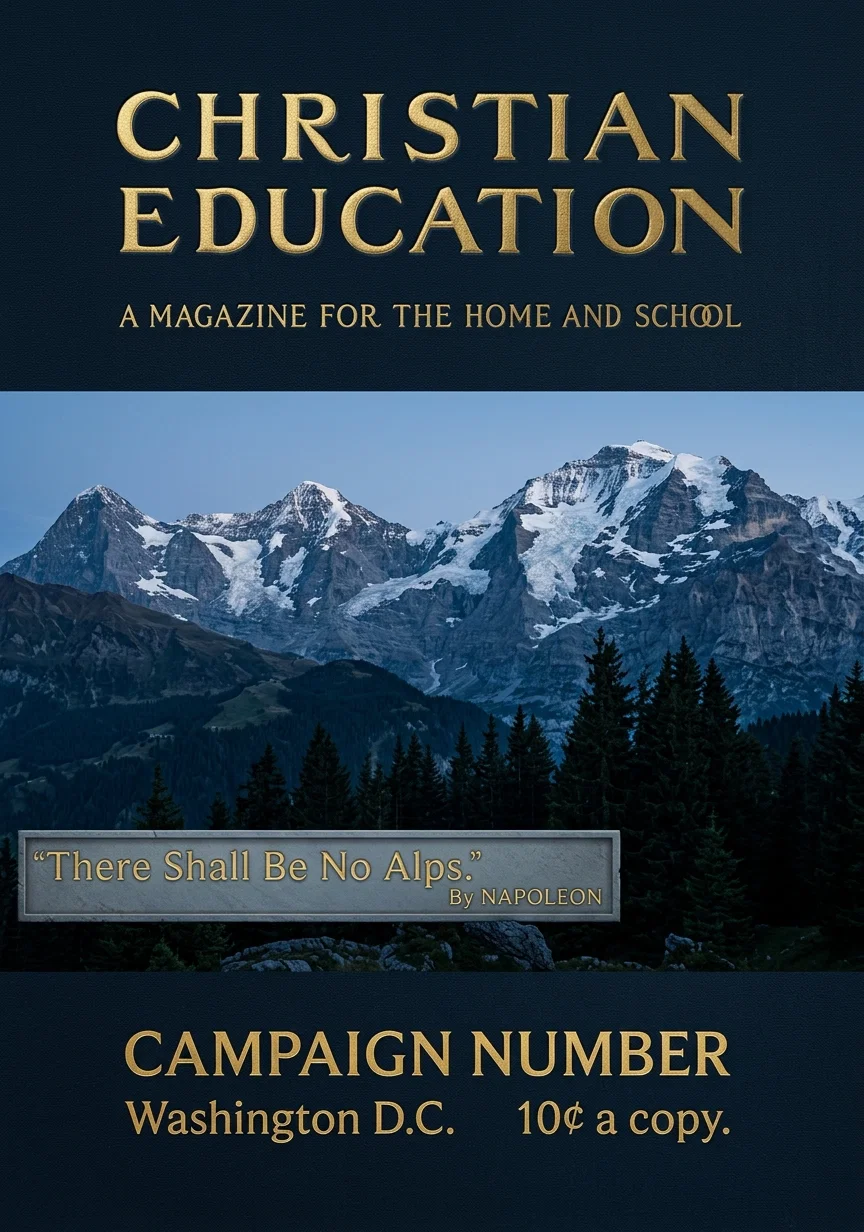
A Special Campaign Number

OF

Christian

Education

“There Shall Be No Alps” — NAPOLEON.
This special number is designed to answer some of the important questions which present themselves to young people about going to school. The key-note of the issue is expressed in the slogan on the cover page,—"There shall be no Alps!"—no obstacles, no insurmountable barriers, in the way of obtaining a thorough education. Some of the subjects:—
  • "Is It Worth While?"
  • "Why Are You Not in School?"
  • "Some Ways of Getting Into School."
  • "How to Combine Study and Work."
  • "Working My Way Through School."
  • "The Greatest Permanent Good I Got Out of College."
  • "Not Quite Ready."
  • "True School Economy."
  • "Stirring Facts for Christian Students."
This number of "Christian Education" is well illustrated, and has a cover design well in keeping with the contents. It is one of the most attractive issues of this helpful magazine ever issued, and should have the hearty interest of every person who appreciates the importance of our educational work.
Special prices will prevail, as follows:— Single subscription, one year, 50 cents; five or more subscriptions, cash with order, 35 cents each; single copy, 10 cents; five to forty copies of this issue, one order, one address, 5 cents a copy; fifty or more copies of this issue, 4 cents a copy.

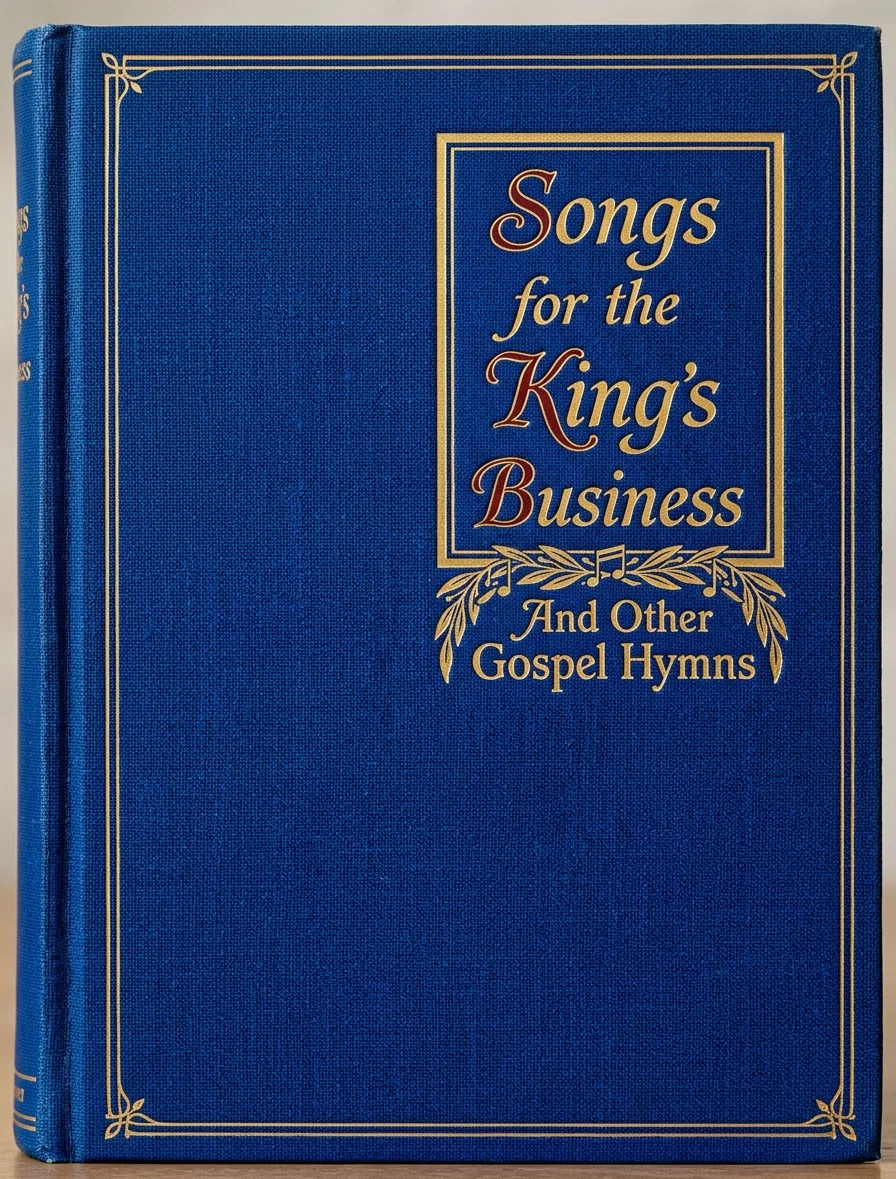
Every Singer of Gospel

Songs Should Have This Book

Songs for the

Kings' Business

This is the new song-book prepared especially for young people's meetings and church choirs. A collection of 400 carefully chosen hymns by the best music composers and hymn-writers. Many of the songs are soul-stirring. Price, in cloth, 40 cents.

The Lover's Love

or John Three-Sixteen By Wm. P. Pearce
A helpful, inspiring work.—Bishop Fallows. Full of truth and practical illustrations.— E. A. Sutherland. The volume will bring forth fresh meanings from its boundless wealth.—The Standard, Chicago. It will kindle fires of devotion in the hearts of God's children.—The Baptist Commonwealth, Philadelphia. Price, in cloth . . . . . . . . . . . . . . . . . . . . . . . . . . . . . . . . . . . . . . . . . . . . . . . . . . . . . . . . . . . . . . . . . . . . . . . . . . . . . . . . . . . . . . . . . . . . . . . . . . . . 75 cents

Little Folks' Bible Nature

By Ella King Sanders
An attractive and helpful study book for children. It takes up the study of nature, following the Bible order of creation. Completely illustrated with drawings made especially for this book.
Price, in board, 25 cents Cloth, 50 cents

New Missionary Report

Blanks
We have just printed a supply of new Individual Missionary Report Blanks, giving space for twenty-six items, with blank for name and address. The blank is designed to be filled out and handed to the church missionary secretary or librarian. It is the most complete form we have yet produced for reporting missionary effort. In pads of 100 the price is 5 cents.
Order all books and supplies through your tract society.

A Good Preparation for the Foreign Missionary Field

DAVID PAULSON, M. D.
OUR large American cities, with their enormous foreign and even heathen population, present excellent foreign missionary trial grounds, or experiment stations. If the candidate for foreign missionary service has not the mental and spiritual equipment necessary to enable him to win souls for the Master in the large cities, there is scarcely one chance in a hundred that he will succeed in the much more difficult foreign field.
Soul winning is a hand-to-hand conflict with the forces of evil, and proficiency in it can never be acquired by class-room study alone. Its first requirement is a genuine passion for souls. This can be imparted only by God himself, but it can be developed by exercise. Every new case dealt with will drive the genuine soul winner to his Bible and to his knees; with agonizing earnestness will he wrestle for souls as Jacob of old wrestled with the angel. Wrestling souls from the grasp of the enemy is such a life-and-death struggle that it almost means giving a life for a life. It is because it is all this, and even more, that so little of it is done.
To-day there is coming from the large cities a call for energetic, self-sacrificing, soul-winning recruits, who will will enlist for active service until the end of the warfare, be the time long or short,—and the present indications are that it will be only a short conflict. The teeming populations of the large cities must be reached with the message.
If you decide to enter upon this work for souls in the large cities, you will receive an excellent training and experience for the foreign field, if Providence should direct you there. It is true that a response to this appeal may destroy nearly all your most cherished plans; but if God is calling you in this direction, you would a thousand times better change your plans now than to have God change both them and you when it is so late that you can only say, “The harvest is past, the summer is ended, and we are not saved.”
Why not now, right now, in the very sincerity of your soul, ask of God, “What wilt thou have me to do?” As certainly as you do this, you will hear a voice behind you, saying, “This is the way, walk ye in it.”
Hinsdale, Ill.

The Brotherhood of Man

MRS. E. G. WHITE
From age to age the Lord has been striving to awaken in the minds of men a sense of brotherhood. Thus he seeks to establish order and harmony in the world. “Glory to God in the highest, and on earth peace, good will toward men,”—this is the message his children are to proclaim by lives of unselfish endeavor.
It is upon Christlike love that brotherhood depends. Without this love nothing can be done toward fulfilling God’s purpose for humanity. Without it all effort is without avail. Paul declares: “If I speak with the tongues of men and of angels, but have not love, I am become sounding brass, or a clanging cymbal. . . . And if I bestow all my goods to feed the poor, and if I give my body to be burned, but have not love, it profiteth me nothing. . . . Love never faileth: but whether there be prophecies, they shall be done away; whether there be tongues, they shall cease; whether there be knowledge, it shall be done away. . . . But now abideth faith, hope, love, these three; and the greatest of these is love.”
In the life of Christ this love found perfect expression. He loved us in our sin and degradation. He reached to the very depths of woe to uplift the erring sons and daughters of earth. There was no wearying of his patience, no lessening of his zeal. The waves of mercy, beaten back by proud, impenitent, unthankful hearts, ever returned in a stronger tide of love.
He who is constrained by the love of Christ, goes forth among his fellow men to help the helpless and encourage the desponding, to point sinners to God’s ideal for his children, and to lead them to him who alone can enable them to reach this ideal. Divested of selfishness and filled with divine benevolence and tender affection, Christians are drawn out to work for Christ by helping those for whom he gave his life. They hold communion with the Saviour, and his love is revealed in all they do and say. Angry words die unspoken. Unchristlike actions are checked. God accepts such ones as his instruments, and through them works for the fulfilling of his purpose.
Never are we to be cold and unsympathetic, especially when dealing with the poor. Courtesy, sympathy, and compassion are to be shown to all. Partiality for the wealthy is displeasing to God. Jesus is slighted when his needy children are slighted. They are not rich in this world’s goods, but they are dear to his heart of love. God recognizes no distinction of rank. With him there is no caste. In his sight, men are simply men, good or bad. In the day of final reckoning, position, rank, or wealth will not alter by a hair’s breadth the case of any one. By the all-seeing God, men will be judged by what they are in purity, in nobility, in love for Christ.
God lets his sun shine on the just and on the unjust. This sun represents Christ, the Sun of Righteousness, who shines on all alike, high and low, rich and poor. This principle is to guide those who work for him. From it no one can deviate, and be successful in his efforts to help his fellow beings.
Christ declared that the gospel is to be preached to the poor. Never does God’s truth put on an aspect of greater loveliness than when brought to the needy and destitute. Then it is that the light of the gospel shines forth in its most radiant clearness, lighting up the hut of the peasant and the rude cottage of the laborer. Angels of God are there, and their presence makes the crust of bread and the cup of water a banquet. Those who have been neglected and abandoned by the world are raised to be sons and daughters of the Most High. Lifted above any position that earth can give, they sit in heavenly places in Christ Jesus. They may have no earthly treasure, but they have found the pearl of great price.
The triumph of Christianity is dependent upon the influence of its adherents. Manfully the Christian is to fight the good fight of faith. Lawfully he is to strive, never relaxing his efforts, day by day seeking for greater power to help those around him. His words are to be right words, pure and true, fraught withsympathy and love; his actions, right actions, a help and blessing to the weak.
Never is he to grow weary in his work. He will meet with trials, but he must always be brave and cheerful, bringing joy and courage into other lives.

J. N. LOUGHBOROUGH

The Two Thrones—No. 7

J. N. LOUGHBOROUGH

THOSE who claim that a great work is to be accomplished for the Jews in a future age have a wrong conception of the statements of the Scriptures concerning Israel. We inquire, Who are Israel? Paul said: “They are not all Israel, which are of Israel; neither, because they are the seed of Abraham, are they all children: but, In Isaac shall thy seed be called.” Rom. 9:6, 7. Again: “Now to Abraham and his seed were the promises made. He saith not, And to seeds, as of many; but as of one, And to thy seed, which is Christ.” Gal. 3:16. In the same connection he says, “And if ye be Christ’s, then are ye Abraham’s seed, and heirs according to the promise.” Gal. 3:29. So we see that all who believe in Christ, whether manifesting their faith through types and shadows, or in reality coming to the Crucified, are counted as Israel.
From the beginning it was God’s plan that all obeying him through faith in the coming Saviour, should be counted as Israel. This is so stated in the book of Deuteronomy: “When the Most High divided to the nations their inheritance, when he separated the sons of Adam, he set the bounds of the people according to the number of the children of Israel.” Deut. 32:8. That scripture tells us of God’s plan concerning Israel in the beginning. John in vision saw how it would be in the final consummation of the plan, in the salvation of God’s people. They are to be gathered into the New Jerusalem, the capital of Christ’s eternal kingdom. To enter that glorious city they must pass through one of its twelve gates, and on each gate is the name of one of the tribes of Israel. Rev. 21:12. Even the work among the gentiles, which is done in the gospel age, is represented as a grafting into the tree of Israel. See Rom. 11:17-24.
Those pleading for a special work for the Jews in a future age, quote certain promises made to Israel, saying, “These promises have never been fulfilled; therefore they must be fulfilled in the age to come.” One of these is found in the words of the prophet Amos: “In that day will I raise up the tabernacle of David that is fallen, and close up the breaches thereof; and I will raise up his ruins, and I will build it as in days of old.” Amos 9:11. By reference to Peter’s testimony, in the council of Jerusalem, we see that this text has reference to the work of Christ in this dispensation; and that it especially comprehended the spread of the gospel among the gentiles. See Acts 15:13-17.
The promises made to Israel are of three classes, as follows:—
1. Promises made when they were in captivity, relating to their return. Of this class we note one in Jeremiah: “And in those days, and in that time, saith the Lord, the children of Israel shall come, they and the children of Judah together, going and weeping: they shall go, and seek the Lord their God. They shall ask the way to Zion with their faces thitherward, saying, Come, and let us join ourselves to the Lord in a perpetual covenant that shall not be forgotten.” Jer. 50:4, 5. In Ezra 3:12, 13 we find a fulfilment of this promise in these words: “But many of the priests and Levites and chief of the fathers, who were ancient men, that had seen the first house, when the foundation of this house was laid before their eyes, wept with a loud voice; and many shouted aloud for joy: so that the people could not discern the noise of the shout of joy from the noise of the weeping of the people.” The making of the covenant, after their return, is thus recorded in Nehemiah: “And because of all this [a remembrance of their sins that led to their captivity] we make a sure covenant, and write it; and our princes, Levites, and priests, seal unto it.”
2. Promises of what would be done for Israel on certain conditions. As they failed to comply with the conditions laid down, the promises could not be fulfilled. An illustration of promises of this character is found in the prophecy of Ezekiel, respecting the dividing of the land in strips across Canaan from east to west; also concerning the appointment of services in the priesthood, and the plan of a city. All this was to be given to them on condition, as shown by the prophet. According to the testimony of Malachi, they failed greatly in carrying out the conditions, even offering torn and diseased beasts in sacrifice to the Lord.
We see clearly that this arrangement mentioned in Ezekiel can not apply in the future. The offering of the blood of beasts is not the gospel way of showing faith in Christ, and could only apply in a system which was a shadow of good things to come. One advocating this Age-to-come theory said to me, respecting this text, “These offerings are probably shadows pointing backward.” I replied that “shadows are never on the sun side of the tree.”
3. The third class of promises to Israel are those that relate to the final gathering of the Lord’s people, the true Israel, into his everlasting kingdom.
That there is to be no future restoration of the natural descendants of Abraham into a kingdom, is made positive by the words of Jeremiah, when the Lord instructed him to go before the priests with a potter’s earthen vessel, and tell them of the destruction that was to come upon that people and their city: “Then shalt thou break the bottle in the sight of the men that go with thee, and shalt say unto them, Thus saith the Lord of hosts: Even so will I break this people and this city, as one breaketh a potter’s vessel, that can not be made whole again.” Jer. 19:10, 11.
The plea is made: “This work for the Jews is for the ten lost tribes.” To this we reply that there were no tribes lost. When the time came for returning to their own land, the decree of Cyrus, Darius, and Artaxerxes was published throughout the one hundred twenty provinces of Medo-Persia, and any one who was so minded had an opportunity to return to Jerusalem. We have no intimation that after the return of the Jews to their own land at this time any of the tribes were lacking. If ten of the tribes were lost, how could Paul, speaking of the hope of the promise of a resurrection, say, “Unto which promise our twelve tribes, instantly serving God day and night, hope to come”? Acts 26:7. There is no truth in the claim that ten of the tribes were lost after the captivity. The apostle Paul did not speak of the salvation of the Jewish people as a national matter, but as an individual work. “And they also, if they abide not still in unbelief,” he said, “shall be grafted in: for God is able to graft them in again.” Rom. 11:23.
Lodi, Cal.

Hunting for Souls

F. H. HENDERSON
The Lord uses the figure found in Jer. 16:16 to show the earnest and careful search necessary to hunt out the honest souls who are scattered in different parts of the world. In another scripture he says: “Behold, I, even I, will both search my sheep, and seek them out. As a shepherd seeketh out his flock in the day that he is among his sheep that are scattered; so will I seek out my sheep, and will deliver them out of all places where they have been scattered in the cloudy and dark day: and I will bring them out from the people, and gather them from the countries, and will bring them to their own land.”
God’s arsenal for the gospel hunter has an inexhaustible supply of ammunition. “Ask, and it shall be given you; seek, and ye shall find; knock, and it shall be opened unto you.” Every Seventh-day Adventist, if he loves to go gospel hunting, will not fail to take a liberal supply of ammunition. This may be found in our missionary literature.
“The end is near, stealing upon us stealthily, imperceptibly, like the noiseless approach of a thief in the night. May the Lord grant that we shall no longer sleep as do others, but that we shall watch and be sober. The truth is soon to triumph gloriously, and all who now choose to be laborers together with God will triumph with it. The time is short, the night soon cometh when no man can work. Let those who are rejoicing in the light of present truth, now make haste to impart the truth to others.” The Captain of our salvation is soon to appear in power and great glory. May God help us to do our best.

Work Is the Complement of Faith

Work is the complement of faith.

Seeking Rest

WORTHIE HARRIS HOLDEN
LIST to voices in the wildwood, And to whispers in the dell, To the murmurs in the forest, And the story that they tell.
Is it joy and verdant gladness, Is it praise and wistful prayer, That within our hearts give echo While we listen to them there?
Where all nature holds thanksgiving With its cadences of peace, From the world apart, in quiet, Seek thy burdened soul’s release.
Ah, when life is all atangle With its knots of grief and care, Find a nook in God’s great temple, And unravel them in prayer!
Portland, Ore.

Home Influence

G. B. THOMPSON
“BE it ever so humble, there’s no place like home.” How true this is! The memories of home cling to us; neither distance nor circumstances can efface them from the mind. The sailor thinks of home as his ship rocks in the tempest. The merchant thinks of home as he bars his doors and windows at the close of the day. The mother hurries home to the baby in the cradle. The schoolboy, weary with lessons, trudges home to father and mother. The weary plowman wends his way from the field at sunset, thankful for the blessings and comforts of home.
Who can forget the home of his youth,—the long winter evenings, with the blazing fire on the hearth; the genial smiles of father and mother, with the streaks of gray creeping into their hair? The furniture may not have been costly, and the house but a cabin in the woods; yet it was home, and to life’s latest moment it will linger in the memory.
Home is destined by its Author to be a cheerful, happy place, where the altar of prayer is reared, and the name of the Lord reverenced. Yet all homes do not reach this ideal. One writer has well said that he is to be pitied whose home is in some valley of grief between the hills instead of on the hilltop of cheerfulness.
How to save our young people is a great problem. There is none greater or more important. The church, our schools, the Educational, Missionary Volunteer, and Sabbath-school departments, are doing all they know how to do to direct the footsteps of the youth and children among us into the right path. And they are doing much in this direction. But without the help and right influence of the home their best efforts will be greatly neutralized. Think of a young person who returns home from one of our schools, where, under the Christian influence with which he was surrounded, he gave his heart to God and enlisted in his service. His heart is warm and tender; yet when he reaches home,—a home where, perchance, father and mother keep the Sabbath, at least in form,—he finds no family altar. Business takes precedence; and the God of heaven, from whom all blessings flow, is forgotten morning and evening. What a chilling influence such a home must have!
And to the absence of prayer there is sometimes added the evil influence of cross and angry words. Husband and wife scold each other and the children. A faultfinding, nagging spirit pervades the home. If family prayer is maintained, impatience, fretfulness, and irritability over the most trivial matters are manifested before and after asking Deity for strength for the day. No young people’s society, church-school, or college can successfully battle against the influence of such a home. Many an earnest-hearted young person has grown cold, and started on the downward path to perdition, in just such a home.
A young man came to me on a camp-ground, and said, in substance: “What am I to do? I love the truth, and try to be a Christian. I would like to enter the work. But while father and mother profess to keep the Sabbath, they are impatient with each other and with me. They lose their tempers, and speak hasty, angry words. I can’t please them, no matter how hard I try. They find fault with everything, and commend nothing. I am so tried that often I am tempted to run away from home, and plunge into the pleasures of sin. I know it is all right, as you say, to pray and hold fast my integrity to God, but it is hard for a boy to do.”
I hope this is an isolated case. To see the children whom we love numbered among the lost at last because the home was a hotbed of impatience will be unspeakably sad!
There is an old fable which relates that it was a source of trouble to some fishes to see a number of lobsters swimming backward instead of forward. They therefore determined to open a class for their instruction. This was done, and a number of young lobsters came. The fishes gravely argued that if they began with the young ones, they would learn to swim aright. At first,the young lobsters did very well; but afterward, when they returned home, and saw their fathers and mothers swimming in the old way, they soon forgot their lessons. It is thus that many a child, well taught at school, drifts away from the Lord through wrong home influence.
“She always made home happy,” is the epitaph in a churchyard inscribed by a husband after many years of wedded life. No higher tribute than this could be paid to the memory of the dead. “He that is slow to anger is better than the mighty; and he that ruleth his spirit than he that taketh a city.” But “he that hath no rule over his own spirit is like a city that is broken down, and without walls.”
What the world needs is more Christian homes, where “abideth faith, hope, love, these three; and the greatest of these is love.” 1 Cor. 13:13.
Takoma Park, D. C.

Like the Leaves of Autumn

C. MC REYNOLDS
Many times in the past have we heard the statement repeated which was given by the Spirit of God to his servant, “The publications that contain this truth will be scattered like the autumn leaves.” When it became a settled fact that our books could be sold by subscription, we said, “Now we shall see the fulfilment of that prediction.” I remember well when it was reported that book sales by the canvassers had reached $1,000 a week. We said, “O, how soon the message will be placed within the reach of all peoples!”
While considering the summary of book sales by the canvassers, as given in the last report in the Review, and casting up some figures, my heart was stirred to see that not only $1,000 a week, or even $1,000 a day, but over $2,125 a day for every day in the year 1909, is the record of book sales by the canvassers alone. Adding to this the trade books that have been sold, besides large numbers of magazines and other periodicals, which alone reach two thirds the value of the subscription-book sales, we have over $4,000 worth of our literature sold every day, 365 days in the year.
We say this is wonderful; and truly it “is the Lord’s doing; it is marvelous in our eyes.” But this is only the beginning. Note that there are in the world about 1,500,000,000 people. At the present rate of sales we are placing an average of a little less than one tenth of one cent’s worth of our literature in the hands of each person in the world each year. When we do ten times as much as we are now doing (and how easy it would be), we shall place the equivalent of a one-cent tract in the hands of every person in the world each year. Figuring on an average of five persons to a family, this would mean five cents’ worth of our literature to each home. These deductions are practically correct. Is it possible we are within so easy reach of the world-wide circulation of our literature? Who would not be willing to do ten times as much next year, and then double it the next year, if only we might see this accomplished?
All praise to Him who gave the message into our hands to proclaim; all honor to those who have written and published it in the form of books and periodicals; and much cheer and courage to the noble army who are carrying it to the people. Who does not desire a part in this great work? “The Lord gave the word: great was the company of those that published it.” “He that goeth forth and weepeth, bearing precious seed, shall doubtless come again with rejoicing, bringing his sheaves with him.”
The harvest of souls to the faithful canvasser is as sure as the harvest to any minister or worker in any other branch of the work. Who will join the ranks? Eternal reward awaits every faithful worker.
Grand Rapids, Wis.
Continue reading: The Alaskan Mission Field