Your ShelfYour Projects

Signs of the Times, Vol. 24, No. 20.

SEEKING THE LOST ONE

Signs of the Times

May 19, 1898

Pacific Press Publishing Company · Oakland, California · May 19, 1898

SEEKING THE LOST ONE.
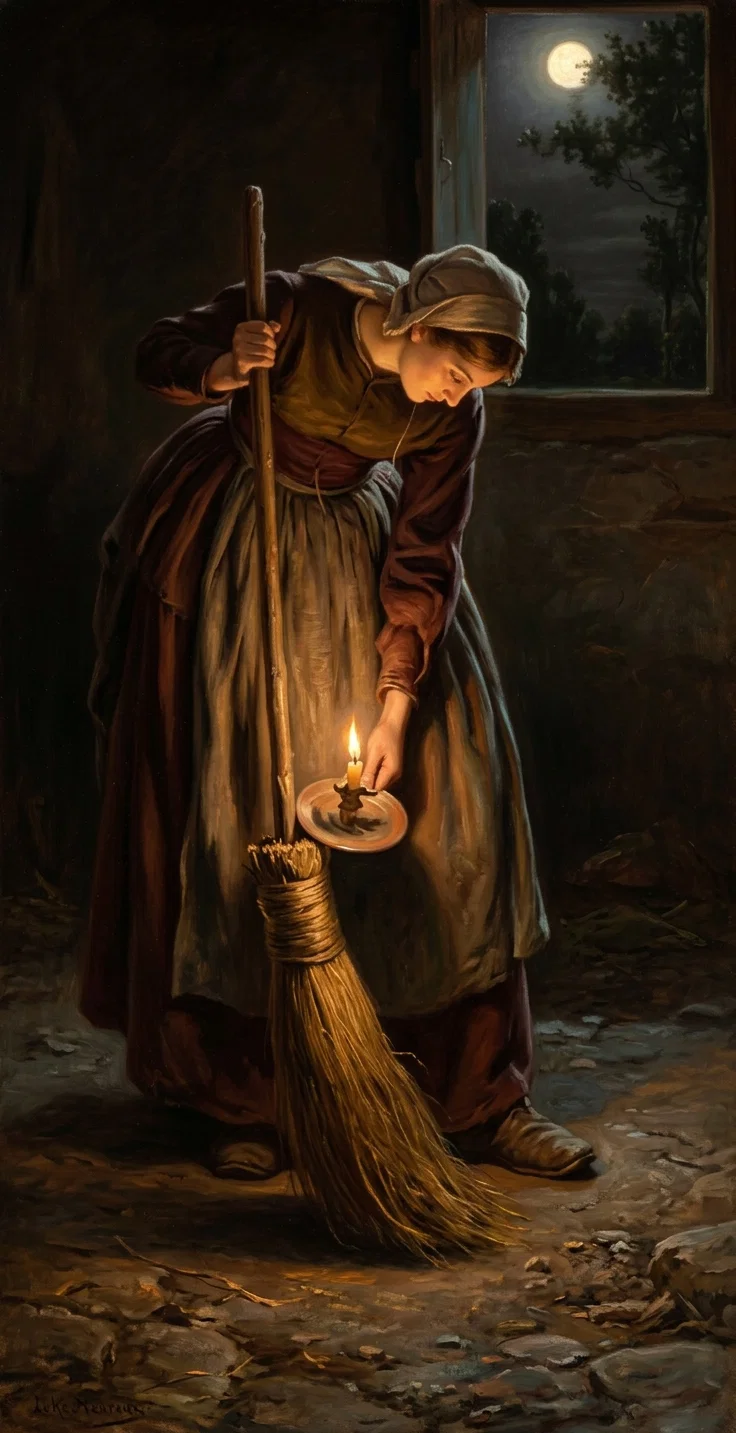
JESUS CHRIST came to seek and to save the lost. This was His mission. No sacrifice, no suffering, no self-denial could deter Him or turn Him aside from this one work.
“Either what woman having ten pieces of silver, if she lose one piece, doth not light a candle, and sweep the house, and seek diligently till she find it? And when she hath found it, she calleth her friends and her neighbors together, saying, Rejoice with me; for I have found the piece which I had lost. Likewise, I say unto you, there is joy in the presence of the angels of God over one sinner that repenteth.” Luke 15:8-10.
HE looked down from His glorious throne with the Father at earth’s multitudes and ages. He saw them all; and while the multitudes multiplied by the ages were as “the small dust of the balance” to Him in His greatness and majesty, He could not there endure the loss of one unit of the multitude. He gave Himself to save the lost. He loved all by loving each; and when He gave Himself for all, He gave Himself for each. Each one of earth’s teeming millions was remembered in the sacrifice.
IT matters not that the true shepherd has ninety-nine sheep safe in the fold; he can not rest while one is straying, subject to beasts of prey, a victim of pitiless cold and tempest. He leaves the ninety and nine and goes out into the storm and the night to find the wanderer. It mattered not to the Lord of glory that the angels and inhabitants of unfallen worlds were yet loyal, safe in the great Shepherd’s fold of righteousness. Glad as His heart is because of this, He can not forget that this little earth with its inhabitants is out on the cold, barren, empty wastes of unbelief and destruction. His flock must be complete; and so He left the ninety and nine, and sought with bruised and wounded feet, with broken and emptied life, with loving and yearning heart, to bring back the lost one, that His flock might be complete. He “gave Himself for us.” “He hath borne our griefs, and carried our sorrows.” “He was wounded for our transgressions, He was bruised for our iniquities; the chastisement of our peace was upon Him; and with His stripes we are healed. All we like sheep have gone astray; we have turned every one to his own way; and the Lord hath laid on Him the iniquity of us all.” He bears it all, that He may win back the one world, that His creation may be complete, that every wanderer may be brought home.
IT matters not to the Hebrew woman that she has nine coins left in her head-dress, her garland, her marriage portion perhaps. If she has lost one, she can not rest. Her garland would not be complete. She would be the jeer and butt of her neighbors; she would be considered lacking in careful womanliness; she would be an unworthy wife to her husband; she would be judged by her imperfect roll of coins. It is not that another might not be earned; many doubtless might be; but she must have the lost one. And so she lights a candle, sweeps the house, and seeks diligently till she finds the money.
Her regard for the coin is shown not only in the sacrifice and anxiety of the search, but in the rejoicing over the finding; for “when she hath found it, she calleth her friends and her neighbors together, saying, Rejoice with me; for I have found the piece which I had lost.” She has kept good her portion; her enemy can not triumph over her.
HOW FAINTLY this parable illustrates the love of Jesus Christ and the heavenly host for the lost world! How it should illustrate the love of the church for every lost one named among her children! All the lamps of heaven are lighted to pierce the gloom of Satan’s pall of sin. The resources of infinity are centered upon this little lost earth. God’s honor is at stake. His power and wisdom are resting upon its salvation. His love encompasses it. “For thus saith the Lord that created the heavens; God Himself that formed the earth and made it; He hath established it, He created it not in vain, He formed it to be inhabited; I am the Lord; and there is none else.” God’s character of power and truth are at stake in the terrible calamity of sin. He not only created the earth to be inhabited, but He wrote in the very beginning in the Lamb’s Book of Life the names of the very characters that should inhabit it. Not one will be wanting. He will gather all the precious jewels from the dirt and the dark corners of this sin-cursed earth. He will sweep away by the storms and trials of life the dust and chaff and refuse in which the good coins are hidden. He will let the light of His Word, the penetrating power of His Spirit, the zeal of tried and true servants assisted by mighty, shining angels, penetrate every nook and corner of earth’s darkness, thatHe may gather out “the gems for His crown.”

CAN WE FALL FROM GRACE?

CERTAIN it is that one’s care for a thing depends much upon whether or not he thinks there is a possibility of losing it. If one possesses something valuable and he is persuaded that it is impossible to lose it, while still the possibility exists, the probability of his losing it is increased many times.
Grace means favor. To be in the grace of God is to be in the favor of God. Is it possible after one is converted, or in the favor of God, to lose that favor?—Certainly. Only a few proofs need be given.
Satan was an angel in heaven before his fall. He was in the favor of God, or he would not have been there. He and his angels were cast out (2 Peter 2:4), and they will finally be destroyed (Heb. 2:14). This is a clear example of falling from grace, or from the favor of God.
King Saul is another example. In 1 Sam. 10:9 it says God “gave him another heart.” 1 Sam. 31:4 records the fact that he committed suicide. Is not this an example of falling from grace?
In Eze. 18:26 we read that “when a righteous man turneth away from his righteousness, and committeth iniquity, and dieth in them; for his iniquity that he hath done shall he die.” This shows that a man can turn from his righteousness. We do not say “when” a man does so and so that it is at the same time impossible for him to do it. In Heb. 6:6 it says, “If they shall fall away.” This word “if” implies a possibility. Also please read Heb. 10:26.
All this shows that we can fall from the favor of God. “Therefore we ought to give the more earnest heed to the things which we have heard, lest at any time we should let them slip.” Heb. 2:1. “Wherefore let him that thinketh he standeth take heed lest he fall.” 1 Cor. 10:12.
GRANT PRIDDY.
Bastrop, La.

FAITH AND GOOD WORKS.

“VERILY, verily, I say unto you, He that believeth on Me, the works that I do shall he do also; and greater works than these shall he do [through the grace and power of Christ]; because I go unto My Father. And whatsoever ye shall ask in My name, that will I do, that the Father may be glorified in the Son. If ye shall ask anything in My name, I will do it. If ye love Me, keep My commandments.” This promise was spoken by lips that never deceived, and we must take the pledged Word of God and believe it, and act upon it. We must receive His Word as spoken to us; and if we regard it thus, we shall come to the throne of grace with full assurance of faith.
Many who profess to be children of God have lost their simplicity; there is no genuine faith in their prayers, no confidence in the promise that if we believe we shall receive the thing we ask of Him. But if we have this faith, we shall not be disappointed; for God will honor His word. The Lord would have us tell Him all our perplexities, and ask Him for those things that we need. His promise is, “Ask, and ye shall receive.” God will give us the very things we need. It is our privilege to ask, it is God’s prerogative to know what is for our good, that receiving them we may glorify His name by giving of them to others.
We need to have more of Jesus, and far less of self. We need a childlike simplicity that will lead us to tell the Lord all our wants, and believe that according to His riches and goodness and love He will satisfy our needs. “If ye shall ask anything in My name,” He says, “I will do it.” If you love Me, you will show that love by keeping My commandments. “And I will pray the Father, and He shall give you another Comforter, that He may abide with you forever; even the Spirit of truth.”
The Comforter is promised only as the Spirit of truth. There is no comfort in a lie. The work of the Comforter is to define and maintain the truth; and there should be no worry lest the comfort will not follow. The Holy Spirit first dwells in the heart as the truth, and this He does through the truth. The world, said Christ, can not receive the Spirit of truth, “because it seeth Him not, neither knoweth Him; but ye know Him; for He dwelleth with you, and shall be in you.”
“He that hath My commandments, and keepeth them, he it is that loveth Me; and he that loveth Me shall be loved of My Father, and I will love him, and will manifest Myself to him.” This is the only true test of character. In doing the will of God we give the best evidence that we love God and Jesus Christ whom He has sent. The oft-repeated words of love for God are of no value unless that love is made manifest in the life practise. Love for God is not a mere sentiment; it is a living, working power. The man who does the will of his Father who is in heaven shows to the world that he loves God. The fruit of his love is seen in good works.
“If thou shalt confess with thy mouth the Lord Jesus, and shalt believe in thine heart that God hath raised Him from the dead, thou shalt be saved. For with the heart man believeth unto righteousness; and with the mouth confession is made unto salvation.” This means more than an assent to the truth that Christ came into the world and died for the salvation of the race. The understanding may be convinced, but the text means more than this. It means entire sincerity. It means faith, intelligent faith, that will cling to the Saviour as the only hope of a fallen world. It means a faith that will grasp the wonderful provision made, and will engage the affections and control the life, resting upon the merit of a crucified and risen Saviour. It means a faith that works by love and purifies the soul.
The apostle James saw that dangers would arise in presenting the subject of justification by faith, and he labored to show that genuine faith can not exist without corresponding works. The experience of Abraham is presented. “Seest thou,” he says, “how faith wrought with his works, and by works was faith made perfect?” Thus genuine faith does a genuine work in the believer. Faith and obedience bring a solid, valuable experience.
There is a belief that is not a saving faith. The word declares that the devils believe and tremble. The so-called faith that does not work by love and purify the soul will not justify any man. “Ye see,” says the apostle, “how that by works a man is justified, and not by faith only.” Abraham believed God. How do we know that he believed? His works testified to the character of his faith, and his faith was accounted to him for righteousness.
We need the faith of Abraham in our day, to lighten the darkness that gathers around us, shutting out the sweet sunlight of God’s love, and dwarfing spiritual growth. Our faith should be prolific of good works; for faith without works is dead. Every duty performed, every sacrifice made in the name of Jesus, brings an exceeding great reward. In the very act of duty, God speaks and gives His blessing.
“Being justified freely by His grace,” the apostle Paul says, “through the redemption that is in Christ Jesus; whom God hath set forth to be a propitiation through faith in His blood, to declare His righteousness for the remission of sins that are past, through the forbearance of God; to declare, I say, at this time His righteousness; that He might be just, and the justifier of him which believeth in Jesus.”
Here the truth is laid out in plain lines. This mercy and goodness is wholly undeserved. The grace of Christ is freely to justifythe sinner without merit or claim on his part. Justification is a full, complete pardon of sin. The moment a sinner accepts Christ by faith, that moment he is pardoned. The righteousness of Christ is imputed to him, and he is no more to doubt God’s forgiving grace.
There is nothing in faith that makes it our saviour. Faith can not remove our guilt. Christ is the power of God unto salvation to all them that believe. The justification comes through the merits of Jesus Christ. He has paid the price for the sinner’s redemption. Yet it is only through faith in His blood that Jesus can justify the believer.
The sinner can not depend upon his own good works as a means of justification. He must come to the point where he will renounce all his sin, and embrace one degree of light after another, as it shines upon his pathway. He simply grasps by faith the free and ample provision made in the blood of Christ. He believes the promises of God which through Christ are made unto him sanctification and righteousness and redemption. And if he follows Jesus, he will walk humbly in the light, rejoicing in the light, and diffusing that light to others. Being justified by faith he carries cheerfulness with him in his obedience in all his life. Peace with God is the result of what Christ is to him. The souls who are in subordination to God, who honor Him, and are doers of His Word, will receive divine enlightenment. In the precious Word of God, there is purity and loftiness as well as beauty that, unless assisted by God, the highest powers of man can not attain to.
Faith earns nothing for us; it is the gift of God, which we may receive and cherish by making Christ our personal Saviour. We may refuse the gift, and talk doubts, and become unhappy by cherishing unbelief. But this will grow into an impassable barrier, shutting us away from the Spirit of God, and closing our hearts to His light and His love. Thus we dishonor God, and make of none effect to us the priceless sacrifice. We give Satan an opportunity to triumph over us, when we might triumph over him.
We are none of us excusable, under any form of trial, for letting our hold upon God become loosened. Although the compassion of man may fail, still God loves and pities, and reaches out His helping hand. God’s everlasting arms encircle the soul that turns to Him for aid. He is our source of strength, or stronghold in every trial. When we cry unto Him for help, His hand will be stretched forth mightily to save. In earnest resolution and prayer to God for the help we need, we shall find strength. God loves to have His children ask Him, and trust Him to do for them those things which they can not do for themselves. Then let us heed the voice of Him who spoke as never man spake: “Whatsoever ye shall ask in My name, that will I do, that the Father may be glorified in the Son. If ye shall ask anything in My name, I will do it. If ye love Me, keep My commandments.”
MRS. E. G. WHITE.

Joy Over One Sinner

WHAT gracious lessons are these parables from the book of God! How they tell us of His love, His care, His sacrifice, His intense anxiety to save the lost! O soul, astray in the mountain or wilderness, lost in the estranged house of God among the rubbish and dust of human error and tradition, Jesus Christ remembers you. He not only calls you home; He searches for you. Will you not be saved? Will you not give yourself to God? Will you not let the Shepherd bear you back to the fold? Will you not be replaced in the diadem of His jewels? Will you not bring joy to God and the angels? As the shepherd has joy over his found sheep, as the woman and her friends rejoice over the restored coin, the Lord declares, “Likewise, I say unto you, there is joy in the presence of the angels of God over one sinner that repenteth.” Sinner, you may be one of the one-sinners.

The Great Hallelujah Chorus

BY-AND-BY the work will be done. The lost sheep will all be found. The lost pieces of silver will be restored to the garland of His bride. Christ will come, and the fires of His presence will purge the earth from every trace of sin, and His diadem of worlds will be complete. Then will come the great Hallelujah Chorus of the universe of God. “And I beheld, and I heard the voice of many angels round about the throne and the beasts and the elders; and the number of them was ten thousand times ten thousand, and thousands of thousands; saying with a loud voice, Worthy is the Lamb that was slain to receive power, and riches, and wisdom, and strength, and honor, and glory, and blessing. And every creature which is in heaven, and on the earth, and under the earth, and such as are in the sea, and all that are in them, heard I saying, Blessing, and honor, and glory, and power, be unto Him that sitteth upon the throne, and unto the Lamb forever and ever.” X.

TOWARD THE DAWN.

When night broods darkly over all, And no star casts a guiding ray, We fear not, for full well we know The earth is rolling toward the day. Somewhere the skies are flushed with dawn, Somewhere birds carol matin lays; And ev’ry moment bears us on Toward that glad dawn,—those songs of praise.
So when life’s pathway lies in gloom, When sorrows gather darkly round, And hover o’er with threat’ning wing, As if to crush us to the ground, Let us take heart, and look beyond, Where faintly dawns th’ eternal day; For ev’ry moment bears us on Toward that bright morn,—not far away.
VIOLA E. SMITH.
Sergeant Bluffs, Iowa.

THE CONQUERING BOOK.

The Bible is the conquering book. It has already dominated English literature, so that almost the whole of its text, from Genesis to Revelation, might, if all copies of the Bible were suddenly lost from the world, be restored in piecemeal fragments gathered out of the books in which the Book has been quoted. Then, besides, there are the Bible thoughts that have indirectly, we might almost say insidiously, permeated the literature of Europe and America. More than that, the Bible has been industriously for years securing its own translation into hundreds of tongues and dialects of the globe. The Koran does not take pains to translate itself, and, indeed, refuses to be translated; but in contradistinction with such apathy of false faiths the Bible courts transcription into foreign tongues, loses nothing in the process, but thereby gains for itself the homage of multitudes who, on reading it for the first time, cry: “This is the book we long have sought, that finds us out in the deepest recesses of our being and satisfies the profoundest cravings of our souls!” The Bible is the comforting book. There is no volume like it for consolation. It is the only sure and steady staff for pilgrim spirits to lean upon, and the only book that is quotable at the bedside of the sick. It is a book to wear next the heart in life, and upon which to pillow the head in death. No other so-called “scriptures” of the world say the things that the Bible says, or supply the hopes that its promises afford. The Bible is not simply a book, it is the Book. It is the best book of any kind that we have. We can not do without it, either here or hereafter.—N. Y. Observer.

RESULT OF REJECTING GOD.

Babylon the First. No. 2.

We know the Babylonians as heathen. They worshiped false gods with rites which were in no way to be commended. Lest it be said that it has not been thoroughly proved that they became heathen and practised their horrible rites as a result of rejecting God’s Word, we will here call attention to the words of Paul in Rom. 1:21–23. “Because that, when they knew God, they glorified Him not as God, neither were thankful; but became vain in their imaginations, and their foolish heart was darkened. Professing themselves to be wise, they became fools, and changed the glory of the uncorruptible God into an image made like to corruptible man, and to birds, and four-footed beasts, and creeping things.”
They knew God, yet they did not glorify Him as God, neither were thankful. This proves they did not wish God’s way, even tho they did know it. Had they desired God’s way, they would have been so thankful that they knew God and His way. Then they could not have helped glorifying Him as God by worshiping or obeying Him. “Professing themselves to be wise, they became fools.”
The Babylonians had refused to worship God, yet they had in them that which compelled them to worship. Mankind will worship. This statement is proved to be a fact by the concurrent testimony of the history of all nations. All nations of whom we have historic knowledge have had their system of religion and their God or gods. Every race of people discovered has always been found to recognize some divinities. A very few times navigators or explorers have reported that they have found a people who knew no gods, but subsequent investigation has always proved the first report untrue.
As the Babylonians had chosen their own way, their gods must have been gods of their own making; the character given to their gods was given to them by the worshipers, and their system of worshiping these gods must necessarily conform itself to the character imputed to the gods. They could not impute to their gods characters superior to their own. The natural character of man is told in these words: “The heart is deceitful above all things, and desperately wicked.” Jer. 17:9. “The imagination of man’s heart is evil from his youth.” Gen. 8:21. It, therefore, matters little what they deified, the character ascribed to these deities could in no way surpass in excellence something that was “evil,” or “desperately wicked.”
Since the character of a false god must be the character ascribed to the god by the maker of the god; and since the priest has more to do in declaring the character of the god than any one else; and since different priests have different propensities for evil, it follows that the god must constantly grow worse in character. When he had passed through one generation he reflected the image of that generation; when two generations had passed, his character would contain the vices of both, and so on, always growing worse. He might exist under different names and attributes to fulfil all this, but the god—the thing worshiped, whether under one or more names—was always growing worse and always reflected the vices of all the living and dead who had made and worshiped him.
Another consideration shows that they were led still farther away from righteousness in the character given to their gods than their own hearts, left to themselves, would have led them.
“Every man is tempted, when he is drawn away of his own lusts.” When one has chosen self as the center around which all must revolve, he is in a position to be drawn away to any length; yet not knowing, to any extent, the plans of God, he could not oppose them directly in a very great measure. But the one who tempts man by drawing him away knows much about God and His work. He therefore would draw the evil heart away in every conceivable manner to oppose the work of Jehovah. The result of this would be that the gods of man’s making would reflect the image of man as bad as Satan could make the man.
The worship of false gods came about after this manner: After refusing to worship the true God, the one who was recognized as a great leader, and for whom a nation or tribe had great respect, was after death deified and became their god. This was but the logical result of the first step from God. When Satan had gotten man to take his own way, it was but logical that he would lead him to deify man, or make gods of men. Thus the way was open to bring in, as virtues worthy to be copied, ambition, lust, avarice, etc., which the leaders of antiquity very generally possessed. In the language of another:— “They clothed beasts and depraved beings with the attributes of almightness, and in effect they worshiped almighty beasts and devils.” Do we then wonder that the pen of inspiration writes, “But I say, that the things which the Gentiles sacrifice, they sacrifice to devils?”
That men are conformed to the image of that which they worship is recognized by the priests of all religions. But it is unnecessary to take the word of priests. He who has studied the character of the gods of a nation is able to read the character of that nation without waiting for the historian to speak. Take one example in passing. The chief god of the early German tribes was Woden, or Odin, who is said to have been the first leader of that race.They gave to him a character which was war-like, savage, and bloodthirsty. The result of this worship is told in these words: “Their worship turned the milk of human kindness into gall in the bosoms of its votaries, and they seemed, like bloodhounds, to be possessed of a horrid delight when they were reveling in scenes of blood and slaughter. It being believed that one of their gods, after destroying great numbers of the human race, destroyed himself, it hence became disreputable to die in bed, and those who did not meet their death in battle, frequently committed suicide, supposing that to die a natural death might exclude them from favors in the halls of Volhulla.”—Phil. of Plan of Salvation, p. 28.
So we see that every effort man might make to lift himself up would but sink him deeper. So great a pit has man dug for himself by leaving the Word of God. Not only has he dug a pit out of which he could never climb, but he has in the same way cast miry clay in the pit, from which he could not extricate himself if there were no pit. So he has bound himself with double chains. Ps. 40:1, 2.
This is the condition in which the Babylonians found themselves as soon as they had refused to hear God’s Word. And it is the position every one who has refused God’s Word will sooner or later realize that he is in. There is hope now for us by crying to the Lord, but it is held to us but for a moment. “Now is the acceptable time.” C. L. EMERSON.

FORGIVENESS

A RED rose drooping to the ground, With delicate beauty flushed, By a careless foot, at eventide, Was trampled on and crushed.
Christ-like, the injured flower returned No thorn-prick for the blow, But gave instead a sweet perfume To him who laid it low.
—Ladies’ Home Journal.

“ONLY CHRISTIANS MAY PERSECUTE.”

The following, with the above heading, is taken from the Detroit News; it well illustrates what every well-informed man knows; namely, that there are no Christian governments or nations of this world. It also shows that the troubles between Turks and Armenians are largely political, tho doubtless many true Christians have suffered because of the inconsistencies of political professed Christians. The article is worth thinking about:—
Here is a bit of curious information which comes to us by way of the London Times. It is curious, not so much in itself, as in what Captain Bunsby would call “the application on’t”:—
“The Turkestan Gazette hears from Viernoe that the minister of the interior and the minister of foreign affairs have given permission for American missionaries to take refuge on Russian territory from the violence of the Chinese populace, on the express condition, however, that they are not to prosecute their religious propaganda among Russian subjects, and not to interfere in any way in matters of creed and faith.”
It does not occur to the London Times to comment on this with the obvious suggestion that if the American missionaries had complied in China with the conditions which the Russian authorities impose on them in Russian territory, they would have had no occasion to fly from “the violence of the Chinese populace.” The Times and all other organs in Christian countries save their indignation against religious intolerance for the offenses of non-Christian countries and governments like China and Turkey. Christian governments, it would appear, may persecute Christians as they please, and prohibit missionary work among their subjects under penalty of imprisonment or other punishment, but the same privilege is denied to the Turk and Chinese, who certainly should be more excusable. The Russian Government does not permit any sect to attempt the conversion of orthodox Russians in any part of the empire, and neither England, France, Austria, nor the United States says a word against it. The Chinese and Turkish Governments have been compelled, by the Christian powers, at the mouth of the cannon, to permit foreign missionaries to proselytize their subjects, and to do their best to protect these missionaries in their work. When either of them fails in a single instance, and popular fury defeats their best efforts in that direction, the whole Christian world is in a blaze of fury, war is threatened, navies are moved to the ports of the offending country, and the press shrieks for vengeance upon the “unspeakable Turk” and the brutal and pagan Chinese.
This little incident admirably illustrates the utter hollowness and hypocrisy of the whole diplomatic bobbery about the cruelties of the Turks and Chinese to the Christian populations among them. If China and Turkey were as powerful as Russia, there would not be so much as a protest; nor, even as they are, weak and helpless, would there be any diplomatic trouble about it, but for the fact that the good Christian governments of Europe wish to steal something from them, and to find in the persecution of Christians a pious excuse for any robbery they may be able to perpetrate. When Russia has taken Armenia from Turkey there will be no persecution of foreign missionaries there, for they will not be permitted to enter the country at all, and no one will make the slightest complaint.

“A KERNEL OF WHEAT.”

“VERILY, verily, I say unto you, Except a corn of wheat fall into the ground and die, it abideth alone; but if it die, it bringeth forth much fruit. He that loveth his life shall lose it; and he that hateth his life in this world shall keep it unto life eternal.” John 12:24, 25.
So long as the kernel remains alone, and the necessary conditions of soil, heat, and moisture are not supplied to produce the new growth, the kernel remains but a single grain. But when placed where these conditions are furnished, the life in the kernel manifests itself in a new growth. But this new growth is taking the life out of the dying kernel, whose elements are being absorbed into it. In a few weeks from the time the seed has sprouted, there is nothing left of the seed kernel but the outer coat, which hangs to the rootlets of the new plant. Now comes a struggle for further existence. The kernel has died to furnish life for the new growth; that growth must now be maintained by the roots striking down into the soil, and taking the elements for its further development, from the soil, air, and sunshine. While this change is going-on, the ends of the leaves which had appeared so green, look yellow and sickly. And if the proper elements are not secured where it is, its growth ceases. If the material is found for its further growth, it soon springs up with new life and greater beauty than ever before. The stalk produces the tender corn in the ear, and develops into the ripened grain, multiplied many fold.
To the inexperienced observer, the ripening grain, with its dead leaves, stiff stalk, and drooping head, may appear unattractive, and of little value. But not so to the husbandman. He knows that this outward appearance indicates the completion of a process which fits it for his use.
May we not draw from this a spiritual lesson? God has used it for this purpose in His Word. The seed is the Word of God. Luke 8:11. “Of His own will begat He us with the word of truth,” “Being born again, not of corruptible seed, but of incorruptible, by the Word of God, which liveth and abideth forever.” James 1:18; 1 Peter 1:23. The Word has life in it. It does not manifest itself unless this living seed has the proper conditions for its growth supplied. In the dry, hard soil of the human heart, the Word of God may be retained for years without any manifestation of spiritual life. This is no more strange than that wheat should retain its life for years, because the conditions for its growth are not supplied. But when this wheat has been taken out and planted in proper soil, a growth has sprung up in a few weeks which has developed into wheat. The life was in the wheat all those years that it lay dormant, but it did not grow, because circumstances would not permit it to do so.
In the same way the Word of God has been kept for years from manifesting its living power, because those who hold it do not break up the fallow ground of their hearts, and let the sunlight of heaven, with the dews of divine grace, prepare the soil for it to grow. So the Lord pleads, “Break up your fallow ground, sow not among thorns.” Jer. 4:3. “For it is time to seek the Lord, till He come and rain righteousness upon you.” Hosea 10:12.
In these words we see that the Lord shows the importance of having the seed supplied with proper conditions of soil and moisture.
As we found in the growth of the kernel of wheat, so will we find in the development of the seed of truth. The new life that is started by that one seed, may manifest considerable vigor for a time, but for the further life and strength of that new growth, the spiritual roots must strike deeper, and this growth must take on additional nourishment found not in itself. This must come from Him who put life in the seed. The Spirit of God is therefore necessary. Showers of the water of life must daily fall upon the soil, keeping it mellow and furnishing this new growth with the elements necessary to the development of fruit.
Laying aside the figure, we can not live always on our first Christian experience; if we attempt this, we will become sickly and present a stunted growth, not developing the grain that God designs should appear. We must let our roots reach down and take hold on the life of God, drawing from Him daily nourishment through His Word, and constant prayer.
“Behold, the husbandman waiteth for the precious fruit of the earth, and hath long patience for it, until he receive the early and latter rain.” Now is the time to pray for the latter rain, that will mature the grain for the heavenly garner. As the ripened grain, with its dead leaves, dry stalk, and drooping head, appears unattractive to those who know not where its value lies, so the Christian, as he ripens up for the heavenly garner, with his head bowed with true humility, caring naught for the vain things of this life, will appear unattractive in the eyes of the world. But the true Husbandman knows his value. G. T. WILSON.
Sydney, Australia.

LIVING SWEETLY UNDER TRIALS.

MANY of us find life hard and full of pain. The world uses us rudely and roughly. We suffer wrongs and injuries. Other people’s clumsy feet tread upon our tender spirits.We must endure misfortunes, trials, disappointments. We can not avoid these things, but we should not allow the harsh experiences to deaden our sensibilities or make us stoical or sour. The true problem of living is to keep our hearts sweet and gentle in the hardest conditions and experiences. If you remove the snow from the hillside in the late winter, you will find sweet flowers growing there beneath the cold drifts, unhurt by the storm and by the snowy blankets that have covered them. So should we keep our hearts tender and sensitive beneath life’s fiercest winter blasts, and through the longest years of suffering, and even of injustice and wrong treatment. That is true, victorious living.—J. R. Miller, D.D.

MERCY TO THE PENITENT.

The sinner’s sincerity owning his wrong, The mercy of God, freely given,— These two are the hinges on which have been hung The door of the kingdom of heaven.
Thrice bless’ed be God, who doth not turn away The prayer of the penitent heart; Who never in anger of spirit doth say To him who is contrite, “Depart.”
Tho far from his Father the prodigal roam, And wasteth His substance in sin; If only the son will turn back from his wrong, The Father will welcome him in.
He’ll welcome him in with a loving embrace, And call to His servants to bring, For him who at last hath been won by His grace, The shoes, and the robe, and the ring.
The calf must be killed, the table be spread, And merry be all at the board; “For this,” saith the Father, “My son hath been dead, But now unto life is restored.”
O ye who have tasted such welcome as this, Go tell it to others around! For many a wanderer longs for the bliss Which you so rejoice to have found.
MRS. HATTIE D. KING.
Huntington, Ind.
Continue reading: WARS AND RUMORS OF WARS