Your ShelfYour Projects

Review and Herald, Vol. 89, No. 9.

Our Tower of Refuge

Review and Herald

Feb 29, 1912

Review and Herald Publishing Association · Takoma Park Station, Washington, D. C. · Feb 29, 1912

Our Tower of Refuge

THEY that trust in the Lord shall be as Mount Zion, which can not be removed, but abideth forever. As the mountains are round about Jerusalem, so the Lord is round about His people from henceforth even forever. For the rod of the wicked shall not rest upon the lot of the righteous; lest the righteous put forth their hands unto iniquity. Do good, O Lord, unto those that be good, and to them that are upright in their hearts. As for such as turn aside unto their crooked ways, the Lord shall lead them forth with the workers of iniquity: but peace shall be upon Israel.—Psalm 125.

THE MARCH NUMBER OF LIFE & HEALTH NOW READY!
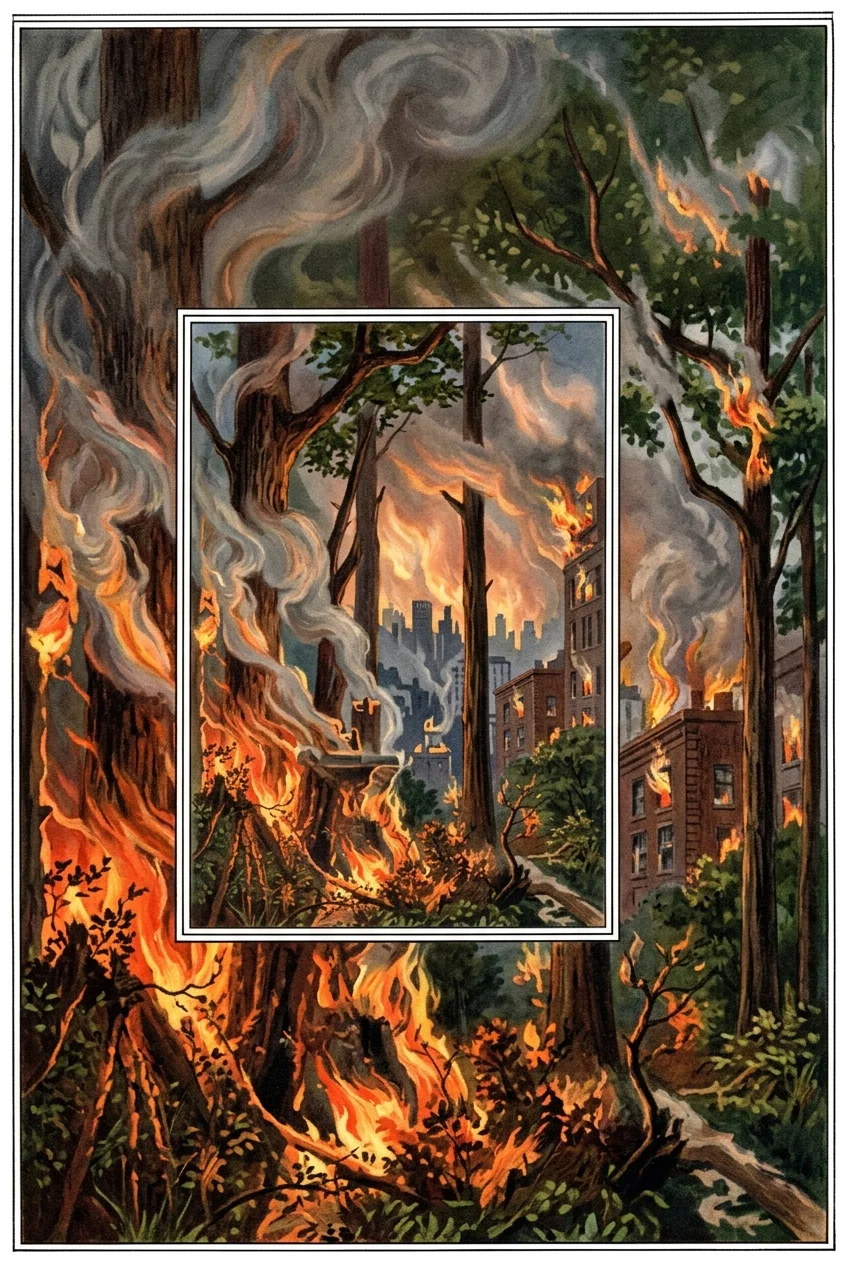
Over two thirds of February Edition sold by January 28
The striking cover picture in three colors (Forest and City Fires) is realistic, and rivets the attention.
Special Offer: Until March 15, 1912, all subscribers for one year who make definite request for the same, will receive, in addition to the 12 numbers for 1912, the beautiful October, November, and December, 1911, issues free of charge,—a 15 months' subscription for $1.00. Date of offer extended one month upon request.
“QUESTIONS AND ANSWERS”
In this new department the editor will reply to all reasonable questions by subscribers. Subscribe now. Send $3.00 for 5 years' subscription (or 5 yearly subscriptions); $2.00 for 3 years' subscription (or 3 yearly subscriptions); or $1.00 for 15 months, as offered above.
WILL YOU BE OUR AGENT?
Send 10 cents for sample copy and particulars. Pleasant and profitable work the year round.
PARTIAL CONTENTS
Frontispiece, “Old Faithful,” the world's greatest geyser. Surprises of God's Out-of-Doors, by Geo. W. James (illustrated). Fire and Fire Prevention, by F. W. Fitzpatrick (7 illustrations). Milwaukee's Campaign for Health, by Carl D. Thompson, City Clerk. The Organization of Junior Civic Leagues, by Mrs. Agnes McGiffert Bailey. How to Cook Legumes, by George E. Cornforth. Medical Missionary Work in Burma. Editorial.—Shall Right and Truth Be Embodied in the Law?—The Tabooed Subject. As We See It.—The Appalling Fire Hazard—Prevention Versus Cure—A Worthy Enterprise—“Uncle Sam Is Our Pardner.” Abstracts.—Foreign Missions and the Liquor and Opium Traffic—We Want Aid and Not Interference by the Federal Government—Changing Habits. Current Comment.—Diet and Health—How the Cigarette Does Its Work. Questions and Answers, News Notes, and other Departments of Interest.
Send All Orders Through Your Tract Society
If you don't know your Tract Society address, ask “Life and Health,” Washington, D. C.
EARN YOUR OWN SUBSCRIPTION
By sending us two new subscriptions at $1 each, you may earn your own yearly subscription, including the three extra numbers offered above. These three extra numbers will also be sent to your two new subscribers.
Send $2 for 50 copies; sell 20 to get your money back; then sell or give away the other 30 copies in the interests of true health reform.
PRICES
$1.00 a Year, 10 Cents a Copy; 5 to 40 copies, 5 Cents Each; 50 or More Copies, 4 Cents Each.

OUR LIBERTIES ARE IN DANGER!

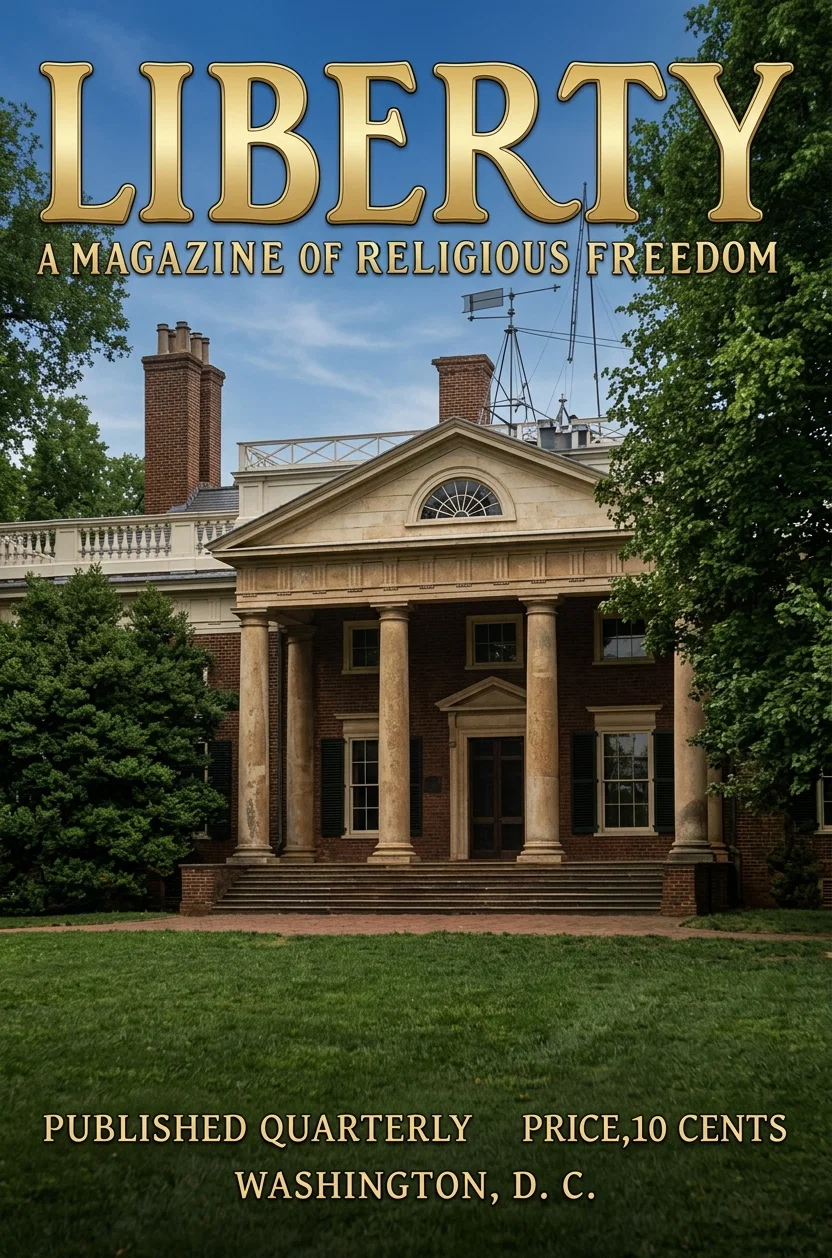
Young and Old Should Read and Circulate This Thomas Jefferson and “Freedom of the Press” Number, Just Out!
First Edition, 50,000 copies. Number of new yearly subscriptions added during the past three months, 6,764. List still climbing.
A FEW FEATURES
Three-color Photo Cover—Picture of Jefferson's Home. Interior View of Jefferson's Home. Rome's Plan to Exclude Anti-Catholic Publications from the U. S. Mails. The President Again Attends St. Patrick's Cathedral Thanksgiving Day. (Illustrations) Visit to an Inquisition Prison in Holland. (Illustrations) A Governor's Plan to Increase Church Attendance by Law. Spain and Religious Liberty. America a Beacon-Light to the Nations. Should the State Teach Religion? Cardinal Gibbons on Church and State Union. Russian Passports and Religious Liberty. The Church in Politics. Religious Laws Now Before Congress. Religion and State in Turkey. Spain Tired of National Reformism. Roosevelt on Liberty. The Liquor Traffic and the Home. An Important Temperance Convention. Striking Cartoon: “Is It Constitutional?”
SPECIAL OFFER ON TEN, ONE YEAR: 10 or more copies, one year, to one address or to ten separate addresses, cash with order, only 15 cents each. Sender may include his own name as one of the ten. SEND THIS NUMBER TO EVERY EDITOR, ATTORNEY, AND PUBLIC-SCHOOL TEACHER IN YOUR COUNTY. WE CAN FURNISH THE NAMES AND ADDRESSES.
A Good Proposition for Agents!
PRICES: 25 cents a year, 10 cents a copy; 5 to 40 copies, 5 cents each; 50 or more copies, 4 cents each. Send 10 cents for sample copy. Better still, send $1.00 for 20, or $2.00 for 50. Discount to agents on yearly subscriptions.

PLEASE ORDER THROUGH YOUR TRACT SOCIETY
If you do not know your Tract Society address, send to “Liberty,” Washington, D. C.
Photo Cover Design in Three Colors

Following Christ

MRS. E. G. WHITE
For each one of us there is a live, disordered self to master, or it will master us. Christians who live for self dishonor their Redeemer. They may apparently be very active in the service of the Lord, but they weave self into all that they do. Sowing the seed of selfishness, they must at last reap a harvest of corruption. It can not but be thus. Eternal life can not possibly be the result of their life-work, unless they see their mistake, and surrender all to God.
Service for self takes a variety of forms. Some of these forms seem harmless. Apparent goodness is regarded as genuine goodness. But they bring no glory to God. Christ says, “He that is not with me is against me; and he that gathereth not with me scattereth abroad.”
The Lord does not accept the service of those who live an inefficient, do-nothing life. They exert an influence that leads away from Christ. Self-denial and nobility of purpose marked his life. From the beginning to the close of his earthly ministry he went about doing good. In his life no sin appeared. No selfishness marred word or act. “Which of you convinceth me of sin?” he asked the Pharisees, knowing that they could find nothing of which to accuse him. And at his trial, Pilate declared emphatically, “I find in him no fault at all.”
Christ declares that as he lived, so we are to live. “Whosoever will come after me,” he says, “let him deny himself, and take up his cross, and follow me.” His footsteps lead along the pathway of sacrifice.
As we pass through life, there come to us many opportunities for service. All around us there are open doors for ministry. By the right use of the talent of speech, we may do much for the Master. Words are a power for good when they are weighted with the tenderness and sympathy of Christ. Money, influence, tact, time, and strength,—all these are gifts entrusted to us to make us more helpful to those around us, and more of an honor to our Creator.
Many feel that it would be a privilege to visit the scenes of Christ’s life on earth, to walk where he trod, to look upon the lake where he loved to teach, and the valleys and hills where his eyes so often rested; but we need not go to Palestine in order to walk in the steps of Jesus. We shall find his footprints beside the sick-bed, in the hovels of poverty, in the crowded alleys of the great city, and in every place where there are human hearts in need of consolation.
All may find something to do. “The poor always ye have with you,” Jesus said, and none need feel that there is no place where they can labor for him.
Millions upon millions of souls ready to perish, bound in chains of ignorance and sin, have never so much as heard of Christ’s love for them. Were our conditions and theirs reversed, what would we desire them to do for us? All this, as far as lies in our power, we are under the most solemn obligation to do for them. Christ’s rule of life, by which every one must stand or fall in the judgment, is, “Whatsoever ye would that men should do to you, do ye even so to them.”
“If thou forbear to deliver them that are drawn unto death, and those that are ready to be slain; if thou sayest, Behold, we knew it not; doth not he that pondereth the heart consider it? and he that keepeth thy soul, doth not he know it? and shall not he render to every man according to his works?” In the great judgment-day, those who have not worked for Christ, who have drifted along thinking of themselves, caring for themselves, will be placed by the Judge of the whole earth with those who did evil. They will receive the same condemnation.
To every soul a trust is given. Of every one the Chief Shepherd will demand, “Where is the flock that was given thee, thy beautiful flock?” And “what wilt thou say when he shall punish thee?”

JOHN D. GILLATT

The City Problem — No. 3

JOHN D. GILLATT

In two texts our Lord summarized Abraham's creed: “Because that Abraham obeyed my voice, and kept my charge, my commandments, my statutes, and my laws.” Gen. 26: 5. “Your father Abraham rejoiced to see my day: and he saw it, and was glad.” John 8: 56. From these verses we gather that Abraham's theology, if we might call it that, was (a) belief in the binding obligation of the commandments of God, and (b) belief in the advent of our Lord. Nor was his view of the latter subject limited to the first advent. Had his vision reached only to that event, he would have seen the seed-time, but not the harvest; and certainly there would be no reason for rejoicing to the farmer if there were no ingathering.
Again, to behold his Master working with physical infirmity, torn by mental anguish, and agonizing beneath the burden of a world's transgressions,—would this have brought unmingled rejoicing to the heart of Abraham? Would it notrather have created anxious regret and despondency? See the patriarch, however, as he descries over the horizon of time the regal majesty of the future advent morn. What loyal soul with such a vision would not reflect its radiance, and rejoice?
These two principles upon which Abraham built his confidence are now committed to us as a people; hence again we say that we should recognize and maintain a closer kinship to Father Abraham than would be appreciated by formal Christendom.
When departing from Haran, Abram took a memento of Chaldea with him in the person of Lot, who proved both during and after their association not the greatest help. God's plan of complete separation was, after all, the best, and fortunately for Abram, the separation finally came.
Our Lord has given us an admirable commentary upon the educational course which Abram conducted for his household. “For I know him, that he will command his children and his household after him, and they shall keep the way of the Lord, to do justice and judgment; that the Lord may bring upon Abraham that which he hath spoken of him.” Gen. 18: 19. He had a higher and nobler science in which to train his followers than the science of the world.
Now, contrast Lot with “the friend of God.” Let us place two scriptures together. “Abram moved his tent, and came and dwelt by the oaks.” Gen. 13:18, R. V. “Abram dwelled in the land of Canaan, and Lot dwelled in the cities.” Verse 12. An interesting difference is here distinguishable. Abraham cultivated the divine Spirit, and took up his abode in the country, rejoicing not in the gaiety and trafficking of the cities. Lot, on the other hand, chose city life. This would have been justifiable had it been with a view to putting forth labor for souls, but Lot preferred the city evidently for other reasons. Twenty years Lot was a city resident, yet at the close of that period he could not show the specified ten souls to save the cities. Nay, not even one was found outside Lot's household when the angels visited Sodom. On the other hand, Lot lost a portion of his family in the flames, was bereft of his wife even en route to safety, and speedily was confronted with the lasting disgrace of his daughters and the sign of their spiritual apathy. All this because of his own unwise choice. He had chosen the leadings of his own inclinations rather than the leadings of the Spirit of God; had chosen to sit in civic judgment in the temporal affairs of men rather than to bring to them the message of salvation that would save them from the judgment of the great day of God. Although he is acknowledged by heaven as personally a just man, and although he was “vexed with the filthy conversation of the wicked” (2 Peter 2:7), yet he was assuredly one saved “yet so as by fire.” 1 Cor. 3:15. Even in later years, the consequences of his failure to seize the opportunity of laboring for those souls were terrible; for instance, from an unhallowed union two nations sprang into being that were an abomination to the Lord, and were as thorns in the flesh to Israel. As a result of counsel given by Balaam to Balak, king of one of these nations, sin stormed the camp of Israel's armies and carried off twenty-four thousand to untimely graves. See Num. 25: 1-3, 9; 31: 16.
Lot's case exemplifies the truth that no man liveth unto himself, and shows us how men who esteem lightly city needs may “bring a city into a snare,” whereas “wise men turn away wrath.” Prov. 29:8. Let us haste to learn our lesson, be wise and “turn away wrath” from the heads of many in our great hives of industry, commerce, and transgression, by conveying to souls in danger the sacred warning committed to us.

The Mountain Climb With Him

WORTHIE HARRIS HOLDEN
Not blindly do I grope through misty years, But with my hand in His to vanquish fears, Up through the mists I see diffused, though dim, The halo of the glory circling him.
I know he leads me o’er the rocky way Up to the light-crowned heights of endless day; And oft I seem to hear close passing by The wings of guardian angels ever nigh.
Sometimes the lightnings flash and thunders peal, Then closer do I cling his strength to feel; Sometimes the mists have almost cleared away That I might catch a glimmer of his day.
I can not falter, for I trust my Guide, And death awaits me if I leave his side; He bids me haste to hear heaven’s choir sing Their halleluiahs to the coming King.
Portland, Oregon.

Profanity

JOHN D. SNIDER
“Thou shalt not take the name of the Lord thy God in vain; for the Lord will not hold him guiltless that taketh his name in vain.” Ex. 20: 7.
Although the above quotation is embodied in God’s immutable law, is a recognized tenet of every religious denomination, and is an ethical prerequisite of morality and etiquette, thousands upon thousands of thoughtless people are daily divorcing themselves from God’s grace and richest blessings, while at the same time they are paving the road, by adhering to an ungodly habit, for their own ultimate downfall. Is not the language of the text in itself conclusive evidence as to what the inevitable outcome must be? Can there be any ambiguity in the declaration, “For the Lord will not hold him guiltless that taketh his name in vain”?
An atheist was standing in the doorway of his dwelling, conversing with friends. A great electrical storm was in progress, and the conversation soon involved the question of whether God sometimes manifests his displeasure toward a wicked man by allowing him to be struck by lightning. Thereupon the skeptic spontaneously and deliberately swore that he positively maintained no belief in a Divine Power capable of manipulating in any degree the forces of nature. These were his last words. His awful declaration had called forth the wrath of Omnipotence, and the vain atheist was a corpse—killed by the lightning while in the very act of cursing his Lord. Anything strange about it?—No. He “cursed God” without the least provocation, and died with the imprecations upon his lips. Think of it! Dead and doomed! His future as rayless as the tomb!
This inexcusable habit assumes a more humiliating appearance when we come to consider the inconsistency of the uses it is made to serve. Men employ vile oaths and execrations to add force to their expressions of anger, surprise pleasure, incredulity, constancy, veracity, denial, and others too numerous to mention. Now, is it not an axiomatic truth that these imprecations, being all of the same nature, can not possibly represent emotions so multifarious and varied? If so, how obvious is the futility of their employment to serve all the above-enumerated purposes. Is not the English language sufficiently rich in synonyms so that men may select a vocabulary that will be adequate for the intelligent and potent expression of all emotions?—It undoubtedly is. Then why use these ungodly words in the vain effort to add emphasis to what is said, when they actually fail to do so, and when there are so many other words that may be used to reveal the strongest feelings and the tenderest emotions without calling down the wrath of God by blaspheming his name?
This sin is not confined to the lower and middle classes of society. Men moving in the select circles of society, cultured and influential, habitually punctuate their remarks with oaths. More than that, not infrequently we see women of all classes, and even girls of tender years, swearing over every little affair that irritates them.
Some young men seem not to consider their education completed until they can swear fluently. At first, it is unnatural, and the thought, “What would mother say could she hear me?” brings the blush to the cheek; but the young man only swears again to conceal his agitation, and the habit is quickly formed. We have a feeling akin to admiration for the boy who can go out from his mother’s training, and yet retain that chastity of speech which she has taught him.
Swearing is one of the greatest sins of the human race, and it is the bounden duty of every follower of Christ to battle against it, until it, with all other sins, is forever exterminated.

Reverence for God's House and Day

F. D. STARR
“Ye shall keep my sabbaths, and reverence my sanctuary.” Lev. 19: 30. Due regard for holy things is very essential in Christian experience. When we put little or no difference between the sacred and the common, we fail to honor God, and we deaden our own sense of spiritual things.
As observers of the true Sabbath, set apart in Eden, our position before the world is a unique one. We can not follow the prevailing ideas in regard to the manner of observing the weekly day of rest. The custom of the people in this respect is just as erroneous as their belief as to which day should be observed.
Through the prophet who predicted the Sabbath reform, the Lord has told us just what is acceptable Sabbath observance. “If thou turn away thy foot from the Sabbath, from doing thy pleasure onmy holy day; and call the Sabbath a delight, the holy of the Lord, honorable; and shalt honor him, not doing thine own ways, nor finding thine own pleasure, nor speaking thine own words; then shalt thou delight thyself in the Lord.” Isa. 58: 13, 14. That observance of a day which makes it merely a season of idleness, sport, visiting, or ordinary recreation, lacks very much of being true Sabbath observance. But we have become so accustomed to seeing this sort of use made of the rest day that our own practise is likely to be conformed to these popular customs, and we thus to secularize the holy Sabbath of the Lord.
David speaks of the pleasure he took in walking to the house of God with a friend or “with a multitude that kept holyday.” “We took sweet counsel together, and walked unto the house of God in company.” Ps. 42: 4; 55: 14. These words suggest one of the most exquisite of spiritual pleasures to be experienced in this mortal state. What social occasion could afford so great delight as the opportunity of associating with devout Sabbath-keepers while wending our way to or from divine services on God’s holy day? But how often is this otherwise delightful association rendered unprofitable, or even intolerable, by the worldly turn given to the conversation. No matter how solemn the services, or how spiritual the subject considered, scarcely have some emerged from the place of worship ere dress, pleasure, business, crops, buying and selling, become the topics of conversation, and those who desire to observe the day as it should be observed, feel constrained to separate from the company and walk alone, or rather, as Enoch of old, walk with God.
Those in responsible positions have a great influence in this matter. We find it not so difficult ordinarily to remind in a kindly way those who would introduce worldly themes on the Sabbath that we do not deem such conversation proper on the consecrated day, and to decline to engage in talk of that nature. But if one of our ministers, especially one holding official position, broaches subjects of a worldly nature on the Sabbath, the influence against proper Sabbath observance is more far-reaching and more destructive, and the duty of calling his attention to the matter is naturally a more embarrassing one. If we will cherish, and listen to, the gentle pleadings of the Spirit of God in this matter, we shall find our minds led to venerate the holy institution.
It is very much out of order for children to be allowed to indulge in their ordinary play, romping, hallooing, etc., on the Sabbath, and most assuredly nothing of this kind should ever be permitted in the house of God on this or any other day. There is surely occasion for a genuine reform in this matter.
It may not always be easy to define the exact limits of what is permissible, and what is not on the holy Sabbath. But the motive has much to do with the action. We shall find that there must be in this, as well as in other lines of service, “first a willing mind,” a consecrated heart. For the unconverted to observe the Sabbath properly, will be a difficult matter. Hence the need of true conversion. Much is the regenerating influence of the Holy Spirit needed in this work of genuine Sabbath reformation. Some may object to taking up any collection or donations on the Sabbath, but it is noticeable that these scruples are sometimes urged by those who are very remiss and careless about their conversation on the Sabbath. Surely consistency is lacking in such cases. “Shall mortal man be more just than God? shall a man be more pure than his Maker?” He who made the Sabbath and gave command for special offerings on that day, and furnished us, for over three years, living examples of proper Sabbath observance, is surely the proper authority in this matter. If zeal for God’s house and day takes possession of us, as it did of him, we shall find special delight in the proper observance of the holy Sabbath.
Forest, Idaho.

Two Similar and Touching Requests

ARTHUR L. MANOUS
During the apostle Paul’s second and last imprisonment at Rome, and just before the coming of winter, he wrote his last epistle, the second epistle to Timothy, in which he urges Timothy to come, if possible, to him before winter. Among the things that the apostle wished Timothy to bring when he would come, he mentions the following: “The cloak that I left at Troas with Carpus, when thou comest, bring with thee, and the books, but especially the parchments.” 2 Tim. 4: 13.
After quoting this text, one writer remarks: “At his second arrest, Paul was seized and hurried away so suddenly that he had no opportunity to gather up his few ‘books and parchments,’ or even to take with him his cloak. And now winter was coming on, and he knew that he would suffer with cold in his damp prison cell. He had no money to buy another garment. He knew that his end might come at any moment, and with his usual self-forgetfulness and fear to burden the church, he desired that no expense should be incurred on his account.”—“Sketches From the Life of Paul,” Mrs. E. G. White, 1883 edition, page 327.
In the “Modern Speech New Testament,” by the late Richard Francis Weymouth, M. A., D. Lit. (The Baker and Taylor Company, New York), there is the following note on our text: “‘There is a striking parallel to this touching little personal message in the letter written by the martyr William Tyndale, from the damp cell of his prison at Vilvorde, in the winter before his death. He wrote to beg for something to patch his leggings, and for a woolen shirt, a warmer cap, and above all, for his Hebrew Bible, grammar, and dictionary.’—F. W. Farrar, ‘Texts Explained.’”
If such examples and experiences as these do not arouse us to a more thorough study of God’s Word, and to a better improvement of the God-given opportunities we now enjoy, when we are placed in similar circumstances, as some of us most surely will be, we may wish that we had been more diligent.
“But many of all nations and all classes, high and low, rich and poor, black and white, will be cast into the most unjust and cruel bondage. The beloved of God pass weary days, bound in chains, shut in by prison-bars, sentenced to be slain, some apparently left to die of starvation in dark and loathsome dungeons. No human ear is open to hear their moans; no human hand is ready to lend them help.”—“Great Controversy,” page 626.
From “Expository Notes” on the New Testament, by William Burkitt, M. A. (Sorin and Ball, Philadelphia, 1844), we quote:—
“His books, probably the books of the Old Testament, certainly no profane books; for he had no leisure for, no liking to, any such. But especially the parchments; these are thought to be notebooks of his own collecting, in which he had written several things for the help of his memory, and the benefit of the church. Behold here, (1) An eminent pattern of pious studiousness in Paul. Here was an aged man, an aged minister, that had already read much, a prisoner,—no very proper place for study, were prisons then filled with such brutes as they are generally now,—nay, a dying prisoner, one that looked for death and beheading every day; yet aged Paul, dying Paul, can not live without his books; he must still be reading, learning, studying the Scriptures, especially, which are such a vast deep as the line of an inspired apostle could not fathom. Behold, I say, a pattern for such ministers as think they know enough, have studied enough, or are too old to learn; so was not our apostle, when within a few months of his death.”
May God help us to study to show ourselves approved unto him, workmen that need not to be ashamed, rightly dividing the Word of God, is my prayer.
Nashville, Tenn.

Thoughts on the Soul’s Immortality

JOHN N. QUINN

The Soul’s Immateriality

MATTER not being able to think, and thought being a power possessed by man, this power, it is contended by many, must be vested in the soul, which is immaterial, and consequently immortal. The soul out of Christ is to be consigned to hell-fire, remaining there, these claim, in conscious suffering throughout eternity.
But will material fire cause suffering to an immaterial soul? How can a material element cause pain to immateriality? Immateriality is nonentity, and nonentity is non-existence. How reasonablethe Bible doctrine that at death thought ceases; that the dead are unconscious, remaining in that condition until the resurrection, when the righteous will be immortalized, and the ungodly become as though they had not been.

Immortality and the Penalty for Sin

An offense is committed against the laws of the state, and after a just trial, the offender is sentenced to sixteen years’ imprisonment in the penitentiary. The transgressed law will be satisfied either when the sentence has been fully met, or by the death of the transgressor before the expiration of the sentence. A friend offers himself as a substitute, and his offer is accepted. How long must the friend remain in jail?—Sixteen years.
Eternal suffering is the penalty attached to the transgression of the divine law, according to that school of theology which teaches the immortality of the soul. Christ came into the world as man’s substitute, to meet the penalty of the law. Must Christ therefore be cast into the ever-burning pit, to remain there eternally?—Impossible; he is at the right hand of God, having met the penalty; and this comforting truth forever refutes the doctrine of eternal suffering. Death is the penalty, and Calvary is God’s declaration of the fate of the ungodly. “The wages of sin is death.”

Immortality and Unconsciousness

Immortality means eternal, continued consciousness. If the soul is immortal, then not for a second of time can it become unconscious. God is immortal, and he is eternally conscious—he never slumbers nor sleeps. But human beings become unconscious in sleep, or by the use of drugs, when anesthetics are administered, or by an accident which injures the brain. The fact that material things, such as drugs, interfere with consciousness, disproves the immateriality of the soul, for how is it possible for material things to interfere with the operation of immateriality? And what is immateriality?

Infinite Evil Versus Infinite Righteousness

When the doctrine of the soul’s immortality is advocated, then the eternity of evil follows as a consequence; for if the soul of the ungodly exists in eternal fire, this certainly is evil. This makes the penalty for sin infinite, as that which is eternal is infinite; and as the punishment fits the crime, the crime also becomes infinite. Righteousness we know is eternal, therefore infinite. But how can two infinites exist at the same time, in the same universe, and the one the opposite of the other? This is the dilemma in which those are placed who believe in the immortality of the soul.
Sinners are to be banished from the presence of God, and as God is omnipresent, only non-existence can banish them from the presence of God. Praise God, righteousness is eternal; sin but for a moment. God will one day have a clean universe, wherein every creature “which is in heaven, and on the earth, and under the earth, and such as are in the sea, and all that are in them,” are heard saying, “Blessing, and honor, and glory, and power, be unto him that sitteth upon the throne, and unto the Lamb forever and ever.” Rev. 5:13. This text completely refutes the doctrine of the eternity of evil, the soul’s immortality, and the everlasting suffering of the lost.
Takoma Park, D. C.

“Hold Your Breath and Your Tongue”

MRS. C. O. HICKOK
Very recently I came across this anecdote of President Lincoln, which impressed me so much that I pass it on as having an application to us as a people, in holding up the hands of our conference presidents, General Conference men, and all in authority. It is easy to criticize and complain; but the better way would be to “hold your tongue” and pray. The anecdote is found in a book called “The Civil War in Song and Story,” by Frank Moore, and is as follows:—
“The following occurred at the Executive Mansion in Washington. Its moral will be appreciated by all thoughtful men. Some gentlemen were present from the West, excited and troubled about the commissions or omissions of the administration. The President heard them patiently, and then replied: ‘Gentlemen, suppose all the property you were worth was in gold, and you had put it in the hands of Blondin to carry across the Niagara River on a rope; would you shake the cable, or keep shouting to him, Blondin, stand up a little straighter; Blondin, stoop a little more, go a little faster, lean a little more to the north, lean a little more to the south?—No, you would hold your breath as well as your tongue, and keep your hands off until he was safely over. The government is carrying an immense weight. Untold treasures are in its hands. It is doing the very best it can. Don’t badger it. Keep silence, and we’ll get you safely across.’ This simple illustration answered the complaints of half an hour, and not only silenced but charmed the audience.”
May God bless and greatly strengthen those in authority who are carrying heavy responsibilities, and are often perplexed to know what is best to do. May he give them courage, sanctified judgment, large-heartedness, keep them humble and true to the trust committed to them, and soon bring us all safely across to the evergreen shore.
Continue reading: College Men Studying the Bible