Your ShelfYour Projects

Review and Herald, Vol. 86, No. 5.

All the Way

Review and Herald

Feb 4, 1909

Review and Herald Publishing Association · Takoma Park Station, Washington, D. C. · Feb 4, 1909

All the Way

ALL the way my Saviour leads me; What have I to ask beside? Can I doubt His tender mercy, Who through life has been my guide? Heavenly peace, divinest comfort, Here by faith in Him to dwell; For I know, whate’er befall me, Jesus doeth all things well.
All the way my Saviour leads me, Cheers each winding path I tread; Gives me grace for every trial, Feeds me with the living bread; Though my weary steps may falter, And my soul athirst may be, Gushing from the Rock before me, Lo, a spring of joy I see.
All the way my Saviour leads me; O the fulness of His love! Perfect rest to me is promised In my Father’s house above; When my spirit, clothed, immortal, Angels guide to realms of day, This my song through endless ages — Jesus led me all the way.
— Fanny J. Crosby.

Editorial

A Forgiving Saviour

THERE is nothing but our own will that can stand between us and salvation. God will not force the will; but he will not permit anything else to stand between us and him. If we lack strength, he is all-powerful; and he says of the weak one, “Let him take hold of my strength, that he may make peace with me; yea, let him make peace with me.” Isa. 27: 5. That peace means the forgiveness of the weak one’s sins. Just so certain as the Lord Jesus Christ was “wounded for our transgressions,” just so certain it is that “with his stripes we are healed”—if we choose to be healed. “The chastisement of our peace was upon him.” Just so certain as he was chastised, so certain it is that our peace with God is assured—if we will permit the remedy to be applied. Heaven has exhausted its resources to bring about our reconciliation to God. If we are not at peace with him, can it be his fault? Inspiration asks: “What could have been done more to my vineyard, that I have not done in it?” And again Jehovah says: “Though your sins be as scarlet, they shall be as white as snow; though they be red like crimson, they shall be as wool. If ye be willing and obedient, ye shall eat the good of the land.” Then comes this comforting message through Micah: “Who is a God like unto thee, that pardoneth iniquity, and passeth over the transgression of the remnant of his heritage? . . . He will again have compassion upon us; he will tread our iniquities underfoot, and thou wilt cast all their sins into the depths of the sea.” Let the child of God believe this, and say, with Isaiah, “Thou hast cast all my sins behind thy back.”

Earthquake Prophets and the Law

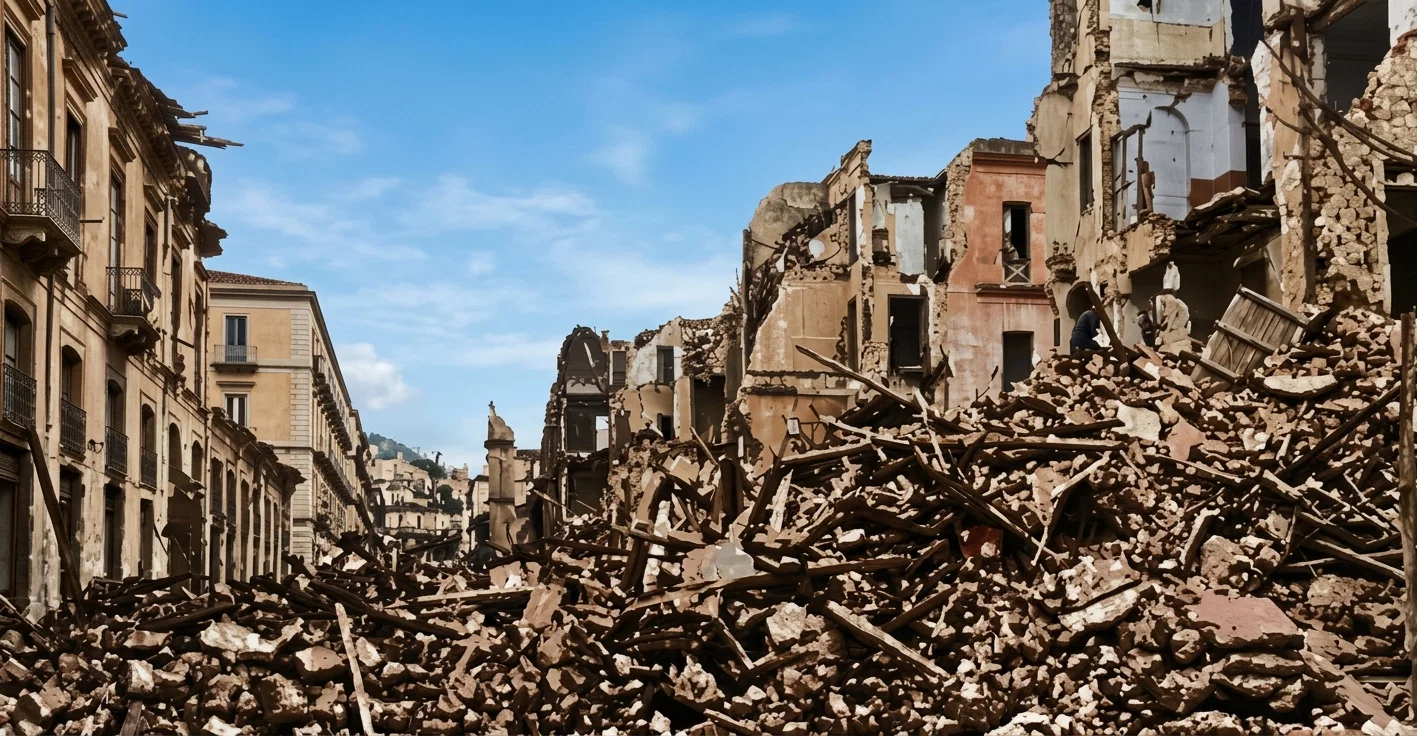
THE recent calamity in southern Italy, which has been designated by a writer in the Scientific American as “probably one of the most, if not the most appallingly destructive earthquakes in the annals of seismic disturbances throughout the world,” has been the subject of general discussion, one phase of which is of more than passing interest. While scientists have taken advantage of the opportunity to set forth anew their theory that “in all probability, an earthquake is one of the necessary consequences of the gradual cooling of the earth,” and at the same time have assured the people that “earthquakes and volcanoes have been inseparably bound up with the evolution of our planet for countless ages past,” other writers have considered the subject from a different standpoint, some suggesting the probability of the recurrence of this same display of destructive force in other parts of the world. This inclination to predict future earthquakes was the basis of an editorial in the Washington Post of January 7, from which we quote:—
Immediately after the San Francisco earthquake a lot of self-appointed prophets, soothsayers, star-gazers, and humbugs sought notoriety by predicting quakes in various parts of the country. . . . Nervous and impressionable persons are affected more or less by these predictions, and in the aggregate great harm is wrought by the scoundrels who pose as scientists and prophets. . . .
The charlatan who takes advantage of ignorance and credulity to gain cash or notoriety at the expense of acute apprehension and suffering on the part of women and children is deserving of the severest punishment. It is a pity that the law can not reach such persons.
In the face of this effort to repress any forecasts of seismic disturbances, it will be of interest to read some of the statements made by those who occupy positions which certainly ought to be filled by men of some scientific attainments. For example, Lieut. W. J. Wilson, of the Chicago Branch of the United States Hydrographic office, gives this advice to the dwellers on the shore of Lake Michigan:— If you should discern the waters of Lake Michigan receding, either gradually or tumultuously, from the shore, gather about you your family and household effects, and flee to a place of refuge inland, where a returning wave can not engulf you.
At the same time, Lieutenant Wilson reassures the people of Chicago in these words:—
This advice does not refer particularly to the people of Chicago, but there is no harm in every one knowing it. We are in no danger of earthquakes in this locality, and the bed of Lake Michigan is secure from seismic disturbances.
While Lieutenant Wilson predicts no earthquakes in his vicinity, Prof. T. A. Jaggar, of the geological department of the Massachusetts Institute of Technology, writes in a different vein. First, he declares that “the recent Sicilian disaster was foretold by an American volcanologist, Frank Alvord Perret, who has predicted disaster on Mount Etna for two years past.” In saying this, he, of course, admits the possibility of foretelling earthquakes, but he does not stop there. On the contrary, he puts forth this prophecy:—
I positively predict the violent eruption of Mount Etna within eighteen months. A careful study of the disturbances recorded in the past hundred years, and of the nature of the present slight eruption, leads me to this belief.
New York is in the center of an earthquake belt, and is as liable to eruption as any of the places in the volcanic district of Italy. Boston will hardly experience any violent shocks, but Providence and Manchester are in the zone of disturbance. One belt in which earthquakes may occur is directly south of Boston, another to the north, but no indications point to the fact that any disturbances will be felt here.
It is interesting to note that while Professor Jaggar definitely and positively predicts another earthquake within eighteen months, and even makes New York a danger-point, he agrees with Lieutenant Wilson in sounding the peace-and-safety cry to the inhabitants of his own city.
Professor Jaggar does not merely make one prediction, but he believes that the forecasting of earthquakes can be put upon a scientific basis. We will let him state the case in his own words:—
If steam pressures and temperatures were regularly recorded at widely distributed volcanic vents, and earth shrinkage were recorded by various seismometrical instruments at well-chosen stations where known tilting and faulting are in progress, and deep-seated flow were examined with pyrometers, microphonesand experimental gravity pendulums in those places where we know lava columns are in motion, as they are under Mount Etna to-day, I think there is no question but that we would, in a few years, secure empirical data from these sources which would lead to a science of forecasting outbreaks.
To the same general effect is the statement made by a writer in the last number of Current Literature, at the close of a lengthy discussion of the earthquake question:—
The science of seismology may never become so precise as all that [to predict the day on which an earthquake will occur], but when the factor of causation is given,—when we know, for certain, whether or not the sun-spots or the shrinkage of the globe or the alteration of the direction of the earth’s axis must be given credit for the earthquake,—the problem of the seismological prophet will have been practically solved.
It is not probable that the Post had in mind such writers as these when it expressed the wish that the strong arm of the law might be invoked against earthquake prophets. It no doubt had another class of persons in view. But suppose the Post had been published in Jerusalem, in A. D. 31; what would have been its attitude toward one Jesus of Nazareth, who prophesied thus: “Great earthquakes shall be in divers places”? This Man of Galilee did not talk about the tilting and faulting of the earth’s crust, and did not base his prediction upon data obtained by years of careful observation, but boldly made his prophecy. Shall those who believe this prophecy, and who base thereon their belief in the more frequent recurrence of these great disasters as signs of the last days which foretell the nearness of the return of their Lord, be classed as charlatans and false prophets, who ought to be restrained by law from disturbing “nervous and impressionable persons”? The whole problem may be reduced to this: Shall those who base their predictions upon scientific theories be permitted to foretell definitely coming disasters with
out incurring the displeasure of the public, while those whose confidence in the prophecy of Jesus of Nazareth leads them to declare that great earthquakes will occur with increasing frequency are regarded as dangerous persons, who ought to be restrained by law?
A BEAUTIFUL STREET IN MESSINA AFTER THE GREAT EARTHQUAKE
One thing is certain: if early in the year 1906 one had prophesied that within two or three years there would be great earthquakes in different parts of the world, and among them the most destructive disaster known in this world’s history, he would have been a true prophet. In view of the prophecy of Jesus and the testimony of recent history, is it safe to stigmatize as a charlatan one who declares that similar great earthquakes will occur with greater frequency in the near future? Shall the law be invoked against those who interpret the prophecies for this time?

The Law and the Testimony

WHEN the people of God have been in great danger of deception, the Lord has always raised up a standard, and invited those who would be his to rally around that standard. His assurance is: “I will contend with him that contendeth with thee, and I will save thy children.” Isa. 49:25. It is only those who have entrusted their case to him that receive this help from Jehovah. He has never promised to help any against their will. He can not fight for those who place themselves in the ranks of the enemy from choice, or who, while in the ranks of the enemy, refuse to heed the rallying call of the Almighty. This is no haphazard mode of procedure, but is along the direct line of the Lord’s declared purpose. He says: “When the enemy shall come in like a flood, the Spirit of the Lord shall lift up a standard against him. And the Redeemer shall come to Zion, and [come] unto them that turn from transgression in Jacob, saith the Lord.” Isa. 59:19, 20.
It is not difficult to see from this text alone what the standard is. The Lord comes “unto them that turn from transgression;” in other words, to those who are keeping his holy law. Transgression is but another word for sin. Sin is the opposite of righteousness; and the standard of righteousness is the law of God. Righteousness is the prerequisite of salvation, for without holiness, or righteousness, “no man shall see the Lord.”
Then that standard of righteousness, the law of God, must figure in the very last experiences of those who are numbered among the remnant saved out of the last generation of men. That means that the law of God will be in full force and efficiency up to the very moment when our Saviour appears in the clouds of heaven, and that men’s attitude toward that law will determine whether they are to meet Christ in peace and go with him, or whether they will remain here to partake of the portion allotted to his avowed enemies.
This use of God’s law as a standard for his people is not an experience peculiar to the last generation of men. When Israel of old was beset on all sides by idolaters and necromancers—demon-worshipers and spiritualists—the Lord had the same remedy to offer to protect his people against those delusions that were threatening the ruin of their souls. Thus we read in Isa. 8:19, 20:—
“And when they shall say unto you, Seek unto them that have familiar spirits and unto the wizards, that chirp and that mutter: should not a people seek unto their God? on behalf of the living should they seek unto the dead? To the law and to the testimony! if they speak not according to this word, surely there is no morning for them.”
That law (the ten commandments) and that testimony (God’s instructions to his people through his prophets) constituted the divine remedy against deception in the days of literal Israel; and conditions have not so changed as to make necessary a change of remedy for the people of our day. What protected them against the deceptions of the devil will protect us also. The law of God and the testimony of his Spirit, given through his accredited prophets, furnish a sufficient test for any movement or any development or any teaching. If in harmony with that standard, they are of him; if out of harmony with it, they have no part in his work, and can only deceive and destroy.
When Israel of old was counseled to seek to the dead concerning the living, their knowledge of “the law and the prophets,” enabled them to escape the net of the hunter of souls. When the professed church of Christ to-day meets the same temptation, a very large parthave no such test, no such protection. They have declared the law abolished, and their criticism of the teachings of the prophets has weakened the influence of the Word upon the people. What is the result?—The great body of the professed church of Christ is accepting the teachings of Spiritualism, or teachings that lead thereto. They people the world with the disembodied spirits of the dead, hovering about the living, and intensely interested in all that the living are doing, saying, and thinking. It is only one step, then, to the establishment of communication between the living and the spirits of the dead. That other step—and a short one it is, too—is Spiritualism, and it seems a consistent thing to take the step when one believes the dead are still alive. “The law and the testimony” would have fortified them against such a deception, if their authority had been recognized and their teachings believed. But Spiritualism is now one of the greatest deceptions of the age, and is winning adherents by the thousand. With the law abolished and the prophets discredited, the church has lost her shield, and the fiery darts of the enemy find her vulnerable at every point.
When ancient Israel was asked to join forces with other powers—to confederate with earthly forces to accomplish certain ends—the counsel of the Lord was just as explicit as in the matter above mentioned. The Lord had promised to be their rock, their strong tower, their defender, their strength, their mighty counselor. The great ocean liner of the present day needs no windmill on her deck to help drive her forward. Such a contrivance would be an impediment rather than a propelling power. Just so with Israel. With the mighty power of God, what need had they of confederating with the powers of the world. Such confederacies could only interfere with God’s purpose concerning them. So the Lord instructed them thus:—
“Say ye not, A confederacy, to all them to whom this people shall say, A confederacy; neither fear ye their fear, nor be afraid. Sanctify the Lord of hosts himself; and let him be your fear, and let him be your dread.” Isa. 8: 12, 13.
Then comes this positive admonition (verse 16), so similar to that given in connection with the deception of necromancy and Spiritualism: “Bind up the testimony, seal the law among my disciples.” A proper understanding and regard for the law and the testimony would be their safeguard against the snare of a confederacy. Had Israel heeded that advice, her history would have been very different from what it was. What was true of Israel will be true of the professed church in our day. The call of the different churches to-day is for confederacy to accomplish certain ends—confederacy among themselves in spite of their differences, and looking finally to confederacy with that great spiritual power that has taken “the testimony,” the Word itself, away from the people, and set its hand to change the law. A loyal adherence to “the law and the testimony” would not permit them to be caught in such a snare; but they have declared the law abolished. So what care they for any change made in an abolished law? Many of their leaders are heaping reproach upon the Word. So what care they if those with whom they seek to confederate keep that Word away from the common people? The shield is thrown down again, and the arrows of the adversary have free course. The confederacy will be formed, and the head of the confederacy will lead the confederates to the ruin that awaits all who forsake the law of God and the teachings of his Word.
The call, “To the law and to the testimony,” is as essential, now as ever in the history of God’s people. That it will be given and heeded during the last generation of men is shown by this statement of Holy Writ concerning those who stand faithful to God through the fiery trials of the last days:—
“And the dragon was wroth with the woman, and went to make war with the remnant of her seed, which keep the commandments of God, and have the testimony of Jesus Christ.” Rev. 12: 17.
Again the revelator says, in pointing out this same company:—
“Here is the patience of the saints: here are they that keep the commandments of God, and the faith of Jesus.” Rev. 14: 12.
Thus can we see the supreme importance of our assuming the right attitude toward God’s great law and toward the testimony of his Spirit given by the prophets through the ages for the guidance and the safety of his people.
C. M. S.

Important to Remember

It comes natural enough to pray for the gospel workers, and for the white-unto-harvest fields. The secretary of the Congregational Board recently called the attention of that people to the need for specific prayer in behalf of another factor. He wrote:—
Will you who read these words remember our treasury in your prayers?
It is one subject of prayer too liable to be forgotten, while we remember readily the more interesting, but not more important, features of the missionary cause. The mission treasury needs the prayers of the believers. In and out comes and goes the supply of means that is essential in prosecuting the work.
Thus far it has seemed like the widow’s barrel of meal and cruse of oil,—threatening to give out with the demands upon it, but somehow supplying just a little more. The year 1909 opens with the most encouraging outlook in the fields that we have ever seen, and with the promise of the loudest calls for enlargement and expansion that have ever come to the ears of this people. Well may we be admonished to pray for the mission treasury. W. A. S.

Greater Liberty in Russia

THE religious conditions in Russia appeal strongly to our interest. Our own workers have suffered much in years past because of oppressive laws which positively forbade, or at least greatly restricted, the teaching of any other than the state religion. In spite of these unfavorable conditions, our work has prospered in that field. Nevertheless we welcome the change which has come, and the greater freedom permitted in the dissemination of the gospel message.
A recent article by Baron Woldemar Uxküll gives a clear presentation of present conditions. From this article the following paragraphs are taken:—
The political troubles through which Russia has had to pass in the last years, and especially the edict of religious liberty of Easter, 1905, have had great influence on the religious life of that country. There is an increased activity on the part of all evangelical Christians in Russia. It is no more a crime to preach the gospel and to leave the Greek Orthodox Church; and without obstacles we can preach salvation through Christ to sinners. We have now religious liberty in Russia. For example, the governor of one of the southern provinces of Russia made a trip through his province. In a certain city he was met by some members of the Greek orthodox clergy, who asked him to put an end to the preaching of evangelical doctrines in their district. He answered that there is now religious liberty in Russia; he praised the evangelical Christians for their diligent work and virtues, and said he wished that all Russians might live so. In Simferopol we have public religious meetings without any interference, also in St. Petersburg and many other cities. If the police make any difficulties, then such action is not legal,—not according to the existing law,—and in every case we find that the Greek orthodox clergy is behind this action of the police.
It is a sad thing that we can not trust absolutely our government and its promises. The constitutional rights of Finland were confirmed by the emperor, and after some years the government tried to annihilate these rights. A constitution was granted to the Russian nation, and this has been altered twice already. I think, too, that many high officials of the state church would gladly welcome the abolition of religious liberty, but they understand that it is impossible to control the consciences of one hundred thousand men. They are also afraid to produce more trouble, and we have had enough already in Russia. We must rememberthe verse, “It is better to take refuge in Jehovah than to put confidence in princes.” From the Lord we received the liberty to serve him, and we know that he has a great people in our empire, and we trust him to maintain the religious freedom which he gave us.

Delegates to the Next General Conference

THE constitution of the General Conference makes the following provision for delegates to the sessions of the General Conference:—
Section 2: The voters of this conference shall be designated as follows:—
  • (a) Delegates at large.
  • (b) Regular delegates.
Sec. 3: Delegates at large shall be:—
  • (a) The General Conference Executive Committee.
  • (b) The Secretary and the Treasurer of the General Conference.
  • (c) Such members of departmental committees and representatives of missions of the General Conference as shall receive credentials from its executive committee.
Sec. 4: Regular delegates shall be such persons as are duly accredited by union conferences, or local conferences not included in union conferences.
Sec. 5: Each union conference shall be entitled to one delegate without regard to numbers, an additional delegate for each conference in its territory, and an additional delegate for each one thousand of its membership.
Provision is here made for “regular delegates” and “delegates at large.” The regular delegates are to be chosen, or appointed, by the union and local conferences. According to the basis of representation provided by the constitution, and the present number of conferences and church-members, about one hundred seventy-four regular delegates can be elected. Of this number the States are entitled to one hundred nine; Europe, thirty-two; Australasia, nine; West Indies, nine; Canada, seven; South America, six; and South Africa, two.
The delegates at large must be the members of the General Conference Committee, and representatives of mission fields and members of the General Conference departmental committees to whom delegates’ credentials may be issued by the General Conference Committee.
As the presidents of union conferences are members of the General Conference Committee, and are, therefore, delegates at large, they are not counted as part of the delegation to which union conferences are entitled.
From the information we have received from all parts of the field, it appears that the coming conference will have a full representation of regular delegates from all the union conferences. The general mission fields will be represented by twenty or more delegates.
About eighty members of the General Conference departmental committees will be present. All these, with the forty members of the General Conference Committee, will make a delegation of three hundred or more.
This will be the largest, most representative, and most important conference that has ever assembled to represent this people and cause. Earnest, unceasing prayer should be made that it shall be a conference of great blessing and spiritual uplift to all the delegates, and to all the loyal people whom they represent.
A. G. DANIELLS.

Cry of Souls Under the Altar

THE fourth seal of Revelation 6 represented the persecuting reign of the papal church, under the expressive symbol of death riding the pale horse. Following this, under the fifth seal, the prophet saw, as it were under an altar, the souls of those that had been “slain for the word of God,” and they cried saying; “How long, O Lord, holy and true, dost thou not judge and avenge our blood?” Like the voice of Abel’s blood, the blood of the martyrs cries for the time to come when truth will triumph, and sin and persecution cease.
A striking side-light is thrown upon this symbolic representation by the prayer of an old-time martyr Baptist. Leonard Schoener was beheaded in Rottenburg, Bavaria, Jan. 14, 1528. Among the papers written in prison, he left this prayer, that voiced the cry of thousands whose names are written only in the book of the Lamb:—
We are scattered like sheep having no shepherd. We have been compelled to forsake house and home. We are as night ravens, which abide in the rocks. Our chambers are in holes and crags. . . . Not only men but likewise women and maidens have borne witness to the truth that Jesus Christ is the truth, the only way to eternal life. The world still rolls, and rests not: it raves as if mad. They invent lies against us. They cease not their fires and murders. O Lord, how long wilt thou be silent? How long wilt thou not judge the blood of thy saints? Let it come up before thy throne. How precious in thine eyes is the blood of thy holy ones. Therefore have we comfort in all our need, a refuge in thee alone, and in none besides; but neither comfort, nor rest, nor peace on this earth. But he who hopeth in thee shall never be confounded. O Lord, there is no sorrow so great, that can separate us from thee.
The Lord will soon answer that cry of the blood of his saints who have witnessed for him against a persecuting world. His last message is now sounding: “Come out of her, my people, that ye be not partakers of her sins, and that ye receive not of her plagues. For her sins have reached unto heaven, and God hath remembered her iniquities.”
May the cry of the souls of them that were slain for the word of God, and the example of their noble lives, nerve our hearts, who are called to bear the message of final deliverance and triumph over the powers of evil.
“For all the saints who from their labors rest, Who thee by faith before the world confessed, Thy name, O Jesus! be forever blest. Alleluia.
“Thou wast their Rock, their Fortress, and their Might; Thou, Lord, their Captain, in the well-fought fight; Thou, Lord, their darkness drear, their guiding Light, Alleluia.
“O may thy soldiers, faithful, true, and bold, Fight as the saints who nobly fought of old, And win with them the victor’s crown of gold! Alleluia.
“And when the strife is fierce, the warfare long, Steals on the ears the distant triumph-song, And hearts are brave again, and arms are strong, Alleluia.”
W. A. S.

About Wills

WHILE distribution of means to the cause of God during life is the most satisfactory form of stewardship, it is important that those possessing properties which, in case of death, they desire shall go to the cause, should make due and formal provision to this end by a properly drawn will.
In making a gift by legacy to religious work, it is necessary that care be exercised to give the proper legal name of the organization to which the bequest is made. For instance, if a bequest is made to the General Conference for the general mission work, such a form as follows may be used:—
“I give, devise, and bequeath to the General Conference Corporation of Seventh-day Adventists, a corporation of Washington, D. C. [then specify definitely the amount of money or the property to be given], for the purposes of said Corporation, as specified in its Articles of Incorporation. And I hereby direct my executor [or executors] to pay said sum [or proceeds of property named] to the treasurer of said Corporation.”
If the gift is to a local or union conference, or to an institution, the name of the legal association may be learned from the conference office. Careful attention to this matter will do much to secure to the cause of truth means which otherwise might be diverted from the work to which it is dedicated.
A. G. DANIELLS.

The Law's Uses

A WRITER in The Western Recorder presents in a clear way a partial view of the purpose which the law of God serves. From his article we take this paragraph:—
Why, then, did God give us the ten commandments? What is the purpose of the law? Let God's Word tell us: “Now we know that what things soever the law saith, it saith to them who are under the law: that every mouth may be stopped, and all the world may become guilty before God.” Rom. 3:19. Then the purpose of the law was not that we should get to heaven by keeping it,—no one has ever kept it,—but that it might show us our guilt, and, therefore, our need of a Redeemer. The thermometer is to discover the disease; not to cure it. The mirror is to reveal the dirt, not to remove it. Hence, God's conclusion: “Therefore by the deeds of the law there shall no flesh be justified in his sight: for by the law is the knowledge of sin.” Rom. 3:20. To produce the knowledge of sin, then, is the distinctive purpose of the law. Then what? Then, “Behold, the Lamb of God, that taketh away the sin of the world!”
This writer, however, failed to point out that there is the same need of the law, although for a different purpose, after accepting Christ and his righteousness, as before. The same law which first gives a knowledge of sin, witnesses to the genuineness of the righteousness of Christ as revealed in a life in harmony with the requirements of the law. We are not saved by keeping the ten commandments; but when we are saved by faith, the result is manifested in conduct in harmony with the ten commandments. “Do we then make the law of none effect through faith? God forbid: nay, we establish the law.”

Islam’s Confession

As illustrating the marked change which has taken place in Turkey, we note the more liberal attitude of Mohammedans toward Christians. In view of the intense feeling recently aroused in Constantinople by the perpetration of a crime in one of its suburbs, the religious head of Islam issued the following declaration, for the translation of which we are indebted to the Independent:—
I confess that our people can not yet be called civilized, and that our officials are not yet able to perform well their duties. This lawlessness is explained by some as an effervescence of religious feeling, in which they find an extenuating circumstance. In fact, however, this crime and its results show the ignorance of our people. There is no verse in the Koran which calls Christians infidels. The Koran gives this name to fire-worshipers, but toward the Christians, whom the Koran calls Nazarenes, it commands that Mohammedans should act as friends.
For the application of the term “infidel” to Christians, the government has given occasion for political reasons. In times when war was to be proclaimed against certain Christian governments, such ideas were made use of. The Koran, however, had commanded the cherishing of friendly relations with the Christians, whom it calls Nazarenes, and therefore the people were to refrain from making war against them.
Thus the Mohammedans many times, instead of defending their religion, have in ignorance undertaken what was indirectly contrary to it. Unfortunately, the conduct of the Christians also has not been different from that of the Mohammedans, and they have met Mohammedan bigotry with bigotry on their own part.

Note and Comment

Significant Statistics

A CORRESPONDENT of The Freeman's Journal (Catholic) states that the archbishop of St. Louis has prepared for the United States Census Bureau the statistics of the Roman Catholic Church in this country, and reports a membership of fifteen million. Dr. H. K. Carroll, in his annual statistical survey of the churches of the United States, credits to the Roman Catholic Church 12,394,731 members, out of a total church-membership in the United States of 34,282,543. If these figures are correct, more than a third of the church-members in the United States are Roman Catholics. In 1850, according to the census that year, one fifty-fifth of the population of the Union were Roman Catholics, while according to the census of 1900 the number of Catholics had increased to such an extent that they constituted one seventh of the population. In the light of the recent declaration of representative Roman Catholics that it is their established purpose to make America a Catholic country, these statistics are full of meaning.

Astute Reasoning

Some religious teachers who regard it as too much of a strain on their credulity to believe the plain statements of revelation, seem perfectly willing to adopt very large conclusions from extremely small evidence when it is in harmony with their evolutionary theory. As a case in point, we note that the recent discovery of what are regarded as “portions of the cranium and skeleton of a primeval man,” near which were found “part of the hind leg of an animal of the ox family,” is made the basis for the conclusion that primeval man “had a religion, and belief in a future life.” The argument runs thus:—
The body had apparently been buried. That implies some respect for the body of the dead. Why so? . . . Why was it [the portion of the ox] put there? Was it as food for the dead? Even so in early Egyptian, Babylonian, and Hittite art, the leg of an animal is often associated with other food for the dead in funeral ceremonies.
This convincing argument in proof of the existence of religion on this planet long before any revelation was made to Adam and his descendants, deserves to be classed with the proof for infant baptism, which was adduced on a certain occasion. The proof-text cited was 1 Kings 13:13: “And he [the prophet] said unto his sons, Saddle me the ass. So they saddled him the ass: and he rode thereon.” The conclusion drawn from this text was that the prophet must have been going in search of some one to baptize his children, else why should he ask for the ass to be saddled? When men are determined to establish certain conclusions, it seems to matter little what kind of arguments are employed.

“Doctrines of Demons”

The extent to which modern teachers of religion have departed from the plain teachings of the Scriptures, and have accepted in their place the conclusions of a speculative philosophy, is shown by the following extract from a recent sermon upon death:—
Physical death is a part of God's plan for his children. It is only transition. It is another name for change. It is as natural as the dawn, as natural as the sunset. It is another kind of birth; it is simply being born once more. It is our next step upward and onward. It is graduation here, and beginning the next stage of life somewhere else. It means going out from this primary school of earth, and entrance into the next higher grade. Death is a necessary incident of our getting on in that career for which God has made us—a career in which the soul shall find scope and range for growth into all that, as a child of the infinite, it is capable of becoming. Not for a thousand worlds would I eliminate the incident of death from my future.
This is an evolutionary philosophy not only unwarranted by the Scriptures, but absolutely contrary to them. That these assertions are simply the conclusions of modern Spiritualism, is shown by a letter approving this same sermon, from which we quote:—
The hour is approaching when the teaching of sane and devout Spiritualists must be examined, proved, and tested. We have too much materialism, and the doctrine of another life close to us is far from now being the living, bright reality. All nature teaches evolution through transition; in other words, life through death. Modern Christianity needs to refocus many of its current beliefs, and to review and remodel many of its accepted “views.” Our death beliefs and views, even among the most devout, are very largely pagan. There is much to be learned from Spiritualism. All Spiritualists are not bad, and, as we only too well know, all Christians are not good. There is a Spiritualism which is of Christ, for the church, the practical manifestation of that much neglected article of the Christian faith—the communion of saints.
Continue reading: MRS. E. G. WHITE