Your ShelfYour Projects

Signs of the Times, Vol. 30, No. 11.

A PRESENT HELP

Signs of the Times

Mar 16, 1904

Pacific Press Publishing Company · Oakland, California · Mar 16, 1904

A PRESENT HELP.
BY MRS. E. G. WHITE.
"THE glory which Thou gavest Me I have given them; that they may be one, even as We are one; I in them, and Thou in Me, they that may be made perfect in one, and that the world may know that Thou hast sent Me."
These words seem almost beyond the grasp of our faith, yet we are to believe them, and act in accordance with them. We are to take time to pray, and then we are to live lives that are in harmony with our prayers, believing that the Lord will answer us. The answer may not come in just the way that we expect, but we may rest assured that the Master knows what is best for us. He is too wise to err, and too good to do us harm. We are to meet every trial and disappointment with the words, "Not my will, but Thine, be done."
"Ask, and it shall be given unto you; seek, and ye shall find; knock, and it shall be opened unto you." To place ourselves in close connection with Christ by fervent, believing prayer—this is our part. For the fulfilment of this part we are responsible. For the rest we are to trust Him who knows what will best help us in our endeavors to do His will.
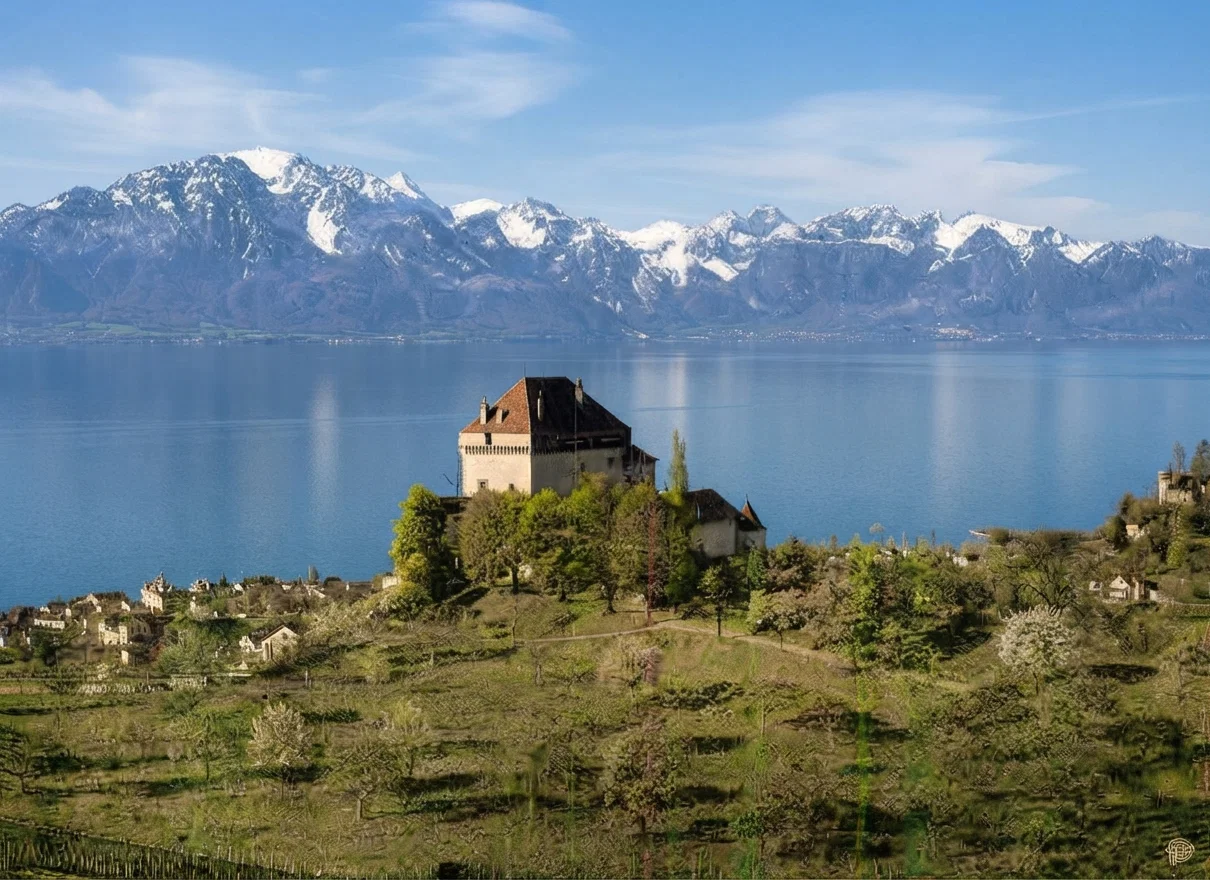
CLARENS, CHATEAU OF CHATELARD, BY BEAUTIFUL LAKE GENEVA, SWITZERLAND.
LET us place ourselves in the line of co-operation with God, making it possible for Him to answer our prayers. He has issued His promissory notes, declaring, "A new heart will I give you." He says that He will be found of those who seek Him with the whole heart. When you lose your hold on Him, and fail of receiving the fulfilment of the promise, the bank of heaven has not failed; you have broken your covenant with God. He can not fulfil His promises while you refuse to let Him take away your transgressions, because you suppose that by disobeying Him, you have placed yourself beyond help. The Lord says, "Let him take hold of My strength, that he may make peace with Me; and he shall make peace with Me." Then cease to worry over the troubles that you so often bring upon yourselves;come like a penitent child to Jesus, confessing your sins. "Thus saith the high and lofty One that inhabiteth eternity, whose name is Holy; I dwell in the high and holy place, with him also that is of a contrite and humble spirit, to revive the spirit of the humble, and to revive the heart of the contrite ones."
ARE not these words full of encouragement? God assures us that He will not leave us to grope in uncertainty. He will not leave us to be our own teachers in the all-important matters that concern our eternal destiny. He declares: "I will be your Teacher. I will give you light and knowledge. Light is sown for the righteous, and gladness for the upright in heart." We gain nothing by gathering about us mist and cloud. The Lord desires us to be cheerful and joyful. He desires us to have a cloudless experience.
WE need to pray often: "Lord, increase my faith, that I may be strong to quench the fiery darts of the enemy. Make me more than a conqueror through Him that loved me and gave Himself for me." The Holy Spirit, earnestly sought and constantly cherished, works in the hearts of those who believe, giving them power to become the sons of God. To follow Christ means everything to us. The path of the Christian is as a shining light that shineth more and more unto the perfect day. He who follows Christ is assured that he shall have the light of life,—an insight into sacred things, a close, personal acquaintance with God.
DESPONDENCY in God's service is sinful and unreasonable. He knows our every necessity. He has all power. He can bestow upon His servants the measure of efficiency that their need demands. His infinite love and compassion never weary. With the majesty of Omnipotence He unites the gentleness and care of a tender shepherd. We need have no fear that He will not fulfil His promises. He is eternal truth. Never will He change the covenant that He has made with those who love Him.
"FEAR thou not; for I am with thee," He declares; "be not dismayed; for I am thy God; I will strengthen thee; yea, I will help thee; yea, I will uphold thee with the right hand of My righteousness." "They that wait upon the Lord shall renew their strength; they shall mount up with wings as eagles; they shall run, and not be weary; and they shall walk, and not faint."

Jehovah Our Maker

"Jehovah is a great God, And a great King above all gods. In His hand are the deep places of the earth; The heights of the mountains are His also. The sea is His, and He made it; And His hands formed the dry land. O come, let us worship and bow down; Let us kneel before Jehovah our Maker; For He is our God, And We are the people of His pasture and the sheep of His hand. To-day, O that ye would hear His voice!"

THE WORD AND THE WORKS.

BY AUGUSTA W. HEALD.
THE teachings of Christ abound in lessons drawn from the common objects of nature. So also do the writings of David, the shepherd king, and the ancient prophets.
May we not so connect the “Word and works” that we shall constantly, and without effort, find ourselves looking “through nature, up to nature’s God”?
The tree growing by the riverside, ever fresh with verdure, may remind us of the godly man, whose “delight is in the law of the Lord; and in His law doth he meditate day and night.” Ps. 1:2, 3.
The giant boulders scattered over the earth’s surface speak to us of God’s protecting care. “And a Man [Christ] shall be as an hiding-place from the wind, . . . as the shadow of a great rock in a weary land.” Isa. 32:2.
The flowing river is a symbol of the blessed river of life, “the streams whereof shall make glad the city of God, the holy place of the tabernacles of the Most High.” Ps. 46:4.
The glorious sun, with its life-giving influences, declares the glory of God, and of Christ, the Sun of righteousness, while the fleecy, bright cloud so beautifully points us to that blessed day, which we believe is not far distant, when our Lord “cometh with clouds; and every eye shall see Him.” Rev. 1:7.
Truly, it is our privilege so to take heed, that the familiar objects of nature may ever suggest to us some passage from the blessed Word.

CHRISTIANITY VERSUS THE LODGE.

BY A. J. OSBORNE.
WHY does a man join the lodge?—Because he expects personal benefit from so doing. It is not because he has such great interest in his fellow-man, and is seeking this opportunity of helping him; but each is seeking this means of getting advantage from others for himself. Hence, the prime motive in joining a secret order is a selfish one; and is well expressed in the following Scripture: “And if ye do good to them which do good to you, what thank have ye? for sinners also do even the same; and if ye lend to them of whom ye hope to receive, what thank have ye? for sinners also lend to sinners, to receive as much again.” Luke 6:33, 34.
But the principle governing the Christian is: “Do good unto all men.” “Love ye your enemies, and do good, and lend, hoping for nothing again.”
And this is the principle enunciated by, and which governs, the Grand Master of the universe. For we read, “And ye shall be the children of the highest; for He is kind unto the unthankful and to the evil.” The Christian principle followed, would give help to all who need it, and would develop universal love and sociability, while the lodge principle gives class help, and tends to exclusiveness, which is always true of selfishness.
But selfishness did not control the Great Master, neither should His disciples be so controlled. Selfishness is the root whence springs every evil; and in an organization where selfishness is the ruling principle, it follows that those composing it would be committed to things foreign to the principles in the life and teaching of Christ.
Hence, should not the disciples of the Great Master consider well His word: “No man can serve two masters.” “Be ye not unequally yoked together with unbelievers; for what fellowship hath righteousness with unrighteousness? and what communion hath light with darkness? and what concord hath Christ with Belial? or what part hath he that believeth with an infidel? and what agreement hath the temple of God with idols? for ye are the temple of the living God; as God hath said, I will dwell in them, and walk in them, and I will be their God, and they shall be My people. Wherefore come out from among them, and be ye separate, saith the Lord, and touch not the unclean thing; and I will receive you, and will be a Father unto you, and ye shall be My sons and daughters, saith the Lord Almighty”? The child that is loyal to the parent need not fear but that he will receive a father’s care.
“Whom the Lord loveth He chasteneth, and scourgeth every son whom He receiveth.” “I have chosen thee in the furnace of affliction.” “My brethren, count it all joy when ye fall into divers temptations [trials]; knowing this, that the trying of your faith worketh patience. But let patience have her perfect work, that ye may be perfect and entire, wanting nothing.”
From these texts we see that the Master Workman uses affliction to develop in us those graces, and the perfection of character we desire, and for which we pray.
But in the lodge man may forestall the Lord in the use of the very agencies by which alone He could fit him for the enjoyment of the eternal riches. For whereas the Scripture saith, “Seek ye first the kingdom of God and His righteousness, and all these things shall be added unto you;” and, “Trust in the Lord and do good, and thou shalt dwell in the land, and verily thou shalt be fed,” the lodge principle says, “If you will trust in the lodge, and pay your dues, you shall not be unfed.”
Reader, what can be the significance of the multiplicity of orders with principles at variance with the Christian’s faith in the Lord who said, “I will never leave thee nor forsake thee”? “When the Son of Man cometh shall He find faith on the earth?”

PASS NOT THE WINE CUP.

BY SUSAN BIRDSALL ROBERTS.
O, PASS not the wine to your holiday guest, There's a viper concealed 'neath its bright, sparkling crest, A foe to your peace, an assassin for him, In the soft, luring cup you have filled to the brim.
O, pass not the wine cup to lover or friend, Lest rapidly downward his footsteps shall tend, And you cry, when you see him at last in his shame, Mine alone was the guilt; and mine be the blame.
O, could you but know what others have known, Look back through the vista of years that have flown, You would offer no glass, to be pleasantly quaffed By lover or friend, of that villainous draught.
One sees, looking back through the years that are past, The whole heavens black, the sky overcast, In mourning and woe o'er the youth self-destroyed; And too often the tempter has fair hands employed.
They cover the plain like "Sennacherib's host," Ah, me! for indulgence, how fearful the cost! "Sennacherib's host!" as the dust of the mine To the army destroyed through indulgence in wine.
I see the plain widening, and broader the bed On which writhes its victims in horror and dread! Heard ye that wild shriek?—that demoniac yell? There's a brain all on fire with the beverage of hell.
Then pass not the wine cup—there lurks in its foam The bitterest foe of the happiest home. Pass it not! Dash it down! Better sever thy hand Than place in one soul Rum's ruinous brand.
Elmira, N. Y.

IRREPRESSIBLE ODORS.

THERE are some things that can not be repressed. A boy was passing through a railroad-car with a basket of fruit, calling his wares. A passenger heard him doing so, and paid no attention. But when the boy came opposite his seat, the fragrant odor of the different fruits in the basket was so penetrating and irresistible that the passenger was compelled to turn and look at what mere words had failed to interest him in. It is as impossible for us to conceal the influence of our lives as it would have been for the trainboy to conceal the odor of that fruit. The words we speak count for little; the silent, ever outgoing influence of the lives we live count for much. That is what all people look at; that is what they know us by. And we can not deceive them. We think we can, and we are the only ones deceived. “By their fruits, ye shall know them,” and the odor of the fruit tells the story to the whole world. But with us rests the choice of what fruit seed we shall plant.—Sunday School Times.

THE BUILDERS

THE BUILDERS
THE BUILDERS
(Continued.)
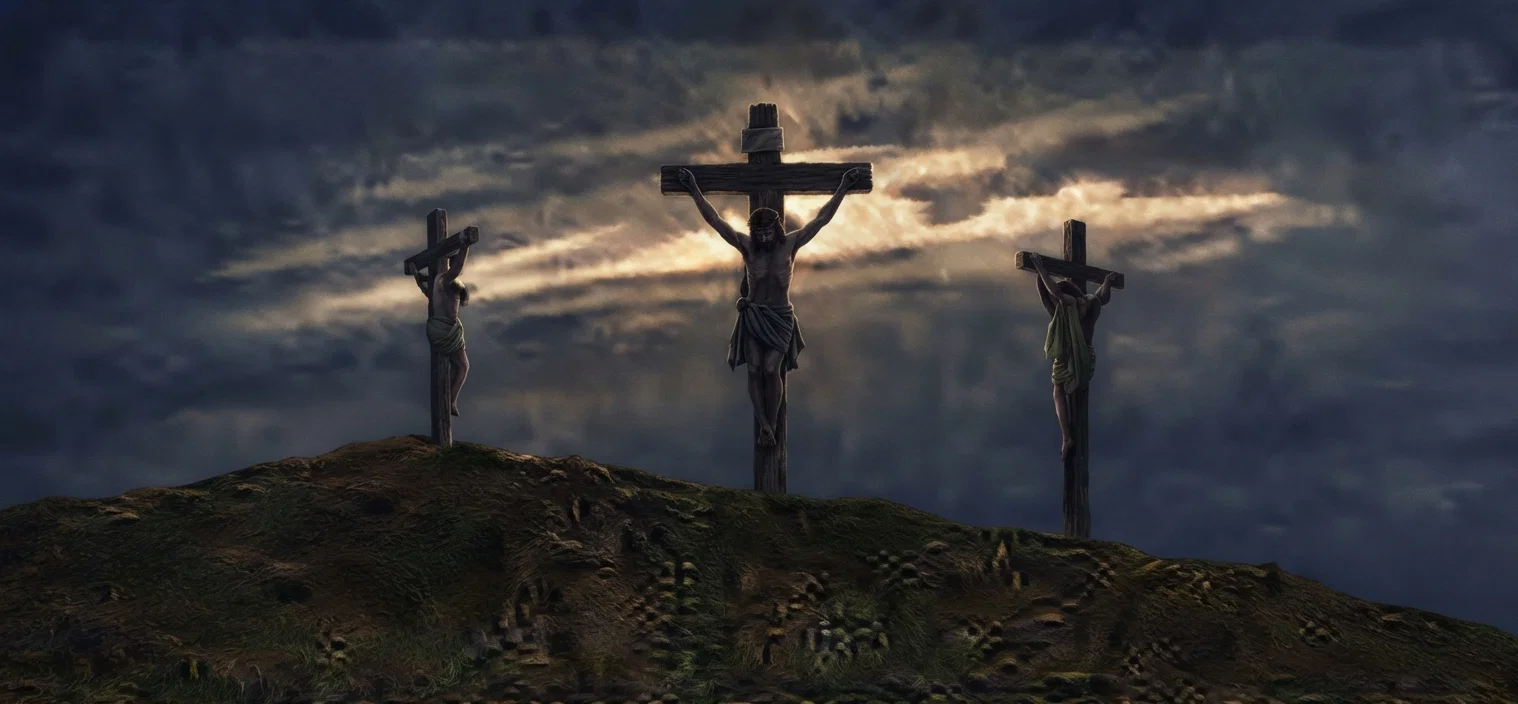
I TOOK my Guide-book, and placing the pillow (Faith) beneath my head, I began to read. As I read, this vision came to me: I saw the cross upon the rugged hill again. I saw a few men approach it, and tenderly take from it the Sufferer, who had just expired. Followed by some women (Luke 23:50-56), they carried Him to that central grave, and placed Him therein, while the women stood by to see that all was neatly and consistently done. After this they all walked sorrowfully away, for it was near sundown on Friday, and the Sabbath was drawing on.
'After this, one hundred soldiers came (Matt. 27:62-66), and closed the tomb as securely as possible, sealing it with a great seal. This done, they began to pace up and down, keeping guard over it.
'Then my vision grew stronger, and I saw the enemy of my King placing about the tomb another guard, composed of those who had revolted with him. He instructed them to keep it closed for three days at all hazards. O, how dark it now seemed in all that graveyard! I noticed only a faint glimmering of a little light about that central grave.
'While I still watched, suddenly there came a rushing sound, and, looking up, I beheld a bright being coming adown the sky. Matt. 28:2-4. As he approached the tomb, the darkness was parted and scattered from his pathway. The guard of fallen ones fled in wild dismay, while the soldiers fell to the ground as dead men (Col. 2:15), and the glory of the Lord flooded the scene.
'A holy one, with majestic bearing, stood before the tomb, and, with earnest, penetrating voice, said: 'Son, Thy Father calls Thee; arise, come forth!'
'There was a mighty earthquake, the seal was broken, the stone rolled back, and He who had suffered now came forth Conqueror, in glory and power. My little window (State of the Dead) was radiant with this glory. I glanced toward the window Immortality, and found a wondrous light streaming through it, in the rays of which I read these words: 'But is now made manifest by the appearing of our Saviour Jesus Christ, who hath abolished death, and hath brought life and immortality to light through the Gospel.' 2 Tim. 1:10.
I saw the cross upon the rugged hill.
'I still saw the whole human family moving in the shadow of death, but I discovered another path, called the Way of Life. This path was radiant with light, altho beset with thorns and brambles. It also led down into the graveyard; but I saw that the graves of all who walked in this path were connected with the tomb of the mighty, risen Deliverer, and that He 'only hath immortality.' 1 Tim. 6:16. Then I heard a voice saying: 'Them also which sleep in Jesus will God bring with Him. . . . For the Lord Himself shall descend from heaven with a shout, with the voice of the Archangel, and with the trump of God; and the dead in Christ shall rise first; then we which are alive and remain shall be caught up together with them in the clouds, to meet the Lord in the air; and so shall we ever be with the Lord.' 1 Thess. 4:14-17.
'Behold, I show you a mystery: We shall not all sleep, but we shall all be changed, in a moment, in the twinkling of an eye, at the last trump; for the trumpet shall sound, and the dead shall be raised incorruptible, and we shall be changed. For this corruptible must put on incorruption, and this mortal must put on immortality. So when this corruptible shall have put on incorruption, and this mortal shall have put on immortality, then shall be brought to pass the saying that is written, Death is swallowed up in victory. O death, where is thy sting? O grave, where is thy victory?' 1 Cor. 15:51, etc.
'Thus we see that the human family does not possess immortality, but that it is placed within their reach by the Gospel; that all sleep in the grave until the resurrection, when the righteous shall receive the gift of immortality, and the wicked shall be destroyed; after which all will see, in both the state of the dead and the destruction of the wicked, a manifestation of the love of God.
'And so, my friend, I love this room, for it makes me feel my weakness by nature and my utter dependence upon God. Also it leads me to view my Saviour in the light of a glorious benefactor, as He comes with the gift of immortality for all who will accept it. It leads me to admire the wisdom of God, who has made the eternal existence (Ps. 37:10, 11) of each individual dependent upon the character he develops (1 John 2:17), and it does away with that dreadful thought of the eternal conscious suffering of the wicked.
'As I look upon that graveyard I see in it a quiet resting-place (Job 17:16) for all, away from the cares and turmoils of life, where the parent is released (Job 14:21) from witnessing the downward career of the child, which would cause him pain could he see it; where the wicked are reserved unto the day of judgment (John 5:28, 29) to be punished, instead of being sent immediately at death to a place of torment, and then, after years, yea, even centuries of suffering, to be brought to judgment, and then to be returned to an eternity of such suffering. O my friend, God is good, and He sets before each one of us life and death, and urges us to choose the paths of righteousness, that we may find immortality in Jesus, and not destruction, at the last.'
'Well,' said the neighbor, 'this room does look brighter and better than when I entered it, and you certainly have given me ground for serious reflection.'
'Well, I am glad,' was the reply, 'and I trust you will not only think, but that you will study the Guide-book with care, that you may receive light; for in these last days those fallen ones, who have rebelled against our King, will come and pretend to be our dead friends, and seek to influence us (2 Cor. 11:14, 15; Rev. 16:14) to go contrary to God's will. But if we understand the doctrine of the state of the dead, we will know that they are deceivers, and we will not be led by them.
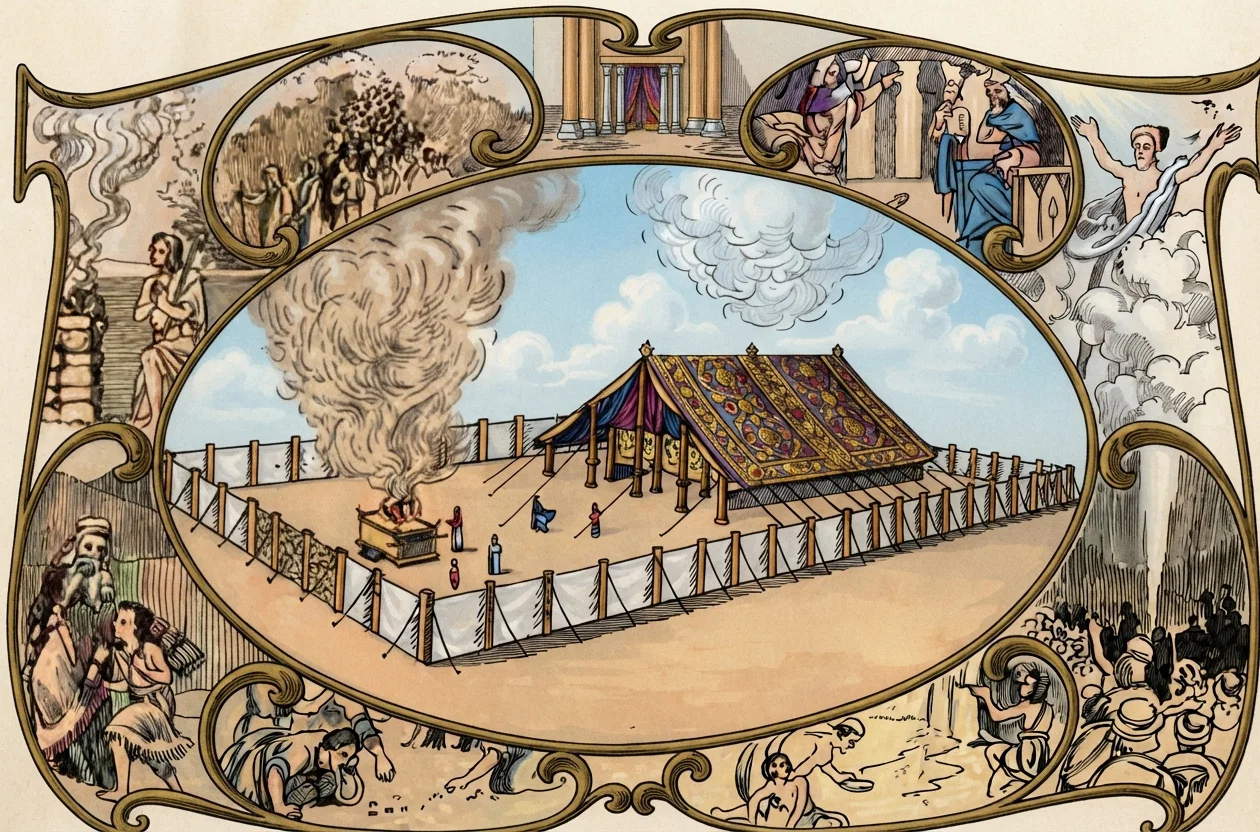
'But come, let us pass on to the next room, which is called the Sanctuary. The hours I have spent in this room have given me my clearest views of the Guide-book. You notice there is but one large window. Its name is Types and Shadows. Around the outer edge notice this line of beautiful pictures, such as 'Abel's Sacrifice;' 'Enoch's Translation;' 'Noah's Ark;' 'Abraham's Offering;' 'Israel's Deliverance;' 'Crossing the Red Sea;' 'Pillar of Fire;' 'Gathering Manna;' 'Water from the Rock,' etc.
'In the center is a beautiful picture of the tabernacle built by the Israelites in the wilderness, before which, in the court, stands Aaron as high priest, arrayed in his costly garments. You see that all these pictures are perfectly transparent, so that they do not obstruct the view. I have spent hours in this chair of Faith studying these pictures, while a flood of light was rushing into my mind. I never tire of this, for there is always something new. In no other room do I so much enjoy reading my Guide-book as I do here.'
(To be continued.)

MUSINGS.

BY ELIZA VEEDER DOW.
WHAT divine glows sweep o'er the soul while gazing upon the radiant sky at sunset! What flashes of inspiration leap from the temple of our being while reading the sublime songs of Solomon! What glories crowd upon the vision while studying the majestic prophecies of Isaiah!
No MATTER how darkly the clouds may envelop the sun at noonday, we know that the glorious orb is shining behind the gloom; no matter how heavily the hand of pain and poverty may be laid upon us, God's great love is behind it all, and He will make all bright in His own good time.
WHAT a blessed gift to humanity is the Bible! What comfort it gives to us in the hour of despondency! What inspirations it gives to the soul, and how its benedictions calm the spirit!
O, LET us keep in harmony with the revelations of God in His Word, mountain and tree, star and flower!
LET us be willing, ready, and full of work for the Master.
Continue reading: History of Government