Your ShelfYour Projects

Signs of the Times, Vol. 37, No. 11.

Gifts of Christ

Signs of the Times

Mar 15, 1910

Pacific Press Publishing Association · Mountain View, California · Mar 15, 1910

Gifts of Christ

But unto every one of us is given grace according to the measure of the gift of Christ. Wherefore He saith, When He ascended up on high, He led captivity captive, and gave gifts unto men. . . . And He gave some, apostles; and some, prophets; and some, evangelists; and some, pastors and teachers; for the perfecting of the saints, for the work of the ministry, for the edifying of the body of Christ: till we all come in the unity of the faith, and of the knowledge of the Son of God, unto a perfect man, unto the measure of the stature of the fulness of Christ: that we henceforth be no more children, tossed to and fro, and carried about with every wind of doctrine, by the sleight of men, and cunning craftiness, whereby they lie in wait to deceive; but speaking the truth in love, may grow up into Him in all things, which is the Head, even Christ.

3072.— The Disciples and the Sabbath

Have we any New Testament scriptures proving positively that after the ascent of our Lord the disciples kept the seventh day as the Sabbath?
We have, first, the fact that the seventh day is ever called the same name by which God gave it—the Sabbath. No other day is honored by this title. As an instance of this, see Acts 15:21: "For Moses of old time hath in every city them that preach him, being read in the synagogs every Sabbath day." The "every Sabbath day" was the day that the Jews themselves kept, and which the disciples still called "Sabbath." Acts 16:13 shows that Paul and his companions met in regular worship on the Sabbath day with those who met in Philippi. Acts 17:2 shows that it was Paul's manner to meet on the Sabbath days with His people, and reason with them out of the Scripture. Acts 18:1-11 shows that when Paul went down to Athens, the first thing he did was to hunt out two Jews with whom he could work, and engaged with them as a tent-maker, working of course all the time except on the Sabbath day; and the Sabbath day he spent in religious teaching (verse 4), teaching both Jews and Greeks on that day. He there remained a year and six months. Verse 11. At least there were seventy-eight Sabbaths kept by the apostle Paul in Athens. In Acts 28:17 Paul declares to the Jews in Rome that he committed nothing against the people or customs of their faith; and they themselves say that they never heard anything against him. Certainly if he had been a Sabbath-breaker, they would have heard of it, nor could Paul have said what he did, for that certainly was one of the customs of the Jews. The same apostle tells us, in Rom. 2:20, that the Jews themselves had the form of knowledge and truth; the trouble was they did not have the spirit of it; and in 3:31, that faith establishes in the heart of the believer God's law. James teaches the same thing in 2:8-12, that the whole law is binding at every point; and John declares (1 John 5:3), that "this is the love of God, that we keep His commandments: and His commandments are not grievous." We could just as well ask the question, and with just as much reason, Did the disciples keep the first commandment after the crucifixion? or, Did the disciples keep the eighth or sixth commandment after the crucifixion? There is no reason to believe that the fourth commandment was done away any more than one or all of the ten.

3074.— No Such Custom. 1 Cor. 11:16

Does this scripture mean no such custom to wear the covering or not to wear it? Does history state among the primitive churches that they wore a covering?
The one thing which the apostle is aiming at in the instruction which he gives in 1 Corinthians 11:14 is that all things should be done "decently and in order." There evidently were unseemly things wrought in the Corinthian church among those who had recently come in from idolatry. Hence the careful instruction which the apostle gives. Some of the unseemly things which were prevalent then may not be prevalent now. It should not be our purpose to inquire as to just the very dress that they wore then, and take from that a pattern of the dress that should be worn now. It is for us to get the real principle involved, and, finding out the true principle, to follow it. That principle is given in the 31st verse of the 10th chapter: "Whether therefore ye eat, or drink, or whatsoever ye do, do all to the glory of God," and the thought concerning the woman is that she should in a modest Christian way seek to glorify the Father. In the day in which the apostle wrote, it seems to have been an unseemly thing for a woman to be uncovered, in other words, not to wear a veil, unless she had long hair. If a woman's hair was short, she should wear a covering for her head; but if her hair was long, as nature intended it, that was given to her as a covering.
But the apostle does not want us to understand that there was to be any trouble raised over this, either one way or the other; so that if any man was contentious in the matter, "we have no such custom." No demand must be made that a woman should cover her head. One of the special thoughts is that there should be a difference between the sexes. This difference should be shown in the dress.
Alford refers to a queen having three crowns upon her head to signify that she was daughter, and wife, and mother of a king, and remarks, "And so there, from the context, it is plain that they indicated participation in the glory of the kingdoms; so here [in 1 Cor. 11:16] it is evident from the context that the token of power indicates being under power, and such token is the covering. To this meaning all the principal commentators agree, both ancient and modern."
The covering of verse 10 Stanley declares refers to the peplum which Grecian women used ordinarily as a shawl, but on public occasions as a hood also, especially at funerals and marriages. But the apostle wishes them to understand that no hard and fast rules are to be laid down in non-essential matters. The chief thing in all our worship, our dress, our conduct, is to glorify God.

3071.— Preached in All Creation under Heaven. Col. 1: 23

Will you be so kind as to explain Col. 1:23? I met some persons who decided from this that it was wrong to give money for foreign missions to-day, as that Gospel work had already been fulfilled in Paul's day, and they are taking this text as Bible proof.
Now admitting all this is true, the same people who lived in the days of the apostle Paul do not live now. Paul declared himself to be debtor both to the Greeks and to the barbarians, both to the wise and the foolish, and therefore he preached the Gospel everywhere. It is true, emphatically so, that God's Gospel has been preached in all the world through all the ages all the time; for "the heavens declare the glory of God; and the firmament showeth His handiwork." Day and night, summer and winter, year in and year out, God's great glory is held before mankind in order that they may learn from the visible things of God to regard the things that are invisible. See Psalm 19, and the quoting of this psalm in its application in Rom. 10:18, where the apostle declares, "Yes verily, their sound went out into all the earth, and their words unto the ends of the world."
Even more than this. It seems that the preaching of the apostles sent the Gospel through converted men out into all the nations of the earth, as indicated not only by this text, but by such expressions as Col. 1:6. In this we ought to rejoice, that God's servants were so active and so earnest in spreading the Gospel; but just as truly as they wrought earnestly to fulfil the commission which was given to them, so God's children of the last days ought to labor just as earnestly to fulfil the mission of the Gospel for the last days. For our Lord expressly tells us that "this Gospel of the kingdom shall be preached in all the world for a witness unto all nations; and then shall the end come." Matt. 24:14. And the same thought is expressed in Rev. 14:6, 7, in the everlasting Gospel which is to go to every nation, and kindred, and tongue, and people, declaring not simply of a "judgment to come," as declared the apostle Paul and his fellow laborers, but of a judgment which "is come," showing that that great world-wide message is for the very last days. And as the people who heard the apostles are not those who are living now, God would have every soul to be reached which it is possible for His people to reach. No Christian discharges his duty to Christ by any work which has been previously done, just as long as a soul remains unwarned in this world.

3073.— Lazarus. John 11

What became of Lazarus after having been raised from the dead, as spoken of in John 11:44? Did he together with others who had been restored to life have to die the second time, or do they still live on this earth with us?
We are sure that our inquirer, if he is an earnest, devoted reader of the Bible, must have concluded long before this that God does not satisfy our curiosity. The Bible is not written for that purpose. Again and again our human curiosity would wonder what became of this one, and what became of that one, and how did this enterprise turn out, and in what did that result, but the Lord tells us nothing of that. That is outside of His purpose in giving His book. He had one curious disciple in His own times. That disciple had been given his work. His name was Simon Peter. But great and important as his work was, he was exceedingly anxious to know about the other man, and so he asks: Lord, what of this man? What is he going to do? I want to know about him. The reply of Jesus to Peter's curiosity was, "What is that to thee? follow thou Me." And so in regard to many of these unsolvable questions. We shall have to bring the Lord's answer to our curiosity, and hear Him saying to us as He did to Peter of old, "What is that to thee? follow thou Me." Presumably Lazarus lived and died in hope of salvation when the Lord should come the second time.

Genealogy of Christ

3075.— Genealogy of Christ.— S. P. W.— It is very easy to understand the difference between the genealogy given by Luke 3 and Matthew 1 if we will remember that one gives Christ's lineage through the mother, and the other through the father; one through Mary, the other through Joseph. However, Joseph is reckoned next to Christ in both cases, because of the legal aspect of the affair. Heirship comes through father, not through mother. Christ's kingship comes through the father, tracing from David down through Solomon to Joseph, the legal father of Jesus. Christ's humanity comes through His mother, tracing the record down from Adam to Joseph or to Mary the wife of Joseph. It will be noticed, if care is given in the comparing of these chronologies, that they touch at two different points, or cross, so to speak, in the two lines of David's sons; for instance, Mary's line coming through Nathan, Joseph's through Solomon; both of them terminating, the one in the father, and the other in the mother, of our Lord.

3076.— Marching around Jericho

I learn by Joshua 6:14, 15 that the children of Israel occupied seven days in the taking of Jericho. Did they use the seventh-day Sabbath in doing so?
Yes, in all probability the Sabbath was used in that way. But the marching was not doing their own work. It was by God's command that they did it; and when God commands us to do work for Him on that day, it certainly is not a transgression of the law of the Sabbath. Isa. 58:13 gives us the correct principle. "Not doing thine own ways, nor finding thine own pleasure, nor speaking thine own words."

In Process of Time

3077.—In Process of Time. Gen. 4: 3.—A. L. M.—"In the process of time," or as the margin reads, "at the end of days," has by good commentators been considered as referring to the Sabbath. Some think that it means at the end of the year, but the Sabbath was the worship day; men were calling on the name of Jehovah. The only period of days we have thus far mentioned is the septenary cycle or week, and the end of that cycle of days was the Sabbath; so it seems that the end of days of Gen. 4:3 would refer to the Sabbath.

Book of Job

3078.—Book of Job.—A. L. M.—For comments on the book of Job see Our Bible Band for January 11.

The Gifts of the Spirit

By Mrs. E. G. White
BEFORE He left His disciples, Christ breathed on them, and said, "Receive ye the Holy Ghost." Again He said, "Behold, I send the promise of My Father upon you." But not until after the ascension was this gift received in its fulness. Not until through faith and prayer the disciples had surrendered themselves fully for His working, was the outpouring of the Spirit bestowed. Then in a special sense the goods of heaven were committed to the followers of Christ.
"When He ascended up on high, He led captivity captive, and gave gifts unto men." "Unto every one of us is given grace according to the measure of the gift of Christ," the Spirit "dividing to every man severally as He will." The gifts are already ours in Christ, but their actual possession depends upon our reception of the Spirit of God.

Talents and Gifts

The talents that Christ entrusts to His church represent especially the gifts and blessings imparted by the Holy Spirit. "To one is given by the Spirit the word of wisdom; to another the word of knowledge by the same Spirit; to another faith by the same Spirit; to another the gifts of healing by the same Spirit; to another the working of miracles; to another prophecy; to another discerning of spirits; to another divers kinds of tongues; to another the interpretation of tongues; but all these worketh that one and the selfsame Spirit, dividing to every man severally as He will." Not all the gifts are imparted to each believer, but to every servant of the Master some gift of the Spirit is promised, according to his need for the Lord's work.
In all the Lord's arrangements, there is nothing more beautiful than His plan of giving to men and women a diversity of gifts. The church is His garden, adorned with a variety of trees, plants, and flowers. He does not expect the hyssop to assume the proportions of the cedar, nor the olive to reach the height of the stately palm. Many have received but a limited religious and intellectual training, but God has a work for this class to do, if they will labor in humility, trusting in Him.
God has different ways of working, and He has different workmen to whom He entrusts varied gifts. One worker may be a ready speaker; another a ready writer; another may have the gift of sincere, earnest, fervent prayer; another the gift of singing; another may have special skill in explaining the Word of God with clearness. And each gift is to become a power for good, because God works with the laborer. To one God gives the word of wisdom, to another knowledge; but all are to work under the same Head. The diversity of gifts leads to a diversity of operations; but "it is the same God which worketh all in all."
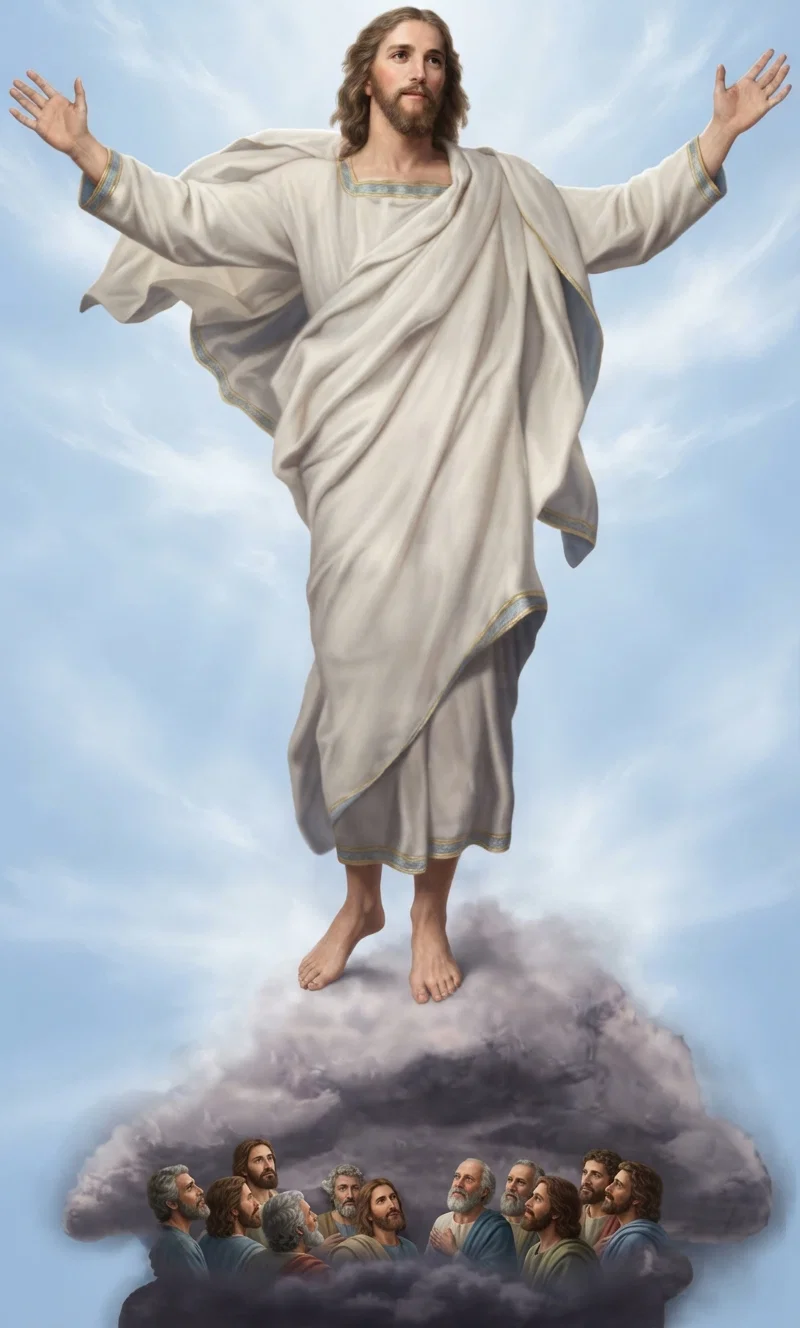
“When He ascended up on high, He . . . gave gifts unto men.”

Mutual Interdependence

Different gifts are imparted to different ones, that the workers may feel their need of one another. God bestows these gifts, and they are employed in His service, not to glorify the possessor, not to uplift man, but to uplift the world's Redeemer. They are to be used for the good of all mankind, by representing the truth, not testifying to a falsehood.
It may seem to some that the contrast between their gifts and the gifts of a fellow laborer is too great to allow them to unite in harmonious effort; but when they remember that there are varied minds to be reached, and that some will reject the truth as it is presented by one laborer, only to open their hearts to the same truth as presented in a different manner by another, they will hopefully endeavor to labor together in unity. Their talents, however diverse, may all be under the control of the same Spirit. In every word and act, kindness and love will be revealed; and as each worker fills his appointed place faithfully, the prayer of Christ for the unity of His followers will be answered, and the world will know that these are His disciples.

Former and Latter Rain

The outpouring of the Spirit in the days of the apostles was the "former rain;" and glorious was the result. But the "latter rain" will be still more abundant. What is the promise to those living in these last days?—"Turn you to the stronghold, ye prisoners of hope; even to-day do I declare that I will render double unto thee." "Ask ye of the Lord rain in the time of the latter rain; so the Lord shall make bright clouds, and give them showers of rain, to every one grass in the field."
Christ declares that the divine influence of the Spirit was to be with His followers unto the end. But by some this promise is not appreciated as it should be; its fulfilment is not realized as it might be. Learning, talents, eloquence, every natural or acquired endowment, may be possessed; but without the presence of the Spirit of God, no heart will be touched, no sinner won to Christ.
When His disciples are connected with Christ, when the gifts of the Spirit are theirs, even the poorest and most ignorant of them will have a power that will tell upon hearts. God makes them the channel for the outworking of the highest influence in the universe. As the divine endowment—the power of the Holy Spirit—was given to the disciples, so it will to-day be given to all who seek aright. This power alone is able to make us wise unto salvation, and to fit us for the courts above. Christ wants to give us a blessing that will make us holy. “These things have I spoken unto you,” He says, “that My joy might remain in you, and that your joy might be full.” Joy in the Holy Spirit is health-giving, life-giving. In giving us His Spirit, God gives us Himself,— a fountain of divine influences, to give health and life to the world.
The promise of the gifts is just as strong and trustworthy now as in the days of the apostles. “These signs shall follow them that believe.” The gifts of Him who has all power in heaven and in earth, are in store for His children,— gifts so precious that they come to us through the costly sacrifice of the Redeemer’s blood; gifts that will satisfy the deepest craving of the heart; gifts lasting as eternity.
Will you not come to God as little children, appropriate His promises, plead them before Him as His own words? If you do, you will receive fulness of joy.

Spiritual Gifts—Given of Christ

By J. N. Loughborough
THE three and one half years’ sojourn of Christ with the disciples, during which they saw a manifestation of His tender love, so endeared Him to them that they were filled with grief at His mention of leaving them. But He said to them, “It is expedient for you that I go away: for if I go not away, the Comforter will not come unto you; but if I depart, I will send Him unto you.” John 16:7. “When He, the Spirit of truth, is come, He will guide you into all truth; for He shall not speak of Himself; but whatsoever He shall hear, that shall He speak: and he will show you things to come.” Verse 13. “The Comforter, which is the Holy Ghost, whom the Father will send in My name, He shall teach you all things, and bring all things to your remembrance, whatsoever I have said unto you.” John 14:26.
Again, “I will pray the Father, and He shall give you another Comforter, that He may abide with you forever; even the Spirit of truth; whom the world can not receive, because it seeth Him not, neither knoweth Him.” John 14:16, 17.
This is the power of which Christ spoke in giving to His disciples the great Gospel commission, “Wait for the promise of the Father, which, saith He, ye have heard of Me. For John truly baptized with water; but ye shall be baptized with the Holy Ghost not many days hence. . . . Ye shall receive power, after that the Holy Ghost is come upon you: and ye shall be witnesses unto Me both in Jerusalem, and in all Judea, and in Samaria, and unto the uttermost part of the earth.” Acts 1:4-8.

This “Promise of the Father”

respecting the Gospel work is found in the prophecy of Joel, “I will pour out My Spirit upon all flesh; and your sons and your daughters shall prophesy, your old men shall dream dreams, your young men shall see visions: and also upon the servants and upon the handmaids in those days will I pour out My Spirit.” Joel 2:28, 29.
On the Day of Pentecost, Peter spoke of that outpouring of the Spirit on this wise: “This is that which was spoken by the prophet Joel.” “This Jesus hath God raised up, whereof we all are witnesses. Therefore being by the right hand of God exalted, and having received of the Father the promise of the Holy Ghost, He hath shed forth this, which ye now see and hear.” Acts 2:16, 32, 33.
It is through the working of the Spirit that Christ is to be with His Gospel ministers to “the end of the world.” Matt. 28:20. This is evident from the further testimony of Peter, when he said: “Repent, and be baptized every one of you in the name of Jesus Christ for the remission of sins, and ye shall receive the gift of the Holy Ghost. For the promise is unto you, and to your children, and to all that are afar off, even as many as the Lord our God shall call.” Acts 2:38, 39. From this we learn that the work of the Spirit is coextensive with the Gospel work, even to “the end of the world.”

Not One Gift, but Gifts

We read of Christ, “When He ascended up on high, He led captivity captive, and gave gifts unto men.” Eph. 4:8. The gift of the Holy Spirit was the first of His gifts. It is called the Spirit “of power, and of love, and of a sound mind.” 2 Tim. 1:7. By it we are baptized into the body of Christ. 1 Cor. 12:13. It bears witness with us that we are children of God. Rom. 8:16. And it helps our infirmities. Verse 26. It accomplishes these things through its manifestations, dividing to every man severally as He will. 1 Cor. 12:11.
There is not only the gift of the Holy Spirit spoken of, but also the gifts of that Spirit. These, to the beholder, are a demonstration of the presence of that Holy Spirit in the believer. Of this working the apostle says: “The manifestation of the Spirit is given to every man to profit withal. For to one is given by the Spirit the word of wisdom; to another the word of knowledge by the same Spirit; to another faith by the same Spirit; to another the gifts of healing by the same Spirit; to another the working of miracles; to another prophecy; to another discerning of spirits; to another divers kinds of tongues; to another the interpretation of tongues: but all these worketh that one and the selfsame Spirit, dividing to every man severally as He will.” 1 Cor. 12:7-11.
This delineation of the working of the Spirit is in exact harmony with the apostle’s statement respecting the gifts which Christ placed in the church after His ascension: “He gave some, apostles; and some, prophets; and some, evangelists; and some, pastors and teachers; for the perfecting of the saints, for the work of the ministry, for the edifying [building up] of the body of Christ: till we all come in the unity of the faith, and of the knowledge of the Son of God, unto a perfect man, unto the measure of the stature of the fulness of Christ.” Eph. 4:11-13.

In the Church

Returning to apostolic instruction respecting the work of the Holy Spirit, we read: “And God hath set some in the church, first apostles, secondarily prophets, thirdly teachers, after that miracles, then gifts of healing, helps, governments, diversities of tongues. Are all apostles? are all prophets? are all teachers? are all workers of miracles? have all the gifts of healing? do all speak with tongues? do all interpret? But covet earnestly the best gifts: and yet show I unto you a more excellent way.” 1 Cor. 12:28-31.
This instruction is followed by a whole chapter on charity—perfect love—which will abide when the perfect state shall come in, when there will no longer be need for the gifts, when, the Lord says, “Before they call, I will answer.” The apostle does not say that there is a more excellent way than to have the gifts of the Spirit of God manifested in the church, but that there is a more excellent way than for one simply to desire earnestly the gifts while they fail in having a full manifestation of the love of God in the heart, which love is the first-fruit of the Holy Spirit.
That he did not teach that love would supersede the manifestation of the gifts in the church, is seen in the first words of chapter fourteen: “Follow after charity, and desire spiritual gifts, but rather that ye may prophesy.” 1 Cor. 14:1.

A Striking Comparison

The apostle compares the church of Christ, in which the gifts are all manifest, with a human body where all the members move in harmony: “For the body is not one member, but many. If the foot shall say, Because I am not the hand, I am not of the body; is it therefore not of the body? And if the ear shall say, Because I am not of the eye, I am not of the body; is it therefore not of the body? If the whole body were an eye, where were the hearing? If the whole were hearing, where were the smelling? But now hath God set the members every one of them in the body, as it hath pleased Him. And if they were all one member, where were the body? But now are they many members, yet but one body. And the eye can not say unto the hand, I have no need of thee; nor again the head to the feet, I have no need of you. . . . God hath tempered the body together, having given abundant honor to that part which lacked: that there should be no schism in the body; but that the members should have the same care one for another.” 1 Cor. 12:14-25.
When the Lord ascended up on high, He formed His church to be a visible representation of Himself on earth. To accomplish this, He sent the Holy Spirit as His representative. The Spirit through the manifestation of those gifts has its work of building up and perfecting His people. As the need for such work still exists, it is the blessed privilege of the church to ask and receive that Spirit, that through its working we may be members of that “glorious church” which Christ shall present to Himself at His appearing, “not having spot, or wrinkle, or any such thing; but that it should be holy and without blemish.” Eph. 5:27.

Rebuilding

By Frank Walcott Hutt, in S. S. Times
REPLACE again the architrave Fallen to the temple’s pave; And reconstruct the faulty stair; The broken shaft repair; Remove the ruined wall of clay, And build a better way.
God’s lesser creatures rear anew Their girders, firm and true; And all the birds, through changing climes, Rebuild, how many times! Hark — is one note of all their song To-day less sweet and strong?

Spiritual Gifts—Not of Human Choice

By Abdiel
THE gift of the Spirit of God to every believer, cleansing, sanctifying, filling for service! The gifts of the Spirit of God, or spiritual gifts, bestowed variously among God’s children, to every soul at least one; bestowed for the profit of the individual; bestowed for “the perfecting of the saints,” “the work of the ministry,” “the building up of the body of Christ.” Eph. 4:12.
Precious and valued gifts are these, symbolized by the highest denominations of Hebrew and Roman money—the talent and the mina. Varied and effective they are, fitting the church completely for her militant career, “till we all come in the unity of the faith, and of the knowledge of the Son of God, unto a perfect man, unto the measure of the stature of the fulness of Christ.” Eph. 4:13.
Among these gifts are divine and common-sense wisdom and knowledge, faith, healing, miracles, tongues, apostleship, prophecy, evangelists, pastors, teachers, governments, helps, and others.
According to ability to use are they given to God’s own servants. Matt. 25:14, 15. They are given till the Master comes again; given to rule and regulate the “abundant life” for the building up of the church, and the heralding abroad of God’s message of life to others.
How much the church needs these gifts—all of them! If otherwise, God would not have “set” them “in the church.” 1 Cor. 12:28.

Not of Human Origin

But these gifts do not come at the will of the human. A pope may appoint, a council choose, a conference set apart, a church elect, a theological school educate; but none of these can bestow the gifts of God. There are many self-appointed or self-assumed governors, leaders, teachers, pastors, prophets. But they do not perfect the saints nor build up the body of Christ. Sickly, weak, dying churches are the manifest consequences.
But is it not right for conference, religious body, or church to select or choose men for certain work?—Yes, if they are sure these men are called and fitted of God for the purpose. Then the church is but recognizing the calling and the gift of God. In normal procedure the church shows that she recognizes God’s leading and gifts, even as of old the gifts of the Spirit upon Paul and Barnabas and others were recognized and given room by the early church. Acts 13:1-3; 15:22, 23.
But is it not the right thing to do to “covet earnestly the best gifts”?—Yes, the best gifts for us, the very greatest gift we can use. But it is not the duty nor is it the proper thing to do, to seek to become a prophet or a pastor, or any other one thing of our choice. The very thing we seek might if bestowed prove our destruction, because we have not the consecrated ability to use it. Yet if in the face of that we continue to seek for it, we place ourselves on the devil’s ground, and become deceived and possessed by Satan. Therefore it is written of these gifts, “But all these worketh the one and the same Spirit, dividing to each one severally even as He will.” 1 Cor. 12:11.

Leave All with God

The reason is clearly evident. God, infinite in wisdom, knows what is needed for “the perfecting of the saints,” “the work of the ministry,” “the building up of the body of Christ.” He also knows our limitations, our lack of knowledge, our predilections for our own way, our selfish and often unconscious prejudice, our little knowledge of the needs of His church. He knows whether our choice of gifts would lead to destructive exaltation or discouraging defeat. In fact, He knows all things; we know little of anything. We look to honor and present results; He looks to the service and the eternal good of ourselves and His church. Why, then, should we not be willing to leave all choice of gifts to Him?
The Sacred Story of His people demonstrates His wisdom. Does He want a leader?—He takes a Hebrew, by adoption heir to Egypt’s throne, gives him a post-graduate training of forty years in keeping sheep, and makes him the mightiest of earth’s leaders, “Moses, the man of God.” Does He want prophets?—He chooses Jeremiah, the youthful priest; Daniel, the royal student; Amos, the herdsman of Tekoa; Elijah, of Gilead; Samuel, the devoted boy; John, the fisherman. But He uses them all mightily. Does He want a king?—He chooses the true, brave shepherd lad, David. Are apostles needed?—Peter and Andrew, fishermen, Matthew, the publican, and others from other walks of life, all successful, because endowed of God and submissive to Him.
So, Christian brother or sister, leave it with Him. Do you wish to be a prophet? an apostle? a teacher? an evangelist? a speaker of tongues? Do you covet one or all of these? Make no demand on God. Seek Him for the best gifts for you. Follow “the more excellent way,” that of love, set forth so beautifully in the thirteenth chapter of 1 Corinthians. Only so will you be built up and God glorified. Let God divide the gifts of His Spirit; and whatsoever He bestows upon you, honor Him by its use, and also glorify God by recognizing His gifts to others. “As He will.” Let it be even and ever so.

Eternal Hope

By John Francis Olmsted
THE days of grief, of strife and fear, Will soon forever cease; Then every one, if faithful here, Will have eternal peace.
No more shall trials or days of gloom Assail with anxious care, When Christ Himself shall rend the tomb And take His jewels rare.
O, may we now with joyful heart Expect our coming king; Then we shall meet, no more to part, And with the angels sing.
Marengo, Ohio.

Need of the Holy Spirit

MENTAL power may fill a chapel; but spiritual power fills the church. Mental power may gather a congregation; spiritual power will save souls. We want spiritual power. O my brethren, we know some ministers before whom we shrink into nothing as to talent, but who have no spiritual power, and when they speak they have not the Holy Spirit with them; but we know others, simple-hearted, worthy men, who speak their country dialect, and who stand up to preach in their humble sanctuary, and the Spirit of God clothes every word with power, hearts are broken, souls are saved, and sinners are born again. Spirit of the living God, we want Thee. Thou art the life and soul of all our hopes; Thou art the source of all our success; without Thee we can do nothing; with Thee we can do everything.—C. H. Spurgeon.

Religious and Class Legislation

THE strength and stability of a commonwealth lie in the just and beneficent character of its laws, in their wise administration, in its power rightly to enforce its decrees, and in the allegiance and loyalty of its people. If any strand of this quadruple support is wanting, sooner or later the commonwealth will fall in ruins. One of the greatest enemies to its stability is religious and class legislation.

Sanctified Afflictions

AFFLICTION of itself does not sanctify any body, but the reverse. I believe in sanctified afflictions, but not in sanctifying afflictions.—C. H. Spurgeon.
Continue reading: The Sabbath Through the Ages