Signs of the Times, Vol. 35, No. 11.

The Motive in Service

Signs of the Times

Oct 14, 1908

Pacific Press Publishing Company · Mountain View, Cal. · Oct 14, 1908

The Motive in Service

By Mrs. E. G. White
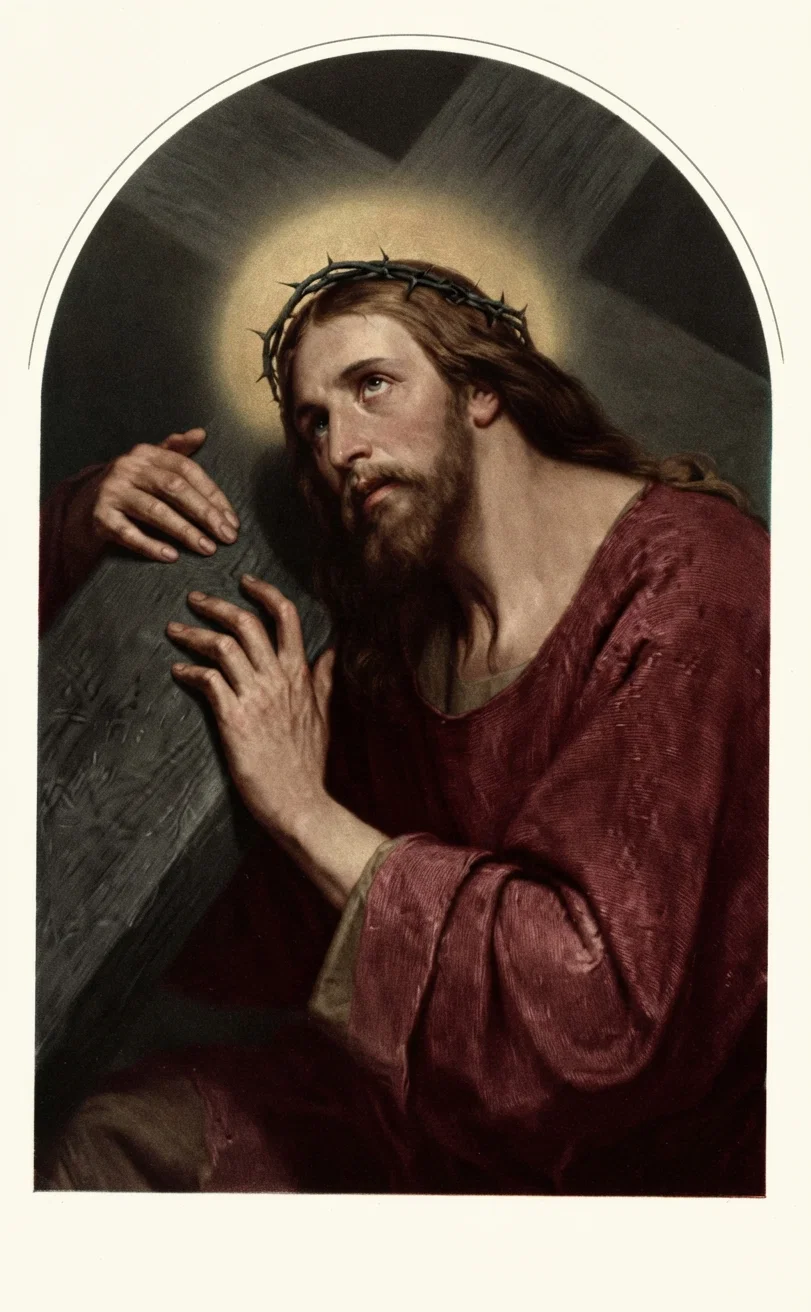
HHRIST gave no stinted service. He did not measure His work by hours. His time, His heart, His soul and strength, were given to labor for the benefit of humanity. Through weary days He toiled, and through long nights He bent in prayer for grace and endurance that He might do a larger work. With strong crying and tears He sent His petitions to heaven, that His human nature might be strengthened, that He might be braced to meet the wily foe in all his deceptive workings, and fortified to fulfil His mission of uplifting humanity. To His workers He says, "I have given you an example, that ye should do as I have done."

Love the Motive.

"The love of Christ," said Paul, "constraineth us." This was the actuating principle of his conduct; it was his motive power. If ever his ardor in the path of duty flagged for a moment, one glance at the cross caused him to gird up anew the loins of his mind, and press forward in the way of self-denial. In his labors for his brethren, he relied much on the manifestation of infinite love in the sacrifice of Christ, with its subduing, constraining power.
How earnest, how touching his appeal: "Ye know the grace of our Lord Jesus Christ, that tho He was rich, yet for our sakes He became poor, that ye through His poverty might be rich." You know the height from which He stooped, the depth of humiliation to which He descended. His feet entered upon the path of sacrifice, and turned not aside until He had given His life. There was no rest for Him between the throne in heaven and the cross. His love for man led Him to welcome every indignity and suffer every abuse.
Paul admonishes us to "look not every man on his own things, but every man also on the things of others." He bids us possess the mind "which was also in Christ Jesus: who, being in the form of God, thought it not robbery to be equal with God: but made Himself of no reputation, and took upon Him the form of a servant, and was made in the likeness of men: and being found in fashion as a man, He humbled Himself, and became obedient unto death, even the death of the cross."
Paul was deeply anxious that the humiliation of Christ should be seen and realized. He was convinced that if men could be led to consider the amazing sacrifice made by the Majesty of heaven, selfishness would be banished from their hearts. The apostle lingers over point after point, that we may in some measure comprehend the wonderful condescension of the Saviour in behalf of sinners. He directs the mind first to the position which Christ occupied in heaven, in the bosom of His Father; he reveals Him afterward as laying aside His glory, voluntarily subjecting Himself to the humbling conditions of man's life, assuming the responsibilities of a servant, and becoming obedient unto death, and that the most ignominious and revolting, the most agonizing,—the death of the cross. Can we contemplate this wonderful manifestation of the love of God without gratitude and love, and a deep sense of the fact that we are not our own? Such a Master should not be served from grudging, selfish motives.
"If men could be led to consider the amazing sacrifice made by the Majesty of heaven, selfishness would be banished from their hearts."
"Ye know," says Peter, "that ye were not redeemed with corruptible things, as silver and gold." O, had these been sufficient to purchase the salvation of man, how easily it might have been accomplished by Him who says, "The silver is Mine, and the gold is Mine"! But the sinner could be redeemed only by the precious blood of the Son of God. Those who, failing to appreciate this wonderful sacrifice, withhold themselves from Christ's service, will perish in their selfishness.

One Purpose in Life.

In the life of Christ, everything was made subordinate to His work, the great work of redemption which He came to accomplish. And the same devotion, the same self-denial and sacrifice, the same subjection to the claims of the word of God are to be manifest in His disciples.
Every person who accepts Christ as his personal Saviour will long for the privilege of serving God. Contemplating what Heaven has done for him, his heart is moved with boundless love and adoring gratitude. He is eager to signalize His gratitude by devoting His abilities to God's service. He longs to show his love for Christ and for His purchased possession. He covets toil, hardship, sacrifice.
The true worker for God will do his best, because in so doing he can glorify his Master. He will do right in order to regard the requirements of God. He will endeavor to improve all his faculties. He will perform every duty as unto God. His one desire will be that Christ may receive homage and perfect service in every word and action of his life.
There is a picture representing a bullock, standing between a plow and an altar, with the inscription, "Ready for either"—ready to toil in the furrow or to be offered on the altar of sacrifice. This is the position of the true child of God—willing to go where duty calls, to deny self, to sacrifice for the Redeemer's cause.

The Holy City

By Allen Moon
SINCE the earth is to be cleansed by fire, and afterward to be made "like Eden, and her desert like the garden of the Lord" (Isa. 51:3); and since the ransomed "shall again inherit the land, and dwell therein forever" (Ps. 37:29); and as "there shall be no more curse: but the throne of God and of the Lamb shall be in it" (Rev. 22:3); and "God Himself shall be with them, and be their God" (Rev. 21:3), it naturally follows that as in the antitypical promised land God chose a city in the midst of His people wherein to manifest His presence, so in the new earth God will have a dwelling-place.
God's dwelling-place on earth was named Jerusalem (the possession of peace), and the new earth will be provided with a new Jerusalem. In speaking of the angel that accompanied him in vision, the revelator said, "He carried me away in the spirit to a great and high mountain, and showed me that great city, the holy Jerusalem, descending out of heaven from God, having the glory of God: and her light was like unto a stone most precious, even like a jasper stone, clear as crystal, and had a wall great and high, and had twelve gates, and at the gates twelve angels, and names written thereon, which are the names of the twelve tribes of the children of Israel: on the east three gates; on the north three gates; on the south three gates; and on the west three gates. And the wall of the city had twelve foundations, and in them the names of the twelve apostles of the Lamb." Rev. 21:10-14.
Thus we have the name of the city, and that it came down out of heaven, having been prepared before of God. It is a city of foundations, of walls and gates; and it is further stated that the city is square and has streets paved with gold. The gates are pearls, and the walls are of precious stones. The measurement is twelve thousand furlongs, which is equal to 375 miles on a side.
The prophet says, "I John saw the holy city, New Jerusalem, coming down from God out of heaven, prepared as a bride adorned for her husband. And I heard a great voice out of heaven saying, Behold, the tabernacle of God is with men, and He will dwell with them, and they shall be His people."
In this further description is the strong inference that the ransomed of the Lord constitute the adornment of the city; for the tabernacle of God is with men, and His throne is in it; therefore, the redeemed return to earth when the city comes down. For it is said, "And the nations of them that are saved shall walk in the light of it; and the kings of the earth do bring their glory and honor into it." Rev. 21:24. So the Redeemer and the redeemed meet in the city of God.
The word of God contains many predictions regarding the location, the conditions surrounding the city, and its inhabitants. Let us read a few of these:
The prophet, speaking of the return of the Redeemer, says: "And His feet shall stand in that day upon the Mount of Olives, which is before Jerusalem on the east, and the Mount of Olives shall cleave in the midst thereof toward the east and toward the west, and there shall be a very great valley; and half of the mountain shall remove toward the north, and half of it toward the south. . . . And it shall be in that day, that living waters shall go out from Jerusalem. . . . And the Lord shall be King over all the earth: in that day there shall be one Lord, and His name one." Zech. 14:4-9.
In this scripture, we are told that the Lord has chosen the Mount of Olives for the location of the Holy City, and that He will make for it a very great plain, and from thence will flow the River of Life. And this agrees with the view that John had, for he said, "He showed me a pure river of the water of life, clear as crystal, proceeding out of the throne of God and of the Lamb," And he adds, "In the midst of the street of it, and on either side of the river, was there the Tree of Life, which bare twelve manner of fruits, and yielded her fruit every month; and the leaves of the tree were for the healing of the nations. And there shall be no night there; and they need no candle, neither light of the sun; for the Lord God giveth them light; and they shall reign forever and ever." Rev. 22:1-5.
The prophet Zechariah tells us in the fourteenth chapter that the country about Jerusalem shall be inhabited. And we do well to keep in mind that the Lord in the prophetic word is not dealing with the old city of stones and mortar, but the antitypical city, which is truly the possession of peace, as its name signifies. The Lord says of this city, "For Zion's sake will I not hold My peace, and for Jerusalem's sake I will not rest, until the righteousness thereof go forth as brightness, and the salvation thereof as a lamp that burneth. . . . Thou shalt no more be termed Forsaken, neither shall thy [Jerusalem's] land any more be termed Desolate: but thou shalt be called Hephzibah, and thy land Beulah: for the Lord delighteth in thee, and thy [Jerusalem's] land shall be married. For as a young man marrieth a virgin, so shall thy sons marry thee." Isa. 62:1-5.
Here no doubt is direct reference to the division of the earth by lot, as the land of Palestine was allotted to the children of Israel. "And they shall build houses, and inhabit them, and they shall plant vineyards, and eat the fruit of them. . . . They shall not labor in vain, nor bring forth for trouble; for they are the seed of the blessed of the Lord, and their offspring with them." Isa. 65:21-23. "And it shall come to pass, that from one new moon to another, and from one Sabbath to another, shall all flesh come to worship before Me, saith the Lord." Isa. 66:23.
The heaven of the redeemed will be a real, tangible place. They will worship a real, personal Creator, and observe the memorial of creation, as would have been the case had man never sinned. God's purpose in creation has not been defeated, but only delayed.

Canon Fausset on the Tower of Babel.

IN his address before the Evangelical Alliance, at Cheltenham, 1890, Canon Fausset spoke of the Tower of Babel. He said that at the time when it was built, men had substituted the worship of the sun for the worship of the true God. In all pagan religions, sun-worship is the first departure from the spiritual worship of the unseen God. The pagan holy places were at the east of the temples, because those were nearest the rising sun. In the Jerusalem temple the west end was chosen, to mark the opposition of the true religion to all the false ones. Confirmation of the Biblical story of Babel has been found near the ruins of Babylon. An inscription on the Temple of Bel, the sun-god, which was restored by Nebuchadnezzar, states that it was built by a former king, forty-two ages ago, and that "since a remote time the people abandoned it, expressing their words without order."
Canon Fausset showed that the further back we go, on examining the primitive traditions of nations, the purer we find their faith, and that divers peoples, from divers stems, show in their traditions a reminiscence of one primitive history, derived from common ancestors. "This common ground of reminiscence," he said, "extends exactly down to the Tower of Babel, and no further. The Oshini negroes of Africa, the Tongas in Polynesia, and the Toltecs in Mexico, agree, in the main, just in those primitive Bible facts." In these days, when so many are regarding the first eleven chapters of Genesis as unhistorical writings, it is reassuring to find so diligent and careful a student as Canon Fausset bearing such testimony to the accuracy of the primitive Genesis records.—Christian Commonwealth (London).

Surrender.

O HEART of mine, be still; Thy God is guiding thee. Press on and do His will And thine the victory.
O heart of mine, be brave; Thy Saviour leads the way. He died thy soul to save; He keeps thee day by day.
O heart of mine, be strong; Thy labor shall be sweet. He'll come for thee e're long; Thou shalt thy Saviour meet.
O heart of mine, be true; Be ever for the right. He will thy soul imbue With spirit for the fight.
O heart of mine, fear not; Thy Master's way is best. He'll choose thy earthly lot, And fix thy time of rest. M. D. WARFLE.

Power to Work Through Prayer

By William Covert
THE success of the Christian in all things depends largely on constancy and faith in prayer. Nothing was made plainer, nor was anything else dearer, in the teachings of Jesus than His lessons on prayer. And the high importance that He attached to the place of prayer in His own life and labors emphasized greatly its worth in the Christian life. Spending the whole night in prayer previous to choosing His twelve disciples shows something of the help that Jesus obtained in praying. See Luke 6:12, 13. Study the context, and it will be seen that this night of wrestling with the Lord was the preface to His wonderful Sermon on the Mount.
It was when He had concluded an earnest season of prayer that His disciples asked that they be taught how to pray. Luke 11:1. Obtaining answer to their request in this thing gave to the disciples, to the church, and to Christian families of earth, the model idea of true prayer. Not only did Christ readily grant the request made relative to prayer, but He willed that the Spirit move upon them to make the request. The desire of God to have men worship in spirit and in truth was told to the woman of Samaria at Jacob's well. "For," said Jesus, "the Father seeketh such to worship Him." John 4:23. So God seeks worshipers, and He desires them to be intelligent in their worship, so that their requests be made in harmony with His will, and their thoughts be under the control of the Holy Spirit. Such a preparation would give all "access by one Spirit unto the Father." Eph. 2:18. Our prayers are not necessarily made through any set form nor offered at any specific place. They may be made neither from Mt. Gerizim nor from Jerusalem, but it is important that they be offered up from an understanding mind and with a heart taught to hope by the Holy Ghost within it. Rom. 5:5.
But as the worship must be in the Spirit, it is prompted by the Lord Himself, and therefore it is the Lord who is yet teaching His disciples to pray. This thought is also asserted by Paul where he says, "We know not what we should pray for as we ought: but the Spirit Itself maketh intercession for us." Rom. 8:26. And again, we are told to pray "always with all prayer and supplication in the Spirit." Eph. 6:18. From the foregoing scriptures, and many more that might be cited, it is evident that the power of God works through the prayers of His children for the accomplishment of His purposes for them and with them. It is necessary that the child of God be taken into the inner life of the Saviour and be shut in with Him to get in vital touch with that power which crucifies sin and effects a new creation. It is this hidden relation which connects the redeemed with the Redeemer, and makes of men able helpers in winning souls for the kingdom of God. The converted person is thereby placed in the gateway to the kingdom and filled with truth and winning power to gather sinners in from the way of death.
This praying spirit God puts within His children to make them feel at home in His presence. Therefore it is said, "Because ye are sons, God hath sent forth the Spirit of His Son into your hearts, crying Abba [Father], Father." Gal. 4:6. God desires His children to know Him as "Father," and to acquaint themselves with His will and His love. And those who do know Him and who learn how to live as sons and daughters in the Father's presence can labor successfully for others. Such a spirit as this makes Christianity a life of peace and joy, which conditions are just what are needed to drive away the vagueness and dread that darken the sinner's mind.
With the laborer there is joy of heart when a sinner turns from his transgression, for that servant of the Lord has been bearing the burden of that lost one up to the courts of heaven, and his spirit has blended with the spirit of Christ in searching out and bringing in that soul to unite with the Lord's family. He rejoices because a new brother or new sister has been born into the family, and he also rejoices because one more sinner has been won from Satan, another shining star been added to his crown.
It should be learned early in Christian life that God desires His children to pray in such a manner and with such faith that their prayers can be answered. Prayer is to ask for what is needed, and the petitioner is to receive what he seeks to obtain. Jesus commands us to "ask," and then He declares we shall receive. We are to ask and we shall find. "For every one who asketh receiveth." "What things soever ye desire, when ye pray, believe that ye receive them, and ye shall have them." "If ye abide in Me, and My words abide in you, ye shall ask what ye will, and it shall be done unto you." "But let him ask in faith, nothing wavering. For he that wavereth is like a wave of the sea driven with the wind and tossed. For let not that man think that he shall receive anything of the Lord." Matt. 7:8; Mark 11:24; John 15:7; James 1:6, 7.
Christ Himself is with the Father to receive help for us, and Christ's Spirit within us will lead us to pray and cause us to believe that our prayers are heard and answered. The whole period of the Christian life should be devoted to prayer. Those who read the Bible are told to pray without ceasing. They read the words of Jesus which say, "Men ought always to pray." The word also says that God's "ears are open unto our prayers," and that He knows what we need before we ask Him to give it us. And so He does know because He Himself has by the Spirit pointed out our needs and moved upon us to pray for them. Therefore He would have us to pray in faith, and doubting nothing, receive what our Father offers to freely give us when we pray.

Deep Plowing.

DEEP plowing for a crop. Deep plowing for a soul. He who makes light of sin will never amount to anything in the church or in the world. If a man speaks of sin as tho it were an inaccuracy, or mistake, instead of the loathsome, abominable, consuming and damning thing that God hates, that man will never yield a harvest of usefulness.
When I was a boy I plowed a field with a team of spirited horses. I plowed it very quickly. Once in a while I passed over some of the sod without turning it, but I did not jerk back the plow with its rattling devices. I thought it made no difference. After a while my father came along and said: "Why, this will never do: this isn't plowed deep enough; there, you have missed this, and you have missed that." And he plowed it over again. The difficulty with a great many people is that they are only scratched with conviction when the subsoil plow of God's truth ought to be put in up to the beam.
My word is to all the Sabbath-school teachers, to all parents, to all Christian workers—Plow deep! Plow deep! And if in your own personal experience you are apt to take a lenient view of the sinful side of your nature, put down into your soul the Ten Commandments, which reveal the holiness of God, and that sharp and glittering colter will turn up your soul to the deepest depth. If a man preaches to you that you are only a little out of order by reason of sin, and that you need only a little fixing up, he deceives you! You have suffered an appalling injury by reason of sin. There are quick poisons and slow poisons, but the druggist could give you one drop that would kill the body. And sin is like that drug; so virulent, so poisonous, so fatal, that one drop is enough to kill the soul. Deep plowing for a crop. Deep plowing for a soul. Broken heart or no religion. Broken soil or no harvest. Why was it that David and the jailer and the publican and Paul made such ado about their sins? Had they lost their senses?—No. The plowshare struck them. Conviction turned up a great many things that were forgotten. As a farmer plowing sometimes turns up the skeleton of a man or the anatomy of a monster long ages buried, so the plowshare of conviction turns up the ghostly skeletons of sins long ages entombed.—Dr. Talmage.

Waiting.

"I WILL go and work for my King," I cried, "There are so many ways on every side." But my feet could not reach the open door, And I heard a voice whisper, "Try no more, Rest quietly on this bed of pain, Strength for some other day to gain." And my heart was filled with dark despair, For how could I serve my Master there? While I lay idle day by day, Those chances to work would slip away. Then slowly the darkness lifted, and lo! Again came the whisper, soft and low, "When they cease to murmur against their fate, They also serve who only wait." —Eunice Clark Barstow.

The Day of the Fourth Commandment.

THERE are many thousands of Christians in this land who believe in the binding obligation of the Decalogue. They believe it to be the law of the eternal Jehovah, perpetual, unchanging. The only question in their minds is, Is it a day that is commanded, or is it only a particular portion of time, which may fall upon any day of the week? It is an important question, affecting all within the scope of the law. Before God's judgment bar it is important to be right. What does the commandment say? Let us read:
"Remember the Sabbath day, to keep it holy. Six days shalt thou labor, and do all thy work; but the seventh day is the Sabbath of the Lord thy God; in it thou shalt not do any work, thou, nor thy son, nor thy daughter, thy man servant, nor thy maid servant, nor thy cattle, nor thy stranger that is within thy gates. For in six days the Lord made heaven and earth, the sea, and all that in them is, and rested the seventh day; wherefore the Lord blessed the Sabbath day, and hallowed it."
Let us question this law:
1. What are we told to do? "REMEMBER," that is, keep in memory. This must refer to something already in existence.
2. What are we told to remember? "Remember the SABBATH day."
3. What does Sabbath mean? "Sabbath," or "shabbath," is a Hebrew word meaning "rest."
4. What then are we told to remember? "Remember the REST day to keep it holy."
5. What day is the rest day? "The SEVENTH day is the rest day of Jehovah thy God."
6. What makes it the rest day of Jehovah? "For in six days Jehovah made the heavens and the earth, . . . and RESTED the SEVENTH day."
7. What did Jehovah's resting on the seventh day make that day? "The seventh day is the SABBATH [rest] of the Lord thy God."
8. What are we to remember to do to the Sabbath? "Remember the Sabbath day to keep it HOLY."
9. Will the proper observance of the Sabbath day render it holy? "Remember the Sabbath day to KEEP it holy."
10. Who only made and can make holy the day? "Wherefore JEHOVAH blessed the Sabbath day and hallowed it," that is, made it holy.
11. When did Jehovah do this? In the first work of creation. "And God blessed the seventh day, and SANCTIFIED it"—made it holy, set it apart, separated it, to a holy use. Gen. 2:2, 3.
12. Are we told to remember the proportion of time? "Remember the Sabbath DAY."
13. Did God bless a seventh part of time? "Wherefore Jehovah blessed the Sabbath DAY."
14. Did God hallow or set apart the seventh part of time? "Wherefore Jehovah blessed the Sabbath DAY, and hallowed IT."
15. What, then, are we to remember to do? "Remember the Sabbath day to KEEP IT HOLY."
We need not ring the changes more. God rested on the day, blessed the day, made the day holy, and commanded His people to keep the day holy, which He has made holy.
We can not make holy by any act or acts of ours that which He has not made holy. Only people whom He has cleansed can keep holy His Sabbath.
How unreasonable it is for puny man to assume to declare that God has given no day in particular for the Sabbath in the face of His own law! How preposterous it is to declare that God has set apart no day in particular, and then assume to set apart by the means of church dogma and human legislation a day which has received no divine blessing or sanction!
Why charge God with the folly of leaving the world without a definite day, and so in confusion, and then exalt man with the wisdom of supplying the alleged defect in God's plan?
O how infinitely better it would be to accept of God's Sabbath, clear, blessed, and definite, the day observed by Jesus Christ, and keep it holy unto Him, and partake of the double blessing to the obedient!

Done in Righteousness.

THE scientific man as he soberly seeks to investigate Spiritualistic phenomena may be convinced that there is something there that manifests a power which he can not explain. Still he often makes the statement that the spirits do things that are not only ridiculous, but often tricky and deceptively untrue. This being the case, it should cause him to see that spiritism can not possibly stand the true test, for everything that is not done in righteousness must utterly fail sooner or later.
God says of Himself that "He will finish the work, and cut it short in righteousness." Rom. 9:28. God will do His work in righteousness; what He does will stand the test from every conceivable standpoint. There will be nothing tricky, or shady, or dark about it. The Lord commissioned His apostle to say of His followers: "Ye are all the children of light, and the children of the day: we are not of the night, nor of darkness." 1 Thess. 5:5. That which can not stand the test of open day, that which can not stand the test of the standard of righteousness, must utterly come to naught. This is set forth in these words by the prophet Isaiah: "And when they shall say unto you, Seek unto them that have familiar spirits, and unto wizards that peep, and that mutter: should not a people seek unto their God? for the living to the dead? To the law and to the testimony: if they speak not according to this word, it is because there is no light in them." Isa. 8:19, 20.
We have reached the time when the people of this world are inviting us to seek unto them that have familiar spirits; they are asking us to go to the dead for light and knowledge; but we are asked the very significant question: "Should not a people seek unto their God?" We are to go to the law and to the testimony which God has given us. This is our only source of light. The failure to heed this light is an everlasting mistake.

Individual Responsibility Before God

In all the divine commands the monitor of duty singles out the human unit. He can not hide behind nations, or tribes, or cults, or gilds, or organizations of any sort; to the individual person comes the divine requirement clothed in the fire of Sinai, which he must meet at the bar of God in the Judgment-day.

Christ Winning the Mind

It is the work of Jesus Christ to win men, to win the very citadel of character,—the mind, the thoughts,—for if the thoughts are yielded to Christ, all is yielded. Civil government may compel acts, tyranny may compel men to act as tho they thought differently, but it can never by compulsion win the mind.

The Angel of the Lord.

HOW helpful, how soul-inspiring, how encouraging, are the statements of God's word in regard to the work that His angels perform for the children of men! One of these beautiful promises reads: "The angel of the Lord encampeth round about them that fear Him, and delivereth them." Ps. 34: 7. Those who have the fear of the Lord before them have this mighty wall of protection. "The angel of the Lord encampeth round about them that fear Him." The angels do not take up a permanent abode where they can visit the children of God from time to time to see how they are progressing, but they actually are with them all the time. They encamp round about them that fear Him.
When the Lord's children move from place to place, the angels move their camps, so as to be continually with them and to protect them. The natural eye does not behold these spiritual beings, but God's promises say they are there, and His children know that they are there because of the protection which they give. The dangers through which the children of the Lord pass unharmed because of the protecting power of these encamping angels, we may never know until the judgment-day. How many times in our experiences have we been brought face to face with dangers that seemed to threaten dire disaster or sudden death, but immediately the danger disappeared and we passed along unharmed!
The ministering power of the angels of God is there, and they have done their appointed work. Such is the protecting power that God gives through His angels; such is the comforting assurance afforded us through the precious promise of the divine word.
T.

The Defeat of Justice

IN the fifty-eighth and fifty-ninth chapters of Isaiah is recorded a very instructive and remarkable line of prophecy. It is replete with striking last-day predictions, precious promises, and startling warnings. That it is primarily a latter-day prophecy is shown to be absolutely certain by what is foretold regarding the Redeemer, as recorded in verses 17 to 20 of chapter 59. In verse 20, His second coming is prophetically promised in these unmistakable words: “The Redeemer shall come to Zion [His church], and unto them that turn from transgression in Jacob, saith the Lord.” In verses 17 and 18, the Redeemer is represented as putting on the “garments of vengeance” for the purpose of repaying “fury” and “recompense” to His enemies.
The Scriptures teach repeatedly that our Lord will not put on the “garments of vengeance” until He will have put off His robe of mercy, His garments of salvation. Not till the Gospel shall have completed its work of reclaiming sinners, will Christ arise to punish irreclaimable sinners. Hence this prophecy has to do essentially with conditions that obtain in the world when the coming of the Redeemer to Zion is imminent.
One of the phenomena that are strikingly prevalent in these last days is the miscarriage of justice. Verses 14 and 15 of chapter 59 read as follows: “Judgment is turned away backward, and justice standeth afar off: for truth is fallen in the street, and equity can not enter. Yea, truth faileth; and he that departeth from evil maketh himself a prey: and the Lord saw it, and it displeased Him that there was no judgment [justice].”
That justice does miscarry in our day is a fact that has long been proclaimed from the housetops by orators and journalists. Every person who observes knows for himself that the foregoing prophecy is to-day notoriously fulfilled.

Delay of the Punishment.

The editor of the Pacific Unitarian wrote in the May number of that journal: “One of the most trying situations of the present time in this country is the law’s delay, and the defeat of justice through the fine-spun technicalities that are an offense to the average layman. When the punishment of the guilty rich who can command the services of shrewd and conscienceless lawyers seems practically impossible, we are drifting into a dangerous shore, and shipwreck is inevitable.”
The same writer tells his readers that common sense no longer holds sway in the interpretation and application of the law in our courts. The highest courts repeatedly acquit men of crimes that they are proved to be guilty of, simply because of some trivial defect in the pleadings. “It seems absurd,” he continues, “that a mayor who has committed crime should escape punishment because the indictment upon which he was tried did not aver that he was a mayor.”
In an article recently contributed to the London Chronicle, Mr. Sydney Brooks adduces indubitable evidence that, in America, there has come about the “complete breakdown of criminal law.” He remarks that a verdict against the prisoner at the bar is one thing: “carrying it out is quite another.” He declares that if a man who “is wealthy has friends, social influence, and the pick of the lawyers,” has committed “wilful murder, the machinery for making him or any American in his position pay the penalty of his crime simply does not exist.”
Mr. Brooks avers that any American who can afford to engage a lawyer “may commit murder with almost complete impunity. The odds are rather over seventy to one against his being executed.” He asserts that he is not speaking at random, but is really summarizing the criminal statistics of the last twenty years. “They make appalling reading,” he declares. These statistics show that in the last two decades the commission of murder has increased fivefold, but that the number of executions during the same period has remained stationary—less than 120 per annum for an average of 9,000 murders.
One of the phenomena that are strikingly justice is, as Mr. Brooks shows, the sinister influence of the press. He says: “The press is permitted to flout judicial decency and fair play, to rouse passions, confuse issues, stimulate the utmost partiality of sentiment, and create the conditions that are least favorable to the dispensation of justice, without a word either of official or popular protest.”
It is through a corrupt press, chiefly, that demagogs and the enemies of impartial justice appeal to the fears and sentimentalities of jurymen, confuse their sense of justice and honor, and often make moral cowards of them.

Partiality of the Law.

Even the Hon. William H. Taft, not long ago, alleged: “The administration of criminal law in all the states in the Union is a disgrace to our civilization.”
As a nation we have a peculiar dislike to punish severely criminals of more than ordinary social standing who have respectable friends. An illustration of this fact was given a few years ago in a notable case in New York City. The officers of a national bank had permitted their institution to be wrecked by certifying, and so guaranteeing, the checks of a firm of stock-brokers for enormous sums when the brokers had no money deposited in the bank. This was expressly forbidden, and made a criminal offense, by the national banking law. The brokers failed. The bank was compelled to close its doors in consequence. The president of the bank was indicted. A jury was impaneled to try him; he pleaded guilty. His counsel urged, as a reason for clemency, that the violation of this statute was a habit of the New York banks in the Wall Street district, and that if the ruined bank had not followed this law-breaking custom of its competitors, the stock-brokers would have withdrawn their account. The plea was successful. Imagine a common thief urging a plea for clemency based on the general business habits of his criminal brethren! Do all classes of the people any longer stand upon an equality before our courts of justice(!)?
It is admitted by all publicists that there is a class of crimes that, almost uniformly, go unpunished. These crimes, roughly speaking, are crimes of fraud, perpetrated, as a rule, upon the general public: fraud in obtaining credit by falsehood; fraud in concealing and conveying property to avoid the just demands of creditors; fraud in the substitution and adulteration of goods; fraud in bribing public officials, and corporations doing business as common carriers; fraud in the promotion, organization, and inflation of stock corporations with a view to selling worthless stocks to unsuspecting investors.
The shrewd, polished perpetrators of these multifarious frauds are rarely indicted, much less convicted and punished.

Wall Street Freebooters.

Since 1899, Wall Street brokers have sold to the gullible people of America nearly three billion dollars’ worth of absolutely worthless “industrial” stock. Yet not one of these opulent, Titanic freebooters of the stock mart has ever been whipped of Justice.
Prof. Edward A. Ross writes piquantly: “Constituted authorities are settling and crumbling; they threaten to become as obsolete for defense as have the stone walls of medieval cities. In twenty-two years we have lynched over thirty-three hundred persons as against about twenty-six hundred legally executed. . . . Like a stupid, flushed giant at bay, the public heeds the little overt offender more than the big covert offender. It resents a pin-prick more than a blow at the heart.”
Must not every candid reader admit that the latter-day prophecies cited at the beginning of this article are strikingly fulfilled in these opening years of the twentieth century? Must we not conclude that we are rapidly approaching that momentous day when He shall come who “will judge the world in RIGHTEOUSNESS”? Of Him it is written: “And His delight shall be in the fear of Jehovah; and He shall not judge after the sight of His eyes, neither decide after the hearing of His ears; but with righteousness shall He judge the poor, and decide with EQUITY for the meek of the earth; and He shall smite the earth with the rod of His mouth; and with the breath of His lips shall He slay the wicked.” Isa. 11: 3, 4, A.R.V.
Then, first of all, dear reader, let us make sure that we shall be numbered with “the meek of the earth,” to whom has been given the divine promise that they “shall inherit the earth”—that earth of which it is declared (verse 8) that it “shall be full of the knowledge of Jehovah, as the waters cover the sea.”
Continue reading: With Our Inquirers