Your ShelfYour Projects

Review and Herald, Vol. 89, No. 6.

Everlasting Righteousness

Review and Herald

Feb 8, 1912

Review and Herald Publishing Association · Takoma Park Station, Washington, D. C. · Feb 8, 1912

Everlasting Righteousness
Harken to Me, ye that follow after righteousness, ye that seek Jehovah: look unto the rock whence ye were hewn, and to the hole of the pit whence ye were digged. . . . For Jehovah hath comforted Zion; He hath comforted all her waste places, and hath made her wilderness like Eden, and her desert like the garden of Jehovah; joy and gladness shall be found therein, thanksgiving, and the voice of melody. Attend unto Me, O My people; and give ear unto Me, O My nation: for a law shall go forth from Me, and I will establish My justice for a light of the peoples. My righteousness is near, My salvation is gone forth, and Mine arms shall judge the peoples; the isles shall wait for Me, and on Mine arm shall they trust. . . . Harken unto Me, ye that know righteousness, the people in whose heart is My law; fear ye not the reproach of men, neither be ye dismayed at their revilings. For the moth shall eat them up like a garment, and the worm shall eat them like wool; but My righteousness shall be forever, and My salvation unto all generations. Awake, awake, put on strength, O arm of Jehovah; awake, as in the days of old, the generations of ancient times. . . . And the ransomed of Jehovah shall return, and come with singing unto Zion; and everlasting joy shall be upon their heads: they shall obtain gladness and joy; and sorrow and sighing shall flee away. Isa. 51: 1-11.
Photo Cover Design in Three Colors

A Good Proposition for Agents!

PRICES: 25 cents a year. 10 cents a copy; 5 to 40 copies, 5 cents each; 50 or more copies, 4 cents each. Send 10 cents for sample copy. Better still, send $1.00 for 20, or $2.00 for 50. Discount to agents on yearly subscriptions.

OUR LIBERTIES ARE IN DANGER!

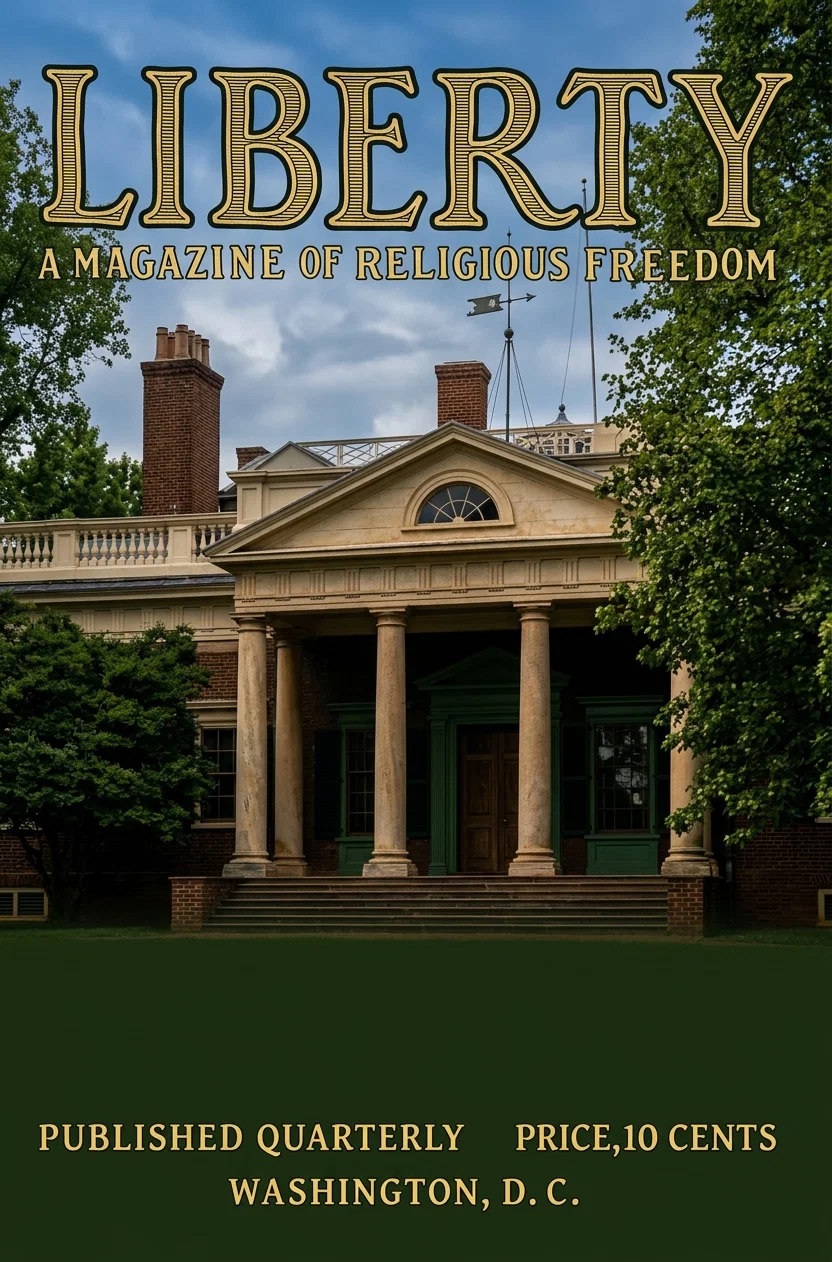
Young and Old Should Read and Circulate This Thomas Jefferson and “Freedom of the Press” Number, Just Out!
First Edition, 50,000 copies. Number of new yearly subscriptions added during the past three months, 6,764. List still climbing.

A FEW FEATURES

Three-color Photo Cover—Picture of Jefferson’s Home. Interior View of Jefferson’s Home. Rome’s Plan to Exclude Anti-Catholic Publications from the U. S. Mails. The President Again Attends St. Patrick’s Cathedral Thanksgiving Day. (Illustrations) Visit to an Inquisition Prison in Holland. (Illustrations) A Governor’s Plan to Increase Church Attendance by Law. Spain and Religious Liberty. America’s Beacon-Light to the Nations. Should the State Teach Religion? Cardinal Gibbons on Church and State Union. Russian Passports and Religious Liberty. The Church in Politics. Religious Laws Now Before Congress. Religion and State in Turkey. Spain Tired of National Reformism. Roosevelt on Liberty. The Liquor Traffic and the Home. An Important Temperance Convention. Striking Cartoon! “Is It Constitutional?”
SPECIAL OFFER ON TEN, ONE YEAR: 10 or more copies, one year, to one address or to ten separate addresses, cash with order, only 75 cents each. Sender may include his own name as one of the ten. SEND THIS NUMBER TO EVERY EDITOR, ATTORNEY, AND PUBLIC-SCHOOL TEACHER IN YOUR COUNTY. WE CAN FURNISH THE NAMES AND ADDRESSES.

PLEASE ORDER THROUGH YOUR TRACT SOCIETY

If you do not know your Tract Society address, send to “Liberty,” Washington, D. C.

EARN YOUR OWN SUBSCRIPTION

Cover Design Printed in Three Colors

EARN YOUR OWN SUBSCRIPTION

By sending us two new subscriptions at $1 each, you may earn your own yearly subscription, including the three extra numbers offered above. These three extra numbers will also be sent to your two new subscribers.
Send $2 for 50 copies; sell 20 to get your money back; then sell or give away the other 30 copies in the interests of true health reform.
PRICES
$1.00 a Year, 10 Cents a Copy; 5 to 40 copies, 5 Cents Each; 50 or More Copies, 4 Cents Each.

THE MARCH NUMBER OF LIFE & HEALTH NOW READY!

Over two thirds of February Edition sold by January 28
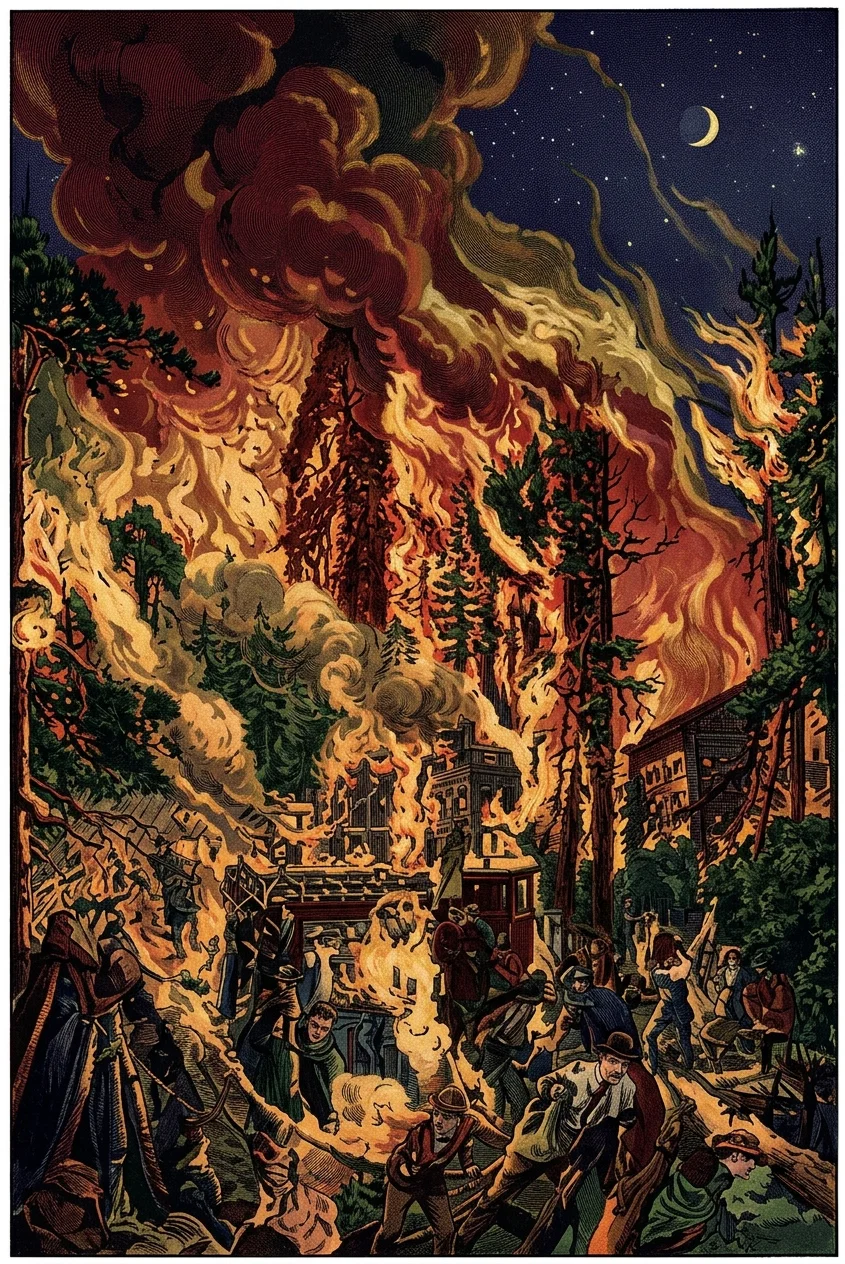
The striking cover picture in three colors (Forest and City Fires) is realistic, and rivets the attention.
Special Offer: Until March 15, 1912, all subscribers for one year who make definite request for the same, will receive, in addition to the 12 numbers for 1912, the beautiful October, November, and December, 1911, issues free of charge,—a 15 months' subscription for $1.00. Date of offer extended one month upon request.
“QUESTIONS AND ANSWERS”
In this new department the editor will reply to all reasonable questions by subscribers. Subscribe now. Send $3.00 for 5 years' subscription (or 5 yearly subscriptions); $2.00 for 3 years' subscription (or 3 yearly subscriptions); or $1.00 for 15 months, as offered above.
WILL YOU BE OUR AGENT?
Send 10 cents for sample copy and particulars. Pleasant and profitable work the year round.
PARTIAL CONTENTS
Frontispiece, “Old Faithful,” the world's greatest geyser.
Surprises of God's Out-of-Doors, by Geo. W. James (illustrated).
Fire and Fire Prevention, by F. W. Fitzpatrick (7 illustrations).
Milwaukee's Campaign for Health, by Carl D. Thompson, City Clerk.
The Organization of Junior Civic Leagues, by Mrs. Agnes McGiffert Bailey.
How to Cook Legumes, by George E. Cornforth.
Medical Missionary Work in Burma.
Editorial.—Shall Right and Truth Be Embodied in the Law?—The Tabooed Subject.
As We See It.—The Appalling Fire Hazard—Prevention Versus Cure—A Worthy Enterprise—“Uncle Sam Is Our Pardner.”
Abstracts.—Foreign Missions and the Liquor and Opium Traffic—We Want Aid and Not Interference by the Federal Government—Changing Habits.
Current Comment.—Diet and Health—How the Cigarette Does Its Work.
Questions and Answers, News Notes, and other Departments of interest.
Send All Orders Through Your Tract Society
If you don't know your Tract Society address, ask “Life and Health,” Washington, D. C.

The Deeds That Shine

The Angel's Record — No. 5

The Deeds That Shine

MRS. S. M. SPICER
BEHOLD! a gorgeous, golden throne, A sceptered lord of many a realm, Submissive millions ready own His word as law, his wish their will.
And many a noble, generous deed, Perhaps, has graced his regal power; The slave oppressed he may have freed, And kindly dealt with rich and poor.
Then well may fame delight to twine Her loveliest garland for his brow, If wealth and power with goodness shine; So rare this triple crown is worn.
On history's fairest page will shine The name earth honors, loves the best; And after death, almost divine His virtues glow, his faults suppressed.
But when with saints he upward flies, Admitted to the mansions blest, The angel's record meets his eyes,— His earthly name in heaven made bare,— Uncrowned, untitled, only bright With simple deeds of goodness done; These radiant glowed in heaven's light; All else, with earthly dross was gone. And, in his heavenly diadem, Mid pearls of love, not one star more For all the stars on earth he wore.
More strange than all, beside his name Scores of his subjects were enrolled, Of equal rank or higher still, Whose deeds on earth were never told. Of humble name, of lowly walk, Earth's sorrowing ones they ever knew; Knew well of Jesus' love to talk; And in his name all good to do.
Some, faithful heralds of the cross, Who sought men's dying souls to bless, Whose holy lives continual taught: “The way to heaven is righteousness.”
Some, busier still, the record said, Love's unseen ministries dispensed,— Smile for the sad; for hungry, bread; On mercy's errands tireless spent. Earth's angels they; whose gentle lives Flow out to gladden everywhere, As silent dew the earth revives, And wakes sweet fragrance in the flowers.
While many a noble great resolve, Awaiting time away is riven, The constant, trickling drops of love Have filled a crystal cup in heaven. Others to feast, is love's best feast, Unheeding what reward may be. “What ye have done to lowliest, least,” The angel writes, “ye've done to Me.”
Some loving well, have served as well, Bearing affliction's chastening rod; In pain and sorrow whispering still, “Thy will, not mine, be done, O God!”
Others discerned the midnight gloom, Which ignorance spreads o'er mind and soul; Toiled hard the mines of truth to find, Her priceless treasures to unfold.
Long was the list, the page was bright, So many faithful ones inscribed, Whose faults were hid in virtue's light, So much of heaven on earth imbibed.
Takoma Park, D. C.

A Message to Parents

(Concluded)
MRS. E. G. WHITE
We need to seek for a true understanding of how to train our children for the future life. At this time when wickedness is constantly increasing, we can not afford to be careless or negligent. Our children are God's property. Shall we let them depart from the paths of righteousness, and make no effort to save them? They have eternal life to win; eternal death to shun; and it is ours to help them to choose the good and resist the evil. When they learn to welcome the spirit of Christ into their hearts, the salvation of God will be seen in their lives.
It is sometimes essential to correct children; when this is necessary, do it in love. Show them that you punish them, not because you like to, but because you fear not to do so, lest they continue to cherish evils in their lives. Parents and children need the softening, subduing influence of the Holy Spirit of God. Often we do more to provoke than to win. Let your methods be of a character that they will create love. Love begets love. Do not scold. This will work counter to the results which God desires to see accomplished. An exhibition of passion on your part will never cure your child's evil temper. Talk kindly with the children. Pray with them, and teach them how to pray for themselves. They will not forget these experiences, and the blessing of God will rest upon such instruction, leading the hearts of the children to Christ. The Lord wants you to lay hold of eternal things, and to have an experience in Christian development that will be marked by those with whom you associate. It is your privilege to give to the world a representation of the transforming grace of Christ that will cause them to wonder.
When children realize that their parents are trying to help them, they will bend their energies in the right direction. And to the children who have right instruction in the home, the advantages of our schools will be greater than to those who are allowed to grow up without spiritual help at home.
Do not be turned away from your God-given work by the fleeting and unsatisfying pleasures that the world can offer. Parents have no time to spend in parties of pleasure while their children are left to the temptations of the enemy. Say to those who invite you to join them in worldly pleasure, God has given me the work of training my children for eternity. I want them to stand by my side to help me, and I want to help them to accomplish all that they are capable of accomplishing through faith in Christ and his Word. I want to take my children with me to the city of God, to be crowned with immortal life. I want them to sing his praises in the earth made new. I can not serve the world and accomplish this work.
Do not neglect your children for visitors. Your children should not be left to themselves because company has come to your home. Let your friends understand that your first attention belongs to your children, and that you can not engage in pleasures that will divert yourmind from the interest you should exercise in their behalf. You can not afford to let any time pass unimproved. You can not afford to let your children go hither and thither without guardianship or control. The solemn work given to you to do can be neglected only at eternal loss, but the reward for faithful effort is greater than human minds can compute. In winning heaven your children win an inheritance whose value is above that of any earthly possession. Great will be your satisfaction and reward in the future life when you see your children enjoying eternal pleasures, which might have been denied them, had you by the indulgence of self in this life withheld the advantages to be gained by an education in right principles and practise.
Do not spend your time in chatting on the trifling subjects of dress and fashion. Talk of the heavenly dress, the spotless robe of Christ's righteousness, which all must wear who stand in confidence before the throne of God. Talk to your friends of the truth and the requirements of God's Word. As you make use of the knowledge you have, God will give you increased light.
There are neighbors whom you should labor for. Go to them in the Spirit of Christ, and seek to instruct them in Bible truth. As you have opportunity, read to them the promises of God, and the inducements he holds out to those who follow on to know the Lord. Engage with them in prayer, if they are willing. By such profitable association with your neighbors you will be doing the work of God and laboring in Christ's lines.
We are facing events that closely precede the coming of the Lord. At this time it behooves us to be faithful, to guard well our words and actions. Let us not trifle with eternal realities. Those who would be prepared for the coming of Christ must make diligent work for eternity. They have no time to lose; for the end of all things is at hand. Let heart and mind be sanctified by the truths of the Word. Give evidence that you are preparing for the solemn events of eternity.
Will fathers and mothers work wisely for their children, helping them to form righteous characters? You with your children are to prepare to graduate to the higher grades of the school above. Then educate yourselves daily away from every tendency and practise that would unfit you to pass the test of the great examination day. Let it be seen by those with whom you associate that Christ is your pattern in all things.
Let the instruction you give your children be simple, and be sure that it is clearly understood. The lessons that you learn from the Word you are to present to their young minds so plainly that they will understand. By simple lessons drawn from the Word of God and their own experience you may teach them how to conform their lives to the highest standard. They may learn, even in childhood and youth, to live thoughtful, earnest lives, that will yield a rich harvest of good.
As united rulers of the home kingdom, let the father and the mother show kindness and courtesy to each other. Never should their deportment militate against the precepts they seek to inculcate. Parents, be in earnest in seeking to perfect in your children true wisdom,—the wisdom of righteousness. If you would do this, you must set them an example worthy of imitation. Should you be remiss in this respect, and your children fail in meeting the standard of the Word of God, what will you answer when they stand before the bar of heaven as witnesses to your neglect? How terrible will be your realization of loss and failure as you face the Judge of all the earth with the fruits of your unfaithfulness before you!
I can not find words to describe to you the scenes of the judgment. I can not represent to you how terrible in that day will be the disappointment of those who in this life have chosen to follow their own will instead of the will and way of God. The low standard of the world is not Christ's standard. The world's measurement of righteousness is not his measurement. Those only who in their probationary time use their capabilities to honor and glorify God will hear from his lips the benediction and welcome: “Well done, good and faithful servant: . . . enter thou into the joy of thy Lord.”
To every father and mother God has given a work in soul-saving that they can not throw upon others. In this work it is their privilege to draw from the Word of God instruction that will give help in every time of need. For all who make it their life-work to seek for the righteousness of Christ there awaits a welcome to the city of God, where they may join the song of triumph and praise, that the battle of life is over. O that we might as a people appreciate more fully the Word which teaches us the way of this wonderful salvation!

The Result of Exclusiveness

W. E. GERALD
INSTEAD of recognizing that they had been called of God to be missionaries to other nations less favored than themselves, the Jews of old used their blessings and privileges to magnify themselves alone.
Instead of using the magnificent and imposing ceremonial of the Mosaic law as a means of knowing Christ, they construed it to be a matter of exclusiveness and separation from their fellow creatures, the Gentiles. Instead of recognizing that Jerusalem was to be a beacon-light to the oppressed and burdened of all nations, they indulged in exultation over the fact that they were the favorites of Heaven.
There is nothing that is more diametrically opposed to the mission of the loving, compassionate Redeemer than the spirit that was revealed at the mention of the word Gentile. These facts contain a solemn object-lesson for the people who have been called of God for the special gospel work of this time. To the extent that we have been blessed with more truth than have other people, are we not debtors to them? Can we fold these blessings, in any degree whatever, to our own breasts and escape a worse ruin than that which befell the Jewish people?
If a man 'seeth his brother have need, and shutteth up his bowels of compassion from him, how dwelleth the love of God in him?' If we do not recognize that our work is to be the channel for these blessings that they may flow on to others, rather than a dam to intercept them and hold them for ourselves, we shall as surely be condemned as were the Jews. This is the simple truth, and would that it might reach the soul of every individual among us who is slumbering in inaction! 'Awake, awake; put on thy strength, O Zion; put on thy beautiful garments, O Jerusalem; . . . shake thyself from the dust; . . . loose thyself from the bands of thy neck, O captive daughter of Zion. Isa. 52: 1, 2.

Striving to Enter In

HANNAH J. BAKER
ONE said unto Him: “Lord, are there few that be saved? And he said unto them, Strive to enter in at the strait gate: for many, I say unto you, will seek to enter in, and shall not be able.” Luke 13:23, 24. No careless seeking will be rewarded with eternal life. We must give diligence to make our calling and election sure. 2 Peter 1:10. “Only take heed to thyself, and keep thy soul diligently,” lest ye “fall from the grace of God.” Deut. 4:9; Heb. 12:15, margin.
It was according to God’s eternal purpose, which he purposed in Christ Jesus, that he chose us “in him before the foundation of the world.” Eph. 1:4. This purpose was fulfilled when in the garden of Gethsemane our Saviour “offered up prayers and supplications with strong crying and tears.” Heb. 5:7. “And being in an agony he prayed more earnestly: and his sweat was as it were great drops of blood falling down to the ground.” Luke 22:44.
Christ endured the cross, and despised the shame, for the joy of seeing souls saved; and if we would have his joy, we must share his sufferings. Abraham endured, as seeing him who is invisible, when he offered his only son Isaac. Of Moses it is written that he esteemed “the reproach of Christ greater riches than the treasures in Egypt.” Heb. 11:26. “Yea, and all that will live godly in Christ Jesus shall suffer persecution.” 2 Tim. 3:12. Paul also served “the Lord with all humility of mind, and with many tears, and temptations.” Acts 20:19.
If we earnestly desire to work for Christ; if we are willing to suffer with him; if we can “take pleasure in infirmities, in reproaches, in necessities, inpersecutions, in distresses for Christ’s sake,” then we, too, may hear the “Well done, thou good and faithful servant: . . . enter thou into the joy of thy Lord.” 2 Cor. 12:10; Matt. 25:21. The joy of seeing souls eternally saved, is the reward of all who put their feet in the footprints of Him who said, “Follow me.” “If ye know these things, happy are ye if ye do them.” John 13:17.
Oklahoma City, Okla.

Our Conversation

MRS. JESSIE AMES
In “Testimonies for the Church,” Vol. V, page 164, are found the following important words:— “Here is a work for families to engage in before coming up to our holy convocations. Let the preparations for eating and dressing be a secondary matter, but let deep heart-searching commence at home. Pray three times a day, and, like Jacob, be importunate. At home is the place to find Jesus; then take him with you to the meeting, and how precious will be the hours you spend there. . . . Teach them [our children] that it is not of so much consequence that they appear with fine clothes as that they appear before God with clean hands and pure hearts.”
Having attended camp-meetings for years, and in a number of different places, my field of observation has not been entirely of a local nature, and I have noted with pain of heart the thought and care that are given to the appearance of the person by so many of our people, especially the young people. Instead of hearing them talk about the blessings they were receiving, the interesting meetings we were having, the good points brought out in the various meetings, planning for their part in the Lord’s work, seeking the Lord for a better religious experience, and many other things which should be their theme of conversation, we hear on all sides such remarks as these: “How do you like my new dress?” “Say, but that’s swell! Where did you get it?” etc., and there follows a discussion of dresses. We pass on a little farther, and hear, “What did you do with that curling-iron? My hair is a fright;” and, “I’ve mislaid my rat somewhere. We girls and some of the boys are going to the park, and ——” but we hear no more, for we pass on. Soon we meet a group of young people criticizing so and so because he or she had taken them to task over some misdemeanor. Although deserving the reproof, they are very indignant.
These are but a few of similar observations, and they witness to the fact that there had not been that deep, heart-searching preparation which there should have been before the meeting began. In other words, the fallow ground of the heart had not been broken up and made ready for the seed to be sown at the meeting; hence it fell on stony ground and could not bring forth fruit meet for repentance.
O, that there might be a waking up among us as a people; a waking up to such a deep realizing sense of our great need as would send us to our knees in earnest prayer for our children and for ourselves, that we might be living examples of what true Seventh-day Adventists should be.
May God grant that this new year will mark a new era in our lives. Let us gather our children about us, and instead of discussing what we shall wear or how it shall be made, spend some time each day in seeking the Lord with them for an outpouring of his Holy Spirit. Then may we indeed expect a rich blessing when the time of refreshing shall come. If we do this, we may rest assured that the coming year’s blessing will be the most wonderful one we have ever enjoyed.
Mountain Grove, Mo.

Reasons Why Civil Government Should Not Legislate on Religious Questions

CHARLES P. WHITFORD
In view of the present agitation of the Sunday question, and the efforts now being made to have Sunday as a day of rest and worship more securely entrenched in the law of the land, it is well to have clear ideas of the relation which such laws sustain to the principles upon which our government is founded.
The Declaration of American Independence says: “We hold these truths to be self-evident: that all men are created equal; that they are endowed by their Creator with certain unalienable rights; that among these are life, liberty, and the pursuit of happiness.”
In the preamble of the Constitution of the United States, it is declared that one of its objects is to “secure the blessings of liberty to ourselves and our posterity.” These great principles of liberty and equal rights are imbued in the life of the nation in poetry, in speech, and in song. The national anthem, “America,” has as its first and chief glory, liberty:— “My country, ’tis of thee, sweet land of liberty.”
The great and direct end of government is liberty. Liberty is the greatest of all earthly blessings. Give us that precious jewel, and you may take everything else. Secure our liberty and privileges, and the end of government is attained. If this is not effectually done, government is a failure.
Liberty does not include the right to infringe upon the rights of another, but does include the recognition of that other great American principle, equal rights. Herbert Spencer says: “Every man has the power to do as he will, provided that he infringes not the equal freedom of any other man.”

What Liberty Means

Liberty, then, includes freedom of action, with a recognition of the equal rights of others. The majority have no right to make laws granting to themselves privileges that they refuse to the minority, for in so doing, the principle of equality is violated; and unless this principle is recognized, there is no protection from the tyranny of the majority, in case they choose to exercise it.
John Stuart Mill in his essay on liberty very truthfully said, “If all mankind, minus one, were of one opinion, and only one person were of the contrary opinion, mankind would be no more justified in silencing that one person than he, if he had the power, would be justified in silencing mankind.”
While favoring everything that tends to promote the spiritual and moral welfare of humanity, we can not but deprecate all coercive legislation in the direction of Sunday observance; or any other religious rite or ceremony, as violative of the letter and spirit of the Constitution of the United States, and of the principles of Christ as well.
We freely grant the right of any body of men to seek by all proper means to influence public opinion in favor of a better observance of Sunday; but when they attempt to use the lawmaking power to compel others to act in harmony with their religious views, there are many thousands of voices uttering emphatic protest.
Civil government can punish for crime, but can not legitimately punish for sin. A business which is not criminal on other days of the week, is not criminal on Sunday. Hence, if it is to be prohibited on Sunday and not on other days, it must be because of the religious character of the day.

Sunday Laws Unconstitutional

Sunday is a religious institution. Sunday laws are therefore religious laws, and religious laws are contrary to every principle of good government. They are contrary to the Constitution of the United States, which declares: “Congress shall make no law respecting an establishment of religion, or prohibiting the free exercise thereof.” For the State to enact and enforce Sabbath laws is for the State to enact and enforce religion. But in no State are the citizens all agreed in matters of religion.
With reference to a day of rest, there are at least three classes: Sabbatarians, Sunday-observers, and those who do not believe in or hold any day as sacred. Sabbatarians observe the seventh day, Sunday-observers observe the first day, and non-professors do not regard any day. Sunday legislation is therefore class legislation, because it favors a class of citizens in matters of religion and at the expense of another class. But as we have already shown, such discrimination is unjust.

Religion a Matter of Faith

Religion has to do with man’s personal relation of faith and obedience to God. With this relation civil government can not rightfully have anything to do. The Bible says: “Without faith it is impossible to please him: for he that com-eth to God must believe that he is, and that he is a rewarder of them that diligently seek him.” Heb. 11:6. “Whatsoever is not of faith is sin.” Rom. 14:23.
From these scriptures and many others that we might cite, it is plainly manifest that all true religious service must be voluntary. It must spring from the heart, and be performed in love. But men can not love that in which they have no faith, or that which they believe to be wrong. To observe outwardly any religious institution in which a man has no faith, or which he believes to be wrong, is hollow mockery. To compel men and women against their convictions of right and duty to render such outward service, is to rob them of their dearest and most sacred rights. It is as plain as facts can demonstrate that religious legislation invades the conscience of the citizen, and therefore can only work injustice to all the citizens of the state. It is therefore to be condemned, and all movements seeking such legislation are likewise to be condemned.
There is no more reason or justice in the state’s enacting and enforcing a Sunday law, than there would be in enacting and enforcing a law that all the citizens of the state should be baptized. The only authority for either the Sabbatic institution or baptism, is the Word of God. The moment it is conceded that it is the duty of the state to enforce the Sabbatic institution, that moment it must be conceded that it is the duty of the state to enforce baptism. Both institutions were established by Christ; both are enjoined in the Scriptures; both are religious; and both are a matter of faith with men. Neither institution can be acceptably observed in the sight of God without faith, for “without faith it is impossible to please him.”
Every unbiased person can see that it would be wrong for the state to pass a law requiring every one of its citizens to be sprinkled. What a pitiable spectacle it would be, to see the police of our cities dragging unbelievers to the police courts to be prosecuted and fined for refusing to be sprinkled! What a travesty on religion! What an outrage on the conscience!
But what is the difference in principle between Sabbath laws and baptismal laws? As we have already stated, both are purely religious, and there is as much difference of opinion among men respecting which day should be observed as the Sabbath as there is as to what mode shall be adopted when being baptized. The state has no more right to enforce the one than to enforce the other.
The state has no more right to compel men to rest, and to say just when they shall rest, than it has to compel them to labor, and to say just when they shall labor.
To enforce any feature of religion by civil law is not the protection, but the invasion of rights, and is therefore a perversion of the power committed to civil government.
Whenever any law enforcing any religious observance is placed upon the statute-books, however good may be the motives of those who make or pass the law, it will be taken advantage of by religious bigots to oppress conscientious people who are not in harmony with it. The religious persecutions of the dark ages began by legislating on religious questions.
In taking the position we do, we are advocating the rights of conscience of all the people. We plead that all men be forever free from interference and dictation of the state, in all matters pertaining to religious faith and practise.
In the history of the formation of the Constitution, Mr. Bancroft says that the “American Constitution withheld from the federal government the power to invade the home of reason—the citadel of conscience.”
When the Congress of this nation shall begin to legislate on religious questions, the doom of religious freedom, the foundation of which is set like a diamond in the Constitution, will have been fixed. The onward march will surely be, step by step, down the road of religious intolerance, to religious tyranny.
May voices everywhere be heard saying: Let the American Constitution, wisely framed in the interests of civil and religious liberty, forever remain as our forefathers established it. Let the watchword of every man who loves liberty and his country be, Freedom for all; oppression for none.

The Immortality of the Soul

MRS. M. E. STEWARD
THREE passages of Scripture are cited to prove that a person is conscious in death, and that the soul never dies:—
1. The rich man and Lazarus. Luke 16:19-31.
a. This is, without doubt, a parable; it is connected with a series of parables, spoken to the Jews, whose favorite method of teaching was by parables. They would listen to figurative instruction, when they would not for a moment endure the literal.
The Saviour had a way of proving a point by assuming the standpoint or belief of the one with whom he was talking; as in the case of the unfaithful servant. You say I am an austere man; why, then, did you not put my money out to usury? Christ did not attempt to prove that he was not an austere man. History informs us that the Jews obtained this belief of the immortality of the soul from the heathen.
b. The Pharisees were covetous; just before giving the parable of the rich man and Lazarus, Christ had reproved them for covetousness. The parable struck directly at this wicked root. The Jews believed that if any one were ill, poor, or suffering, it was a sign that God had forsaken him, or was at least displeased with him. This belief nurtured self-righteousness, and consequent heartlessness.
c. This parable is an appeal not alone to the rich and the selfish, but also to Christians, to make every effort possible to save the perishing!
2. “These shall go away into everlasting punishment.” Matt. 25:46.
a. Punishment is not always suffering; the loss of a cherished object, may be a most severe affliction. The loss of eternal life, with its “eternal weight of glory” would surely be a punishment.
b. “Who shall be punished with everlasting destruction.” 2 Thess. 1:9. When anything is destroyed, it ceases to exist. This scripture agrees with Ps. 37:10: “Yet a little while, and the wicked shall not be: yea, thou shalt diligently consider his place, and it shall not be.” To be is to exist.
c. Everlasting destruction is destruction that lasts forever, knowing no salvation, no resurrection.
3. “He shall be tormented with fire and brimstone: . . . the smoke of their torment ascendeth up forever and ever: and they have no rest day nor night.” Rev. 14:10, 11. The view of the three worlds of 2 Peter 3:5-10 harmonizes the above scripture with the plain statements of the Bible which deny the immortality of the soul.
a. The first world “perished” at the flood, in Noah’s time.
b. The second world, the one which is now, is “reserved unto fire against the day of judgment and perdition of ungodly men.” “The day of the Lord will come as a thief in the night; in the which the heavens [atmospheric heavens] shall pass away with a great noise, and the elements shall melt with fervent heat,”—the “unquenchable fire” of Matt. 3:12,—a fire so terrific that no man’s device can quench it; this fire, uniting with the fire that is now inside the earth (Job 28:5), and the fire and brimstone which God declares he will rain upon the wicked (Ps. 4:6), will melt the whole earth, causing it to become “a lake of fire.” In this lake of fire, the wicked receive their doom. Rev. 20:15. Peter calls it the “perdition of ungodly men.” The burning, melted earth is therefore the lake of fire.
c. This is not the end of the earth. The revelator saw “a new heaven and a new earth.” Speaking of the second earth, God says, “Behold, I make all things new;” not all new things. Rev. 21:5.
“The righteous shall be recompensed in the earth: much more the wicked and the sinner.” Prov. 11:31. The righteous will be in heaven during the thousand years; they will have the privilege also of visiting other worlds during eternity; the wicked never leave this earth.
When the lake of fire gives place to the new earth,—the “new things” which the Lord creates,—all life in it will have become extinct; for “death and hell,” the grave, have been cast into the lake of fire. “Forever and ever” has lasted while the lake of fire continued. “Forever and ever” is not, then, a term signifying endless duration; it is always determined by the length of duration of that to which it relates.
Continue reading: Editorial