Signs of the Times, Vol. 41, No. 20.

THE FUTURE UNROLLED
Earlier text: SACRIFICED ON THE ALTAR OF LIBERTY
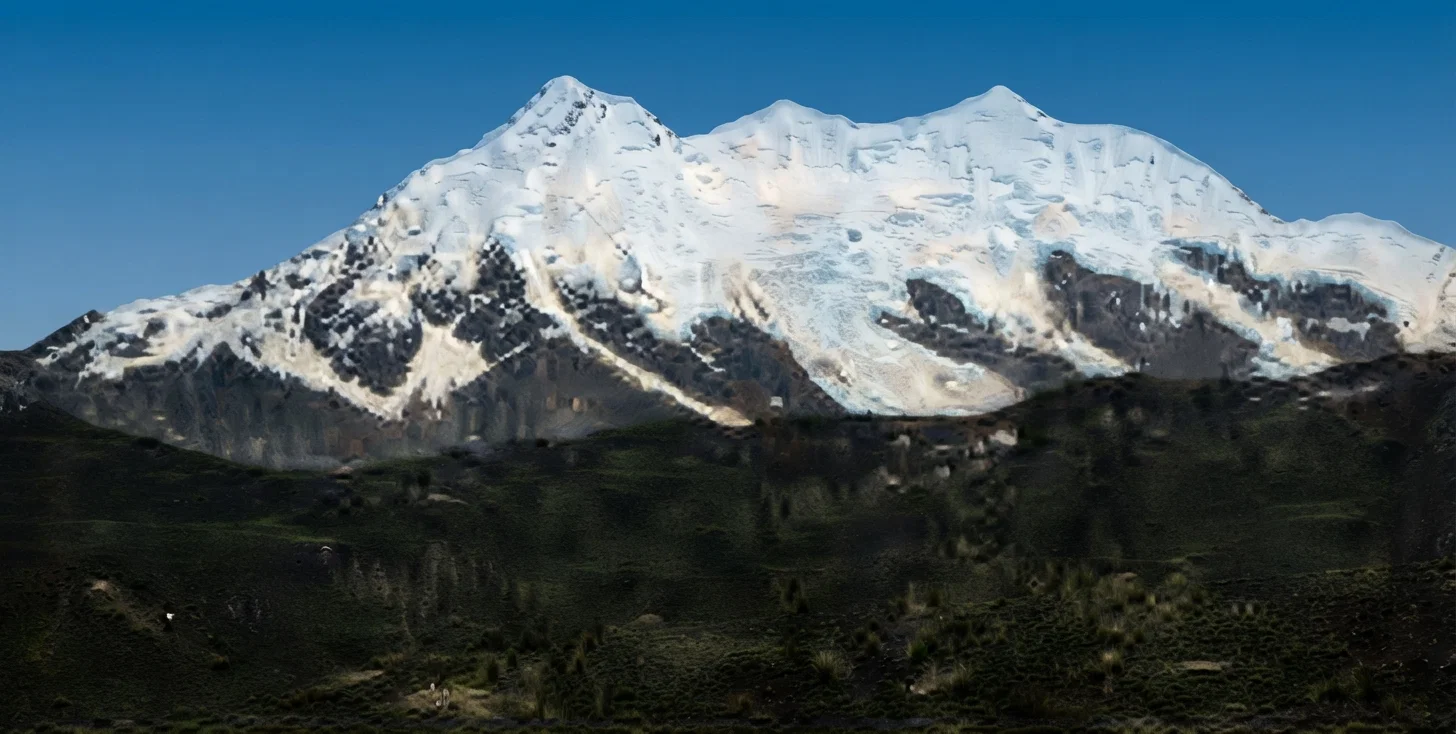
MOUNT ILLIMANI
MOUNT ILLIMANI
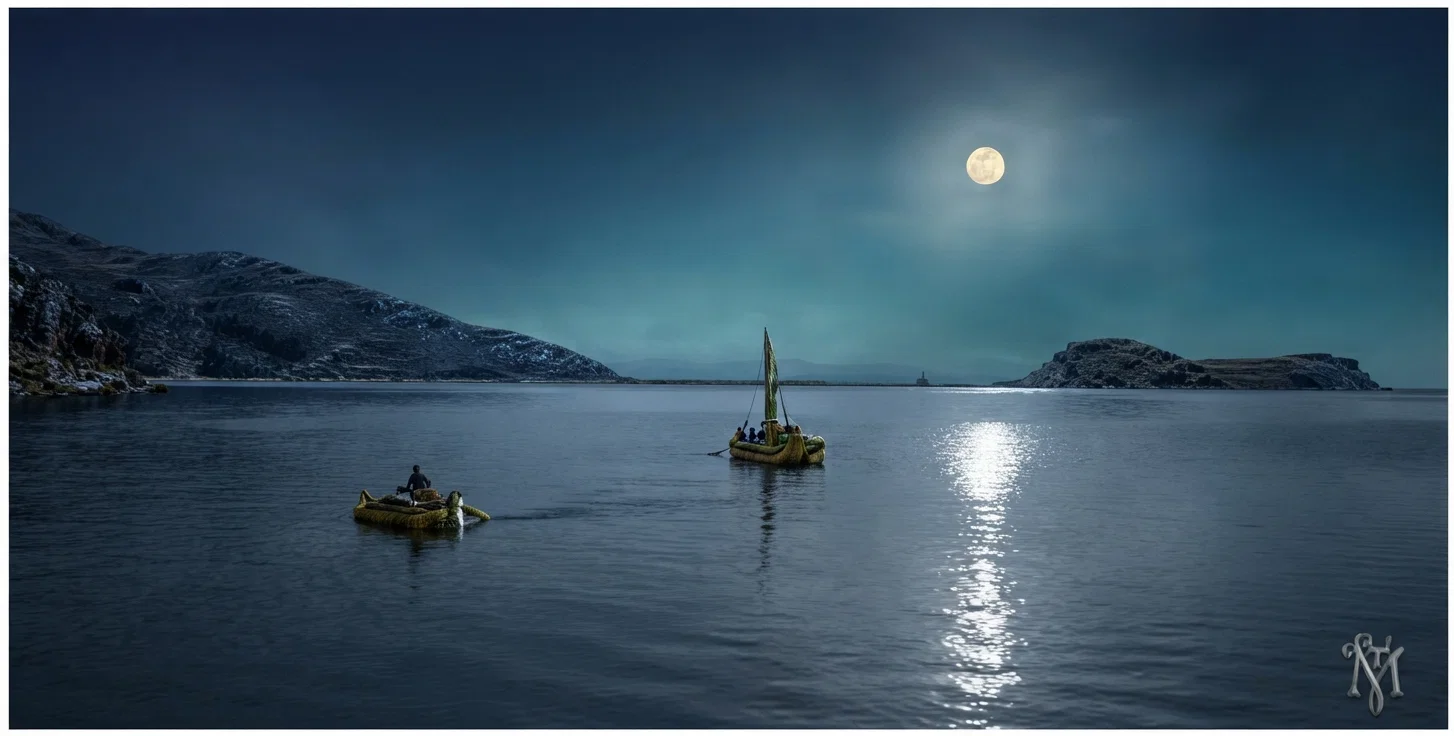
LAKE TITICACA
LAKE TITICACA

The Great South American World

ITS VASTNESS—SOME OF ITS RESOURCES, ITS GRANDEURS, AND ITS OPPORTUNITIES

OUR WORK IS GIRDLING IT

By H. H. Hall
THE bigness of South America is one of the first things that impresses you. Perhaps the first intimation you have of this great size is when you learn that the Amazon River and one of its tributaries are long enough and deep enough to permit boats of two thousand tons to ply almost three thousand miles inland to Pucalpa, Peru, whence it is less than five hundred miles by rail to the Pacific Ocean. The last of this stretch of railroad is being completed.

ONE REPUBLIC LARGER THAN OUR WHOLE COUNTRY

Then you find that Brazil alone is considerably larger than the United States of America, and are bewildered with the size and beauty of its capital city and harbor.
You see ships from every part of the globe crowding into the coffee exporting port of Santos; observe the wonderful dockage system at Buenos Aires, the largest city south of the equator; and look out upon the River Plata, which at this point is about twenty miles wide.

VAST HERDS OF CATTLE

You view the millions of cattle on many times a thousand hills in southern Brazil, Uruguay, and Argentine, and learn that Argentine alone has about ten per cent of all the cattle in the world.
You look with astonishment at the long rows of ships at Rosario, a night's ride up the river from Buenos Aires, all loading with wheat; and on consulting statistics, you find that Argentine is either the first or the second wheat exporting country in the world.
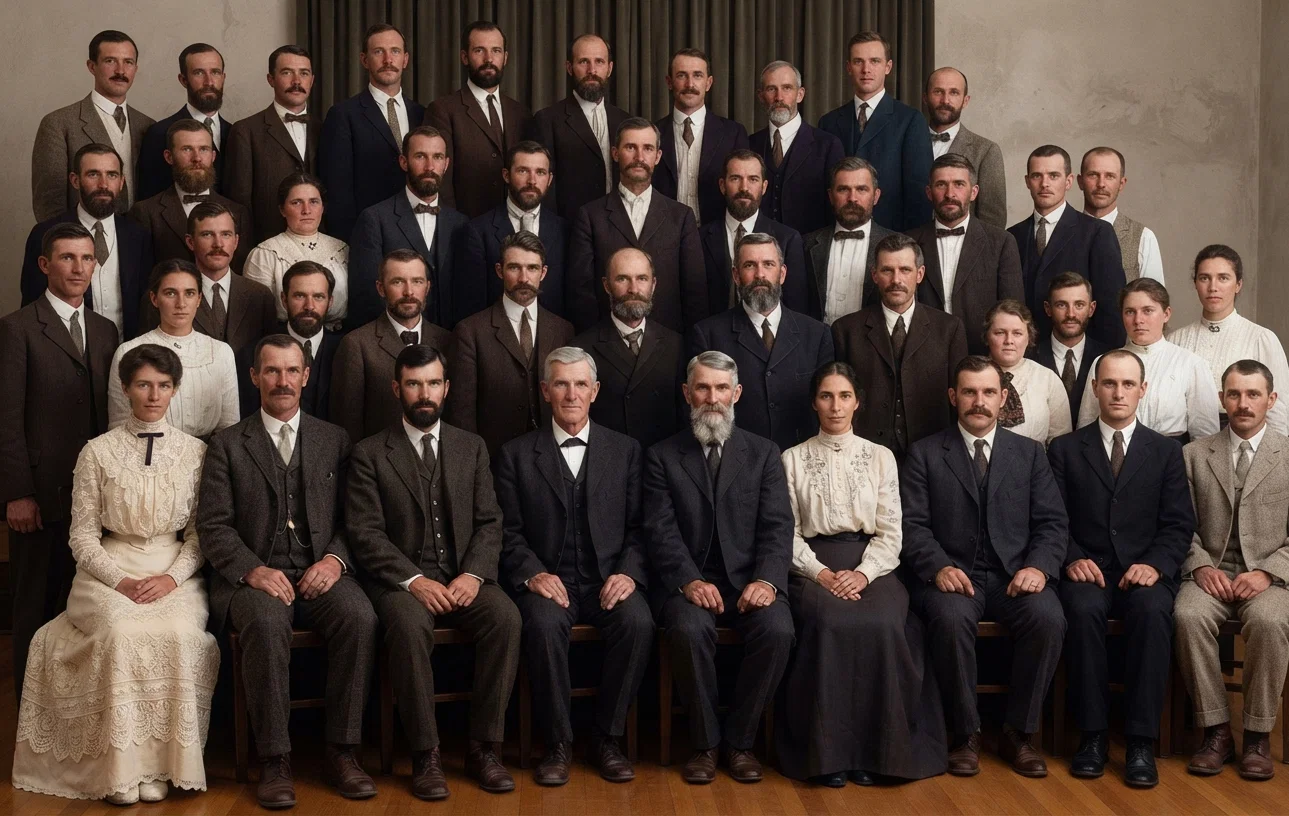
Workers in attendance at the South American Union Conference at Montevideo. From left to right, the names of those in the front row are as follows: Mrs. Inez Hoiland-Stevens, Dr. R. H. Habenicht, Elder E. L. Maxwell, Elder F. H. Westphal, Elder J. W. Westphal, Mrs. J. W. Westphal, Elder F. W. Spies, Elder F. L. Perry, H. H. Hall.
IN this article, Mr. Hall gives us a very brief general view of what he has seen in South America. He takes us in a quick trip across plain and up mountainside. We cross the famous Titicaca. We sail along the west coast, and view the vast mountain ranges of our neighbor continent.
In a few paragraphs at the close, he tells of our union conference meeting at Montevideo, Uruguay. Next week he will give us a glimpse of our publishing work, and the schools and sanitariums our workers are establishing to assist them in their evangelistic efforts. Editor.

TWO HUNDRED MILES WITHOUT A CURVE

You take the transandine train for the Pacific coast, and for almost two hundred miles find the track without a single curve. In quick succession follow mountains, zig-zag, switchback, and other engineering feats such as you have never seen before. Then you are hurled into that tunnel which has been more than twenty-five years in building, and which pierces the very backbone of the old Andes at an elevation of two miles above the sea.

FRUIT IN ABUNDANCE

Perhaps you ride for a day by rail through the fertile irrigated valley south of Santiago, which is appropriately called the California of South America. Here fruit of almost every kind thrives. The black raspberry vine covers the fences for miles, and in some places becomes a real pest, its fruit in many instances remaining unpicked.
Land with us at Antofagasta, which claims the whole Pacific Ocean as its harbor, as it has no other shelter except the towering mountains immediately back of it; where it never rains, and where the water for its forty thousand inhabitants is piped from many miles in the interior.

NITRATE MINES

Take the narrow gage railroad, and climb the mountains for nearly a thousand miles to La Paz. As the night comes on, you see here and there groups of blazing electric lights on the apparently barren mountainsides, marking the sites of numerous nitrate mines, from which this unequaled fertilizer is sent down to the waiting ships at Antofagasta and Iquique. From the exporttax of less than half a cent a pound, Chile received, during the years 1880 to 1904, the stupendous sum of $280,000,000.

VAST BORAX BEDS

The next day, you see what resembles a series of lakes, but which proves to be borax beds of a very high grade. A few hours later, you skirt the base of a volcano, which is still smoking leisurely away, like a reclining giant; and you learn that sulphur ninety-six per cent pure is taken from a mine near its crater.

THE BUSY INDIANS

The next day, as your breath becomes more labored, and some of your companions sit down to wash their faces, you see Indians by the thousands, all attired in red blankets and shawls. With the exception of those that greet you at the stations, they all seem busy. Even the women with babies strapped on their backs are spinning, knitting, or herding the sheep and llamas. Many of the men are plowing with queer looking crooked sticks made fast to a pole, that in turn being tied to the so-called yoke, which is another stick made fast to the horns—not the shoulders—of the ox team.

LA PAZ IN THE DIZZY HEIGHTS

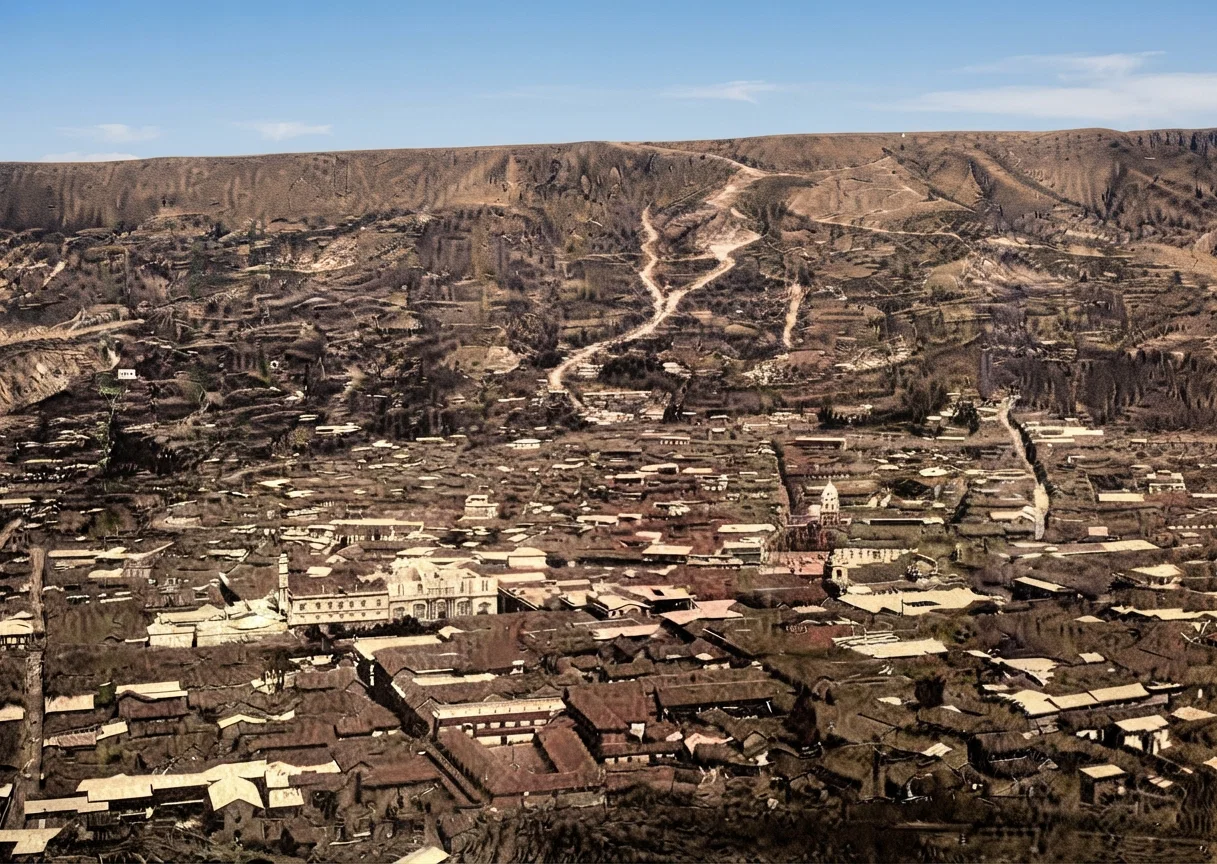
On the afternoon of the second day, as you mount to the great table-land of Bolivia, three miles high, and begin to think you have surely reached the roof of the world, the train swerves, and you see the snow-covered Illimani rising almost two miles higher yet. Its bigness no less than its beauty holds you spellbound, and you wonder, "What next?" You have not long to wait. Your train suddenly stops at the brink of a great crevice in the earth, miles wide and a third of a mile deep, in the bottom of which lies the ancient and truly wonderful city of La Paz, with its red-tiled roofs, its old cathedrals—for it was founded in 1548—its fifty thousand brightly attired Indians, and its white and mixed population of thirty thousand more.

BEAUTIFUL TITICACA

A few days later, you steam all night across the fresh water Lake Titicaca in a boat of a thousand tons, every piece of which was brought up, on mule back, over mountain trails, from the ocean, five hundred or more miles away; and you do not wonder that it took eight years to accomplish the feat. You have already seen Pikes Peak and Shasta's summit, and are startled to learn that this great moon-lighted lake among the clouds, one hundred fifty miles long and from twenty to fifty miles wide, is only two thousand feet lower than their highest points.
After landing at Puno and taking the train, you ride for a whole day in a semi-dazed condition. When you finally reach Mollendo and take the steamer north, you begin to remember the innumerable herds of beautiful llamas you saw; the great Indian villages; the mountain summit you crossed at 14,666 feet, and its effects upon at least some of the passengers; the frightful chasms down which your train crawled; the marvelous sand dunes, which maintain the same proportions, though traveling from ten to a hundred feet each year; and the sensations experienced while taking a rowboat in a surf-washed landing, and clambering up the sides of an ocean liner.
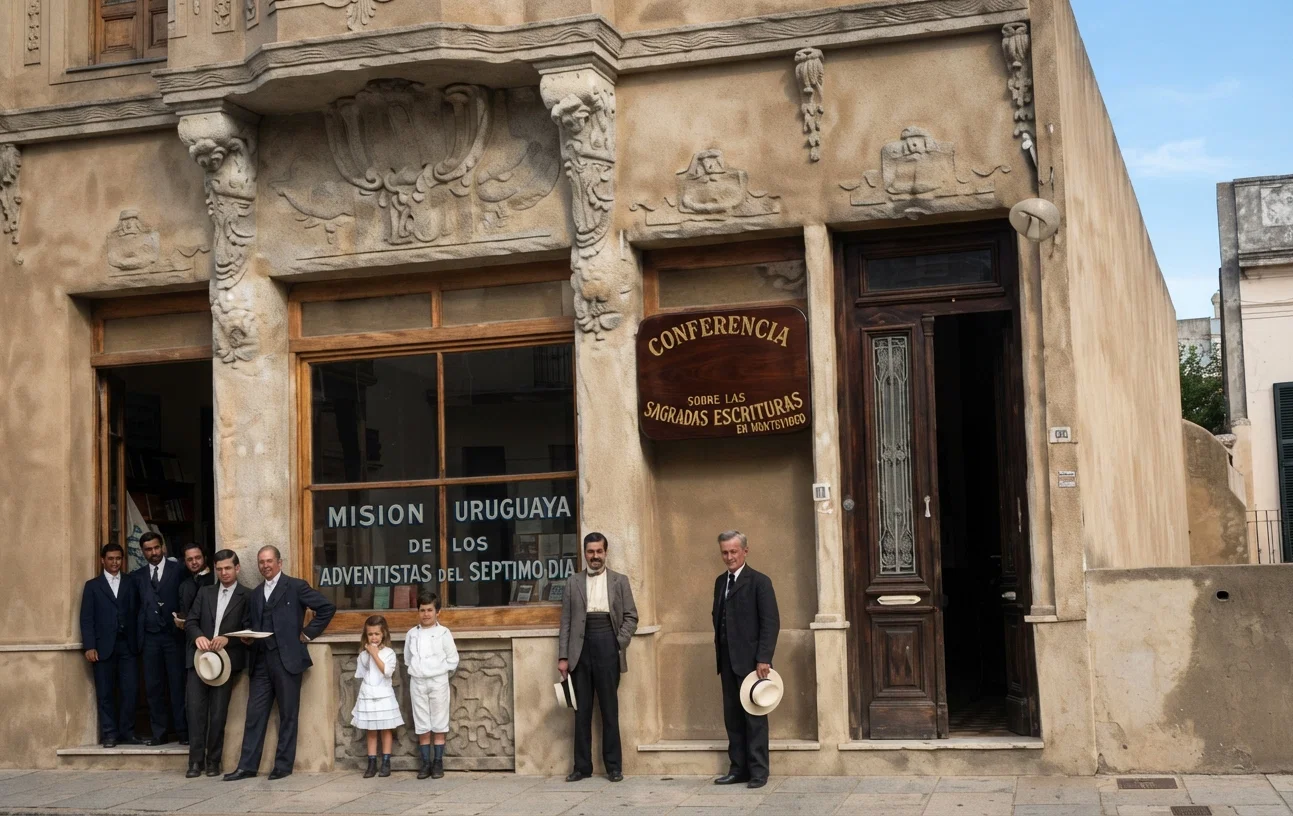
Book depository, chapel, and mission home in Montevideo, Uruguay, where the South American Union Conference was held. This building, like all the better class of structural work on the east coast, is of brick, covered with heavy cement plaster, and resembles solid concrete. It cost about $7,000, and is the best city building we have in South America.
Then as you sail day after day up the west coast, and see nothing but mountains, barren and brown, but awe-inspiring because of their very vastness and majestic isolation, rising tier upon tier until lost in the cloudy distance, you say, "Truly South America is a big country, and wonderful as it is big."

THE MEETING AT MONTEVIDEO

The union conference was just opening when I arrived in Montevideo, Uruguay, which is a city of about half a million, situated at the mouth of the River Plata. Nearly a hundred were in attendance; and while most of the services were in Spanish, yet I could detect the same spirit of enthusiasm and earnestness that seems to be manifest wherever our workers come together and relate the evidences of God's leadership and help in making known the nearness of His coming.
The reports showed the membership to stand at 1,924, which is a gain of 682 in four years; and that the tithe and mission offerings amounted to $27,336.89 for the past year. This does not include Brazil.
Because of the arrival of additional workers, more aggressive plans were laid for the future.
Elder C. E. Knight and wife, of California, who have been working in Buenos Airesfor some years, were asked to take the mountain station in Quito, Ecuador.
J. T. Thompson, who with his wife had just arrived from California, was appointed secretary-treasurer and field agent of Uruguay, with headquarters at Montevideo.
Brother Stahl, who has had such success with the Indian work, was relieved of the superintendency of the Bolivian field, to give his exclusive time to the work among that people, with headquarters at Puno, Peru.
Elder Pohle, of Peru, will take his place in Bolivia.
Brother and Sister A. G. Nelson, recently from Loma Linda, California, went to the Magellan Strait country, with headquarters at Punta Arenas, where they will engage in the distribution of gospel literature, which is such an important work in this field.
"YOUR TRAIN SUDDENLY STOPS AT THE BRINK OF A GREAT CREVICE, MILES WIDE AND A THIRD OF A MILE DEEP, IN THE BOTTOM OF WHICH LIES THE ANCIENT AND TRULY WONDERFUL CITY OF LA PAZ"
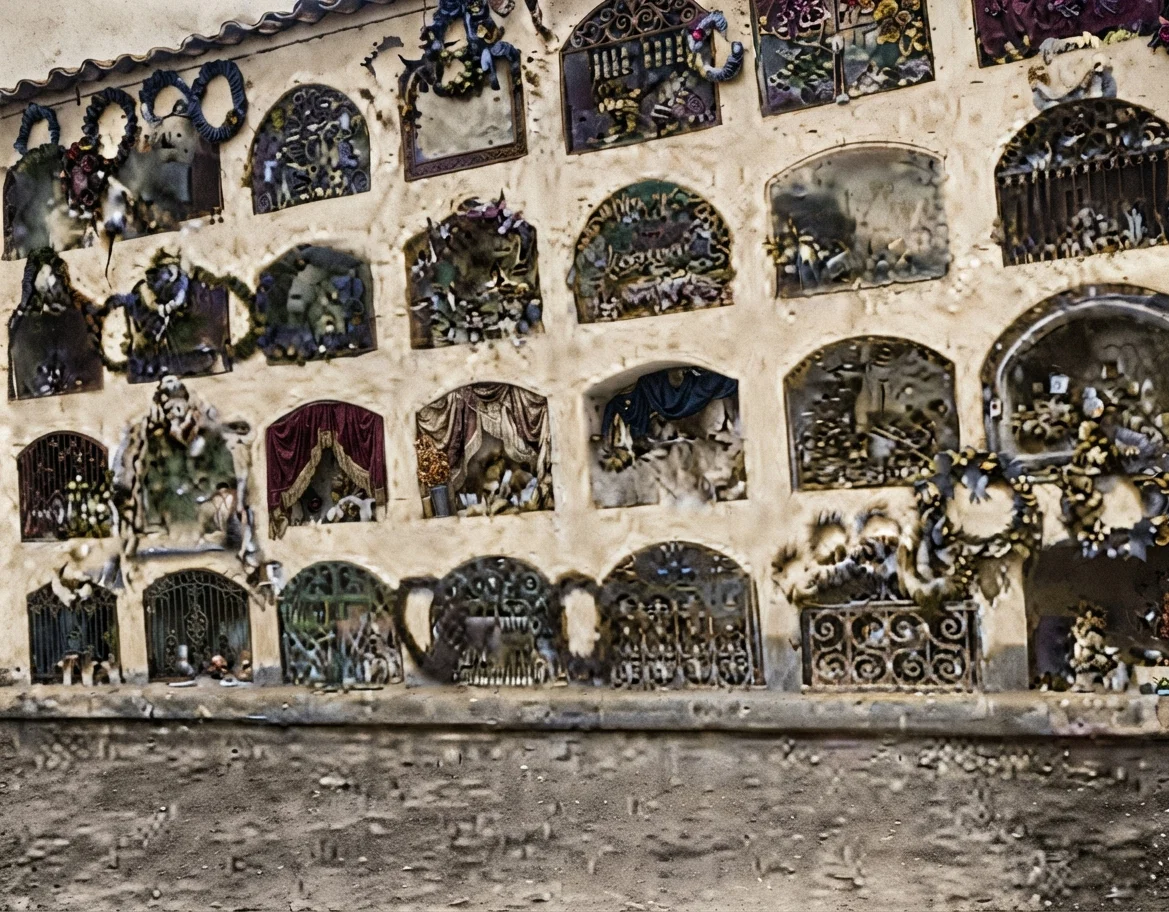
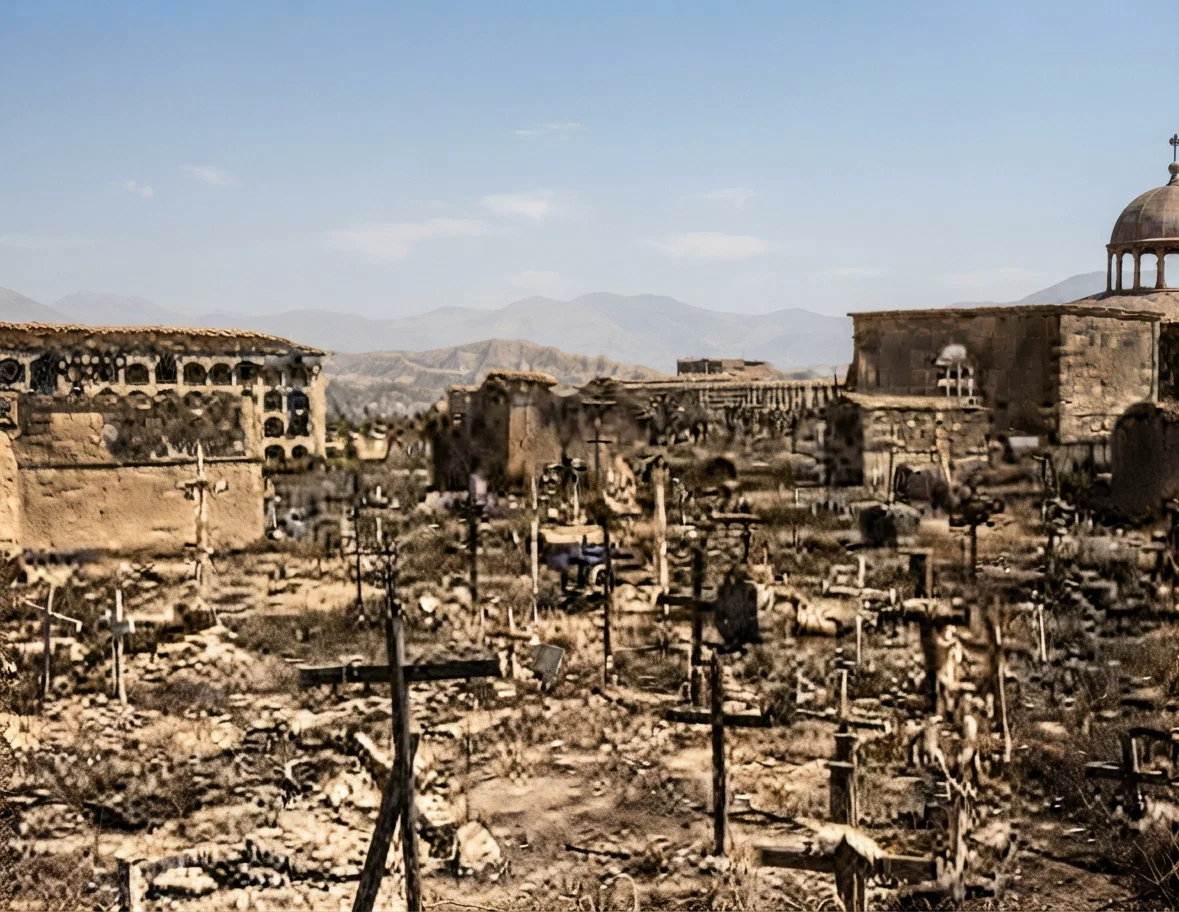
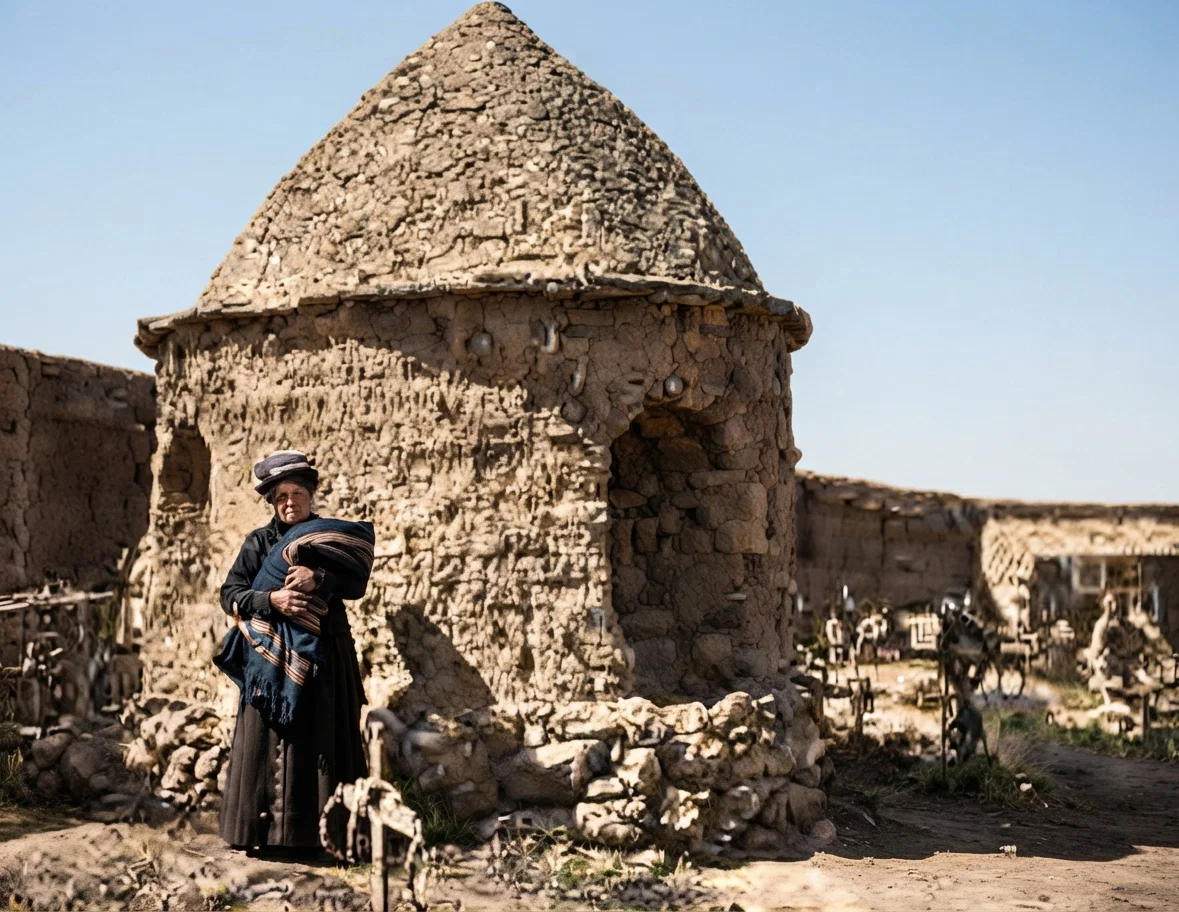
A closer view of these peculiar burial vaults, in which bodies are deposited for a specified time.
Section of cemetery in La Paz, Bolivia, with burial vaults in the distance. Photograph by W. O. Cluff.
Enrique Mangold goes to Ecuador, to engage in a similar work.
Brother H. O. Maxson was asked to take up treasury work in the River Plata academy and sanitarium; and Arthur Westphal takes his place as secretary-treasurer of the Peruvian Tract Society and Conference.
The republics of Bolivia, Peru, and Ecuador were organized into a union mission field, with Elder E. L. Maxwell, formerly from Oklahoma, and recently from Louisiana, as superintendent.
Elder J. W. Westphal was reelected president of the union, and G. E. Hartman secretary-treasurer and auditor.
After the expiration of the period for which a vault is rented, the bones are taken out and placed in this charnel-house.

Diseases in Soiled Dishes

The Lurking Germ May Spread Tuberculosis, Diphtheria, Tonsillitis, and Similar Ailments — Dishes May Be Readily Cleansed Scientifically

By MARY ALICE HARE LOPER, M. S.
THERE may still be a few people in the world who scoff at the idea that any disease is contagious. But accurate scientific experiments, as well as long years of careful observation, prove conclusively that many diseases are contracted as the direct result of coming in contact with certain specific germs which produce those diseases. Surely there is no reason why one should doubt this statement in regard to diphtheria, scarlet fever, smallpox, etc.

IN THE DAYS OF IGNORANCE

The time was when tuberculosis was not regarded as a contagious or infectious disease, but was often considered hereditary, the children of certain families dying of the disease one after another, perhaps as they reached maturity.
Fumigation and other sanitary precautions, even after a death from a contagious disease, were practically unknown to the general public until within recent years. The germs were allowed to live on; and as a result, they attacked new victims. But the world has come to recognize the fact that when a person has been stricken with a contagious disease, certain very effectual precautions may be taken to safeguard others from suffering a like infection.

A COMMON MENACE

As a result of this awakening, we see the ban put upon the public towel, the public free drinking cup, etc. May the day hasten when the public pay drinking cup, fork, spoon, and all other tableware of hotels, cafeterias, ice-cream parlors — every public eating and drinking place — shall cease to be a menace to life and health as they are today, while the white plague, and the loathsome leprosy of vice, and the long list of other contagious diseases, are abroad in every direction.
Even in the home, infected dishes may be a common source of disease. It is all right to wash dishes by rule — first the glassware, then the silverware, then the china, etc., ad finem. But simple routine in the ordinary way is not sufficient always to protect health. Dishes may sparkle in the china closet, and yet be infected with deadly germs.

DON'T LET IT SPREAD

When a member of the family has a slightly sore throat, an attack of la grippe, or even what may appear to be but a common cold, let precautions be taken, so that no one may suffer because of neglect, should the case prove to be tonsillitis, diphtheria, scarlet fever, or any other form of contagion.
Dishes used by the patient should not be used by others, nor be placed with other dishes, until they are disinfected. Food left by patients should be burned. Sometimes a cold, influenza, or some similar ailment, will eventually affect an entire family, when simple precautions would have limited the trouble to the first patient.
When even a suspicion exists that dishes are contaminated with disease germs, they should be placed in a suitable receptacle and boiled for twenty minutes before they are washed. Glassware may be boiled by placing it in cool water and allowing it to heat gradually.

WHEN THE STRANGER COMES

Dishes used by strangers should be thoroughly boiled, without exception, or cleansed with a disinfectant solution, before they are washed. One never knows to what disease he may be subjected by using dishes that have been used by those of whose physical condition he knows little or nothing. And here comes in the hotel, public eating-house, and boarding-school problem in its enormity.

PET ANIMALS AND THE DISHES

If it ever was safe to permit pet animals to eat or drink from family dishes, surely that time has gone by, unless such dishes are put through a thorough course of disinfection before they are washed and reinstated in the family cupboard. Boiling for twenty minutes will be effectual. Persons who ignore this necessary precaution do so at the risk, and it may be at the expense, of life itself.

APPEARANCE MAY DECEIVE

Many seemingly think that appearance is all there is to dish-washing. But one can not tell, on seeing a dish that appears clean, whether that appearance is deceitful or genuine. Let us observe a little, and see if we do not discover dish-washers who do not hesitate to use the same cloth to wash the glassware, the silverware, the china, the cooking utensils, and the kitchen sink.
They would not think it proper to reverse the process, beginning with the sink. O, no!
But why not, when the same cloth goes through the same process day after day, perhaps, until it is worn out? "But it is always washed in soap and water before it is hung up to dry." We hope so; but if we only knew that it was also subjected sufficiently to the blessed boiling process, our relief would be complete; for if the soap used has no more disinfecting properties than soap usually has, disease germs from the sink may still survive, and get to work when least expected, while no one may be able to explain the mystery of their origin.

A GOOD PLAN TO FOLLOW

A good rule to establish while the members of the household are seemingly well, is, to wash dishes with a clean cloth, using plenty of soap and warm water, and then rinse them in boiling water and wipe with a clean towel. This may prevent many casesof illness that otherwise would develop from the obscure cause of infected dishes.
"O, but," says one, "it is so much trouble to be so careful!" It may seem so to one who has cultivated the habit of being careless in regard to household sanitation; but to enjoy health and take precautions against disease, is infinitely better than to suffer or to cause some one else to suffer because of neglect. Besides, the expense of one case of illness may far exceed all the financial outlay for preventive measures for an indefinite length of time.

NOT THE ONLY PRECAUTION

The object of dish-washing should be to render the dishes fit for use, without which the most orderly and elaborate process is a failure. Good dish-washing is not the only precaution to be taken to prevent disease from crossing the family threshold, but it is one which the guardian of the home can not afford to overlook. Surely in the dish-washing line, "whatever is worth doing, is worth doing well."

Wine as a Medicine

Does the Bible Warrant the Use of Fermented Wine in Sickness Even?
By MRS. S. N. HASKELL
A HOST of men and women have filled drunkards’ graves as the result of physicians’ prescribing fermented liquor in time of sickness. “Take a little wine each day until you grow stronger,” has been the counsel of the physicians; and the patients never again escape from the clutch of the demon alcohol.

“USE A LITTLE WINE”

When individuals have conscientiously refused to drink wine, 1 Tim. 5:23 has been quoted in an attempt to show that God approved of using fermented wine in times of sickness. “Use a little wine for thy stomach’s sake and thine often infirmities,” was the counsel given Timothy by the apostle Paul.
In Rom. 14:21 Paul says, “It is good neither to eat flesh, nor to drink wine, nor anything whereby thy brother stumbleth, or is offended, or is made weak.” It is plain that fermented wine is here condemned, and we can not think that Paul would recommend it to Timothy.
The custom of bottling unfermented wine was so common in New Testament times, that the Saviour used the practise to illustrate a spiritual truth. Mark 2:22. Timothy, reared by a godly mother, was familiar with unfermented wine, and understood its value. From a child he had been taught the Holy Scriptures (2 Tim. 3:15), which condemn the use of fermented wine; and therefore he had no difficulty in understanding Paul’s advice.

“GIVE STRONG DRINK” TO THE PERISHING

“Give strong drink unto him that is ready to perish” (Prov. 31:6), is often quoted by those using fermented liquors in time of sickness. Dr. Clarke, in commenting upon this verse, says: “Inebriating drinks were mercifully given to condemned criminals to render them less sensible of the torture they endured in dying. This is what was offered to our Lord; but He refused it.” Matt. 27:34.

DID NOT WANT DYING BREATH TAINTED

A few years ago, while laboring in South Africa, I became acquainted with an earnest Christian missionary, who, although a temperance worker, had been in the habit of using fermented wine in time of sickness. She related to me the following incident which explained why she became a teetotaler in the fullest sense: Aunt Mary, an earnest Christian colored woman, a worker in their mission, was stricken with a deadly fever. The missionary called upon her and found her very weak. Thinking a little wine would strengthen her, upon her return home she sent a bottle of wine to Aunt Mary.
To her astonishment, when she called next day, the wine bottle was unopened. She asked, “Why did you not drink the wine I sent you?” She told me she could never forget the earnest look on the dear old colored face as the sufferer looked up at her and replied: “Why, missus, I could not drink that wine. I may die any hour, and I could never meet my Jesus with the scent of wine upon my breath.” My friend said she felt rebuked, and from that day never used, nor advocated the use of, fermented wine in time of sickness.
When the life record is closing, and you are passing through the valley of death, comforted and sustained by the rod and staff of the great Shepherd, how can you partake of that which is only a mocker and a deceiver?

The Rich Man and Lazarus

By Mrs. E. G. White
A clear, simple exposition of the noted parable of Dives and Lazarus, given in Luke 16:19-31. Reading it will help you. Price $1.00 per hundred; single copies, 2 cents.
Pacific Press Publishing Assn., Mountain View, Cal.

FAST TIME

To and From DENVER, OMAHA, KANSAS CITY, CHICAGO, AND THE EAST

PACIFIC LIMITED

From San Francisco 10:20 a.m.

SAN FRANCISCO LIMITED

From San Francisco 5:00 p.m.

OVERLAND LIMITED

DE LUXE From San Francisco 4:00 p.m.

TO CHICAGO IN LESS THAN THREE DAYS

Protected Throughout with Automatic Electric Block Signals

RAIL AND STEAMSHIP

TICKETS SOLD TO ALL POINTS
For information write Mr. C. S. Fee, Passenger Traffic Manager S. P. Co., San Francisco, or any agent.

SOUTHERN PACIFIC

Graduation Day Gifts

Books are divided into two classes, said Ruskin, “books of the hour, and books for eternity.” Among our beautiful gift books that furnish lasting inspiration and constant spiritual help for young people are the following:

Steps to Christ

The thirteen chapters of this favorite little volume are truly “steps” which lead to a close companionship with Him who “has linked Himself with the children of men by ties that are never to be broken.” These chapters are:
“God’s Love for Man,” “The Sinner’s Need of Christ,” “Repentance,” “Confession,” “Consecration,” “Faith and Acceptance,” “The Test of Discipleship,” “Growing Up into Christ,” “The Work and the Life,” “A Knowledge of God,” “The Privilege of Prayer,” “What to Do with Doubt,” and “Rejoicing in the Lord.”
Beautiful cloth, gilt edge, presentation edition, $1.00. Published in 23 different languages.

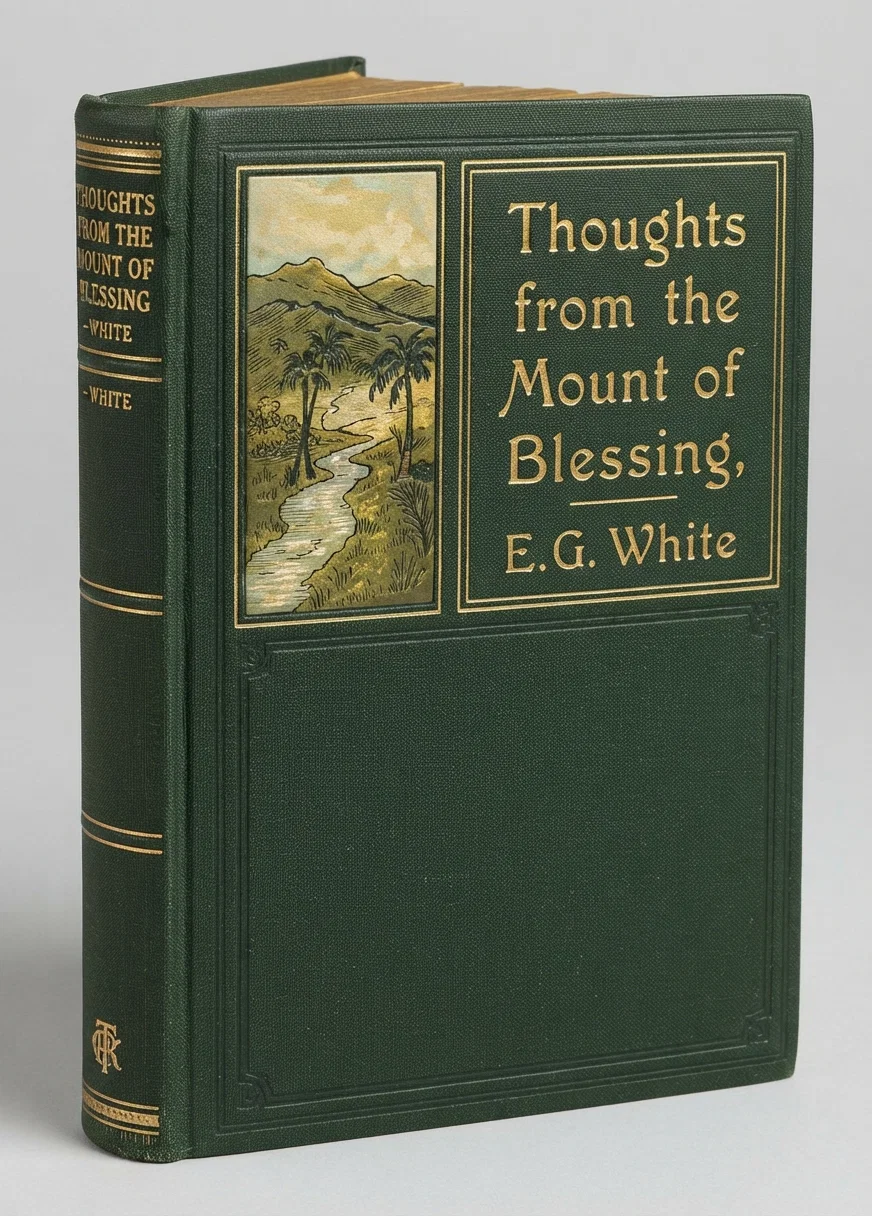
Thoughts from the Mount of Blessing

With this beautiful little work, the reader in imagination is taken back to the scene of the mountain side, amid the throng who listened eagerly to Christ’s wonderful sermon commonly known as “The Beatitudes.” Point by point the wisdom there uttered in simple parable form is presented, and practical spiritual lessons are suggested. Its general chapters are: “On the Mountain Side,” “The Beatitudes,” “The Spirituality of the Law,” “The True Motive in Service,” “The Lord’s Prayer,” and “Not Judging but Doing.” Each of these chapters contains thoughts to brighten the way, and lead the reader to a deeper realization of the blessings of real Christian service. Fully illustrated, rich cloth binding, price 75 cents.
The Art of the Year, Photo.

The Advance Guard of Missions

The stories of the Mayhews, the Wesleys, Christian Frederick Schwartz, William Carey, the Judsons, and scores of other faithful men and women who pioneered in mission work, as given here, form one of the most thrilling missionary books ever published. It is more than a book of biographical sketches. It pulsates with the spirit that led these men and women out into the needy fields beyond, and kept them there in self-sacrificing work. Each sketch is illustrated, and is filled with incidents that instruct and inspire. 27 chapters. 347 pages. Handsome cloth binding, marbled edges, price $1.50.
Prices 10% higher in Canada.
Address your tract society, or
PACIFIC PRESS PUBLISHING ASSN. MOUNTAIN VIEW, CALIFORNIA Portland, Oregon Kansas City, Mo. Calgary, Alberta, Canada

Bound Volumes

Signs of the Times

can still be secured as follows:
11 Manila 1907 at $1.25 1 Manila 1910 at 1.25 14 Cloth 1911 at 1.75 5 Cloth 1912 at 2.00 8 Cloth 1913 at 2.25
These prices are post-paid
Those desiring the "Signs" in this convenient form for reference or loaning, should send remittance at once, to

SIGNS OF THE TIMES

Mountain View - - California
Continue reading: Listen . . . You Rich Men