Signs of the Times, Vol. 41, No. 20.

THE FUTURE UNROLLED

Signs of the Times

May 26, 1914

Pacific Press Publishing Association · Mountain View, California · May 26, 1914

THE FUTURE UNROLLED

THIS article tells in a vivid style the story of the giving of the book of Revelation to the exiled prophet on the lonely isle of Patmos. Many people consider the book of Revelation a volume of mystery; but this article shows that the book may be understood. It is what its name implies, a revelation, and not an enigma. It is bringing us to the climax of what it foretells. And the same spirit that inspired John to write it, will help us to understand it. EDITOR.

THE FUTURE UNROLLED

John Exiled from the Needy Church—Wrapped in Prophetic Vision, He Saw All the Future of This World The Book of Revelation May Be Understood By Mrs. E. G. White
[[FIGURE]] IN the days of the apostles, the Christian believers were filled with earnestness and enthusiasm. So untiringly did they labor for their Master that in a comparatively short time, notwithstanding fierce opposition, the gospel of the kingdom was sounded to all the inhabited parts of the earth.
The zeal manifested at this time by the followers of Jesus has been recorded by the pen of inspiration for the encouragement of believers in every age. Of the church at Ephesus, which the Lord Jesus used as a symbol of the entire Christian church in the apostolic age, the Faithful and True Witness declared: "I know thy works, and thy labor, and thy patience, and how thou canst not bear them which are evil: and thou hast tried them which say they are apostles, and are not, and hast found them liars: and hast borne, and hast patience, and for My name’s sake hast labored, and hast not fainted."

FERVENT AND SUCCESSFUL WORK

The members of the church were united in sentiment and action. Love for Christ was the golden chain that bound them together. They followed on to know the Lord more and still more perfectly, and in their lives were revealed the joy and peace of Christ. They visited the fatherless and widows in their affliction, and kept themselves unspotted from the world, realizing that a failure to do this would be a contradiction of their profession and a denial of their Redeemer.
In every city the work was carried forward. Souls were converted, who in their turn felt that they must tell of the inestimable treasure they had received. They could not rest till the light which had illumined their minds was shining upon others. Multitudes of unbelievers were made acquainted with the reasons of the Christian’s hope. Warm, inspired personal appeals were made to the erring, to the outcast, and to those who, while professing to know the truth, were lovers of pleasure more than lovers of God.

A CHANGE COMES OVER THEM

But after a time the zeal of the believers began to wane, and their love for God and for one another grew less. Coldness crept into the church. Some forgot the wonderful manner in which they had received the truth. One by one the old standard-bearers fell at their post. Some of the younger workers, who might have shared the burdens of these pioneers, and thus have been prepared for wise leadership, had become weary of oft-repeated truths. In their desire for something novel and startling, they attempted to introduce new phases of doctrine, more pleasing to many minds, but not in harmony with the fundamental principles of the gospel. In their self-confidence and spiritual blindness they failed to discern that these sophistries would cause many to question the experiences of the past, and would thus lead to confusion and unbelief.
As these false doctrines were urged, differences sprang up, and the eyes of many were turned from beholding Jesus as the author and finisher of their faith. The discussion of unimportant points of doctrine, and the contemplation of pleasing fables of man’s invention, occupied time that should have been spent in proclaiming the gospel. The masses that might have been convicted and converted by a faithful presentation of the truth, were left unwarned. Piety was rapidly waning, and Satan seemed to gain the ascendancy over those who claimed to be followers of Christ.

JOHN BANISHED AT THIS CRITICAL TIME

It was at this critical time in the history of the church that John was sentenced to banishment. Never had his voice been needed by the church as now. Nearly all his former associates in the ministry had suffered martyrdom. The remnant of believers was facing fierce opposition. To all outward appearance the day was not far distant when the enemies of the church of Christ would triumph.
But the Lord’s hand was moving unseen in the darkness. In the providence of God, John was placedwhere Christ could give him a wonderful revelation of Himself and of divine truth for the enlightenment of the churches.

A MESSAGE, AND ON THE SABBATH DAY

In exiling John, the enemies of truth had hoped to silence forever the voice of God's faithful witness; but on Patmos the disciple received a message, the influence of which was to continue to strengthen the church till the end of time. Though not released from the responsibility of their wrong act, those who banished John became instruments in the hands of God to carry out Heaven's purpose; and the very effort to extinguish the light, placed the truth in bold relief.
It was on the Sabbath that the Lord of glory appeared to the exiled apostle. The Sabbath was as sacredly observed by John on Patmos as when he was preaching to the people in the towns and cities of Judea. He claimed as his own the precious promises that had been given regarding that day. "I was in the Spirit on the Lord's day," John writes, "and heard behind me a great voice, as of a trumpet, saying, I am Alpha and Omega, the first and the last. . . . And I turned to see the voice that spake with me. And being turned, I saw seven golden candlesticks; and in the midst of the seven candlesticks one like unto the Son of man."

IN THE PRESENCE OF THE GLORIFIED

John was strengthened to live in the presence of his glorified Lord. Then before his wondering vision were opened the glories of heaven. He was permitted to see the throne of God, and looking beyond the conflicts of earth, to behold the white-robed throng of the redeemed. He heard the music of the heavenly angels, and the triumphant songs of those who had overcome by the blood of the Lamb and the word of their testimony.
In the revelation given to him, there was unfolded scene after scene of thrilling interest in the experience of the people of God, and the history of the church was foretold to the very close of time. In figures and symbols, subjects of vast importance were presented to John, which he was to record, that the people of God living in his age and in future ages might have an intelligent understanding of the perils and conflicts before them.

THE REVELATION TO BE UNDERSTOOD

This revelation was given for the guidance and comfort of the church throughout the Christian dispensation. Yet religious teachers have declared that it is a sealed book and its secrets can not be explained. Therefore many have turned from the prophetic record, refusing to devote time and study to its mysteries.
But God does not wish His people to regard the book thus. It is "the revelation of Jesus Christ, which God gave unto Him, to show unto His servants things which must shortly come to pass." "Blessed is he that readeth," the Lord declares, "and they that hear the words of this prophecy, and keep those things which are written therein: for the time is at hand."
"I testify unto every man that heareth the words of the prophecy of this book, If any man shall add unto these things, God shall add unto him the plagues that are written in this book: and if any man shall take away from the words of the book of this prophecy, God shall take away his part out of the book of life, and out of the holy city, and from the things which are written in this book. He which testifies these things saith, Surely I come quickly."

THE DEEP THINGS OF GOD PORTRAYED

In the Revelation are portrayed the deep things of God. The very name given to its inspired pages, "the Revelation," contradicts the statement that this is a sealed book. A revelation is something revealed. The Lord Himself revealed to His servant the mysteries contained in this book, and He designs that they shall be open to the study of all. Its truths are addressed to those living in the last days of this earth's history, as well as to those living in the days of John. Some of the scenes depicted in this prophecy are in the past, some are now taking place, some bring to view the close of the great conflict between the powers of darkness and the Prince of heaven, and some reveal the triumphs and joys of the redeemed in the earth made new.

WE MAY UNDERSTAND IT

Let none think, because they can not explain the meaning of every symbol in the Revelation, that it is useless for them to search this book in an effort to know the meaning of the truth it contains. The One who revealed these mysteries to John will give to the diligent searcher for truth a foretaste of heavenly things. Those whose hearts are open to the reception of truth will be enabled to understand its teachings, and will be granted the blessing promised to those who "hear the words of this prophecy, and keep those things which are written therein."
“THEY SHALL NOT HURT NOR DESTROY IN ALL MY HOLY MOUNTAIN”

The Rest That Remains

Ancient Israel as a Nation Did Not Receive It—Individuals Had It Then, and May Have It Now

By WILLIAM COVERT
THERE is some discussion about the rest that is considered in Heb. 4:1-11. But why should a Christian stumble at its meaning? It surely refers to the settled experience of the one who abides by faith in Christ.
The Hebrews as a body of people did not obtain this rest by their deliverance from Egyptian bondage, because their souls were held under control by a power stronger than the rulers in Egypt who enslaved their bodies. Satan, through his subtle cunning, held their minds in captivity, even while they followed Moses over the Red Sea to escape from the awful thralldom of Pharaoh and his people. Therefore crossing over the Red Sea did not give them rest, because the real foe that had enslaved them abode still in their souls while they journeyed from the land where Pharaoh had compelled them to make brick without straw.
They had been pleading for physical respite, hence Moses came and delivered them from the lash of their cruel taskmasters; and yet they were not made free from the awful power that made Egypt so bad. Therefore when they followed Moses, whom God sent to lead them out of bondage, they murmured as they went, and showed their displeasure at what had been done, all the days that Moses lived. We dare not say that they then had rest.
And when their children followed Joshua into the land of Canaan, they, in a large measure, failed to comprehend what God was desiring to do for them. And the chronicle tells of a selfish, restless, and dissatisfied people. Not during all the decades of their judges and the centuries of their kings can be found any time of united, peaceful, satisfied "rest" narrated of that people.
Indeed, the rest described in the Hebrew letter should not be considered as a national, a dispensational, nor yet as a local affair. It can not be found by crossing over a line, nor by trusting in things that we have done. It is enjoyed only by the individual who fully believes the gospel of Christ and surrenders his whole being into the hands of God.
It is the rest that comes to the believer who accepts Christ as his Saviour, and who commits his entire interest to Him forever. To such Christ says: "I will give you rest. . . . Ye shall find rest unto your souls." Matt. 11:28-30.
In giving a description of this rest and its results, the prophet said, "The work of righteousness shall be peace; and the effect of righteousness quietness and assurance forever." Isa. 32:17.
This is the rest that the prophets have foretold. It is the legacy given to the children of God, which is of more value than all theperishable commodities that are listed in the vast estates of worldly rich and great men. The Saviour gives it, and the power that upholds all things preserves it. This rest has in it the true riches, which man can not give, nor courts take away.
Now, while all true believers in Christ do enter into this rest, the Sabbath of the Lord is designed to serve as an emblem of that rest; for said the Lord to His people, "Verily My Sabbaths ye shall keep: for it [the keeping of the Sabbath] is a sign between Me and you throughout your generations; that ye may know that I am the Lord that doth sanctify you." Ex. 31:13.
God sanctified the Sabbath by putting His own presence in it, so that His people might always have in mind a day of sacred rest as a memorial of what God is to them. Therefore one who truly keeps the Sabbath with an understanding heart can never forget the God who sanctifies him. The God who made the heavens and the earth gave to man, in the weekly recurrence of the sanctified day, a sacred reminder of Himself, to be found at the close of each week, as long as the heavens and the earth shall stand or days shall measure time.

God Gave It in Person

It was at Sinai that the great God, amid thunder and flame, proclaimed to His people, the assembled host of Israel, the constitution of His universal government. The glory of God like devouring fire rested upon its summit, and the mountain quaked at the presence of Jehovah. This law was the enunciation of the principles of love, and was a revelation to earth of the law of heaven.
God has frequently spoken to men; He has but once written a message to His creatures. The Decalogue stands alone as God's manuscript; and it becomes us to study with deep reverence these words so remarkably given, these spiritual precepts that sought our earth directly from the upper world.
But man has broken this wonderful law of love and righteousness, and come short of the glory of God, and forfeited his life — for death is the wages of transgression. God's great heart of love went out in pity and sympathy for fallen man, but He could not change or modify His holy law, which reveals His own character, and is an expression of His divine will, and is as unchangeable as Himself. Hence God's beloved Son offered Himself to redeem man, and to bring him back into harmony with the law of heaven. He came as a man into the world, and expounded the law, and taught the people, by precept and example, the justice and righteousness of its requirements. He gave His precious life as a ransom for man, that man might be pardoned, and through divine grace be able to keep the law of God.
Calvary stands as the greatest argument of the immutability of the law of God, and shows that God's law could not be abolished or changed in the least, and that the penalty for its transgression is death.
Pentecost stands as a monument of the power of the gospel of Christ to save from sin, which is the transgression of the law of God, and also of the glorious work and operation of the Holy Spirit in the conversion of sinners, and of what may be accomplished by the church under the direction and power of the Spirit of God. Before that day of Pentecost closed, about three thousand souls were added to the church, and a few days later about five thousand more were added to their number, and the glad tidings of salvation were carried, in a short space of time, to the world.
ANDREW NELSON.

The True Test

THE term "supernatural" is regarded by many persons as synonymous with "divine"; but Holy Writ informs us that there are malevolent beings, as well benevolent, who possess supernatural power.
The revelator states that one third of the "angels that excel in strength" lost their holiness of character, but he does not say that they lost also their power. Instead, he declares that they are able to perform such marvelous feats as to deceive mortals most effectually.
One of these feats, mentioned by another of the sacred writers, is that of assuming the guise of heavenly beings. Doubtless these evil angels are the creatures that appear sometimes to persons as the "spirits" of dead friends. "Lying spirits" they certainly are; for the Scriptures teach unmistakably that the dead sleep in unconsciousness until the resurrection. Moreover, the origin of these supposed "materialized spirits" is indicated by their malign influence over those whom they are able to deceive. Playing upon the tenderest sensibilities of the bereaved and sorrowing, they have in myriads of instances gained a hold upon them that has proved most lamentable in its effects.
The real test of any claim to a heavenly source is not superhuman power, but conformity to the word of God.
Adelaide D. Wellman.

CHINA REACTING TOWARD HEATHENISM

BARBARIC CRUELTIES INFLICTED ON NATIVE CHRISTIANS

By Ross C. Porter
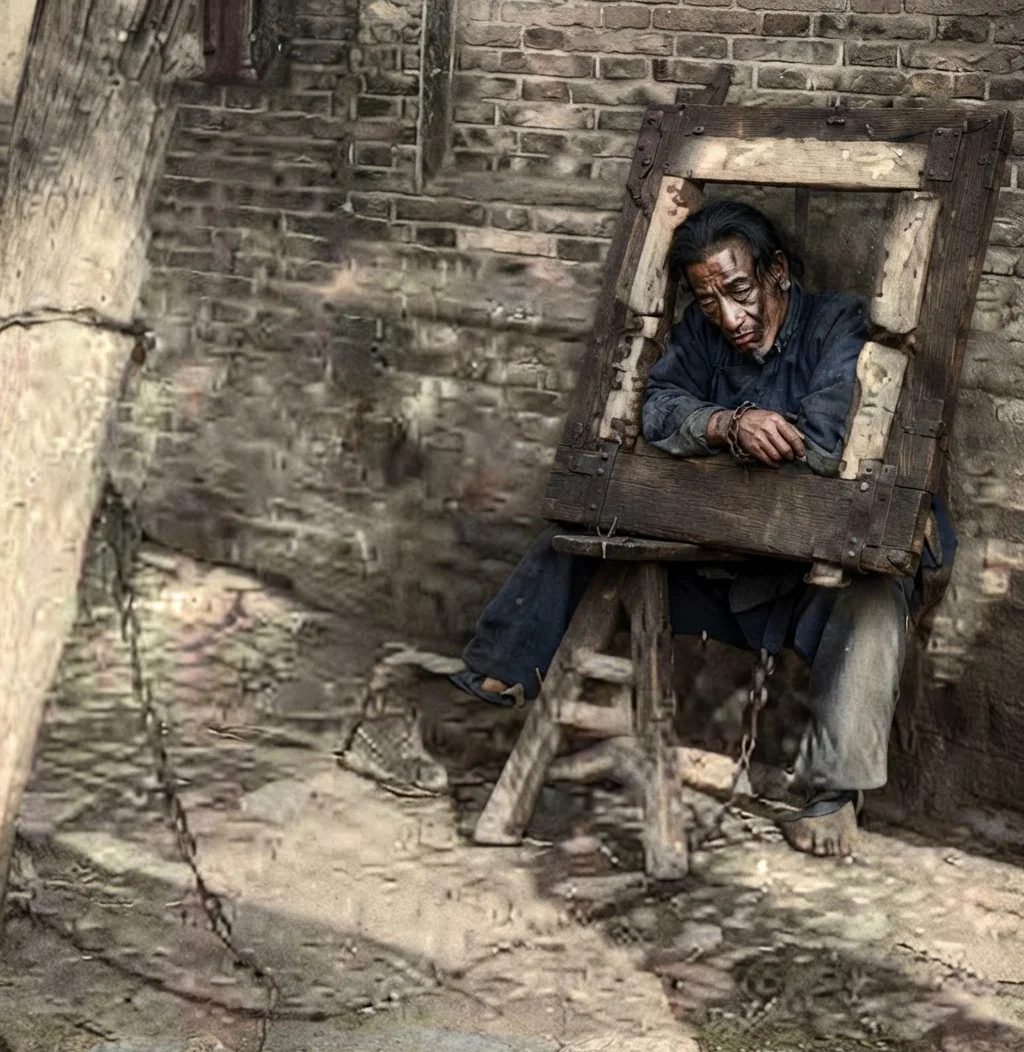
In a previous article, reference was made to the reaction in China from Christianity to heathen worship on the part of the government officials. Recently this reaction has caused a conflict between the police and the missionaries at Swatow, and it has resulted in persecution in other places, as reported in the China Press of April 8, 1914. The headlines are: "Chinese Christians Are Roughly Handled." "Bound with Ropes and Dragged Through Streets of Village near Chinkiang." "Pastor Hit by Brick." "Six Preachers Who Go to the Rescue Are Mauled." "Idol-Worship Enforced."

ORDERED TO WORSHIP THE IDOLS

A few paragraphs from the report of the Press will show how the missionaries and the Christians were treated:
"At Le Li Tien, a town not far from here, a local official thought that the troubles the people had suffered from various causes, were all due to their forsaking their idols, and failing to worship their ancestors. He ordered all the idols to be properly worshiped, and that the ancestors should not be neglected. "There are about twenty members of the Baptist Church at that place, and they ignored the request. As a result of their failure, idols were placed in their yards, and tablets were hung on their walls. "When the Christians persisted in refusing to worship according to the ancient custom, they were roughly handled. All the men who were Christians were taken out Tuesday night, bound with ropes, and led through the streets. Some of them fell down, and were dragged for a considerable distance, and suffered painful hurts."
TORTURE AND IMPRISONMENT COMBINED IN CHINA
The Chinese pastor about six miles away heard of the trouble, and went over to help. He arrived about one A. M., and the people were ready for him. They threw at him almost everything they could get their hands on. His head was severely cut with a brick. Six preachers at the Bible school at Sha Su Gai went over to see what they could do, and were handled likewise.

ANY MORE BAPTISMS ARE FORBIDDEN

The official at Djui Yung was notified, and he arrested the local official, and sent him up to Nanking for trial. Fortunately, during the trouble a severe thunder-storm came up and quieted things down. The official has forbidden any more people to be baptized.
China's constitutional government is little more than a name. The president rules with about as much freedom as if there were no constitution. It is not necessary, however, to conclude that heathenism will immediately assert itself and undertake to enforce its worship upon Christians in a general way, but the swing backward toward heathenism will gradually tend in that direction. An observing traveler through the interior of China can easily detect the ebb of the tide which for a time flowed strongly in favor of Christianity.

Kindness and Forgiveness

LET all bitterness, and wrath, and anger, and clamor, and evil-speaking, be put away from you, with all malice: and be ye kind one to another, tender-hearted, forgiving one another, even as God for Christ's sake hath forgiven you.—Paul.

THE LIVING ROCK

Water from the Rock Miraculously Supplied in the Wilderness — A Type of the Spiritual Refreshing We Receive in Christ
"ROCK" has always been used as a synonym for "strength" and "solidity." The parable of the house built upon a rock is an example. Matt. 7:24, 25.
The word "rock" is used many times in the Bible to illustrate the protecting care of God for His people. The psalmist says, "The Lord is my rock." Ps. 18:2. "Thou art my rock and my fortress." Ps. 71:3.
"Selah" occurs over seventy times in the Psalms, and is defined by most commentators as "a pause or musical note."

APPROPRIATE PAUSE FOR VICTORY

It is quite appropriate that in singing of the mighty power of God in leading His people, the psalmist should pause at times and meditate upon "the Rock," the "spiritual Rock that followed them: and that Rock was Christ." 1 Cor. 10:4.
Victories would often take the place of defeat in our daily lives if in our songs we inserted the same pauses used by the sweet singer of Israel. If in the rush of our daily lives we paused to meditate upon "the Rock," we could say with David, "In the secret of His tabernacle shall He hide me; He shall set me up upon a rock." Ps. 27:5.

STEPPING-STONES TO VICTORIES

The forty years' wandering of the children of Israel was in Arabia Petra, or Rocky Arabia, as it was sometimes called. Rocks confronted them at every turn in their journey; but from these very rocks, God caused water to flow to quench their thirst. Even so in our daily journeys, the rocks of difficulties that seem impenetrable to us, will, if we hide in Christ, prove but stepping-stones to greater victories.
God said: "I will stand before thee there upon the rock in Horeb; and thou shalt smite the rock, and there shall come water out of it, that the people may drink. And Moses did so in the sight of the elders." Ex. 17:6.
The thirsty multitude saw the pure, refreshing water gush out from the flinty rock. They drank, and were refreshed for their journey. "They thirsted not when He led them through the deserts: He caused the waters to flow out of the rock for them." Isa. 48:21.

IT RAN LIKE RIVERS

It was not a meager supply of water, for it "ran in the dry places like a river." Ps. 105:41. During all their journey, they were miraculously supplied with water. The stream did not continue to flow from the first place where the rock was smitten; but wherever they needed water, from the rocks beside their encampment the water gushed out. Well might the psalmist bid the earth tremble before the God who could turn "the rock into a standing water, the flint into a fountain of waters." Ps. 114:8.
When the Israelites came in sight of the promised land, the water ceased to flow. God told them they were to buy water as they passed through Edom. Deut. 2:3-6. Strange as it may seem, after drinking of the miraculous streams in the desert for so many years, they now began to murmur and complain because the water no longer gushed out of the rocks by their encampment.

SPEAK TO THE SMITTEN ROCK

Then it was that, on the very border of Canaan, Moses, the servant of the Lord, committed the sin that prevented him from entering the goodly land. The rock had once been smitten, and the Lord told Moses to gather the people, and to speak to the rock before their eyes, and it would give forth water. Moses, who had borne patiently with their murmurings so long, now became impatient, and said, "Hear now, ye rebels; must we fetch you water out of this rock?" Num. 20:10. He then smote the rock twice, and water gushed forth.
“THEY DRANK OF THAT ROCK, . . . AND THAT ROCK WAS CHRIST”
God is no respecter of persons; and although He had highly honored Moses, yet He punished him for his sin. When Moses smote the rock the second time, he ignored the great event of which the smitten rock was a type. Christ died once for the sins of the world (Heb. 9:28); and all who speak to Him, confessing their sins and claiming pardon, will receive the healing waters of salvation. Thus not only did Moses disobey God, but he marred the beautiful symbol that had been placed before the Israelites during all their desert wanderings.
The Bible writers often refer to the experiences connected with the smitten rock, to teach God's tender care for His people. Isaiah says, "A man shall be as a hiding-place from the wind, and a covert from the tempest; as rivers of water in a dry place, as the shadow of a great rock in a weary land." Isa. 32:2.
Paul tells us that this Man who was as "a hiding-place," "a covert," and as "rivers of water," was Christ, the Rock. 1 Cor. 10:4. He is the "shadow of a great rock in a weary land." What He was to the Israelites, He will be to every one who puts his trust in Him. He says to-day, "If any man thirst, let him come unto Me, and drink." John 7:37. The one who heeds the call will "drink of the brook in the way: therefore shall he lift up the head." Ps. 110:7.

GIVE HIM YOUR SINS

The refreshing water flows by every encampment. All can freely drink of the life-giving stream flowing from the Rock smitten once upon Calvary's cross. "Whosoever will, let him take the water of life freely." Rev. 22:17. Do you long to drink? Remember that the Rock has been smitten for you. Do not make the mistake of Moses, and think you must smite it again. "Speak ye unto the rock, . . . and it shall give forth his water." Num. 20:8. Tell Him you are weary of sin, that you long to accept of His righteousness. Give Him your sins, and He will clothe you with His righteousness. Gal. 1:4; Isa. 61:10.
The Amazon River pours into the Atlantic Ocean such an immense volume of water that for miles out at sea the water remains fresh. It is said that a ship sailing in the ocean near the mouth of the Amazon, had exhausted its supply of fresh water, and signaled to another vessel at a distance, asking for fresh water. The answer was signaled back, "Dip and drink." The captain thought they could not have understood, and signaled again. The same reply came back across the water. In indignation he said: "They say, 'Dip and drink.' Throw the bucket over and try the water." To their surprise, the bucket brought up fresh water, and their thirst was quenched.

IT FLOWS BY EVERY DOOR

Often we think we are in the enemy's land, and the Lord is afar off; but the stream of the river of life flows by every door. We have only to "dip and drink," if we wish to be led into the sunlight of God's presence and feel His sheltering care.
Like David, we need often to cry: "Lead me to the Rock that is higher than I. For Thou hast been a shelter for me, and a strong tower from the enemy. I will abide in Thy tabernacle forever: I will trust in the covert of Thy wings. Selah." Ps. 61:2-4.
While the foundation of the Christian church is the teaching of the apostles and prophets, Jesus Christ is the chief cornerstone.Eph. 2:20. Christ is "a living stone, disallowed indeed of men, but chosen of God, and precious." 1 Peter 2:3, 4.

BROKEN, YET SAVED

Every soul on earth will sometime come in touch with this Stone. He will either fall on it and be broken, that he may be a new creature in Christ Jesus; or he will reject the Stone, and at last it will fall upon him and destroy him. Matt. 21:42, 44.
Blessed is the one that makes Christ the chief corner-stone in all his daily work. Jesus to-day asks us, as He did Peter of old, "Whom say ye that I am?" Our lives give the answer. Peter's answer was, "Thou art the Christ, the Son of the living God." This answer was given him from the Father.

THOU ART PETER

Christ responded, "Thou art Peter." In these words, He acknowledged Peter as His disciple, for He had given him the name "Peter" when He called him to follow Him. John 1:42.
The word "Peter" meant a stone, or a fragment of rock. Christ's manner of teaching was to use earthly things to illustrate heavenly lessons; and He took the name "Peter," meaning a fragment of rock, to direct the mind to the solidity of the confession and the stability of the cause founded upon "the Rock," Christ Jesus, of which Peter, when he accepted Christ as his Master, became a portion, or fragment. Every true follower of Christ becomes one of the "living stones" in the great spiritual building of God. 1 Peter 2:5.

THE TRUE ROCK OF THE FOUNDATION

Christ did not say, On thee, Peter, will I build My church, but immediately changes the expression, and says, "Upon this Rock I will build My church." Matt. 16:13-20.
Centuries before, Isaiah had written, "Behold, I lay in Zion for a foundation a stone, a tried stone, a precious corner-stone, a sure foundation." Isa. 28:16. Peter and every other son of Adam has failed when tested. Christ is the only one ever born of woman who has withstood every temptation, and is a "tried stone," fit to be the chief corner-stone in the great church of God.
Christ has not placed any mortal man as the foundation of His church. Sad would have been the condition of the church if it had been built upon Peter; for only a short time after he made the above confession, his heart was so full of evil and wrong conclusions that, as the record states, Christ said to him: "Get thee behind Me, Satan: thou art an offense unto Me: for thou savorest not the things that be of God, but those that be of men." Matt. 16:23.

CALLING FOR THE ROCKS TO HIDE THEM

When the Saviour comes in the clouds of heaven, those who have rejected the Rock, Christ Jesus, will call for the mountains and rocks of earth to hide them from the wrath of the Lamb. Rev. 6:15, 16. Our enemies then will witness to the fact that "their rock is not as our rock." Deut. 32:31.
"Ascribe ye greatness unto our God. He is the Rock, His work is perfect: for all His ways are judgment: a God of truth and without iniquity, just and right is He." Deut. 32:3, 4.

Serving and Following

Yoke Up with Him and Find Rest

By J. F. TOLSON
“If any man serve Me, let him follow Me.” John 12: 26. “Come unto Me, all ye that labor and are heavy laden, and I will give you rest. Take My yoke upon you, and learn of Me; for I am meek and lowly in heart: and ye shall find rest unto your souls. For My yoke is easy, and My burden is light.” Matt. 11: 28-30.
As the humble student turns the pages of the sacred writings, he is constantly struck with admiration at the beauty and appropriateness of the expressions found therein. One might naturally expect to read, “If any man will follow Me, let him serve Me.” Doubtless, were the Scriptures of human origin, those are the words that would have been used. It is human nature to expect service first. With Christ it is just the reverse. He expects us to follow Him closely before we can do acceptable service.

WHAT IT MEANS TO FOLLOW HIM

A study of the second text will give some idea of what the following of Christ means, as versus mere serving. How comprehensive is this passage! How beautiful! How comforting! “Take My yoke upon you.” Here we have our Lord’s invitation to yoke up with Him for service. What! Yoke up with the King of glory! What condescending grace on His part to take us to yoke up with Him!
But what is His yoke? I think we will get some intimation of what it is if we will study the context. In the preceding verses, He had been upbraiding the cities where most of His mighty works were done; where He had been doing good, and was called a devil; where He had been relieving men, and blamed as one who had fellowship with Satan; where He was scornfully rejected by men, and acquainted with griefs and sorrows. This was His yoke — rejection when acting in pure grace.

AN EASY YOKE

And, O my brother, is the yoke too hard to be borne? Is the yoke of Christ, the pitying Saviour, harder to be borne than the yoke of the cold, heartless world; the yoke of dishonoring God; the yoke of conformity to the world in its ever-changing fashions, its sneers, its smiles, and its frowns? Do you long for that rest “which passeth all understanding”? Then heed the invitation of the pitying Jesus: “Take My yoke upon you, and learn of Me; for I am meek and lowly in heart: and ye shall find rest unto your souls. For My yoke is easy, and My burden is light.”

A YOKE THAT GIVES REST

Only by taking up His yoke can we find rest, and thus only can we follow Him. “If any man will come after Me, let him deny himself, and take up his cross, and follow Me.” Do not deviate from the path He has already trod. It may be thorny; but He has been over the way, and every thorn that might prick us has pierced His tender feet.
“And learn of Me.” Here again, we have that all-comprehensive “Me.” Reader, do you know its power? I ask you to learn of “Me,” not of some distinguished saint. In “Me” you have a perfect pattern, an unerring leader. I do not ask you to learn of My servants, or My prophets, or even of My angels, though they excel in wisdom and strength; but “learn of Me,” the Perfect One, the Sinless One, the One in whom dwells all the fulness of the Godhead bodily.
What a privilege for the child of God! What amazing grace! Come, O thou sin-sick soul, tossed about on the billowy world of sin and strife; come and sit at the Saviour’s feet, and “learn of Me, . . . and ye shall find rest unto your souls.”
Continue reading: Sin’s Pay-Day