Your ShelfYour Projects

Signs of the Times, Vol. 25, No. 47.

THE COMPASSIONATE SON OF GOD

Signs of the Times

Nov 22, 1899

Pacific Press Publishing Company · OAKLAND, CALIFORNIA · Nov 22, 1899

THE COMPASSIONATE SON OF GOD.
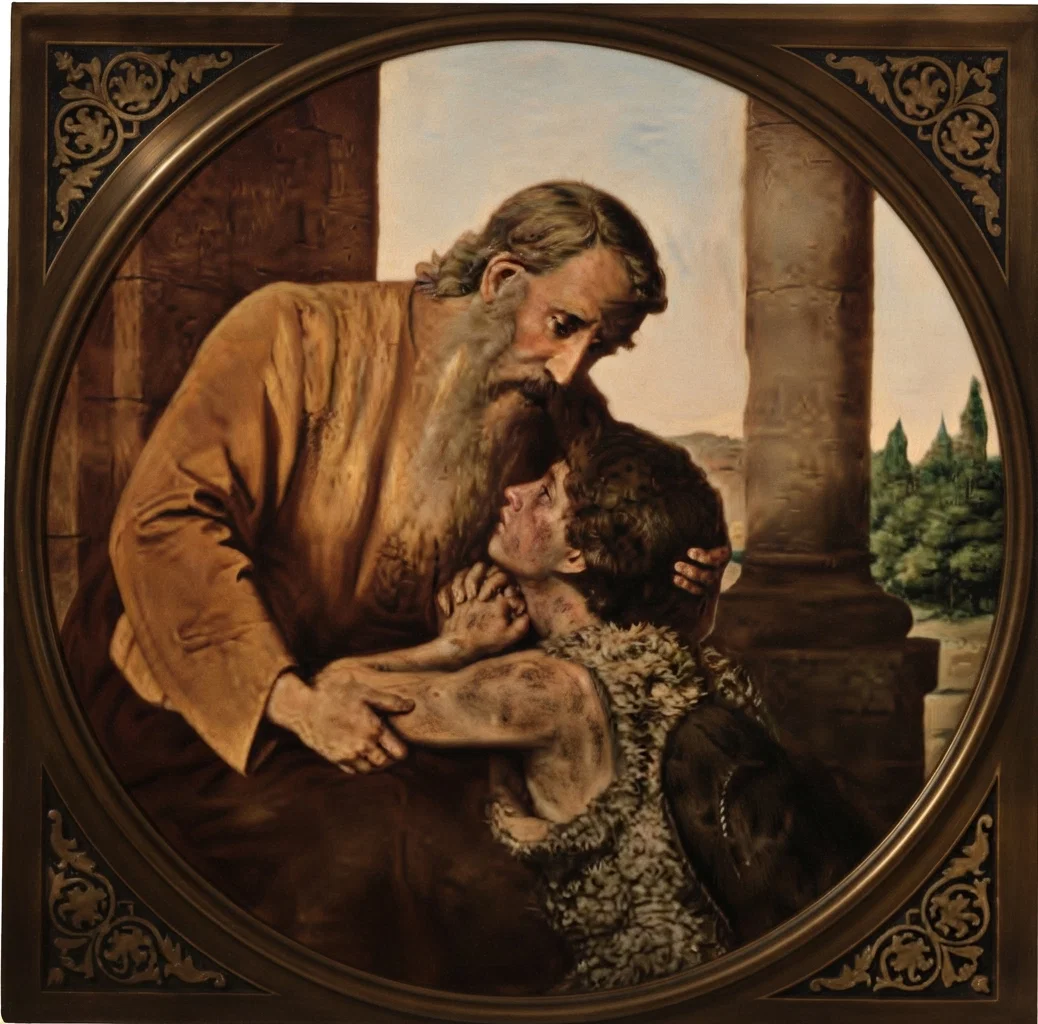
THE fifteenth chapter of Luke contains three instructive parables that were given to show the interest and the love which God has for lost and wandering souls in this dark world of sin. These parables relate to the lost sheep, the lost piece of money, and the lost son, familiarly called the "prodigal son."
It is interesting to note the circumstances under which they were spoken by our Saviour. The publicans and sinners had gathered to hear His gracious words. Verse 1. The scribes and the Pharisees complained because Jesus received sinners and ate with them. Verse 2. This was evidence to them that He was not good and holy like themselves, for they would not associate with the sinful and the vile, and thus be contaminated with evil. This showed clearly that they not only regarded Jesus as a sinner because of the course which He pursued in His relation to the wicked and the outcast, but it also showed that they had very low and incorrect views of God's character. In fact, it showed that they regarded God as altogether such an one as themselves, having no feelings of pity and compassion for the erring and the fallen, but looking upon them as fit subjects of divine wrath, entirely without the pale of God's mercy, and therefore to be shunned by all good people.
To SWEEP away these false views of God and His beneficent character, and show how He regards poor, helpless, and perishing souls, defiled with sin, Jesus utters these parables. The last one, the parable of the "prodigal son," stands forth as one of the most impressive, touching, and encouraging passages to be found in Holy Writ. The vivid portrayal of the son's wandering, his sad condition, his sense of need, his return homeward, his father's greeting, and the rejoicing which followed, is enough to stir every soul, and "break a heart of stone."
“HIS FATHER . . . HAD COMPASSION.”
LET us study together some of the striking features of this wonderful parable. "A certain man had two sons." The younger son asked the father for his portion of the property, and it was given him. He then took it and journeyed to a far country, and spent it all in riotous living. A great famine arose there and "he began to be in want." He hired out to work; and he was sent into the "fields to feed swine." He became so hungry that he would gladly have eaten the carob pods that were given to the swine, but "no man gave unto him."
THE sad condition to which he was now reduced was cause, and gave opportunity, for serious reflection, which would lead him to view things in their true light. So the record says, "And when he came to himself, he said, How many hired servants of my father's have bread enough and to spare, and I perish with hunger!" Yes, "he came to himself." His vision of earthly pleasure and sensual gratification had vanished. He had learned how vain and fleeting and unsatisfying they are. He remembered the bountiful supplies in his father's home. He was sorry for his wayward and sinful course, and made a high resolve that he would forsake it, and lead a different life.
HE recognized that he had no claims on his father, and that he was unworthy to be called his son, yet he decided to return, saying, "I will arise and go to my father." I will tell him the truth. I will confess my sins. I will acknowledge my unworthiness. I will only ask to be as one of his hired servants. He carried out his resolution. He started for home. "Butwhen he was yet a great way off, his father saw him, and had compassion, and ran, and fell on his neck, and kissed him." Here we see manifested the love, the devotion, and the mercy of the true father. He did not wait for confessions, or to see whether his son was truly sorry for his wicked course. He did not put him on probation to see whether there was a reformation that would prove permanent. He received him with joy. He made him welcome. It is a touching scene. It impresses the mind and softens the heart.
THE wayward, repentant son then confesses his sinful and unworthy course. The father's joy must find expression in a way that could not be misunderstood. He tells his servants to "bring forth the best robe, and put it on him, and put a ring on his hand, and shoes on his feet; and bring hither the fatted calf, and kill it; and let us eat, and be merry; for this my son was dead, and is alive again; he was lost, and is found." Here the cause of rejoicing is clearly set forth. It justifies the preparation and the celebration.
BUT the season of gladness was marred. Another character comes upon the scene. The elder son hears the music and the dancing, and he inquires the meaning. The matter is explained to him, but instead of heartily joining in the celebration, as a true, unselfish brother would have done, "he was angry, and would not go in." Then his father entreated him, but without avail. He rehearsed his own faithfulness and obedience to his father's commands, and then complained that his profligate brother was given greater honor, and more tokens of love and esteem, than had been accorded to him.
THE father answered these complaints by reminding him that he had always shared the blessings and privileges of the home, and they were still his to enjoy. So he had no ground to complain so far as his own treatment was concerned. Then what was the trouble?—He was jealous and envious because his younger brother was receiving attention and honor. The father sets forth the reason and propriety of the rejoicing over the younger son. He says, "It was meet that we should make merry, and be glad; for this thy brother was dead, and is alive again; and was lost, and is found." Verse 32.
THERE are several important lessons taught in this instructive parable. We will note briefly a few of them: The Gentiles—the publicans and sinners—are fitly represented by the younger son, who left home and pursued a wicked course, and then returned to his father with godly sorrow and confession of sin. The publicans and harlots were coming to Jesus, and he received them and ate with them. The scribes and Pharisees murmured or complained against Jesus for doing this. See verses 1, 2. But this is just what the elder son in the parable did. Hence the scribes and Pharisees—the leaders among the Jewish people—are fitly represented by the envious elder brother, who was angry because his brother was honored when he returned home from a life of sin.
THERE are two other practical lessons that should be learned from this parable: (1) How God regards the returning prodigal, and how graciously He receives the wanderer when he returns to his Father's house. He goes to meet him. The welcome is warm; the greeting is affectionate. There is no mistaking the sincerity and whole-heartedness of the reception, and the subsequent rejoicing. Thus Heaven receives and accepts the repentant sinner. How do we receive him? As Jesus did, as the father in the parable received the returning prodigal? Or do we feel as the scribes and Pharisees did, who are so clearly represented by the elder son? (2) If we do not heartily welcome and gladly receive the repentant sinner and the returning wanderer, it is because we have more of the spirit of the Pharisee than we have of the Spirit of Christ. Let us examine ourselves in the light of the Lord, that we may know what manner of spirit we are of. "If any man have not the Spirit of Christ, he is none of His." Rom. 8:9.
M. H. BROWN.

THE SIGN OF GOD'S PEOPLE.

THE enemy has worked in the religious world to deceive men into the belief that the law of God can be set aside. He has had long years of experience in this work, for he began with our first parents, using his powers to cause them to distrust God. If he could interpose himself between their souls and God, he knew that he would succeed. The prospect of becoming gods, knowing good and evil, was pleasing to Adam and Eve, and they yielded to the temptation. In receiving a knowledge of good and evil, men feel that they are gaining much; but they do not understand the purposes of Satan. They do not understand that they are taken in his snare when they tamper with the law of God. The enemy knows that if the church can be controlled by political enactments, if she can be led to unite with the world, she virtually acknowledges him as her head. Then the authority of man-made commandments will work to oppose the rule of the government of heaven. Under the leadership of Satan men will dispense with the righteous, holy enactments of God concerning the Sabbath, the observance of which is to be a sign between God and His people forever.
Satan's plan has taken with the religious world. He has created an order of things entirely his own, making void the law of God. Through his deceptive working he has gained in the professedly Christian world that which he ought to gain in heaven,—an abrogation of the laws of Jehovah. Through the Roman power he has worked to remove God's memorial, and has erected a memorial of his own to sever God from His people. To-day the Protestant world is estranged from God by its acceptance of a spurious sabbath. Not one iota of sacred authority can they find for doing this; yet, full of zeal, they assert that the Lord's memorial given at creation should be ignored, despised, trampled upon, and the first day of the week take its place.
No deeper wound could be inflicted on God than to ignore His holy day, and place in its stead a spurious sabbath that bears no mark of sanctity. God gave the Sabbath to the world to be set apart for His name's glory. He says: "It is a sign between Me and you throughout your generations; that ye may know that I am the Lord that doth sanctify you. . . . Israel shall keep the Sabbath, to observe the Sabbath throughout their generations, for a perpetual covenant."
And who are Israel? The Holy Spirit by the apostle Paul declares, "If ye be Christ's, then are ye Abraham's seed." Upon all who through Christ become a part of the true Israel, the observance of the Sabbath is enjoined.
Those who disregard a plain "Thus saith the Lord," are casting off their allegiance to God, and exalting human power in His stead. By thus placing themselves in opposition to the God of heaven, men are failing to receive the mark, or sign, by which the people of the world are to know God's true followers. There is no justification for those who, having the light, close their eyes and their ears to a plain "Thus saith the Lord." They have taken up the weapons of their warfare against God, and their guilt is made manifest.

A Specific Reform.

God calls His people to a special work for these last days. "They that shall be of thee shall build the old waste places," He says; "thou shalt raise up the foundations of many generations; and thou shalt be called, The repairer of the breach, The restorer of paths to dwell in." What is this breach?—It is the broken Sabbath of the Lord. "If thou turn away thy foot from the Sabbath," He continues, "from doing thy pleasure on My holy day; and call the Sabbath a delight, the holy of the Lord, honorable; and shalt honor Him, not doing thine own ways, nor finding thine own pleasure, nor speaking thine own words; then shalt thou delight thyself in the Lord; and I will cause thee to ride upon the high places of the earth, and feed thee with the heritage of Jacob thy father; for the mouth of the Lord hath spoken it." But there must be no assumption of power on the part of God's chosen people. Those who take their orders from Christ must not seek to compel others to obey the law of Jehovah. "Let this mind be in you, which was also in Christ Jesus; who, being in the form of God, thought it not robbery to be equal with God; but made Himself of no reputation, and took upon Him the form of a servant, and was made in the likeness of men; and being found in fashion as a man, He humbled Himself, and became obedient unto death, even the death of the cross."
Even Christ, as the Prince of Life, did not seize the scepter of power and enforce His laws of righteousness. Patiently has He waited in the heavenly courts in behalf of His people who have suffered for their loyalty to Him. Patiently has He waited for the Gospel of the kingdom to be preached in all parts of the world, until every nation, and kindred, andtongue, and people shall have received the light of God's Word. And man, too, must wait patiently until the time when the work shall be accomplished, and every human being has had opportunity to decide for himself. Decisions will be made for and against God; and every man will decide his own case by his decision in regard to the law of Jehovah. Then both classes will be developed; the sentiment of every heart will be revealed. Each party will gather under its chosen leader, as loyal to God and His commandments, or as transgressors of the law, with the first great rebel at its head.
God declares: "Israel shall keep the Sabbath; to observe the Sabbath throughout their generations, for a perpetual covenant." "It is a sign between Me and you throughout your generations; that ye may know that I am the Lord that doth sanctify you." We are not merely to observe the Sabbath as a legal matter; we are to be intelligent in regard to its spiritual bearing upon all the transactions of life.
Christ's prayer to His Father for His disciples was, "Sanctify them through Thy truth; Thy Word is truth." The sign of God is sanctification through obedience to the truth. This sanctification makes the loyal subject like his great Head, Jesus Christ. He is brought into peculiar and eternal relations to the Saviour on condition that he maintains his allegiance to the end. When we are thus sanctified, we shall not have a spurious faith, a spurious doctrine, a spurious experience. In coming out from the world and accepting the Sabbath of creation, which God has blessed and sanctified, we give evidence of true conversion. We are stamped with the mark of God's government. As we accept the Sabbath to keep it holy unto the Lord, we are sanctified, soul, body, and spirit.
All who earnestly desire to know whether they have the King's mark will examine His Word critically. A spurious sabbath is now exalted before the people. This is the mark, the sign, of a ruler who stands in opposition to the King of kings, the Lord of hosts. This ruler has sought to show his power and authority by taking a common working day, a child of the Papacy, and giving it to the world as the Sabbath of the Lord. He has sought to destroy the sign which God has said should be preserved to a thousand generations.
The observance of the Sabbath, the seventh day, by God's people, is the sign to the world that they are linked to the God of heaven as His loyal subjects, who trust in His everlasting veracity and His power as the Creator of the heavens and the earth; and it is the sign that God recognizes them as His chosen people. Those who understand that the Sabbath is a sign between them and God will represent the principles of His government by bringing into their daily practise the laws of His kingdom. They will live in constant submission to His will, having the words of His law written in their hearts. His injunctions will be regarded as the spring of their existence. Faithful and true, they will heed every command given, and reveal in their daily lives the religion that emanates from God.
MRS. E. G. WHITE.

MY PALACE HOME.

FAR beyond the glowing jewels That besprinkle night's dark dome, Lies my palace home. Reared by skill of angel trowels, Taintless, needing ne'er renewal, Splendid, past my brightest fancy, Waiting for my occupancy, Home, dear home.
Miles eternal, leagues of wonder, Heaven computes and seraphs roam, Far away is home. Yet my strengthening footsteps wander Toward its God-made, holy splendor, Play of sunlight, sheen of river, There I'll live forever, ever; There's my home.
Peaceful hallowed, comfort giving, Friends who ne'er asunder roam Shall possess that home. And the King Himself, in kindness, Christ, who lit my piteous blindness, Crowned, a guest, shall sit at feasting, My guest, when at ease I'm resting In my home.
Sin-doomed, leprous, heavy-hearted, Splashed with crime's vile mire and loam, Come to that pure home. All the starry kingdoms ask you; Ne'er again shall Satan task you; Freedom waits you, friendship, honor. Follow Christ, march where His banner Guides you home. THOMAS ROBERT WILLIAMSON. Oakland, Cal.

"I HAVE FOUND IT AT LAST."

A MISSIONARY was selling Bibles for the first time in a town in India. A Hindu, seeing the books, rushed eagerly forward and said: "Have you a copy of the New Testament of Jesus Christ? How much must I pay? I will give you whatever you ask." On the money being paid and the book given to him, he said, "I have been looking for a copy of this book for years, and now, thank God, I have found it at last!" He did not stop, but went away eagerly, kissing the book on all sides as he went.—Selected.

CHRISTIAN SCIENCE.

SCIENCE is another word for knowledge. It is knowledge reduced to law and embodied in system. By its laws one can reason from cause to effect, and from effect to cause. True Christian science is a knowledge of Christ according to a definite and unchangeable law. This is the science God desires us to master, for He wants us to know Him. "I desire mercy, and not sacrifice; and the knowledge of God more than burnt-offerings." Hosea 6:6.
By this knowledge we get eternal life. "And this is life eternal, that they might know Thee the only true God, and Jesus Christ, whom Thou hast sent." John 17:3. To know God is to have eternal life; to have life we must have the Son. "He that hath the Son hath life." 1 John 5:12. Therefore true Christian science is the Gospel; for it is the knowledge of God, by God dwelling in man, whereby he has eternal life.

The Will or the Desire.

"The flesh profiteth nothing." The mind is the only medium by which God is able to communicate and reveal Himself to man. As our bodies are composed of what we eat, so our minds are made of what we think. Thought grows by what it feeds on. The incentive of thought is the will or the desire. It is the genesis of spiritual growth. All have an equal chance to acquire this knowledge, the science of salvation. The sin-darkened chambers of every mind are illuminated with light from heaven,—"the true Light, which lighteth every man that cometh into the world." John 1:9. It is God that works in us the will to do good. Phil. 2:13. Rotherham literally renders the word, "the desiring." This desiring is universally implanted in every human heart. All want to be better; all hope to be good.

The Thought.

The thought is the desire put in exercise. We are told that the wish is father to the thought. The mind naturally dwells upon what it loves. If we cultivate this God-given desire to do good, our wills become stronger, and we grow in grace and in the knowledge of God. If we quench the Spirit, our wills become enfeebled, our powers of choice weakened, until we lose all control of ourselves. If we fail to heed these things, God's Spirit runs out of us "as leaking vessels." Heb. 2:1, margin. "Finally, brethren, whatsoever things are true, whatsoever things are honest, whatsoever things are just, whatsoever things are pure, whatsoever things are lovely, whatsoever things are of good report; if there be any virtue, and if there be any praise, think on these things." Phil. 4:8.

The Act.

If the wish is father to the thought, the thought is father to the act. "Of the abundance of the heart his mouth speaketh." Luke 6:45. God gives us power both to will and to do. Phil. 2:13. Without divine assistance we are helpless. "For without Me ye can do nothing." John 15:5.
God works in us by faith,—"that faith which worketh by love." The divine energy dwelling and working in us is not a theory, but to the Christian it is a fact. The science of religion teaches that salvation is not merely a mental operation; we are justified by faith; we are judged according to our works. The overcoming Christian must act; he can not be passive. To be colaborers with Christ we must work,—work out of us what God works in us. Then we can say with Paul, "I am not ashamed of the Gospel of Christ; for it is the power of God unto salvation to every one that believeth." Rom. 1:16.

Conclusion.

The good we wish to do and the good we do are the effect of the divine energy working in us. The Lord is our righteousness. Notwithstanding this divine co-operation, the sovereignty of the will belongs to the individual. He may choose to do good or to do evil. Faith is God's to give; it is man's to accept. Both the desire and the energizing are given. "For it is God which worketh in you both to will and to do of His good pleasure." If God is working in us, then the righteousness we desire and the righteousness we do are revelations of God to the individual. It is by this miraculous transformation of character that we are able to know Him. Salvation from sin acquaints us with Divinity. Christ in us the hope of glory is no longer a mystery, but is made manifest to His saints. This is true Christian science, the knowledge of Christ, the science of salvation.
CYRUS SIMMONS.

RIPE FOR HER REAPING.

O, GATHER in the clusters from the vineyard of the earth; Her grapes are hanging heavy on the vine! The time has come to gather them, whatever be their worth; They are bursting, they are dropping, with their store of ruddy wine.
I see upon the harvest-field, I see upon the hill, The wing-beats of the autumn wind, the shadow from the sky Where the white cloud of the harvest-time is swiftly driving by, And I hear the reapers chanting with a will.
The whole earth is the harvest-field; the sowing has been long, The waiting for the harvest many years; The tares have grown to fulness, and the weeds a mighty throng, All the ills and sins from Adam down, the sorrows and the tears.
The sickle has been lying with the rust upon the blade, The melody of "Harvest Home," a nigh forgotten song; But the Master of the harvest leads the reaping host along, And that reaping can no longer be delayed.
The tares and wheat together grown are waiting for the stroke; The threshing-floor is ready for the flail. The signal to the reaper band God never will revoke, And the hand that wields the sickle then will never, never fail.
I seem to see the harvest now in panoramic view, The hoary wrongs of years agone—the sins that were my own— Like a never-ending seething sea, whose boundary none have known, Stretching far and wide in deep, autumnal hue.
The reapers swing the glittering blade adown the waving field; The tares and wheat are falling side by side. The sheaves the reapers gather there are but a scanty yield; But the tares they bind for burning blot the landscape far and wide.
The breath of God upon the field is winnowing the grain; There's nothing from that searching fan the sower can conceal; All the rights and wrongs of centuries that judgment doth reveal, While the tares of sin are burning on the plain.
C. M. SNOW.

"THEY THAT WERE READY WENT IN."

THE whole passage from which these words are taken, reads as follows: "And while they went to buy, the bridegroom came; and they that were ready went in with him to the marriage; and the door was shut." Matt. 25: 10. By way of warning and admonition, the Bible often brings to view circumstances like the ones here set forth, in which a great and decisive crisis is upon the people, in connection with which compliance with well-defined conditions secures blessing and safety, and neglect of which results in widespread and irreparable loss.
In the case before us it is implied that there is some special position or opportunity which it is very desirable to secure, and in reference to which instruction is most timely; but if there is too long-continued neglect, or a failure to make the necessary preparation, the opportunity goes by, and what might have been gained is lost. "They that were ready, went in;" and then the door is shut.
It becomes, therefore, a matter of paramount interest and importance to inquire diligently into these circumstances, to learn what the blessing is which is here shadowed forth in so enticing a manner, and what the preparation is that is necessary to secure it. The words, "And the door was shut," are words of fearful import, teaching that a time may come in our own experience when we will be past the reach of mercy and hope, and that such a time will come unless by zealous repentance we keep ourselves in the love of God, and the patient waiting for His Son from heaven. These considerations should take hold of every heart with irresistible power. The Scriptures often describe just such decisive occasions in the experience of the church. For instance, our Lord utters the following solemn warning: "Strive to enter in at the strait gate; for many, I say unto you, will seek to enter in, and shall not be able. When once the master of the house is risen up, and hath shut to the door, and ye begin to stand without, and to knock at the door, saying, Lord, Lord, open unto us; and he shall answer and say unto you, I know you not whence ye are."
The points established in preceding articles throw an equal flood of light on this parable. Here again is the bridegroom, which is Christ; and here is a marriage, or wedding, which, as in Matthew 22, is Christ being inducted into His everlasting kingdom; and here are the virgins, wise and foolish, which represent the connection of the church with this great movement; and here also the virgins, the guests of the wedding, have to be suitably prepared for before they are in a proper condition to entitle them to participate in the wedding ceremonies.
This brings us again to the investigative judgment of the sanctuary; for there it is that the candidates for eternal life in Christ's kingdom are examined, the record of their lives carefully scrutinized, and their characters adjudged as to their fitness to enter into the kingdom of the Father. Those who pass this test successfully, who are found having received from Christ the white raiment, the "wedding-garment," are the ones who are found "ready." "They that were ready went in with Him to the marriage; and the door was shut." The marriage does not take place till all the guests are examined, and this part of the work is finished; and this fitting up of the guests, the confessing of their names before the Father, and the blotting out of their sins, is the last work of Christ as priest before He takes His position as king, which latter movement is the marriage; and it is not till this takes place, and they that are ready have gone in to the marriage, that the door is shut. Then those who find themselves shut out, return and vainly seek admittance.
There remain two more questions to be answered in order to a more complete understanding of the question before us, namely, "And while they went to buy, the Bridegroom came." What coming is here referred to? "And they that were ready went in with Him to the marriage." This must refer to the wise virgins; and what is their going in to the marriage?

Coming of the Bridegroom.

Bear in mind that the whole burden of this parable of Matthew 25 is the coming of the Bridegroom to the marriage. That is the only "coming," on His part, here brought to view. But it is not the coming of Christ in the clouds of heaven again to this earth; for the marriage does not take place here. Christ receives His kingdom, which is the marriage, before He comes again to this earth. Luke 19: 12, 13: "He said therefore, A certain nobleman went into a far country to receive for himself a kingdom, and to return." "And it came to pass, that when he was returned, having received the kingdom," etc. In this parable, the nobleman undoubtedly represents Christ, and His going into a far country to receive for Himself a kingdom, viewed from the standpoint of the time when He was here on the earth at His first advent, which was the standpoint of the disciples to whom Christ spoke, refers to His ascending to His Father in heaven, there to be invested, in due time, with the power and regalia of His glorious kingship, and then to return to take His people to Himself.
But this act of going in before the Father to receive His kingdom is called a "coming;" and in a certain sense it is. A description of it is found in Dan. 7: 13, 14: "I saw in the night visions, and, behold, one like the Son of man came with the clouds of heaven, and came to the Ancient of Days, and they brought Him near before Him. And there was given Him dominion, and glory, and a kingdom, that all people, nations, and languages, should serve Him; His dominion is an everlasting dominion, which shall not pass away, and His kingdom that which shall not be destroyed." This is Christ's promised kingdom (Luke 1: 32, 33), the taking of which, on His part, constitutes the marriage, and to receive which He comes to the Father, to the Ancient of Days. And while this work is going on in heaven, the foolish virgins are off to buy oil for their lamps, that is, are seeking some new application of prophecy or some new sensational experiences which they think will help their condition, but find it all in vain. "And while they went to buy, the Bridegroom came; and they that were ready went in with Him to the marriage; and the door was shut."
These who go in with Him to the marriage must, of course, be present to witness the wedding ceremony, or that which is, in this case, the coronation of the King of kings; not literally so, for they are still here on the earth, and the coronation takes place in heaven; but such is their union with Christ that they are brought into such a degree of spiritual ecstasy, and Holy Ghost exultation of vision, that they will be, virtually, present with Christ, just as Stephen was when, as recorded of him, in Acts 7: 55, 56, "he, being full of the Holy Ghost, looked up steadfastly into heaven, and saw the glory of God, and Jesus standing on the right hand of God, and said, Behold, I see the heavens opened, and the Son of man standing on the right hand of God." Just so the church at that hour of supreme spiritual union with Christ, which the Scriptures declare will come to the last generation, will be so filled with the Holy Ghost that they will be present in spirit, which will seem to them as real as if they were bodily and literally there, beholding the glorious coronation of their King. They will that and then have gone in with Him to the marriage. And then, Christ's priestly work being ended, and his kingly office entered upon, the door will be shut.
The movements set forth in the opening parable of Matthew 25 are of such consequence, the truths are of such paramount importance, the figures are so striking and appropriate, the application so clear and consistent, that a restatement, or recapitulation, of the subject we trust may not appear inconsistent.

The Application.

That the great Advent movement of the early part of the present generation should be set forth under the figure of an Eastern marriage, is very fitting, the features of such a marriage tally so completely with the experiences of the church at the time in question. The bridegroom represents Christ; the virgins, the church; five of the virgins being wise, and five foolish, represents the fact that no definite proportion is to be drawn between the wise and foolish, that is, between the faithful and unfaithful professed followers of the Master. We can not say that so many will be saved and so many will be lost. If it had said that six of the virgins were wise and four were foolish, or that three were wise and seven were foolish, or any other proportion, then it would be evident that some definite information was intended to be set forth on this point. Making the number of the wise and foolish the same, it will be seen, was the only indefinite way in which it could be stated. So we can not tell, and need not speculate, on the question how many more will be wise than foolish, or foolish than wise, in the service of the Lord. But the solemn fact is set forth that a portion of those who hear the Lord's call will prove untrue and fail at last. Who will it be? Every one would do well to ask himself most seriously, "Lord, is it I?"
The first part of the Advent proclamation, that which aroused the attention of the world, in the beginning, to the great message, represents the condition of things in the parable which induced the virgins to go forth to meet the bridegroom. Then, in the illustration, there follows a tarrying time, the slumbering of the virgins, then the awakening and trimming of lamps, on account of a sudden cry raised at midnight, "Behold, the bridegroom cometh." What was there in Advent experience to answer to these features?—In the spring of 1844 the time first set for the Lord to come, passed by. The Bridegroom tarried; and the virgins began to slumber and sleep.
In the midsummer of 1844 the proclamation, "Behold, the Bridegroom cometh," was raised in power, and swelled to a mighty movement. This was the midnight cry. In the autumn of 1844, the 2,300 days (Dan. 8: 14), at the end of which the Lord was expected to appear in the clouds of heaven, did end, and then the Bridegroom did come to the marriage (but not in the clouds of heaven, which was the mistaken idea); that is, He was brought before the Ancient of Days (Dan. 7: 13, 14), to receive His kingdom, and power, and glory, which events constitute the marriage. But after Christ came to the Ancient of Days, and after the Bridegroom comes to the marriage, then there is an intervening work to be done before He receives the kingdom, or before the marriage takes place. And what work is that?—It is the examination of the guests who have been bidden to the wedding, to see if they have the wedding-garment on; it is the examination of all the candidates for Christ's kingdom, to determine if they are entitled to immortality; it is the investigative judgment, the making of the atonement, and the cleansing of the sanctuary. All these expressions refer to one and the same work, and all with marvelous beauty fit in together here. And all this intervening work must be finished before Christ can take the kingdom, or before the marriage can take place. Till this is done the door can not be shut; for not till then is it determined who are "ready" to go in with Him to the marriage. The door is still open; and other guests may still come, as they have been coming since 1844, and secure the wedding-garment, and go in to the marriage. We are now in the period of the examination of the guests, to see who is ready. More than half a century of time has already passed since this work of examination began; and how much longer, think you, reader, it can continue before it will be finished? In the very nature of things, it must soon close, and the momentous question for every case be decided who among the guests is "ready" to go in to the marriage, and also who, not being found with the wedding-garment on, must be bound hand and foot, and cast into outer darkness. The time for the marriage is just at hand. Those who are found "ready" will then go in, and be forever safe. Then the door will be shut, and no further admission be possible.
As the going in with Him to the marriage is a future event, it becomes a matter of special interest to inquire what it will be. On this point we have the following facts to guide us:—
1. The marriage takes place in heaven, not on this earth; for it is in heaven that Christ receives His kingdom, before His second coming. He receives it from the hand of the Ancient of Days (Dan. 7: 13), who is, at the time, in heaven, not on the earth.
2. It takes place before any of the saints are translated to heaven; hence they enter in with Him to the marriage, not literally, but in the state of spiritual ecstasy already described.
3. No one can go in to the marriage with Him till the marriage takes place; and that does not occur till Christ has finished His work as priest in the sanctuary. The going in with Him could not, therefore, have taken place in 1844.
4. No person can go in to the marriage until he is pronounced "ready;" and that decision can not be rendered till all cases are decided in the sanctuary above, and probation is ended. The time when those who are "ready" go in with Him to the marriage is, therefore, at that moment of supreme importance when their cases are decided for salvation, and when all probation closes, for after they thus go in, the door is shut.
There are various scriptures which describe the condition and privileges of the church at this time; but as these belong to another division of the subject, we defer examination of them to a future article. URIAH SMITH.
Continue reading: KNOWLEDGE BY FAITH IN GOD